Offshore Crane Operator Training
Table of Contents
Offshore crane operator training is a specialized program designed to prepare personnel for the safe and efficient operation of cranes used on offshore installations, vessels, and energy facilities. Because offshore lifting operations take place in challenging environments, operators need more than basic crane-handling skills. They must understand lifting plans, crane controls, load characteristics, weather and sea conditions, safety systems, communication procedures, and emergency responses.
A well-established training pathway is provided by OPITO, which offers structured Offshore Crane Operator standards. OPITO Stage 1 is intended for people with little or no previous crane operating experience and provides foundational theoretical and practical knowledge. Importantly, Stage 1 training alone does not qualify a person to operate an offshore crane unsupervised. (OPITO)
What Does Offshore Crane Operator Training Cover?
Training generally combines classroom instruction, practical exercises, and, where applicable, crane simulator experience. Participants learn offshore crane terminology, Offshore Crane Operator Training crane components and controls, safety devices, operating limitations, inspection requirements, and the hazards associated with lifting operations.
Advanced training also focuses on operating cranes according to lifting plans and handling different types of loads safely. OPITO Stage 2, for example, develops the knowledge and practical skills required for progression toward supervised offshore workplace experience and subsequent competence assessment. (OPITO)
The training pathway can progress toward formal competence assessment. OPITO Stage 2 competence assessment evaluates whether an individual has the underpinning Offshore Crane Operator Training knowledge and practical skills required to perform offshore crane operations safely. Specific requirements can vary depending on the type of offshore structure and lifting activities involved. (OPITO)
Why Is Offshore Crane Training Important?
Crane operations are among the higher-risk activities in offshore environments because loads may be moved around personnel, equipment, vessels, and other structures while conditions can change rapidly. The International Association of Oil & Gas Producers (IOGP) Offshore Crane Operator Training emphasizes that people involved in lifting operations must be trained and competent, with refresher training and periodic assessment used to maintain competence. (IOGP)
Operators should also understand that certification does not replace site-specific familiarization. Offshore personnel need to become familiar with the particular crane and operating environment before carrying out lifting operations.
For anyone planning a career in offshore oil and gas, marine construction, offshore wind, or related industries, choosing training aligned with recognized industry Offshore Crane Operator Training standards can provide a strong foundation for developing professional competence and improving workplace safety. In the United States and other markets, API offshore crane training resources also reference API Recommended Practice 2D-2 for offshore crane operators, riggers, and inspectors. (American Petroleum Institute)
Relevant resources: OPITO Offshore Crane Operator Standards | IOGP Lifting and Hoisting Safety | API Offshore Crane Training
#OilAndGasIndustry
What Is Offshore Crane Operator Training and Why Is It Important?
Offshore crane operator training is a specialized training program designed to equip personnel with the knowledge, practical skills, and safety awareness required Offshore Crane Operator Training to operate cranes in offshore environments. Offshore cranes are commonly used on oil and gas platforms, offshore construction projects, drilling units, vessels, and other marine facilities to move heavy equipment, materials, and supplies. Because these operations are performed in challenging conditions, operators must understand both crane operation and the unique risks associated with working at sea.
Training programs typically cover crane terminology, controls, safety devices, working limitations, lifting plans, load handling, communication procedures, inspection requirements, and emergency responses. Recognized programs such as the OPITO Offshore Crane Operator standards combine theoretical knowledge with practical training. OPITO’s Stage 1 introductory program, for example, is designed for people with little or no previous crane operating experience Offshore Crane Operator Training and includes approximately 40 hours of guided learning, with a strong emphasis on practical activities.
Why Is Offshore Crane Operator Training Important?
Safety is the primary reason professional offshore crane training is essential. Offshore lifting operations involve heavy loads, moving machinery, personnel, and constantly changing environmental conditions. Wind, waves, vessel movement, restricted visibility, and limited working space can make lifting operations considerably more complex than many onshore applications.
The International Association of Oil & Gas Producers (IOGP) identifies lifting and hoisting operations as a major source of fatalities and serious incidents in global Offshore Crane Operator Training exploration and production activities. Its guidance emphasizes proper lift planning, risk assessment, clear communication, competent personnel, appropriate equipment, and regular inspection and maintenance.
Training also helps operators recognize hazards before and during a lifting operation. Operators learn how to follow lifting plans, understand crane capacities and limitations, respond to instructions from the lifting team, and react appropriately to equipment malfunctions or changing conditions. Advanced OPITO training also provides practical experience with different loads and offshore operating scenarios.
Another important benefit is competence development. Completing an introductory course does not automatically authorize an individual to operate an Offshore Crane Operator Training offshore crane without supervision. OPITO specifically states that Stage 1 and Stage 2 training are not formal competence assessments. Operators must progress through the appropriate workplace experience and assessment pathway before being considered competent for unsupervised operations.
In addition to improving safety, professional training can support career development in offshore oil and gas, marine construction, offshore wind, and related Offshore Crane Operator Training industries. Employers can benefit from having trained and competent operators who understand safe lifting practices and can contribute to efficient operations.
Ultimately, offshore crane operator training is not simply about learning how to control a crane. It is about developing the judgment, technical knowledge, practical Offshore Crane Operator Training ability, and safety discipline required to perform lifting operations responsibly in a demanding offshore environment.
#WorkplaceSafety
What Skills and Knowledge Are Covered in Offshore Crane Operator Training?
Offshore crane operator training is designed to develop Offshore Crane Operator Training the technical knowledge, practical operating skills, and safety awareness required to perform lifting operations in demanding offshore environments. Because offshore Offshore Crane Operator Training cranes may handle heavy equipment and materials over platforms, vessels, and open water, operators must be capable of making sound decisions while responding to changing environmental and operational conditions.
Crane Operation and Technical Knowledge
One of the primary areas covered is understanding the crane itself. Trainees learn about major crane components, controls, operating systems, safety devices, load charts, rated capacities, and operational limitations. They also learn how different crane movements affect load stability and how to operate equipment within its specified limits.
Recognized programs such as OPITO Offshore Crane Operator training include theoretical and practical learning related to offshore crane operations. Training is structured to help candidates develop the knowledge needed before progressing toward supervised workplace experience and competence assessment.
Safe Lifting and Load Handling
Load handling is another essential part of the training. Operators learn how to interpret lifting plans, understand load characteristics, maintain safe working distances, and position loads accurately. They are also trained to recognize conditions such as excessive load movement, poor visibility, obstructions, or unexpected changes that could make a lift unsafe.
Communication is particularly important. Operators must understand standardized signals and maintain effective communication with banksmen, riggers, deck crews, Offshore Crane Operator Training and other members of the lifting team. Clear communication helps prevent misunderstandings during critical lifting operations.
Risk Assessment and Hazard Awareness
Offshore crane operators need to recognize hazards before and during every lift. Training therefore covers risk assessment, exclusion zones, dropped-object hazards, weather conditions, vessel movement, suspended loads, and interactions with other offshore activities.
The International Association of Oil & Gas Producers (IOGP) emphasizes the importance of competent personnel, effective lift planning, risk management, communication, and appropriate equipment in lifting and hoisting operations.
Emergency Procedures and Safety Systems
Operators are also taught how to respond to abnormal and emergency situations. Depending on the training program, this may include equipment malfunctions, loss of power, communication failures, changing weather conditions, or other circumstances requiring the lifting operation to be stopped safely.
Practical training allows participants to apply these principles rather than relying solely on classroom knowledge. Advanced stages may involve simulated or practical lifting exercises using different loads and operating scenarios.
Inspection and Operational Checks
Pre-use inspections and routine checks are also important components of crane operator training. Operators learn to identify visible defects, verify that safety systems are functioning correctly, and report problems through the appropriate procedures. They are trained to understand that equipment must not be operated when identified conditions make the lift unsafe.
Overall, offshore crane operator training combines technical knowledge, practical crane-handling ability, communication, hazard identification, risk management, and emergency response skills. These competencies help operators perform lifting operations safely, efficiently, and in accordance with recognized industry practices.
#CraneOperations
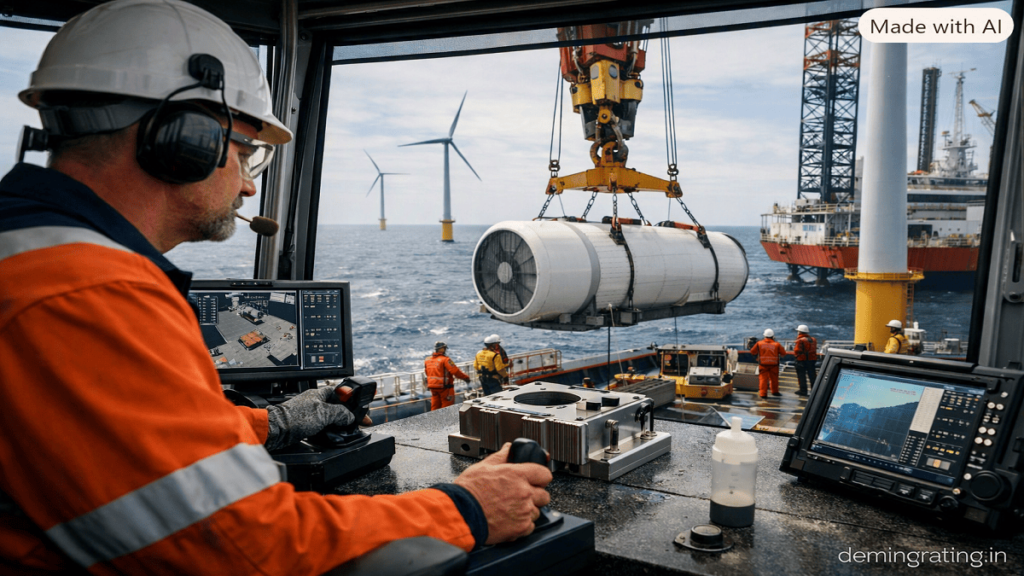
How Does Training Help Operators Safely Handle Loads in Challenging Offshore Conditions?
Offshore crane operations require a high level of skill because operators often work in environments where wind, waves, vessel movement, limited visibility, and restricted working areas can affect the stability and movement of suspended loads. Professional offshore crane operator training helps operators understand these conditions and develop the practical judgment needed to manage lifting operations safely.
Understanding Environmental Conditions
One of the most important skills developed during training is the ability to recognize how environmental conditions can affect crane operations. Strong or changing winds can cause loads to swing, while vessel movement can make it more difficult to maintain precise control. Operators learn to consider weather, sea conditions, visibility, and other environmental factors before and during a lift.
Training also reinforces the importance of following the crane manufacturer’s operating limitations and the site’s established procedures. Operators learn that a lifting operation should be stopped or reassessed when conditions exceed safe operating limits.
Controlling and Positioning Loads
Practical training helps operators develop precise control of crane movements. They learn how to coordinate hoisting, lowering, slewing, and boom movements smoothly to reduce unnecessary load movement. This is particularly important when transporting equipment between a vessel and an offshore installation.
Operators are also trained to understand load characteristics. The size, weight, shape, and center of gravity of a load can influence how it behaves when suspended. Proper knowledge of these factors helps operators anticipate movement and avoid sudden or uncontrolled load shifts.
Following Lift Plans and Communication Procedures
Safe load handling depends on teamwork. Training teaches operators how to follow approved lifting plans and communicate effectively with banksmen, riggers, and other personnel involved in the operation. Standard signals and reliable communication methods help ensure that crane movements are coordinated and understood by everyone involved.
The International Association of Oil & Gas Producers (IOGP) highlights effective planning, competent personnel, communication, and risk management as important elements of safe lifting and hoisting operations.
Responding to Changing or Unexpected Situations
Offshore conditions can change quickly, so operators need to know how to respond when circumstances become unsafe. Training develops awareness of situations such as unexpected load movement, deteriorating weather, equipment problems, communication failures, or obstructions. Operators learn when to stop an operation, secure the load appropriately, and seek further instructions rather than continuing an unsafe lift.
Recognized programs such as OPITO Offshore Crane Operator training combine theoretical knowledge with practical exercises to help candidates develop these skills.
Building Safety-Focused Decision-Making
Ultimately, effective training does more than teach operators how to move a load. It develops their ability to assess conditions, understand equipment limitations, communicate with the lifting team, and make responsible decisions. By combining technical knowledge with practical experience, offshore crane operator training prepares personnel to handle loads more safely and consistently, even when operating conditions are complex or unpredictable.
#OffshoreTraining
What Safety Procedures and Regulations Should Offshore Crane Operators Understand?
Offshore crane operators work in an environment where lifting operations can be affected by weather, vessel movement, limited space, heavy loads, and other simultaneous offshore activities. For this reason, operators must understand not only how to operate a crane but also the safety procedures, industry standards, and site-specific requirements that govern lifting operations. Proper knowledge helps reduce the likelihood of dropped loads, equipment damage, injuries, and operational incidents.
Pre-Operation Safety Procedures
Before operating an offshore crane, operators should understand the required pre-use inspection and equipment-check procedures. This includes checking critical components, controls, safety devices, wire ropes, hooks, brakes, indicators, and other relevant equipment in accordance with the crane manufacturer’s instructions and site procedures.
API Recommended Practice 2D provides guidance on the safe operation and maintenance of offshore cranes and addresses areas including operating practices, maintenance, training, lift planning, and inspection.
Lift Planning and Risk Assessment
Operators should understand how approved lifting plans are developed and how to follow them during an operation. Before a lift begins, the team should consider the load’s weight and dimensions, crane capacity, lifting radius, load path, surrounding structures, weather conditions, exclusion zones, and potential hazards.
Risk assessments and toolbox talks are important because they allow the lifting team to identify hazards and establish appropriate controls before work starts. Operators should also know that a lift must be stopped or reassessed if conditions change or the operation no longer matches the approved plan.
Communication and Exclusion Zones
Effective communication between the crane operator, banksman, slinger, deck crew, and other personnel is essential. Operators need to understand approved hand signals and communication systems and should only respond to authorized instructions according to site procedures.
Operators must also respect designated exclusion zones and ensure that personnel are not unnecessarily exposed to suspended loads or other lifting hazards.
Environmental and Emergency Procedures
Offshore operators must understand how wind, waves, vessel motion, visibility, and other environmental factors can affect crane performance and load control. They should know the site’s limits for safe crane operation and the procedures for suspending operations when conditions become unsuitable.
Emergency procedures are equally important. Operators should know how to respond to equipment malfunction, loss of power, communication failure, uncontrolled load movement, fire, or other emergencies, including when and how to activate emergency-stop systems.
Industry Standards and Competence Requirements
Training and competence requirements vary by country, employer, installation, crane type, and operating environment. OPITO provides internationally recognized offshore crane operator standards, including competence assessments for fixed structures, floating structures, and vessel subsea lifting. OPITO also emphasizes that operators must receive sufficient familiarization with the specific crane they will operate before conducting lifting operations.
In the United States and operations following API practices, API RP 2D-2 provides principles for training offshore pedestal-mounted crane operators, riggers, and inspectors.
Ultimately, offshore crane operators should understand applicable legislation, industry standards, manufacturer instructions, company procedures, lift plans, inspection requirements, communication protocols, and emergency arrangements. Following these requirements consistently helps operators make informed decisions and maintain safe lifting operations in demanding offshore conditions.
#LiftingOperations
What Are the Benefits of Certified and Competent Crane Operators for Offshore Safety and Efficiency?
Certified and competent crane operators play a critical role in maintaining safe and efficient lifting operations offshore. Cranes are used to move heavy equipment, materials, tools, and supplies between offshore installations and vessels, often in challenging conditions. Having operators with appropriate training, practical experience, and verified competence helps organizations manage lifting risks while maintaining reliable operations.
Improved Offshore Safety
The most important benefit of competent crane operators is improved workplace safety. Offshore lifting operations involve suspended loads, moving machinery, personnel, and environmental hazards such as wind and vessel movement. Properly trained operators are better prepared to recognize hazards, follow approved lifting procedures, and operate within the crane’s rated capacity and limitations.
The International Association of Oil & Gas Producers (IOGP) emphasizes the importance of competent personnel, effective lift planning, risk assessment, communication, and appropriate equipment in lifting and hoisting operations.
Better Load Control and Precision
Competent operators can control crane movements more smoothly and accurately. This is particularly important when positioning heavy or sensitive equipment in restricted offshore areas. Controlled movements can reduce unnecessary load swinging, impact with structures, and damage to equipment.
Experienced operators can also respond more effectively to changing conditions. For example, they may need to adjust their operating approach when wind increases, visibility decreases, or vessel movement affects load stability.
Reduced Equipment Damage and Downtime
Improper crane operation can place unnecessary stress on equipment and increase the likelihood of mechanical problems or damage to loads and surrounding structures. Competent operators understand operating limits and are trained to identify abnormal conditions before they develop into more serious problems.
This can contribute to fewer operational interruptions, reduced repair requirements, and improved equipment availability. In offshore environments, avoiding unnecessary downtime is particularly valuable because maintenance and replacement activities can be complex and expensive.
Compliance and Demonstrated Competence
Certification and competence assessment can provide employers with evidence that an operator has completed appropriate training and demonstrated the required knowledge and practical abilities. Requirements vary by location, employer, crane type, and offshore installation, so organizations must ensure their personnel meet the applicable standards.
OPITO provides recognized offshore crane operator training and competence standards, including pathways covering training, workplace experience, and formal competence assessment.
Greater Operational Efficiency
Safety and efficiency are closely connected. A competent operator can carry out planned lifts accurately while maintaining communication with riggers, banksmen, deck crews, and other personnel. Better coordination helps reduce unnecessary delays and supports smoother material-handling operations.
Ultimately, certified and competent crane operators provide more than proof of training. They bring technical knowledge, practical judgment, hazard awareness, and disciplined operating practices to offshore lifting activities. Investing in competent personnel helps organizations protect workers, equipment, and assets while supporting reliable and efficient offshore operations.
#CraneSafety
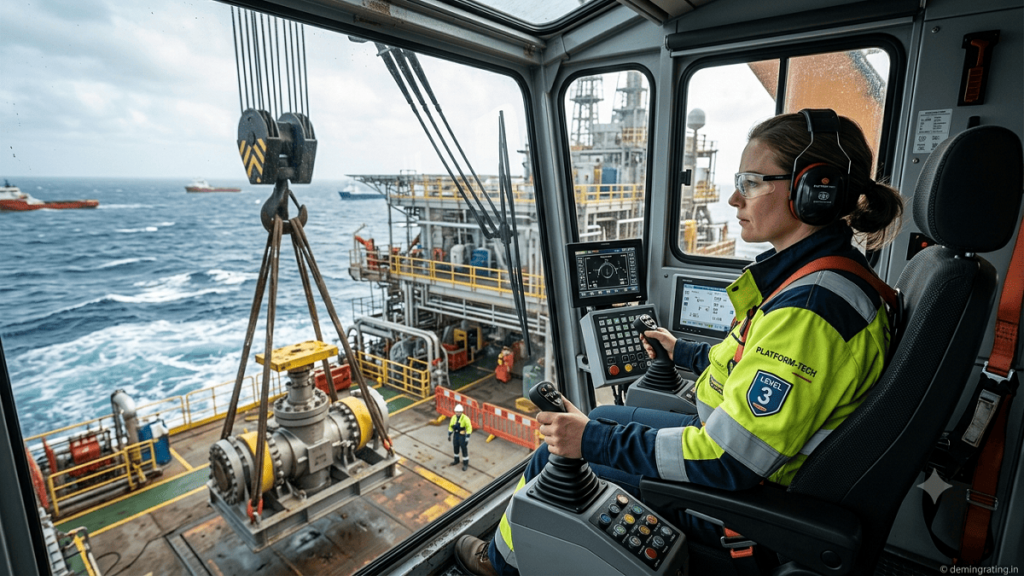
Case Study of Offshore Crane Operator Training
Offshore crane operations require highly trained personnel because lifting activities often take place in environments affected by wind, vessel movement, restricted working areas, heavy loads, and changing operational conditions. A structured training and competence program can help operators develop the technical knowledge, practical skills, and safety awareness required to perform these activities effectively.
Consider a hypothetical offshore energy company that identified inconsistent crane-handling practices among newly appointed operators. Although the operators had previous crane experience, much of it was gained in onshore environments. The company recognized that offshore crane operations require additional knowledge of environmental conditions, lifting plans, emergency systems, offshore hazards, and specific crane limitations.
To address the issue, the company introduced a structured training pathway based on recognized industry standards. OPITO Offshore Crane Operator Stage 1 provides introductory theoretical and practical training for personnel with little or no crane-operating experience. The standard includes crane terminology, legislation, operator responsibilities, controls, safety devices, working limitations, hazards, inspection requirements, and practical crane or simulator exercises. OPITO specifies approximately 40 guided learning hours, with around 70% practical learning. (OPITO)
Following introductory training, operators can progress to more advanced development. OPITO Stage 2 training covers different offshore crane types, operational and emergency safety systems, hazards, first-line maintenance, inspection requirements, and practical lifting exercises involving different loads. Operators also practice responding to typical crane malfunctions. (OPITO)
The company then incorporated supervised workplace experience and formal competence assessment. This distinction is important: completing training does not automatically mean that an individual is competent to operate an offshore crane without supervision. OPITO’s Stage 2 competence assessment is designed to verify the required knowledge, understanding, and practical skills, while successful candidates must also receive familiarization with the specific crane they will operate. (OPITO)
Results and Lessons Learned
After implementing the program, the company could establish a clearer competency pathway from initial training through workplace experience and assessment. Operators developed stronger awareness of lift planning, crane limitations, communication, load control, emergency procedures, and offshore-specific hazards.
The case demonstrates that effective offshore crane operator development should not rely solely on classroom certification. A combination of structured training, practical experience, supervised operations, equipment familiarization, and formal competence assessment provides a stronger foundation for safe and efficient lifting operations.
Organizations can also use recognized training frameworks to establish consistent expectations across their workforce. OPITO’s training-centre network provides access to approved centres offering offshore crane operator standards and related qualifications. (OPITO)
Ultimately, the value of offshore crane operator training lies in developing competent professionals who can apply technical knowledge and sound judgment in real operating conditions. When supported by appropriate supervision, procedures, equipment, and ongoing competence management, training becomes an important part of a company’s overall offshore safety strategy.
#OffshoreSafety
White Paper: Offshore Crane Operator Training
Executive Summary
Offshore crane operations are fundamental to the movement of equipment, materials, tools, and supplies across oil and gas platforms, drilling units, vessels, offshore construction sites, and other marine facilities. However, the offshore environment introduces additional challenges, including wind, wave action, vessel movement, restricted working areas, suspended loads, limited visibility, and interaction with other simultaneous operations.
For these reasons, offshore crane operators require specialized training that goes beyond basic crane-handling experience. A competent operator needs technical knowledge, practical operating ability, hazard awareness, communication skills, and the judgment to respond appropriately when conditions change.
This white paper examines the role of offshore crane operator training, the competencies that should be developed, recognized training frameworks, and the benefits of establishing a structured competence-management program.
1. Introduction
Crane operations are high-responsibility activities in offshore environments. A lifting operation may involve significant loads being moved around personnel, structures, vessels, and critical equipment. An operator’s decisions can therefore directly influence personnel safety, asset protection, and operational continuity.
Professional training provides operators with a structured understanding of crane systems, operating limitations, lifting procedures, safety devices, inspection requirements, emergency systems, and offshore hazards.
OPITO identifies offshore crane operator training as a pathway through which personnel can develop the theoretical and practical knowledge required for offshore crane operations. Its Stage 1 program includes approximately 40 guided learning hours, with an approximate 30% theory and 70% practical ratio.
2. Why Offshore Crane Operator Training Matters
The offshore environment creates operating conditions that can change rapidly. Wind can influence suspended loads, vessel motion can affect load positioning, and restricted deck areas can make even routine lifts more complex.
Training helps operators understand these risks and apply appropriate controls. It also establishes consistent operating practices, allowing personnel to work according to approved procedures rather than relying solely on personal experience.
Importantly, training and competence assessment should not be treated as the same thing. OPITO states that completion of its Stage 1 and Stage 2 training programs does not itself give an individual entitlement to operate an offshore crane unsupervised. Appropriate workplace experience, assessment, and familiarization are also required.
3. Core Competencies Developed Through Training
A comprehensive offshore crane operator program should develop several interconnected areas of competence.
Technical Knowledge
Operators should understand crane components, controls, safety systems, load charts, operating limitations, inspection requirements, and basic maintenance principles.
Practical Crane Operation
Practical exercises allow trainees to develop controlled crane movements and accurate load positioning. OPITO’s Stage 2 program includes practice operating cranes according to lifting plans with a range of loads and preparation for responding to typical crane malfunctions.
Hazard Identification
Operators must recognize hazards associated with suspended loads, equipment limitations, obstructions, weather, vessel movement, personnel positioning, and other offshore activities.
Communication
Safe lifting depends on effective coordination between crane operators, riggers, banksmen, deck crews, supervisors, and other personnel. Training therefore reinforces communication procedures and the importance of following authorized instructions.
Emergency Response
Operators should understand how to respond to abnormal situations, including equipment malfunctions, emergency stops, communication failures, and changing environmental conditions.
4. Recognized Industry Standards
Training should be aligned with the requirements applicable to the operator’s location, employer, crane type, and offshore operation.
OPITO develops training and assessment standards in consultation with industry stakeholders, including employers, subject-matter experts, regulators, trade associations, and workforce representatives. Its standards are designed to establish consistent competence requirements for the international energy industry.
The American Petroleum Institute (API) also provides API Recommended Practice 2D-2, which establishes guiding principles for training personnel who operate and maintain offshore pedestal-mounted cranes and provides requirements for qualification of crane operators, riggers, and inspectors.
API also identifies RP 2D as a companion standard addressing the operation and maintenance of offshore cranes.
5. A Structured Training Pathway
An effective competence-management system should treat training as a progression rather than a single classroom event.
The pathway may begin with introductory theoretical and practical training, followed by advanced training, supervised workplace experience, formal competence assessment, equipment familiarization, and periodic reassessment where required.
For example, OPITO’s Stage 2 competence assessment is designed to establish whether a candidate possesses the underpinning knowledge, understanding, and practical skills required to perform the role safely and effectively. OPITO also requires appropriate familiarization with the specific type of offshore crane before lifting operations are undertaken.
This approach recognizes an important principle: a certificate demonstrates achievement against a defined training or assessment standard, while operational competence also depends on workplace experience and familiarity with the equipment and environment.
6. Operational and Business Benefits
Investment in competent crane operators can provide benefits beyond safety.
Skilled operators can perform controlled and accurate lifts, helping reduce unnecessary delays, load damage, equipment impacts, and interruptions. Better coordination between crane operators and lifting teams can also support more predictable material-handling operations.
From a risk-management perspective, structured training provides employers with a systematic method for identifying competency requirements and documenting workforce development.
API describes its offshore crane training as supporting safe operation and maintenance while promoting safety and environmental protection in offshore oil and gas operations.
7. Employer Responsibilities
Employers and offshore asset owners should not view operator training as a one-time compliance exercise. An effective program should include:
- Defined competency requirements for each crane operation.
- Selection of training aligned with the applicable industry standards.
- Practical training and supervised workplace experience.
- Formal competence assessment where required.
- Familiarization with specific crane models and offshore installations.
- Clear lifting plans and communication procedures.
- Periodic reassessment and refresher training when applicable.
- Documentation of qualifications, experience, and competency evidence.
- Monitoring of operational performance and lessons learned.
The exact requirements should always be verified against applicable legislation, company procedures, equipment specifications, contractual requirements, and recognized industry standards.
8. Conclusion
Offshore crane operator training is an essential component of a robust offshore lifting and safety-management system. Effective training combines technical understanding with practical experience, hazard awareness, communication, emergency response, and responsible decision-making.
Recognized frameworks such as OPITO and API provide structured approaches for developing and assessing offshore crane personnel. However, successful training should be considered part of a broader competence-management process that includes workplace experience, equipment familiarization, supervision, assessment, and ongoing development.
Ultimately, the objective is not simply to produce operators who can control a crane. It is to develop competent professionals who can evaluate lifting conditions, understand equipment limitations, communicate effectively with the lifting team, and make safe decisions in complex offshore environments.
Organizations that invest in structured offshore crane operator training can strengthen workforce competence while supporting safer, more reliable, and more efficient lifting operations.
#CraneOperatorTraining
Industry Application of Offshore Crane Operator Training
Offshore crane operator training has applications across multiple industries where heavy lifting must be performed safely in marine and offshore environments. While the oil and gas sector has historically been one of the largest users of offshore cranes, the need for trained and competent crane operators has expanded to offshore wind, marine construction, drilling, ship operations, and other energy and infrastructure projects.
Oil and Gas Industry
Offshore oil and gas platforms rely on cranes to move drilling equipment, maintenance materials, tools, spare parts, and other heavy loads. Operators must understand lifting plans, crane capacity, environmental conditions, communication procedures, and emergency requirements. Structured training helps operators apply these principles consistently during routine and complex lifting activities.
Offshore Wind Industry
The growth of offshore wind has created additional demand for competent crane operators. Cranes are used during turbine installation, component replacement, maintenance, and construction of offshore substations and support structures. Operators may need to handle large components while accounting for wind, vessel motion, restricted deck areas, and precise positioning requirements.
Industry organizations such as G+ Global Offshore Wind publish health and safety guidance for offshore wind operations, supporting the development of consistent safety practices across the sector.
Marine Construction and Heavy-Lift Operations
Offshore construction projects frequently involve lifting structural components, pipes, subsea equipment, tools, and construction materials. Crane operators work closely with lifting supervisors, riggers, banksmen, and marine crews to execute planned lifts. Training helps operators understand load behavior, communication requirements, exclusion zones, and operational limitations.
Drilling and Floating Offshore Facilities
Drilling rigs, floating production facilities, and other mobile offshore units depend on cranes for material handling and equipment movement. Floating structures can present additional challenges because vessel motion can influence the crane and suspended load. Competent operators therefore need appropriate training and familiarization for the specific crane and operating environment.
OPITO provides internationally recognized offshore crane operator standards covering theoretical knowledge, practical skills, and progression toward competence assessment. Its standards include pathways for different offshore operating environments. (OPITO)
Why Industry-Specific Training Matters
Although the fundamental principles of crane operation remain similar, each industry presents different equipment, lifting scenarios, environmental conditions, and operational risks. Training therefore needs to be relevant to the operator’s intended working environment.
The International Association of Oil & Gas Producers (IOGP) emphasizes competent personnel, effective planning, risk management, communication, and appropriate equipment as important elements of safe lifting and hoisting operations.
In the United States and operations following API practices, API Recommended Practice 2D-2 provides principles for training offshore pedestal-mounted crane operators, riggers, and inspectors.
Overall, offshore crane operator training supports a wide range of industries by developing personnel who can operate lifting equipment responsibly, recognize hazards, follow established procedures, and respond effectively to changing offshore conditions. As offshore energy and marine construction continue to expand, maintaining a skilled and competent crane workforce will remain an important part of safe and efficient project execution.
#OffshoreCraneOperator
Ask FAQs
What is offshore crane operator training?
Offshore crane operator training is specialized training that develops the technical knowledge, practical skills, and safety awareness required to operate cranes safely in offshore environments such as oil and gas platforms, vessels, and offshore wind facilities.
Why is offshore crane operator training important?
It helps operators understand offshore hazards, crane limitations, load handling, lifting procedures, communication requirements, and emergency responses. Proper training supports safer lifting operations and helps reduce the risk of accidents, equipment damage, and operational disruptions.
What skills are covered in offshore crane operator training?
Training commonly covers crane controls, load charts, lifting plans, load positioning, safety systems, hazard identification, communication with riggers and banksmen, pre-use inspections, environmental conditions, and emergency procedures.
Does completing a training course make someone a competent offshore crane operator?
Not necessarily. Training and competence assessment are separate processes. Depending on the applicable standard, operators may also need supervised workplace experience, formal competence assessment, and familiarization with the specific crane and offshore installation they will operate.
Which industries require trained offshore crane operators?
Offshore crane operators are required across several industries, including oil and gas, offshore wind, marine construction, drilling, subsea operations, offshore engineering, and other heavy-lifting activities conducted in marine environments.
Disclaimer: This information is for general educational purposes only and does not replace applicable laws, industry standards, employer procedures, or professional training and certification requirements. Always follow the regulations and safety guidelines applicable to your specific offshore operation.