
Bishnupur Railway Station
- Bishnupur Railway Station
- Chapter 1 – The Beginning of a New Vision
- Chapter 2 – Bishnupur Railway Station and Its Cultural Identity
- Chapter 3 – The Need for Environmental Management
- Chapter 4 – The 2019 ISO 14001:2015 Certification Milestone
- Chapter 5 – Cleanliness as a Passenger Service
- Chapter 6 – Green Thinking and Waste Management
- Chapter 7 – The People Behind the Improvement
- Chapter 8 – Institutional Growth After Certification
- Chapter 9 – The Legacy of the 2019–2022 Certification Period
- Chapter 10 – A Continuing Journey: The Future of Bishnupur Railway Station
- Take the Next Step Today
Chapter 1 – The Beginning of a New Vision
Bishnupur Railway Station has long been more than a point where trains arrive and depart. It is an important gateway to Bishnupur, a historic town of West Bengal known for its terracotta temples, traditional architecture, cultural heritage and artistic traditions. Every day, the station connects local residents, workers, students, traders and visitors with different parts of the region. For many travelers, the railway station is their first experience of Bishnupur and, for departing passengers, their final impression of the town. Because of this, the condition of the station has always carried importance beyond its operational function.
As passenger expectations changed, cleanliness and environmental responsibility increasingly became important aspects of railway service. A modern railway station cannot be evaluated only by the punctuality of trains or the efficiency of ticketing. Passengers also expect hygienic toilets, clean platforms, proper waste disposal, safe and accessible passenger facilities, orderly surroundings and a pleasant environment. These expectations created the need for a systematic approach to sanitation and environmental management.
Bishnupur Railway Station, under the Adra Division of South Eastern Railway, embarked upon such an approach through the adoption of an Environmental Management System based on ISO 14001:2015. The certification, issued in 2019 and valid until 2022 according to the information provided for this project, became an important milestone in the station’s environmental journey.
The purpose of certification was not simply to obtain a certificate and display it on a wall. Its deeper significance was the establishment of a structured way of thinking about environmental performance. Cleanliness had to become a continuous activity rather than an occasional exercise. Waste had to be handled responsibly. Sanitation required regular attention. Resources had to be used carefully. Employees and service personnel needed to understand their environmental responsibilities, while passengers also needed to participate in maintaining the cleanliness of public spaces.
The vision was simple but powerful: create a railway station where passengers could experience a clean, hygienic and green environment while the station administration maintained systematic control over sanitation and environmental practices.
The transformation began with recognizing that railway stations face unique environmental challenges. Large numbers of passengers move through platforms and waiting areas every day. Food packaging, plastic materials, paper, bottles and other forms of waste can accumulate quickly. Public toilets require frequent cleaning and maintenance. Water is consumed for drinking, cleaning and sanitation. Open areas and circulating spaces need regular housekeeping. Without proper systems, even a well-maintained station can quickly lose its cleanliness.
ISO 14001:2015 provided a framework for addressing these challenges systematically. An Environmental Management System encourages an organization to identify its environmental aspects, establish objectives, implement controls, monitor performance and continually improve its processes. For a railway station, these principles can be connected directly with everyday activities such as waste management, sanitation, housekeeping, water conservation and environmental awareness.
The certification therefore represented a shift from a purely activity-based approach to a management-based approach. Instead of asking only, “Has the station been cleaned today?” the broader question became, “Do we have an effective system that ensures the station remains clean and environmentally responsible every day?”
This change in thinking is significant. A cleaning activity can solve a problem temporarily, but a management system seeks to prevent the problem from recurring. Regular schedules, defined responsibilities, monitoring, corrective action and awareness can create consistency. Over time, these practices can become part of the station’s organizational culture.
The role of people was equally important. Railway employees, supervisors, housekeeping personnel, contractors, vendors and passengers all have a role in maintaining a clean environment. The best environmental system can fail if people do not understand or follow it. Conversely, even small individual actions can produce meaningful collective results. A passenger who places a bottle in the appropriate waste bin, a cleaner who reports a sanitation problem, a supervisor who checks a neglected area and an employee who avoids unnecessary resource consumption all contribute to the same objective.
For Bishnupur, this environmental vision also had a connection with the identity of the town itself. A station serving a culturally significant destination should provide an environment that complements the character of the place. Visitors arriving by train should encounter an organized and welcoming gateway. Residents should feel that their railway station is a clean public asset. Staff should have a workplace in which environmental responsibility is treated as a normal part of professional duty.
The 2019 certification thus marked the beginning of an important chapter rather than the conclusion of a project. The certificate provided formal recognition, but the real test was its implementation in daily station operations. The challenge was to convert standards into habits, procedures into practices and environmental objectives into visible improvements.
The journey of Bishnupur Railway Station can therefore be understood as a journey toward continual improvement. Its environmental initiative brought together sanitation, cleanliness, passenger amenities, resource awareness and institutional responsibility under one broader vision.
The beginning was not about making a railway station perfect overnight. It was about creating a disciplined system capable of producing improvement day after day. With ISO 14001:2015 as a framework, Bishnupur Railway Station took an important step toward demonstrating that railway infrastructure can combine efficient public service with environmental responsibility.
This was the beginning of a new vision: a station that does not merely move passengers from one destination to another, but also provides them with a cleaner, healthier and more responsible public environment.
#BishnupurRailwayStation
Chapter 2 – Bishnupur Railway Station and Its Cultural Identity
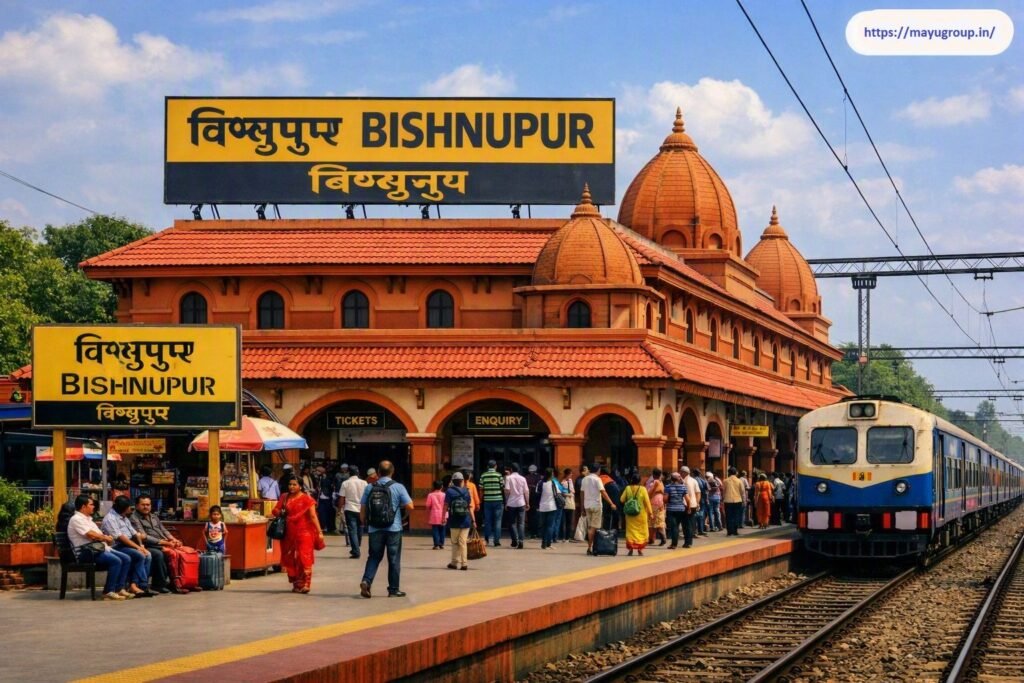
Bishnupur Railway Station is closely connected with the identity of Bishnupur, a historic town in West Bengal whose cultural significance extends far beyond its geographical boundaries. Famous for its terracotta temples, traditional architecture, music, handicrafts and artistic heritage, Bishnupur attracts residents, travelers, researchers, tourists and cultural enthusiasts. The railway station therefore performs an important role as a gateway through which people enter and leave the town.
For a railway station located in such a culturally significant destination, the physical environment has special importance. A visitor’s experience does not begin only after reaching a temple, museum or historical monument. It begins when the train arrives and the passenger steps onto the platform. The station becomes the first point of contact between the traveler and the town. Similarly, when a resident or tourist leaves Bishnupur by train, the condition of the station forms part of the final impression of the place.
This relationship between transportation and cultural identity created an important context for the station’s cleanliness and environmental initiatives.
Bishnupur Railway Station operates under South Eastern Railway’s Adra Division and serves the surrounding population as well as visitors to the region. Railway stations in such locations have to accommodate different categories of passengers. Local commuters may use the station regularly for work, education and personal travel. Tourists may arrive with luggage and limited knowledge of the local area. Families, elderly passengers and children may require accessible and comfortable facilities. Vendors and railway personnel also depend upon the station environment for their daily activities.
Consequently, station management involves much more than maintaining railway tracks and platforms. Passenger amenities, sanitation, cleanliness, waste management and general environmental conditions are essential components of the station’s public-service function.
The environmental-management initiative associated with ISO 14001:2015 provided a structured opportunity to strengthen these aspects. The certification period beginning in 2019 came at a time when environmental awareness was becoming increasingly important across public infrastructure. Railway organizations were paying greater attention to solid-waste management, sanitation, resource conservation, cleanliness and sustainable station development.
For Bishnupur, environmental responsibility could be connected naturally with the cultural character of the town. A place recognized for its heritage should have public spaces that demonstrate respect for cleanliness and preservation. Although a railway station is not itself a heritage monument, it forms part of the visitor experience and therefore contributes to the public image of the destination.
One of the most visible components of this responsibility is cleanliness. Platforms must be kept free from litter. Waiting areas need regular housekeeping. Toilets require continuous sanitation. Drinking-water facilities need appropriate maintenance. Waste bins must be available and waste should be collected systematically. Circulating areas, entrances and other passenger spaces need attention because these areas receive continuous movement throughout the day.
These requirements appear simple, but maintaining them consistently can be challenging. A railway station is a dynamic environment. Passenger numbers fluctuate according to train schedules, holidays, festivals and other circumstances. Waste generation can increase suddenly. Weather conditions can affect outdoor areas. Small sanitation problems can quickly become noticeable when large numbers of people use the same facilities.
The environmental management approach encouraged the station to look at these activities systematically. Rather than viewing each cleaning task as an isolated responsibility, the station could consider how different activities interact with one another. Waste generation affects cleaning requirements. Cleaning affects water consumption. Passenger behavior affects waste accumulation. Signage and awareness can influence passenger behavior. Monitoring can identify areas requiring additional attention.
This interconnected approach is one of the important strengths of environmental management.
The station’s environmental performance also depended on the people working behind the scenes. Clean platforms are the visible result of numerous less-visible activities: scheduling, supervision, inspection, procurement, maintenance, waste collection, reporting and corrective action. Railway employees and service personnel therefore played a central role in translating environmental objectives into practical results.
Passenger participation was equally valuable. Public cleanliness cannot be maintained entirely through staff effort. When passengers use waste bins, avoid littering, respect sanitation facilities and follow station instructions, they become partners in environmental management. Awareness is therefore an important part of the overall system.
The idea of a “clean and green” railway environment also extends beyond the removal of waste. It represents a broader philosophy of responsible public infrastructure. A green environment can include appropriate landscaping, responsible use of resources, reduction of unnecessary waste, efficient maintenance and awareness of environmental impacts.
For Bishnupur, this philosophy supported the station’s role as a welcoming gateway. A clean station can reduce discomfort, improve passenger confidence and create a sense of order. It can also strengthen the relationship between the railway and the local community.
The 2019 ISO 14001:2015 certification therefore needs to be viewed within this larger context. It was not merely an administrative achievement. It represented an organized commitment to environmental management at a public facility used by thousands of people over time.
The cultural identity of Bishnupur gave this commitment additional meaning. A town celebrated for its artistic heritage deserves public infrastructure that reflects care, discipline and respect for the surrounding environment. Through systematic sanitation, cleanliness and environmental practices, the railway station could contribute to that image.
Ultimately, Bishnupur Railway Station’s identity consists of both movement and place. Trains connect it to the wider railway network, while the station itself connects travelers with the cultural world of Bishnupur. By strengthening environmental management, the station could make that connection more positive.
The journey toward ISO 14001:2015 certification was therefore also a journey toward recognizing the station’s wider responsibility. It showed that environmental performance, passenger comfort and cultural identity need not be separate objectives. When managed together, they can help create a railway station that serves its community efficiently while presenting a cleaner and more welcoming face to every person who arrives at its platforms.
#ISO14001
Chapter 3 – The Need for Environmental Management
The decision to introduce a systematic environmental-management approach at Bishnupur Railway Station emerged from a simple but important reality: a railway station is a continuously active public environment. Unlike an office that may operate within fixed hours, a railway station experiences movement, cleaning requirements, waste generation, water consumption and passenger interaction throughout the day. Every arriving and departing train brings new passengers, and every group of passengers creates new demands on station facilities.
For Bishnupur Railway Station, maintaining a clean and hygienic environment was therefore not an occasional responsibility. It was a continuous operational requirement.
The scope of work associated with the station’s environmental initiative focused on providing passenger amenities in a clean and green environment and maintaining sanitation throughout the railway station premises. This objective brought several activities together under one common vision. Platforms, waiting areas, passenger circulation spaces, toilets, entrances and other public areas all needed regular attention. The challenge was to ensure that cleanliness remained consistent even when passenger movement changed from one period to another.
Waste management was one of the most visible environmental challenges. Railway passengers commonly generate paper, food packaging, plastic bottles, disposable materials and other forms of waste. If such waste is not collected promptly, it can accumulate on platforms and in public areas. Apart from creating an unpleasant appearance, accumulated waste can create hygiene concerns and increase the workload required for subsequent cleaning.
A systematic environmental-management approach encourages organizations to understand where environmental impacts originate and how they can be controlled. In the context of a railway station, this means looking at waste not simply as something to remove but as an operational issue that requires planning, monitoring and responsible handling.
Sanitation was another major consideration. Passenger toilets and other sanitary facilities require regular cleaning and maintenance because they are used by many people throughout the day. A poorly maintained sanitation facility can quickly affect passenger satisfaction and create health and hygiene concerns. Regular cleaning schedules, inspection and timely corrective action are therefore essential.
Water management is also closely linked to sanitation. Cleaning platforms, toilets and other facilities requires water, while passengers need water for drinking and other purposes. Responsible environmental management encourages careful consideration of how resources are consumed. Avoiding unnecessary wastage, identifying leakage and maintaining facilities properly can contribute to better resource efficiency.
The same principle applies to electricity and other resources. Lighting, ventilation, station equipment, water systems and other infrastructure require energy. Environmental management encourages organizations to consider how resources are being used and whether improvements can be made without affecting passenger safety or operational efficiency.
The introduction of ISO 14001:2015 provided a formal framework for these considerations. The standard is based on an Environmental Management System and promotes a structured cycle of planning, implementation, evaluation and continual improvement. It encourages organizations to identify environmental aspects, determine applicable requirements, establish objectives and controls, monitor performance and address areas requiring improvement.
For Bishnupur Railway Station, this framework could help bring greater consistency to environmental responsibilities. Instead of relying entirely on individual initiative, activities could be supported through defined procedures and responsibilities. Employees and service personnel could understand what was expected from them, supervisors could monitor performance, and identified problems could be addressed through corrective measures.
Another important element was environmental awareness. A railway station cannot remain clean through staff effort alone. Passenger behavior has a direct effect on environmental conditions. If passengers throw waste outside bins, misuse sanitation facilities or ignore cleanliness instructions, the station’s environmental burden increases. Conversely, responsible passenger behavior can significantly reduce waste and make maintenance easier.
Awareness therefore became an important part of the broader environmental vision. Signs, instructions, announcements and visible cleanliness can encourage passengers to participate. A clean environment can itself influence behavior: people are often more likely to maintain a space that is already orderly and well cared for.
The environmental initiative also had implications for staff morale. Employees working in a clean and organized environment can experience a greater sense of professional pride. When responsibilities are clearly defined and environmental objectives are understood, routine tasks gain greater purpose. Cleaning is no longer seen merely as a repetitive activity; it becomes part of passenger service and institutional responsibility.
The certification process also encouraged the idea of monitoring and continual improvement. Environmental management is not a one-time exercise. Conditions change, passenger requirements change and operational challenges change. A procedure that works well in one period may require modification later. Regular review allows the organization to identify weaknesses and introduce improvements.
The 2019 certification milestone therefore represented an important change in perspective. It demonstrated that environmental performance could be approached with the same seriousness as other operational responsibilities. Cleanliness, sanitation, waste management and resource conservation could be incorporated into an organized management system.
For a station like Bishnupur, this approach was particularly meaningful because of its role as a public gateway. The station had to serve passengers efficiently while maintaining an environment consistent with the expectations of a modern railway facility.
The need for environmental management was ultimately driven by a combination of practical necessity and institutional responsibility. Passengers needed clean and hygienic facilities. Railway employees needed a structured working environment. The surrounding community needed responsible public infrastructure. Visitors deserved a positive first impression of Bishnupur. And the railway system needed mechanisms that supported continual improvement.
ISO 14001:2015 provided a framework through which these objectives could be connected. The certification did not eliminate environmental challenges, but it created a structured pathway for addressing them.
Thus, the need for environmental management at Bishnupur Railway Station was not simply about keeping the premises clean. It was about creating a culture of responsibility in which sanitation, waste management, resource efficiency, passenger comfort and environmental awareness became interconnected parts of everyday railway operations. This foundation would become central to the station’s development during the certification period from 2019 to 2022.
#EnvironmentalManagement
Chapter 4 – The 2019 ISO 14001:2015 Certification Milestone

The year 2019 became an important chapter in the environmental-management journey of Bishnupur Railway Station. According to the certification information provided for this project, the station received ISO 14001:2015 certification in 2019, with validity extending to 2022. The certification represented formal recognition of an organized approach toward environmental management, sanitation and the creation of a cleaner passenger environment.
For Bishnupur Railway Station, the significance of this achievement went beyond the certificate itself. Certification provided a structured framework through which everyday activities could be examined, documented, monitored and improved. It encouraged the station’s management and associated personnel to consider environmental responsibility as an integral part of railway operations rather than as an additional activity.
ISO 14001:2015 is an internationally recognized standard for Environmental Management Systems. It is designed to help organizations manage their environmental responsibilities systematically and improve their environmental performance over time. Its principles can be applied to organizations of different sizes and types, including public-service facilities and transportation infrastructure.
In the context of a railway station, environmental management involves many interconnected activities. Cleaning and sanitation, waste collection, resource consumption, maintenance, passenger awareness and compliance with applicable requirements all influence the environmental performance of the facility. Certification helped provide a framework for considering these activities together.
The certification journey required an organizational mindset based on planning and responsibility. Environmental objectives could not be achieved simply through occasional cleaning campaigns. There had to be an understanding of routine activities, their environmental effects and the controls necessary to manage them.
One of the most important principles associated with environmental management is identifying environmental aspects. At a railway station, these can include the generation of solid waste, consumption of water, use of electricity, sanitation activities, cleaning operations and the management of public facilities. Understanding these aspects helps an organization determine where improvement is most needed.
Once environmental issues are identified, responsibilities become important. Someone must be responsible for cleaning, someone must monitor facilities, someone must report deficiencies and corrective action must be taken when standards are not being maintained. This creates accountability and helps prevent environmental responsibilities from becoming unclear.
The 2019 certification also strengthened the importance of documentation and monitoring. In a systematic management framework, activities are not dependent entirely upon memory or individual initiative. Procedures, records, inspections and reviews provide evidence that the system is functioning. They also help management identify recurring problems.
For example, if a particular area repeatedly required additional cleaning, monitoring could help reveal the pattern. The station could then consider whether the problem was caused by passenger movement, inadequate waste facilities, insufficient cleaning frequency or another operational factor. The solution could consequently address the underlying issue rather than merely removing the waste each time it appeared.
This approach represents one of the major differences between routine housekeeping and management-system thinking.
Passenger amenities were also central to the certification objective. A railway station exists to serve passengers, and environmental management must ultimately contribute to their comfort and safety. Clean platforms, sanitary toilets, orderly waiting spaces and properly maintained public areas can significantly improve the passenger experience.
The “clean and green” objective also introduced a wider environmental perspective. A clean station is immediately visible, but a green station requires consideration of how resources are consumed and how environmental impacts are reduced. Responsible waste handling, efficient use of water, prevention of unnecessary pollution and proper maintenance all form part of this broader concept.
The certification period also emphasized continual improvement. ISO 14001:2015 is not designed as a one-time achievement. An organization is expected to evaluate its environmental performance and seek opportunities for improvement. This means that certification should create a cycle in which problems are identified, solutions are implemented, results are monitored and processes are revised when necessary.
For employees, this approach could help establish greater awareness of environmental responsibilities. Staff members are often the people who notice practical problems first. A blocked drain, overflowing bin, damaged sanitation facility, leaking tap or poorly maintained area can be identified quickly when employees are encouraged to observe and report environmental issues.
Training and awareness are therefore important components of the overall system. Employees and service providers need to understand not only what they have to do but why the activity matters. When people understand the connection between their daily work and passenger welfare, environmental objectives become easier to sustain.
The certification also provided an opportunity to strengthen the station’s public image. A railway station that maintains clean and hygienic surroundings demonstrates organizational discipline. For Bishnupur, this was particularly valuable because the station serves a town recognized for its heritage and tourism.
The 2019 milestone can therefore be viewed as a point at which environmental management became more formally organized. It connected sanitation and cleanliness with a recognized management framework and created a foundation for continued improvement through the certification period.
By 2022, the certification’s formal validity period had reached its stated conclusion. However, the practices and awareness associated with the certification could continue to influence station operations. The most important legacy of certification is not the framed document but the systems and habits developed around it.
The story of Bishnupur Railway Station’s ISO 14001:2015 certification is therefore a story of institutional commitment. It demonstrates how a public railway facility can use an environmental-management framework to bring together cleanliness, sanitation, passenger amenities, resource awareness and continual improvement.
The year 2019 marked the formal beginning of this certified chapter. It provided recognition, but more importantly, it established a direction: environmental responsibility would become an organized part of the station’s service philosophy. The journey from certification to lasting improvement would depend on how effectively that philosophy was translated into everyday action.
#CleanAndGreenStation
Chapter 5 – Cleanliness as a Passenger Service
A railway station is one of the most frequently used public spaces in a community. Every day, passengers enter through its gates, purchase tickets, wait for trains, walk across platforms, use sanitation facilities and leave for their destinations. At Bishnupur Railway Station, this continuous movement creates a direct connection between cleanliness and passenger service.
For many passengers, the condition of a railway station is one of the first indicators of the quality and discipline of the transportation system. A clean platform creates confidence. A hygienic toilet provides comfort. A well-maintained waiting area reduces inconvenience. Proper waste disposal makes the station more pleasant. These seemingly ordinary elements can significantly influence the overall travel experience.
This understanding became particularly important within the environmental-management approach associated with ISO 14001:2015. The objective was not merely to remove visible dirt but to establish an organized system in which sanitation and cleanliness could be maintained consistently throughout the station premises.
The scope of work for Bishnupur Railway Station specifically emphasized providing passenger amenities in a clean and green environment and maintaining sanitation throughout the railway station premises. This meant that cleanliness had to be considered across different parts of the station rather than being restricted to platforms alone.
Platforms were among the most important areas requiring regular attention. Passenger movement, food consumption and train operations can result in the accumulation of paper, packaging, bottles and other waste. Regular sweeping and waste collection therefore became essential. Clean platforms also reduce the impression of disorder and make passengers feel more comfortable while waiting for trains.
Waiting areas required similar attention. Passengers may spend considerable time at a station, particularly when waiting for connecting services or during periods of delay. A clean and orderly waiting environment can make this time less stressful. Proper housekeeping also helps maintain the dignity of the facility for elderly passengers, families and travelers carrying luggage.
Sanitation facilities represented another critical component. Railway toilets are used by large numbers of people and therefore require frequent cleaning, inspection and maintenance. A toilet that appears clean at one moment can require attention again after repeated use. The challenge is consequently not simply to clean the facility but to maintain a routine capable of responding to continuous demand.
This is where management systems become valuable. Defined cleaning schedules, inspection procedures and reporting mechanisms can help ensure that sanitation does not depend solely on individual initiative. When responsibilities are clearly established, problems can be identified and addressed more quickly.
Waste management was closely connected with cleanliness. The presence of waste bins can encourage passengers to dispose of materials properly, but bins must also be emptied and maintained. An overflowing bin can discourage responsible disposal and create a new cleanliness problem. Therefore, collection frequency and monitoring are as important as the initial placement of waste containers.
Passenger awareness also plays an essential role. Railway staff cannot maintain public areas indefinitely if passengers deliberately litter. Environmental responsibility must therefore be shared. Signs, announcements and general awareness can encourage passengers to use bins, protect sanitation facilities and avoid unnecessary waste.
A positive cycle can develop when passengers see that the station is well maintained. People are often more willing to respect a clean environment than a neglected one. Visible cleanliness can therefore influence behavior and encourage greater community participation.
The station’s green-environment objective added another dimension to passenger service. Cleanliness focuses on the immediate condition of public spaces, while environmental management considers the longer-term effects of railway operations. Efficient use of water, responsible waste handling and proper maintenance can reduce environmental impacts while supporting passenger amenities.
The employees responsible for these activities also became an important part of the passenger-service experience. Cleanliness personnel work behind the scenes, often performing repetitive and physically demanding tasks that passengers may barely notice when everything is functioning properly. Their contribution becomes most visible when a problem occurs. Recognizing the importance of their work and providing clear procedures can help maintain consistent standards.
Supervision is equally important. Regular inspections can identify areas requiring attention and provide opportunities for corrective action. If a particular location repeatedly becomes dirty, management can investigate why. Perhaps passenger movement is concentrated there, perhaps a waste bin is poorly located, or perhaps the cleaning frequency needs adjustment. Such observations turn routine cleaning into an improvement process.
The ISO 14001:2015 framework supported this approach by encouraging organizations to monitor environmental performance and pursue continual improvement. For Bishnupur Railway Station, the principle could be applied directly to passenger amenities. Each improvement—better housekeeping, more responsive sanitation, improved waste collection or stronger awareness—could contribute to a better overall environment.
The importance of cleanliness also extended beyond passenger comfort. A railway station is part of the public image of the railway organization. Visitors arriving in Bishnupur may form their first impression of the town through the station. A clean, organized environment can communicate hospitality and civic responsibility.
This was especially significant because Bishnupur is associated with heritage tourism. Visitors may arrive expecting to experience the town’s historic temples, terracotta architecture and cultural traditions. A well-maintained railway gateway supports that experience by presenting an environment of care and order.
Cleanliness, therefore, was not simply a housekeeping function. It became a form of passenger service, environmental responsibility and institutional identity.
The 2019 certification provided a framework for strengthening this philosophy. It encouraged the station to consider how routine activities could be organized, monitored and improved. During the certification period, the objective remained clear: passengers should be able to use the station’s facilities in a clean, hygienic and welcoming environment.
Ultimately, the success of environmental management can be seen in everyday experiences. A passenger who finds a clean platform, a properly maintained toilet, an orderly waiting area and an environment free from unnecessary waste may never think about the management system behind those conditions. That is precisely the point. Effective management becomes invisible when it works well.
For Bishnupur Railway Station, cleanliness became an essential part of serving passengers. The ISO 14001:2015 journey helped place sanitation, environmental responsibility and passenger comfort within a common framework. In doing so, the station moved toward a service culture in which a clean environment was not an occasional achievement but a continuous commitment.
#IndianRailways
Chapter 6 – Green Thinking and Waste Management
The journey toward a cleaner Bishnupur Railway Station was not limited to sweeping platforms or maintaining passenger facilities. A truly effective environmental-management system requires a broader understanding of how everyday railway activities affect the surrounding environment. This is where the concept of “green thinking” became important.
For Bishnupur Railway Station, green thinking meant looking at cleanliness, waste management, sanitation, water use, energy consumption and passenger behavior as connected parts of one environmental responsibility. The objective was to create a station environment that was not only visually clean but also managed in a way that reduced unnecessary environmental impact.
Every railway station generates waste. Passengers bring food, water bottles, newspapers, packaging and other materials onto station premises. Vendors may also generate packaging and food-related waste. Cleaning activities themselves produce waste. During busy periods, the quantity of waste can increase considerably.
If waste is allowed to accumulate, it affects the appearance of the station and can create sanitation problems. It may also attract insects and animals, obstruct drains or enter surrounding areas. Consequently, proper waste management became an essential component of the station’s environmental responsibilities.
The first step in effective waste management is awareness of where waste is generated. Platforms, waiting areas, ticketing zones, entrances, circulating areas and other public spaces can all become sources of waste. Understanding these patterns helps station management plan cleaning and collection activities more effectively.
Waste bins and collection arrangements can encourage responsible disposal, but infrastructure alone cannot solve the problem. Passenger behavior is equally important. A bin is useful only when passengers actually use it and when the collected waste is removed before the container becomes full.
This created a cycle of responsibility. Railway personnel needed to provide and maintain appropriate facilities, while passengers needed to use them responsibly. Vendors and service providers also had a role in preventing unnecessary litter and handling waste appropriately.
The environmental-management philosophy associated with ISO 14001:2015 encouraged this type of systematic thinking. Rather than treating waste as a problem that begins only after something has been discarded, environmental management considers the entire process. It asks where waste comes from, how much is generated, how it is collected and how its environmental impact can be controlled.
Waste reduction was therefore an important part of the broader vision. Avoiding unnecessary waste is generally preferable to simply managing waste after it has been produced. Greater awareness among staff, vendors and passengers can encourage responsible consumption and reduce the amount of material requiring collection.
Where waste is generated, proper handling remains essential. Collection should be organized, storage should be controlled and disposal should follow applicable requirements. Different categories of waste may require different handling arrangements. Good housekeeping also reduces the possibility that waste will spread from designated collection points into passenger areas.
Water management was another part of green thinking. Railway stations require water for drinking facilities, sanitation, cleaning and maintenance. Regular cleaning is essential, but excessive or uncontrolled water use can create unnecessary environmental and operational costs.
Simple practices such as promptly identifying leaking taps or pipes, maintaining water facilities and avoiding unnecessary wastage can contribute to resource conservation. These actions may appear small, but their effect becomes more meaningful when repeated every day.
Energy use also deserves attention. Railway stations depend upon electricity for lighting, equipment, information systems and other essential services. Efficient maintenance and responsible use can reduce unnecessary consumption while maintaining passenger safety and operational requirements.
Green thinking therefore does not mean reducing essential services. It means finding a responsible balance between service quality and resource efficiency. Passenger comfort and environmental protection can support each other when facilities are properly planned and maintained.
The station’s physical environment also contributed to the concept of a clean and green atmosphere. Well-maintained surroundings can create a more welcoming public space. Clean open areas, appropriate landscaping where available and disciplined housekeeping can improve the visual character of the station while reinforcing environmental awareness.
However, green thinking is ultimately about behavior as much as infrastructure. Employees need to understand that turning off unnecessary equipment, reporting leaks, maintaining cleanliness and following waste procedures are environmental activities. Passengers need to recognize that disposing of waste properly and avoiding littering contribute directly to the station’s environmental performance.
Training and communication can help create this awareness. When employees understand the reasons behind procedures, they are more likely to follow them consistently. Similarly, passengers respond more positively when environmental messages are clear, visible and easy to follow.
Monitoring is another important component. Waste levels, sanitation conditions, recurring maintenance problems and resource-use issues can provide valuable information. Regular observation allows management to identify areas where additional action may be needed.
For example, if a particular location repeatedly accumulates waste, the problem may not simply be insufficient cleaning. It could indicate that the waste bin is too far away, that passenger movement is concentrated in the area or that additional awareness is required. Identifying the cause makes it possible to develop a more effective solution.
This is the value of environmental management: it encourages organizations to address causes rather than repeatedly treating symptoms.
During the 2019–2022 certification period, the green-environment objective provided a broader meaning to the station’s cleanliness initiative. The aim was not simply to make the station look clean for passengers. It was to encourage responsible environmental practices as part of regular operations.
The experience also demonstrated that environmental improvement is usually built from many small actions. A properly maintained bin, a clean platform, a repaired water leak, responsible waste collection, an informed employee and a cooperative passenger may each appear insignificant individually. Together, however, they create a meaningful environmental culture.
Bishnupur Railway Station’s environmental journey therefore reflects a shift from simple cleanliness toward integrated environmental responsibility. Waste management became connected with sanitation. Sanitation became connected with water use. Passenger behavior became connected with waste generation. Staff awareness became connected with continual improvement.
The result was a broader vision of what a railway station could be: not merely a place for trains and passengers, but a public environment where efficient service and environmental responsibility work together.
Green thinking gave the ISO 14001:2015 initiative its wider purpose. It encouraged the station to look beyond immediate cleanliness and consider how daily operations could become more organized, responsible and sustainable. In this way, waste management and environmental awareness became important foundations for the station’s continuing institutional improvement.
#RailwayCleanliness
Chapter 7 – The People Behind the Improvement
Every successful environmental-management initiative ultimately depends on people. A certificate can establish recognition, a standard can provide a framework and procedures can define responsibilities, but real improvement happens only when people understand their roles and carry them out consistently. At Bishnupur Railway Station, the journey toward a cleaner and greener environment therefore depended heavily on railway employees, supervisors, housekeeping personnel, contractors, vendors and passengers.
The ISO 14001:2015 certification created an organized framework for environmental management, but its success depended on how that framework was translated into everyday activities. The people working at the station became the link between environmental objectives and actual results.
Railway employees occupy different positions and perform different responsibilities, but together they influence the condition of the station. Station officials oversee operations and coordinate activities. Housekeeping personnel maintain cleanliness. Maintenance staff respond to infrastructure-related problems. Supervisors inspect facilities and monitor work. Contractors and service providers may support cleaning and sanitation activities. Vendors interact directly with passengers and can influence waste generation. Each role is different, but all contribute to the station environment.
One of the most important groups is the housekeeping team. Their work may appear routine, but it is fundamental to passenger comfort. Sweeping platforms, removing waste, maintaining public areas and supporting sanitation require consistency. A railway station can become dirty very quickly when cleaning is delayed, particularly during busy periods.
The challenge is therefore not simply to clean but to maintain cleanliness. This requires schedules, supervision and responsiveness. If a particular area becomes dirty unexpectedly, personnel need to recognize the problem and respond. If the same problem occurs repeatedly, management needs to examine the reason and consider whether the existing system should be improved.
Supervisors play a particularly important role in this process. They help ensure that responsibilities are being carried out and that environmental standards are maintained. Regular inspections can identify problems before they become serious. A supervisor may notice an overflowing bin, an unclean toilet, a damaged facility or a maintenance issue and initiate corrective action.
This monitoring function supports the principle of continual improvement associated with environmental management. The objective is not to blame individuals for every problem but to understand why the problem occurred and how it can be prevented in the future.
Training and awareness are also essential. Employees cannot be expected to follow environmental procedures effectively if they do not understand them. Awareness programs can explain why waste segregation matters, why water should not be wasted, why sanitation must be monitored and why environmental requirements are part of professional responsibility.
When employees understand the purpose behind a task, routine work can take on greater significance. Cleaning a platform is not merely removing visible dirt; it contributes to passenger health, comfort and the public image of the railway. Reporting a leaking tap is not simply a maintenance request; it can prevent water wastage. Proper waste handling is not only housekeeping; it is an environmental responsibility.
This connection between everyday work and wider objectives can strengthen employee participation.
Leadership is another important factor. Environmental management requires commitment from those responsible for the station’s administration. If management demonstrates that cleanliness and environmental performance are priorities, employees are more likely to treat them seriously. Clear expectations, regular reviews and timely corrective action can create an environment in which good practices become routine.
At the same time, environmental management should be understood as a shared responsibility rather than something imposed only from the top. Employees at every level can contribute ideas for improvement because they often experience operational problems directly.
For example, a cleaner may know which platform area repeatedly collects waste. A maintenance worker may identify a recurring water leak. A ticketing employee may notice passenger confusion about waste-disposal facilities. A supervisor may recognize that a cleaning schedule needs adjustment during particular periods. Bringing these observations into the management process can lead to practical improvements.
Vendors and contractors also have an important role. Their activities can influence waste generation and cleanliness. Clear environmental expectations can help ensure that external service providers support rather than undermine the station’s objectives. Contracts, instructions, monitoring and communication can reinforce these responsibilities.
Passengers, however, remain one of the most important participants. A railway station is a shared public space, and its cleanliness cannot be maintained by employees alone. Passenger behavior directly affects waste levels and sanitation conditions.
A passenger who places a bottle in a waste bin contributes positively. A passenger who avoids littering reduces the workload of cleaning personnel. A traveler who reports a damaged facility helps management respond to a problem. These actions may seem small, but when thousands of passengers behave responsibly, the collective effect can be substantial.
Public awareness can encourage such participation. Cleanliness messages, signs, announcements and visible facilities can remind passengers that they are partners in maintaining the station. The objective is to create a culture in which responsible behavior becomes normal.
Employee morale also has a relationship with environmental performance. People are more likely to take pride in their work when they see that their efforts produce visible results. A cleaner station can therefore create a positive feedback cycle. Staff maintain the environment, passengers respond positively, and the resulting atmosphere reinforces employee motivation.
The human element of environmental management was especially important during the certification period from 2019 to 2022. The formal certification provided a framework, but daily implementation depended upon thousands of individual actions over time.
The experience demonstrated an important lesson: environmental management is not primarily about paperwork. Documentation, procedures and audits are useful, but their real purpose is to support better performance. The people who clean, inspect, maintain, supervise and use the station give the system its practical meaning.
Bishnupur Railway Station’s environmental journey can therefore be seen as a collective achievement. The responsibility was distributed across many people, each contributing in a different way. No single employee could create a clean station alone, and no single department could manage every environmental issue.
The strength of the initiative came from coordination.
As the station continued its environmental journey, the most valuable legacy of the certification was the awareness that everyone has a role. Management provides direction. Employees implement procedures. Supervisors monitor performance. Contractors and vendors follow requirements. Passengers use facilities responsibly.
Together, these groups transform environmental management from a formal standard into a living practice.
The story of Bishnupur Railway Station therefore reminds us that the success of any public-service improvement ultimately depends on people. ISO 14001:2015 provided the framework, but the people behind the station provided the energy, discipline and commitment required to turn that framework into everyday action.
#SustainableRailways
Chapter 8 – Institutional Growth After Certification
The impact of ISO 14001:2015 certification at Bishnupur Railway Station should not be understood in terms of commercial growth alone. Bishnupur Railway Station is a railway establishment operating within South Eastern Railway, rather than an independent private company whose growth can be measured primarily through revenue, sales or market share. Its development is better understood through the concepts of institutional growth, service improvement, environmental responsibility, operational discipline and passenger satisfaction.
The 2019 certification provided a formal framework through which these areas could be strengthened. It encouraged a systematic approach to environmental management and created an opportunity for the station to review how routine activities were organized.
Before considering the broader institutional impact, it is important to understand what certification can mean for a public railway facility. An ISO certification is not simply an award for having a clean appearance. It indicates that an organization has established a management system designed around defined processes, responsibilities, monitoring and continual improvement. The value of such a system comes from its implementation.
For Bishnupur Railway Station, the certification period from 2019 to 2022 therefore represented an opportunity to strengthen the connection between environmental management and passenger service.
One of the first areas of institutional improvement was greater awareness. Once environmental management becomes a recognized organizational objective, employees and service providers are more likely to understand that sanitation and cleanliness are not secondary activities. They form part of the station’s overall service responsibility.
This awareness can influence everyday decisions. A maintenance issue may be reported more quickly because its environmental consequences are understood. Waste may be handled more carefully. Cleaning schedules may be monitored more systematically. Passenger facilities may receive greater attention. These individual actions can gradually contribute to institutional improvement.
Another important benefit is consistency. Railway stations operate in environments where passenger numbers and operational conditions can change. Without defined systems, the quality of cleaning and sanitation may vary depending on circumstances. A management system provides a framework for maintaining standards even when conditions change.
Consistency is especially important for passenger confidence. Travelers do not expect a railway station to be clean only on selected days. They expect basic hygiene and passenger amenities whenever they visit. A systematic approach helps transform cleanliness from an occasional achievement into a routine service expectation.
Certification can also strengthen accountability. When responsibilities are clearly defined, it becomes easier to identify who is responsible for particular activities and who should respond when a problem occurs. This does not mean assigning blame. Rather, it creates clarity, allowing problems to be addressed efficiently.
Documentation and monitoring contribute to the same objective. Records can show whether scheduled activities have been completed, whether inspections have occurred and whether corrective actions have been taken. Such information can help management identify recurring problems.
For example, if a particular facility repeatedly requires corrective action, management can investigate the underlying reason. The solution may involve a change in cleaning frequency, improved maintenance, better passenger information or a modification to the facility itself. In this way, monitoring supports learning.
This learning process is central to institutional growth.
Another area of growth is employee capability. Environmental management requires people to understand procedures, recognize environmental risks and respond appropriately. Training and awareness can improve professional knowledge and encourage employees to view environmental responsibilities as part of their normal duties.
Institutional growth also depends on coordination. A railway station involves multiple functions that must operate together. Cleaning, maintenance, passenger services, ticketing, security, train operations and external service providers may have different responsibilities, but their activities intersect in the physical environment of the station.
For example, a sanitation issue may require cooperation between housekeeping and maintenance personnel. A waste-management problem may require coordination between cleaning staff and station administration. Passenger awareness may require communication through several channels.
Environmental certification encouraged these functions to be considered as part of a connected system rather than as completely separate activities.
The station’s relationship with passengers could also benefit from this approach. A cleaner and better-maintained environment can improve passenger confidence. Visitors may feel more comfortable using the station, and local residents may develop greater trust in the facility as a public asset.
This is particularly meaningful for Bishnupur because of the town’s tourism and cultural importance. The railway station acts as a gateway for visitors, and its appearance can contribute to the public image of the destination. Institutional improvement at the station can therefore have effects beyond railway operations.
The environmental initiative also supported a broader idea of public responsibility. A railway station is funded and operated to serve society. Its environmental performance affects passengers, employees and the surrounding community. Responsible waste management and sanitation are therefore not merely internal administrative matters.
The certification period also demonstrated the importance of continual improvement. Environmental management is not a project that ends when a certificate is issued. Standards, passenger expectations, infrastructure and environmental challenges continue to change. An effective organization must therefore review its practices regularly and identify new opportunities for improvement.
In this sense, the 2019 certification was a beginning rather than an endpoint.
It created a framework for asking important questions: Are passenger facilities being maintained effectively? Are waste-management practices adequate? Are employees aware of their responsibilities? Are recurring problems being identified? Can resource use be improved? Are passengers being encouraged to participate in cleanliness? Are corrective actions producing lasting results?
The answers to these questions can guide institutional development.
It is also important to recognize that certification alone cannot guarantee permanent improvement. The value of ISO 14001:2015 depends on continuing implementation, management commitment and regular evaluation. A certificate can establish a standard, but organizational culture determines whether that standard continues to influence daily work.
For Bishnupur Railway Station, the most meaningful form of growth was therefore cultural. Environmental responsibility became part of the station’s identity. Cleanliness became connected with passenger service. Waste management became connected with environmental responsibility. Monitoring became connected with continual improvement.
The station’s journey shows that institutional growth does not always mean becoming larger. Sometimes growth means becoming more organized, more responsible and more responsive to the needs of the people being served.
The 2019–2022 ISO 14001:2015 certification period provided Bishnupur Railway Station with such an opportunity. It strengthened the idea that environmental management could support better public service and that sanitation could be integrated into a broader system of institutional responsibility.
Ultimately, the growth achieved through this journey can be measured not by commercial figures but by the development of systems, awareness and practices. The true success lies in creating a culture in which employees understand their responsibilities, passengers are encouraged to participate and management continuously looks for ways to improve the station environment.
In this way, certification became part of a larger story: the continuing evolution of Bishnupur Railway Station as a cleaner, more organized, environmentally responsible and passenger-focused public facility.
#WasteManagement
Chapter 9 – The Legacy of the 2019–2022 Certification Period
The period from 2019 to 2022 represents an important chapter in the environmental-management story of Bishnupur Railway Station. According to the certification information provided for this project, the station received ISO 14001:2015 certification in 2019, with the stated validity continuing until 2022. This period can be viewed as a phase of structured environmental responsibility, during which cleanliness, sanitation, passenger amenities and environmental awareness were brought together under a recognized management framework.
The most important question after any certification is not simply whether the certificate was obtained, but what remains after the certification period. A certificate has a defined validity, but the habits and systems developed through the certification process can have a much longer influence. In this sense, the legacy of the 2019–2022 period lies in the practices, awareness and organizational discipline associated with environmental management.
For Bishnupur Railway Station, environmental responsibility was closely connected with passenger service. The station serves people from the local community as well as visitors traveling to Bishnupur. A clean and hygienic station can improve the travel experience and create a more welcoming first impression of the town.
During the certification period, cleanliness could be understood as a continuous responsibility rather than a special activity. Platforms required regular housekeeping, public areas needed attention, toilets required sanitation and waste needed to be collected and handled appropriately. These activities became part of a larger system rather than isolated tasks.
One important legacy was greater awareness of the connection between everyday railway operations and environmental impact. Cleaning consumes resources. Waste generation creates environmental responsibilities. Sanitation requires water and maintenance. Passenger behavior affects the amount of waste produced. Recognizing these connections helps an organization make better decisions.
The certification framework also emphasized the principle of continual improvement. This principle is particularly valuable for public infrastructure because conditions are never completely static. Passenger volumes can change, facilities can age, environmental expectations can increase and new operational challenges can emerge.
Continual improvement means that the station should not assume that achieving a particular level of cleanliness is enough forever. Instead, management can continue asking how facilities can be maintained more effectively, how waste can be reduced, how sanitation can be improved and how passengers can be encouraged to participate.
The legacy of certification can also be seen in the importance of monitoring. When environmental activities are monitored, recurring problems can be identified. A problem that occurs repeatedly provides information about the system. Instead of simply correcting it each time, management can investigate its cause.
This approach can improve efficiency as well as environmental performance. If waste repeatedly accumulates in a particular area, for example, the issue may involve the location of bins, passenger movement or cleaning frequency. Finding the underlying cause can reduce repeated effort and improve the passenger environment at the same time.
Another legacy concerns employee awareness. Environmental management is most effective when employees understand that their daily activities contribute to broader institutional objectives. A cleaner who maintains a platform, a technician who repairs a water leak and a supervisor who checks sanitation facilities are all contributing to environmental performance.
This understanding can strengthen professional pride. Employees can see that their work affects passengers directly and contributes to the public image of the railway.
The certification period also reinforced the importance of shared responsibility. The railway administration can provide infrastructure and procedures, but passengers are essential participants in maintaining public cleanliness. Waste bins, signs and sanitation facilities are useful only when people use them responsibly.
Passenger participation therefore remains one of the most important elements of the legacy. A culture of cleanliness develops when people understand that public spaces belong to everyone and that individual behavior affects the wider community.
Bishnupur’s cultural identity adds another dimension to this legacy. The town is known for its historic architecture and cultural heritage. The railway station serves as an entry point for many visitors. Maintaining a clean and organized environment therefore supports the wider image of Bishnupur as a destination.
The station’s environmental journey can consequently be viewed as part of a larger public-service responsibility. A well-maintained railway facility contributes to community pride and creates a more positive experience for travelers.
The 2019–2022 period also demonstrated that environmental management is not separate from operational efficiency. Good waste management can reduce repeated cleaning problems. Preventive maintenance can reduce resource wastage. Better sanitation planning can improve passenger satisfaction. Clear responsibilities can reduce confusion.
These connections show why environmental management can be valuable even when the immediate objective is simply a cleaner station.
The legacy should also be understood realistically. Certification does not mean that environmental challenges disappear. Railway stations remain busy public spaces and require continuous attention. Waste will continue to be generated, sanitation facilities will continue to require maintenance and passenger behavior will continue to vary.
The lasting value of certification therefore depends upon maintaining the underlying management culture. If the lessons of the certification period continue to guide daily operations, the benefits can extend beyond the formal validity of the certificate.
The end of the stated certification period in 2022 should consequently be seen not as the end of environmental responsibility but as an opportunity for continued development. New environmental objectives can be established, existing practices can be reviewed and further improvements can be introduced according to current requirements.
The experience of Bishnupur Railway Station demonstrates an important principle: successful certification should leave behind a system of thinking.
That system encourages people to identify environmental issues, establish responsibilities, monitor performance, correct deficiencies and look for better solutions. It transforms cleanliness from a temporary campaign into a continuing institutional objective.
The legacy of the 2019–2022 certification period is therefore found in more than records and certificates. It lies in the awareness that a railway station can provide efficient transportation while also protecting the quality of its public environment.
The journey created a foundation for future improvements in sanitation, passenger amenities, waste management, resource conservation and environmental awareness. The certificate had a validity period, but the responsibility it represented could continue.
For Bishnupur Railway Station, the most meaningful legacy is the idea that environmental performance is part of good public service. A clean platform, a hygienic facility, a properly managed waste stream and an informed passenger are all signs of an institution that understands its responsibility.
The story of 2019–2022 therefore becomes a story not of an ending, but of a foundation. The certification marked a period of formal recognition, while its deeper achievement was encouraging a culture of continual improvement that could guide the station into the future.
#PassengerAmenities
Chapter 10 – A Continuing Journey: The Future of Bishnupur Railway Station
The story of Bishnupur Railway Station’s environmental journey does not end with the conclusion of the ISO 14001:2015 certification period in 2022. The certification represented an important milestone, but its deeper significance lies in the systems, awareness and values that can continue to influence the station’s future. Environmental responsibility is not limited by the validity period of a certificate. It is a continuing commitment that must evolve with passenger expectations, railway operations and changing environmental priorities.
Bishnupur Railway Station has a distinctive responsibility because it serves both the local community and visitors to a culturally important destination. Every passenger arriving at the station encounters a part of Bishnupur’s public identity. A clean, orderly and hygienic station can create a welcoming impression, while responsible environmental practices demonstrate respect for the community and the surrounding environment.
The future vision should therefore build upon the principles established during the certification period. Cleanliness, sanitation, waste management, passenger amenities and environmental awareness can remain central elements of station development.
One of the most important priorities is maintaining cleanliness as a continuous service. Railway stations experience changing passenger volumes, different weather conditions and varying operational demands. Cleaning systems must therefore be flexible enough to respond to these changes while maintaining consistent standards.
Regular inspection can play a significant role. Instead of waiting for complaints, station management can identify problems proactively. Platforms, toilets, waiting areas, entrances, drains and other public spaces can be reviewed systematically. Early identification of problems can prevent minor issues from becoming larger ones.
Waste management should also remain a long-term priority. The future station environment can benefit from continued efforts to reduce litter, improve collection and encourage responsible passenger behavior. Waste management is most effective when infrastructure and awareness work together.
Passengers can be encouraged to treat the station as a shared public space. Clear messages, appropriate waste-disposal facilities and visible cleanliness can support this culture. The objective is not simply to instruct passengers but to make responsible behavior easy and natural.
Water conservation is another area where continued attention can produce benefits. Sanitation and cleaning require water, but responsible maintenance can help prevent unnecessary consumption. Leaks, damaged fittings and inefficient practices can be identified quickly through regular monitoring. Resource conservation can then become part of routine station management.
Energy efficiency can similarly contribute to the future environmental performance of the station. Lighting and other electrical facilities are necessary for safe and effective railway operations, but responsible use and proper maintenance can reduce unnecessary consumption. The goal should always be to balance environmental responsibility with passenger safety and operational requirements.
The future can also place greater emphasis on employee participation. Employees who work at the station every day understand its practical challenges. Their observations can help identify areas where procedures can be improved. Encouraging employees to report environmental problems and suggest solutions can create a stronger culture of ownership.
Training and awareness should continue as well. Environmental management is most effective when people understand why procedures exist. New employees and service personnel should be familiarized with environmental responsibilities, while existing staff can receive periodic reminders and updates.
The role of contractors and vendors is equally important. External service providers can have a direct influence on station cleanliness and waste generation. Clear expectations and appropriate monitoring can ensure that their activities support the station’s environmental objectives.
Technology may also provide opportunities for future improvement. Digital monitoring, electronic reporting and data-based inspections can make it easier to identify recurring problems and track corrective actions. Such tools can support management without replacing the essential human element.
Another important future objective is the integration of environmental responsibility with passenger experience. A clean station should also be accessible, comfortable and easy to navigate. Environmental improvements should therefore complement other passenger amenities rather than being treated as separate projects.
For Bishnupur, this approach can contribute to the station’s role as a gateway to a heritage destination. Visitors arriving by train should encounter an environment that reflects care and respect for the town. Cleanliness can become part of the hospitality offered to travelers.
The future journey should also recognize that environmental management is a process of continual improvement. No station can achieve a permanent state in which nothing more needs to be done. New challenges will appear, passenger expectations will change and technology will develop. The management system must therefore remain adaptable.
The experience of the 2019–2022 certification period can provide a foundation for this adaptability. The lessons learned from environmental management can be used to identify new objectives and establish stronger practices.
It is also important to distinguish between certification and commitment. A certificate provides formal recognition for a defined period, but environmental responsibility should continue regardless of certification status. The real achievement is when good environmental practices become part of organizational culture.
For Bishnupur Railway Station, the future can therefore be built around a simple principle: every journey should take place in an environment that is clean, hygienic, responsible and welcoming.
This principle connects the interests of passengers, employees, railway administration and the local community. It also reflects the wider purpose of environmental management—to reduce negative environmental impacts while improving the quality of public services.
The story that began with the 2019 ISO 14001:2015 certification can consequently become an ongoing story of improvement. The certification established a framework. Employees and service personnel gave it practical meaning. Passengers became participants. Environmental awareness became part of station management.
The next stage is to carry these lessons forward.
Bishnupur Railway Station can continue to strengthen sanitation, improve waste-management practices, conserve resources, maintain passenger amenities and promote environmental awareness. Each improvement may appear small when considered individually, but together they can transform the experience of a public railway facility.
The greatest measure of success will not be the presence of a certificate on a wall. It will be the everyday experience of passengers: arriving at a clean platform, finding hygienic facilities, seeing waste handled responsibly and feeling that the station is cared for.
That is the lasting vision of environmental management.
The journey of Bishnupur Railway Station from certification toward continual improvement demonstrates that environmental responsibility and quality public service can exist together. The station’s growth is not primarily about becoming larger; it is about becoming better organized, more sustainable, more responsive and more committed to the people it serves.
The 2019 certification was therefore a milestone, not a destination. Its most valuable contribution was to establish a foundation for responsible management. The future belongs to those who continue that work with consistency, awareness and dedication.
Bishnupur Railway Station stands as a reminder that every railway journey begins and ends in a physical environment. By caring for that environment, the railway does more than maintain a station—it creates a better experience for passengers, supports the local community and contributes to a cleaner and more responsible future.
And so, the story continues: one platform, one passenger, one clean facility and one environmental improvement at a time.
#EnvironmentalResponsibility
#BishnupurHeritage #AdraRailwayDivision #SouthEasternRailway #GreenStationInitiative #RailwaySustainability
Take the Next Step Today
Don’t wait to enhance your business’s quality and efficiency. Partner with Mayu Group India and experience the transformation that comes with expert consultancy and training. Contact us today to learn more about how we can help you achieve your business goals. Reach out via phone at +91-9322728183, visit our website at www.mayugroup.in, or email us at investor@mayugroup.in Let us be your guide on the journey to excellence and innovation.