
Muzaffarnagar Railway Station
- Muzaffarnagar Railway Station
- Chapter 1: Where the Journey Begins
- Chapter 2: The Meaning of Quality
- Chapter 3: The Station as a Living System
- Chapter 4: The People Behind the Certificate
- Chapter 5: From Quality to Green Quality
- Chapter 6: The Audit That Changed the Conversation
- Chapter 7: Growth Beyond the Certificate
- Chapter 8: A New Culture of Improvement
- Chapter 9: The Road Ahead
- Chapter 10: The Legacy of Quality
- Take the Next Step Today
Chapter 1: Where the Journey Begins
A railway station is more than a place where trains stop. It is a living centre of movement, connection, service and human interaction. Every day, passengers arrive with different destinations, different expectations and different reasons for travelling. Behind those journeys is a complex system of railway employees, maintenance teams, service providers, operating staff and management personnel working together to keep the station functioning.
Muzaffarnagar Railway Station is an important part of this system.
Located in Muzaffarnagar, Uttar Pradesh, the station is part of the Northern Railway network and falls under the Delhi Division. It is identified by the station code MOZ and is situated on the Delhi–Meerut–Saharanpur railway route. Public railway information lists the station with five platforms.
For the people of Muzaffarnagar, however, the station is not simply a railway facility.
It is a gateway.
Students use it to travel toward educational centres. Employees and workers depend on railway connectivity for professional journeys. Families use it when travelling to visit relatives. Traders and businesspeople depend upon transportation links to connect with larger markets and cities. Visitors arriving in Muzaffarnagar may experience the station as one of their first impressions of the city.
This makes the quality of the station’s services particularly important.
A passenger does not normally see the management system behind railway operations. They see the cleanliness of the platform, the condition of passenger facilities, the availability of information, the behaviour of staff, the organisation of movement and the overall atmosphere of the station.
Yet every visible outcome is supported by invisible processes.
A clean waiting area requires planning and supervision. A functioning facility requires inspection and maintenance. Accurate passenger information requires coordination. A complaint requires communication and corrective action. Even a simple activity such as maintaining a clean platform involves people, schedules, equipment, monitoring and accountability.
This is where the story of quality begins.
The project information supplied for Muzaffarnagar Railway Station identifies ISO 9001:2015 certification with an issue date of 2021 and validity through 2024. It also identifies the GGBC Green Railway Station Rating System as the scope of work and Northern Railway as the product/client context.
The significance of such a quality-management milestone goes beyond the certificate itself.
ISO 9001 encourages organisations to think systematically about their processes, responsibilities, customer requirements, monitoring, corrective action and continual improvement. In a railway environment, these principles can become particularly valuable because station operations involve numerous interconnected activities.
Imagine a normal day.
The first passengers arrive before sunrise. Cleaning personnel are already preparing public areas. Railway employees begin their shifts. Information systems and announcements guide passengers. Trains arrive and depart. People move across platforms. Vendors serve customers. Maintenance personnel respond to requirements. Supervisors monitor operations.
By afternoon, the pattern continues.
By evening, passenger movement may increase again.
Late at night, another set of employees takes responsibility for maintaining continuity.
The station never truly stops being a system.
Quality management provides a framework for making that system more consistent.
Instead of asking only whether a task has been completed, the organisation can ask whether it was completed according to an established process, whether the result was satisfactory and whether any improvement is necessary.
This creates a different mindset.
A complaint becomes information.
An inspection becomes an opportunity to identify risk.
A maintenance record becomes organisational knowledge.
An audit finding becomes an opportunity for improvement.
A recurring problem becomes a signal to investigate its root cause.
This way of thinking can gradually transform everyday operations.
The green dimension makes the journey even broader.
A railway station consumes resources every day. Water, electricity, cleaning materials and other resources support its operation. Waste is generated through passenger activity and station services. Therefore, environmental responsibility can become an important part of operational excellence.
The GGBC Green Railway Station Rating System identified in the project scope provides an environmental perspective to the station’s development story.
Quality and environmental responsibility can work together.
A well-managed cleaning system supports both passenger satisfaction and environmental objectives.
Efficient resource management can support both cost-conscious operations and sustainability.
Preventive maintenance can improve reliability while reducing unnecessary replacement and waste.
Employee awareness can support both quality objectives and green practices.
The journey therefore becomes larger than certification.
It becomes a story of organisational development.
For Muzaffarnagar Railway Station, the 2021 certification milestone can be viewed as an important point in this journey. It provided a structured framework through which processes could be examined, responsibilities could be strengthened and improvement could become more systematic.
But certification itself was never the destination.
The real challenge begins after recognition.
Can employees continue following improved processes?
Can management maintain discipline?
Can corrective actions prevent problems from recurring?
Can environmental awareness become part of daily operations?
Can passenger expectations continue to be understood?
Can the station keep improving as railway infrastructure evolves?
These questions define the next chapters of the story.
The station’s future is also connected with the broader development of Indian Railways. Muzaffarnagar has been included in the Amrit Bharat Station Scheme, and current Northern Railway documentation lists it among the stations covered under the scheme.
This creates an important connection between quality management and future development.
Modern infrastructure requires modern management.
New facilities need maintenance.
Improved passenger areas need consistent housekeeping.
New systems require trained personnel.
Environmental improvements require monitoring.
And every improvement ultimately has one purpose:
to provide a better experience for the people who depend upon the railway.
Thus, the story of Muzaffarnagar Railway Station begins not with a certificate hanging on a wall, but with a commitment to doing everyday work in a more organised, measurable and responsible way.
The tracks may carry trains toward distant cities.
The platforms may carry thousands of individual journeys.
But behind them all is another journey—the journey from routine operations toward a culture of quality, sustainability and continual improvement.
That is where the story truly begins.
#MuzaffarnagarRailwayStation
Chapter 2: The Meaning of Quality
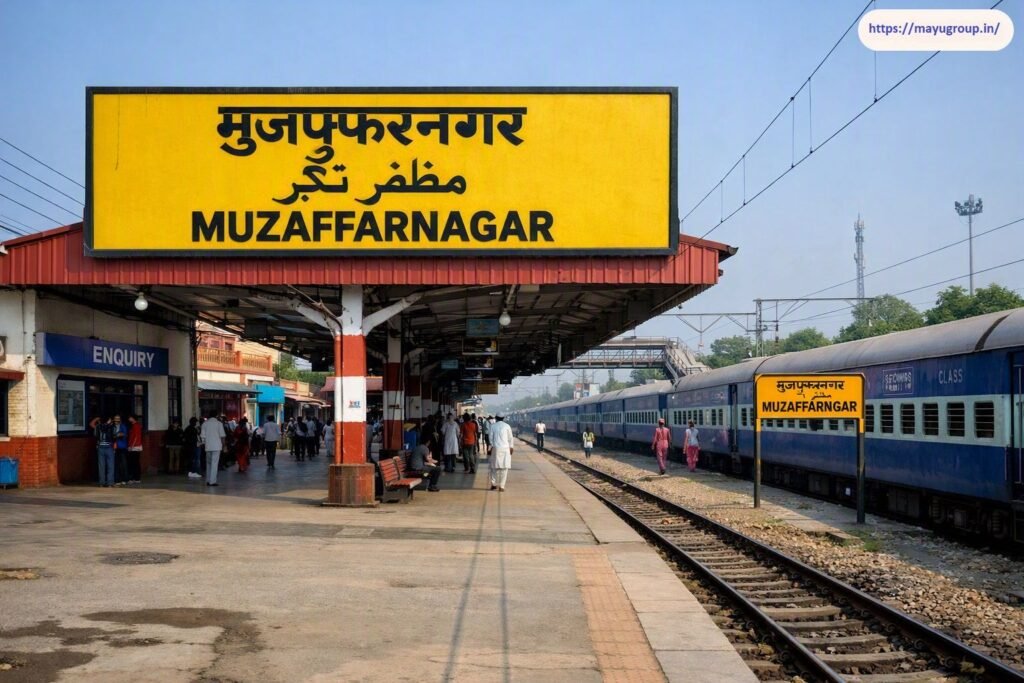
The word quality has a simple sound, but in a railway station it carries a much deeper meaning. Quality is not limited to cleanliness, attractive infrastructure or modern facilities. It is the ability of an organisation to provide reliable, consistent and responsible services while continuously improving the way those services are delivered.
For Muzaffarnagar Railway Station, the journey toward quality represented a change in the way everyday activities could be understood and managed.
A railway station is a complicated operational environment. Hundreds and thousands of people may pass through it during different periods of the day. Trains arrive and depart according to operational requirements. Passengers seek information, purchase tickets, wait for trains, move between platforms and use various facilities. Employees perform their assigned duties while maintenance and housekeeping activities continue in the background.
Every one of these activities contributes to the overall passenger experience.
A passenger may never know how many processes are involved in keeping a station operational. They simply expect things to work.
They expect the platform to be reasonably clean.
They expect information to be understandable.
They expect facilities to be maintained.
They expect staff to provide appropriate assistance.
They expect problems to receive attention.
They expect their journey to be managed in an organised environment.
These expectations form an important part of the concept of customer focus under a quality-management approach.
The project information provided for Muzaffarnagar Railway Station identifies ISO 9001:2015 certification, with an issue date of 2021 and validity through 2024. The certification journey can therefore be understood as an effort to bring greater structure, consistency and continual improvement into the station’s management processes.
ISO 9001 is built around the idea that quality should not depend entirely on individual effort. Instead, an organisation should establish appropriate processes that help people achieve consistent results.
This principle is extremely relevant to railway operations.
Consider cleanliness.
If one employee cleans an area exceptionally well on one day, that is positive. But quality management asks a more important question:
How can the same standard be maintained every day?
The answer may involve defined responsibilities, cleaning schedules, inspections, supervision, records and corrective action.
The same principle applies to maintenance.
A facility may work properly today. But what about tomorrow?
A quality-oriented system encourages preventive thinking. Instead of waiting until something fails, the organisation can establish inspections and planned maintenance activities designed to identify potential problems earlier.
This can reduce disruption and improve reliability.
Documentation also becomes important.
In many organisations, paperwork is considered a burden. Within a well-managed quality system, records serve a useful purpose. They provide evidence of what happened, when it happened and what action was taken.
A maintenance record can show the history of a facility.
An inspection record can identify recurring problems.
A complaint record can reveal patterns in passenger concerns.
A corrective-action report can demonstrate whether an identified problem was addressed.
Over time, these records become a source of organisational knowledge.
This creates a significant shift in management thinking.
Instead of relying entirely on memory or personal assumptions, decisions can increasingly be supported by evidence.
Suppose a particular passenger facility repeatedly receives complaints. The immediate solution might be to repair the facility whenever a complaint is received.
A stronger quality-management approach asks why the problem keeps occurring.
Is the maintenance frequency inadequate?
Is the equipment reaching the end of its useful life?
Is there an installation problem?
Is the facility being used in an unexpected manner?
Is inspection being performed frequently enough?
The objective is to identify the root cause, not merely correct the visible symptom.
This approach can save time and resources while improving reliability.
The same thinking applies to environmental performance.
The supplied project scope identifies the GGBC Green Railway Station Rating System, bringing a green and sustainability-oriented perspective to the station’s quality journey.
A green railway station must consider more than appearance.
It must think about the responsible use of resources.
Water conservation can be connected with maintenance and monitoring.
Energy efficiency can be connected with equipment selection and operating practices.
Waste management can be connected with cleanliness and passenger awareness.
Green landscaping can contribute to the overall station environment.
Thus, environmental responsibility becomes part of operational quality.
This combination creates an important principle:
Good quality should create value without unnecessary waste.
The people working at the station are central to achieving this objective.
No quality system can succeed if employees do not understand their responsibilities.
Training and awareness therefore become essential.
Employees need to know what is expected from them, how their activities affect other processes and why compliance with established procedures matters.
A cleaning employee contributes to passenger comfort.
A maintenance worker contributes to reliability.
A supervisor contributes to process control.
A frontline employee contributes to customer satisfaction.
A manager contributes to strategic direction.
Each role may be different, but all are connected.
This interconnection is one of the most important lessons of quality management.
A station does not function through isolated departments. It functions as one system.
When one process improves, other processes may also benefit.
Better maintenance can reduce complaints.
Better information can reduce passenger confusion.
Better housekeeping can improve public perception.
Better documentation can improve decision-making.
Better training can reduce mistakes.
Better environmental practices can improve resource efficiency.
The benefits therefore accumulate.
Quality becomes a cycle:
Plan → Perform → Check → Correct → Improve.
The cycle repeats continuously.
That is why certification should never be considered the final achievement.
The 2021 certification milestone could provide a structured foundation, but the real value lies in what the organisation does with that foundation over time.
The objective is not simply to pass an audit.
The objective is to create a system capable of learning.
For Muzaffarnagar Railway Station, this means looking at everyday activities with a new perspective.
A complaint can become a lesson.
An audit observation can become an improvement opportunity.
A maintenance issue can become a preventive action.
A passenger suggestion can become a service enhancement.
An environmental observation can become a sustainability initiative.
This is how quality develops from a standard into a culture.
And when quality becomes a culture, improvement no longer depends on one person or one project.
It becomes part of everyday work.
That is the deeper meaning of quality—and it forms the foundation for the continuing transformation of Muzaffarnagar Railway Station.
#MuzaffarnagarRailway
Chapter 3: The Station as a Living System
A railway station may appear to be a collection of buildings, platforms, tracks, signs, waiting areas and equipment. But behind this physical structure is a much more complex reality. A station is a living operational system, continuously influenced by passengers, railway employees, trains, weather, infrastructure, technology, maintenance activities and changing public expectations.
Muzaffarnagar Railway Station is a good example of such an interconnected environment.
Located on the Delhi–Meerut–Saharanpur railway corridor and forming part of Northern Railway’s Delhi Division, the station plays an important role in connecting Muzaffarnagar with other parts of the region. Public railway information identifies the station by code MOZ and lists five platforms.
Every day, the station receives a constantly changing flow of people.
Some passengers arrive with complete knowledge of their journey. Others may be visiting the station for the first time. Some travel alone, while others travel with families and children. Elderly passengers may need additional assistance. Students may be travelling with luggage. Business travellers may be focused on schedules and connections.
Each passenger brings a different expectation.
Yet the station must provide a consistent level of service to everyone.
This is one of the reasons why quality management is so important.
A system cannot depend upon luck.
It cannot depend entirely on whether a particular employee happens to be present.
It needs defined processes, responsibilities and methods of monitoring.
The ISO 9001:2015 certification information supplied for the Muzaffarnagar Railway Station project places this idea at the centre of the station’s quality journey. The stated issue date was 2021, with validity through 2024.
The certification can be understood as part of a broader movement toward systematic management.
Instead of treating individual activities as separate tasks, the station can view them as interconnected processes.
Passenger information affects passenger movement.
Passenger movement affects crowd management.
Crowd movement affects cleanliness.
Cleanliness affects passenger satisfaction.
Maintenance affects the availability of facilities.
Availability affects passenger confidence.
Environmental practices affect resource efficiency.
Training affects the performance of employees.
Everything connects.
This way of thinking changes the question from:
“Did we complete the task?”
to:
“Did the process produce the intended result?”
That is a much stronger question.
Imagine, for example, that a particular passenger facility repeatedly develops problems.
A traditional response might be to repair it whenever it stops functioning.
A process-based approach goes further.
The team asks why the problem occurs repeatedly.
Perhaps inspections are not frequent enough.
Perhaps preventive maintenance needs to be improved.
Perhaps the equipment requires replacement.
Perhaps usage is higher than originally expected.
Perhaps employees need additional training.
Finding the underlying reason makes the organisation more capable of preventing recurrence.
This is the power of process thinking.
It turns individual problems into organisational learning.
The same principle applies to cleanliness.
A railway station can never rely on a single cleaning activity.
Passenger movement changes throughout the day. Certain areas may experience greater footfall than others. Food-related waste may increase at particular times. Weather can bring dust and water into public areas.
Therefore, cleaning must be planned around actual conditions.
Inspection becomes equally important.
A cleaning schedule tells employees what should happen.
An inspection helps determine whether it actually happened effectively.
Corrective action addresses deficiencies.
Management review helps identify recurring patterns.
Together, these activities create a management cycle.
The green component of the Muzaffarnagar project adds another dimension to this system.
The stated scope includes the GGBC Green Railway Station Rating System.
This introduces environmental responsibility into the story.
A railway station uses water, electricity, materials and other resources every day. It also generates waste through passenger and operational activities.
Therefore, a green approach asks questions such as:
Can resources be used more efficiently?
Can unnecessary wastage be reduced?
Can waste management be improved?
Can maintenance prevent avoidable resource consumption?
Can employees and passengers become more environmentally aware?
These questions connect environmental performance with operational quality.
For example, preventing water leakage is simultaneously a maintenance activity and an environmental activity.
Maintaining efficient lighting is simultaneously an infrastructure activity and an energy-management activity.
Proper waste collection supports cleanliness while also contributing to responsible environmental management.
This demonstrates an important principle:
Quality and sustainability do not have to operate separately.
They can reinforce one another.
A well-managed station can improve passenger experience while also reducing unnecessary resource consumption.
However, systems do not improve automatically.
People must operate them.
This makes employee participation essential.
A maintenance worker who notices a recurring defect may possess information that is not visible in management reports.
A cleaning employee may know which area becomes dirty most quickly.
A frontline employee may notice that passengers repeatedly ask the same question.
A security employee may observe patterns in passenger movement.
When these observations are captured and reviewed, frontline experience becomes valuable management information.
This creates a culture where employees are not simply task performers.
They become contributors to improvement.
The organisation begins to learn from its own experience.
That learning can then be converted into procedures, training, preventive actions and improvements.
Over time, the station becomes more resilient.
It can respond to changes more effectively because it has developed a structured method for identifying and solving problems.
This is particularly important as railway infrastructure continues to develop.
Northern Railway’s current planning documents list Muzaffarnagar among stations covered by the Amrit Bharat Station Scheme, placing it within a wider context of railway-station development.
Infrastructure development creates opportunities, but it also creates responsibilities.
New facilities must be maintained.
New systems require trained personnel.
Passenger expectations increase.
Environmental performance becomes increasingly important.
Therefore, physical development and management-system development need to move together.
A modern station without disciplined processes may struggle to maintain its improvements.
A strong management system, on the other hand, provides a foundation for absorbing change.
That is why the certification journey should not be viewed simply as a historical event.
It represents a way of thinking.
The station becomes a living system in which every activity contributes to a larger outcome.
Every inspection provides information.
Every complaint provides feedback.
Every corrective action provides learning.
Every employee contributes to the process.
Every improvement creates a new standard.
And every new standard becomes the starting point for the next improvement.
This is the essence of continual improvement.
For Muzaffarnagar Railway Station, the journey toward quality and green performance was therefore not about changing one isolated activity. It was about understanding the station as a complete system—and recognising that when each part of that system becomes stronger, the entire passenger experience can become stronger as well.
#IndianRailways
Chapter 4: The People Behind the Certificate
A certificate may carry an organisation’s name, a standard number, an issue date and a validity period, but a certificate itself cannot improve an organisation. The real force behind any quality-management achievement is the people who understand the system, follow the processes, identify weaknesses and continuously search for better ways of working.
For Muzaffarnagar Railway Station, this human element is central to the story of quality transformation.
The station is a busy public-service environment where many different activities take place simultaneously. Railway operations, passenger facilitation, housekeeping, maintenance, security, information services and administrative activities must work together. Each function has its own responsibilities, but none exists completely independently.
One department’s performance can influence another.
A maintenance issue can affect passenger convenience. Poor housekeeping can affect the public perception of the station. Unclear information can create confusion among passengers. Delayed corrective action can allow a small problem to become a larger one.
Quality management helps employees understand these connections.
The ISO 9001:2015 certification information provided for the Muzaffarnagar Railway Station project identifies 2021 as the issue year, with validity through 2024. The importance of this certification journey lies not simply in achieving recognition, but in developing a structured approach through which employees can contribute to consistent performance.
The first major requirement of such a culture is awareness.
People need to understand why their work matters.
A cleaning employee is not simply responsible for sweeping a floor. The quality of that work contributes to passenger comfort, hygiene perception and the overall image of the station.
A maintenance employee is not merely repairing equipment. Proper maintenance contributes to reliability and reduces the possibility of disruption.
A supervisor is not simply checking whether tasks have been completed. The supervisor is helping ensure that processes are working as intended.
A frontline employee is not merely answering questions. That employee represents the organisation directly to passengers.
This understanding creates ownership.
When employees understand the purpose behind their responsibilities, procedures become more meaningful.
Training is therefore an important part of organisational development.
A quality-management system cannot remain limited to management offices. Its principles need to reach the people who perform everyday activities.
Employees need to know what procedures apply to their work, what records need to be maintained, how problems should be reported and what action should be taken when a process does not achieve the expected result.
Training also needs to evolve.
Railway technology changes.
Passenger expectations change.
Infrastructure changes.
Environmental requirements change.
Therefore, employee competence must develop along with the organisation.
The green dimension of the project makes this even more important.
The supplied scope identifies the GGBC Green Railway Station Rating System, which brings environmental considerations into the station’s broader quality story.
Green performance cannot be created by infrastructure alone.
Even the most efficient equipment requires correct operation and maintenance.
Waste-management systems require people to follow the appropriate practices.
Water-saving measures require monitoring.
Energy-saving initiatives require awareness.
Clean surroundings require daily participation.
Therefore, environmental responsibility becomes a behavioural issue as much as a technical one.
This is where organisational culture becomes important.
Imagine a staff member noticing a water leak.
One approach would be to ignore it because it is outside that person’s immediate responsibility.
A quality-oriented culture encourages the employee to report it.
The report can then be evaluated.
Maintenance can respond.
The repair can be recorded.
The issue can be reviewed to determine whether similar problems exist elsewhere.
A small observation can therefore become a preventive action.
The same principle applies to passenger feedback.
A complaint should not automatically be viewed as criticism.
It can be valuable information.
If several passengers report difficulty locating a facility, the organisation can investigate the reason. Perhaps signage needs improvement. Perhaps information is not positioned clearly. Perhaps the existing communication method is insufficient.
Instead of responding to each passenger individually, management can improve the system for everyone.
This is one of the most important characteristics of a mature quality culture:
Problems become opportunities to learn.
Employees also play an important role in internal audits.
An audit is not merely an examination of whether paperwork exists. It can help determine whether processes are being implemented effectively.
For employees, an audit can create an opportunity to explain how their work is performed and identify challenges they face.
For management, audit observations can reveal areas where additional resources, training or process improvement may be necessary.
A healthy audit culture avoids blame.
Its objective is improvement.
This distinction can significantly influence employee attitudes.
If workers believe that reporting problems will automatically result in criticism, problems may remain hidden.
If they understand that reporting problems helps improve the system, communication becomes more open.
Open communication creates better information.
Better information creates better decisions.
Better decisions create better performance.
The people behind the certificate also include those whose work may not always be visible to passengers.
There are employees who work early in the morning, late at night or behind the scenes. There are people responsible for maintenance, inspection, records, supplies and coordination.
Passengers may never know their names.
Yet their work contributes directly to the station’s functioning.
This reminds us that quality is a collective achievement.
No individual can create it alone.
The station’s management must provide leadership.
Supervisors must provide direction.
Employees must perform their responsibilities.
Support personnel must contribute reliably.
Service providers must meet defined requirements.
Passengers themselves can also contribute by using facilities responsibly and providing constructive feedback.
Together, these groups form a quality ecosystem.
As Muzaffarnagar Railway Station continues to develop, this human capability becomes increasingly important. Northern Railway’s current documentation places Muzaffarnagar among stations covered under the Amrit Bharat Station Scheme, connecting the station with a wider programme of railway-station development.
Infrastructure improvements create new possibilities, but people determine whether those improvements remain effective over time.
A new facility needs maintenance.
A new technology system needs competent operators.
An upgraded passenger area needs proper housekeeping.
An environmental initiative needs monitoring.
A redesigned process needs employee understanding.
Therefore, investment in people is just as important as investment in infrastructure.
The legacy of the 2021 certification journey can consequently be understood as a legacy of awareness, discipline and responsibility.
The certificate may have represented formal recognition of a management system.
But the deeper achievement lies in developing people who understand that quality is part of their everyday work.
Every inspection, every maintenance activity, every cleaning round, every passenger interaction and every corrective action contributes to the larger picture.
A quality culture develops when employees stop thinking only in terms of individual tasks and begin thinking about outcomes.
The question changes from:
“Have I completed my work?”
to:
“Has my work helped the station achieve the desired result?”
That change in thinking is powerful.
It turns employees into participants in improvement.
It turns routine work into purposeful work.
And it turns a quality certificate from a document into a living organisational commitment.
For Muzaffarnagar Railway Station, the people behind the certificate are therefore the true authors of its quality story. Their skills, awareness, cooperation and willingness to improve provide the foundation upon which every future achievement can be built.
#NorthernRailway
Chapter 5: From Quality to Green Quality
The journey of Muzaffarnagar Railway Station toward organised quality did not end with the achievement of a quality-management milestone. Instead, it opened the door to a broader idea: quality must also be responsible toward the environment.
A railway station is a place of constant activity. Trains arrive and depart, passengers move across platforms, facilities operate throughout the day, employees perform their duties and numerous resources are consumed. Water is required for various station activities. Electricity supports lighting and equipment. Cleaning operations require materials and supplies. Passenger activity generates waste.
Because of this continuous activity, environmental responsibility cannot be treated as something separate from station management.
It must become part of the way the station operates.
The project information provided for Muzaffarnagar Railway Station identifies the GGBC Green Railway Station Rating System as the scope of work. This adds an important environmental dimension to the station’s ISO 9001:2015 quality journey, whose supplied certification period began in 2021 and was valid through 2024.
The combination of quality and green thinking creates an important principle:
A well-managed organisation should not only deliver services effectively; it should also use resources responsibly.
This principle can influence many aspects of railway-station operations.
Consider cleanliness.
At first glance, cleanliness may appear to be a purely visual matter. Passengers want clean platforms, waiting areas and public spaces. But behind cleanliness lies an entire process.
Cleaning schedules must be established.
Personnel must be assigned.
Equipment and materials must be available.
Waste must be collected.
Public areas must be inspected.
Deficiencies must be identified.
Corrective action must be taken.
Performance must be monitored.
When this process is managed systematically, cleanliness becomes more than an occasional activity. It becomes a controlled operational function.
The environmental dimension then asks an additional question:
How can cleanliness be achieved while minimising unnecessary waste of resources?
This can influence the selection and use of cleaning materials, the handling of waste and the management of water.
Water is particularly important.
A railway station requires water for multiple purposes, making responsible consumption an important consideration. A leaking pipe, damaged fitting or poorly controlled usage can result in unnecessary loss.
A quality-management approach encourages inspection and corrective action.
A green-management approach adds resource conservation to that process.
The two approaches therefore reinforce each other.
If a leak is identified quickly, the station can reduce water wastage while also preventing potential infrastructure damage.
The same principle applies to electricity.
Lighting and equipment are necessary for safe and efficient station operations. But responsible energy management requires awareness of how and when resources are consumed.
Maintenance is also connected with energy efficiency.
Equipment that is poorly maintained may operate less efficiently.
Preventive maintenance can help identify such problems before they become more serious.
This demonstrates why environmental performance should not be considered only the responsibility of a specialised environmental team.
It is everyone’s responsibility.
The employee who reports a leaking tap contributes to environmental performance.
The maintenance worker who repairs the leak contributes to environmental performance.
The supervisor who verifies the corrective action contributes to environmental performance.
The manager who reviews recurring water-related problems contributes to environmental performance.
In this way, sustainability becomes integrated into ordinary work.
Waste management provides another example.
A busy railway station naturally generates different forms of waste. Food packaging, paper, plastic materials and other discarded items can accumulate quickly when passenger movement is high.
Effective waste management therefore requires a system.
Waste collection points need to be appropriately managed.
Cleaning personnel need clear responsibilities.
Waste should be handled according to applicable procedures.
The station needs regular monitoring.
Employees and passengers can also be encouraged to maintain cleanliness and use designated disposal facilities.
The goal is not merely to remove waste after it appears.
The larger objective is to create an environment where waste is managed systematically and unnecessary generation is reduced wherever practical.
This is where quality thinking becomes valuable.
A problem is not simply corrected.
It is analysed.
If one area repeatedly accumulates waste, management can ask why.
Is the location of bins appropriate?
Is the collection frequency adequate?
Is passenger movement unusually high in that area?
Is additional awareness required?
Are responsibilities clearly defined?
Such questions help identify the underlying cause.
The green approach therefore becomes closely connected with continual improvement.
Every environmental issue can provide an opportunity to learn.
Every successful initiative can become a standard practice.
Every recurring problem can lead to a preventive measure.
This creates a cycle of improvement:
Observe → Measure → Analyse → Act → Verify → Improve.
The cycle can apply to water, energy, waste, cleanliness, maintenance and many other areas.
Green quality also has a strong connection with passenger experience.
Passengers increasingly notice the condition of public spaces.
A clean and environmentally responsible station can create a positive impression.
It communicates care.
It demonstrates discipline.
It reflects organisational responsibility.
For a city such as Muzaffarnagar, the railway station also contributes to the public image of the city. Visitors arriving by train encounter the station as part of their first experience of the local environment.
Therefore, station cleanliness and environmental responsibility can have significance beyond railway operations.
They can contribute to civic pride.
The concept of green quality also supports long-term thinking.
A short-term approach may focus on immediate repairs.
A long-term approach considers the entire life of an asset.
How long will equipment last?
How much maintenance will it require?
How efficiently will it operate?
Can its useful life be extended?
What happens when it reaches the end of its service life?
These questions encourage responsible resource management.
They also align with the broader idea of sustainable infrastructure.
As Indian Railways continues modernising its stations, such thinking becomes increasingly relevant. Northern Railway’s current documentation lists Muzaffarnagar among the stations covered under the Amrit Bharat Station Scheme, placing the station within a wider framework of station-development initiatives.
Modernisation creates an opportunity to combine better infrastructure with better management.
New passenger facilities can be designed with efficiency in mind.
Improved systems can be supported by preventive maintenance.
Digital information systems can reduce dependence on certain physical materials.
Improved waste-management practices can support cleaner public spaces.
Energy-conscious equipment can support resource efficiency.
But infrastructure alone cannot create green quality.
People must operate and maintain it correctly.
This returns the story to the most important element: organisational culture.
A green railway station is not created in one day.
It develops through repeated decisions.
Someone switches off unnecessary equipment.
Someone reports a leak.
Someone ensures that waste is properly collected.
Someone checks a facility.
Someone trains a colleague.
Someone identifies an opportunity to reduce resource consumption.
Individually, these actions may seem small.
Collectively, they create a culture.
The true value of the GGBC Green Railway Station Rating System, therefore, lies in encouraging the organisation to view environmental performance as part of overall station excellence.
Quality asks:
Are we doing the work correctly?
Green thinking adds:
Are we doing it responsibly?
Continual improvement then asks:
Can we do it better tomorrow?
Together, these three questions provide a powerful foundation.
For Muzaffarnagar Railway Station, the journey from quality to green quality represents a transition from simply managing activities to thinking about their wider consequences.
The objective is a station that is efficient without being wasteful, clean without unnecessary resource consumption, modern without losing sight of sustainability and responsive without sacrificing consistency.
That is the deeper meaning of green quality.
And as the station moves toward future development, the lessons of this journey can remain valuable: good management protects both service quality and the resources on which future generations depend.
#ISO9001
Chapter 6: The Audit That Changed the Conversation
An audit is often imagined as a formal inspection—a team arrives, documents are reviewed, questions are asked and observations are recorded. But in a mature quality-management system, an audit means much more than checking paperwork. It provides an opportunity for an organisation to look at itself honestly and understand whether its processes are actually delivering the results they are intended to deliver.
For Muzaffarnagar Railway Station, the ISO 9001:2015 certification journey provided an important opportunity to strengthen this culture of systematic review.
The project information supplied identifies the certification issue date as 2021, with validity through 2024. The certification journey can therefore be viewed as an important stage in the station’s development toward structured quality management.
The real value of an audit begins with a simple question:
Are we doing what we said we would do?
The second question is even more important:
Is what we are doing actually effective?
These two questions can reveal the difference between documented compliance and genuine performance.
A procedure may exist on paper, but the audit examines whether employees understand it and whether it is being implemented consistently.
A maintenance schedule may exist, but records and observations can help determine whether maintenance activities are actually being completed.
A complaint-handling process may be defined, but an audit can examine whether complaints are being addressed effectively.
A cleaning system may be documented, but inspections can determine whether the expected level of cleanliness is consistently achieved.
This makes auditing a powerful management tool.
At a railway station, there are countless processes operating simultaneously. An audit does not need to examine everything at once. Instead, it can focus on relevant processes, available evidence, responsibilities, performance and areas of risk.
Documentation becomes important because it provides evidence.
Suppose a maintenance activity has been completed.
A verbal statement may not be sufficient to demonstrate systematic control.
A properly maintained record can provide evidence of the activity, date, responsible personnel and relevant observations, depending on the organisation’s documented system.
The same principle can apply to inspections.
Records help establish continuity.
They can show whether an activity happened regularly and whether deficiencies were identified.
Over time, these records can reveal patterns.
Perhaps one facility requires frequent corrective action.
Perhaps one area repeatedly receives complaints.
Perhaps a particular maintenance activity is frequently delayed.
Perhaps one process requires additional employee training.
The audit therefore becomes a source of information.
It can help management move from assumptions to evidence.
This is where the audit changes the conversation.
Instead of asking, “Who made the mistake?” the organisation can ask:
“What weakness in the process allowed the problem to occur?”
That is a completely different approach.
Blame focuses on individuals.
Process analysis focuses on causes.
If a problem is caused by unclear responsibility, blaming an employee will not solve the underlying issue.
If a recurring defect is caused by inadequate preventive maintenance, repeated repairs may not provide a permanent solution.
If passengers repeatedly struggle to find a facility, simply giving directions to individual passengers does not solve the information problem.
A quality-oriented audit encourages the organisation to look deeper.
This leads to root-cause analysis.
The objective is to understand why a problem occurred and determine what action can prevent recurrence.
For example, imagine that a particular station facility repeatedly develops a defect.
The immediate corrective action may be repair.
But the investigation can continue.
Was the equipment installed correctly?
Is the usage level higher than expected?
Is the maintenance interval appropriate?
Is the component reaching the end of its useful life?
Are operating instructions understood?
Is there a supply problem affecting replacement parts?
Each answer leads toward a more effective solution.
This is the difference between correction and corrective action.
Correction addresses the immediate problem.
Corrective action addresses the cause.
The distinction is fundamental to continual improvement.
Auditing can also support environmental objectives.
The project scope provided for Muzaffarnagar Railway Station includes the GGBC Green Railway Station Rating System. Environmental performance can therefore become another area in which monitoring and review are valuable.
A green initiative may look successful initially, but management needs evidence to determine whether it is actually delivering results.
Are resources being used responsibly?
Are environmental practices being followed consistently?
Are waste-management processes functioning effectively?
Are identified deficiencies being corrected?
Are employees aware of their environmental responsibilities?
These questions connect audit thinking with sustainability.
The audit also encourages management involvement.
Senior personnel need visibility into the organisation’s performance.
They need to know what is working, what is not working and where resources may be required.
This is where management review becomes valuable.
Audit results can be considered alongside complaints, process performance, corrective actions, resource requirements, risks and opportunities.
The objective is not simply to create another report.
The objective is to make better decisions.
A quality-management system becomes powerful when information travels upward and decisions travel downward.
Employees report problems.
Supervisors analyse them.
Management reviews trends.
Decisions are made.
Actions are implemented.
Results are checked.
The cycle then begins again.
This creates organisational learning.
Another important benefit of auditing is consistency.
Without periodic review, organisations can gradually drift away from established processes.
Employees change.
Responsibilities change.
Workloads change.
Facilities change.
Technology changes.
Over time, informal shortcuts may develop.
An audit provides an opportunity to ask whether the intended system is still being followed.
If not, the organisation can correct the deviation.
This does not mean that every deviation is evidence of failure.
Sometimes the procedure itself may need improvement.
If employees repeatedly struggle with a particular process, management may need to understand why.
Perhaps the process is unnecessarily complicated.
Perhaps responsibilities overlap.
Perhaps additional training is required.
Perhaps technology can simplify the activity.
Thus, an audit can improve not only implementation but also the management system itself.
The most successful organisations treat audit findings as opportunities rather than threats.
An observation can lead to improvement.
A nonconformity can lead to stronger controls.
A recurring complaint can lead to service enhancement.
A maintenance trend can lead to preventive planning.
An environmental weakness can lead to better resource management.
This is why the audit can genuinely change the conversation.
It transforms quality from an abstract concept into evidence-based management.
For Muzaffarnagar Railway Station, the 2021 certification milestone can therefore be seen as part of a wider movement toward disciplined processes and continual improvement. The value of that journey is not limited to the period printed on the certificate. Its greater value lies in the habits of review and improvement that can remain within the organisation.
A certificate may have a validity period.
An audit has a date.
But organisational learning can continue indefinitely.
That is the real power of auditing.
It encourages the station to look honestly at its performance, understand its weaknesses, recognise its strengths and continually search for better ways of serving passengers.
In the end, the most successful audit is not the one that finds nothing wrong.
It is the one that helps an organisation discover something it can do better—and then gives that organisation the discipline to make the improvement last.
#QualityManagement
Chapter 7: Growth Beyond the Certificate
When an organisation receives a certification, the achievement is often celebrated as an important milestone. A certificate represents effort, discipline, preparation and recognition of a defined management system. But the real value of certification begins after the certificate is issued.
For Muzaffarnagar Railway Station, the ISO 9001:2015 certification journey, with the supplied issue date of 2021 and validity through 2024, can be viewed as a foundation for a broader process of organisational growth. The important question was not simply whether certification had been achieved, but whether the principles behind the quality-management system could continue to influence daily operations.
Growth, in the context of a railway station, has a meaning different from that of a conventional private company.
It is not necessarily measured through sales revenue or profit margins.
Instead, growth can be seen through better service capability, stronger processes, improved infrastructure management, employee development, environmental responsibility and greater organisational maturity.
This broader definition of growth is important because a railway station serves the public.
Every improvement can potentially affect thousands of passenger journeys.
A clearer sign can reduce confusion.
A better-maintained facility can improve convenience.
A cleaner waiting area can improve passenger experience.
A faster response to a complaint can increase confidence.
A preventive maintenance programme can reduce disruption.
A better environmental practice can reduce unnecessary resource consumption.
Individually, these improvements may appear small.
Together, they represent organisational growth.
One of the most important outcomes of a structured quality-management system is consistency.
A railway station cannot depend upon occasional excellence.
Passengers need reliable service every day.
A facility that is maintained perfectly one week but neglected the next does not represent sustainable quality.
A cleaning programme that works only when senior management is inspecting the station is not a mature system.
A complaint process that responds quickly to one passenger but ignores another is inconsistent.
The purpose of process management is to reduce such variation.
Defined responsibilities, procedures, monitoring and corrective action help create greater consistency.
This consistency is one of the clearest signs of organisational maturity.
Another important area of growth is institutional knowledge.
In any large organisation, people change.
Employees transfer.
Responsibilities are reassigned.
New personnel join.
Experienced personnel retire or move to other roles.
If knowledge exists only in individual memory, the organisation can lose valuable experience.
Documentation helps preserve that knowledge.
Inspection records can show previous issues.
Maintenance records can reveal equipment history.
Corrective-action records can explain how problems were addressed.
Training records can demonstrate competence development.
Audit findings can provide lessons for future teams.
Over time, these records create organisational memory.
This is particularly valuable in a complex environment such as a railway station.
A problem that occurred in the past can become a lesson for the future.
A successful improvement can become a standard practice.
A recurring issue can trigger preventive action.
In this way, the organisation becomes capable of learning from itself.
The green component of the Muzaffarnagar project adds another dimension to this growth.
The supplied scope identifies the GGBC Green Railway Station Rating System, connecting station quality with environmental responsibility.
Environmental awareness can become part of long-term organisational capability.
Employees can become more conscious of resource consumption.
Maintenance teams can consider efficiency.
Housekeeping teams can focus on responsible waste handling.
Management can consider environmental factors when planning improvements.
Passengers can be encouraged to participate in maintaining cleaner public spaces.
This creates a wider understanding of sustainability.
A green railway station is not created by a single project.
It is created through repeated decisions.
The decision to prevent unnecessary water loss.
The decision to manage waste responsibly.
The decision to maintain equipment properly.
The decision to avoid unnecessary consumption.
The decision to consider environmental performance when planning improvements.
These decisions gradually become organisational habits.
Technology can also contribute to growth.
Modern railway stations increasingly depend upon information systems, digital communication, electronic displays and other technologies. Such systems can improve passenger information and operational efficiency when implemented and managed appropriately.
However, technology alone does not guarantee improvement.
A digital system still requires maintenance.
Employees still require training.
Information still needs to be accurate.
Processes still need to be monitored.
Therefore, the quality-management system provides an important foundation for technological development.
It ensures that technology becomes part of a controlled process rather than an isolated investment.
Infrastructure development presents a similar challenge.
Northern Railway’s current planning documentation includes Muzaffarnagar among stations covered under the Amrit Bharat Station Scheme, connecting the station with the broader modernisation and redevelopment context of Indian Railways.
As infrastructure develops, the importance of management systems increases.
A new passenger facility must be maintained.
A renovated area must remain clean.
New equipment must be inspected.
New technology must be operated by competent personnel.
New environmental features must be preserved.
Therefore, physical development and organisational development must progress together.
This is where the lessons of ISO 9001 become particularly valuable.
The principles of customer focus, process thinking, risk-based thinking, evidence-based decisions and continual improvement remain useful even beyond an individual certification cycle.
The certificate may have an expiry date.
The management principles do not have to expire.
They can become part of the organisation’s working culture.
This is the difference between certification and capability.
Certification provides formal recognition at a particular point in time.
Capability is the organisation’s continuing ability to achieve desired results.
A station with strong capability can adapt to change.
Passenger expectations change.
Technology changes.
Infrastructure changes.
Environmental requirements evolve.
Operational conditions vary.
A mature organisation does not resist every change.
It studies the change, evaluates the risks, develops appropriate processes and implements improvements.
This adaptability represents another form of growth.
Growth also occurs through employee development.
When employees receive training, understand processes and participate in improvement activities, the organisation becomes stronger.
The knowledge of one employee can be shared with others.
Good practices can be standardised.
Lessons from audits can become training topics.
Corrective actions can become learning opportunities.
The result is a stronger workforce.
A stronger workforce supports stronger processes.
Stronger processes support better services.
Better services support greater passenger confidence.
Thus, growth becomes a cycle.
People improve processes. Processes improve services. Better services create confidence. Confidence strengthens the organisation.
This cycle can continue for years.
For Muzaffarnagar Railway Station, the significance of the quality journey therefore extends beyond the certification period of 2021–2024.
The greatest achievement is not simply having received recognition.
It is the possibility of carrying forward the discipline, awareness and improvement mindset developed during that period.
A certificate can demonstrate that a system existed.
A culture demonstrates that the system lives.
The station’s future growth will depend upon this culture.
Every new improvement can build upon previous learning.
Every challenge can become an opportunity.
Every employee can contribute.
Every passenger interaction can provide feedback.
Every audit can reveal a new lesson.
Every environmental initiative can strengthen sustainability.
And every successful improvement can become the foundation for another.
This is what growth beyond the certificate truly means.
It means transforming certification from a destination into a starting point.
For Muzaffarnagar Railway Station, the journey of quality does not end when a certificate reaches the end of its validity period.
It continues every morning when the station opens its doors, every time a passenger arrives, every time an employee performs a task and every time the organisation asks one simple but powerful question:
“How can we do this better?”
#GreenRailwayStation
Chapter 8: A New Culture of Improvement
The greatest achievement of a quality-management journey is not the certificate placed inside an office. It is the development of a culture in which people begin to look at everyday work differently.
For Muzaffarnagar Railway Station, the ISO 9001:2015 certification journey provided an opportunity to strengthen this culture. With the supplied certification issue date of 2021 and validity through 2024, the certification period can be understood as an important stage in developing systematic processes, employee awareness and continual improvement.
A quality system becomes meaningful only when it moves beyond documentation.
A manual can describe a procedure.
A checklist can identify an inspection.
A record can demonstrate that an activity was completed.
An audit can identify a weakness.
But none of these things automatically creates improvement.
People do.
This is why organisational culture becomes so important.
Imagine a railway employee noticing that a particular passenger area frequently becomes congested. The employee could simply continue performing the assigned duties. But within a culture of improvement, the observation can become a question:
Why does this happen repeatedly?
Perhaps passenger movement is not clearly guided.
Perhaps information is insufficient.
Perhaps the location of a facility creates an unexpected bottleneck.
Perhaps the timing of certain activities contributes to the problem.
Once the cause is understood, a better solution can be developed.
This is the essence of continual improvement.
The organisation does not simply accept existing conditions.
It observes them.
It studies them.
It learns from them.
And it searches for a better method.
The same approach can be applied to maintenance.
A small defect may appear insignificant when considered by itself. But if the same defect repeatedly occurs, it may indicate a weakness in the maintenance process.
A mature system asks:
Is preventive maintenance adequate?
Is the inspection frequency appropriate?
Are employees trained correctly?
Are spare parts available?
Is the equipment reaching the end of its useful life?
Does the procedure need revision?
The goal is to understand the system rather than simply repair the symptom.
This approach can save resources while improving reliability.
The culture of improvement also changes how employees view complaints.
A complaint can feel negative.
However, from a quality perspective, a complaint is information.
It tells the organisation that something did not meet a passenger’s expectation.
If complaints are properly recorded and analysed, they can reveal patterns.
Perhaps passengers repeatedly request the same information.
Perhaps a particular facility causes confusion.
Perhaps a service is not available at the expected time.
Perhaps signage is insufficient.
Each observation can become an improvement opportunity.
This is especially relevant to a public railway station because passenger expectations are constantly evolving.
Today’s passenger may expect faster information, clearer communication and more convenient facilities than passengers expected years ago.
The organisation therefore needs the ability to listen.
Customer focus becomes a continuous activity.
The green component of the project reinforces the same philosophy.
The supplied scope identifies the GGBC Green Railway Station Rating System, which brings environmental responsibility into the station’s development story.
A culture of improvement can therefore include environmental questions.
Can water consumption be reduced?
Can unnecessary energy use be avoided?
Can waste handling become more effective?
Can maintenance prevent unnecessary resource consumption?
Can employees become more aware of environmental responsibilities?
Can passengers be encouraged to maintain cleaner public spaces?
These questions turn sustainability into a continuous activity rather than a one-time project.
Green quality also depends upon employee behaviour.
A technically efficient facility can lose its benefits if it is poorly maintained.
A waste-management system can fail if procedures are not followed.
A water-saving initiative can become ineffective if leaks are ignored.
An energy-saving system requires appropriate operation.
Therefore, environmental performance depends on the same qualities that support ISO 9001:
Awareness.
Responsibility.
Monitoring.
Corrective action.
Continual improvement.
This creates an integrated management culture.
The station’s employees can become active participants in this process.
One person may identify an opportunity.
Another may investigate it.
A supervisor may coordinate corrective action.
Management may provide resources.
The result can then be reviewed.
If the solution works, it can be standardised.
If it does not work, the organisation can learn from the experience and try another approach.
This creates a cycle of organisational learning.
The cycle can be described simply:
Identify → Analyse → Improve → Verify → Standardise → Improve Again.
The phrase “improve again” is important.
There is no permanent final state.
A process that works today may require modification tomorrow.
Technology changes.
Passenger volumes change.
Infrastructure changes.
Environmental expectations change.
Operational requirements change.
Therefore, continual improvement must remain continuous.
Leadership plays an important role in maintaining this culture.
Management must demonstrate that quality is important.
If employees see that management takes complaints seriously, reviews audit findings and supports corrective actions, they are more likely to participate.
If management asks for improvement ideas and provides appropriate resources, employees become more engaged.
Leadership therefore means more than giving instructions.
It means creating conditions in which people can perform well.
This includes training.
Employees need appropriate knowledge and skills to carry out their responsibilities.
When new facilities or technologies are introduced, employees need to understand them.
When procedures change, awareness needs to be communicated.
When recurring problems are identified, training may become part of the corrective action.
The result is a learning organisation.
Another important feature of a strong culture is openness.
People should feel able to report problems.
If employees hide problems because they fear criticism, management receives incomplete information.
Incomplete information leads to weak decisions.
Open reporting creates better information.
Better information creates better decisions.
Better decisions create better performance.
This is why a quality culture should focus on improvement rather than blame.
The objective is not to identify someone to punish.
The objective is to identify what can be changed so that the problem is less likely to occur again.
This approach is particularly powerful in a complex railway environment.
No single person controls the entire passenger experience.
Performance depends upon many connected processes.
Therefore, improvement also requires teamwork.
Employees must communicate.
Departments must coordinate.
Supervisors must share information.
Management must review performance.
External service providers, where involved, must understand applicable requirements.
The entire organisation becomes part of one improvement system.
The future development of Muzaffarnagar Railway Station makes this culture even more relevant. Northern Railway’s current documentation places Muzaffarnagar among stations covered by the Amrit Bharat Station Scheme, linking the station to the broader development of railway-station infrastructure.
As stations modernise, the importance of organisational culture increases.
New infrastructure can create new opportunities, but maintaining it requires discipline.
New passenger facilities need regular inspection.
New technologies require competent employees.
New environmental features require proper operation.
New processes require monitoring.
Modernisation therefore cannot be separated from management.
A culture of improvement provides the bridge between infrastructure and performance.
It ensures that development does not stop when construction ends.
Instead, every new facility becomes part of a continuing cycle of operation, measurement, learning and improvement.
For Muzaffarnagar Railway Station, this culture represents one of the most valuable legacies of the quality journey.
The certificate provided recognition.
The management system provided structure.
The employees provided implementation.
The audits provided feedback.
The green-rating approach provided environmental direction.
Continual improvement connected everything together.
The ultimate goal is not perfection.
It is progress.
A station does not need to solve every challenge at once.
It needs to identify priorities, take meaningful action, measure the results and continue learning.
Over time, these small improvements accumulate.
A clearer sign.
A better inspection.
A faster response.
A cleaner area.
A more efficient resource practice.
A stronger maintenance process.
A better-trained employee.
Each improvement may appear modest.
Together, they create transformation.
That is the true meaning of a new culture of improvement.
It is the moment when quality stops being something written in a manual and becomes something people practise every day.
And when that culture becomes established, the railway station is no longer simply maintaining a standard.
It is continuously creating a better standard for itself.
#RailwayStationDevelopment
Chapter 9: The Road Ahead
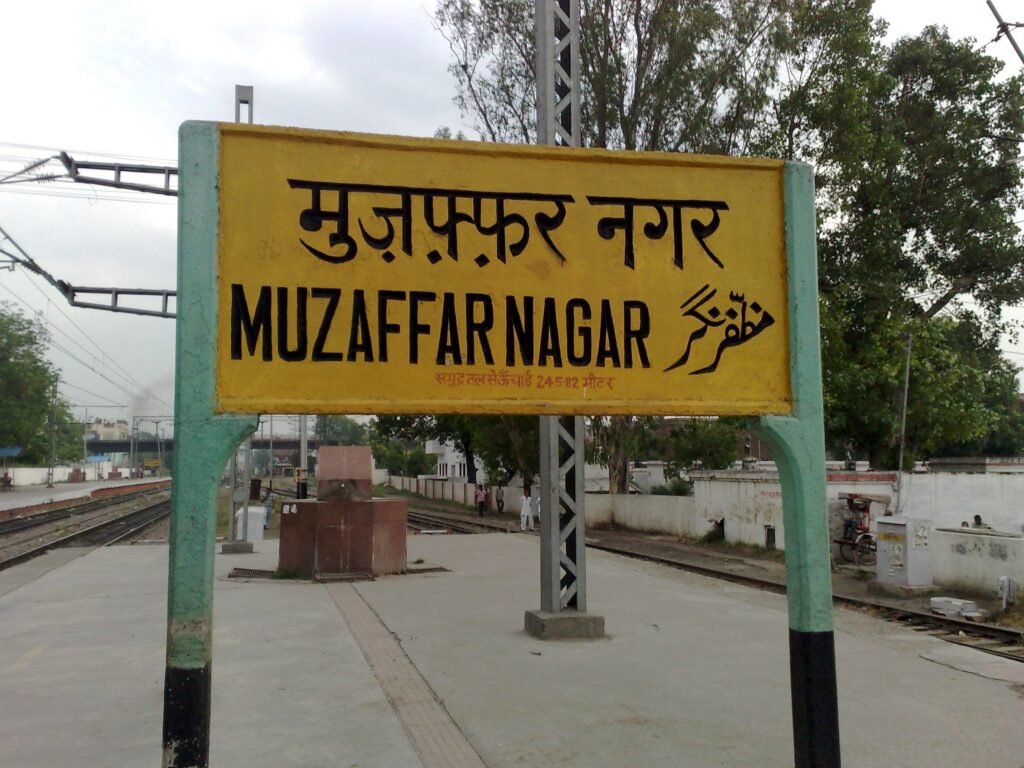
Every successful quality journey eventually reaches a new beginning. A certificate may mark an important milestone, but it does not mark the end of improvement. For Muzaffarnagar Railway Station, the quality-management journey associated with ISO 9001:2015 can be understood as a foundation upon which future operational, environmental and passenger-service improvements can continue to develop.
The project information supplied identifies 2021 as the certification issue year and 2024 as the validity end year. The period was therefore an important chapter in the station’s continuing journey toward systematic management and continual improvement.
But what happens after the certificate?
That is where the real test begins.
A railway station operates in an environment that is constantly changing. Passenger expectations evolve. Technology develops. Infrastructure is upgraded. Environmental concerns become more important. New government programmes introduce fresh development priorities. Employee roles change. Operational conditions fluctuate.
A quality system must therefore be capable of adapting.
The fundamental principles of ISO 9001 remain useful in this environment. Customer focus, process management, risk-based thinking, evidence-based decision-making and continual improvement can provide a strong foundation for future development.
The first priority on the road ahead is passenger experience.
A railway station exists to serve people.
Every infrastructure improvement should ultimately contribute to convenience, accessibility, safety, clarity or reliability.
Passengers should be able to understand where they need to go.
They should be able to access relevant information.
Public areas should be maintained appropriately.
Facilities should remain functional.
Complaints and suggestions should be taken seriously.
The passenger experience is therefore not a single department’s responsibility. It is the combined outcome of many processes.
The second priority is infrastructure reliability.
Modern infrastructure can provide significant benefits, but those benefits can only be sustained through proper maintenance.
A newly improved facility can deteriorate if preventive maintenance is neglected.
Equipment can become unreliable if inspections are not performed.
Technology can become ineffective if systems are not updated or employees are not trained.
Therefore, every development project should be accompanied by a long-term maintenance mindset.
The question should not only be:
“How can we build or improve this facility?”
It should also be:
“How will we maintain it for years to come?”
This is where quality-management principles become extremely valuable.
The third priority is digital transformation.
Technology is changing the way railway passengers receive information and interact with transportation services. Digital displays, electronic communication, data systems and other technologies can support more efficient station management when appropriately implemented.
However, technology should never become an isolated objective.
A digital system needs defined responsibilities.
Information needs to be accurate.
Equipment needs maintenance.
Employees need training.
Performance needs monitoring.
Risks need to be understood.
Thus, digital transformation should be integrated into the quality-management system.
The fourth priority is environmental responsibility.
The supplied project scope identifies the GGBC Green Railway Station Rating System, making green performance an important part of the station’s story.
Future station development can continue to consider water conservation, energy efficiency, waste management, cleanliness and responsible resource use.
Environmental performance should ideally become part of routine management rather than a separate activity.
For example, a maintenance review can consider resource efficiency.
A housekeeping review can consider waste reduction.
An infrastructure project can consider lifecycle impacts.
An employee-training programme can include environmental awareness.
In this way, sustainability becomes integrated into normal station operations.
The fifth priority is employee development.
People remain the most important component of any management system.
A modern station requires employees who can understand new technologies, follow processes, communicate effectively and respond to changing passenger needs.
Training should therefore not be treated as a one-time activity.
It should be continuous.
Employees can learn from audits.
They can learn from corrective actions.
They can learn from new technologies.
They can learn from passenger feedback.
They can learn from each other’s experience.
This creates an organisation capable of learning.
The sixth priority is risk management.
Railway operations involve many potential risks. The objective is not to eliminate every risk, which may be impossible, but to understand significant risks and establish appropriate controls.
Risk-based thinking encourages the organisation to ask:
What could go wrong?
How likely is it?
What would be the consequence?
What controls already exist?
What additional action may be necessary?
How will effectiveness be monitored?
This approach can support better planning.
It also helps management prepare for unexpected situations rather than reacting only after problems occur.
Another important element of the road ahead is data.
A quality system becomes stronger when decisions are based on reliable information.
Passenger feedback can reveal service patterns.
Maintenance records can reveal equipment trends.
Inspection results can identify recurring deficiencies.
Environmental data can indicate resource-use patterns.
Audit findings can identify weaknesses in processes.
When such information is analysed collectively, management gains a clearer picture of station performance.
This allows improvement priorities to be selected more intelligently.
The future development context of Muzaffarnagar Railway Station makes these principles particularly relevant. Northern Railway’s current planning documentation lists Muzaffarnagar among stations included under the Amrit Bharat Station Scheme, connecting the station with a broader programme of station development and modernisation.
Development can bring improved facilities, but it also creates new management responsibilities.
Every new asset needs a maintenance plan.
Every new process needs trained personnel.
Every new facility needs inspection.
Every new technology needs operational controls.
Every new environmental feature needs continued attention.
Therefore, future growth should be approached as an integrated system.
Infrastructure, people, technology, environment and quality should move together.
This is where the legacy of the earlier certification period becomes valuable.
The certificate itself may have had a defined validity period.
The lessons learned from implementing a quality system can continue beyond that period.
The principles of process discipline, documentation, monitoring and continual improvement remain relevant.
The station can continue asking:
What is working?
What is not working?
What do passengers need?
Where are the risks?
What resources are required?
What can be improved?
How can we prevent recurring problems?
These questions create a roadmap for the future.
The road ahead is not about achieving one final state of perfection.
It is about creating the ability to improve repeatedly.
A successful railway station is not one that never faces problems.
It is one that can identify problems quickly, respond effectively, learn from them and reduce the likelihood of recurrence.
That is organisational resilience.
And resilience is essential for long-term public service.
For Muzaffarnagar Railway Station, the future can therefore be imagined as a continuation of the journey that began with systematic quality management.
The direction is clear:
Better processes.
Better maintenance.
Better passenger experience.
Better environmental responsibility.
Better employee capability.
Better use of information.
Better preparation for change.
The most important lesson is that development should never stop at physical improvement.
A modern station needs a modern culture.
A green station needs responsible people.
A quality station needs disciplined processes.
A future-ready station needs continual learning.
The road ahead is therefore not a destination.
It is a continuing journey.
Every new passenger expectation provides another opportunity.
Every new facility provides another responsibility.
Every audit provides another lesson.
Every environmental challenge provides another reason to innovate.
And every improvement made today becomes the foundation upon which tomorrow’s railway station can be built.
That is the true meaning of sustainable growth beyond certification.
#SustainableRailways
Chapter 10: The Legacy of Quality
Every journey has a beginning, a period of transformation and eventually a point at which we pause to understand what has been achieved. For Muzaffarnagar Railway Station, the journey connected with ISO 9001:2015 certification and the GGBC Green Railway Station Rating System represents more than a particular certification period. It represents a broader story about people, processes, service, environmental responsibility and continual improvement.
The project information provided identifies Muzaffarnagar Railway Station, Station Road, Civil Lines North, Muzaffarnagar, Uttar Pradesh – 251002, with Northern Railway as the product context. The supplied certification information identifies ISO 9001:2015, an issue date of 2021 and validity through 2024, while the stated scope of work is the GGBC Green Railway Station Rating System.
These details provide the framework for the story.
But the real story is about what quality means in everyday railway operations.
A railway station is experienced differently by every passenger.
For one person, it is the beginning of a journey.
For another, it is the end of a long trip.
For a student, it may represent an opportunity.
For a worker, it may be part of a daily routine.
For a family, it may be the place where an important journey begins.
For a businessperson, it may provide an essential connection to another city.
Behind all these journeys are railway employees who ensure that the station continues functioning.
That is why quality is ultimately about people.
A certificate cannot clean a platform.
A certificate cannot repair equipment.
A certificate cannot guide a confused passenger.
A certificate cannot identify a leaking pipe.
A certificate cannot review a maintenance record.
People do these things.
The management system provides them with structure.
This is perhaps the greatest lesson of the certification journey.
Quality is not a document. Quality is a way of working.
ISO 9001 encourages organisations to establish processes that are planned, controlled, monitored and continually improved.
At a railway station, this philosophy can influence almost every area of operation.
Maintenance can become more preventive.
Inspections can become more systematic.
Complaints can become sources of information.
Records can become organisational memory.
Training can strengthen employee capability.
Audits can identify improvement opportunities.
Management reviews can support evidence-based decisions.
These activities may appear ordinary individually.
Together, they create organisational maturity.
The green dimension adds another important lesson.
The GGBC Green Railway Station Rating System identified in the project scope demonstrates the importance of connecting station quality with environmental responsibility.
A railway station is a resource-consuming environment.
It uses water.
It uses electricity.
It generates waste.
It requires cleaning materials.
It requires infrastructure maintenance.
Therefore, sustainability should be incorporated into the way the station is managed.
A green station is not simply one with attractive landscaping or clean surroundings.
It is a station where environmental considerations become part of decision-making.
Can resources be used more efficiently?
Can unnecessary waste be reduced?
Can equipment be maintained to operate effectively?
Can employees be made more environmentally aware?
Can passengers be encouraged to support cleanliness and responsible resource use?
These questions create a broader definition of excellence.
The combination of quality and environmental responsibility is particularly important for the future.
Indian Railways continues to develop and modernise its stations. Current Northern Railway documentation lists Muzaffarnagar among stations included under the Amrit Bharat Station Scheme, placing the station within a wider framework of railway-station development.
Modernisation brings opportunities.
But it also brings responsibility.
New facilities must be maintained.
New technologies must be managed.
New passenger areas must remain clean.
New infrastructure must be monitored.
New environmental features must be protected.
New employees must be trained.
This means that infrastructure development and management-system development must progress together.
The lessons of the ISO 9001 journey remain relevant in this environment.
One of the most important lessons is continual improvement.
A process should never be considered perfect simply because it currently works.
Passenger expectations change.
Technology changes.
Operational conditions change.
Environmental priorities change.
Therefore, processes must be reviewed periodically.
The organisation must continue asking:
What can we improve?
What problems are recurring?
What are passengers telling us?
Where are the risks?
What does the data show?
What have we learned?
How can we prevent the same problem from happening again?
These questions keep the organisation moving forward.
Another important lesson is employee involvement.
The people closest to an activity often understand its challenges best.
A maintenance worker may notice an equipment problem before it becomes serious.
A cleaning employee may identify a recurring waste issue.
A frontline worker may recognise a passenger-information problem.
A supervisor may notice a process weakness.
When employees are encouraged to communicate these observations, the organisation gains access to valuable practical knowledge.
This knowledge can then be transformed into improvements.
That is how a quality culture grows.
It begins with awareness.
It develops through participation.
It becomes stronger through measurement.
It matures through learning.
And it survives through continual improvement.
The certification period therefore becomes one chapter in a much longer institutional story.
The date on the certificate is important.
But the habits developed through the process can be even more important.
A certificate may have an issue date and an expiry date.
The principles of good management do not have to follow the same timeline.
Customer focus remains valuable.
Process discipline remains valuable.
Risk-based thinking remains valuable.
Evidence-based decisions remain valuable.
Environmental responsibility remains valuable.
Employee development remains valuable.
Continual improvement remains valuable.
These principles can continue guiding the station long after a particular certification cycle has ended.
The true measure of success is therefore not simply whether an organisation obtained certification.
It is whether the organisation became better because of the journey.
Did employees become more aware?
Did processes become more organised?
Did management gain better visibility?
Did problems receive more systematic attention?
Did environmental responsibility become more meaningful?
Did the organisation become more prepared for future development?
If the answer is yes, then the certification journey has created lasting value.
The story of Muzaffarnagar Railway Station is therefore ultimately a story of transformation through discipline.
It is a story in which routine activities can become structured processes.
Problems can become lessons.
Audits can become opportunities.
Employees can become improvement partners.
Environmental responsibility can become part of quality.
Infrastructure development can become more sustainable when supported by effective management.
And certification can become the starting point rather than the destination.
Every morning, the station begins another day.
Passengers arrive.
Trains come and go.
Employees begin their duties.
Facilities are inspected.
Cleaning continues.
Maintenance continues.
Information continues to flow.
The journey never really stops.
That is why the most appropriate conclusion to this story is not “the end.”
It is the next beginning.
The legacy of quality is the willingness to improve again tomorrow.
The legacy of green thinking is the responsibility to protect resources while providing service.
The legacy of certification is the discipline to maintain systems and learn from experience.
And the legacy of the people is their continued commitment to making the station better for those who depend upon it.
Muzaffarnagar Railway Station’s journey demonstrates a simple but powerful truth:
A certificate can recognise quality, but only a culture can sustain it.
The tracks carry passengers toward their destinations.
The management system helps carry the organisation toward its future.
And every improvement made along that path becomes part of the station’s continuing legacy.
#ContinualImprovement
#MuzaffarnagarJunction #DelhiMeerutSaharanpur #RailwayQuality #EcoFriendlyRailway #RailwayModernisation
Take the Next Step Today
Don’t wait to enhance your business’s quality and efficiency. Partner with Mayu Group India and experience the transformation that comes with expert consultancy and training. Contact us today to learn more about how we can help you achieve your business goals. Reach out via phone at +91-9322728183, visit our website at www.mayugroup.in, or email us at investor@mayugroup.in Let us be your guide on the journey to excellence and innovation.