
Rohtak Junction Railway Station
- Rohtak Junction Railway Station
- Chapter 1 – The Station at the Heart of Rohtak
- Chapter 2 – When Quality Became a Management Philosophy
- Chapter 3 – The Green Railway Station Vision
- Chapter 4 – The People Behind the Transformation
- Chapter 5 – From Compliance to Continuous Improvement
- Chapter 6 – The Passenger at the Center
- Chapter 7 – Building an Environmental Culture
- Chapter 8 – The Growth of the Institutional Ecosystem
- Chapter 9 – 2021 to 2024: A Period of Consolidation
- Chapter 10 – The Legacy of a Quality and Green Journey
- Take the Next Step Today
Chapter 1 – The Station at the Heart of Rohtak
Every railway station has a personality of its own. Some are known for their grand architecture, some for their historical importance, and others for the sheer volume of passengers who pass through them every day. Rohtak Junction Railway Station has its own distinctive identity—an important railway junction serving Rohtak and connecting the city with several significant destinations across Haryana and North India.
Located at Railway Colony, Railway Road, Rohtak, Haryana – 124001, the station is closely connected with the everyday life of the city. Railway documentation describes Rohtak as a junction with connections toward Delhi, Panipat, Rewari, Bhiwani and Jind, giving the station an important regional role.
For an ordinary passenger, however, a railway station is experienced very differently from how an engineer or administrator sees it.
A passenger sees the entrance, the ticketing area, the platforms, waiting spaces, signage, lighting, toilets, drinking-water facilities and cleanliness. A railway employee sees something much larger: a complex network of operations that must function continuously, safely and efficiently.
Every day brings thousands of individual activities.
Trains arrive and depart. Passengers enter and leave. Railway employees report for duty. Housekeeping teams maintain facilities. Electrical systems operate. Water is consumed. Waste is generated and collected. Maintenance teams inspect infrastructure. Announcements provide information. Staff respond to passenger requirements.
Behind this apparently ordinary routine lies a sophisticated management challenge.
The question is not simply whether the station is operating.
The more important question is whether it is operating consistently, efficiently, safely and responsibly.
This question became increasingly important as the philosophy of quality management began influencing the station’s development.
The project information provided for Rohtak Junction identifies ISO 9001 certification as an important part of its development journey and places the GGBC Green Railway Station Rating System within its scope of work, with a certification period beginning in 2021 and extending to 2024.
The combination was significant.
ISO 9001 represents a systematic approach to quality management. The Green Railway Stations framework, meanwhile, focuses on environmental sustainability in railway-station operations and maintenance. The Global Green Building Council explains that its Green Railway Stations rating system was developed with the support of the Environment Directorate of Indian Railways and is intended to help stations reduce environmental impacts while improving commuter experience.
For Rohtak Junction, these two ideas could complement one another.
Quality asks an organization to understand its processes.
Green management asks an organization to understand how those processes use resources and affect the environment.
Quality encourages monitoring.
Green management encourages resource monitoring.
Quality encourages corrective action.
Green management encourages continual environmental improvement.
Quality requires employee involvement.
Green management also requires employee awareness.
The connection was therefore natural.
The transformation did not begin with a single dramatic construction project. Instead, it developed through attention to the many small processes that collectively determine the performance of a railway station.
A leaking water tap could represent resource wastage.
An unnecessary light could represent avoidable energy consumption.
Poorly managed waste could affect cleanliness and the environment.
An unclear procedure could create inconsistency.
An incomplete maintenance record could make recurring problems difficult to identify.
A delayed response to a passenger complaint could affect confidence in the station.
Individually, these issues might appear small.
Collectively, they define quality.
The new philosophy encouraged the station’s management to look at these details differently.
Rather than simply correcting problems after they appeared, the organization could begin thinking about prevention.
Rather than depending entirely on individual memory, procedures and records could provide continuity.
Rather than treating environmental activities as occasional campaigns, they could become part of routine station management.
This was the beginning of a cultural transformation.
The station was no longer viewed merely as a place where trains stopped. It was increasingly understood as a living service system in which people, infrastructure, resources and processes interacted continuously.
The Green Railway Stations programme itself follows this broader philosophy. GGBC describes a process involving training of station operation and maintenance personnel, performance-improvement studies, guidance on implementation of green measures and assessment by independent experts.
That approach was particularly relevant to Rohtak Junction.
A railway station cannot simply close for several months and rebuild itself from the ground up while passenger services continue. Improvements have to coexist with daily operations.
That requires planning.
It requires communication.
It requires employee participation.
It requires monitoring.
And above all, it requires consistency.
The certification journey therefore became more than an external recognition exercise. It became an opportunity to ask difficult but valuable questions.
Could resources be used more efficiently?
Could maintenance become more systematic?
Could waste management be improved?
Could passenger facilities be better maintained?
Could employees become more aware of environmental responsibilities?
Could problems be identified before they became repeated complaints?
Could successful practices be documented and standardized?
These questions created the foundation for continual improvement.
The station’s transformation was also connected with the larger development of Rohtak’s railway infrastructure. Government and railway documentation has recorded significant connectivity and infrastructure developments around the city, including the railway connections toward Delhi, Panipat, Rewari, Bhiwani and Jind.
This meant that Rohtak Junction was operating within a changing transportation environment.
As connectivity develops, passenger expectations develop as well.
People increasingly expect public infrastructure to be clean, accessible, efficient and environmentally responsible.
Therefore, quality could no longer be understood simply as “the train arrived on time.”
Quality included the entire passenger experience.
It included the condition of facilities.
It included cleanliness.
It included information.
It included safety.
It included accessibility.
It included resource responsibility.
And it included the ability of the organization to learn from experience.
The 2021–2024 certification period thus represented an important chapter in the station’s continuing story.
The certificate itself was a formal recognition.
But the deeper objective was much larger: to establish systems and habits that could continue producing improvements.
A certificate has a validity date.
A culture of quality can continue indefinitely.
That distinction would become one of the most important lessons of Rohtak Junction’s journey.
The station’s story was therefore beginning with a simple but powerful idea:
A better railway station is not created by one improvement. It is created when every department, every employee and every process begins working toward the same standard of quality and responsibility.
At Rohtak Junction, that journey was about to unfold—not only through infrastructure and certification, but through people, processes, environmental awareness and a commitment to continual improvement.
#RohtakJunctionRailwayStation
Chapter 2 – When Quality Became a Management Philosophy
The transformation of Rohtak Junction Railway Station did not begin with a certificate hanging on a wall. It began with a change in the way people understood their work.
A railway station is one of the most dynamic public-service environments. Every day, passengers arrive with different needs, trains operate according to complex schedules, facilities require continuous maintenance, and employees work together across numerous functions. In such an environment, quality cannot depend only on individual effort. It needs a system.
This was the central idea behind the quality journey associated with Rohtak Junction.
The project information identifies ISO 9001 certification as an important milestone in the station’s development. ISO 9001 is based on a process-oriented approach to quality management, emphasizing consistent processes, customer focus, performance evaluation, corrective action and continual improvement.
For Rohtak Junction, these principles provided a structured way to look at daily railway operations.
Previously, an activity might have been considered successful simply because it had been completed. Under a stronger quality-management philosophy, another question emerged:
Was it completed correctly, consistently and effectively?
That small change in thinking could have a major impact.
Consider cleanliness.
A conventional approach might be to say that cleaning had been carried out. A quality-oriented approach asks additional questions. Was the cleaning performed according to the planned schedule? Were important areas inspected afterward? Were deficiencies recorded? Was corrective action taken? Was the same problem prevented from occurring again?
The same thinking could be applied to maintenance.
Instead of waiting for equipment or facilities to fail, preventive maintenance could become more important. Inspection schedules, maintenance records and follow-up actions could help identify potential problems before they affected passengers.
This process-based thinking also created greater accountability.
When responsibilities are clearly defined, employees understand what is expected from them. Supervisors know what they must verify. Managers can review performance using evidence rather than assumptions.
Documentation consequently became an important part of the management system.
At first, documentation can appear to be administrative work. But its real value lies in creating organizational memory.
A railway station is a continuously changing workplace. Employees may change duties. Contractors may change. Equipment may be repaired or replaced. Operational requirements may evolve.
Without records, important knowledge can disappear.
With records, an organization can look back and ask:
What happened?
When did it happen?
What action was taken?
Was the action effective?
Has the problem occurred again?
This turns experience into knowledge.
The quality-management philosophy also encouraged the station to recognize that every department contributes to overall performance.
Housekeeping is connected with passenger satisfaction.
Maintenance is connected with facility reliability.
Electrical management is connected with comfort and energy consumption.
Water management is connected with sanitation and environmental performance.
Passenger information is connected with service quality.
Management review is connected with continual improvement.
No department operates in complete isolation.
This understanding became especially valuable when the station’s quality journey was connected with the Green Railway Station Rating System.
The Green Railway Stations framework promoted by Green Railway Station Rating GGBC focuses on environmental performance in areas such as energy, water, waste management, passenger amenities and indoor environmental quality. GGBC describes the programme as a way to help railway stations reduce environmental impact while improving commuter experience.
Suddenly, quality and environmental management could be viewed as two sides of the same philosophy.
An energy-efficient system is a quality improvement when it is properly designed and maintained.
Preventing water leakage is both an environmental and maintenance improvement.
Effective waste segregation supports cleanliness as well as sustainability.
Good ventilation contributes to passenger comfort and environmental quality.
Regular inspection supports both operational reliability and resource efficiency.
The station therefore had an opportunity to move beyond isolated environmental activities and develop an integrated management approach.
This was not merely about installing new facilities.
It was about managing existing resources better.
A light that is switched off when unnecessary represents a small action.
A leaking tap repaired quickly represents a small action.
A waste bin correctly used represents a small action.
A maintenance inspection completed on schedule represents a small action.
A passenger complaint properly recorded and resolved represents a small action.
But when thousands of small actions are performed correctly every day, they create a large organizational impact.
That is the power of a management system.
It converts individual actions into repeatable processes.
It converts experience into documented knowledge.
It converts problems into improvement opportunities.
And it converts quality from an occasional objective into a daily habit.
Employee involvement was essential to this transition.
A quality system cannot be successful if only senior management understands it. The people performing daily activities must understand why procedures exist and how their work affects the overall station.
Training and awareness therefore became important elements.
Employees could be encouraged to understand resource conservation, waste management, maintenance discipline, passenger expectations and the importance of reporting deviations.
The objective was not to make every employee an auditor or environmental specialist.
The objective was to make every employee conscious of quality.
That distinction mattered.
A cleaner does not need to understand every clause of ISO 9001 to contribute to quality. The employee needs to understand the required cleaning standard, the importance of completing the assigned work and the importance of reporting problems.
Similarly, a technician does not need to become an environmental engineer to support green objectives. The technician needs to understand efficient equipment operation, preventive maintenance and the importance of identifying wastage.
This practical approach made quality understandable.
The station’s management could then begin developing a culture where people did not simply ask, “Has my task been completed?”
They could ask:
“Has my task produced the required result?”
That question represented a major step forward.
It shifted attention from activity to outcome.
And once organizations begin focusing on outcomes, continual improvement becomes possible.
A procedure can be reviewed.
A weakness can be identified.
A corrective action can be implemented.
The result can be monitored.
Successful practices can be standardized.
The cycle can begin again.
This is why certification should never be regarded as the end of the journey.
The certification associated with the 2021–2024 period provided a defined framework and recognition, but the real value was in developing the ability to maintain and improve performance.
For Rohtak Junction, quality management could therefore become part of its institutional identity.
The station was not simply a place where trains arrived and departed.
It was a complex public-service organization where thousands of activities had to work together.
The quality philosophy provided a way to bring these activities together.
It encouraged discipline without losing flexibility.
It encouraged documentation without losing practicality.
It encouraged monitoring without creating fear.
It encouraged correction without assigning blame.
And most importantly, it encouraged learning.
Every complaint could become information.
Every inspection could become an opportunity.
Every failure could become a lesson.
Every successful improvement could become a standard.
This was the real meaning of the quality journey.
The certificate represented recognition of a management system.
But the philosophy behind it represented something much more valuable: the belief that a railway station can always become better when people are willing to measure, learn, correct and improve.
At Rohtak Junction, that belief became the foundation for the next stage of transformation—the movement from quality management toward a stronger green and sustainable railway-station environment.
#RohtakRailwayStation
Chapter 3 – The Green Railway Station Vision
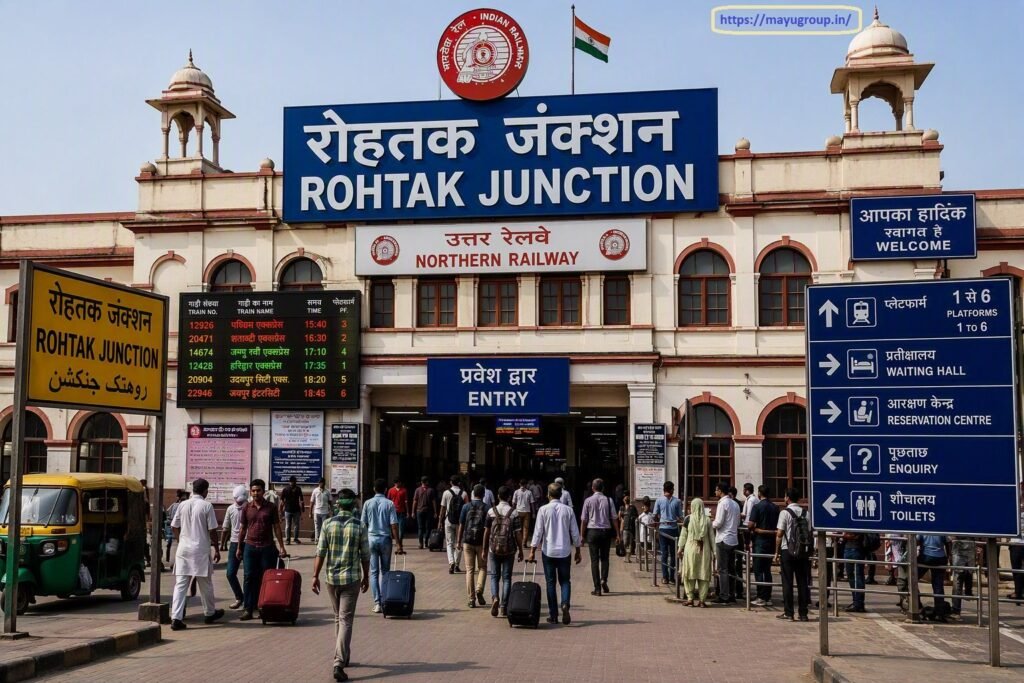
The quality journey at Rohtak Junction Railway Station gradually opened the door to another important question: how could the station become not only better managed, but also more environmentally responsible?
A railway station is a place of continuous activity. Trains arrive and depart throughout the day, passengers move between platforms, staff perform their duties, facilities operate continuously, and maintenance activities take place regularly. All of this requires energy, water, materials and other resources.
The challenge was therefore to create a balance between operational efficiency, passenger comfort and environmental responsibility.
This was the foundation of the green railway station vision.
The project details provided for Rohtak Junction identify the GGBC Green Railway Station Rating System as the scope of work, with the project period extending from 2021 to 2024. In the wider Global green-building framework, the GGBC Green Railway Stations Rating System focuses on reducing environmental impacts from railway-station operation and maintenance while improving the commuter experience. Its framework addresses areas such as energy efficiency, water conservation, waste management, passenger amenities and environmental quality.
For Rohtak Junction, this approach created a new way of looking at familiar facilities.
Electricity was no longer simply something consumed by lights and equipment. It became a resource that needed to be managed intelligently.
Water was no longer simply a utility supplied to the station. It became a resource whose consumption, wastage and maintenance required attention.
Waste was no longer merely something to be removed. It became a material stream that could be managed more systematically.
And cleanliness was no longer only a housekeeping responsibility. It became part of environmental quality and passenger satisfaction.
The first important area was energy management.
A railway station needs adequate lighting for passenger movement, platforms, waiting areas, offices and operational spaces. Energy efficiency therefore cannot mean simply reducing lighting. Safety and visibility must remain priorities.
The objective is smarter consumption.
Efficient lighting technologies, appropriate operating schedules, preventive maintenance and employee awareness can all contribute to reducing unnecessary energy use. A light operating when an area does not require it represents avoidable consumption. Similarly, poorly maintained electrical equipment may consume more resources than necessary.
The quality-management approach strengthened this thinking.
Instead of making energy conservation a temporary campaign, the station could incorporate it into routine procedures.
Employees could be encouraged to report unnecessary consumption.
Maintenance teams could identify inefficient equipment.
Supervisors could monitor implementation.
Management could review opportunities for improvement.
In this way, environmental responsibility became part of the management system.
Water management represented another major opportunity.
Railway stations require water for sanitation, cleaning, passenger facilities and staff requirements. Because water is used across many locations, even small leakages can become significant over time.
The green-station philosophy therefore encouraged attention to water efficiency.
Regular inspections could identify leaking taps, damaged fittings and other problems. Timely repairs could prevent wastage. Water-use practices could be reviewed. Employees could be made more aware of conservation.
The most important lesson was that water conservation was not dependent on one technology.
It depended on a system.
A water-saving device can help, but if a damaged pipe remains unrepaired, wastage continues.
A good sanitation facility can improve passenger experience, but if it is not maintained, its performance declines.
A monitoring system can provide information, but information must lead to action.
This was where quality management and environmental management came together again.
The third major area was waste.
Every busy railway station generates different forms of waste. Passengers carry food, packaging and other materials onto platforms. Vendors and service activities may generate additional waste. Offices create paper and other materials. Housekeeping activities generate collected waste.
Managing this waste effectively requires coordination.
Bins must be appropriately positioned.
Collection must be regular.
Waste should be handled according to defined practices.
Where segregation is implemented, employees and users must understand the system.
The objective is to move from simply removing waste to managing it responsibly.
A clean platform is important, but the green vision goes further.
Where does the waste go?
Is it segregated?
Is collection systematic?
Are recyclable materials handled appropriately?
Are employees trained?
Are problem areas monitored?
These questions transform cleanliness into environmental management.
Passenger amenities were another essential part of the green vision.
Environmental sustainability should never come at the expense of passengers.
A railway station exists to serve people.
Therefore, environmental improvements had to work alongside comfort, accessibility, safety and usability.
GGBC identifies improved accessibility, health, safety, indoor environmental quality and user-friendly design among the benefits associated with green railway-station practices.
This meant that the green transformation could be understood from the passenger’s perspective.
A well-maintained toilet is a quality improvement.
A cleaner waiting area is a passenger-service improvement.
Adequate lighting is both a safety and efficiency consideration.
Good ventilation contributes to comfort.
Clear signage supports accessibility and reduces confusion.
Effective waste management creates a cleaner environment.
Thus, sustainability was not something separate from passenger service.
It became part of passenger service.
The green vision also required people to change their habits.
Infrastructure alone cannot create sustainability.
A modern facility will not remain efficient if it is poorly operated.
An efficient light will not produce its intended benefit if it is left running unnecessarily.
A waste-segregation system will not work if different waste streams are mixed afterward.
A water-saving installation will not deliver its full value if leaks are ignored.
Therefore, employee awareness became essential.
Training could help employees understand why green practices mattered. It could also help them connect environmental objectives with their daily responsibilities.
Housekeeping teams could become partners in waste management.
Maintenance teams could become partners in energy and water conservation.
Supervisors could become monitors of environmental performance.
Managers could integrate environmental objectives into planning and review.
Passengers could also become participants through awareness and responsible use of facilities.
The result was a shared vision.
The station’s green journey was not about making one area look attractive for an inspection.
It was about developing systems capable of delivering better environmental performance every day.
This distinction was critical.
A temporary cleanliness drive can create a clean station for a short period.
A systematic housekeeping process can create consistent cleanliness.
A one-time repair can solve a leak.
A preventive maintenance programme can reduce recurring failures.
A campaign can encourage conservation for a few days.
A culture of resource responsibility can continue for years.
The green railway station vision therefore became closely connected with the principle of continual improvement.
Measure performance.
Identify weaknesses.
Implement improvements.
Monitor results.
Correct deviations.
Standardize successful practices.
Then begin again.
The certification period beginning in 2021 provided a structured opportunity to develop and demonstrate these practices through 2024.
But the deeper objective was always longer-term.
The green station was not simply a destination.
It was a direction.
Rohtak Junction’s journey showed that environmental sustainability can become part of quality management when people, processes and infrastructure work together.
The station could become cleaner, more efficient and more passenger-focused not through one extraordinary intervention, but through hundreds of ordinary improvements carried out consistently.
That was the true meaning of the green railway station vision.
It transformed the question from “How can we operate the station?” to a much larger one:
“How can we operate the station efficiently today while creating a cleaner, healthier and more responsible railway environment for tomorrow?”
#IndianRailways
Chapter 4 – The People Behind the Transformation
Every successful quality and environmental transformation begins with people. Buildings can be improved, equipment can be upgraded, procedures can be documented and certificates can be issued, but none of these things can create lasting change unless the people working within the organization understand the purpose behind them.
At Rohtak Junction Railway Station, the journey associated with ISO 9001 certification and the Green Railway Station Rating System was therefore not only a story of systems and infrastructure. It was also a story of employees, supervisors, maintenance teams, housekeeping personnel and managers learning to look at their responsibilities from a broader perspective.
A railway station operates continuously. Trains arrive and depart, passengers move through different areas, facilities are used throughout the day, and maintenance requirements can arise at any moment. In such an environment, quality cannot depend upon one individual or one department.
It requires teamwork.
A passenger does not experience a railway station department by department. The passenger experiences the station as one complete service environment.
If the platform is clean but the toilet is poorly maintained, the overall experience is affected.
If the facilities are good but information is unclear, the passenger may still face difficulty.
If the station is environmentally efficient but maintenance is inconsistent, the benefits may not continue.
Therefore, every employee has a role in quality.
This understanding became increasingly important during the certification journey.
The first step was awareness.
Employees needed to understand that ISO 9001 was not simply an external requirement. It represented a structured approach to managing work. Procedures, inspections, records and corrective actions were tools designed to help the organization perform more consistently.
Similarly, green-station practices were not simply environmental activities belonging to a separate team. Energy conservation, water management, waste handling and cleanliness were connected directly with daily responsibilities.
A housekeeping employee, for example, could influence environmental performance through proper waste handling and cleanliness practices.
A maintenance employee could contribute by identifying leakage, damaged equipment or inefficient systems.
An electrical team could contribute through proper maintenance and responsible energy use.
A supervisor could contribute through inspection and follow-up.
Managers could contribute by reviewing performance, supporting improvements and ensuring that responsibilities were clearly understood.
In this way, environmental responsibility became a shared responsibility.
Training played an important role in developing this culture. The Green Railway Stations framework includes training and awareness for railway-station operation and maintenance personnel as part of its implementation approach.
Training did not have to be complicated.
Its purpose was to connect principles with practical work.
Employees could learn why waste segregation was important.
They could understand how water leakage represented resource loss.
They could learn the importance of reporting maintenance problems promptly.
They could understand why inspection records mattered.
They could see how their individual responsibilities contributed to passenger satisfaction.
This was particularly important because people are more likely to support a system when they understand its purpose.
At the beginning of any organizational transformation, there can be uncertainty.
Some employees may wonder why new procedures are necessary.
Others may feel that existing practices are sufficient.
Some may see additional documentation as administrative work.
The solution is not simply to issue instructions.
The solution is to demonstrate value.
When a clear procedure reduces confusion, employees recognize its usefulness.
When preventive maintenance prevents a recurring problem, the benefit becomes visible.
When proper waste management improves cleanliness, the connection becomes clear.
When complaints are analyzed and resolved, employees can see that feedback has practical value.
Gradually, quality management becomes less about compliance and more about effectiveness.
This created an important change in attitude.
Instead of asking only, “Has the work been completed?” employees could begin asking, “Has the work achieved the required result?”
That difference may seem small, but it represents a major change in management thinking.
Completion is an activity.
Effectiveness is an outcome.
A cleaning activity is completed when the assigned area has been cleaned.
But quality is achieved when the area remains clean, hygienic and suitable for passengers.
A maintenance activity is completed when a repair is performed.
But quality is achieved when the facility operates reliably afterward.
A waste-collection activity is completed when waste is removed.
But environmental performance is achieved when the waste is managed through an appropriate and systematic process.
This outcome-oriented approach helped strengthen the connection between employees and the station’s quality objectives.
Leadership was equally important.
A quality system cannot survive if management treats it as the responsibility of junior employees.
Leadership must demonstrate commitment through actions.
This includes providing resources, defining responsibilities, reviewing performance, supporting corrective action and encouraging employees to identify opportunities for improvement.
The leadership role was particularly significant because railway operations involve multiple interconnected functions.
A change in one area can affect another.
Maintenance work may need to be coordinated with passenger movement.
Cleaning schedules may need to be coordinated with station operations.
Electrical work may require careful planning to avoid disruption.
Waste collection must be coordinated with housekeeping and disposal arrangements.
Communication is therefore essential.
Regular coordination can help ensure that one department understands how its work affects another.
This is where the quality-management system becomes more than a collection of documents.
It becomes a communication structure.
Inspection records communicate problems.
Corrective-action records communicate solutions.
Maintenance schedules communicate responsibilities.
Performance reviews communicate priorities.
Training communicates expectations.
Feedback communicates passenger needs.
Together, these mechanisms create organizational memory.
When an employee changes responsibility, information does not disappear.
When a recurring problem appears, previous records can be reviewed.
When an improvement works successfully, the organization can consider standardizing it.
This ability to learn from experience is one of the strongest benefits of systematic management.
The people of Rohtak Junction were therefore not merely participants in the certification process.
They were the foundation of it.
The station’s physical infrastructure could support improvement, but employees were responsible for making that improvement real.
A cleaner station required people to maintain it.
An efficient system required people to operate it correctly.
A preventive maintenance programme required people to follow it.
A waste-management system required people to implement it.
A quality-management system required people to believe in continual improvement.
Over time, this could create something more valuable than compliance: ownership.
Employees could begin to feel that the station’s performance reflected their own professionalism.
A clean platform represented disciplined work.
A functioning facility represented effective maintenance.
A resolved complaint represented responsiveness.
A conserved resource represented responsibility.
An improved process represented learning.
This sense of ownership strengthened the station’s organizational culture.
The green journey also helped broaden the definition of professional responsibility.
Employees were not only serving passengers.
They were also managing resources.
Energy, water, materials and infrastructure all had value.
Using them responsibly was therefore part of good railway management.
The station’s journey consequently became a human transformation as much as a technical one.
People learned to observe.
They learned to report.
They learned to measure.
They learned to correct.
They learned to prevent.
And they learned to improve.
These habits could continue even after a particular certification period ended.
That was the real strength of employee development.
A certificate might have a defined validity period, but knowledge and experience can remain within an organization.
The 2021–2024 project period therefore represented an opportunity to build capabilities that could support future improvements.
The greatest lesson was simple:
Quality does not live inside a manual. Quality lives in the actions of people who follow, improve and take ownership of the processes described in that manual.
At Rohtak Junction, the people behind the transformation became the real engine of progress.
They demonstrated that a railway station can become more efficient, more environmentally responsible and more passenger-focused when every individual understands that even the smallest task contributes to the larger journey.
And as the station moved forward, this human commitment would become the foundation for the next stage—the conversion of quality principles into measurable, continuous and sustainable improvement.
#NorthernRailway
Chapter 5 – From Compliance to Continuous Improvement
Obtaining a certification is an important achievement for any organization, but certification should never be considered the final destination. Its real value begins when the systems established during the certification process become part of everyday operations.
For Rohtak Junction Railway Station, the quality journey associated with ISO 9001 and the Green Railway Station Rating System created an opportunity to move from simple compliance toward a culture of continuous improvement.
The distinction was important.
Compliance asks whether a required activity has been performed.
Continuous improvement asks a more challenging question:
Can the activity be performed better tomorrow than it was today?
This question gradually changed the way station processes could be viewed.
A railway station contains hundreds of routine activities. Some are highly visible to passengers, while others happen behind the scenes. Cleaning, maintenance, electrical operations, water management, passenger facilities, documentation, inspections and complaint handling all contribute to the overall performance of the station.
If these activities are performed correctly only occasionally, quality becomes inconsistent.
If they are managed through defined processes and regularly reviewed, quality becomes more reliable.
This was one of the most important lessons of the ISO 9001 approach.
A quality management system encourages organizations to understand their processes, monitor performance, address problems and continually improve. For Rohtak Junction, these principles could be applied to the practical realities of railway-station management.
Consider maintenance.
A reactive approach waits until something breaks.
A preventive approach attempts to identify potential failures before they interrupt service.
Suppose a facility repeatedly develops the same fault. Repairing it each time may solve the immediate problem, but it does not necessarily solve the underlying cause.
A quality-oriented approach asks:
Why is this happening?
How frequently does it happen?
Was the previous corrective action effective?
Can the process be changed to prevent recurrence?
These questions turn a repair into a learning opportunity.
The same principle can be applied to cleanliness.
If a particular area repeatedly becomes dirty, simply cleaning it again may not be enough. Management can investigate the reason. Is the cleaning frequency appropriate? Is the location receiving unusually high passenger traffic? Are waste bins properly positioned? Is waste being collected on time? Is additional awareness required?
The solution then becomes more systematic.
Waste management provides another example.
The Green Railway Stations framework emphasizes waste management as one of the important areas of environmental performance.
A station can install waste bins, but the presence of bins alone does not guarantee effective waste management.
The entire process must function.
Waste must be deposited appropriately.
Collection must take place regularly.
Segregation, where implemented, must be maintained.
Collected material must be handled through appropriate arrangements.
Employees need to understand their responsibilities.
Passengers need to understand how to use the facilities.
The system should be inspected.
If a weakness is identified, corrective action should follow.
This illustrates the difference between an activity and a management system.
An activity can happen once.
A system ensures that the activity happens consistently.
Energy management follows the same logic.
Replacing inefficient equipment can be useful, but it is only one part of the process. Employees must operate equipment appropriately, maintenance must be performed, consumption should be monitored where feasible, and opportunities for further efficiency should be reviewed.
A light being switched off when unnecessary is a simple action.
Thousands of such actions performed consistently can contribute to better resource management.
Water management also benefits from systematic thinking.
A leaking tap or pipe may appear to be a small problem. However, if it remains unnoticed or unrepaired, it represents continuous resource wastage.
Regular inspection therefore becomes an environmental activity.
Timely maintenance becomes an environmental activity.
Employee awareness becomes an environmental activity.
Record keeping becomes an environmental activity.
This was where the connection between quality and sustainability became particularly strong.
Quality management provided the discipline.
Environmental management provided the direction.
Together, they encouraged the station to use resources responsibly while maintaining passenger service.
Another important element was internal review.
Periodic inspections allow management to understand whether established procedures are actually working.
An inspection should not be viewed simply as an exercise to find mistakes.
It can be a learning mechanism.
When a deviation is identified, the organization can ask what caused it.
Was the procedure unclear?
Was the employee insufficiently trained?
Was equipment unavailable?
Was responsibility not clearly assigned?
Was supervision inadequate?
Was the process unrealistic?
Finding the underlying cause is more valuable than simply correcting the visible problem.
This approach can help prevent repeated failures.
Corrective action therefore becomes a bridge between compliance and improvement.
A problem is identified.
Its cause is examined.
An appropriate action is implemented.
The result is checked.
If the action works, it can become part of the standard process.
If it does not work, the organization learns and tries another approach.
This creates a continuous cycle.
Identify. Analyze. Correct. Verify. Improve. Standardize.
Over time, this cycle can transform organizational culture.
Employees become more comfortable reporting problems because problems are treated as opportunities for improvement rather than simply as reasons for blame.
Managers gain better information for decision-making.
Supervisors gain clearer responsibilities.
Maintenance teams gain knowledge about recurring issues.
Housekeeping teams gain greater understanding of environmental objectives.
The organization gradually becomes more capable of learning from its own experience.
This is particularly important in a railway environment because conditions constantly change.
Passenger patterns can change.
Infrastructure can change.
Technology can change.
Environmental expectations can change.
Operational requirements can change.
A procedure that works perfectly today may require modification tomorrow.
Continuous improvement provides a mechanism for responding to those changes.
The certification period identified for Rohtak Junction—from 2021 through 2024—can therefore be viewed as a period of consolidation and organizational learning.
The objective was not merely to demonstrate that systems existed.
The greater objective was to establish practices capable of being sustained.
This distinction is critical.
A certificate has a validity period.
A management philosophy can continue beyond that period.
A document can expire.
A lesson can remain useful.
An audit can end.
Improvement can continue.
The real growth created by certification therefore lies in organizational capability.
When employees learn how to conduct inspections, record observations, implement corrective actions and review results, those capabilities remain valuable for future projects.
When management learns to make decisions using evidence, that capability can support future improvements.
When environmental responsibility becomes part of routine operations, the station becomes better prepared for changing sustainability expectations.
The process also strengthens institutional memory.
A recurring problem can be compared with previous records.
A successful improvement can be documented.
A new employee can learn from established procedures.
A future project can build on earlier experience.
This is how a quality system becomes a long-term organizational asset.
The Green Railway Station philosophy reinforces the same principle. GGBC describes the rating programme as a mechanism for identifying the current level of green performance and encouraging continual improvement in railway-station operations and maintenance.
For Rohtak Junction, this meant that environmental performance could be treated as a journey rather than a one-time achievement.
The station could continue looking for opportunities to conserve resources, improve cleanliness, strengthen maintenance, enhance passenger amenities and develop employee awareness.
The most important transformation, therefore, was not simply moving from “uncertified” to “certified.”
It was moving from “we have completed the requirement” to “we can keep improving the way we work.”
That change in attitude is the heart of continual improvement.
A successful organization does not assume that today’s best performance will always be sufficient.
It observes.
It measures.
It listens.
It learns.
It corrects.
It improves.
And then it begins again.
For Rohtak Junction, the quality and green journey created a foundation for this cycle.
The certificate provided recognition.
The processes provided structure.
The employees provided commitment.
The monitoring provided evidence.
The corrective actions provided learning.
And continual improvement provided the direction for the future.
The true measure of success was therefore not whether the station could meet a requirement once.
It was whether the organization could develop the ability to meet changing expectations again and again.
That ability represented a deeper form of growth—the growth of an institution that learns from its experience and continuously works toward better quality, greater efficiency, stronger environmental responsibility and improved passenger service.
#ISO9001
Chapter 6 – The Passenger at the Center
Tracks, platforms, buildings, electrical systems, water facilities, waiting areas, information systems and maintenance arrangements all exist ultimately to support people travelling from one destination to another. For Rohtak Junction Railway Station, the journey toward quality and green management therefore had one central purpose: creating a better, safer, cleaner and more comfortable experience for passengers.
The certification journey associated with ISO 9001 and the Green Railway Station Rating System provided an opportunity to look at station performance from the passenger’s point of view.
A passenger does not normally see management procedures.
They do not see inspection registers.
They do not examine maintenance schedules.
They may never read an ISO 9001 certificate.
Instead, passengers experience the results.
They see whether the station is clean.
They notice whether facilities are functioning.
They observe whether information is easy to understand.
They experience the quality of waiting areas.
They notice lighting, ventilation, sanitation and general upkeep.
They interact with employees.
And they remember whether their journey through the station was comfortable or difficult.
This made passenger experience one of the most important indicators of quality.
The Green Railway Stations framework recognizes this connection between environmental responsibility and commuter experience. Its objectives include reducing environmental impacts while enhancing the experience of people using railway stations. The framework considers areas including energy, water, waste management, passenger amenities and environmental quality.
For Rohtak Junction, this meant that sustainability could not be treated as an isolated environmental programme.
A greener station also needed to be a better station for passengers.
Consider cleanliness.
Cleanliness is immediately visible. A passenger entering a clean station receives a different impression from one entering an untidy environment.
But maintaining cleanliness at a busy railway station requires much more than occasional cleaning.
There must be defined responsibilities.
Cleaning schedules must be followed.
High-traffic areas require appropriate attention.
Waste must be collected regularly.
Facilities must be inspected.
Problems must be reported.
Corrective action must be taken.
The quality-management philosophy helped connect these activities.
Cleanliness could therefore become a managed process rather than simply an expectation.
Sanitation was another important aspect of passenger experience.
Railway-station toilets and other facilities require continuous maintenance because they are used by large numbers of people. A facility may be available, but availability alone does not guarantee quality.
It must also be clean, functional and appropriately maintained.
This is where inspection and preventive maintenance become important.
A quality-oriented approach encourages the organization to look for potential problems before they become major passenger complaints.
The same principle applies to water facilities.
Passengers depend on appropriate access to water-related amenities, while the station itself must manage water responsibly.
A well-maintained water system can support both passenger needs and environmental objectives.
A damaged tap or leaking pipeline, by contrast, can create both maintenance and environmental problems.
Timely identification and repair therefore become part of passenger service as well as resource conservation.
Lighting also illustrates the connection between quality and sustainability.
Passengers require adequate visibility for safe movement around the station.
At the same time, unnecessary energy consumption should be avoided.
The solution is not simply “more lighting” or “less lighting.”
The solution is appropriate lighting, responsible operation, efficient equipment and proper maintenance.
This demonstrates how environmental performance and passenger comfort can support each other rather than conflict.
Accessibility was another important dimension.
Railway stations serve people with different ages, physical abilities and travel requirements. A passenger-friendly station should therefore aim to make movement and access as convenient as reasonably possible.
The Green Railway Stations framework identifies accessibility and user-friendly design among the areas associated with green railway-station development.
This broadened the meaning of quality.
Quality was not simply about whether a facility existed.
It was about whether the facility served its intended purpose effectively.
A sign is useful when passengers can understand it.
A waiting area is useful when it provides a suitable place for passengers to wait.
A sanitation facility is useful when it is functional and maintained.
A waste bin is useful when it is appropriately located and managed.
A complaint system is useful when passenger concerns lead to action.
This outcome-oriented thinking strengthened the connection between certification and real-world service.
Passenger feedback became particularly valuable.
Complaints can sometimes be viewed negatively, but from a quality-management perspective they are valuable sources of information.
If one passenger reports a problem, it may indicate an isolated incident.
If the same problem is reported repeatedly, it may indicate a weakness in the underlying process.
For example, repeated complaints about cleanliness in a particular area may suggest that the cleaning schedule needs review.
Repeated problems with a facility may suggest that preventive maintenance needs strengthening.
Repeated confusion about a location may suggest that signage requires improvement.
Repeated concerns about a service may indicate a communication gap.
The important thing is what the organization does with the information.
A quality-oriented system converts feedback into learning.
The cycle becomes:
Listen → Record → Analyze → Correct → Verify → Improve.
This approach also helps employees understand the importance of their work.
A housekeeping employee may never see the management report describing passenger satisfaction, but the employee can see the immediate result of good work when passengers use a clean facility.
A maintenance employee can see the value of preventive work when equipment continues operating without disruption.
A supervisor can see the benefit of effective monitoring when recurring problems decline.
Thus, passenger experience creates a direct connection between individual work and organizational performance.
The station’s relationship with the city also gave passenger service broader importance.
Rohtak Junction is not simply a railway property operating in isolation. It forms part of the transportation environment of Rohtak and the surrounding region.
People use the station for employment, education, business, family travel, medical visits, social occasions and everyday mobility.
For many visitors, the railway station may also be one of their first experiences of the city.
A well-managed station can therefore contribute to a positive perception of Rohtak.
This creates a wider responsibility.
The station must serve passengers efficiently while maintaining its infrastructure and managing resources responsibly.
Quality management helps organize that responsibility.
Green management adds another dimension by asking how services can be provided with reduced environmental impact.
Together, the two systems create a more comprehensive vision.
A passenger should not have to choose between comfort and sustainability.
A clean station can also be environmentally responsible.
An efficient lighting system can also provide good visibility.
A well-maintained water facility can also reduce wastage.
A properly managed waste system can also improve the appearance of the station.
A preventive maintenance programme can also support resource efficiency.
This integration was one of the most important aspects of the transformation.
The certification journey encouraged the station to see passenger service, quality and sustainability as interconnected objectives.
The real measure of success was therefore not the number of procedures created or documents maintained.
It was the improvement experienced by people.
A passenger arriving at Rohtak Junction should encounter an environment that reflects discipline and care.
A passenger waiting for a train should find facilities that are properly maintained.
A passenger moving between areas should receive understandable information.
A passenger using station amenities should experience cleanliness and functionality.
And when a problem occurs, the passenger should have confidence that the organization is capable of responding.
These everyday experiences create trust.
Trust is one of the most valuable outcomes of quality management.
It is built slowly, through repeated positive experiences.
The certification period beginning in 2021 and extending through 2024 therefore represented more than an administrative milestone for Rohtak Junction.
It represented an opportunity to strengthen the connection between management systems and passenger needs.
The larger lesson was simple.
A railway station may be evaluated through standards, audits and performance indicators, but its ultimate purpose remains human.
Every improvement eventually reaches a passenger.
Every maintenance action can improve someone’s journey.
Every environmental initiative can improve the station environment.
Every corrective action can prevent future inconvenience.
And every employee contributes to that experience.
The passenger therefore remained at the center of the entire transformation.
Quality provided the method.
Green management provided the environmental vision.
Employees provided the effort.
Management provided direction.
But the passenger provided the reason.
And that understanding became an essential foundation for the next stage of Rohtak Junction’s continuing journey toward a more responsible, efficient and sustainable railway-station environment.
#QualityManagement
Chapter 7 – Building an Environmental Culture
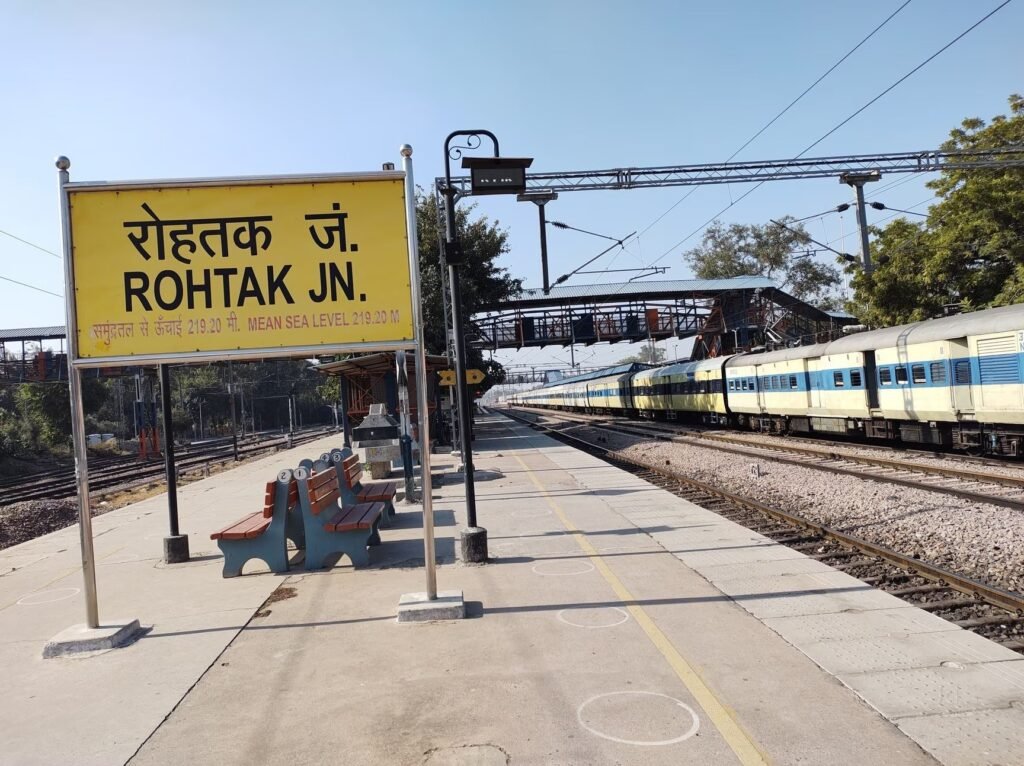
The transformation of Rohtak Junction Railway Station did not end with improvements in infrastructure or the achievement of certification. The deeper challenge was to make environmental responsibility part of everyday railway operations.
A project can introduce new equipment, procedures and targets. A culture, however, is created through repeated behavior.
This distinction became increasingly important during the Green Railway Station journey associated with Rohtak Junction. The project information identifies the GGBC Green Railway Station Rating System as the scope of work, with the certification period extending from 2021 to 2024. The broader GGBC Green Railway Stations framework focuses on reducing environmental impacts from railway-station operation and maintenance while improving the experience of commuters. It covers areas such as energy, water, waste management, passenger amenities and environmental quality.
The challenge was therefore not simply to introduce green practices.
The challenge was to make them routine.
An environmental culture begins with awareness.
Employees need to understand that sustainability is not the responsibility of a specialized environmental department alone. It is connected with almost every activity performed at a railway station.
A housekeeping employee can influence waste management.
A maintenance employee can identify water leakage.
An electrical technician can contribute to energy efficiency.
A supervisor can identify deviations during inspections.
A manager can ensure that corrective actions are implemented.
Even passengers can contribute by using facilities responsibly.
This understanding transformed environmental management from a separate initiative into a shared responsibility.
Energy as a Daily Responsibility
Energy management provided one of the clearest examples.
A railway station requires electricity for lighting, equipment, passenger facilities, offices and numerous operational requirements. The objective was not simply to reduce consumption.
The objective was to eliminate unnecessary consumption while maintaining safety, reliability and passenger comfort.
Employees could contribute through simple but meaningful practices.
Unnecessary lights could be switched off where appropriate.
Electrical equipment could be maintained properly.
Faults could be reported quickly.
Efficient systems could be used where feasible.
Operating schedules could be reviewed.
Energy performance could be monitored.
Each action might appear small.
But sustainability is often created through repetition.
A single unnecessary light consumes relatively little energy. Thousands of unnecessary operating hours across multiple facilities, however, can create avoidable consumption.
This was why awareness mattered.
Employees needed to understand that responsible energy use was part of professional work.
Protecting Every Drop of Water
Water management represented another important component of the environmental culture.
Railway stations require water for sanitation, cleaning, passenger facilities and staff requirements. Because water is distributed across numerous facilities, leakage and inefficient usage can occur in many locations.
The solution required vigilance.
A leaking tap should not be considered someone else’s problem.
A damaged fitting should be reported.
A pipeline issue should be addressed.
Water-consuming facilities should be inspected.
Maintenance activities should be documented where appropriate.
The quality-management philosophy reinforced this approach.
A problem identified early can often be corrected before it becomes larger.
This created a simple principle:
Observe early. Report quickly. Correct effectively.
Water conservation was therefore connected directly with maintenance discipline.
It also became a matter of employee awareness.
When people understand the value of water, they become more attentive to wastage.
Waste Management and Cleanliness
Waste was perhaps the most visible part of environmental performance.
Passengers immediately notice litter.
They notice overflowing bins.
They notice poorly maintained areas.
They notice whether a station feels clean and organized.
However, maintaining cleanliness at a busy railway station requires a structured system.
Bins need to be appropriately located.
Collection must be performed regularly.
Waste must be handled according to defined practices.
Where segregation is implemented, different waste streams must remain properly managed.
Housekeeping teams require training and supervision.
The process must also be monitored.
The Green Railway Stations programme identifies waste management as one of its important areas of assessment and improvement.
The key lesson was that installing bins alone does not create a waste-management system.
The entire chain must work.
Collection without segregation limits environmental benefits.
Segregation without appropriate downstream handling weakens the system.
Good facilities without regular maintenance eventually deteriorate.
Therefore, waste management required coordination.
This coordination could also improve passenger experience.
A clean environment creates a sense of order.
A properly managed waste system reduces visible litter.
A disciplined housekeeping process improves the condition of public facilities.
Environmental responsibility and passenger satisfaction therefore supported each other.
The Role of Training
Training became a powerful tool for developing this culture.
People are more likely to follow a procedure when they understand its purpose.
An employee who knows why waste segregation matters is more likely to perform it correctly.
A technician who understands the environmental consequences of leakage is more likely to report it promptly.
A supervisor who understands the purpose of inspection is more likely to follow up on deviations.
Training therefore transformed environmental requirements into practical responsibilities.
The objective was not to make every employee an environmental specialist.
It was to make every employee environmentally conscious.
This distinction was important.
A railway employee did not need to memorize every technical detail of a green-building rating system.
The employee needed to understand how everyday actions affected the station’s environmental performance.
This practical understanding could gradually become habit.
And habit is the foundation of culture.
From Campaigns to Systems
One of the greatest risks in environmental programmes is treating them as temporary campaigns.
A cleanliness drive may produce excellent results for a few days.
An awareness campaign may change behavior for a short period.
A special inspection may identify many problems.
But what happens afterward?
A mature environmental culture answers this question through systems.
Cleaning continues because there is a process.
Inspections continue because there is a schedule.
Maintenance continues because responsibilities are defined.
Energy conservation continues because employees understand its importance.
Waste management continues because collection and monitoring are organized.
This was the point at which the quality-management approach became particularly valuable.
ISO 9001-based thinking emphasizes consistent processes and continual improvement.
Environmental management requires the same discipline.
A green initiative must be implemented.
Its performance must be monitored.
Weaknesses must be identified.
Corrective action must be taken.
Results must be reviewed.
Successful practices must be standardized.
Then the process begins again.
This creates a cycle:
Plan → Implement → Monitor → Correct → Improve → Sustain.
Creating Shared Ownership
Environmental culture becomes strongest when employees feel ownership.
If sustainability is seen as an order from management, compliance may be temporary.
If employees understand that their work directly contributes to the quality of the station, commitment becomes stronger.
A cleaner can take pride in maintaining a clean passenger environment.
A technician can take pride in preventing resource wastage.
A supervisor can take pride in resolving recurring problems.
A manager can take pride in developing a more efficient system.
This creates a positive relationship between individual performance and institutional performance.
The station’s success becomes everyone’s responsibility.
The Broader Railway Movement
Rohtak Junction’s green journey also formed part of a wider movement toward environmental sustainability within Indian Railways.
Indian Railways has promoted green-station initiatives covering areas such as energy conservation, water conservation, waste management and environmental improvement. This broader approach demonstrates that railway infrastructure can be managed with sustainability as an important operational objective.
Rohtak Junction therefore had an opportunity to participate in a larger transformation.
But its most important environmental contribution remained local.
The station could demonstrate that sustainability is created through daily discipline.
A switch turned off when unnecessary.
A leak reported immediately.
A waste bin used correctly.
A facility maintained on schedule.
A problem identified during inspection.
A corrective action completed.
A passenger encouraged to maintain cleanliness.
These ordinary actions collectively create extraordinary results.
A Culture That Continues
The 2021–2024 certification period provided a defined period for implementing and maintaining the green-station approach.
But the true value of the journey extended beyond those dates.
The most successful environmental programmes survive because they become part of normal operations.
The certificate may have a validity period.
The environmental lessons do not.
The project may have a defined scope.
The habits created through it can continue.
That was the deeper objective.
Rohtak Junction’s environmental journey was therefore not simply about obtaining recognition. It was about developing the mindset required to operate a modern railway station responsibly.
The station’s future could continue to build upon the same principles:
Use resources wisely.
Maintain facilities carefully.
Prevent wastage.
Manage waste systematically.
Listen to employees and passengers.
Monitor performance.
Correct problems.
And continually improve.
In the end, an environmental culture is not created by a single policy or certificate.
It is created every morning when employees begin their work and continue throughout the day through hundreds of small decisions.
That was the real transformation taking place at Rohtak Junction.
The station was learning that sustainability is not a separate destination.
It is a way of working.
And when quality, environmental responsibility and employee ownership come together, a railway station can become more than a place of transit.
It can become an example of how public infrastructure can serve people while respecting resources and preparing for the future.
#GreenRailwayStation
Chapter 8 – The Growth of the Institutional Ecosystem
The transformation of Rohtak Junction Railway Station was not limited to visible improvements on platforms, waiting areas or passenger facilities. A more important transformation was taking place behind the scenes—the gradual development of a stronger institutional ecosystem built around quality, environmental responsibility, employee participation and continual improvement.
The project details provided for Rohtak Junction identify ISO 9001 certification as an important milestone and the GGBC Green Railway Station Rating System as the scope of work, with the certification period extending from 2021 to 2024. Together, these initiatives created a framework through which station management could look beyond individual activities and consider the performance of the station as an integrated system.
For a railway station, growth has a meaning different from that of a private commercial company.
Growth is not necessarily measured only through revenue or profit.
It can be reflected in stronger processes, improved infrastructure management, better passenger services, employee competence, environmental performance, maintenance discipline and institutional confidence.
This broader understanding of growth became important for Rohtak Junction.
Growing Through Better Management
One of the first signs of institutional growth was greater management maturity.
A systematic quality approach encourages an organization to define responsibilities, establish processes, monitor performance and address deviations.
These activities create clarity.
When responsibilities are clearly understood, employees know what is expected.
When procedures are documented, activities become less dependent on individual memory.
When records are maintained, management can review what has happened.
When inspections are performed, weaknesses become visible.
When corrective actions are recorded, problems can be followed through to completion.
This creates a more organized management environment.
The benefit is not limited to certification.
These systems can support everyday railway operations.
A well-defined maintenance process can improve reliability.
A structured housekeeping process can support cleanliness.
A documented complaint-handling process can improve responsiveness.
An environmental monitoring process can support resource conservation.
Thus, the quality-management system becomes part of the station’s institutional infrastructure.
Connecting Different Departments
A railway station cannot function effectively if every department works independently.
Passengers experience one station, not a collection of separate departments.
This means coordination is essential.
Housekeeping affects passenger experience.
Maintenance affects facility availability.
Electrical management affects lighting and comfort.
Water management affects sanitation.
Operations affect passenger movement.
Information services affect communication.
Management coordinates all these functions.
The green-station approach strengthened this interconnected way of thinking.
Energy efficiency cannot be managed entirely by one department.
Water conservation requires maintenance and operational awareness.
Waste management requires coordination between housekeeping, employees and other stakeholders.
Passenger amenities require both infrastructure and maintenance.
Environmental performance therefore becomes a shared institutional objective.
This shared responsibility strengthens the organization.
Developing Technical Capability
Certification also creates opportunities for technical learning.
Employees and supervisors become more familiar with inspection, monitoring, documentation and corrective action.
They begin to understand the relationship between equipment condition and resource efficiency.
For example, proper maintenance of electrical equipment can support reliable operation and efficient energy use.
Similarly, timely maintenance of water facilities can prevent wastage.
Good housekeeping practices can support both cleanliness and waste management.
These connections encourage employees to think beyond individual tasks.
The employee begins to understand the broader effect of the work.
This is a form of professional growth.
A maintenance worker is not simply repairing equipment.
The worker is helping maintain the reliability of the passenger environment.
A housekeeping employee is not simply cleaning.
The employee is contributing to hygiene, appearance, passenger satisfaction and environmental performance.
A supervisor is not simply checking work.
The supervisor is helping ensure consistency.
This broader understanding creates stronger professional ownership.
The Role of Environmental Performance
The Green Railway Stations framework provides a structured approach to improving the environmental performance of railway stations. GGBC identifies areas such as energy efficiency, water conservation, waste management, passenger amenities and indoor environmental quality within the programme.
For Rohtak Junction, environmental responsibility therefore became part of institutional development.
A station that manages resources carefully develops stronger operational awareness.
Energy consumption becomes something that can be reviewed.
Water use becomes something that can be monitored.
Waste becomes something that can be systematically managed.
Maintenance becomes connected with sustainability.
Passenger amenities become connected with environmental quality.
This integration creates a more mature management model.
Instead of treating environmental activities as isolated projects, the station can incorporate them into routine decision-making.
Creating Institutional Memory
One of the most valuable benefits of systematic management is institutional memory.
Railway stations are dynamic workplaces.
Employees may change responsibilities.
Maintenance requirements may evolve.
Equipment may be replaced.
Processes may be revised.
Passenger expectations may change.
Without records, valuable experience can disappear.
With appropriate documentation, an organization can preserve lessons.
Suppose a particular maintenance problem occurs repeatedly.
Records can help identify the frequency and circumstances.
Suppose a particular improvement produces positive results.
Documentation can help establish how it was implemented.
Suppose an inspection identifies a recurring deficiency.
Corrective-action records can help track whether the solution was effective.
This creates organizational learning.
The institution becomes capable of remembering what worked, what failed and what needs to be improved.
That is a major form of growth.
Building Confidence Through Systems
Certification can also contribute to institutional confidence.
When an organization develops the ability to prepare documentation, conduct reviews, respond to findings and demonstrate continual improvement, it becomes more capable of handling future assessments and improvement programmes.
The experience gained during one certification project can support later initiatives.
Employees become familiar with structured audits.
Managers become familiar with evidence-based review.
Supervisors become familiar with corrective actions.
Teams become more comfortable with documented processes.
This creates organizational capability.
The certificate is therefore only one visible outcome.
The invisible outcome is knowledge.
And knowledge can become an institutional asset.
Growth Beyond the Certificate
The project period from 2021 to 2024 represented a defined phase in Rohtak Junction’s quality and green journey.
But institutional growth should not stop when a certification period ends.
The strongest organizations use certification as a foundation for future development.
The station could continue to review its processes.
It could continue to strengthen employee awareness.
It could continue improving maintenance practices.
It could continue seeking opportunities for resource efficiency.
It could continue listening to passengers.
It could continue reviewing environmental performance.
In this sense, certification becomes a beginning rather than an ending.
The certificate demonstrates achievement at a particular stage.
Continual improvement determines what happens afterward.
Connecting Infrastructure With the City’s Future
Rohtak Junction also exists within the broader development of Rohtak’s railway infrastructure.
Government information has documented significant railway infrastructure work in the city, including the elevated Rohtak railway line project intended to eliminate four level crossings, reduce congestion and improve railway operations.
Such developments demonstrate that railway infrastructure does not remain static.
Cities grow.
Passenger requirements change.
Transportation systems evolve.
Technology advances.
Environmental expectations become stronger.
A railway station therefore needs the ability to adapt.
This makes institutional capability particularly important.
A station with strong processes is better positioned to manage change.
A station with trained employees is better positioned to adopt new practices.
A station with documented systems is better positioned to preserve organizational knowledge.
A station with an environmental culture is better positioned to respond to sustainability expectations.
Thus, institutional growth creates resilience.
A New Definition of Success
The quality and green journey encouraged a broader definition of success for Rohtak Junction.
Success could mean better passenger experience.
It could mean stronger maintenance discipline.
It could mean more efficient resource use.
It could mean improved employee awareness.
It could mean better documentation.
It could mean faster corrective action.
It could mean greater environmental responsibility.
It could mean a stronger culture of continual improvement.
None of these achievements exists independently.
Together, they form an institutional ecosystem.
That ecosystem is what allows a railway station to function effectively over the long term.
The Real Promoter of Growth
The project information refers to the station’s promoter or company growth. In the context of a railway station, this can be understood not as conventional private-company expansion but as the growth of the institutional management ecosystem responsible for operating, maintaining and improving the station.
Its growth is visible through capability.
Its strength is visible through consistency.
Its maturity is visible through corrective action.
Its responsibility is visible through environmental performance.
Its commitment is visible through employee participation.
And its success is ultimately visible through passenger experience.
The certification journey therefore created value at several levels.
It strengthened processes.
It encouraged environmental responsibility.
It supported employee development.
It created opportunities for institutional learning.
And it established a platform for future improvement.
The greatest lesson was that organizational growth does not always require expansion.
Sometimes growth means becoming more capable.
Sometimes it means becoming more disciplined.
Sometimes it means learning from mistakes.
Sometimes it means using resources more responsibly.
Sometimes it means listening more carefully.
And sometimes it means creating systems that continue working even when individual people change.
That was the deeper transformation taking place at Rohtak Junction.
The station was developing not simply better facilities, but a stronger ability to manage those facilities.
It was developing not simply environmental initiatives, but an environmental mindset.
It was developing not simply certification documentation, but institutional knowledge.
And it was developing not simply a reputation for compliance, but the foundation for continual improvement.
The journey from 2021 to 2024 could therefore be seen as an important chapter in the station’s institutional development.
The certificate marked recognition.
The systems created capability.
The people created momentum.
The environmental programme created direction.
And continual improvement created the path forward.
Rohtak Junction’s story was becoming a story of institutional growth through quality, sustainability and learning—a story in which the real achievement was not merely reaching a standard, but developing the capacity to pursue higher standards in the future.
#SustainableRailways
Chapter 9 – 2021 to 2024: A Period of Consolidation
The period from 2021 to 2024 represented an important phase in the quality and environmental journey of Rohtak Junction Railway Station. The project details provided for the station identify 2021 as the issue year and 2024 as the validity end year for the certification associated with the Green Railway Station programme.
Three years may appear to be a limited period in the life of a railway station, but in an operational environment that functions continuously, three years can provide significant opportunities for implementation, learning, monitoring and improvement.
The most important question was not simply whether the required systems had been established.
The real question was whether those systems could become part of everyday operations.
The Beginning of Implementation
The first stage of the journey involved translating quality and environmental objectives into practical activities.
ISO 9001-based quality management provided a structured way to examine processes, responsibilities, documentation and performance.
The Green Railway Station approach added an environmental dimension, encouraging attention to areas such as energy, water, waste management, passenger amenities and environmental quality. The GGBC framework describes green railway-station assessment as a process intended to reduce environmental impacts while improving commuter experience.
For Rohtak Junction, implementation therefore required coordination.
Responsibilities had to be understood.
Employees needed awareness.
Processes needed to be followed.
Facilities needed monitoring.
Problems needed to be reported.
Corrective actions needed follow-up.
This was the foundation of the certification period.
Moving From Implementation to Stabilization
Implementing a system once is relatively straightforward.
Maintaining it every day is much more difficult.
This became the next challenge.
A cleaning procedure must continue even on busy days.
A maintenance schedule must continue when other operational priorities arise.
Environmental practices must continue even when employees change duties.
Documentation must remain useful rather than becoming a routine formality.
This required stabilization.
Supervisors had to monitor activities.
Employees had to follow established procedures.
Managers had to review performance.
Where deviations appeared, corrective actions had to be initiated.
The objective was consistency.
Consistency is one of the defining characteristics of quality.
A facility that is clean only occasionally is not truly well managed.
An environmental practice that works only during an inspection is not sustainable.
A maintenance programme that is followed only when equipment fails is reactive rather than preventive.
The certification period therefore provided an opportunity to build routine discipline.
Learning Through Inspection
Inspection played a critical role in this process.
An inspection provides a snapshot of actual performance.
It can reveal whether a procedure is being followed.
It can identify a damaged facility.
It can reveal a maintenance gap.
It can identify an environmental weakness.
It can highlight a passenger-service issue.
But inspection becomes valuable only when findings lead to action.
This is why corrective action became an important part of the quality journey.
When a problem was identified, the objective was not merely to restore the facility.
The organization could also ask why the problem occurred.
Was the inspection frequency inadequate?
Was responsibility unclear?
Was maintenance delayed?
Was training insufficient?
Was a procedure difficult to follow?
Was communication ineffective?
These questions helped shift the focus from symptoms to causes.
That shift represented organizational learning.
Corrective Action as a Learning Tool
Corrective action is often misunderstood as a response to failure.
In a mature quality system, it is better understood as an opportunity to improve.
Suppose a facility repeatedly experiences the same problem.
Repairing it each time may restore normal operation temporarily.
But if the underlying cause remains, the problem is likely to return.
A more effective approach is to identify the root cause and modify the relevant process.
This philosophy could be applied across station operations.
Repeated cleanliness issues could lead to a review of cleaning frequency or supervision.
Repeated water leakage could lead to stronger inspection and maintenance practices.
Repeated waste-management problems could lead to revised collection arrangements or employee awareness.
Repeated passenger complaints could lead to changes in communication or facility management.
This creates a cycle:
Problem → Investigation → Corrective Action → Verification → Improvement.
Over time, this cycle can significantly strengthen organizational capability.
Monitoring Environmental Performance
The green-station programme added another important dimension: environmental performance.
Energy, water and waste could be viewed not simply as operational necessities but as resources requiring responsible management.
Energy efficiency could be supported through appropriate equipment, responsible operating practices and maintenance.
Water conservation could be supported through leakage prevention, monitoring and timely repair.
Waste management could be strengthened through appropriate collection, segregation where applicable and systematic handling.
Passenger amenities could be considered alongside environmental quality.
The objective was balance.
A railway station must remain safe and functional while becoming more resource-efficient.
Environmental improvement therefore had to work within the realities of railway operations.
This required practical decision-making.
The Importance of Employee Participation
No system can remain effective without employee participation.
During the 2021–2024 period, awareness and training could help employees understand the purpose of quality and environmental practices.
An employee who understands why a process exists is more likely to follow it correctly.
A maintenance worker who recognizes the environmental consequences of leakage is more likely to report the problem.
A housekeeping employee who understands the purpose of waste segregation is more likely to maintain the required practice.
A supervisor who understands the value of inspection is more likely to follow up on deficiencies.
This created ownership.
Instead of seeing quality and environmental management as external requirements, employees could begin to see them as part of professional responsibility.
Passenger Experience as a Measure
Another important feature of the consolidation period was the connection between management systems and passengers.
The ultimate purpose of improvements was not paperwork.
It was better service.
Passengers experience the results of management decisions every day.
They experience cleanliness.
They use sanitation facilities.
They move through illuminated areas.
They depend on information.
They use waiting spaces.
They encounter employees.
They see how waste is managed.
They experience the condition of the station.
Therefore, passenger feedback can provide valuable information about performance.
A complaint can identify a weakness.
A repeated complaint can reveal a systemic problem.
A positive response can indicate that an improvement is working.
This created another improvement cycle:
Listen → Analyze → Act → Verify.
Such a cycle helped connect quality management with real-world passenger expectations.
Consolidating the Green Culture
The certification period also provided an opportunity to make environmental responsibility routine.
This distinction was essential.
A green railway station should not depend on temporary campaigns.
Sustainability must become part of normal operations.
Energy conservation should become routine.
Water conservation should become routine.
Waste management should become routine.
Facility maintenance should become routine.
Employee awareness should become routine.
When these activities become habits, environmental performance becomes more sustainable.
The Green Railway Stations programme emphasizes continual improvement in station environmental performance, reinforcing the idea that green transformation is a continuing process rather than a one-time event.
Preparing for the Future
By the later stages of the certification period, the most important achievement was not simply the existence of procedures.
It was the development of organizational capability.
Employees had greater exposure to systematic processes.
Management had greater experience with monitoring and review.
Teams had greater familiarity with corrective action.
Environmental considerations had become more visible.
Passenger service had become more closely connected with quality objectives.
This created a foundation for future improvement.
The station could continue to review its processes even after the defined certification period.
New technology could be evaluated.
Changing passenger expectations could be considered.
Environmental requirements could be reviewed.
Maintenance practices could be strengthened.
Employee training could continue.
This was the true meaning of consolidation.
The system had to become capable of adapting.
Beyond 2024
The end of a certification validity period should not be understood as the end of improvement.
In fact, it can represent the beginning of a new cycle.
The knowledge developed between 2021 and 2024 could support future initiatives.
The lessons learned from audits and inspections could inform new procedures.
The experience of employees could support future training.
Environmental practices could continue evolving.
Passenger feedback could continue guiding improvements.
The station could therefore carry forward the principles established during the certification journey.
The certificate might have a defined validity period, but the organizational learning generated through the process could remain valuable.
This was perhaps the greatest achievement of the period.
A Period of Institutional Learning
Looking back at 2021–2024, the period can be understood as a phase of implementation, stabilization and learning.
The first stage established the framework.
The second stage developed consistency.
The third stage created opportunities for improvement.
Together, these stages strengthened the station’s institutional capability.
Rohtak Junction’s journey demonstrated that quality and environmental management are not separate activities.
They are connected through common principles.
Both require planning.
Both require responsible implementation.
Both require monitoring.
Both require corrective action.
Both require employee participation.
Both require management commitment.
And both depend on continual improvement.
The period from 2021 to 2024 therefore represented more than a certification timeline.
It represented a period in which quality could become a habit, environmental responsibility could become a culture and systematic management could become part of the station’s institutional identity.
The greatest lesson was that improvement is never truly finished.
There is always another process to examine.
Another resource to conserve.
Another facility to maintain.
Another passenger concern to understand.
Another employee to train.
Another problem to prevent.
Another opportunity to discover.
That is why the end of one certification period can become the beginning of another chapter.
For Rohtak Junction Railway Station, the journey from 2021 to 2024 was therefore not simply about achieving a defined standard.
It was about learning how to continue moving forward.
And that ability—to learn, adapt, improve and sustain—was the strongest foundation for the station’s future.
#RailwayStationDevelopment
Chapter 10 – The Legacy of a Quality and Green Journey
Every transformation leaves behind a legacy. Some legacies are visible in buildings, equipment and infrastructure. Others are less visible but far more enduring: improved habits, stronger processes, trained employees, better management practices and a culture of continual improvement.
The quality and green journey of Rohtak Junction Railway Station can be understood in this broader sense.
The project details identify ISO 9001 certification as an important milestone and the GGBC Green Railway Station Rating System as the scope of work, with the certification period extending from 2021 to 2024. The journey represented an opportunity to bring together quality management, environmental responsibility, employee participation and passenger-focused service.
The certificate was an important achievement.
But the deeper achievement was the capability developed behind it.
Beyond the Certificate
A certificate has a defined validity period.
A quality culture does not have to.
This distinction is important when evaluating the long-term value of certification.
An organization can obtain a certificate and simply display it.
Or it can use the certification journey to examine how work is performed, identify weaknesses, train people, improve processes and create systems capable of producing consistent results.
The second approach creates lasting value.
For Rohtak Junction, the quality journey could therefore be viewed as a movement from certification toward capability.
Employees became more familiar with structured processes.
Management gained greater experience with monitoring and review.
Corrective actions became opportunities for learning.
Environmental performance became part of operational thinking.
Passenger needs became an important consideration in improvement.
These capabilities can continue to support the station beyond the formal certification period.
Quality as a Permanent Habit
The strongest quality systems eventually become almost invisible.
People follow procedures without constantly thinking about them.
Maintenance happens according to schedules.
Inspections are performed routinely.
Problems are reported.
Corrective actions are followed through.
Records are maintained.
Successful practices become standard.
This is what happens when quality becomes a habit.
The objective of ISO 9001-based management is not simply to create documents. It is to establish a systematic approach through which an organization can consistently meet requirements and improve its processes.
At Rohtak Junction, this philosophy could support a more disciplined approach to everyday station management.
A maintenance problem could become an opportunity to strengthen preventive maintenance.
A passenger complaint could become an opportunity to improve service.
A recurring housekeeping issue could become an opportunity to review procedures.
An environmental weakness could become an opportunity to improve resource management.
In this way, problems become sources of knowledge.
Sustainability as a Continuing Responsibility
The green journey added another important dimension.
The Green Railway Stations framework promoted by GGBC addresses areas including energy, water, waste management, passenger amenities and environmental quality. Its objective is to help railway stations reduce environmental impacts while improving commuter experience.
This philosophy is especially relevant to the long-term operation of a railway station.
Environmental responsibility cannot be completed in one project.
Energy systems require continuous monitoring.
Water systems require continuous maintenance.
Waste management requires daily discipline.
Passenger facilities require regular attention.
Environmental awareness requires ongoing training.
Therefore, the green journey must continue.
The most important question after certification is not “What did we achieve?”
It is:
“What can we improve next?”
That question keeps the organization moving forward.
The Human Legacy
Perhaps the most valuable legacy of the entire journey is the development of people.
Infrastructure can become outdated.
Technology can change.
Procedures can be revised.
But trained employees carry knowledge from one project to another.
An employee who learns how to identify process weaknesses can apply that skill in future situations.
A supervisor who learns how to monitor performance can continue using that approach.
A maintenance worker who develops preventive thinking can apply it to new equipment.
A manager who becomes comfortable with evidence-based decision-making can use that knowledge for future improvements.
This creates a multiplier effect.
One training programme can influence many future decisions.
One successful corrective action can become a model for another problem.
One environmental practice can inspire additional improvements.
The organization becomes stronger because its people become more capable.
The Passenger Legacy
The ultimate beneficiary of these improvements remains the passenger.
Passengers may never know which management system produced a particular improvement.
They may not know how many inspections were performed.
They may not know how many corrective actions were completed.
But they experience the results.
A cleaner environment creates comfort.
Well-maintained facilities create confidence.
Clear information reduces uncertainty.
Appropriate lighting supports safe movement.
Efficient water management supports sanitation.
Systematic waste management contributes to cleanliness.
Responsive employees create a sense of care.
Every small improvement therefore has a human outcome.
This is why passenger experience must remain central to the station’s future.
A Station Connected With Its City
Rohtak Junction is part of the wider transportation environment of Rohtak.
The station connects people with destinations for employment, education, business, family responsibilities and everyday travel.
Railway infrastructure also continues to evolve around the city. Government information has documented projects such as the elevated Rohtak railway line, designed to address level crossings and improve movement through the city.
This wider development means that the station must remain adaptable.
As the city changes, passenger expectations change.
As infrastructure develops, operational requirements change.
As technology advances, service possibilities change.
As environmental awareness increases, expectations for sustainability change.
A strong quality culture helps an organization respond to such changes.
The Meaning of Institutional Growth
The project story also raises an important question about the growth of the station’s promoter or management organization.
In the case of railway infrastructure, growth should not be interpreted only as commercial expansion.
Institutional growth can mean greater capability.
It can mean stronger processes.
It can mean better-trained employees.
It can mean improved resource management.
It can mean greater environmental awareness.
It can mean stronger passenger orientation.
It can mean improved ability to identify and solve problems.
This form of growth is often less visible than physical expansion, but it can be more valuable over the long term.
An institution that learns how to improve becomes capable of facing new challenges.
That is a powerful form of organizational strength.
From 2021 to the Future
The certification period from 2021 to 2024 can therefore be seen as one chapter in a much longer story.
The year 2021 represented the beginning of a defined certification period.
The following years provided opportunities for implementation, monitoring, learning and consolidation.
By 2024, the formal validity period identified in the project details had reached its end.
But the principles established during that period did not need to end.
The future could continue to build upon them.
New improvement opportunities could be identified.
Existing procedures could be reviewed.
Employees could receive additional awareness and training.
Environmental performance could continue to be monitored.
Passenger feedback could continue to guide improvement.
Technology could be introduced where appropriate.
Maintenance could become increasingly preventive.
The cycle could continue.
The Continuous Improvement Cycle
The story of Rohtak Junction can ultimately be summarized through a simple cycle:
Plan.
Understand the requirement and establish objectives.
Implement.
Put processes and improvements into practice.
Monitor.
Observe performance and collect evidence.
Correct.
Address problems and identify causes.
Improve.
Strengthen the process based on learning.
Standardize.
Make successful practices part of routine operations.
Then begin again.
This cycle represents the connection between quality management and green management.
Both depend upon continual learning.
Both require people.
Both require leadership.
Both require monitoring.
Both require discipline.
And both ultimately aim to create better outcomes.
The Lasting Message
The story of Rohtak Junction Railway Station’s quality and green journey is therefore not simply a story about certification.
It is a story about transformation.
It is about moving from routine activity toward process thinking.
It is about moving from temporary cleanliness toward systematic housekeeping.
It is about moving from resource consumption toward responsible resource management.
It is about moving from reactive maintenance toward preventive thinking.
It is about moving from isolated departmental responsibilities toward shared ownership.
It is about moving from compliance toward continual improvement.
Most importantly, it is about recognizing that every railway station is a living public-service environment.
Every day brings new passengers.
Every day brings new operational challenges.
Every day creates new opportunities to improve.
That means the journey can never truly be finished.
A certificate may mark one stage.
An audit may confirm one achievement.
A rating may recognize one level of performance.
But tomorrow creates another opportunity.
Another process can be improved.
Another facility can be maintained.
Another resource can be conserved.
Another employee can be trained.
Another passenger concern can be resolved.
Another lesson can be learned.
This is the true meaning of a quality culture.
It does not promise that every problem will disappear.
It creates the ability to respond to problems intelligently.
It does not promise that the station will never change.
It creates the ability to manage change.
It does not promise that environmental challenges will disappear.
It creates the awareness needed to address them responsibly.
And it does not define quality as perfection.
It defines quality as a commitment to doing better.
The Journey Continues
The final image of this story is therefore not a certificate.
It is a railway platform.
A train approaches.
Passengers prepare to board.
Employees continue their responsibilities.
Maintenance teams remain ready.
Housekeeping continues.
Facilities operate.
Resources are managed.
The station remains alive.
Behind this everyday activity is a management philosophy built around quality, sustainability and continual improvement.
The journey that began with certification continues through daily practice.
That is the lasting legacy of Rohtak Junction’s transformation.
Quality provided the foundation.
Green management provided the environmental vision.
Employees provided the commitment.
Management provided direction.
Passengers provided the purpose.
And continual improvement provided the future.
Rohtak Junction Railway Station’s story is therefore a reminder that meaningful transformation does not happen in one day.
It is built through thousands of decisions made correctly, responsibly and consistently.
A better railway station is created one process at a time.
A greener railway station is created one responsible action at a time.
A stronger organization is created one lesson at a time.
And a lasting culture is created when those actions and lessons become part of everyday life.
The certification period may have been defined between 2021 and 2024.
But the journey of improvement has no final date.
The certificate may expire. The commitment to quality should not.
The project may end. The culture should continue.
The assessment may finish. The journey should go on.
And as Rohtak Junction continues serving the people of Haryana and connecting them with the wider railway network, its most valuable legacy can remain the belief that every day offers another opportunity to make the station cleaner, more efficient, more responsible, more passenger-focused and better than it was yesterday.
#ContinualImprovement
#RohtakJunction #HaryanaRailwayNetwork #RohtakRailConnectivity #GreenRailInfrastructure #RailwaySustainability
Take the Next Step Today
Don’t wait to enhance your business’s quality and efficiency. Partner with Mayu Group India and experience the transformation that comes with expert consultancy and training. Contact us today to learn more about how we can help you achieve your business goals. Reach out via phone at +91-9322728183, visit our website at www.mayugroup.in, or email us at investor@mayugroup.in Let us be your guide on the journey to excellence and innovation.