
Gurgaon Railway Station
- Gurgaon Railway Station
- Chapter 1: The Beginning of a New Quality Journey
- Chapter 2: Understanding Quality as a Daily Responsibility
- Chapter 3: From Cleanliness to Green Performance
- Chapter 4: Energy Efficiency and the Culture of Resource Conservation
- Chapter 5: Passenger Experience Becomes the Measure of Success
- Chapter 6: Building a Culture of Continuous Improvement
- Chapter 7: Connecting Quality, Environment and Operational Excellence
- Chapter 8: The Promoter, Railway System and Stakeholder Growth
- Chapter 9: Looking Beyond 2024
- Chapter 10: Gurgaon Railway Station – A Continuing Story of Growth
- Take the Next Step Today
Chapter 1: The Beginning of a New Quality Journey
Gurgaon Railway Station stands as an important part of the railway infrastructure serving the historic core of Gurugram and its rapidly developing surroundings. Located near Old Railway Road, Laxman Vihar Phase II and Sector 105, the station exists within a city that has undergone a remarkable transformation from a traditional urban centre into one of the National Capital Region’s major commercial, residential and employment destinations. As the city changed, expectations from public infrastructure also changed. Passengers increasingly looked for cleaner surroundings, dependable facilities, better information, improved accessibility, efficient services and a more organized travel experience.
For a railway station, however, achieving these expectations is not simply a matter of constructing new facilities. A station is a complex operating environment in which hundreds of activities must function together. Passenger movement, cleanliness, sanitation, maintenance, electrical systems, water supply, waste handling, announcements, safety arrangements and customer assistance all contribute to the final experience. A weakness in one process can affect several others.
It was against this background that the quality-management journey became important.
The adoption of an ISO 9001-based quality-management approach represented a move toward greater process discipline. Rather than treating quality as something checked only after work was completed, the philosophy encouraged quality to be built into everyday operations. Responsibilities could be defined, procedures could be documented, performance could be monitored, problems could be investigated and corrective actions could be followed through to completion.
This was particularly meaningful in a railway environment because consistency is essential. A station cannot provide good service only on selected days. Quality must be maintained during ordinary weekdays, weekends, festivals, peak passenger periods, adverse weather and other demanding situations.
The real importance of certification was therefore not limited to the certificate itself. It was the management discipline created around it.
Every activity could now be examined through a process-oriented perspective.
What is the requirement?
Who is responsible?
How is the activity performed?
How is performance checked?
What happens when something goes wrong?
How can recurrence be prevented?
These questions encouraged a culture in which employees and service providers could understand their role in the larger station-management system.
The next stage of the journey connected quality with environmental responsibility.
The GGBC Green Railway Stations Rating System, developed by the Global Green Building Council with support from the Environment Directorate of Indian Railways, is designed specifically to address environmental sustainability in railway stations. GGBC describes it as a voluntary, consensus-based programme intended to reduce adverse environmental impacts from station operation and maintenance while enhancing the commuter experience.
This provided an important opportunity for Gurgaon Railway Station.
Quality and sustainability could be approached together.
A clean station was not only visually attractive; it contributed to passenger health and comfort.
Efficient water management was not only an environmental measure; it supported reliable sanitation.
Energy efficiency was not only about resource conservation; it could also support better facility management.
Effective waste management was not only about environmental responsibility; it directly influenced the cleanliness and appearance of the station.
The Green Railway Stations framework specifically considers areas such as energy and water consumption, renewable energy, waste management and passenger amenities.
This holistic approach changed the way improvement could be understood.
Instead of viewing different activities independently, the station could begin seeing them as connected components of one larger objective: better railway service with responsible resource management.
The year 2021, identified in the project information provided for this story, therefore represents an important milestone in this narrative. It can be viewed as the beginning of a structured period in which quality and green-performance objectives were brought into greater focus.
The transformation, however, was not expected to happen instantly.
Railway stations involve multiple stakeholders. Railway employees, contractors, cleaning personnel, maintenance teams, vendors, passengers and other service providers all influence the station’s performance. For improvements to become sustainable, everyone needs to understand the importance of consistent processes.
Training therefore became an important part of the journey.
Employees could be made aware of why cleanliness mattered, why records were necessary, why preventive maintenance was valuable and why environmental conservation should become part of normal station operations. The Green Railway Station process itself includes training of railway operation and maintenance personnel, performance-improvement studies, guidance on green measures and independent assessment.
This created a stronger foundation for improvement.
The station’s growth story was consequently not simply about physical infrastructure. It was about changing the way infrastructure was managed.
A leaking tap could become a maintenance opportunity.
An overflowing waste bin could become a process-improvement opportunity.
A recurring passenger complaint could become a root-cause investigation.
An unnecessary energy load could become an efficiency opportunity.
A poorly understood procedure could become a training opportunity.
Every problem could therefore become a source of learning.
This was the beginning of a new chapter for Gurgaon Railway Station.
The quality journey established the discipline.
The green-rating approach provided an environmental direction.
Passenger expectations provided the motivation.
And continual improvement became the long-term objective.
The certification period would eventually reach its stated validity endpoint in 2024, but the principles introduced during this period were not meant to disappear with the certificate. The real purpose of a management system is to create lasting organizational capability.
For Gurgaon Railway Station, the journey was therefore larger than certification.
It was about creating a culture where quality was planned, sustainability was practiced, performance was monitored and improvement became a continuous responsibility.
That foundation would influence every subsequent stage of the station’s development.
And from that foundation, the story of transformation truly began.
#GurgaonRailwayStation
Chapter 2: Understanding Quality as a Daily Responsibility
The transformation of Gurgaon Railway Station did not depend only on new infrastructure, modern equipment or visible improvements. The deeper change began when quality became understood as a daily responsibility. After the adoption of an ISO 9001-based quality-management approach, the station could look at its operations not as a collection of unrelated activities, but as a connected system in which every process influenced passenger experience.
A railway station is continuously active. Passengers arrive throughout the day, trains operate according to schedules, platforms require regular cleaning, electrical systems need monitoring, water facilities must remain functional, announcements have to be communicated effectively and maintenance issues must be addressed without unnecessary delay. Such an environment leaves very little room for inconsistent processes.
The quality-management approach provided a structured way to deal with this complexity.
Instead of asking only whether a task had been completed, management could begin asking whether the task had been completed correctly, consistently and effectively. This distinction became an important part of the station’s development.
Cleaning, for example, could be treated as a defined process. A responsible person or team could be identified, cleaning frequencies could be established, inspections could be carried out and deficiencies could be recorded. If a problem was identified, corrective action could be initiated. The objective was not merely to remove visible dirt but to create a system capable of maintaining cleanliness continuously.
The same philosophy applied to maintenance.
A broken light could simply be replaced after a complaint. But a quality-oriented approach could ask why the light failed, whether similar failures were occurring elsewhere and whether preventive maintenance could reduce future breakdowns. This changed the focus from repairing problems to preventing problems.
Documentation also became an important part of the system.
In a busy railway environment, verbal instructions alone may not always provide consistency. Procedures, inspection records, maintenance schedules, training records and corrective-action documentation help establish organizational memory. When responsibilities change or personnel are transferred, documented systems help preserve knowledge.
The value of documentation was therefore not paperwork for its own sake.
It was evidence.
It helped answer important management questions:
What was inspected?
When was it inspected?
Who performed the inspection?
What problem was identified?
What corrective action was taken?
Was the corrective action effective?
Was the problem repeated?
These questions encouraged accountability while also creating information that could be used for future improvement.
Employees became a critical part of this process.
A quality system cannot operate effectively if only senior management understands it. The people performing daily activities must understand how their work contributes to overall performance. A cleaning employee, maintenance technician, supervisor, office worker or service provider may each influence the passenger experience in a different way.
Training and awareness therefore became essential.
Employees could be encouraged to understand that quality was not the responsibility of one department. It was a collective responsibility.
A passenger who found a clean platform benefited from the work of several people.
A functioning drinking-water facility depended on maintenance and monitoring.
Effective lighting depended on electrical maintenance and timely reporting.
A clean toilet depended on water supply, cleaning, inspection and maintenance.
A resolved complaint depended on communication between the passenger-facing function and the responsible department.
This interconnectedness helped create a more mature management culture.
The station could also begin treating passenger complaints differently.
A complaint was not necessarily viewed as a negative event. It could become valuable information about the performance of a process. If the same complaint occurred repeatedly, it indicated that the underlying process might require attention.
For example, repeated complaints about cleanliness at a particular location could indicate that the existing cleaning frequency was insufficient during peak periods. Repeated maintenance complaints could indicate that preventive inspections needed strengthening. Repeated requests for information could suggest that signage or passenger communication required improvement.
This approach turned feedback into an improvement mechanism.
The introduction of green-station principles expanded the definition of quality even further. The Green Railway Stations framework considers areas such as sustainable station facilities, health and hygiene, energy efficiency, smart and green initiatives, water efficiency and innovation.
Consequently, the station’s quality journey was increasingly connected with environmental performance.
Water conservation became part of responsible station management.
Energy efficiency became an operational objective.
Waste management became a cleanliness as well as sustainability issue.
Environmental awareness became part of employee and passenger engagement.
This integration was particularly relevant for Gurgaon Railway Station because it operates within a city experiencing rapid urban and economic development. Gurugram has emerged as a major commercial, industrial, financial and information-technology centre in the National Capital Region, creating growing expectations from its transport infrastructure.
The station therefore had to serve both its traditional railway role and the changing expectations of a modern urban population.
Quality management provided a mechanism for managing this change.
It encouraged the station to establish processes, monitor results, identify gaps and continually improve.
The greatest benefit was the development of a mindset in which employees could see that small actions mattered.
Reporting a leaking tap mattered.
Switching off unnecessary equipment mattered.
Keeping a platform clean mattered.
Recording a maintenance issue mattered.
Responding to a passenger mattered.
Following a procedure mattered.
When thousands of these small actions are performed correctly every day, the overall performance of a railway station can change significantly.
This was the emerging culture at the heart of Gurgaon Railway Station’s quality journey: quality was no longer an occasional inspection activity; it became part of everyday work.
The ISO 9001 milestone therefore served as a foundation for stronger process discipline, while the green-station initiative expanded the station’s vision toward sustainability. Together, they encouraged an environment in which employees, management and service partners could work toward a common objective.
That objective was simple but powerful:
Provide reliable services, maintain a clean and safe environment, use resources responsibly, listen to passengers and improve continuously.
The journey had moved beyond certification.
It had become a way of working.
#GurugramRailwayStation
Chapter 3: From Cleanliness to Green Performance
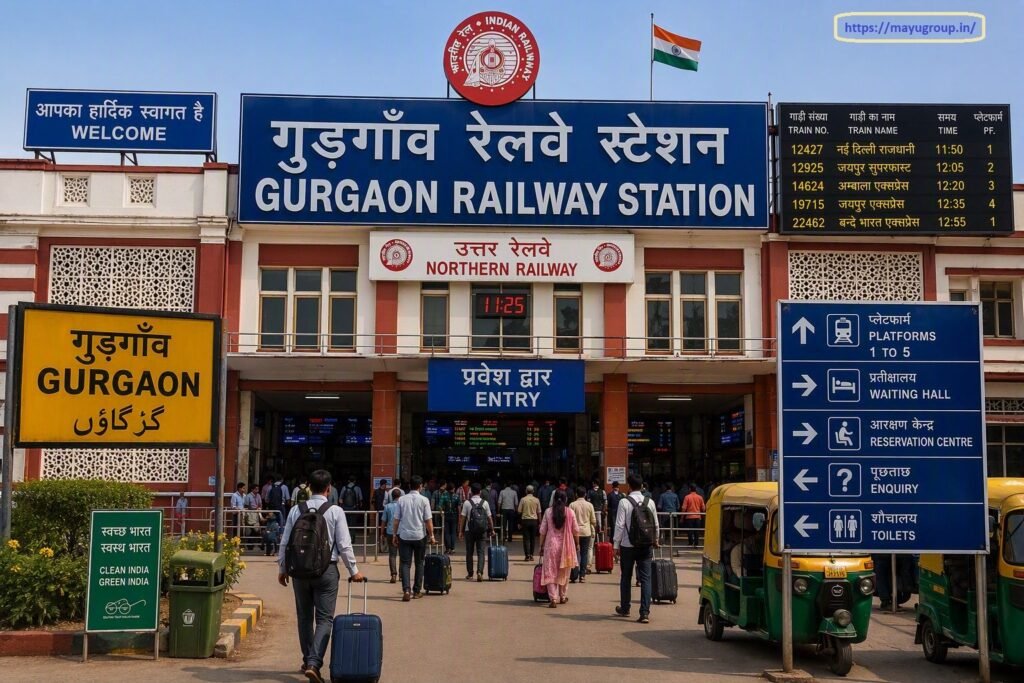
The next important stage in the transformation of Gurgaon Railway Station was the realization that quality could not be limited to the appearance of platforms, buildings and passenger facilities. A truly modern railway station needed to combine cleanliness, hygiene, resource efficiency and environmental responsibility. This broader understanding of quality became especially important as the station moved forward with its green railway station objectives under the GGBC Green Railway Station Rating System.
Cleanliness is one of the first things a passenger notices upon entering a railway station. A clean entrance creates confidence. A clean platform creates a feeling of order. Properly maintained toilets demonstrate attention to passenger welfare. Clean drinking-water areas communicate responsibility. On the other hand, overflowing bins, littered corners, dirty floors or poorly maintained facilities can quickly create a negative impression.
For Gurgaon Railway Station, cleanliness therefore became more than a routine housekeeping activity. It became an important indicator of management effectiveness.
A structured quality-management system helped establish a more systematic approach. Cleaning activities could be planned according to location, passenger movement and frequency of use. Supervisors could inspect important areas, deficiencies could be identified and corrective actions could be initiated. Instead of waiting for problems to become highly visible, the objective was to identify them early.
This was an important change in philosophy.
A quality-oriented organization does not ask only, “Has the area been cleaned?”
It also asks, “Is the cleaning process effective?”
That second question encourages continual improvement.
High-footfall areas may require more frequent attention than less-used spaces. Passenger toilets may require continuous monitoring during busy periods. Waste bins may need collection according to actual generation rather than a fixed assumption. Entrance and circulation areas may require special attention because they create the first impression of the station.
Through such observations, cleaning could become a controlled operational process rather than an activity performed without measurement.
The next challenge was waste management.
Every railway station generates waste through passenger activity, food consumption, packaging, newspapers, bottles and routine maintenance. If waste is not collected and managed properly, it affects both cleanliness and the surrounding environment.
The green-station philosophy encouraged a shift from simply removing waste to managing it responsibly.
Waste segregation became an important concept. Different categories of waste could be identified and handled according to appropriate procedures. Signage and awareness activities could encourage passengers to dispose of waste correctly, while staff and service providers could be trained to maintain segregation practices.
This created a connection between passenger behaviour and station management.
A sustainable station cannot depend entirely on employees. Passengers are also participants in the environmental system.
A single bottle thrown into the wrong bin may seem insignificant. But when multiplied by thousands of passengers, small individual actions can create a substantial environmental impact.
Awareness therefore became an important part of the station’s green journey.
The same principle applied to water.
Railway stations require water for sanitation, cleaning and passenger services. Efficient water management must therefore balance conservation with hygiene and availability. A green approach does not mean reducing essential water use at the expense of cleanliness. Instead, it seeks to reduce unnecessary consumption while ensuring that required services remain effective.
Leaks became opportunities for corrective action.
Damaged fittings became maintenance priorities.
Unnecessary wastage became an awareness issue.
Water monitoring became a management activity.
The objective was to ensure that every unit of water served a genuine operational purpose.
The GGBC/green railway station approach places water efficiency among its important areas of assessment, alongside energy efficiency, health and hygiene, sustainable facilities and other green initiatives.
Energy management followed a similar philosophy.
Lighting is essential in railway stations because visibility contributes to passenger comfort and operational safety. However, energy must be used efficiently. Unnecessary operation of electrical equipment can increase consumption without providing additional value.
This created opportunities for better operational discipline.
Equipment could be switched off when not required.
Electrical installations could be maintained regularly.
Faults could be reported promptly.
Energy-efficient technologies could be considered during upgrades.
Consumption patterns could be reviewed to identify unusual usage.
These activities demonstrated that environmental performance and quality management were not separate subjects.
A well-maintained electrical system can improve reliability while also reducing unnecessary energy consumption.
A properly maintained water system can improve hygiene while reducing wastage.
Effective waste management can improve cleanliness while supporting environmental responsibility.
Preventive maintenance can reduce failures while extending equipment life.
This was one of the most valuable lessons of the station’s green transformation: one well-designed improvement can create benefits in several areas simultaneously.
The role of employees was equally important.
A sustainability programme cannot succeed only because policies exist on paper. People must understand those policies and incorporate them into their everyday work.
A cleaning worker who reports a leaking tap contributes to water conservation.
A maintenance technician who identifies an inefficient electrical fitting contributes to energy management.
A supervisor who notices repeated waste-segregation failures contributes to process improvement.
A passenger who uses the correct waste bin contributes to environmental responsibility.
The station therefore became a shared ecosystem of quality.
The rapid development of Gurugram made this transformation particularly relevant. The district has developed into a major commercial, financial and industrial centre, increasing the importance of reliable and modern transportation infrastructure.
As the surrounding city developed, passengers naturally expected public facilities to become cleaner, more organized and environmentally responsible.
The station’s green journey responded to these expectations.
Importantly, the goal was not to create an isolated collection of environmental initiatives. The objective was to integrate green practices into normal station operations.
Cleanliness schedules, maintenance activities, water management, waste handling, energy conservation and passenger awareness could all become part of a larger performance-management system.
This created a new definition of success.
A successful railway station was no longer simply one where trains operated and passengers boarded.
It was one where services were reliable, facilities were maintained, resources were used responsibly, waste was managed effectively and passengers experienced a clean and organized environment.
The green transformation of Gurgaon Railway Station therefore represented an important step beyond conventional quality management.
ISO 9001-oriented thinking provided the discipline to manage processes.
The Green Railway Station framework expanded the vision toward sustainability.
Passenger expectations provided the motivation.
Together, these elements helped establish a stronger foundation for long-term improvement.
The journey from cleanliness to green performance was not a single project completed on one particular day. It was a continuous process of observation, implementation, monitoring and improvement.
Every cleaner platform, every properly managed waste stream, every repaired leak and every unit of energy saved represented a small contribution.
Individually, these actions were modest.
Collectively, they represented a significant change in the way the station understood quality.
And that change would become an essential foundation for the next stage of its growth.
#IndianRailways
Chapter 4: Energy Efficiency and the Culture of Resource Conservation
As Gurgaon Railway Station progressed on its quality and green-management journey, attention gradually moved toward one of the most important elements of sustainable railway operations: efficient use of resources. Cleanliness and passenger amenities were highly visible aspects of station performance, but behind them existed a network of resources that had to be carefully managed every day. Electricity, water, materials and maintenance resources all influenced the station’s operational efficiency and environmental performance.
The adoption of an ISO 9001-oriented quality-management philosophy created a useful foundation for this transition. Quality management encourages organizations to understand their processes, establish responsibilities, monitor performance and continually improve. These principles could also be applied to resource management.
Energy was an obvious starting point.
A railway station requires adequate lighting for platforms, entrances, circulation areas, offices and passenger facilities. Electrical systems also support communication, equipment, ventilation and numerous other operational activities. Because these services are essential, energy conservation cannot mean compromising safety or passenger comfort.
The objective instead is efficient energy utilization.
The station could approach energy management by identifying where electricity was being consumed, determining where unnecessary consumption might occur and strengthening maintenance practices. Simple operational discipline could make an important difference. Lights and equipment could be switched off when not required. Electrical faults could be reported promptly. Frequently used equipment could be maintained according to planned schedules. Energy-efficient technologies could be considered whenever systems were upgraded.
These measures demonstrated that sustainability and quality were closely connected.
An electrical fitting that operates efficiently provides reliable illumination while avoiding unnecessary energy consumption. Preventive maintenance can reduce equipment failures while extending service life. Timely repair can improve passenger experience while preventing larger technical problems.
The Green Railway Station framework recognizes energy efficiency as an important component of sustainable railway-station performance, together with areas such as water efficiency, health and hygiene, sustainable facilities and green initiatives.
The same philosophy applied to water management.
Water is essential to station operations. Toilets, cleaning activities, drinking-water facilities and other passenger services depend on an adequate and reliable supply. Consequently, water conservation had to be approached carefully.
The objective was not simply to reduce water consumption.
The objective was to eliminate unnecessary wastage while maintaining essential hygiene and passenger services.
A leaking tap could represent a small problem at the moment it was discovered, but if left unresolved, it could waste water continuously. Similarly, damaged pipes, inefficient fittings or careless cleaning practices could result in unnecessary consumption.
A quality-management system encouraged employees to report such problems and ensure that corrective actions were followed through.
This created a practical connection between maintenance and sustainability.
A maintenance worker repairing a leak was not merely fixing equipment.
That employee was also conserving a natural resource.
A supervisor checking water facilities was not simply performing an inspection.
That supervisor was helping protect operational efficiency.
A cleaner using water responsibly was not simply following a housekeeping procedure.
The cleaner was contributing to environmental performance.
This broader understanding helped make sustainability part of everyday work.
Material consumption was another area where responsible management could make a difference. Railway stations use a variety of consumables for cleaning, administration, maintenance and passenger services. Careful planning can reduce unnecessary use, improve inventory control and prevent avoidable wastage.
The underlying principle was simple:
Use what is required, maintain what already exists and avoid unnecessary waste.
This principle also supported financial efficiency.
Resource conservation has an environmental benefit, but it can also reduce avoidable operating costs. Lower energy consumption, reduced water wastage, better maintenance and efficient material use can collectively contribute to stronger resource management.
For a public railway facility, this is particularly valuable because responsible resource use supports long-term sustainability.
The culture of conservation also required employee participation.
Policies alone cannot create efficiency.
People create efficiency through their everyday actions.
A person leaving unnecessary equipment operating contributes to consumption. A person reporting a malfunction contributes to efficiency. A person ignoring a water leak allows wastage to continue. A person identifying the problem and reporting it promptly contributes to improvement.
Therefore, awareness became a major part of the quality journey.
Training and communication could encourage employees to understand why resource conservation mattered. Rather than presenting environmental practices as additional work, management could connect them with existing responsibilities.
Energy conservation was part of good maintenance.
Water conservation was part of good housekeeping.
Waste reduction was part of good station management.
Equipment maintenance was part of operational reliability.
This integrated approach reduced the possibility that sustainability would become an isolated departmental responsibility.
It also helped establish a culture in which small improvements were valued.
The importance of these improvements became clearer when viewed over a longer period.
Saving a small quantity of water once may appear insignificant.
Reducing unnecessary electricity consumption for a single day may appear insignificant.
Preventing one avoidable maintenance failure may appear insignificant.
But railway stations operate continuously and serve large numbers of people. Repeated improvements can therefore accumulate into meaningful results.
This was the deeper lesson of resource conservation.
Small improvements become significant when they are repeated consistently.
The station’s location within the rapidly developing Gurugram urban environment made this philosophy especially relevant. Gurugram has developed into a major commercial and financial centre and an important part of the National Capital Region. As the city grew, expectations regarding public infrastructure also increased.
Passengers increasingly expected railway facilities to reflect contemporary standards of efficiency, cleanliness and environmental responsibility.
The station’s quality and green-management journey therefore supported a wider transformation.
Energy efficiency improved resource responsibility.
Water management strengthened sustainability.
Preventive maintenance supported reliability.
Employee awareness supported consistency.
Documentation supported accountability.
Passenger awareness supported shared responsibility.
Together, these elements created a stronger operational culture.
The station was gradually moving from a traditional concept of resource consumption toward a more mature concept of resource stewardship.
Resource stewardship means understanding that every unit of electricity, every litre of water and every material consumed has a purpose and an environmental consequence. The objective is therefore to obtain maximum service value from every resource used.
This approach also prepared the station for future modernization.
As new technologies and facilities became available, the station could evaluate them not merely on the basis of appearance or convenience, but through broader criteria such as reliability, maintenance requirements, energy performance, lifecycle value and passenger benefit.
That was an important sign of management maturity.
The quality journey had begun with processes.
It had expanded into environmental responsibility.
Now it was developing into a culture of intelligent resource management.
For Gurgaon Railway Station, this represented another important step toward long-term growth.
The station’s transformation was no longer measured only by what passengers could immediately see. It was increasingly measured by the systems operating behind the scenes: planned maintenance, responsible consumption, employee awareness, monitoring and continual improvement.
The result was a stronger foundation for sustainable railway operations.
And the principle remained clear:
A well-managed station does not simply consume resources to provide services; it manages resources responsibly so that better services can be sustained for the future.
#NorthernRailway
Chapter 5: Passenger Experience Becomes the Measure of Success
The transformation of Gurgaon Railway Station could not be considered complete merely because procedures had been established, environmental practices had been introduced or a certification had been achieved. The true measure of improvement was much closer to the passenger. Every day, thousands of individual experiences combined to create the public perception of a railway station. For this reason, passenger satisfaction gradually became one of the most important indicators of the station’s quality journey.
A passenger begins experiencing a railway station before entering a platform. The approach road, entrance, signage, cleanliness, accessibility and overall organization all contribute to the first impression. Once inside, the passenger notices ticketing arrangements, information systems, seating, lighting, drinking-water facilities, toilets, platform cleanliness and the availability of assistance. During the journey, announcements, passenger movement and the condition of facilities continue to influence the experience.
This meant that quality could not be understood as one isolated department’s responsibility.
Every process contributed to the passenger’s overall experience.
The ISO 9001 quality-management philosophy helped establish this process-oriented understanding. Instead of viewing passenger complaints as individual incidents, the station could use them as information about the performance of its systems. A complaint about an unclean area, for example, could lead to a review of cleaning frequency, supervision and resource availability. A repeated complaint about a damaged facility could trigger investigation into preventive maintenance.
This approach changed the question from “Who is responsible for this complaint?” to “What process allowed this problem to occur, and how can recurrence be prevented?”
That was a major step toward organizational maturity.
Passenger feedback could become a source of continual improvement. If passengers repeatedly experienced difficulty finding a facility, signage and information systems could be reviewed. If sanitation concerns appeared at particular times of the day, cleaning schedules could be adjusted according to passenger movement. If lighting problems occurred repeatedly in a particular area, maintenance procedures could be examined.
The purpose was not to eliminate every complaint, which would be unrealistic in a complex public facility. The purpose was to learn from complaints and reduce recurring causes of dissatisfaction.
The station also had to recognize that passengers have different needs.
An elderly passenger may require convenient seating and easy movement.
A person with a disability may depend upon accessible routes and appropriate facilities.
A family travelling with children may value clear information and convenient waiting areas.
A passenger unfamiliar with Gurgaon may depend heavily on signage and announcements.
A traveler carrying luggage may need unobstructed circulation.
These requirements made accessibility and passenger convenience important components of quality.
The Green Railway Station philosophy reinforced this passenger-centric approach. The Green Railway Stations rating system is designed not only to reduce environmental impacts but also to enhance commuter experience, bringing environmental performance and passenger welfare into the same framework.
This connection was important.
A sustainable station should also be a comfortable station.
An energy-efficient facility should still provide adequate lighting.
A water-saving system should still maintain hygiene.
Waste reduction should not compromise cleanliness.
Environmental responsibility and passenger service therefore had to support one another.
For Gurgaon Railway Station, this became particularly relevant because the station operates within one of India’s fastest-growing urban regions. Gurugram has developed into a major industrial, financial and information-technology centre and is an important part of the National Capital Region. The growth of the surrounding city naturally increased expectations from transportation infrastructure.
The railway station therefore needed to evolve with its environment.
Passenger expectations were changing.
Technology was changing.
Urban mobility was changing.
The station’s management systems had to be capable of changing as well.
This is where continual improvement became essential.
A procedure that worked effectively several years earlier might require modification when passenger volumes, infrastructure or technology changed. A maintenance schedule might need to be revised after new equipment was installed. Passenger information methods might need to evolve as digital systems became more common.
The quality system created a framework through which such changes could be evaluated.
Plan the improvement.
Implement it.
Monitor the result.
Collect feedback.
Identify shortcomings.
Take corrective action.
Review the outcome.
Repeat the cycle.
This process transformed passenger service from a static objective into a continuous management activity.
Another important aspect was communication.
Passengers need reliable information, particularly during delays, platform changes or operational disruptions. Clear announcements, visible information and helpful personnel can significantly reduce confusion even when circumstances are difficult.
A quality-oriented station therefore recognizes that service quality is not limited to normal conditions.
It is especially important during unexpected situations.
When something goes wrong, passengers judge the organization not only by the original failure but also by the quality of its response.
A delayed service may be unavoidable.
Poor communication about the delay is often avoidable.
A temporary facility breakdown may occur.
Failure to provide alternative arrangements or information can make the experience worse.
This understanding encouraged greater emphasis on responsiveness.
The station’s employees were central to this process. Infrastructure can support passenger service, but people deliver much of the experience. A helpful interaction can reduce anxiety. A timely response can resolve a problem. Clear communication can prevent confusion.
Training and awareness therefore became important elements of the quality culture.
Employees needed to understand that every passenger interaction represented the station.
This created a broader definition of professionalism.
Professionalism meant following procedures.
It also meant listening.
It meant communicating clearly.
It meant treating passengers respectfully.
It meant reporting problems rather than ignoring them.
It meant taking ownership of responsibilities.
Over time, these behaviours could strengthen passenger confidence.
The transformation also created an opportunity to connect passenger satisfaction with environmental awareness. Signs encouraging responsible waste disposal, water conservation or energy awareness could involve passengers directly in the station’s sustainability journey.
This made the passenger more than a service recipient.
The passenger became a participant.
A clean station is easier to maintain when passengers dispose of waste responsibly.
A water-efficient station is more successful when users avoid unnecessary wastage.
An environmentally responsible railway station becomes more effective when the public understands and supports its objectives.
This shared responsibility became an important part of the station’s green identity.
The modernization journey of Gurgaon Railway Station further strengthened the importance of passenger-centric planning. Public reports regarding station redevelopment have discussed improvements in passenger amenities, access arrangements, parking and vertical circulation, reflecting the growing expectations surrounding the station’s future development.
Such modernization is most meaningful when it is connected with actual passenger needs.
A new facility should solve a real problem.
A new system should improve reliability.
A new technology should make service easier.
A redesigned space should improve movement.
A green feature should provide environmental as well as operational value.
This principle helped ensure that development remained purposeful.
By this stage of the journey, Gurgaon Railway Station was beginning to understand that the ultimate purpose of quality management was not documentation, certification or inspection.
It was service.
The procedures existed to support employees.
The employees existed to support operations.
The operations existed to serve passengers.
And the green initiatives existed to ensure that these services could be provided responsibly and sustainably.
Passenger experience therefore became the connecting point between quality, environment and operational excellence.
Every clean platform represented successful process management.
Every functioning facility represented effective maintenance.
Every resolved complaint represented responsiveness.
Every saved resource represented environmental responsibility.
Every satisfied passenger represented the combined result of these efforts.
The station’s quality journey had consequently reached an important stage.
It was no longer asking only, “Are our systems working?”
It was increasingly asking, “Are our systems creating a better experience for the people we serve?”
That question became one of the strongest drivers of continual improvement and prepared Gurgaon Railway Station for the next phase of its transformation.
#ISO9001
Chapter 6: Building a Culture of Continuous Improvement
The quality journey of Gurgaon Railway Station entered a deeper phase when improvement began to move beyond procedures and facilities and became part of the organizational culture. Certification can establish a framework, but the long-term success of any quality-management system depends upon what happens after the framework is introduced. The real challenge is to ensure that employees continue to identify opportunities, solve problems, learn from experience and improve performance every day.
For Gurgaon Railway Station, this principle was especially important because railway operations are dynamic. Passenger volumes change, equipment ages, weather conditions vary, service requirements evolve and new technologies become available. A process that is effective today may require modification tomorrow. Therefore, quality cannot remain static.
The philosophy of continual improvement provided a practical answer.
Instead of asking only whether a requirement had been fulfilled, the organization could ask whether it could be fulfilled more efficiently, safely, consistently and sustainably.
This simple change in thinking could influence almost every area of station operations.
A cleaning process could be reviewed according to passenger movement.
A maintenance schedule could be adjusted according to equipment performance.
A water-management procedure could be improved after identifying recurring wastage.
Waste-collection arrangements could be modified during high-footfall periods.
Passenger communication could be strengthened after reviewing complaints and suggestions.
The objective was not to change everything continuously. It was to identify meaningful improvements and make successful practices part of standard operations.
This was one of the important principles associated with ISO 9001-based management.
The Plan-Do-Check-Act cycle provided a useful way of thinking about improvement.
First, the station could identify a requirement or problem and plan an appropriate response.
Second, the planned action could be implemented.
Third, performance could be monitored to determine whether the action achieved the desired result.
Finally, the findings could be used to make further improvements.
This cycle transformed problems into learning opportunities.
Consider a recurring sanitation complaint. Simply cleaning the affected area addresses the immediate problem. A continual-improvement approach goes further. Management may investigate the time of the complaint, passenger traffic, cleaning frequency, availability of manpower, condition of facilities and supervision arrangements. The underlying cause can then be addressed.
The same principle applies to equipment failures.
If a particular facility repeatedly breaks down, replacing the failed component may solve the immediate problem. However, repeated failures may indicate an underlying maintenance, installation, operating or design issue.
Root-cause thinking therefore became increasingly valuable.
The purpose was to prevent recurrence rather than repeatedly correct the same problem.
This approach also strengthened accountability.
When a corrective action is assigned, responsibility needs to be clear. The action must be monitored until completion, and its effectiveness should be reviewed. This prevents corrective-action systems from becoming merely administrative exercises.
Employees were at the centre of this culture.
A successful quality-management system cannot be operated exclusively by senior management. The people performing daily activities often have the best understanding of operational difficulties.
A cleaning worker may notice a location where waste accumulates unusually quickly.
A technician may recognize that a piece of equipment is showing early signs of failure.
A supervisor may identify a recurring passenger-flow problem.
A ticketing or information employee may understand common passenger queries.
A maintenance employee may identify an opportunity to conserve energy or water.
When employees are encouraged to report such observations, the organization gains access to a valuable source of practical knowledge.
This encouraged the idea that every employee could become an agent of improvement.
Training supported this transformation.
Personnel needed to understand their responsibilities, but they also needed awareness of why those responsibilities mattered. Quality training could explain process discipline, documentation, corrective action and customer focus. Environmental awareness could explain water conservation, energy efficiency and waste management.
The result was a more integrated understanding of station operations.
The Green Railway Station framework reinforced this culture by emphasizing not only the implementation of green measures but also mechanisms for maintaining and enhancing them. Its assessment approach covers areas including sustainable facilities, health and hygiene, energy efficiency, water efficiency, green initiatives and innovation.
This meant that green performance also needed continuity.
A water-saving measure had to remain functional.
An energy-efficient system had to be maintained.
Waste segregation had to continue after initial implementation.
Environmental awareness had to be refreshed.
Green practices needed to become routine rather than temporary campaigns.
For Gurgaon Railway Station, this created an important connection between quality management and sustainability.
Continual improvement provided the management discipline.
Green objectives provided the environmental direction.
Passenger expectations provided the service perspective.
Together, they formed a comprehensive improvement culture.
The station could also benefit from periodic reviews.
Management reviews provide an opportunity to consider whether objectives are being achieved, whether complaints are increasing or decreasing, whether corrective actions are effective and whether new risks have appeared.
Such reviews can help management move from reactive decision-making toward evidence-based planning.
For example, if inspections show repeated problems in a particular area, resources can be directed there. If a new procedure produces measurable improvement, it can be standardized. If a green initiative does not produce the expected benefit, its implementation can be reassessed.
This evidence-based approach creates organizational maturity.
The station’s improvement culture was also important because of the changing environment around it. Gurugram had developed into a major economic and commercial centre, and the expectations placed on its transportation infrastructure continued to rise.
As passenger expectations increased, the station needed to remain adaptable.
New technology could create new opportunities.
Modern passenger-information systems could improve communication.
Efficient equipment could reduce energy consumption.
Improved monitoring could support preventive maintenance.
Digital records could make performance information easier to analyze.
Modern facilities could improve accessibility and passenger comfort.
But technology alone could not guarantee improvement.
Technology required processes.
Processes required trained people.
People required awareness.
And all of these required continual review.
This was one of the most important lessons from the station’s quality journey.
A new machine does not automatically create quality.
A new building does not automatically create better service.
A certificate does not automatically create continual improvement.
The organization must create the conditions in which these resources produce sustainable results.
By encouraging employees to identify problems, management to analyze evidence and teams to implement corrective actions, the station could gradually develop this culture.
The result was a shift from inspection-based quality to improvement-based quality.
Inspection asks whether something is correct.
Improvement asks how it can become better.
That difference has long-term significance.
It creates organizations that learn from experience rather than repeating mistakes.
For Gurgaon Railway Station, this learning culture provided a strong foundation for future modernization. Infrastructure would continue to evolve, passenger requirements would continue to change and environmental expectations would continue to increase.
But an organization that knows how to learn can adapt.
The certification period identified in the project information, from 2021 to 2024, can therefore be understood as one important phase in a longer journey. The expiration of a formal certification period does not eliminate the need for the principles that supported it. On the contrary, those principles become the foundation for the next cycle of improvement.
The ultimate achievement was therefore not simply obtaining recognition.
It was creating an attitude toward work.
Do it correctly.
Measure the result.
Listen to feedback.
Find the cause of problems.
Prevent recurrence.
Conserve resources.
Train people.
Improve continuously.
This became the culture that could carry Gurgaon Railway Station forward.
And as the station prepared for a future shaped by modernization, changing passenger expectations and environmental responsibility, this culture became one of its most valuable assets.
#QualityManagement
Chapter 7: Connecting Quality, Environment and Operational Excellence
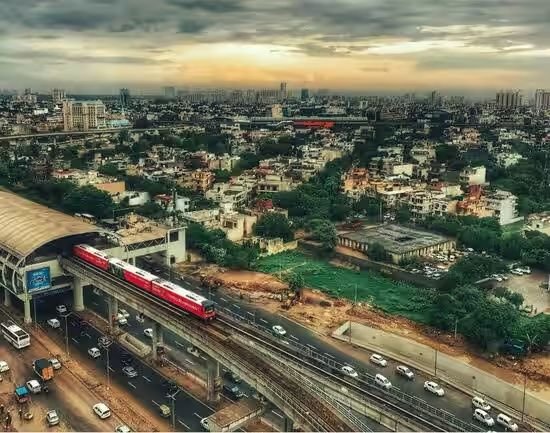
The quality journey of Gurgaon Railway Station reached an important stage when quality management, environmental responsibility and operational excellence began to function as parts of one integrated system. Earlier, cleanliness, maintenance, passenger service, energy conservation and water management could easily have been treated as separate responsibilities. The growing maturity of the station, however, encouraged a different approach: every activity was connected, and improvement in one area could strengthen performance in several others.
A railway station is essentially a network of processes. Passenger movement depends on clean and accessible spaces. Cleanliness depends on water availability, manpower, equipment and supervision. Passenger comfort depends on lighting, seating, sanitation and information. Maintenance depends on inspections, records, spare materials and trained personnel. Environmental performance depends on how energy, water and waste are managed.
When these activities are considered together, the importance of integrated management becomes clear.
The ISO 9001-oriented quality philosophy provided a foundation for this integration. Process-based management encourages an organization to identify activities, understand their relationships, define responsibilities and monitor outcomes. Instead of managing each problem independently, management can examine how different processes influence one another.
For example, a lighting problem on a platform may initially appear to be an electrical issue. However, it can also become a passenger-comfort issue and potentially a safety-perception issue. A water leak may initially appear to be a plumbing problem, but it is simultaneously a resource-conservation issue. Poor waste collection is a housekeeping problem, but it also affects environmental performance and passenger satisfaction.
This interconnected thinking created a more mature approach to station management.
The GGBC Green Railway Station Rating System strengthened this philosophy by bringing sustainability into the operational framework. Green railway station assessment considers several dimensions, including sustainable station facilities, health and hygiene, energy efficiency, smart and green initiatives, water efficiency and innovation.
This meant that environmental performance could be incorporated into normal management decisions.
When maintenance teams examined equipment, energy efficiency could be considered.
When sanitation facilities were reviewed, water efficiency could be considered.
When waste arrangements were evaluated, segregation and responsible disposal could be considered.
When passenger facilities were upgraded, sustainability and long-term operating performance could be considered.
This approach was particularly valuable because sustainability is most effective when it is integrated into existing systems rather than treated as a separate campaign.
The station’s operational teams could therefore begin seeing environmental responsibility as part of professional railway management.
Energy efficiency became part of maintenance.
Water conservation became part of housekeeping.
Waste reduction became part of cleanliness.
Passenger awareness became part of service.
Preventive maintenance became part of both reliability and sustainability.
This integration also helped improve decision-making.
Suppose a facility required replacement. Instead of selecting a replacement only because it was immediately available, management could consider reliability, energy consumption, maintenance requirements, expected service life and passenger benefit.
Similarly, when evaluating a new process, the station could consider not only whether it was convenient but also whether it reduced resource consumption and improved consistency.
This represented a transition from short-term problem solving to lifecycle thinking.
A railway station is expected to serve passengers for many years. Decisions therefore need to consider what happens after installation or implementation.
Will the equipment remain reliable?
Can it be maintained easily?
Does it consume excessive energy?
Does it require unnecessary water?
Will replacement parts be available?
Does it improve passenger convenience?
Does it support environmental objectives?
Such questions strengthen long-term operational planning.
Another important aspect of integration was coordination with external service providers.
Railway stations often depend on contractors and service agencies for various activities, including cleaning, maintenance, waste handling and other support services. Quality performance can therefore be affected by organizations outside the immediate station workforce.
A mature management system establishes clear expectations for these partners.
Responsibilities need to be understood.
Performance requirements need to be communicated.
Work needs to be monitored.
Deficiencies need to be corrected.
Records need to be maintained where appropriate.
This helps ensure that the station’s quality standards remain consistent across different operational activities.
The same principle applies to training.
Employees and contractors may perform very different tasks, but they all contribute to the station’s overall image and performance.
A person responsible for cleaning may directly influence passenger satisfaction.
A technician may influence equipment reliability.
A supervisor may influence compliance.
A service provider may influence waste management.
Therefore, awareness of quality and environmental objectives needs to reach all relevant levels of the operational system.
This creates organizational alignment.
The importance of such alignment becomes even greater when infrastructure undergoes modernization.
A new building or facility introduces new processes. New equipment introduces new maintenance requirements. New passenger facilities introduce new operating responsibilities. Without an established quality culture, improvements can become difficult to sustain.
Gurgaon Railway Station’s earlier quality journey provided an important foundation for managing this change.
The surrounding city had itself undergone substantial development. Gurugram is recognized by the district administration as a major industrial, financial and IT centre and an important part of the National Capital Region.
As the urban environment evolved, the station’s role also became increasingly important.
Passengers expected more efficient facilities.
The city required stronger connectivity.
Public infrastructure needed to reflect modern standards.
Environmental considerations became increasingly important.
The station therefore needed to grow not only physically but also institutionally.
Operational excellence became the bridge between the two.
Operational excellence means consistently achieving intended results while using resources effectively, controlling risks and continually improving processes.
For Gurgaon Railway Station, this could involve several complementary practices.
Routine inspections could identify early problems.
Preventive maintenance could reduce failures.
Performance records could support decisions.
Passenger feedback could identify service gaps.
Corrective actions could address recurring problems.
Environmental monitoring could identify resource-saving opportunities.
Training could strengthen employee capability.
Management reviews could ensure that improvement remained aligned with objectives.
The combined effect of these practices could create a more reliable station environment.
Importantly, operational excellence does not mean that problems never occur.
Railway operations are complex and unexpected situations will always arise.
The measure of maturity is how effectively an organization responds.
Can the problem be identified quickly?
Can responsibility be assigned?
Can passengers be informed?
Can the immediate issue be controlled?
Can the root cause be investigated?
Can recurrence be prevented?
These questions form the basis of resilient operations.
The station’s quality and green journey therefore helped establish resilience alongside efficiency.
A resilient station is capable of adapting to changing circumstances without abandoning its core standards.
This became increasingly important as modernization and changing passenger expectations created new challenges.
The station could not simply preserve old practices indefinitely.
It needed to learn.
It needed to adapt.
It needed to adopt appropriate technology.
It needed to improve facilities.
It needed to strengthen environmental performance.
And it needed to maintain service continuity while doing so.
The integration of quality and sustainability provided a framework for this evolution.
The result was a broader understanding of what success meant.
Success was not simply a clean platform.
It was a clean platform maintained through a reliable process.
Success was not simply an energy-saving device.
It was an energy-saving system that remained functional and measurable.
Success was not simply a green initiative.
It was an initiative incorporated into everyday operations.
Success was not simply passenger satisfaction on one occasion.
It was the consistent delivery of better service.
This distinction represented a significant stage in the growth story.
Gurgaon Railway Station was increasingly moving from individual improvement projects toward an integrated management culture.
Quality provided consistency.
Environment provided responsibility.
Operational excellence provided efficiency.
Passenger service provided purpose.
Together, these elements created a stronger foundation for the station’s future.
The journey that began with certification was therefore becoming something much larger. It was becoming a continuous process through which people, procedures, infrastructure and resources could work together more effectively.
The station’s growth was no longer measured only by visible development.
It was measured by the maturity of the system behind the facilities.
And that system was preparing Gurgaon Railway Station for the next chapter: stronger stakeholder relationships, greater institutional capability and a future in which sustainable railway service would become increasingly important.
#GreenRailwayStation
Chapter 8: The Promoter, Railway System and Stakeholder Growth
The development of Gurgaon Railway Station cannot be understood as the growth of a single building or an individual organization. A railway station is part of a much larger institutional ecosystem involving railway administration, employees, contractors, maintenance teams, passengers, local authorities, service providers and the surrounding community. Therefore, the growth associated with the station’s ISO 9001 and green-station journey is best understood as the growth of a coordinated system of people, processes and infrastructure working toward better public service.
Gurgaon Railway Station operates within the Northern Railway system. Its importance is closely connected with the growth of Gurugram, a city that has developed into one of the major economic centres of the National Capital Region. The district administration identifies Gurugram as an important industrial, financial and information-technology centre. This economic development has naturally increased expectations regarding transportation facilities and public infrastructure.
As the surrounding city expanded, the railway station’s role became increasingly significant.
The station was not simply a location where trains stopped.
It became part of the daily mobility system of employees, students, business travelers, residents, visitors and other passengers.
This increasing importance created a stronger need for organized management.
The ISO 9001 quality-management approach provided an important foundation for this development. Quality management helped establish clearer processes, responsibilities, monitoring mechanisms and corrective-action practices. These systems could improve not only individual activities but also coordination among different stakeholders.
For example, a passenger complaint about a facility may involve several functions.
The passenger reports the issue.
A station employee records or communicates the concern.
The responsible department investigates it.
A maintenance team may perform corrective work.
A supervisor verifies completion.
Management may review whether similar issues are occurring elsewhere.
This chain demonstrates that service quality is the result of collaboration.
The same principle applies to cleanliness.
Cleaning personnel perform the activity, supervisors monitor performance, maintenance teams address facility-related problems and management provides resources and direction. Passengers also influence the outcome through their behaviour.
Quality therefore becomes a shared responsibility.
The station’s green journey strengthened this stakeholder model.
The Green Railway Station Rating System encourages railway establishments to address environmental performance through areas such as sustainable facilities, health and hygiene, energy efficiency, water efficiency, green initiatives and innovation.
Environmental objectives cannot be achieved by one person or department.
Water conservation may require maintenance teams to repair leaks, housekeeping personnel to use water responsibly and passengers to avoid unnecessary wastage.
Waste management may require appropriate infrastructure, cleaning personnel, contractors, signage and passenger cooperation.
Energy efficiency may require technical teams, supervisors and users to operate equipment responsibly.
This interconnected system demonstrates why stakeholder participation is essential.
One of the major benefits of a structured quality system is that it can clarify expectations for external service providers.
Railway stations may work with contractors and agencies responsible for cleaning, maintenance, waste management and other support functions. If requirements are unclear, performance can become inconsistent.
A quality-oriented approach encourages clear specifications.
What service is required?
How frequently should it be performed?
What standard should be achieved?
How will performance be checked?
What happens if the requirement is not met?
How will corrective action be monitored?
Such clarity benefits both the railway organization and its service partners.
Contractors understand expectations more clearly.
Supervisors have measurable criteria.
Management receives better information.
Passengers benefit from more consistent service.
The same principle can be applied to environmental performance.
A waste-management service provider needs to understand segregation requirements.
A maintenance contractor needs to understand energy and water conservation expectations.
A facility-management team needs to understand hygiene standards.
These expectations become part of the wider quality culture.
The growth of stakeholders also includes employees.
A railway station’s personnel are among its most valuable assets. Buildings and equipment can support operations, but employees make decisions, respond to passengers, identify problems and maintain daily discipline.
The certification journey therefore had an important human dimension.
Employees could become more aware of process requirements.
Training could strengthen competence.
Records could support accountability.
Feedback could encourage learning.
Corrective actions could reduce recurring problems.
Over time, these practices could improve organizational confidence.
An employee who understands the purpose behind a procedure is more likely to follow it consistently.
An employee who understands the importance of environmental conservation is more likely to identify opportunities for saving resources.
An employee who understands passenger expectations is more likely to respond positively to service issues.
This created a culture of ownership.
Ownership is particularly important in public infrastructure because no single individual can control every aspect of performance.
People must take responsibility for their area while understanding its relationship with the larger system.
The station’s stakeholders also include passengers and the surrounding community.
A railway station affects its neighbourhood through traffic, waste, noise, pedestrian movement and general urban activity. Improvements in cleanliness, organization and environmental responsibility can therefore have benefits beyond the railway boundary.
A well-managed station can contribute to a more positive public environment.
The relationship works in both directions.
The surrounding community influences the station through passenger demand and local development.
The station, in turn, contributes to the mobility and accessibility of the community.
This makes stakeholder engagement an important part of sustainable development.
The station’s future modernization further increases the importance of coordination.
Public reports regarding Gurgaon Railway Station have discussed redevelopment and improvement of passenger facilities, including access arrangements, parking, lifts, escalators and other amenities. Such projects require coordination among multiple agencies and technical teams.
The quality culture developed during earlier phases can provide valuable support during such transformation.
When an organization is accustomed to process management, documentation, risk assessment and corrective action, it becomes better prepared to manage change.
New facilities require new procedures.
New equipment requires new maintenance plans.
New passenger areas require new cleaning arrangements.
New technology requires training.
New environmental systems require monitoring.
Each change therefore becomes a controlled process rather than an isolated event.
This is where the concept of institutional growth becomes important.
Growth does not always mean increasing revenue or expanding business operations.
For a public railway facility, growth can mean increasing organizational capability.
Better systems represent growth.
Better-trained employees represent growth.
More effective stakeholder coordination represents growth.
Improved passenger service represents growth.
Greater environmental responsibility represents growth.
Improved maintenance reliability represents growth.
This broader definition is particularly appropriate for Gurgaon Railway Station.
The station’s development is connected with the larger growth of Northern Railway’s service infrastructure and the transformation of Gurugram itself.
As the city became more economically significant, expectations from the station increased.
As expectations increased, quality-management practices became more valuable.
As environmental concerns increased, green-station principles became more relevant.
As modernization progressed, stakeholder coordination became more important.
Each stage reinforced the next.
The 2021–2024 project and certification period provided one structured phase in this continuing process. Its importance lies not only in formal recognition but in the organizational lessons created during the period.
Those lessons could be carried forward.
Quality is a shared responsibility.
Environmental performance is a shared responsibility.
Passenger satisfaction is a shared responsibility.
Continual improvement is a shared responsibility.
This understanding transformed the station’s relationship with its stakeholders.
The railway administration was not simply managing a facility.
Employees were not simply completing tasks.
Contractors were not simply delivering services.
Passengers were not simply using infrastructure.
Each participant contributed to the overall performance of the station.
This collective approach created the possibility of sustainable growth.
The most successful organizations are not those that depend upon one person or one project. They are those that create systems capable of maintaining performance even as people, technologies and circumstances change.
Gurgaon Railway Station’s quality journey moved in this direction.
The certificate created structure.
The green framework created environmental awareness.
Stakeholder participation created operational strength.
Continual improvement created adaptability.
Together, these elements provided a foundation for the future.
The station’s story therefore became a story not only of infrastructure but of people.
Every employee who followed a procedure, every technician who prevented a failure, every cleaner who maintained hygiene, every supervisor who checked performance, every contractor who met requirements and every passenger who contributed responsibly became part of the transformation.
That collective effort was the real engine of growth.
And as Gurgaon Railway Station moved toward its next stage of modernization, this stakeholder ecosystem would remain one of its most important strengths.
#SustainableRailways
Chapter 9: Looking Beyond 2024
The year 2024 marked an important point in the quality and green-management journey described for Gurgaon Railway Station. With the project information identifying 2021 as the issue year and 2024 as the validity endpoint, this period can be viewed as one significant chapter in a much longer story of development. For an organization committed to continual improvement, however, the end of a certification period is not the end of progress. It is an opportunity to review achievements, identify remaining gaps and establish a stronger foundation for the future.
This principle is especially relevant to a railway station because its operating environment never remains completely static.
Passenger expectations change.
Technology develops.
Infrastructure becomes older.
New facilities are introduced.
Environmental requirements become more demanding.
Urban populations change.
Travel patterns evolve.
Consequently, a station that performs well today must continue improving if it wants to perform equally well in the future.
The quality-management philosophy introduced through ISO 9001 provides an effective way of approaching this challenge. Rather than considering certification as a final destination, management can use its principles as a continuous cycle of planning, implementation, monitoring, evaluation and improvement.
The first question after a certification period is therefore not simply, “Has the certificate been renewed?”
The more important questions are:
What improvements were achieved?
Which procedures became part of routine operations?
Which problems continue to occur?
Which passenger expectations have changed?
What environmental opportunities remain?
Which processes require modernization?
What lessons should be carried into the next phase?
Such questions help transform certification from an event into organizational learning.
For Gurgaon Railway Station, this forward-looking approach is particularly important because the surrounding city has continued to develop. Gurugram has become a major economic centre of the National Capital Region, with significant industrial, financial, commercial and information-technology activity. As the city expands, the demand placed on transportation infrastructure also increases.
The railway station therefore needs to evolve alongside its urban environment.
Future improvement can take several forms.
Passenger facilities can be upgraded.
Information systems can become more responsive.
Accessibility can be strengthened.
Maintenance can become increasingly preventive.
Energy consumption can be monitored more effectively.
Water-management systems can become more efficient.
Waste-management practices can be strengthened.
Environmental awareness can be expanded.
Digital technologies can support monitoring and communication.
These improvements should not be introduced simply because they are technologically available. They should be selected because they provide measurable value to passengers, employees, the railway system and the environment.
This is where the quality-management culture becomes valuable.
A new technology should be evaluated before implementation.
Its risks should be considered.
Its operating requirements should be understood.
Personnel should be trained.
Performance should be monitored after implementation.
If problems appear, corrective action should be taken.
This approach prevents modernization from becoming a collection of disconnected projects.
Instead, every improvement becomes part of a controlled process.
The same philosophy applies to green initiatives.
A green measure should not be considered successful simply because it was installed. Its continued performance matters.
A water-efficient fixture must remain functional.
An energy-efficient system must be properly maintained.
Waste segregation must continue after the initial awareness campaign.
Environmental signage must remain relevant and visible.
Employees must retain awareness of sustainability objectives.
The Green Railway Station approach places emphasis on sustainability across areas such as energy, water, health and hygiene, sustainable facilities and green initiatives. The long-term challenge is therefore to ensure that these principles remain embedded in everyday operations.
This is where monitoring becomes essential.
What gets measured can be understood more clearly.
Energy consumption can be reviewed to identify unusual patterns.
Water use can be monitored to detect wastage.
Maintenance records can reveal recurring failures.
Cleaning inspections can identify locations requiring additional attention.
Passenger feedback can reveal changing expectations.
Corrective-action records can show whether problems are actually being resolved.
Together, this information provides management with a more reliable basis for decision-making.
The station’s future growth can therefore become increasingly data-informed.
Instead of relying only on assumptions, management can compare performance over time.
Has energy consumption improved?
Have repeated maintenance failures decreased?
Have passenger complaints about a particular facility reduced?
Has waste segregation become more consistent?
Are corrective actions being completed on time?
Are employees adequately trained?
These questions turn continual improvement into a measurable activity.
Another important consideration is infrastructure modernization.
Public reports concerning Gurgaon Railway Station have described plans and proposals involving improvements such as enhanced entrances, parking, lifts, escalators and passenger facilities. Such modernization creates an opportunity to apply the lessons learned during the earlier quality journey.
New infrastructure should be accompanied by strong operating procedures.
New equipment should have preventive-maintenance requirements.
New passenger areas should have defined housekeeping arrangements.
New systems should include training.
New environmental features should have monitoring mechanisms.
This ensures that modernization creates sustainable performance rather than only short-term improvement.
The future station must also remain passenger-centric.
Passengers will increasingly expect clear information, convenient movement, accessible facilities and a clean environment. They will also become more aware of environmental responsibility.
This means that future development should consider both physical convenience and environmental performance.
For example, an efficient lighting system should provide adequate visibility while reducing unnecessary energy consumption.
A water-saving system should support hygiene without reducing service quality.
Waste-management facilities should be convenient enough that passengers can actually use them correctly.
Digital information systems should simplify travel rather than create additional confusion.
Every future improvement should therefore answer one fundamental question:
How does this make the station better for the people who use it?
The answer may involve comfort, safety, efficiency, accessibility, environmental performance or reliability.
Sometimes it may involve several of these simultaneously.
This is the essence of integrated development.
The station’s future also depends on its people.
Employees will continue to be the link between procedures and actual performance. As technology changes, their roles may change as well. Training must therefore remain continuous.
A new system without trained employees cannot deliver its full benefit.
A new procedure without employee understanding may not be followed consistently.
A new environmental target without awareness may remain only a written objective.
Training should therefore be treated as an investment in future capability.
The same applies to contractors and service providers.
As requirements change, external partners need to understand updated expectations. Performance monitoring should continue to ensure that service quality remains consistent.
This creates continuity across the entire operational system.
Looking beyond 2024 therefore means looking beyond a single certification cycle.
It means recognizing that quality management is a continuing responsibility.
It means recognizing that environmental performance requires ongoing attention.
It means recognizing that passenger expectations will continue to evolve.
And it means recognizing that modernization is most successful when it is supported by strong management systems.
The experience of Gurgaon Railway Station demonstrates an important principle: a certificate may have a validity period, but a culture of quality should have no expiry date.
The practices developed during the 2021–2024 period can therefore become the foundation for future improvement.
The station can continue the cycle:
Assess.
Plan.
Implement.
Monitor.
Correct.
Improve.
Repeat.
This cycle creates resilience.
It allows the station to respond to new challenges without abandoning its fundamental commitment to quality and sustainability.
The future of Gurgaon Railway Station will ultimately be determined not only by the buildings and facilities that are created but by how effectively those facilities are managed.
Infrastructure provides the physical foundation.
People provide capability.
Processes provide consistency.
Technology provides new possibilities.
Environmental responsibility provides long-term direction.
Passenger expectations provide the purpose.
Together, they define the next phase of growth.
As Gurgaon continues to develop, the railway station has an opportunity to become an increasingly efficient, sustainable and passenger-focused part of the city’s transportation system.
The journey that began with structured quality management therefore continues.
2021 represented one important milestone.
2024 represented the end of a defined validity period.
But the next chapter belongs to continual improvement.
The objective is no longer simply to maintain what has already been achieved.
The objective is to build upon it.
To learn from the past.
To understand the present.
To prepare for the future.
And to ensure that every stage of development creates lasting value for passengers, employees, the railway organization and the environment.
That is what looking beyond 2024 truly means: turning past certification into future capability, past improvements into permanent practices and today’s railway station into tomorrow’s sustainable transport facility.
#PassengerExperience
Chapter 10: Gurgaon Railway Station – A Continuing Story of Growth
The story of Gurgaon Railway Station is ultimately a story of continuous transformation. Its development cannot be described only through buildings, platforms, railway services or certification documents. The deeper story is about the gradual development of a culture in which quality, environmental responsibility, passenger satisfaction and continual improvement became increasingly important.
Located in the Old Gurgaon area near Old Railway Road, Laxman Vihar Phase II and Sector 105, the station serves a city that has changed dramatically over the years. Gurugram has developed into a major commercial, financial, industrial and information-technology centre within the National Capital Region. This rapid development has naturally created new expectations for transportation infrastructure.
Passengers expect efficient services.
They expect clean surroundings.
They expect functional facilities.
They expect clear information.
They expect accessible infrastructure.
They increasingly expect environmental responsibility.
These expectations create a continuous challenge for railway management.
The quality journey associated with ISO 9001 provided one important response to that challenge. Quality management introduced a structured way of understanding operations. Processes could be defined, responsibilities could be assigned, performance could be monitored and corrective actions could be taken.
But the greatest achievement was not the certificate itself.
The greatest achievement was the management culture that could develop around the principles of quality.
Quality became something that could be planned.
Performance became something that could be measured.
Problems became opportunities for learning.
Passenger complaints became sources of information.
Maintenance became increasingly preventive.
Training became an important part of competence.
Documentation became evidence for decision-making.
This created a stronger foundation for long-term improvement.
The Green Railway Station journey added another dimension.
The Green Railway Station Rating System addresses environmental aspects of station operation and maintenance while also focusing on commuter experience. Its framework includes areas such as sustainable facilities, health and hygiene, energy efficiency, water efficiency, green initiatives and innovation.
This approach demonstrated that environmental sustainability and passenger service do not have to be separate objectives.
A cleaner station can also be a healthier station.
A water-efficient facility can also be a well-maintained facility.
An energy-efficient lighting system can also provide better passenger comfort.
An effective waste-management system can also improve station appearance.
Preventive maintenance can simultaneously improve reliability and reduce resource wastage.
This integration became one of the strongest lessons from the station’s development journey.
The story also demonstrates that sustainable improvement depends on people.
Employees are the ones who operate facilities, maintain equipment, interact with passengers and identify problems. Contractors and service providers support many operational activities. Passengers themselves influence the station environment through their behaviour.
Consequently, quality cannot be owned by one department.
It must be shared.
A cleaner platform depends on both housekeeping and passenger behaviour.
Effective waste management depends on infrastructure, workers and users.
Water conservation depends on maintenance, housekeeping and responsible use.
Passenger satisfaction depends on facilities, communication and employee behaviour.
Environmental performance depends on policies as well as everyday actions.
This understanding creates a culture of collective responsibility.
The station’s journey also demonstrates the importance of continual improvement.
A railway station cannot remain unchanged while the city around it develops.
New passenger needs appear.
New technologies become available.
Existing equipment requires replacement.
Environmental expectations become stronger.
Urban mobility patterns evolve.
The station must therefore remain adaptable.
The principles of continual improvement provide a mechanism for that adaptability.
The cycle is straightforward:
Identify. Plan. Implement. Check. Correct. Improve.
When repeated consistently, this cycle can produce lasting organizational development.
The station can use inspections to identify deficiencies.
Passenger feedback can reveal service gaps.
Maintenance records can identify recurring failures.
Energy and water monitoring can reveal resource-saving opportunities.
Management reviews can help prioritize improvement projects.
Training can prepare employees for new systems.
Corrective actions can prevent repeated problems.
Together, these activities create organizational resilience.
This resilience is especially valuable during modernization.
Public reports have discussed modernization and redevelopment of Gurgaon Railway Station, including improvements in passenger access, parking, lifts, escalators and other facilities. Such development represents an opportunity to combine physical transformation with management transformation.
A modern building requires modern operating procedures.
New equipment requires preventive maintenance.
New passenger facilities require housekeeping systems.
New technologies require trained personnel.
New green systems require performance monitoring.
New layouts require revised emergency and operational arrangements.
Therefore, modernization should never be treated merely as construction.
It should be treated as a complete transformation of the service system.
The earlier quality journey provides a valuable foundation for this approach.
The station has an opportunity to apply quality principles to every new development.
Before introducing a new facility, requirements can be identified.
During implementation, risks can be controlled.
After commissioning, performance can be monitored.
Passenger feedback can be collected.
Weaknesses can be corrected.
Successful practices can be standardized.
This approach ensures that investment produces sustainable value.
The same principle applies to environmental initiatives.
A green feature should not exist merely for recognition.
It should provide measurable operational or environmental benefit.
Energy-efficient systems should remain properly maintained.
Water-saving measures should continue functioning.
Waste segregation should remain effective.
Environmental awareness should continue among employees and passengers.
Green practices should become normal operational behaviour.
This is the difference between a green project and a green management culture.
The project may have a completion date.
The culture should not.
The certification period identified in the project information, from 2021 to 2024, therefore represents an important chapter rather than the end of the station’s story.
The lessons from this period can continue to influence future operations.
Quality should continue beyond certification.
Environmental responsibility should continue beyond rating.
Passenger focus should continue beyond individual improvement projects.
Training should continue beyond initial implementation.
Monitoring should continue beyond audits.
Continual improvement should continue without a fixed endpoint.
This is the true meaning of sustainable organizational development.
The station’s growth can also be understood through several different dimensions.
Operational growth means more reliable and systematic processes.
Human-resource growth means better-trained and more aware employees.
Infrastructure growth means improved facilities and modernization.
Environmental growth means more responsible use of energy, water and materials.
Service growth means improved passenger experience.
Management growth means stronger decision-making, monitoring and corrective action.
When these forms of growth occur together, the organization becomes more capable of responding to future challenges.
For Gurgaon Railway Station, this is particularly important because the city around it will continue to evolve.
The station’s future passengers may have different expectations from today’s passengers.
Technology may change the way information is communicated.
Digital systems may change how services are monitored.
New environmental technologies may change how energy and water are managed.
Modern construction may create new opportunities for sustainability.
The station must therefore remain willing to learn.
The most successful organizations are not necessarily those that never experience problems. They are those that learn from problems quickly and prevent them from becoming recurring weaknesses.
This is the essence of quality management.
A failure becomes a lesson.
A complaint becomes information.
An inspection becomes an opportunity.
A maintenance activity becomes prevention.
A training session becomes capability.
A green initiative becomes a long-term practice.
This mindset creates continuous growth.
The journey of Gurgaon Railway Station also provides an example for other railway facilities. Certification can provide a framework, but implementation creates value. Green ratings can provide direction, but continual management creates lasting results.
The ultimate purpose of every quality initiative should therefore be improvement in real-world performance.
If passengers experience cleaner surroundings, the initiative has value.
If facilities remain functional, it has value.
If resources are conserved, it has value.
If employees become more capable, it has value.
If recurring problems decrease, it has value.
If the station becomes more prepared for future modernization, it has value.
This is how recognition becomes transformation.
The certificate is evidence of a management milestone.
The daily work is the evidence of its real impact.
For Gurgaon Railway Station, the journey from quality management toward green and sustainable railway operations represents a continuing commitment to better public service.
The station’s story is therefore not ending with a particular certificate or validity period.
It continues with every passenger entering the station.
It continues with every employee performing a task responsibly.
It continues with every maintenance problem prevented.
It continues with every litre of water conserved.
It continues with every unit of unnecessary energy consumption avoided.
It continues with every piece of waste properly managed.
It continues with every useful passenger suggestion.
It continues with every improvement made to an existing process.
In the years ahead, the station can build upon this foundation to become more efficient, sustainable, accessible and passenger-focused.
Its physical infrastructure may change.
Its technology may change.
Its operating procedures may change.
Its passenger expectations may change.
But the fundamental principles can remain constant:
Quality in every process.
Responsibility in every resource.
Care in every passenger interaction.
Improvement in every cycle.
That is the enduring meaning of the Gurgaon Railway Station growth story.
The journey that began with a commitment to structured quality management developed into a broader vision of sustainable railway service. The green-station approach expanded that vision by connecting environmental responsibility with passenger experience. Continual improvement provided the mechanism for carrying those principles forward.
Gurgaon Railway Station therefore represents more than a railway facility within a growing city.
It represents an evolving service system.
A system that can learn.
A system that can adapt.
A system that can improve.
A system that can balance operational needs with environmental responsibility.
And a system that can continue creating value for passengers and the wider community.
The true success of the journey is not that improvement happened once.
It is that improvement can continue.
And as the city of Gurugram moves toward its next stage of development, Gurgaon Railway Station has the opportunity to move with it—carrying forward the lessons of quality, sustainability, stakeholder participation and continual improvement into a new generation of railway service.
The certificate may have a date. The commitment to quality should have no expiry.
That is where the next chapter of Gurgaon Railway Station’s story begins.
#ContinualImprovement
#GurgaonJunction #GurgaonRailConnectivity #RailwayInfrastructureDevelopment #EcoFriendlyRailInfrastructure #SmartRailwayDevelopment
Take the Next Step Today
Don’t wait to enhance your business’s quality and efficiency. Partner with Mayu Group India and experience the transformation that comes with expert consultancy and training. Contact us today to learn more about how we can help you achieve your business goals. Reach out via phone at +91-9322728183, visit our website at www.mayugroup.in, or email us at investor@mayugroup.in Let us be your guide on the journey to excellence and innovation.