
Delhi Shahdara Junction Railway Station
- Delhi Shahdara Junction Railway Station
- Chapter 1 – The Legacy, Location and Identity of Delhi Shahdara Junction Railway Station
- Chapter 2 – Northern Railway, Institutional Leadership and the Growth of Shahdara Junction
- Chapter 3 – The Green Railway Station Rating Journey
- Chapter 4 – Energy Efficiency, Water Conservation and Sustainable Resource Management
- Chapter 5 – Waste Management, Cleanliness and the Passenger Experience
- Chapter 6 – Passenger Experience, Connectivity and Community Impact
- Chapter 7 – Institutional Growth, Operational Excellence and the Value of Certification
- Chapter 8 – Post-Certification Development, Modernization and Future Opportunities
- Chapter 9 – The Long-Term Impact of Green Certification and the Growth Story of Shahdara Junction
- Chapter 10 – The Future Vision of Delhi Shahdara Junction: From Green Certification to Sustainable Excellence
- Take the Next Step Today
Chapter 1 – The Legacy, Location and Identity of Delhi Shahdara Junction Railway Station
Delhi Shahdara Junction Railway Station occupies an important place in the railway history and urban landscape of eastern Delhi. Situated off GT Road, Makki Sarai Railway Road, Shahdara, New Delhi–110032, the station is more than a point of arrival and departure. It is part of a transportation network that has evolved alongside the growth of Delhi itself. Today, the station is operated by Northern Railway and forms part of the Delhi Division. Public railway references identify it as Delhi Shahdara Junction, with station code DSA.
The story of Shahdara Junction begins in the early development of light railways in northern India. The station was opened in 1907 as part of the Shahdara–Saharanpur Light Railway, associated with Martin’s Light Railways. The narrow-gauge railway connected Shahdara with areas extending towards Saharanpur and provided an important transportation link between Delhi and the surrounding towns. Historical railway records also identify the Shahdara–Saharanpur Light Railway among the railway developments of 1907.
At that time, railway transportation was fundamentally changing the relationship between cities, towns and rural markets. A railway station was not merely an infrastructure facility; it was a centre around which commerce, employment, communication and social movement developed. Shahdara’s location on the eastern side of Delhi gave it particular importance. The station served communities that depended upon rail transportation for access to Delhi as well as connections towards Uttar Pradesh and other northern regions.
Over the decades, railway technology and infrastructure changed considerably. The original light railway era eventually gave way to broad-gauge railway infrastructure. The modern Delhi Shahdara Junction is now part of the Sahibabad Junction–Delhi Junction branch of the Delhi–Howrah main line. The station has four platforms and electrified railway tracks and is maintained by Northern Railway.
The physical location of the station is also significant. Shahdara is one of the historic urban areas of Delhi, and the railway station is situated close to important road and public-transport corridors. Its proximity to GT Road has historically helped connect the railway system with road-based movement. In the modern period, the station also benefits from its proximity to Shahdara Metro station. Public references place the railway station approximately 100 metres from the Delhi Metro’s Shahdara station on the Red Line. This creates a valuable interchange between conventional railway transportation and Delhi’s urban rapid-transit system.
This combination of historical importance and modern connectivity provides the foundation for understanding Shahdara Junction’s continuing role. A railway station located in a densely populated metropolitan environment must respond to changing expectations. Passengers increasingly expect cleanliness, safe movement, efficient facilities, responsible resource use and a pleasant environment. Consequently, the development of a modern railway station cannot be measured only by the number of trains it handles. Infrastructure quality, environmental responsibility and passenger experience have become equally important dimensions of performance.
This broader understanding became particularly relevant when Northern Railway participated in green-rating initiatives for railway stations. Delhi Shahdara Junction was included in a certification programme covering railway stations under Northern Railway. Available certification records show a certificate issued on 30 January 2021, with validity stated through 30 January 2024. The record identifies Delhi Shahdara Junction Railway Station under Northern Railway and associates the certification with Deming Certification Services.
The supplied project brief describes the scope as the GGBC Green Railway Station Rating System, with the product identified as a Northern Railway Gold Certificate, issued in 2021 and valid until 2024. However, publicly accessible certification records distinguish Shahdara’s entry from Delhi Junction’s entry: the available database explicitly labels Delhi Junction as a “Gold certificate,” while the Shahdara entry is listed as a Northern Railway “Certificate.”
This distinction is important when documenting the station’s history. The client-provided project information can be preserved as the project’s stated certification description, while publicly available records should be treated as the basis for independently verifiable facts.
The significance of the 2021 certification extends beyond the certificate itself. It represents a moment in which environmental performance became part of the formal story of the station. Green railway-station assessment provides a framework through which areas such as energy efficiency, water management, waste management, cleanliness, environmental practices and responsible operation can be considered systematically.
For a station with more than a century of railway heritage, this transition is particularly meaningful. Shahdara Junction demonstrates how historic transportation infrastructure can participate in contemporary sustainability objectives. Its identity is therefore formed by two complementary stories: the story of a railway station that emerged during the expansion of India’s early railway network, and the story of a modern public institution responding to environmental and passenger expectations.
The station’s journey from a light-railway connection in the early twentieth century to a modern electrified junction illustrates the adaptability of railway infrastructure. Its continued relevance depends upon the same principle that shaped its earliest development: responding to the changing needs of the communities it serves.
The 2021 green certification milestone can consequently be viewed as another chapter in this long evolution. It placed environmental responsibility alongside connectivity, safety, service and operational efficiency. For Delhi Shahdara Junction, sustainability is not a replacement for its railway heritage; it is the next stage of that heritage.
As the following chapters explore, the certification period provides an opportunity to examine how environmental management, institutional responsibility, operational practices and infrastructure development can contribute to the continuing growth of a railway station. Shahdara Junction’s story is therefore not simply about tracks, platforms and trains. It is about the transformation of public infrastructure and the continuing effort to make a historic railway gateway more efficient, responsible and relevant to the future of Delhi.
#DelhiShahdaraJunction
Chapter 2 – Northern Railway, Institutional Leadership and the Growth of Shahdara Junction
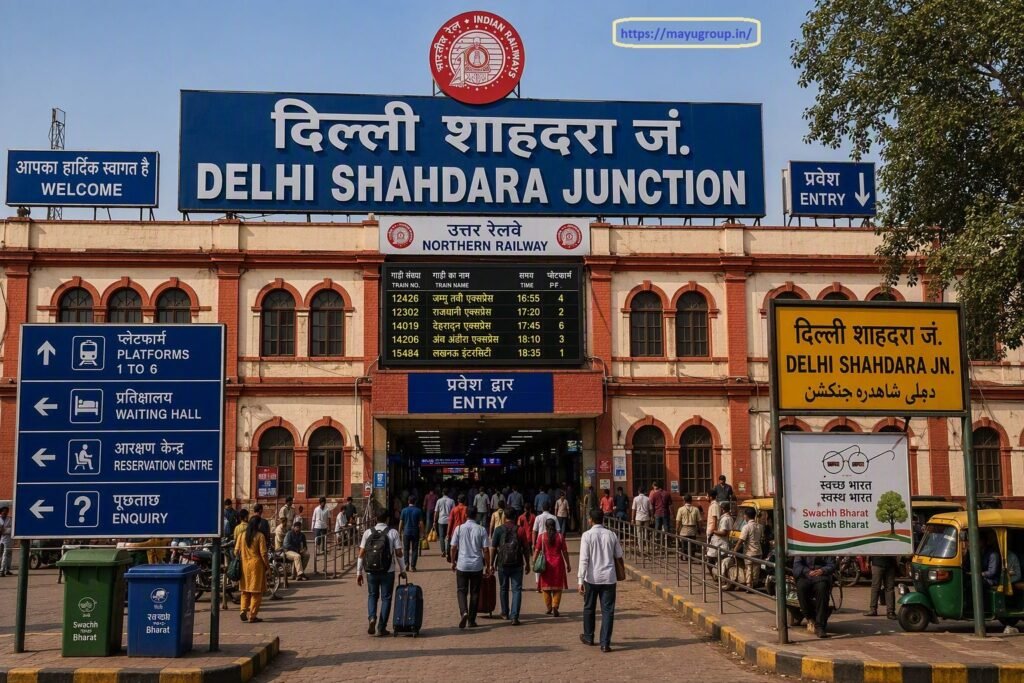
The development of Delhi Shahdara Junction Railway Station cannot be understood separately from the larger institutional framework of Indian Railways and Northern Railway. Unlike a privately owned company whose growth is normally measured through investment, sales, market share and profit, a railway station develops through public infrastructure planning, operational performance, passenger service, safety, environmental management and continuous modernization. In this context, the story of Shahdara Junction is also the story of an institution adapting to the changing needs of a major metropolitan region.
Delhi Shahdara Junction is part of the Northern Railway system and falls within the Delhi Division. The station’s location in eastern Delhi gives it strategic importance because it serves a densely developed urban area while also connecting with railway routes extending beyond the National Capital Region. Its identity as a junction reflects its historical and operational role within the railway network. Over time, the station has developed from an early light-railway facility into an electrified broad-gauge station integrated with the modern railway system.
Northern Railway has an extensive administrative and operational structure. Railway stations depend upon cooperation among multiple departments, including engineering, electrical, signal and telecommunications, operating, commercial, medical, security and housekeeping functions. Every department contributes to the overall performance of the station. Consequently, a station’s improvement cannot normally be attributed to a single activity or individual. It is the result of coordinated institutional management.
For Shahdara Junction, this institutional approach is particularly relevant to environmental certification. A green-rating programme requires the station to consider different aspects of its daily operation rather than focusing on one isolated environmental measure. Energy use, water consumption, sanitation, waste handling, passenger amenities, maintenance and housekeeping are interconnected. Improvement in one area can support improvement in another.
The year 2021 therefore represents an important stage in the station’s institutional development. Publicly accessible certification information records a certificate for Delhi Shahdara Junction Railway Station issued on 30 January 2021 and valid until 30 January 2024. The certification record associates the assessment with Northern Railway and Deming Certification Services. (ssqi.uk)
The client-provided project brief identifies the scope as the GGBC Green Railway Station Rating System and the product as a Northern Railway Gold Certificate, with an issue year of 2021 and validity through 2024. For formal corporate storytelling, this information provides the project framework. At the same time, publicly accessible certification listings should be used carefully when making independently verifiable claims about the precise rating classification. The available database explicitly identifies a Gold certificate for Delhi Junction, while Shahdara’s entry is separately listed as a Northern Railway certificate. (sanatanboards.com)
Regardless of the exact classification terminology, certification has a broader institutional value. It establishes a formal point of reference against which environmental practices can be reviewed. This is especially significant in railway infrastructure, where operational requirements are continuous. Trains operate according to schedules, passengers use facilities throughout the day, and cleaning and maintenance must be performed repeatedly. Environmental performance therefore depends upon consistent daily practices rather than occasional campaigns.
The certification process can also encourage greater awareness among employees. When environmental objectives become part of station management, staff members can better understand how routine actions influence overall resource consumption. Switching off unnecessary electrical equipment, reporting water leakage, maintaining clean public areas, segregating waste and following established housekeeping procedures may appear to be small actions individually, but collectively they contribute to the station’s environmental performance.
Another important aspect of institutional growth is passenger confidence. A well-maintained station creates a positive impression of the railway organization. Clean surroundings, organized passenger facilities, appropriate signage and reliable amenities influence how travellers perceive the quality of public transportation. Environmental improvements can therefore complement passenger-service objectives.
Shahdara’s location makes this particularly important. The railway station is situated close to the Shahdara Metro station on the Delhi Metro Red Line, creating an interchange between railway and rapid urban transit. This connectivity means that the station forms part of a larger movement system rather than functioning as an isolated railway facility.
The institution behind the station must consequently think beyond the platform. Passenger movement begins outside the station and continues through roads, pedestrian paths, metro connections, commercial areas and local neighbourhoods. Improvements in station cleanliness and resource management can contribute to the quality of this wider urban environment.
The growth of Shahdara Junction can therefore be described as a process of continuous institutional improvement. Its early development was driven by the need for railway connectivity. Later transformation introduced broad-gauge infrastructure and electrification. In the contemporary period, the focus has expanded to include environmental responsibility, passenger experience and sustainable infrastructure management.
Certification serves as an important milestone within this journey, but it should not be considered the final destination. A certificate has a defined validity period, whereas responsible infrastructure management must continue beyond that period. The true measure of institutional growth is whether the practices introduced, strengthened or documented during certification become part of normal station operations.
In this sense, Northern Railway’s role is broader than simply operating trains. It includes maintaining an extensive public infrastructure system and continuously adapting that system to new expectations. Delhi Shahdara Junction provides a useful example of this transition.
Its growth story demonstrates that railway development is not limited to construction and technology. It also involves management systems, employee participation, environmental awareness, passenger-oriented thinking and long-term planning. The 2021 certification milestone can therefore be viewed as part of a larger institutional journey—one in which the historic Shahdara Junction continues to evolve while remaining connected to the core public-service mission of Indian Railways.
#ShahdaraRailwayStation
Chapter 3 – The Green Railway Station Rating Journey
The transformation of Delhi Shahdara Junction Railway Station into a more environmentally responsible railway facility represents an important stage in its continuing development. For a station with a long operational history and a strategic position in eastern Delhi, the adoption of a green-rating framework created an opportunity to connect traditional railway operations with modern principles of sustainability. The 2021 certification milestone can therefore be understood not simply as an award, but as part of a broader effort to bring environmental management into the everyday functioning of railway infrastructure.
The project brief provided for Delhi Shahdara Junction identifies the scope of work as the GGBC Green Railway Station Rating System. It identifies the product as the Northern Railway Gold Certificate, with an issue year of 2021 and validity through 2024. These project details establish the basis for understanding the certification assignment and its intended environmental significance.
Publicly available certification records provide additional context. A certification listing records Delhi Shahdara Junction Railway Station under Northern Railway, with a certificate issued on 30 January 2021 and validity until 30 January 2024. The listing associates the certification with Deming Certification Services.
The green-rating process is significant because railway stations are complex public facilities. They consume energy, require water, generate waste and must maintain cleanliness and passenger amenities continuously. A green assessment provides a structured method of looking at these activities collectively. Instead of considering environmental performance as an independent subject, it places sustainability within station management.
One of the fundamental areas associated with green railway-station management is energy efficiency. Railway stations require electricity for lighting, offices, passenger facilities, equipment and other operational requirements. A large station or busy urban facility can consume significant amounts of energy over the course of a year. Efficient lighting systems, appropriate operating schedules, preventive maintenance and responsible use of electrical equipment can help reduce unnecessary consumption.
Water management is another important consideration. Passenger stations require water for drinking facilities, sanitation, cleaning and maintenance. Responsible water management involves preventing wastage, identifying leakage and ensuring that available resources are used efficiently. Regular inspection and maintenance can help ensure that water systems continue to perform effectively.
Cleanliness and waste management also form a visible part of a station’s environmental performance. Thousands of passengers may pass through railway premises, generating different types of waste. Without proper collection, segregation and disposal practices, waste can affect cleanliness, hygiene and the surrounding environment. A green approach encourages the station to treat waste management as a systematic operational responsibility.
For passengers, the effects of these measures are often immediately visible. A clean platform, well-maintained waiting area, hygienic sanitation facility and orderly environment contribute to a more positive travel experience. Environmental management therefore overlaps with passenger satisfaction. Sustainability does not have to be separate from service quality; in many cases, the two objectives reinforce each other.
The certification process also has an institutional dimension. Environmental performance depends on the participation of station personnel. Engineering teams, electrical staff, housekeeping employees, operating staff and station management all have different responsibilities. When sustainability objectives are formally recognized, employees can better understand the relationship between their routine activities and the overall environmental performance of the facility.
The green-rating journey also creates an opportunity for documentation and monitoring. Improvements that are documented can be evaluated over time. Consumption patterns can be reviewed, maintenance activities can be tracked, and areas requiring further improvement can be identified. This creates a cycle of continuous improvement rather than a one-time environmental campaign.
For Shahdara Junction, the timing of certification is particularly significant. The year 2021 was a period when railway infrastructure was increasingly being viewed through the combined lenses of efficiency, cleanliness, sustainability and passenger service. A certification programme provided a formal mechanism through which these objectives could be organized.
The station’s inclusion in a broader Northern Railway green-rating programme further demonstrates that sustainability was being considered at the network level. Project documentation associated with the programme identifies twelve Northern Railway stations covered by the initiative, including Delhi Shahdara, Delhi Main, Ghaziabad, Sonipat, Gurgaon, Faridabad, Ballabhgarh, Meerut City, Muzaffarnagar, Panipat, Rohtak and Karnal.
A network-wide programme can create benefits beyond individual stations. Experiences from one location can inform practices at another. Management teams can compare approaches, identify recurring challenges and develop common standards. In this way, certification can support organizational learning.
It is also important to distinguish between certification and long-term sustainability. Certification recognizes performance against defined requirements during a particular period. Sustainability requires continuing attention after the certificate has been issued. Practices must be maintained, equipment must be serviced, employees must remain aware, and new opportunities must be identified.
The 2024 end of the stated validity period should therefore not be interpreted as the end of Shahdara Junction’s environmental journey. Instead, it can be regarded as the conclusion of one formal certification cycle. The principles behind the certification remain relevant regardless of the validity date.
For a historic railway station, this represents an important evolution. Shahdara Junction began its journey in an era when railway development was primarily associated with connectivity and transportation capacity. Its modern development adds another dimension: responsible management of resources and environmental impact.
The green-rating journey thus forms an important chapter in the station’s growth story. It connects infrastructure with sustainability, operational discipline with environmental responsibility, and passenger service with improved public-space management. Most importantly, it demonstrates that the modernization of a railway station is not only about new structures or technology. It is also about changing the way an existing facility is managed, measured and continuously improved.
#NorthernRailway
Chapter 4 – Energy Efficiency, Water Conservation and Sustainable Resource Management
The journey of Delhi Shahdara Junction Railway Station toward environmental responsibility cannot be separated from the efficient management of its basic resources. Every railway station depends upon electricity, water, cleaning materials, equipment and other resources to maintain daily operations. At a busy urban station, even small inefficiencies can accumulate into significant environmental and financial impacts over time. The green-rating initiative therefore provided an opportunity to look at resource consumption not merely as an operational necessity, but as an area for continuous improvement.
The 2021 certification milestone, identified in the project brief under the GGBC Green Railway Station Rating System, placed sustainability within the wider framework of station management. The project details provided for Delhi Shahdara Junction describe the certification as a Northern Railway Gold Certificate issued in 2021 and valid until 2024. Publicly available certification records separately confirm a Delhi Shahdara Junction Railway Station certificate issued on 30 January 2021 with validity until 30 January 2024.
One of the most important areas of sustainable railway management is energy efficiency. A railway station requires electricity throughout the day for passenger areas, platforms, offices, lighting, ventilation, information systems, equipment and other supporting services. Because these requirements are continuous, efficient energy management can have a substantial cumulative impact.
The first step toward energy efficiency is awareness. Staff need to understand where electricity is being consumed and which systems require continuous operation. Equipment that is not required at a particular time can be switched off where operationally appropriate. Lighting can be managed according to occupancy and natural daylight, while electrical installations can be maintained regularly to prevent avoidable losses.
Energy-efficient lighting is another important element of sustainable infrastructure. Modern lighting technology can provide suitable illumination while consuming less electricity than older systems. In railway environments, however, efficiency must always be balanced with safety. Platforms, stairs, entrances, foot overbridges and other passenger areas require adequate illumination. A green approach therefore does not mean reducing lighting indiscriminately; it means achieving the required level of safety and visibility with efficient technology and responsible operating practices.
Preventive maintenance also contributes to energy management. Poorly maintained electrical equipment can operate inefficiently and may require more energy than properly maintained systems. Regular inspection allows faults, damaged fixtures and other problems to be identified before they become larger issues.
Water conservation is equally important. Railway stations require water for sanitation, cleaning, drinking facilities, maintenance and other passenger-related requirements. The challenge is to maintain hygiene and public health standards while preventing unnecessary consumption.
Water efficiency begins with preventing leakage. A leaking tap, pipe or fitting may appear insignificant, but continuous leakage can result in substantial wastage. Regular inspections and prompt maintenance can therefore become simple but valuable sustainability measures. Efficient fixtures and controlled water use can further reduce unnecessary consumption.
Cleaning operations require particular attention because water is essential for maintaining railway hygiene. A sustainable station does not compromise cleanliness in the pursuit of water savings. Instead, it seeks methods that provide effective cleaning with appropriate quantities of water. Housekeeping teams play a critical role in achieving this balance.
The relationship between water management and passenger experience is direct. Clean toilets, washing areas, platforms and public spaces are essential to a positive railway environment. Efficient resource management therefore needs to support—not weaken—service standards.
Another important aspect is the monitoring of consumption. Without measurement, it is difficult to understand whether improvements are producing meaningful results. Where consumption data is available, management can compare usage over different periods and identify unusual increases. This can help detect leakage, equipment problems or changes in operational requirements.
A green-rating framework can encourage this type of systematic thinking. Rather than treating environmental performance as an occasional initiative, the station can integrate it into routine administrative and maintenance procedures. Energy and water become measurable resources whose use can be monitored and improved.
The benefits are not limited to the environment. Resource efficiency can also support cost management. Electricity and water represent recurring operating expenses. Reducing unnecessary consumption can lower avoidable expenditure while simultaneously reducing environmental impact. This creates a practical connection between sustainability and efficient public-resource management.
Employee participation is another essential component. Environmental performance is created through hundreds of routine decisions made by staff each day. A maintenance worker who reports a leaking fixture, an employee who switches off unused equipment, or a housekeeping team that uses cleaning resources carefully can contribute to the station’s overall performance.
Training and communication can strengthen these behaviours. Posters, instructions, standard operating procedures and periodic awareness programmes can remind employees of their responsibilities. Passenger awareness can also contribute by encouraging responsible use of water and electrical facilities and proper disposal of waste.
For Shahdara Junction, these principles are particularly relevant because the station operates within a dense urban environment. Efficient resource management can help reduce pressure on local infrastructure while improving the quality of the railway premises.
The green certification period can therefore be viewed as an important opportunity to establish or strengthen a resource-conscious culture. Certification provides recognition, but the more lasting benefit lies in the practices that continue after assessment.
Ultimately, energy efficiency and water conservation are not isolated technical subjects. They are part of a broader philosophy of responsible railway management. The transformation of Delhi Shahdara Junction is best understood as a gradual movement from simply operating infrastructure toward managing that infrastructure intelligently.
A sustainable railway station must provide safe transportation, maintain hygiene, support passenger comfort and operate reliably while using resources responsibly. By bringing energy and water management into this larger framework, the green-rating journey contributed to a more modern understanding of what railway infrastructure should achieve.
For Shahdara Junction, this represents another stage in its long history. From its early role in connecting Delhi with surrounding regions to its contemporary role as an urban railway facility, the station continues to adapt. Sustainable resource management is one more step in that continuing evolution, demonstrating that environmental responsibility can become an integral part of operational excellence.
#IndianRailways
Chapter 5 – Waste Management, Cleanliness and the Passenger Experience
The transformation of Delhi Shahdara Junction Railway Station into a more sustainable and passenger-focused facility cannot be discussed without examining cleanliness and waste management. Railway stations are among the most active public spaces in a city. Every day, passengers arrive, depart, wait, purchase food and refreshments, use public facilities and move between platforms. These activities inevitably generate waste and place continuous demands on housekeeping and sanitation systems.
For Delhi Shahdara Junction, the green-rating initiative created an opportunity to view cleanliness not simply as a routine maintenance function, but as an important component of environmental performance and passenger service. The project brief identifies the GGBC Green Railway Station Rating System as the scope of work, with the certification period beginning in 2021 and continuing through 2024. Public certification records also document a Delhi Shahdara Junction Railway Station certificate issued on 30 January 2021 and valid until 30 January 2024.
A clean railway station communicates several things at once. It demonstrates operational discipline, creates a more pleasant passenger environment, supports hygiene and contributes to public confidence. Cleanliness is therefore not merely cosmetic. It is connected with health, safety, environmental responsibility and the overall image of the railway organization.
Creating a Systematic Approach to Waste
Waste management begins with collection. In a busy station, waste bins need to be appropriately positioned in passenger areas so that people have convenient places to dispose of unwanted materials. However, simply placing bins is not enough. They must be emptied regularly, maintained properly and supported by a reliable collection system.
Waste segregation can further improve environmental performance. Different categories of waste require different methods of handling and disposal. Separating recyclable materials from general waste can help reduce the amount sent for final disposal. Organic waste, recyclable materials and other categories can be managed according to applicable local procedures and available facilities.
The success of segregation depends heavily on awareness. Passengers need clear and understandable instructions, while housekeeping personnel need appropriate procedures for collecting and handling different waste streams. Signage, labelled bins and regular awareness activities can help make responsible disposal easier.
For station management, documentation and monitoring are equally important. A systematic waste-management programme allows supervisors to identify recurring problems, assess collection frequency and ensure that passenger areas remain clean throughout the day.
Cleanliness as a Passenger-Service Standard
The passenger’s experience of a railway station begins before boarding a train. Entrances, platforms, waiting spaces, stairs, foot overbridges and sanitation facilities all contribute to the overall impression.
A clean environment can make a station feel safer and more organized. Conversely, accumulated waste, overflowing bins or poorly maintained public areas can negatively influence passenger confidence even when railway operations themselves are functioning properly.
This is why cleanliness needs to be treated as a continuous service. It cannot be limited to a single cleaning operation at the beginning or end of the day. Passenger movement is continuous, meaning that housekeeping requirements change throughout the operating period.
Regular inspections can help identify areas that require immediate attention. High-use locations may require more frequent cleaning than less crowded spaces. Responsive housekeeping can therefore improve both efficiency and passenger satisfaction.
Sanitation and Hygiene
Sanitation facilities are among the most important elements of a railway station. Passengers expect toilets and washing facilities to be accessible, hygienic and maintained throughout their journey.
From a sustainability perspective, sanitation connects several areas of station management. Water consumption, cleaning chemicals, waste handling, ventilation, maintenance and hygiene all interact. Efficient sanitation therefore requires coordination rather than a single isolated intervention.
A well-managed sanitation system also supports the station’s public-health responsibilities. Clean facilities reduce unpleasant conditions and contribute to a more dignified travel experience.
Employee Participation
The effectiveness of cleanliness programmes depends upon people. Housekeeping teams are responsible for implementing cleaning schedules, responding to problems and maintaining public areas. Supervisors need to monitor performance, while station management needs to provide appropriate resources and clear procedures.
Training can help employees understand not only how to clean, but why particular practices matter. Correct segregation, responsible use of cleaning materials, safe handling of waste and timely reporting of maintenance issues all contribute to environmental performance.
This employee-focused approach is particularly relevant to certification. A green-rating system can document practices, but the practices become meaningful only when they are incorporated into daily routines.
Passenger Awareness
Passengers are also stakeholders in the cleanliness of the station. A sustainable railway environment requires cooperation between the railway organization and the travelling public.
Awareness messages can encourage passengers to use designated bins, avoid littering and respect sanitation facilities. Simple communication can have a significant impact when it is consistent and visible.
The station environment itself can reinforce these messages. Clearly identified bins, understandable signage and visibly maintained public areas create a culture in which responsible behaviour becomes easier.
The Environmental and Operational Benefits
Effective waste management produces benefits beyond appearance. Reduced litter can help protect drainage systems, prevent unpleasant conditions and reduce the possibility of waste entering the surrounding environment.
Efficient collection also supports housekeeping productivity. When waste is disposed of correctly at the point of generation, cleaning teams can work more systematically and spend less time dealing with scattered litter.
The environmental benefits can extend beyond the station when recyclable materials are appropriately recovered and waste is directed through responsible disposal channels.
Building a Long-Term Culture
One of the most important lessons from the green certification journey is that cleanliness should not be viewed as a temporary campaign associated with certification. The certificate may have a defined validity period, but the need for clean and sustainable railway facilities continues every day.
For Delhi Shahdara Junction, the certification process provided a formal opportunity to strengthen awareness of environmental practices. The lasting value lies in converting those practices into a normal part of station operations.
The station’s location within the urban fabric of Shahdara makes this especially important. A railway station is connected to the surrounding community. Its cleanliness influences the appearance and perception of the wider transport environment, particularly because the railway station is close to the Shahdara Metro station and other urban transportation facilities.
A Cleaner Future
The story of Delhi Shahdara Junction is therefore also a story about people and public spaces. Green infrastructure is ultimately meaningful when passengers can experience its benefits.
Clean platforms, hygienic facilities, organized waste collection and responsible housekeeping demonstrate that environmental sustainability can be integrated with passenger service. The station’s green-rating journey helped bring these priorities into a structured framework.
As Shahdara Junction continues to evolve, the principles of cleanliness and responsible waste management can remain central to its identity. The goal is not simply to achieve a certification requirement, but to create a railway environment where environmental responsibility becomes visible in everyday life.
In this way, cleanliness becomes more than maintenance. It becomes a measure of institutional discipline, environmental awareness and respect for passengers. For a historic station serving a modern metropolitan population, that is an essential part of sustainable growth.
#GreenRailwayStation
Chapter 6 – Passenger Experience, Connectivity and Community Impact
Delhi Shahdara Junction Railway Station has always been more than a railway facility. Its importance comes from its relationship with the people, neighbourhoods and transportation systems surrounding it. As the city of Delhi has expanded and urban mobility has become increasingly interconnected, the expectations placed on railway stations have also changed. Passengers today look for more than trains and platforms. They expect cleanliness, convenience, safety, accessibility, organized facilities and an environment that reflects modern standards.
The green-rating journey of Delhi Shahdara Junction therefore has an important passenger dimension. Although environmental certification is primarily concerned with sustainable management, many of the practices associated with sustainability directly influence the passenger experience. Efficient lighting, clean public spaces, hygienic sanitation, responsible waste management and organized maintenance all contribute to the quality of the journey.
The project brief identifies the GGBC Green Railway Station Rating System as the scope of work undertaken for Delhi Shahdara Junction, with a Northern Railway certificate described as a Gold Certificate and an issue year of 2021. The stated validity period extends through 2024. Public certification information separately records a Delhi Shahdara Junction Railway Station certificate issued on 30 January 2021 and valid until 30 January 2024.
A Station Within a Connected City
One of Shahdara Junction’s major strengths is its location. The railway station is situated in eastern Delhi, close to important roads and urban communities. It is also located near Shahdara Metro station on the Delhi Metro Red Line. Public references describe the railway station as approximately 100 metres from the metro station, creating a convenient interchange between railway and metro transportation.
This connectivity gives the station an important role in multimodal transportation. A passenger may arrive by suburban or regional train, transfer to the metro and continue into another part of Delhi without needing to use a private vehicle. Similarly, metro passengers can access the railway network through the interchange.
From a sustainability perspective, such connectivity is valuable because integrated public transportation can support reduced dependence on private vehicles. A railway station that connects efficiently with other modes becomes part of a larger sustainable mobility system.
Passenger Comfort and Convenience
Passenger experience begins with the physical environment. Entrances, ticketing areas, platforms, stairways, waiting areas and foot overbridges all need to be maintained in a condition that supports smooth movement.
Good lighting is particularly important. Passengers need clear visibility when moving through the station, especially during early morning or evening periods. Energy-efficient lighting can provide this service while supporting environmental objectives.
Cleanliness is equally significant. A passenger entering a clean station is more likely to perceive the facility as organized and professionally managed. Waste bins, clean platforms and properly maintained public areas can make the travelling experience more comfortable.
Sanitation facilities are another critical element. For families, elderly passengers and long-distance travellers in particular, clean and accessible sanitation facilities can have a major effect on overall satisfaction.
Safety and Environmental Responsibility
Environmental improvement should never be separated from railway safety. A sustainable railway station must first remain safe and operationally reliable.
Good housekeeping contributes to this objective. Removing litter and obstructions can help keep circulation routes clear. Proper maintenance of lighting and electrical systems supports visibility and operational safety. Effective drainage and cleanliness can also help prevent avoidable problems during adverse weather.
The green approach is therefore complementary to safety. Both require regular inspection, preventive maintenance and employee accountability.
Accessibility and Inclusive Service
A modern railway station should serve passengers with different physical abilities and needs. Elderly travellers, children, passengers carrying luggage and people with disabilities may experience the station differently from an able-bodied passenger.
Accessible pathways, appropriate signage, ramps or other mobility-support facilities, where provided, can improve the station experience. Clear information can also reduce confusion for passengers who are unfamiliar with the station.
Environmental certification does not replace accessibility standards, but the wider philosophy of responsible station management encourages attention to the needs of all users.
Community Relationship
A railway station is part of the community in which it operates. Shahdara is a historic and densely populated part of Delhi, with residential areas, commercial activity and other transportation facilities surrounding the station.
The condition of the railway premises therefore affects more than passengers. Local residents, shopkeepers, commuters, railway employees and visitors all interact with the station environment.
Improved cleanliness and responsible waste management can create positive effects beyond the station boundary. Similarly, better integration with surrounding transport infrastructure can improve the functionality of the wider neighbourhood.
Environmental Awareness Among Passengers
Passengers can become partners in the station’s sustainability journey. Waste segregation, responsible disposal, water conservation and respect for public facilities all depend partly on passenger behaviour.
Awareness campaigns can encourage these practices. Posters, announcements, signage and clearly marked facilities can help passengers understand how their actions affect the station environment.
The most successful sustainability programmes are those in which responsible behaviour becomes normal rather than exceptional. When passengers see clean facilities and organized waste systems, they are more likely to participate in maintaining them.
The Role of Certification in Passenger Confidence
A certification programme can provide an external framework for reviewing environmental practices. While a certificate does not automatically guarantee every aspect of passenger satisfaction, it can demonstrate that environmental performance has been formally assessed against defined criteria.
For a railway organization, such recognition can support a broader reputation for responsible management. It can also encourage station teams to maintain standards beyond the assessment period.
The 2021 certification milestone should therefore be viewed as part of a wider institutional effort. The station’s environmental practices, cleanliness standards and passenger facilities work together to create an overall experience.
From Station to Sustainable Mobility Hub
The future of Shahdara Junction lies not only in its railway operations but also in its role as part of Delhi’s transportation ecosystem. Its railway connection, metro proximity and location near major roads give it the potential to function as an important multimodal mobility point.
As cities become more conscious of pollution, congestion and resource consumption, public transportation facilities will increasingly be expected to provide efficient alternatives to private vehicles. Railway stations can contribute to this objective by offering reliable connectivity and maintaining environments that encourage people to choose public transportation.
Shahdara’s green-rating journey adds another dimension to this role. Sustainable station management demonstrates that public transport infrastructure can address both mobility and environmental objectives.
Continuing the Journey
The true measure of a green railway station is ultimately the experience created for its users. If environmental practices produce cleaner facilities, better resource management, improved maintenance and greater awareness, then sustainability becomes something passengers can see and experience.
For Delhi Shahdara Junction, the journey from historic railway station to modern sustainable transport facility is continuing. Its location gives it strong urban relevance, while its certification milestone provides evidence of an institutional commitment to environmental management.
The next stage is to maintain this momentum. Certification should be treated as a foundation rather than a conclusion. Continuous improvement in cleanliness, passenger amenities, resource efficiency, accessibility and multimodal integration can strengthen the station’s contribution to Delhi.
In this sense, Shahdara Junction’s growth is ultimately a people-centred story. Infrastructure exists to serve people, and sustainability gives that service a long-term perspective. A cleaner, more efficient and better-managed station can benefit passengers today while supporting a more responsible transportation system for the future.
#RailwaySustainability
Chapter 7 – Institutional Growth, Operational Excellence and the Value of Certification
The development of Delhi Shahdara Junction Railway Station after its green certification represents a broader story of institutional growth. A railway station does not grow in the same manner as a private commercial company. Its progress is measured through improvements in infrastructure, operational reliability, passenger services, resource efficiency, cleanliness, safety and the ability of its management systems to respond to changing requirements. In this context, the 2021 green certification became an important milestone in a continuing process of organizational improvement.
The project brief identifies Delhi Shahdara Junction Railway Station as the client, with its address at Off. GT Road, Makki Sarai Railway Road, Shahdara, New Delhi–110032. The stated scope was the GGBC Green Railway Station Rating System, with the product described as the Northern Railway Gold Certificate, issued in 2021 and valid through 2024. Publicly accessible certification information independently records a Delhi Shahdara Junction Railway Station certificate issued on 30 January 2021 and valid until 30 January 2024.
Certification is valuable because it introduces a structured approach to evaluating performance. Instead of relying entirely on informal observations, a formal assessment encourages an organization to examine its practices systematically. For a railway station, this can include environmental management, energy efficiency, water conservation, waste handling, cleanliness and operational procedures.
Certification as a Management Tool
A certificate is often viewed primarily as recognition, but its greater value can be found in the process behind it. Preparing for assessment requires organizations to examine existing systems, identify gaps, collect information and demonstrate implementation.
For Shahdara Junction, the green-rating process created an opportunity to look at station operations through an environmental lens. Activities that were previously considered routine—such as lighting, cleaning, water use, waste collection and maintenance—could be connected to broader sustainability objectives.
This approach can improve management awareness. When employees understand that everyday practices contribute to measurable environmental performance, responsibility becomes more distributed across the organization.
Building Operational Discipline
Railway stations operate according to highly structured schedules. Trains must arrive and depart safely, passengers must be managed, equipment must function reliably and public facilities must remain available.
Environmental responsibility must therefore fit within operational requirements rather than compete with them. This is where operational discipline becomes important.
Energy-saving measures, for example, must not compromise lighting required for passenger safety. Water conservation must not reduce hygiene standards. Waste reduction must not interfere with efficient passenger movement. Sustainable management is successful when environmental improvements are integrated into normal operations.
This integration requires planning and coordination among departments.
Cross-Departmental Cooperation
A railway station is supported by numerous teams. Engineering personnel maintain infrastructure; electrical teams manage power-related systems; housekeeping teams maintain cleanliness; operating staff coordinate railway movements; commercial personnel interact with passengers; and security teams support safe movement.
Green certification can encourage these groups to recognize their shared contribution to station performance.
For example, a housekeeping team may identify a leaking tap during routine cleaning. Reporting the problem quickly allows maintenance staff to correct it, reducing water wastage. Similarly, electrical personnel may identify inefficient equipment and recommend replacement or maintenance.
Small examples like these illustrate how institutional growth is created through cooperation.
Documentation and Continuous Monitoring
Another benefit of certification is the importance placed on evidence and documentation. Sustainable practices become more effective when they can be measured and reviewed.
Energy consumption can be monitored. Water usage can be examined. Cleaning schedules can be documented. Waste-management procedures can be reviewed. Maintenance records can identify recurring problems.
Such information provides management with a basis for decision-making. Rather than depending only on assumptions, managers can identify trends and prioritize improvement areas.
The result is a continuous improvement cycle: assess current conditions, identify opportunities, implement improvements, monitor performance and reassess.
Employee Awareness and Organizational Culture
Long-term improvement depends on people. Equipment and infrastructure are important, but their performance depends upon the individuals responsible for operating and maintaining them.
A green certification programme can help create greater environmental awareness among employees. Staff members become more conscious of electricity consumption, water wastage, cleanliness, waste segregation and responsible use of facilities.
Over time, repeated awareness can develop into organizational culture. Sustainability then becomes part of the normal working environment rather than a special project.
This cultural change is perhaps one of the most valuable outcomes of certification because it can continue after the formal assessment period has ended.
Reputation and Public Confidence
Institutional reputation is another dimension of growth. Railway stations are public-facing facilities, and their condition influences how passengers perceive the railway organization.
A clean, organized and environmentally responsible station can strengthen public confidence. Certification provides an external recognition mechanism that can complement these visible improvements.
However, reputation must be supported by actual performance. A certificate alone cannot create a positive passenger experience. The practices behind the certification must be maintained consistently.
For Shahdara Junction, this means that the true value of the 2021 milestone lies in whether the station continued to apply the principles of responsible management.
Learning Across the Railway Network
The green-rating initiative was not limited to Shahdara. Project documentation identifies a wider programme involving twelve Northern Railway stations, including Delhi Main, Ghaziabad, Sonipat, Gurgaon, Faridabad, Ballabhgarh, Meerut City, Muzaffarnagar, Panipat, Rohtak and Karnal.
A network-wide initiative provides an opportunity for shared learning. Different stations may face different challenges, but many environmental issues are common. Successful practices developed at one station can potentially inform improvements at another.
This creates an institutional multiplier effect. Instead of environmental improvement remaining an isolated activity, it can become part of wider organizational learning.
The Meaning of Post-Certification Growth
The end of the stated certificate validity in 2024 should not be interpreted as the end of the improvement journey. Certification periods are temporary; institutional responsibility is permanent.
The post-certification period is therefore particularly important. It tests whether the systems established during assessment have become part of normal management.
For Shahdara Junction, continuing improvement can involve reviewing energy performance, maintaining water efficiency, strengthening waste management, improving passenger facilities and identifying new opportunities for sustainable infrastructure.
A Foundation for the Future
The 2021 certification can ultimately be regarded as a foundation for future development. It provided a structured point from which the station could evaluate its environmental practices and strengthen operational discipline.
The growth story of Delhi Shahdara Junction is therefore not one of sudden transformation. It is a gradual process built upon railway heritage, institutional management, employee participation and modernization.
Its future success will depend on maintaining this approach. Sustainable growth requires continuous assessment, investment, training and accountability. As passenger expectations evolve and environmental challenges become more significant, railway stations will need to become increasingly efficient and responsible.
Delhi Shahdara Junction provides an example of how a historic railway facility can participate in this transformation. Its green certification is one milestone in a much longer institutional journey—from connectivity to efficiency, from routine operation to systematic management, and from environmental awareness to a culture of continuous improvement.
The most important achievement is therefore not simply receiving recognition. It is creating the organizational capacity to keep improving after recognition has been received.
#SustainableRailways
Chapter 8 – Post-Certification Development, Modernization and Future Opportunities
The story of Delhi Shahdara Junction Railway Station did not end with the completion of its green certification cycle. The issue of certification in 2021 created a defined period in which environmental performance could be formally recognized, but the larger objective of sustainable railway management extends beyond the validity of any individual certificate. The period after certification is therefore just as important as the assessment itself because it determines whether improvements become permanent elements of station management.
The project brief identifies Delhi Shahdara Junction Railway Station as the client and specifies the GGBC Green Railway Station Rating System as the scope of work. It identifies the product as the Northern Railway Gold Certificate, with an issue year of 2021 and validity through 2024. Publicly available certification information records a certificate for Delhi Shahdara Junction Railway Station issued on 30 January 2021 and valid until 30 January 2024.
Beyond the Certificate
Certification has a defined beginning and end, but sustainability is a continuing responsibility. A station can only maintain its environmental performance if the practices associated with certification remain part of its everyday operations.
For Shahdara Junction, this means that environmental management should continue through regular inspection, maintenance, monitoring and staff awareness. Equipment installed or practices introduced during the certification period need ongoing attention. Without maintenance, even efficient systems can lose their effectiveness.
Post-certification development should therefore be viewed as a cycle rather than a conclusion. Management can assess current performance, identify weaknesses, introduce corrective measures and then evaluate the results.
Modernization and Infrastructure Improvement
Railway stations must continuously adapt to changing passenger requirements. Modernization can include improvements in passenger amenities, lighting, sanitation, information systems, accessibility and circulation facilities.
Environmental considerations can be incorporated into each stage of this development. New equipment can be selected for energy efficiency. Renovation projects can consider water conservation. Waste-management facilities can be integrated into station design rather than added later.
This approach ensures that sustainability becomes part of infrastructure planning instead of being treated as a separate activity.
The wider redevelopment of railway stations in Delhi also provides an important context for Shahdara. Parliamentary railway-development documentation has included Delhi Shahdara among stations associated with redevelopment planning.
Such planning creates opportunities to integrate environmental principles into future infrastructure improvements.
Smart Resource Management
Technology can strengthen the environmental management of railway stations. Digital monitoring systems can help track electricity and water consumption, identify unusual usage patterns and support maintenance decisions.
Smart lighting controls, efficient electrical equipment and automated monitoring can potentially reduce unnecessary resource consumption while maintaining passenger safety.
Similarly, water systems can benefit from monitoring that identifies unusual consumption or leakage. Early detection allows maintenance teams to respond before wastage becomes substantial.
The future of green railway infrastructure will increasingly involve the combination of physical improvements and data-driven management.
Renewable Energy Opportunities
Renewable energy represents another potential area of development. Railway stations often have roof areas and other spaces that may provide opportunities for solar-energy installations, subject to technical feasibility, structural considerations and applicable railway policies.
Solar power can contribute to reducing dependence on conventional electricity sources. It can also strengthen the environmental identity of a railway facility.
However, renewable-energy projects must be evaluated carefully. Their success depends upon appropriate site conditions, maintenance, integration with existing electrical systems and long-term economic viability.
The principle is important: sustainability should be based on solutions that are practical, safe and capable of being maintained over time.
Water Sustainability
Future development can also strengthen water conservation. Efficient fixtures, leak detection, rainwater-management measures and responsible cleaning practices can help reduce water demand.
Where technically and legally appropriate, rainwater harvesting and water-reuse systems may provide additional opportunities. Such measures require proper design and maintenance, but they can contribute to the resilience of railway infrastructure.
Water sustainability is particularly important because railway stations must maintain high standards of sanitation. The objective is not simply to consume less water, but to use water more intelligently while protecting hygiene and passenger comfort.
Waste Management and Circular Practices
The next generation of railway-station sustainability can move beyond basic waste collection toward resource recovery. Segregation at source can make recycling more effective. Organic waste may, where suitable facilities exist, be directed toward appropriate treatment.
Passenger awareness remains essential. A sophisticated waste-management system cannot succeed if waste is consistently mixed at the point of disposal.
Clear signage, convenient disposal points and visible cleanliness can encourage better passenger participation.
The long-term goal is to reduce the amount of waste requiring final disposal and to recover useful materials wherever practical.
Creating a Sustainable Passenger Culture
Infrastructure alone cannot create sustainability. Passengers are active participants in the station environment.
Awareness programmes can encourage responsible use of water, proper waste disposal and care for public facilities. Announcements, displays and educational messages can make sustainability visible to the travelling public.
The station can become an educational environment where passengers see practical examples of responsible public infrastructure. This is especially valuable because railway stations reach large numbers of people every day.
Employee Training for the Next Stage
Post-certification development also requires continued employee training. New staff members need to understand environmental procedures, while existing employees need periodic reinforcement and updates.
Training can cover energy management, water conservation, waste segregation, housekeeping, maintenance reporting and emergency response. When environmental responsibilities are integrated into job functions, sustainability becomes easier to maintain.
Employee recognition can also support motivation. Teams that identify useful improvements or consistently maintain high standards can contribute to a culture of ownership.
Measuring Long-Term Performance
Future certification or internal reviews should ideally be supported by measurable indicators. Consumption per station area, waste quantities, maintenance frequency and other relevant indicators can help management understand whether performance is improving.
Measurement also creates accountability. When targets are defined and reviewed, improvement becomes easier to manage.
The most successful environmental programmes are therefore likely to combine certification, internal monitoring and continuous improvement.
Shahdara’s Future Role
Delhi Shahdara Junction has a distinctive opportunity because of its historical importance and strategic urban location. Its proximity to metro services and its position within Delhi’s transportation network make it an important component of public mobility.
Future development can build on this position by strengthening the relationship between sustainability and mobility. A well-managed, clean, accessible and resource-efficient station can encourage public transportation use while reducing the environmental burden associated with inefficient infrastructure.
The station’s future should therefore be viewed through multiple dimensions: railway operations, passenger service, environmental performance, technology and urban integration.
From Certification to Continuous Transformation
The most important lesson of the post-certification period is that sustainability cannot remain dependent upon a certificate. Certification provides a framework and a milestone, but continuous improvement provides the lasting value.
For Delhi Shahdara Junction, the 2021–2024 certification cycle can be considered one stage in a longer transformation. The next stage can build upon the awareness, systems and management discipline developed during that period.
The future railway station will not simply be a place where trains stop. It will increasingly be a sustainable mobility facility, an efficient public building and an important part of the surrounding community.
Shahdara Junction’s continuing growth will depend on its ability to combine its historic railway identity with modern expectations. By maintaining environmental awareness, adopting appropriate technology, improving passenger services and strengthening institutional management, the station can continue its journey toward a cleaner, more efficient and more sustainable future.
#RailwayInfrastructure
Chapter 9 – The Long-Term Impact of Green Certification and the Growth Story of Shahdara Junction
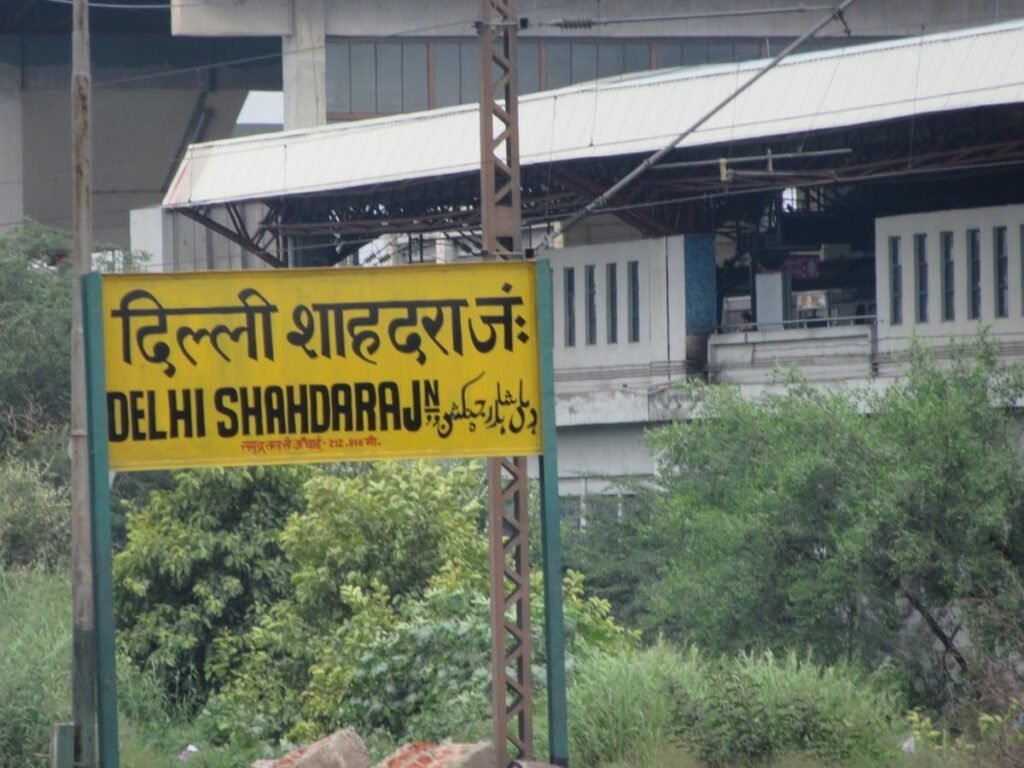
The green certification journey of Delhi Shahdara Junction Railway Station represents more than a single achievement within a particular year. It provides an important example of how environmental management can become part of the long-term development of public transportation infrastructure. The station’s certification in 2021, with the stated validity extending to 2024, created a formal milestone in its continuing evolution from a historic railway facility into a more modern, efficient and environmentally conscious transport environment.
The client project brief identifies the GGBC Green Railway Station Rating System as the scope of work and describes the product as a Northern Railway Gold Certificate. Publicly available certification information records Delhi Shahdara Junction Railway Station with a certificate issued on 30 January 2021 and a validity date of 30 January 2024.
The long-term importance of such recognition lies not only in the certificate itself, but in the management practices and awareness developed through the process.
A Shift in the Meaning of Railway Development
Historically, railway development was primarily associated with connectivity. Stations were established to enable passengers and goods to move efficiently between locations. Shahdara’s own history reflects this principle. Its railway origins date to the early twentieth century, when it became part of the Shahdara–Saharanpur Light Railway system.
Over time, however, the definition of successful railway infrastructure has expanded. Modern stations are expected to provide safe and reliable transportation while also addressing cleanliness, passenger comfort, accessibility, energy consumption, water use, waste management and environmental responsibility.
The green certification journey represents this change in perspective. It demonstrates that railway infrastructure can be assessed not only according to operational requirements but also according to its environmental performance.
Institutional Reputation
Certification can strengthen institutional reputation by demonstrating that environmental management has been formally considered. For a public organization such as Indian Railways, this is particularly important because railway stations are highly visible public assets.
Passengers encounter railway facilities directly. Their perception is influenced by cleanliness, organization, lighting, sanitation and the general condition of the station. Environmental improvements can therefore contribute to a wider perception of efficient management.
However, institutional reputation must be supported by continuing performance. The value of certification decreases if practices are not maintained after the assessment period. For this reason, the post-certification period is an important test of institutional commitment.
Environmental Awareness as a Long-Term Asset
One of the most valuable outcomes of green certification can be increased awareness among employees. When environmental objectives become part of formal station management, employees begin to see their daily responsibilities from a broader perspective.
A maintenance worker may recognize the environmental importance of fixing a leaking pipe. An electrical employee may become more conscious of unnecessary energy consumption. A housekeeping worker may understand the importance of segregation and responsible waste handling.
These actions may appear small, but a railway station is made up of thousands of daily activities. Small improvements repeated consistently can produce substantial cumulative benefits.
Benefits to Passengers
The long-term impact of green practices is also visible in the passenger environment. Cleaner platforms, better-maintained facilities and efficient lighting can make travelling more comfortable.
Environmental responsibility and passenger service are not competing objectives. In many situations, they reinforce one another. Efficient lighting can reduce energy consumption while maintaining visibility. Water-efficient systems can reduce wastage while supporting hygiene. Organized waste collection can improve both environmental performance and station appearance.
This relationship makes sustainability relevant to passengers even when they are unaware of the technical details of certification.
Contribution to Sustainable Mobility
Shahdara Junction’s location gives it particular significance in Delhi’s public transportation network. The railway station is situated close to Shahdara Metro station on the Delhi Metro Red Line, enabling passengers to transfer between rail and metro services.
This multimodal connectivity supports the larger concept of sustainable urban mobility. When railway, metro and other public transport services connect effectively, passengers have greater opportunities to use shared transportation rather than relying entirely on private vehicles.
A sustainable railway station therefore contributes to a larger system. Its environmental performance should be considered alongside the role it plays in encouraging efficient public transportation.
Learning Across Northern Railway
The green-rating initiative also had importance because it involved multiple stations rather than Shahdara alone. Project documentation associated with the programme identifies twelve Northern Railway stations included in the initiative. These included Delhi Main, Ghaziabad, Sonipat, Gurgaon, Faridabad, Ballabhgarh, Meerut City, Muzaffarnagar, Panipat, Rohtak, Karnal and Delhi Shahdara.
A multi-station programme allows organizations to learn from different operating environments. A practice that works effectively at one station may provide ideas for another. Common challenges can also be identified and addressed through shared approaches.
This network-level learning can multiply the benefits of certification.
Certification and Future Planning
The certificate period should also be viewed as a reference point for future planning. Management can use lessons from the assessment to identify areas that require further investment.
Future improvements may include more efficient lighting, better water-management systems, improved waste segregation, renewable-energy opportunities, modern passenger amenities and digital monitoring.
The most effective approach is likely to combine environmental improvement with wider infrastructure development. Sustainability should be considered when new facilities are planned rather than added only after construction.
The Importance of Continuous Improvement
The end of the stated validity period in 2024 does not mean that the station’s environmental journey has ended. Instead, it marks the end of a formal certification cycle.
Continuous improvement requires periodic review. Management should ask whether resource consumption can be reduced further, whether passenger facilities can be improved, whether waste systems are effective and whether employees and passengers remain aware of environmental responsibilities.
This approach converts certification from an isolated event into an ongoing management philosophy.
The Growth Story of the Institution
The growth of Delhi Shahdara Junction should therefore be understood in several dimensions.
Its physical growth reflects changes in railway technology and infrastructure. Its operational growth reflects improved systems and connectivity. Its environmental growth is represented by greater attention to resource efficiency and green management. Its social growth is reflected in its role as a public facility serving the surrounding community.
Together, these elements create a broader story of institutional development.
The station’s growth is not comparable to the expansion of a conventional private company, because its primary purpose is public service. Its success is measured through the value it provides to passengers and the efficiency with which public infrastructure is managed.
A Legacy Beyond 2024
The strongest legacy of the 2021 certification should therefore be the continuation of its principles beyond the formal certificate period. The true achievement is not simply recognition received in one year, but the creation of a culture in which environmental responsibility becomes part of everyday railway management.
For Delhi Shahdara Junction, this legacy can support future modernization and redevelopment. As the station continues to serve Delhi’s growing population, it can combine its historic identity with contemporary expectations of sustainability and efficiency.
The green certification journey has demonstrated that an established railway station can evolve without losing its historical importance. Instead, modernization can strengthen the station’s relevance.
In the long term, Shahdara Junction can be seen as an example of how railway heritage, environmental responsibility and public-service modernization can exist together. Its story is one of gradual transformation: from a railway connection created more than a century ago to a modern urban transport facility increasingly conscious of sustainability.
#GreenStation
Chapter 10 – The Future Vision of Delhi Shahdara Junction: From Green Certification to Sustainable Excellence
The journey of Delhi Shahdara Junction Railway Station is a story of continuous transformation. From its early role in the development of railway connectivity in northern India to its present position within Delhi’s modern transportation network, the station has adapted to changing technologies, passenger expectations and institutional priorities. The 2021 green certification milestone added a new dimension to this history by placing environmental responsibility alongside railway operations, passenger service and infrastructure development.
The client project brief identifies the GGBC Green Railway Station Rating System as the scope of work and describes the product as the Northern Railway Gold Certificate, issued in 2021 and valid through 2024. Publicly available certification information records Delhi Shahdara Junction Railway Station with a certificate issued on 30 January 2021 and valid until 30 January 2024.
The future of the station, however, cannot be defined only by the period of that certificate. Sustainable development is a continuing process. The real opportunity is to use the lessons of certification as a foundation for the next stage of modernization.
Building on a Historic Foundation
Shahdara Junction has a long railway history. Its origins are associated with the Shahdara–Saharanpur Light Railway, which opened in 1907. Over the decades, railway infrastructure in the area evolved from its early light-railway configuration to the broad-gauge and electrified system serving the modern Delhi region.
This history gives the station a distinctive identity. Future modernization should not be understood as a rejection of that heritage. Instead, development can preserve the station’s historical significance while introducing modern standards of efficiency, accessibility and sustainability.
A successful railway station of the future should be both technologically modern and conscious of its history.
A Vision of Sustainable Infrastructure
The future vision for Shahdara Junction can be based on several interconnected principles: energy efficiency, water conservation, waste reduction, passenger comfort, accessibility, safety and intelligent management.
Energy-efficient lighting and equipment can help reduce consumption. Renewable-energy opportunities, where technically feasible, can provide another pathway toward environmental improvement.
Water systems can be strengthened through efficient fixtures, leakage detection and responsible cleaning practices. Future redevelopment can also consider rainwater-management measures where appropriate.
Waste management can evolve from simple collection toward greater segregation and resource recovery. These measures can reduce environmental impact while improving station cleanliness.
Smart Railway Management
Technology will play an increasingly important role in station management. Digital systems can help monitor electricity and water consumption, identify unusual patterns and support preventive maintenance.
Data can also assist management in understanding passenger movement and facility usage. Better information can help determine where cleaning is required most frequently, where facilities experience high demand and where improvements would produce the greatest benefit.
The objective should not be technology for its own sake. Technology should be introduced where it solves practical problems, improves efficiency or enhances passenger service.
Passenger-Centred Development
The future railway station must place passengers at the centre of its development strategy. A sustainable station should also be comfortable, safe, accessible and easy to understand.
Clear signage, organized passenger movement, clean sanitation facilities, well-maintained platforms and reliable information systems can improve the travelling experience.
Accessibility should remain an important consideration. Elderly passengers, people with disabilities, children and travellers carrying luggage may require additional support. Future infrastructure improvements should therefore seek to make the station usable by as many people as possible.
Strengthening Multimodal Connectivity
Shahdara Junction’s proximity to Shahdara Metro station gives it an important advantage. The railway and metro systems provide complementary forms of public transportation and allow passengers to move efficiently through Delhi.
The future opportunity is to strengthen this relationship. Better pedestrian connections, clear wayfinding and coordinated passenger movement can make transfers easier.
Such integration contributes to sustainable mobility because passengers can combine different forms of public transportation instead of depending entirely on private vehicles.
Community Participation
A railway station is also part of the local community. Sustainable development can therefore involve awareness and participation beyond railway employees.
Passengers can be encouraged to dispose of waste responsibly, conserve water and respect public facilities. Local communities can benefit from cleaner surroundings and improved transportation infrastructure.
Awareness campaigns can help make sustainability visible. A passenger who sees clear environmental messages, organized waste facilities and well-maintained public spaces experiences sustainability as part of everyday life.
Employee Development
Employees will remain central to the future of the station. New technology and infrastructure cannot deliver their full benefits without trained personnel.
Regular training can cover environmental procedures, equipment operation, preventive maintenance, waste management, energy conservation and passenger service.
The development of an environmentally aware workforce can help ensure that improvements are maintained over the long term.
Continuous Certification and Improvement
Although the stated certificate validity ended in 2024, the principles associated with green certification remain relevant. Future assessment or recertification, where pursued, should be viewed as an opportunity to evaluate progress rather than simply renew a document.
The next assessment cycle can build upon previous experience. New targets can be established, previous weaknesses can be addressed and successful practices can be strengthened.
This creates a continuous cycle of improvement: measure, improve, monitor, review and improve again.
A Model for Responsible Public Infrastructure
Shahdara Junction’s story also has a wider significance. Railway stations across India are being expected to combine transportation services with better environmental performance and passenger amenities.
A station that demonstrates effective sustainability practices can provide useful lessons for other facilities. The experience gained through certification can contribute to institutional knowledge within Northern Railway and the wider Indian Railways system.
The multi-station green-rating initiative already demonstrated the value of approaching environmental performance at a network level. Project documentation identifies twelve Northern Railway stations that participated in the programme, including Delhi Shahdara.
The Meaning of Growth
For Delhi Shahdara Junction, growth should not be measured simply by physical expansion. The deeper form of growth is improvement in quality.
A station grows when it uses less energy without compromising safety. It grows when it conserves water while maintaining hygiene. It grows when waste is managed responsibly. It grows when passengers receive better facilities. It grows when employees become more aware and accountable. It grows when technology improves management and when public infrastructure becomes more sustainable.
This is a broader and more meaningful definition of institutional growth.
Conclusion – A Journey That Continues
Delhi Shahdara Junction Railway Station carries more than a century of railway history, but its future depends upon its ability to respond to contemporary challenges. The green certification milestone of 2021 provided an important framework for environmental awareness and responsible station management. The stated certification period through 2024 represents one completed phase of this journey.
The next phase should build upon that foundation.
The future Shahdara Junction can be envisioned as a clean, efficient, accessible, passenger-friendly and environmentally responsible railway facility. Its development can combine modern technology with careful resource management and preserve its role as an important part of Delhi’s public transportation system.
The station’s greatest achievement will not be the possession of a certificate. It will be the creation of a lasting culture of improvement.
Its story began with the expansion of railway connectivity. It continued through technological and infrastructural change. It entered a new chapter through green certification and environmental management. Now, its future lies in continuous innovation and responsible public service.
Delhi Shahdara Junction therefore stands as a reminder that sustainable development is not a destination reached once. It is a journey that must continue with every improvement, every responsible decision and every effort to serve passengers better.
The certificate may have carried an issue date and a validity date, but the commitment to a cleaner and more sustainable railway future has no fixed expiry. That continuing commitment is the real measure of Shahdara Junction’s growth—and the foundation of its future.
#DelhiRailways
#DelhiShahdara #ShahdaraJunction #SustainableTransport #GreenInfrastructure #EcoRailwayInitiative
Take the Next Step Today
Don’t wait to enhance your business’s quality and efficiency. Partner with Mayu Group India and experience the transformation that comes with expert consultancy and training. Contact us today to learn more about how we can help you achieve your business goals. Reach out via phone at +91-9322728183, visit our website at www.mayugroup.in, or email us at investor@mayugroup.in Let us be your guide on the journey to excellence and innovation.