Export Strategy Development
Export Strategy Development is the process of creating a structured plan to help a business successfully enter, develop, and grow in international markets. A strong export strategy evaluates target markets, customer demand, competition, pricing, regulations, logistics, distribution channels, and potential risks before a company begins or expands its overseas operations.
The first step is usually international market research. Businesses identify countries where their products or services have strong demand and assess factors such as market size, purchasing behavior, competitors, economic conditions, and trade barriers. Resources such as the International Trade Administration can help exporters research international markets and understand country-specific trade requirements.
Another important element is target-market selection. Instead of attempting to enter several countries simultaneously, businesses can prioritize markets based on commercial potential, regulatory accessibility, competition, logistics costs, and available distribution networks. This focused approach can help companies use their resources more effectively.
Pricing and financial planning are also essential components of export strategy development. International pricing should account for production costs, freight, insurance, customs duties, taxes, currency fluctuations, distributor margins, and applicable Incoterms. A carefully calculated export price helps businesses remain competitive while protecting profitability.
A successful strategy must also address regulatory and compliance requirements. Exporters need to understand product standards, labeling requirements, licenses, documentation, customs procedures, and restrictions applicable to their target markets. For Indian exporters, the Directorate General of Foreign Trade (DGFT) provides important information regarding India’s foreign-trade policies and procedures.
Logistics and distribution planning determine how products will reach international customers. Businesses need to select suitable transportation methods, freight partners, warehouses, distributors, or other sales channels. Planning these processes in advance can reduce delivery delays and unnecessary costs.
Finally, export strategy development should include risk management and performance measurement. Businesses can establish key performance indicators such as export revenue, order volumes, customer acquisition, delivery performance, and market profitability. Regularly reviewing these indicators allows companies to adjust their strategy as market conditions change.
Overall, Export Strategy Development provides a practical roadmap for sustainable international expansion. By combining market research, pricing, compliance, logistics, distribution, and risk management, businesses can make informed decisions, reduce uncertainty, and build a stronger foundation for long-term success in global markets.
#ExportPlanning
What Is Export Strategy Development and Why Is It Important for Successful International Market Expansion?
Export strategy development is the process of creating a structured plan that enables a business to enter, operate, and grow successfully in international markets. It involves evaluating potential countries, identifying suitable customers, analyzing competitors, determining pricing, understanding regulations, selecting distribution channels, planning logistics, and managing international trade risks. Rather than approaching overseas markets without a clear direction, businesses use an export strategy to make informed decisions and establish a sustainable path for global growth.
What Does Export Strategy Development Involve?
A comprehensive export strategy begins with market research and market selection. Businesses assess factors such as demand, market size, purchasing behavior, competition, economic conditions, trade barriers, and growth potential. This helps companies identify markets where their products or services are most likely to succeed. The International Trade Administration provides market research and export guidance for businesses exploring international opportunities.
The next stage involves defining the target customer and market positioning. A product that performs well domestically may require changes to packaging, pricing, branding, product specifications, or marketing when introduced to another country.
Pricing and financial planning are also essential. Export pricing must consider manufacturing costs, international freight, insurance, customs duties, taxes, currency fluctuations, distributor margins, and applicable Incoterms. Proper financial planning helps businesses remain competitive without sacrificing profitability.
An export strategy should also address regulatory compliance. Each destination country can have different import regulations, product standards, labeling requirements, certifications, and customs procedures. Indian exporters can consult the Directorate General of Foreign Trade (DGFT) for information regarding India’s foreign-trade policies and export procedures.
Why Is Export Strategy Important?
A well-developed export strategy reduces uncertainty and helps businesses allocate resources efficiently. It prevents companies from entering unsuitable markets, underestimating costs, or overlooking regulatory requirements. Strategic planning can also improve logistics, strengthen distributor relationships, and create more predictable sales and operational processes.
Most importantly, export strategy development supports long-term international growth. Instead of treating exports as occasional transactions, businesses can establish measurable objectives, identify priority markets, develop appropriate sales channels, and continuously evaluate performance.
Conclusion
Export strategy development provides businesses with a practical roadmap for international expansion. By combining market research, customer analysis, pricing, compliance, logistics, distribution, and risk management, companies can enter foreign markets more confidently and build sustainable global operations. For businesses seeking international growth, a carefully designed export strategy is an important foundation for reducing risks, improving competitiveness, and achieving long-term success.
#MarketEntryStrategy
How Can a Company Identify and Evaluate Suitable Export Markets, Customers, Competitors, and Market Opportunities?
Identifying the right export market is one of the most important steps in developing a successful international expansion strategy. A company should avoid selecting a country solely because its economy is large or because there is apparent demand for a product. Instead, businesses should use structured market research to evaluate demand, customers, competition, regulations, costs, and long-term commercial potential.
1. Conduct International Market Research
The process should begin by creating a shortlist of potential countries based on product demand, economic conditions, population, purchasing power, industry growth, and existing trade activity. Government and trade organizations can provide valuable market intelligence. The International Trade Administration offers country and industry research that exporters can use when evaluating international opportunities. The World Bank also provides economic and country-level data that can support market assessment.
Companies should compare several markets rather than relying on a single source. Factors such as import volumes, market growth, tariffs, exchange rates, political conditions, and logistics infrastructure can help determine whether a market is commercially attractive.
2. Identify the Target Customer
Understanding the ideal international customer is equally important. Businesses should analyze customer demographics, purchasing behavior, income levels, business requirements, preferred distribution channels, and buying motivations. For B2B exports, companies may research distributors, wholesalers, retailers, manufacturers, or institutional buyers that regularly purchase similar products.
Customer interviews, industry associations, trade fairs, online research, and local partners can provide additional insights that may not be available through statistics alone.
3. Analyze Competitors
Competitive analysis helps businesses understand how their products will perform against existing alternatives. Companies should identify local and international competitors and compare their pricing, product quality, features, branding, distribution networks, customer service, and market positioning.
The goal is not simply to find markets with fewer competitors but to identify markets where the company has a clear competitive advantage. This could be lower costs, superior quality, specialized products, faster delivery, certifications, or stronger customer support.
4. Evaluate Market Opportunities
After gathering information, businesses should score potential markets using measurable criteria such as demand, competition, regulatory complexity, market accessibility, logistics costs, profitability, and growth potential. A weighted market-selection model can make comparisons more objective.
Companies should also investigate import regulations, product standards, labeling requirements, and customs procedures before committing resources. For Indian exporters, the Directorate General of Foreign Trade (DGFT) provides information about export policies and procedures.
Conclusion
Successful export-market selection requires more than identifying countries where a product can be sold. Businesses need to evaluate market demand, customer needs, competitors, regulations, costs, and commercial opportunities together. By combining reliable market data with customer and competitor research, companies can prioritize the most promising markets, reduce expansion risks, and build an export strategy designed for sustainable international growth.
#GlobalGrowth
What Factors Should Be Considered When Developing Export Pricing, Distribution, Logistics, and Sales Strategies?
Developing an effective export strategy requires businesses to look beyond product demand. International markets involve different costs, regulations, customer expectations, transportation systems, and competitive conditions. A successful export plan should therefore integrate pricing, distribution, logistics, and sales strategies to create a commercially viable and sustainable international operation.
1. Export Pricing Factors
Export pricing should begin with the total cost of delivering a product to the international customer. Businesses should consider production costs, packaging, freight, cargo insurance, customs duties, taxes, distributor margins, currency fluctuations, and applicable Incoterms. Companies should also research competitor pricing and local purchasing power to determine whether their products can remain competitive while generating an acceptable profit.
Exchange-rate movements are particularly important because currency fluctuations can affect margins between the time an order is received and payment is collected. Businesses may therefore consider appropriate currency and payment-risk management measures.
2. Distribution Strategy
Companies need to determine how products will reach customers. Options may include direct sales, local distributors, wholesalers, agents, retailers, e-commerce platforms, or strategic partnerships. The appropriate channel depends on the product, target customer, market size, required local support, and level of control the exporter wants to maintain.
Businesses should evaluate potential distributors carefully, considering their reputation, financial stability, market coverage, customer relationships, technical capabilities, and experience with similar products.
3. Logistics Planning
Logistics strategy should address the complete movement of products from the supplier to the final customer. Important considerations include transportation mode, shipping routes, lead times, warehousing, inventory levels, packaging, cargo insurance, customs clearance, and shipment tracking.
The International Trade Administration recommends that exporters consider transportation and logistics requirements as part of the overall export process. Businesses should compare logistics providers and routes based on both cost and reliability rather than choosing the cheapest option alone.
4. Sales Strategy
An international sales strategy should reflect local customer behavior and purchasing practices. Businesses should establish clear sales objectives, identify qualified prospects, determine suitable sales channels, and develop localized marketing messages where necessary.
Companies should also consider payment methods, credit terms, after-sales support, warranties, and customer-service expectations. For B2B exports, building relationships with reliable local representatives or distributors can be particularly valuable.
5. Regulatory and Market Factors
Export strategies must account for destination-country regulations, product standards, labeling requirements, certifications, tariffs, import restrictions, and customs procedures. The World Trade Organization provides resources on trade facilitation and international trade procedures.
Conclusion
Effective export pricing, distribution, logistics, and sales strategies require an integrated approach. Businesses should evaluate costs, competition, customers, transportation, regulations, currency risks, distribution partners, and profitability before entering a market. Careful planning enables exporters to establish competitive pricing, reliable delivery systems, effective sales channels, and stronger foundations for sustainable international growth.
#InternationalBusiness

How Can Businesses Assess Regulatory Requirements, Tariffs, Certifications, Trade Barriers, and Market Risks Before Exporting?
Before entering an international market, businesses should conduct a structured export market and compliance assessment. This helps determine whether a product can legally enter the destination country, what costs will apply, what certifications are required, and whether the market presents acceptable commercial and operational risks. The process should be completed before committing significant resources to international sales.
1. Research Destination-Country Regulations
Businesses should first identify the regulations that apply to their specific product and industry. These may include import licenses, labeling rules, packaging requirements, product standards, testing procedures, health and safety regulations, and customs documentation. Requirements can vary significantly between countries, so exporters should rely on official government and regulatory sources rather than assumptions. The International Trade Administration notes that foreign import requirements commonly include documentation, standards, testing, labeling, and licensing requirements. (Trade.gov)
2. Determine Tariffs and Total Landed Cost
Exporters should identify the correct HS code for their product and determine the applicable customs duty, taxes, and other import charges. Businesses should also investigate whether a free trade agreement or preferential trade arrangement could reduce the tariff burden. The WTO Tariff and Trade Data provides current tariff information and related trade data that can support market analysis. (WTO Tariff and Trade Data)
Importantly, companies should calculate the complete landed cost, including production, packaging, freight, insurance, customs duties, taxes, distributor margins, and other market-entry expenses. This determines whether the product can remain competitively priced. (Trade.gov)
3. Verify Certifications and Product Standards
Businesses should determine whether their products require mandatory certifications, testing, conformity assessments, or specific labeling before entering the market. Some markets may require recognized marks or certificates for particular product categories. The WTO’s Technical Barriers to Trade framework addresses regulations, standards, testing, and certification procedures that can affect international trade. (World Trade Organization)
4. Identify Trade Barriers
Exporters should investigate quantitative restrictions, sanitary and phytosanitary measures, technical regulations, licensing requirements, local-content rules, and other market-access barriers. The WTO Integrated Trade Intelligence Portal provides information on measures such as tariffs, technical barriers, sanitary measures, safeguards, and quantitative restrictions. (i-TIP WTO)
5. Assess Market and Partner Risks
Finally, businesses should evaluate political, economic, currency, logistics, payment, legal, and supply-chain risks. Foreign distributors and buyers should also undergo appropriate due diligence to assess their legitimacy, financial stability, and business reputation. (Trade.gov)
For Indian exporters, the Directorate General of Foreign Trade (DGFT) provides India’s Foreign Trade Policy and export procedures, including requirements such as the Importer-Exporter Code and mandatory export documentation. (DGFT Content)
Conclusion
A thorough pre-export assessment combines regulatory research, tariff analysis, certification verification, trade-barrier evaluation, and risk assessment. By completing these checks before entering a market, businesses can estimate true export costs, avoid compliance problems, select viable markets, and make better-informed international expansion decisions.
#ExportBusiness
What Performance Indicators Can Be Used to Monitor and Improve an Export Strategy Over Time?
A successful export strategy should be monitored continuously rather than treated as a one-time plan. Businesses can use Key Performance Indicators (KPIs) to measure sales performance, market growth, logistics efficiency, profitability, customer satisfaction, and compliance. Tracking these indicators helps management identify weaknesses, compare markets, and make informed decisions about where to increase or reduce investment.
1. Export Sales Revenue
Export revenue is one of the most important indicators of international business performance. Companies should monitor total export sales by country, product, customer, and sales channel. Comparing revenue with previous periods can reveal whether the export strategy is generating sustainable growth.
2. Export Profit Margin
High sales do not necessarily mean a market is profitable. Businesses should calculate profit margins after considering production, packaging, freight, insurance, customs duties, taxes, distributor commissions, and other international-market expenses. Monitoring profitability helps companies identify markets and products that generate the strongest financial returns.
3. Market Share and Market Growth
Market share indicates how competitive a company’s products are within a target country or industry. Businesses can also monitor market growth rates to determine whether demand is expanding or declining. The International Trade Administration provides market research resources that can support international market evaluation.
4. Customer Acquisition and Retention
The number of new international customers, repeat orders, customer retention rates, and average order value can indicate whether an export strategy is building sustainable customer relationships. A high repeat-order rate often signals strong product-market fit and customer satisfaction.
5. On-Time Delivery Rate
Logistics performance directly affects customer satisfaction. Companies should monitor the percentage of shipments delivered on or before the promised date. A declining on-time delivery rate may indicate problems with carriers, customs clearance, inventory planning, or shipping routes.
6. Customs and Compliance Performance
Businesses should track customs delays, documentation errors, rejected shipments, penalties, and compliance incidents. A reduction in these problems indicates that export processes are becoming more efficient and reliable.
7. Export Order Cycle Time
Order cycle time measures how long it takes to process an international order from confirmation to delivery. Tracking this KPI can help businesses identify bottlenecks in documentation, production, customs, or transportation.
8. Cost per Shipment
Monitoring average shipping and logistics costs helps exporters identify opportunities for route optimization, freight negotiation, cargo consolidation, and improved inventory planning.
Conclusion
A strong export strategy combines financial, market, customer, logistics, and compliance KPIs. Businesses should review these indicators regularly and compare actual results with established targets. By using performance data to identify problems and adjust pricing, markets, logistics, and sales activities, companies can continuously improve their export strategy and achieve more sustainable international growth.
#GlobalMarketExpansion
Case Study of Export Strategy Development
Introduction
Export strategy development provides businesses with a structured approach to identifying international opportunities, selecting suitable markets, managing risks, and building sustainable overseas sales. A practical example can be seen in the experience of Spectrum Industries, an Indian small and medium-sized enterprise (SME) manufacturing food-processing machinery, particularly colour-sorter equipment. The published business case examines how the company evaluated international expansion and the factors that should influence its market-entry strategy.
Company Situation
Spectrum Industries had established itself in the domestic market but faced increasing competition. To support future growth, the company considered expanding into international markets. However, simply identifying foreign demand was not sufficient. Management needed to determine which countries to enter, when to enter, how much to invest, and which entry method would provide the best balance between opportunity and risk.
Export Strategy Development Approach
The company’s strategic assessment focused on several important areas. First, potential countries needed to be evaluated according to market demand, competitive conditions, economic attractiveness, regulatory requirements, and accessibility. This market-selection process helped demonstrate why export expansion should be based on research rather than entering markets opportunistically.
Second, Spectrum needed to determine the appropriate timing and scale of international entry. Entering too quickly could expose the company to unfamiliar regulatory, financial, and operational risks, while delaying expansion could allow competitors to establish stronger positions.
The company also considered alternative market-entry modes, including different approaches to reaching international customers and establishing overseas distribution. The case highlights that SMEs must compare the advantages and disadvantages of each approach before committing resources.
Key Strategic Lessons
Spectrum Industries’ situation demonstrates several important principles of export strategy development:
- Market selection should be evidence-based. Companies should compare demand, competition, regulations, costs, and growth potential before selecting target countries.
- Entry timing matters. Businesses should balance market opportunities against organizational readiness and available resources.
- Entry mode should match business capabilities. Direct exporting, distributors, agents, partnerships, or other approaches involve different levels of control, investment, and risk.
- Competitive positioning is essential. A company needs a clear reason for international customers to choose its product over local and global alternatives.
- Export strategy should evolve. Businesses should monitor sales, customer response, logistics performance, profitability, and market conditions and adjust their approach accordingly.
Research involving Indian SMEs similarly indicates that international experience, entrepreneurial capability, commitment to internationalization, and strategic choices can influence the scope and speed of overseas expansion.
Conclusion
The Spectrum Industries case demonstrates that successful export strategy development requires much more than finding overseas buyers. Businesses need to systematically evaluate target markets, competition, entry timing, distribution options, risks, and internal capabilities before expanding internationally.
For SMEs, a carefully developed export strategy can provide a roadmap for controlled international growth. By combining market research with realistic financial planning, appropriate entry methods, regulatory preparation, and continuous performance evaluation, companies can reduce uncertainty and build stronger foundations for long-term global expansion.
#InternationalTrade
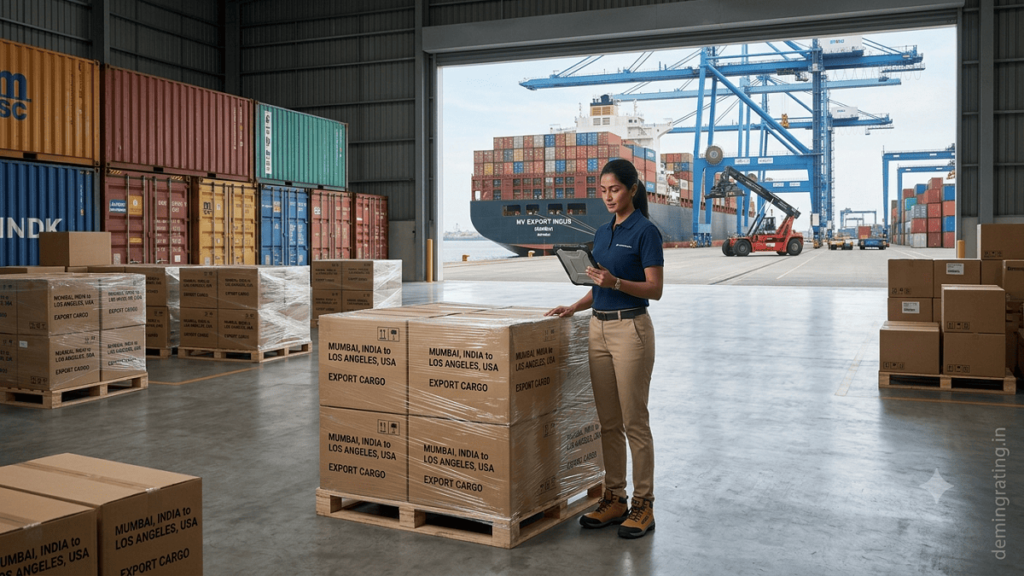
White Paper on Export Strategy Development
Executive Summary
Export strategy development is the systematic process of preparing a business to enter, compete in, and grow within international markets. A well-designed export strategy helps companies identify attractive markets, understand customer and competitor requirements, establish appropriate pricing and distribution models, manage regulatory obligations, and allocate resources effectively.
International Trade Administration guidance describes an export plan as a tool for establishing objectives, implementation schedules, and measurable milestones. It also recommends evaluating products, target countries, customer profiles, distribution channels, pricing, competition, regulatory requirements, resources, and costs before entering international markets.
1. Introduction
International expansion can provide businesses with access to new customers, diversified revenue, and opportunities for long-term growth. However, entering foreign markets without adequate preparation can expose companies to regulatory, financial, operational, and competitive risks.
Export strategy development provides a structured framework for making international expansion decisions. Instead of treating exports as individual transactions, businesses can develop a coordinated plan covering market selection, product positioning, pricing, sales, logistics, compliance, and performance measurement.
2. Market Research and Selection
Market research is the foundation of an effective export strategy. Companies should evaluate potential markets based on demand, market size, growth trends, competitors, customer characteristics, tariffs, logistics costs, regulatory requirements, and market-entry barriers.
The International Trade Administration’s market research resources recommend assessing market demand, competition, required standards and certifications, duties, taxes, shipping expenses, landed costs, and available distribution channels.
Businesses should prioritize markets where their products have genuine demand and where the expected commercial opportunity justifies the investment required to enter.
3. Export Readiness Assessment
Before entering a foreign market, management should evaluate whether the company is operationally prepared to export. This assessment should cover production capacity, financial resources, management commitment, international sales expertise, staffing, product suitability, intellectual property, and supply-chain capabilities.
Production capacity is particularly important because successful export demand should not compromise existing domestic customers. Companies should also determine whether products require modifications to meet foreign standards, packaging rules, labeling requirements, or customer expectations.
4. Product, Pricing, and Positioning Strategy
An export strategy should clearly define which products will be offered internationally and whether modifications are necessary. Product positioning should reflect local customer preferences, competition, purchasing power, and cultural considerations.
Export pricing should account for production costs, packaging, transportation, insurance, duties, taxes, distributor margins, currency fluctuations, and other expenses. The objective is to establish a price that remains competitive while maintaining an acceptable profit margin.
5. Distribution and Market Entry
Businesses must determine how products will reach international customers. Potential approaches include direct exporting, distributors, agents, wholesalers, retailers, e-commerce platforms, and strategic partnerships.
The appropriate entry method depends on the company’s resources, desired level of control, market knowledge, investment capacity, and risk tolerance. Companies should also evaluate potential overseas partners carefully before establishing commercial relationships.
6. Regulatory and Trade Compliance
Regulatory compliance is a central component of export strategy development. Businesses need to identify applicable export controls, import regulations, product standards, certifications, labeling requirements, customs procedures, and trade restrictions.
For Indian businesses, the Directorate General of Foreign Trade (DGFT) provides the country’s Foreign Trade Policy and related export procedures. India’s Foreign Trade Policy also emphasizes trade facilitation, digital processes, simplified procedures, and reduced transaction time and costs.
7. Logistics and Supply Chain Planning
An export strategy should establish how products will move from the manufacturing facility to international customers. Businesses should evaluate transportation modes, freight costs, delivery times, warehousing, packaging, insurance, customs clearance, and shipment tracking.
Effective trade facilitation can reduce unnecessary paperwork, delays, and transaction costs. The World Trade Organization highlights the role of simplified procedures, digitalization, improved customs processes, and efficient logistics in facilitating international trade.
8. Risk Management
International operations expose businesses to risks that may be less significant in domestic markets. These include currency fluctuations, payment defaults, regulatory changes, political instability, supply-chain disruptions, transportation problems, and unexpected changes in demand.
An effective export strategy should identify these risks and establish mitigation measures. Companies can diversify markets, conduct customer and distributor due diligence, establish appropriate payment terms, obtain relevant insurance, and continuously monitor market conditions.
9. Performance Measurement
Export strategy should be treated as a flexible management tool rather than a static document. Companies should establish measurable objectives and regularly compare actual performance with planned results.
Important indicators may include:
- Export revenue and growth
- Export profit margins
- Market share
- Number of new international customers
- Customer retention and repeat orders
- On-time delivery rates
- Logistics cost per shipment
- Customs and compliance incidents
- Order-to-delivery cycle time
- Return on export investment
Performance analysis allows management to identify underperforming markets, improve pricing, adjust distribution strategies, and redirect resources toward stronger opportunities.
10. Implementation Framework
A practical export strategy can be implemented through five stages:
Stage 1: Assess — Evaluate export readiness, products, resources, and objectives.
Stage 2: Research — Identify and compare potential international markets.
Stage 3: Plan — Establish pricing, positioning, distribution, compliance, logistics, and sales strategies.
Stage 4: Execute — Enter the selected market, establish partnerships, acquire customers, and manage shipments.
Stage 5: Measure and Improve — Monitor KPIs, evaluate results, and modify the strategy based on market performance.
This continuous approach reflects the principle that export planning should evolve as businesses gain experience and market conditions change.
Conclusion
Export Strategy Development provides businesses with a structured roadmap for sustainable international expansion. Successful export planning requires much more than identifying overseas customers; it requires careful evaluation of market opportunities, customer demand, competition, pricing, regulations, logistics, distribution, financial capacity, and risks.
By combining reliable market research with measurable objectives and continuous performance evaluation, companies can make better international investment decisions and reduce the uncertainty associated with entering foreign markets. A flexible, data-driven export strategy enables businesses to respond to changing market conditions while building stronger and more profitable global operations.
#ExportStrategyDevelopment
Industry Applications of Export Strategy Development
Export Strategy Development is applicable across industries because businesses entering international markets need a structured approach to market selection, pricing, compliance, distribution, logistics, and customer acquisition. Although the specific requirements differ by sector, a well-developed export strategy helps companies identify suitable markets, manage risks, and establish sustainable international operations.
1. Manufacturing Industry
Manufacturers of machinery, industrial equipment, electronics, components, and finished goods use export strategies to identify countries with strong demand and suitable market conditions. Strategies typically address product specifications, technical standards, pricing, distribution partners, transportation, and after-sales support. A structured approach helps manufacturers determine whether direct exporting, distributors, agents, or local partnerships are appropriate.
2. Pharmaceuticals and Healthcare
The pharmaceutical and healthcare industry requires particularly careful export planning because products may be subject to strict regulatory, quality, labeling, licensing, and certification requirements. Export strategies help companies evaluate destination markets, understand regulatory pathways, identify qualified distributors, and plan compliant logistics. The World Health Organization provides resources concerning pharmaceutical regulation and quality standards.
3. Food and Agriculture
Agricultural commodities and processed food products are frequently exported across international markets. Export strategy development helps businesses evaluate consumer demand, import restrictions, sanitary and phytosanitary requirements, packaging, labeling, certifications, seasonal demand, and transportation conditions. These factors are essential for protecting product quality while maintaining competitive pricing.
4. Textiles and Apparel
Textile manufacturers and apparel brands often depend on international customers and distributors. Export strategies help businesses identify high-potential markets, understand fashion and consumer preferences, assess competitors, establish pricing, and select appropriate distribution channels. They can also incorporate sustainability, product standards, and labeling requirements relevant to individual markets.
5. Automotive and Engineering
Automotive manufacturers, component suppliers, and engineering companies use export strategies to manage complex international supply chains. Market selection may depend on industry demand, technical regulations, tariffs, local competition, and infrastructure. Strategic planning also helps companies coordinate distributors and logistics providers while maintaining reliable delivery schedules.
6. Technology and Electronics
Technology companies can use export strategies to identify international markets for hardware, electronic products, and related solutions. Planning may include product certification, intellectual-property protection, data requirements, pricing, local partnerships, and customer support. Market research helps businesses determine where technological demand and commercial opportunities are strongest.
7. E-Commerce and Consumer Goods
The expansion of cross-border e-commerce has made international markets more accessible to smaller businesses. Export strategy development helps online sellers evaluate target countries, shipping costs, customs duties, returns, payment methods, digital marketing, and localized customer expectations. The International Trade Administration provides resources on international e-commerce opportunities and considerations.
Conclusion
Export Strategy Development has applications across manufacturing, pharmaceuticals, agriculture, food, textiles, automotive, engineering, technology, and e-commerce. Each industry requires a customized approach based on its products, regulations, customers, competition, and supply-chain requirements.
By combining market research with pricing, compliance, distribution, logistics, sales planning, and risk management, businesses can make more informed international expansion decisions. A well-designed export strategy ultimately provides a roadmap for entering suitable markets, allocating resources effectively, reducing avoidable risks, and building sustainable global business growth.
#ExportStrategy
Ask FAQs
What is Export Strategy Development?
Export Strategy Development is the process of creating a structured plan for entering and growing in international markets. It typically covers market research, target-market selection, pricing, distribution, logistics, compliance, sales, and risk management.
Why is Export Strategy Development important for businesses?
It helps businesses identify suitable international opportunities, understand market requirements, reduce risks, control costs, and establish a clear roadmap for sustainable global expansion.
Which industries can benefit from export management services?
Manufacturing, pharmaceuticals, agriculture, food processing, textiles, automotive, engineering, electronics, consumer goods, and e-commerce businesses can all benefit from professional export management support.
Can export management services help with customs clearance?
Yes. Export management providers can coordinate with customs brokers, prepare required documentation, verify shipment information, and help ensure that goods comply with applicable customs and import requirements.
How do export management services support international market expansion?
They provide expertise in documentation, compliance, logistics, and shipment coordination, allowing businesses to enter international markets with fewer operational challenges while focusing on sales, customers, and long-term global growth.
Table of Contents
Disclaimer: This content is for general informational purposes only and does not constitute legal, regulatory, customs, or professional trade advice. Export requirements may vary by country and product. Always verify current requirements with the relevant authorities or a qualified trade professional.