Smart City Projects: Transforming Urban Living Through Technology and Sustainable Infrastructure
Table of Contents
Smart city projects are changing the way modern cities are planned, managed, and experienced. A smart city uses technology, data, efficient infrastructure, and sustainable practices to improve essential services while creating a better quality of life for residents. These projects can cover transportation, water supply, waste management, public safety, energy, healthcare, education, and digital governance.
In India, the Smart Cities Mission (SCM) was launched on 25 June 2015 with the objective of improving the quality of life in 100 selected cities through efficient services, strong infrastructure, and sustainable solutions. The programme combines physical development with digital technologies to address urban challenges. (Press Information Bureau)
Key Areas of Smart City Projects
Smart city projects generally focus on several interconnected areas. Smart mobility includes intelligent traffic management systems, smart roads, public transport improvements, parking solutions, and cycling infrastructure. These initiatives are designed to improve connectivity and make urban transportation more efficient.
Smart water management is another important area. Technologies such as smart meters and SCADA systems can help cities monitor water distribution, identify leakages, and improve resource management. Similarly, technology-enabled solid waste management can improve waste collection Smart City Projects and route planning.
Public safety is also an important component. Integrated Command and Control Centres (ICCCs) bring together information from multiple city systems, enabling authorities to monitor and manage services using data. According to the Press Information Bureau, all 100 Indian Smart Cities had operational ICCCs by 2025. (Press Information Bureau)
Smart City Projects in India
The scale of India’s Smart Cities Mission has expanded considerably. According to government data published in June 2025, 7,555 of the 8,067 projects under the mission had been completed as of 9 May 2025, representing 94% of the total. The overall projects were valued at approximately ₹1.64 lakh crore. (Press Information Bureau)
Projects have included smart roads, cycling tracks, smart classrooms, healthcare facilities, public spaces, water-management systems, surveillance infrastructure, and digital governance platforms. Government data also reports more than 9,400 smart classrooms and 41 digital libraries under the mission. (Press Information Bureau)
The Future of Smart Cities
The future of smart city development will depend not only on adopting advanced technology but also on ensuring affordability, accessibility, sustainability, cybersecurity, and citizen participation. Successful smart cities need technology to support people rather than becoming technology projects in isolation.
As urban populations continue to grow, smart city projects can provide important tools for managing infrastructure and public services more efficiently. Their long-term value will depend on effective planning, maintenance, responsible use of data, and the ability to scale successful solutions across wider urban areas.
For official information, readers can explore the Press Information Bureau – Smart Cities Mission resources and the Ministry of Housing and Urban Affairs.
#SmartTechnology
What Are Smart City Projects and Why Are They Important?
Smart city projects are urban development initiatives that use technology, data, modern infrastructure, and sustainable planning to make cities more efficient, accessible, resilient, and comfortable for residents. Rather than focusing only on constructing new buildings or roads, smart city development connects different urban systems—such as transportation, water, energy, waste management, public safety, and digital governance—to improve how a city operates.
There is no single universally accepted definition of a smart city. However, the World Bank describes smart-city approaches as using data, technology, and available resources to improve city planning, management, service delivery, citizen engagement, and accountability. (World Bank)
What Do Smart City Projects Include?
Smart city projects can involve a wide range of initiatives. Smart transportation systems may include intelligent traffic signals, integrated public transport, real-time travel information, smart parking, and improved pedestrian infrastructure. These solutions can help cities manage increasing traffic and improve mobility.
In water and waste management, cities can use sensors, digital monitoring systems, smart meters, and data platforms to detect leaks, monitor consumption, improve waste collection, and manage resources more efficiently. Similarly, smart energy projects can incorporate efficient lighting, renewable energy, and systems that monitor electricity consumption.
Another important area is digital governance. Online citizen-service platforms can allow residents to access municipal services, make payments, submit complaints, and track applications without visiting government offices. India’s National Urban Digital Mission, for example, aims to create shared digital infrastructure and citizen-centric urban services across India’s urban ecosystem. (NUDM)
Why Are Smart City Projects Important?
The importance of smart city projects comes from the growing complexity of urban areas. Cities must provide reliable services while dealing with population growth, traffic congestion, environmental pressures, resource constraints, and climate-related risks. Smart technologies can help authorities make decisions using timely information and improve the efficiency of public services.
Smart city development is also closely connected with sustainability and resilience. Properly designed projects can help reduce resource consumption, improve environmental management, strengthen infrastructure, and support better urban planning. The World Bank notes that technology- and data-driven approaches can improve planning, service delivery, citizen engagement, and government accountability. (World Bank)
In India, the Smart Cities Mission, launched in 2015, was designed around sustainable and inclusive urban development, with 100 cities selected under the programme. (Ministry of Housing and Urban Affairs)
Ultimately, a smart city is not simply a city filled with advanced technology. Its success depends on whether technology and infrastructure actually solve urban problems and improve everyday life. Effective smart city projects therefore need to combine digital innovation with good planning, reliable basic services, sustainability, accessibility, privacy protection, and meaningful citizen participation.
Useful external resources: World Bank – Global Smart City Partnership Program · Ministry of Housing and Urban Affairs – National Urban Digital Mission · World Bank – Smart City Definitions
#DigitalTransformation
What Technologies Are Commonly Used in Smart City Development?
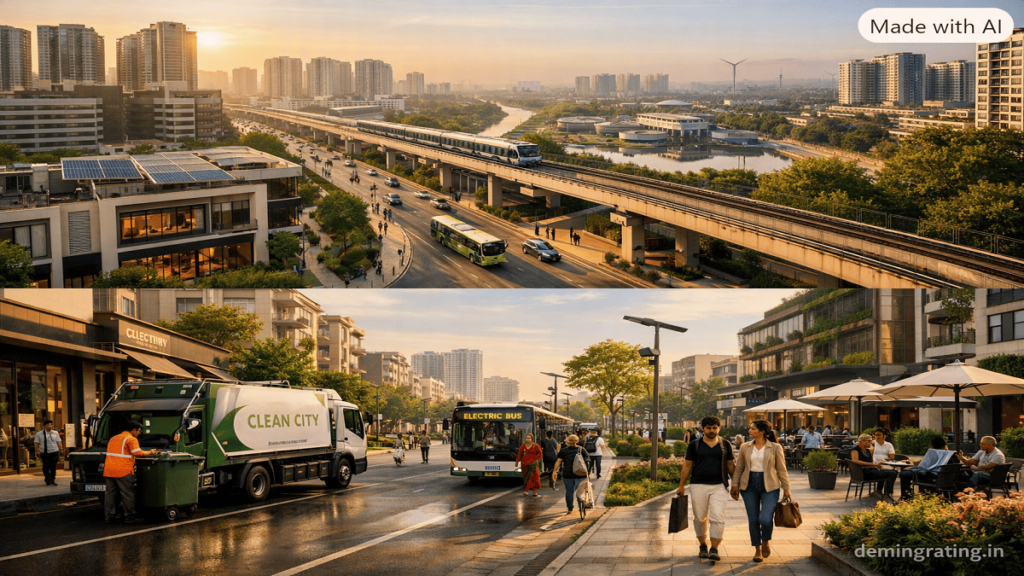
Smart city development relies on a combination of digital technologies, connected infrastructure, data analytics, and communication networks to improve how urban services are planned and delivered. The objective is not simply to introduce advanced technology, but to use it to address practical challenges such as traffic congestion, inefficient resource use, waste management, public safety, and access to government services.
Internet of Things (IoT)
The Internet of Things (IoT) is one of the most important technologies used in smart cities. IoT connects physical devices and sensors to networks so that they can collect and exchange data. Sensors can monitor traffic flow, air quality, water levels, energy consumption, street lighting, parking availability, and waste containers.
For example, smart waste bins can provide information about their fill levels, helping authorities optimize collection routes and reduce unnecessary trips.
Artificial Intelligence and Data Analytics
Smart cities generate large amounts of information from sensors, cameras, public services, and digital platforms. Artificial intelligence (AI), machine learning, and data analytics can help authorities analyze this information and identify patterns.
These technologies can support traffic management, infrastructure monitoring, demand forecasting, emergency response, and urban planning. The World Bank’s Global Smart City Partnership Program highlights the role of data and digital technologies in improving urban planning and service delivery.
Geographic Information Systems (GIS)
GIS technology allows cities to collect, analyze, and visualize location-based information. Municipal authorities can use GIS to map roads, utilities, buildings, drainage systems, public facilities, land use, and other infrastructure.
GIS is particularly valuable for urban planning because decision-makers can combine geographic information with other datasets to understand how different parts of a city are developing.
Smart Sensors and Connected Infrastructure
Sensors are increasingly incorporated into urban infrastructure. Smart streetlights, for instance, can be monitored remotely and may automatically adjust their operation based on conditions such as movement or daylight. Environmental sensors can measure air pollution, temperature, noise, and other conditions.
Connected infrastructure enables authorities to monitor assets and identify potential problems more quickly.
Cloud Computing and Digital Platforms
Cloud computing provides the infrastructure required to store and process large volumes of urban data. Cities can use cloud-based platforms to integrate information from different departments and provide digital services to residents.
India’s National Urban Digital Mission (NUDM) focuses on building shared digital infrastructure and standards for citizen-centric urban services.
5G and Advanced Communication Networks
Reliable connectivity is essential for smart city systems. 5G and other high-speed communication networks can support large numbers of connected devices and enable faster transmission of data. This can be useful for applications such as connected transportation, remote monitoring, and real-time urban management.
Smart City Command and Control Centres
Many smart city programmes use Integrated Command and Control Centres (ICCCs) to bring information from multiple urban systems into a centralized platform. In India, ICCCs have been an important component of the Smart Cities Mission, supporting the monitoring and management of services such as transportation, public safety, and utilities.
Overall, smart city development works best when these technologies are integrated into a broader strategy focused on better services, sustainability, accessibility, security, and quality of life. Technology is the enabler; effective planning and responsible governance determine how valuable the resulting smart city solutions become.
#IoT
How Can Smart Cities Improve Transportation, Energy, and Waste Management?
Smart cities use connected technologies, real-time data, automation, and modern infrastructure to make essential urban services more efficient. Among the most important areas are transportation, energy, and waste management, where cities face growing demands because of population growth, congestion, resource consumption, and environmental pressures. When properly planned, smart technologies can help authorities make better decisions while improving everyday services for residents.
Improving Transportation
Transportation is one of the most visible applications of smart city technology. Intelligent Transport Systems (ITS) use sensors, cameras, GPS, connected traffic signals, and data analytics to monitor traffic conditions and improve mobility.
Smart traffic signals can adjust signal timing according to traffic conditions rather than following fixed schedules. Real-time public transport information can help passengers know when buses or trains are expected to arrive, while smart parking systems can show available parking spaces and reduce the time spent searching for a location.
Smart cities can also integrate different modes of transportation, including buses, metro systems, cycling, walking, and shared mobility. The goal is to create a more connected transportation network while reducing unnecessary travel delays and improving accessibility. The World Bank highlights the importance of sustainable and efficient urban transport in supporting economic development and improving access to opportunities.
Improving Energy Management
Energy is another major area where smart technologies can make a difference. Smart grids, smart meters, energy-management platforms, and connected lighting systems allow cities and utilities to monitor energy consumption more accurately.
Smart street lighting, for example, can be remotely monitored and adjusted according to operating conditions. Smart meters can provide more detailed information about electricity use, helping consumers and utilities identify consumption patterns.
Smart cities can also integrate renewable energy sources, energy storage, and efficient buildings into urban energy systems. According to the International Energy Agency (IEA), improving energy efficiency in buildings is an important part of reducing energy consumption and emissions.
Improving Waste Management
Traditional waste collection often follows fixed schedules, even when containers are only partially full. Smart waste management can use IoT sensors to monitor the fill levels of waste containers.
Collection teams can then use this information to plan routes based on actual demand. This can reduce unnecessary vehicle journeys, fuel consumption, and operational costs. Data can also help municipalities identify areas where waste generation is increasing and plan collection capacity accordingly.
Digital systems can further support waste segregation, recycling, and monitoring of municipal waste operations. The World Bank’s What a Waste 2.0 report emphasizes the growing importance of effective solid waste management as urban populations and consumption increase.
Building More Efficient Cities
Transportation, energy, and waste management should not be treated as isolated systems. A well-designed smart city can connect data from different services to support integrated urban planning. For example, traffic information can inform transportation planning, energy data can guide infrastructure upgrades, and waste-generation data can improve municipal resource allocation.
Ultimately, smart city technology is valuable when it produces measurable improvements in efficiency, sustainability, reliability, and quality of life. Successful implementation also requires strong infrastructure, data security, skilled personnel, appropriate investment, and continuous maintenance.
#SustainableCities
What Challenges Do Cities Face When Implementing Smart City Projects?
Smart city projects can improve transportation, energy management, public services, and urban planning, but implementing them is often complex. Cities must coordinate technology, infrastructure, government departments, private companies, and citizens while managing financial and operational constraints. A successful smart city is therefore not simply about installing advanced technology; it requires long-term planning, effective governance, and the ability to maintain systems after they are deployed.
1. High Investment and Funding Requirements
One of the biggest challenges is the cost of developing and maintaining smart infrastructure. Sensors, communication networks, data centres, intelligent transport systems, smart utilities, and digital platforms require substantial investment. Cities also need ongoing funding for software upgrades, maintenance, cybersecurity, and replacement of equipment.
Developing countries and smaller municipalities may face additional financial constraints, making it important to prioritize projects according to local needs and available resources. The World Bank notes that financing and institutional capacity are important considerations in developing smart-city solutions.
2. Data Privacy and Cybersecurity
Smart cities depend heavily on data. Connected cameras, sensors, mobile applications, transport systems, and digital government platforms can generate and process significant amounts of information.
This creates concerns about data privacy, cybersecurity, unauthorized access, and misuse of information. Cities need appropriate security measures, data-governance policies, access controls, and clear rules regarding how information is collected, stored, shared, and retained.
The National Institute of Standards and Technology (NIST) provides frameworks that organizations can use to manage privacy risks associated with data and technology.
3. Integration of Different Technologies
Many cities already have legacy infrastructure and systems operated by different departments or vendors. Connecting these systems can be difficult when they use different technologies, databases, or communication standards.
Interoperability is therefore a major consideration. Smart city platforms need to exchange information effectively while avoiding unnecessary duplication and vendor dependence.
4. Digital Divide and Accessibility
Not every resident has the same access to smartphones, high-speed internet, digital services, or the skills needed to use online platforms. If smart city services are designed primarily for digitally connected residents, some communities may be excluded.
The World Bank emphasizes the importance of expanding digital access and ensuring that digital transformation benefits people broadly.
5. Lack of Skilled Professionals
Smart city programmes require expertise in areas such as data analytics, cybersecurity, artificial intelligence, networking, urban planning, and infrastructure management. Some municipalities may not have enough specialized personnel to operate and maintain sophisticated systems.
Training existing employees and developing partnerships with universities, technology providers, and other institutions can help address this challenge.
6. Coordination and Governance
Smart city projects frequently involve multiple government departments and external organizations. Poor coordination can result in delays, duplicated efforts, incompatible systems, or unclear responsibilities.
Effective governance is therefore essential. Cities need clearly defined objectives, measurable outcomes, procurement processes, accountability mechanisms, and long-term maintenance plans.
Conclusion
Smart city implementation involves challenges involving finance, cybersecurity, interoperability, digital inclusion, skills, governance, and long-term maintenance. Addressing these issues requires cities to focus on practical problems rather than adopting technology simply because it is new. With careful planning, transparent governance, strong security practices, and citizen-focused design, smart city projects can become more sustainable and useful over the long term.
#UrbanInnovation
How Can Smart City Projects Support Sustainable and Future-Ready Urban Development?
Smart city projects can play an important role in creating sustainable, resilient, and future-ready urban environments by combining technology with effective planning, efficient infrastructure, and citizen-focused services. As cities grow, they face challenges such as increasing energy demand, traffic congestion, resource shortages, pollution, waste generation, and climate-related risks. Smart solutions can help cities respond to these pressures while improving everyday urban services.
Improving Resource Efficiency
One of the main contributions of smart city projects is more efficient use of resources. Smart meters, connected sensors, automated monitoring systems, and data analytics can help authorities understand how water, electricity, and other resources are being consumed.
For example, smart water systems can help identify leaks and unusual consumption patterns, while intelligent energy-management systems can monitor electricity use in buildings and public infrastructure. These approaches can reduce unnecessary resource consumption and support more efficient municipal operations.
The International Energy Agency (IEA) identifies energy efficiency as an important component of reducing energy demand and supporting clean-energy transitions.
Supporting Sustainable Transportation
Transportation is another area where smart city projects can contribute to sustainability. Intelligent traffic management, real-time public transport information, integrated mobility platforms, smart parking, and improved pedestrian and cycling infrastructure can help cities create more efficient transportation networks.
Better public transport information can make shared transportation easier to use, while intelligent traffic systems can help authorities manage congestion. Electrification of public transportation and appropriate charging infrastructure can also support the transition toward lower-emission mobility.
The World Bank highlights sustainable urban transport as an important part of improving accessibility and supporting more inclusive and efficient cities.
Strengthening Climate Resilience
Future-ready cities must be able to respond to extreme weather and other climate-related risks. Smart city technologies can support early-warning systems, flood monitoring, environmental sensors, emergency management, and infrastructure monitoring.
For example, sensors can provide information about rainfall, water levels, air quality, or temperature, allowing authorities to identify changing conditions and respond more quickly. Digital mapping and geographic information systems can also help planners identify vulnerable areas and improve disaster preparedness.
Promoting Smarter Waste Management
Smart waste-management systems can use sensors and data to monitor waste collection and optimize vehicle routes. This can improve operational efficiency and potentially reduce unnecessary fuel consumption.
Digital tracking can also help municipalities understand waste-generation patterns and plan recycling and waste-reduction initiatives more effectively. The World Bank’s What a Waste 2.0 research highlights the growing importance of sustainable solid-waste management as urban populations expand.
Building Data-Driven and Inclusive Cities
A future-ready city also needs effective digital governance. Integrated platforms can help governments analyze information, coordinate departments, and provide services through digital channels. However, technology should remain accessible to people who have limited digital access or skills.
The United Nations Sustainable Development Goal 11 focuses on making cities and human settlements inclusive, safe, resilient, and sustainable.
Ultimately, smart city projects support future-ready development when technology is used as a tool for solving real urban problems. Sustainable planning, renewable energy, efficient infrastructure, climate resilience, responsible data management, digital inclusion, and citizen participation should work together. The most effective smart cities will not simply be the most technologically advanced; they will be cities that can adapt to changing needs while providing reliable services and maintaining a high quality of life for current and future generations.
#SmartInfrastructure
Case Study of Smart City Projects
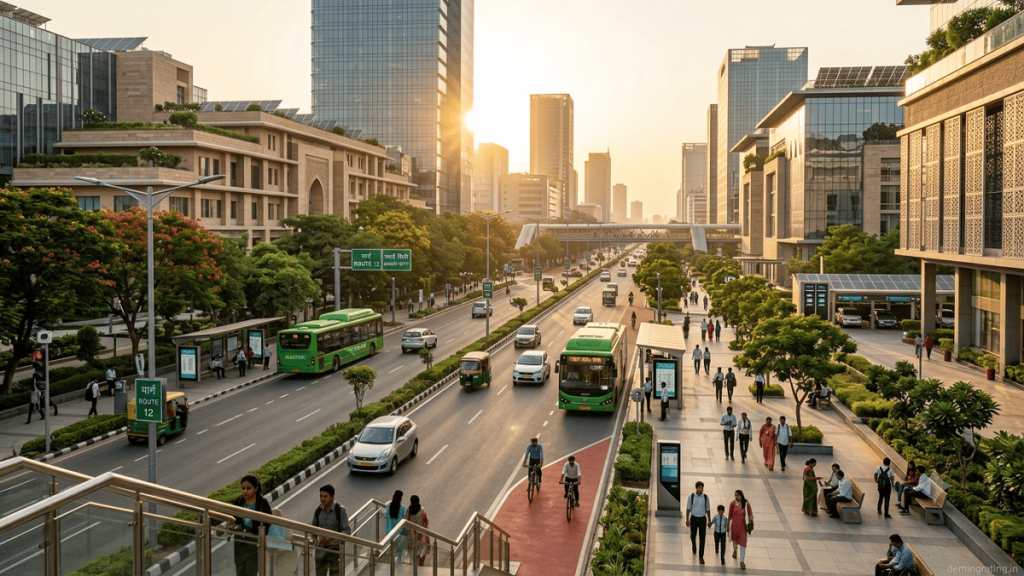
Smart city projects demonstrate how technology, infrastructure, and data-driven planning can be used to address practical urban challenges. In India, the Smart Cities Mission, launched in 2015, selected 100 cities for development through area-based development and pan-city technology solutions. The projects cover areas such as transportation, water management, waste management, public spaces, digital governance, energy efficiency, and public safety. The Ministry of Housing and Urban Affairs provides a national dashboard for tracking progress under the mission. (MoHUA Dashboard)
Case Study: Surat Smart City
Surat, Gujarat, provides an example of a smart city programme combining digital services with physical infrastructure. Surat was selected among the 100 cities under the Smart Cities Mission. Its smart city programme includes projects covering intelligent transportation, automatic fare collection, integrated technology platforms, water management, renewable energy, waste management, and connected infrastructure. (Surat Smart City)
One notable component is the Intelligent Transit Management System, designed to support better management of urban transportation. Surat has also implemented an automatic fare collection system and connected infrastructure projects. Its official annual report records projects involving intelligent transit management, connected fibre infrastructure, automatic fare collection, and smart solid-waste vehicle tracking and RFID systems. (Surat Smart City)
The Surat example shows how a smart city approach can combine transportation technology, connectivity, municipal services, and infrastructure rather than treating each service as a completely separate system.
Case Study: Indore Smart City
Indore, Madhya Pradesh, provides another example of integrated smart city development. Its programme includes area-based redevelopment of the Rajwada area and pan-city initiatives covering intelligent transportation, solid-waste management, command-and-control systems, and digital urban services. (smartcityindore.org)
Indore’s completed projects include road improvements, riverfront development, smart classrooms, garbage transfer stations, waste-processing facilities, solar power installations, and heritage conservation. The city’s official project records also include GPS-based vehicle tracking for municipal solid waste operations. (smartcityindore.org)
The city’s redevelopment strategy also incorporates walkable communities, public open spaces, green buildings, rooftop solar power, and rainwater harvesting. These features demonstrate how smart city development can extend beyond digital technology to include sustainable urban design. (smartcityindore.org)
Key Lessons from These Projects
The Surat and Indore examples demonstrate that smart city development is not limited to installing sensors or creating digital platforms. Effective projects combine technology with physical infrastructure, environmental planning, transportation improvements, public services, and citizen-oriented facilities.
They also highlight the importance of long-term operation and maintenance. Smart infrastructure requires continuous investment, technical expertise, cybersecurity, data management, and institutional coordination.
Ultimately, a successful smart city project should address a clearly identified urban problem and produce measurable improvements in service delivery, resource efficiency, accessibility, sustainability, or quality of life. These case studies illustrate how Indian cities are applying different combinations of digital technology and infrastructure to respond to their individual urban priorities.
Relevant external resources: Ministry of Housing and Urban Affairs – Mission Dashboard · Surat Smart City Development Limited · Indore Smart City Development Limited
#UrbanDevelopment
White Paper on Smart City Projects
Executive Summary
Smart city projects represent a significant shift in the way urban areas are planned, developed, and managed. A smart city combines digital technologies, physical infrastructure, data, sustainable practices, and citizen-centric governance to improve the efficiency and quality of urban services. The objective is not simply to introduce advanced technology, but to use technology to address practical challenges such as traffic congestion, inefficient resource consumption, waste management, environmental pressures, public safety, and growing demand for municipal services.
In India, the Smart Cities Mission (SCM) was launched on 25 June 2015 with the objective of developing 100 cities with core infrastructure, improved quality of life, a clean and sustainable environment, and technology-enabled solutions. The programme uses approaches including area-based development and pan-city smart solutions.
1. Introduction
Rapid urbanization is increasing pressure on cities to provide reliable transportation, water, sanitation, energy, housing, healthcare, public safety, and other essential services. Traditional approaches to urban management may not always provide authorities with the real-time information required to respond effectively to changing conditions.
Smart city projects address this challenge by integrating Internet of Things (IoT) devices, sensors, Geographic Information Systems (GIS), cloud platforms, artificial intelligence, data analytics, intelligent transportation systems, and digital governance platforms. The World Bank notes that data and technology can improve city planning, management, service delivery, citizen engagement, and government accountability. (World Bank)
2. Major Components of Smart City Projects
Smart city programmes generally involve several interconnected areas:
- Smart transportation: Intelligent traffic management, public transport monitoring, smart parking, integrated mobility, and pedestrian infrastructure.
- Smart energy: Smart meters, energy-efficient buildings, intelligent street lighting, renewable energy integration, and energy monitoring.
- Smart water management: Digital monitoring, leak detection, automated metering, and efficient distribution.
- Smart waste management: GPS-enabled collection vehicles, route optimization, sensor-enabled waste containers, and digital monitoring.
- Public safety: CCTV networks, emergency response systems, environmental monitoring, and Integrated Command and Control Centres.
- Digital governance: Online municipal services, digital payments, grievance platforms, and data-driven decision-making.
India’s Smart Cities Mission has included substantial investments in these areas. Government data published in December 2024 reported that all 100 smart cities had established Integrated Command and Control Centres, while projects included smart roads, cycle tracks, SCADA-based water monitoring, technology-enabled waste management, smart classrooms, digital libraries, and e-health facilities. (Press Information Bureau)
3. Strategic Importance
Smart city projects can contribute to sustainable urban development by helping municipalities use resources more efficiently. Real-time information can allow authorities to identify service problems, prioritize investments, and respond to emergencies more effectively.
However, technology alone does not make a city smart. Successful projects require appropriate institutional structures, skilled personnel, reliable infrastructure, financial sustainability, cybersecurity, data governance, and citizen participation. The World Bank specifically emphasizes the importance of advancing smart cities while protecting privacy and promoting inclusion. (World Bank)
4. Implementation Challenges
Cities may encounter challenges involving high initial investment, interoperability between different systems, cybersecurity, data privacy, shortage of technical expertise, maintenance costs, and unequal access to digital services.
There is also a risk of implementing technology without clearly defining the urban problem it is intended to solve. A future-ready approach should therefore begin with measurable objectives and service requirements rather than technology selection alone.
5. Indian Smart Cities Mission: Progress and Experience
The Smart Cities Mission provides an important large-scale example of technology-enabled urban development. As of 15 November 2024, government data reported work orders for 8,066 projects valued at ₹1,64,669 crore, with 7,352 projects worth ₹1,47,366 crore completed. (Press Information Bureau)
The mission’s implementation model uses Special Purpose Vehicles (SPVs) at the city level, while state and national-level mechanisms provide oversight. This structure was designed to support focused project implementation and coordination. (Press Information Bureau)
6. Recommendations for Future Smart City Development
Future smart city projects should focus on interoperable digital infrastructure, open and responsible data practices, cybersecurity, inclusive digital services, climate resilience, energy efficiency, and long-term maintenance.
Cities should establish clear performance indicators before implementing projects. These indicators can measure improvements in travel time, energy consumption, water losses, waste collection efficiency, service response times, environmental quality, and citizen satisfaction.
Smart city planning should also involve residents, businesses, universities, technology providers, and civil society. The objective should be to create systems that can adapt as urban needs change.
Conclusion
Smart city projects have the potential to transform urban management by connecting infrastructure, technology, data, and governance. Their long-term success, however, depends on whether they deliver measurable improvements in urban services and quality of life rather than simply increasing the use of technology.
For India and other rapidly urbanizing economies, smart city development can provide a framework for building cities that are more efficient, sustainable, resilient, and responsive. The focus should remain on solving real urban problems, protecting citizens’ rights, ensuring inclusion, and creating infrastructure that remains useful as cities evolve.
Further reading: Government of India – Smart Cities Mission resources · World Bank – Global Smart City Partnership Program · Government of India – Smart Cities Mission achievements · National Urban Digital Mission
#SmartCities
Industry Application of Smart City Projects
Smart city projects are increasingly influencing multiple industries by connecting physical infrastructure with digital technologies, data analytics, automation, and real-time monitoring. Their applications extend beyond municipal administration and can create new opportunities for businesses involved in transportation, energy, construction, healthcare, telecommunications, retail, real estate, and environmental services. The central objective is to make urban systems more efficient while improving services for residents and businesses.
1. Transportation and Mobility
The transportation industry is one of the major beneficiaries of smart city development. Intelligent Transport Systems (ITS) use GPS, sensors, cameras, connected traffic signals, and data platforms to monitor and manage mobility.
Applications include smart parking, electronic tolling, fleet tracking, real-time public transport information, traffic management, and integrated mobility platforms. These systems can help transport operators optimize routes, monitor vehicle performance, and respond more quickly to disruptions.
The World Bank identifies efficient and sustainable transportation as an important component of urban development.
2. Energy and Utilities
Smart city programmes are creating new applications for the energy and utilities sector. Smart meters allow utilities to collect more detailed consumption information, while intelligent grids can help monitor electricity distribution and identify operational problems.
Smart street lighting can also be centrally monitored and managed. In addition, cities can integrate renewable energy, energy storage, and energy-efficient buildings into broader urban infrastructure.
The International Energy Agency highlights smart grids as an important technology for managing increasingly digital and flexible electricity systems.
3. Construction and Real Estate
The construction and real-estate industries can use smart city technologies to develop connected buildings and intelligent infrastructure. Building Management Systems can monitor lighting, heating, cooling, security, and energy consumption.
Digital mapping, GIS, Building Information Modelling (BIM), and digital twins can also support planning and infrastructure management. These technologies allow developers and authorities to analyze buildings and urban assets throughout their lifecycle.
4. Healthcare
Smart city infrastructure can support the healthcare sector through telemedicine, connected health devices, digital health platforms, and emergency-response systems. Integrated data systems can help healthcare providers coordinate services and improve access to information.
Connected infrastructure can also support emergency services by helping authorities identify incidents and coordinate responses.
5. Telecommunications and Technology
The telecommunications industry provides much of the connectivity required by smart cities. 5G, fibre-optic networks, cloud computing, edge computing, IoT platforms, and cybersecurity solutions enable communication between sensors, infrastructure, government systems, and users.
This creates demand for companies capable of designing and maintaining secure, scalable digital infrastructure.
6. Waste and Environmental Services
Smart technologies are also changing the environmental-services industry. IoT-enabled waste containers, GPS-enabled collection vehicles, route optimization, environmental sensors, and data platforms can help municipalities monitor operations and improve resource allocation.
The World Bank’s What a Waste 2.0 report highlights the growing importance of effective waste management as urban populations and waste generation increase.
Conclusion
The industry applications of smart city projects extend across the entire urban ecosystem. Transportation companies can optimize mobility, utilities can improve resource management, construction firms can develop intelligent infrastructure, healthcare providers can expand digital services, technology companies can provide connectivity, and environmental-service providers can improve waste operations.
However, successful implementation requires interoperability, cybersecurity, reliable connectivity, skilled professionals, appropriate investment, and clear governance. The strongest industry applications are those that use technology to solve clearly identified urban problems while delivering measurable improvements in efficiency, sustainability, reliability, and service quality.
#SmartCity
Ask FAQs
What is a Smart City Project?
A Smart City Project uses technology, data, modern infrastructure, and sustainable solutions to improve urban services such as transportation, energy, water supply, waste management, public safety, and digital governance.
What technologies are used in Smart City Projects?
Common technologies include the Internet of Things (IoT), artificial intelligence, cloud computing, GIS, smart sensors, 5G connectivity, data analytics, intelligent transportation systems, and Integrated Command and Control Centres.
How do Smart City Projects benefit citizens?
They can improve public transportation, reduce traffic congestion, optimize energy and water consumption, improve waste collection, strengthen emergency response, and provide easier access to digital government services.
What challenges are involved in implementing Smart City Projects?
Common challenges include high investment requirements, cybersecurity and data privacy concerns, integration of different technologies, limited technical expertise, infrastructure constraints, maintenance costs, and unequal access to digital services.
How do Smart City Projects support sustainable development?
Smart city solutions can improve resource efficiency, encourage sustainable transportation, support renewable energy, optimize waste management, monitor environmental conditions, and strengthen cities’ ability to respond to climate and other urban risks.
Disclaimer: This content is for general informational purposes only. Project details, technologies, costs, and policies may change over time. Readers should verify important information with official sources before making decisions.