Retail Real Estate
Table of Contents
Retail Real Estate refers to properties designed and developed primarily for the sale of goods and services directly to consumers. It includes shopping malls, retail stores, shopping centers, supermarkets, convenience stores, high-street retail spaces, and mixed-use developments with retail components. As an important segment of commercial real estate, retail property connects businesses with consumers while generating rental income and supporting economic activity.
What Is Retail Real Estate?
Retail Real Estate consists of physical locations where retailers and service providers operate their businesses. Property owners typically lease these spaces to tenants under agreements that may include fixed rent, revenue-linked components, maintenance charges, and other contractual terms.
Retail properties can vary significantly in size and format. Large shopping malls may accommodate hundreds of brands, restaurants, and entertainment facilities, while neighborhood retail centers may focus on everyday consumer needs.
Major Types of Retail Properties
Common categories include:
- Shopping Malls: Large developments combining retail, food, entertainment, and services.
- High-Street Retail: Shops located along prominent commercial streets with significant pedestrian or vehicle traffic.
- Neighborhood Shopping Centers: Smaller retail developments serving nearby residential communities.
- Supermarkets and Hypermarkets: Large-format stores focused primarily on groceries and consumer products.
- Convenience Retail: Smaller stores designed to serve frequent and immediate consumer requirements.
- Mixed-Use Retail: Retail spaces integrated into residential, office, hospitality, or other developments.
How Retail Real Estate Generates Income
Investors and property owners generally generate income through rental payments from retail tenants. Depending on the lease structure, additional income may come from maintenance recoveries, parking, advertising spaces, and other property-related services.
The financial performance of a retail property can depend on location, tenant quality, occupancy, rental rates, consumer demand, property management, and the overall economic environment.
Importance of Location
Location is one of the most significant factors in retail real estate. Properties with strong visibility, accessibility, surrounding population, transportation connectivity, and established commercial activity may attract greater consumer and tenant interest.
Retailers also evaluate factors such as customer demographics, competition, footfall, parking availability, and operating costs when selecting locations.
Retail Real Estate and Changing Consumer Behaviour
The retail sector continues to evolve alongside changing consumer preferences and the growth of e-commerce. Rather than eliminating physical retail, digital commerce has encouraged many retailers to develop integrated strategies combining online and offline channels.
Modern retail properties increasingly incorporate dining, entertainment, leisure, and experiential elements to attract visitors and encourage longer stays.
Conclusion
Retail Real Estate remains an important component of the commercial property market. Its performance is influenced by location, tenant demand, consumer behaviour, rental structures, property management, and broader economic conditions. For investors and businesses, understanding these factors is essential when evaluating retail property opportunities.
Relevant External Resources
- U.S. Securities and Exchange Commission – REITs and Real Estate
- National Association of Realtors – Commercial Real Estate
- International Council of Shopping Centers
#ShoppingMalls
What Is Retail Real Estate and Why Is It Important for Businesses and Investors?
Retail Real Estate refers to commercial properties designed primarily for businesses that sell products or services directly to consumers. It includes shopping malls, high-street stores, neighborhood shopping centers, supermarkets, convenience stores, and retail spaces within mixed-use developments. Retail properties create physical locations where businesses can interact with customers, build brand visibility, and generate sales.
What Is Retail Real Estate?
Retail Real Estate typically involves property owners or developers leasing commercial spaces to retailers and service businesses. Lease arrangements may include fixed rent, operating expenses, maintenance charges, or other contractual components depending on the property and agreement.
The performance of a retail property is influenced by factors such as location, accessibility, consumer demographics, tenant mix, occupancy levels, rental rates, and local economic conditions.
Why Is Retail Real Estate Important for Businesses?
For businesses, the location of a retail outlet can directly influence customer accessibility and brand exposure. A well-positioned store can benefit from nearby residential communities, offices, transportation networks, parking facilities, and established commercial activity.
Retail properties can also provide businesses with flexibility in choosing locations that match their target customers. For example, convenience retailers may prioritize residential neighborhoods, while luxury brands may seek premium high-street or shopping-mall locations.
Physical retail space can also support customer experiences that are difficult to replicate entirely online. Stores can provide product demonstrations, personal service, immediate purchases, returns, and opportunities for consumers to interact with brands.
Why Is Retail Real Estate Important for Investors?
For investors, retail property can provide an opportunity to generate rental income through leasing space to businesses. Properties with established tenants and sustainable occupancy can potentially produce recurring cash flows.
However, retail real estate requires careful evaluation. Investors may consider location quality, tenant diversification, lease terms, occupancy, rental growth potential, operating expenses, property condition, and local market demand.
Retail properties can also be exposed to changing consumer behavior, economic cycles, competition, and the growth of e-commerce. Therefore, investment analysis should consider both income potential and property-specific risks.
Role in the Broader Economy
Retail Real Estate supports more than property owners and retailers. It contributes to employment, consumer activity, services, construction, property management, and local economic development. Shopping centers and mixed-use developments can also become important commercial destinations within communities.
Conclusion
Retail Real Estate provides the physical infrastructure that connects businesses with consumers while creating potential income-generating opportunities for property owners and investors. For businesses, factors such as location, accessibility, customer demographics, and visibility are critical. For investors, rental income, tenant quality, occupancy, property fundamentals, and market conditions are important considerations.
Understanding these factors helps businesses select appropriate retail locations and enables investors to evaluate retail properties based on their individual characteristics, financial structure, and risk profile.
Relevant External Resources
- International Council of Shopping Centers
- U.S. Securities and Exchange Commission – Real Estate Investment Trusts
- National Association of Realtors – Commercial Real Estate
#RealEstateMarket
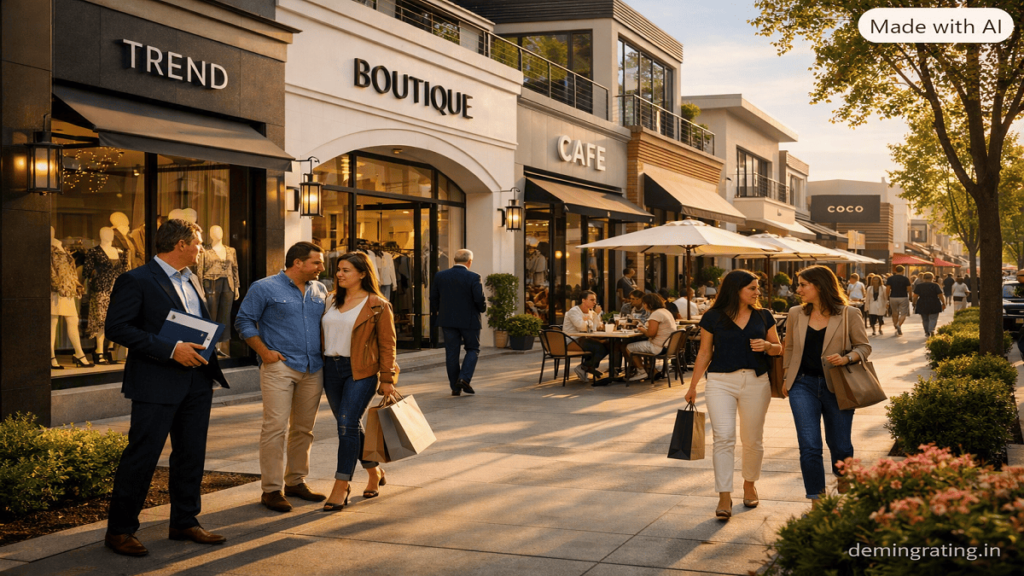
What Factors Should Be Considered When Selecting a Location for Retail Property?
Selecting the right location is one of the most important decisions in Retail Real Estate. A suitable location can influence customer traffic, sales potential, tenant demand, rental performance, and long-term property value. Businesses and investors should evaluate several factors before committing to a retail property.
1. Customer Demographics
Understanding the local population is essential. Businesses should evaluate factors such as population size, age groups, household income, lifestyle, purchasing behavior, and consumer preferences. The location should have a customer base that matches the retailer’s target market.
2. Foot Traffic and Visibility
Retail businesses often depend on customer visits, making foot traffic an important consideration. Locations with strong pedestrian activity can provide greater exposure to potential customers. Visibility from major roads, intersections, and pedestrian routes can also improve brand recognition.
3. Accessibility and Transportation
Customers should be able to reach the property conveniently. Proximity to major roads, public transportation, railway stations, and other transport infrastructure can influence accessibility. For automobile-oriented locations, sufficient parking and convenient vehicle access are particularly important.
4. Competition and Retail Environment
Competition should be analyzed rather than viewed only as a disadvantage. Nearby retailers may indicate established consumer demand and create a strong commercial destination. However, excessive competition offering similar products can place pressure on sales and pricing.
5. Surrounding Businesses and Tenant Mix
Complementary businesses can increase customer traffic. For example, restaurants, entertainment venues, supermarkets, and service providers can create a broader destination that benefits multiple retailers. In shopping centers, an appropriate tenant mix can contribute to overall customer engagement.
6. Rental and Operating Costs
The financial cost of a location should be evaluated against expected revenue. Businesses should consider base rent, maintenance charges, property taxes where applicable, utilities, insurance, parking costs, and other operating expenses. A highly visible location may not be financially suitable if occupancy costs are disproportionate to expected sales.
7. Local Development and Future Growth
Upcoming residential projects, infrastructure improvements, transportation expansion, and commercial developments can influence future demand. Investors and businesses should examine both current conditions and the area’s potential development trajectory.
8. Property Regulations and Physical Characteristics
Zoning, permitted uses, building regulations, signage restrictions, fire-safety requirements, loading facilities, floor layout, and building condition should be reviewed before entering into a transaction.
Conclusion
Choosing a retail property location requires a combination of market, operational, financial, and property-level analysis. Customer demographics, visibility, accessibility, competition, tenant mix, costs, future development, and regulatory requirements should all be evaluated. A location that aligns with the retailer’s target customers and business model can provide a stronger foundation for sustainable operations, while investors can use the same factors to assess tenant demand and property performance.
Relevant External Resources
- International Council of Shopping Centers (ICSC)
- National Association of Realtors – Commercial Real Estate
#RetailIndustry
How Do Foot Traffic, Accessibility, and Tenant Mix Influence Retail Property Performance?
Retail property performance is strongly influenced by how easily customers can reach a location, how many potential customers visit the area, and what businesses operate within the property. Foot traffic, accessibility, and tenant mix are closely connected factors that can affect retailer sales, occupancy, rental income, and the overall attractiveness of a retail property.
1. Impact of Foot Traffic
Foot traffic refers to the number of people visiting or passing through a retail location. Higher and more consistent foot traffic can increase opportunities for retailers to attract customers, particularly for businesses that depend on spontaneous purchases or frequent visits.
Retailers such as restaurants, convenience stores, fashion outlets, and personal-service businesses may benefit significantly from strong pedestrian activity. For property owners, sustained customer traffic can make the location more attractive to prospective tenants and potentially support occupancy and rental demand.
However, the quality of foot traffic is as important as volume. A property should attract consumers who match the target market of its retailers. High pedestrian numbers do not necessarily translate into strong sales if the audience is poorly aligned with tenant offerings.
2. Importance of Accessibility
Accessibility determines how easily customers, employees, suppliers, and service providers can reach a property. Locations near major roads, public transportation, railway stations, and established commercial areas may have advantages depending on the retail format.
For automobile-oriented retail destinations, parking capacity, road connectivity, entrances, and traffic flow can significantly influence customer convenience. Poor access, difficult parking, congestion, or unclear entrances can discourage visits even when a property has strong visibility.
Accessibility can also influence delivery and logistics efficiency, which is particularly important for supermarkets, large-format retailers, restaurants, and other businesses requiring regular inventory movement.
3. Role of Tenant Mix
Tenant mix refers to the combination of businesses operating within a retail property. A balanced tenant mix can create complementary customer demand. For example, restaurants, entertainment venues, fashion retailers, supermarkets, and service providers can encourage consumers to visit a destination for multiple purposes.
Strong anchor tenants can also attract visitors who subsequently spend time and money at smaller stores. Conversely, excessive concentration of similar businesses may increase competition and reduce differentiation.
Combined Effect on Property Performance
These three factors often reinforce one another. Good accessibility can increase customer visits, strong foot traffic can improve retailer performance, and a complementary tenant mix can encourage longer visits and repeat traffic.
For investors and property owners, this can influence occupancy, tenant retention, rental income, and the property’s overall market appeal. However, performance also depends on factors such as rent levels, operating costs, consumer demand, competition, property management, and broader economic conditions.
Conclusion
Foot traffic, accessibility, and tenant mix are fundamental considerations in evaluating retail property performance. Their effectiveness depends on the property’s location, retail format, target customers, and business environment. Evaluating all three together provides a more complete understanding of a retail property’s commercial potential and operating characteristics.
Relevant External Resources
- International Council of Shopping Centers (ICSC)
- National Association of Realtors – Commercial Real Estate
#PropertyInvestment
How Can Technology and Sustainable Design Improve the Retail Real Estate Experience?
Technology and sustainable design are increasingly influencing how retail properties are planned, operated, and experienced. Modern retailers and property owners are using digital solutions, energy-efficient infrastructure, smart building systems, and environmentally conscious design to improve customer convenience, operational efficiency, and long-term property performance.
1. Smart Building Technology
Smart building systems can help property managers monitor and control lighting, heating, ventilation, air conditioning, security, and other building functions. Sensors and automated controls can adjust systems according to occupancy and usage patterns, potentially improving operational efficiency.
For retail properties, this technology can also help management teams identify maintenance requirements and monitor building performance more effectively.
2. Digital Customer Experiences
Technology can make shopping environments more convenient and interactive. Digital directories, mobile applications, touch-screen information systems, digital signage, contactless payment solutions, and location-based services can help customers navigate retail spaces and access information.
Retailers can also integrate physical stores with digital platforms, supporting services such as online ordering, click-and-collect, and in-store returns.
3. Data and Analytics
Retail property operators can use data analytics to understand patterns in customer movement, occupancy, parking utilization, and facility usage. When collected and managed appropriately, these insights can support decisions related to tenant placement, operating hours, space planning, and property management.
Data-driven management can help property owners respond to changing customer behavior rather than relying entirely on historical assumptions.
4. Energy-Efficient Design
Sustainable design can reduce resource consumption while improving the operating environment. Energy-efficient lighting, high-performance building systems, efficient cooling equipment, insulation, and smart energy controls can contribute to lower energy usage.
Retail properties may also incorporate renewable-energy solutions, such as rooftop solar installations, where technically and economically suitable.
5. Water and Waste Management
Sustainable retail developments can incorporate water-efficient fixtures, rainwater management systems, recycling facilities, and waste-separation infrastructure. These measures can help reduce resource consumption and support more responsible property operations.
6. Better Customer Experience
Sustainability and technology can also influence how customers perceive a retail destination. Comfortable indoor environments, efficient navigation, convenient digital services, natural lighting, green spaces, and well-designed public areas can contribute to a more attractive shopping environment.
7. Long-Term Property Value
For owners and investors, technology and sustainable design may support operational efficiency, regulatory preparedness, tenant attractiveness, and long-term asset management. However, the financial benefits depend on implementation costs, property characteristics, tenant requirements, and market conditions.
Conclusion
Technology and sustainable design are transforming retail real estate from simple shopping spaces into more connected, efficient, and experience-oriented environments. Smart building systems, digital services, analytics, energy efficiency, water management, and sustainable infrastructure can benefit both customers and property operators. Successful implementation requires balancing technology investments and sustainability objectives with practical operational and financial considerations.
Relevant External Resources
- U.S. Department of Energy – Commercial Buildings
- U.S. Green Building Council – LEED
- International Council of Shopping Centers (ICSC)
#RetailInvestment
What Are the Benefits and Challenges of Investing in Retail Real Estate?
Retail Real Estate can provide investors with exposure to income-generating commercial property through shopping centers, high-street locations, supermarkets, convenience retail, and mixed-use developments. However, retail property investment also involves operational, market, tenant, and financial risks. Understanding both the potential benefits and challenges is important before evaluating a retail property.
Benefits of Investing in Retail Real Estate
1. Potential Rental Income
Retail properties can generate recurring rental income from tenants operating stores, restaurants, service businesses, and other commercial activities. The stability of this income depends on factors such as lease structure, tenant quality, occupancy, and market demand.
2. Long-Term Lease Opportunities
Commercial retail leases may provide longer contractual periods than some residential arrangements. Longer leases can provide greater visibility into future rental cash flows, although the specific terms vary by property and market.
3. Potential Capital Appreciation
Retail properties in locations experiencing population growth, infrastructure improvements, increased commercial activity, or stronger consumer demand may experience changes in market value over time. However, appreciation is not guaranteed and depends on local and broader market conditions.
4. Portfolio Diversification
Retail Real Estate can provide exposure to a different asset class compared with traditional financial investments. Investors may also diversify within retail by considering different property formats, locations, tenant categories, and lease structures.
5. Multiple Income Sources
Some retail properties may generate income beyond base rent through parking, advertising, common-area charges, kiosks, or other permitted commercial activities. The availability of these sources depends on the property’s structure and contractual arrangements.
Challenges of Investing in Retail Real Estate
1. Tenant and Vacancy Risk
A tenant leaving a property can create vacancy and reduce rental income. Finding replacement tenants may take time and may require incentives, renovations, or additional marketing expenditure.
2. Economic and Consumer Risks
Retail performance is connected to consumer spending and business conditions. Economic slowdowns can affect tenant sales, leasing demand, and rental performance.
3. E-Commerce and Changing Consumer Behaviour
The growth of online shopping has changed how consumers discover and purchase products. Retail properties may need to adapt by emphasizing accessibility, experiences, services, entertainment, and omnichannel retail strategies.
4. High Operating Costs
Retail properties can require significant expenditure for maintenance, security, utilities, repairs, common areas, parking, and property management. These costs can affect net investment returns.
5. Location and Tenant Concentration Risk
Retail performance is highly location-dependent. Poor accessibility, changing traffic patterns, new competing developments, or dependence on a small number of major tenants can affect property performance.
Conclusion
Investing in Retail Real Estate can offer potential rental income, longer-term leasing opportunities, diversification, and capital appreciation. At the same time, investors must consider vacancy, tenant quality, operating costs, consumer trends, competition, and location-specific risks. A thorough assessment of the property’s financial performance, lease agreements, tenant profile, market demand, and long-term operating requirements is essential before making an investment decision.
Relevant External Resources
- International Council of Shopping Centers (ICSC)
- U.S. Securities and Exchange Commission – REITs
- National Association of Realtors – Commercial Real Estate
#RealEstateInvestment
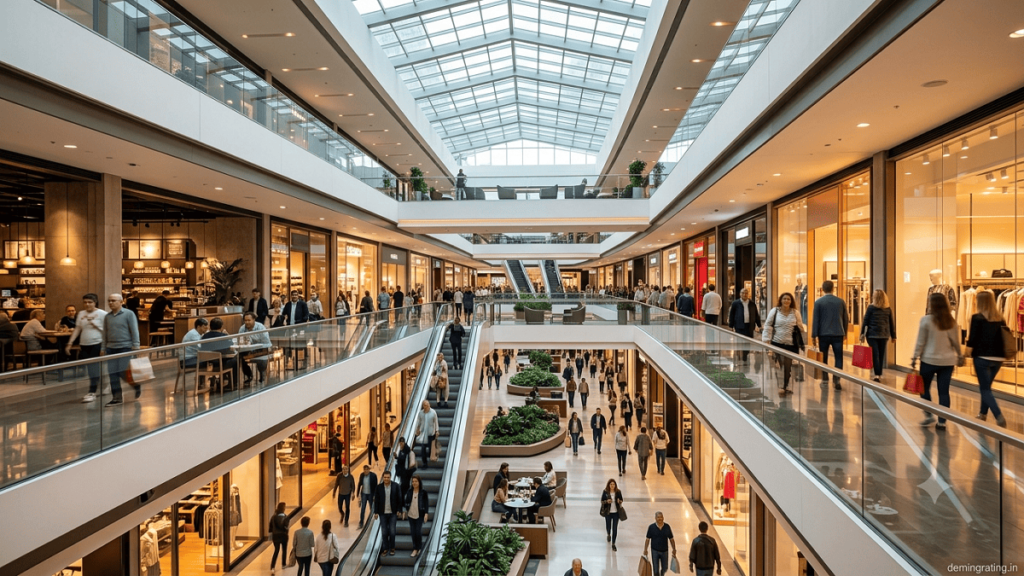
Case Study of Retail Real Estate
Retail Real Estate performance is closely connected to location, consumer demand, tenant mix, accessibility, and property management. A useful Indian example is Nexus Select Trust, India’s first listed retail REIT, which provides an illustration of how a diversified portfolio of shopping centers can be structured and managed as an investment platform.
Case Background
Nexus Select Trust owns and operates a portfolio of consumption-focused assets across major Indian cities. Its portfolio includes shopping centers that bring together retail brands, food and beverage outlets, entertainment, and other consumer-oriented businesses.
The investment model provides exposure to retail properties without requiring an investor to directly purchase and manage an individual shopping center. The underlying properties generate income primarily through leasing and related commercial activities.
Location and Tenant Mix
A key feature of successful retail properties is the ability to attract consumers consistently. Shopping centers within the Nexus Select portfolio are positioned in established urban markets and are designed around a combination of retail, dining, entertainment, and services.
A diversified tenant mix can help reduce dependence on a single retail category. Anchor retailers can attract visitors, while complementary brands and food-and-beverage offerings can encourage customers to spend more time within the property.
Revenue and Operating Model
Retail assets generally generate revenue through rentals and other property-related income. For a retail-focused investment platform, occupancy, rental growth, tenant sales, consumer footfall, and operating expenses can influence financial performance.
Nexus Select Trust reported a portfolio occupancy of approximately 97% as of March 31, 2025, while its portfolio comprised 19 consumption centers across 15 cities, according to its FY2024–25 reporting.
These figures illustrate the importance of maintaining strong tenant relationships and attractive retail destinations, although historical operating performance should not be interpreted as a guarantee of future results.
Key Lessons
The case highlights several factors that investors and property managers can consider when evaluating Retail Real Estate:
- Location: Established markets can provide access to larger consumer populations.
- Tenant diversification: A balanced tenant mix can support customer engagement and reduce dependence on individual tenants.
- Experience: Food, entertainment, and services can complement traditional retail.
- Occupancy management: Retaining tenants and managing vacancies are important for rental income.
- Scale: A diversified portfolio can spread exposure across multiple properties and markets.
Conclusion
The Nexus Select Trust example demonstrates how retail properties can be organized into a professionally managed investment platform. Retail Real Estate performance depends on multiple interconnected factors, including location, accessibility, tenant quality, occupancy, consumer behavior, and property management. For investors, examining these fundamentals alongside financial statements and market conditions can provide a more comprehensive understanding of a retail asset or retail-focused investment vehicle.
Relevant External Resources
- Nexus Select Trust – Official Website
- Nexus Select Trust – Investor Relations
- SEBI – Real Estate Investment Trusts
#CommercialRealEstate
White Paper on Retail Real Estate
Executive Summary
Retail Real Estate is a major segment of commercial property encompassing shopping malls, high-street retail, neighborhood centers, supermarkets, mixed-use developments, and other properties designed for consumer-facing businesses. Its performance depends on factors including location, consumer demand, tenant quality, accessibility, occupancy, rental structures, and property management.
India’s retail real estate market has been experiencing significant leasing activity. CBRE reported that retail leasing across India’s top cities reached approximately 8.9 million square feet in 2025, while about 4.3 million square feet of new supply was added during the year. The report also identified experiential stores, Gen Z-focused formats, and direct-to-consumer brands as important drivers of leasing activity.
1. Introduction
Retail Real Estate provides the physical infrastructure through which retailers connect with consumers. Unlike many other commercial property categories, retail assets are closely connected to consumer behavior and spending patterns.
Successful retail destinations typically combine accessibility, appropriate tenant mix, customer experience, and efficient property management.
2. Major Types of Retail Real Estate
The sector includes several formats:
- Shopping malls: Large-scale destinations combining retail, dining, entertainment, and services.
- High-street retail: Stores located along prominent commercial streets.
- Neighborhood centers: Smaller properties serving local communities.
- Supermarkets and hypermarkets: Large-format stores focused on everyday consumer needs.
- Mixed-use developments: Retail integrated with residential, office, hospitality, or other uses.
- Transit-oriented retail: Retail spaces located around transportation hubs.
The suitability of each format depends on the local population, consumer profile, accessibility, competition, and surrounding development.
3. Key Performance Drivers
Location
Location remains fundamental to retail property performance. Population density, purchasing power, road connectivity, public transportation, parking, visibility, and surrounding commercial activity can influence customer traffic and tenant demand.
Tenant Mix
A well-planned tenant mix can create complementary demand. Fashion, food and beverage, entertainment, grocery, services, and experiential concepts can collectively increase the attractiveness of a retail destination.
Recent CBRE research indicates that Indian shopping malls are increasingly refining tenant mixes and incorporating dining, entertainment, and innovative retail formats.
Consumer Experience
Retail properties are increasingly designed around experiences rather than transactions alone. Flagship stores, entertainment, food and beverage, events, and interactive formats can encourage customer visits and longer dwell times.
Occupancy and Leasing
Occupancy, tenant retention, lease terms, rental rates, and renewal activity are important indicators of a retail property’s operating performance.
4. Technology and Omnichannel Retail
Technology is changing the relationship between physical retail and e-commerce. Direct-to-consumer brands are increasingly establishing physical locations as part of omnichannel strategies.
CBRE reported that D2C brands accounted for approximately 27% of retail leasing in India during 2025, reflecting the increasing integration of online-first businesses with physical retail locations.
Retail properties can support this transition through click-and-collect facilities, digital directories, smart parking, customer analytics, mobile engagement, and flexible store formats.
5. Investment Perspective
Retail Real Estate can provide investors with exposure to rental income and potential long-term asset appreciation. However, returns depend on tenant quality, occupancy, rental growth, operating costs, property location, financing conditions, and market demand.
Investors can gain retail exposure either through direct property ownership or through listed vehicles such as retail-focused REITs. In India, Nexus Select Trust is a publicly listed retail REIT. Its current portfolio comprises 19 Grade A urban consumption centers across 15 cities, according to its investor-relations information.
SEBI maintains the regulatory framework and registration information for REITs operating in India, including Nexus Select Trust.
6. Sustainability
Sustainable retail properties increasingly incorporate energy-efficient systems, renewable energy, water-management solutions, waste reduction, and environmentally responsible building practices.
Sustainability can also support operational efficiency and help properties respond to evolving tenant and consumer expectations.
7. Key Challenges
Retail Real Estate faces several challenges, including:
- Changing consumer preferences
- E-commerce competition
- Tenant vacancy and turnover
- High operating and maintenance costs
- Location-specific demand fluctuations
- Competition from new retail developments
- Changing rental economics
- Capital expenditure requirements
- Economic and consumer-spending cycles
Effective asset management and continuous tenant engagement are therefore important for maintaining property performance.
8. Future Outlook
The Indian retail real estate sector is increasingly moving toward quality-led, experience-driven, and omnichannel retail. CBRE’s 2025 data indicates strong leasing momentum, with fashion and apparel, food and beverage, entertainment, and D2C brands among important sources of demand.
Future retail developments are likely to place greater emphasis on customer experience, mixed-use environments, technology integration, sustainability, and carefully curated tenant ecosystems.
Conclusion
Retail Real Estate is evolving from conventional shopping space into a broader consumer-experience platform. Location, accessibility, tenant mix, occupancy, technology, sustainability, and consumer engagement are becoming increasingly interconnected.
For businesses, selecting the appropriate retail environment can influence visibility and customer access. For property owners and investors, understanding tenant demand, lease structures, operating costs, and market fundamentals is essential for evaluating asset performance.
The sector’s continued development will depend on how effectively retail properties adapt to changing consumer behavior while maintaining sound financial and operational fundamentals.
Relevant External Resources
- CBRE India – India Retail Figures H2 2025
- CBRE India – India Market Monitor Q4 2025 Retail
- Nexus Select Trust – Investor Relations
- SEBI – Real Estate Investment Trusts
#RetailProperty
Industry Application of Retail Real Estate
Retail Real Estate plays an important role across multiple industries by providing physical spaces where businesses interact directly with consumers. From fashion and grocery to food services, entertainment, healthcare, and lifestyle businesses, retail properties support customer access, brand visibility, sales activity, and service delivery. The application of retail real estate continues to evolve as businesses combine physical locations with digital and omnichannel strategies.
1. Fashion and Apparel
Fashion and apparel brands use shopping malls, high streets, and premium retail destinations to showcase products and build brand visibility. Physical stores allow customers to examine products, try clothing, receive personalized assistance, and experience the brand environment.
2. Food and Beverage
Restaurants, cafés, food courts, and specialty food outlets are important components of retail properties. Food and beverage businesses can increase customer dwell time and contribute to the overall attractiveness of shopping destinations. Many modern retail developments deliberately integrate dining and entertainment with traditional shopping.
3. Grocery and Supermarkets
Supermarkets and grocery retailers depend heavily on accessibility and surrounding population density. Neighborhood retail centers and large-format developments can provide convenient access to everyday products. Parking, logistics, store size, and proximity to residential communities are particularly important considerations.
4. Entertainment and Leisure
Cinemas, gaming centers, fitness facilities, family entertainment venues, and other leisure businesses increasingly form part of retail developments. These uses can create additional reasons for consumers to visit a property beyond conventional shopping.
5. Healthcare and Personal Services
Retail locations can also accommodate pharmacies, clinics, salons, wellness centers, optical stores, and other consumer-facing services. Their presence can increase the practical utility of neighborhood and mixed-use retail developments.
6. Consumer Electronics and Technology
Electronics and technology brands use physical stores for product demonstrations, customer support, sales, and brand engagement. Retail spaces can complement online channels by allowing consumers to interact with products before purchasing.
7. Banking and Financial Services
Banks, insurance providers, payment-service businesses, and other financial institutions may use retail locations to maintain customer-facing branches and service centers. Convenient locations can improve accessibility for customers requiring in-person services.
8. E-Commerce and Omnichannel Retail
The growth of e-commerce has not eliminated the need for physical retail space. Instead, many online-first businesses are establishing stores, experience centers, and pickup locations. Physical properties can support click-and-collect, product returns, demonstrations, and customer engagement.
9. Mixed-Use Development
Retail Real Estate is increasingly integrated into residential, office, hospitality, and transportation developments. This creates environments where consumers can shop, dine, work, and access services within the same broader destination.
Conclusion
The industry application of Retail Real Estate extends well beyond traditional shopping. It supports fashion, food, grocery, entertainment, healthcare, technology, financial services, omnichannel commerce, and mixed-use development. As consumer behavior evolves, retail properties are increasingly being designed as flexible, experience-oriented destinations that combine commercial activity with convenience and services.
For retailers, the right property can support visibility, customer access, and brand engagement. For property owners and investors, a diverse tenant ecosystem can contribute to occupancy, customer traffic, and long-term asset relevance.
Relevant External Resources
- International Council of Shopping Centers (ICSC)
- CBRE India – Retail Research
- National Association of Realtors – Commercial Real Estate
#RetailRealEstate
Ask FAQs
What is Retail Real Estate?
Retail Real Estate refers to commercial properties designed for businesses that sell products or services directly to consumers, including shopping malls, high-street stores, supermarkets, and neighborhood retail centers.
Why is location important in Retail Real Estate?
Location can influence customer traffic, accessibility, visibility, tenant demand, and rental potential. Factors such as population, transportation, parking, and surrounding businesses are important when evaluating a retail location.
What factors affect Retail Real Estate performance?
Key factors include foot traffic, tenant mix, occupancy, rental rates, accessibility, consumer spending, competition, property management, and broader economic conditions.
What are the benefits of investing in Retail Real Estate?
Potential benefits include recurring rental income, long-term leasing opportunities, portfolio diversification, and possible capital appreciation. However, outcomes depend on the property’s characteristics and market conditions.
How is technology changing Retail Real Estate?
Technology is supporting omnichannel retail, digital payments, smart building systems, customer analytics, digital navigation, click-and-collect services, and more personalized shopping experiences.
Disclaimer: This content is for informational and educational purposes only and should not be considered financial or investment advice. Retail Real Estate involves market, tenant, and financial risks, so readers should conduct their own research or consult a qualified professional before making investment decisions.