Urban Development
Table of Contents
Urban development refers to the planned growth, improvement, and transformation of cities and urban areas. It involves the development of housing, roads, transportation networks, public spaces, utilities, healthcare, education, commercial areas, and other essential infrastructure required to support growing populations. Effective urban development aims to create cities that are functional, inclusive, economically productive, environmentally sustainable, and capable of adapting to future challenges.
Rapid urbanization has made urban development increasingly important around the world. As more people move to cities in search of employment, education, healthcare, and better economic opportunities, urban areas need to accommodate population growth while maintaining a good quality of life. According to the United Nations, more than half of the world’s population already lives in urban areas, and the urban population is expected to continue increasing in the coming decades.
Key Elements of Urban Development
Urban development covers several interconnected areas. Infrastructure development includes roads, bridges, water supply, drainage, electricity, sanitation, and telecommunications. Reliable infrastructure provides the foundation for economic activity and everyday life.
Transportation planning is another essential component. Well-planned public transport, roads, pedestrian pathways, and cycling infrastructure can improve connectivity while helping cities manage congestion and environmental pressures.
Housing and community development are equally important. Urban planning needs to consider affordable and adequate housing, public spaces, schools, healthcare facilities, and recreational areas so that communities can develop in a balanced manner.
Modern urban development also increasingly incorporates sustainability and technology. Green buildings, renewable energy, efficient water systems, waste management, smart transportation, and digital governance can help cities use resources more efficiently. The UN Sustainable Development Goal 11 specifically promotes cities and human settlements that are inclusive, safe, resilient, and sustainable.
Importance of Planned Urban Development
Unplanned urban growth can contribute to traffic congestion, inadequate housing, pollution, pressure on public services, and inefficient land use. Strategic urban planning helps authorities anticipate future requirements and coordinate infrastructure investment with population and economic growth.
Urban development is therefore not simply about constructing more buildings. It is about creating well-connected communities supported by reliable infrastructure and accessible services. Successful development balances economic growth with environmental protection and social inclusion.
As cities continue to evolve, approaches such as smart city technology, sustainable transportation, climate-resilient infrastructure, data-driven planning, and participatory governance are becoming increasingly relevant. By combining long-term planning with innovation, urban development can help create cities that are more resilient, productive, sustainable, and suitable for future generations.
#InfrastructureDevelopment
What Is Urban Development and Why Is It Important?
Urban development refers to the planned growth, improvement, and transformation of cities and urban areas. It involves much more than constructing buildings and roads. It includes housing, transportation, water supply, sanitation, healthcare, education, public spaces, utilities, environmental management, and economic infrastructure. The overall purpose is to create urban environments that can support growing populations while providing safe, accessible, and reliable services.
Urban development is particularly important because cities are experiencing continued population growth and economic expansion. According to the United Nations, a growing share of the world’s population lives in urban areas. This growth increases demand for housing, employment, transportation, energy, water, healthcare, and other essential services. Without effective planning, rapid urbanization can contribute to congestion, inadequate infrastructure, pollution, housing shortages, and pressure on public resources.
Why Is Urban Development Important?
One of the primary benefits of planned urban development is better infrastructure. Well-designed roads, public transportation systems, drainage networks, water supplies, electricity systems, and digital connectivity help cities function efficiently and support economic activity.
Urban development also plays an important role in improving quality of life. Access to affordable housing, healthcare facilities, schools, parks, recreational areas, and safe public spaces can contribute to healthier and more inclusive communities. Good urban planning can also improve accessibility for pedestrians, cyclists, older people, and people with disabilities.
Another important objective is economic development. Cities are major centres for businesses, industries, education, innovation, and employment. Strategic land-use planning and reliable infrastructure can help businesses operate efficiently while creating opportunities for investment and employment.
Sustainability has also become a central part of modern urban development. Cities can incorporate energy-efficient buildings, renewable energy, public transportation, green spaces, efficient water management, and improved waste management to reduce environmental pressures. The United Nations Sustainable Development Goal 11 promotes making cities and human settlements inclusive, safe, resilient, and sustainable.
Urban Development and the Future
Modern urban development increasingly uses technologies such as geographic information systems (GIS), data analytics, digital planning platforms, and smart infrastructure to support better decision-making. However, technology should complement rather than replace sound planning and effective governance.
Ultimately, urban development is about creating cities that can grow responsibly while meeting the needs of current and future residents. A balanced approach considers economic growth, environmental sustainability, social inclusion, infrastructure capacity, and resilience. When these elements are planned together, urban development can help cities become more efficient, accessible, livable, and prepared for future challenges.
#InfrastructureDevelopment
What Are the Key Components of Successful Urban Development?
Successful urban development requires a coordinated approach that balances economic growth, infrastructure, environmental sustainability, social inclusion, and long-term planning. As cities expand, development must address immediate needs while preparing for population growth, climate risks, technological changes, and evolving community requirements. Effective urban planning therefore goes beyond construction and focuses on creating functional, accessible, and resilient communities.
1. Reliable Infrastructure
Strong infrastructure is the foundation of urban development. Roads, bridges, water supply, sanitation, drainage, electricity, telecommunications, and public facilities need to be properly planned and maintained. Reliable infrastructure supports businesses, improves public services, and contributes to residents’ quality of life.
2. Sustainable Transportation
Efficient transportation connects people with employment, education, healthcare, and other opportunities. Successful urban development incorporates public transportation, pedestrian pathways, cycling infrastructure, and well-planned road networks. Integrated transport planning can help reduce congestion and improve accessibility.
The World Bank identifies accessible and sustainable transport as an important element of inclusive urban development.
3. Affordable and Adequate Housing
Housing is a fundamental component of a well-functioning city. Urban planning should encourage access to safe and adequate housing across different income levels. Housing development should also be connected to transportation, employment, education, healthcare, and other essential services.
4. Environmental Sustainability
Modern urban development needs to minimize environmental impact while protecting natural resources. Green buildings, renewable energy, efficient water management, waste reduction, urban forests, parks, and sustainable land use can contribute to healthier urban environments.
The United Nations Sustainable Development Goal 11 promotes inclusive, safe, resilient, and sustainable cities and human settlements.
5. Economic Development
Cities require strong economic foundations to provide employment and attract investment. Urban development can support economic activity by providing suitable commercial areas, industrial infrastructure, business districts, innovation hubs, and reliable connectivity.
Good planning should also consider local businesses and employment opportunities so that economic benefits can reach a broad section of the population.
6. Social Inclusion and Public Services
Successful cities should be designed for diverse communities. Access to healthcare, education, public spaces, recreation, social services, and safe neighbourhoods is essential. Urban projects should also consider the needs of children, older adults, people with disabilities, and economically vulnerable groups.
7. Technology and Smart Planning
Technology can improve urban management through GIS, digital mapping, data analytics, smart infrastructure, sensors, and digital government platforms. These tools can help planners understand population patterns, monitor infrastructure, manage resources, and make better-informed decisions.
8. Resilience and Long-Term Planning
Cities must prepare for future challenges such as extreme weather, climate change, infrastructure failures, and population growth. Resilient planning incorporates appropriate drainage, emergency systems, climate-adaptive infrastructure, and disaster preparedness.
Conclusion
Successful urban development depends on integrating these components rather than treating them as separate projects. Infrastructure, transportation, housing, sustainability, economic opportunity, social inclusion, technology, and resilience must work together to create cities that are practical and adaptable. The strongest urban development strategies are those that respond to local needs while establishing a foundation for sustainable growth over the long term.
#CityPlanning
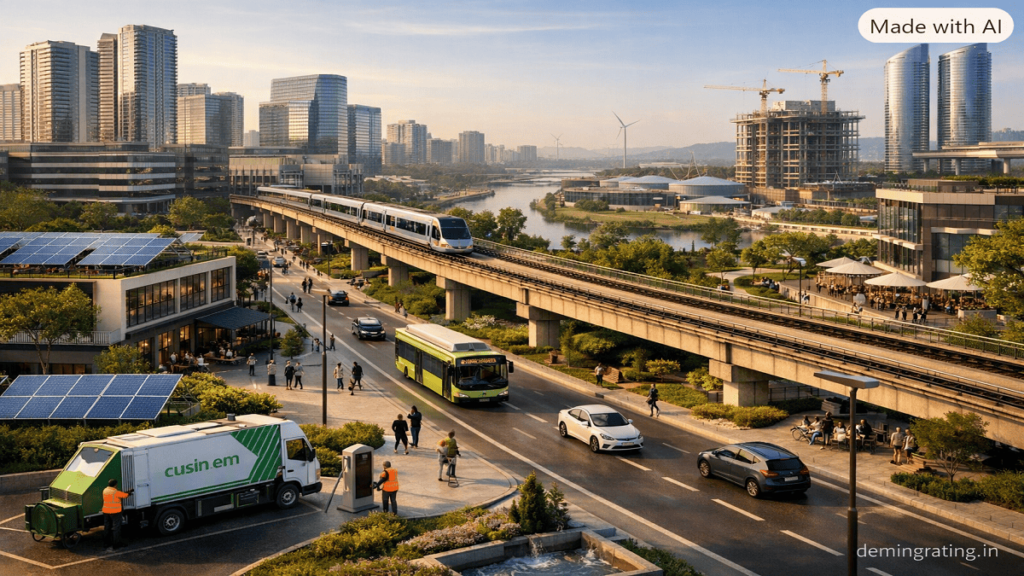
How Can Urban Development Improve Infrastructure and Quality of Life?
Urban development plays an important role in improving the infrastructure and overall quality of life in growing cities. As urban populations increase, communities need reliable transportation, housing, water, sanitation, healthcare, education, energy, and public spaces. Well-planned development can coordinate these requirements and create urban environments that are more accessible, efficient, safe, and sustainable.
Improving Basic Infrastructure
One of the most direct ways urban development improves quality of life is through investment in essential infrastructure. Better roads, bridges, drainage systems, water networks, electricity supply, sanitation facilities, and digital connectivity can make everyday services more reliable.
Modern infrastructure planning can also incorporate technologies such as sensors, geographic information systems (GIS), and digital monitoring platforms. These tools can help authorities identify infrastructure problems, manage assets, and plan maintenance more effectively.
Creating Better Transportation Systems
Transportation has a major influence on how easily people can access jobs, schools, healthcare, and other services. Urban development can improve mobility by integrating public transportation, roads, pedestrian pathways, cycling routes, and shared mobility into a coordinated network.
Well-planned public transport can provide alternatives to private vehicles, while safe pedestrian and cycling infrastructure can encourage active mobility. The World Bank identifies accessible and sustainable transport as an important element of inclusive urban development.
Supporting Better Housing and Communities
Urban development can help address housing demand by promoting well-planned residential areas supported by essential services. Housing should ideally be connected to employment centres, schools, healthcare facilities, public transportation, parks, and community services.
Planning neighbourhoods around these services can reduce unnecessary travel and create more convenient communities.
Expanding Green and Public Spaces
Parks, playgrounds, urban forests, waterfront areas, and other public spaces can improve the physical environment while providing opportunities for recreation and social interaction. Green infrastructure can also contribute to stormwater management, urban cooling, biodiversity, and environmental quality.
The United Nations Sustainable Development Goal 11 emphasizes the development of inclusive, safe, resilient, and sustainable cities.
Improving Public Services
Urban development can strengthen access to healthcare, education, waste management, emergency services, and other essential facilities. Digital platforms can complement physical infrastructure by allowing residents to access municipal services, submit complaints, make payments, and obtain information online.
Building Safer and More Resilient Cities
Effective planning can incorporate measures for flood management, emergency response, disaster preparedness, and climate resilience. Stronger infrastructure and better land-use planning can help cities prepare for changing environmental and demographic conditions.
Conclusion
Urban development improves quality of life when infrastructure investment is connected with the everyday needs of residents. Reliable utilities, efficient transportation, adequate housing, green spaces, accessible public services, digital connectivity, and resilient infrastructure can collectively create healthier and more functional communities.
Ultimately, successful urban development is not measured only by the number of buildings or roads constructed. Its broader purpose is to create cities where people can access essential services, move efficiently, live safely, participate in economic opportunities, and enjoy a healthy environment.
#SustainableDevelopment
What Are the Major Challenges in Modern Urban Development?
Modern urban development is becoming increasingly complex as cities accommodate growing populations, expanding economies, technological change, and environmental pressures. While planned development can improve infrastructure and quality of life, cities must overcome several interconnected challenges to achieve sustainable and inclusive growth.
1. Rapid Urbanization and Population Growth
One of the biggest challenges is the rapid growth of urban populations. Cities need to provide adequate housing, transportation, water, sanitation, healthcare, education, and employment opportunities for increasing numbers of residents. When infrastructure development does not keep pace with population growth, overcrowding and pressure on public services can occur.
The United Nations identifies continued urbanization as an important global demographic trend, making effective urban planning increasingly significant.
2. Housing Affordability
Rising land values, construction costs, and demand for housing can make suitable accommodation difficult to access for lower- and middle-income households. A lack of affordable housing can contribute to informal settlements and longer commuting distances.
Urban planners need to consider housing supply alongside transportation, employment, schools, healthcare, and other essential services.
3. Traffic Congestion and Mobility
Growing populations and increasing vehicle ownership can place considerable pressure on urban transportation systems. Traffic congestion, inadequate public transport, limited pedestrian infrastructure, and insufficient parking can increase travel times and reduce accessibility.
Developing integrated public transportation, walking and cycling infrastructure, and efficient road networks is essential for improving urban mobility. The World Bank highlights the importance of accessible and sustainable transport for connecting people with opportunities.
4. Environmental Pollution
Urban areas can experience air pollution, water contamination, noise pollution, and increasing waste generation. Industrial activity, transportation, construction, and energy consumption can contribute to environmental pressures.
Sustainable urban planning can address these issues through renewable energy, efficient buildings, green spaces, improved public transport, water conservation, and better waste management.
5. Climate Change and Urban Resilience
Cities are increasingly required to prepare for flooding, extreme heat, storms, water shortages, and other climate-related risks. Dense development and the loss of natural areas can increase vulnerability to some of these hazards.
Climate-resilient infrastructure, effective drainage, urban greenery, early-warning systems, and appropriate land-use planning can strengthen a city’s ability to manage future risks.
6. Aging Infrastructure
Many cities rely on infrastructure that was designed decades ago. Aging roads, water pipelines, drainage networks, bridges, and electricity systems can require substantial investment for repair and modernization.
Regular maintenance and long-term asset management are therefore as important as constructing new infrastructure.
7. Digital and Technological Challenges
Modern cities increasingly use smart technologies, sensors, digital platforms, and data analytics. However, implementing these systems can create challenges involving cybersecurity, data privacy, interoperability, technical expertise, and long-term maintenance.
Cities also need to ensure that digital services remain accessible to residents who have limited internet access or digital skills.
8. Financing and Governance
Large urban projects require significant and sustained investment. Limited municipal budgets, complex approval processes, coordination between agencies, and difficulties in project management can affect implementation.
Strong governance, transparent decision-making, effective financial planning, and meaningful stakeholder participation can help address these challenges.
Conclusion
Modern urban development must balance economic growth, infrastructure requirements, environmental sustainability, affordability, mobility, technology, and social inclusion. These challenges are interconnected, meaning that solving one issue often requires consideration of several others.
The future of urban development will depend on long-term planning, efficient use of resources, resilient infrastructure, inclusive policies, and responsible adoption of technology. By addressing these challenges systematically, cities can create environments that are better prepared for population growth and changing social, economic, and environmental conditions.
#UrbanInfrastructure
How Can Sustainable and Smart Solutions Shape the Future of Cities?
Sustainable and smart solutions are becoming important tools for shaping cities that can accommodate population growth while using resources efficiently and responding to environmental and social challenges. By combining digital technology, sustainable infrastructure, data-driven planning, and citizen-focused services, cities can improve the way they manage transportation, energy, water, waste, public spaces, and essential services.
Smarter and More Sustainable Transportation
Transportation will remain a major focus of future urban development. Intelligent traffic management systems can use real-time data to monitor traffic conditions and improve the operation of roads and signals. At the same time, investments in public transportation, walking, cycling, and electric mobility can provide more sustainable ways for people to travel.
The World Bank identifies accessible and sustainable transport as an important part of inclusive urban development.
Efficient Energy and Resource Management
Smart technologies can help cities monitor and manage energy and water consumption. Smart meters, connected sensors, intelligent buildings, and smart grids can provide detailed information about resource use and help identify inefficiencies.
Future urban areas can also incorporate renewable energy, energy-efficient buildings, battery storage, and improved water-management systems. The International Energy Agency highlights the role of smart-grid technologies in creating more flexible and digitally enabled energy systems.
Better Waste and Environmental Management
Smart waste-management systems can use sensors and data to monitor collection requirements and optimize routes. This can help municipalities manage operations more efficiently.
Environmental sensors can also monitor air quality, temperature, noise, and other conditions. Such information can support evidence-based environmental planning and help authorities identify areas requiring intervention.
Climate-Resilient Urban Infrastructure
Future-ready cities need to prepare for climate-related risks such as flooding, extreme heat, storms, and water stress. Smart monitoring systems, digital mapping, early-warning technologies, efficient drainage, green infrastructure, and urban vegetation can support resilience.
The United Nations Sustainable Development Goal 11 calls for cities and human settlements to become inclusive, safe, resilient, and sustainable.
Data-Driven Urban Planning
Digital technologies such as GIS, artificial intelligence, data analytics, IoT, and digital twins can provide planners with better information about how cities function. Data can support decisions related to land use, transportation, infrastructure maintenance, emergency response, and public services.
However, smart development should also address data privacy, cybersecurity, accessibility, and digital inclusion. Technology should serve residents rather than become an objective in itself.
Creating More Inclusive Cities
Sustainability also has a social dimension. Future urban development should provide equitable access to housing, transportation, healthcare, education, employment, green spaces, and digital services. Citizen participation can help planners understand local priorities and design services around actual community needs.
Conclusion
Sustainable and smart solutions can shape the future of cities by making urban systems more efficient, connected, resilient, and resource-conscious. Their greatest value comes from integrating technology with thoughtful planning and sustainable development rather than relying on technology alone.
The future city will require a balance between innovation and practical needs. By combining clean energy, efficient mobility, smart infrastructure, responsible data use, climate resilience, and inclusive planning, cities can create urban environments that are better prepared for changing populations, environmental pressures, and future generations.
#SmartCities
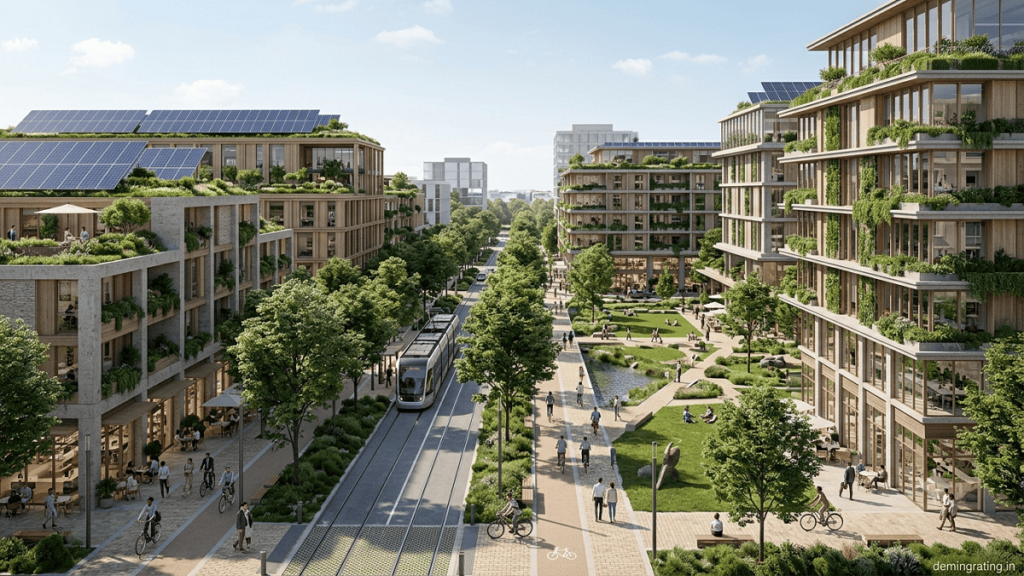
Case Study of Urban Development: Ahmedabad
Ahmedabad, Gujarat, provides a significant example of how coordinated urban development can transform public spaces, transportation, infrastructure, and the relationship between a city and its river. The city’s development experience includes several major initiatives, with the Sabarmati Riverfront Development Project and the Ahmedabad Bus Rapid Transit System (BRTS) providing useful examples of different approaches to urban improvement.
Sabarmati Riverfront Development
The Sabarmati Riverfront Development Project was initiated to redevelop approximately 11.25 kilometres of riverfront on both banks of the Sabarmati River. The project incorporated promenades, public spaces, gardens, recreational areas, roads, and other urban infrastructure.
According to the Sabarmati Riverfront Development Corporation Limited, the project was designed to create accessible public spaces while supporting environmental improvement and urban development along the river. The riverfront has subsequently become an important recreational and public-space destination within Ahmedabad.
The project demonstrates how waterfront development can be used to bring together public infrastructure, recreation, transportation, environmental considerations, and urban design. Its development also illustrates the importance of creating public spaces that can serve residents and visitors.
Ahmedabad BRTS
Transportation has also been an important part of Ahmedabad’s urban development strategy. The city’s Janmarg Bus Rapid Transit System was developed to provide efficient public transportation through dedicated bus corridors, stations, and related infrastructure.
The Ahmedabad Municipal Corporation and Ahmedabad Janmarg Limited provide information about the city’s public transportation initiatives. BRTS demonstrates how cities can improve mobility without relying exclusively on expanding conventional road infrastructure.
Dedicated corridors can help public buses operate more efficiently, while integrated stations and pedestrian facilities can improve connections between public transportation and surrounding neighbourhoods.
Key Lessons
Ahmedabad’s experience demonstrates that successful urban development can involve multiple interconnected priorities rather than a single infrastructure project. Public spaces, transportation, environmental improvement, and accessibility can be incorporated into broader urban planning strategies.
At the same time, large-scale urban development requires ongoing attention to issues such as maintenance, environmental management, land use, accessibility, financing, and the needs of communities affected by redevelopment. Urban projects should therefore be evaluated not only by their physical scale but also by their long-term social, environmental, and economic outcomes.
Conclusion
The Ahmedabad case illustrates how strategic urban development can reshape important parts of a city. The Sabarmati Riverfront shows the role of public-space and waterfront planning, while the BRTS demonstrates how transportation infrastructure can support urban mobility.
Together, these initiatives provide an example of how planned infrastructure, public transportation, environmental considerations, and urban design can contribute to the development of a more connected and functional city. The broader lesson is that urban development is most effective when projects are aligned with long-term planning goals and the needs of the communities they serve.
#SustainableCities
White Paper on Urban Development
Executive Summary
Urban development is the planned process of expanding, improving, and managing cities to support population growth, economic activity, environmental sustainability, and quality of life. As urban populations continue to increase, cities face growing demands for housing, transportation, water, sanitation, energy, healthcare, public spaces, and digital connectivity. A coordinated approach to urban development is therefore essential for creating resilient and inclusive communities.
The United Nations identifies inclusive, safe, resilient, and sustainable cities as a key global development objective through Sustainable Development Goal 11. Urban development must consequently balance economic progress with environmental protection and social inclusion.
1. Introduction
Modern urban development extends beyond constructing buildings and roads. It involves land-use planning, infrastructure development, housing, mobility, public services, environmental management, economic development, and community participation.
Rapid and unplanned growth can place pressure on existing infrastructure and contribute to congestion, inadequate housing, pollution, inefficient land use, and insufficient public services. Strategic planning allows governments and urban authorities to anticipate future requirements and coordinate investments.
2. Key Areas of Urban Development
Infrastructure and Connectivity
Reliable roads, bridges, water systems, drainage, sanitation, electricity, and telecommunications form the foundation of urban development. Infrastructure should be designed to accommodate current requirements while remaining adaptable to future needs.
Sustainable Transportation
Efficient public transportation, pedestrian networks, cycling infrastructure, and integrated mobility systems can improve accessibility and reduce dependence on private vehicles. The World Bank emphasizes the importance of accessible and sustainable transport for connecting people with jobs, education, healthcare, and other opportunities.
Housing and Social Infrastructure
Adequate and affordable housing should be developed alongside schools, healthcare facilities, public spaces, and essential services. Well-connected neighbourhoods can reduce travel requirements and improve access to opportunities.
Environmental Sustainability
Urban planning increasingly incorporates green buildings, renewable energy, water conservation, waste management, parks, urban forests, and climate-resilient infrastructure. These approaches can help cities manage environmental pressures while supporting healthier communities.
3. Technology and Smart Urban Management
Digital technologies can strengthen urban planning and service delivery. GIS, IoT sensors, data analytics, digital twins, intelligent transportation systems, and digital governance platforms can provide authorities with better information for decision-making.
However, technology should support clearly defined urban objectives. Cities also need appropriate policies for cybersecurity, data privacy, interoperability, and digital inclusion.
4. Major Challenges
Urban development faces challenges including rapid population growth, limited funding, housing affordability, aging infrastructure, traffic congestion, environmental pollution, climate risks, fragmented governance, and shortages of technical expertise.
Addressing these challenges requires long-term planning, effective institutions, sustainable financing, and cooperation among governments, businesses, communities, and technical organizations.
Conclusion
Urban development is fundamental to building cities that can accommodate growth while maintaining quality of life and environmental sustainability. The future of urban development will depend on integrating resilient infrastructure, sustainable mobility, affordable housing, green development, digital technologies, and inclusive governance.
The objective should not simply be to build larger cities, but to create cities that are accessible, efficient, resilient, sustainable, and responsive to the needs of their communities.
#UrbanPlanning
Industry Application of Urban Development
Urban development has a direct impact on a wide range of industries because the growth and modernization of cities create demand for infrastructure, housing, transportation, utilities, technology, and professional services. Well-planned urban development can support economic activity while creating opportunities for businesses to participate in the development of efficient and sustainable communities.
1. Construction and Infrastructure
The construction industry is one of the most directly connected to urban development. Residential buildings, commercial complexes, roads, bridges, water systems, drainage networks, public facilities, and transportation infrastructure all require construction and engineering expertise.
Modern projects increasingly incorporate sustainable materials, energy-efficient designs, digital project management, and Building Information Modelling (BIM). These approaches can improve planning, coordination, and lifecycle management.
2. Real Estate and Housing
Urban population growth creates demand for residential, commercial, and mixed-use developments. Real-estate companies can contribute through housing projects, office spaces, retail centres, and integrated communities.
Urban planning also influences property development by determining land use, transportation connectivity, infrastructure availability, and access to public amenities. The World Bank highlights the relationship between urbanization, infrastructure, housing, and economic opportunity.
3. Transportation and Mobility
Urban development creates significant opportunities for the transportation sector. Public transit systems, roads, metro networks, electric mobility, parking infrastructure, logistics facilities, and pedestrian networks require planning, engineering, technology, and operational services.
Smart mobility solutions such as fleet management, intelligent traffic systems, and digital ticketing can further improve transportation operations.
4. Energy and Utilities
Urban expansion increases demand for electricity, water, sanitation, and other utilities. Energy companies and infrastructure providers can support cities through renewable energy systems, smart grids, efficient lighting, water-treatment facilities, and resource-monitoring technologies.
The International Energy Agency identifies energy efficiency as an important element of sustainable development and reducing energy demand.
5. Technology and Digital Services
Technology companies play an increasingly important role in modern urban development. GIS platforms, IoT sensors, cloud computing, artificial intelligence, data analytics, digital twins, and smart-city platforms can support urban planning and infrastructure management.
These technologies allow authorities and businesses to collect information, monitor infrastructure, analyze urban patterns, and improve service delivery.
6. Environmental and Waste Management
Urban growth generates greater demand for waste collection, recycling, wastewater treatment, pollution monitoring, and environmental services. Companies in this sector can provide technologies and services for waste segregation, recycling, water treatment, resource recovery, and environmental monitoring.
7. Finance and Professional Services
Large urban projects require financing, project management, architectural services, engineering, consulting, legal expertise, and insurance. Financial institutions and professional-service providers therefore have an important role in supporting urban infrastructure investments.
Conclusion
Urban development creates opportunities across construction, real estate, transportation, energy, utilities, technology, environmental services, finance, and professional consulting. These industries contribute different capabilities to the development of modern cities.
The strongest results occur when industry participation is aligned with clear urban planning objectives, sustainability standards, infrastructure requirements, and community needs. As cities continue to grow, collaboration between governments and the private sector can support the development of infrastructure and services that are efficient, resilient, and prepared for future demands.
Further reading: World Bank – Urban Development · UN Sustainable Development Goal 11 · International Energy Agency – Energy Efficiency
#UrbanDevelopment
Ask FAQs
What is urban development?
Urban development is the planned growth and improvement of cities through infrastructure, housing, transportation, public services, economic development, environmental management, and effective land-use planning. Its objective is to create functional, inclusive, sustainable, and resilient urban communities.
Why is urban development important?
Urban development helps cities manage population growth while improving infrastructure, mobility, housing, public services, economic opportunities, and quality of life. Effective planning can also help address challenges such as congestion, pollution, inadequate infrastructure, and climate-related risks.
What are the key components of urban development?
Key components include transportation, housing, infrastructure, utilities, public spaces, environmental sustainability, economic development, digital technology, and community services. Coordinating these elements helps create well-connected and efficient urban areas.
How does technology support urban development?
Technologies such as IoT, GIS, artificial intelligence, data analytics, digital twins, smart transportation systems, and digital governance platforms can help cities monitor infrastructure, manage resources, improve public services, and support data-driven planning.
What are the major challenges of urban development?
Major challenges include rapid urbanization, housing affordability, traffic congestion, aging infrastructure, environmental pollution, climate risks, limited financing, and coordination between different authorities. Addressing these challenges requires long-term planning, sustainable investment, effective governance, and collaboration among stakeholders.
Disclaimer: The information provided in this article is for general informational and educational purposes only. Urban development policies, projects, regulations, costs, and practices may vary by location and change over time. Readers should consult relevant government authorities, planning professionals, or official sources for specific projects and decisions.