Startup Ecosystems
Table of Contents
A startup ecosystem is a network of entrepreneurs, investors, mentors, incubators, accelerators, government agencies, educational institutions, and established businesses that work together to support the creation Startup Ecosystems and growth of startups. These interconnected participants provide the resources, knowledge, funding, and professional relationships entrepreneurs need to transform innovative ideas into successful businesses.
Startup ecosystems play a vital role in promoting innovation, creating employment opportunities, and encouraging economic development. They help founders access investment, receive expert guidance, validate business ideas, and connect with potential customers and strategic partners. A supportive ecosystem can also make it easier for startups to overcome challenges such as limited funding, market competition, and a shortage of skilled professionals.
In India, initiatives such as Startup India aim to strengthen entrepreneurship by providing information about funding opportunities, mentorship, startup programs, Startup Ecosystems and government support. Globally, startup hubs such as Silicon Valley have demonstrated how collaboration between entrepreneurs, investors, research institutions, and technology companies can encourage innovation.
Understanding startup ecosystems helps entrepreneurs identify valuable resources, build professional networks, and make informed business decisions. By fostering collaboration, knowledge sharing, and access to capital, a strong startup ecosystem creates an environment where innovative businesses can develop, scale, Startup Ecosystems and contribute to long-term economic growth.
#Industry4.0

What Is a Startup Ecosystem, and Why Is It Important for Entrepreneurs?
A startup ecosystem is a network of individuals, organizations, institutions, and resources that work together to support the creation, development, and growth of startups. It includes entrepreneurs, investors, mentors, incubators, accelerators, government agencies, universities, Startup Ecosystems and established businesses. These participants contribute funding, knowledge, technology, infrastructure, and professional connections that help entrepreneurs transform innovative ideas into sustainable businesses.
In today’s competitive business environment, a strong startup ecosystem plays a significant role in encouraging innovation, reducing business barriers, Startup Ecosystems and creating opportunities for entrepreneurs to succeed.
Understanding the Components of a Startup Ecosystem
A startup ecosystem consists of several interconnected components that support businesses at different stages of development.
1. Entrepreneurs and Founders
Entrepreneurs are the driving force behind startup ecosystems. They identify market opportunities, develop innovative solutions, build teams, Startup Ecosystems and create businesses that address customer needs.
2. Investors and Funding Organizations
Angel investors, venture capital firms, banks, and other funding organizations provide financial resources that help startups develop products, hire employees, Startup Ecosystems and expand operations.
3. Incubators and Accelerators
Incubators and accelerators support startups through mentorship, training, networking, and business development programs. They help founders refine business models, validate ideas, and prepare for investment opportunities.
4. Government and Educational Institutions
Governments can encourage entrepreneurship through supportive policies, financial assistance, and business development initiatives. Universities Startup Ecosystems and research institutions contribute talent, research, technology, and opportunities for collaboration.
Why Is a Startup Ecosystem Important for Entrepreneurs?
1. Access to Funding
One of the biggest challenges entrepreneurs face is securing sufficient capital. Startup ecosystems connect founders with investors, grant programs, financial institutions, Startup Ecosystems and other funding sources. These connections can help businesses obtain the resources needed to develop and grow, although funding is never guaranteed.
2. Mentorship and Business Guidance
Experienced entrepreneurs and industry professionals can help founders make informed decisions, identify potential risks, and improve their business strategies. Mentorship is particularly valuable for first-time entrepreneurs who may lack experience in financial planning, marketing, or operational management.
3. Networking and Collaboration
A strong ecosystem creates opportunities to connect with potential customers, suppliers, investors, business partners, and other founders. These relationships can lead to strategic partnerships, customer referrals, Startup Ecosystems and new market opportunities.
4. Innovation and Knowledge Sharing
Startup ecosystems encourage collaboration between businesses, research institutions, and technology professionals. Sharing ideas and expertise can accelerate product development, encourage creative problem-solving, and help startups respond to changing customer needs.
5. Faster Business Growth
Access to funding, experienced mentors, specialized services, and established networks can help startups overcome obstacles more efficiently. These resources can support product validation, market entry, customer acquisition, Startup Ecosystems and expansion into new markets.
Examples of Startup Ecosystems
India’s Startup India initiative supports entrepreneurship through information about startup programs, mentorship, funding initiatives, and government support.
Internationally, Silicon Valley is a well-known startup ecosystem where technology companies, investors, universities, and entrepreneurs interact to support innovation and business development.
Conclusion
A startup ecosystem is an important foundation for entrepreneurship because it brings together the people, resources, and institutions required to build successful businesses. By providing access to funding, mentorship, networking, and innovation opportunities, it helps entrepreneurs navigate business challenges and pursue sustainable growth.
For founders, understanding and actively participating in a relevant startup ecosystem can open valuable opportunities, strengthen business capabilities, Startup Ecosystems and improve their ability to compete in an evolving marketplace.
#EmergingTechnologies
Who Are the Key Participants in a Successful Startup Ecosystem?
A successful startup ecosystem depends on the collaboration of individuals, organizations, and institutions that help entrepreneurs transform innovative ideas into sustainable businesses. These participants provide essential resources, including funding, mentorship, technology, talent, infrastructure, and access to markets. When these stakeholders work together effectively, they create an environment that encourages innovation, supports business development, and promotes economic growth.
Understanding the key participants in a startup ecosystem helps entrepreneurs identify valuable resources, build strategic relationships, and make informed decisions throughout their business journey.
1. Entrepreneurs and Startup Founders
Entrepreneurs are the central participants in any startup ecosystem. They identify market opportunities, solve customer problems, develop innovative products, and establish businesses. Their creativity, leadership, and willingness to take calculated risks drive the ecosystem forward.
Founders also create employment opportunities and contribute to economic development by introducing new technologies, products, and services. Their ability to collaborate with other ecosystem participants often determines how effectively they can overcome business challenges.
2. Investors and Venture Capitalists
Investors provide the financial resources startups need to develop products, hire employees, expand operations, and enter new markets. Important funding participants include angel investors, venture capital firms, corporate investors, and crowdfunding communities.
Angel investors often support early-stage businesses, while venture capital firms may invest in startups with significant growth potential. In addition to funding, investors can offer industry expertise, strategic guidance, and valuable business connections.
3. Incubators and Accelerators
Incubators and accelerators help startups develop their business models and prepare for growth.
Incubators generally support early-stage entrepreneurs through workspace, mentorship, training, and access to professional resources. Accelerators typically provide structured, time-limited programs designed to help startups improve their products, strengthen business strategies, and connect with investors.
These organizations play an important role in reducing knowledge gaps and helping founders navigate the early stages of entrepreneurship.
4. Mentors and Industry Experts
Mentors contribute practical knowledge, professional experience, and strategic advice. They help founders identify potential risks, improve leadership skills, refine marketing strategies, and make better business decisions.
Industry experts can also provide insights into customer behavior, regulatory requirements, technology trends, and competitive positioning.
5. Government Agencies and Policymakers
Government organizations influence startup ecosystems through policies, business regulations, infrastructure development, financial assistance, and entrepreneurship programs.
In India, the Startup India initiative provides information about startup recognition, government initiatives, mentorship, and other support opportunities.
Effective policies can reduce administrative barriers, encourage innovation, and improve access to entrepreneurial resources.
6. Universities and Research Institutions
Universities contribute skilled graduates, scientific research, technological innovation, and opportunities for collaboration. They can support startups through entrepreneurship programs, research laboratories, technology transfer, and university-linked incubators.
Research institutions are particularly valuable for startups developing advanced technologies, healthcare solutions, clean energy products, and scientific innovations.
7. Established Businesses and Corporate Partners
Established companies can support startups through strategic partnerships, pilot projects, distribution agreements, supplier relationships, and corporate innovation programs.
Startups gain access to industry expertise and potential customers, while established businesses can benefit from emerging technologies and new business models.
8. Customers and the Wider Community
Customers are essential participants because their feedback helps startups validate ideas, improve products, and identify market opportunities. Suppliers, professional service providers, industry associations, and local communities also contribute by providing resources, expertise, and business connections.
Conclusion
A successful startup ecosystem depends on the coordinated efforts of entrepreneurs, investors, incubators, mentors, governments, universities, established companies, and customers. Each participant contributes different resources and expertise that help startups develop, compete, and grow.
For entrepreneurs, building relationships with the right stakeholders can improve access to funding, strengthen business strategies, accelerate innovation, and create opportunities for long-term success.
#DigitalTransformation
How Do Investors, Incubators, and Accelerators Support Startup Growth?
Investors, incubators, and accelerators play important roles in helping startups transform innovative ideas into sustainable businesses. Each provides different forms of support, including financial resources, mentorship, business development guidance, and access to professional networks. Their combined contributions can help entrepreneurs overcome early-stage challenges, improve their business models, and prepare for long-term growth.
Understanding how these participants operate enables founders to identify the right support at different stages of their entrepreneurial journey.
1. How Investors Support Startup Growth
Investors provide the financial resources startups need to develop products, hire employees, expand operations, and enter new markets. Early-stage businesses often face funding constraints because they have limited revenue, an unproven business model, or insufficient collateral for traditional loans.
Different types of investors serve different needs. Angel investors often invest in early-stage startups, while venture capital firms typically seek businesses with substantial growth potential. Corporate investors may support startups whose technologies or products align with their strategic objectives.
Beyond providing capital, experienced investors can contribute industry knowledge, strategic advice, and valuable introductions to potential customers and business partners.
For example, a technology startup receiving investment may use the funding to improve its product, strengthen its marketing activities, and recruit specialized employees. However, investment generally involves expectations concerning growth, financial performance, and, in many cases, ownership or returns.
Founders can explore Y Combinator to learn about startup investment and early-stage business development.
2. How Incubators Help Startups Develop
Startup incubators primarily support entrepreneurs during the early stages of business development. They help founders refine their ideas, evaluate market demand, develop prototypes, and establish practical business models.
Incubators may provide workspace, technical facilities, business training, legal or accounting guidance, and access to mentors. Some also connect startups with grants, investors, research institutions, and government support programs.
Their primary value lies in helping entrepreneurs establish a strong foundation before committing significant resources to expansion.
For instance, an entrepreneur developing an agricultural technology product may receive technical assistance, access to testing facilities, and opportunities to gather feedback from farmers through an incubator.
In India, founders can explore Startup India’s support resources to identify relevant incubation programs and entrepreneurship initiatives.
3. How Accelerators Speed Up Business Growth
Accelerators generally provide structured, time-limited programs designed to help startups improve their business performance and prepare for expansion or investment.
Unlike many incubators, which may support businesses over longer and more flexible periods, accelerators often focus on rapid progress through intensive mentorship, workshops, customer validation, and investor networking.
Participants may receive guidance on product development, sales strategies, financial planning, and market entry. Some programs conclude with a demonstration day or investor presentation, allowing founders to showcase their progress.
For example, a startup with an established prototype may join an accelerator to refine its pricing strategy, acquire initial customers, and prepare for fundraising.
4. Key Differences Between Investors, Incubators, and Accelerators
| Participant | Primary contribution | Typical objective |
|---|---|---|
| Investors | Capital and strategic connections | Finance growth and generate returns |
| Incubators | Early-stage guidance and resources | Develop viable business foundations |
| Accelerators | Intensive mentorship and structured programs | Improve performance and prepare for scaling |
These roles can overlap. Some accelerators invest directly in participating startups, while certain incubators offer funding or specialized facilities.
5. How Entrepreneurs Can Benefit From Their Support
Founders should assess their startup’s current needs before selecting a program or funding partner. Businesses still validating an idea may benefit most from incubation, while startups with proven customer demand may gain more from acceleration or external investment.
Entrepreneurs should also evaluate program eligibility, costs, equity requirements, mentorship quality, industry relevance, and the experience of previous participants.
Conclusion
Investors, incubators, and accelerators support startup growth through complementary resources. Investors provide capital and strategic connections, incubators help entrepreneurs develop viable business foundations, and accelerators support rapid improvement and expansion.
By selecting the right support at the right stage, founders can strengthen their business models, improve access to markets, reduce avoidable mistakes, and build a stronger foundation for sustainable growth.
#BusinessInnovation
What Challenges Can Prevent Startup Ecosystems from Developing Effectively?
A strong startup ecosystem creates an environment where entrepreneurs can access funding, mentorship, skilled professionals, technology, and business opportunities. However, developing such an ecosystem requires collaboration among investors, government agencies, educational institutions, established companies, and startup founders. When these participants lack adequate resources or coordination, startups may struggle to establish themselves, innovate, and achieve sustainable growth.
Understanding the barriers that weaken startup ecosystems helps entrepreneurs, policymakers, and investors develop strategies to create more supportive business environments.
1. Limited Access to Funding
Insufficient funding is one of the most significant barriers to startup ecosystem development. Early-stage companies often struggle to attract investors because they lack a proven business model, established customers, or a consistent revenue stream.
In regions with limited venture capital activity, entrepreneurs may have fewer opportunities to secure investment. This can restrict product development, recruitment, marketing, and expansion.
To address this challenge, ecosystems need diverse funding options, including angel investment, venture capital, grants, crowdfunding, and suitable lending programs.
2. Shortage of Skilled Talent
Startups require professionals with expertise in technology, marketing, finance, product development, and business management. However, emerging ecosystems may lack sufficient skilled workers or experienced startup leaders.
Established companies may also attract talent by offering higher salaries and greater job security. Consequently, startups can struggle to recruit and retain employees.
Strengthening university-industry partnerships, vocational training, entrepreneurship education, and professional development programs can help address these talent shortages.
3. Complex Regulations and Administrative Barriers
Complicated registration procedures, unclear regulations, tax requirements, licensing obligations, and lengthy approval processes can increase the cost of establishing and operating a startup.
These difficulties are especially challenging for founders with limited legal and administrative resources. Excessive uncertainty may also discourage investors and entrepreneurs from entering particular markets.
Governments can support ecosystem development by simplifying appropriate administrative procedures, providing clear regulatory guidance, and improving access to business support services.
4. Weak Mentorship and Support Networks
Entrepreneurs benefit from experienced mentors who understand business development, customer acquisition, financial management, and industry-specific challenges.
However, ecosystems with few experienced founders, incubators, or accelerators may provide limited opportunities for practical guidance. This can leave new entrepreneurs without the knowledge needed to make informed decisions.
Developing mentorship networks, startup incubators, accelerator programs, and founder communities can help close these knowledge gaps.
5. Limited Market Access
Startups need customers to validate their products, generate revenue, and demonstrate commercial potential. In smaller or less-developed markets, businesses may face limited purchasing power, weak distribution networks, or difficulty accessing established companies.
Without sufficient market opportunities, even innovative products can struggle to achieve sustainable growth.
Partnerships with larger businesses, digital marketplaces, export-support programs, and industry associations can help startups reach new customers.
6. Inadequate Infrastructure and Technology
Reliable internet connectivity, transportation, electricity, affordable workspaces, testing facilities, and digital services are important for startup development.
Inadequate infrastructure can increase operational expenses, slow product development, and limit access to customers and business partners.
Investments in digital infrastructure, research facilities, coworking spaces, and technology hubs can create better conditions for entrepreneurship.
7. Fear of Failure and Limited Entrepreneurial Culture
In some communities, business failure carries significant social or financial consequences. This can discourage people from pursuing innovative ideas or experimenting with unfamiliar business models.
A supportive entrepreneurial culture encourages calculated risk-taking, responsible experimentation, and learning from unsuccessful projects. Universities, business leaders, and startup organizations can promote this culture through entrepreneurship education, founder discussions, and practical training.
8. Weak Collaboration Among Ecosystem Participants
A startup ecosystem depends on coordination among founders, investors, universities, government organizations, and established businesses. When these participants operate independently, entrepreneurs may struggle to discover relevant resources or establish useful partnerships.
Improved communication, joint innovation programs, shared networks, and coordinated support services can help participants work toward common objectives.
For additional context, the OECD’s work on entrepreneurship and SME policy provides resources on the conditions that influence small-business development and entrepreneurial activity.
Conclusion
Startup ecosystems can struggle to develop effectively because of limited funding, talent shortages, regulatory complexity, inadequate infrastructure, weak mentorship, restricted market access, and insufficient collaboration. These barriers can reduce innovation, discourage entrepreneurship, and limit the growth of emerging businesses.
Addressing these challenges requires coordinated action from governments, investors, educational institutions, established companies, and entrepreneurs. By improving access to resources, strengthening professional networks, and creating supportive business conditions, communities can build more inclusive and resilient startup ecosystems that encourage innovation and sustainable economic growth.
#Entrepreneurship
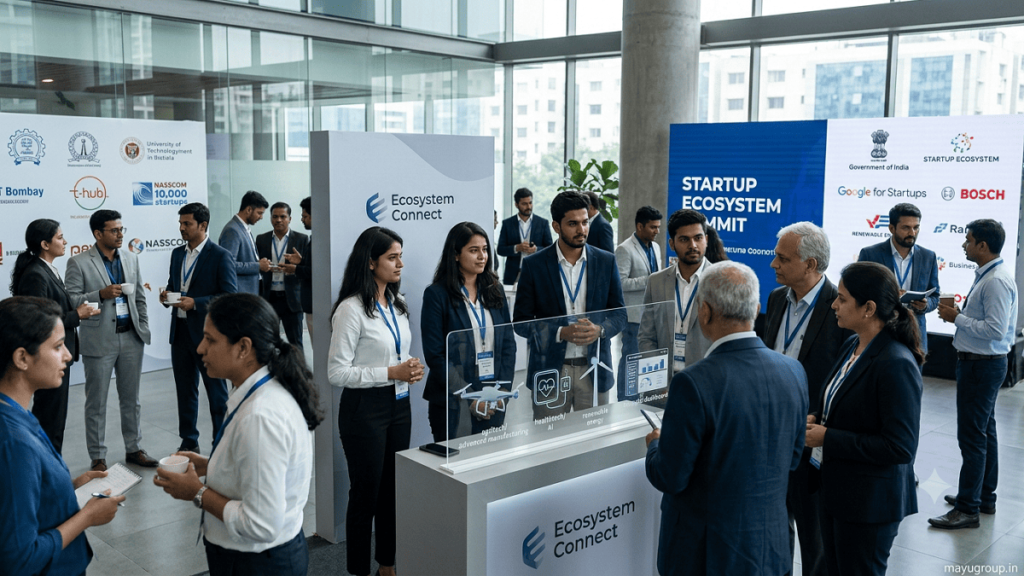
How Can Governments and Businesses Build Stronger Startup Ecosystems?
A strong startup ecosystem creates an environment where entrepreneurs can develop innovative ideas, access funding, attract skilled professionals, and expand their businesses. Governments and private businesses play essential roles in creating these conditions by providing financial support, improving infrastructure, encouraging innovation, and establishing partnerships. When these stakeholders collaborate effectively, they can help startups overcome early-stage challenges, generate employment, and contribute to sustainable economic development.
Building a successful startup ecosystem requires long-term planning, coordinated policies, and a commitment to supporting entrepreneurs at different stages of business growth.
1. Improve Access to Startup Funding
Access to capital is one of the most important factors influencing startup development. Governments can support entrepreneurs through eligible grants, startup support schemes, credit programs, and co-investment initiatives. Simplified application processes can also make funding opportunities more accessible to early-stage businesses.
Private businesses and investors can contribute through angel investment, venture capital, corporate investment programs, and strategic partnerships. Established companies can also support promising startups by funding pilot projects or investing in technologies relevant to their industries.
For entrepreneurs, a wider range of funding options can help finance product development, recruit employees, and enter new markets.
2. Strengthen Incubators and Accelerators
Startup incubators and accelerators provide mentorship, technical resources, business training, and networking opportunities. Governments can support these organizations through infrastructure investment, partnerships with universities, and funding for entrepreneurship programs.
Businesses can contribute experienced mentors, industry knowledge, access to potential customers, and opportunities to test new products.
In India, the Startup India initiative provides information about entrepreneurship programs, mentorship, funding opportunities, and startup support resources.
3. Simplify Business Regulations
Complicated registration procedures, unclear compliance requirements, and lengthy approval processes can create unnecessary obstacles for entrepreneurs.
Governments can improve the business environment by simplifying appropriate administrative procedures, offering digital registration services, providing clear regulatory guidance, and reducing avoidable delays.
Businesses can support this process by sharing practical feedback about regulatory difficulties and helping startups understand relevant industry standards.
Clearer and more predictable requirements allow founders to devote more time and resources to product development and customer acquisition.
4. Invest in Education and Skilled Talent
A strong startup ecosystem requires professionals with expertise in technology, finance, marketing, management, and product development.
Governments and educational institutions can strengthen entrepreneurship education, vocational training, research opportunities, and industry-linked learning programs.
Private businesses can contribute through internships, apprenticeships, technical training, and collaboration with universities. Experienced entrepreneurs can also mentor first-time founders and help them develop practical business skills.
5. Encourage Innovation and Research
Innovation is essential for developing competitive products and services. Governments can support research and development through appropriate incentives, research grants, technology facilities, and university-industry partnerships.
Businesses can collaborate with startups to test emerging technologies, share technical expertise, and develop new solutions to industry-specific problems.
For example, a manufacturing company might partner with a startup developing predictive maintenance software and evaluate its effectiveness through a pilot project.
6. Expand Market Access and Business Networks
Startups need customers, distribution channels, and commercial partnerships to achieve sustainable growth.
Governments can facilitate participation in trade events, procurement opportunities, and international business networks where appropriate. Established companies can provide opportunities for startups to become suppliers, develop complementary products, or participate in corporate innovation programs.
These partnerships can help startups validate their solutions, establish commercial relationships, and build credibility.
7. Promote Inclusive and Regional Entrepreneurship
Startup opportunities should extend beyond major technology hubs. Governments and businesses can support entrepreneurs in smaller cities and underserved communities through regional incubators, digital infrastructure, accessible mentorship, and entrepreneurship training.
Inclusive programs can help more people access business resources and encourage solutions tailored to local needs.
8. Measure Results and Improve Support Programs
Startup ecosystem development should be evaluated using measurable indicators, including business survival, private investment, employment creation, customer growth, and successful commercialization of innovations.
Governments and businesses should regularly review program outcomes and use feedback from founders to improve their support strategies. This helps ensure that resources address genuine entrepreneurial needs.
Conclusion
Governments and businesses can build stronger startup ecosystems by improving access to funding, supporting incubators, simplifying regulations, developing skilled talent, encouraging innovation, and expanding market opportunities.
Achieving these objectives requires collaboration among entrepreneurs, investors, educational institutions, established companies, and public organizations. By combining effective policies with practical business support, communities can create environments where startups have better opportunities to innovate, compete, and achieve sustainable growth.
#StartupGrowth
Case Study of Startup Ecosystems: Lessons from Successful Startup Hubs
Startup ecosystems play a significant role in encouraging innovation, supporting entrepreneurship, and creating economic opportunities. They bring together entrepreneurs, investors, mentors, universities, government organizations, and established businesses to help new companies develop and grow. Studying successful startup ecosystems provides valuable insights into how funding, infrastructure, collaboration, and government policies can influence startup success.
This case study examines three prominent startup ecosystems: Silicon Valley in the United States, Bengaluru in India, and Israel’s technology startup ecosystem. Each demonstrates a different approach to fostering entrepreneurship and innovation.
1. Silicon Valley, United States: Building an Innovation-Driven Ecosystem
<AsyncImage query=”Silicon Valley California technology campus startups modern office buildings” aspectRatio=”16:9″ width=”100%” />
Silicon Valley is widely recognized as a major global technology and entrepreneurship hub. Its ecosystem benefits from the presence of technology companies, venture capital firms, universities, experienced founders, and skilled professionals.
Institutions such as Stanford University have contributed to research commercialization and connections between academic research and industry. Venture capital firms provide funding to startups with growth potential, while experienced entrepreneurs contribute mentorship and investment to newer businesses.
Key success factors:
- Strong access to venture capital and angel investors.
- Close collaboration between universities and technology companies.
- A large pool of skilled professionals and experienced founders.
- Established networks that connect startups with customers and investors.
Lessons for other ecosystems: Regions can encourage innovation by strengthening university-industry partnerships, improving access to investment, and creating opportunities for entrepreneurs to learn from experienced business leaders.
2. Bengaluru, India: Combining Technology Talent with Entrepreneurship
<AsyncImage query=”Bengaluru India technology startup office campus modern business district” aspectRatio=”16:9″ width=”100%” />
Bengaluru has developed into one of India’s major startup and technology centers. Its ecosystem includes technology companies, software professionals, startup founders, investors, incubators, and research institutions.
The city’s technology industry has helped develop a skilled workforce and established networks for software development, product engineering, and business services. Startups have also benefited from access to domestic customers and opportunities to develop solutions for international markets.
Government initiatives, including the Startup India initiative, provide information about startup recognition, support programs, and entrepreneurship resources.
Key success factors:
- A strong technology and engineering talent base.
- Connections to established technology companies.
- Access to investors, incubators, and startup communities.
- Opportunities to develop digital products for Indian and international markets.
Lessons for other ecosystems: Cities can strengthen entrepreneurship by investing in technical education, digital infrastructure, mentorship, and connections between startups and established industries.
3. Israel: Supporting Research, Technology, and Global Markets
<AsyncImage query=”Tel Aviv Israel technology startup innovation district modern offices” aspectRatio=”16:9″ width=”100%” />
Israel has developed a prominent technology startup ecosystem, particularly in areas such as cybersecurity, enterprise software, medical technology, and other research-intensive industries.
Its ecosystem has been shaped by research institutions, technology expertise, entrepreneurship networks, international investment, and public initiatives supporting research and innovation. Many startups focus on global markets from an early stage because the domestic market is relatively small.
Key success factors:
- Strong emphasis on research and technology development.
- Connections between universities, industry, and entrepreneurs.
- Experience in developing specialized technical solutions.
- International partnerships and access to global customers and investors.
Lessons for other ecosystems: Startups can build competitive advantages by focusing on specialized expertise, commercializing research, and developing products that address international market needs.
Comparison of the Three Startup Ecosystems
| Ecosystem | Distinctive strengths | Key lesson |
|---|---|---|
| Silicon Valley | Venture capital, universities, experienced founders | Build strong investor and innovation networks |
| Bengaluru | Technology talent, established IT industry, expanding markets | Connect skilled professionals with entrepreneurial opportunities |
| Israel | Research, specialized technology, international orientation | Turn technical expertise into globally competitive products |
These ecosystems have different histories, market conditions, and institutional structures. Their approaches cannot be transferred directly to every region, but they offer useful principles for local development.
Common Factors Behind Successful Startup Ecosystems
Several themes appear across these examples:
- Access to capital: Entrepreneurs need funding appropriate to their stage of development.
- Skilled talent: Technical, commercial, and managerial expertise helps startups execute their ideas.
- Mentorship and networks: Experienced founders and industry professionals can help entrepreneurs avoid common mistakes.
- Research and innovation: Universities and research institutions can provide ideas, technologies, and specialized knowledge.
- Market access: Startups need customers and commercial partnerships to achieve sustainable growth.
- Supportive institutions: Clear regulations and effective support programs can reduce avoidable barriers.
Conclusion
The case studies of Silicon Valley, Bengaluru, and Israel show that startup ecosystems develop through a combination of talent, investment, innovation, collaboration, and access to markets. Each ecosystem has distinctive strengths, but all demonstrate the value of connecting entrepreneurs with the resources and expertise they need.
Governments, businesses, universities, and investors can apply these lessons to strengthen local entrepreneurship. Rather than copying another region’s model, they should build on local capabilities, address existing gaps, and create long-term opportunities for startups to innovate and grow.
#IndustryInnovation
White Paper on Startup Ecosystems: Building an Environment for Innovation and Sustainable Growth
Executive Summary
Startup ecosystems are essential drivers of innovation, entrepreneurship, employment, and economic development. They connect entrepreneurs with investors, mentors, educational institutions, government agencies, incubators, accelerators, and established businesses. When these stakeholders work together effectively, startups gain better access to capital, knowledge, technology, talent, and markets.
Despite their potential, many startup ecosystems face persistent challenges, including limited funding, skills shortages, regulatory complexity, weak business networks, and unequal access to entrepreneurial opportunities. Addressing these barriers requires coordinated action from governments, businesses, financial institutions, universities, and startup founders.
This white paper examines the structure of startup ecosystems, their economic significance, common development challenges, and practical strategies for creating supportive entrepreneurial environments. It also explores how emerging ecosystems, particularly in India, can build on local strengths while developing globally competitive startups.
1. Introduction
Entrepreneurship has become an important component of economic transformation. Startups introduce new products and services, experiment with emerging technologies, challenge established business models, and respond to changing customer needs.
However, entrepreneurial success rarely depends on an innovative idea alone. Founders also require financing, skilled employees, market information, infrastructure, mentorship, and supportive institutions.
A startup ecosystem provides a network through which these resources can be accessed and shared. Its effectiveness depends not only on the number of startups operating in a region but also on the quality of relationships among participants and their ability to support sustainable business growth.
Understanding how these ecosystems function is therefore important for policymakers, investors, business leaders, educational institutions, and entrepreneurs.
2. Understanding Startup Ecosystems
A startup ecosystem is a network of organizations, individuals, resources, and institutions that support the creation and development of new businesses within a particular geographic or industry context.
Its major participants include:
- Entrepreneurs and founders: Identify market opportunities, develop products, and establish businesses.
- Investors and financial institutions: Provide equity investment, loans, grants, and other forms of financing.
- Incubators and accelerators: Offer mentoring, training, infrastructure, and business development support.
- Government organizations: Establish policies, regulatory frameworks, infrastructure, and entrepreneurship programs.
- Universities and research institutions: Develop talent, conduct research, and facilitate technology commercialization.
- Established businesses: Offer commercial partnerships, technical expertise, distribution channels, and potential customers.
- Customers and communities: Validate products, provide feedback, and create demand for new solutions.
These participants form an interconnected network. For example, university research may generate a new technology, an incubator may help commercialize it, investors may finance its development, and an established business may become its first major customer.
A healthy ecosystem makes these connections easier to establish and maintain.
3. Why Startup Ecosystems Matter
3.1 Innovation and Technology Development
Startups frequently explore emerging technologies and new business models. Supportive ecosystems help entrepreneurs test ideas, access specialized knowledge, and turn research into commercial products.
3.2 Employment and Skills Development
Growing startups can create direct employment and generate additional opportunities through suppliers, service providers, and partner businesses. They may also help develop skills in software engineering, product management, sales, finance, and business operations.
3.3 Economic Diversification
Regions that depend heavily on a limited number of industries may benefit from supporting new businesses in different sectors. Startup ecosystems can encourage activity in areas such as manufacturing technology, healthcare, agriculture, education, financial services, and clean technology.
3.4 Regional Development
Entrepreneurship support outside major metropolitan centers can create local economic opportunities and help address regional development gaps. Digital infrastructure, regional incubators, and accessible funding can enable founders to build businesses closer to their communities.
3.5 International Competitiveness
Startups that develop distinctive products and services can compete in international markets. Ecosystems with strong technical talent, intellectual property capabilities, industry connections, and export support can help businesses expand beyond domestic customers.
These benefits are potential outcomes, not automatic results. They depend on startup quality, market demand, business execution, and the wider economic environment.
4. Major Challenges Facing Startup Ecosystems
Although startup ecosystems offer significant opportunities, their development can be restricted by several structural barriers.
4.1 Limited Access to Finance
Early-stage businesses may lack collateral, operating history, or predictable revenue, making conventional lending difficult. Equity investment may also be concentrated in particular cities, sectors, or later-stage businesses.
4.2 Shortages of Skilled Professionals
Startups need technical and commercial talent, but smaller companies may struggle to compete with established employers on compensation, job security, and career progression.
4.3 Regulatory and Administrative Complexity
Complicated registration, taxation, licensing, and compliance processes can consume time and money. Unclear or inconsistent requirements can create additional uncertainty.
4.4 Weak Mentorship and Collaboration
Founders may lack access to experienced entrepreneurs, specialized advisors, potential business partners, and investors. Limited collaboration can prevent useful knowledge and resources from circulating throughout an ecosystem.
4.5 Limited Market Access
A startup may develop a promising product but struggle to reach customers, secure distribution partners, meet procurement requirements, or enter international markets.
4.6 Unequal Access to Opportunities
Entrepreneurs in rural areas, smaller cities, and underserved communities may have less access to funding, networks, infrastructure, and business support. Ecosystem development must consider these differences rather than assume that all founders face the same conditions.
5. Strategies for Strengthening Startup Ecosystems
A stronger startup ecosystem requires coordinated and sustained action rather than isolated support programs.
5.1 Improve Access to Appropriate Financing
Governments can consider transparent grant programs, credit support, co-investment structures, and early-stage financing initiatives. Investors can broaden access through angel networks, venture capital, and sector-specific funds.
Financial support should reflect business maturity and risk. Grants may be appropriate for research and early experimentation, while equity investment may better suit startups seeking rapid growth.
Programs should include clear eligibility requirements, transparent selection processes, and outcome monitoring.
5.2 Develop Incubation and Acceleration Infrastructure
Incubators and accelerators can provide structured assistance to startups at different stages.
Incubators often focus on early-stage idea development, business validation, and foundational support. Accelerators generally provide intensive, time-limited programs designed to help startups refine their business models, develop traction, and prepare for investment or expansion.
Effective programs should offer more than office space. They should connect founders with customers, mentors, investors, technical expertise, and relevant industry networks.
5.3 Strengthen Education and Workforce Development
Educational institutions and businesses can collaborate on entrepreneurship courses, applied research, internships, apprenticeships, and industry-led training.
Startup founders also need nontechnical skills, including customer discovery, financial planning, negotiation, hiring, marketing, and regulatory awareness.
Continuous professional development can help startups adapt as their products and markets evolve.
5.4 Simplify Business Procedures
Governments can improve the startup environment through accessible digital services, clear guidance, coordinated administrative processes, and proportionate compliance requirements.
Regulatory simplification should not eliminate necessary protections for consumers, workers, investors, data, or the environment. The objective is to make requirements understandable and manageable while maintaining accountability.
5.5 Encourage Corporate-Startup Collaboration
Established businesses can become important partners in startup development. They can offer pilot projects, mentorship, distribution networks, procurement opportunities, and access to industry-specific problems.
Corporate innovation programs should establish clear expectations regarding intellectual property, commercial terms, data access, and decision-making timelines. These measures can help prevent promising partnerships from stalling.
5.6 Promote Research Commercialization
Universities and research institutions can support startup formation by helping researchers assess market demand, protect intellectual property, identify commercial partners, and develop viable business models.
Technology transfer offices, applied research centers, and industry partnerships can help bridge the gap between laboratory discoveries and market-ready products.
5.7 Expand Regional and Inclusive Entrepreneurship
Ecosystem development should extend beyond established technology centers. Regional hubs, digital infrastructure, local industry partnerships, and accessible mentoring can help entrepreneurs in smaller cities and rural communities.
Support programs should be designed around documented local needs, including the availability of finance, skills, transport, digital connectivity, and suitable customers.
5.8 Build International Connections
Partnerships with foreign investors, universities, accelerators, trade organizations, and established businesses can help startups access new markets and technical expertise.
Internationalization support may include export readiness training, market research, regulatory guidance, trade missions, and introductions to overseas partners.
6. The Role of India in Startup Ecosystem Development
India offers a useful context for examining the opportunities and challenges associated with startup ecosystem development. Its diverse domestic market, technology workforce, educational institutions, and expanding digital economy provide opportunities for entrepreneurship across multiple sectors.
The Startup India initiative provides information on startup recognition, government programs, learning resources, and ecosystem support. State governments and regional organizations also contribute through their own entrepreneurship initiatives and infrastructure.
However, startup needs vary considerably across regions and industries. A technology startup in a major metropolitan area may prioritize venture capital and specialized talent, while an agricultural or manufacturing startup in a smaller city may require field-testing facilities, equipment financing, supply-chain partnerships, and access to local customers.
A practical approach for India is therefore to combine national support frameworks with region-specific strategies. This can include stronger university-industry collaboration, improved access to early-stage finance, support for research commercialization, and better links between startups and established businesses.
Policies and programs should be evaluated regularly to determine whether they are reaching intended beneficiaries and producing meaningful outcomes.
7. Measuring Startup Ecosystem Performance
The number of startups created is an incomplete measure of ecosystem health. A more comprehensive assessment should consider business sustainability, innovation, access to opportunity, and economic contribution.
Recommended indicators include:
| Measurement area | Example indicators |
|---|---|
| Access to finance | Early-stage investment, funding distribution, time to secure financing |
| Business sustainability | Startup survival, revenue development, profitability where relevant |
| Employment | Jobs created, workforce skills, quality of employment |
| Innovation | Research commercialization, patents where relevant, new products launched |
| Market access | Customer acquisition, commercial partnerships, export activity |
| Inclusion | Participation across regions and founder groups |
| Collaboration | University partnerships, corporate pilots, mentor engagement |
| Program effectiveness | Participation, completion, follow-on funding, measurable business outcomes |
Indicators should be interpreted in context. For example, patent counts may be relevant to research-intensive businesses but less useful for measuring progress in many service or consumer businesses.
Evaluation should also distinguish between outcomes directly attributable to a support program and broader changes influenced by market conditions.
8. Implementation Roadmap
Startup ecosystem development can be organized into four practical stages.
Stage 1: Assess the ecosystem. Map existing startups, investors, support organizations, universities, infrastructure, and major gaps. Consult founders and other stakeholders to identify barriers that require attention.
Stage 2: Set priorities. Select a manageable number of objectives based on local strengths and documented needs. Define target groups, responsibilities, budgets, and measurable outcomes.
Stage 3: Build partnerships and deliver programs. Coordinate government agencies, businesses, educational institutions, investors, and entrepreneurial networks. Ensure that founders can discover and access available resources.
Stage 4: Evaluate and improve. Monitor outcomes, collect feedback, identify ineffective processes, and adjust programs. Publish transparent results where appropriate to strengthen accountability and public trust.
The roadmap should be flexible enough to respond to changes in technology, market demand, and entrepreneurial needs.
9. Recommendations for Key Stakeholders
Governments
- Make business procedures and support programs accessible and transparent.
- Improve relevant digital, transport, and research infrastructure.
- Encourage early-stage financing and responsible private investment.
- Evaluate programs using meaningful outcome measures.
Businesses and Investors
- Offer startups access to customers, industry expertise, and commercial partnerships.
- Develop transparent investment and procurement processes.
- Support mentoring and responsible technology development.
- Share practical feedback about barriers affecting startup growth.
Universities and Research Institutions
- Connect research with real-world market needs.
- Develop entrepreneurship education and applied learning opportunities.
- Support technology transfer and intellectual property awareness.
- Build long-term partnerships with startups and established businesses.
Entrepreneurs
- Validate customer needs before scaling operations.
- Develop realistic financial and operational plans.
- Seek mentorship and build professional networks.
- Monitor business performance and adapt to market feedback.
10. Conclusion
Startup ecosystems are complex networks that require cooperation among entrepreneurs, investors, businesses, educational institutions, and governments. Their long-term strength depends on the quality of these connections and the ability of startups to access resources, develop competitive products, reach customers, and sustain their operations.
A comprehensive development strategy should combine appropriate financing, skilled talent, effective support institutions, clear regulations, research commercialization, market access, and inclusive regional opportunities.
No single model guarantees success. Each region must assess its existing capabilities, identify its most significant barriers, and establish priorities that reflect local economic conditions. Through evidence-based policies, responsible private-sector participation, and continuous evaluation, stakeholders can build startup ecosystems that support innovation and sustainable economic development.
References and Further Reading
- Startup India — Government of India
- OECD — SMEs and Entrepreneurship
- Y Combinator — Startup Resources
- World Bank — Entrepreneurship Database and Business Environment Resource
#StartupEcosystems
Industry Applications of Startup Ecosystems: Driving Innovation Across Sectors
Startup ecosystems play an important role in transforming industries by connecting entrepreneurs with investors, technology experts, research institutions, established businesses, and government organizations. These networks help startups develop innovative products, test new business models, access funding, and bring solutions to market.
Although startup ecosystems are often associated with technology companies, their applications extend across healthcare, finance, agriculture, education, manufacturing, retail, transportation, and renewable energy. Each industry benefits from entrepreneurship in different ways, depending on its challenges, customer needs, and technological opportunities.
1. Healthcare and Medical Technology
Startup ecosystems support healthcare innovation by connecting medical professionals, researchers, technology developers, hospitals, and investors. Startups can use these networks to develop digital health platforms, diagnostic tools, remote monitoring systems, and healthcare administration software.
For example, a health technology startup may collaborate with hospitals to test a remote patient monitoring solution. Medical experts provide clinical insights, technology partners develop the software, and investors finance product development.
These collaborations can improve access to healthcare services and operational efficiency. However, healthcare startups must also address patient privacy, cybersecurity, clinical safety, and applicable regulatory requirements.
2. Financial Services and FinTech
Financial technology, commonly known as FinTech, is another major application area for startup ecosystems. Entrepreneurs develop digital payment systems, online lending platforms, financial management tools, fraud detection solutions, and services designed to improve access to financial products.
Banks, payment providers, regulators, and investors can support FinTech startups through technical partnerships, testing environments, funding, and market access.
In India, startups may develop digital financial services for small businesses, independent professionals, and customers who have limited access to traditional banking services. Success depends on security, consumer protection, responsible lending practices, and compliance with applicable financial regulations.
3. Agriculture and AgriTech
Startup ecosystems can help modernize agriculture by bringing together farmers, agricultural researchers, equipment manufacturers, technology providers, and investors.
AgriTech startups develop solutions such as precision farming tools, soil monitoring systems, crop advisory applications, digital marketplaces, supply-chain tracking, and irrigation management technologies.
For example, a startup may use weather data and soil sensors to help farmers make more informed irrigation decisions. Partnerships with agricultural universities and farmer organizations can help test whether the solution works under real farming conditions.
These innovations can support productivity and resource efficiency, although adoption depends on affordability, local infrastructure, usability, and farmers’ access to reliable technical support.
4. Education and EdTech
Education technology startups use digital tools to improve teaching, learning, skills development, and educational administration.
Startup ecosystems connect entrepreneurs with teachers, educational institutions, curriculum specialists, technology developers, and investors. This collaboration can produce online learning platforms, vocational training applications, adaptive learning tools, and digital assessment systems.
For example, an EdTech startup could partner with vocational institutions to deliver industry-focused training for students preparing for employment.
Effective solutions should address genuine learning needs, protect student data, and remain accessible to users with different levels of digital connectivity and technological experience.
5. Manufacturing and Industry 4.0
Startup ecosystems help manufacturing businesses adopt technologies such as robotics, artificial intelligence, industrial automation, predictive maintenance, and connected sensors.
Manufacturers can collaborate with startups to identify operational problems and test new solutions without having to develop every technology internally.
For example, a startup may develop predictive maintenance software that analyzes equipment data to identify potential machine failures. A manufacturing partner can provide access to equipment and operational data, while investors support further product development.
Such partnerships may improve equipment utilization and reduce unplanned downtime, provided that the technology integrates effectively with existing industrial systems.
6. Retail and E-Commerce
Retail startups apply technology to improve online shopping, inventory management, digital payments, customer service, and product delivery.
Startup ecosystems provide access to logistics companies, payment providers, marketing specialists, investors, and established retailers. These connections help entrepreneurs test business models and develop scalable operations.
For instance, a retail technology startup could build software that helps small retailers monitor stock levels and forecast demand. Partnerships with wholesalers and local businesses can help validate the solution and expand its customer base.
Important considerations include customer privacy, secure payments, delivery reliability, and sustainable unit economics.
7. Transportation and Logistics
Transportation and logistics startups develop solutions for route optimization, fleet management, last-mile delivery, warehouse automation, and mobility services.
Their ecosystems often include vehicle manufacturers, logistics operators, software companies, infrastructure providers, and public authorities.
A startup developing fleet optimization software, for example, may collaborate with a delivery company to analyze routes and improve vehicle utilization. The results of pilot projects can help establish whether the solution provides measurable operational benefits.
In this sector, interoperability, road safety, infrastructure readiness, and regulatory compliance are important factors.
8. Renewable Energy and Climate Technology
Climate technology startups focus on renewable energy, energy storage, efficient resource use, waste management, electric mobility, and emissions monitoring.
Startup ecosystems connect these businesses with research institutions, utilities, manufacturers, public agencies, and investors. These relationships are especially important for technologies that require substantial research, specialized equipment, or long development cycles.
For example, a startup may develop software that helps commercial buildings monitor electricity consumption and identify energy-saving opportunities. Partnerships with building operators can provide opportunities to test the system and measure its performance.
Commercial adoption depends on technical reliability, financing, infrastructure, and the economic value of the solution.
9. Real Estate and Construction
PropTech and construction technology startups apply digital tools to property management, building design, construction planning, energy efficiency, and real estate transactions.
Startup ecosystems connect entrepreneurs with architects, engineers, developers, property managers, investors, and technology providers.
For example, a startup may create project management software that helps construction teams track materials, schedules, and site progress. Industry partnerships can help ensure that the product fits existing workflows and meets relevant safety and compliance requirements.
Industry Application Comparison
| Industry | Common startup applications | Potential benefits |
|---|---|---|
| Healthcare | Telehealth, diagnostics, monitoring | Access and operational efficiency |
| Financial services | Digital payments, lending tools, fraud detection | Convenient financial services |
| Agriculture | Precision farming, digital marketplaces | Resource efficiency and market access |
| Education | Online learning, skills training | Flexible learning opportunities |
| Manufacturing | Automation, predictive maintenance | Productivity and equipment reliability |
| Retail | E-commerce, inventory analytics | Better customer and stock management |
| Logistics | Route optimization, fleet software | Operational efficiency |
| Energy | Renewable technology, energy analytics | Improved energy management |
| Construction | Project software, smart buildings | Planning and resource coordination |
How Businesses Can Apply Startup Ecosystems
Organizations seeking innovation can work with startup ecosystems through several practical approaches:
- Identify industry problems: Focus on measurable challenges that customers or operations experience.
- Collaborate with startups: Connect with incubators, accelerators, research institutions, and industry networks.
- Run pilot projects: Test solutions in controlled, real-world environments before wider deployment.
- Provide mentorship and expertise: Help startups understand industry requirements and customer expectations.
- Develop long-term partnerships: Establish clear commercial terms, intellectual property arrangements, and performance measures.
- Measure outcomes: Evaluate customer satisfaction, costs, productivity, reliability, and other relevant indicators.
Conclusion
Startup ecosystems have applications across nearly every major industry. By combining entrepreneurial creativity with industry expertise, investment, research, and market access, they help businesses explore new technologies and develop solutions to practical problems.
Healthcare, financial services, agriculture, education, manufacturing, retail, logistics, energy, and construction all offer opportunities for collaboration between startups and established organizations.
The most effective approach is to begin with a clearly defined problem, identify suitable startup partners, test proposed solutions, and evaluate measurable results. With thoughtful collaboration and responsible implementation, startup ecosystems can contribute to industry innovation, business competitiveness, and sustainable economic development.
Further Reading
#StartupEcosystems
Ask FAQs
What are startup ecosystems?
Startup ecosystems are networks of entrepreneurs, investors, mentors, incubators, universities, government organizations, and businesses that work together to support startup development, innovation, and growth.
How do startup ecosystems benefit different industries?
They help industries access innovative technologies, skilled talent, investment, research expertise, and business partnerships. These resources enable startups to develop solutions for challenges in healthcare, finance, agriculture, education, manufacturing, and other sectors.
Which industries benefit most from startup ecosystems?
Healthcare, financial services, agriculture, education, manufacturing, retail, logistics, renewable energy, and construction can all benefit. The opportunities depend on industry needs, market demand, and the availability of suitable technologies and partners.
How can established businesses collaborate with startups?
Businesses can collaborate through pilot projects, strategic partnerships, mentorship, corporate investment, research initiatives, and procurement agreements. These relationships help companies test new solutions while giving startups access to industry expertise and potential customers.
How do startup ecosystems contribute to economic growth?
Startup ecosystems can support job creation, technological innovation, business competitiveness, and new market opportunities. Their long-term impact depends on factors such as startup sustainability, access to funding, skilled talent, and effective collaboration among ecosystem participants.
Disclaimer: This article is for informational and educational purposes only. Industry applications and business outcomes may vary depending on market conditions, technology, and implementation.