Quantum Computing Investment: Opportunities, Trends, and Future Growth
Table of Contents
Quantum computing investment is attracting growing attention from technology companies, research institutions, venture capital firms, and governments. As advances in quantum hardware, software, and algorithms continue, investors are exploring opportunities in a technology that could eventually transform industries such as healthcare, finance, cybersecurity, logistics, and advanced materials.
Unlike traditional computers, which process information using bits represented as zeros or ones, quantum computers use quantum bits, known as qubits. These can leverage quantum mechanical properties such as superposition and entanglement to perform certain types of computations in fundamentally different ways. Although practical applications remain limited by technical challenges, continued research and investment are helping move quantum computing from laboratory experiments toward potential commercial use.
What Is Quantum Computing Investment?
Quantum computing investment refers to the financial resources allocated to developing, commercializing, and adopting quantum technologies. This includes funding quantum hardware manufacturers, software developers, cloud computing platforms, component suppliers, and research initiatives.
Investors can participate through several channels, including publicly traded technology companies, venture capital funds, private startups, government-backed programs, and companies developing quantum-related infrastructure.
The investment landscape extends beyond quantum computers themselves. Specialized control electronics, cryogenic systems, quantum error correction, simulation software, and quantum-safe cybersecurity technologies may also play important roles in the industry’s development.
According to the National Institute of Standards and Technology (NIST), quantum information science is an important research area with potential applications across computing, communications, and measurement technologies.
Why Is Quantum Computing Attracting Investors?
Quantum computing is gaining investment because of its potential to solve specific complex problems that are difficult for conventional computers. According to McKinsey’s Quantum Technology Monitor 2026, investment in quantum technology startups reached $12.6 billion in 2025, reflecting increased investor interest and commercial activity.
Several factors are driving this interest:
- Scientific breakthroughs: Advances in hardware, qubit stability, and error correction may bring practical applications closer.
- Industry demand: Pharmaceutical companies, financial institutions, and manufacturers are investigating potential quantum applications.
- Government support: Public investment helps fund research, infrastructure, and workforce development.
- Long-term competitive advantage: Businesses are exploring quantum technologies to prepare for future computing capabilities.
Major Investment Opportunities in Quantum Computing
Investors can explore several segments of the quantum ecosystem, including hardware manufacturers, quantum software developers, cloud-based quantum computing services, and companies specializing in quantum-safe cybersecurity.
For example, IBM Quantum provides access to quantum computing systems and development tools, while IonQ develops quantum computing hardware and related services. These examples represent different approaches to commercializing quantum technology.
Risks Investors Should Understand
Despite its potential, quantum computing remains an emerging and technically challenging field. Many applications have not yet demonstrated consistent commercial advantages over conventional computing.
Investors should consider high research and development costs, uncertain commercialization timelines, competition, changing valuations, and the possibility that some technologies will not achieve their intended performance.
NIST’s research on the benefits and risks of quantum computers provides additional context for evaluating both technological opportunities and cybersecurity implications.
Conclusion
Quantum computing investment offers opportunities across hardware, software, cloud infrastructure, and cybersecurity. However, the industry’s long-term success will depend on measurable technical progress, practical applications, and sustainable commercial demand.
Investors should assess company fundamentals, technological maturity, funding requirements, and risk tolerance rather than relying solely on market excitement. Quantum computing may become an important part of future technology infrastructure, but its investment potential should be evaluated with a long-term perspective.
#DeepTech
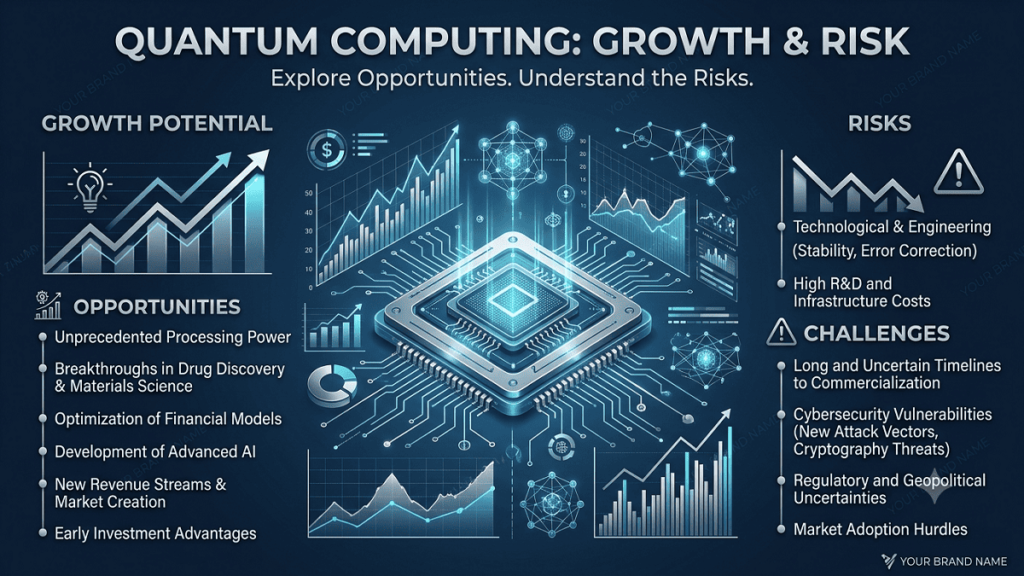
What Is Quantum Computing Investment?
Quantum computing investment refers to the financial resources allocated to developing, researching, and commercializing quantum computing technologies. As advances in science and engineering continue, investors, technology companies, venture capital firms, and governments are increasingly exploring opportunities in this emerging field. Quantum computing has the potential to transform how certain complex problems are solved, creating new possibilities across industries such as healthcare, finance, cybersecurity, logistics, and materials science.
Unlike conventional computers, which process information using bits represented as zeros or ones, quantum computers use quantum bits, or qubits. These systems leverage quantum mechanical properties such as superposition and entanglement to perform certain computations in fundamentally different ways. Although practical applications remain limited, continued research is helping the technology progress toward potential commercial use.
Understanding Quantum Computing Investment
Quantum computing investment involves funding the technologies, companies, and infrastructure needed to develop useful quantum systems. This includes quantum hardware manufacturers, software developers, cloud computing providers, specialized component suppliers, and organizations conducting quantum research.
Investment can take several forms, including venture capital funding for startups, corporate research and development spending, government grants, and purchases of publicly traded technology stocks. Some investors also explore companies developing supporting technologies, such as cryogenic equipment, control electronics, quantum simulation software, and quantum-safe cybersecurity solutions.
The National Institute of Standards and Technology (NIST) provides research and resources on quantum information science, including its potential applications in computing, communications, and measurement.
Why Is Quantum Computing Attracting Investors?
One of the main reasons quantum computing attracts investment is its potential to address specific computational challenges that are difficult for conventional computers. Researchers are investigating applications in molecular simulation, advanced materials, optimization, and cryptography.
Pharmaceutical companies could eventually use quantum techniques to improve aspects of molecular modeling, while financial institutions are exploring possible applications in risk analysis and portfolio optimization. However, many proposed applications still require further research before their commercial benefits can be established.
Government funding and corporate research programs also contribute to industry growth by supporting experiments, infrastructure, and specialist talent.
Major Areas of Quantum Computing Investment
1. Quantum hardware: Companies developing quantum processors, qubits, and quantum computing systems.
2. Quantum software: Businesses creating programming tools, algorithms, simulators, and applications for quantum systems.
3. Cloud quantum computing: Platforms that provide remote access to quantum hardware and development environments.
4. Quantum cybersecurity: Technologies designed to address security challenges associated with future quantum computing capabilities, including post-quantum cryptography.
5. Supporting infrastructure: Specialized electronics, cooling systems, control technologies, and measurement equipment required to operate quantum hardware.
Risks and Challenges
Quantum computing remains an emerging industry, and investors should understand its uncertainties. Technical limitations, expensive research, uncertain commercialization timelines, intense competition, and changing market valuations can create substantial investment risks.
Not every company developing quantum technology will achieve commercial success, and promising research does not automatically translate into profitable products.
Conclusion
Quantum computing investment provides opportunities to participate in the development of a potentially transformative technology. However, success depends on scientific progress, practical applications, and sustainable business models.
Investors should evaluate technological maturity, company fundamentals, financial performance, and risk tolerance before making decisions. A long-term perspective and careful research are essential when assessing this evolving industry.
#QuantumInnovation
Why Are Investors Interested in Quantum Computing?
Quantum computing is emerging as one of the most closely watched areas of advanced technology. Investors, technology companies, venture capital firms, and governments are allocating resources to research and development because quantum computers could eventually solve certain complex problems that are difficult for conventional computing systems. From pharmaceutical research to cybersecurity and financial modeling, the technology offers potential opportunities across multiple industries.
Although quantum computing is still developing, its long-term possibilities have attracted significant interest from investors seeking exposure to emerging technologies. Understanding the reasons behind this interest helps explain both the industry’s potential and the risks associated with investing in it.
1. Potential to Solve Complex Computational Problems
One of the main reasons investors are interested in quantum computing is its potential to address specialized computational challenges. Traditional computers process information using bits, while quantum computers use quantum bits, or qubits, that operate according to the principles of quantum mechanics.
For certain problems, quantum approaches may offer advantages over conventional methods. Researchers are investigating applications in molecular simulation, materials discovery, optimization, and scientific modeling.
However, quantum computers are not universally faster than traditional computers. Their practical advantage will depend on the problem, the hardware, and the algorithms involved.
The National Institute of Standards and Technology (NIST) provides research and educational resources explaining quantum information science and its potential applications.
2. Opportunities Across Multiple Industries
Quantum computing could create new opportunities in industries that rely on complex calculations and scientific discovery.
In healthcare and pharmaceuticals, researchers are exploring quantum simulations to improve the understanding of molecules and chemical reactions. Financial institutions are investigating potential applications in portfolio optimization, risk analysis, and related computational tasks.
Manufacturing and materials science companies are also exploring how quantum technologies could help researchers understand advanced materials and improve selected optimization processes.
These applications remain at different stages of development, but their potential has encouraged companies to invest in research and specialized expertise.
3. Growing Corporate and Government Investment
Large technology companies are investing in quantum hardware, software, cloud access, and research partnerships. Governments are also supporting quantum research to strengthen scientific capabilities, economic competitiveness, and future technological infrastructure.
For investors, this participation signals that quantum computing is viewed as a strategically important research area. However, substantial spending does not guarantee that individual companies will become profitable.
4. The Growth of Quantum Software and Cloud Services
Investment opportunities extend beyond manufacturers of quantum processors. Software platforms, simulation tools, developer environments, and cloud-based quantum computing services are also important parts of the ecosystem.
For example, IBM Quantum provides access to quantum computing systems and development tools. Cloud access enables researchers and developers to experiment with quantum technologies without necessarily purchasing specialized hardware.
As the ecosystem develops, supporting software and infrastructure may become increasingly important.
5. Cybersecurity and Post-Quantum Cryptography
Quantum computing has significant implications for cybersecurity. A sufficiently capable future quantum computer could threaten certain widely used public-key cryptographic systems.
This has increased interest in post-quantum cryptography, which develops cryptographic methods designed to resist attacks from both conventional and quantum computers.
NIST has published standards for several post-quantum cryptographic algorithms. Businesses are beginning to assess their systems and prepare for cryptographic transitions. Learn more through the NIST Post-Quantum Cryptography project.
6. Long-Term Investment Potential and Risks
Some investors view quantum computing as a long-term opportunity because successful technologies could support valuable commercial applications. Early investment may provide exposure to companies building important technologies and infrastructure.
Nevertheless, the industry faces substantial challenges, including hardware limitations, error correction requirements, high research costs, uncertain commercialization timelines, and intense competition. Investors should distinguish between demonstrated technical progress and speculative claims about future capabilities.
Conclusion
Investors are interested in quantum computing because of its potential to transform specialized computing tasks, support scientific discovery, create new software markets, and influence cybersecurity. Corporate research programs and government initiatives are helping advance the technology, while startups are exploring different paths toward commercialization.
However, quantum computing remains an evolving field, and its future economic impact is uncertain. Investors should assess business fundamentals, technological maturity, financial risks, and realistic development timelines before committing capital.
#EmergingTechnologies
What Are the Best Quantum Computing Investment Opportunities?
Quantum computing is emerging as a potentially transformative technology, attracting attention from technology companies, governments, venture capital firms, and long-term investors. Although widespread commercial adoption is still developing, several areas offer opportunities to gain exposure to the sector. The best choice depends on an investor’s risk tolerance, time horizon, and preferred investment strategy.
1. Pure-Play Quantum Computing Companies
Companies focused primarily on quantum technology offer direct exposure to industry growth. Examples include IonQ, Rigetti Computing, and D-Wave Quantum. These businesses are developing different quantum computing architectures and pursuing applications such as optimization, scientific research, and complex computational problems.
Their potential upside can be substantial if their technologies achieve commercial success. However, investors should examine revenue growth, cash reserves, research costs, customer demand, and the risk of shareholder dilution. These stocks can be highly volatile, and technological progress does not automatically translate into profits.
2. Established Technology Companies
Investors who prefer exposure through diversified businesses may consider established technology companies investing in quantum research and infrastructure. IBM, Microsoft, Alphabet, and Amazon Web Services provide different ways to explore the ecosystem.
These companies have existing businesses that may help absorb the costs and uncertainty of long-term quantum development. However, quantum computing may represent only a small portion of their overall value, so their share prices will also reflect broader business performance.
3. Quantum Software and Cloud Platforms
Quantum computers require specialized software, developer tools, and cloud infrastructure. Platforms that let researchers and businesses experiment with quantum processors could benefit as access expands.
Cloud-based services are particularly relevant because customers can explore quantum hardware without purchasing and maintaining expensive equipment. Investors can investigate companies providing quantum programming tools, hybrid computing systems, and cloud access, while assessing whether these offerings generate meaningful, sustainable revenue.
4. Supporting Hardware and Components
Another opportunity lies in the technologies that make quantum systems possible. These include precision lasers, photonics, cryogenic cooling, control electronics, semiconductors, and measurement equipment. Suppliers may serve multiple research and computing markets, potentially offering broader exposure than investing in a single quantum hardware developer.
5. Quantum-Themed Funds
Exchange-traded funds (ETFs) focused on quantum computing and related technologies can spread exposure across multiple companies. For example, investors can research the Defiance Quantum ETF, checking its current holdings, fees, concentration, and investment methodology before deciding whether it fits their portfolio.
What Should Investors Consider?
Quantum computing remains a developing industry. Commercial timelines are uncertain, valuations may reflect optimistic expectations, and companies face technical, funding, and competitive risks. Read the NIST overview of quantum information science to understand the underlying technology.
Ultimately, the strongest approach is to compare business fundamentals rather than chase headlines. Diversification, careful valuation analysis, and a long-term perspective can help investors assess this high-risk opportunity. This article is for educational purposes only, not personalized financial advice.
#InvestmentOpportunities
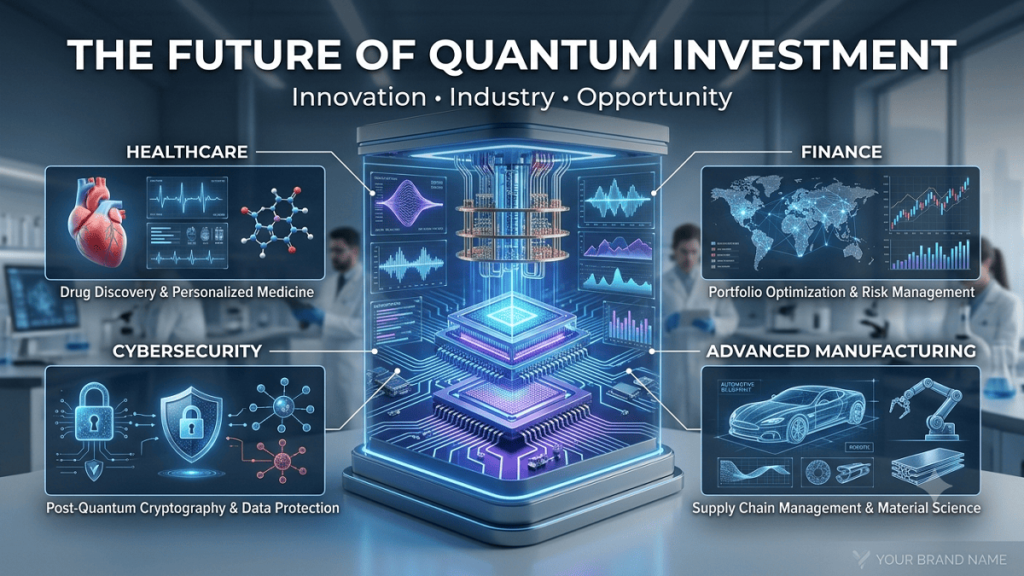
What Are the Risks of Quantum Computing Investment?
Quantum computing is an exciting emerging technology with the potential to transform industries such as healthcare, finance, cybersecurity, logistics, and materials science. However, investing in this sector involves significant uncertainty. Understanding the risks can help investors make informed decisions and avoid being influenced by hype surrounding future technological breakthroughs.
1. Technological Uncertainty
One of the biggest risks is that practical, large-scale quantum computing remains a work in progress. Researchers continue to address challenges such as qubit stability, error correction, scalability, and reliable performance.
Although companies are making progress, it remains uncertain when quantum computers will deliver consistent commercial advantages over conventional computing for a broad range of real-world tasks. Delays or disappointing research results can negatively affect investor confidence and company valuations.
For background, explore the National Institute of Standards and Technology’s quantum information science resources.
2. High Valuations and Stock Price Volatility
Quantum computing companies may attract significant investor attention before establishing profitable business models. As a result, share prices can rise rapidly based on announcements, partnerships, or expectations of future breakthroughs.
These valuations can also fall sharply if progress slows or commercial demand fails to meet expectations. Smaller, specialized companies may be especially vulnerable to market sentiment and changes in investor funding.
Investors should examine revenue, cash flow, operating expenses, debt, and cash reserves rather than relying solely on projected market growth.
3. Long Commercial Timelines
Developing quantum hardware, software, and supporting infrastructure requires substantial research and investment. Some applications may become commercially useful sooner than others, while others could take many years to mature.
Companies may need additional funding before achieving sustainable revenue. This can lead to shareholder dilution, increased borrowing, or reduced research spending if capital becomes difficult to obtain.
Investors should consider whether a company can finance its operations through uncertain development periods.
4. Intense Competition
The industry includes startups, established technology companies, research institutions, and government-backed programs. Different approaches—including superconducting qubits, trapped ions, neutral atoms, and photonic systems—are competing for attention and investment.
No single technology is guaranteed to become the dominant platform. A company that appears promising today may struggle if a competing approach proves more scalable, affordable, or reliable.
5. Uncertain Customer Demand and Cybersecurity Implications
Quantum computing’s long-term commercial potential is significant, but broad adoption depends on whether customers can achieve measurable benefits at an acceptable cost. Revenue projections may therefore prove optimistic.
Quantum technology could also threaten some existing encryption methods in the future, although the timing and practical impact remain uncertain. Organizations are already preparing through post-quantum cryptography. Investors can review the NIST post-quantum cryptography standards.
How Can Investors Manage These Risks?
Investors can reduce exposure to individual-company setbacks by diversifying across industries and technologies, evaluating company finances, avoiding excessive concentration, and investing only amounts consistent with their risk tolerance.
The bottom line: Quantum computing offers long-term potential, but it remains a high-risk, developing investment sector. Careful research, realistic expectations, and patience are essential. This article is for educational purposes only and is not personalized financial advice.
#FutureOfTechnology
How Can Quantum Computing Startups Attract Investors?
Quantum computing startups are working on technologies that could transform industries ranging from pharmaceuticals and finance to logistics, cybersecurity, and advanced materials. However, attracting investment in this emerging sector requires more than an ambitious vision. Investors want credible technical progress, a clear business strategy, a capable team, and evidence that the technology can eventually generate sustainable revenue.
Here are five practical ways quantum computing startups can improve their appeal to investors.
1. Demonstrate Clear Technical Progress
Investors need evidence that a startup can turn scientific research into a viable product. Founders should communicate measurable milestones, such as improved qubit performance, reduced error rates, greater system stability, or progress toward scaling their technology.
Independent research publications, reproducible experiments, patents, and collaborations with respected institutions can help establish credibility.
Startups should also explain their approach in accessible language, showing how their technology differs from competing quantum computing methods and what advantages it may offer.
2. Identify a Specific Commercial Problem
A common challenge for deep-tech startups is focusing too heavily on the technology instead of the customer. Investors are more likely to understand the opportunity when founders identify a specific problem and explain why quantum computing could eventually provide a useful solution.
Potential areas include molecular simulation, materials discovery, optimization, and specialized scientific computing. However, startups should avoid claiming quantum advantage without credible evidence that their approach outperforms relevant classical alternatives for a meaningful task.
The IBM Quantum resources offer useful background on quantum technologies and their developing applications.
3. Build Strategic Partnerships
Collaborations can help startups access expertise, infrastructure, funding, and potential customers. Partnerships with universities, pharmaceutical companies, manufacturers, cloud providers, and government research programs can validate technical capabilities and reveal commercial opportunities.
Pilot projects are particularly valuable when they demonstrate measurable customer benefits. Even when a pilot does not immediately generate substantial revenue, it can provide evidence of market interest and help refine the product.
4. Present a Realistic Business and Funding Plan
Quantum computing development can require significant capital over extended periods. Startups should explain how much funding they need, what milestones the investment will support, and how they plan to manage costs.
A strong pitch deck typically includes the problem, technology, market opportunity, competitive landscape, business model, team, funding requirements, and major risks.
Founders should distinguish current revenue from future projections and explain how they will sustain operations if commercialization takes longer than expected.
5. Target the Right Investors
Not every investor has the expertise or patience required for quantum technology. Startups should consider deep-tech venture capital firms, corporate venture arms, government innovation programs, specialist technology funds, and strategic industry partners.
Organizations such as Y Combinator provide startup resources, while NIST’s quantum information science resources offer technical context for understanding the sector.
Conclusion
Quantum computing startups attract investors by combining scientific credibility with commercial discipline. Clear milestones, credible customer problems, strategic partnerships, transparent financial planning, and targeted fundraising can strengthen investor confidence.
Ultimately, the strongest pitch explains not only what the technology might achieve, but also what the startup can prove today, what it will accomplish next, and how those achievements could create long-term business value.
#TechInvesting
Case Study of Quantum Computing Investment: IonQ and Oxford Ionics
Quantum computing investment is attracting growing interest as businesses seek technologies that could eventually address complex scientific and industrial challenges. One notable example is IonQ’s acquisition of Oxford Ionics, which demonstrates how investment can help combine specialized research with the resources of an established quantum computing company.
Background: Two Companies, One Strategic Goal
IonQ develops quantum computers using trapped-ion technology. Oxford Ionics, founded in 2019 by physicists Chris Ballance and Tom Harty, developed a different approach to trapped-ion quantum computing using electronic control integrated with semiconductor-chip technology.
Oxford Ionics attracted interest because of its technical expertise, patented innovations, and potential to scale quantum hardware. According to the University of Oxford’s innovation team, the company became one of the university’s most valuable quantum technology spinouts.
The Investment: A $1.075 Billion Acquisition Agreement
In June 2025, IonQ announced an agreement to acquire Oxford Ionics in a transaction valued at approximately $1.075 billion, primarily in IonQ shares. The acquisition was completed in September 2025.
The strategic objective was to combine Oxford Ionics’ technology and engineering expertise with IonQ’s existing hardware, software, customer relationships, and commercial capabilities. The companies expected this combination to accelerate development of more powerful and reliable quantum computers.
Read the official acquisition announcement for further details.
Why Was This Investment Significant?
The transaction highlights three important factors in quantum computing investment.
First, technical differentiation matters. Specialized intellectual property and a promising engineering approach can make a startup strategically valuable.
Second, talent and research capabilities matter. Acquiring an experienced scientific team can help a larger company strengthen its development capabilities and pursue technical milestones more quickly.
Third, commercialization requires resources. Quantum technology companies need substantial funding, manufacturing expertise, partnerships, and customer access to turn laboratory advances into useful products.
Key Lessons for Investors
This case demonstrates why investors should evaluate more than a company’s headline valuation. Important considerations include technical performance, intellectual property, manufacturing scalability, competitive advantages, financing requirements, and the time needed to generate meaningful revenue.
The acquisition also carries risks. Combining technologies may take time, research outcomes remain uncertain, and the transaction’s strategic rationale does not guarantee financial success.
Conclusion
IonQ’s acquisition of Oxford Ionics illustrates how strategic investment can accelerate quantum technology development by combining complementary capabilities. For investors, the central lesson is to look for credible technical progress and a realistic path toward commercialization—not simply exciting predictions.
Quantum computing remains a developing, high-risk investment sector. This case study is for educational purposes only and should not be interpreted as a recommendation to buy or sell any security.
#QuantumTechnology
White Paper on Quantum Computing Investment
Executive Summary
Quantum computing is an emerging technology that uses quantum-mechanical principles to process information in ways fundamentally different from conventional computers. Its potential applications include molecular simulation, materials science, optimization, and certain complex scientific calculations.
For investors, the sector offers opportunities across quantum hardware, software, cloud platforms, enabling components, and cybersecurity. However, commercial adoption remains at an early stage, and technical progress does not guarantee sustainable business returns.
The Quantum Economic Development Consortium’s 2026 market forecast estimates that the global quantum computing market reached approximately $1.4 billion in 2025 and could exceed $3 billion by 2028. These figures are forecasts, not guaranteed outcomes, and depend on market definitions and assumptions.
1. Understanding the Investment Landscape
Quantum computing is not a single investment category. It encompasses several interconnected segments:
- Quantum hardware: Companies developing processors based on superconducting circuits, trapped ions, neutral atoms, photonics, and other architectures.
- Software and algorithms: Businesses developing quantum programming tools, error-correction techniques, and applications.
- Cloud infrastructure: Platforms providing remote access to quantum processors and development environments.
- Enabling technologies: Suppliers of precision lasers, cryogenic systems, photonic components, control electronics, and specialized measurement equipment.
- Quantum-safe cybersecurity: Providers helping organizations transition to post-quantum cryptographic systems.
Investors should evaluate each segment independently because revenue models, technical challenges, capital requirements, and commercialization timelines differ significantly.
2. Key Investment Opportunities
Pure-play quantum companies
Specialist companies offer direct exposure to quantum technology development. Their potential growth depends on technical milestones, customer adoption, intellectual property, funding, and competitive positioning.
However, early-stage businesses may experience substantial losses, volatile share prices, and repeated capital raises.
Established technology companies
Large technology businesses can provide indirect exposure through research programs, cloud services, semiconductor capabilities, and enterprise partnerships. Their diversified operations may reduce dependence on quantum computing, although quantum technology may contribute only a small portion of their overall valuation.
Quantum infrastructure and cybersecurity
The supporting ecosystem may offer opportunities beyond processor manufacturers. As quantum systems develop, demand could grow for specialized components, research infrastructure, and tools that help organizations prepare for future cryptographic risks.
Investors should distinguish between quantum computing itself and adjacent businesses whose revenues may depend on different market drivers.
3. Major Risks and Challenges
Technological uncertainty: Scaling reliable quantum processors and correcting errors remain substantial engineering challenges.
Commercial uncertainty: Some proposed applications may not deliver a meaningful advantage over classical computing within expected timeframes.
Valuation risk: Investor enthusiasm can push share prices beyond levels supported by current revenue or financial performance.
Funding risk: Research-intensive companies may require substantial capital before reaching profitability.
Competitive risk: Different hardware architectures are developing simultaneously, and no single approach is guaranteed to dominate.
The NIST review of quantum computing benefits and risks provides additional scientific and security context.
4. A Framework for Evaluating Investments
Investors can assess quantum companies using five key criteria:
- Technical progress: Are milestones measurable, independently verifiable, and relevant to practical applications?
- Commercial traction: Does the company have paying customers, repeat business, or credible pilot projects?
- Financial strength: Are cash reserves sufficient to support the development roadmap?
- Competitive advantage: Does the business possess defensible intellectual property, specialized expertise, or valuable partnerships?
- Valuation discipline: Does the share price reasonably reflect the company’s financial position, execution risks, and uncertain growth prospects?
Diversification across companies and investment categories may reduce company-specific exposure, but it cannot eliminate the risks associated with the sector as a whole.
5. Market Outlook and Strategic Considerations
Government funding, corporate research, and collaboration between universities and industry are supporting quantum technology development. The 2026 State of the Global Quantum Industry report provides further information on industry investment, market development, workforce trends, and intellectual property.
Nevertheless, investors should avoid assuming that every research breakthrough will become a commercially successful product. Near-term opportunities may emerge in specialized applications and enabling technologies, while broader adoption could require additional advances in hardware reliability, error correction, and system scalability.
Conclusion
Quantum computing represents a potentially important long-term technology investment theme, but it remains a high-risk, developing industry. A disciplined strategy should prioritize measurable technical progress, credible customer demand, financial resilience, and realistic valuations rather than speculative expectations.
The strongest investment decisions will combine an understanding of quantum technology with rigorous financial analysis, diversification, and patience.
#QuantumInvestment
Industry Applications of Quantum Computing Investment
Introduction
Quantum computing is emerging as a potentially transformative technology with applications across healthcare, finance, manufacturing, energy, logistics, and cybersecurity. Unlike conventional computers, quantum computers use quantum-mechanical principles to process information, potentially offering advantages for certain complex computational problems.
As companies and governments invest in quantum research, investors are increasingly examining which industries could benefit first. Understanding these applications can help identify promising opportunities while distinguishing realistic commercial developments from long-term expectations.
1. Healthcare and Pharmaceuticals
The pharmaceutical industry is a promising area for quantum computing investment. Developing new medicines requires researchers to understand complex molecular interactions, a process that can be computationally demanding.
Quantum computers could eventually improve molecular simulation, materials modeling, and aspects of drug discovery. Pharmaceutical companies, biotechnology startups, and quantum software developers are exploring these possibilities.
Investment opportunities may include quantum simulation platforms, research partnerships, and specialized software. However, practical advantages over conventional computational methods remain an important milestone to demonstrate.
Explore IBM Quantum for research and applications involving quantum computing.
2. Financial Services and Banking
Financial institutions investigate quantum computing for potential applications in portfolio optimization, risk analysis, derivatives pricing, and fraud detection.
Some of these problems involve complex optimization or probabilistic calculations. Quantum algorithms may eventually improve particular tasks, especially when integrated with conventional computing systems.
Investment opportunities include quantum algorithm developers, financial technology companies, and cybersecurity providers preparing for future cryptographic changes. Investors should recognize that many proposed financial applications remain experimental and have not yet demonstrated consistent commercial advantages.
3. Manufacturing and Supply Chain Management
Manufacturing businesses manage complicated production schedules, inventory decisions, delivery routes, and resource allocation. Quantum computing may eventually help solve selected optimization problems that are difficult to address efficiently using conventional methods.
Potential investment areas include industrial software, logistics optimization, quantum-inspired algorithms, and hybrid computing platforms.
Companies that can demonstrate measurable improvements in cost, speed, or resource utilization may be particularly attractive as commercial adoption develops.
4. Energy and Climate Technology
Quantum computing could contribute to research involving batteries, catalysts, solar materials, carbon capture, and other technologies relevant to the energy transition.
Improved molecular modeling could help researchers investigate materials with desirable properties, potentially supporting more efficient energy storage and chemical processes.
Investors may examine companies developing quantum simulation software, advanced materials, and partnerships between energy businesses and research institutions. Commercial benefits will depend on scientific progress and whether discoveries can be translated into practical products.
5. Cybersecurity and Data Protection
Quantum computing presents both opportunities and challenges for cybersecurity. Powerful future quantum computers could threaten widely used public-key cryptographic systems, creating demand for migration to quantum-resistant alternatives.
This creates investment opportunities in post-quantum cryptography, secure communications, cryptographic software, and cybersecurity consulting.
The National Institute of Standards and Technology (NIST) provides information about standardized post-quantum cryptographic algorithms and implementation efforts.
6. Aerospace, Automotive, and Advanced Materials
Aerospace and automotive companies continually search for lighter materials, better batteries, more efficient designs, and improved manufacturing processes. Quantum simulation could eventually help researchers understand materials and chemical systems that are challenging to model accurately.
Investors can explore partnerships among quantum computing companies, automotive manufacturers, aerospace businesses, and advanced-materials researchers.
Conclusion
Quantum computing investment spans multiple industries, but the potential benefits differ in maturity and commercial feasibility. Cybersecurity preparation and specialized research applications offer distinct opportunities, while broader uses in finance, manufacturing, healthcare, and energy may require further technical development.
Investors should focus on verifiable progress, credible customer demand, financial sustainability, and realistic commercialization timelines. Quantum computing has considerable long-term potential, but industry-wide success is not guaranteed.
#QuantumComputing
Ask FAQs
Which industries could benefit most from quantum computing?
Healthcare, pharmaceuticals, financial services, manufacturing, energy, logistics, and cybersecurity are among the industries exploring quantum computing. Potential applications include molecular simulation, optimization, materials discovery, and quantum-resistant encryption. The timing and scale of commercial benefits remain uncertain.
How can investors benefit from quantum computing applications?
Investors can explore quantum hardware companies, software developers, cloud computing providers, specialized component manufacturers, and cybersecurity businesses. Opportunities may arise as these technologies mature, but investors should assess company valuations, financial stability, technical progress, and commercial demand.
Is quantum computing currently being used in real-world industries?
Yes. Businesses and research institutions are experimenting with quantum computing through pilot projects, cloud platforms, and specialized research applications. However, many proposed applications remain experimental, and quantum computers do not yet outperform conventional computers for most everyday business tasks.
What are the biggest risks of investing in quantum computing?
Major risks include technological uncertainty, high research and development costs, volatile stock prices, limited commercial revenue, and competition between different quantum technologies. Investors should avoid relying solely on future growth projections and consider diversification and their personal risk tolerance.
What is the future outlook for quantum computing investment?
The long-term outlook depends on improvements in hardware reliability, error correction, scalability, and practical commercial applications. As the technology develops, investment opportunities may expand across multiple industries. However, adoption timelines remain uncertain, and not every company will achieve commercial success.
Disclaimer: This content is for informational purposes only and is not financial advice. Investment involves risks; conduct your own research before investing.