Export to US and Canada: A Guide for Indian Businesses
The United States and Canada are two of the most attractive international markets for Indian exporters. Their large consumer bases, strong purchasing power, and demand for products across sectors such as textiles, food products, pharmaceuticals, engineering goods, handicrafts, chemicals, and technology create significant opportunities for Indian businesses. However, successful exports require careful planning, documentation, product compliance, and an understanding of customs procedures.
Understanding Export Requirements
Before exporting to the US or Canada, businesses should identify the correct HS (Harmonized System) code for their products. The HS code determines how goods are classified and can affect applicable duties, taxes, permits, and documentation requirements. Exporters should also verify whether their products are subject to specific standards, labeling requirements, certifications, US and Canada or import restrictions in the destination country.
For shipments entering the United States, businesses should review the requirements of U.S. Customs and Border Protection (CBP), including customs documentation, valuation, classification, and entry procedures. A commercial invoice, packing information, transportation documents, and other product-specific documentation may be required. Exporters can refer to the official U.S. Customs and Border Protection importing guidance for detailed information.
Canada has a similarly structured import process. Commercial goods must be properly classified, valued, documented, and declared to Canadian authorities. Canadian importers generally need the appropriate business and import-export accounts, US and Canada while duties and taxes are administered through the Canada Border Services Agency’s CARM (CBSA Assessment and Revenue Management) system.
Documentation and Compliance
Common export documents include a commercial invoice, packing list, shipping or airway bill, certificate of origin where applicable, and product-specific certificates or permits. Accurate documentation is essential because errors in product descriptions, values, quantities, or HS codes can result in customs delays, additional costs, or compliance issues.
Canada also requires businesses to consider product-specific import controls. Certain categories, including food, plants, animals, textiles, agricultural products, and controlled goods, may require additional permits or inspections.
Managing Duties, Taxes, and Logistics
Exporters should calculate the total landed cost before quoting prices to international buyers. This includes manufacturing costs, packaging, freight, insurance, customs duties, brokerage charges, and applicable taxes. In Canada, imported goods are generally subject to GST or the federal component of HST, in addition to any applicable customs duties.
Choosing a reliable freight forwarder and customs broker can simplify international shipping and help prevent documentation and clearance problems.
Conclusion
Exporting from India to the US and Canada can provide substantial opportunities for business growth, but success depends on regulatory compliance, accurate documentation, competitive pricing, reliable logistics, and consistent product quality. Businesses should research their target market carefully and verify the latest requirements with official government authorities before shipping.
For Canada-specific requirements, exporters can consult the Government of Canada’s importing guide. For the United States, the U.S. Customs and Border Protection trade resources provide official guidance for import and customs procedures.
#GlobalMarket
What Are the Key Requirements for Exporting Products to the United States and Canada?
Exporting products from India to the United States and Canada can open significant opportunities for businesses, but exporters must meet regulatory and customs requirements before their shipments can enter these markets. Proper preparation helps prevent customs delays, unexpected costs, and compliance problems.
1. Complete Indian Export Documentation
Indian exporters generally need the appropriate export registration and authorization, including an Importer Exporter Code (IEC) issued by the Directorate General of Foreign Trade (DGFT). Export shipments also require essential documents such as a commercial invoice and packing list, shipping bill or bill of export, and a bill of lading or airway bill. The DGFT identifies these as mandatory export documents, while certain products may require additional certificates or approvals.
Exporters should also verify whether their product is freely exportable or subject to restrictions, licensing requirements, or product-specific regulations in India.
2. Determine the Correct HS Code
Every product must be correctly classified under the Harmonized System (HS). The classification affects customs duties, import restrictions, statistical reporting, and other requirements.
For the United States, the importer generally needs the appropriate classification under the U.S. Harmonized Tariff Schedule. U.S. Customs and Border Protection (CBP) also requires commercial invoices to provide an adequate description, quantities, values, and the appropriate tariff classification information.
Canada uses its own tariff classification system, and the correct classification is important for determining applicable customs duties and taxes.
3. Meet U.S. Import Requirements
For shipments entering the United States, exporters should ensure that commercial invoices, product descriptions, quantities, values, country of origin, and other customs information are accurate. Imported foreign goods may also need appropriate country-of-origin marking. U.S. regulations generally require foreign-origin articles or their containers to be marked conspicuously with the English name of the country of origin.
Depending on the product, additional U.S. requirements may apply. Food, cosmetics, pharmaceuticals, medical devices, electronics, chemicals, children’s products, and agricultural goods can be subject to regulations administered by agencies such as the FDA, USDA, EPA, or Consumer Product Safety Commission.
4. Meet Canadian Import Requirements
Canada has its own customs procedures administered by the Canada Border Services Agency (CBSA). Commercial importers must generally have the appropriate business and import-export account arrangements, and the CARM (CBSA Assessment and Revenue Management) system is now the official system for managing duties and taxes on commercial imports.
Canadian imports may require permits, certificates, inspections, or additional approvals depending on the product. Importers must also determine the product’s tariff classification, country of origin, customs value, and applicable duties and taxes.
5. Check Product Standards and Labeling
Product compliance is particularly important. Exporters should verify packaging, labeling, safety, composition, language, measurement, and certification requirements before production and shipment. Requirements can differ significantly between the United States and Canada, even for the same product.
6. Calculate Duties, Taxes, and Landed Costs
Before quoting a price to a buyer, exporters should calculate the complete landed cost, including international freight, insurance, customs duties, brokerage fees, and applicable taxes. In Canada, commercial imports can generally be subject to GST and customs duties depending on the goods and their classification.
Conclusion
The key requirements for exporting from India to the United States and Canada include proper Indian export registration, accurate commercial documentation, correct HS classification, country-of-origin information, destination-specific customs compliance, product certifications and labeling, and appropriate payment of duties and taxes. Because requirements can vary substantially by product, exporters should verify the rules with the relevant government authorities before every new product launch or export program.
Useful official resources include U.S. Customs and Border Protection, Canada Border Services Agency, and India’s Directorate General of Foreign Trade.
#CanadaTrade
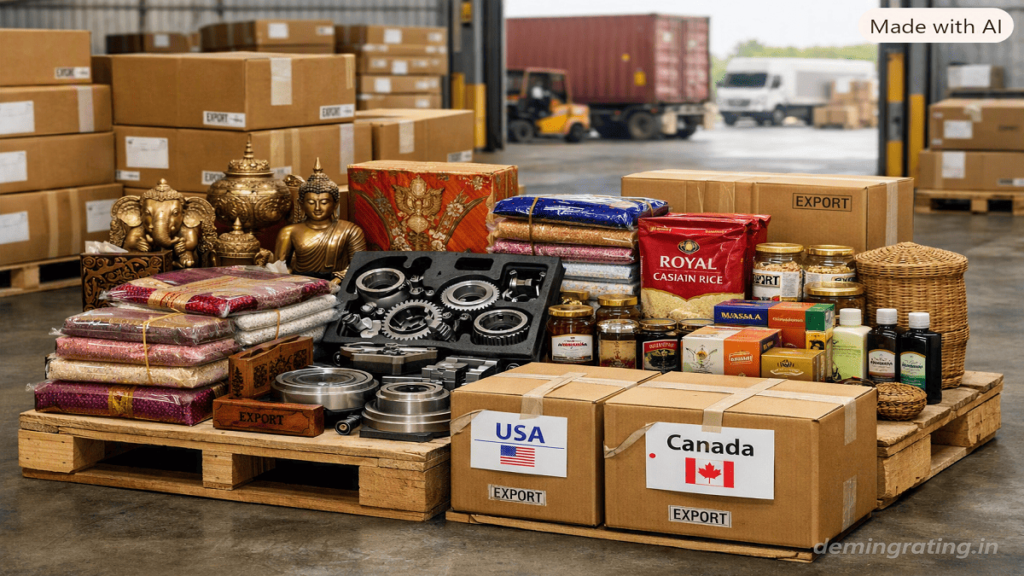
What Certifications, Product Standards, Labeling, and Documentation May Be Required for the US and Canada?
When exporting products from India to the United States and Canada, meeting customs requirements is only one part of the process. Depending on the type of product, exporters may need specific certifications, safety testing, labeling, permits, and supporting documentation. Requirements differ by product category, so businesses should verify the applicable regulations before shipping.
Certifications and Product Standards
The required certifications depend heavily on the product. Food products, pharmaceuticals, medical devices, cosmetics, electronics, chemicals, children’s products, textiles, and agricultural goods can all be subject to different regulatory requirements.
In the United States, products regulated by agencies such as the Food and Drug Administration (FDA), Environmental Protection Agency (EPA), U.S. Department of Agriculture (USDA), and Consumer Product Safety Commission (CPSC) may need additional approvals, testing, registration, or certification. FDA-regulated products must comply with applicable U.S. laws and regulations, and imported products can be inspected at the port of entry.
For food exports, requirements can include facility registration, prior notice of shipments, food safety controls, and specific labeling requirements.
Canada similarly has product-specific regulatory requirements. Food imports, for example, are subject to the Safe Food for Canadians Regulations (SFCR), while certain plant and animal products can be subject to additional requirements. Canada’s Automated Import Reference System (AIRS) should be checked for current requirements for specific food products.
Labeling Requirements
Labels must comply with the regulations of the destination market. In the United States, many regulated products require accurate product information, and country-of-origin marking may be required for imported goods.
Food products have additional requirements. U.S. food labels generally need to provide truthful and informative information in English, including applicable nutrition and ingredient information.
Canadian food labeling can be more complex because many consumer prepackaged foods require specific information, and applicable requirements may include bilingual English and French labeling.
Essential Documentation
Common export documentation includes a commercial invoice, packing list, shipping or airway bill, certificate of origin where applicable, customs declarations, product certificates, and permits. The exact documents depend on the product and shipment.
For Canada, the CBSA specifies documentation requirements for commercial shipments, while the CARM system is now the official system for managing duties and taxes on commercial imports.
Conclusion
Before exporting, businesses should identify the product’s HS classification, determine applicable regulatory agencies, confirm certification and testing requirements, prepare compliant labels, and organize all customs and commercial documents. Working with an experienced customs broker or freight forwarder can also help reduce compliance risks.
#USAImportExport
How Do Customs Procedures, Tariffs, Duties, and Import Regulations Differ Between the US and Canada?
The United States and Canada are major export destinations for Indian businesses, but exporters should not assume that meeting the requirements of one market automatically satisfies the other. Although both countries use the Harmonized System for product classification, their customs procedures, tariff schedules, taxes, and product regulations are different.
Customs Procedures
In the United States, imported commercial goods are generally processed through U.S. Customs and Border Protection (CBP). The importer or their customs broker is responsible for submitting the required entry information, correctly classifying the merchandise, declaring its value and country of origin, and paying applicable duties and fees. Depending on the product, additional government agencies may impose specific import requirements.
In Canada, commercial imports are administered by the Canada Border Services Agency (CBSA). Canadian importers generally need a business number and an RM import-export account, while commercial import processes are increasingly managed through the CBSA Assessment and Revenue Management (CARM) system. CBSA also provides mechanisms for advance rulings on tariff classification, origin, and valuation.
Tariffs and Duties
Both countries determine customs duties primarily according to the product’s HS classification, customs value, and country of origin. However, the applicable tariff rate can differ substantially between the US and Canada.
Canada publishes its 2026 Customs Tariff, which contains tariff classifications, Most-Favoured-Nation (MFN) rates, and applicable preferential tariff treatments. The tariff is updated when required, so exporters should verify the current rate before shipping.
For Indian exporters, it is particularly important to check whether a product qualifies for any preferential tariff treatment. The applicable rate depends on Canada’s tariff rules and the product’s origin.
The United States similarly uses the Harmonized Tariff Schedule of the United States (HTSUS) to determine applicable duty rates. Product classification can therefore have a direct impact on the final landed cost.
Taxes and Additional Charges
One significant difference is the treatment of consumption taxes. In Canada, the CBSA states that 5% GST is payable on most imported goods, unless an exemption applies. Certain products may also be subject to excise taxes or duties.
The United States does not operate a nationwide federal VAT or GST on imports. Instead, federal customs duties and certain federal fees or taxes may apply, while state and local sales-tax obligations can depend on the transaction, importer, product, and applicable state rules.
Both countries can also impose additional trade measures, including anti-dumping or countervailing duties on particular products. Canada, for example, administers such measures under the Special Import Measures Act (SIMA).
Import Regulations and Product Controls
Product-specific regulations are another major difference. Food, pharmaceuticals, medical devices, cosmetics, chemicals, electronics, agricultural products, children’s goods, and other regulated products may require additional permits, testing, registration, certification, or labeling.
Canada specifically advises importers to determine whether goods are subject to requirements from other government departments and agencies, including permits, certificates, or inspections.
Conclusion
For Indian exporters, the safest approach is to evaluate the US and Canadian markets separately. Before quoting a buyer, verify the HS code, country-of-origin rules, customs value, applicable tariff, taxes, product regulations, labeling requirements, and documentation for the specific destination. Working with an experienced customs broker can also help ensure that shipments are classified and declared correctly.
Official resources such as U.S. Customs and Border Protection, Canada Border Services Agency, and the Canada Customs Tariff should be consulted for the latest requirements.
#ExportBusiness
What Quality, Packaging, Environmental, and Sustainability Requirements Should Exporters Consider?
Exporters entering the United States and Canada should evaluate more than product quality and customs documentation. Buyers and regulators increasingly expect products to meet defined safety and performance standards, use compliant packaging, provide accurate environmental information, and demonstrate responsible sourcing and sustainability practices.
1. Product Quality and Safety Standards
Products should consistently meet the technical, safety, performance, and quality standards applicable to their category. Depending on the product, exporters may need laboratory testing, conformity assessments, safety certifications, or quality-management documentation.
Requirements can vary significantly between markets and industries. Food, pharmaceuticals, medical devices, electronics, chemicals, children’s products, cosmetics, and agricultural goods may be subject to additional regulatory controls. Exporters should identify the relevant U.S. or Canadian regulatory authority before production and maintain test reports, certificates, specifications, and quality-control records.
2. Packaging Requirements
Packaging should protect the product throughout transportation, storage, and handling while complying with destination-market requirements. Exporters should consider package strength, dimensions, materials, moisture protection, labeling, and shipping marks.
In Canada, consumer packaging must generally provide required information such as product identity, net quantity, and dealer identification, and packaging and labeling must not be false or misleading.
Businesses should also review whether packaging needs specific warnings, recycling information, material declarations, or bilingual information. Canada’s official guidance provides product-specific labeling requirements for food, textiles, consumer products, pharmaceuticals, and other categories.
3. Environmental Compliance
Environmental requirements can apply to both the product and its packaging. Exporters should examine restrictions concerning chemicals, plastics, hazardous substances, emissions, waste, and other environmentally sensitive materials.
Canada’s environmental framework can also involve provincial and territorial requirements, particularly for packaging and extended producer responsibility (EPR). Packaging producers may therefore need to consider obligations beyond federal regulations.
4. Sustainability and Environmental Claims
Sustainability can provide a competitive advantage, but environmental claims must be accurate and supportable. In the United States, the Federal Trade Commission’s Green Guides address environmental marketing claims and emphasize that businesses should have competent and reliable evidence supporting such claims. Broad statements such as “eco-friendly” or “green” can create compliance risks if they are not properly substantiated.
Exporters should therefore maintain evidence for claims involving recycled content, recyclability, biodegradability, compostability, carbon reduction, responsible sourcing, or environmental certifications.
5. Sustainable Packaging and Supply Chains
International buyers may increasingly prefer recyclable, reusable, lightweight, or responsibly sourced packaging. Businesses should evaluate packaging materials, minimize unnecessary packaging, and consider lifecycle impacts without compromising product protection.
Exporters should also maintain documentation relating to material composition, recycled content, supplier certifications, environmental testing, and sustainability claims. This information can help demonstrate compliance and satisfy buyer requirements.
Conclusion
Exporters to the United States and Canada should establish a product-specific compliance checklist covering quality standards, testing, packaging specifications, labeling, environmental regulations, sustainability claims, and supporting documentation. Requirements can differ by product and jurisdiction, so businesses should verify applicable rules before shipment rather than relying on general sustainability certifications alone.
For U.S. environmental and sustainability guidance, exporters can consult the U.S. Environmental Protection Agency and Federal Trade Commission Green Guides. For Canada, exporters should review Canada’s official labeling requirements and applicable federal, provincial, and territorial environmental requirements.
#GlobalBusiness
What Strategies Can Businesses Adopt to Ensure Regulatory Compliance and Successful Market Entry in the US and Canada?
Entering the United States and Canadian markets can create significant opportunities for exporters, but businesses need a well-planned compliance strategy before shipping products. Regulatory requirements can differ by product and destination, so exporters should establish a systematic process covering documentation, product standards, customs, labeling, logistics, and ongoing monitoring.
1. Conduct Product-Specific Regulatory Research
The first step is to identify every regulation applicable to the product. Businesses should determine the correct HS classification, country-of-origin requirements, applicable duties, product standards, labeling rules, permits, and certifications before entering either market.
The United States and Canada have different regulatory frameworks, so exporters should assess each country separately. In Canada, CBSA specifically highlights tariff classification, valuation, origin, duties, taxes, and other government-agency requirements as important areas of trade compliance.
2. Build a Strong Documentation System
Accurate documentation is essential for efficient customs clearance. Indian exporters should maintain their IEC and prepare commercial invoices, packing lists, shipping documents, certificates of origin where applicable, and product-specific permits or certificates.
India’s DGFT states that an IEC is mandatory for most export and import activities and identifies key export documents, including the commercial invoice-cum-packing list and shipping bill or bill of export.
Businesses should maintain organized records so information can be quickly provided to customs authorities, buyers, brokers, or regulators.
3. Work With Qualified Customs and Compliance Professionals
An experienced customs broker, freight forwarder, regulatory consultant, or local distribution partner can help exporters understand destination-market requirements. However, businesses should not assume that appointing a broker transfers all compliance responsibility. Importers can remain responsible for the accuracy of customs declarations and supporting information.
In Canada, CBSA provides access to licensed customs brokers and emphasizes trade compliance involving classification, origin, valuation, and payment of duties and taxes.
4. Establish Internal Compliance Procedures
Businesses should create written procedures for product classification, supplier verification, documentation review, labeling approval, export controls, record keeping, and shipment authorization. Employees involved in sales, purchasing, logistics, finance, and export operations should receive appropriate compliance training.
Companies exporting controlled or dual-use products should pay particular attention to India’s export-control requirements and applicable destination-country restrictions.
5. Verify Buyers, Suppliers, and Business Partners
Due diligence should be performed on distributors, agents, suppliers, freight forwarders, and other business partners. Businesses should verify their legitimacy and understand who will act as the importer of record.
Clear contracts should establish responsibilities for customs clearance, duties, taxes, product compliance, insurance, returns, and regulatory obligations.
6. Use Pilot Shipments Before Scaling
A practical market-entry strategy is to begin with smaller shipments. Pilot orders allow businesses to test documentation, packaging, labeling, customs classification, freight costs, delivery times, and customer feedback before committing to large-scale exports.
Any customs questions or recurring clearance problems should be documented and corrected before shipment volumes increase.
7. Monitor Regulatory Changes Continuously
Compliance does not end when the first shipment clears customs. Tariff rates, import controls, labeling requirements, environmental regulations, and customs procedures can change.
For example, Canada’s CARM system is now the official system of record for commercial importers and trade-chain partners, making it important for businesses involved in Canadian imports to understand current CARM procedures.
Conclusion
The most effective strategy for entering the US and Canadian markets is to combine product-specific regulatory research, accurate documentation, professional customs support, internal compliance procedures, partner due diligence, pilot shipments, and continuous regulatory monitoring. Businesses that build compliance into their export process from the beginning are better positioned to avoid delays, control landed costs, protect their reputation, and establish long-term relationships with North American buyers.
Exporters should regularly consult official resources such as U.S. Customs and Border Protection, Canada Border Services Agency, and India’s DGFT rather than relying solely on older guidance or third-party summaries.
#InternationalTrade
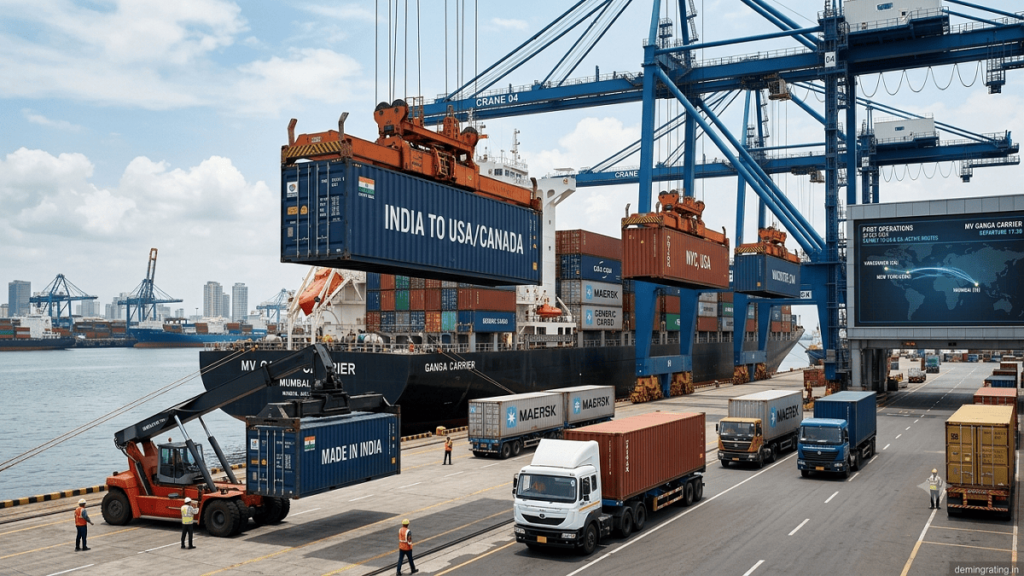
Case Study: Exporting Indian Products to the US and Canada
Exporting to the United States and Canada can offer Indian businesses access to large, high-value markets, but success depends on product quality, regulatory compliance, pricing, logistics, and strong relationships with overseas buyers. A hypothetical case of an Indian textile manufacturer demonstrates how a business can approach these markets systematically.
Business Background
Consider an Indian manufacturer producing home textiles such as cotton bedsheets, towels, cushion covers, and other made-up textile products. The company has established a strong domestic customer base and wants to expand internationally. The United States is selected as the primary market because of its scale, while Canada is considered a second market with similar consumer preferences but separate regulatory requirements.
The opportunity is significant. India exported substantial quantities of textiles to the US, and official Indian trade analysis shows that the United States accounted for a particularly high share of India’s global exports in several textile categories.
Step 1: Market and Product Research
Before approaching buyers, the company researches consumer preferences, competitor pricing, HS classifications, import duties, packaging requirements, labeling rules, and buyer expectations in both countries. Instead of launching its entire product range, it selects a limited collection of products that can be manufactured consistently and competitively.
The company also analyzes trade statistics to identify demand and potential buyers. India’s official TradeStat platform provides country- and commodity-level export data that can support this research.
Step 2: Regulatory Preparation
The exporter confirms its Indian export registrations and ensures that commercial invoices, packing lists, shipping documents, and other required paperwork are prepared accurately. It also verifies the destination-market requirements for textile composition, labeling, packaging, and country-of-origin information.
For the US, the exporter works with an experienced customs broker or importer to ensure accurate tariff classification and customs documentation. For Canada, the exporter works with the Canadian importer and customs broker to address CBSA requirements.
Step 3: Pilot Shipment
Rather than immediately committing to large volumes, the company sends a small commercial shipment to each market. This allows it to evaluate customs clearance, freight costs, delivery times, packaging performance, product quality, and buyer feedback.
The company discovers that Canadian buyers require slightly different labeling and packaging information from some US customers. It updates its packaging specifications before increasing production.
Step 4: Scaling the Business
After successful pilot shipments, the exporter negotiates annual supply agreements with selected distributors and retailers. It improves production planning, introduces standardized quality inspections, and maintains documentation for every shipment.
The company also monitors changes in tariffs, customs procedures, environmental requirements, and buyer standards. This is particularly important because international trade conditions can change quickly. U.S. goods trade with India reached an estimated $149.1 billion in 2025, illustrating the importance of the US market for Indian businesses.
Key Lessons
This case demonstrates that successful export expansion is not based solely on finding overseas buyers. The exporter succeeds by combining market research, regulatory preparation, accurate documentation, product consistency, pilot shipments, reliable logistics, and continuous compliance monitoring.
The same approach can be applied to other Indian products, including pharmaceuticals, engineering goods, food products, jewellery, electronics, and agricultural products. India’s exports to Canada also span a broad range of manufactured and agricultural products, with recent trade data showing growth in categories including pharmaceuticals, jewellery, rice, and frozen seafood.
Conclusion
A carefully planned entry strategy can help Indian businesses reduce the risks associated with exporting to the US and Canada. Starting with focused products and pilot shipments allows businesses to test market demand and compliance processes before scaling. Once reliable systems are established, exporters can expand their product range, strengthen buyer relationships, and build a sustainable presence in North American markets.
#IndianExporters
White Paper: Exporting from India to the United States and Canada
Executive Summary
The United States and Canada represent significant opportunities for Indian exporters across sectors including textiles, engineering products, pharmaceuticals, food, chemicals, handicrafts, jewellery, and consumer goods. However, entering these markets successfully requires more than identifying buyers. Exporters must establish a structured approach covering market research, product compliance, customs procedures, documentation, logistics, tariffs, quality standards, and ongoing regulatory monitoring.
This white paper outlines the key considerations for Indian businesses planning to establish or expand export operations in North America.
1. Preparing for International Market Entry
Successful market entry begins with selecting the right products and identifying appropriate customer segments. Businesses should evaluate market demand, competition, pricing, distribution channels, buyer expectations, and applicable regulations before committing to large shipments.
Indian exporters must also ensure that their domestic export requirements are satisfied. Under India’s Foreign Trade Policy, an Importer Exporter Code (IEC) is generally mandatory for undertaking export or import activities. DGFT also identifies key export documents, including the bill of lading or airway bill, commercial invoice-cum-packing list, and shipping bill or bill of export. Additional documents may apply to restricted or regulated products.
2. US Market Compliance
The United States requires imported products to comply with U.S. customs and, where applicable, product-specific regulatory requirements. Businesses should establish the correct tariff classification, customs value, country of origin, and product description before shipment.
Depending on the product, exporters may also need to consider requirements administered by agencies such as the FDA, USDA, EPA, or Consumer Product Safety Commission. Product labeling, safety standards, testing, registration, and certification requirements can vary considerably by category.
Indian exporters should therefore work closely with the U.S. importer or customs broker to determine the applicable requirements before shipping commercial quantities.
3. Canadian Market Compliance
Canada has a separate customs and regulatory framework administered primarily by the Canada Border Services Agency (CBSA). Commercial importers generally need a Business Number and an RM import-export account. Canada’s CARM system is now used for commercial import accounting and payment of duties and taxes.
Canadian importers must determine the appropriate tariff classification, customs value, origin, applicable duties and taxes, and whether other government departments require permits, certificates, or inspections. CBSA also provides advance rulings for areas such as tariff classification, origin, and customs valuation, which can provide greater certainty before importing.
4. Documentation, Quality, and Logistics
Accurate documentation is fundamental to successful exporting. Businesses should maintain commercial invoices, packing lists, transport documents, certificates of origin where applicable, product certifications, permits, and other supporting records.
Quality control should begin before shipment. Exporters should establish documented inspection procedures covering product specifications, packaging, labeling, quantity, and shipment condition. Working with reliable freight forwarders and customs brokers can further reduce clearance problems.
5. Tariffs, Duties, and Landed Cost
Before quoting international buyers, exporters should calculate the complete landed cost. This should include manufacturing, packaging, inland transportation, international freight, insurance, customs duties, brokerage charges, and applicable taxes.
Canadian imports are generally subject to GST, with CBSA stating that 5% GST applies to most imported goods, subject to applicable exemptions. The applicable tariff and tax treatment in both markets depends on factors including product classification, origin, valuation, and applicable trade measures.
6. Risk Management and Market Expansion
A phased market-entry strategy can reduce risk. Businesses can begin with pilot shipments, evaluate customs clearance and customer feedback, identify documentation or labeling problems, and then increase shipment volumes.
Exporters should also conduct due diligence on distributors, agents, suppliers, freight providers, and importers. Contracts should clearly define responsibilities for customs clearance, duties, taxes, insurance, product compliance, delivery, and returns.
Conclusion
Exporting from India to the United States and Canada can become a significant growth opportunity when supported by systematic planning and regulatory compliance. The most successful exporters combine market research with accurate documentation, appropriate product standards, reliable logistics, competitive landed costs, and continuous monitoring of regulatory changes.
Businesses should treat the US and Canada as two separate markets, rather than applying one compliance strategy to both. Requirements can differ by country, product, state or province, and regulatory authority.
For authoritative guidance, exporters should regularly consult the Directorate General of Foreign Trade, U.S. Customs and Border Protection, and Canada Border Services Agency. These official sources provide current information on export documentation, customs procedures, tariffs, import requirements, and compliance.
#ExportToCanada
Industry Applications of Exporting to the US and Canada
The United States and Canada offer substantial opportunities for Indian businesses across manufacturing, healthcare, textiles, food, engineering, technology, and consumer products. However, each industry has different market expectations, certification requirements, customs procedures, and customer preferences. Understanding these industry-specific applications allows exporters to select suitable products and develop an effective market-entry strategy.
1. Engineering and Industrial Products
Engineering goods are an important area of India’s export economy and include machinery, automotive components, metal products, electrical equipment, tools, and industrial components. These products can serve manufacturers, distributors, infrastructure companies, and industrial suppliers in North America. India’s Department of Commerce identifies engineering goods among the country’s leading merchandise export categories.
Exporters should focus on technical specifications, quality consistency, product testing, traceability, and compliance with applicable US or Canadian standards.
2. Textiles, Apparel, and Home Furnishings
Indian textiles, garments, cotton products, towels, bedsheets, carpets, and home furnishings have established applications in North American retail and hospitality markets. Exporters can supply wholesalers, retailers, online businesses, interior-product distributors, and private-label brands.
Success in this segment depends on consistent quality, accurate fiber-content information, appropriate labeling, packaging, and competitive delivery times.
3. Pharmaceuticals and Healthcare Products
India has a strong pharmaceutical manufacturing and export base. Indian pharmaceutical companies can serve generic-drug, healthcare, and pharmaceutical supply chains in North America, subject to stringent regulatory requirements.
Exporters must carefully evaluate product registrations, manufacturing standards, documentation, testing, labeling, and regulatory approvals before entering either market. Healthcare products should therefore be approached as highly regulated exports rather than conventional consumer goods.
4. Food and Agricultural Products
Indian rice, spices, processed foods, seafood, tea, snacks, and other agricultural products have potential applications among ethnic-food distributors, supermarkets, restaurants, food manufacturers, and specialty retailers.
However, food exporters must pay particular attention to food-safety regulations, ingredient declarations, packaging, allergen information, labeling, and import documentation. Requirements can differ significantly between the US and Canada.
5. Chemicals and Specialty Materials
Organic and inorganic chemicals, dyes, industrial materials, specialty chemicals, and related products can be supplied to manufacturers and distributors. Because chemicals may be subject to environmental, transportation, workplace-safety, and hazardous-material regulations, exporters need comprehensive product documentation and safety information.
6. Gems, Jewellery, and Consumer Products
India’s jewellery industry can target wholesalers, retailers, designers, and specialty buyers in North America. Handicrafts, home décor, leather goods, personal accessories, and other consumer products can similarly be sold through distributors, retailers, e-commerce platforms, and private-label partnerships.
Product presentation, packaging, quality assurance, pricing, and reliable fulfillment are particularly important in these segments.
7. Electronics and Technology Products
India’s expanding electronics manufacturing sector creates opportunities in components, equipment, accessories, and technology-related products. India’s Department of Commerce trade data identifies electrical machinery and equipment as a leading export category to the US.
Exporters should verify applicable electrical safety, electromagnetic compatibility, energy-efficiency, recycling, and product-specific requirements before entering these markets.
Strategic Considerations
Across industries, exporters should begin with detailed market research and identify the appropriate buyers, HS classification, tariff treatment, certifications, labeling requirements, and import regulations. India’s official Trade Intelligence and Analytics portal provides country- and commodity-level trade information that can help businesses evaluate opportunities.
A phased approach—starting with market research, sample orders, pilot shipments, and selected distributors—can help businesses identify compliance or logistics challenges before scaling operations.
Conclusion
The US and Canadian markets can support Indian exporters across diverse industries, from engineering and textiles to pharmaceuticals, food, chemicals, jewellery, and electronics. However, each sector requires a tailored export strategy. Businesses that combine competitive products with regulatory compliance, consistent quality, reliable logistics, accurate documentation, and strong local partnerships are better positioned to establish sustainable operations in North America.
For current trade statistics and commodity-level opportunities, exporters can consult the India Department of Commerce Trade Intelligence and Analytics Portal and TRADESTAT.
#ExportToUSA
Ask FAQs
What products can Indian businesses export to the US and Canada?
Indian businesses can export a wide range of products, including textiles, garments, pharmaceuticals, engineering goods, food products, spices, jewellery, handicrafts, chemicals, electronics, and agricultural products. Requirements vary depending on the product category and destination.
What documents are required for exporting from India?
Common documents include an Importer Exporter Code (IEC), commercial invoice, packing list, shipping bill or bill of export, and bill of lading or airway bill. Certificates of origin, permits, licenses, and product-specific certifications may also be required.
Are US and Canadian import requirements the same?
No. Although both countries use the Harmonized System for product classification, their customs procedures, tariffs, taxes, labeling rules, certifications, and product regulations can differ. Exporters should evaluate compliance requirements separately for each market.
How can exporters determine applicable duties and tariffs?
Exporters should identify the correct HS code, country of origin, customs value, and applicable tariff treatment. They should then verify the current requirements through official US and Canadian customs resources before quoting prices or shipping products.
How can businesses reduce risks when entering these markets?
Businesses can reduce risks by conducting product-specific regulatory research, working with experienced customs brokers and freight forwarders, verifying overseas buyers, preparing accurate documentation, conducting pilot shipments, maintaining quality standards, and monitoring regulatory changes continuously.
Table of Contents
Disclaimer: This content is for general informational purposes only. Export requirements, tariffs, certifications, and regulations may change and vary by product and destination. Always verify the latest requirements with the relevant government authorities or a qualified trade professional before exporting.