Export to Italy
Italy is an important European market and offers promising opportunities for Indian exporters across a wide range of industries. From textiles, apparel, leather goods, and jewellery to engineering products, pharmaceuticals, chemicals, food products, and handicrafts, Italian businesses and consumers have demand for diverse products from international suppliers. For Indian companies looking to expand beyond domestic markets, Italy can provide access not only to Italian customers but also to the wider European Union (EU) market.
A key advantage of exporting to Italy is that Italy operates within the EU customs and regulatory framework. This means Indian exporters must understand EU-wide requirements relating to customs procedures, product safety, labeling, packaging, environmental standards, and consumer protection. The European Commission’s Access2Markets portal provides information on tariffs, taxes, import procedures, product requirements, and trade conditions for goods entering the EU.
Before exporting, Indian businesses should identify the correct Harmonized System (HS) code for their products and determine applicable customs duties, taxes, documentation, and regulatory requirements. Depending on the product, additional certifications, testing, health certificates, conformity assessments, or import permits may be required. Accurate commercial invoices, packing lists, transport documents, certificates of origin where applicable, and other supporting documentation are also essential for smooth customs clearance.
Product quality and compliance are particularly important in the European market. Exporters should review applicable EU regulations before production and ensure that product labels, packaging, safety information, and technical documentation meet the relevant requirements. Certain products may also need CE marking or other conformity procedures before they can legally be placed on the EU market.
Italian buyers may also place strong emphasis on quality, design, sustainability, ethical sourcing, reliable delivery, and competitive pricing. Businesses should therefore research their target customers carefully and adapt product presentation, packaging, pricing, and distribution strategies to local market expectations.
For Indian exporters, successful entry into Italy requires a combination of market research, regulatory compliance, quality management, accurate documentation, efficient logistics, and reliable local partnerships. By understanding both Italian market expectations and EU-wide import regulations, businesses can reduce compliance risks and build a sustainable presence in the Italian market.
#ExportOpportunities
What Are the Key Requirements for Exporting Products to Italy?
Exporting products from India to Italy can provide access to an important European market, but businesses must carefully manage customs, documentation, product compliance, labeling, taxation, and logistics. Since Italy is an EU member state, Indian exporters must generally meet the applicable EU-wide requirements before their products can be placed on the Italian market.
1. Obtain the Required Indian Export Registration
Indian exporters generally need a valid Importer Exporter Code (IEC) issued by the Directorate General of Foreign Trade (DGFT). The DGFT states that an IEC is mandatory for most export and import activities unless specifically exempted. Common export documents include the commercial invoice-cum-packing list, shipping bill or bill of export, and bill of lading or airway bill. Additional documents may be required for regulated or restricted products.
2. Identify the Correct HS Code and Tariff
The product should be assigned the correct HS classification before shipment. This classification helps determine the applicable customs duty, import restrictions, origin requirements, and other regulatory measures.
Exporters should use the European Commission’s Access2Markets platform to check product-specific tariffs, import procedures, taxes, rules of origin, and regulatory requirements.
3. Meet EU Product Requirements
Products entering Italy must comply with applicable EU health, safety, environmental, and consumer-protection requirements. Depending on the product, this may involve testing, technical documentation, conformity assessment, certifications, or import licenses. Requirements can vary significantly between product categories.
Certain products, including electronics, toys, medical devices, electrical equipment, and some construction products, may require CE marking. CE marking is not a universal requirement for every product, so exporters should first determine whether the relevant EU legislation applies to their goods.
4. Prepare Compliant Labels and Packaging
Packaging and labeling must meet applicable EU requirements, which can include product identification, quantity, safety information, manufacturer or importer information, warnings, and environmental information depending on the product. Some requirements can also apply at national level.
Businesses should verify Italian-language requirements where applicable, particularly for consumer-facing products and mandatory information.
5. Prepare Customs Documentation
A shipment may require a commercial invoice, transport documents, certificate of origin where applicable, import licenses, inspection or health certificates, and other product-specific documentation. EU customs procedures also use customs declarations and entry-summary information for applicable shipments.
The European importer will generally need an EORI number, which is the EU’s Economic Operators Registration and Identification number used for customs activities.
6. Understand VAT, Duties, and Import Costs
Before quoting prices to Italian buyers, exporters should calculate the complete landed cost, including customs duties, freight, insurance, customs brokerage, and applicable taxes. The actual duty rate depends on the product classification, origin, and applicable trade measures.
7. Check Product-Specific Restrictions
Certain products, particularly food, pharmaceuticals, cosmetics, chemicals, plants, animal products, and medical devices, may face additional EU controls, permits, testing, or documentation. Exporters should verify these requirements before production and shipment.
Conclusion
The key requirements for exporting from India to Italy include obtaining the necessary Indian export registrations, determining the correct HS code, checking EU tariffs and import restrictions, meeting product and safety standards, preparing compliant packaging and labels, and maintaining accurate customs documentation. Because requirements vary by product, exporters should verify the latest rules through official EU and Italian authorities before shipping.
For product-specific guidance, exporters can consult the European Commission’s Access2Markets portal, while Indian businesses should refer to the Directorate General of Foreign Trade for current export procedures.
#EUExports
What EU Regulations, Product Standards, Certifications, and Labeling Requirements Apply to Exports Entering Italy?
Exporting products from India to Italy requires careful attention to European Union regulations covering product safety, technical standards, environmental protection, consumer information, and labeling. Because Italy is an EU member state, many requirements are harmonized across the European Single Market. However, certain language and national requirements may also apply in Italy.
1. EU Product Safety and Compliance
Products placed on the Italian market must comply with the EU rules applicable to their category. Exporters should first identify the relevant EU legislation and harmonized standards for their products. These requirements can cover safety, health, performance, environmental protection, chemical substances, and consumer protection. The European Commission advises manufacturers and importers to identify applicable requirements, conformity procedures, technical documentation, and language obligations before products are placed on the EU market.
For imported products, the EU importer also has responsibilities to verify that the goods comply with applicable EU legislation.
2. CE Marking and Certifications
CE marking is required only for product categories covered by specific EU legislation that mandates it. It is not a general certification applicable to every product. Categories that can require CE marking include machinery, toys, electrical and electronic equipment, medical devices, personal protective equipment, certain pressure equipment, and other regulated products.
Where CE marking applies, the manufacturer must identify the applicable legislation, complete the required conformity assessment, prepare technical documentation, and issue an EU Declaration of Conformity. A notified body may need to be involved where the applicable legislation requires third-party conformity assessment.
Exporters should avoid treating voluntary certificates as substitutes for legally required conformity procedures.
3. Product Standards and Technical Documentation
Depending on the product, exporters may need laboratory test reports, technical specifications, safety assessments, declarations of conformity, user instructions, and other supporting records.
Technical documentation should demonstrate how the product meets the applicable EU requirements. Businesses should also retain relevant compliance records for the period specified by the applicable legislation.
4. Labeling Requirements
Labeling requirements vary by product. Products may need information such as the manufacturer’s or responsible economic operator’s details, product identification, safety warnings, instructions, composition, quantity, or other mandatory information.
Instructions and safety information generally need to be provided in a language easily understood by consumers or end-users in the EU country where the product is marketed. For products sold in Italy, exporters should therefore assess applicable Italian-language requirements.
For food products, EU Regulation (EU) No. 1169/2011 establishes extensive mandatory labeling requirements. Prepacked foods generally need information such as the food name, ingredients, highlighted allergens, net quantity, date marking, storage or usage instructions where required, and nutrition information.
Origin information can also be mandatory for certain foods or where failing to provide it could mislead consumers.
5. Environmental and Product-Specific Regulations
Certain products may be subject to additional EU environmental or chemical regulations. Electronics, batteries, packaging, chemicals, textiles, food products, cosmetics, and other categories can have specific obligations relating to substances, waste, recycling, safety, or environmental claims.
Conclusion
Indian exporters entering Italy should establish a product-specific compliance checklist covering EU legislation, harmonized standards, CE marking where applicable, conformity assessment, technical documentation, safety information, Italian-language labeling, environmental obligations, and product-specific certifications.
The European Commission’s Access2Markets portal is particularly useful for checking EU tariffs, rules of origin, import procedures, taxes, and product requirements for specific products. Exporters should also verify current requirements with the relevant EU authorities and their Italian importer or customs specialist before shipping.
#GlobalTrade
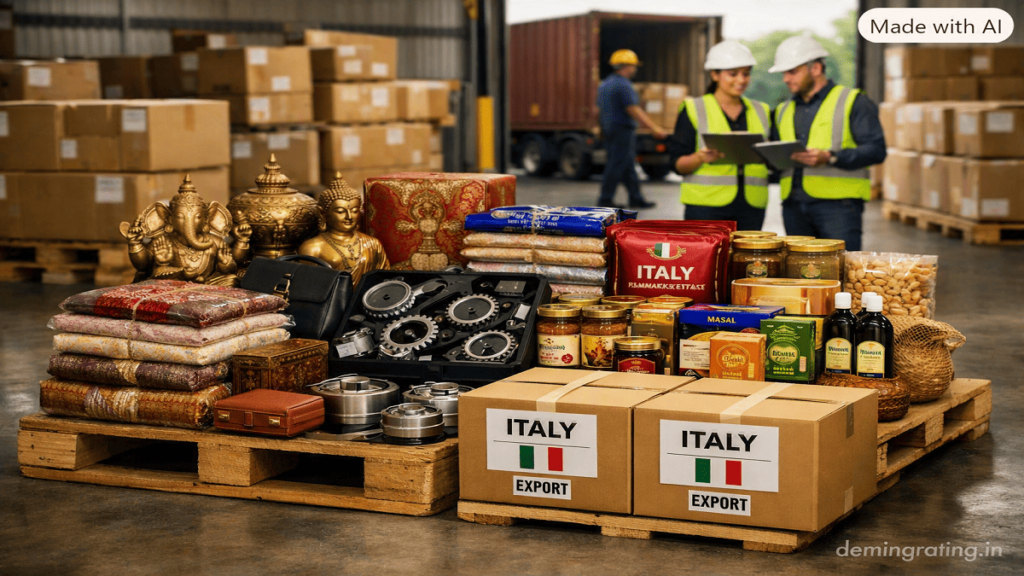
What Customs Documentation, Tariffs, Duties, and Import Procedures Should Exporters Understand?
Exporting products from India to Italy requires careful preparation of customs documentation and a clear understanding of European Union import procedures. Since Italy is part of the EU Customs Union, most customs duties and import procedures are established at the EU level. However, Italian authorities and the importer may have additional requirements depending on the product.
1. Determine the Correct Product Classification
The first step is identifying the correct HS and EU Combined Nomenclature (CN) code for the product. Classification determines the applicable customs duty, import restrictions, licenses, quotas, and other measures. Exporters can use the European Commission’s TARIC database and Access2Markets to check product-specific requirements.
Incorrect classification can result in customs delays, additional duties, penalties, or disputes, so exporters should verify the classification before shipping.
2. Prepare Essential Customs Documents
A typical shipment may require a commercial invoice, packing list, transport document, certificate of origin where applicable, customs declaration, and product-specific certificates or licenses.
The commercial invoice should accurately state information such as the exporter and importer, product description, quantity, value, currency, delivery terms, and means of transport. Depending on the product, customs authorities may also require health, veterinary, plant-health, inspection, or import-license documents.
3. Understand EORI and Customs Declarations
The Economic Operators Registration and Identification (EORI) number is used for customs identification within the EU. EU-established businesses involved in customs activities generally need an EORI number, while non-EU businesses may also require one in certain circumstances.
Before goods arrive, an Entry Summary Declaration (ENS) may need to be submitted to provide security and safety information. The carrier, importer, or an authorized representative may be responsible depending on the circumstances. The importer or customs representative then submits the appropriate customs declaration for clearance.
4. Calculate Customs Duties
The customs duty applicable to Indian products depends primarily on the product’s classification, customs value, and country of origin. Exporters should not assume that all products have the same duty rate.
Access2Markets provides information on EU tariffs, rules of origin, taxes, additional duties, import procedures, and product requirements. It is particularly useful for checking requirements for a specific product exported from India to Italy.
Additional trade-defence measures, such as anti-dumping or countervailing duties, may apply to specific products.
5. Understand VAT and Other Import Taxes
In addition to customs duties, imported goods can be subject to VAT and other applicable taxes or charges. The amount and treatment depend on the product and circumstances of the import. These costs should be included when calculating the landed cost and setting prices for Italian buyers.
6. Follow the Customs Clearance Process
When goods arrive at the EU border, they are presented to customs and placed under customs supervision. After the required declaration, documentation, duties, taxes, and controls have been completed, customs can release the goods for free circulation. Goods can also be placed under other customs procedures depending on the business transaction.
Conclusion
Indian exporters should prepare for the Italian market by confirming the HS/CN code, customs value, country of origin, applicable tariff, VAT, EORI requirements, customs declaration, commercial invoice, transport documents, and product-specific certificates or licenses. Working with an experienced Italian importer or EU customs broker can help ensure that documentation is accurate and shipments are cleared efficiently.
For current product-specific information, exporters should consult the European Commission’s Access2Markets portal and the EU TARIC database before finalizing an export shipment.
#InternationalTrade
What Packaging, Environmental, Product Safety, and Sustainability Requirements Should Be Considered?
Exporting products to Italy requires businesses to consider not only customs and tariffs but also European Union requirements relating to product safety, packaging, environmental protection, and sustainability. These requirements are becoming increasingly important as the EU strengthens its circular-economy and consumer-protection framework.
1. Packaging Requirements
Packaging should adequately protect products during transportation while complying with applicable EU and Italian requirements. Exporters should consider the type and quantity of packaging material, recyclability, material composition, labeling, and waste-management obligations.
Italy currently has specific environmental labeling requirements for packaging, including material identification and collection information for consumer-facing packaging. CONAI provides guidance and tools to help businesses understand Italy’s packaging-labeling obligations.
Businesses should also monitor the EU Packaging and Packaging Waste Regulation (PPWR), Regulation (EU) 2025/40. The regulation introduces requirements concerning packaging sustainability, recyclability, recycled content, compostability, reuse, packaging minimization, and labeling.
2. Environmental Requirements
Exporters should assess whether their products or packaging are subject to EU environmental legislation. Depending on the product, requirements may address chemicals, hazardous substances, waste, energy efficiency, recyclability, or restricted materials.
Packaging is particularly important because EU rules increasingly focus on reducing unnecessary packaging and improving its recyclability. The PPWR includes requirements designed to reduce packaging weight and volume to what is necessary for its intended function.
Businesses selling packaged products in Italy should also examine applicable Extended Producer Responsibility (EPR) obligations. CONAI provides information on packaging-related EPR requirements in Italy and across Europe.
3. Product Safety
Products placed on the EU market must comply with the applicable safety requirements for their category. These can concern product design, materials, manufacturing, performance, packaging, warnings, and instructions.
The EU General Product Safety Regulation (GPSR) applies to consumer products within its scope and requires economic operators to place only safe products on the market. It also includes requirements concerning risk assessment, technical documentation, traceability, product identification, and safety information.
Certain product categories are governed by more specific EU legislation. Depending on the product, exporters may need conformity assessment, testing, technical files, declarations of conformity, or CE marking.
4. Sustainability and Environmental Claims
Businesses should ensure that sustainability claims such as “eco-friendly,” “recyclable,” “biodegradable,” “carbon neutral,” or “made with recycled materials” are accurate and supported by appropriate evidence. Unsupported environmental claims can create consumer-protection and regulatory risks.
Exporters should maintain documentation supporting claims about recycled content, material composition, recyclability, environmental performance, or responsible sourcing.
5. Practical Compliance Strategy
Before exporting, businesses should create a product-specific checklist covering:
- Packaging materials and dimensions
- Italian environmental labeling requirements
- EU packaging and waste obligations
- Product safety standards
- Required testing and certifications
- CE marking, where applicable
- Technical and compliance documentation
- EPR responsibilities
- Sustainability and environmental claims
- Recycling and disposal information
Conclusion
Successful exports to Italy require businesses to integrate quality, safety, packaging, environmental compliance, and sustainability into product development rather than addressing these issues after manufacturing. Indian exporters should work with their Italian importer, customs adviser, and relevant compliance specialists to confirm current obligations.
The European Commission’s product compliance guidance and CONAI’s packaging guidance are useful starting points for understanding EU and Italian requirements.
#ExportBusiness
What Strategies Can Exporters Use to Ensure Regulatory Compliance and Successfully Enter the Italian Market?
Italy provides Indian exporters with access to a significant European market, but successful entry depends on understanding and meeting EU requirements before products are shipped. A structured compliance strategy can help businesses reduce customs delays, avoid regulatory problems, control costs, and build credibility with Italian buyers.
1. Conduct Product-Specific Regulatory Research
The first step is to determine exactly which EU regulations apply to the product. Exporters should identify the correct HS/CN classification, applicable tariffs, product standards, labeling requirements, environmental rules, certifications, and import procedures.
The European Commission’s Access2Markets portal provides information on EU tariffs, rules of origin, taxes, import formalities, and product requirements, making it a valuable resource when planning shipments to Italy.
2. Establish a Compliance Checklist
Businesses should create a written checklist covering every requirement from manufacturing through delivery. This can include product testing, technical documentation, conformity assessment, packaging, labeling, certificates, customs documents, and traceability information.
For regulated products, exporters should determine whether CE marking is mandatory. CE marking applies only to products covered by specific EU legislation requiring it; it should not be added simply because a product is being exported to Europe.
3. Maintain Technical Documentation
Where applicable, exporters should maintain technical files, test reports, risk assessments, declarations of conformity, product specifications, and supporting certification records. EU rules require manufacturers to demonstrate compliance and maintain relevant documentation for applicable products.
If a notified body is required for conformity assessment, exporters should use an organization authorized for the relevant product category and EU legislation.
4. Work Closely With the Italian Importer
A reliable Italian importer or distributor can help exporters understand local market expectations and coordinate customs clearance. EU importers have specific responsibilities when bringing products from non-EU countries, including checking applicable conformity, documentation, marking, traceability, and safety requirements.
Contracts should clearly define responsibility for customs clearance, duties, VAT, product compliance, labeling, returns, and regulatory issues.
5. Adapt Products and Labels for the Italian Market
Exporters should review whether instructions, warnings, safety information, and consumer-facing information need to be provided in Italian. EU guidance requires relevant information to be available in a language easily understood by consumers or end-users according to the destination country’s rules.
Packaging should also meet applicable EU and Italian environmental and labeling requirements.
6. Test the Market With Pilot Shipments
Instead of immediately committing to large orders, businesses can begin with samples or smaller commercial shipments. This allows them to evaluate customs clearance, packaging, delivery times, product quality, buyer feedback, and actual landed costs.
Any problems identified during the pilot stage should be corrected before expanding distribution.
7. Monitor Regulatory Changes Continuously
EU regulations and product requirements can change. Exporters should regularly review official EU guidance and maintain communication with their Italian importer, customs broker, and compliance professionals. Compliance should be treated as an ongoing process rather than a one-time certification exercise.
Conclusion
The strongest strategy for entering Italy is to combine regulatory research, product-specific compliance, accurate documentation, appropriate certification, Italian-language information where required, reliable local partners, pilot shipments, and continuous monitoring.
Businesses should avoid assuming that one certification or compliance process covers every product. Requirements differ substantially between food, textiles, electronics, machinery, chemicals, pharmaceuticals, cosmetics, and other categories.
For current requirements, exporters should consult Access2Markets, Your Europe product compliance guidance, and the relevant Italian authorities before beginning commercial shipments.
#ItalyMarket
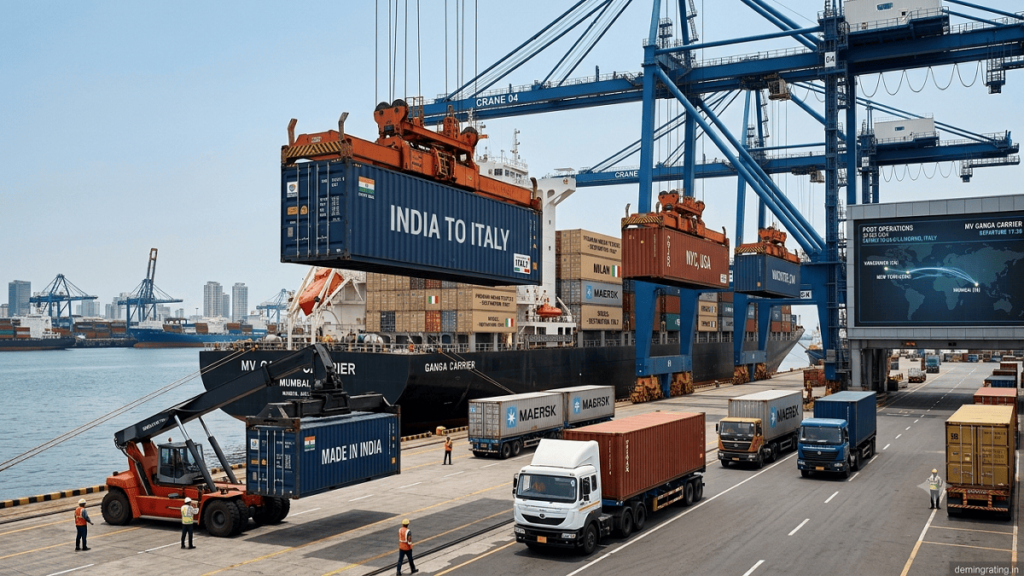
Case Study of Exporting from India to Italy
Italy offers Indian exporters opportunities across textiles, apparel, engineering products, pharmaceuticals, chemicals, food products, leather goods, jewellery, and handicrafts. India-EU trade is substantial: India’s Ministry of Commerce reported total bilateral trade with the EU of US$105.22 billion during April–December 2025, demonstrating the importance of the European market for Indian businesses.
The following representative case study illustrates how an Indian textile manufacturer could successfully enter the Italian market.
Business Background
Consider an Indian manufacturer producing premium cotton home textiles, including bedsheets, towels, table linen, and cushion covers. The company has established a strong domestic customer base and wants to expand into Europe. After researching several markets, it identifies Italy as a potential destination because of its established textile, fashion, hospitality, and home-furnishing industries.
Rather than immediately pursuing large orders, the company develops a phased market-entry strategy.
Step 1: Market and Product Research
The exporter first identifies Italian distributors, retailers, hospitality suppliers, and private-label buyers. It researches competitor pricing, product specifications, packaging preferences, and consumer expectations.
The company also determines the correct HS/CN classification for each product and uses the European Commission’s Access2Markets platform to review applicable tariffs, rules of origin, taxes, customs procedures, and product requirements. Access2Markets is specifically designed to help businesses from developing countries understand the requirements for exporting into the EU.
Step 2: Regulatory Preparation
Before accepting a commercial order, the exporter reviews applicable EU requirements for textile composition, product labeling, packaging, chemical restrictions, and consumer information. It creates technical and quality-control documentation and checks whether additional Italian-language information is required.
The company also prepares standard export documents, including the commercial invoice, packing list, transport documentation, and applicable origin or product certificates. EU customs guidance confirms that the commercial invoice is a key document for customs clearance and that additional documents may be required depending on the goods.
Step 3: Pilot Shipment
The company sends a small pilot shipment to an Italian distributor. This allows the exporter and importer to evaluate customs clearance, delivery times, packaging performance, product quality, and actual landed costs.
During the pilot stage, the Italian buyer requests minor changes to packaging and product presentation. The exporter incorporates these changes before negotiating larger orders.
Step 4: Scaling Operations
After successful pilot shipments, the exporter signs a supply agreement with the Italian distributor. Production is standardized, quality inspections are performed before dispatch, and shipment documentation is reviewed using an internal compliance checklist.
The company also establishes a process for monitoring EU regulatory developments and periodically checks Access2Markets for changes affecting tariffs, import procedures, and product requirements.
Key Lessons
The case demonstrates that successful export expansion requires more than finding an overseas buyer. The exporter succeeds by combining market research, regulatory preparation, accurate documentation, quality control, appropriate packaging, pilot shipments, and reliable logistics.
For Indian businesses, this approach can be adapted to other sectors. India’s major export industries include engineering goods, pharmaceuticals, textiles, chemicals, food products, electronics, and other manufactured products.
Conclusion
Exporting to Italy can become a sustainable growth opportunity when businesses approach the market systematically. Starting with a focused product range and pilot shipment allows exporters to identify regulatory, logistics, and customer-related challenges before scaling.
#IndianExporters
White Paper: Exporting from India to Italy
Executive Summary
Italy represents an important opportunity for Indian exporters seeking to enter the European market. Demand exists across sectors including textiles and apparel, engineering goods, pharmaceuticals, chemicals, food products, leather goods, jewellery, handicrafts, and machinery. However, exporting successfully to Italy requires businesses to understand both Indian export procedures and the European Union’s common customs and regulatory framework.
This white paper outlines the major considerations for Indian companies planning to develop or expand exports to Italy, including market preparation, customs, tariffs, documentation, product compliance, packaging, sustainability, and market-entry strategy.
1. Preparing for the Italian Market
Market research should be the starting point for any export strategy. Businesses should identify products with realistic demand, research Italian competitors, understand customer expectations, evaluate pricing, and select suitable distributors, importers, retailers, or business customers.
Indian exporters should also ensure that their domestic export requirements are in place. Under India’s Foreign Trade Policy, an Importer Exporter Code (IEC) is mandatory for most export and import activities. Key export documents include a bill of lading or airway bill, commercial invoice-cum-packing list, and shipping bill or bill of export. Additional documents may be required for restricted or regulated products.
2. Understanding EU Import Requirements
Italy is part of the EU Customs Union, meaning Indian goods entering Italy are subject to EU customs rules. Exporters should determine the correct HS/CN classification, customs value, country of origin, applicable tariff, taxes, and import procedures.
The European Commission’s Access2Markets portal provides information on EU tariffs, rules of origin, taxes, additional duties, import procedures, and product requirements. It should be used to check requirements for the specific product being exported.
3. Product Standards and Compliance
Product compliance is one of the most important aspects of entering Italy. Depending on the product, exporters may need conformity assessments, testing, technical documentation, safety information, certifications, or CE marking.
CE marking is required only where specific EU legislation makes it applicable. Businesses should identify the relevant legislation before assuming that CE marking is required.
Food, pharmaceuticals, cosmetics, machinery, electronics, chemicals, toys, medical devices, and other regulated categories can have significantly different requirements.
4. Customs Documentation and Logistics
Exporters should prepare accurate commercial invoices, packing lists, transport documents, certificates of origin where applicable, and product-specific certificates or permits.
The Italian importer or customs representative will generally play an important role in customs clearance. Businesses should clearly establish responsibilities for customs declarations, duties, VAT, product compliance, insurance, delivery, and returns in their commercial agreements.
5. Tariffs and Trade Developments
Customs duties depend on the product classification, origin, customs value, and applicable trade measures. Businesses should check current tariff rates rather than relying on general assumptions.
An important development for Indian exporters is the EU-India Free Trade Agreement, for which negotiations were concluded on 27 January 2026. However, the European Commission notes that the published agreement texts remain subject to legal revision and that the agreement becomes binding only after signature and completion of the required internal procedures. Therefore, exporters should not automatically assume that negotiated tariff preferences are already available.
6. Packaging, Sustainability, and Quality
Italian and EU buyers increasingly expect reliable quality, compliant packaging, responsible sourcing, and credible sustainability practices. Exporters should assess packaging materials, labeling, recyclability, environmental claims, and applicable producer-responsibility obligations.
Sustainability claims should be supported by appropriate evidence, particularly when products are marketed using environmental or recycled-content claims.
7. Market-Entry Strategy
A phased strategy can reduce the risks associated with entering Italy. Businesses can begin with market research and buyer identification, followed by samples or pilot shipments. This provides an opportunity to evaluate customs clearance, packaging, product quality, delivery times, pricing, and customer feedback before scaling.
Working with an experienced Italian importer, distributor, freight forwarder, customs representative, or regulatory adviser can also help businesses navigate market-specific requirements.
Conclusion
Exporting from India to Italy can provide a pathway into both the Italian market and the wider European market. However, success depends on combining competitive products with regulatory compliance, accurate documentation, quality control, efficient logistics, and strong commercial partnerships.
Indian businesses should treat Italy as an EU market while also understanding local customer and language expectations. Before each shipment, exporters should verify the latest tariff, customs, product, labeling, and environmental requirements for their specific product.
For reliable information, exporters should consult the European Commission’s Access2Markets portal, EU customs guidance, and India’s Directorate General of Foreign Trade. Access2Markets is particularly useful because it brings together product-specific tariffs, origin rules, taxes, procedures, and regulatory requirements.
#IndiaToItalyTrade
Industry Applications of Exporting to Italy
Italy is an important destination for Indian exporters across manufacturing, consumer goods, healthcare, food, textiles, and industrial sectors. Its position within the European Union also means that businesses entering Italy can potentially use the market as a foundation for wider EU expansion, provided their products meet applicable EU requirements. India and the EU recorded €185 billion in bilateral trade in goods and services in 2025, highlighting the scale of the broader commercial relationship.
1. Engineering and Industrial Products
Engineering goods represent one of India’s largest export categories, making machinery, automotive components, metal products, industrial equipment, tools, and electrical equipment important areas for international expansion. India’s Department of Commerce reported engineering goods exports of more than US$109 billion in 2023–24, demonstrating the strength of this sector.
Indian manufacturers can target Italian machinery companies, industrial distributors, automotive suppliers, construction businesses, and equipment manufacturers. Technical specifications, product testing, quality control, and applicable EU conformity requirements are critical in this sector.
2. Textiles, Apparel, and Fashion
Italy’s globally recognized fashion and textile industries create opportunities for Indian exporters of cotton fabrics, garments, home textiles, yarns, accessories, leather products, and specialty fabrics.
Indian suppliers can work with Italian fashion brands, wholesalers, private-label companies, retailers, and textile manufacturers. Consistent quality, product design, traceability, labeling, sustainability credentials, and reliable delivery can provide a competitive advantage.
3. Pharmaceuticals and Healthcare
India has a substantial pharmaceutical manufacturing base, with drugs and pharmaceuticals representing one of the country’s major merchandise export categories.
Opportunities may exist in generic medicines, pharmaceutical ingredients, healthcare products, and related supplies. However, this is a highly regulated sector. Businesses must meet applicable EU pharmaceutical and healthcare regulations, quality standards, manufacturing requirements, and authorization procedures before products can enter the Italian market.
4. Chemicals and Specialty Materials
Indian producers of organic and inorganic chemicals, dyes, specialty chemicals, industrial materials, and related products can target Italian manufacturers and distributors.
Because chemicals are subject to extensive EU requirements concerning safety, classification, labeling, packaging, and chemical substances, exporters should conduct detailed regulatory assessments before entering this sector.
5. Food and Agricultural Products
Rice, spices, tea, coffee, processed foods, seafood, fruits, vegetables, and other agricultural products can serve Italian supermarkets, restaurants, food manufacturers, ethnic-food distributors, and specialty retailers.
India’s Department of Commerce identifies agricultural and processed-food categories such as tea, coffee, rice, marine products, fruits and vegetables, and cereal preparations among its export sectors.
Food exporters must pay particular attention to EU food-safety rules, ingredient declarations, allergens, traceability, packaging, and labeling.
6. Gems, Jewellery, Leather, and Handicrafts
India’s established jewellery, leather, handicraft, and artisanal manufacturing capabilities create opportunities among Italian retailers, designers, wholesalers, and specialty buyers. Gems and jewellery, leather products, and handicrafts are established components of India’s merchandise export base.
Design, craftsmanship, material quality, ethical sourcing, packaging, and product presentation can be particularly important in these markets.
7. Electronics and Technology Products
Electronics and electrical equipment represent another growing area of India’s export activity. The Department of Commerce reported strong growth in electronic-goods exports during 2025, reflecting the expanding role of electronics in India’s international trade.
Potential applications include electronic components, electrical equipment, accessories, and technology-related products. Exporters must verify applicable EU requirements concerning product safety, electromagnetic compatibility, energy efficiency, chemicals, and environmental compliance.
Strategic Considerations
Regardless of industry, exporters should begin by researching Italian demand and identifying the correct product classification. India’s Trade Intelligence and Analytics Portal provides country and commodity-level trade data that can help businesses evaluate potential markets and products.
Businesses should then assess tariffs, EU product requirements, certifications, packaging, labeling, logistics, and buyer expectations before committing to large shipments. A pilot order can help identify compliance or operational issues before the business scales.
Conclusion
Italy offers applications for Indian exports across engineering, textiles, pharmaceuticals, food, chemicals, electronics, jewellery, leather, and handicrafts. The most suitable opportunity will depend on the exporter’s product capabilities, regulatory readiness, pricing, and ability to meet Italian and EU buyer expectations.
A successful strategy should combine market research, product compliance, quality assurance, competitive pricing, reliable logistics, and strong Italian distribution partnerships. Exporters can use official resources such as the India Trade Intelligence and Analytics Portal and TRADESTAT to research current commodity and destination trends before entering the market.
#ExportToItaly
Ask FAQs
What products can Indian businesses export to Italy?
Indian businesses can export textiles, apparel, engineering goods, pharmaceuticals, chemicals, food products, spices, jewellery, leather goods, handicrafts, electronics, and machinery. The applicable EU requirements vary depending on the product.
What documents are required to export from India to Italy?
Common documents include an Importer Exporter Code (IEC), commercial invoice, packing list, shipping bill, bill of lading or airway bill, and certificate of origin where applicable. Certain products may require additional permits, licenses, health certificates, or conformity documentation.
Do products exported to Italy need CE marking?
CE marking is required only for product categories covered by specific EU legislation that mandates it. Products such as certain electronics, machinery, toys, medical devices, and personal protective equipment may require CE marking. Exporters should verify the rules applicable to their specific product.
Are Indian products subject to customs duties when entering Italy?
Yes, applicable customs duties depend on factors such as the product’s classification, origin, customs value, and relevant EU trade measures. Exporters should check the current tariff using the European Commission’s Access2Markets or TARIC resources.
How can Indian exporters successfully enter the Italian market?
Businesses should conduct market research, verify EU regulatory requirements, ensure product quality, prepare compliant labeling and documentation, work with reliable Italian importers or distributors, and begin with pilot shipments before scaling. Continuous monitoring of EU regulations can also help maintain long-term compliance.
Table of Contents
Disclaimer: This content is for general informational purposes only. Export requirements, tariffs, certifications, and regulations may change. Always verify the latest requirements with relevant EU, Italian, and Indian authorities before exporting.