Custom Software Development
Table of Contents
Custom Software Development is the process of designing, building, testing, and maintaining software applications specifically tailored to the unique requirements of a business or organization. Unlike off-the-shelf software, which provides standardized features for a broad audience, custom software is developed around specific business processes, operational challenges, user requirements, and long-term objectives. This makes it a valuable approach for organizations seeking greater flexibility, efficiency, and control over their technology environment.
Custom software can include web applications, mobile applications, enterprise platforms, customer portals, workflow automation systems, data management solutions, and industry-specific applications. Development teams typically work closely with stakeholders to understand business requirements before defining the software architecture, user experience, technology stack, security requirements, and integration strategy.
One of the key advantages of Custom Software Development is the ability to create solutions that align closely with existing workflows. Organizations can automate repetitive tasks, improve information management, reduce manual processes, and provide employees with tools designed specifically for their responsibilities. Custom applications can also integrate with existing systems such as CRM, ERP, accounting, databases, cloud platforms, and third-party APIs, helping create a more connected digital environment.
Scalability is another important benefit. As an organization grows, its software requirements may change. Custom solutions can be designed with future expansion in mind, allowing businesses to add new features, users, integrations, and capabilities without being limited by the structure of a generic product.
Security and compliance can also be incorporated into the development process from the beginning. Developers can implement appropriate authentication, authorization, encryption, access controls, monitoring, and data-management practices based on the organization’s requirements.
A successful Custom Software Development project generally follows structured stages, including requirements analysis, planning, UI/UX design, development, testing, deployment, and ongoing maintenance. Modern development approaches such as Agile and DevOps can support continuous improvement and faster delivery.
Overall, Custom Software Development enables organizations to transform specific business requirements into purpose-built digital solutions. When planned and implemented effectively, it can improve operational efficiency, support innovation, strengthen scalability, and provide a foundation for sustainable digital transformation.
#EnterpriseSoftware
What Is Custom Software Development and Why Is It Important?
Custom Software Development is the process of creating software specifically designed to meet the unique needs, workflows, and objectives of a particular business or organization. Unlike off-the-shelf software, which provides standardized features for a wide range of users, custom software is built around an organization’s specific requirements. It can include web applications, mobile apps, enterprise platforms, customer portals, workflow automation tools, data management systems, and industry-specific solutions.
The importance of Custom Software Development lies in its ability to address business challenges that generic software may not fully solve. Organizations can develop applications that closely match their existing processes, helping employees complete tasks more efficiently and reducing unnecessary manual work. Customized workflows can also improve productivity by automating repetitive activities such as data entry, reporting, approvals, notifications, and information processing.
Another major advantage is scalability. Businesses often grow, introduce new services, expand into new markets, or change their operational processes. Custom software can be designed with these future requirements in mind, allowing organizations to add features, integrations, users, and capabilities as their needs evolve.
Custom development can also improve system integration. Purpose-built applications can connect with existing CRM, ERP, accounting, database, cloud, analytics, and third-party systems through APIs and other integration technologies. This can reduce data silos and provide employees with more consistent access to business information.
Security and compliance are additional reasons organizations choose custom software. Security requirements can be incorporated into the architecture and development lifecycle, including authentication, authorization, encryption, access controls, monitoring, and appropriate data-management practices.
Custom Software Development can also provide greater control over the product roadmap. Instead of depending entirely on a vendor’s feature updates, organizations can prioritize enhancements according to their own business goals.
Overall, Custom Software Development is important because it transforms specific business requirements into flexible, scalable, and purpose-built digital solutions. When properly planned and implemented, it can improve operational efficiency, enhance user experiences, support innovation, strengthen integration, and provide a strong foundation for long-term digital transformation.
#BusinessAutomation
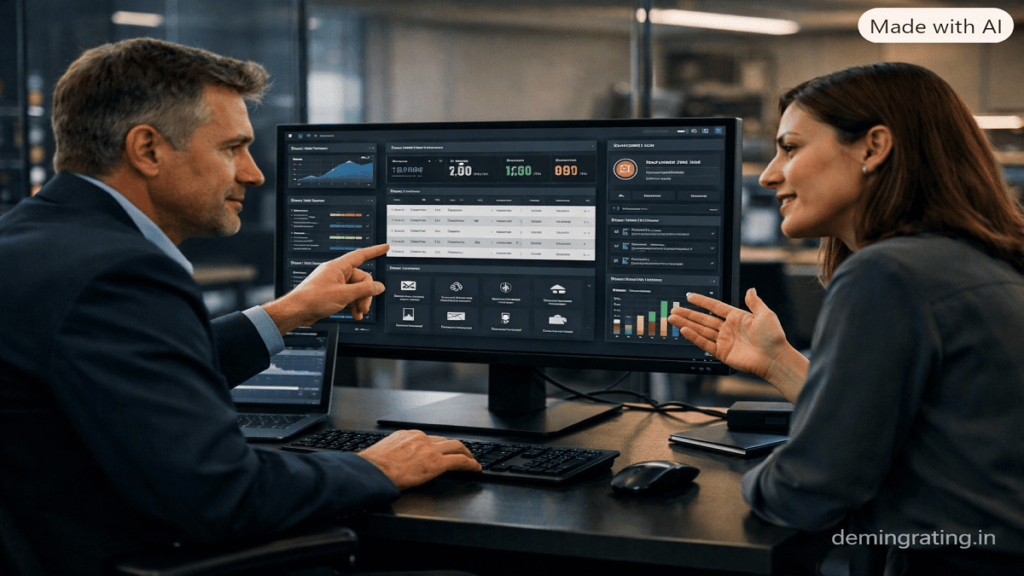
How Can Custom Software Be Tailored to Specific Business Requirements?
Custom Software Development can be tailored to specific business requirements by designing the solution around an organization’s processes, users, goals, technology environment, and future growth plans. Instead of forcing a business to adapt its operations to generic software, custom development allows the software to adapt to the way the organization actually works.
The process typically begins with requirements analysis. Developers and business stakeholders identify operational challenges, user needs, workflow requirements, data requirements, integration points, security considerations, and desired outcomes. This helps create a clear software specification before development begins.
The next step is workflow and feature customization. Developers can create features that directly support specific business activities. For example, an organization may require customized approval workflows, automated notifications, specialized reporting, customer portals, inventory management, scheduling, or document-processing capabilities. Unnecessary features can be avoided, keeping the application focused on actual business needs.
Custom software can also be tailored through its user experience and interface. Different employees may require different dashboards, permissions, and tools depending on their responsibilities. Designing interfaces around specific user roles can make applications easier to use and improve productivity.
Integration capabilities are another important consideration. Custom applications can be designed to communicate with existing CRM, ERP, accounting, HR, databases, cloud platforms, APIs, and third-party services. This allows organizations to maintain connected workflows and reduce duplicate data entry.
Security requirements can also be built into the solution. Organizations can define appropriate authentication, authorization, access controls, encryption, audit logging, and data-management practices according to their operational and regulatory requirements.
Custom software can further be designed for scalability and future development. Businesses can plan for additional users, locations, features, integrations, and data volumes, reducing the risk of outgrowing the platform.
Finally, Agile development practices can allow businesses to provide feedback throughout development. Prototypes, testing, user feedback, and iterative improvements help ensure that the final application continues to align with business requirements.
Overall, tailoring software to specific requirements creates a technology solution that supports real business processes rather than requiring employees to work around the limitations of generic software. This can improve efficiency, usability, integration, scalability, and long-term business value.
#SoftwareEngineering
What Are the Key Stages Involved in Developing a Custom Software Solution?
Developing a custom software solution involves several structured stages designed to ensure that the final application meets business requirements, user expectations, security standards, and long-term operational goals. A well-planned development lifecycle helps organizations control costs, reduce risks, and deliver software that provides measurable business value.
1. Requirements Analysis and Discovery
The process begins by understanding the organization’s goals, challenges, users, workflows, functional requirements, data needs, integrations, security requirements, and expected outcomes. This stage establishes the foundation for the entire project.
2. Planning and Solution Architecture
Once requirements are defined, the development team creates a project roadmap and determines the appropriate technology stack, software architecture, database structure, integrations, development methodology, timeline, and resource requirements. A strong architecture also considers scalability, reliability, and future expansion.
3. UI/UX Design
Designers develop the application’s user interface and user experience based on the needs of its intended users. Wireframes, prototypes, navigation structures, dashboards, and interface designs may be created and reviewed before development begins.
4. Software Development
Developers then build the application according to the approved requirements and architecture. This may involve frontend development, backend programming, database implementation, API development, cloud services, and integration with existing business systems.
5. Testing and Quality Assurance
The software undergoes comprehensive testing to identify and resolve defects. Functional, performance, usability, compatibility, security, integration, and user acceptance testing can help ensure that the solution operates reliably and meets defined requirements.
6. Deployment and Implementation
After successful testing and approval, the software is deployed to the production environment. This stage may include data migration, system configuration, integration setup, employee training, documentation, and change-management activities.
7. Maintenance and Continuous Improvement
Custom software development does not end at deployment. Ongoing maintenance helps address technical issues, security updates, performance requirements, and changing business needs. New features and improvements can be introduced as the organization evolves.
Overall, these stages provide a systematic approach to transforming business requirements into a reliable custom software solution. Following a structured lifecycle can improve quality, reduce implementation risks, and ensure the software continues to support business objectives over time.
#DigitalTransformation
How Can Custom Software Improve Automation, Efficiency, and System Integration?
Custom Software Development can significantly improve automation, operational efficiency, and system integration by creating applications that are specifically designed around an organization’s workflows and technology environment. Instead of relying on disconnected tools or manual processes, businesses can use custom software to create streamlined digital operations.
Automation is one of the most important benefits. Custom applications can automate repetitive activities such as data entry, document processing, approvals, notifications, scheduling, reporting, invoice processing, and routine calculations. Automated workflows reduce the amount of manual effort required and can help minimize human errors and processing delays. Employees can then focus more on strategic and customer-focused activities.
Custom software can also improve operational efficiency by bringing important processes into a centralized digital platform. Organizations can create customized dashboards, workflow management tools, reporting systems, and role-based interfaces that provide employees with the information and functionality they need. This can reduce unnecessary steps, improve productivity, and make business processes easier to monitor.
System integration is another major advantage. Custom software can be designed to communicate with existing CRM, ERP, accounting, HR, inventory, database, cloud, and third-party applications. APIs and integration services can enable information to move between systems without requiring employees to repeatedly enter the same data. This helps reduce data silos and supports more consistent information across the organization.
Custom solutions can also enable real-time data synchronization. When connected systems share information efficiently, managers and employees can gain faster access to current operational data. This can support better reporting, faster decision-making, and improved coordination between departments.
Security can be incorporated into automation and integration workflows through authentication, authorization, encryption, access controls, audit logging, and monitoring. This helps organizations manage access to connected systems while protecting important business information.
Finally, custom software can be designed for scalability. As business requirements change, organizations can add new workflows, integrations, users, and features without completely replacing the underlying solution.
Overall, Custom Software Development provides a flexible way to automate processes, improve productivity, connect existing technologies, and create a more unified digital environment. When properly designed, it can help organizations reduce operational complexity while supporting long-term digital transformation.
#BusinessSoftware
What Are the Benefits of Custom Software Development for Scalability, Security, and Long-Term Business Growth?
Custom Software Development provides organizations with purpose-built technology that can evolve alongside changing business requirements. Unlike generic software, custom solutions are designed around specific operational processes, users, and strategic objectives. This makes them particularly valuable for scalability, security, and sustainable long-term business growth.
Scalability is a major advantage of custom software. Businesses may expand their customer base, workforce, locations, services, or transaction volumes over time. A custom application can be architected to accommodate additional users, data, features, integrations, and workloads as the organization grows. This reduces dependence on rigid software structures and makes it easier to introduce new capabilities when business requirements change.
Custom software can also provide stronger opportunities for security because security requirements can be incorporated throughout the development lifecycle. Organizations can implement appropriate authentication, authorization, role-based access controls, encryption, audit logging, secure APIs, and monitoring based on their specific environment. Regular maintenance and security updates can further help address emerging technical and cybersecurity risks.
Another important benefit is greater control and flexibility. Businesses can prioritize features and improvements according to their own objectives rather than waiting for a commercial software vendor to introduce them. This flexibility can help organizations respond more quickly to market changes, customer expectations, and internal operational requirements.
Custom solutions can also support system integration, connecting CRM, ERP, accounting, databases, cloud applications, APIs, and other business platforms. Better connectivity can reduce data silos, improve information flow, and support more efficient workflows.
From a long-term perspective, custom software can provide a strong foundation for digital transformation and business growth. Organizations can continuously enhance the platform, introduce automation, integrate emerging technologies, and adapt functionality as their needs evolve.
Overall, Custom Software Development can deliver scalable architecture, tailored security controls, operational flexibility, and integration capabilities that support sustainable growth. When supported by effective planning, maintenance, and governance, a custom solution can become a long-term technology asset rather than simply a short-term software investment.
#SoftwareSolutions
Case Study of Custom Software Development
A growing service-based organization was facing challenges caused by disconnected software applications, manual data entry, and limited visibility across its daily operations. Employees were using spreadsheets, email, and multiple standalone applications to manage customer information, service requests, approvals, reporting, and internal communication. As the organization expanded, these processes became increasingly time-consuming and difficult to manage.
To address these challenges, the organization implemented a Custom Software Development project focused on creating a centralized business management platform. The objective was to develop a solution that matched its existing workflows while providing the flexibility required for future growth.
The project began with requirements analysis involving business stakeholders, operational teams, and technical specialists. The development team documented existing workflows and identified opportunities for automation, system integration, improved reporting, and stronger access controls.
The resulting platform incorporated a centralized database, role-based dashboards, automated workflows, reporting capabilities, notifications, and API-based integrations with existing business applications. Instead of manually transferring information between systems, employees could access relevant data through a unified interface.
One of the most significant improvements was workflow automation. Routine activities such as approvals, task assignments, notifications, and status updates were automated according to predefined business rules. This reduced repetitive administrative work and helped employees process requests more consistently.
The solution also improved data visibility and system integration. Connecting the custom platform with existing applications helped reduce duplicate data entry and provided teams with more consistent information. Management could use centralized dashboards and reports to monitor operational performance and make more informed decisions.
Security was incorporated into the platform through role-based access, authentication, authorization, audit logging, and appropriate data-management controls. The architecture was also designed to support future users, features, and integrations.
The case demonstrates how Custom Software Development can address business requirements that generic software may not fully satisfy. By combining tailored workflows, automation, integration, reporting, scalability, and security, organizations can create technology that directly supports their operational objectives.
The key lesson is that successful custom software projects should begin with clearly defined business requirements and continue with structured testing, user feedback, maintenance, and continuous improvement. When approached strategically, custom software can become a long-term digital asset that supports efficiency, innovation, and sustainable business growth.
#SoftwareDevelopment

White Paper on Custom Software Development
Introduction
Custom Software Development has become an important strategy for organizations seeking technology that aligns closely with their operational requirements and long-term business objectives. Unlike standardized software products, custom solutions are designed around specific workflows, user needs, integration requirements, security considerations, and growth plans. This white paper examines the strategic value, implementation considerations, and business impact of custom software development.
Strategic Role of Custom Software
Organizations often rely on multiple applications to manage customer relationships, finance, human resources, operations, data, and communication. When these systems are disconnected, employees may face duplicate data entry, manual processes, and limited visibility. Custom software can provide a centralized solution or integration layer that connects critical business functions and creates more efficient digital workflows.
Automation and Operational Efficiency
A major objective of custom development is process optimization. Organizations can automate repetitive activities such as approvals, notifications, reporting, data processing, scheduling, and document management. Automation can reduce manual effort, improve consistency, minimize errors, and allow employees to focus on higher-value responsibilities.
Scalability and Flexibility
Custom applications can be designed to accommodate future business requirements. Scalable architecture can support additional users, data volumes, locations, features, and system integrations. This flexibility allows organizations to evolve their software environment as business priorities and market conditions change.
Security and Governance
Security should be considered throughout the software development lifecycle. Organizations can incorporate authentication, authorization, role-based access, encryption, secure APIs, audit logging, monitoring, and appropriate data-management controls. Development and maintenance processes should also include regular testing, vulnerability management, and software updates.
Implementation Considerations
Successful custom software projects begin with detailed requirements analysis and stakeholder involvement. Key stages typically include planning, architecture, UI/UX design, development, testing, deployment, training, and ongoing maintenance. Agile development can support iterative delivery and allow users to provide feedback throughout the project.
Organizations should also evaluate total cost of ownership rather than focusing only on initial development expenses. Infrastructure, maintenance, security, upgrades, support, integrations, and future enhancements should be considered when assessing the long-term investment.
Conclusion
Custom Software Development can provide organizations with purpose-built technology that improves automation, integration, scalability, security, and operational efficiency. Its greatest value comes from aligning technology directly with business requirements rather than forcing organizations to adapt to generic software limitations. With effective planning, governance, testing, and continuous improvement, custom software can become a long-term technology asset that supports innovation, digital transformation, and sustainable business growth.
#CustomSoftware
Industry Application of Custom Software Development
Custom Software Development is used across industries to create technology solutions that address specialized workflows, operational requirements, customer expectations, and regulatory needs. By developing software around specific business processes, organizations can improve automation, integration, efficiency, data management, and scalability.
Healthcare
Healthcare organizations use custom software for electronic health record integrations, hospital management systems, patient portals, appointment scheduling, telemedicine platforms, clinical applications, laboratory management, and healthcare analytics. Custom solutions can connect medical systems and support secure information exchange while improving administrative and clinical workflows.
Banking and Financial Services
Banks and financial institutions use custom applications for digital banking, payment processing, risk management, fraud detection, customer relationship management, financial reporting, and regulatory workflows. Purpose-built platforms can integrate banking systems with APIs, analytics tools, identity services, and third-party financial technologies.
Retail and E-Commerce
Retailers use custom software to manage online stores, inventory, orders, customer relationships, pricing, loyalty programs, and supply-chain operations. Custom platforms can connect e-commerce websites with warehouses, payment systems, shipping providers, and enterprise applications to improve order fulfillment and customer experiences.
Manufacturing
Manufacturing organizations apply custom software to production planning, inventory management, quality control, equipment monitoring, workforce management, and supply-chain coordination. Integration with industrial systems and IoT devices can provide better visibility into production processes and support data-driven decision-making.
Logistics and Transportation
Custom software supports fleet management, route optimization, shipment tracking, warehouse operations, delivery scheduling, and customer communication. Businesses can integrate GPS systems, logistics platforms, mobile applications, and operational databases to create more efficient transportation workflows.
Education
Educational institutions use custom applications for student management, online learning, examination systems, admissions, attendance, scheduling, and communication. These solutions can be tailored to the institution’s academic and administrative processes while integrating with existing learning and payment platforms.
Government and Public Services
Government agencies can use custom software for citizen portals, case management, document processing, public-service applications, data management, and internal workflow automation. Purpose-built systems can help agencies improve service delivery, information accessibility, and operational transparency.
Conclusion
Across these industries, Custom Software Development provides the flexibility to address specialized requirements that standardized applications may not fully support. By combining tailored functionality, automation, integration, security, and scalability, custom software can help organizations modernize operations and build a stronger foundation for long-term digital transformation.
#CustomSoftwareDevelopment
Ask FAQs
What is Custom Software Development?
Custom Software Development is the process of creating software specifically designed to meet the unique requirements, workflows, and objectives of a business or organization.
Why should businesses choose custom software?
Custom software allows businesses to build solutions around their specific processes, improve efficiency, automate tasks, integrate existing systems, and support future growth.
What types of software can be developed?
Custom development can include web applications, mobile apps, enterprise platforms, customer portals, workflow automation systems, cloud applications, data management platforms, and industry-specific solutions.
Is Custom Software Development secure?
Yes. Security can be incorporated throughout development using authentication, authorization, encryption, access controls, secure APIs, monitoring, and regular security testing.
How does custom software support business growth?
Custom software can be designed for scalability, allowing organizations to add users, features, integrations, and capabilities as their business expands and requirements evolve.
Disclaimer: The information provided is for general educational purposes only and should not be considered professional software development, IT, or business advice.