Continuous Monitoring and Support
Table of Contents
In today’s increasingly connected digital environment, organizations rely on networks, applications, cloud platforms, and IT infrastructure to maintain daily operations. However, these systems can experience security threats, performance issues, configuration problems, and unexpected disruptions at any time. Continuous Monitoring and Support provides organizations with an ongoing approach to identifying, managing, and resolving these issues before they significantly affect business operations.
Continuous monitoring involves regularly observing IT systems, network traffic, applications, devices, and security events to identify unusual activity, potential vulnerabilities, performance problems, and service interruptions. Instead of relying solely on periodic security assessments, organizations can gain ongoing visibility into their technology environment. This allows technical teams to detect potential problems earlier and respond before they develop into major incidents.
Support services complement monitoring by providing technical assistance when issues are identified. Depending on the organization’s requirements, support may include troubleshooting, incident response, system maintenance, performance optimization, security updates, configuration management, and remediation of identified vulnerabilities.
Continuous Monitoring and Support is particularly valuable for organizations operating complex or distributed environments. Remote employees, cloud services, third-party applications, connected devices, and hybrid infrastructure can create additional security and operational challenges. Ongoing monitoring helps organizations maintain Continuous Monitoring and Support awareness of these environments while support teams can respond quickly when problems occur.
The National Institute of Standards and Technology (NIST) emphasizes continuous improvement and ongoing cybersecurity risk management as important components of an effective cybersecurity program. Similarly, the Cybersecurity and Infrastructure Security Agency (CISA) provides guidance for improving visibility, detecting threats, and strengthening organizational security.
Ultimately, Continuous Monitoring and Support helps organizations move from a reactive approach to a more proactive model of IT and cybersecurity management. By combining real-time visibility, proactive threat detection, technical expertise, and timely remediation, businesses can reduce downtime, strengthen security, improve system reliability, and maintain more resilient technology operations.
#CyberResilience
What Is Continuous Monitoring and Support and Why Is It Important?
Continuous Monitoring and Support is an ongoing IT and cybersecurity practice that involves continuously observing an organization’s networks, systems, applications, devices, and security events while providing technical assistance to identify and resolve issues. Unlike periodic assessments that examine an environment at specific intervals, continuous monitoring provides organizations with greater visibility into changes, unusual activities, vulnerabilities, Continuous Monitoring and Support and performance problems as they occur.
Continuous monitoring typically includes tracking network traffic, system performance, security alerts, user activity, application availability, and infrastructure health. Monitoring tools can generate alerts when unusual behavior, service interruptions, configuration changes, or potential security threats are detected. Support teams can then investigate these alerts and take appropriate action, such as troubleshooting a technical issue, isolating a compromised device, applying security updates, or restoring affected services.
One of the most important benefits is early threat detection. Cybersecurity incidents can develop quickly, and delayed detection can increase the potential damage. Continuous Monitoring and Support Continuous monitoring enables security teams to identify suspicious activity sooner and respond before an incident significantly affects critical systems or sensitive information.
It also helps organizations reduce downtime. Performance monitoring can identify overloaded servers, failing devices, connectivity problems, or application issues before they cause significant service disruption. Proactive technical support allows organizations to resolve problems more efficiently and maintain reliable operations.
Continuous Monitoring and Support also strengthens vulnerability management. Security teams can monitor systems for new vulnerabilities, unauthorized changes, Continuous Monitoring and Support outdated software, and configuration weaknesses. This creates an opportunity to address risks before attackers can exploit them.
Another advantage is improved incident response and cybersecurity resilience. When monitoring and support processes are properly integrated, organizations can detect incidents, investigate their causes, contain threats, and restore normal operations more effectively. The National Institute of Standards and Technology (NIST) provides a cybersecurity framework that emphasizes ongoing activities for managing and improving organizational cybersecurity risk.
Continuous monitoring can also support compliance and reporting requirements by maintaining security logs, monitoring access, and providing evidence that security controls are being actively managed. However, specific compliance requirements depend on the industry, Continuous Monitoring and Support regulations, and organization’s operating environment.
Ultimately, Continuous Monitoring and Support provides a proactive approach to managing modern IT environments. By combining ongoing visibility with timely technical assistance, organizations can detect threats earlier, minimize disruptions, maintain system performance, strengthen security, Continuous Monitoring and Support and build greater resilience against evolving cyber and operational risks.
#NetworkSecurity
What Systems, Networks, and Services Should Be Continuously Monitored?
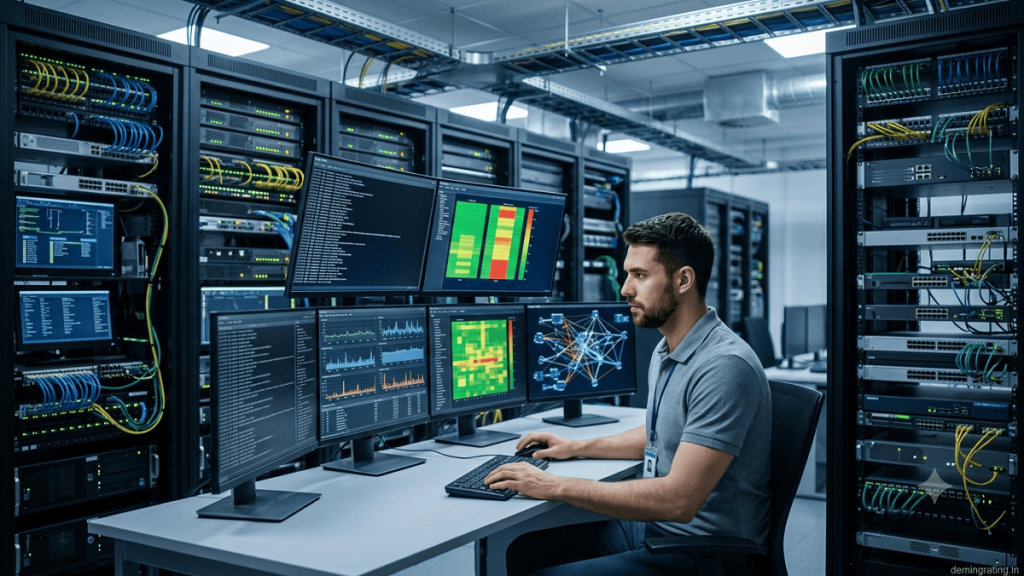
Continuous monitoring should cover the technology components that are critical to an organization’s security, availability, performance, and business operations. The exact scope depends on the organization’s infrastructure and risk profile, Continuous Monitoring and Support but a comprehensive monitoring strategy should include networks, endpoints, servers, applications, cloud services, user activity, and security controls.
1. Network Infrastructure
Core network devices such as routers, switches, firewalls, wireless access points, VPN gateways, and load balancers should be monitored continuously. Monitoring can identify unusual traffic patterns, connectivity failures, configuration changes, bandwidth problems, Continuous Monitoring and Support and potential unauthorized activity.
Network traffic should also be analyzed for suspicious connections, unusual data transfers, repeated authentication failures, and other indicators of compromise.
2. Servers and Endpoints
Organizations should monitor physical and virtual servers, desktops, laptops, and other endpoints. Important indicators include CPU and memory utilization, disk capacity, system availability, software changes, failed login attempts, Continuous Monitoring and Support and security alerts.
Endpoint monitoring can also help detect malware, unauthorized applications, suspicious processes, and potentially compromised devices.
3. Cloud Infrastructure and Services
Cloud environments should receive the same level of attention as traditional infrastructure. Organizations should monitor cloud servers, storage, databases, identity services, virtual networks, applications, and administrative activity.
Misconfigurations, unexpected access, privilege changes, unusual resource usage, and suspicious API activity can create significant security risks. The National Institute of Standards and Technology (NIST) recommends understanding and managing cybersecurity risks across an organization’s technology environment.
4. Applications and Databases
Business-critical applications, websites, APIs, and databases should be monitored for availability, performance, errors, unusual transactions, and suspicious activity. Database monitoring is particularly important when systems store sensitive customer, financial, employee, or operational information.
5. Identity and Access Services
Authentication systems, directory services, privileged accounts, VPN access, and identity-management platforms should be monitored for unusual login behavior, repeated authentication failures, privilege escalation, and unexpected account changes.
6. Security Controls and Critical Services
Organizations should continuously monitor security technologies such as intrusion detection and prevention systems, endpoint security platforms, security information and event management (SIEM) systems, email security, and vulnerability-management tools. Monitoring these controls helps ensure that they are functioning properly and generating useful security information.
Conclusion
Continuous monitoring should focus on systems that could significantly affect confidentiality, integrity, availability, or business continuity if compromised or disrupted. Organizations should prioritize critical assets rather than attempting to monitor every component equally.
A well-designed monitoring strategy combines infrastructure monitoring, security-event analysis, application visibility, identity monitoring, and cloud oversight. Guidance from the Cybersecurity and Infrastructure Security Agency (CISA) also emphasizes improving visibility and monitoring to help organizations detect and respond to evolving cyber threats.
#BusinessContinuity
How Does Continuous Monitoring Help Identify and Resolve Issues Proactively?
Continuous monitoring enables organizations to observe their IT infrastructure, networks, applications, endpoints, and security systems on an ongoing basis. Instead of discovering problems after they cause downtime or security incidents, organizations can detect warning signs early, investigate them, and take corrective action before they become more serious. This proactive approach improves system reliability, cybersecurity, and overall business continuity.
Early Detection of Problems
Continuous monitoring tools collect information from servers, network devices, applications, endpoints, and security systems. They can identify unusual activity such as sudden increases in network traffic, repeated login failures, unexpected configuration changes, system errors, or declining performance.
For example, if a server begins experiencing unusually high CPU utilization, monitoring software can generate an alert before the server becomes unavailable. IT teams can investigate the cause and resolve the issue while normal operations are still running.
Automated Alerts and Faster Response
Monitoring systems can establish thresholds and behavioral baselines to determine when activity requires attention. When a monitored condition exceeds an acceptable level, automated alerts can notify IT or security teams.
This reduces the time between detection and response. Teams can investigate high-priority alerts immediately rather than manually checking individual systems. The National Institute of Standards and Technology (NIST) emphasizes the importance of detecting and responding to cybersecurity risks as part of an ongoing risk-management process.
Identifying Security Threats
Continuous monitoring is also valuable for detecting suspicious security activity. Multiple failed authentication attempts, unusual administrator activity, unexpected network connections, or abnormal data transfers may indicate an attempted or ongoing attack.
Security teams can investigate these indicators, isolate affected systems, disable compromised accounts, or implement additional security controls before an incident spreads.
Preventive Maintenance and Issue Resolution
Monitoring also supports proactive maintenance. By tracking system capacity, disk utilization, application performance, device health, and network availability, organizations can identify conditions that may eventually cause failures.
For example, monitoring can reveal that storage capacity is approaching its limit. IT staff can increase available capacity or remove unnecessary data before the system runs out of space and disrupts business operations.
Improving Long-Term Performance
Continuous monitoring creates historical data that organizations can analyze to identify recurring problems and performance trends. This information helps IT teams determine root causes, improve configurations, plan infrastructure upgrades, and allocate resources more effectively.
Ultimately, continuous monitoring transforms IT support from a reactive model into a proactive process. By detecting early warning signs, generating timely alerts, supporting rapid investigation, and enabling preventive maintenance, organizations can reduce downtime, respond to security threats faster, improve system performance, and maintain more resilient technology environments.
#ITInfrastructure
What Role Does Technical Support Play in Maintaining System Reliability and Performance?
Technical support plays a critical role in maintaining the reliability, availability, and performance of an organization’s IT infrastructure. While continuous monitoring helps identify potential problems, technical support teams are responsible for investigating issues, implementing solutions, performing maintenance, and helping ensure that systems continue to operate effectively. Together, monitoring and technical support create a proactive approach to IT management.
Resolving Technical Issues Quickly
One of the primary responsibilities of technical support is troubleshooting hardware, software, network, and application problems. When monitoring tools detect an issue, support teams investigate its cause and implement appropriate corrective measures. Rapid resolution can prevent minor technical problems from developing into major outages that affect employees, customers, or business operations.
Preventive Maintenance
Technical support also contributes to preventive maintenance by regularly updating software, applying security patches, reviewing configurations, checking system capacity, and maintaining network equipment. These activities can reduce the likelihood of unexpected failures and help systems remain secure and reliable.
For example, monitoring may indicate that a server’s storage capacity is approaching its limit. Technical support can increase storage capacity or optimize existing resources before the shortage causes application failures or service interruptions.
Performance Optimization
Support teams analyze system performance and identify areas where improvements are required. They may optimize server configurations, resolve network bottlenecks, remove unnecessary applications, upgrade hardware, or adjust resource allocation. This ensures that technology infrastructure can continue supporting business requirements as workloads increase.
Performance monitoring and technical support are particularly important for organizations operating cloud, hybrid, and distributed environments, where problems can occur across multiple interconnected systems.
Security and Incident Response
Technical support also has an important role in cybersecurity. Support professionals may assist with investigating suspicious activity, securing compromised devices, managing user accounts, applying security updates, and restoring affected systems. Effective coordination between technical support and security teams can reduce response times during cybersecurity incidents.
The National Institute of Standards and Technology (NIST) emphasizes identifying, protecting, detecting, responding to, and recovering from cybersecurity risks as part of a comprehensive cybersecurity approach.
Improving Business Continuity
Reliable technical support helps organizations maintain business continuity by reducing downtime and restoring services efficiently when failures occur. Support teams can also contribute to disaster recovery and backup testing, ensuring that critical systems and data can be recovered when necessary.
Ultimately, technical support is not limited to fixing problems after they occur. When combined with continuous monitoring, preventive maintenance, performance analysis, security practices, and proactive troubleshooting, it becomes an essential part of maintaining a stable and resilient IT environment. Organizations that invest in effective technical support can improve system availability, reduce operational disruptions, strengthen security, and provide employees and customers with more dependable digital services.
#SecurityMonitoring
What Are the Benefits of Continuous Monitoring and Support for Security, Uptime, Compliance, and Business Continuity?
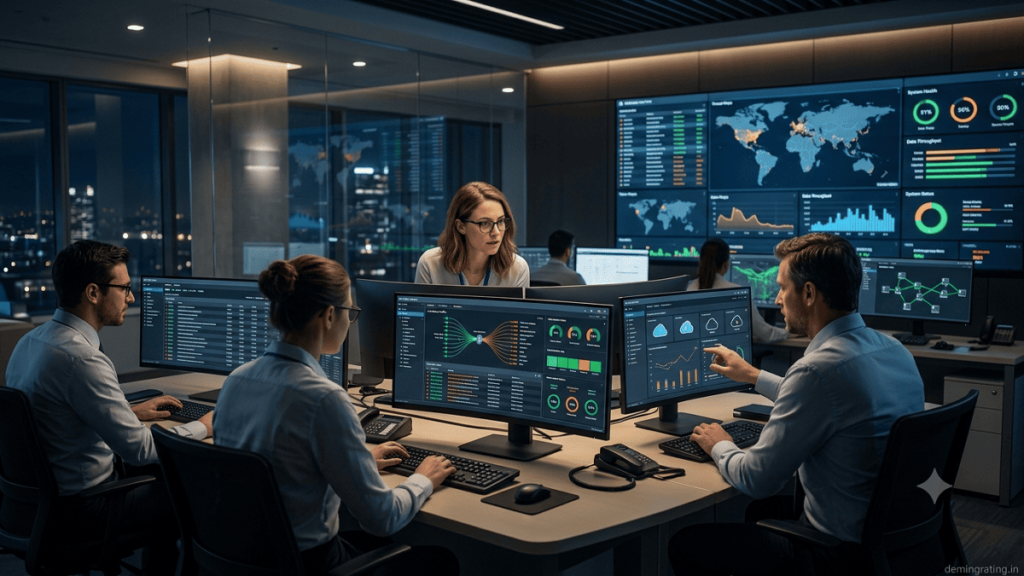
Continuous Monitoring and Support provides organizations with ongoing visibility into their IT infrastructure while ensuring that technical and security issues are identified and addressed promptly. This combination is particularly valuable for organizations that depend on networks, cloud services, applications, and connected systems for daily operations. By continuously monitoring these environments and providing timely technical support, businesses can strengthen security, improve uptime, support compliance, and maintain business continuity.
Strengthening Security
Continuous monitoring helps security teams detect suspicious activity, unauthorized access attempts, abnormal network traffic, malware indicators, and unexpected system changes. Early detection allows organizations to investigate and respond to potential threats before they develop into major security incidents.
Technical support complements monitoring by helping teams apply patches, correct insecure configurations, secure compromised devices, manage access permissions, and implement recommended security controls. The Cybersecurity and Infrastructure Security Agency (CISA) provides guidance emphasizing visibility, monitoring, vulnerability management, and timely security improvements.
Improving Uptime and System Performance
System failures and performance problems can directly affect productivity and customer services. Continuous monitoring can identify warning signs such as high resource utilization, network congestion, storage limitations, application errors, or device failures.
Support teams can investigate these alerts and resolve problems before they cause significant downtime. Preventive maintenance, performance optimization, software updates, and infrastructure improvements further contribute to reliable system availability.
Supporting Compliance
Many organizations must demonstrate that appropriate security and operational controls are implemented and maintained. Continuous monitoring can provide valuable records such as security events, access activity, system changes, and incident information.
These records can support internal audits and compliance activities by providing evidence that systems are being actively monitored and security controls are being maintained. The NIST Cybersecurity Framework 2.0 provides a structured approach for managing and communicating cybersecurity risks.
Enhancing Business Continuity
Continuous Monitoring and Support also strengthens business continuity by helping organizations identify and address disruptions quickly. Monitoring can detect system failures or unusual conditions, while support teams can initiate troubleshooting, recovery, and escalation procedures.
Organizations can also use monitoring information to identify recurring issues, improve disaster recovery plans, and protect critical services. This reduces the potential operational and financial impact of unexpected incidents.
Conclusion
The benefits of Continuous Monitoring and Support extend beyond basic IT maintenance. By combining real-time visibility with proactive technical assistance, organizations can detect security threats earlier, reduce downtime, maintain reliable performance, support compliance requirements, and improve their ability to recover from disruptions.
Ultimately, continuous monitoring and expert support create a proactive IT management model that helps organizations protect critical systems while maintaining secure, reliable, and resilient business operations.
#NetworkMonitoring
Case Study of Continuous Monitoring and Support
Continuous Monitoring and Support can significantly improve an organization’s ability to detect technical problems, respond to cybersecurity threats, maintain system availability, and support business continuity. The following case study illustrates how a mid-sized organization can use continuous monitoring and technical support to improve its overall IT environment.
Background
Consider a fictional organization, ABC Retail Services, with approximately 300 employees operating across multiple offices. The company relies on cloud applications, business-critical databases, employee endpoints, wireless networks, remote-access services, and e-commerce systems to support daily operations.
The organization previously relied on periodic IT checks and reactive troubleshooting. Technical teams often became aware of problems after employees reported slow applications, network outages, or service disruptions. Management recognized that this approach could increase downtime and delay the detection of cybersecurity incidents.
Implementation of Continuous Monitoring
ABC Retail Services introduced a continuous monitoring solution covering its network devices, servers, endpoints, cloud services, applications, and security events. Monitoring tools were configured to track system availability, resource utilization, network traffic, authentication activity, application errors, and security alerts.
The organization established predefined thresholds and alerts for unusual activity. For example, alerts were generated when servers experienced unusually high resource utilization, critical services became unavailable, or multiple failed authentication attempts were detected.
The National Institute of Standards and Technology (NIST) recommends ongoing activities for identifying, protecting against, detecting, responding to, and recovering from cybersecurity risks.
Role of Technical Support
Continuous monitoring was integrated with a dedicated technical support process. When an alert was generated, support personnel investigated the issue, determined its cause, and implemented an appropriate response.
During the first few months, monitoring identified several recurring storage-capacity issues and network performance problems. Support engineers addressed these issues before they caused significant service interruptions. The monitoring system also detected unusual login activity associated with a compromised employee account. The account was temporarily restricted, credentials were secured, and the incident was investigated before the activity could escalate.
Results and Lessons Learned
The organization gained greater visibility into its IT environment and reduced its reliance on employee-reported problems. Technical teams could identify performance degradation and potential security incidents earlier, allowing them to resolve issues proactively.
The case also demonstrated the importance of combining automated monitoring with skilled technical support. Monitoring tools can identify warning signs, but experienced professionals are needed to investigate alerts, determine appropriate responses, and resolve underlying problems.
Organizations can use guidance from CISA to strengthen monitoring, visibility, and cybersecurity practices.
Ultimately, Continuous Monitoring and Support helps transform IT management from a reactive service into a proactive operational function. By continuously observing systems and responding to issues promptly, organizations can improve security, reduce downtime, maintain performance, and strengthen overall business resilience.
#Cybersecurity
White Paper on Continuous Monitoring and Support
Executive Summary
Modern organizations depend on interconnected networks, cloud platforms, applications, endpoints, and digital services to maintain daily operations. As these environments become more complex, organizations need greater visibility into system health, security events, vulnerabilities, and operational changes. Continuous Monitoring and Support provides an ongoing approach for observing technology environments, identifying potential problems, and providing timely technical assistance to maintain security, availability, and performance.
The National Institute of Standards and Technology (NIST) describes Information Security Continuous Monitoring (ISCM) as a process that provides visibility into organizational assets, threats, vulnerabilities, and the effectiveness of security controls.
Understanding Continuous Monitoring and Support
Continuous monitoring involves collecting and analyzing information from network devices, servers, endpoints, applications, cloud environments, security controls, and other critical systems. Monitoring may identify unusual network activity, failed authentication attempts, resource utilization problems, service interruptions, configuration changes, and potential security incidents.
Technical support complements monitoring by investigating alerts and resolving identified problems. Support activities can include troubleshooting, patch management, configuration changes, performance optimization, vulnerability remediation, account management, incident response, and system recovery.
NIST emphasizes that continuous monitoring should provide ongoing awareness of security, vulnerabilities, and threats to support risk-based organizational decisions.
Key Benefits
One of the primary benefits of continuous monitoring is early detection. Problems can often be identified before they cause significant disruption. Monitoring can also improve security by identifying suspicious behavior and weaknesses that require investigation.
Continuous support helps organizations respond to these findings quickly. For example, when a monitoring platform detects abnormal resource usage or repeated unauthorized access attempts, technical teams can investigate the underlying cause and take appropriate corrective action.
Continuous monitoring also contributes to business resilience. By identifying system failures, capacity limitations, and performance degradation early, organizations can reduce downtime and maintain essential services.
Implementation Considerations
An effective program should begin by identifying critical systems, defining monitoring objectives, establishing appropriate metrics, and determining how frequently different assets and controls should be assessed. Not every system requires identical monitoring frequency. NIST recommends considering factors such as control volatility, risk, and organizational requirements when establishing monitoring and assessment frequencies.
Organizations should also establish clear alert-prioritization and escalation procedures. Automated tools can collect large volumes of information, but trained personnel are needed to investigate important alerts and determine appropriate responses.
Regular evaluation is equally important. NIST SP 800-137A provides an approach for assessing the effectiveness and completeness of continuous monitoring programs, including their strategies, policies, procedures, operations, and monitoring data.
Conclusion
Continuous Monitoring and Support should be viewed as an ongoing component of modern IT and cybersecurity management rather than a one-time activity. It provides organizations with greater visibility into their technology environment, supports earlier detection of security and performance issues, and enables technical teams to respond more effectively.
By combining automated monitoring, skilled technical support, vulnerability management, performance analysis, incident response, and regular program assessment, organizations can strengthen security, improve uptime, support risk-based decision-making, and build greater operational resilience.
#ITSupport
Industry Application of Continuous Monitoring and Support
Continuous Monitoring and Support has become an important component of IT management across industries. Organizations use ongoing monitoring to maintain visibility into network activity, system performance, security events, applications, and infrastructure health. Technical support then helps investigate alerts, resolve problems, and maintain reliable operations. While the underlying approach is similar, its application varies according to each industry’s technology requirements, security risks, and business priorities.
Financial Services
Banks, insurance companies, and financial institutions rely on highly available systems for transactions, digital banking, payment processing, and customer services. Continuous monitoring helps identify suspicious transactions, unusual login activity, system failures, network anomalies, and application performance issues. Technical support teams can investigate alerts, respond to incidents, maintain critical infrastructure, and help keep financial services available.
Healthcare
Hospitals and healthcare providers depend on electronic health records, medical applications, connected devices, and communication systems. Continuous monitoring can help detect system outages, unusual network activity, device connectivity problems, and potential security incidents. Technical support ensures that critical systems remain operational and assists with troubleshooting and recovery. The U.S. Department of Health and Human Services provides guidance concerning security of electronic protected health information.
Manufacturing
Manufacturing organizations increasingly use connected machinery, industrial control systems, operational technology, and enterprise networks. Continuous monitoring can help identify abnormal device behavior, network disruptions, equipment connectivity issues, and potential security threats. Support teams can investigate problems and coordinate corrective actions while minimizing disruption to production.
The Cybersecurity and Infrastructure Security Agency (CISA) provides resources addressing cybersecurity considerations for operational technology environments.
Retail and E-Commerce
Retail organizations monitor websites, point-of-sale systems, payment environments, cloud applications, databases, and customer-facing services. Continuous monitoring can identify application failures, unusual traffic, availability issues, and potential security events. Technical support helps resolve service interruptions quickly and maintain a reliable customer experience.
Government and Public Sector
Government agencies manage critical public services and sensitive information across complex technology environments. Continuous monitoring helps agencies identify security events, system performance issues, unauthorized activity, and service disruptions. Support teams can investigate incidents, maintain infrastructure, and help restore services when problems occur.
The National Institute of Standards and Technology (NIST) provides cybersecurity guidance that organizations can use to manage and continuously improve their security posture.
Energy and Critical Infrastructure
Energy, telecommunications, transportation, and other critical infrastructure organizations require high availability and strong security. Continuous monitoring helps identify anomalies, system failures, network disruptions, and potential cyber threats. Technical support enables rapid investigation and recovery, helping organizations maintain essential services.
Conclusion
Continuous Monitoring and Support provides industry-specific value by combining ongoing visibility with proactive technical assistance. Whether protecting financial systems, healthcare services, manufacturing operations, retail platforms, government infrastructure, or critical services, organizations can use continuous monitoring to detect problems earlier, improve uptime, strengthen security, and respond more effectively to incidents.
As digital environments continue to evolve, organizations should treat continuous monitoring and support as an ongoing business and cybersecurity capability rather than a one-time technical service. This approach can improve operational resilience while helping organizations maintain secure, reliable, and responsive technology environments.
#ContinuousMonitoring
Ask FAQs
What is Continuous Monitoring and Support?
Continuous Monitoring and Support is an ongoing IT service that monitors networks, systems, applications, and devices while providing technical assistance to identify, investigate, and resolve security and performance issues.
Why is Continuous Monitoring important?
Continuous monitoring helps organizations detect security threats, system failures, unusual activity, and performance issues early, allowing teams to take corrective action before problems cause significant damage or downtime.
What systems should be continuously monitored?
Organizations should monitor critical networks, servers, endpoints, cloud environments, applications, databases, firewalls, authentication systems, and other infrastructure that supports important business operations.
How does technical support improve system reliability?
Technical support helps resolve detected issues, perform preventive maintenance, apply updates, troubleshoot failures, optimize performance, and restore services quickly when disruptions occur.
Can Continuous Monitoring and Support help with compliance?
Yes. Continuous monitoring can provide security logs, access records, system activity, and evidence that security controls are being maintained. This can support audits and compliance programs, although specific requirements depend on the applicable regulations and industry standards.