Automation Investment
Table of Contents
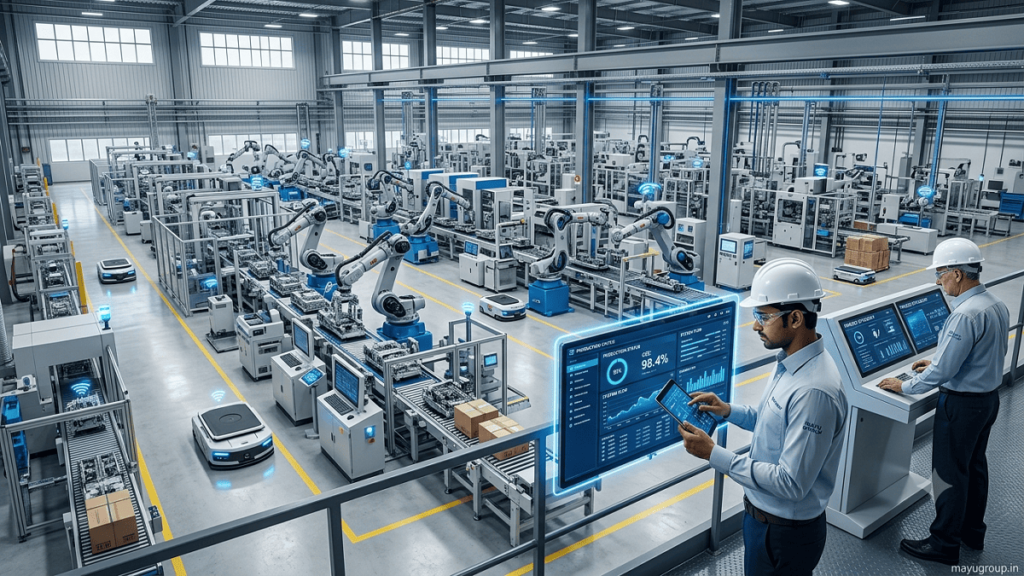
Automation investment is becoming an important strategy for businesses seeking to improve productivity, reduce operational costs, and remain competitive in a rapidly changing economy. By investing in technologies such as robotics, artificial intelligence, machine learning, and automated software systems, organizations can streamline repetitive tasks and improve operational efficiency.
From manufacturing and logistics to healthcare, retail, and financial services, automation is transforming how businesses operate. However, successful automation requires careful planning, suitable technology, and a clear understanding of the expected return on investment.
What Is Automation Investment?
Automation investment refers to allocating financial resources toward technologies, equipment, software, and systems that perform tasks with reduced manual intervention. These investments may include industrial robots, automated production lines, workflow software, warehouse automation, and intelligent business process automation.
The primary objective is to improve efficiency, accuracy, consistency, and scalability while managing long-term operating expenses.
Key Opportunities in Automation Investment
1. Manufacturing and Industrial Automation
Manufacturers invest in robotic systems, automated assembly lines, and machine vision technology to improve production speed and product quality. Predictive maintenance systems can also help identify potential equipment problems before they cause costly downtime.
2. Artificial Intelligence and Business Process Automation
AI-powered automation helps businesses process documents, respond to customer inquiries, analyze data, and manage repetitive administrative work. These solutions can reduce manual workloads and allow employees to focus on more complex responsibilities.
3. Warehouse and Logistics Automation
Automated storage systems, robotic picking equipment, inventory tracking, and route optimization tools help logistics companies improve order fulfillment and supply chain performance.
4. Healthcare Automation
Healthcare organizations can invest in automated scheduling, laboratory equipment, medical inventory systems, and administrative workflow tools. These technologies can reduce paperwork and support more efficient service delivery.
5. Retail and E-Commerce Automation
Retail businesses use automated inventory management, checkout systems, demand forecasting, and order processing to improve customer experiences and manage operations more effectively.
Benefits of Automation Investment
Automation can deliver several business advantages:
- Higher productivity: Automated systems can perform repetitive tasks quickly and consistently.
- Lower operating costs: Businesses may reduce waste, rework, and certain labor-intensive expenses.
- Improved accuracy: Automation can minimize some types of human error.
- Greater scalability: Automated processes can help businesses handle increasing workloads.
- Better data and decision-making: Connected systems can provide useful operational information.
These benefits are not guaranteed. Results depend on implementation quality, maintenance requirements, workforce readiness, and the suitability of the chosen technology.
Risks and Challenges
Automation investment can require substantial upfront spending on equipment, software, integration, training, and cybersecurity. Businesses may also face technical compatibility issues, employee concerns, and ongoing maintenance expenses.
Before investing, organizations should evaluate their current workflows, identify suitable processes, estimate total ownership costs, and establish measurable performance targets.
The International Federation of Robotics provides information about industrial robotics and automation trends, while NIST offers resources on manufacturing technology and cybersecurity.
How to Evaluate Automation ROI
Businesses should compare the total cost of implementation with the financial and operational benefits expected over time. Useful measures include labor hours saved, output per hour, defect rates, equipment downtime, processing time, and maintenance costs.
A pilot project can help validate these assumptions before a company commits to a larger deployment. Organizations should also account for software subscriptions, system upgrades, training, and ongoing technical support.
Conclusion
Automation investment offers businesses opportunities to modernize operations, improve productivity, and support long-term growth. Manufacturing, logistics, healthcare, retail, and service industries can all benefit from carefully selected automation technologies.
The most effective approach is to begin with clearly defined business problems, choose appropriate solutions, and measure results against realistic objectives. By combining strategic planning with responsible implementation, businesses can make informed automation investments and build more efficient, resilient operations.
#OperationalEfficiency
What Is Automation Investment? A Complete Guide for Businesses
Introduction
Automation investment refers to the process of allocating money toward technologies, equipment, software, and systems that perform tasks with minimal human intervention. Businesses invest in automation to improve productivity, reduce repetitive work, increase accuracy, and optimize operating costs.
As industries adopt digital technologies, automation investment is becoming an important part of business growth strategies. From robotic manufacturing systems to automated customer service platforms, these investments help organizations modernize operations and respond to changing market demands.
Understanding Automation Investment
Automation investment involves purchasing, implementing, and maintaining technologies that streamline business processes. These technologies may include industrial robots, artificial intelligence (AI), machine learning, automated software, sensors, and workflow management systems.
For example, a manufacturing company might invest in robotic equipment to assemble products faster, while an online retailer could implement automated inventory software to track stock levels and process orders.
The objective is not simply to replace manual work. Effective automation can help employees focus on complex tasks, improve consistency, and support better business decisions.
Types of Automation Investment
1. Industrial Automation
Industrial automation involves using machines, robotics, sensors, and control systems to manage manufacturing and production processes. It can improve production speed, quality control, and equipment reliability.
2. Business Process Automation
Businesses use software to automate repetitive administrative activities such as invoice processing, document management, employee onboarding, and data entry.
3. AI-Powered Automation
AI-powered automation combines automation tools with intelligent systems that can analyze information, recognize patterns, and support decisions. Examples include customer service chatbots, document analysis, and predictive maintenance.
4. Warehouse and Logistics Automation
Automated storage systems, robotic picking equipment, inventory tracking, and route-planning software help businesses improve warehouse productivity and supply chain performance.
Benefits of Automation Investment
Automation investment can provide several advantages when implemented effectively.
- Improved productivity: Automated systems can complete repetitive tasks quickly and consistently.
- Reduced operating expenses: Businesses may lower waste, rework, and certain labor-intensive costs.
- Greater accuracy: Automation can reduce errors in routine processes.
- Scalability: Automated workflows can help organizations manage growing workloads.
- Better operational visibility: Connected systems can provide useful data for monitoring performance and identifying problems.
However, these benefits depend on the technology selected, implementation quality, maintenance needs, and business requirements.
Challenges to Consider
Automation investment may require significant upfront capital for equipment, software, integration, and employee training. Businesses must also consider cybersecurity, technical compatibility, maintenance costs, and potential disruption during implementation.
Before investing, organizations should identify processes suitable for automation, calculate total ownership costs, and establish measurable goals. A small pilot project can help validate expected benefits before a larger rollout.
How to Measure Automation Investment Returns
Businesses can assess automation performance using indicators such as labor hours saved, production output, error rates, processing time, downtime, and maintenance expenses.
Comparing these results with the full cost of implementation helps determine whether the investment is delivering meaningful value.
For additional information, explore the International Federation of Robotics for robotics industry resources and NIST for manufacturing and technology guidance.
Conclusion
Automation investment is a strategic approach to improving business efficiency through machines, software, robotics, and intelligent technologies. It can help organizations increase productivity, improve quality, and prepare for future growth.
The best results come from selecting technologies that solve real operational problems, planning for long-term costs, training employees, and regularly measuring performance. With a clear strategy, businesses can use automation investment to build more efficient and competitive operations.
#AutomationTechnology

What Are the Benefits of Investing in Automation?
Introduction
Investing in automation has become an important strategy for businesses seeking to improve efficiency, control operating costs, and remain competitive. By adopting technologies such as robotics, artificial intelligence (AI), machine learning, and workflow automation software, organizations can streamline daily operations and improve overall performance.
Automation is no longer limited to large manufacturing companies. Small businesses, retailers, healthcare providers, financial institutions, and logistics companies are also using automated systems to save time, improve accuracy, and support business growth.
1. Increased Productivity and Efficiency
One of the primary benefits of automation investment is improved productivity. Automated systems can perform repetitive tasks quickly and consistently, helping businesses process more work with fewer delays.
For example, manufacturing companies can use robotic equipment to assemble products, while service businesses can automate appointment scheduling, document processing, and customer notifications.
By reducing manual workloads, employees can focus on strategic planning, customer relationships, and other activities that require human judgment.
2. Reduced Operating Costs
Automation can help businesses reduce expenses associated with repetitive administrative work, production errors, wasted materials, and inefficient processes.
Automated inventory systems, for instance, can help businesses monitor stock levels and avoid unnecessary purchases. Similarly, workflow software can reduce paperwork and streamline internal approvals.
Although automation requires an initial investment, the long-term savings may justify the expense when the system is properly selected and implemented.
3. Improved Accuracy and Quality
Manual processes can lead to inconsistent results and costly mistakes. Automation helps standardize tasks by applying predefined rules and repeatable procedures.
In manufacturing, automated inspection systems can identify certain product defects. In finance, software can validate data and flag discrepancies in transaction records.
Better consistency can reduce rework, improve customer satisfaction, and support stronger quality control. However, automated systems still require testing, monitoring, and appropriate human oversight.
4. Greater Business Scalability
As a company grows, its workload, customer base, and operational complexity often increase. Without efficient processes, expansion can lead to higher costs and slower service.
Automation can help businesses handle larger workloads without increasing manual effort at the same rate. For example, an e-commerce business can automate order confirmations, inventory updates, and shipping notifications as its sales volume increases.
This flexibility can help companies expand operations while maintaining service quality.
5. Improved Customer Experience
Customers expect quick responses, accurate information, and reliable service. Automation can help businesses meet these expectations through chatbots, self-service portals, automated booking systems, and order tracking.
For example, an automated customer support system can answer common questions around the clock and route complex issues to human representatives.
When implemented thoughtfully, these tools can improve response times while allowing employees to concentrate on more complicated customer needs.
6. Better Data and Decision-Making
Modern automation systems can collect and analyze operational data, helping managers understand performance and identify areas for improvement.
Businesses can use automated reports to monitor sales, inventory, production output, and service quality. Predictive maintenance tools can also analyze equipment data to identify potential problems before they cause significant downtime.
Reliable data can support better decisions, provided businesses validate the information and interpret results appropriately.
7. Stronger Competitiveness and Long-Term Growth
Businesses that adopt suitable automation technologies may respond more quickly to market changes, improve product consistency, and operate more efficiently.
Automation can also help organizations introduce new services, modernize existing processes, and develop a foundation for future digital transformation.
However, technology alone does not guarantee competitive success. Businesses must combine automation with effective management, employee training, cybersecurity, and a clear understanding of customer needs.
How to Maximize the Benefits of Automation Investment
Before investing, businesses should identify processes that consume significant time or resources. They should compare available solutions, estimate implementation and maintenance costs, train employees, and establish measurable performance targets.
Useful indicators include productivity, cost per transaction, error rates, processing time, downtime, and customer satisfaction. Testing a solution on a smaller scale can help determine whether it delivers sufficient value before a wider rollout.
For additional information, explore the International Federation of Robotics and the National Institute of Standards and Technology.
Conclusion
Investing in automation can provide significant benefits, including higher productivity, lower operating costs, improved quality, better scalability, and more efficient customer service. It can also support data-driven decision-making and help businesses prepare for future growth.
The best results come from choosing technologies that address genuine business challenges and measuring their performance over time. With careful planning and responsible implementation, automation can become a valuable long-term investment.
#DigitalTransformation
Which Industries Benefit Most From Automation? 7 Powerful Sectors Transforming Business
Introduction
Automation is transforming industries by helping businesses improve productivity, reduce operational costs, increase accuracy, and deliver better services. Technologies such as robotics, artificial intelligence (AI), machine learning, and automated software systems are changing how organizations manage everyday operations.
Although automation can benefit almost any industry, some sectors gain particularly strong advantages because they handle repetitive tasks, large amounts of data, complex workflows, or high-volume production. Understanding these industries can help businesses identify valuable automation investment opportunities.
1. Manufacturing Industry
Manufacturing is one of the industries that benefits most from automation. Factories use industrial robots, automated assembly lines, machine vision, and sensor-based monitoring to improve production efficiency.
Automation can help manufacturers assemble products consistently, detect defects, manage materials, and monitor equipment performance. Predictive maintenance systems can also identify potential machinery problems before they cause unexpected downtime.
These technologies can reduce waste and improve quality, although businesses must account for equipment costs, maintenance, and employee training.
Learn more from the International Federation of Robotics.
2. Healthcare Industry
Healthcare organizations use automation to streamline administrative tasks, laboratory processes, patient scheduling, medical inventory management, and certain diagnostic workflows.
For example, automated appointment systems can reduce administrative workloads, while laboratory automation can help process samples more efficiently.
AI-powered tools may also assist healthcare professionals with medical image analysis and information management. However, clinical applications require appropriate validation, privacy safeguards, and professional oversight to protect patient safety.
3. Banking and Financial Services
Banks and financial institutions process large volumes of transactions, documents, and customer requests. Automation helps streamline these operations while supporting accuracy and efficiency.
Common applications include fraud detection, automated reporting, document verification, payment processing, and customer support chatbots.
Automated systems can flag suspicious transactions for further investigation and help employees process routine requests faster. Financial organizations must still maintain cybersecurity, regulatory compliance, and appropriate human review.
4. Retail and E-Commerce
Retailers use automation to manage inventory, process orders, personalize recommendations, and improve customer service.
Automated stock monitoring can alert businesses when products need replenishment. E-commerce platforms can automate order confirmations, shipping updates, returns processing, and customer inquiries.
These systems can help retailers manage growing order volumes and reduce avoidable errors. Businesses should also evaluate integration costs and protect customer information.
5. Logistics and Transportation
Logistics companies benefit from automation through warehouse robotics, automated sorting, fleet tracking, route optimization, and shipment management systems.
For example, route-planning software can help delivery businesses reduce unnecessary travel and improve scheduling. Automated warehouse equipment can also speed up picking, packing, and sorting.
The financial benefits depend on shipment volumes, infrastructure, operating conditions, and the reliability of the technology.
6. Agriculture Industry
Agriculture is increasingly adopting automation to improve resource efficiency and support farm management.
Automated irrigation systems can regulate water delivery, while sensors and AI-based tools can help monitor soil conditions, crop health, and weather patterns. Some farms also use robotic equipment for planting, harvesting, and weed control.
These technologies can help reduce resource waste and improve operational planning. However, affordability, connectivity, farm size, and local growing conditions influence their suitability.
7. Education Industry
Educational institutions use automation to simplify administration, manage student records, schedule classes, and support communication with students and parents.
Learning platforms can automate routine assessments, track student progress, and provide personalized learning recommendations. AI tools may also help educators prepare learning materials and manage repetitive administrative tasks.
Automation should complement teachers rather than replace the human interaction, judgment, and support essential to effective education.
Which Industry Should Businesses Prioritize?
The best industry for automation investment depends on the tasks being automated, the scale of operations, and the expected return.
| Industry | High-value automation opportunities |
|---|---|
| Manufacturing | Robotics and quality inspection |
| Healthcare | Scheduling and laboratory workflows |
| Banking | Fraud detection and document processing |
| Retail | Inventory and order management |
| Logistics | Warehouse operations and route planning |
| Agriculture | Smart irrigation and crop monitoring |
| Education | Administration and learning support |
Businesses should evaluate the cost of implementation, potential savings, employee training, cybersecurity, and long-term maintenance before choosing a solution.
Conclusion
Manufacturing, healthcare, banking, retail, logistics, agriculture, and education are among the industries benefiting from automation. These technologies can improve efficiency, reduce repetitive work, strengthen accuracy, and help organizations manage increasing workloads.
However, the most successful automation projects begin with a clear business problem rather than the technology itself. By identifying suitable tasks, testing solutions, and measuring results, organizations can make better automation investment decisions and build more productive operations.
Useful resources:
- International Federation of Robotics
- National Institute of Standards and Technology
- International Labour Organization
#SmartManufacturing
How Can Businesses Measure Automation ROI? 7 Powerful Steps to Calculate Returns
Introduction
Automation investment helps businesses improve productivity, reduce repetitive work, and streamline operations. However, before investing in robotics, artificial intelligence (AI), or workflow automation software, businesses need to understand whether the expected financial benefits justify the costs.
Measuring automation return on investment (ROI) allows organizations to evaluate the financial impact of automated systems, compare investment options, and make informed decisions about future technology spending.
What Is Automation ROI?
Automation ROI measures the financial return a business receives from investing in automation technology compared with the cost of that investment.
A commonly used formula is:
Automation ROI (%) = (Net Financial Benefits ÷ Total Investment Cost) × 100
For a straightforward calculation, net financial benefits equal the total financial benefits over a defined period minus the total investment cost.
For example, suppose a business invests $50,000 in an automated workflow system and estimates $70,000 in total financial benefits over one year.
Net benefit = $70,000 − $50,000 = $20,000.
ROI = ($20,000 ÷ $50,000) × 100 = 40%.
This example assumes that the $70,000 represents total benefits before deducting the investment cost. Actual calculations should account for all relevant implementation and operating expenses.
1. Calculate the Total Investment Cost
The first step is identifying every major expense associated with automation. These may include:
- Software licenses or subscriptions
- Robotics and equipment purchases
- System integration and customization
- Employee training
- Maintenance and technical support
- Cybersecurity and infrastructure upgrades
- Ongoing cloud computing or service charges
Including these costs helps businesses avoid overstating the financial benefits of automation.
2. Identify Measurable Financial Benefits
Businesses should estimate how automation will affect their operating expenses and revenue.
Potential benefits include reduced overtime, fewer processing errors, lower material waste, reduced downtime, and improved employee productivity. Some projects may also increase revenue by enabling faster service or greater production capacity.
Benefits should be based on measurable evidence wherever possible. Time saved, for example, does not automatically translate into cash savings unless it reduces expenses or enables additional productive work.
3. Measure Productivity Improvements
Automation can help employees complete repetitive tasks faster and more consistently.
Businesses can compare performance before and after implementation using indicators such as:
- Transactions processed per hour
- Production output per employee
- Average order processing time
- Number of manual hours required
- Error and rework rates
These measurements help determine whether automation is improving operational performance and where further improvements may be possible.
4. Calculate the Payback Period
The payback period estimates how long it takes for an investment to recover its initial cost through net cash savings.
Payback period = Initial investment ÷ Average net cash savings per period
For example, if a company invests $60,000 and saves $20,000 annually after accounting for recurring automation expenses, its simple payback period is three years.
This calculation assumes consistent annual savings and does not account for the time value of money or benefits received after the payback point.
5. Compare Performance Before and After Automation
Establishing a baseline before implementation is essential. Businesses should record existing costs, processing times, quality levels, and productivity metrics.
After automation is introduced, the same indicators should be measured over a comparable period. This comparison helps distinguish genuine improvements from changes caused by seasonal demand, staffing levels, or other operational factors.
A pilot project can help validate assumptions before a larger rollout.
6. Consider Long-Term Benefits and Risks
Automation ROI should account for more than immediate cost reductions. Businesses may benefit from improved quality, greater scalability, faster customer service, and reduced operational risk.
At the same time, systems may require upgrades, retraining, repairs, or replacement. Cybersecurity incidents, integration problems, and unexpected downtime can also reduce returns.
For longer-term projects, organizations may use discounted cash flow or net present value (NPV) analysis to account for the timing of costs and benefits.
7. Review ROI Regularly
Automation performance can change as business needs and technology evolve. Organizations should review ROI periodically, compare actual results with forecasts, and identify opportunities to improve system performance.
Useful resources include the National Institute of Standards and Technology for technology and manufacturing guidance and the International Federation of Robotics for industrial robotics information.
Conclusion
Businesses can measure automation ROI by calculating total investment costs, identifying financial benefits, tracking productivity improvements, and evaluating the payback period. Regular performance reviews help organizations understand whether automation is delivering sustainable value.
The most reliable approach combines financial calculations with operational metrics and realistic assumptions. By measuring results carefully, businesses can make informed automation investment decisions, prioritize worthwhile projects, and improve long-term efficiency.
#AIandAutomation
Case Study of Automation Investment: How Amazon Uses Automation to Improve Efficiency
Introduction
Automation investment has become a key strategy for businesses looking to improve productivity, reduce operating costs, and increase competitiveness. By investing in robotics, automated software, artificial intelligence (AI), and intelligent logistics systems, companies can streamline operations and handle growing customer demand.
This case study explores Amazon’s investment in warehouse and fulfillment automation. It illustrates how automation can support business growth, improve operational workflows, and create opportunities for greater efficiency.
1. Company Background
Amazon is a global e-commerce and technology company that operates extensive fulfillment and distribution networks. Managing millions of products, processing orders, and coordinating deliveries require sophisticated logistics systems.
To support its operations, Amazon has invested in warehouse robotics, automated sorting technologies, inventory management systems, and software that coordinates fulfillment activities.
The company’s experience demonstrates how automation can be integrated into large-scale operations to help manage complex workflows.
Learn more through Amazon’s official robotics information.
2. Why Amazon Invests in Automation
Large fulfillment centers must manage inventory, move products, prepare orders, and meet delivery schedules. Relying entirely on manual processes can make these tasks more difficult as order volumes increase.
Amazon’s automation investments aim to improve several operational areas:
- Order fulfillment: Robotics can assist with moving inventory and supporting picking workflows.
- Inventory management: Automated systems help track products and coordinate warehouse activities.
- Operational efficiency: Software and robotics can help organize workflows and reduce unnecessary movement.
- Workplace support: Certain technologies can reduce the need for employees to perform repetitive or physically demanding tasks.
- Scalability: Automation can help fulfillment operations manage changing workloads.
The actual benefits vary by facility, technology, implementation quality, and operating conditions.
3. Technologies Used in Warehouse Automation
Warehouse Robotics
Mobile robots can transport inventory or shelving units within designated warehouse environments. This can reduce some manual travel and help employees access products more efficiently.
Automated Sorting Systems
Conveyor systems and automated sorting equipment help direct packages and products to appropriate processing areas. These systems can improve throughput when integrated effectively with warehouse management software.
Data and Software Automation
Warehouse management systems coordinate inventory records, order processing, and fulfillment activities. Data-driven software can help managers identify bottlenecks and adjust operational workflows.
Human-Robot Collaboration
Automation does not eliminate the need for human workers. Employees continue to perform tasks involving supervision, exception handling, quality checks, equipment maintenance, and complex decisions.
4. Business Benefits of Automation Investment
Amazon’s approach illustrates several potential advantages of investing in automation.
Improved productivity: Automated material handling can support faster and more organized warehouse workflows.
Better operational consistency: Integrated software and equipment can help standardize processes and improve inventory visibility.
Capacity for growth: Automation can help facilities handle changing order volumes and complex product assortments.
Potential cost efficiencies: Reducing unnecessary movement, delays, and certain repetitive tasks may improve resource utilization.
Workplace improvements: Properly designed systems can reduce some physically demanding activities, although new technologies also introduce training and safety requirements.
These benefits should not be interpreted as proof that every automation project will generate a positive financial return. Costs and outcomes depend on the specific implementation.
5. Challenges and Investment Considerations
Warehouse automation requires substantial planning and capital. Businesses must account for equipment purchases, software integration, maintenance, employee training, and system upgrades.
Automation may also introduce technical dependencies and operational risks. Equipment failures, cybersecurity issues, or poorly integrated systems can disrupt fulfillment activities.
Companies should evaluate automation projects using measurable indicators such as processing time, cost per order, error rates, equipment downtime, worker safety, and total ownership costs.
6. Key Lessons for Other Businesses
Amazon’s example provides several practical lessons for companies considering automation investment:
- Start with operational problems: Identify bottlenecks, repetitive tasks, and costly inefficiencies before selecting technology.
- Choose suitable automation: Match equipment and software to the business’s actual workload and operating environment.
- Measure results: Establish baseline performance metrics and compare them with post-implementation results.
- Train employees: Prepare workers to operate, supervise, and maintain automated systems.
- Plan for long-term costs: Include maintenance, upgrades, integration, and cybersecurity in the investment budget.
- Scale carefully: Pilot new systems and evaluate their performance before expanding across the business.
Conclusion
Amazon’s investment in warehouse robotics and automated fulfillment systems provides a useful example of how automation can support large-scale business operations. By combining robotics, software, and operational planning, companies can improve material handling, coordinate workflows, and manage increasing demand.
However, automation investment is most effective when supported by realistic financial projections, workforce preparation, and continuous performance measurement. Businesses of different sizes can apply these principles to identify suitable automation opportunities and build more efficient operations.
#IndustrialAutomation
White Paper on Automation Investment: Strategies, Opportunities, and Business Growth
Executive Summary
Automation investment is becoming a strategic priority for businesses seeking to improve productivity, control operating costs, and strengthen competitiveness. Technologies such as industrial robotics, artificial intelligence (AI), machine learning, and workflow automation are transforming how organizations manufacture products, manage information, serve customers, and coordinate operations.
However, successful automation requires more than purchasing advanced equipment or software. Businesses must evaluate financial costs, operational requirements, workforce readiness, cybersecurity, and long-term returns.
This white paper examines the major types of automation investment, industry applications, financial benefits, implementation challenges, and strategies organizations can use to maximize value.
1. Introduction to Automation Investment
Automation investment refers to allocating financial resources toward technologies and systems that perform tasks with reduced manual intervention. These investments may involve machinery, robotics, software platforms, sensors, control systems, and AI-powered applications.
Businesses typically pursue automation to improve efficiency, reduce repetitive workloads, minimize errors, and increase production capacity. Automation can also help organizations standardize processes and collect operational data for better decision-making.
The appropriate investment depends on the organization’s size, industry, existing infrastructure, and strategic objectives.
2. Major Types of Automation Investment
Industrial Automation
Industrial automation uses machinery, robots, sensors, and control systems to manage manufacturing and production activities. Common applications include automated assembly, packaging, inspection, and equipment monitoring.
These technologies can improve production consistency and help manufacturers manage high-volume operations.
Business Process Automation
Business process automation uses software to streamline repetitive administrative tasks such as invoice processing, document management, employee onboarding, and approval workflows.
It can reduce paperwork and help employees focus on tasks requiring judgment and communication.
AI-Powered Automation
AI-powered automation combines automated workflows with technologies that analyze information, recognize patterns, generate content, or support decisions.
Examples include intelligent customer service, automated document extraction, predictive maintenance, and demand forecasting. AI systems require appropriate testing and monitoring because their outputs may be inaccurate or inconsistent.
Warehouse and Logistics Automation
Warehouse automation includes robotic material handling, automated storage systems, package sorting, and inventory tracking.
These technologies can help distribution businesses improve order processing and coordinate complex supply chains.
3. Industry Applications
Automation investment offers opportunities across multiple sectors.
- Manufacturing: Robotics, quality inspection, production planning, and predictive maintenance.
- Healthcare: Appointment scheduling, laboratory automation, inventory management, and administrative workflows.
- Retail: Inventory tracking, automated checkout, order processing, and demand forecasting.
- Banking and finance: Document processing, transaction monitoring, fraud detection, and reporting.
- Logistics: Warehouse robotics, shipment tracking, and route optimization.
- Agriculture: Automated irrigation, crop monitoring, and precision farming.
- Education: Student administration, learning management, and routine assessment support.
The value of each application depends on the problem being addressed, the quality of implementation, and the ability to demonstrate measurable improvements.
4. Financial Benefits of Automation Investment
Automation can generate financial benefits through several mechanisms.
Lower operating costs: Businesses may reduce waste, rework, overtime, and certain repetitive labor expenses.
Higher productivity: Automated systems can process tasks consistently and help organizations increase output.
Improved quality: Standardized workflows and automated inspections can reduce some errors and product defects.
Reduced downtime: Equipment monitoring and predictive maintenance can help identify potential failures before major disruptions occur.
Greater scalability: Automated processes can support increased workloads without requiring equivalent increases in manual effort.
These benefits are not guaranteed. Organizations must account for implementation costs, ongoing maintenance, software subscriptions, employee training, and potential operational disruptions.
5. Measuring Return on Investment
A structured financial evaluation helps businesses determine whether an automation project is worthwhile.
A commonly used formula is:
ROI (%) = (Net Benefits ÷ Total Investment Cost) × 100
Net benefits are calculated by subtracting the investment cost from the total financial benefits over the selected evaluation period.
For example, if a company invests $100,000 in automation and generates $130,000 in total financial benefits during the first year, its net benefit is $30,000 and its first-year ROI is 30%, assuming all relevant costs are included in the investment figure.
Businesses should also evaluate the payback period, operating expenses, productivity improvements, error rates, processing time, and equipment downtime.
For long-term investments, discounted cash flow analysis can provide a more complete view of the timing and value of future benefits.
6. Challenges and Risks
Despite its potential, automation investment involves several challenges.
High initial costs: Equipment, software, integration, and infrastructure upgrades may require substantial capital.
Integration difficulties: New systems may not work seamlessly with existing business applications or machinery.
Workforce readiness: Employees may require retraining to operate, supervise, and maintain automated systems.
Cybersecurity risks: Connected equipment and software can introduce additional security vulnerabilities.
Technology obsolescence: Rapid technological changes may require upgrades or replacement earlier than expected.
Uncertain returns: Expected savings may not materialize if processes are poorly selected or implementation is ineffective.
Organizations can reduce these risks through phased implementation, vendor evaluation, employee involvement, security controls, and realistic financial planning.
7. Best Practices for Successful Automation Investment
Businesses should follow a structured approach to improve the likelihood of success.
- Identify high-value processes: Prioritize repetitive, costly, time-consuming, or error-prone activities.
- Establish baseline metrics: Record existing costs, processing times, error rates, and productivity.
- Evaluate suitable technologies: Compare solutions based on functionality, compatibility, scalability, and total ownership costs.
- Run a pilot project: Test the technology in a limited environment before committing to a wider rollout.
- Train employees: Provide the knowledge and support needed to use the new systems effectively.
- Monitor performance: Compare actual outcomes against financial and operational targets.
- Improve continuously: Update workflows, maintain equipment, and review security as business needs evolve.
8. Future Outlook
Automation is expected to continue developing through advances in robotics, AI, connected sensors, cloud computing, and intelligent workflow platforms.
Businesses may increasingly combine physical automation with software systems that analyze operational data and coordinate decisions. These developments could create opportunities for more flexible production, personalized services, and improved supply chain management.
Nevertheless, future success will depend on responsible implementation, reliable infrastructure, workforce skills, and the ability to generate measurable business value.
Conclusion
Automation investment can help organizations improve efficiency, reduce waste, increase consistency, and support sustainable business growth. Its applications extend across manufacturing, healthcare, retail, finance, logistics, agriculture, and other industries.
The strongest investment decisions begin with clearly defined business needs, realistic cost estimates, and measurable performance objectives. By evaluating risks, preparing employees, and monitoring results, businesses can make informed decisions about automation and improve the likelihood of achieving meaningful long-term returns.
References and Further Reading
- International Federation of Robotics
- National Institute of Standards and Technology
- International Labour Organization
#BusinessAutomation
Industry Applications of Automation Investment: Transforming Business Operations
Introduction
Automation investment is helping businesses improve productivity, reduce operating costs, and increase efficiency across multiple industries. By adopting technologies such as robotics, artificial intelligence (AI), machine learning, and automated software systems, organizations can streamline repetitive tasks and improve decision-making. As competition increases, automation has become an important strategy for businesses seeking sustainable growth.
1. Manufacturing and Industrial Production
Manufacturing is one of the leading industries benefiting from automation investment. Businesses invest in industrial robots, automated assembly lines, and smart sensors to improve production speed, maintain product quality, and reduce human error.
Automated machinery can operate consistently, helping manufacturers increase output while minimizing waste and downtime. According to the International Federation of Robotics, industrial robot adoption is an important indicator of growing automation across manufacturing sectors.
2. Healthcare and Pharmaceuticals
Healthcare organizations use automation to improve patient services and operational accuracy. Automated laboratory equipment, robotic-assisted procedures, digital appointment systems, and pharmacy automation can help reduce manual workloads.
Pharmaceutical companies also invest in automated production, packaging, and quality-control systems. These technologies support consistent manufacturing processes and help organizations meet strict industry standards.
3. Retail and E-commerce
Retailers and e-commerce businesses use automation to manage inventory, process orders, and improve customer experiences. Automated warehouses, barcode scanning, inventory forecasting, and AI-powered customer support can reduce delays and improve order accuracy.
For large online retailers, automation investment can support faster fulfillment and more efficient logistics, particularly during periods of high demand.
4. Banking and Financial Services
Banks and financial institutions invest in robotic process automation (RPA) to streamline repetitive administrative tasks. Applications include transaction processing, customer onboarding, document verification, compliance reporting, and fraud detection.
Automation can reduce processing times and improve consistency, allowing employees to focus on customer relationships and complex financial decisions.
5. Logistics and Transportation
Logistics companies use automated sorting systems, warehouse robots, route optimization software, and real-time tracking tools to improve delivery performance. These investments can help reduce fuel consumption, improve resource allocation, and increase supply chain visibility.
6. Agriculture and Food Processing
Agricultural businesses are adopting precision farming technologies, automated irrigation, crop-monitoring sensors, and robotic harvesting systems. Food processing companies also use automation for sorting, packaging, and quality inspection.
These technologies can improve resource efficiency, product consistency, and production capacity.
Conclusion
Automation investment creates opportunities across manufacturing, healthcare, retail, finance, logistics, and agriculture. Although implementation requires upfront capital, careful planning can help businesses achieve long-term operational benefits.
Organizations should evaluate their business needs, implementation costs, workforce training requirements, and expected return on investment before adopting automation solutions.
#AutomationInvestment
Ask FAQs
What is automation investment?
Automation investment involves spending money on technologies such as robotics, artificial intelligence, and automated software to improve business efficiency, productivity, and operational performance.
Which industries benefit most from automation investment?
Manufacturing, healthcare, retail, banking, logistics, agriculture, and food processing benefit significantly from automation through faster processes, reduced errors, and improved resource management.
How does automation investment reduce business costs?
Automation can reduce repetitive manual work, minimize production errors, improve resource utilization, and lower waste. Over time, these improvements may help reduce operating expenses.
How can a business measure the ROI of automation investment?
Businesses can measure return on investment (ROI) by comparing the cost of implementation with savings from labor, reduced errors, increased output, and improved productivity over a specific period.
What challenges should businesses consider before investing in automation?
Common challenges include high initial costs, integration with existing systems, employee training, cybersecurity risks, and ongoing maintenance. Careful planning can help businesses manage these challenges effectively.
Disclaimer: This content is for informational purposes only and should not be considered financial or investment advice.