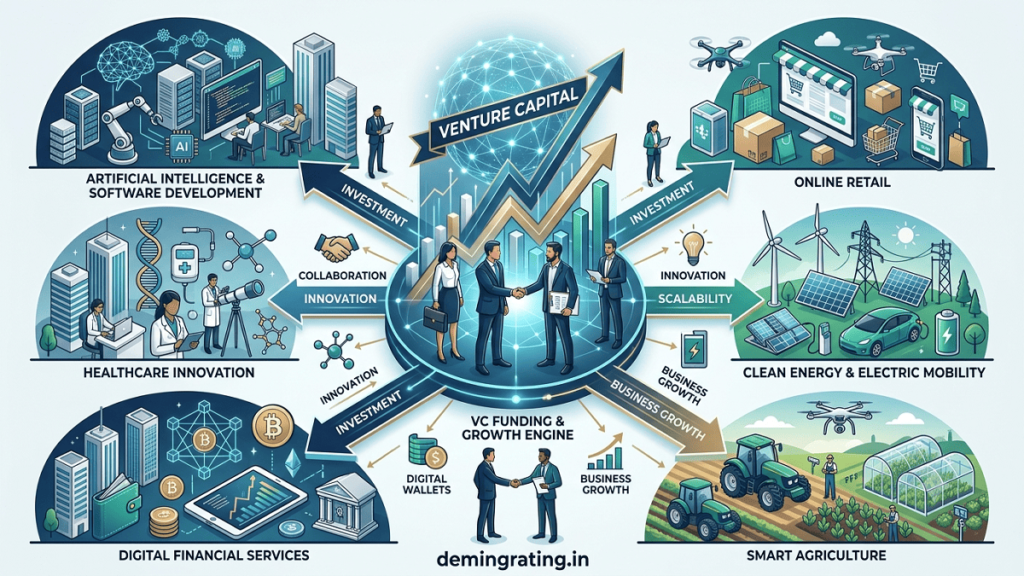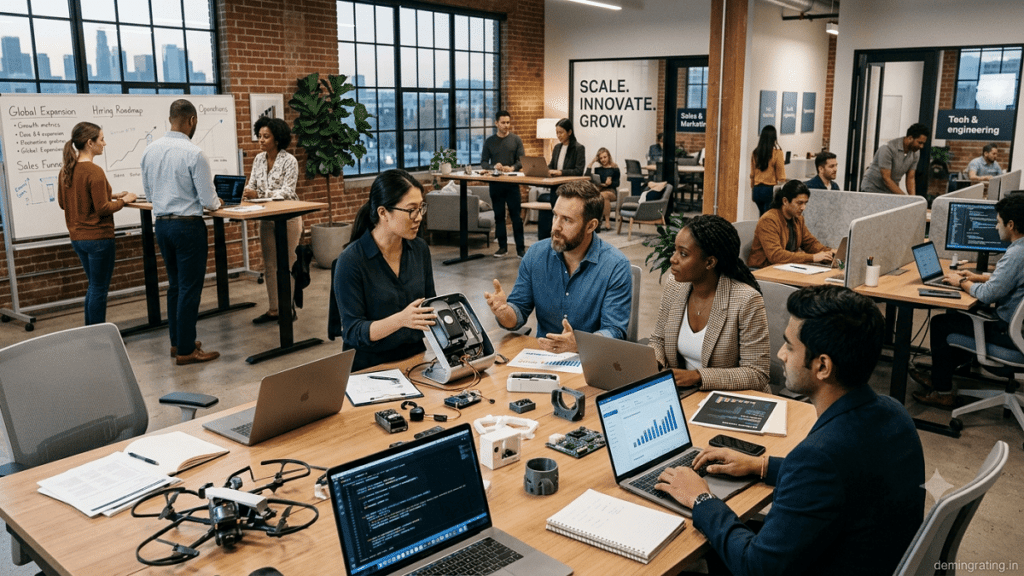
Business executives discussing hybrid financing strategies in a modern corporate boardroom with digital financial displays.
Alternative Financing, Hybrid Financing

Hybrid Financing

Hybrid financing refers to a funding approach that combines elements of debt and equity financing to create flexible capital structures for businesses. It allows companies to raise funds through instruments such as convertible bonds, mezzanine financing, and preferred shares while balancing ownership control and repayment obligations.

Professionals managing DAO funding and blockchain governance through futuristic digital finance systems.
Alternative Financing, DAO Funding

DAO Funding

DAO funding refers to the process of raising, managing, and distributing capital through decentralized autonomous organizations using blockchain technology and smart contracts. This topic explores how DAOs operate, their governance systems, funding models, benefits, risks, and real-world applications across decentralized finance (DeFi), Web3, NFTs, gaming, and blockchain-based communities.

Professional cryptocurrency investor analyzing Bitcoin and Ethereum trading charts in a futuristic financial office environment.
Alternative Financing, Cryptocurrency Investment

Cryptocurrency Investment

Cryptocurrency investment refers to the process of buying, holding, or trading digital currencies such as Bitcoin and Ethereum to generate potential financial returns. This topic covers the fundamentals of cryptocurrency, investment strategies, market risks, blockchain technology, and the growing role of digital assets in modern finance.

Corporate executives discussing bridge financing and short-term funding strategies in a modern office environment.
Alternative Financing, Bridge Financing

Bridge Financing

Bridge financing is a short-term funding solution that helps businesses, investors, and property buyers manage temporary financial gaps until long-term financing or future funds become available. This topic covers the meaning, benefits, risks, applications, and industry use of bridge loans in business growth, real estate, and financial management.

Financial analyst interacting with a transparent blockchain interface inside a luxury corporate office with futuristic fintech visuals.
Alternative Financing, Blockchain Investment

Blockchain Investment

Blockchain investment refers to investing in blockchain-based technologies, cryptocurrencies, decentralized finance platforms, and digital assets that use secure decentralized networks. This topic explores the benefits, risks, industry applications, and future potential of blockchain technology in transforming modern finance and digital transactions.

Professionals analyzing asset finance solutions in a manufacturing facility with machinery, production lines, and vehicles, with a โ€œmayugroup.inโ€ watermark in the top right corner.
Alternative Financing, Asset Finance

Asset Finance

Asset finance is a flexible business funding solution that enables companies to acquire essential assets such as machinery, vehicles, equipment, and technology without paying the full cost upfront. Instead, payments are spread over time through structured financing options like hire purchase, leasing, and asset refinancing.

Institutional investors discussing alternative assets in a modern boardroom with digital financial visuals and asset representations, with a โ€œmayugroup.inโ€ watermark in the top right corner.
Alternative Assets, Alternative Financing

Alternative Assets

Alternative assets refer to investment options outside traditional stocks, bonds, and cash, offering investors opportunities for diversification, risk management, and long-term wealth creation. These include real estate, private equity, hedge funds, commodities, infrastructure, collectibles, and digital assets such as cryptocurrencies.

Entrepreneurs collaborating in a modern coworking space with digital financial holograms and global connectivity visuals representing alternative financing, with a โ€œworldyoga.usโ€ watermark in the top right corner.
Alternative Financing

Alternative Financing

Alternative financing refers to modern funding methods that operate outside traditional banking systems, offering individuals, startups, and small businesses access to capital through innovative channels such as crowdfunding, peer-to-peer lending, invoice financing, revenue-based financing, and venture capital.

Medical Devices

Medical Devices

Medical devices are an essential and rapidly evolving segment of the healthcare industry. They encompass a vast range of instruments, apparatus, implants, in vitro reagents, and other articles used for the diagnosis, prevention, monitoring, treatment, or alleviation of disease, injury, or disability. What are Medical Devices? Medical devices can range from simple tongue depressors and bandages to complex pacemakers, MRI machines, robotic surgical systems, and advanced diagnostic test kits. Unlike pharmaceuticals, medical devices achieve their primary intended action by physical or mechanical means, rather than by pharmacological, immunological, or metabolic action. Broad Categories of Medical Devices: The Indian Medical Devices Market India’s medical device sector is a “sunrise sector” with immense growth potential, driven by several factors: Regulatory Landscape in India The regulation of medical devices in India has undergone significant reforms to align with global standards and ensure patient safety. Future Outlook The Indian medical device industry is poised for transformative growth. The focus is shifting from purely low-cost, low-tech products to fostering indigenous innovation, manufacturing high-value devices, and reducing import dependency. Digital integration, particularly with AI and data analytics, is expected to drive significant advancements in diagnostics and personalized healthcare. Collaboration between manufacturers, regulatory bodies, and healthcare providers will be crucial for developing solutions tailored to the unique needs of the Indian population and positioning India as a global MedTech hub. What is Medical Devices? A medical device is a broad category of instruments, apparatus, implants, software, materials, or other similar articles, that are intended by the manufacturer to be used, alone or in combination, for a medical purpose. Key characteristics that define a medical device: Examples of Medical Devices: The range is incredibly vast, from everyday items to cutting-edge technology: Why are medical devices important? Medical devices are indispensable to modern healthcare. They enable: Due to their direct impact on human health and safety, medical devices are subject to rigorous regulation by government bodies worldwide (e.g., FDA in the US, EMA in Europe, CDSCO in India) to ensure their safety, quality, and effectiveness before they can be marketed and used. Who is Required Medical Devices? Courtesy: Primerli Here’s a breakdown of the “who is required” for medical devices: 1. Patients: The Ultimate Users and Beneficiaries 2. Healthcare Professionals: The Direct Operators and Prescribers 3. Healthcare Facilities and Systems: The Infrastructure Providers 4. Manufacturers and Innovators: The Creators and Developers 5. Regulatory Bodies and Governments: The Overseers and Policymakers In summary, medical devices are “required” by an extensive ecosystem of stakeholders because they are fundamental to diagnosing, treating, monitoring, and preventing illnesses and disabilities, thereby enabling modern healthcare to function and continuously improve human health outcomes. When is Required Medical Devices? implies the specific moments or situations where medical devices become crucial, indispensable, or highly beneficial. It highlights their role throughout the entire patient journey and healthcare ecosystem. Here are the key “when” scenarios that necessitate medical devices: 1. During Diagnosis: 2. During Treatment and Intervention: 3. For Monitoring and Management of Chronic Conditions: 4. In Emergency and Critical Care Situations: 5. For Prevention and Public Health: 6. During Rehabilitation: In summary, medical devices are “required” across the entire spectrum of healthcare delivery, from preventative measures and initial diagnosis through active treatment, continuous monitoring, emergency interventions, and long-term rehabilitation. They are indispensable tools at every critical juncture of patient care. Where are the required medical devices? refers to their presence across the entire healthcare ecosystem, from manufacturing to point of use, and even in daily life. Here’s a breakdown of “where” medical devices are required: 1. Point of Use (Healthcare Facilities & Homes): 2. Manufacturing & Research & Development (R&D) Facilities: 3. Supply Chain & Distribution: 4. Regulatory & Government Bodies: In essence, medical devices are “required” across a pervasive and interconnected network that spans global manufacturing hubs, sophisticated R&D labs, complex supply chains, and every point of healthcare delivery, extending even into the personal space of patients’ homes. How is Required Medical Devices? When we ask “How is Medical Devices required?”, we’re looking at the mechanisms and processes by which medical devices fulfill essential functions across the entire healthcare spectrum. It’s about their inherent utility and the critical roles they play. Here’s how medical devices are “required”: 1. By Enabling Diagnosis: 2. By Facilitating Treatment and Intervention: 3. By Enabling Monitoring and Management: 4. By Ensuring Safety and Infection Control: 5. By Facilitating Rehabilitation and Improved Quality of Life: In essence, medical devices are “required” by acting as the tangible instruments and technological backbone of modern healthcare. They are the means through which medical knowledge is applied, allowing for precise actions, objective data collection, life support, and enhanced patient outcomes across every stage of care. Case Study on Medical Devices? Courtesy: Digital E-Learning Case Study: SMT (Sahajanand Medical Technologies) – A Homegrown Success in Cardiovascular Devices Sector: Medical Devices (Cardiovascular – specifically Coronary Stents) Geography: India (with global presence) Focus: Indigenous innovation, manufacturing prowess, clinical validation, and overcoming import dependency. 1. The “Before” Scenario (Indian Stent Market & Healthcare Landscape): Prior to the rise of companies like SMT, the Indian market for high-value, critical medical devices like coronary stents was overwhelmingly dominated by multinational corporations (MNCs) from the US and Europe. 2. The Catalyst for Change (SMT’s Emergence & Market Dynamics): Sahajanand Medical Technologies (SMT), founded in 1998, recognized this critical gap and the immense potential for indigenous innovation. They started with a vision to make advanced cardiovascular care affordable and accessible in India. 3. SMT’s Approach and Impact (The “How”): SMT’s success is a testament to its multi-pronged strategy: 4. Outcomes and Broader Impact: Conclusion: The success story of Sahajanand Medical Technologies (SMT) epitomizes the potential of India’s medical device sector. By strategically investing in indigenous R&D, adhering to rigorous clinical validation, and focusing on affordability, SMT not only broke the dominance of multinational corporations in a high-value segment but also significantly improved access to life-saving cardiac care for millions. It stands as a prime example of how local innovation, supported by a conducive policy environment, can lead

Media and Entertainment, Uncategorized

Media and Entertainment

The Media and Entertainment (M&E) industry is one of the most dynamic and rapidly evolving sectors globally, and particularly in India. It’s a significant contributor to the economy and culture, constantly reinventing itself due to technological advancements and changing consumer behaviors. Overview of the Indian Media & Entertainment Industry The Indian M&E sector is experiencing significant growth, driven largely by digital transformation, increasing internet penetration, and a burgeoning young population with a high appetite for content. Key Segments of the M&E Industry in India: Current Trends and Disruptors: Regulatory Challenges in India: The rapid evolution of the M&E sector, especially digital media, presents significant regulatory challenges: The Indian Media and Entertainment industry is in a period of exciting transformation, driven by digital innovation and a massive, diverse consumer base. While challenges like content regulation and piracy persist, the sector’s growth trajectory remains strong, promising continued opportunities for content creators, technology providers, and investors. What is Media and Entertainment? Show thinking The “Media and Entertainment” (M&E) industry is a vast and dynamic sector that encompasses all businesses involved in the creation, production, distribution, and consumption of content designed to inform, educate, or amuse audiences. It’s a blend of creativity, technology, and business, constantly evolving with advancements in digital platforms and changing consumer habits. Here’s a breakdown of what the Media and Entertainment industry generally includes: Core Segments: Key Characteristics and Dynamics: In essence, the Media and Entertainment industry is the ecosystem that informs, entertains, and connects people through various forms of content and communication, constantly adapting to how audiences want to consume information and be entertained. Sources Who is Required Media and Entertainment? Courtesy: Welingkar Institute of Management Okay, let’s interpret “Who is required Media and Entertainment?” not as a legal or mandatory requirement, but as who fundamentally needs and consumes Media and Entertainment (M&E), and who needs to be involved in its creation and distribution for its existence. So, the “who is required” can be broken down into two main categories: 1. Consumers/Audiences: Everyone Fundamentally, virtually every individual and demographic group requires Media and Entertainment for various purposes: From a rural farmer listening to local radio for weather updates and entertainment, to an urban professional streaming the latest web series on their commute, to a child engaging with educational apps, M&E fulfills fundamental human needs and desires. 2. Creators, Distributors, and Enablers: Various Entities and Professionals For the M&E industry to exist and thrive, a vast network of individuals and organizations are “required” to create, produce, distribute, and monetize the content. A. Content Creators & Talent: B. Production & Post-Production Companies: C. Distributors & Broadcasters: D. Technology & Infrastructure Providers: E. Advertisers & Brands: F. Regulators & Policy Makers: In conclusion, while consumers “require” Media and Entertainment for their daily lives, a complex and interconnected web of creators, producers, distributors, technology providers, advertisers, and regulators are “required” to bring that content to life and deliver it to the masses. When is Required Media and Entertainment? Okay, let’s interpret “When is Media and Entertainment required?” not as a legal or compulsory obligation, but as the times or situations when the consumption or strategic application of Media and Entertainment (M&E) becomes essential or highly impactful. Here are the key “when” scenarios that necessitate Media and Entertainment: 1. Daily Life & Leisure Time: 2. During Significant Global/National Events: 3. For Businesses (Marketing, Brand Building, Communication): 4. For Education and Skill Development: 5. In Times of Crisis or Public Health Concerns: 6. For Political Discourse and Democratic Processes: 7. For Social Connection and Cultural Exchange: 8. For Creators and Artists (Expression and Livelihood): In summary, Media and Entertainment is “required” almost universally and continuously in modern life, serving critical functions for individuals, businesses, governments, and society at large. It’s a pervasive and indispensable aspect of how we live, learn, connect, and conduct business. Where is Required Media and Entertainment? “Where is Media and Entertainment required?” implies the ubiquitous presence and critical importance of M&E across various locations, platforms, industries, and aspects of modern life. It’s not confined to a single place but is interwoven into diverse contexts. Here’s a breakdown of “where” M&E is required: 1. In Every Household and Individual’s Life: 2. Across All Industries and Business Sectors: M&E is not just an industry in itself; it’s a vital tool and a market for virtually every other sector: 3. Within Dedicated Production & Distribution Hubs: 4. In Educational Institutions: 5. In Government and Regulatory Bodies: In essence, Media and Entertainment is “required” everywhere that information, storytelling, cultural exchange, advertising, and human connection are valued and facilitated. It is a pervasive force in the modern world, integrated into virtually every facet of our personal and professional lives. How is Required Media and Entertainment? “How is Media and Entertainment required?” delves into the mechanisms and ways in which M&E fulfills essential functions for individuals, businesses, and society at large. It’s about the utility and impact of M&E that make it indispensable. Here’s how Media and Entertainment is “required”: 1. By Informing and Educating: 2. By Providing Entertainment and Recreation: 3. By Shaping Public Opinion and Influencing Culture: 4. By Driving Economic Activity and Business Growth: 5. By Facilitating Communication and Connection: 6. By Holding Power Accountable (Watchdog Role): 7. By Fostering Creativity and Innovation: In essence, M&E is “required” through its pervasive influence and multifaceted utility. It’s not just a collection of content, but a fundamental infrastructure that informs, entertains, connects, and empowers modern society and its economic engines. Sources Case Study on Media and Entertainment? Courtesy: L&T Technology Services Let’s dive into a case study focusing on a transformative trend in the Indian Media & Entertainment (M&E) industry: The Rise and Impact of Regional Content on Over-The-Top (OTT) Platforms. Case Study: The Regional Content Revolution on Indian OTT Platforms Sector: Media & Entertainment Specific Focus: Over-The-Top (OTT) Streaming Services, Regional Language Content Geography: India Timeframe: Primarily 2020 – Present (with current trends up to mid-2025) 1. The “Before” Scenario (Pre-2020 & Early OTT): 2. The Catalyst for

Incubation

Incubation

“Incubation” in a business context refers to a supportive environment or program designed to help new or early-stage businesses (startups) grow and become successful. The core idea is to nurture these fledgling companies, much like an incubator nurtures a premature baby, providing them with the resources, guidance, and network they need to survive and thrive during their vulnerable initial phases. Incubation programs are typically run by: Key Components and Services Offered in an Incubation Program: While offerings vary, common components of an incubation program include: The Incubation Process (Typical Stages): Incubation vs. Acceleration: While often used interchangeably, there’s a subtle difference: Importance of Incubation, especially in India: In India, incubation plays a crucial role in fostering the startup ecosystem due to: Examples of prominent incubators/accelerators in India include NASSCOM CoE, T-Hub (Telangana), CIIE.CO (IIM Ahmedabad), SINE (IIT Bombay), and various university-affiliated incubators. In essence, incubation provides a critical safety net and launchpad for startups, significantly increasing their chances of success by mitigating common early-stage risks and accelerating their development. What is Incubation? In a business context, incubation refers to a supportive program or environment designed to help new or early-stage businesses, often called startups, develop and grow. It provides them with the essential resources, guidance, and network they need to navigate the challenging initial phases of their existence. Think of it like an actual incubator for a baby: it provides a controlled, protective environment with optimal conditions for growth that wouldn’t be available otherwise. For a startup, this means: Key Components and Services Typically Offered by an Incubation Program: Who runs Incubation Programs? The Incubation Process: In essence, incubation is a critical ecosystem enabler that provides early-stage startups with a protected, resource-rich environment to validate their ideas, build their foundational operations, and increase their chances of long-term success. Who is Required Incubation? Courtesy: The Agri business Studies Okay, let’s frame “Who is required incubation?” not as a legal mandate (since it almost never is), but as who fundamentally needs incubation the most to survive and thrive. Incubation is primarily “required” by early-stage startups and aspiring entrepreneurs, especially those facing significant resource constraints, knowledge gaps, or a need for rapid validation and growth. Here’s a breakdown of the types of entities and individuals who are essentially “required” to seek incubation for their best chance of success: 1. Early-Stage Startups (especially Pre-Seed and Seed Stage): These are the primary beneficiaries and often the most in need of incubation. 2. Aspiring Entrepreneurs and Innovators: Individuals or small teams who are thinking about starting a business but haven’t fully committed or developed a clear plan. 3. Startups Needing Specific Domain Expertise or Network: Some startups might be generally well-off but need a very particular type of support. 4. Startups Aiming for Rapid Validation and Market Entry: While accelerators are more focused on rapid scaling, incubators provide the initial rapid validation needed before scaling. Why is it a “Requirement” for Them? For these specific groups, incubation is often a near-requirement because it significantly mitigates the most common reasons for startup failure: Without incubation, many of these startups would struggle immensely, burn through capital quickly, make critical early mistakes, or simply fail to launch. Therefore, for these specific early-stage needs, incubation is not a luxury, but a strategic necessity for survival and growth. When is required incubation? “When is incubation required?” points to specific junctures in a startup’s journey or market conditions where the supportive environment of an incubator becomes essential for survival, validation, or accelerated development. Here are the key “when” scenarios that necessitate incubation: 1. When a Startup is at the Idea or Very Early Stage (Pre-Seed/Seed): 2. When First-Time Entrepreneurs Lack Business Experience: 3. When Specialized Resources or Infrastructure are Needed: 4. When Access to Networks and Funding is Crucial for Next Steps: 5. When Government Support or Specific Ecosystem Connections are Desired: In essence, incubation is “required” at the fragile beginnings of a startup’s life, and whenever critical resources, mentorship, or network connections are missing that would otherwise prevent the startup from progressing, validating its ideas, or securing initial funding. It’s about filling fundamental gaps that, left unaddressed, often lead to early-stage failure. Where is Required Incubation? When discussing “where is incubation required?”, we’re not talking about a specific geographical location like a city or country. Instead, we’re referring to the types of environments, ecosystems, and organizational contexts where the presence of incubation programs is either highly necessary or critically beneficial for fostering innovation and new ventures. Here’s where incubation is “required”: 1. In Thriving Startup Ecosystems: 2. Within Educational Institutions (Universities & Research Centers): 3. As Part of Government-Led Innovation Initiatives: 4. Within Large Corporations (Corporate Incubators/Accelerators): 5. In Regions or Sectors with Emerging Potential: 6. Where Specialized Support or Infrastructure is Needed: In essence, incubation is required wherever there are aspiring entrepreneurs with promising ideas but a critical lack of the resources, mentorship, network, or infrastructure needed to transform those ideas into viable, scalable businesses. It serves as the fertile ground for innovation to take root and flourish. How is Required Incubation? Let’s clarify what “How is incubation required?” means. It’s not about a legal obligation, but rather the mechanisms and critical needs that make seeking incubation a necessary strategic choice for early-stage businesses. It outlines the specific ways an incubator fulfills a vital requirement for startup survival and growth. Here’s how incubation is required: 1. By Providing Critical Resources and Infrastructure: 2. By Bridging Knowledge and Experience Gaps (Mentorship & Education): 3. By Facilitating Access to Networks and Funding: 4. By Providing Structured Validation and Development Pathways: The “How” in Practical Terms: When a startup “requires” incubation, it means they actively: In essence, incubation is “required” by filling fundamental gaps in resources, knowledge, and connections that, left unaddressed, would significantly hinder a startup’s ability to launch, validate, secure funding, and ultimately succeed. It’s a strategic necessity rather than a mandatory compliance step. Case study on Incubation? Courtesy: Hustle Inside You’re looking for a concrete example of how incubation works in practice.

Translate ยป
Scroll to Top