Ijarah Financing Guide
Ijarah Financing is a Shariah-compliant financial arrangement widely used in Islamic finance, based on the concept of leasing. The term Ijarah originates from Arabic, meaning “to give something on rent” or “to provide a service for compensation.” In modern Islamic banking, functions as an alternative to interest-based lending, ensuring compliance with Islamic principles by focusing on asset usage rather than money lending.
At its core, involves one party (the lessor, typically a bank or financial institution) purchasing an asset and leasing it to another party (the lessee, usually a customer) for a fixed rental payment over an agreed period. Ownership of the asset remains with the lessor, while the lessee gains the right to use it. This structure ensures that income is generated from the utilization of a tangible asset, not from charging interest on money.
A common variation is Ijarah wa Iqtina (lease-to-own), where the lessee gradually acquires ownership of the asset by making rental payments that contribute toward its purchase price. At the end of the contract, ownership is transferred to the lessee. This model is widely used for financing vehicles, machinery, and real estate.
Ijarah financing is built on several key Shariah principles. First, it avoids riba (interest), as returns are generated through rent rather than lending money. Second, it ensures asset-backed transactions, meaning the financing is tied to real, usable property. Third, it requires clear contractual terms, including rental amount, duration, maintenance responsibilities, and usage conditions, ensuring transparency and reducing uncertainty (gharar).
In practice, is widely used in multiple sectors. In real estate, it supports home financing without traditional mortgages. In transportation, it is used for leasing vehicles and aircraft. In industrial sectors, it helps businesses acquire machinery and equipment without large upfront capital costs. Governments and corporations also use structures to finance infrastructure projects such as airports, hospitals, and public utilities.
Institutions such as the Islamic Financial Services Board and the Accounting and Auditing Organization for Islamic Financial Institutions provide guidelines to ensure that Ijarah contracts remain compliant with Shariah principles and maintain financial transparency.
The advantages of Ijarah financing include reduced financial burden on clients, ethical structuring of transactions, and flexibility in asset acquisition. However, it also has challenges such as higher administrative complexity and asset maintenance responsibilities that must be clearly defined in contracts.
For more information, you may refer to:
- https://www.investopedia.com/terms/i/ijarah.asp
- https://www.islamicfinance.com/what-is-islamic-finance/
- https://www.worldbank.org/en/topic/financialsector/brief/islamic-finance
In conclusion, Ijarah financing is a key pillar of Islamic finance that replaces interest-based lending with ethical leasing arrangements. It supports real economic activity while ensuring fairness, transparency, and Shariah compliance in financial transactions.
#EthicalFinance
What is Ijarah Financing?
Ijarah financing is a Shariah-compliant financial arrangement used in Islamic finance that is based on the concept of leasing. The word Ijarah comes from Arabic and means “to give something on rent” or “leasing for a fee.” It is widely used as an alternative to interest-based loans in conventional banking systems.
In Ijarah financing, a financial institution (called the lessor) purchases an asset such as a house, vehicle, machinery, or equipment, and then leases it to a customer (called the lessee) for a fixed rental payment over a specific period. The customer pays rent for the use of the asset, while ownership remains with the financial institution throughout the lease term.
The key idea behind Ijarah is that income is earned through the use of a tangible asset, not through charging interest on money. This makes it compliant with Islamic principles, which prohibit riba (interest).
A common variation of this structure is Ijarah wa Iqtina, also known as lease-to-own financing. In this arrangement, the lessee pays regular rental installments, and at the end of the agreement, ownership of the asset is transferred to the customer. This model is widely used for home financing, car leasing, and equipment purchases.
Ijarah financing is governed by important Islamic finance principles. First, it avoids interest-based transactions entirely. Second, it requires that the leased asset is clearly identified, usable, and maintained properly during the contract period. Third, all terms such as rent amount, duration, and responsibilities must be clearly defined to avoid uncertainty (gharar) and ensure transparency.
This financing method is commonly used in multiple sectors. In personal finance, it helps individuals acquire homes and vehicles without conventional loans. In business, it enables companies to lease machinery and industrial equipment without large upfront investments. Governments also use Ijarah structures to fund infrastructure projects like roads, hospitals, and airports.
Institutions such as the Accounting and Auditing Organization for Islamic Financial Institutions and the Islamic Financial Services Board provide guidelines to ensure Ijarah contracts remain compliant with Shariah rules and maintain ethical financial practices.
In conclusion, Ijarah financing is an Islamic leasing system that replaces interest-based lending with asset-backed rental agreements. It promotes fairness, transparency, and real economic activity while offering practical financial solutions for individuals, businesses, and governments.
#InterestFreeFinance
How does Ijarah Financing work?
Ijarah financing works as an Islamic leasing system where a financial institution purchases an asset and leases it to a customer for a fixed rental payment over an agreed period. Instead of lending money with interest (which is not allowed in Islamic finance), the transaction is based on the use of an asset, making it Shariah-compliant.
Step-by-Step Process
1. Customer selects an asset
The customer chooses an asset they need, such as a house, car, machinery, or equipment.
2. Financial institution purchases the asset
The Islamic bank or financial institution buys the asset from the supplier and becomes its legal owner. This is important because in Ijarah, the lessor must own the asset before leasing it.
3. Asset is leased to the customer
The institution leases the asset to the customer for a fixed rental fee and agreed duration. The customer gains the right to use the asset, but ownership remains with the bank.
4. Customer pays rental installments
The customer makes regular payments (rent) for using the asset. These payments are not interest; they are charges for usage of a tangible asset.
5. Maintenance responsibilities
In most cases, the financial institution is responsible for major ownership-related maintenance, while the customer handles day-to-day usage costs. This ensures fairness in risk-sharing.
6. End of contract options
At the end of the lease period, two outcomes are possible:
- The asset is returned to the financial institution, or
- In Ijarah wa Iqtina (lease-to-own), ownership is transferred to the customer after full payment or a nominal final transfer.
Core Principle Behind Ijarah
Ijarah ensures that income is generated from real asset usage rather than interest on money, which makes it compliant with Islamic financial rules. It also promotes transparency, fairness, and shared responsibility.
Example
If a person wants to finance a car:
- The bank buys the car
- The bank leases it to the customer
- The customer pays monthly rent
- After the contract ends, the car may be transferred to the customer
Institutional Oversight
Standards for Ijarah contracts are regulated by bodies such as the Accounting and Auditing Organization for Islamic Financial Institutions and the Islamic Financial Services Board to ensure Shariah compliance and financial transparency.
External References
- https://www.investopedia.com/terms/i/ijarah.asp
- https://www.worldbank.org/en/topic/financialsector/brief/islamic-finance
- https://www.islamicfinance.com/what-is-islamic-finance/
#HalalInvestment
Who uses Ijarah Financing?
Ijarah financing is widely used by individuals, businesses, governments, and financial institutions that require Shariah-compliant funding solutions. It is particularly popular in Islamic finance markets where interest-based lending (riba) is not permitted. However, its use has also expanded globally due to growing demand for ethical and asset-backed financing models.
1. Individual Customers
Individuals use Ijarah financing to acquire personal assets without taking conventional interest-based loans. This includes:
- Home financing (house leasing or lease-to-own models)
- Car leasing
- Personal equipment such as furniture or electronics (in some cases)
In these arrangements, individuals pay rent for using the asset and may eventually gain ownership through Ijarah wa Iqtina (lease-to-own structure).
2. Small and Medium Enterprises (SMEs)
SMEs frequently use Ijarah to access business-critical assets without large upfront capital investment. Common examples include:
- Office equipment
- Industrial machinery
- Vehicles for logistics and transportation
This helps businesses preserve cash flow while still expanding operations in a Shariah-compliant way.
3. Large Corporations
Large companies use Ijarah financing for expensive capital assets such as:
- Aircraft leasing in aviation industry
- Heavy machinery in manufacturing
- Fleet vehicles for logistics companies
It allows corporations to manage assets efficiently without taking interest-based debt.
4. Governments and Public Sector
Governments use Ijarah structures to finance large infrastructure and public service projects such as:
- Airports
- Roads and highways
- Hospitals and educational institutions
- Energy and utility projects
This enables long-term infrastructure development while remaining compliant with Islamic finance principles.
5. Islamic Banks and Financial Institutions
Islamic banks are the primary providers of Ijarah financing. They act as lessors by:
- Purchasing assets
- Leasing them to clients
- Collecting rental income instead of interest
They structure contracts to ensure compliance with Shariah standards and risk-sharing principles.
6. International Investors
Global investors interested in ethical and asset-backed investments also participate indirectly through Islamic funds and Sukuk structures linked with Ijarah contracts. This expands the market beyond religious boundaries.
Why Ijarah is Widely Used
Ijarah is popular because it:
- Avoids interest (riba)
- Provides asset ownership flexibility
- Supports real economic activity
- Offers predictable rental payments
- Is suitable for both individuals and large institutions
Regulatory Oversight
The structure and compliance of Ijarah financing are guided by organizations such as the Accounting and Auditing Organization for Islamic Financial Institutions and the Islamic Financial Services Board to ensure global consistency and Shariah compliance.
External References
- https://www.investopedia.com/terms/i/ijarah.asp
- https://www.worldbank.org/en/topic/financialsector/brief/islamic-finance
- https://www.islamicfinance.com/what-is-islamic-finance/
#ShariahCompliant
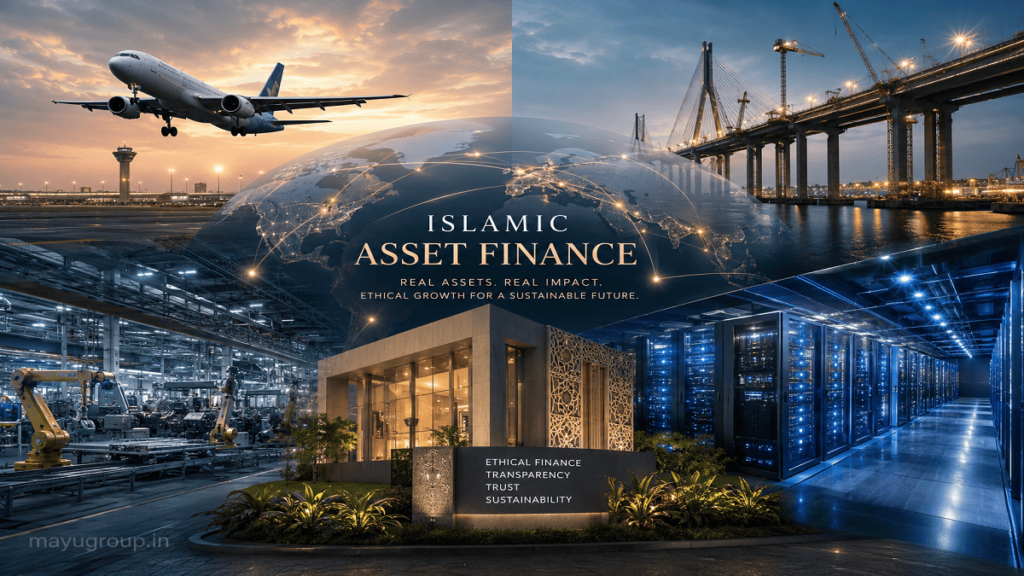
What assets are involved in Ijarah contracts?
Ijarah contracts are Shariah-compliant leasing agreements used in Islamic finance where the focus is on leasing real, tangible, and usable assets rather than lending money. The key requirement is that the asset must have lawful use, clear ownership, and measurable benefit. These assets are leased by an Islamic financial institution to a customer in exchange for rental payments.
1. Real Estate Assets
One of the most common categories in Ijarah contracts is real estate. These include:
- Residential houses and apartments
- Commercial office buildings
- Retail shops and malls
- Industrial land and warehouses
These assets generate income through rental payments and are often used in home financing and commercial property leasing.
2. Vehicles and Transportation Assets
Ijarah is widely used in the transportation sector. Assets include:
- Private cars for personal use
- Commercial vehicles such as trucks and buses
- Aircraft leased by airlines
- Shipping vessels and cargo transport equipment
These assets are ideal for leasing because they have clear usage value and predictable operational lifespans.
3. Machinery and Industrial Equipment
Businesses often use Ijarah to finance heavy equipment without purchasing it outright. Examples include:
- Construction machinery (cranes, excavators)
- Manufacturing equipment
- Agricultural machinery (tractors, harvesters)
- Medical equipment in healthcare facilities
This helps companies preserve capital while accessing essential operational tools.
4. Infrastructure Assets
Governments and large institutions use Ijarah contracts for major infrastructure projects such as:
- Airports and terminals
- Roads and highways
- Hospitals and public utilities
- Energy plants and power distribution systems
These projects are often structured under long-term leasing agreements.
5. Technology and Equipment Assets
In modern applications, Ijarah also covers:
- IT hardware and servers
- Office technology systems
- Telecommunications equipment
- Specialized software systems (in some structured forms)
These assets support digital and service-based industries.
Key Requirement for All Assets
For an asset to be eligible under Ijarah, it must:
- Be clearly owned by the lessor (financial institution)
- Have lawful and permitted use under Shariah law
- Provide measurable benefit or utility
- Be clearly defined in contract terms
Important Principle
Ijarah financing is based on asset usage, not money lending, meaning the customer pays rent for using the asset, while ownership remains with the lessor during the contract period.
Regulatory Oversight
Standards for asset eligibility and contract structuring are guided by institutions such as the Accounting and Auditing Organization for Islamic Financial Institutions and the Islamic Financial Services Board.
External References
- https://www.investopedia.com/terms/i/ijarah.asp
- https://www.worldbank.org/en/topic/financialsector/brief/islamic-finance
- https://www.islamicfinance.com/what-is-islamic-finance/
#IslamicFinance
How is Ijarah Different from Traditional Leasing?
Ijarah and traditional leasing both involve renting an asset for a fixed period in exchange for periodic payments. However, they differ significantly in terms of ownership structure, risk distribution, contract principles, and financial philosophy. Ijarah is based on Islamic (Shariah) law, while traditional leasing operates under conventional financial systems.
1. Ownership of the Asset
In Ijarah financing, the lessor (Islamic bank or financial institution) must own the asset before leasing it. The asset remains the property of the lessor throughout the contract.
In traditional leasing, ownership also typically remains with the leasing company, but the structure is purely financial and may involve additional interest-based elements or complex financing arrangements.
2. Source of Income
In Ijarah, income is generated strictly from rent for using a real asset, not from lending money. There is no interest (riba) involved.
In traditional leasing, payments may indirectly include interest-based financing costs, especially when leasing is linked with debt financing or financial leasing structures.
3. Risk Sharing
In Ijarah, the lessor is responsible for major ownership risks such as:
- Structural maintenance of the asset
- Ownership-related insurance
- Asset integrity (in most cases)
The lessee handles usage-related costs.
In traditional leasing, risk is often more heavily shifted to the lessee through contractual terms, and the leasing company may limit its responsibility after delivery.
4. Contract Transparency
Ijarah contracts require:
- Clearly defined rental amount
- Fixed lease period
- Transparent asset usage terms
- No hidden uncertainty (avoiding gharar)
Traditional leasing contracts are also detailed, but they do not follow Shariah rules regarding uncertainty or ethical screening.
5. Ethical and Industry Restrictions
Ijarah is strictly Shariah-compliant, meaning the asset and its use must not involve prohibited (haram) activities such as gambling, alcohol, or other unethical industries.
Traditional leasing has no such religious or ethical restrictions and is based purely on legal and financial considerations.
6. Ownership Transfer Option
Ijarah often includes Ijarah wa Iqtina (lease-to-own), where ownership is transferred to the lessee after the lease term.
Traditional leasing may also offer buyout options, but they are structured differently and may include residual value calculations based on market pricing.
7. Regulatory Framework
Ijarah is governed by Islamic finance standards issued by organizations such as the Accounting and Auditing Organization for Islamic Financial Institutions and the Islamic Financial Services Board to ensure compliance with Shariah principles.
Conclusion
The key difference is that Ijarah is an ethical, asset-based leasing system grounded in Islamic principles, while traditional leasing is a conventional financial arrangement focused on profitability and legal contracts without religious constraints. Ijarah emphasizes fairness, transparency, and risk-sharing, whereas traditional leasing focuses on financial efficiency and market-driven terms.
External References
- https://www.investopedia.com/terms/i/ijarah.asp
- https://www.worldbank.org/en/topic/financialsector/brief/islamic-finance
- https://www.islamicfinance.com/what-is-islamic-finance/
#IjarahFinancing
Case Study of Ijarah Financing
Ijarah financing is widely used in Islamic financial systems to provide Shariah-compliant alternatives to conventional loans. This case study explains how an individual acquires a car through an Ijarah wa Iqtina (lease-to-own) structure.
1. Background
A customer wants to purchase a vehicle worth $25,000 but wishes to avoid interest-based financing. Instead of taking a conventional auto loan, the customer approaches an Islamic bank for an Ijarah financing solution.
2. Structure of the Transaction
Step 1: Asset Purchase
- The Islamic bank purchases the vehicle from the dealer
- The bank becomes the legal owner of the car
Step 2: Leasing Agreement
- The bank leases the car to the customer for a fixed monthly rental
- The customer gains the right to use the vehicle
- Ownership remains with the bank during the lease period
Step 3: Payment Structure
- The customer pays monthly rental installments
- Payments are based on usage of the asset, not interest on money
- Terms such as duration, maintenance, and usage limits are clearly defined
Step 4: Maintenance Responsibility
- Major structural or ownership-related risks remain with the bank
- Day-to-day maintenance and fuel costs are borne by the customer
Step 5: Ownership Transfer
- At the end of the lease term (e.g., 3–5 years), ownership is transferred to the customer
- Transfer may occur through a nominal final payment or contractual completion
3. Shariah Compliance
This structure follows key Islamic finance principles:
- No interest (riba) is charged
- The transaction is asset-backed
- Terms are transparent and clearly defined
- Risk is shared between bank and customer
Regulatory standards are guided by organizations such as the Accounting and Auditing Organization for Islamic Financial Institutions and the Islamic Financial Services Board.
4. Outcome
- The customer acquires a vehicle without an interest-based loan
- The bank earns income through rental payments
- Ownership is transferred in a structured and ethical manner
- The transaction supports real economic activity
Conclusion
This case study demonstrates how Ijarah financing provides a practical, ethical, and Shariah-compliant solution for vehicle acquisition, replacing conventional interest-based auto loans with asset-backed leasing arrangements.
#AssetBasedFinance
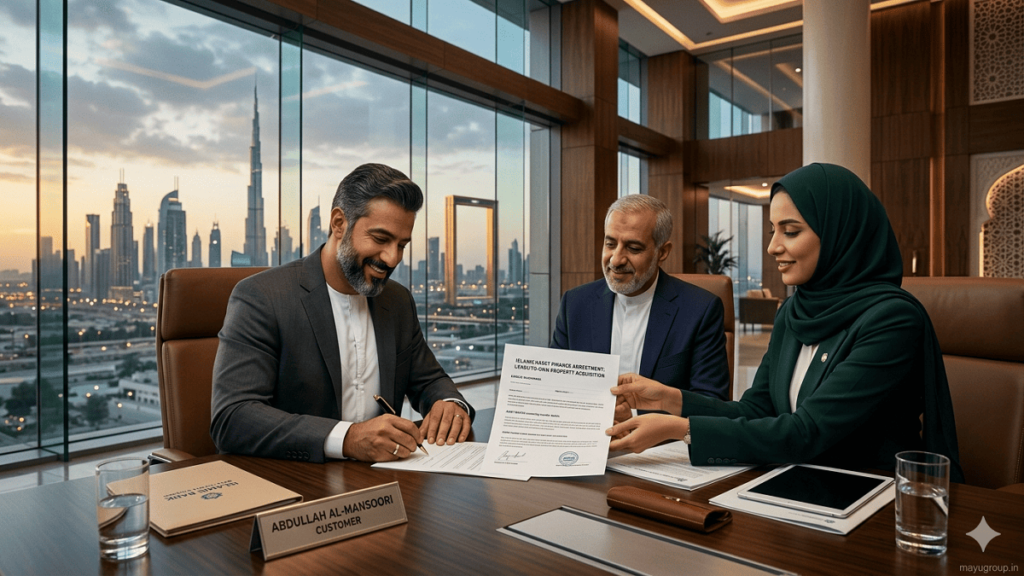
White Paper on Ijarah Financing
1. Executive Summary
Ijarah financing is a Shariah-compliant leasing model widely used in Islamic finance as an alternative to interest-based lending. It enables individuals, businesses, and governments to access assets such as real estate, vehicles, machinery, and infrastructure through asset-backed rental agreements. This white paper outlines the structure, principles, applications, and global relevance of Ijarah as a key instrument in Islamic financial systems.
2. Introduction
Ijarah is derived from Islamic jurisprudence and refers to the transfer of usufruct (right to use an asset) in exchange for a rental payment. Unlike conventional loans, Ijarah does not involve interest (riba) and ensures that financing is directly linked to tangible assets and real economic activity.
3. Core Principles of Ijarah Financing
Ijarah operates under strict Shariah principles:
- Prohibition of Riba (Interest): Returns are generated through rent, not interest
- Asset Ownership: The lessor must own the asset before leasing it
- Risk Sharing: Ownership risks remain with the lessor
- Transparency: Clear terms for rent, duration, and responsibilities
- Asset-Backed Structure: Financing is tied to real, usable assets
4. Structure of Ijarah Contracts
The standard process includes:
- Financial institution purchases the asset
- Institution becomes legal owner
- Asset is leased to the customer for fixed rent
- Customer gains usage rights
- Ownership may transfer in Ijarah wa Iqtina (lease-to-own) arrangements
5. Types of Assets Used
Ijarah financing applies to:
- Residential and commercial real estate
- Vehicles and transportation assets
- Industrial machinery and equipment
- Aircraft and shipping vessels
- Infrastructure and public utilities
6. Industry Applications
Ijarah is widely used across sectors:
- Banking and retail finance (home and car leasing)
- Aviation (aircraft leasing)
- Manufacturing (equipment financing)
- Infrastructure development (public projects)
- Corporate finance (fleet and asset leasing)
7. Global Importance
Ijarah plays a significant role in expanding Islamic financial markets. It supports financial inclusion, provides ethical alternatives to conventional loans, and promotes real asset-based economic growth.
8. Regulatory Framework
Ijarah contracts are governed by global Islamic finance standards issued by organizations such as the Accounting and Auditing Organization for Islamic Financial Institutions and the Islamic Financial Services Board, ensuring compliance, transparency, and consistency.
9. Benefits
- Eliminates interest-based financing
- Promotes ethical and transparent transactions
- Encourages real economic activity
- Supports risk-sharing principles
- Provides flexible financing solutions
10. Conclusion
Ijarah financing is a foundational pillar of Islamic finance that replaces conventional interest-based lending with asset-backed leasing structures. It ensures ethical wealth creation, financial stability, and alignment with Shariah principles while meeting modern economic needs.
#LeaseToOwn
Industry Application of Ijarah Financing
1. Banking and Financial Services
Ijarah financing is widely used in Islamic banking to provide Shariah-compliant alternatives to conventional loans. Banks use it to offer:
- Home financing (lease-to-own housing)
- Vehicle leasing
- Consumer asset financing
Instead of charging interest, banks earn income through fixed rental payments for asset usage.
2. Real Estate Industry
The real estate sector is one of the biggest users of Ijarah. It is used for:
- Residential property leasing
- Commercial office spaces
- Retail outlets and malls
- Industrial warehouses
Customers can occupy or eventually own properties through Ijarah wa Iqtina (lease-to-own) structures.
3. Transportation and Aviation
Ijarah plays a major role in transportation financing, especially for high-cost assets:
- Aircraft leasing for airlines
- Shipping and marine vessels
- Commercial fleets (buses, trucks, logistics vehicles)
- Private car leasing
Airlines commonly prefer Ijarah because it reduces upfront capital burden while ensuring asset availability.
4. Manufacturing and Industrial Sector
Manufacturing industries use Ijarah to access expensive machinery without ownership pressure:
- Production line equipment
- Construction machinery (cranes, excavators)
- Agricultural tools and vehicles
- Factory automation systems
This helps businesses maintain cash flow while expanding operations.
5. Infrastructure and Government Projects
Governments use Ijarah for long-term infrastructure development such as:
- Roads and highways
- Airports and railway systems
- Hospitals and public facilities
- Energy and utility projects
These are often structured with long-term leasing agreements backed by public assets.
6. Healthcare Sector
Hospitals and medical institutions use Ijarah for:
- Diagnostic machines (MRI, CT scanners)
- Laboratory equipment
- Hospital infrastructure leasing
This allows access to advanced healthcare technology without heavy capital investment.
7. Technology and Telecommunications
Modern applications include financing:
- IT infrastructure and servers
- Data centers
- Telecom towers and network systems
- Digital equipment and systems
This supports digital transformation in a Shariah-compliant way.
8. Regulatory Oversight
Global standards for Ijarah financing are governed by institutions such as the Accounting and Auditing Organization for Islamic Financial Institutions and the Islamic Financial Services Board, ensuring transparency, compliance, and consistency.
Conclusion
Ijarah financing is widely applied across banking, real estate, transportation, manufacturing, healthcare, infrastructure, and technology sectors. It enables industries to access essential assets in a Shariah-compliant, ethical, and asset-backed manner while supporting sustainable economic growth.
#RibaFreeFinance
Ask FAQs
What is Islamic asset finance?
Islamic asset finance is a Shariah-compliant system of funding that provides access to real, tangible assets such as property, vehicles, machinery, and infrastructure without using interest (riba). It is based on asset-backed transactions like leasing, trade, and partnerships.
How does Islamic asset finance work?
It works by having a financial institution purchase an asset and then lease or sell it to a customer under agreed terms. Payments are made as rent or profit-based installments rather than interest, and ownership may remain with the financier or transfer later.
What are the main types of Islamic asset finance contracts?
The main contracts include:
Ijarah (leasing)
Murabaha (cost-plus sale)
Musharakah (partnership financing)
Sukuk (Islamic investment certificates)
Each structure is tied to real assets and Shariah principles.
What assets are commonly used in Islamic asset finance?
Common assets include real estate, vehicles, aircraft, industrial machinery, infrastructure projects, and technology systems. All assets must be lawful, clearly owned, and capable of generating real economic value.
Who regulates Islamic asset finance?
It is regulated by global Islamic finance bodies such as the Accounting and Auditing Organization for Islamic Financial Institutions and the Islamic Financial Services Board to ensure compliance with Shariah law and international financial standards.
Table of Contents
Disclaimer:
This content is for educational and informational purposes only and does not constitute financial, legal, or religious advice. Readers should consult qualified professionals or certified Shariah advisors before making any financial decisions.