Consultation and Support
Table of Contents
Consultation and Support is an important part of effective workplace safety, compliance, and organizational improvement. It involves providing employees, managers, and organizations with professional guidance, technical assistance, training, and practical recommendations to identify challenges and develop effective solutions. Rather than relying only on corrective action after an incident occurs, consultation encourages organizations to identify potential risks early and take proactive steps to improve workplace conditions.
Effective consultation creates an opportunity for organizations to work with safety professionals, subject-matter experts, employees, and relevant authorities to evaluate existing procedures and identify areas for improvement. Support may include workplace assessments, hazard identification, risk evaluation, safety training, procedure development, compliance guidance, and assistance with implementing corrective measures. For example, OSHA’s On-Site Consultation Program provides small and medium-sized businesses with assistance in identifying workplace hazards and improving safety and health programs.
Employee involvement is another essential element of consultation. Workers often have direct knowledge of operational conditions, equipment limitations, and practical workplace risks. According to the International Labour Organization (ILO), consulting workers can help organizations identify risks, develop practical controls, and receive feedback on the effectiveness of existing safety arrangements.
Consultation and support can also strengthen regulatory compliance by helping organizations understand applicable requirements and translate them into practical workplace procedures. Professional guidance can assist with areas such as safety management systems, emergency preparedness, training requirements, inspections, documentation, and corrective actions.
The process should not end with a consultation or assessment. Effective support includes follow-up, implementation of recommendations, monitoring of results, and continuous improvement. Organizations can use consultation findings to strengthen their safety culture, improve employee confidence, reduce operational risks, and create more consistent safety practices.
Overall, Consultation and Support provides organizations with the knowledge, resources, and practical assistance needed to address workplace challenges proactively. When combined with employee participation, management commitment, training, Consultation and Support and continuous monitoring, it can become a valuable component of a sustainable workplace safety and improvement strategy.
Useful resources: OSHA On-Site Consultation Program | ILO – Consulting Workers
#OperationalEfficiency
What Is Consultation and Support and Why Is It Important for Organizations?
Consultation and Support refers to the process of providing organizations with professional advice, technical assistance, resources, training, and practical guidance to identify workplace challenges and develop effective solutions. In the context of occupational safety and organizational improvement, consultation may involve workplace assessments, hazard identification, risk management, compliance guidance, employee training, procedure development, and recommendations for corrective action.
Consultation allows organizations to benefit from external expertise as well as the knowledge and experience of their own employees. Workers often understand the practical risks associated with daily tasks, equipment, and working conditions, making their involvement valuable when identifying hazards and improving procedures. The ILO emphasizes worker consultation and participation as important elements of an effective occupational safety and health management system.
1. Identifies Workplace Risks
Professional consultation can help organizations recognize hazards that may otherwise be overlooked. Specialists can assess work practices, equipment, procedures, and workplace conditions and recommend appropriate risk-control measures.
2. Improves Safety Management
Consultation can help organizations establish, maintain, or strengthen safety and health programs. For example, OSHA’s On-Site Consultation Program assists Consultation and Support eligible businesses in identifying hazards and improving workplace safety and health programs.
3. Supports Employee Training
Effective support may include safety education and practical training. Employees who understand workplace hazards, procedures, emergency arrangements, and Consultation and Support their responsibilities are better prepared to work safely and respond appropriately to changing conditions.
4. Strengthens Compliance
Organizations often need to interpret complex legal, regulatory, and industry requirements. Consultation can help management understand applicable requirements and translate them into practical workplace procedures and controls. OSHA consultation services, for example, can provide advice on compliance with applicable safety standards.
5. Encourages Continuous Improvement
Consultation should not be viewed as a one-time activity. Organizations can use assessment findings, employee feedback, incident information, and performance data Consultation and Support to identify improvement opportunities and update their safety systems.
6. Supports Better Decision-Making
Expert guidance gives management additional information when making decisions about equipment, procedures, training, risk controls, and resource allocation. This can help organizations address problems proactively rather than waiting for accidents, failures, or compliance issues to occur.
Overall, Consultation and Support provides organizations with knowledge, expertise, and practical assistance for improving safety, compliance, and operational performance. When combined with management commitment, employee participation, training, Consultation and Support monitoring, and continuous improvement, it can contribute to a stronger and more sustainable organizational safety culture.
Useful resources: OSHA On-Site Consultation Program | ILO – Occupational Safety and Health Guidance
#RegulatoryCompliance

What Types of Technical and Professional Guidance Can Consultation Services Provide?
Consultation services can provide organizations with a wide range of technical and professional guidance designed to improve workplace safety, regulatory compliance, operational performance, and risk management. The exact support depends on the organization’s industry, activities, workforce, and specific challenges. Effective consultation typically combines expert assessment with practical recommendations that organizations can implement and monitor.
1. Hazard Identification and Risk Assessment
Consultants can help organizations identify existing and potential workplace hazards involving equipment, processes, materials, work environments, and human factors. They may also support risk assessments and recommend appropriate measures to eliminate or control identified risks. The ILO identifies hazard identification, risk assessment, and risk control as fundamental elements of effective occupational safety and health management.
2. Safety Management System Development
Professional consultants can evaluate existing safety programs and recommend improvements to policies, responsibilities, procedures, documentation, inspections, and performance monitoring. Consultation can help organizations establish safety management systems that integrate prevention and risk control into normal business operations.
3. Technical Safety Advice
Organizations may receive specialized guidance relating to machinery, electrical systems, lifting operations, hazardous substances, personal protective equipment, emergency arrangements, workplace ergonomics, or other industry-specific risks. Consultants can recommend practical control measures based on the hazards and conditions identified.
4. Regulatory and Compliance Guidance
Consultation services can help organizations understand applicable safety requirements, industry standards, and regulatory expectations. This may include reviewing existing procedures and identifying areas where additional controls, documentation, training, or corrective actions may be necessary.
5. Training and Competency Development
Consultants can identify employee training needs and provide formal or informal education on topics such as hazard recognition, safe work procedures, emergency response, and safety management. OSHA consultation guidance specifically includes training and education, hazard identification, hazard correction, and safety program development among potential consultation services.
6. Corrective and Preventive Action
After an assessment or incident investigation, consultants can help organizations determine the underlying causes of problems and develop corrective and preventive actions. Follow-up support can then help verify whether recommended improvements have been implemented effectively.
7. Continuous Improvement
Consultation can also support ongoing improvement through audits, performance reviews, employee feedback, updated risk assessments, and periodic evaluation of safety systems. The ILO-OSH 2001 guidelines emphasize continual improvement of occupational safety and health performance.
Overall, technical and professional consultation provides organizations with practical expertise to identify risks, strengthen safety systems, develop employee competence, improve compliance, and support continuous improvement. When consultation is combined with management commitment and worker participation, it can become an important resource for building safer and more resilient operations.
Useful resources: OSHA On-Site Consultation Program | ILO Occupational Safety and Health Management Systems
#RiskManagement
How Can Expert Support Help Organizations Identify and Solve Operational Challenges?
Expert support can play an important role in helping organizations identify operational challenges, understand their root causes, and develop practical solutions. External consultants, technical specialists, safety professionals, and industry experts can provide objective assessments and specialized knowledge that may not always be available within an organization. Their support can improve decision-making while helping organizations address risks before they develop into serious operational or safety problems.
1. Identifying Hidden Problems
Experts can conduct workplace assessments, process reviews, inspections, interviews, and document evaluations to identify weaknesses in existing operations. These assessments may reveal inefficient processes, equipment problems, inadequate procedures, communication gaps, training deficiencies, or safety hazards. OSHA recommends proactive hazard identification through workplace inspections, incident investigations, and assessment of nonroutine activities.
2. Finding Root Causes
Solving an operational problem effectively requires understanding why it occurred. Expert consultants can analyze incidents, near misses, equipment failures, process interruptions, and performance data to identify underlying causes rather than addressing only the immediate symptoms. This approach helps organizations develop corrective actions that provide longer-term improvements.
3. Providing Specialized Technical Knowledge
Some operational challenges require expertise in areas such as machinery, engineering, lifting operations, process safety, electrical systems, risk management, or regulatory compliance. Specialists can evaluate technical conditions and recommend appropriate solutions based on recognized practices, available technology, and the organization’s specific operating environment.
4. Developing Practical Solutions
Expert support can help organizations compare different corrective measures and determine which options are most suitable. OSHA recommends evaluating control options, involving workers in the decision-making process, implementing selected controls, and following up to confirm their effectiveness.
5. Improving Processes and Procedures
Consultants can review standard operating procedures, maintenance programs, emergency plans, inspection systems, and communication processes. They can then recommend improvements that make operations more consistent, efficient, and resilient.
6. Supporting Change Management
Operational improvements often involve changes to equipment, processes, materials, or working methods. Experts can help organizations assess the risks associated with these changes and ensure that affected employees receive appropriate information and training. The ILO recommends reviewing hazards and controls when new work methods, materials, processes, or machinery are introduced.
7. Encouraging Continuous Improvement
Expert support should extend beyond identifying problems. Organizations can use audits, performance monitoring, worker feedback, incident data, and follow-up assessments to determine whether solutions are working. The ILO promotes a management-system approach based on evaluation, corrective action, and continual improvement.
Overall, expert support helps organizations move from reactive problem-solving to proactive operational improvement. By combining objective assessment, technical expertise, employee participation, practical corrective actions, and ongoing evaluation, organizations can address operational challenges more effectively while improving safety, efficiency, compliance, and long-term performance.
Useful resources: ILO – Occupational Safety and Health Management Systems | OSHA – Hazard Identification and Assessment
#SafetyManagement
How Does Ongoing Consultation Support Compliance, Efficiency, and Continuous Improvement?
Ongoing consultation provides organizations with continuous access to expert advice, employee feedback, technical knowledge, and practical recommendations. Rather than treating consultation as a one-time assessment, organizations can use it as an ongoing process to review their policies, identify emerging risks, address operational weaknesses, and adapt to changes in regulations and working conditions. The International Labour Organization (ILO) promotes consultation and worker participation as important elements of effective occupational safety and health management.
1. Supports Regulatory Compliance
Requirements, standards, technologies, and workplace conditions can change over time. Regular consultation helps organizations review their procedures and determine whether existing controls remain appropriate. Experts can identify compliance gaps, recommend corrective actions, and help management maintain appropriate documentation, training, inspections, and risk-control measures. The ILO notes that effective OSH management systems should support compliance with national laws and regulations while also promoting continual improvement.
2. Improves Operational Efficiency
Consultation can identify inefficient processes, unnecessary risks, equipment problems, communication gaps, and weaknesses in work procedures. By reviewing operational data and listening to employees, consultants and management teams can identify practical improvements that reduce disruption and improve consistency.
Worker feedback is particularly valuable because employees understand how procedures work in real operating conditions. According to the ILO, worker consultation can help organizations identify risks, ensure controls are practical, and provide feedback on whether existing safety arrangements are effective.
3. Identifies Emerging Risks
Workplaces are constantly changing through new equipment, materials, technologies, processes, and organizational arrangements. Ongoing consultation allows organizations to reassess risks when these changes occur instead of relying on outdated assessments.
4. Strengthens Corrective Action
Consultation can help organizations evaluate incidents, near misses, audit findings, inspection results, and employee concerns. Experts can assist in identifying root causes and developing corrective and preventive actions. Follow-up consultation can then determine whether those actions have actually solved the underlying problem.
5. Drives Continuous Improvement
Continuous improvement requires organizations to regularly evaluate performance and make informed adjustments. The ILO recommends using information from risk assessments, performance monitoring, incident investigations, audits, management reviews, employee recommendations, and changes in regulations to improve OSH systems.
6. Encourages a Proactive Safety Culture
Regular consultation demonstrates that management values employee input and is committed to preventing problems. This can encourage employees to report hazards, suggest improvements, and participate more actively in safety initiatives.
Overall, ongoing consultation helps organizations remain compliant, operate more efficiently, respond to emerging risks, and continuously improve their systems and practices. When expert guidance is combined with employee participation, performance monitoring, corrective action, and management commitment, consultation becomes an ongoing improvement process rather than simply a periodic service.
Useful resources: ILO – Consulting Workers | ILO – Action for Improvement
#WorkplaceSafety
What Are the Benefits of Reliable Consultation and Support for Long-Term Organizational Success?
Reliable Consultation and Support can provide organizations with the expertise, guidance, and practical assistance needed to manage risks, improve operations, strengthen compliance, and achieve sustainable long-term performance. When consultation is treated as an ongoing business activity rather than a one-time service, organizations can respond more effectively to changing workplace conditions, emerging risks, regulatory expectations, and operational challenges.
1. Stronger Risk Management
Professional consultation helps organizations identify hazards, assess risks, and establish appropriate controls. Regular expert reviews can also identify emerging problems before they develop into incidents or significant operational disruptions. The ILO identifies hazard identification, risk assessment, and risk control as fundamental elements of effective occupational safety and health management.
2. Improved Regulatory Compliance
Reliable support helps organizations understand and apply relevant legal, regulatory, and industry requirements. Consultants can review policies, procedures, training arrangements, documentation, and control measures to identify potential gaps and recommend improvements. This proactive approach can make compliance more systematic rather than relying only on corrective action after a problem occurs.
3. Greater Operational Efficiency
Consultation can uncover inefficient processes, equipment issues, communication problems, unnecessary risks, and weaknesses in work procedures. Addressing these issues can reduce disruptions, improve consistency, and support better use of organizational resources. OSHA notes that effective safety and health programs can contribute to productivity and improved overall business operations.
4. Better Employee Engagement
Reliable consultation creates opportunities for employees to contribute their practical knowledge and experience. Workers are often well positioned to identify hazards and suggest workable solutions. OSHA emphasizes meaningful worker participation in establishing, operating, evaluating, and improving safety programs.
5. Stronger Safety Culture
Ongoing access to professional guidance demonstrates that management takes safety, employee well-being, and responsible operations seriously. Consistent consultation, communication, training, and follow-up can help establish a workplace culture where employees are encouraged to report concerns and participate in improvement activities.
6. Continuous Improvement
Organizations face changing technologies, processes, regulations, workforce requirements, and market conditions. Regular consultation provides a structured opportunity to review performance, evaluate existing controls, implement corrective actions, and update procedures. The ILO describes OSH management systems as a tool for continual improvement and emphasizes management commitment and active worker participation.
7. Long-Term Organizational Resilience
By combining expert knowledge with employee participation and systematic improvement, organizations can become better prepared to manage unexpected challenges. Effective consultation can support stronger decision-making, more reliable processes, improved workforce confidence, and sustainable safety performance.
Overall, reliable Consultation and Support helps organizations move from reactive problem-solving toward proactive, continuous improvement. Its long-term value comes from helping organizations identify risks early, strengthen compliance, improve efficiency, involve employees, and continually adapt their systems to changing operational needs.
Useful resources: OSHA – Worker Participation | ILO – Occupational Safety and Health Management Systems
#TechnicalGuidance
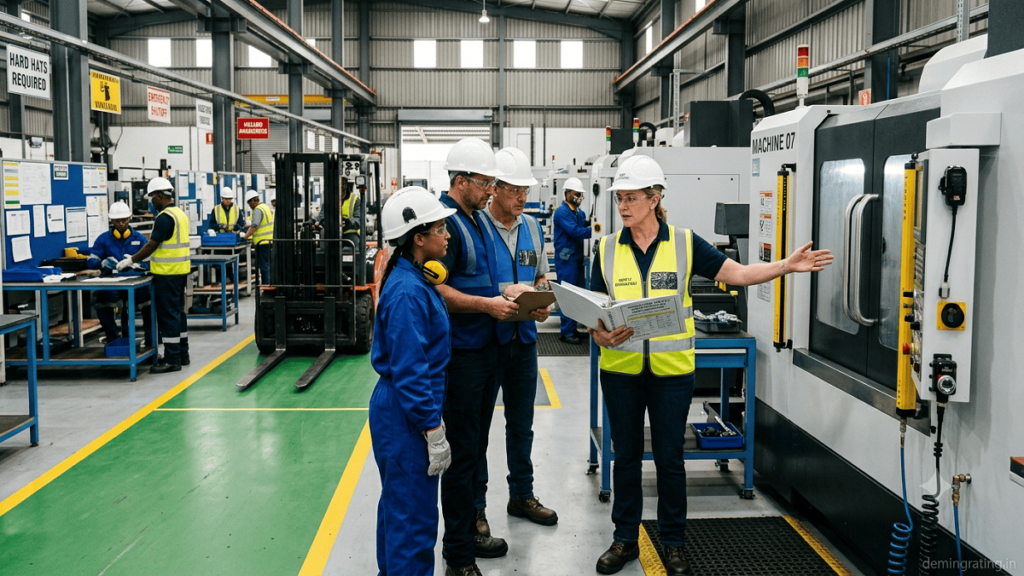
Case Study of Consultation and Support
Background
A medium-sized industrial manufacturing company was experiencing several operational challenges, including inconsistent safety procedures, recurring equipment-related issues, limited employee participation in safety activities, and gaps in workplace documentation. Although the organization had basic safety policies, management recognized that procedures were not being applied consistently across all departments.
To address these challenges, the company engaged an external safety consultant to provide structured Consultation and Support. The objective was to identify weaknesses, strengthen safety practices, improve employee awareness, and establish a system for continuous improvement.
The Consultation Process
The consultation began with a comprehensive workplace assessment. The consultant reviewed existing safety policies, operating procedures, inspection records, training documentation, incident reports, and emergency arrangements. Workplace inspections were also conducted to identify hazards and evaluate whether existing controls were effective.
Employees and supervisors were encouraged to participate in discussions and provide feedback about operational problems. This approach was important because workers often have direct knowledge of workplace hazards and practical difficulties associated with existing procedures. OSHA similarly emphasizes meaningful worker participation in establishing, operating, evaluating, and improving safety programs.
Identifying Key Challenges
The assessment identified several areas requiring improvement:
- Inconsistent equipment inspection practices
- Incomplete safety documentation
- Gaps in employee training
- Limited reporting of near misses
- Inadequate communication between departments
- Opportunities to improve emergency procedures
- Weak follow-up on corrective actions
Rather than addressing individual problems separately, the consultant helped management identify underlying causes and prioritize corrective actions.
Implementing Solutions
The organization developed an improvement plan based on the consultation findings. Updated operating procedures were introduced, inspection schedules were standardized, and employees received additional training. Supervisors were given clearer responsibilities for monitoring compliance, while employees were encouraged to report hazards and near misses.
Regular safety meetings were also introduced to review concerns, discuss corrective actions, and communicate changes. This created a feedback loop between employees, supervisors, and management.
Results
Over time, the organization achieved more consistent application of safety procedures, improved employee participation, stronger documentation, and better follow-up of identified hazards. Managers also gained greater visibility into operational problems and could make more informed decisions about training, equipment, and resource allocation.
The approach is consistent with the ILO’s systems-based view of occupational safety and health, which connects policy, planning and implementation, evaluation, and action for improvement.
Key Lessons
This case demonstrates that effective Consultation and Support is more than simply providing advice. It involves assessment, employee participation, expert guidance, implementation, monitoring, and follow-up. When organizations maintain consultation as an ongoing process, they can identify emerging challenges earlier and continuously improve their systems.
OSHA’s consultation success stories similarly show how organizations have used consultation to identify hazards, implement corrective measures, and improve safety programs.
Conclusion
Reliable Consultation and Support can help organizations transform workplace challenges into opportunities for improvement. By combining professional expertise with employee knowledge and management commitment, organizations can strengthen safety, improve operational efficiency, support compliance, and develop a culture of continuous improvement.
#ProfessionalSupport
White Paper on Consultation and Support
Executive Summary
Consultation and Support is an important mechanism for organizations seeking to improve workplace safety, manage operational risks, strengthen compliance, and achieve sustainable performance. It combines professional expertise, technical guidance, employee participation, workplace assessment, training, corrective action, and continuous follow-up.
Organizations operate in environments that continually change through new technologies, equipment, processes, regulations, workforce requirements, and business priorities. As a result, existing procedures and controls may become less effective over time. Consultation provides organizations with an opportunity to evaluate current practices, identify weaknesses, and implement practical improvements.
The International Labour Organization (ILO) promotes a systems-based approach in which occupational safety and health is integrated into organizational management through policy, planning and implementation, evaluation, and action for improvement. Worker participation is also considered an important component of this approach.
This white paper examines the role of Consultation and Support, its core components, implementation process, organizational benefits, and contribution to long-term improvement.
1. Introduction
Modern organizations must manage multiple operational and workplace challenges simultaneously. These may include occupational hazards, regulatory requirements, equipment reliability, employee competency, process inefficiencies, emergency preparedness, and changing working conditions.
Internal teams may not always have the specialized knowledge or resources required to address every challenge. Professional consultation provides access to independent expertise and structured guidance that can complement internal capabilities.
Consultation should not be viewed simply as an inspection or compliance exercise. Effective consultation involves understanding organizational needs, identifying problems, developing practical solutions, supporting implementation, and evaluating results.
The ILO describes occupational safety and health management as a systems approach that integrates prevention and protection into organizational planning and development.
2. What Is Consultation and Support?
Consultation and Support is the structured provision of professional, technical, and operational guidance to help organizations identify challenges and implement appropriate improvements.
Depending on organizational requirements, consultation services may include:
- Workplace assessments
- Hazard identification and risk assessment
- Safety management system reviews
- Regulatory and standards guidance
- Technical evaluations
- Procedure and policy development
- Employee training and competency support
- Incident and near-miss analysis
- Corrective and preventive action
- Emergency preparedness reviews
- Internal audits and inspections
- Performance monitoring
- Continuous improvement planning
The purpose is to provide organizations with practical knowledge and assistance that can improve both immediate conditions and long-term organizational capability.
OSHA’s On-Site Consultation Program similarly focuses on helping employers identify and address workplace hazards and establish or improve safety and health programs.
3. Why Consultation and Support Matters
Organizations can face significant consequences when operational and safety challenges remain unidentified or poorly managed. These may include incidents, equipment damage, production interruptions, compliance problems, increased costs, and reduced employee confidence.
Consultation provides a proactive mechanism for identifying weaknesses before they become more serious.
The benefits include:
Improved Risk Management
Experts can help identify hazards, assess associated risks, and determine suitable controls.
Stronger Compliance
Professional guidance can help organizations understand applicable requirements and identify areas requiring corrective action.
Better Operational Performance
Consultants can identify inefficient procedures, communication gaps, equipment issues, and process weaknesses.
Increased Employee Participation
Workers can provide valuable information about real-world operating conditions and practical challenges. OSHA emphasizes that workers should have meaningful opportunities to participate in safety program development, implementation, evaluation, and improvement.
Continuous Improvement
Regular consultation provides a structured mechanism for reviewing performance and implementing improvements rather than relying solely on reactive responses.
4. Core Elements of Effective Consultation
4.1 Initial Assessment
The process should begin with an understanding of organizational objectives, activities, hazards, existing procedures, and current performance.
4.2 Hazard and Risk Evaluation
Potential hazards should be identified and assessed according to their likelihood and potential consequences. Existing controls should also be reviewed to determine whether they remain effective.
4.3 Employee Consultation
Employees should be encouraged to share information about hazards, operational difficulties, near misses, and opportunities for improvement. Their practical knowledge can help ensure that recommended controls are realistic and effective.
4.4 Technical and Professional Guidance
Specialists can provide recommendations relating to safety systems, equipment, processes, training, emergency arrangements, compliance, and other areas relevant to the organization.
4.5 Action Planning
Recommendations should be translated into clear actions, responsibilities, priorities, and target completion dates.
4.6 Implementation
Management should provide the resources, personnel, training, and organizational support necessary to implement agreed improvements.
4.7 Evaluation and Follow-Up
Organizations should verify whether implemented actions have achieved their intended results. Problems that remain unresolved should be reassessed.
5. Consultation and Worker Participation
Worker participation is a central component of effective consultation.
Employees frequently have first-hand knowledge of how work is actually performed. They may identify hazards, process limitations, equipment problems, or procedural weaknesses that are not immediately visible through documentation or management review.
OSHA states that effective safety and health programs depend on meaningful worker participation and recommends involving workers throughout program design and implementation.
The ILO likewise identifies worker participation as an important element of an effective occupational safety and health management system.
Organizations can encourage participation through:
- Safety meetings
- Employee feedback systems
- Hazard reporting
- Near-miss reporting
- Toolbox discussions
- Safety committees
- Workplace inspections
- Incident investigations
- Consultation during process changes
Effective consultation should create an environment in which employees can raise concerns and contribute to solutions.
6. Technical and Professional Support
Organizations may require specialist guidance in areas where internal expertise is limited.
Examples include:
Engineering and equipment: assessment of machinery, lifting equipment, electrical systems, or other technical assets.
Safety management: development or improvement of safety policies, procedures, risk assessments, inspections, and emergency plans.
Training and competency: identification of training needs and development of employee competency programs.
Compliance: review of organizational practices against applicable legislation, standards, and industry requirements.
Incident investigation: analysis of incidents and near misses to identify underlying causes and corrective measures.
Operational improvement: evaluation of workflows, communication systems, maintenance practices, and procedures.
The objective is not simply to identify deficiencies but to provide practical recommendations that organizations can realistically implement.
7. Consultation as a Continuous Improvement Cycle
Consultation is most effective when incorporated into a continuous improvement cycle.
A practical cycle can be structured as:
Assess → Identify → Consult → Plan → Implement → Monitor → Review → Improve
This approach is consistent with the ILO’s management-system model, which includes policy, organizing, planning and implementation, evaluation, and action for improvement.
For example, an organization may identify recurring equipment-related problems during an assessment. Consultation can determine the underlying causes, recommend revised maintenance procedures, provide employee training, monitor implementation, and subsequently review whether equipment reliability has improved.
The cycle can then be repeated as new risks or improvement opportunities emerge.
8. Supporting Regulatory Compliance
Compliance should be integrated into normal organizational management rather than treated as a separate activity.
Consultation can help organizations:
- Identify applicable requirements
- Review existing policies
- Assess compliance gaps
- Improve documentation
- Strengthen employee training
- Review inspection and maintenance programs
- Develop corrective actions
- Monitor implementation
- Prepare for internal or external assessments
The ILO emphasizes that organizations should establish appropriate occupational safety and health management arrangements while continually improving performance.
It is important to recognize that consultation does not replace the organization’s legal responsibilities. Organizations remain responsible for complying with applicable laws, regulations, standards, and employer requirements.
9. Improving Operational Efficiency
Safety and operational efficiency are often interconnected.
Poorly designed procedures, inadequate maintenance, unclear responsibilities, ineffective communication, and insufficient training can create both safety risks and operational inefficiencies.
Consultation can identify opportunities to improve:
- Workflow
- Equipment reliability
- Preventive maintenance
- Employee competency
- Communication
- Resource allocation
- Emergency response
- Documentation
- Work procedures
By addressing underlying causes, organizations can reduce avoidable disruption while improving consistency and reliability.
The ILO notes that effective OSH management systems can contribute to both improved safety performance and productivity.
10. Measuring Consultation Effectiveness
Organizations should evaluate whether consultation is producing meaningful results.
Potential indicators include:
- Number of identified hazards
- Corrective-action completion rates
- Training completion and competency results
- Inspection findings
- Near-miss reporting trends
- Incident trends
- Equipment-related disruptions
- Audit findings
- Employee participation
- Response time for reported concerns
- Recurrence of previously identified problems
Both leading and lagging indicators can provide useful information. The objective is not simply to count activities but to determine whether consultation is improving organizational performance.
11. Management Commitment
Successful Consultation and Support requires active management commitment.
Management should provide:
- Adequate resources
- Clear responsibilities
- Appropriate authority
- Time for consultation
- Access to relevant information
- Employee participation opportunities
- Follow-up on recommendations
- Support for corrective actions
The ILO identifies management commitment and active worker participation as important factors in achieving continual improvement in occupational safety and health performance.
Without management support, consultation findings may remain recommendations rather than becoming meaningful improvements.
12. Long-Term Organizational Benefits
A reliable consultation program can contribute to long-term organizational success by helping organizations become more proactive and adaptable.
Key benefits include:
- Stronger workplace safety
- Improved risk management
- Better regulatory compliance
- More effective employee training
- Higher employee participation
- Improved operational efficiency
- Better decision-making
- Reduced recurrence of problems
- Stronger safety culture
- Continuous organizational improvement
The long-term value comes from integrating consultation into everyday management rather than treating it as an isolated service.
13. Implementation Framework
Organizations can establish a structured Consultation and Support program using the following framework:
Step 1: Define Objectives
Determine what the organization wants to improve, such as safety performance, compliance, operational efficiency, or employee competency.
Step 2: Assess Current Conditions
Review policies, procedures, workplace conditions, training, equipment, incidents, and performance information.
Step 3: Consult Stakeholders
Engage management, employees, supervisors, technical personnel, and relevant specialists.
Step 4: Identify Priorities
Rank identified issues according to risk, urgency, operational impact, and available resources.
Step 5: Develop an Action Plan
Assign responsibilities, establish timelines, and define measurable objectives.
Step 6: Implement Improvements
Provide the required resources, training, technical assistance, and management support.
Step 7: Monitor Results
Track performance indicators and verify whether recommendations have been implemented effectively.
Step 8: Review and Improve
Use findings and feedback to update procedures and begin the next improvement cycle.
14. Challenges and Considerations
Organizations may encounter several challenges when implementing consultation programs.
These can include:
- Limited resources
- Resistance to change
- Insufficient employee participation
- Poor communication
- Lack of management follow-through
- Inadequate documentation
- Failure to monitor corrective actions
- Overreliance on external consultants
To overcome these challenges, organizations should establish clear responsibilities and ensure that consultation findings are translated into practical actions.
Consultants should support organizational capability rather than create permanent dependence. The ultimate objective should be to strengthen internal knowledge, systems, and decision-making.
15. Conclusion
Consultation and Support provides organizations with a structured approach to identifying challenges, obtaining expert guidance, involving employees, implementing corrective measures, and improving organizational performance.
Effective consultation combines professional expertise with employee knowledge and management commitment. It can help organizations identify hazards, strengthen compliance, improve operational efficiency, develop workforce competency, and respond to changing conditions.
The greatest value of consultation comes from treating it as an ongoing improvement process. Organizations that regularly assess performance, listen to employees, implement corrective actions, and evaluate results are better positioned to develop resilient and sustainable management systems.
The ILO’s OSH management framework reinforces this principle by connecting planning, implementation, evaluation, corrective action, worker participation, and continual improvement.
Ultimately, Consultation and Support is not simply about solving today’s problems; it is about building the organizational capability to identify, manage, and improve tomorrow’s challenges.
Authoritative Resources
- International Labour Organization – Occupational Safety and Health Management Systems
- ILO-OSH 2001 Guidelines
- OSHA – Worker Participation
- OSHA – On-Site Consultation Program
#SafetyConsultation
Industry Application of Consultation and Support
Consultation and Support has broad applications across industries because organizations regularly face changing operational conditions, workplace hazards, regulatory requirements, and technical challenges. Professional consultation helps businesses identify risks, improve procedures, develop employee competence, and implement practical solutions. The ILO emphasizes that consultation with workers can help organizations identify workplace risks, ensure controls are practical, and improve safety and health arrangements.
1. Manufacturing
In manufacturing, consultation can support organizations with machinery safety, process hazards, maintenance, workplace inspections, emergency procedures, and employee training. Experts can assess production processes, identify potential hazards, and recommend improvements to machine guarding, material handling, personal protective equipment, and operating procedures. Consultation can also help manufacturers improve safety management systems and corrective-action processes.
2. Construction
Construction projects involve changing work environments, heavy equipment, work at height, temporary structures, lifting activities, and multiple contractors. Consultation services can help organizations conduct risk assessments, develop safe work procedures, improve site coordination, and strengthen worker training. Regular consultation is particularly valuable because hazards can change as construction activities progress.
3. Oil and Gas
The oil and gas industry involves complex processes and potentially high-consequence hazards. Consultation can provide support in areas such as process safety, permit-to-work systems, emergency preparedness, lifting operations, hazardous materials, equipment inspection, and workforce competency. Specialists can help organizations evaluate existing controls and develop practical improvements suited to specific operating conditions.
4. Healthcare
Healthcare organizations can use consultation to address biological hazards, infection prevention, chemical exposure, ergonomic risks, medical equipment, emergency preparedness, and workplace violence. Expert guidance can help healthcare facilities review procedures, improve employee training, and strengthen systems for protecting both workers and patients.
5. Transportation and Logistics
Transportation and logistics operations face risks associated with vehicle movement, loading and unloading, forklifts, material handling, fatigue, warehouse activities, and traffic management. Consultation can help organizations review workplace layouts, operating procedures, equipment practices, driver or operator training, and emergency arrangements.
6. Energy and Utilities
Power generation, electrical utilities, renewable energy, and related operations often involve high-energy systems, electrical hazards, confined spaces, work at height, lifting activities, and specialized equipment. Technical consultants can provide guidance on risk assessment, isolation procedures, inspections, maintenance, emergency response, and workforce competency.
7. Small and Medium-Sized Businesses
Consultation can be particularly valuable for organizations that have limited internal safety or technical resources. OSHA’s On-Site Consultation Program, for example, helps primarily small and midsize businesses identify workplace hazards and establish or improve safety and health programs.
Common Applications Across Industries
Although specific risks differ between sectors, effective Consultation and Support commonly focuses on:
- Hazard identification and risk assessment
- Regulatory and standards guidance
- Safety procedure development
- Technical evaluations
- Employee training and competency
- Incident and near-miss investigation
- Emergency preparedness
- Workplace inspections and audits
- Corrective and preventive actions
- Continuous improvement
Organizations should select consultants based on relevant competence, knowledge, experience, and understanding of the specific industry and problem being addressed. The ILO recommends verifying that external advisers are competent for the tasks assigned and ensuring appropriate follow-up after recommendations are implemented.
Overall, Industry Application of Consultation and Support enables organizations across diverse sectors to access specialized expertise, solve operational challenges, strengthen safety and compliance, and improve long-term performance. When combined with worker participation and management commitment, consultation becomes an ongoing tool for building safer, more efficient, and more resilient organizations.
Useful resources: OSHA On-Site Consultation Program | ILO – Consulting Workers
#ConsultationAndSupport
Ask FAQs
What is Consultation and Support?
Consultation and Support is the process of providing organizations with professional advice, technical guidance, assessments, training, and practical recommendations to address workplace, safety, compliance, and operational challenges.
Why is Consultation and Support important for organizations?
It helps organizations identify hazards, solve operational problems, improve employee competency, strengthen compliance, and develop more effective workplace procedures. Employee consultation can also help identify risks and ensure that safety controls are practical.
What services can professional consultants provide?
Services may include risk assessments, workplace inspections, safety management reviews, technical evaluations, regulatory guidance, employee training, incident investigations, corrective-action planning, and continuous improvement support.
How does consultation improve workplace safety?
Consultation brings together expert knowledge and employee experience to identify hazards and develop practical controls. Ongoing consultation can also provide feedback on whether existing safety arrangements are working effectively.
How should organizations choose a consultation service provider?
Organizations should select providers with relevant qualifications, industry knowledge, practical experience, and demonstrated competence for the specific work required. Clear objectives, defined responsibilities, and appropriate follow-up should also be established.
Disclaimer: This content is for general informational purposes only and does not replace professional advice, applicable laws, regulations, industry standards, or organizational procedures. Always seek qualified guidance for your specific requirements.