AR/VR Investment: Opportunities, Market Trends, and Future Growth
Table of Contents
Augmented Reality (AR) and Virtual Reality (VR) are transforming how businesses operate, how consumers interact with digital content, and how industries deliver products and services. As immersive technologies continue to develop, AR/VR investment is attracting attention from technology companies, venture capitalists, startups, and investors looking for long-term growth opportunities.
Augmented Reality overlays digital information, images, or interactive elements onto the real world, while Virtual Reality creates immersive, computer-generated environments. Both technologies are finding applications across industries, including healthcare, education, gaming, manufacturing, retail, real estate, AR/VR Investment and employee training.
The growing demand for immersive experiences has created opportunities for businesses developing AR/VR hardware, software, enterprise solutions, and supporting technologies. However, investors must also consider market competition, AR/VR Investment adoption rates, development costs, and the uncertainty surrounding future returns.
Understanding the investment landscape is essential for identifying promising opportunities and making informed financial decisions.
Key Investment Opportunities in AR/VR
One of the most promising areas for AR/VR investment is enterprise technology. Businesses are increasingly exploring immersive tools for employee training, equipment maintenance, product design, and remote collaboration. These applications can reduce training expenses, improve workplace safety, AR/VR Investment and minimize costly errors. Deloitte discusses these opportunities in its report on industrial metaverse and spatial computing.
Other investment opportunities include gaming, virtual property tours, medical simulations, educational platforms, and AR-powered retail experiences. Investors can explore companies developing headsets, graphics technologies, 3D software, and specialized enterprise applications.
Risks and Challenges of AR/VR Investment
Despite its potential, AR/VR investment carries several risks. High hardware costs, limited consumer adoption, technical limitations, and competition can affect profitability. Some companies may struggle to convert innovative products into sustainable revenue streams.
Investors should evaluate a company’s financial health, product demand, competitive advantages, and long-term business strategy before committing capital. Diversification can also help manage the risks associated with emerging technologies.
Conclusion
AR/VR investment offers opportunities for investors interested in the future of immersive computing. However, successful investing requires careful research, realistic expectations, and an understanding of both technological progress and commercial demand. Rather than relying solely on market hype, investors should prioritize businesses demonstrating practical applications, customer adoption, AR/VR Investment and sustainable growth potential.
#EmergingTechnologies
What Is AR/VR Investment? A Beginner’s Guide to Opportunities and Growth
Introduction
AR/VR investment refers to putting money into businesses, technologies, and projects that develop or use Augmented Reality (AR) and Virtual Reality (VR). These technologies are changing how people interact with digital information, experience entertainment, AR/VR Investment learn new skills, and perform everyday business activities. As adoption grows across different industries, AR/VR is becoming an area of interest for investors seeking exposure to emerging technologies.
Augmented Reality adds digital elements, such as images, instructions, and interactive graphics, to the real-world environment. Virtual Reality, on the other hand, creates a computer-generated environment that users can explore through compatible headsets and devices. Although the technologies serve different purposes, both aim to create more interactive and immersive experiences.
How Does AR/VR Investment Work?
AR/VR investment can take several forms. Investors may purchase shares in publicly traded technology companies involved in immersive computing, invest in startups developing AR/VR applications, or support businesses that manufacture specialized hardware and software.
Investment opportunities also exist in industries that use these technologies. For example, healthcare organizations can use VR simulations for medical training, retailers can offer AR-based product previews, and manufacturers can use immersive visualization to improve equipment maintenance and employee training.
Another investment avenue is the development of software platforms, 3D content, sensors, AR/VR Investment and computer vision technologies that support AR/VR experiences.
Why Is AR/VR Investment Growing?
Businesses are increasingly interested in technologies that improve productivity, customer engagement, and digital collaboration. AR can help customers visualize furniture in their homes before purchasing it, while VR can provide realistic training environments without requiring employees to practice in potentially dangerous situations.
Companies such as Meta and Apple are investing in spatial computing and immersive devices, helping increase awareness of the sector. However, commercial success depends on affordability, user experience, practical applications, AR/VR Investment and sustained customer demand.
What Should Investors Consider?
Before investing in AR/VR, it is important to assess a company’s financial performance, competitive position, product adoption, and ability to generate sustainable revenue. Investors should also consider risks such as expensive hardware development, rapidly changing technology, privacy concerns, AR/VR Investment and uncertain consumer demand.
AR/VR investment can offer long-term growth opportunities, but returns are not guaranteed. Research and diversification are essential when evaluating this emerging technology sector.
Conclusion
AR/VR investment involves supporting the technologies and businesses building the future of immersive digital experiences. From gaming and healthcare to manufacturing and education, the sector has applications across multiple industries. By understanding the opportunities, evaluating risks, and focusing on companies with practical solutions and credible business models, investors can make more informed decisions about this evolving market.
#TechInvestment
Why Are Investors Interested in AR/VR Technology?
Introduction
Augmented Reality (AR) and Virtual Reality (VR) are gaining attention from investors because they offer new ways to transform business operations, AR/VR Investment improve customer experiences, and create digital products and services. As companies explore immersive technologies, investors are looking beyond traditional technology markets to identify opportunities in industries that could benefit from more interactive and efficient digital solutions.
AR adds digital content to the real world, while VR creates immersive, computer-generated environments. Together, these technologies are helping businesses rethink how people shop, learn, collaborate, design products, and access information.
1. Growing Demand Across Multiple Industries
One of the main reasons investors are interested in AR/VR technology is its broad range of applications. These technologies are no longer limited to gaming and entertainment.
In healthcare, VR can support medical education and simulation-based training. In manufacturing, AR can provide workers with visual instructions during equipment maintenance. In retail, AR allows customers to preview furniture, clothing, and other products before making purchasing decisions.
This cross-industry demand creates opportunities for companies developing hardware, software, digital content, and specialized business solutions.
2. Opportunities for Business Efficiency
Businesses are exploring AR/VR solutions to reduce operational costs and improve productivity. For example, AR/VR Investment virtual training environments can help employees practice complex tasks without requiring expensive physical equipment or exposing them to unnecessary risks.
AR-assisted maintenance can also help technicians access instructions while working on machinery. These applications may improve accuracy, reduce downtime, and make specialized knowledge more accessible.
Investors are particularly interested in companies that demonstrate measurable business benefits and generate recurring revenue from enterprise customers.
3. Expansion of Immersive Computing
Technology companies are investing in headsets, spatial computing platforms, advanced sensors, and software that support immersive experiences. These developments may create opportunities for hardware manufacturers, application developers, semiconductor companies, and content creators.
For example, Apple Vision Pro illustrates how spatial computing can combine digital content with a user’s physical surroundings. Meanwhile, Meta continues to develop technologies associated with virtual and augmented reality.
4. Long-Term Growth Potential
Investors are also attracted to the possibility that AR/VR could become an important part of future digital infrastructure. As devices become more comfortable, applications improve, and prices become more accessible, adoption could expand across consumer and enterprise markets.
However, this growth is not guaranteed. High development costs, hardware limitations, privacy concerns, and competition remain important challenges.
Conclusion
Investors are interested in AR/VR technology because it offers opportunities across multiple industries, supports business innovation, and may contribute to the future of immersive computing. Nevertheless, successful investment requires evaluating market demand, financial performance, and commercial viability rather than relying on technological excitement alone.
#DigitalTransformation
What Are the Best AR/VR Investment Opportunities?
Introduction
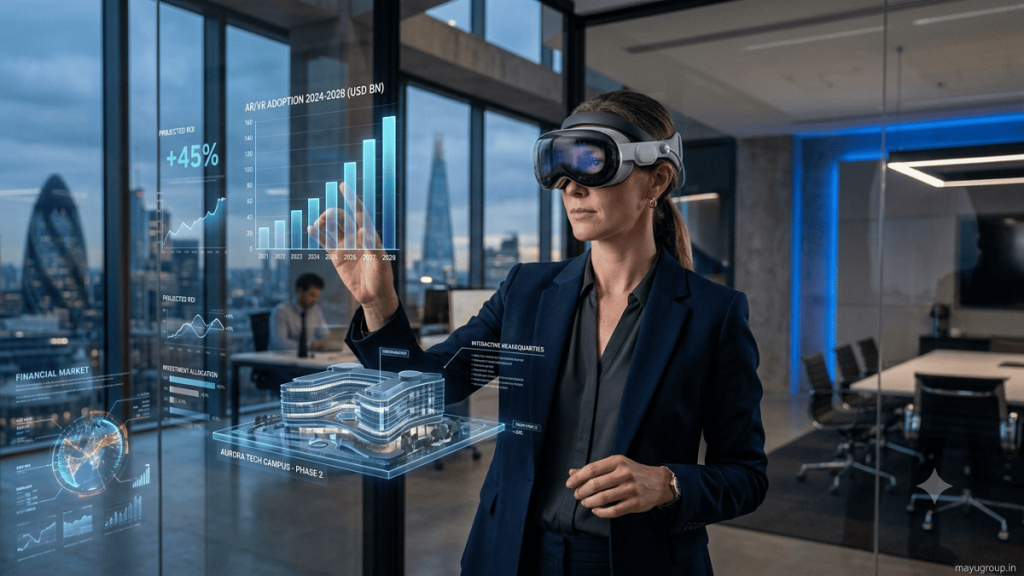
Augmented Reality (AR) and Virtual Reality (VR) are creating new investment opportunities as businesses explore immersive technology to improve productivity, enhance customer experiences, and develop innovative digital products. From gaming and entertainment to healthcare, education, manufacturing, and retail, these technologies are expanding beyond traditional applications.
For investors, the best AR/VR investment opportunities are not necessarily limited to companies producing headsets. The market also includes software developers, semiconductor manufacturers, 3D content creators, and businesses providing specialized solutions for organizations. Identifying promising opportunities requires understanding where customer demand exists and which companies can turn technological innovation into sustainable revenue.
1. AR/VR Hardware and Device Manufacturers
Hardware is one of the most visible segments of the immersive technology market. Companies developing virtual reality headsets, augmented reality glasses, sensors, and related components may benefit as immersive computing becomes more widely adopted.
Investors can research companies such as Meta and Apple to understand how established technology businesses are approaching immersive devices. However, their overall financial performance depends on many products and services, not just AR/VR.
Explore Meta’s official website and Apple Vision Pro for information about their technologies.
2. AR/VR Software and Application Development
Software is another important investment area. Businesses need applications that make immersive devices useful, whether for collaboration, design, training, simulation, or entertainment.
Companies developing 3D visualization tools, virtual training platforms, and enterprise software may benefit from recurring subscriptions and long-term business contracts. Investors should examine customer retention, revenue growth, and the practical value of each application.
3. Gaming and Digital Entertainment
Gaming remains an important use case for VR because it offers interactive experiences that traditional screens cannot fully replicate. Investment opportunities may include game developers, immersive content studios, and platforms supporting virtual experiences.
However, success depends on user engagement, content quality, development costs, and the size of the paying audience.
4. Enterprise AR/VR Solutions
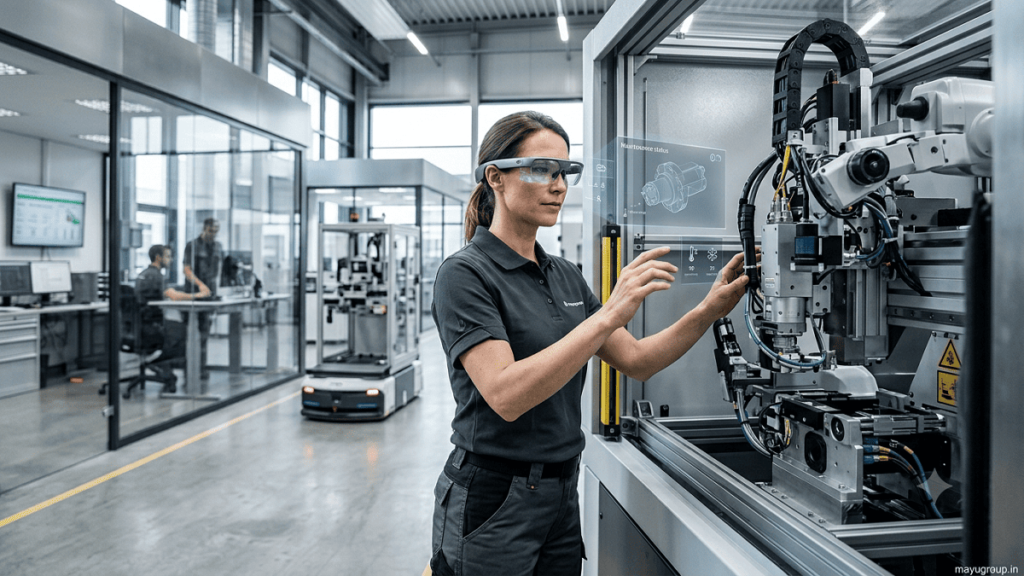
Businesses are adopting immersive technology for employee training, equipment maintenance, product design, and remote assistance. For example, industrial workers can use AR instructions to complete complicated tasks, while VR simulations allow employees to practice procedures in controlled environments.
These applications may offer attractive commercial opportunities when they produce measurable cost savings or productivity improvements.
5. Supporting Technologies
Investors can also research companies involved in graphics processing, semiconductor chips, optical components, motion tracking, and computer vision. These technologies support immersive experiences and have applications beyond AR/VR, potentially providing broader exposure to technology markets.
Conclusion
The best AR/VR investment opportunities depend on an investor’s goals, risk tolerance, and time horizon. Hardware, software, gaming, enterprise applications, and supporting technologies each offer different potential benefits and risks. Before investing, compare company valuations, financial strength, competitive advantages, and actual customer demand. Diversification and independent research are essential because the growth of immersive technology does not guarantee investment returns.
What Are the Risks of AR/VR Investment?
Introduction
Augmented Reality (AR) and Virtual Reality (VR) are creating new opportunities across gaming, healthcare, education, manufacturing, and other industries. As businesses invest in immersive technologies, investors are exploring ways to participate in this developing market. However, despite its potential, AR/VR investment carries significant risks that should be carefully evaluated before committing capital.
Understanding these challenges can help investors make informed decisions, manage expectations, and identify businesses with stronger long-term prospects.
1. Uncertain Market Demand
One of the main risks of AR/VR investment is uncertainty about how quickly consumers and businesses will adopt immersive technologies. Although interest in virtual experiences is growing, some products remain expensive or offer limited practical value to everyday users.
If customer demand fails to meet expectations, companies may struggle to generate sufficient sales to cover development, marketing, and manufacturing expenses. Investors should examine actual customer adoption, repeat purchases, and revenue growth rather than relying solely on optimistic market forecasts.
2. High Development and Hardware Costs
Developing AR/VR devices and applications requires specialized engineering, advanced sensors, graphics processing, and software development. These requirements can make product development expensive and time-consuming.
Hardware manufacturers must also manage production costs, supply chains, and ongoing research. Startups with limited financial resources may find it difficult to compete with established technology companies. Unexpected delays or product failures can further increase expenses and reduce profitability.
3. Rapid Technological Changes
The immersive technology sector evolves quickly. New devices, software platforms, and computing technologies can make existing products less competitive or obsolete.
Companies that fail to innovate may lose customers to competitors offering better performance, improved comfort, or more affordable solutions. Investors should assess whether a company has a sustainable competitive advantage, a credible development strategy, and the financial resources to keep pace with technological change.
4. Intense Market Competition
Established technology companies and emerging startups are competing to develop AR/VR hardware, operating systems, applications, and content. Strong competition can pressure prices, increase marketing expenses, and make it difficult for smaller businesses to gain market share.
Investors should consider a company’s brand strength, intellectual property, customer relationships, and ability to generate recurring revenue.
5. Privacy and Security Concerns
AR/VR devices may collect sensitive information, including movement patterns, environmental images, voice data, and spatial information. Weak data protection practices can create cybersecurity risks, legal expenses, and reputational damage.
Businesses must comply with applicable privacy laws and maintain appropriate security controls. Investors can review resources from the U.S. Federal Trade Commission to better understand privacy and data security responsibilities.
6. Uncertain Financial Returns
A promising technology does not automatically translate into a profitable investment. Some companies may experience substantial revenue growth without achieving positive cash flow. Others may be valued too highly relative to their earnings and future prospects.
Investors should review financial statements, cash reserves, debt levels, valuations, and business fundamentals before making decisions.
Conclusion
AR/VR investment offers potential opportunities, but market uncertainty, high development costs, rapid technological change, competition, privacy concerns, and unpredictable returns remain important risks. Careful research, diversification, and realistic expectations can help investors evaluate opportunities more responsibly. Rather than investing based on excitement alone, focus on companies with demonstrated demand, sound financial management, and sustainable business models.
#ARVRInnovation
How Can Startups Attract AR/VR Investors?
Introduction
Augmented Reality (AR) and Virtual Reality (VR) are creating new opportunities for startups to develop innovative products and services across industries such as gaming, healthcare, education, retail, and manufacturing. However, attracting investors in this competitive market requires more than an exciting technological idea. Startups must demonstrate that their solutions address real problems, have commercial potential, and can generate sustainable revenue.
Investors typically look for a combination of technological innovation, market demand, a capable team, and a clear business strategy. By focusing on these factors, AR/VR startups can improve their chances of securing funding and building long-term partnerships.
1. Develop a Clear Business Idea
The first step is to identify a specific problem that AR/VR technology can solve. For example, a startup might develop VR simulations for employee training or AR software that helps customers visualize furniture in their homes.
A clearly defined problem makes it easier for investors to understand the product’s value. Startups should explain who their target customers are, how the solution works, and why customers would choose it over existing alternatives.
2. Build a Working Prototype
Investors are more likely to understand a product when they can see it in action. A working prototype or minimum viable product (MVP) demonstrates technical feasibility and gives potential customers an opportunity to test the experience.
Startups should use demonstrations to highlight practical benefits, such as improved productivity, reduced training costs, or enhanced customer engagement. Feedback from early users can also help refine the product before a larger launch.
For guidance, explore Y Combinator’s startup resources, which cover product development, customer discovery, and fundraising.
3. Demonstrate Market Demand
A promising technology is not enough to establish a successful business. Startups need evidence that customers are willing to pay for their products.
Market research, pilot projects, customer testimonials, letters of intent, and early sales can help demonstrate demand. Founders should also study competitors, estimate the target market realistically, and explain how their products differ from existing solutions.
4. Present a Strong Business Plan
A professional business plan should explain the company’s revenue model, pricing strategy, operating expenses, growth objectives, and funding requirements. Investors also need to understand how their capital will be used and what milestones the startup expects to achieve.
Possible revenue models include software subscriptions, enterprise licensing, hardware sales, and customized AR/VR solutions.
5. Connect With Relevant Investors
Startups can explore venture capital firms, angel investors, technology accelerators, and corporate investment programs that support immersive technology or enterprise software.
Platforms such as Crunchbase can help founders research companies, investors, and funding activity. Networking at technology conferences and startup events can also create opportunities to meet potential funding partners.
Conclusion
Attracting AR/VR investors requires a combination of innovation, market validation, financial planning, and effective communication. Startups that build practical solutions, demonstrate customer demand, and present credible growth strategies can establish stronger investment cases. By focusing on measurable business value rather than technology trends alone, founders can improve their ability to attract funding and develop sustainable AR/VR businesses.
#ImmersiveTechnology
Case Study of AR/VR Investment: Opportunities, Strategies, and Lessons for Investors
Introduction
Augmented Reality (AR) and Virtual Reality (VR) have become important areas of technology investment as businesses explore immersive experiences, digital collaboration, and advanced training solutions. From consumer devices to enterprise applications, companies are investing in technologies that could change how people work, learn, shop, and interact with digital information.
A useful way to understand AR/VR investment is to examine real companies, their investment strategies, and the financial challenges associated with developing immersive technologies. Meta and Apple provide two examples of how established technology companies are approaching this evolving market.
Case Study 1: Meta’s Investment in AR/VR Technology
Meta has invested heavily in virtual reality headsets, immersive software, digital environments, and augmented reality technologies. Its Reality Labs division develops products such as Meta Quest and related software and content.
Meta’s strategy is to establish immersive computing and wearable devices as important technology platforms. Rather than focusing only on immediate hardware sales, the company is investing in the broader ecosystem, including software, developer tools, and user experiences.
According to Meta’s 2024 annual report filed with the U.S. Securities and Exchange Commission, Reality Labs recorded approximately $2.15 billion in revenue and an operating loss of $17.73 billion in 2024.
These figures illustrate an important investment lesson: substantial spending can help develop emerging technology, but it does not guarantee short-term profitability. Investors evaluating companies like Meta should consider the financial strength of the wider business, the cost of research and development, product adoption, and the possibility that returns may take years to materialize.
Case Study 2: Apple’s Investment in Spatial Computing
Apple represents another approach to immersive technology investment through its Vision Pro platform. Rather than concentrating exclusively on conventional VR entertainment, Apple has emphasized spatial computing, which allows digital content to appear within a user’s physical surroundings.
Potential business applications include product design, immersive training, remote collaboration, and specialized workplace workflows.
In April 2024, Apple highlighted enterprise applications for Vision Pro, including KLM Royal Dutch Airlines’ engine maintenance workflow. The example demonstrates how immersive technology may support specialized industrial tasks.
For investors, this case illustrates the importance of identifying practical business applications. Technology that solves specific operational problems may create value beyond consumer entertainment, although commercial adoption and financial returns still need to be assessed.
#VirtualReality
White Paper on AR/VR Investment: Market Opportunities, Growth Strategies, and Risks
An investor-focused overview of augmented reality, virtual reality, and the emerging immersive technology economy.
Executive summary
Augmented Reality (AR) and Virtual Reality (VR) are creating investment opportunities across hardware, software, enterprise applications, gaming, healthcare, education, and industrial training. These technologies allow users to interact with digital information in new ways, creating potential value for businesses and consumers.
However, the investment landscape is evolving unevenly. Recent industry research highlights a distinction between traditional VR headsets and the growing smart-glasses market. Counterpoint Research reported that global VR headset shipments declined 28% year over year in 2025, while AR smart-glasses shipments increased 108% over the same year. These figures suggest that investors should evaluate individual product categories rather than treating the entire immersive technology sector as one market.
Counterpoint Research
This white paper examines the market landscape, major investment opportunities, business models, financial considerations, and risks that investors should evaluate before allocating capital to AR/VR-related businesses.
- Understanding the AR/VR investment landscape
AR overlays digital information on the physical environment, while VR immerses users in computer-generated environments. Mixed Reality (MR) combines physical and digital elements, and Extended Reality (XR) is an umbrella term covering these immersive technologies.
The investment ecosystem includes several interconnected segments:
- Hardware: Headsets, smart glasses, displays, optical components, sensors, and processors.
- Software: Immersive applications, 3D development platforms, simulation tools, and spatial computing software.
- Enterprise solutions: Training, remote assistance, industrial design, and digital twins.
- Consumer experiences: Gaming, entertainment, social interaction, and virtual experiences.
- Enabling technologies: Artificial intelligence, computer vision, cloud infrastructure, and motion tracking.
Each segment has a different cost structure, competitive environment, and path to profitability. Investors should assess these separately instead of assuming that growth in one category will automatically benefit every AR/VR company.
- Market trends and investment outlook
Recent market data indicates that the immersive technology sector is changing rather than growing uniformly.
Selected market indicators
+167%
Smart glasses shipments
Year-over-year growth in Q1 2026, reported by IDC.
−28%
VR headset shipments
Year-over-year change for full-year 2025, reported by Counterpoint Research.
Sources: IDC AR/VR market insights and Counterpoint Research. These figures cover different periods and product categories and should not be directly compared as equivalent measures.
IDC’s July 2026 outlook also identifies smart glasses, AI-enabled wearables, and mixed reality as important areas to monitor. Its forecasts are estimates, not guaranteed outcomes.
These trends suggest several areas for further research:
- AI-enabled smart glasses and wearable computing.
- Enterprise training and remote assistance.
- Immersive healthcare education and simulation.
- Industrial visualization and digital twins.
- Software platforms that support multiple devices.
Investors should validate these opportunities through customer demand, commercial deployments, and financial performance.
- Major investment opportunities
Hardware and wearable devices
Hardware companies may benefit from new device categories and improvements in display quality, battery life, comfort, and processing power. However, hardware businesses often face manufacturing expenses, supply-chain risks, price competition, and substantial research and development costs.
Investors should examine unit sales, average selling prices, gross margins, inventory levels, and the strength of distribution partnerships.
Enterprise AR/VR software
Enterprise software offers a different investment profile. Businesses may pay recurring subscription fees or license immersive applications for employee training, equipment maintenance, design, and collaboration.
A software company can potentially expand without manufacturing its own hardware. Nevertheless, investors should examine customer retention, implementation costs, sales cycles, and the proportion of revenue generated by recurring contracts.
Healthcare and education
VR simulations can support medical education, professional training, and learning experiences. AR can provide visual guidance and interactive educational content.
These applications may deliver measurable value when they improve learning outcomes, reduce training expenses, or increase operational efficiency. Adoption can still be constrained by regulatory requirements, institutional budgets, integration costs, and the need for evidence that a solution works.
Gaming and entertainment
Immersive games and experiences remain important applications of VR. Potential opportunities include development studios, content platforms, and tools that help creators build interactive environments.
Investors should consider development budgets, user engagement, content licensing, platform dependence, and the ability to generate revenue beyond a single successful release. - Business models and revenue generation
AR/VR businesses can generate revenue through several models.
Business model Revenue source Key consideration
Hardware sales Device purchases Manufacturing costs and margins
Software subscriptions Monthly or annual fees Retention and recurring revenue
Enterprise licensing Business contracts Sales cycle and contract renewals
Content sales Games and digital experiences Engagement and content demand
Professional services Implementation and consulting Project margins and scalability
Platform ecosystems Developer tools and related services Network effects and competition
A startup’s revenue model should match the needs of its target market. For example, an enterprise training company might combine software subscriptions with initial implementation fees, while a hardware manufacturer may depend on device sales and related services.
Investors should distinguish revenue growth from profitability and assess whether each model can support sustainable cash flow. - Financial evaluation and investment criteria
Before allocating capital to an AR/VR company, investors should examine its financial statements, valuation, customer base, and competitive position.
Important questions include: - Does the company solve a clear customer problem?
- Is there evidence of paying customers and repeat usage?
- Can revenue grow without expenses increasing at the same rate?
- Does the business have sufficient cash to fund development and expansion?
- Is the valuation reasonable relative to its financial performance and potential?
- Does the company depend heavily on a single hardware platform, customer, or supplier?
Early-stage startups may not yet have consistent profits. In these cases, investors can examine pilot contracts, customer acquisition costs, product adoption, gross margins, intellectual property, and the milestones required to reach commercial scale.
Publicly traded companies should be evaluated using broader financial analysis, since their AR/VR activities may represent only one part of their overall business. - Risks and challenges
AR/VR investment involves several material risks.
Market adoption risk: Consumers and businesses may adopt immersive devices more slowly than expected.
Technology risk: New hardware, software platforms, or AI capabilities can reduce the competitiveness of existing products.
Financial risk: High development costs and uncertain revenue can delay profitability.
Competition risk: Established technology companies may have greater financial resources, distribution networks, and intellectual property.
Privacy and cybersecurity risk: Devices that collect spatial, visual, voice, or movement data create additional responsibilities for data protection.
Valuation risk: Investor enthusiasm may push company valuations beyond what actual earnings or future cash flows can support.
Meta’s Reality Labs business illustrates the importance of these considerations: its immersive technology investments have generated substantial revenue but also significant operating losses. Investors can review the company’s financial disclosures through the U.S. Securities and Exchange Commission.
Risk management should include diversification, independent due diligence, realistic financial assumptions, and regular reviews of investment performance. - Strategic recommendations for investors
A disciplined AR/VR investment strategy should begin with identifying a specific investment objective. An investor seeking exposure to established technology companies will have different requirements from a venture investor funding an early-stage immersive software startup.
A practical evaluation process includes:
- Research the market: Identify the target industry, customer problem, competitors, and adoption barriers.
- Evaluate the product: Determine whether it provides measurable benefits over existing alternatives.
- Review financial fundamentals: Examine revenue, cash flow, margins, debt, valuation, and capital requirements.
- Assess management: Consider the team’s technical expertise, commercial experience, and ability to execute.
- Monitor milestones: Track customer acquisition, recurring revenue, product adoption, and progress toward profitability.
- Manage concentration: Avoid assuming that one company or one device category will dominate the entire sector.
The XR Association’s State of the Industry report is another useful resource for examining industry developments, enterprise adoption, and emerging applications.
Conclusion
AR/VR investment offers exposure to a developing technology ecosystem spanning wearable devices, immersive software, enterprise applications, healthcare, education, and entertainment. Recent industry indicators show that different product categories can follow very different growth trajectories, making detailed market analysis essential.
#AugmentedReality
Industry Application of AR/VR Investment
Introduction
Augmented Reality (AR) and Virtual Reality (VR) are transforming industries by introducing immersive experiences, interactive training, and advanced digital visualization. AR adds digital information to real-world environments, while VR creates simulated environments in which users can interact with virtual objects and scenarios.
As organizations explore these technologies, AR/VR investment is creating opportunities for businesses that develop hardware, software, training platforms, and industry-specific applications. According to the Organisation for Economic Co-operation and Development (OECD), immersive technologies have applications across sectors including healthcare, manufacturing, education, construction, and entertainment.
1. Healthcare and Medical Training
Healthcare is an important application area for AR/VR investment. Hospitals, medical institutions, and technology companies can use immersive tools for surgical planning, medical education, rehabilitation, and selected therapeutic applications.
VR simulations allow medical students to practice procedures in controlled environments, while AR can help clinicians visualize medical information during certain procedures. Investors may explore opportunities in medical simulation software, specialized devices, and healthcare technology companies.
However, medical applications require appropriate clinical validation, safety assessment, and regulatory compliance. The U.S. Food and Drug Administration provides further information about AR/VR medical devices and their potential benefits and risks.
2. Manufacturing and Industrial Operations
Manufacturing companies can use AR to display assembly instructions, maintenance information, and equipment diagnostics. VR can support employee training, factory planning, and virtual product prototyping.
These applications may help businesses reduce physical prototyping requirements, improve workforce preparation, and identify design problems earlier. Investment opportunities include industrial AR software, digital twin platforms, simulation tools, and remote assistance solutions.
Companies such as Autodesk provide technologies relevant to 3D design and industrial visualization. Learn more through Autodesk’s augmented reality resources.
3. Education and Professional Training
AR/VR can make learning more interactive by allowing students to explore virtual laboratories, historical environments, scientific models, and simulated workplaces.
Educational technology startups can develop immersive learning applications for schools, universities, vocational institutions, and corporate training departments. Investors should evaluate curriculum relevance, institutional demand, accessibility, and evidence of improved learning outcomes.
4. Retail and E-Commerce
Retailers can use AR applications to help customers preview furniture, visualize home decorations, and try selected products virtually before purchasing them.
These applications may improve customer engagement and purchasing confidence. Investment opportunities include virtual fitting tools, 3D product visualization, digital showrooms, and immersive shopping platforms.
Businesses should measure conversion rates, customer satisfaction, implementation costs, and product return rates to determine whether these solutions create meaningful commercial value.
5. Real Estate and Construction
Real estate companies can use VR to offer virtual property tours, helping prospective buyers explore buildings before construction is complete or before visiting in person.
In construction, AR can overlay building plans onto physical spaces, helping teams identify discrepancies and coordinate work. Investors may explore virtual property platforms, architectural visualization software, and construction technology solutions.
6. Automotive, Aerospace, and Transportation
Automotive and aerospace businesses can use immersive technologies for product design, engineering simulations, maintenance guidance, and employee training.
VR allows engineers to inspect digital prototypes, while AR can provide technicians with step-by-step instructions. These applications may reduce the need for certain physical prototypes and improve access to technical information.
7. Gaming, Entertainment, and Tourism
Gaming and entertainment remain established areas for immersive experiences. VR games, interactive storytelling, virtual concerts, and digital tourism experiences can create opportunities for content developers and platform providers.
However, investment success depends on audience demand, content quality, user engagement, and the ability to generate sustainable revenue.
Conclusion
AR/VR investment has applications across healthcare, manufacturing, education, retail, real estate, transportation, and entertainment. Each sector offers different commercial opportunities, technical requirements, and financial risks.
For investors, the most important consideration is whether an application solves a real problem and delivers measurable value. Companies that demonstrate customer demand, practical benefits, responsible data management, and sustainable business models may offer opportunities worth investigating. Careful research and financial evaluation remain essential because technological potential alone does not guarantee commercial success.
#ARVRInvestment
Ask FAQs
What is AR/VR investment?
AR/VR investment involves investing in companies, startups, and technologies developing augmented reality and virtual reality solutions, including hardware, software, gaming, healthcare, education, and industrial applications.
Which industries offer AR/VR investment opportunities?
Healthcare, manufacturing, education, retail, real estate, automotive, gaming, and entertainment offer potential opportunities for AR/VR investment.
Why are investors interested in AR/VR technology?
Investors are interested in AR/VR because these technologies can improve business efficiency, enhance customer experiences, support immersive training, and create new digital products and services.
What are the major risks of AR/VR investment?
Major risks include high development costs, uncertain customer adoption, rapid technological changes, intense competition, privacy concerns, and unpredictable financial returns.
How can businesses benefit from AR/VR investment?
Businesses can use AR/VR to improve employee training, visualize products, support remote collaboration, enhance customer engagement, and potentially reduce operational costs. The benefits depend on the application and its implementation.
Disclaimer: This content is for informational and educational purposes only and should not be considered financial or investment advice. Always conduct independent research before making investment decisions.