Innovation Labs: Driving Creativity, Research, and Business Growth
Table of Contents
Innovation Labs are specialized environments where organizations explore new ideas, develop emerging technologies, and create solutions to complex business challenges. By combining research, experimentation, collaboration, and strategic thinking, these labs help businesses transform creative concepts into practical products, services, and processes. In an increasingly competitive marketplace, innovation labs play an important role in helping organizations adapt to changing customer expectations and technological advancements.
Unlike traditional departments that primarily focus on established operations, innovation labs encourage teams to experiment with new approaches, test assumptions, and learn from failures. Their primary objective is to identify opportunities for improvement and develop innovative solutions that deliver measurable value.
What Do Innovation Labs Do?
Innovation labs bring together professionals from different disciplines, including engineers, researchers, designers, data analysts, and business strategists. Their collaborative approach enables organizations to explore opportunities that may not emerge through conventional workflows.
Common activities include:
- Research and development: Investigating emerging technologies, market trends, and customer needs.
- Product development: Creating prototypes and testing new products before launching them commercially.
- Digital transformation: Exploring artificial intelligence, automation, data analytics, and other technologies.
- Problem-solving: Developing practical solutions to operational challenges and unmet customer needs.
- Collaborative experimentation: Working with startups, universities, customers, and industry experts to develop new ideas.
According to the World Bank, innovation labs can help organizations adopt emerging innovations, encourage informed risk-taking, and strengthen their ability to innovate systematically.
Benefits of Innovation Labs for Businesses
Establishing an innovation lab offers several potential advantages. First, it creates a dedicated environment for research and experimentation, allowing teams to investigate opportunities beyond immediate operational priorities. Second, rapid prototyping and testing can help organizations identify weaknesses before investing heavily in full-scale development.
Innovation labs can also encourage collaboration across departments, improve customer experiences, and help businesses respond to changing market conditions. However, their effectiveness depends on clear objectives, adequate resources, leadership support, and measurable outcomes.
Organizations should evaluate innovation initiatives through indicators such as prototype development time, customer feedback, successful product launches, cost savings, and measurable business impact.
The Future of Innovation Labs
As digital technologies continue to evolve, innovation labs are increasingly relevant to businesses, educational institutions, and public organizations. Artificial intelligence, robotics, sustainable technologies, and advanced analytics offer opportunities to develop new products and improve existing services.
In India, initiatives such as Atal Innovation Mission demonstrate how innovation-focused environments can encourage experimentation, design thinking, and practical problem-solving among students and entrepreneurs.
The future of innovation labs will depend not simply on adopting advanced technologies, but on using them responsibly to solve meaningful problems. Organizations that combine experimentation with strategic planning and customer-focused development will be better positioned to turn promising ideas into sustainable results.
Conclusion
Innovation labs provide a structured approach to creativity, research, and technological development. By encouraging collaboration, testing new ideas, and learning from experimentation, they help organizations identify opportunities and develop practical solutions. When aligned with business objectives and supported by effective leadership, innovation labs can become valuable drivers of long-term growth, competitiveness, and continuous improvement.
#TechnologyInnovation
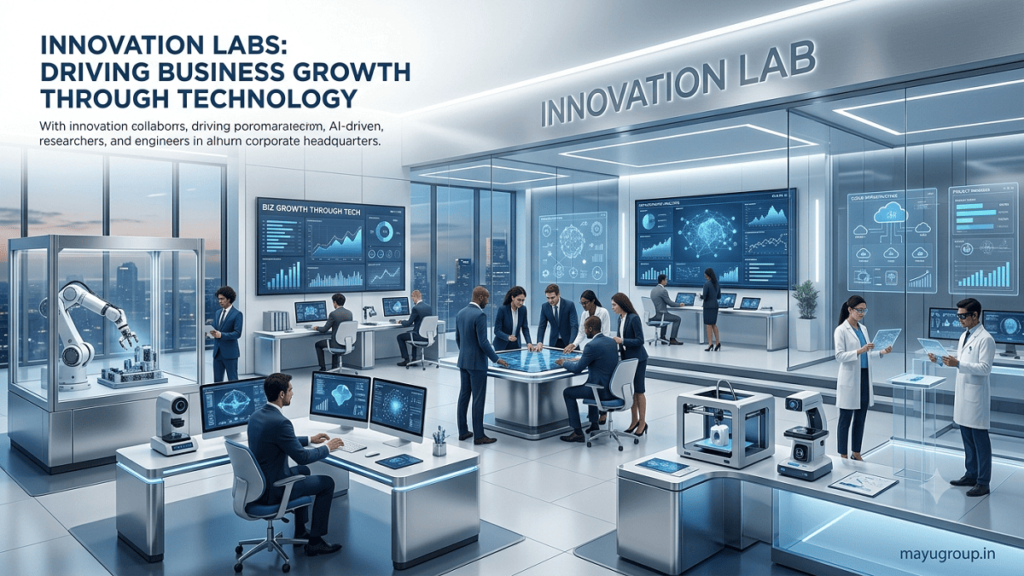
What Are Innovation Labs, and How Do They Support Business Growth?
Introduction
Innovation labs are dedicated environments where businesses develop new ideas, experiment with emerging technologies, and create solutions to real-world challenges. They bring together professionals from different fields, including research, engineering, design, marketing, and business strategy, to transform creative concepts into practical outcomes. In today’s competitive business environment, innovation labs help organizations adapt to changing customer expectations, improve operational efficiency, and identify new growth opportunities.
Unlike traditional departments that primarily focus on existing processes, innovation labs encourage experimentation, collaboration, and continuous learning. Their purpose is to explore new possibilities while aligning innovation initiatives with an organization’s long-term business objectives.
What Do Innovation Labs Do?
Innovation labs support businesses through several important activities. They conduct research to identify emerging market trends, evaluate customer needs, and explore technologies such as artificial intelligence, automation, and data analytics. They also develop prototypes, test new business models, and evaluate potential products or services before full-scale implementation.
By using methods such as design thinking, agile development, and rapid prototyping, innovation teams can test assumptions early and make improvements based on customer feedback. This approach can reduce development risks and help businesses make more informed investment decisions.
Organizations can establish internal innovation labs, collaborate with universities and research institutions, or partner with startups to access specialized expertise and fresh perspectives.
How Innovation Labs Support Business Growth
1. Encouraging Product and Service Innovation
Innovation labs help businesses identify unmet customer needs and develop products or services that address them. Testing concepts before launch enables companies to refine their offerings and improve their chances of market acceptance.
2. Improving Operational Efficiency
By exploring automation, digital workflows, and advanced analytics, innovation labs can identify opportunities to reduce costs, minimize repetitive tasks, and improve productivity. These improvements allow organizations to allocate resources more effectively.
3. Strengthening Customer Experience
Customer research and prototype testing help businesses understand user preferences and identify problems with existing products or services. Applying these insights can improve customer satisfaction, retention, and loyalty.
4. Creating New Revenue Opportunities
Innovation labs enable companies to explore new markets, develop digital services, and experiment with alternative business models. Successful initiatives can diversify revenue streams and support long-term expansion.
5. Building Competitive Advantage
Businesses that consistently experiment and adapt can respond more effectively to market changes. Innovation labs provide a structured environment for exploring opportunities and developing capabilities that differentiate an organization from its competitors.
Best Practices for Successful Innovation Labs
To achieve meaningful results, businesses should establish clear innovation goals, secure leadership support, encourage cross-functional collaboration, and allocate sufficient resources. They should also measure performance using indicators such as development time, cost savings, customer satisfaction, successful product launches, and revenue generated by new initiatives.
The OECD provides valuable resources on innovation policy, research, and the role of innovation in economic development. Businesses can use these insights to understand broader innovation trends and inform their strategies.
Conclusion
Innovation labs help businesses turn ideas into practical solutions through research, experimentation, and collaboration. They can support growth by improving products, increasing efficiency, strengthening customer relationships, and opening new revenue opportunities. When aligned with business strategy and supported by measurable objectives, innovation labs become valuable tools for building resilience, encouraging continuous improvement, and achieving sustainable growth.
#IndustryInnovation
What Are the Key Components of a Successful Innovation Lab?
Introduction
An innovation lab is a dedicated environment where organizations explore new ideas, experiment with emerging technologies, and develop solutions to business challenges. Successful innovation labs help companies improve products, streamline operations, discover new revenue opportunities, and remain competitive in changing markets. However, establishing an innovation lab requires more than creative ideas or advanced technology. It depends on a combination of strategic direction, skilled professionals, effective processes, suitable infrastructure, and measurable objectives.
Understanding these key components enables organizations to build innovation labs that generate practical outcomes and contribute to long-term business growth.
1. Clear Vision and Strategic Objectives
A successful innovation lab begins with a well-defined purpose. Organizations should identify the problems they want to solve, the opportunities they want to explore, and the business outcomes they expect to achieve. Objectives might include developing new products, improving customer experiences, reducing operational costs, or implementing digital transformation initiatives.
Aligning innovation activities with business strategy ensures that projects address meaningful challenges rather than pursuing technology without a clear purpose. Leadership support is equally important because it provides resources, establishes priorities, and encourages experimentation.
2. A Skilled and Diverse Team
Innovation depends on collaboration between people with different skills and perspectives. An effective lab may include engineers, designers, researchers, data analysts, product managers, and business strategists.
Cross-functional teams can evaluate challenges from multiple viewpoints, identify opportunities, and develop more comprehensive solutions. A culture that values curiosity, open communication, and constructive feedback also helps employees contribute ideas confidently.
3. Advanced Technology and Infrastructure
Modern innovation labs require appropriate tools and infrastructure to support research, experimentation, and development. Depending on their objectives, organizations may invest in artificial intelligence, cloud computing, data analytics, simulation software, robotics, and rapid prototyping equipment.
The right infrastructure allows teams to test concepts efficiently, analyze results, and develop working prototypes. However, technology investments should reflect actual business requirements rather than trends alone.
4. Effective Innovation Processes
A structured process helps transform ideas into viable solutions. Common approaches include design thinking, agile development, and lean experimentation.
Typically, teams identify a problem, generate ideas, create prototypes, test them with users, evaluate feedback, and refine promising concepts. This iterative approach helps organizations identify weaknesses early, reduce unnecessary expenditure, and improve product-market fit.
The Stanford d.school offers resources on design thinking and human-centered problem-solving that can help teams develop effective innovation practices.
5. Collaboration and External Partnerships
Successful innovation labs often collaborate with universities, startups, research institutions, suppliers, and customers. External partnerships provide access to specialized expertise, emerging technologies, and perspectives that may not exist internally.
These relationships can accelerate research, encourage knowledge sharing, and help organizations explore opportunities beyond their immediate capabilities.
6. A Culture That Encourages Experimentation
Innovation requires an environment where employees can question established practices, propose new ideas, and learn from unsuccessful experiments. Leaders should encourage responsible risk-taking while maintaining appropriate financial, operational, and regulatory safeguards.
Recognizing creative contributions and sharing lessons learned can strengthen participation and continuous improvement.
7. Performance Measurement and Continuous Improvement
Innovation labs need measurable indicators to evaluate their effectiveness. Useful metrics include prototype development time, experimentation costs, customer satisfaction, successful product launches, revenue from new offerings, and operational savings.
Organizations should review these indicators regularly and discontinue projects that no longer justify investment. The OECD Oslo Manual provides internationally recognized guidance on measuring innovation activities.
Conclusion
A successful innovation lab combines strategic objectives, diverse talent, appropriate technology, structured processes, collaborative partnerships, and an experimentation-focused culture. Performance measurement ensures that innovation efforts produce tangible results rather than remaining isolated research activities. By integrating these components into their operations, organizations can develop practical solutions, respond to evolving market demands, and create sustainable opportunities for business growth.
#InnovationStrategy
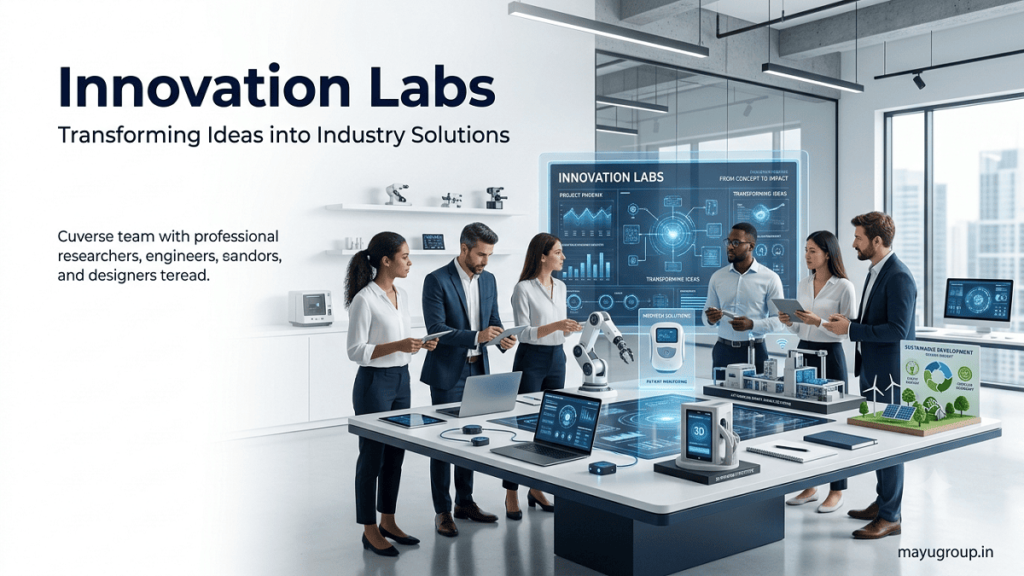
How Do Innovation Labs Encourage Creativity and Collaboration?
Introduction
Innovation labs play an important role in helping organizations develop creative ideas, solve complex problems, and build collaborative working environments. Unlike traditional departments that often prioritize established procedures and immediate operational targets, innovation labs provide dedicated spaces for experimentation, research, and cross-functional teamwork. They encourage employees to challenge assumptions, explore alternative approaches, and transform promising concepts into practical solutions.
By combining diverse expertise, modern technologies, and structured innovation methods, these labs help businesses unlock creative potential and develop products, services, and processes that respond to changing market demands.
1. Creating an Environment That Supports Creative Thinking
Innovation labs encourage creativity by providing employees with the freedom to explore new ideas without being restricted by conventional working methods. Teams can investigate different possibilities, question existing practices, and experiment with alternative solutions.
A supportive environment also allows employees to learn from unsuccessful experiments. When organizations treat failure as an opportunity to gain insights rather than simply as a setback, employees become more willing to propose unconventional ideas and test new approaches.
This culture of psychological safety can improve participation, encourage independent thinking, and help organizations identify opportunities that might otherwise remain unexplored.
2. Bringing Together Diverse Skills and Perspectives
Collaboration is a fundamental component of successful innovation labs. These environments bring together professionals from departments such as engineering, marketing, design, research, finance, and customer service.
Each team member contributes different knowledge and experiences, allowing groups to examine challenges from multiple perspectives. For example, when developing a digital product, engineers can assess technical feasibility, designers can improve usability, and marketing specialists can evaluate customer needs.
This cross-functional approach helps teams identify potential problems earlier, generate more comprehensive solutions, and make better-informed decisions.
3. Using Design Thinking to Solve Problems
Many innovation labs use design thinking to encourage creativity and collaboration. This approach emphasizes understanding users, identifying their challenges, generating ideas, developing prototypes, and testing solutions.
Instead of relying exclusively on assumptions, teams gather feedback from potential users and refine their ideas based on actual needs.
The Stanford d.school provides educational resources on design thinking, human-centered design, and collaborative problem-solving. These methods help organizations develop solutions that balance user expectations with technical and business requirements.
4. Encouraging Experimentation Through Prototyping
Innovation labs enable teams to transform abstract ideas into prototypes that can be evaluated quickly. These prototypes may include product mockups, software demonstrations, process simulations, or experimental business models.
Rapid prototyping encourages collaboration because team members can discuss tangible results instead of relying only on theoretical discussions. Feedback from colleagues and customers helps teams identify weaknesses, refine concepts, and improve their solutions before making substantial investments.
5. Strengthening Knowledge Sharing and External Partnerships
Innovation labs often organize brainstorming sessions, workshops, demonstrations, and collaborative research projects. These activities encourage employees to share expertise and learn from colleagues across organizational boundaries.
Partnerships with universities, startups, research institutions, and industry experts can introduce new perspectives and specialized knowledge. Such collaboration can accelerate development and expose teams to emerging technologies and innovative practices.
6. Using Technology to Improve Collaboration
Digital collaboration platforms, cloud-based workspaces, artificial intelligence tools, and project management applications help distributed teams exchange information and coordinate activities. These technologies allow participants to share research, review prototypes, track progress, and contribute ideas regardless of their physical location.
However, technology delivers the greatest value when supported by clear communication, defined responsibilities, and shared goals.
Conclusion
Innovation labs encourage creativity and collaboration by creating supportive environments where diverse teams can experiment, exchange knowledge, and solve problems collectively. Through design thinking, rapid prototyping, cross-functional teamwork, and digital collaboration, organizations can transform creative thinking into practical business outcomes. When these practices are supported by effective leadership and a culture of continuous learning, innovation labs become valuable drivers of organizational adaptability, product development, and sustainable growth.
#ResearchAndDevelopment
What role do emerging technologies play in innovation labs?
Emerging technologies are central to modern innovation labs because they enable organizations to experiment with new ideas, solve complex problems, and develop more effective products and services. Technologies such as artificial intelligence, machine learning, the Internet of Things (IoT), robotics, cloud computing, and extended reality help innovation teams accelerate research, automate processes, and discover opportunities for business growth. However, their value depends on how effectively they address real-world challenges and support an organization’s strategic objectives.
1. Artificial Intelligence and Machine Learning
Artificial intelligence (AI) and machine learning enable innovation labs to analyze large datasets, identify patterns, automate repetitive tasks, and generate insights that support decision-making. Teams can use these technologies to develop intelligent customer service systems, predictive maintenance solutions, personalized recommendations, and automated business processes.
Generative AI can also support brainstorming, software development, content creation, and rapid prototyping. These capabilities allow innovation teams to explore multiple concepts and evaluate potential solutions more efficiently.
For responsible implementation, organizations can refer to the NIST AI Risk Management Framework to help assess and manage risks associated with AI systems.
2. Internet of Things and Smart Devices
The Internet of Things connects physical devices, sensors, and equipment to collect and exchange data. Innovation labs use IoT technologies to test connected products, monitor equipment performance, and develop smarter industrial systems.
For example, a manufacturing innovation lab can use sensors to monitor machinery and identify signs of potential equipment failure. This can help businesses improve maintenance planning, reduce downtime, and increase operational efficiency.
IoT applications are also valuable in healthcare, agriculture, logistics, and smart building management.
3. Cloud Computing and Data Analytics
Cloud computing provides scalable infrastructure for developing, testing, and deploying digital solutions. Innovation labs can access computing resources, development platforms, and collaborative tools without necessarily investing in extensive physical infrastructure.
Data analytics complements these capabilities by helping teams evaluate customer behavior, identify market trends, and measure experimental results. Together, cloud computing and analytics can accelerate research while supporting collaboration across geographically distributed teams.
4. Robotics and Automation
Robotics and automation help innovation labs experiment with intelligent machines, automated production systems, and repetitive workflow improvements. Businesses can test robotic applications before introducing them into large-scale operations.
For example, a logistics company may develop automated sorting and material-handling systems to improve warehouse productivity. These experiments can help determine whether automation delivers sufficient improvements in speed, accuracy, safety, and operating costs.
5. Virtual Reality and Digital Twins
Virtual reality (VR) enables teams to create immersive simulations for training, product visualization, and user testing. Digital twins, meanwhile, are digital representations of physical assets or systems that can be used to analyze performance and evaluate potential changes.
These technologies allow organizations to explore designs and operating scenarios before committing to expensive physical prototypes or real-world modifications.
6. Improving Collaboration and Accelerating Innovation
Emerging technologies strengthen collaboration by enabling teams to share data, develop prototypes, conduct simulations, and evaluate results using connected digital platforms. They can shorten experimentation cycles and make it easier to compare alternative solutions.
However, successful adoption requires suitable skills, cybersecurity safeguards, data protection, and clear performance objectives. Innovation labs should select technologies according to their business needs rather than adopting them simply because they are new.
Conclusion
Emerging technologies provide innovation labs with powerful tools for research, experimentation, product development, and operational improvement. AI, IoT, cloud computing, robotics, and digital twins can help organizations develop better solutions, reduce development risks, and identify new business opportunities. By combining technological capabilities with human expertise, responsible governance, and measurable objectives, innovation labs can transform experimentation into sustainable business value.
#EmergingTechnologies
How Can Businesses Measure the Success and Impact of Innovation Labs?
Introduction
Innovation labs help businesses explore new ideas, develop innovative products, improve operational processes, and identify new revenue opportunities. However, establishing an innovation lab does not automatically guarantee business success. Organizations need clear measurement frameworks to determine whether their innovation activities deliver meaningful results and contribute to long-term strategic objectives.
Measuring the success of an innovation lab requires more than counting ideas generated or prototypes developed. Businesses should evaluate the quality of experiments, customer value, financial returns, operational improvements, and the lab’s contribution to organizational learning. By combining quantitative metrics with qualitative feedback, companies can understand what works, identify areas for improvement, and make better investment decisions.
1. Establish Clear Objectives and Key Performance Indicators
The first step is to define what the innovation lab is expected to achieve. Objectives should align with the organization’s business strategy and may include launching new products, improving productivity, reducing operating expenses, or entering new markets.
Businesses can establish key performance indicators (KPIs) to track progress against these objectives. Relevant indicators include the number of experiments completed, time required to develop prototypes, percentage of projects progressing to implementation, and business value generated by successful initiatives.
The OECD Oslo Manual provides internationally recognized guidance on measuring innovation activities and outcomes.
2. Measure Financial Performance and Return on Investment
Financial metrics help determine whether an innovation lab generates sufficient value relative to its costs. Businesses should track revenue from new products, cost savings, additional profit, and the return on investment (ROI) of implemented projects.
A basic ROI calculation is:
ROI (%) = (Financial Benefits − Total Investment) ÷ Total Investment × 100
For example, if an innovation initiative generates ₹20 lakh in measurable financial benefits and costs ₹10 lakh, its ROI is 100%.
However, businesses should distinguish realized benefits from projected returns and account for implementation costs, ongoing maintenance, and the time required to achieve results. Some innovations also create strategic value that cannot be measured through immediate financial returns alone.
3. Evaluate Product Development and Commercialization
Innovation labs should be assessed on their ability to turn ideas into solutions that customers actually use. Useful indicators include the number of prototypes tested, successful pilot projects, products launched, adoption rates, and time to market.
Businesses should also measure the percentage of projects that move from experimentation to implementation. A high number of prototypes does not necessarily indicate success if few solve meaningful problems or reach the market.
Tracking progress through development stages helps management identify bottlenecks and decide which initiatives deserve additional investment.
4. Track Customer Satisfaction and Market Impact
Customer feedback provides important evidence of whether innovations deliver meaningful value. Organizations can measure customer satisfaction, retention, product adoption, repeat purchases, and reductions in customer complaints.
Market impact can also be evaluated through new customer acquisition, market share, and revenue generated from newly introduced products or services.
For example, an innovation lab developing a mobile application might evaluate its success through active users, task completion rates, customer feedback, and subscription conversions rather than downloads alone.
5. Assess Operational Efficiency and Organizational Learning
Innovation labs frequently develop solutions that improve internal operations. Businesses can measure reductions in processing time, production costs, errors, waste, and equipment downtime.
Organizations should also evaluate knowledge-sharing activities, employee participation, cross-functional collaboration, and lessons learned from experiments. Even unsuccessful projects can provide valuable insights when their findings improve future decisions.
The NIST Baldrige Excellence Framework offers guidance on evaluating organizational performance, learning, innovation, and results.
6. Use Regular Reviews and Continuous Improvement
Businesses should review innovation performance monthly, quarterly, or at appropriate project milestones. Dashboards can combine financial, operational, customer, and experimentation metrics to provide a balanced view of progress.
Comparing results with previous periods, targets, and relevant industry benchmarks helps organizations identify trends and adjust their strategies. Metrics should also reflect the maturity of each project, since early-stage research and commercially established products require different evaluation criteria.
Conclusion
Businesses can measure the success of innovation labs by combining financial returns, product development outcomes, customer impact, operational improvements, and organizational learning. The most effective approach connects these indicators to clearly defined business objectives and evaluates both short-term achievements and long-term value. By regularly reviewing results and adapting their innovation strategies, organizations can allocate resources more effectively, strengthen accountability, and ensure their innovation labs contribute to sustainable business growth.
#DigitalTransformation
Case Study of Innovation Labs: Real-World Examples and Business Lessons
Introduction
Innovation labs help organizations transform ambitious ideas into practical solutions through research, experimentation, and collaboration. They provide an environment where teams can test emerging technologies, develop prototypes, and evaluate new business opportunities. Examining real-world innovation labs reveals how organizations approach complex challenges and create opportunities for growth.
Case Study 1: Google X — Turning Ambitious Ideas into Reality
Google X, now known as X, The Moonshot Factory, is an innovation organization within Alphabet that explores technologies designed to address significant global challenges. Its approach combines scientific research, engineering, interdisciplinary collaboration, and rapid experimentation.
One notable example is Waymo, which originated as Google’s self-driving car project in 2009. The team developed prototypes, tested autonomous driving technology, and refined its approach through real-world driving experience and simulation. In 2016, the project graduated from X to become an Alphabet company.
This example demonstrates how an innovation lab can nurture a high-risk idea until it is ready to develop into an independent business. X also emphasizes evaluating technical feasibility and identifying major risks early, helping teams make informed decisions about whether to continue, modify, or discontinue a project.
Source: X — Waymo Innovation Case Study
Case Study 2: IBM Garage — Accelerating Enterprise Innovation
IBM Garage offers another approach to innovation by helping businesses turn ideas into measurable outcomes. Its methodology combines design thinking, agile development, technology expertise, and collaboration between business and technical teams.
The process involves three main stages: co-create, co-execute, and co-operate. Teams first identify business challenges and customer needs, then develop and test solutions, and finally scale successful initiatives across the organization.
This model helps businesses move beyond experimental prototypes toward practical implementation. It also encourages teams to evaluate business value throughout development rather than waiting until a project is completed.
Source: IBM Garage
Key Lessons for Businesses
These examples highlight several important principles for establishing successful innovation labs:
- Define meaningful goals: Focus on significant customer problems or business opportunities.
- Encourage experimentation: Test assumptions early and learn from unsuccessful approaches.
- Build diverse teams: Combine technical expertise with business knowledge and customer insights.
- Measure business value: Evaluate outcomes using relevant financial, operational, and customer-focused metrics.
- Plan for implementation: Create a clear pathway for scaling successful innovations beyond the lab.
Conclusion
The experiences of Google X and IBM Garage demonstrate that innovation labs can support business transformation through structured experimentation, collaboration, and strategic execution. While Google X explores ambitious technological breakthroughs, IBM Garage emphasizes developing and scaling solutions that deliver enterprise value. Businesses can learn from both approaches by aligning innovation with clear objectives, evaluating risks early, and ensuring promising ideas progress toward practical implementation.
#BusinessInnovation
Industry Applications of Innovation Labs: Transforming Businesses Across Sectors
Introduction
Innovation labs help organizations develop new products, improve operational efficiency, and explore emerging technologies. By combining research, experimentation, and collaboration, these labs enable businesses to address industry-specific challenges and respond to changing market demands. From healthcare and manufacturing to finance and agriculture, innovation labs are becoming valuable tools for digital transformation and sustainable growth.
1. Healthcare and Life Sciences
In healthcare, innovation labs support medical research, digital health solutions, diagnostic technologies, and patient-centered care. Teams experiment with artificial intelligence, wearable devices, telemedicine platforms, and medical data analytics to improve healthcare delivery.
For example, researchers can develop digital tools that help healthcare professionals analyze medical information and streamline administrative processes. These technologies require appropriate clinical validation, privacy protections, and regulatory oversight before deployment.
The World Health Organization provides resources on digital health and its role in strengthening healthcare systems.
2. Manufacturing and Industrial Automation
Manufacturing innovation labs focus on smart factories, robotics, predictive maintenance, and production optimization. Businesses use simulations, connected sensors, and digital twins to evaluate manufacturing processes before introducing changes on production lines.
These applications can reduce equipment downtime, improve quality control, minimize waste, and increase productivity. Innovation labs also help manufacturers evaluate sustainable materials and energy-efficient production methods.
The National Institute of Standards and Technology provides research and resources supporting advanced manufacturing.
3. Banking and Financial Services
Financial institutions use innovation labs to develop digital banking platforms, improve fraud detection, automate financial processes, and enhance customer experiences. Artificial intelligence and data analytics can help organizations identify suspicious transaction patterns and personalize customer services.
Innovation labs also allow banks to test new payment solutions and financial technologies in controlled environments. Security, consumer protection, and regulatory compliance remain essential considerations.
The Bank for International Settlements publishes research on financial innovation, digital payments, and developments in financial technology.
4. Education and Learning
Educational institutions use innovation labs to explore interactive learning, virtual reality, adaptive learning platforms, and educational technology. These environments help educators test new teaching methods and develop digital resources suited to different learning needs.
Innovation labs can also encourage students to develop problem-solving, research, and entrepreneurial skills through practical projects.
5. Agriculture and Food Production
Agricultural innovation labs investigate precision farming, smart irrigation, soil monitoring, agricultural robotics, and climate-resilient practices. Sensors and data analytics can help farmers optimize water usage, monitor crop conditions, and improve resource management.
These innovations can support productivity while encouraging more sustainable agricultural practices.
The Food and Agriculture Organization of the United Nations provides information about digital technologies in agriculture.
6. Retail, Transportation, and Logistics
Retail innovation labs experiment with personalized shopping, inventory forecasting, automated checkout, and omnichannel customer experiences. Transportation and logistics organizations explore route optimization, warehouse automation, connected vehicles, and predictive fleet maintenance.
These applications can improve service quality, reduce operating expenses, and help businesses respond more efficiently to customer demand.
Conclusion
Innovation labs create opportunities for industries to solve complex problems, adopt emerging technologies, and improve business performance. Their applications vary by sector, but the underlying principles remain consistent: research customer needs, experiment with potential solutions, evaluate results, and scale successful initiatives responsibly. Organizations that align innovation lab activities with measurable industry objectives can strengthen competitiveness, improve efficiency, and create sustainable long-term value.
#InnovationLabs
Ask FAQs
What is an innovation lab?
An innovation lab is a dedicated environment where organizations research new ideas, experiment with emerging technologies, and develop solutions to business challenges. It supports creativity, collaboration, and product development.
Which industries benefit from innovation labs?
Industries such as healthcare, manufacturing, banking, education, agriculture, retail, and transportation benefit from innovation labs. They use these environments to improve efficiency, develop new products, and enhance customer experiences.
How do innovation labs support business growth?
Innovation labs support business growth by identifying new market opportunities, improving existing products and services, reducing operational costs, and accelerating digital transformation. They help businesses test ideas before investing in large-scale implementation.
What technologies are commonly used in innovation labs?
Common technologies include artificial intelligence, machine learning, robotics, cloud computing, the Internet of Things (IoT), data analytics, virtual reality, and digital twins. These technologies help teams conduct research, develop prototypes, and test innovative solutions.
How can businesses measure the success of an innovation lab?
Businesses can measure success through key performance indicators such as product development time, successful project implementation rates, customer satisfaction, cost savings, revenue generated from new products, and return on investment (ROI). Regular performance reviews help ensure that innovation activities align with business objectives.
Disclaimer: This content is for informational purposes only. Results may vary depending on business needs and implementation.