ISO/DTR 23585
Table of Contents
The growing use of biogas as a renewable energy source has increased the need for effective approaches to managing safety and environmental considerations throughout the biogas value chain. ISO/DTR 23585 is a draft technical report developed to provide information related to safety and environmental aspects of biogas plants, biogas transportation, and biogas use. It is being developed under ISO/TC 255, the ISO technical committee responsible for biogas standards.
The document is particularly relevant to organizations involved in the production, transportation, distribution, and utilization of biogas. Biogas systems can involve various operational activities and potential hazards, making clear and consistent safety and environmental information valuable for organizations, professionals, and other stakeholders. ISO/DTR 23585 is intended to contribute to a common understanding of these considerations within the growing biogas industry.
What Is ISO/DTR 23585?
ISO/DTR 23585 is titled “Safety and environment information for biogas plants, biogas transportation and biogas use.” Unlike a conventional ISO management-system standard, it is being developed as a Technical Report (TR). The document is currently listed by ISO as under development, with its approval process at stage 50.92, meaning the final draft or proof has been referred back to the responsible technical committee or subcommittee.
The development of this document reflects the increasing importance of internationally consistent information for the safe and environmentally responsible use of biogas. It sits within ISO/TC 255’s broader portfolio of standards and projects addressing biogas production, utilization, safety, and related systems.
Importance for the Biogas Industry
Biogas is produced primarily through the anaerobic digestion of organic materials and can be used for applications including heat and power generation and, following appropriate upgrading, as biomethane. Because biogas systems involve gas production, processing, storage, transportation, and utilization, organizations need to consider safety and environmental issues across relevant operations.
ISO/DTR 23585 can therefore be relevant to companies seeking to strengthen their understanding of safety and environmental information associated with biogas activities. It can also complement other documents in the ISO biogas portfolio. For example, ISO 24252:2021 addresses non-household, non-gasification biogas systems from safety, environmental, performance, and functionality perspectives across stages including design, installation, operation, inspection, and maintenance.
Conclusion
ISO/DTR 23585 represents an ongoing effort to establish internationally relevant information concerning biogas safety and environmental considerations. As the biogas sector continues to expand, consistent technical information can help organizations better understand operational risks and environmental responsibilities.
Because ISO/DTR 23585 remains a draft document under development, organizations should refer to the official ISO project page for its latest status rather than treating the draft as a finalized published standard.
Official reference: ISO/DTR 23585 — ISO official page
#ISOStandards
What Is ISO/DTR 23585 and Why Is It Important for the Biogas Industry?
ISO/DTR 23585 is a draft technical report focused on safety and environmental information for biogas plants, biogas transportation, and biogas use. It is being developed by ISO/TC 255, the ISO technical committee responsible for biogas-related standards. The document is intended to provide relevant technical information that can support safer and more environmentally responsible activities throughout the biogas sector.
It is important to note that ISO/DTR 23585 is currently under development and should not be treated as a finalized International Standard. ISO currently lists the document at stage 50.92, where the final draft or proof has been referred back to the responsible technical committee or subcommittee.
What Does ISO/DTR 23585 Address?
The title of ISO/DTR 23585 specifically identifies three major areas: biogas plants, biogas transportation, and biogas use. These areas involve different technical and operational considerations, from producing biogas to handling and transporting it and ultimately using it as an energy source.
Biogas systems can involve processes such as anaerobic digestion, gas conditioning, upgrading, storage, and utilization. These activities require appropriate attention to safety and environmental considerations. ISO/DTR 23585 is intended to provide information that helps stakeholders understand these considerations within the broader biogas value chain.
Why Is It Important for the Biogas Industry?
The importance of ISO/DTR 23585 is closely connected to the rapid development of biogas as a renewable energy resource. As more organizations invest in biogas production and utilization, consistent technical information can help improve understanding of safety and environmental issues.
For plant operators, engineers, technology providers, and other stakeholders, such information can contribute to better planning and more informed operational decisions. It can also help encourage a more consistent approach to safety and environmental considerations across different parts of the biogas industry.
ISO/DTR 23585 also fits within a wider group of ISO documents addressing biogas. For example, ISO 24252:2021 covers non-household, non-gasification biogas systems from safety, environmental, performance, and functionality perspectives. Its scope includes activities from design and installation through operation, inspection, and maintenance.
Supporting Sustainable Biogas Development
By focusing attention on both safety and environmental information, ISO/DTR 23585 can support the responsible development of biogas infrastructure. This is particularly relevant as the industry seeks to expand renewable-gas production while maintaining appropriate environmental and operational safeguards.
Organizations should, however, distinguish between a draft technical report and a published certification standard. ISO/DTR 23585 is not currently a certification standard, and its draft status means that its content and final publication status should be checked before being used as a formal compliance reference.
Overall, ISO/DTR 23585 represents an effort to strengthen the technical foundation of the biogas industry by addressing safety and environmental information associated with production, transportation, and utilization. Its development complements the broader ISO framework for supporting safe, reliable, and environmentally responsible biogas systems.
Official reference: ISO/DTR 23585 — ISO official page
#EnvironmentalPerformance
What Safety Considerations Are Addressed for Biogas Plants and Operations?
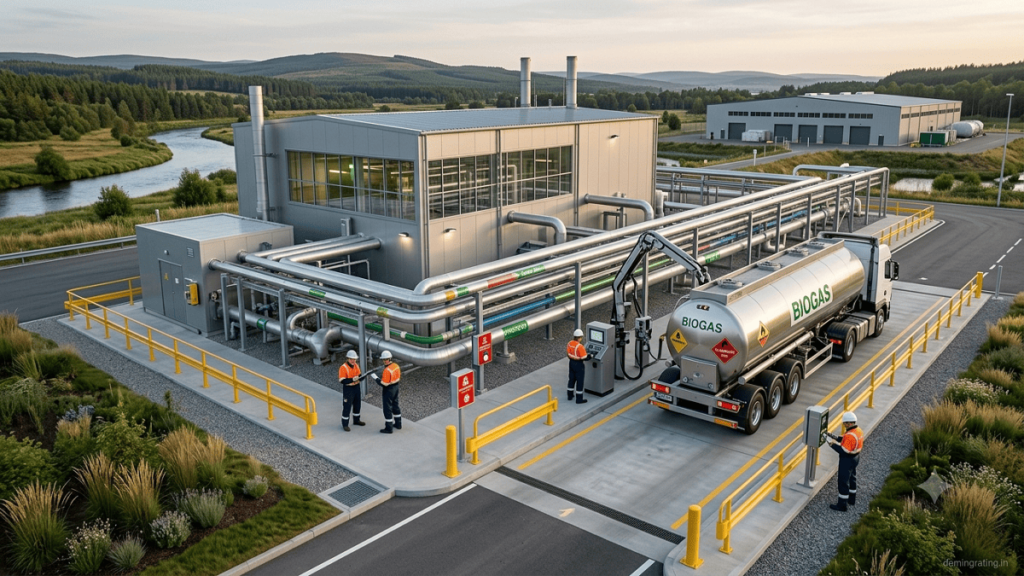
Biogas production involves biological processes, gas handling, pressurized equipment, storage systems, treatment units, and energy-generation equipment. As the industry expands, effective safety management is essential for protecting workers, communities, equipment, and the environment. ISO/DTR 23585, titled Safety and environment information for biogas plants, biogas transportation and biogas use, is being developed by ISO/TC 255 to provide information concerning safety and environmental considerations across these activities. The document is currently listed by ISO as a draft technical report under development.
Gas Leakage and Fire Hazards
One of the most important safety considerations in biogas operations is controlling the risk associated with combustible gas. Biogas commonly contains methane, which can create a fire or explosion hazard if released and allowed to accumulate near an ignition source. Consequently, appropriate equipment design, leak prevention, ventilation, gas detection, and operational controls are important elements of safe biogas facilities.
Operators should also establish procedures for identifying and responding to abnormal conditions, equipment failures, and accidental releases.
Hydrogen Sulfide and Other Hazardous Gases
Biogas can contain hydrogen sulfide (H₂S), a toxic and flammable gas that can present serious occupational-health hazards. H₂S can accumulate in enclosed or low-lying areas, making monitoring and appropriate ventilation particularly important. OSHA recommends evaluating potential sources, conducting appropriate atmospheric monitoring, and using engineering controls and safe work practices where H₂S exposure is possible.
Carbon dioxide and oxygen-deficient atmospheres can also create hazards in enclosed areas. Consequently, confined-space entry should be carefully controlled through appropriate assessment, atmospheric testing, procedures, and emergency arrangements.
Equipment and Process Safety
Biogas facilities require appropriate attention to the safe design, installation, commissioning, operation, inspection, and maintenance of equipment. Published ISO standards within the biogas sector address these lifecycle activities. For example, ISO 24252:2021 covers non-household, non-gasification biogas systems from safety, environmental, performance, and functionality perspectives across design, installation, testing, commissioning, operation, inspection, and maintenance.
Regular inspections, preventive maintenance, pressure control, appropriate protective devices, and competent personnel can help reduce operational risks.
Emergency Preparedness and Worker Protection
Safe biogas operations also require emergency-response procedures covering events such as gas leaks, fires, equipment failures, and hazardous-gas exposure. Employees should receive appropriate training and understand operating procedures, hazard controls, emergency arrangements, and the correct use of personal protective equipment.
Environmental and Operational Controls
Safety management should also consider environmental aspects associated with biogas production, conditioning, upgrading, transportation, and utilization. Proper management of digestate, emissions, leaks, waste streams, and process conditions can help reduce environmental risks while supporting reliable plant operation.
Overall, the safety approach associated with ISO/DTR 23585 emphasizes the importance of considering biogas production, transportation, and use as connected activities. Organizations should combine appropriate engineering controls, monitoring, maintenance, training, emergency planning, and applicable legal requirements to establish safe operations.
It is important to note that ISO/DTR 23585 remains a draft technical report, not a finalized certification standard. Organizations should therefore consult the latest ISO publication status and applicable published standards before using it as a formal compliance reference.
Official reference: ISO/DTR 23585 — Safety and environment information for biogas plants, biogas transportation and biogas use
#SustainableEnergy
How Does ISO/DTR 23585 Address Environmental Aspects of Biogas Production and Use?
ISO/DTR 23585 is a draft technical report titled Safety and environment information for biogas plants, biogas transportation and biogas use. It is being developed by ISO/TC 255, the ISO technical committee responsible for biogas standards. The document is intended to provide information relating to safety and environmental considerations across biogas plants, transportation, and use. As of 2026, ISO lists it as under development, so it should not be treated as a finalized standard.
Considering Environmental Aspects Across the Biogas Chain
Biogas production involves several interconnected activities, including feedstock handling, anaerobic digestion, gas conditioning or upgrading, storage, transportation, and final utilization. Environmental considerations can arise at different points in this chain. ISO/DTR 23585 is designed to bring attention to environmental information alongside safety considerations, helping stakeholders understand the environmental implications associated with biogas systems.
This approach complements other ISO documents covering biogas technology. For example, ISO 24252:2021 addresses non-household, non-gasification biogas systems from safety, environmental, performance, and functionality perspectives across design, installation, testing, commissioning, operation, inspection, and maintenance.
Supporting Responsible Biogas Production
Environmental management in biogas facilities can involve controlling emissions, managing organic feedstocks and residues, preventing releases, and maintaining appropriate operating conditions. Proper management of these aspects can help reduce environmental risks while improving the overall performance of a biogas installation.
The wider ISO biogas framework also recognizes the importance of environmental protection. ISO 20675:2018, for example, establishes terminology and classification for biogas production, conditioning, upgrading, and utilization and identifies safety, environmental, performance, and functionality considerations.
Reducing Environmental Risks During Transportation and Use
Environmental considerations do not end when biogas leaves a production facility. Transportation and utilization can introduce additional risks associated with gas handling, leakage, equipment operation, and emissions. Addressing these aspects as part of the broader biogas value chain encourages organizations to consider environmental performance beyond the production stage.
This is particularly relevant as biogas is increasingly used for energy generation and, after appropriate upgrading, as biomethane. Consistent environmental information can support better planning and operational decisions throughout these activities.
Supporting Sustainable Industry Development
By bringing safety and environmental information together, ISO/DTR 23585 can help stakeholders develop a more comprehensive understanding of responsible biogas operations. It can serve as a useful reference alongside published ISO standards covering specific areas of biogas production and utilization.
However, organizations should avoid presenting ISO/DTR 23585 as a current certification requirement. It remains a draft technical report, and ISO currently lists its project at stage 50.92, meaning the draft has been referred back to the responsible technical committee or subcommittee.
Overall, ISO/DTR 23585 supports the broader objective of developing a biogas sector that considers environmental protection, operational safety, and responsible resource utilization together. Its relevance is particularly strong for organizations seeking to understand environmental considerations throughout biogas production, transportation, and use.
Official reference: ISO/DTR 23585 — ISO official page
#BiogasTechnology
What Safety Information Should Be Considered When Transporting and Using Biogas?
Biogas transportation and utilization require careful consideration of gas composition, leakage, fire and explosion hazards, equipment integrity, worker exposure, and emergency response. ISO/DTR 23585 is specifically being developed to provide safety and environmental information covering biogas plants, biogas transportation, and biogas use. The draft addresses safety and environmentally responsible operations across biogas production, storage, purification, transportation, and utilization. It is important to note that ISO/DTR 23585 remains under development and is not currently a finalized certification standard.
Gas Leakage and Fire Prevention
Biogas commonly contains methane, making leakage a significant safety concern because methane can form combustible mixtures with air. During transportation and use, systems should therefore be designed and operated to minimize leaks and prevent uncontrolled gas releases. Appropriate ventilation, gas detection, ignition-source control, equipment inspection, and emergency shut-off arrangements are important considerations.
Storage vessels, pipelines, valves, connections, and other gas-handling equipment should be appropriately maintained and inspected to identify deterioration or leakage before it develops into a serious incident.
Monitoring Hazardous Gas Components
Biogas can contain hydrogen sulfide (H₂S), which is both toxic and flammable. H₂S can accumulate in enclosed or poorly ventilated areas, and workers should not rely on smell as a warning because the ability to detect the odor can disappear with exposure. OSHA recommends appropriate atmospheric monitoring, ventilation, hazard assessment, worker training, and emergency procedures where H₂S may be present.
Safe Transportation
Transportation safety should consider the method used, such as pipelines or specialized road transportation. Relevant precautions include maintaining the integrity of pipelines and connections, controlling pressure, preventing unauthorized access, identifying potential leak points, and establishing procedures for loading, unloading, inspection, and emergency response.
The draft ISO document specifically includes sections addressing biogas transportation, pipeline transmission, and truck transportation.
Safe Use of Biogas
When biogas is used for heat generation, electricity production, vehicle fuel, or other applications, equipment should be suitable for the gas being supplied and operated according to applicable technical and safety requirements. Adequate ventilation, combustion controls, gas monitoring, maintenance, and emergency shutdown procedures are important considerations.
ISO 24252:2021 provides a complementary published framework for non-household, non-gasification biogas systems, addressing safety, environmental, performance, and functionality considerations through design, installation, testing, commissioning, operation, inspection, and maintenance.
Training and Emergency Preparedness
Personnel involved in transportation and utilization should understand gas hazards, operating procedures, inspection requirements, emergency controls, and appropriate personal protective equipment. Emergency plans should address potential gas leaks, fires, equipment failures, hazardous-gas exposure, and other foreseeable incidents.
Overall, effective biogas safety requires a combination of sound system design, leak prevention, gas monitoring, ventilation, equipment maintenance, worker training, and emergency preparedness. Organizations should use ISO/DTR 23585 alongside applicable national regulations and finalized technical standards rather than treating the draft as a standalone certification requirement.
#EnvironmentalSafety
How Can Organizations Use the Guidance in ISO/DTR 23585 to Improve Safety and Environmental Performance?
Organizations operating biogas plants can use the guidance associated with ISO/DTR 23585 to strengthen their approach to safety and environmental management across biogas production, transportation, and utilization. The document is titled Safety and environment information for biogas plants, biogas transportation and biogas use and is being developed by ISO/TC 255. As it remains a Draft Technical Report under development, organizations should use it as guidance and refer to applicable published standards and regulations for formal compliance requirements.
Identify Safety and Environmental Risks
The first step is to systematically identify hazards and environmental aspects associated with biogas operations. Organizations can evaluate activities such as feedstock handling, anaerobic digestion, gas storage, conditioning, upgrading, transportation, and final utilization.
This process can help identify risks related to gas leakage, fire, explosion, hazardous gas exposure, equipment failures, emissions, waste streams, and accidental releases. Establishing a documented risk assessment process enables organizations to prioritize appropriate preventive and protective measures.
Strengthen Operational Controls
Organizations can translate identified risks into practical operational controls. These may include appropriate ventilation, gas detection, leak monitoring, pressure management, equipment inspection, preventive maintenance, emergency shutdown systems, and controlled access to hazardous areas.
Published ISO 24252:2021 provides complementary requirements for non-household, non-gasification biogas systems, addressing safety, environmental, performance, and functionality considerations throughout design, installation, testing, commissioning, operation, inspection, and maintenance.
Improve Environmental Performance
The guidance can also encourage organizations to evaluate environmental aspects throughout the biogas value chain. Companies can monitor emissions, manage residues and digestate appropriately, reduce uncontrolled gas releases, improve resource efficiency, and evaluate opportunities to optimize plant operations.
ISO/TC 255’s work specifically includes a dedicated working group covering safety and environmental aspects, demonstrating the importance of these considerations within the broader ISO biogas framework.
Enhance Employee Competence
Effective safety performance depends on knowledgeable personnel. Organizations can use the relevant guidance to strengthen employee training on biogas hazards, operating procedures, gas monitoring, maintenance activities, emergency response, and personal protective equipment.
Regular training and competency evaluations can help ensure that workers understand both routine and abnormal operating conditions.
Establish Emergency Preparedness
Biogas facilities should maintain documented procedures for foreseeable emergencies, including gas leaks, fires, equipment failures, hazardous-gas exposure, and other incidents. Regular drills and reviews can help organizations evaluate whether emergency procedures are practical and effective.
Monitor and Continuously Improve
Organizations should establish measurable safety and environmental indicators and periodically review performance. Incident records, inspection findings, emissions data, maintenance results, and corrective actions can provide useful information for continual improvement.
Overall, ISO/DTR 23585 can help organizations adopt a more systematic approach to safety and environmental performance by connecting risk identification, operational controls, environmental management, employee competence, emergency preparedness, and performance monitoring.
However, organizations should not describe ISO/DTR 23585 as a certification standard. ISO currently lists it as a draft technical report at development stage 50.92.
Official reference: ISO/DTR 23585 — Safety and environment information for biogas plants, biogas transportation and biogas use
Complementary published standard: ISO 24252:2021 — Biogas systems
#RenewableEnergy
Case Study of ISO/DTR 23585: Improving Safety and Environmental Performance in a Biogas Plant
Background
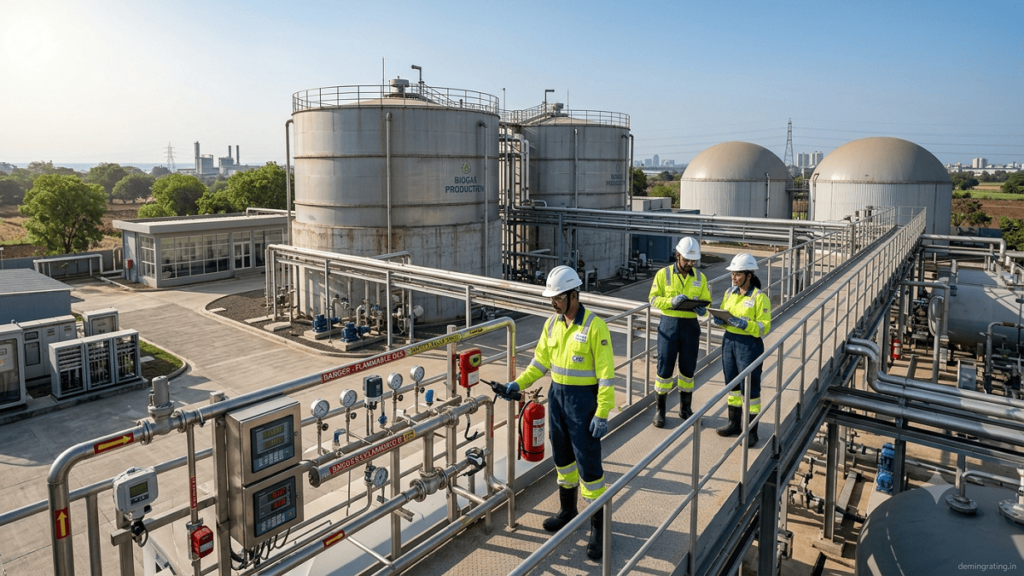
A medium-sized industrial biogas facility produces biogas through anaerobic digestion of organic waste. The plant uses the generated gas for combined heat and power while managing associated gas storage, conditioning, pipelines, digestate and other operational activities. As production increased, management identified the need for a more systematic approach to controlling safety hazards and environmental impacts.
The organization therefore reviewed the guidance associated with ISO/DTR 23585, Safety and environment information for biogas plants, biogas transportation and biogas use. ISO currently lists the document as a Draft Technical Report under development within ISO/TC 255.
Identifying Safety Risks
The first action was to conduct a specific safety and environmental risk assessment covering design, commissioning, operation and maintenance. Key hazards considered included biogas leakage, fire, explosion, hazardous gas exposure and equipment failure.
The facility introduced improved gas detection and alarm arrangements, reviewed hazardous-area classifications, strengthened ventilation and inspected gas-tight components, pipelines, valves and connections. The draft technical report specifically emphasizes risk assessment, suitable construction materials, fire detection, explosive-atmosphere zoning, gas detection and appropriately classified electrical equipment.
Improving Environmental Performance
The organization also assessed environmental aspects associated with the plant. Management reviewed potential gas releases, waste and residue handling, wastewater, noise and other operational impacts. Environmental controls were incorporated into routine inspections and maintenance activities.
Where monitoring identified deviations, corrective actions were established and tracked. This helped connect environmental performance with day-to-day operational management rather than treating environmental protection as a separate activity.
Transportation and Gas Utilization
The plant also reviewed its internal biogas transportation arrangements and gas-use equipment. Pipeline integrity, pressure management, leak detection, emergency procedures and maintenance responsibilities were clarified.
This approach complements ISO 24252:2021, which addresses non-household, non-gasification biogas systems from safety, environmental, performance and functionality perspectives across design, installation, testing, commissioning, operation, inspection and maintenance.
Results
Following implementation of these measures, the organization established clearer safety responsibilities, improved inspection practices, strengthened emergency preparedness and developed more consistent environmental monitoring. Management also gained better visibility of operational risks and opportunities for improvement.
The key lesson is that ISO/DTR 23585 can be used as a framework for risk-based thinking and better operational control across the biogas lifecycle. Rather than focusing only on individual safety devices, organizations can consider plant design, gas handling, transportation, utilization, environmental impacts, personnel competence and emergency preparedness as interconnected elements.
Conclusion
This case demonstrates how an organization can use ISO/DTR 23585 guidance to integrate safety and environmental considerations into biogas operations. However, because ISO/DTR 23585 remains under development, organizations should not present it as a finalized certification standard. It should be considered alongside applicable legislation, regulatory requirements and published standards such as ISO 24252:2021.
Official reference: ISO/DTR 23585 — ISO official page
Related standard: ISO 24252:2021 — Biogas systems
#Biogas
White Paper on ISO/DTR 23585: Safety and Environmental Information for Biogas
Executive Summary
The growing use of biogas as a renewable energy source creates opportunities to reduce dependence on conventional fossil fuels while supporting waste-to-energy initiatives. However, biogas production, storage, transportation, and utilization involve important safety and environmental considerations. ISO/DTR 23585, titled Safety and environment information for biogas plants, biogas transportation and biogas use, is being developed to provide guidance in these areas.
According to the International Organization for Standardization (ISO), ISO/DTR 23585 is currently under development at stage 50.92, within ISO/TC 255. Therefore, organizations should understand that it is a Draft Technical Report and should not treat it as a finalized International Standard or certification requirement.
Purpose and Scope
The draft focuses on improving safety in biogas plant construction, operation, and maintenance while supporting the prevention of environmental pollution. Its scope considers environmental impacts and safety throughout processes including biogas production, storage, purification, transportation, and utilization.
This lifecycle-oriented approach is important because risks can occur at different stages. Gas leakage, fire and explosion hazards, hazardous gas exposure, equipment failures, uncontrolled emissions, and inappropriate waste or residue management can affect both workers and the environment.
Safety Management
Organizations can use the guidance to strengthen risk identification and operational controls. Important considerations include appropriate equipment and materials, gas detection, ventilation, fire protection, hazardous-area controls, inspection, maintenance, emergency procedures, and employee competency.
A systematic approach can help organizations move from reactive incident management toward preventive risk management. It can also support clearer responsibilities for personnel involved in plant operation, gas transportation, maintenance, and end-use applications.
Environmental Performance
Environmental protection is another central consideration. Organizations can assess potential impacts associated with gas releases, emissions, residue management, and operational activities. Monitoring and preventive controls can help reduce environmental impacts while improving the efficiency and reliability of biogas facilities.
ISO/DTR 23585 can therefore support organizations in integrating safety and environmental considerations rather than managing them as completely separate activities.
Relationship with ISO 24252
The draft should also be considered alongside ISO 24252:2021, a published International Standard covering non-household, non-gasification biogas systems from safety, environmental, performance, and functionality perspectives across design, installation, testing, commissioning, operation, inspection, and maintenance.
Conclusion
ISO/DTR 23585 represents an important development in the international standardization of biogas safety and environmental information. Its practical value lies in encouraging organizations to consider risks and environmental impacts across the biogas lifecycle.
Organizations preparing for future requirements can use the draft as a reference for reviewing risk assessments, operational controls, environmental monitoring, maintenance programs, emergency preparedness, and workforce competence. However, its current draft status should always be considered when making compliance or certification claims.
Official reference: ISO/DTR 23585 — Safety and environment information for biogas plants, biogas transportation and biogas use
Related published standard: ISO 24252:2021 — Biogas systems
#BiogasSafety
Industry Application of ISO/DTR 23585
ISO/DTR 23585 provides guidance focused on safety and environmental information for biogas plants, biogas transportation, and biogas use. It is particularly relevant as industries increasingly adopt anaerobic digestion and biogas technologies for renewable energy generation, waste management, and resource recovery. ISO currently lists the document as under development at stage 50.92 under ISO/TC 255, so organizations should treat it as draft guidance rather than a finalized certification standard.
1. Waste Management and Anaerobic Digestion
Waste management companies can apply the principles of ISO/DTR 23585 when operating anaerobic digestion facilities that convert organic waste into biogas. Safety considerations can be incorporated into feedstock handling, digestion, gas collection, storage, and maintenance activities.
ISO 20675:2018 identifies applications of biogas installations across waste plants, wastewater treatment facilities, landfill sites, food and beverage industries, agricultural operations, and other installations.
2. Wastewater Treatment Plants
Municipal and industrial wastewater treatment facilities can use biogas generated from sludge digestion as an energy resource. Applying safety and environmental thinking can help facilities address gas leakage, hazardous atmospheres, equipment integrity, emissions, ventilation, emergency preparedness, and operational controls.
This approach can help integrate biogas safety into existing environmental and occupational risk-management systems.
3. Food and Beverage Industries
Food and beverage manufacturers generate significant quantities of organic residues that can potentially be treated through anaerobic digestion. Biogas can then be used for heat, electricity, or other energy applications.
Organizations can apply ISO/DTR 23585-related guidance when assessing the risks associated with gas production, conditioning, storage, pipelines, and utilization while also considering environmental performance.
4. Agricultural Biogas Facilities
Agricultural operations can use anaerobic digestion to process manure and other organic materials while producing renewable energy. Safety management is particularly important because biogas facilities may be located close to farms, workers, storage areas, and other agricultural activities.
Risk assessments, gas monitoring, equipment inspection, emergency procedures, and appropriate operating controls can help reduce potential incidents.
5. Industrial Biogas and Energy Generation
Industries using biogas for combined heat and power can incorporate safety and environmental considerations into equipment selection, installation, commissioning, operation, inspection, and maintenance. These activities align with the broader lifecycle approach reflected in ISO 24252:2021, which addresses non-household, non-gasification biogas systems from safety, environmental, performance, and functionality perspectives.
6. Transportation and Biogas Utilization
Organizations involved in biogas transportation and utilization can use the draft as a reference when reviewing pipeline integrity, gas handling, leak prevention, emergency controls, and operational safety. This is particularly relevant where biogas moves between production, conditioning, storage, and end-use systems.
Business Benefits
A structured approach can help organizations improve risk identification, operational control, environmental protection, maintenance planning, employee awareness, and emergency preparedness. It can also support more consistent integration of safety and environmental considerations into biogas projects.
However, ISO/DTR 23585 should not be presented as a current certification requirement. Organizations should combine its guidance with applicable legislation and relevant published standards, including ISO 24252:2021 and ISO 20675:2018.
Official reference: ISO/DTR 23585 — Safety and environment information for biogas plants, biogas transportation and biogas use
Related published standard: ISO 24252:2021 — Biogas systems
Biogas terminology and classification: ISO 20675:2018
#ISODTR23585
Ask FAQs
What is ISO/DTR 23585?
ISO/DTR 23585 is a Draft Technical Report addressing safety and environmental information for biogas plants, biogas transportation, and biogas use.
What is the main purpose of ISO/DTR 23585?
Its purpose is to support better consideration of safety and environmental aspects throughout biogas production, transportation, and utilization.
Which industries can benefit from ISO/DTR 23585?
Biogas plants, wastewater treatment facilities, waste-management operations, agricultural facilities, food-processing industries, and energy-generation facilities can use its guidance as a reference.
Is ISO/DTR 23585 a certification standard?
No. It is currently a Draft Technical Report under development and should not be presented as a finalized ISO certification standard.
Which ISO standards are related to biogas safety?
Organizations can also consider published standards such as ISO 24252:2021 for non-household, non-gasification biogas systems and ISO 23590:2020 for household biogas systems.
Disclaimer: This content is for general informational purposes only. ISO/DTR 23585 is currently under development, so readers should refer to the latest official ISO publication and applicable legal or regulatory requirements before making compliance or certification decisions.