Health Informatics Consulting: Transforming Healthcare Through Data and Technology
Table of Contents
Health informatics consulting is a specialized field that helps healthcare organizations improve patient care, operational efficiency, and regulatory compliance through the strategic use of information technology and data management. As hospitals, clinics, insurers, and public health agencies increasingly rely on digital health solutions, informatics consultants play a critical role in designing, implementing, and optimizing systems that support better clinical and business outcomes.
What Is Health Informatics Consulting?
Health informatics consulting involves advising healthcare organizations on how to effectively collect, manage, analyze, and secure health information. Consultants bridge the gap between clinical practice and technology by ensuring that electronic health records (EHRs), clinical decision support systems, data analytics platforms, and interoperability solutions align with organizational goals and healthcare regulations.
These professionals often work with physicians, nurses, administrators, IT teams, and policymakers to identify workflow challenges, recommend digital solutions, and oversee technology implementation. Their expertise extends across healthcare strategy, data governance, cybersecurity, quality improvement, and regulatory compliance.
Key Services Offered
Health informatics consultants typically provide a wide range of services, including:
- Electronic Health Record (EHR) implementation and optimization
- Healthcare data analytics and reporting
- Clinical workflow assessment and redesign
- Interoperability and health information exchange (HIE)
- Regulatory compliance with privacy and security standards
- Digital health transformation strategy
- Population health management and predictive analytics
By integrating these services, organizations can reduce administrative burden, improve clinical decision-making, and enhance the overall patient experience.
Benefits for Healthcare Organizations
The value of health informatics consulting extends beyond technology adoption. Effective consulting enables healthcare providers to make data-driven decisions that improve care quality while controlling costs. Standardized data collection and interoperable systems allow clinicians to access accurate patient information across different care settings, reducing medical errors and duplicate testing.
Additionally, advanced analytics helps organizations identify trends in patient populations, monitor quality metrics, and allocate resources more efficiently. As value-based care models continue to expand, healthcare organizations increasingly depend on informatics expertise to measure outcomes and demonstrate performance.
Industry Standards and Resources
Healthcare informatics consultants rely on internationally recognized standards and best practices. Organizations seeking reliable guidance can explore resources from:
- Healthcare Information and Management Systems Society: HIMSS Official Website
- Office of the National Coordinator for Health Information Technology: HealthIT.gov
- World Health Organization Digital Health resources: WHO Digital Health
These organizations publish frameworks, research, and implementation guidance that support healthcare digital transformation initiatives worldwide.
The Future of Health Informatics Consulting
The future of health informatics consulting is being shaped by artificial intelligence, machine learning, remote patient monitoring, and precision medicine. Consultants are increasingly helping organizations integrate AI-powered clinical tools while maintaining ethical data governance and patient privacy. As healthcare continues its digital evolution, the demand for skilled informatics consultants will grow, making this discipline essential for delivering safer, more efficient, and patient-centered healthcare systems.
#Interoperability
What Is Health Informatics Consulting and Why Is It Important for Healthcare Organizations?
Health informatics consulting is a specialized professional service that helps healthcare organizations use technology, clinical data, and information systems more effectively. It combines healthcare knowledge, information technology, data management, and business strategy to improve how patient information is collected, stored, exchanged, analyzed, and used. Health informatics consultants work with hospitals, clinics, healthcare networks, laboratories, insurers, and other organizations to identify technology challenges and develop practical solutions that support better healthcare delivery.
A major area of health informatics consulting is the implementation and optimization of electronic health records (EHRs). Consultants can evaluate existing systems, improve clinical workflows, support system integration, and help healthcare professionals use digital tools more efficiently. They may also assist organizations with interoperability, allowing different healthcare systems to securely exchange relevant patient information.
Health informatics consulting is particularly important because healthcare organizations generate enormous amounts of data every day. Patient records, diagnostic results, medication information, billing data, and operational metrics can provide valuable insights when they are properly managed and analyzed. Consultants help organizations establish effective data strategies so decision-makers can use reliable information to improve clinical and operational performance.
Another important benefit is improved patient care. Well-designed health information systems can give clinicians timely access to accurate patient information, helping them make more informed decisions. Data analytics can also help healthcare organizations identify trends, monitor outcomes, manage populations, and recognize opportunities for quality improvement.
Security and regulatory compliance are equally important. Healthcare organizations handle highly sensitive personal and medical information and must implement appropriate safeguards. Health informatics consultants can help organizations develop data governance, privacy, and security practices that support applicable regulatory requirements. In the United States, resources from the Office of the National Coordinator for Health Information Technology provide guidance on health information technology and interoperability. HealthIT.gov
Health informatics consulting also supports digital transformation initiatives involving artificial intelligence, telehealth, remote patient monitoring, and advanced healthcare analytics. As these technologies become increasingly integrated into healthcare, organizations need specialized expertise to implement them responsibly and effectively.
Ultimately, health informatics consulting helps healthcare organizations connect technology with their clinical and strategic objectives. By improving data quality, system interoperability, workflow efficiency, security, and decision-making, informatics consulting can contribute to more efficient operations and better patient-centered care. Resources from HIMSS and the World Health Organization’s Digital Health program also provide valuable information about the role of digital technologies in modern healthcare.
#HealthcareData
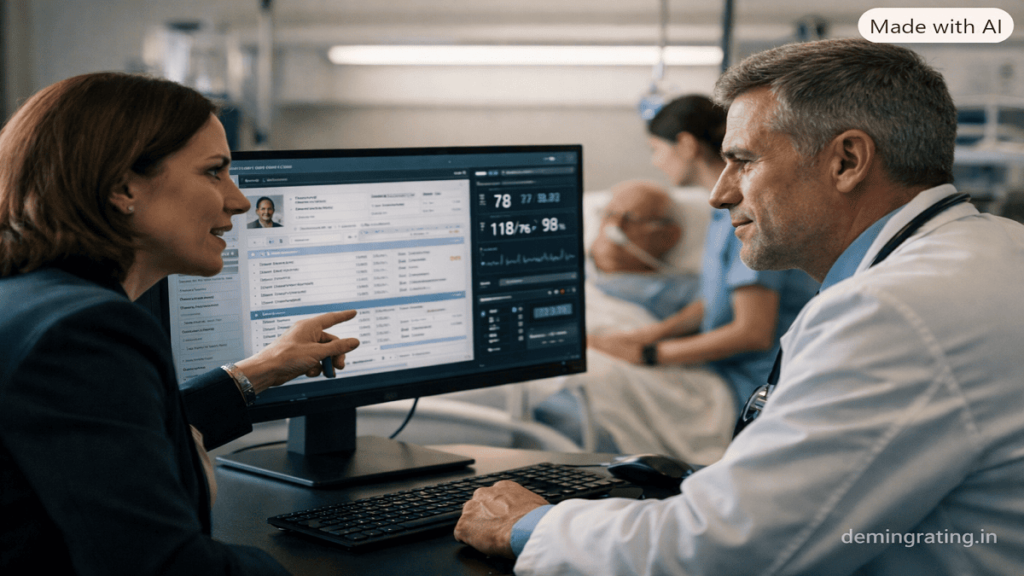
How Can Health Informatics Improve Electronic Health Records, Clinical Workflows, and Patient Care?
Health informatics plays an important role in improving how healthcare organizations manage information, coordinate clinical activities, and deliver patient care. By combining healthcare practices with information technology, data analytics, and digital systems, health informatics helps organizations turn large volumes of health data into useful information for clinicians, administrators, and patients.
One of its most significant applications is improving electronic health records (EHRs). Health informatics professionals can help organizations optimize EHR systems so that patient information is organized, accessible, and easier for healthcare professionals to use. Properly configured EHRs can provide clinicians with comprehensive information such as medical histories, medications, allergies, laboratory results, and previous treatments. Health informatics can also support interoperability, allowing authorized information to be exchanged between different healthcare systems and care settings. The Office of the National Coordinator for Health Information Technology provides resources on interoperability and health information technology.
Health informatics can also improve clinical workflows by identifying inefficient processes and unnecessary administrative tasks. Informatics specialists can analyze how healthcare professionals enter information, order tests, communicate results, and coordinate care. Based on this analysis, organizations can redesign workflows and configure digital systems to reduce duplication and improve efficiency. Automated alerts, electronic ordering, clinical documentation tools, and decision-support systems can help clinicians complete routine tasks more consistently while keeping important information readily available.
Better information management ultimately contributes to improved patient care. When clinicians have timely access to accurate and relevant information, they can make more informed decisions about diagnosis and treatment. Clinical decision-support tools can provide evidence-based alerts or recommendations, potentially helping healthcare professionals identify medication interactions, abnormal results, or other issues that require attention.
Health informatics also enables organizations to use data analytics to monitor patient outcomes and identify patterns. Healthcare leaders can analyze information to evaluate quality measures, identify populations at risk, manage chronic conditions, and develop targeted improvement programs. The World Health Organization’s Digital Health resources highlight the broader role of digital technologies in strengthening healthcare systems.
In addition, health informatics supports patient engagement through patient portals, secure communication, telehealth, and access to personal health information. These technologies can make it easier for patients to participate in their care and communicate with healthcare providers.
Overall, health informatics connects data, technology, and clinical practice. By optimizing EHRs, streamlining workflows, supporting informed clinical decisions, and enabling data-driven quality improvement, it can help healthcare organizations deliver safer, more coordinated, efficient, and patient-centered care.
#EHR
How Does Interoperability Support Secure Data Exchange Between Healthcare Systems and Medical Devices?
Interoperability enables different healthcare systems, applications, and medical devices to exchange, interpret, and use health information in a consistent and secure manner. As healthcare organizations increasingly depend on electronic health records (EHRs), connected medical devices, telehealth platforms, and clinical applications, interoperability is essential for ensuring that relevant patient information can move efficiently between authorized systems without compromising privacy or security.
One of the primary ways interoperability supports secure data exchange is through standardized data formats and communication protocols. Standards such as Health Level Seven International (HL7) and Fast Healthcare Interoperability Resources (FHIR) provide structured approaches for exchanging healthcare information. FHIR, in particular, uses modern web-based technologies and standardized resources to help applications exchange healthcare data more consistently. HL7 FHIR Specification
Interoperability also improves communication between medical devices and healthcare information systems. Devices such as patient monitors, infusion systems, imaging equipment, and wearable technologies can generate valuable clinical data. When these devices are appropriately integrated with healthcare platforms, relevant measurements can be transferred into clinical systems, reducing manual data entry and helping healthcare professionals access information more efficiently.
Security must remain a fundamental part of this exchange. Interoperable systems can use authentication, authorization, encryption, access controls, and audit mechanisms to help ensure that health information is accessed only by approved users and systems. Healthcare organizations can also establish data governance policies that define how information is collected, exchanged, stored, and used. In the United States, the Office of the National Coordinator for Health Information Technology (HealthIT.gov) provides resources concerning interoperability and health information technology.
Another important advantage is improved continuity of care. When authorized providers can securely access relevant information from different healthcare systems, patients are less likely to experience gaps caused by unavailable or fragmented records. For example, laboratory results, medication information, diagnostic reports, and device-generated measurements can potentially be available to clinicians when needed, supporting more informed clinical decisions.
Interoperability can also reduce duplicate testing and administrative workloads while improving data quality. However, successful implementation requires more than connecting systems. Organizations must consider cybersecurity, data standards, device compatibility, identity management, consent, and regulatory requirements.
Overall, interoperability creates a connected healthcare environment in which authorized systems and medical devices can exchange meaningful information securely and efficiently. By combining standardized data exchange with strong security controls and effective governance, healthcare organizations can improve information availability while protecting sensitive patient data. The World Health Organization’s Digital Health resources provide additional information on how digital technologies can strengthen healthcare delivery and health systems.
#HealthcareTechnology
What Role Do Data Privacy, Cybersecurity, and Regulatory Compliance Play in Health Informatics?
Data privacy, cybersecurity, and regulatory compliance are fundamental components of health informatics. Healthcare organizations collect and process highly sensitive information, including medical histories, diagnostic results, medications, insurance details, and personal identifiers. Protecting this information is essential for maintaining patient trust, preventing unauthorized access, and ensuring that digital healthcare systems operate safely and responsibly.
Data privacy focuses on how patient information is collected, used, stored, and shared. Health informatics systems should provide appropriate controls to ensure that personal health information is accessible only for legitimate and authorized purposes. Organizations can strengthen privacy by implementing access controls, data minimization practices, consent management, and clear information-handling policies. Privacy principles are particularly important when health information is exchanged between hospitals, laboratories, medical devices, insurers, and third-party applications.
Cybersecurity protects healthcare information systems and connected medical technologies from threats such as unauthorized access, malware, ransomware, phishing, and data breaches. Because healthcare organizations increasingly depend on interconnected EHR platforms, cloud services, medical devices, and remote-access technologies, cybersecurity must be incorporated throughout the technology lifecycle. Common safeguards include encryption, multi-factor authentication, network security, vulnerability management, employee training, continuous monitoring, and incident-response planning. The U.S. Department of Health & Human Services’ Health Industry Cybersecurity Practices provides cybersecurity guidance for healthcare organizations.
Regulatory compliance establishes legal and operational requirements for protecting health information and maintaining appropriate healthcare technology practices. For example, healthcare organizations operating in the United States may need to comply with the Health Insurance Portability and Accountability Act (HIPAA), including its Privacy, Security, and Breach Notification Rules. The HHS HIPAA for Professionals resource provides official information about these requirements.
Compliance is not simply a legal obligation; it can also strengthen an organization’s overall information-management strategy. Regular risk assessments, security policies, employee education, documentation, auditing, and incident-response procedures can help organizations identify weaknesses and reduce potential risks.
Together, privacy, cybersecurity, and compliance create a framework for responsible health information management. Effective health informatics programs must balance accessibility with protection, ensuring that healthcare professionals can obtain the information they need while preventing inappropriate access or disclosure.
As healthcare continues to adopt artificial intelligence, connected medical devices, telehealth, and cloud-based systems, these responsibilities are becoming increasingly important. Organizations that prioritize privacy, cybersecurity, and compliance can build more resilient digital healthcare environments while protecting patients and supporting safe, trustworthy use of health information.
#HealthTech
What Are the Benefits of Health Informatics Consulting for Healthcare Quality, Operational Efficiency, and Patient Outcomes?
Health informatics consulting helps healthcare organizations use technology, clinical information, and data more effectively to improve the overall quality and efficiency of healthcare delivery. By connecting clinical expertise with information systems and data analytics, health informatics consultants can identify technology gaps, improve workflows, and develop strategies that support measurable improvements in patient care.
One of the major benefits is improved healthcare quality. Consultants can evaluate electronic health records (EHRs), clinical decision-support systems, documentation processes, and quality reporting tools to identify opportunities for improvement. Better-organized and more accessible information can help clinicians make informed decisions and monitor important quality indicators. Data analytics can also help organizations identify patterns, track performance, and develop targeted quality-improvement initiatives. Resources from the Agency for Healthcare Research and Quality (AHRQ) provide evidence-based information on improving healthcare quality and patient safety.
Health informatics consulting can also increase operational efficiency. Healthcare organizations often manage complex workflows involving registration, clinical documentation, laboratory testing, medication management, billing, and care coordination. Consultants can analyze these processes and recommend improvements that reduce unnecessary steps, repetitive data entry, and information silos. Appropriate automation and system integration can allow staff to spend less time on administrative tasks and more time supporting patients.
Another important benefit is the potential to improve patient outcomes. When healthcare professionals have timely access to accurate and relevant patient information, they can coordinate care more effectively and make better-informed clinical decisions. Informatics solutions can support medication safety, preventive care, chronic disease management, and population health initiatives. Organizations can also use data to identify patients who may require additional monitoring or intervention.
Health informatics consulting further supports interoperability and care coordination. Connecting different healthcare systems allows authorized information to move between providers and care settings, helping reduce fragmented records and unnecessary duplication. The Office of the National Coordinator for Health Information Technology provides resources on interoperability and health information technology.
In addition, consultants can help healthcare organizations strengthen data governance, privacy, cybersecurity, and regulatory compliance. Establishing appropriate policies and technical controls helps organizations protect sensitive health information while ensuring that authorized users can access the data required for patient care and operations.
Ultimately, health informatics consulting provides healthcare organizations with a structured approach to turning technology and data into practical improvements. By optimizing information systems, streamlining workflows, strengthening data management, and supporting evidence-based decisions, consulting can contribute to higher-quality care, more efficient operations, and better patient outcomes. As healthcare becomes increasingly data-driven, informatics expertise will remain an important component of sustainable digital transformation.
#DigitalHealth
Case Study of Health Informatics Consulting
A practical example of health informatics in action can be seen in the development of an electronic cancer surveillance system in Kentucky, where healthcare organizations collaborated to improve the exchange and use of clinical information. The initiative involved the Kentucky Cancer Registry, Kentucky Health Information Exchange, Kentucky Regional Extension Center, and other stakeholders, with support and guidance from public health organizations. The objective was to use electronic health records (EHRs) and health information exchange technologies to improve cancer reporting and disease surveillance.
Before the implementation, collecting and transferring cancer-related information could require significant manual effort. Differences between healthcare systems also created challenges in exchanging information consistently. Health informatics consulting principles were applied by analyzing existing workflows, identifying interoperability requirements, coordinating participating organizations, and developing a standardized approach for electronic reporting.
The resulting system enabled oncology practices to electronically transmit clinical information to the state cancer registry. In November 2012, the project achieved the first electronic transmission of a Clinical Document Architecture (CDA) document from a physician office to a state cancer surveillance registry. This demonstrated how interoperable health information systems could support the secure and timely movement of important clinical data.
The project delivered several important benefits. First, electronic reporting reduced reliance on manual information-transfer processes. Second, standardized electronic data made it easier for public health organizations to collect and analyze cancer information. Third, timely access to clinical information supported disease surveillance and research. The case also demonstrated that successful health informatics initiatives depend not only on technology but also on collaboration, workflow design, organizational readiness, and sustainable implementation strategies.
A more recent example demonstrates how these principles continue to evolve. In 2026, research at Tata Memorial Centre in India evaluated an EMR-integrated cancer registry platform designed to retrieve information directly from electronic medical records. The study reported system-assisted retrieval of 97.59% of eligible sociodemographic records, illustrating the potential of integrated informatics solutions to improve data collection and reduce manual abstraction.
These examples show why healthcare organizations may benefit from informatics expertise when implementing digital transformation projects. Consultants can help assess existing systems, define interoperability requirements, redesign workflows, improve data quality, and establish processes for measuring results.
The U.S. Office of the National Coordinator for Health Information Technology also provides case studies and resources covering interoperability, health information exchange, patient access, security, and health IT implementation.
Overall, successful health informatics projects demonstrate that technology is most valuable when it is aligned with clinical workflows and organizational objectives. By combining technical expertise with healthcare knowledge, informatics consulting can help organizations build connected information systems that support better data management, operational efficiency, research, public health surveillance, and patient care.
#HealthcareIT
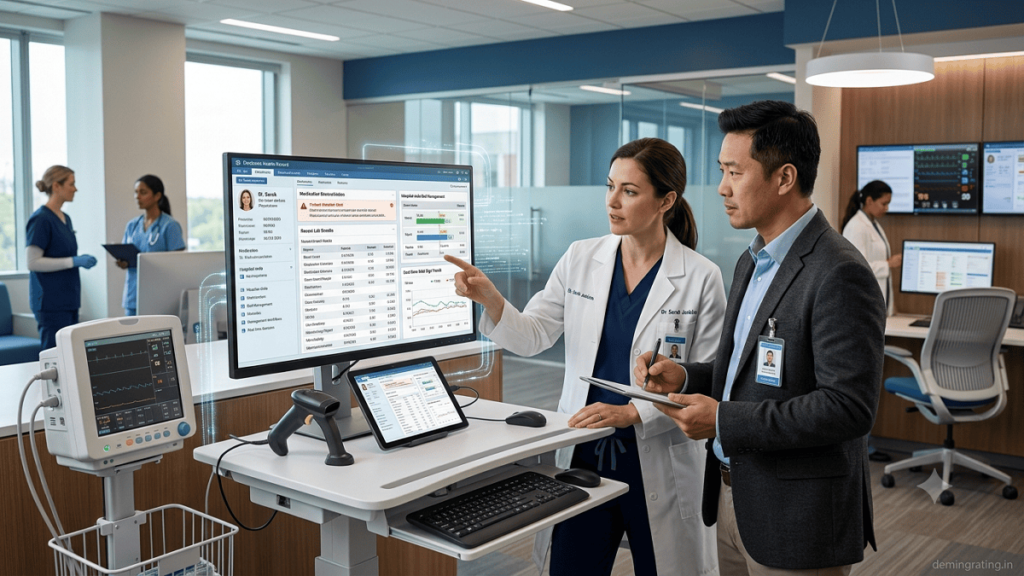
White Paper on Health Informatics Consulting
Introduction
Healthcare organizations are undergoing rapid digital transformation as electronic health records (EHRs), clinical analytics, artificial intelligence, connected medical devices, and digital health platforms become increasingly important to healthcare delivery. However, adopting technology alone does not guarantee better outcomes. Organizations must ensure that technology, data, clinical workflows, security, and strategic objectives work together. Health informatics consulting provides the expertise needed to achieve this alignment.
The Role of Health Informatics Consulting
Health informatics consultants help healthcare organizations evaluate existing information systems, identify operational challenges, and develop strategies for improving the collection, exchange, analysis, and use of health information. Their work may include EHR optimization, interoperability, clinical workflow redesign, data governance, analytics, cybersecurity, and digital transformation planning.
A key focus is interoperability. Healthcare organizations frequently use multiple systems that need to exchange information efficiently. Standards such as HL7 Fast Healthcare Interoperability Resources (FHIR) provide a structured approach for exchanging healthcare information through modern application programming interfaces. The Office of the National Coordinator for Health Information Technology’s FHIR resources explain how FHIR supports a more connected health ecosystem and health data interoperability.
Improving Healthcare Operations and Quality
Consultants can analyze clinical and administrative workflows to identify inefficiencies, unnecessary duplication, and barriers to effective information use. Optimizing EHR configurations and integrating systems can reduce manual processes and make relevant information more accessible to authorized healthcare professionals.
Data analytics is another important component. Informatics consulting can help organizations establish data strategies that enable leaders to monitor performance, evaluate healthcare quality, identify trends, and support evidence-based decisions. Interoperability can also improve care coordination by making relevant electronic health information more accessible across healthcare settings.
Security, Privacy, and Governance
Because healthcare data is highly sensitive, successful informatics strategies must incorporate appropriate privacy and cybersecurity controls. Consultants can assist with data governance frameworks, access management, risk assessments, security policies, and compliance processes. These measures help organizations balance information accessibility with responsible protection of patient data.
Future Outlook
Health informatics consulting will become increasingly important as healthcare organizations adopt AI, remote monitoring, predictive analytics, and other digital technologies. The World Health Organization emphasizes interoperability, data sharing, and implementation of digital solutions that support informed decision-making as important elements of digital health development.
Conclusion
Health informatics consulting provides a strategic bridge between healthcare objectives and technology implementation. By optimizing EHRs, improving interoperability, strengthening data governance, streamlining workflows, and supporting data-driven decision-making, consultants can help healthcare organizations build more efficient and connected systems. As digital transformation continues, organizations that treat informatics as a strategic capability rather than simply an IT function will be better positioned to improve healthcare quality, operational performance, and patient-centered care.
#HealthInformaticsConsulting
Industry Application of Health Informatics Consulting
Health informatics consulting has applications across many areas of the healthcare industry, helping organizations use technology and health data to improve clinical services, operational performance, and decision-making. As healthcare becomes increasingly digital, organizations need specialized expertise to integrate information systems, protect sensitive data, improve workflows, and use analytics effectively.
Hospitals and Health Systems
Hospitals are among the largest users of health informatics consulting services. Consultants can support electronic health record (EHR) implementation and optimization, clinical workflow redesign, interoperability, and healthcare analytics. By connecting clinical and administrative systems, hospitals can make relevant patient information more accessible to authorized professionals while reducing repetitive data entry and inefficient processes. The Office of the National Coordinator for Health Information Technology provides resources on health information technology and interoperability.
Clinics and Ambulatory Care
Physician practices and outpatient clinics can use health informatics consulting to improve scheduling, clinical documentation, patient communication, and data management. Consultants can assess existing workflows and recommend digital solutions that reduce administrative workloads and help clinicians spend more time on patient care. Patient portals and electronic communication tools can also support greater patient engagement.
Pharmaceutical and Life Sciences
The pharmaceutical and life sciences sector uses health informatics to manage clinical-trial data, research information, pharmacovigilance activities, and real-world evidence. Informatics consultants can help organizations integrate data from multiple sources, improve data quality, and establish governance frameworks. These capabilities can support research and help organizations make more informed decisions throughout the product lifecycle.
Medical Devices and Digital Health
Medical device manufacturers and digital health companies increasingly rely on connected technologies that generate clinical data. Health informatics consultants can assist with device integration, interoperability, data architecture, and secure information exchange. Standards such as HL7 FHIR can help different healthcare applications exchange information using a standardized framework. HL7 FHIR Specification
Public Health and Government
Government agencies and public health organizations use informatics to monitor diseases, analyze population-level data, coordinate health programs, and support health surveillance. Consultants can help develop data platforms and reporting systems that improve the availability and quality of information used for public health decisions. The World Health Organization Digital Health program provides international resources on the use of digital technologies in healthcare.
Insurance and Healthcare Payers
Health insurers and other payers can apply health informatics to claims analytics, population health management, risk assessment, fraud detection, and quality measurement. Data-driven systems can help identify patterns and support more efficient healthcare management.
Overall, health informatics consulting has broad industry applications because nearly every part of modern healthcare depends on reliable information. By connecting technology, data, workflows, and organizational objectives, informatics consultants can help healthcare organizations improve efficiency, strengthen information management, support better decisions, and deliver more coordinated, patient-centered services.
#HealthInformatics
Ask FAQs
What is health informatics consulting?
Health informatics consulting helps healthcare organizations use health data, information systems, and digital technologies to improve clinical care, operational efficiency, and decision-making.
Why is health informatics important for healthcare organizations?
It helps organizations optimize electronic health records, improve data management, support interoperability, streamline workflows, and strengthen patient care and outcomes.
How does health informatics improve patient care?
It provides healthcare professionals with timely and accurate patient information, supports clinical decision-making, improves care coordination, and enables data-driven quality improvement.
What services do health informatics consultants provide?
Common services include EHR optimization, interoperability, healthcare data analytics, workflow improvement, data governance, cybersecurity, regulatory compliance, and digital transformation consulting.
How can organizations benefit from health informatics consulting?
Organizations can benefit through improved healthcare quality, more efficient operations, better data management, stronger security, reduced administrative workloads, and more coordinated patient-centered care.
Disclaimer: The information provided is for general educational purposes only and should not be considered medical, legal, or professional advice. Always consult qualified healthcare or industry professionals for specific guidance.