Advanced Welding Workshops: Developing Professional Skills for Modern Welding
Table of Contents
Advanced welding workshops are designed for welders, fabricators, engineers, inspectors, and other industry professionals who want to develop specialized welding skills beyond basic training. As manufacturing, construction, automotive, energy, and heavy engineering industries increasingly demand precision and consistent quality, advanced welding education has become an important part of professional development.
Unlike introductory welding courses, advanced workshops typically focus on improving technical accuracy, understanding welding procedures, controlling defects, and working with specialized materials and processes. Depending on the program, participants may receive practical training in processes such as Gas Tungsten Arc Welding (GTAW/TIG), Gas Metal Arc Welding (GMAW/MIG), Shielded Metal Arc Welding (SMAW), flux-cored arc welding, and specialized or automated welding technologies.
A major advantage of advanced welding workshops is their combination of theoretical knowledge and hands-on practice. Participants can learn about welding metallurgy, heat input, joint design, welding symbols, material behavior, distortion control, and weld discontinuities while applying these concepts in practical exercises. Some programs also introduce participants to welding inspection and non-destructive examination techniques, helping them understand how weld quality is evaluated.
Professional standards and certification are another important component. The American Welding Society (AWS) provides internationally recognized welding standards, certification programs, and educational resources. Its professional certifications include credentials for roles such as Certified Welding Inspector, Certified Welding Supervisor, Certified Welding Educator, and Certified Welding Engineer.
Advanced workshops can also help professionals prepare for industry-specific requirements. Training may cover standards and codes associated with organizations such as AWS, ASME, and API, depending on the intended application. For example, specialized training can help professionals understand welding qualification requirements, inspection procedures, and documentation used in demanding industrial environments.
Choosing the right advanced welding workshop depends on an individual’s career objectives and existing experience. Experienced welders may benefit most from process-specific or certification-focused practical training, while engineers and inspectors may prefer courses emphasizing metallurgy, welding procedures, inspection, and quality assurance.
Ultimately, advanced welding workshops provide more than technical practice. They help professionals improve consistency, understand industry standards, reduce welding defects, and adapt to increasingly sophisticated manufacturing technologies. For anyone seeking career advancement or greater responsibility in the welding industry, selecting a workshop that combines practical training, recognized standards, and experienced instruction can be a valuable investment.
#WeldingQuality
What Are Advanced Welding Workshops and Why Are They Important?
Advanced welding workshops are specialized training programs designed to help experienced welders, fabricators, engineers, inspectors, and other professionals develop higher-level welding knowledge and practical skills. Unlike basic welding courses, which generally introduce fundamental techniques and equipment, advanced workshops focus on precision, specialized welding processes, material behavior, quality control, industry standards, and complex fabrication requirements.
These workshops may cover advanced processes such as TIG/GTAW, MIG/GMAW, flux-cored arc welding, submerged arc welding, and other specialized techniques. Depending on the course, participants may also study welding metallurgy, joint design, heat input, distortion control, weld defects, welding procedure specifications (WPS), and procedure qualification requirements. The American Welding Society (AWS) provides extensive welding standards, education, certifications, and technical resources for professionals working across the welding industry.
Why Are Advanced Welding Workshops Important?
One of the primary benefits of advanced welding workshops is improved technical competence. Modern welding applications often require much greater precision than basic fabrication work. Professionals working in industries such as construction, automotive manufacturing, aerospace, shipbuilding, energy, and heavy engineering must understand how welding parameters affect strength, durability, appearance, and overall product performance.
Advanced training can also help reduce welding defects and improve consistency. Participants learn how to identify common problems such as porosity, cracking, undercutting, incomplete fusion, and distortion, while developing techniques for preventing them. Better welding quality can reduce material waste, rework, production delays, and maintenance costs.
Another important aspect is compliance with recognized welding codes and standards. Advanced workshops may introduce professionals to requirements associated with organizations such as AWS and ASME. For example, AWS currently offers workshops addressing ASME Section IX requirements for welding, brazing, and fusing qualifications, demonstrating how specialized training can help professionals understand formal qualification requirements.
Safety is equally important. Advanced welding education reinforces correct working practices, equipment handling, ventilation, personal protective equipment, and hazard awareness. Professionals can consult the U.S. Occupational Safety and Health Administration (OSHA) for established guidance on welding, cutting, and brazing hazards and safety practices.
Ultimately, advanced welding workshops are important because they bridge the gap between basic welding ability and professional-level expertise. They help participants improve their workmanship, understand technical standards, increase confidence with complex projects, and prepare for greater responsibilities within the industry. For employers, investing in advanced welding training can contribute to higher productivity, improved quality, safer operations, and a more capable workforce.
#WeldingCertification
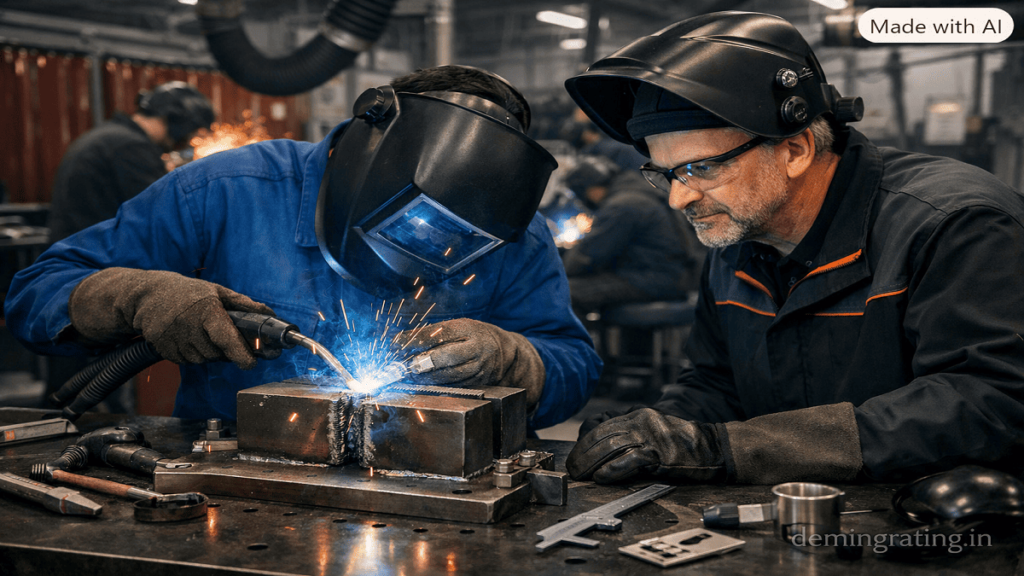
What Advanced Welding Techniques and Processes Can These Workshops Cover?
Advanced welding workshops can cover a broad range of specialized techniques and processes designed to improve precision, productivity, weld quality, and the ability to work with challenging materials. The exact curriculum varies by training provider and industry, but comprehensive workshops often combine practical welding exercises with theory, process selection, quality control, and safety practices.
One of the most common advanced processes is Gas Tungsten Arc Welding (GTAW/TIG). TIG welding uses a non-consumable tungsten electrode and is valued for its precise control and high-quality welds. Advanced training may focus on welding stainless steel, aluminum, nickel alloys, and thin materials, along with techniques for controlling heat input and weld appearance.
Gas Metal Arc Welding (GMAW/MIG) can also be covered at an advanced level. Workshops may teach participants how to optimize wire-feed speed, voltage, shielding gas, travel speed, and transfer modes for different materials and joint configurations. These skills are particularly useful in production and fabrication environments.
Another important process is Flux-Cored Arc Welding (FCAW). Because FCAW can provide high deposition rates, it is widely used in heavy fabrication and structural applications. Advanced workshops may address self-shielded and gas-shielded FCAW, electrode selection, positional welding, and defect prevention.
Submerged Arc Welding (SAW) is another specialized process commonly associated with high-productivity industrial welding. It can be particularly useful for long welds and thick sections. Advanced instruction may cover flux selection, welding parameters, joint preparation, and process control.
Some workshops go beyond conventional arc welding to introduce plasma arc welding, resistance welding, laser beam welding, and electron beam welding. These processes are particularly relevant to applications requiring precision, automation, specialized joint designs, or controlled heat input. The American Welding Society’s resources cover a wide range of welding and allied processes and provide industry standards and educational information. American Welding Society
Advanced workshops may also include multi-process welding, where participants learn to select and combine different welding methods according to material type, thickness, joint configuration, production requirements, and quality specifications. Training can further cover welding procedure specifications, preheating, post-weld heat treatment, distortion control, weld inspection, and non-destructive testing.
Safety remains an essential part of advanced welding education. Welding involves hazards such as fumes, ultraviolet radiation, heat, fire, and electrical risks. The U.S. Occupational Safety and Health Administration provides specific requirements and guidance for welding, cutting, and brazing operations. OSHA Welding, Cutting, and Brazing Standards
Overall, advanced welding workshops can provide professionals with practical experience across multiple processes while teaching them how to select the appropriate technique for demanding applications. This combination of process knowledge, hands-on practice, quality control, and safety awareness can help welders achieve more consistent results and take on increasingly complex industrial projects.
#IndustrialWelding
How Do Hands-On Workshops Improve Welding Skills and Weld Quality?
Hands-on welding workshops play an important role in developing practical skills and improving the overall quality of welded joints. While classroom instruction can explain welding theory, practical training gives participants the opportunity to apply that knowledge directly. By repeatedly performing welding tasks under professional supervision, participants can develop better control, consistency, and confidence.
One of the biggest advantages of hands-on training is immediate feedback. Experienced instructors can observe a participant’s technique and identify issues such as incorrect travel speed, poor torch or electrode angle, excessive heat input, inconsistent movement, or inadequate joint preparation. Correcting these problems during practice helps welders understand the cause of defects and learn how to prevent them in future work.
Practical workshops also allow participants to develop better control of welding parameters. Weld quality depends on factors such as current, voltage, travel speed, electrode or wire selection, shielding gas, and heat input. In a workshop environment, welders can adjust these variables and observe how changes affect penetration, bead appearance, fusion, and distortion. This practical understanding is difficult to develop through theory alone.
Another important benefit is repetition and consistency. Professional welding requires more than producing one acceptable weld; welders must be able to consistently meet specified requirements. Repeated practice helps develop muscle memory and improves coordination, allowing participants to maintain a stable arc, consistent travel speed, and appropriate torch or electrode positioning.
Hands-on workshops can also teach participants how to recognize and correct common welding defects. Problems such as porosity, cracking, undercut, incomplete fusion, and excessive spatter can compromise the strength and appearance of a weld. Practical exercises allow participants to inspect their work, identify imperfections, determine possible causes, and make adjustments.
Many advanced workshops also introduce participants to welding procedures, inspection methods, and industry standards. The American Welding Society (AWS) provides welding standards, educational programs, and certification resources that support professional development and quality practices.
Safety is another essential component of practical training. Participants learn to use welding equipment correctly, handle materials safely, manage welding fumes, and follow appropriate personal protective equipment requirements. The Occupational Safety and Health Administration (OSHA) provides guidance concerning hazards associated with welding, cutting, and brazing.
Ultimately, hands-on workshops improve welding skills by combining practice, professional feedback, repetition, inspection, and problem-solving. This practical approach helps welders produce stronger, cleaner, and more consistent welds while preparing them to meet the technical and quality expectations of modern fabrication and manufacturing environments.
#WeldingSkills
What Are the Benefits of Advanced Welding Workshops for Certification, Productivity, and Industry Compliance?
Advanced welding workshops provide professionals with specialized training that can strengthen technical capabilities while supporting certification, workplace productivity, and compliance with industry requirements. For welders, fabricators, supervisors, inspectors, and engineers, this type of training can be an important investment in maintaining professional standards and adapting to increasingly demanding welding applications.
Supporting Professional Certification
One of the most significant benefits of advanced welding workshops is preparation for professional certification. Specialized training can help participants understand welding procedures, inspection requirements, qualification processes, and technical standards that may be relevant to certification examinations or practical qualification tests. The American Welding Society (AWS) offers professional certifications and educational resources covering multiple areas of the welding industry. AWS also develops hundreds of welding standards used as technical references across the industry.
However, completing a workshop does not automatically guarantee certification. Certification requirements depend on the specific credential, governing organization, employer, project, and applicable code. A well-designed workshop can nevertheless provide valuable preparation by combining theoretical instruction with practical exercises and exposure to industry standards.
Improving Productivity and Efficiency
Advanced welding training can also contribute to greater workplace productivity. Skilled welders are better equipped to select appropriate processes, set welding parameters, prepare joints correctly, and identify problems before they lead to extensive rework. Improved technique can result in more consistent welds, reduced material waste, fewer defects, and less downtime.
Training can also help professionals become more comfortable with advanced equipment and processes, including automated and high-productivity welding technologies. Developing these capabilities can help companies respond more effectively to complex fabrication requirements while maintaining consistent production quality.
Strengthening Industry Compliance
Compliance is particularly important in industries where welded components must meet defined safety and quality requirements. Advanced workshops can familiarize participants with applicable welding codes, specifications, documentation practices, procedure qualifications, and inspection principles.
For example, AWS currently provides training focused on ASME Section IX, which addresses welding, brazing, and fusing qualification requirements. Depending on the project, other standards and regulatory requirements may also apply.
Safety compliance is another critical consideration. Welding operations can expose workers to hazards including fumes, radiation, fire, heat, and electrical risks. The Occupational Safety and Health Administration (OSHA) provides regulatory information and safety guidance for welding, cutting, and brazing operations.
Overall, advanced welding workshops can benefit both individuals and employers by developing qualified personnel, improving production efficiency, strengthening quality control, and supporting compliance with relevant industry standards. When training is aligned with the certifications, codes, equipment, and applications used in a particular workplace, it can become a practical tool for improving both professional performance and organizational reliability.
#WeldingTechnology
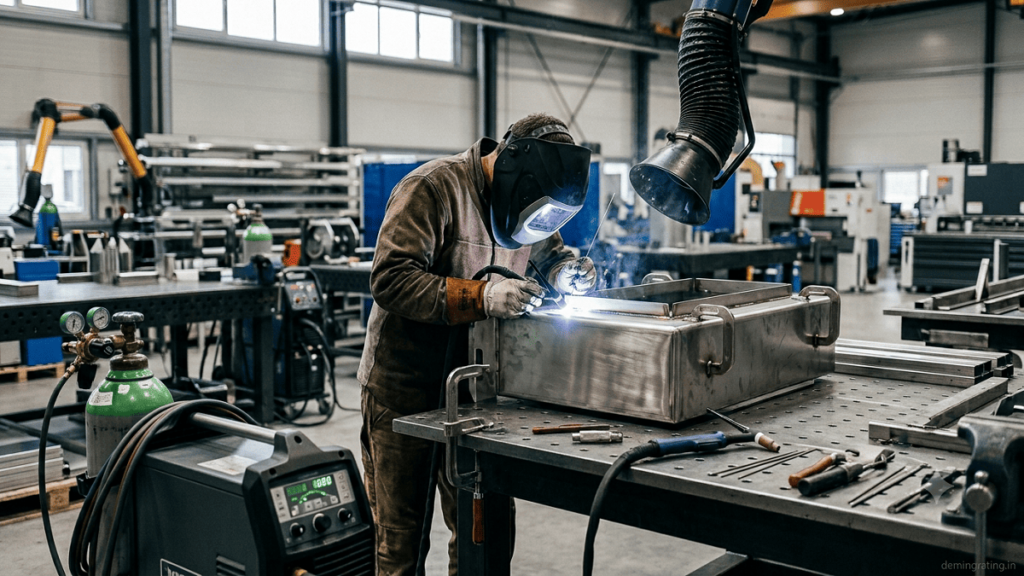
Case Study of Advanced Welding Workshops: Improving Skills, Quality, and Productivity
A practical case study from industrial welding demonstrates how advanced training can help organizations strengthen workforce capability while improving welding quality and productivity. Consider a fabrication company employing experienced welders who already understand conventional MIG and TIG processes but are facing challenges with inconsistent weld quality, rework, and increasingly complex production requirements.
The company introduces an advanced welding workshop focused on practical process optimization, welding parameters, defect prevention, inspection, and production efficiency. Rather than relying solely on classroom instruction, the workshop gives welders opportunities to work directly with welding equipment and realistic joint configurations under the supervision of experienced instructors.
Identifying the Training Needs
Before beginning the workshop, the company identifies several recurring problems. Welders are using different techniques for similar applications, resulting in variations in penetration and bead appearance. Some components require rework because of weld discontinuities, while supervisors spend significant time correcting process-related issues.
The workshop therefore focuses on areas such as welding parameter selection, joint preparation, heat control, electrode and wire selection, welding positions, and quality inspection. Participants also learn how small changes in technique can affect weld performance and production efficiency.
This approach is consistent with training principles highlighted by the American Welding Society (AWS). AWS education programs address welding principles, practical applications, welding quality control, and productivity-related knowledge.
Practical Training and Results
During practical sessions, welders perform controlled exercises and receive immediate feedback from instructors. They learn to identify the causes of defects rather than simply correcting defective welds after production. Supervisors can also use the training to establish more consistent working practices across the team.
The benefits can extend beyond individual welding performance. An AWS-sponsored study on welding supervisor training found that front-line supervisors can play a significant role in improving welding productivity through direct interaction with welders and application of welding-performance knowledge.
Advanced workshops can also introduce newer technologies and specialized processes. For example, modern industrial welding increasingly incorporates automation, digital monitoring, and advanced inspection methods. Research and industrial implementations involving AI-assisted welding inspection demonstrate how real-time quality information can help identify defects sooner and support faster corrective action.
Key Takeaways
The case demonstrates that an effective advanced welding workshop should be closely connected to actual workplace requirements. Combining hands-on practice, instructor feedback, quality inspection, process knowledge, and production objectives can help organizations build a more capable welding workforce.
The most important lesson is that advanced training should not be viewed simply as a short-term skills course. When integrated into an organization’s broader quality and productivity strategy, it can support more consistent welding practices, reduce avoidable errors, strengthen technical knowledge, and prepare employees for increasingly sophisticated welding technologies and industry requirements.
#WeldingTraining
White Paper: Advanced Welding Workshops
Executive Summary
Advanced welding workshops provide specialized technical training designed to strengthen the capabilities of welders, supervisors, inspectors, engineers, and fabrication teams. As modern manufacturing and construction projects increasingly require precision, productivity, quality assurance, and compliance with recognized standards, structured advanced training has become an important component of workforce development.
Unlike introductory welding programs, advanced workshops combine theoretical knowledge with practical application. Training may address advanced welding processes, metallurgy, welding procedure specifications, inspection, defect prevention, productivity improvement, automation, and industry codes. The American Welding Society (AWS) offers education and training programs covering welding processes, quality control, safety, codes and standards, inspection, and certification preparation.
Technical Development and Practical Skills
A central objective of advanced welding workshops is to improve practical welding performance. Participants can develop greater control over welding parameters, joint preparation, heat input, electrode or filler-metal selection, travel speed, and welding position.
Depending on the program, workshops may include advanced TIG, MIG, flux-cored, submerged arc, resistance, laser, or automated welding applications. Training can also address welding metallurgy and the behavior of different materials under heat, helping professionals make informed process decisions and prevent common defects.
Hands-on exercises are particularly valuable because instructors can provide immediate feedback. Participants can practice producing welds to specified requirements, inspect their results, identify discontinuities, and adjust their techniques accordingly.
Certification and Industry Standards
Advanced workshops can also support professional certification and qualification objectives. AWS provides training and certification resources for professionals across the welding industry, while specialized courses may focus on areas such as welding inspection, procedure qualification, metallurgy, non-destructive testing, and welding supervision.
Organizations can also customize training around relevant technical requirements. AWS corporate training, for example, identifies certification preparation, technical process training, code interpretation, productivity, and workforce development as areas that can be tailored to specific business requirements.
Productivity, Quality, and Compliance
Well-designed advanced training can contribute to improved productivity by helping employees select appropriate processes, reduce avoidable defects, minimize rework, and use equipment more effectively. Quality-focused training can also strengthen inspection and quality-control practices.
Safety and regulatory compliance must remain integral to the training process. In the United States, the Occupational Safety and Health Administration (OSHA) maintains specific standards addressing welding, cutting, and brazing operations.
Conclusion
Advanced welding workshops should be viewed as a strategic investment rather than simply a skills refresher. By combining hands-on practice, technical instruction, inspection principles, certification preparation, safety, and productivity-focused training, organizations can develop a more capable workforce and establish more consistent welding practices.
The most effective programs are those aligned with an organization’s actual welding processes, materials, equipment, quality objectives, applicable codes, and workforce skill levels. This targeted approach makes advanced training more relevant and can help organizations respond to increasingly complex welding and fabrication requirements.
#WeldingWorkshop
Industry Application of Advanced Welding Workshops
Advanced welding workshops have applications across a wide range of industries where welding quality, precision, safety, and production efficiency are critical. These workshops provide professionals with specialized knowledge and hands-on experience that can be applied to demanding manufacturing, fabrication, construction, maintenance, and engineering environments.
Construction and Structural Engineering
The construction industry relies heavily on qualified welding professionals for structural steel, bridges, industrial facilities, infrastructure, and other fabricated components. Advanced workshops can train welders in positional welding, joint preparation, distortion control, inspection, and code requirements. Training aligned with standards such as AWS structural welding codes can help professionals understand the technical requirements associated with specific applications. The American Welding Society (AWS) develops welding standards covering numerous processes and applications.
Automotive and Transportation
Automotive manufacturers use welding extensively for vehicle bodies, frames, components, exhaust systems, and assemblies. Advanced workshops can introduce professionals to high-productivity and precision processes, including resistance welding, robotic welding, MIG/GMAW, and specialized joining techniques. Training helps workers understand how welding parameters, material thickness, joint design, and automation influence production quality.
Aerospace and Aviation
Aerospace manufacturing requires exceptional attention to precision, material properties, traceability, and quality assurance. Advanced welding workshops can focus on specialized processes, welding metallurgy, thin-material applications, inspection techniques, and strict procedural controls. AWS identifies aerospace among the industries in which advanced welding engineering knowledge and professional qualifications can be relevant.
Energy, Oil and Gas
Power generation, oil and gas, and related energy projects frequently involve pressure vessels, pipelines, storage systems, boilers, and complex fabricated structures. Advanced training can help professionals understand procedure qualification, material behavior, preheating, post-weld heat treatment, inspection, and non-destructive examination. These capabilities are particularly valuable when welded components must satisfy detailed technical specifications and regulatory requirements.
Shipbuilding and Heavy Fabrication
Shipyards and heavy fabrication facilities often work with large structures, thick materials, complex welding positions, and high-volume production. Advanced workshops can improve skills in flux-cored arc welding, submerged arc welding, multi-pass welding, distortion management, and inspection. Practical training allows workers to reproduce demanding production conditions while receiving direct technical feedback.
Manufacturing and Automation
Modern manufacturing increasingly combines welding expertise with robotics, automation, sensors, and digital process monitoring. Advanced workshops can prepare professionals to operate, program, troubleshoot, and monitor automated welding systems while understanding the underlying welding principles. This combination of practical and technological knowledge can support consistent production and reduce avoidable defects.
Overall, advanced welding workshops have value wherever welded components must meet demanding requirements for strength, precision, repeatability, safety, and quality. The TWI technical knowledge centre provides additional technical information on welding processes, materials, and industrial applications.
By tailoring workshop content to the materials, processes, equipment, and standards used in a particular industry, organizations can turn advanced welding training into a practical workforce-development strategy that supports both operational performance and long-term technical capability.
#AdvancedWelding
Ask FAQs
What are advanced welding workshops?
Advanced welding workshops are specialized training programs that help experienced welders and industry professionals improve their skills in complex welding processes, quality control, inspection, safety, and industry standards.
Which welding techniques are covered in advanced workshops?
Depending on the program, workshops may cover TIG/GTAW, MIG/GMAW, FCAW, submerged arc welding, resistance welding, robotic welding, and other specialized processes. Training may also include welding metallurgy and defect prevention.
Who can benefit from advanced welding workshops?
Experienced welders, fabrication professionals, welding supervisors, inspectors, engineers, and technicians can benefit. These workshops are particularly useful for professionals seeking to improve technical skills or prepare for greater responsibilities.
Can advanced welding workshops help with certification?
Yes. Many workshops are designed to support preparation for professional certifications and welding qualifications. Training may cover relevant codes, standards, inspection practices, and practical skills required for specific certification pathways.
How do advanced welding workshops improve weld quality?
They combine hands-on practice with expert instruction and feedback. Participants learn to control welding parameters, identify defects, improve joint preparation, and follow established procedures, helping produce stronger, more consistent, and higher-quality welds.
Disclaimer: This content is for general educational purposes only. Always follow applicable welding standards, safety regulations, equipment instructions, and qualified professional guidance when performing welding work.