Healthcare IT-Networks
Table of Contents
Healthcare IT-Networks refers to the interconnected infrastructure that enables hospitals, clinics, laboratories, pharmacies, and other healthcare organizations to securely communicate, store, and exchange digital health information. These networks support essential technologies such as electronic health records (EHRs), medical devices, telemedicine platforms, diagnostic systems, cloud applications, and healthcare communication tools.
A well-designed healthcare IT network must prioritize security, reliability, availability, and data privacy because healthcare organizations handle highly sensitive patient information and depend on technology for critical clinical operations. Network infrastructure typically includes secure wired and wireless connections, servers, routers, switches, firewalls, access-control systems, monitoring tools, and secure connections between different healthcare facilities.
Cybersecurity is particularly important in healthcare networking. Organizations need safeguards against unauthorized access, malware, ransomware, data breaches, Healthcare IT-Networks and other cyber threats. In the United States, healthcare organizations covered by HIPAA must implement appropriate administrative, physical, and technical safeguards to protect electronic protected health information. The U.S. Department of Health & Human Services – HIPAA Security Rule provides official guidance on these requirements.
Healthcare networks also enable interoperability, allowing authorized systems to exchange information efficiently. Standards such as HL7 and FHIR help healthcare applications communicate and share structured health information. The HL7 International FHIR standard is increasingly important for modern healthcare data exchange.
Network availability is equally critical. Downtime can interrupt clinical workflows, delay access to patient records, and affect diagnostic and treatment processes. Healthcare organizations therefore commonly use network redundancy, backup connectivity, continuous monitoring, disaster-recovery planning, and controlled access to improve resilience.
As healthcare increasingly adopts cloud computing, remote patient monitoring, artificial intelligence, connected medical devices, and telehealth, IT networks are becoming more complex. Organizations must balance accessibility and performance with strong cybersecurity and privacy controls.
Ultimately, healthcare IT networks form the digital foundation of modern healthcare delivery. A secure, resilient, and well-managed network can help healthcare providers improve operational efficiency, protect patient information, support interoperability, and deliver reliable digital services.
#MedicalDevices
What Are Healthcare IT-Networks and Why Are They Important?
Healthcare IT networks are interconnected technology systems that allow hospitals, clinics, laboratories, pharmacies, medical professionals, and other healthcare organizations to securely exchange information and access digital services. These networks connect computers, servers, medical devices, Healthcare IT-Networks databases, cloud platforms, electronic health records (EHRs), and communication systems so that authorized users can access and share information efficiently.
A healthcare IT network can include wired and wireless infrastructure, routers, switches, firewalls, servers, secure remote-access systems, Healthcare IT-Networks network monitoring tools, and cybersecurity technologies. Together, these components create the digital infrastructure required to support modern healthcare operations.
Why Are Healthcare IT Networks Important?
1. Secure Patient Information
Healthcare organizations handle highly sensitive information, including medical histories, diagnostic reports, prescriptions, and personal details. A properly designed network helps protect this information from unauthorized access, data breaches, malware, Healthcare IT-Networks and other cybersecurity threats. In the United States, the HIPAA Security Rule requires covered entities and business associates to implement appropriate safeguards for electronic protected health information. (hhs.gov)
2. Faster Access to Medical Records
Healthcare networks allow authorized professionals to access electronic health records and other clinical information when needed. This can reduce reliance on paper records and help clinicians make informed decisions using current patient information.
3. Supports Medical Devices
Modern healthcare facilities depend on connected medical equipment such as patient monitors, imaging systems, infusion pumps, Healthcare IT-Networks and diagnostic devices. Reliable networking enables these devices to communicate with clinical information systems and other authorized platforms.
4. Enables Healthcare Interoperability
Healthcare IT networks support the exchange of information between different applications and organizations. Standards such as FHIR (Fast Healthcare Interoperability Resources) help healthcare systems exchange structured health information more effectively. (hl7.org)
5. Enables Telemedicine and Remote Healthcare
Reliable networks support video consultations, remote patient monitoring, virtual care platforms, and communication between healthcare professionals and patients. This has become increasingly important as healthcare services expand beyond traditional clinical environments.
6. Improves Reliability and Business Continuity
Network outages can disrupt clinical workflows and access to critical information. Healthcare organizations therefore use redundancy, monitoring, Healthcare IT-Networks backup connectivity, and disaster-recovery measures to improve network availability and resilience.
Overall, healthcare IT networks provide the digital foundation for secure, connected, and efficient healthcare delivery. As healthcare organizations adopt cloud computing, connected medical devices, artificial intelligence, and remote care technologies, Healthcare IT-Networks robust network infrastructure will become increasingly important for protecting patient data while maintaining reliable access to essential healthcare services.
Relevant external resources:
- U.S. Department of Health & Human Services – HIPAA Security Rule
- HL7 International – FHIR
- HHS – Health Information Technology
#Telemedicine
What Technologies and Infrastructure Are Commonly Used in Healthcare Networks?
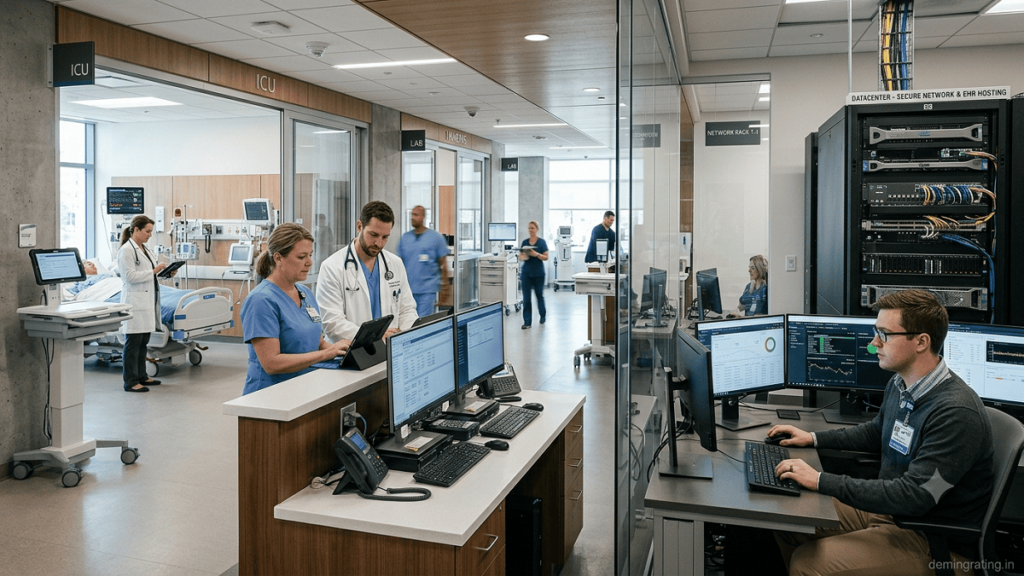
Healthcare networks combine traditional IT infrastructure with specialized technologies designed to support clinical care, patient-data management, communication, and cybersecurity. Because healthcare organizations must maintain reliable access to sensitive information, Healthcare IT-Networks their networks are typically designed around availability, security, interoperability, and scalability.
1. Wired and Wireless Networks
Ethernet-based wired networks provide reliable connectivity between computers, servers, medical equipment, and other devices. Wi-Fi networks support mobile workstations, tablets, smartphones, clinical devices, and communication systems. Healthcare facilities may use separate wireless networks for staff, patients, medical devices, and administrative systems to improve security and network management.
2. Network Switches and Routers
Switches connect devices within hospitals and healthcare facilities, while routers manage communication between different networks and external services. Enterprise-grade networking equipment helps healthcare organizations handle large volumes of traffic while maintaining reliable connectivity.
3. Firewalls and Network Security Systems
Firewalls control network traffic and help prevent unauthorized access. Healthcare organizations may also use intrusion detection and prevention systems (IDS/IPS), network access control, endpoint security, and security monitoring platforms to identify and respond to potential threats.
Security is particularly important because healthcare organizations manage electronic protected health information. The U.S. Department of Health and Human Services provides technical safeguards and security guidance under the HIPAA Security Rule. (hhs.gov)
4. Servers, Data Centers, and Cloud Infrastructure
Healthcare providers may operate on-premises servers and data centers or use cloud computing platforms to host applications, databases, EHR systems, backups, and other services. Hybrid environments are also common, allowing organizations to combine local infrastructure with cloud-based resources.
5. Electronic Health Record Systems
Electronic Health Records (EHRs) are among the most important applications supported by healthcare networks. They allow authorized healthcare professionals to access and manage patient information, clinical documentation, laboratory results, prescriptions, and other health data.
6. Medical and IoT Devices
Healthcare networks increasingly connect patient monitors, imaging equipment, infusion systems, diagnostic devices, wearable technologies, and Internet of Medical Things (IoMT) devices. These connected technologies allow data to move between medical equipment and clinical information systems.
7. Interoperability Technologies
Healthcare organizations need systems that can exchange information securely and effectively. Standards such as HL7 FHIR provide standardized methods for representing and exchanging healthcare information between applications. (hl7.org)
8. VPN and Remote-Access Technologies
Virtual private networks (VPNs), secure remote-access solutions, and identity-management technologies enable authorized employees and healthcare professionals to access systems remotely while maintaining appropriate security controls.
Overall, healthcare networks are built from a combination of connectivity infrastructure, cybersecurity systems, computing resources, medical devices, clinical applications, and interoperability technologies. As healthcare organizations increasingly adopt cloud services, telemedicine, connected devices, and digital health applications, scalable and secure network infrastructure has become essential to maintaining efficient and reliable patient care.
#ElectronicHealthRecords
How Can Healthcare Networks Protect Patient Data and Sensitive Medical Information?
Healthcare networks handle highly sensitive information, including electronic health records, diagnostic reports, prescriptions, insurance information, and personal identifiers. Protecting this information requires a combination of technical controls, organizational policies, employee awareness, and continuous monitoring. In the United States, the HIPAA Security Rule requires covered entities and business associates to implement appropriate administrative, physical, and technical safeguards to protect electronic protected health information (ePHI).
1. Implement Strong Access Controls
Healthcare organizations should ensure that only authorized users can access patient information. Role-based access controls can limit employees to the information required for their responsibilities. Unique user identification and authentication help verify the identity of individuals accessing healthcare systems. The HIPAA Security Rule specifically addresses access control and authentication as technical safeguards.
2. Use Encryption
Encryption helps protect patient information while it is stored and transmitted across healthcare networks. If data is intercepted or a device is lost, encryption can make the information significantly harder for unauthorized individuals to access. HHS identifies encryption as an important safeguard that organizations should consider based on their security risks.
3. Segment Healthcare Networks
Network segmentation separates critical systems and medical devices from less trusted networks. For example, hospitals can isolate medical devices, administrative systems, guest Wi-Fi, and other connected equipment into separate network segments. NIST recommends segmentation in healthcare environments, particularly where medical devices may interact with potentially vulnerable personal or home networks.
4. Monitor and Audit Network Activity
Continuous monitoring and audit logs can help organizations identify unusual access, unauthorized activity, and potential security incidents. HIPAA requires technical mechanisms for recording and examining activity in systems that contain or use ePHI.
5. Conduct Regular Risk Assessments
Healthcare organizations should regularly evaluate vulnerabilities affecting their networks, applications, devices, and data. Risk assessments help identify potential threats and determine which security measures are appropriate. HHS states that regulated entities must conduct an accurate and thorough assessment of potential risks and vulnerabilities to ePHI.
6. Train Employees
Employees can unintentionally expose sensitive information through phishing, weak passwords, inappropriate sharing, or other mistakes. Regular security and privacy training helps employees understand their responsibilities and recognize potential threats. HHS includes workforce security and training among important healthcare information-protection practices.
7. Maintain Backups and Incident-Response Plans
Healthcare organizations should maintain secure backups and documented procedures for responding to cyber incidents. Effective disaster recovery can help maintain access to critical information when systems are affected by ransomware, equipment failures, or other disruptions. HHS identifies contingency planning and data backups as important safeguards.
Ultimately, protecting patient data requires a layered security strategy rather than a single technology. Strong access controls, encryption, network segmentation, monitoring, risk management, employee training, secure backups, and appropriate policies work together to protect the confidentiality, integrity, and availability of healthcare information.
Relevant External Resources
- HHS – HIPAA Security Rule
- HHS – Summary of the HIPAA Security Rule
- NIST – Security and Health Information Technology
- NIST – Telehealth Cybersecurity and Privacy
#HealthInformationTechnology
How Do IT Networks Support Electronic Health Records, Telemedicine, and Connected Medical Devices?
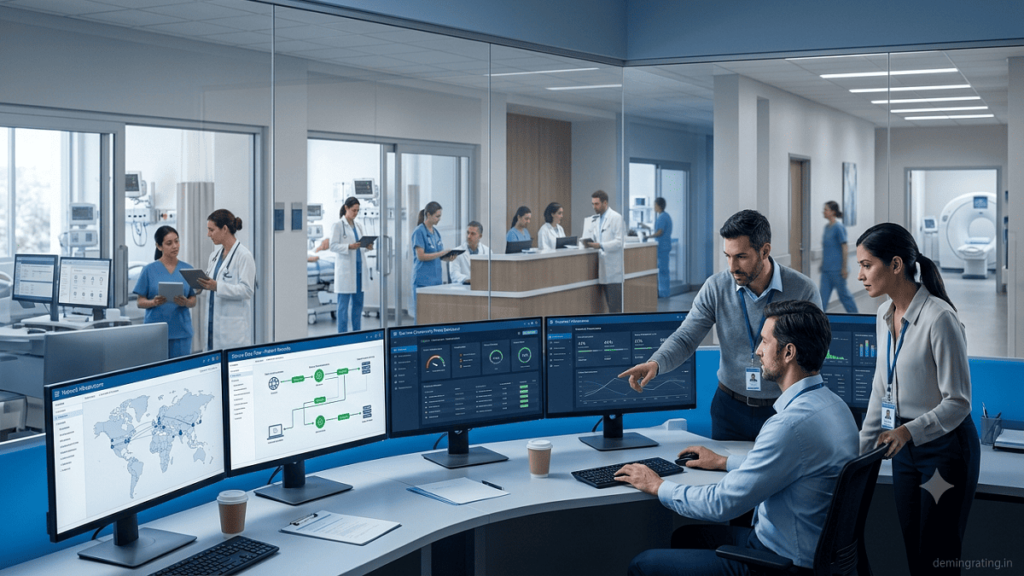
Healthcare IT networks provide the digital infrastructure that connects clinicians, patients, electronic health records (EHRs), telemedicine platforms, medical devices, and healthcare applications. By enabling secure and reliable communication between these systems, networks help healthcare organizations deliver connected and efficient care. The National Institute of Standards and Technology (NIST) identifies interoperability, secure data movement, and access to medical histories as important objectives of health IT infrastructure.
1. Supporting Electronic Health Records
IT networks allow authorized healthcare professionals to access EHR systems from computers, workstations, tablets, and other approved devices. Through network connectivity, clinicians can retrieve patient histories, laboratory results, diagnostic reports, medication information, and clinical documentation when required.
Networks also support health information exchange (HIE) between healthcare organizations. This can help providers obtain more complete patient information and reduce duplicate testing or medication-related errors.
Interoperability standards are particularly important. HL7 FHIR (Fast Healthcare Interoperability Resources) provides a standardized method for representing and exchanging healthcare information through modern APIs. This enables different healthcare applications to communicate more efficiently.
2. Enabling Telemedicine
Telemedicine depends on reliable networks to transmit video, audio, clinical information, images, and other healthcare data between patients and providers. Broadband connections, secure wireless networks, cloud services, video-conferencing platforms, and remote-access technologies can work together to support virtual consultations.
For example, during a remote consultation, a patient’s device connects to a telemedicine platform through the internet. The healthcare professional can conduct the consultation while authorized systems may provide access to relevant patient records. Network performance is important because interruptions, latency, or inadequate bandwidth can affect the quality of a virtual appointment.
3. Connecting Medical Devices
Healthcare networks increasingly connect medical equipment such as patient monitors, imaging systems, diagnostic devices, infusion systems, wearable sensors, and other connected technologies. These devices can collect and transmit clinical information to authorized healthcare applications and EHR systems.
Interoperability allows information from connected devices to become more useful within clinical workflows. NIST notes that standards-based medical-device connectivity can support equipment integration, reduce transcription errors, and provide clinicians with richer patient information.
4. Maintaining Security and Reliability
Because healthcare networks transport sensitive information and support clinical operations, they require strong security and reliability measures. Access controls, authentication, encryption, network segmentation, monitoring, backups, and secure configurations can help protect data and maintain service availability.
Overall, healthcare IT networks act as the connective foundation of modern digital healthcare. They enable EHR access, support telemedicine, connect medical devices, and facilitate interoperability between healthcare applications. As healthcare increasingly adopts cloud platforms, remote monitoring, wearable devices, and digital health services, reliable and secure network infrastructure will become even more important.
#HealthcareCybersecurity
What Are the Key Challenges in Maintaining Secure, Reliable, and Scalable Healthcare IT Networks?
Healthcare IT networks must support critical clinical operations while protecting highly sensitive patient information. As hospitals and healthcare organizations adopt electronic health records (EHRs), telemedicine, cloud platforms, connected medical devices, and remote healthcare services, network environments are becoming increasingly complex. Maintaining security, reliability, and scalability simultaneously presents several important challenges.
1. Cybersecurity Threats
Healthcare organizations are attractive targets for cybercriminals because they manage valuable personal and medical information. Ransomware, phishing, malware, unauthorized access, and data breaches can disrupt clinical operations and expose sensitive information. Healthcare providers therefore need multiple layers of protection, including firewalls, access controls, encryption, endpoint security, monitoring, and incident-response procedures. The U.S. Department of Health and Human Services (HHS) provides guidance on protecting electronic protected health information under the HIPAA Security Rule. (hhs.gov)
2. Legacy Systems and Infrastructure
Many healthcare organizations continue to operate older applications, servers, and medical devices that were not designed for today’s cybersecurity environment. Replacing legacy systems can be expensive and may introduce operational risks. At the same time, older technologies can be difficult to patch, integrate, or secure, creating vulnerabilities within the broader network.
3. Connected Medical Devices
The growing use of connected medical devices adds another layer of complexity. Patient monitors, imaging equipment, infusion systems, wearable devices, and other Internet of Medical Things (IoMT) technologies need reliable network connectivity but may have different security capabilities and update requirements. NIST highlights the importance of addressing cybersecurity and privacy risks associated with connected healthcare technologies. (nist.gov)
4. Network Reliability and Downtime
Healthcare services often depend on continuous access to patient records, diagnostic systems, communication platforms, and medical devices. Network outages can interrupt clinical workflows and potentially delay patient care. Organizations therefore need redundancy, backup connectivity, monitoring, disaster recovery, and business-continuity planning.
5. Scalability
Healthcare networks must accommodate growing numbers of users, devices, applications, locations, and data sources. Cloud computing and remote healthcare services can increase flexibility, but they also require careful capacity planning, identity management, security controls, and bandwidth management.
6. Interoperability
Different healthcare applications and devices often use different technologies and data formats. Connecting these systems securely and efficiently can be challenging. Standards such as HL7 FHIR help facilitate the exchange of healthcare information between compatible systems. (hl7.org)
7. Regulatory and Privacy Requirements
Healthcare organizations must comply with applicable privacy, security, and data-protection requirements. Regulations can vary by country and jurisdiction, making compliance management particularly challenging for organizations operating across multiple locations.
Conclusion
The biggest challenge in healthcare networking is balancing security, availability, performance, interoperability, and scalability without disrupting clinical services. A successful strategy combines modern infrastructure with strong cybersecurity controls, continuous monitoring, employee training, lifecycle management, redundancy, and well-defined recovery procedures. As healthcare becomes increasingly digital and connected, investing in resilient network architecture will be essential for protecting patient information and supporting reliable healthcare delivery.
Relevant external resources:
#HealthTech
Case Study of Healthcare IT-Networks: Lessons from a Ransomware Attack
Healthcare IT networks are essential for maintaining access to electronic health records, clinical applications, medical devices, and communication systems. However, the same connectivity that enables efficient healthcare delivery can also create cybersecurity risks. A documented ransomware case involving Comstar, LLC, a healthcare business associate, demonstrates the importance of network security, risk assessment, and continuous monitoring.
Background
Comstar provided services including billing, collection, consulting, electronic patient care reporting (ePCR) hosting, and client/patient services for nonprofit and municipal ambulance organizations. Its network infrastructure therefore contained electronic protected health information (ePHI) belonging to a large number of individuals. (hhs.gov)
The Cybersecurity Incident
On March 19, 2022, an unauthorized individual gained access to Comstar’s network servers. The intrusion was not detected until March 26, when the organization’s IT service vendor began receiving support tickets. Investigators determined that ransomware had been used to encrypt the network servers.
The incident affected the ePHI of approximately 585,621 individuals. The U.S. Department of Health and Human Services (HHS) subsequently investigated the incident under the HIPAA Security Rule. (hhs.gov)
Key Security Weakness
One of the central findings was that Comstar had failed to conduct an accurate and thorough assessment of the potential risks and vulnerabilities affecting the confidentiality, integrity, and availability of its ePHI.
This finding demonstrates why cybersecurity risk assessments are fundamental to healthcare IT-network management. Organizations need to understand which systems contain sensitive information, how those systems are connected, what vulnerabilities exist, and what controls are required to reduce identified risks.
Corrective Measures
Following the investigation, Comstar entered into a resolution agreement with HHS. The case illustrates the importance of implementing a structured cybersecurity program that includes risk analysis, access controls, network monitoring, incident-response procedures, system protection, and appropriate safeguards for electronic health information. (hhs.gov)
Lessons for Healthcare Organizations
The case provides several important lessons for healthcare providers and their technology partners:
First, risk assessments must be comprehensive. Organizations cannot effectively protect information if they do not understand their network vulnerabilities.
Second, detection capabilities are critical. The seven-day gap between unauthorized access and detection demonstrates the importance of continuous monitoring and security alerting.
Third, healthcare networks require layered security. Firewalls, endpoint protection, access controls, authentication, network segmentation, backups, encryption, and monitoring should work together rather than relying on a single security technology.
Fourth, incident-response planning is essential. Healthcare organizations need documented procedures for detecting, containing, investigating, and recovering from cyber incidents while maintaining critical clinical services.
The case reinforces a broader principle: healthcare network security is not simply an IT responsibility; it is an essential component of patient-data protection and operational continuity. As healthcare organizations increasingly depend on connected devices, cloud applications, remote access, and digital records, proactive risk management and resilient network architecture are becoming increasingly important.
Relevant external resources:
- HHS – Comstar Resolution Agreement
- HHS – HIPAA Security Rule
- NIST – Securing Electronic Health Records on Mobile Devices
- NIST – Healthcare Cybersecurity Resources
#HealthcareTechnology
White Paper: Healthcare IT-Networks
Executive Summary
Healthcare IT-Networks form the digital foundation of modern healthcare delivery. They connect electronic health records (EHRs), clinical applications, medical devices, laboratories, pharmacies, telemedicine platforms, cloud services, and healthcare professionals. A well-designed healthcare network enables secure and timely access to information while supporting reliable clinical operations.
The importance of these networks continues to increase as healthcare organizations adopt connected medical devices, remote care, cloud computing, data analytics, and interoperable health information systems. At the same time, healthcare networks face significant cybersecurity, reliability, interoperability, legacy infrastructure, and scalability challenges.
The National Institute of Standards and Technology (NIST) emphasizes that effective health IT infrastructure should be secure, usable, reliable, and capable of supporting the seamless and private movement of healthcare information.
1. Introduction
Healthcare has undergone a major digital transformation. EHR systems have replaced many paper-based processes, while telemedicine and connected medical technologies have expanded access to healthcare services. These technologies depend on networks capable of transferring large volumes of sensitive information quickly and securely.
Healthcare IT-Networks include wired and wireless infrastructure, switches, routers, firewalls, servers, cloud environments, authentication systems, monitoring platforms, endpoint devices, and specialized medical equipment. Together, these technologies provide the connectivity required for clinical and administrative operations.
2. Importance of Healthcare IT-Networks
A healthcare network allows authorized professionals to access patient information at the point of care. Physicians, nurses, laboratories, pharmacies, and other healthcare departments can exchange relevant information more efficiently, reducing unnecessary duplication and supporting better-informed clinical decisions.
Interoperability is another critical function. Standards such as HL7 FHIR are designed to enable healthcare information to be exchanged efficiently through standardized resources and APIs.
Reliable networks are also essential for telemedicine, remote monitoring, diagnostic systems, medical imaging, and connected devices. Network interruptions can affect clinical workflows and access to essential information, making availability and resilience important design objectives.
3. Healthcare Network Architecture
A healthcare network may combine traditional on-premises infrastructure with private and public cloud services. Core components commonly include:
- Wired Ethernet and secure wireless networks
- Routers and network switches
- Firewalls and intrusion-prevention technologies
- Servers and data-storage systems
- Cloud computing and hosted applications
- Virtual private networks and secure remote access
- Identity and access management systems
- Network monitoring and security operations platforms
- Connected medical and IoT devices
Network segmentation is particularly important because different systems have different security and operational requirements. Clinical systems, administrative endpoints, guest networks, and medical devices may require separate security zones and access policies.
4. Cybersecurity and Patient Data Protection
Healthcare networks handle highly sensitive information, making cybersecurity a fundamental requirement. In the United States, the HIPAA Security Rule focuses on protecting electronic protected health information (ePHI) against reasonably anticipated threats, hazards, and unauthorized uses or disclosures. NIST SP 800-66 Revision 2 provides practical cybersecurity guidance for organizations implementing the HIPAA Security Rule.
Effective security programs should incorporate risk assessments, strong authentication, least-privilege access, encryption, network segmentation, vulnerability management, endpoint protection, continuous monitoring, incident response, and secure backup strategies.
HHS cybersecurity guidance also identifies threats such as ransomware, social engineering, data loss, insider threats, and attacks against network-connected medical devices. Its recommended practices include access management, asset management, network management, vulnerability management, incident response, and cybersecurity governance.
5. Connected Medical Devices
Modern healthcare environments increasingly depend on network-connected medical devices. Patient monitors, imaging systems, diagnostic equipment, infusion technologies, and other connected devices can exchange clinical information with healthcare applications.
However, connectivity introduces cybersecurity and operational risks. HHS guidance recommends applying practices such as asset inventory, endpoint protection, network segmentation, identity and access management, vulnerability management, and appropriate remote-access controls to connected medical devices.
Organizations should therefore consider cybersecurity throughout the entire device lifecycle, from procurement and deployment to maintenance, software updates, monitoring, and retirement.
6. Reliability and Business Continuity
Healthcare networks must remain available during normal operations and unexpected disruptions. Network failures, cyberattacks, hardware problems, power outages, or natural disasters can interfere with clinical services.
A resilient architecture may include redundant network components, backup connectivity, power protection, system backups, disaster recovery procedures, alternative communication channels, and continuous infrastructure monitoring.
Business continuity planning should identify critical systems and determine how healthcare services can continue if primary network infrastructure becomes unavailable.
7. Interoperability
Healthcare organizations frequently use applications from different vendors, creating challenges in exchanging information consistently. Interoperability standards can reduce these barriers.
HL7 FHIR provides standardized resources and an API-based approach for exchanging clinical and administrative healthcare information.
Effective interoperability requires more than technical connectivity. Organizations must also consider data quality, security, privacy, identity management, authorization, and consistent interpretation of exchanged information.
8. Scalability and Cloud Adoption
Healthcare organizations generate increasing amounts of clinical, operational, imaging, and device data. Networks therefore need to scale without compromising performance or security.
Cloud computing can provide flexible computing and storage capacity, but healthcare organizations must carefully evaluate identity management, data protection, network architecture, application dependencies, vendor responsibilities, and regulatory requirements.
Scalable network design should anticipate future growth in users, facilities, connected devices, applications, remote services, and data volumes.
9. Key Challenges
Healthcare IT-Networks face several ongoing challenges:
- Increasing ransomware and cybersecurity threats
- Legacy systems that are difficult to secure or integrate
- Large numbers of connected medical devices
- Complex interoperability requirements
- Shortage of specialized cybersecurity and networking skills
- Increasing regulatory and privacy obligations
- Requirements for continuous availability
- Rapid growth in data and connected endpoints
- Expanding remote and telemedicine services
- Balancing modernization with operational and financial constraints
HHS cybersecurity guidance recommends beginning with risk assessment and tailoring security practices to an organization’s specific environment and threats.
10. Best Practices
Healthcare organizations can strengthen their network environments by adopting a risk-based and layered approach. Important practices include:
- Maintain an accurate inventory of network assets and medical devices.
- Apply strong identity and access management.
- Use network segmentation to limit unauthorized movement.
- Continuously monitor networks and critical endpoints.
- Conduct regular vulnerability assessments and risk analyses.
- Establish tested backup and disaster-recovery procedures.
- Keep software and systems appropriately patched.
- Secure remote access with strong authentication.
- Evaluate cybersecurity requirements during technology procurement.
- Train employees to recognize phishing and social-engineering attacks.
- Establish documented incident-response procedures.
- Regularly review third-party and cloud-service security responsibilities.
11. Future of Healthcare IT-Networks
The future of healthcare networking will be shaped by cloud computing, artificial intelligence, remote patient monitoring, connected medical devices, telemedicine, automation, and increasingly interoperable healthcare applications.
As these technologies expand, network architecture will need to become more intelligent, resilient, secure, and adaptable. Security cannot remain an isolated function; it must be integrated into network design, device management, application deployment, procurement, and organizational governance.
NIST’s health IT work emphasizes standards, interoperability, security, and testing as important foundations for improving healthcare information infrastructure.
12. Conclusion
Healthcare IT-Networks are a fundamental component of modern healthcare infrastructure. They enable EHR access, telemedicine, connected medical devices, health information exchange, cloud applications, and data-driven clinical services.
However, the increasing dependence on digital infrastructure also creates significant cybersecurity and reliability risks. Healthcare organizations must therefore balance connectivity with strong security, availability, interoperability, and scalability.
A successful healthcare network strategy should combine modern infrastructure, risk-based cybersecurity, standardized information exchange, resilient architecture, continuous monitoring, and effective governance. By treating network infrastructure as a strategic component of patient care rather than simply an IT function, healthcare organizations can improve operational resilience, protect sensitive information, and support the continued digital transformation of healthcare.
Relevant external resources
- NIST – Health IT
- NIST SP 800-66 Rev. 2 – HIPAA Security Rule Cybersecurity Resource Guide
- HHS Healthcare Cybersecurity Performance Goals
- HHS 405(d) – Health Industry Cybersecurity Practices
- HHS – Network Connected Medical Device Security
- ONC – HL7 FHIR
#HealthcareIT
Industry Application of Healthcare IT-Networks
Healthcare IT-Networks are used across virtually every area of modern healthcare. They provide the connectivity required to exchange patient information, operate clinical applications, connect medical devices, deliver remote care, and support administrative and analytical activities. NIST identifies secure information exchange, interoperability, access to medical histories, and reliable health IT infrastructure as important objectives for modern healthcare networks.
1. Hospitals and Healthcare Facilities
Hospitals depend on IT networks to connect departments such as emergency care, intensive care, laboratories, radiology, pharmacy, and administration. Networks enable clinicians to access EHRs, exchange diagnostic information, communicate with other departments, and use centralized clinical applications. Reliable connectivity is particularly important in critical-care environments where interruptions can affect clinical workflows.
2. Electronic Health Records and Health Information Exchange
Healthcare networks enable the secure movement of patient information between authorized systems and organizations. EHR platforms can connect with laboratories, pharmacies, imaging systems, health information exchanges, and other healthcare applications.
Interoperability standards such as HL7 FHIR provide an API-focused approach for exchanging clinical and administrative health information and support a more connected digital health ecosystem.
3. Telemedicine and Remote Healthcare
Telemedicine depends heavily on reliable network connectivity. Healthcare professionals can use secure networks to conduct virtual consultations, exchange clinical information, review diagnostic results, and support remote patient monitoring. This is particularly valuable for patients who have limited access to healthcare facilities or require ongoing management outside traditional clinical settings.
4. Connected Medical Devices
Modern hospitals increasingly connect patient monitors, imaging systems, diagnostic equipment, infusion technologies, and other medical devices to healthcare networks. Standards-based interoperability can help devices exchange information with clinical systems and EHRs, reducing manual data entry and improving the availability of clinical information.
5. Laboratories and Diagnostic Services
Laboratories use healthcare networks to transmit test orders, results, reports, and diagnostic information between laboratory information systems and EHR platforms. Network connectivity can accelerate the availability of test results and support coordinated clinical decision-making.
6. Pharmacies and Medication Management
Healthcare networks support electronic prescriptions, medication histories, pharmacy communication, and coordination between physicians and pharmacists. Secure information exchange can help ensure that authorized professionals have access to relevant medication information when required.
7. Healthcare Administration and Operations
Beyond clinical care, networks support billing, scheduling, human resources, inventory management, supply-chain operations, financial systems, and internal communication. These administrative functions are essential for maintaining efficient healthcare operations.
8. Public Health and Research
Healthcare IT infrastructure can also support health surveillance, reporting, research, analytics, and population-health initiatives. Interoperable systems can make it easier to collect and exchange information for broader healthcare programs while applying appropriate security and privacy controls. NIST identifies improved reporting, surveillance, quality monitoring, and health information exchange among important health IT objectives.
9. Health Information Exchanges and Nationwide Connectivity
Health information exchange networks allow organizations to securely exchange health information across organizational boundaries. In the United States, ONC’s TEFCA provides a nationwide framework intended to establish a common foundation for secure health information sharing among participating organizations.
Conclusion
Healthcare IT-Networks have applications ranging from hospital operations and EHRs to telemedicine, connected medical devices, laboratories, pharmacies, research, and public health. Their value depends on more than connectivity alone. Networks must provide security, reliability, interoperability, scalability, and appropriate access controls to support modern healthcare services.
As healthcare organizations continue adopting cloud technologies, connected devices, remote care, and data-driven applications, robust IT-network infrastructure will remain a fundamental requirement for efficient, secure, and patient-centered healthcare delivery.
Relevant external resources:
- NIST – Health IT
- ONC – HL7 FHIR
- ONC – Interoperability
- ONC – TEFCA
- NIST – Medical Device Interoperability
#HealthcareITNetworks
Ask FAQs
What are Healthcare IT-Networks?
Healthcare IT-Networks are digital communication infrastructures that connect hospitals, clinics, laboratories, EHR systems, medical devices, healthcare applications, and authorized users. They enable secure and reliable exchange of clinical and administrative information. NIST emphasizes that effective health IT networks should be secure, usable, reliable, interoperable, and capable of supporting efficient information exchange.
Why are Healthcare IT-Networks important?
They support essential healthcare services such as electronic health records, telemedicine, diagnostic systems, connected medical devices, laboratory systems, and health information exchange. Reliable networks help healthcare professionals access appropriate patient information when and where it is needed, supporting more efficient and coordinated care.
How do Healthcare IT-Networks protect patient information?
Healthcare networks use layered security measures such as authentication, access controls, encryption, network segmentation, monitoring, vulnerability management, and incident-response processes. These controls help protect the confidentiality, integrity, and availability of sensitive health information.
What are the major challenges of Healthcare IT-Networks?
Common challenges include cybersecurity threats, ransomware, legacy infrastructure, connected medical devices, interoperability problems, network downtime, increasing data volumes, and the need to scale services securely. Maintaining interoperability is particularly important because healthcare systems often need to exchange information across different applications and organizations.
How can organizations improve Healthcare IT-Network performance and security?
Organizations can improve network performance and security through regular risk assessments, network monitoring, strong identity and access management, segmentation, vulnerability management, reliable backups, disaster recovery planning, employee training, and interoperability testing. Standards-based testing can also help verify that healthcare systems exchange information correctly and consistently.
Disclaimer: This content is for general informational purposes only. Healthcare IT requirements vary by organization, technology, and applicable regulations. Always verify requirements with relevant authorities and qualified professionals.