EN 285 Sterilization: The European Standard for Large Steam Sterilizers
Table of Contents
EN 285 is the European standard that defines the design, performance, testing, and validation requirements for large steam sterilizers used in healthcare facilities and medical device manufacturing. It ensures that sterilization equipment consistently achieves effective steam sterilization, protecting patients from healthcare-associated infections while supporting compliance with European medical device regulations. The current version, EN 285:2015+A1:2021, applies to steam sterilizers with a chamber volume of 60 liters or more or those designed to accommodate at least one standard sterilization module.
What Is EN 285?
EN 285 establishes technical and operational requirements for large steam sterilizers used to sterilize wrapped surgical instruments, porous materials, metal devices, rubber items, and other reusable medical equipment. The standard specifies how sterilizers must perform under controlled conditions, including temperature uniformity, steam penetration, air removal, load dryness, and cycle monitoring. Unlike small tabletop sterilizers covered by other standards, focuses specifically on hospital-grade autoclaves and industrial healthcare sterilization systems.
Key Requirements of EN 285
The standard includes comprehensive performance criteria that manufacturers and healthcare providers must follow:
- Effective air removal through vacuum systems to allow complete steam penetration.
- Uniform sterilization temperature throughout the chamber during the exposure phase.
- Steam quality control, including dryness fraction and non-condensable gas limits.
- Load dryness verification to prevent moisture that could compromise sterility.
- Automatic monitoring and recording of critical cycle parameters for traceability.
- Routine performance testing, including Bowie-Dick and air leakage tests.
These requirements help ensure every sterilization cycle delivers consistent and reproducible results.
Why EN 285 Matters in Healthcare
Hospitals, surgical centers, dental institutions, and sterile processing departments rely on EN 285-compliant sterilizers because patient safety depends on properly sterilized medical instruments. Compliance reduces the risk of contaminated surgical tools, improves infection prevention protocols, and supports regulatory audits. Manufacturers also use during product development and validation to demonstrate that their sterilization equipment meets recognized European performance standards under the Medical Device Regulation (MDR).
Conclusion
EN 285 remains the benchmark for large steam sterilization across Europe, defining rigorous requirements for equipment performance, validation, and routine monitoring. Organizations that implement-compliant sterilizers strengthen infection control, improve regulatory compliance, and ensure reliable sterilization of reusable medical devices.
Relevant External Resources
- European Commission – Harmonised standards for medical devices: Implementing decision – 2022/757 – EN
- CEN EN 285:2015+A1:2021 Standard overview: BS EN 285:2015+A1:2021
#QualityAssurance
What Is EN 285 and Why Is It Important for Steam Sterilization?
EN 285 is the European standard that specifies the requirements for large steam sterilizers used in hospitals, healthcare facilities, laboratories, and medical device manufacturing. It establishes strict guidelines for the design, performance, testing, and validation of steam sterilization equipment to ensure reusable medical instruments are consistently sterilized safely and effectively. The standard is widely recognized across Europe and serves as a benchmark for high-capacity autoclaves used in sterile processing departments.
Understanding EN 285
Steam sterilization is one of the most reliable methods for eliminating bacteria, viruses, fungi, and bacterial spores from reusable medical devices. However, effective sterilization depends on more than simply generating heat. defines how sterilizers must remove air from the chamber, deliver saturated steam evenly, maintain precise temperatures and pressures, and produce dry sterile loads at the end of each cycle. These requirements help ensure that every instrument receives the correct sterilization conditions regardless of its position within the chamber.
The standard primarily applies to sterilizers with a chamber volume of 60 liters or greater, making it suitable for hospital-grade equipment rather than small tabletop sterilizers used in clinics or dental practices.
Why EN 285 Is Important
The importance of lies in its role in protecting patient safety and supporting consistent infection prevention practices. Surgical instruments that are not properly sterilized can transmit harmful microorganisms, increasing the risk of healthcare-associated infections. By following, healthcare organizations can verify that their sterilization processes meet internationally accepted performance standards.
Key benefits include:
- Enhanced patient safety through reliable sterilization performance.
- Consistent steam penetration for wrapped and porous medical devices.
- Validated sterilization cycles with documented monitoring and traceability.
- Compliance with European healthcare regulations and quality management systems.
- Improved operational reliability through routine testing and maintenance.
These advantages make an essential reference for both sterilizer manufacturers and healthcare providers responsible for reprocessing reusable medical equipment.
Testing and Validation Requirements
EN 285 also emphasizes routine performance verification. Hospitals are expected to perform regular tests such as the Bowie-Dick test to evaluate air removal and steam penetration, as well as air leakage tests to confirm chamber integrity. Temperature distribution, steam quality, and load dryness are also monitored to ensure every sterilization cycle produces dependable results. Maintaining detailed records of these tests supports audits, quality assurance, and regulatory compliance.
Conclusion
EN 285 is far more than a technical specification—it is a critical quality standard that ensures large steam sterilizers operate safely, efficiently, and consistently. Its comprehensive requirements for equipment performance, validation, and routine testing help healthcare facilities maintain sterile medical instruments, reduce infection risks, and meet European regulatory expectations. For organizations involved in medical device reprocessing, compliance with is a fundamental component of effective sterilization and patient safety.
Relevant External Resources
- BS EN 285:2015+A1:2021 Standard Overview
- European Commission – Harmonised Standards for Medical Devices
- Steam Sterilization Standards and Guidance
#SterileProcessing
What Requirements Does EN 285 Establish for Large Steam Sterilizers?
EN 285 is the European standard that defines the design, performance, safety, testing, and validation requirements for large steam sterilizers used in healthcare and medical device manufacturing. It applies to steam sterilizers with a chamber volume of 60 liters or more or those designed to accommodate at least one standard sterilization module. The standard ensures that sterilization equipment consistently produces safe, reliable, and repeatable sterilization cycles for reusable medical devices.
Scope of EN 285
The primary purpose of is to establish uniform technical requirements for hospital-grade steam sterilizers. It covers equipment used to sterilize wrapped surgical instruments, porous materials, rubber products, metal devices, and other reusable medical accessories. The standard also defines representative test loads that simulate common healthcare sterilization applications while recognizing that specialized loads, such as long lumens or heavy metal instruments, may require additional testing methods.
Core Performance Requirements
EN 285 specifies several critical performance criteria that every compliant sterilizer must achieve:
1. Air Removal and Steam Penetration
The sterilizer must effectively remove air from the chamber using vacuum technology. Complete air removal allows saturated steam to penetrate wrapped and porous loads, ensuring all surfaces are exposed to sterilizing conditions.
2. Temperature and Pressure Control
The standard requires accurate monitoring and maintenance of sterilization temperature, pressure, and exposure time throughout the cycle. Uniform heat distribution is essential for achieving reliable microbial destruction.
3. Steam Quality
EN 285 establishes requirements for steam quality, including limits for non-condensable gases, dryness fraction, and superheat. High-quality saturated steam is fundamental to effective sterilization performance.
4. Load Dryness
At the end of the sterilization cycle, packaged instruments must remain adequately dry. Moisture can compromise sterile barriers and increase the risk of contamination during storage and transport.
5. Automatic Monitoring and Documentation
Large steam sterilizers must include systems that continuously record critical process parameters such as temperature, pressure, and cycle duration. These records support traceability, quality assurance, and regulatory compliance.
Safety and Operational Requirements
Beyond sterilization performance, also addresses mechanical construction, control systems, instrumentation, protective safety measures, packaging and marking, service requirements, and documentation supplied with the sterilizer. The standard emphasizes usability, risk control, and compatibility with healthcare quality management systems such as ISO 13485, making it an essential framework for both manufacturers and healthcare providers.
Relevant External Resources
- Official Standard Overview: BS EN 285:2015+A1:2021
- EN 285 Scope and Requirements: EN 285:2015+A1:2021 (E)
- BS EN 285 Documentation: BS EN 285:2015
#InfectionControl
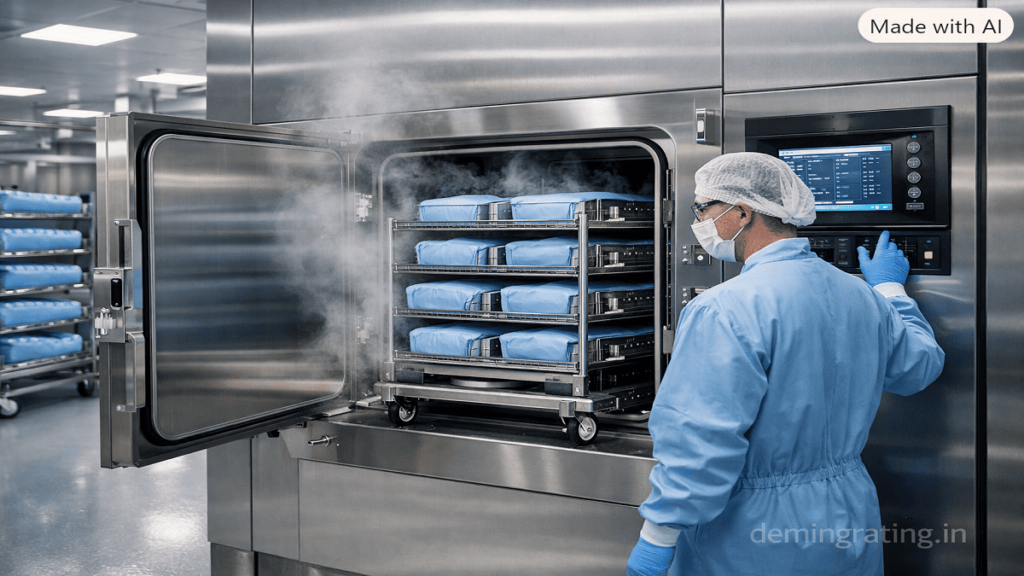
How Do Validation, Routine Testing, and Performance Monitoring Ensure Effective Sterilization?
Effective steam sterilization depends on more than running an autoclave at a specified temperature and pressure. Healthcare facilities must demonstrate that the sterilization process consistently achieves the required conditions and continues to perform reliably over time. Validation, routine testing, and performance monitoring work together to provide this assurance. In the context of large steam sterilizers, provides important requirements for evaluating sterilizer performance and verifying critical process parameters.
The Role of Sterilization Validation
Validation provides documented evidence that a sterilization process can consistently achieve its intended results. During validation, the sterilizer, selected cycle, load configuration, and operating conditions are evaluated under defined conditions. Critical parameters such as temperature, pressure, exposure time, steam quality, air removal, and load dryness are assessed.
A properly validated cycle demonstrates that steam can reach the required areas of the load and maintain appropriate sterilization conditions for the necessary exposure period. Validation is particularly important after installation, significant equipment modifications, or changes to sterilization processes.
Importance of Routine Testing
Routine testing confirms that a previously validated sterilizer continues to operate correctly. Tests such as the Bowie-Dick test evaluate air removal and steam penetration in applicable sterilizers, while air leakage testing helps identify problems with chamber integrity or vacuum performance.
Routine testing can detect deterioration before it causes sterilization failures. For example, a developing vacuum-system problem may affect air removal and subsequently prevent adequate steam penetration. Identifying such issues early allows corrective maintenance to be performed before patient-care instruments are compromised.
Continuous Performance Monitoring
Performance monitoring provides ongoing evidence that each sterilization cycle has operated within its specified parameters. Modern steam sterilizers record variables such as chamber temperature, pressure, exposure time, and cycle status. Reviewing these records helps operators identify abnormal cycles, equipment trends, or deviations from established requirements.
Monitoring also supports traceability and quality assurance. Cycle records can be associated with specific instrument loads, allowing facilities to investigate potential problems and demonstrate that appropriate sterilization controls were followed.
How These Three Processes Work Together
Validation establishes that the sterilization process is capable of achieving the required outcome. Routine testing checks that the sterilizer remains in suitable operating condition, while performance monitoring evaluates individual cycles and identifies deviations.
Together, they create a continuous quality-control system:
Validation → Routine Testing → Cycle Monitoring → Review → Corrective Action → Reassessment
This approach helps reduce the risk of ineffective sterilization and supports patient safety.
Conclusion
Validation, routine testing, and performance monitoring are complementary elements of a reliable steam sterilization program. Validation proves process capability, routine testing verifies equipment performance, and monitoring provides ongoing evidence that individual cycles meet established requirements. When these controls are properly implemented and documented, healthcare organizations can achieve greater confidence in sterilization effectiveness, regulatory compliance, and the safety of reusable medical devices.
#HealthcareSterilization
What Role Do Temperature, Pressure, Steam Quality, and Cycle Control Play in EN 285 Compliance?
Temperature, pressure, steam quality, and cycle control are fundamental to the safe and effective operation of large steam sterilizers. EN 285:2015+A1:2021 establishes requirements and relevant test methods for large steam sterilizers, primarily those used in healthcare for sterilizing medical devices and accessories. The standard applies to sterilizers designed to accommodate at least one sterilization module or having a chamber volume of at least 60 liters.
Temperature and Sterilization Effectiveness
Temperature is one of the most important parameters in steam sterilization because microorganisms are destroyed through exposure to moist heat for a defined period. therefore addresses temperature measurement, thermometric testing, and performance requirements to help establish that the sterilizer can achieve appropriate and sufficiently uniform temperatures within the chamber and test loads.
Accurate temperature measurement is essential because a chamber display alone does not demonstrate that every part of the load has received the required conditions. Thermometric testing helps identify temperature differences within the sterilizer and supports verification of process performance.
Pressure and Steam Conditions
Pressure is closely associated with the temperature of saturated steam. Maintaining the appropriate pressure-temperature relationship helps establish the intended sterilization environment. However, pressure by itself does not prove sterilization effectiveness. The steam must also reach the load effectively and remain in contact with its surfaces for the required exposure period.
EN 285 therefore includes requirements relating to pressure measurement, pressure changes, chamber pressure testing, and associated instrumentation. These controls help ensure that the sterilizer operates within its specified process conditions.
Importance of Steam Quality
High-quality steam is essential because non-condensable gases, excessive moisture, or superheated steam can interfere with heat transfer and steam penetration. specifically includes steam quality tests, including evaluation of relevant steam characteristics and contaminants.
Good steam quality allows efficient condensation on the load surface, transferring heat effectively. The standard therefore treats steam quality as an important component of overall sterilizer performance rather than simply relying on temperature and pressure readings.
Cycle Control and Monitoring
Cycle control ensures that critical stages such as air removal, steam admission, exposure, and drying occur in the correct sequence and under controlled conditions. addresses control systems as well as indicating and recording devices, allowing important process parameters to be monitored and documented.
Routine performance tests, including Bowie-Dick testing, air leakage testing, thermometric testing, and steam quality testing, provide additional evidence that the sterilizer continues to perform as intended.
Conclusion
Temperature, pressure, steam quality, and cycle control work together to establish reliable sterilization conditions. compliance is therefore not based on achieving one temperature or pressure value alone. It requires a combination of appropriate equipment design, accurate instrumentation, controlled cycles, steam quality, and performance testing. Together, these measures provide confidence that a large steam sterilizer is safe, reproducible, and suitable for its intended application.
Relevant External Resources
- BS EN 285:2015+A1:2021 – BSI
- BSI – Large Steam Sterilizer Requirements and Testing
- ISO – Guidance on Water Quality for Sterilizers
- ISO 11140-4 – Bowie-Dick Test Information
#Autoclave
What Are the Benefits of EN 285-Compliant Sterilization for Patient Safety, Quality Assurance, and Regulatory Compliance?
EN 285-compliant sterilization provides healthcare organizations with a structured framework for demonstrating that large steam sterilizers are safe, reliable, and suitable for their intended purpose. BS :2015+A1:2021 specifies requirements and relevant tests for large steam sterilizers primarily used in healthcare to sterilize medical devices and accessories. It applies to sterilizers designed to accommodate at least one sterilization module or having a chamber volume of at least 60 liters.
Improving Patient Safety
Patient safety is the primary objective of effective medical device sterilization. Reusable surgical instruments can carry microorganisms if they are inadequately cleaned or sterilized, potentially contributing to infection transmission. establishes performance and testing requirements that help demonstrate whether a large steam sterilizer can consistently provide appropriate sterilization conditions.
The standard addresses important aspects such as steam, air removal, pressure, temperature measurement, performance testing, control systems, and safety devices. Appropriate testing helps identify conditions that could compromise sterilization effectiveness before inadequately processed instruments are released for use.
For example, the Bowie-Dick test is used to assess steam penetration and adequate air removal in applicable sterilization processes. ISO explains that a successful Bowie-Dick test indicates sufficient air removal to facilitate rapid and even steam penetration into the test load.
Strengthening Quality Assurance
EN 285 supports a systematic approach to sterilizer quality assurance. Testing and documented performance verification provide objective evidence that equipment is functioning according to established requirements.
This is particularly valuable for sterile processing departments because sterilization performance must be maintained throughout the equipment’s operational life. Regular testing can help identify issues such as inadequate air removal, leakage, poor steam quality, or instrumentation problems. Early detection allows corrective action and maintenance to be initiated before equipment performance creates a greater risk.
EN 285 also supports confidence throughout the equipment lifecycle, including manufacture, installation, testing, maintenance, and quality assurance.
Supporting Regulatory Compliance
Compliance with can also contribute to regulatory and conformity-assessment activities. The current EN 285 version includes an updated Annex ZA describing its relationship with the General Safety and Performance Requirements of Regulation (EU) 2017/745 (Medical Device Regulation).
However, should not be viewed as a complete quality management system or as a substitute for all applicable regulatory requirements. Organizations may also need to apply other relevant standards, procedures, and national regulations depending on their equipment and intended use.
Conclusion
EN 285-compliant sterilization offers three major benefits: greater confidence in patient safety, stronger quality assurance, and support for regulatory compliance. By combining defined equipment requirements with standardized performance tests and safety controls, the standard helps healthcare organizations demonstrate that large steam sterilizers are fit for their intended purpose. Ultimately, implementing as part of a comprehensive sterilization quality system helps create a more consistent, traceable, and dependable approach to medical device reprocessing.
Relevant External Resources
- BS EN 285:2015+A1:2021 – BSI
- BSI – EN 285 Standard Information
- ISO – Bowie-Dick Steam Penetration Test Information
- ISO 17665:2024 – Moist Heat Sterilization
#MedicalDeviceSterilization
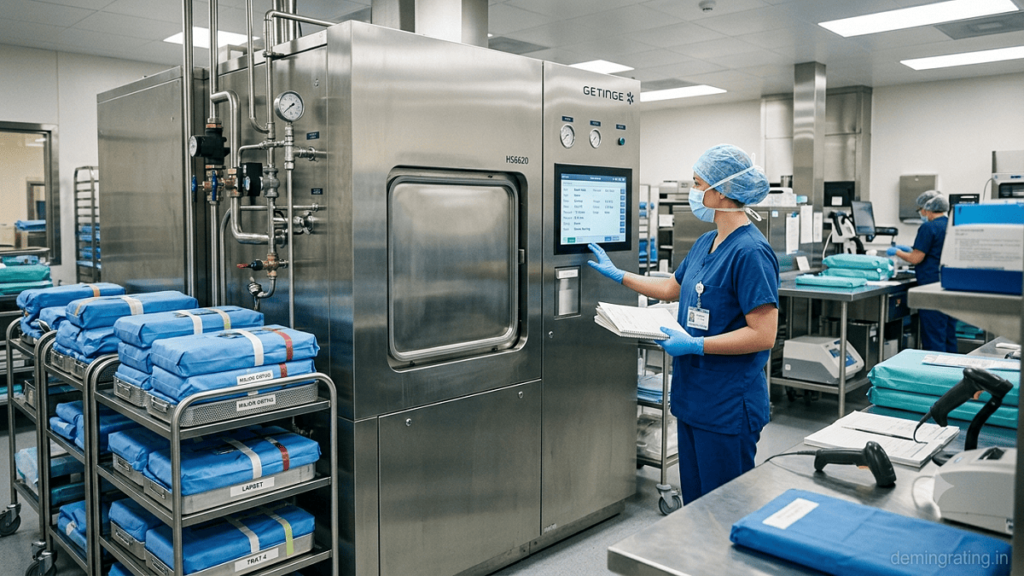
Case Study of EN 285 Sterilization: Improving Steam Quality and Sterilization Reliability
Introduction
provides requirements and relevant tests for large steam sterilizers primarily used in healthcare for sterilizing medical devices and their accessories. The current standard,:2015+A1:2021, applies to sterilizers designed to accommodate at least one sterilization module or having a chamber volume of at least 60 liters. It addresses important factors including steam quality, air removal, pressure, temperature measurement, control systems, performance testing, and safety.
A practical example of why these requirements matter can be seen in a published case study investigating steam quality at a hospital in São Paulo, Brazil. The study monitored steam quality between 2016 and 2022 using methodology based
The Challenge
The hospital identified concerns related to the quality of saturated steam supplied to its sterilization equipment. Steam containing excessive non-condensable gases, excessive condensate, or superheated steam can interfere with effective heat transfer and steam penetration.
Between 2016 and 2020, qualification testing found that the steam quality did not meet the applicable standard limits. This demonstrated that achieving the required sterilization temperature alone is not sufficient to establish reliable sterilization performance. Steam quality and the supporting infrastructure must also be controlled.
Corrective Actions
The hospital’s maintenance team implemented infrastructure improvements and introduced appropriate equipment to address the steam-quality problems. Preventive maintenance of the autoclaves was also strengthened. The sterilization equipment was subsequently subjected to qualification testing to verify that the corrective measures had produced the intended improvement.
By 2021, testing showed that the steam quality complied with the applicable technical requirements. Compliance was confirmed again during testing in 2022. The study reported that improvements in steam quality, preventive maintenance, equipment qualification, and verification contributed to greater sterilization-process safety and a reduction in wet packages.
Lessons from the Case Study
This case demonstrates several important principles of-based sterilization management:
First, steam quality matters. A sterilizer cannot be evaluated solely by its temperature and pressure readings. The quality of the steam itself can influence heat transfer and sterilization performance.
Second, qualification should be evidence-based. Testing provides objective evidence that corrective actions have restored the required performance.
Third, maintenance is part of sterilization assurance. Equipment and steam-generation infrastructure can deteriorate over time, making preventive maintenance essential.
Finally, routine monitoring supports continuous improvement. Repeated testing allows healthcare organizations to identify problems, implement corrective actions, and verify that improvements remain effective.
Conclusion
The case demonstrates how principles can be applied beyond initial sterilizer installation. When steam quality falls outside acceptable limits, organizations need to investigate the underlying infrastructure, implement corrective measures, perform qualification testing, and continue monitoring performance.
EN 285 therefore provides more than equipment specifications. Its requirements and testing framework help healthcare organizations establish a systematic approach to sterilizer performance, steam quality, maintenance, and quality assurance. When combined with appropriate validation and routine monitoring, this approach can improve the reliability and safety of steam sterilization processes.
Relevant External Resources
- BS EN 285:2015+A1:2021 – British Standards Institution
- AENOR – EN 285:2015+A1:2021 Standard Information
- Steam Quality Monitoring Study – American Journal of Infection Control
- Bowie-Dick Test Case Study – PubMed
#SterilizationValidation
White Paper: EN 285 Sterilization
Executive Summary
Steam sterilization is a fundamental process for preventing the transmission of microorganisms through reusable medical devices. For large steam sterilizers, EN 285:2015+A1:2021 establishes requirements and relevant tests intended primarily for healthcare applications. The standard applies to steam sterilizers designed to accommodate at least one sterilization module or having a chamber volume of at least 60 liters. It addresses equipment design, performance, testing, safety, instrumentation, control systems, and other factors that influence reliable sterilization.
EN 285 should be understood as part of a broader sterilization assurance framework. Process development, validation, and routine control are also addressed by standards such as ISO 17665:2024, which provides requirements for developing, validating, and routinely controlling moist-heat sterilization processes for medical devices.
1. Introduction to EN 285
Large steam sterilizers are commonly used in hospitals, central sterile services departments, laboratories, and medical-device production environments. Their purpose is to expose appropriately prepared loads to controlled moist heat so that microorganisms are effectively inactivated.
EN 285 provides a standardized framework for evaluating large steam sterilizers. The standard includes requirements and tests relating to areas such as steam, air removal, pressure, temperature measurement, leakage, control systems, recording instruments, safety devices, and performance testing.
The standard’s test loads are intended to represent commonly processed wrapped goods containing materials such as metal, rubber, and porous materials. Specialized loads, including heavy metal objects or long and narrow lumens, may require additional or different test approaches.
2. Why Steam Quality Matters
Effective saturated-steam sterilization depends on adequate contact between steam and the surfaces requiring sterilization. Air trapped within the chamber or load can interfere with steam penetration and heat transfer.
Steam quality is therefore an important consideration. Factors such as non-condensable gases, dryness, and superheat can affect the ability of steam to transfer heat effectively. incorporates relevant requirements and tests to evaluate sterilizer performance and steam-related characteristics.
This demonstrates why sterilization cannot be judged simply by observing a displayed chamber temperature. The overall process must be capable of delivering appropriate conditions throughout the intended load.
3. Temperature, Pressure, and Cycle Control
Temperature and pressure are closely related in saturated-steam sterilization. Accurate measurement and control of these parameters help establish whether the sterilizer has operated within its specified process conditions.
However, temperature and pressure readings alone do not demonstrate that every part of a load has been adequately exposed to steam. Air removal, steam penetration, exposure conditions, and appropriate load configuration must also be considered. therefore includes requirements for temperature-measuring instruments, pressure-related controls and tests, recording instruments, and control systems. These features provide objective information that can be used to evaluate sterilizer performance.
4. Validation and Performance Qualification
Validation establishes documented evidence that a defined sterilization process can achieve its intended result consistently. For a large steam sterilizer, this involves evaluating the equipment, selected cycle, load configuration, and critical process parameters.
Testing can include assessments of temperature distribution, air removal, steam quality, leakage, and other performance characteristics. Qualification should also consider the actual intended applications rather than assuming that successful testing with one load automatically validates every possible load.
ISO 17665:2024 provides the broader framework for development, validation, and routine control of moist-heat sterilization processes for medical devices. It emphasizes controlled and monitored processes designed to provide appropriate microbiological activity.
5. Routine Testing and Monitoring
After initial qualification, continued performance monitoring is essential. Sterilizers operate repeatedly and may experience changes caused by wear, maintenance activities, changes in steam supply, instrumentation problems, or other technical conditions.
Routine testing provides an opportunity to detect deterioration before it becomes a significant sterilization risk. Depending on the equipment and applicable procedures, testing may include air leakage, air removal and steam penetration, thermometric performance, steam quality, and other assessments.
Maintaining records of test results and cycle parameters also supports traceability and quality assurance.
6. Benefits for Healthcare Organizations
Implementing requirements as part of a comprehensive sterilization program can provide several important benefits:
Patient safety: Reliable sterilization reduces the risk associated with inadequately processed reusable medical devices.
Process consistency: Standardized testing provides objective evidence that sterilizer performance remains within established requirements.
Quality assurance: Documented test and cycle records support investigation, trend analysis, maintenance decisions, and process improvement.
Equipment reliability: Performance testing can identify technical problems that may otherwise remain unnoticed.
Regulatory support: Appropriate standards can support conformity and quality activities. The European Commission explains that harmonized standards, when their references are published in the Official Journal of the European Union, can provide a presumption of conformity with the relevant regulatory requirements.
7. EN 285 and ISO 17665: Complementary Roles
It is important not to treat EN 285 and ISO 17665 as interchangeable standards.
EN 285 focuses specifically on large steam sterilizers, including equipment requirements and relevant performance tests. ISO 17665:2024 provides requirements for the development, validation, and routine control of moist-heat sterilization processes for medical devices.
Together with applicable national regulations, quality-management requirements, manufacturer instructions, and facility procedures, these standards can contribute to a comprehensive sterilization assurance program.
8. Implementation Considerations
Organizations implementing an EN 285-based approach should begin by identifying the sterilizers, intended loads, applicable cycles, utilities, and regulatory requirements involved. Equipment should be appropriately installed and commissioned, followed by qualification and documented performance testing.
Personnel responsible for sterilization should understand the significance of critical parameters and know how to respond to failed or abnormal test results. Preventive maintenance, calibration, routine testing, documentation, and periodic reassessment should form part of the equipment lifecycle.
Importantly, compliance should not be reduced to obtaining a certificate or passing a single test. Effective sterilization assurance requires continuous control of the complete process.
Conclusion
EN 285 provides an important technical foundation for the safe and consistent operation of large steam sterilizers. Its requirements address critical elements including equipment design, steam characteristics, air removal, temperature and pressure measurement, control systems, safety, and performance testing.
The most effective approach is to integrate EN 285 requirements with a broader validated sterilization process based on applicable standards such as ISO 17665:2024. Through appropriate qualification, routine testing, monitoring, maintenance, and documentation, healthcare organizations can strengthen sterilization assurance and improve confidence in the safety and reliability of reusable medical-device processing.
Authoritative External Resources
- BSI – BS EN 285:2015+A1:2021, Large Steam Sterilizers
- AENOR – BS EN 285:2015+A1:2021 Standard Information
- ISO – ISO 17665:2024, Moist Heat Sterilization
- European Commission – Harmonised Standards for Medical Devices
#SteamSterilization
Industry Application of EN 285 Sterilization
EN 285 is an important European standard for the performance and testing of large steam sterilizers used primarily in healthcare. The current version, EN 285:2015+A1:2021, applies to sterilizers designed to accommodate at least one sterilization module or having a chamber volume of at least 60 liters. It provides requirements and relevant tests that help demonstrate whether large steam sterilizers are safe and fit for their intended purpose.
Healthcare and Hospitals
One of the most significant applications of EN 285 is in hospitals and central sterile services departments (CSSDs). Large steam sterilizers are used to process reusable surgical instruments, trays, wrapped medical devices, and other equipment that can withstand moist heat. EN 285 provides a framework for assessing sterilizer performance, including factors such as steam, air removal, temperature measurement, pressure, leakage, control systems, and performance testing.
In a hospital environment, reliable sterilization is essential because inadequately processed medical instruments can contribute to infection risks. Applying appropriate standards and validated processes helps sterile processing teams establish consistent procedures for preparing equipment for patient care.
Medical Device Manufacturing
EN 285 also has an application in the commercial production of medical devices. Manufacturers may use large steam sterilizers during production when their products are compatible with moist-heat sterilization. The standard specifically recognizes this application, although the actual sterilization process must also be appropriately developed and validated for the particular product and load.
For manufacturers, this can support controlled production processes and provide objective evidence about sterilizer performance. However, EN 285 does not by itself establish the complete sterilization validation requirements for every medical device.
Testing Laboratories and Service Organizations
Testing laboratories and organizations involved in sterilizer installation, qualification, maintenance, and performance verification also benefit from EN 285. The standard identifies relevant test methods and acceptance criteria that can be used to assess large sterilizers.
This makes EN 285 valuable during equipment commissioning, performance qualification, periodic testing, troubleshooting, and reassessment following significant maintenance or modifications.
Pharmaceutical and Laboratory Environments
Large steam sterilizers may also be found in laboratories and other controlled environments where reusable equipment and suitable materials require moist-heat sterilization. However, organizations should determine whether EN 285 is applicable to their specific equipment and process rather than assuming that every autoclave falls within its scope.
EN 285 excludes certain applications, including equipment intended to process biological waste or human tissues and equipment involving flammable or combustion-producing substances.
Integration With Sterilization Validation
EN 285 should be considered alongside other applicable standards. ISO 17665:2024, for example, establishes requirements for the development, validation, and routine control of moist-heat sterilization processes for medical devices. Using the appropriate standards together can provide a more comprehensive approach to process assurance.
Conclusion
EN 285 has practical applications across hospitals, sterile processing departments, medical device manufacturing, testing laboratories, and equipment service organizations. Its requirements help establish consistent expectations for large steam sterilizer design and performance testing. When combined with appropriate validation, maintenance, monitoring, and quality-management procedures, EN 285 can contribute to reliable sterilization processes and greater confidence in equipment performance.
Relevant External Resources
- BSI – BS EN 285:2015+A1:2021
- AENOR – EN 285:2015+A1:2021
- UNI – EN 285:2015+A1:2021
- ISO – ISO 17665:2024 Moist Heat Sterilization
#EN285
Ask FAQs
What is EN 285 sterilization?
EN 285 is a European standard that specifies requirements and relevant tests for large steam sterilizers, primarily those used in healthcare. It covers important aspects such as steam quality, temperature, pressure, air removal, performance testing, and safety.
Which sterilizers are covered by EN 285?
EN 285 primarily applies to large steam sterilizers designed to accommodate at least one sterilization module or having a chamber volume of at least 60 liters. It is commonly relevant to hospital and healthcare sterilization equipment.
Why is steam quality important under EN 285?
Steam quality directly affects heat transfer and steam penetration. Excessive non-condensable gases, unsuitable dryness, or superheated steam can interfere with effective sterilization. EN 285 therefore includes requirements and tests related to steam quality.
What tests are associated with EN 285 compliance?
Relevant testing can include air leakage testing, thermometric testing, steam quality assessment, load dryness testing, and air-removal and steam-penetration testing. These tests help demonstrate that the sterilizer continues to perform effectively.
Is EN 285 sufficient for complete sterilization validation?
No. EN 285 focuses on large steam sterilizer requirements and performance testing. A complete sterilization program may also require process development, validation, routine control, documentation, and other applicable standards, such as ISO 17665 for moist-heat sterilization of medical devices.
Disclaimer: This content is for general informational purposes only and should not be considered regulatory, medical, or professional advice. Always refer to the latest applicable standards, regulations, and manufacturer instructions before implementation.