Virtual Economy Funding
Virtual Economy Funding refers to the investment and capital allocation into digital-native economic systems that operate within virtual environments such as the metaverse, online gaming ecosystems, digital marketplaces, and blockchain-based virtual worlds. These economies are built on digital assets, virtual goods, in-game currencies, NFTs, and decentralized financial systems that simulate or extend real-world economic activity.
At its core, virtual economy funding supports the development of platforms where users can create, trade, and monetize digital assets. These ecosystems often include virtual real estate, avatars, digital fashion, gaming items, and interactive experiences. Investors provide funding to startups and platforms that build the infrastructure enabling these digital economies to function at scale.
A major driver of virtual economy funding is the growth of metaverse platforms and immersive digital environments. Companies developing 3D virtual worlds require significant capital to build graphics engines, networking infrastructure, user economies, and blockchain integration layers. These platforms aim to create persistent digital spaces where users can interact socially and economically in real time.
Another key area is gaming ecosystems, which represent one of the largest segments of the virtual economy. Modern games increasingly incorporate play-to-earn models, where users earn digital rewards that hold real-world value. Investment in this space supports game development studios, digital asset marketplaces, and blockchain-based gaming infrastructure.
Blockchain and NFT-based economies are also a central focus of virtual economy funding. NFTs enable ownership of unique digital assets such as art, collectibles, and in-game items. Funding in this area supports marketplaces, minting platforms, and decentralized trading systems that allow digital ownership to be verified and transferred securely.
Virtual economy funding also extends to creator economy platforms, where individuals monetize content, digital services, and virtual goods. Platforms that enable user-generated content, digital commerce, and subscription-based virtual services attract significant investment due to their scalable revenue models.
Another emerging segment is virtual real estate and digital infrastructure. Investors fund the development of virtual land, digital storefronts, event spaces, and advertising environments inside metaverse platforms. These assets can be leased, developed, and traded similarly to physical real estate, but within digital ecosystems.
Despite strong growth potential, virtual economy funding carries risks such as market volatility, regulatory uncertainty, platform dependency, and speculative bubbles in digital assets. The long-term sustainability of some virtual economies depends on user engagement and real utility rather than speculation alone.
Research from institutions such as McKinsey highlights that digital ecosystems and virtual economies are becoming increasingly integrated with real-world financial systems through blockchain and immersive technologies. McKinsey Digital Economy Insights
Similarly, the World Economic Forum notes that virtual economies and digital asset systems could play a major role in shaping future internet infrastructure and digital commerce models. World Economic Forum Digital Economy Insights
Overall, Virtual Economy Funding represents the financial backbone of emerging digital worlds, enabling the creation of immersive, asset-driven ecosystems where economic activity extends beyond the physical world into persistent virtual environments.
#Virtual Economy Funding in India
What is Virtual Economy Funding?
Virtual Economy Funding refers to the investment and financing of digital-native economic systems that exist inside virtual environments such as video games, metaverse platforms, and blockchain-based digital worlds. These economies are built entirely around virtual assets, digital currencies, and user-driven marketplaces where people can create, trade, and monetize digital goods and services.
In simple terms, it is the flow of capital into platforms that power online economies—such as gaming ecosystems, virtual reality spaces, NFT marketplaces, and creator-driven digital platforms. Investors fund these systems so they can develop infrastructure, user economies, and technologies that support large-scale digital interaction and commerce.
A key component of virtual economy funding is support for metaverse development. These are immersive 3D environments where users can interact socially and economically using avatars. Funding is used to build virtual land systems, digital identity tools, real-time rendering engines, and blockchain-based ownership layers.
Another major area is gaming economies, which represent one of the largest segments of virtual economies. Many modern games now include internal economies where players earn, buy, and sell virtual items. Funding supports game studios, in-game marketplaces, and reward systems like play-to-earn models where digital assets may have real-world value.
Virtual economy funding also supports blockchain-based digital assets, including NFTs (non-fungible tokens). These allow users to own unique digital items such as artwork, collectibles, virtual fashion, and in-game items. Investors fund platforms that enable minting, trading, and managing these assets securely.
Another important area is the creator economy, where individuals earn income from digital content, subscriptions, and virtual services. Funding helps build platforms that allow creators to monetize audiences through digital goods, memberships, and virtual experiences.
Additionally, virtual real estate is an emerging segment where investors fund digital land and infrastructure inside metaverse platforms. These virtual properties can be developed, rented, or sold, similar to physical real estate markets.
The main reason investors are interested in virtual economy funding is the potential for scalable digital markets with low production costs and global reach. However, risks include market volatility, regulatory uncertainty, and dependence on user adoption and engagement.
Research from McKinsey highlights that digital ecosystems and virtual economies are becoming increasingly important in the global economy as technology and immersive platforms evolve. McKinsey Digital Economy Insights
The World Economic Forum also notes that virtual economies could play a major role in shaping the future of digital commerce and online interaction systems. World Economic Forum Digital Economy Insights
Overall, virtual economy funding is the investment foundation that enables the growth of fully digital economic systems where value is created, exchanged, and owned entirely within virtual environments.
#Virtual Economy Funding in Maharashtra
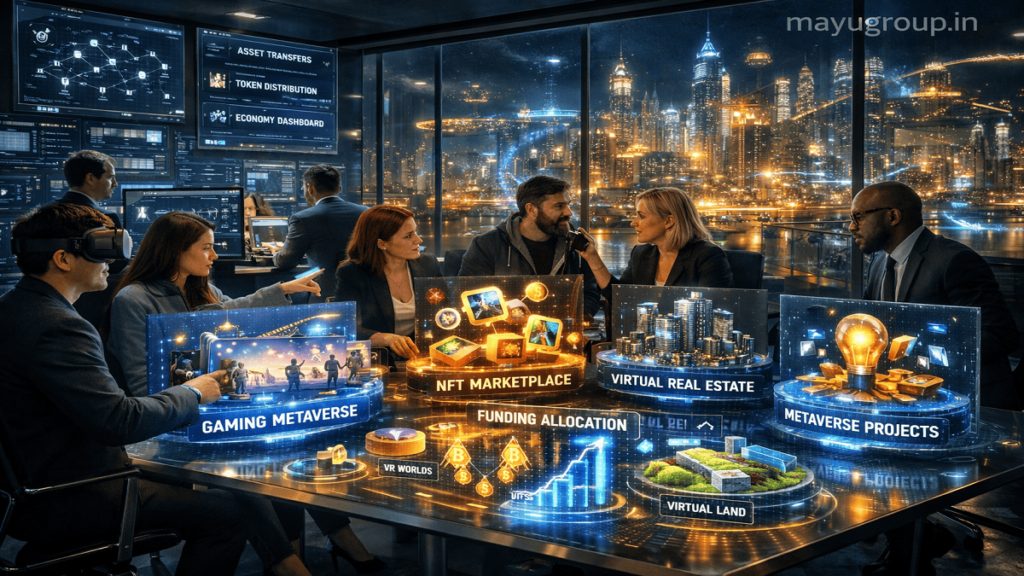
How does funding support virtual economies and digital worlds?
Funding plays a foundational role in building, scaling, and sustaining virtual economies and digital worlds by providing the capital required to develop infrastructure, design digital assets, attract users, and maintain economic activity within immersive online environments such as gaming platforms, metaverse ecosystems, and blockchain-based virtual spaces.
At the core level, funding supports technical infrastructure development. Virtual worlds require advanced systems such as real-time rendering engines, cloud computing infrastructure, server networks, and cross-platform connectivity. Building these systems is highly capital-intensive, and investment ensures that platforms can deliver seamless, large-scale interactive experiences to millions of users simultaneously.
Funding also enables the creation of digital assets and in-world economies. Virtual economies rely on items such as avatars, skins, virtual real estate, in-game currencies, and NFTs. Investment allows developers to design, mint, and integrate these assets into marketplaces where users can buy, sell, and trade them. This forms the backbone of economic activity in digital environments.
Another key area is platform and ecosystem expansion. Funding helps companies scale from early-stage virtual worlds into fully developed ecosystems with social spaces, commerce systems, gaming environments, and creator marketplaces. Without sustained capital, virtual economies struggle to maintain user engagement or expand content offerings.
A major function of funding is supporting the creator economy within virtual worlds. Developers invest in tools and platforms that allow users to create and monetize their own digital content, such as virtual clothing, game levels, experiences, and interactive assets. This user-generated content model increases engagement and helps sustain long-term economic activity.
Funding also drives user acquisition and network growth. Virtual economies depend heavily on active participation. Capital is used for marketing, partnerships, influencer collaborations, and incentives that attract users and encourage participation in digital marketplaces. A strong user base increases liquidity and value within virtual economies.
In blockchain-based virtual worlds, funding supports the development of decentralized economic systems, including smart contracts, tokenized assets, and decentralized marketplaces. These systems enable transparent ownership, automated transactions, and cross-platform interoperability of digital assets.
Another important role of funding is ensuring economic stability and sustainability. Virtual economies can be volatile, especially when driven by speculation. Investment helps stabilize platforms through liquidity programs, reward systems, and continuous content updates that maintain user engagement and prevent economic collapse.
Companies such as gaming studios, metaverse platforms, and blockchain infrastructure providers all rely on funding to maintain long-term development cycles. Without consistent investment, these ecosystems would struggle to evolve beyond early prototypes.
Research from McKinsey highlights that digital ecosystems are increasingly dependent on sustained investment to scale infrastructure and maintain user engagement across complex virtual environments. McKinsey Digital Economy Insights
The World Economic Forum also notes that virtual economies require strong investment frameworks to support interoperability, governance, and long-term digital value creation. World Economic Forum Digital Economy Insights
Overall, funding supports virtual economies by building infrastructure, enabling digital asset creation, expanding ecosystems, incentivizing users, and ensuring the long-term stability and scalability of digital worlds.
#Virtual Economy Funding in Ahemadabad
What types of projects exist in the virtual economy?
The virtual economy includes a wide range of digital-native projects that operate within online platforms, gaming ecosystems, metaverse environments, and blockchain-based networks. These projects are built around the creation, exchange, and monetization of digital assets and experiences, forming self-contained economic systems that mirror aspects of real-world markets.
1. Metaverse Platforms and Virtual Worlds
One of the largest categories includes immersive 3D virtual worlds and metaverse platforms. These projects focus on building persistent digital environments where users interact through avatars, socialize, attend events, and conduct economic activities. Funding supports world-building infrastructure, real-time rendering engines, and user interaction systems.
2. Blockchain-Based Virtual Economies
These projects use blockchain technology to create decentralized digital economies. They include smart contract systems, token-based currencies, and decentralized marketplaces. Users can own and trade digital assets such as virtual land, items, and collectibles with verifiable ownership records.
3. Play-to-Earn and Gaming Economies
Gaming is a major pillar of the virtual economy. Play-to-earn projects allow users to earn digital assets or tokens by participating in games. These economies include in-game currencies, reward systems, and NFT-based items that can be traded or sold. Investment supports game development studios, backend infrastructure, and reward mechanisms.
4. NFT Marketplaces and Digital Collectibles
NFT-based projects enable ownership of unique digital assets such as artwork, music, trading cards, and virtual goods. Marketplaces allow users to mint, buy, and sell these assets. Funding supports platform development, blockchain integration, and creator onboarding systems.
5. Virtual Real Estate and Digital Land
Virtual real estate projects involve the purchase, development, and monetization of digital land within metaverse environments. Users and investors can build virtual properties, host events, or lease digital spaces for advertising and commerce. These projects often mirror traditional real estate economics in a digital setting.
6. Creator Economy Platforms
These projects empower individuals to monetize digital content, experiences, and services. Creators can sell virtual goods, offer subscriptions, or build interactive experiences for users. Funding supports tools for content creation, monetization systems, and audience growth.
7. Virtual Commerce and Digital Marketplaces
These platforms focus on buying and selling digital goods and services, including avatars, skins, virtual fashion, and in-game items. They function as e-commerce systems within virtual environments, enabling microtransactions and peer-to-peer trading.
8. Social and Event-Based Virtual Platforms
These projects include virtual concert platforms, online conferences, digital classrooms, and social hubs. They enable large-scale digital gatherings where users can interact in real time. Funding is used for streaming infrastructure, spatial audio, and immersive experience design.
9. AI-Driven Virtual Agents and NPC Economies
An emerging category includes AI-powered characters and non-player systems that participate in virtual economies. These agents can trade, provide services, or interact with users autonomously, creating dynamic and evolving digital ecosystems.
Conclusion
The virtual economy consists of interconnected projects spanning metaverse environments, gaming ecosystems, blockchain networks, digital marketplaces, and creator platforms. Together, these projects form a rapidly evolving digital financial ecosystem where value is created, exchanged, and owned entirely in virtual spaces.
Research from McKinsey highlights that digital ecosystems are expanding rapidly as companies invest in immersive technologies and virtual platforms. McKinsey Digital Economy Insights
The World Economic Forum also notes that virtual economies and digital platforms are becoming key components of future internet infrastructure and global digital commerce systems. World Economic Forum Digital Economy Insights
#Virtual Economy Funding in Hyderabad
Why do investors participate in virtual economy funding?
Investors participate in virtual economy funding because it represents a rapidly expanding digital market where value is created through virtual worlds, gaming ecosystems, blockchain assets, and immersive online platforms. These environments are increasingly behaving like real economic systems, offering new opportunities for growth, diversification, and early-stage technological exposure.
1. Exposure to High-Growth Digital Markets
One of the main reasons investors enter the virtual economy is the potential for high growth. Virtual worlds, gaming ecosystems, and metaverse platforms are still in early development stages compared to traditional industries. This creates opportunities for early investors to benefit from long-term expansion as adoption increases globally.
2. Expanding Gaming and Digital Entertainment Industry
Gaming is one of the largest and fastest-growing segments of the digital economy. Investors fund game studios, play-to-earn ecosystems, and in-game marketplaces because these platforms generate continuous user engagement and recurring revenue through digital purchases, subscriptions, and asset trading.
3. Ownership of Digital Assets and NFTs
Virtual economy funding allows investors to participate in markets built around digital ownership. NFTs, virtual land, avatars, and in-game items represent tradable digital assets. These assets can appreciate in value based on demand, scarcity, and platform growth, creating speculative and strategic investment opportunities.
4. Monetization of User-Generated Content
A major driver is the rise of creator-driven economies. Platforms that allow users to build and monetize digital content—such as virtual experiences, skins, or interactive environments—create scalable revenue models. Investors see value in platforms that empower large creator ecosystems.
5. Early Access to Emerging Technologies
Virtual economy funding provides exposure to emerging technologies such as blockchain, augmented reality (AR), virtual reality (VR), and AI-driven digital environments. Investors are betting on the long-term integration of these technologies into everyday digital interaction and commerce.
6. Global and Borderless Market Opportunities
Unlike traditional industries, virtual economies operate globally without geographic restrictions. Users and investors from anywhere in the world can participate, which expands market size and liquidity potential significantly.
7. Network Effects and Platform Scalability
Virtual economy platforms often grow through network effects—more users attract more creators, which increases content, which in turn attracts more users. Investors are attracted to these scalable ecosystems because once adoption reaches critical mass, growth can accelerate rapidly.
8. Diversification of Investment Portfolios
Virtual economy assets provide diversification beyond traditional stocks, bonds, and real estate. Investors use this sector to gain exposure to digital-native industries that behave differently from traditional financial markets.
Conclusion
Investors participate in virtual economy funding because it combines high-growth potential, digital asset ownership, global scalability, and exposure to emerging technologies shaping the future of internet-based economies. While risks such as volatility, regulatory uncertainty, and platform dependency exist, the long-term opportunity for digital economic expansion continues to attract significant capital.
Research from McKinsey highlights that digital ecosystems are becoming central to future economic growth, driven by immersive technologies and platform-based models. McKinsey Digital Economy Insights
The World Economic Forum also emphasizes that virtual economies and digital platforms are likely to play a major role in shaping future global commerce and digital infrastructure. World Economic Forum Digital Economy Insights
#Virtual Economy Funding in Delhi
What risks are associated with virtual economy investments?
Virtual economy investments—covering metaverse platforms, gaming ecosystems, NFTs, digital assets, and blockchain-based virtual worlds—carry a distinct set of risks because they combine emerging technology, speculative markets, and rapidly evolving user behavior. While the sector offers high growth potential, it is also highly uncertain and sensitive to adoption trends, regulation, and platform stability.
1. Market Volatility and Speculation Risk
One of the biggest risks is extreme price volatility. Digital assets in virtual economies, such as NFTs, in-game currencies, or virtual land, often experience rapid price fluctuations driven more by speculation than intrinsic value. This can lead to sharp bubbles followed by significant corrections when investor sentiment changes.
2. Regulatory Uncertainty
Virtual economy investments operate in a relatively new regulatory environment. Many countries have not yet clearly defined how to classify digital assets, NFTs, or play-to-earn economies. Future regulations on taxation, securities classification, or digital ownership rights could significantly impact platform operations and investor returns.
3. Platform Dependency Risk
Most virtual economy assets exist within specific platforms or ecosystems. If a platform shuts down, loses popularity, or changes its rules, the value of associated digital assets can decline dramatically. This dependency on centralized or semi-centralized platforms creates significant risk for investors.
4. Liquidity Risk
Despite being digital, many virtual assets are not highly liquid. NFTs, virtual real estate, or niche in-game items may have limited buyers, making it difficult to sell assets quickly without reducing price. Low trading volume can trap capital in illiquid investments.
5. Technology and Security Risks
Virtual economy systems rely heavily on blockchain networks, smart contracts, and online platforms. Vulnerabilities such as hacking, smart contract bugs, phishing attacks, and wallet breaches can result in permanent loss of assets. Unlike traditional banking systems, recovery options are often limited.
6. Lack of Intrinsic Value
Many virtual assets derive value primarily from user demand rather than underlying physical or cash-flow-generating fundamentals. If user engagement drops, the perceived value of digital assets can decline rapidly, making valuation highly uncertain.
7. User Adoption and Demand Risk
Virtual economies depend heavily on active user participation. If platforms fail to attract or retain users, economic activity slows down, reducing asset demand and weakening entire ecosystems. Sustained engagement is critical for long-term viability.
8. Interoperability and Ecosystem Fragmentation
Many virtual worlds operate in isolated ecosystems, meaning assets cannot always be transferred across platforms. This lack of interoperability limits utility and can reduce long-term asset value.
Conclusion
Virtual economy investments carry a combination of financial, technological, and structural risks, including volatility, regulatory uncertainty, platform dependency, and security vulnerabilities. While they offer exposure to emerging digital markets, their long-term success depends heavily on sustained user adoption, technological stability, and clearer regulatory frameworks.
Research from McKinsey highlights that digital ecosystem investments are highly sensitive to platform dynamics and adoption cycles. McKinsey Digital Economy Insights
The World Economic Forum also notes that governance, interoperability, and regulatory clarity remain key challenges for scaling virtual economies globally. World Economic Forum Digital Economy Insights
#Virtual Economy Funding in Banglore
Case Study of Virtual Economy Funding
A leading real-world example of virtual economy funding is the growth of Roblox, a platform that has evolved from a simple online game environment into a large-scale virtual economy powered by users, creators, and investors. It demonstrates how sustained funding can build a scalable digital ecosystem where economic activity is entirely virtual but economically meaningful.
1. Background and Funding Evolution
Roblox began as a user-generated gaming platform where players could build and share games. Early-stage funding came from venture capital firms that recognized the potential of user-generated content as a scalable economic model. Over time, additional funding rounds supported infrastructure expansion, cloud scalability, and global user acquisition.
As the platform grew, it attracted institutional investment and eventually went public, further expanding capital availability to support its virtual economy.
2. Building the Virtual Economy
Funding was primarily used to develop the core infrastructure of the Roblox ecosystem, including:
- A game creation engine for users (developers)
- A virtual currency system (Robux)
- Marketplace systems for digital goods
- Cloud-based multiplayer infrastructure
- Safety and moderation tools for global users
This infrastructure allowed users not only to play games but also to create, monetize, and trade digital experiences.
3. Creator Economy and Monetization
A major outcome of virtual economy funding in Roblox is the creation of a strong creator economy. Developers build games and experiences, earning revenue through in-game purchases, subscriptions, and virtual item sales. Funding enabled tools that allow creators to scale their content production and reach global audiences.
This transformed Roblox into a platform where economic incentives drive creativity and engagement.
4. Role of Virtual Currency
Roblox introduced its internal currency, Robux, which acts as the backbone of its virtual economy. Users purchase Robux with real money and spend it on digital goods, experiences, and upgrades. Developers can convert earned Robux back into real-world currency, creating a real financial bridge between virtual and physical economies.
Funding supported the development of secure payment systems, fraud prevention mechanisms, and global transaction infrastructure.
5. Investor Value Creation
Investors were attracted to Roblox due to its strong network effects and scalable digital ecosystem. As more users joined, more creators built content, which attracted even more users. This self-reinforcing cycle increased platform value and long-term growth potential.
The platform also benefited from diversified revenue streams, including in-game purchases, developer monetization, and virtual advertising.
6. Risks and Challenges
Despite its success, Roblox faces several risks typical of virtual economy funding:
- Dependence on continuous user engagement
- Regulatory scrutiny around digital currencies and child safety
- Platform moderation and content control challenges
- Revenue concentration in creator incentives
These risks highlight the fragility of digital ecosystems if user participation declines or regulatory conditions change.
7. Market Impact
Roblox has become a blueprint for modern virtual economy platforms. It demonstrated that user-generated content combined with internal digital currency systems can create sustainable economic ecosystems at scale. This model has influenced other metaverse and gaming platforms exploring similar funding and monetization strategies.
Research from McKinsey highlights that platform-based digital ecosystems like Roblox are key examples of how virtual economies can generate scalable value through user participation and network effects. McKinsey Digital Economy Insights
The World Economic Forum also emphasizes that virtual economies are increasingly becoming integral to future digital infrastructure and creative economies. World Economic Forum Digital Economy Insights
8. Conclusion
The Roblox case study demonstrates how virtual economy funding can transform a digital platform into a self-sustaining economic ecosystem. Through investment in infrastructure, creator tools, and digital currency systems, it has enabled millions of users to participate in a global virtual economy where creativity, interaction, and commerce converge.
#Virtual Economy Funding in Pune
White Paper on Virtual Economy Funding
1. Executive Summary
Virtual Economy Funding refers to the investment and capital allocation into digital-native economic systems such as metaverse platforms, gaming ecosystems, blockchain-based virtual worlds, and creator economies. These systems enable users to create, trade, and monetize digital assets and experiences. This white paper examines the structure, funding mechanisms, benefits, risks, and long-term outlook of virtual economy investments as they evolve into a core segment of the digital financial landscape.
2. Introduction
The rise of immersive technologies, online gaming, and blockchain systems has enabled the development of virtual economies that operate independently yet interact with real-world financial systems. Platforms such as Roblox illustrate how digital ecosystems can evolve into large-scale economies driven by user participation, digital ownership, and platform-based monetization models.
Virtual economy funding provides the capital required to build and scale these systems.
3. Concept of Virtual Economy Funding
Virtual Economy Funding involves financial investment into platforms that support:
- Digital asset creation and trading
- Virtual goods and services marketplaces
- Gaming economies and play-to-earn systems
- Metaverse environments and virtual worlds
- Creator-driven monetization platforms
These ecosystems function as self-contained economies where value is created, exchanged, and stored digitally.
4. Funding Structure
4.1 Venture Capital Investment
Early-stage funding is provided by venture capital firms to build foundational infrastructure such as game engines, blockchain systems, and user marketplaces.
4.2 Corporate Investment
Large technology companies invest in virtual ecosystems to expand digital engagement and create new revenue streams.
4.3 Public Markets
Some platforms scale through public listings, allowing broader investor participation and long-term capital expansion.
4.4 Ecosystem Reinvestment
Revenue generated within virtual economies is often reinvested into platform development, user incentives, and content creation tools.
5. Key Applications of Virtual Economy Funding
5.1 Gaming and Interactive Entertainment
Funding supports game development studios, multiplayer infrastructure, and in-game economies.
5.2 Metaverse Platforms
Investment builds immersive 3D environments where users socialize, work, and trade digital assets.
5.3 Digital Asset Markets
Includes NFTs, virtual goods, avatars, and collectibles that are bought and sold in digital marketplaces.
5.4 Creator Economy Platforms
Supports monetization tools for content creators, enabling income from virtual goods and experiences.
5.5 Virtual Real Estate
Digital land and spaces are developed, leased, and monetized within virtual worlds.
6. Economic Benefits
- Scalable global user participation
- Low marginal cost of digital production
- New monetization models for creators
- High network effects and platform growth potential
- Borderless digital commerce systems
Virtual economies expand rapidly due to strong user engagement and network-driven value creation.
7. Risk Analysis
7.1 Market Volatility
Digital asset values can fluctuate significantly due to speculation and changing user demand.
7.2 Platform Dependency
Assets often depend on specific ecosystems, creating risk if platforms decline or shut down.
7.3 Regulatory Uncertainty
Governments are still defining legal frameworks for digital assets and virtual currencies.
7.4 Security Risks
Blockchain vulnerabilities, hacking, and account breaches can lead to asset loss.
7.5 Adoption Risk
Sustained value depends heavily on user engagement and long-term platform relevance.
8. Industry Outlook
Virtual economies are expected to grow as immersive technologies, blockchain infrastructure, and digital commerce systems mature. Platforms are increasingly integrating AI, AR/VR, and decentralized systems to enhance user experiences and economic activity.
Research from McKinsey highlights that digital ecosystems are becoming central to future economic growth, driven by platform-based and user-generated models. McKinsey Digital Economy Insights
The World Economic Forum notes that virtual economies may play a major role in shaping the future of digital infrastructure and online commerce systems globally. World Economic Forum Digital Economy Insights
9. Conclusion
Virtual Economy Funding is establishing the financial foundation for next-generation digital ecosystems where users create, own, and trade value entirely within virtual environments. While risks such as volatility and regulatory uncertainty remain, the long-term trajectory points toward deeper integration of virtual economies with global digital infrastructure, making them a significant component of future economic systems.
#Virtual Economy Funding in Kolkata
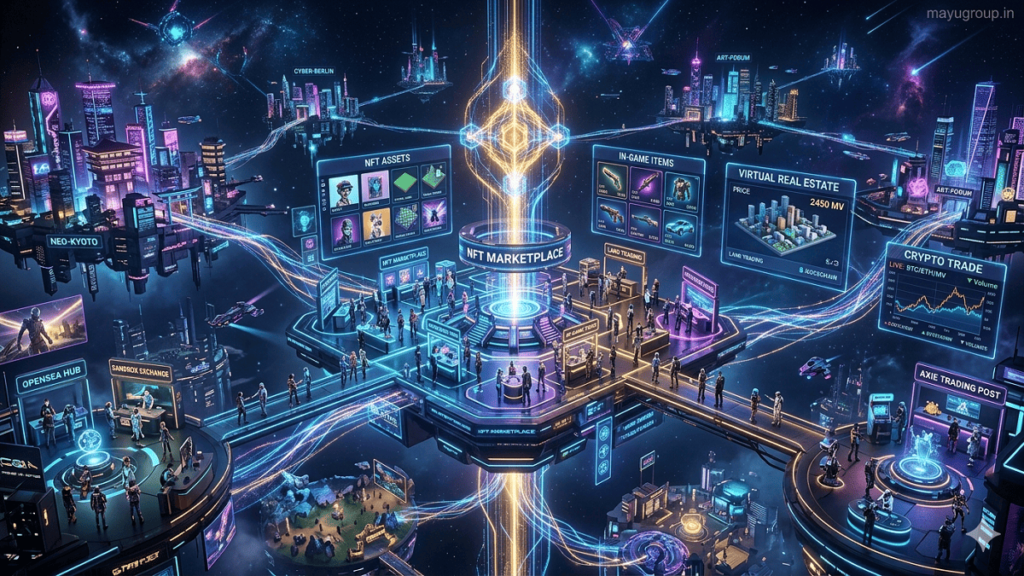
Industry Applications of Virtual Economy Funding
Virtual Economy Funding is driving the development of digital-native industries where value is created, exchanged, and monetized entirely within virtual environments such as gaming platforms, metaverse ecosystems, and blockchain-based digital economies. This funding supports infrastructure, content creation, digital asset systems, and user engagement models that power modern online economies.
1. Gaming and Interactive Entertainment
One of the largest applications is in the gaming industry. Virtual economy funding supports game development studios, multiplayer infrastructure, and in-game economic systems. Modern games include virtual currencies, skins, upgrades, and reward systems that function as real economic assets. Play-to-earn models and live-service games rely heavily on continuous investment to maintain content updates and user engagement.
2. Metaverse Platforms and Virtual Worlds
Funding is heavily used to build immersive metaverse environments where users interact socially, attend events, and conduct commerce. These platforms require large-scale investment in 3D rendering engines, spatial computing, identity systems, and virtual marketplaces. Economic activity in these worlds includes digital land ownership, virtual advertising, and event monetization.
3. Digital Asset Economies (NFTs and Virtual Goods)
Virtual economy funding supports ecosystems built around digital ownership, including NFTs, virtual fashion, collectibles, and in-game items. Marketplaces allow users to create, trade, and monetize digital assets securely. These systems enable true ownership of digital goods across platforms, forming the backbone of decentralized virtual economies.
4. Creator Economy Platforms
Creator-driven platforms are a major industry application. These systems allow individuals to monetize content, experiences, and digital services through subscriptions, virtual goods, and audience engagement. Funding supports tools for content creation, payment systems, and audience monetization infrastructure.
5. Virtual Real Estate and Digital Infrastructure
Virtual real estate is an emerging sector where users and investors buy, develop, and monetize digital land within metaverse environments. These spaces can be used for virtual stores, events, advertising, or social hubs. Funding enables the development of scalable digital property systems and marketplace infrastructure.
6. Virtual Commerce and E-Commerce Integration
Virtual economies are increasingly integrated with digital commerce systems. Funding supports platforms that enable buying and selling of digital goods such as avatars, skins, and virtual services. These systems mirror real-world e-commerce but operate entirely within digital environments.
7. Education and Virtual Training Environments
Educational institutions and companies are using virtual environments for immersive learning experiences. Funding supports virtual classrooms, simulation-based training, and interactive learning modules. These systems are widely used in professional training, healthcare simulations, and remote education.
8. Social Platforms and Virtual Events
Virtual economy funding also supports social platforms where users attend concerts, conferences, and networking events in digital spaces. These platforms monetize through ticketing, sponsorships, and virtual goods, creating new revenue models for entertainment and communication.
9. AI-Driven Virtual Economies
Emerging applications include AI-powered agents that participate in virtual economies. These systems can trade assets, interact with users, and generate content autonomously, adding dynamic economic activity within virtual environments.
Conclusion
Virtual Economy Funding enables a wide range of industries including gaming, metaverse platforms, digital asset markets, creator economies, education, and virtual commerce. It supports the infrastructure and innovation needed to build scalable digital ecosystems where economic activity is fully integrated into virtual environments.
Research from McKinsey highlights that digital ecosystems are becoming central to future economic growth through platform-based models and immersive technologies. McKinsey Digital Economy Insights
The World Economic Forum also notes that virtual economies are increasingly influencing global digital infrastructure and future commerce systems. World Economic Forum Digital Economy Insights
#Virtual Economy Funding in Mumbai
Ask FAQs
What is virtual economy funding?
Virtual economy funding refers to investment in digital ecosystems such as gaming platforms, metaverse worlds, blockchain-based economies, and creator platforms. It supports the development of virtual assets, digital currencies, and online marketplaces where users can create and trade value.
Why do investors fund virtual economies?
Investors fund virtual economies to gain exposure to high-growth digital markets, scalable platform businesses, and emerging technologies like gaming, blockchain, AR/VR, and AI. These ecosystems also benefit from strong network effects and global user participation.
What industries are supported by virtual economy funding?
Key industries include gaming and entertainment, metaverse platforms, digital asset marketplaces (NFTs), creator economy platforms, virtual real estate, e-commerce, education, and virtual events. These sectors rely on digital infrastructure and user-driven economies.
What are the main risks in virtual economy investments?
Major risks include market volatility, platform dependency, regulatory uncertainty, low liquidity of digital assets, cybersecurity threats, and uncertain long-term user adoption. Many virtual assets also lack intrinsic value beyond platform demand.
How do virtual economies generate revenue?
Virtual economies generate revenue through in-game purchases, digital asset trading, subscription models, virtual goods sales, advertising, event ticketing, and creator monetization systems. These revenue streams are powered by user engagement and digital ownership models.
Table of Contents
Disclaimer:
This content is for general informational and educational purposes only and does not constitute financial, investment, or legal advice. Readers should conduct their own research or consult a qualified professional before making any decisions.