Smart Mobility Funding
Smart Mobility Funding refers to the financial investment directed toward technologies, infrastructure, and services that enable efficient, connected, and sustainable transportation systems. It supports innovations that improve how people and goods move across cities and regions by integrating digital technologies, clean energy solutions, and intelligent transport systems. The goal is to create mobility networks that are faster, safer, more affordable, and environmentally sustainable.
At its core, smart mobility combines transportation with technologies such as artificial intelligence, Internet of Things (IoT), big data analytics, electric mobility, and autonomous systems. Funding in this sector helps develop electric vehicles (EVs), shared mobility platforms, smart traffic management systems, autonomous vehicles, and integrated public transport solutions.
Key Areas of Smart Mobility Funding
Investment in smart mobility is spread across several critical areas:
- Electric mobility infrastructure: Includes funding for electric vehicles, battery technologies, and charging station networks. Governments and private investors support EV adoption to reduce carbon emissions and dependence on fossil fuels.
- Autonomous and connected vehicles: Funding supports self-driving car technologies, vehicle-to-vehicle communication systems, and advanced driver-assistance systems (ADAS).
- Public transport modernization: Investments improve metro systems, electric buses, smart ticketing systems, and real-time transit tracking platforms.
- Shared mobility services: Ride-sharing, bike-sharing, and micro-mobility platforms receive funding to reduce traffic congestion and improve urban mobility efficiency.
- Smart traffic and infrastructure systems: AI-powered traffic signals, predictive congestion management, and digital road monitoring systems are key focus areas.
Why Smart Mobility Funding is Important
Smart mobility is driven by rapid urbanization, increasing traffic congestion, and rising environmental concerns. Cities worldwide are seeking solutions to reduce pollution, improve transport efficiency, and enhance commuter experience. Funding enables research, development, and large-scale deployment of innovative mobility systems.
Governments also play a major role by offering subsidies, tax incentives, and public-private partnerships to accelerate adoption. At the same time, venture capital firms invest in startups developing disruptive mobility technologies.
Challenges in Smart Mobility Investment
Despite strong growth potential, smart mobility funding faces challenges such as high infrastructure costs, regulatory uncertainty, cybersecurity risks, and integration issues between old and new transport systems. Additionally, widespread adoption requires behavioral change and strong policy support.
Conclusion
Smart Mobility Funding is a critical driver of future transportation systems, enabling the transition toward cleaner, smarter, and more connected mobility networks. By supporting innovation in electric vehicles, autonomous systems, and intelligent infrastructure, it plays a key role in shaping sustainable urban development and global transportation efficiency.
Further Reading
- https://www.iea.org/reports/global-ev-outlook-2024
- https://www.worldbank.org/en/topic/transport
- https://www.weforum.org/agenda/archive/smart-mobility/
- https://transport.ec.europa.eu/transport-themes/smart-mobility_en
#Smart Mobility Funding in India
What is smart mobility funding?
Smart Mobility Funding refers to the allocation of financial resources—by governments, private investors, and institutions—toward technologies and infrastructure that improve transportation systems using digital intelligence, automation, and clean energy solutions. It supports the development of mobility systems that are more efficient, connected, sustainable, and user-friendly.
At its foundation, smart mobility integrates transportation with advanced technologies such as artificial intelligence (AI), Internet of Things (IoT), cloud computing, big data analytics, and electrification. Funding in this sector helps build and scale innovations like electric vehicles (EVs), autonomous vehicles, smart public transport systems, and digital mobility platforms.
Core Purpose of Smart Mobility Funding
The primary goal of smart mobility funding is to transform traditional transport systems into intelligent networks that reduce congestion, lower emissions, and improve accessibility. This is especially important in rapidly urbanizing regions where traffic demand is increasing faster than infrastructure development.
By investing in smart mobility, stakeholders aim to:
- Reduce carbon emissions through electric and shared transportation
- Improve traffic efficiency using real-time data and AI systems
- Enhance safety through automation and driver-assistance technologies
- Increase accessibility through integrated mobility services
Key Areas of Investment
Smart mobility funding is distributed across several major segments:
- Electric mobility: Includes electric cars, buses, two-wheelers, and charging infrastructure development.
- Autonomous and connected vehicles: Supports self-driving technologies, sensor systems, and vehicle-to-everything (V2X) communication.
- Public transport modernization: Funds smart metro systems, electric buses, and digital ticketing platforms.
- Shared mobility services: Ride-hailing, car-sharing, and micro-mobility solutions like e-scooters and bike-sharing systems.
- Smart infrastructure: AI-based traffic management, smart signals, and predictive transportation systems.
Role of Governments and Investors
Governments play a major role in smart mobility funding through subsidies, policy frameworks, and infrastructure development programs. Private investors, including venture capital and corporate funds, support startups developing disruptive mobility technologies. Public-private partnerships are also common, especially for large-scale infrastructure projects.
Challenges
Despite strong growth potential, smart mobility funding faces challenges such as high capital requirements, regulatory uncertainty, cybersecurity risks, and integration issues between legacy transport systems and new technologies. Additionally, adoption depends heavily on public acceptance and policy support.
Conclusion
Smart mobility funding is a key driver of the future transportation ecosystem. It enables the shift toward cleaner, smarter, and more efficient mobility systems by supporting innovations in electric vehicles, autonomous transport, and intelligent infrastructure. As cities continue to grow, smart mobility investment will play a crucial role in shaping sustainable urban development.
Further Reading
- https://www.iea.org/reports/global-ev-outlook-2024
- https://www.worldbank.org/en/topic/transport
- https://www.weforum.org/agenda/archive/smart-mobility/
- https://transport.ec.europa.eu/transport-themes/smart-mobility_en
#Smart Mobility Funding in Ahemadabad
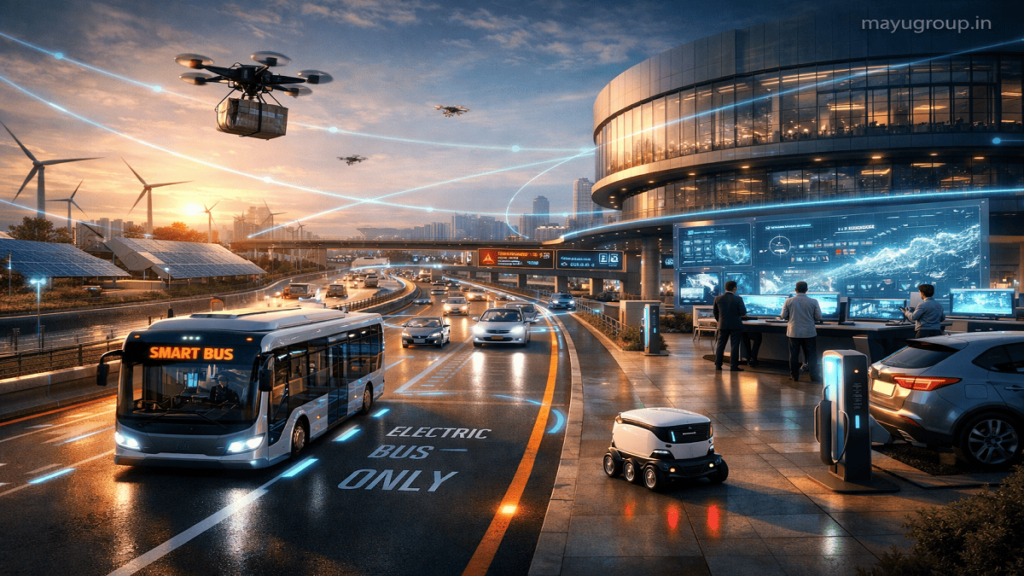
How does smart mobility funding support transportation innovation?
Smart mobility funding plays a crucial role in accelerating transportation innovation by providing financial support for the development, testing, and scaling of advanced mobility technologies. It enables the transformation of traditional transport systems into intelligent, data-driven, and sustainable networks that improve efficiency, safety, and environmental performance.
1. Enabling Research and Development
One of the primary ways smart mobility funding supports innovation is by financing research and development (R&D). Transportation technologies such as electric vehicles, autonomous driving systems, and smart traffic management require extensive experimentation, prototyping, and testing. Funding from governments, venture capital firms, and private investors allows engineers and startups to develop new mobility solutions without immediate commercial pressure.
For example, research into battery efficiency, AI-based navigation, and sensor technologies depends heavily on sustained financial support before these innovations can be commercially viable.
2. Supporting Electric Mobility Expansion
Smart mobility funding accelerates the adoption of electric vehicles (EVs) by supporting battery innovation, charging infrastructure, and large-scale production. Investments help reduce costs and improve performance, making EVs more accessible to consumers and businesses. This also encourages innovation in renewable energy integration for transport systems.
3. Advancing Autonomous and Connected Vehicles
Funding is essential for developing autonomous and connected vehicle technologies. These systems rely on artificial intelligence, machine learning, sensors, and vehicle-to-everything (V2X) communication networks. Investment supports real-world testing environments such as smart cities and pilot projects, which are critical for improving safety and reliability before widespread deployment.
4. Modernizing Public Transportation Systems
Smart mobility funding improves public transportation by enabling the development of electric buses, metro automation systems, and digital ticketing platforms. Real-time tracking, predictive maintenance, and AI-based scheduling systems enhance efficiency and reduce operational costs. This leads to more reliable and user-friendly transport services.
5. Encouraging Shared and On-Demand Mobility
Investment in shared mobility platforms such as ride-hailing, car-sharing, and micro-mobility services supports innovation in urban transport efficiency. These systems reduce traffic congestion, lower emissions, and optimize vehicle usage. Funding allows startups to scale digital platforms and integrate advanced analytics for better service delivery.
6. Developing Smart Infrastructure
Smart mobility funding also supports infrastructure innovation, including AI-powered traffic management systems, smart signals, and connected road networks. These technologies use real-time data to reduce congestion, improve traffic flow, and enhance road safety. Integration of IoT devices and cloud computing further strengthens transportation intelligence.
Conclusion
Smart mobility funding is a key enabler of transportation innovation. It supports advancements in electric vehicles, autonomous systems, public transport modernization, shared mobility, and smart infrastructure. By reducing financial barriers and encouraging experimentation, it helps transform traditional transport systems into efficient, sustainable, and technology-driven mobility ecosystems.
Further Reading
- https://www.iea.org/reports/global-ev-outlook-2024
- https://www.worldbank.org/en/topic/transport
- https://www.weforum.org/agenda/archive/smart-mobility/
- https://transport.ec.europa.eu/transport-themes/smart-mobility_en
#Smart Mobility Funding in Maharashtra
What types of projects are included in smart mobility funding?
Smart mobility funding supports a wide range of transportation-related projects that integrate digital technology, electrification, automation, and data analytics to improve how people and goods move. These projects aim to create safer, cleaner, and more efficient transport systems, especially in rapidly urbanizing regions.
1. Electric Vehicle (EV) and Charging Infrastructure Projects
A major category of smart mobility funding is electric mobility. This includes projects focused on developing electric cars, buses, two-wheelers, and commercial fleets. Funding is also directed toward building EV charging stations, battery-swapping networks, and fast-charging infrastructure. These projects reduce dependence on fossil fuels and support the transition to low-emission transport systems.
2. Autonomous and Connected Vehicle Projects
Smart mobility funding supports research and deployment of autonomous vehicles (self-driving cars) and connected vehicle systems. These projects involve artificial intelligence, machine learning, sensors, and vehicle-to-everything (V2X) communication. Pilot programs in smart cities are often funded to test safety, navigation accuracy, and real-world performance before commercial rollout.
3. Smart Public Transportation Projects
Public transport modernization is another key area. Funding supports electric buses, metro automation systems, real-time tracking applications, and digital ticketing platforms. These projects improve efficiency, reduce waiting times, and enhance commuter experience. Integration of AI-based scheduling and predictive maintenance systems is also a growing focus.
4. Shared and Micro-Mobility Projects
Smart mobility funding supports shared transportation systems such as ride-hailing services, car-sharing platforms, bike-sharing programs, and electric scooter networks. These projects aim to reduce traffic congestion, optimize vehicle usage, and provide flexible transportation options for urban populations.
5. Smart Traffic Management Systems
A significant portion of funding is directed toward intelligent traffic control systems. These include AI-powered traffic signals, congestion prediction tools, and real-time traffic monitoring systems. Such projects use sensors, cameras, and data analytics to improve traffic flow and reduce travel time in cities.
6. Mobility-as-a-Service (MaaS) Platforms
MaaS projects integrate multiple transportation options into a single digital platform. Users can plan, book, and pay for different modes of transport—such as buses, trains, taxis, and bike-sharing—through one application. Funding supports the development of these platforms and their integration with public and private transport systems.
7. Smart Infrastructure and Urban Mobility Projects
Smart mobility funding also supports infrastructure innovation such as connected roads, smart parking systems, and IoT-enabled transport networks. These projects improve urban planning, reduce congestion, and enhance safety through real-time data sharing between vehicles and infrastructure.
Conclusion
Smart mobility funding covers diverse projects including electric mobility, autonomous vehicles, smart public transport, shared mobility systems, traffic management, MaaS platforms, and intelligent infrastructure. Together, these initiatives are transforming traditional transportation systems into efficient, sustainable, and technology-driven mobility ecosystems.
Further Reading
- https://www.iea.org/reports/global-ev-outlook-2024
- https://www.worldbank.org/en/topic/transport
- https://www.weforum.org/agenda/archive/smart-mobility/
- https://transport.ec.europa.eu/transport-themes/smart-mobility_en
#Smart Mobility Funding in Hyderabad
Why do investors support smart mobility solutions?
Investors support smart mobility solutions because they sit at the intersection of several powerful global trends: rapid urbanization, climate change mitigation, digital transformation, and the shift toward cleaner and more efficient transportation systems. Smart mobility includes electric vehicles, autonomous transport, shared mobility platforms, and intelligent infrastructure, all of which are reshaping the future of transportation.
1. Large and Expanding Market Opportunity
One of the main reasons investors are attracted to smart mobility is the massive market size. Transportation is a multi-trillion-dollar global industry, and it is undergoing a structural transformation. Electric vehicles, mobility services, and smart infrastructure are replacing traditional fossil-fuel-based systems. Investors see long-term growth potential as demand increases for cleaner, more efficient transport solutions across cities and countries.
2. Strong Push Toward Sustainability
Environmental concerns are a major driver of investment. Governments and corporations are committed to reducing carbon emissions, and transportation is one of the largest contributors to global greenhouse gases. Smart mobility solutions, especially electric vehicles and shared transport systems, directly support decarbonization goals. This makes the sector highly attractive for ESG (Environmental, Social, Governance) investors focused on sustainability and climate impact.
Reference: https://www.iea.org/reports/global-ev-outlook-2024
3. Technological Disruption and Innovation
Smart mobility is powered by advanced technologies such as artificial intelligence, machine learning, Internet of Things (IoT), and big data analytics. These technologies enable innovations like autonomous driving, predictive traffic management, and Mobility-as-a-Service (MaaS) platforms. Investors are drawn to the disruptive potential of these technologies, which can fundamentally reshape transportation systems and create new business models.
4. Government Support and Policy Incentives
Governments worldwide are actively supporting smart mobility through subsidies, tax incentives, infrastructure investment, and regulatory frameworks. Public-private partnerships are common in areas such as electric vehicle charging networks and smart city projects. This policy support reduces investment risk and encourages private capital inflow into the sector.
5. High Scalability and Global Adoption Potential
Smart mobility solutions are highly scalable and can be deployed across multiple geographies. For example, ride-sharing platforms, EV charging networks, and traffic management systems can expand rapidly once established. This scalability increases the potential return on investment for early-stage backers.
6. Strong Consumer Demand Shift
Consumer preferences are shifting toward convenience, affordability, and sustainability. People increasingly prefer shared mobility services, electric vehicles, and app-based transport solutions. This demand-driven growth further strengthens investor confidence in the sector.
Conclusion
Investors support smart mobility solutions because they offer a unique combination of strong market growth, sustainability alignment, technological innovation, government backing, and scalable business models. Although challenges such as infrastructure costs and regulatory complexity remain, the long-term potential of transforming global transportation systems makes smart mobility a highly attractive investment sector.
Further Reading
- https://www.iea.org/reports/global-ev-outlook-2024
- https://www.worldbank.org/en/topic/transport
- https://www.weforum.org/agenda/archive/smart-mobility/
- https://transport.ec.europa.eu/transport-themes/smart-mobility_en
#Smart Mobility Funding in Delhi
What challenges exist in smart mobility financing?
Smart mobility financing faces several structural, financial, technological, and regulatory challenges due to the complexity of transforming traditional transportation systems into digitally connected, electrified, and automated networks. While investor interest is strong, the path to profitable and scalable deployment remains difficult.
1. High Capital Requirements
One of the biggest challenges is the extremely high upfront investment needed for smart mobility projects. Electric vehicle (EV) infrastructure, autonomous vehicle development, smart traffic systems, and urban transit modernization require significant capital expenditure. Building charging networks, upgrading road infrastructure, and deploying sensors and communication systems can take years and billions in funding before generating returns.
2. Long Payback Periods
Smart mobility projects typically have long gestation periods. Technologies such as autonomous vehicles and integrated mobility platforms require extensive testing, regulatory approvals, and infrastructure readiness before commercialization. This delays revenue generation and increases financial risk for investors seeking shorter-term returns.
3. Regulatory Uncertainty
The smart mobility sector is heavily influenced by government policies and regulations. Laws related to autonomous driving, data privacy, emissions standards, and transportation safety vary widely across regions and are still evolving. Sudden policy changes or unclear regulatory frameworks can delay projects or increase compliance costs, making financing riskier.
Reference: https://www.iea.org/reports/global-ev-outlook-2024
4. Technology Integration Challenges
Smart mobility systems rely on integrating multiple technologies such as AI, IoT, cloud computing, and telecom networks. Ensuring seamless communication between vehicles, infrastructure, and digital platforms is complex. Technical failures, cybersecurity risks, and interoperability issues can increase development costs and reduce investor confidence.
5. Infrastructure Dependency
Many smart mobility solutions require existing infrastructure upgrades or entirely new systems. For example, EV adoption depends on widespread charging networks, while autonomous vehicles require smart roads and high-quality mapping systems. Lack of infrastructure readiness slows adoption and creates financing bottlenecks.
6. Market Adoption and Behavioral Barriers
Even when technology is available, user adoption may be slow. Consumers and businesses may resist switching from traditional transport systems due to cost concerns, lack of trust in autonomous systems, or limited accessibility. This uncertainty affects demand forecasts and investment decisions.
7. Fragmented Ecosystem
Smart mobility involves multiple stakeholders, including governments, private companies, transport operators, and technology providers. Coordination challenges between these entities often lead to delays, inefficiencies, and funding gaps. Lack of standardization further complicates large-scale implementation.
Conclusion
Smart mobility financing is challenged by high capital intensity, long payback periods, regulatory uncertainty, technological complexity, infrastructure dependency, and fragmented ecosystems. While the sector holds strong long-term potential, investors must carefully manage risk and adopt a patient, long-term approach to realize returns from smart mobility transformation.
Further Reading
- https://www.iea.org/reports/global-ev-outlook-2024
- https://www.worldbank.org/en/topic/transport
- https://www.weforum.org/agenda/archive/smart-mobility/
- https://transport.ec.europa.eu/transport-themes/smart-mobility_en
#Smart Mobility Funding in Banglore

Case Study of Smart Mobility Funding
A strong example of smart mobility funding can be seen in the growth of Uber, a global ride-hailing platform that transformed urban transportation through digital technology, data-driven systems, and shared mobility models. Uber illustrates how large-scale investment in smart mobility can reshape traditional transport industries and create entirely new economic ecosystems.
Background and Concept
Uber was founded with the idea of using a smartphone-based platform to connect passengers with drivers in real time. This Mobility-as-a-Service (MaaS) model replaced traditional taxi systems with a flexible, app-driven transport network. The innovation relied on GPS, mobile internet, data analytics, and dynamic pricing algorithms to optimize ride availability and efficiency.
Role of Investment in Growth
Smart mobility funding played a critical role in Uber’s rapid expansion. The company received billions of dollars in venture capital and private equity funding from global investors who recognized the potential of disrupting traditional transportation systems. These investments were used to:
- Expand operations across multiple countries
- Develop and improve the mobile platform
- Build data infrastructure for route optimization
- Subsidize early rides to increase user adoption
Without sustained financial backing, Uber would not have been able to scale globally at such a rapid pace, especially in its early years when profitability was limited.
Reference: https://www.worldbank.org/en/topic/transport
Innovation in Smart Mobility
Uber introduced several key innovations that define modern smart mobility:
- Real-time ride matching using algorithms
- Cashless digital payment systems
- Dynamic pricing based on demand and supply
- Data-driven route optimization
- Shared ride services to reduce travel costs and congestion
These innovations improved transportation efficiency while creating a scalable digital platform model that could be replicated in cities worldwide.
Challenges and Risks
Despite its success, Uber’s journey also highlights key challenges in smart mobility financing:
- Regulatory resistance from traditional taxi industries
- Legal restrictions in multiple countries
- High operational costs and long periods of unprofitability
- Labor classification disputes with drivers
- Dependence on continuous investor funding during early growth stages
These challenges demonstrate that smart mobility startups often require long-term capital commitment and strong regulatory navigation strategies.
Impact on the Industry
Uber’s success encouraged global investment in similar smart mobility platforms such as ride-sharing, micro-mobility, and Mobility-as-a-Service systems. It also accelerated government interest in regulating and integrating digital transport platforms into urban planning strategies.
Conclusion
The Uber case study shows how smart mobility funding can transform transportation through technology-driven platforms and large-scale investment. While the model delivers high scalability and market disruption, it also involves regulatory, financial, and operational risks. Overall, it highlights the importance of sustained funding and strategic innovation in building successful smart mobility ecosystems.
Further Reading
- https://www.worldbank.org/en/topic/transport
- https://www.iea.org/reports/global-ev-outlook-2024
- https://www.weforum.org/agenda/archive/smart-mobility/
- https://transport.ec.europa.eu/transport-themes/smart-mobility_en
#Smart Mobility Funding in Pune
White Paper of Smart Mobility Funding
1. Executive Summary
Smart Mobility Funding refers to capital investment directed toward transportation systems that integrate digital technologies, electrification, automation, and data analytics to improve efficiency, sustainability, and accessibility. These investments are transforming traditional mobility infrastructure into intelligent, interconnected ecosystems. The sector includes electric vehicles (EVs), autonomous transport systems, shared mobility platforms, and smart urban infrastructure. Governments, venture capital firms, and institutional investors are increasingly prioritizing smart mobility due to its alignment with climate goals, urbanization challenges, and digital transformation trends.
2. Sector Overview
Smart mobility is a convergence of transportation and advanced technologies such as artificial intelligence (AI), Internet of Things (IoT), cloud computing, and big data analytics. Funding in this sector supports innovations like EV charging networks, autonomous driving systems, Mobility-as-a-Service (MaaS) platforms, smart traffic management systems, and digital public transport infrastructure.
Global transportation accounts for a significant share of carbon emissions, driving strong policy and investment interest in cleaner alternatives. According to international energy assessments, electrification and smart transport systems are key pillars of decarbonizing mobility systems worldwide.
Reference: https://www.iea.org/reports/global-ev-outlook-2024
3. Investment Rationale
Smart mobility funding is driven by several macroeconomic and technological trends:
- Rapid urbanization and rising traffic congestion
- Global transition toward electric and low-emission transport
- Digitalization of transport systems through AI and IoT
- Increasing demand for efficient, on-demand mobility services
- Government incentives and climate policies supporting clean transport
These factors create a large, expanding market opportunity with long-term growth potential.
4. Funding Ecosystem
The smart mobility ecosystem is supported by multiple funding sources:
- Venture capital and private equity in mobility startups
- Corporate investment from automotive and technology companies
- Government subsidies and infrastructure development programs
- Public-private partnerships for large-scale transport projects
- ESG and climate-focused investment funds
This diversified funding structure helps accelerate innovation while sharing risk across stakeholders.
5. Key Challenges
Despite strong growth prospects, smart mobility funding faces several challenges:
- High infrastructure and technology development costs
- Long payback and commercialization timelines
- Regulatory uncertainty across regions
- Integration challenges between legacy and modern systems
- Cybersecurity and data privacy risks in connected transport systems
These challenges require long-term capital commitment and coordinated policy support.
6. Strategic Outlook
Smart mobility is expected to become a foundational element of future urban development. Continued investment will drive the expansion of electric mobility, autonomous systems, and integrated transport platforms. As cities adopt smarter infrastructure, the sector will play a critical role in reducing emissions and improving transportation efficiency.
7. Conclusion
Smart mobility funding is a key enabler of next-generation transportation systems. It supports innovation across vehicles, infrastructure, and digital platforms, creating more sustainable and efficient mobility networks. While risks remain due to cost, regulation, and complexity, the long-term potential of transforming global transportation makes it a strategically important investment sector.
Further Reading
- https://www.iea.org/reports/global-ev-outlook-2024
- https://www.worldbank.org/en/topic/transport
- https://www.weforum.org/agenda/archive/smart-mobility/
- https://transport.ec.europa.eu/transport-themes/smart-mobility_en
#Smart Mobility Funding in Kolkata
Industry Application of Smart Mobility Funding
Smart Mobility Funding supports a wide range of industries by financing technologies that make transportation systems more efficient, sustainable, and intelligent. These investments integrate digital platforms, electrification, automation, and data analytics to transform how people and goods move across cities, regions, and global supply chains.
1. Automotive and Electric Vehicle Industry
One of the primary beneficiaries of smart mobility funding is the automotive sector, especially electric vehicles (EVs). Funding supports the development of EVs, battery technologies, charging infrastructure, and energy management systems. It also accelerates innovation in vehicle design, lightweight materials, and energy-efficient propulsion systems. This transition is essential for reducing dependence on fossil fuels and lowering transportation-related emissions.
Reference: https://www.iea.org/reports/global-ev-outlook-2024
2. Public Transportation Systems
Smart mobility funding plays a key role in modernizing public transport. Investments support electric buses, metro automation systems, smart ticketing platforms, and real-time passenger information systems. These improvements increase efficiency, reduce waiting times, and enhance commuter experience. Cities use smart funding to integrate different transport modes into unified digital systems for smoother urban mobility.
3. Ride-Hailing and Shared Mobility Industry
Shared mobility services such as ride-hailing, car-sharing, and bike-sharing platforms are heavily supported by smart mobility investments. These services rely on digital platforms, GPS tracking, and AI-based matching algorithms to optimize vehicle usage and reduce congestion. Funding allows these platforms to scale globally and improve operational efficiency.
4. Logistics and Supply Chain Industry
The logistics sector benefits significantly from smart mobility solutions. Funding supports AI-based route optimization, autonomous delivery vehicles, smart warehouses, and real-time tracking systems. These technologies reduce delivery times, lower costs, and improve supply chain transparency. Smart mobility also enables more efficient last-mile delivery solutions in urban areas.
5. Infrastructure and Urban Development Industry
Smart mobility funding is essential for developing intelligent infrastructure such as smart roads, adaptive traffic signals, and connected parking systems. Urban development projects integrate IoT sensors and data analytics to improve traffic flow, reduce congestion, and enhance road safety. This supports the creation of smart cities with efficient transportation ecosystems.
6. Technology and Software Industry
The technology sector plays a central role in smart mobility innovation. Funding supports software development for mobility platforms, AI algorithms for autonomous driving, cloud-based transport systems, and cybersecurity solutions. Tech companies collaborate with automotive and infrastructure firms to build integrated mobility ecosystems.
Conclusion
Smart mobility funding has wide-ranging applications across automotive manufacturing, public transport, shared mobility, logistics, urban infrastructure, and technology industries. By enabling innovation in these sectors, it supports the transition toward cleaner, more efficient, and digitally connected transportation systems that are essential for modern urban development.
Further Reading
- https://www.worldbank.org/en/topic/transport
- https://www.iea.org/reports/global-ev-outlook-2024
- https://www.weforum.org/agenda/archive/smart-mobility/
- https://transport.ec.europa.eu/transport-themes/smart-mobility_en
#Smart Mobility Funding in Mumbai
Ask FAQs
What is smart mobility funding?
Smart mobility funding refers to financial investment directed toward transportation systems that use digital technology, electrification, and automation to improve efficiency, safety, and sustainability. It supports innovations such as electric vehicles, autonomous transport, smart traffic systems, and shared mobility platforms.
Why is smart mobility important for modern cities?
Smart mobility is important because it helps reduce traffic congestion, lower carbon emissions, and improve transportation efficiency. It enables cities to build cleaner, faster, and more connected transport networks that can handle growing urban populations.
What types of projects are funded under smart mobility?
Funded projects include electric vehicle infrastructure, autonomous driving systems, smart public transport, ride-sharing platforms, Mobility-as-a-Service (MaaS), intelligent traffic management systems, and smart urban infrastructure projects.
Who invests in smart mobility solutions?
Smart mobility is funded by governments, venture capital firms, private equity investors, automotive companies, and technology corporations. Public-private partnerships and ESG-focused funds also play a major role in financing large-scale mobility projects.
What are the main challenges in smart mobility funding?
Key challenges include high infrastructure costs, long return on investment periods, regulatory uncertainty, cybersecurity risks, and difficulties in integrating new technologies with existing transport systems.
Table of Contents
Disclaimer:
The information provided is for educational and informational purposes only and does not constitute financial, investment, or professional advice. Smart mobility investments involve risks, including regulatory, financial, and technological uncertainties. Readers should conduct independent research or consult a qualified professional before making any investment decisions.