OceanTech Investment
OceanTech Investment refers to financial funding directed toward companies, startups, and research initiatives that develop technologies focused on oceans, marine environments, and blue economy innovation. It includes solutions for sustainable ocean use, marine resource exploration, underwater robotics, shipping efficiency, aquaculture, ocean energy, and environmental monitoring.
This sector is gaining strong attention as global economies increasingly recognize the importance of oceans in climate regulation, food supply, energy production, and trade. OceanTech investments support innovations such as autonomous underwater vehicles (AUVs), smart sensors for ocean data collection, offshore renewable energy systems (wave and tidal power), and advanced aquaculture technologies that improve seafood production efficiency and sustainability.
A major driver of OceanTech investment is the “blue economy,” which focuses on balancing economic growth with ocean conservation. Investors are particularly interested in technologies that help reduce pollution, monitor marine ecosystems, and improve maritime logistics. For example, AI-powered ocean mapping systems and satellite-based monitoring tools are increasingly used to track climate change impacts and illegal fishing activities.
Despite its potential, OceanTech investment comes with challenges. High operational costs, harsh marine environments, regulatory complexity, and long development cycles can make commercialization difficult. However, the sector offers long-term growth opportunities due to rising global demand for sustainable ocean solutions and increasing government support for marine innovation.
#OceanTech Investment in India
What is OceanTech investment?
OceanTech investment refers to the allocation of financial capital into companies, startups, and research initiatives that develop technologies focused on oceans, marine environments, and the broader “blue economy.” These investments support innovation in areas such as marine robotics, offshore energy, sustainable fisheries, ocean data analytics, shipping optimization, and environmental monitoring.
At its core, OceanTech combines ocean science with advanced technologies like artificial intelligence, sensors, satellite systems, autonomous vehicles, and biotechnology. Investors fund these solutions to improve how humanity explores, uses, and protects ocean resources while also creating commercially viable industries.
What OceanTech Investment Covers
OceanTech is a broad sector that includes several key areas:
- Marine robotics and autonomous systems: Underwater drones and autonomous underwater vehicles (AUVs) used for deep-sea exploration, infrastructure inspection, and research.
- Ocean energy technologies: Wave, tidal, and offshore wind energy systems designed to generate renewable power from marine environments.
- Sustainable aquaculture: Technology-driven fish farming systems that improve yield, reduce disease, and minimize environmental impact.
- Maritime logistics and shipping tech: Smart navigation systems, fuel-efficient shipping technologies, and AI-based route optimization.
- Ocean monitoring and climate tech: Satellite imaging, sensor networks, and data platforms that track ocean health, pollution, and climate change.
Why Investors Are Interested
Investors are increasingly attracted to OceanTech due to its connection with the blue economy, which is projected to become a major driver of global economic growth. Oceans play a critical role in food supply, trade, energy, and climate regulation, making them strategically important.
Key investment drivers include:
- Growing demand for renewable ocean-based energy
- Expansion of global maritime trade
- Need for sustainable seafood production
- Rising climate change monitoring requirements
- Technological advancements in AI, robotics, and satellite systems
OceanTech also benefits from strong government and institutional support, particularly in coastal nations investing in marine sustainability and climate resilience.
Risks and Challenges
Despite its potential, OceanTech investment carries significant risks:
- High capital costs for offshore and underwater infrastructure
- Harsh and unpredictable marine environments
- Long development and testing timelines
- Regulatory and environmental compliance complexity
- Limited scalability for some deep-sea technologies
These factors make OceanTech a capital-intensive and long-term investment category.
Conclusion
OceanTech investment represents a rapidly growing sector at the intersection of environmental sustainability and advanced technology. It offers opportunities to transform industries such as energy, shipping, food production, and climate science. While risks remain high due to environmental and technical challenges, the long-term potential of the blue economy makes OceanTech a strategically important area for forward-looking investors.
Further Reading
- https://oceanpanel.org/blue-economy/
- https://www.unep.org/explore-topics/oceans-seas
- https://www.worldbank.org/en/topic/oceans-fisheries-and-coastal-economies
- https://www.noaa.gov/education/resource-collections/ocean-coasts/ocean-technology
#OceanTech Investment in Maharashtra
How does OceanTech investment support marine innovation?
OceanTech investment plays a central role in accelerating marine innovation by providing the financial resources required to develop, test, and scale technologies that operate in ocean and coastal environments. The ocean is one of the most challenging environments for technological deployment due to high pressure, corrosion, limited accessibility, and unpredictable conditions. As a result, innovation in this field depends heavily on sustained capital investment.
1. Funding Research and Early-Stage Development
Marine innovation often begins in research institutions, oceanographic labs, and startups working on experimental technologies. OceanTech investment funds early-stage research in areas such as underwater robotics, ocean sensors, and marine biotechnology. These funds allow scientists and engineers to move from theoretical models to working prototypes, which is essential in a field where testing is expensive and complex.
For example, developing autonomous underwater vehicles (AUVs) requires significant investment in navigation systems, pressure-resistant materials, and communication technologies capable of operating underwater.
2. Enabling Advanced Ocean Data Collection
A major contribution of OceanTech investment is the expansion of ocean data systems. Investors support satellite-based monitoring, smart buoys, and sensor networks that collect real-time data on ocean temperature, salinity, pollution levels, and marine biodiversity. This data is crucial for climate research, weather prediction, and environmental protection.
Better data infrastructure leads to improved scientific understanding of ocean ecosystems, enabling innovation in climate modeling and sustainable resource management.
3. Supporting Commercialization of Marine Technologies
Many marine innovations fail to reach the market due to high development costs and logistical challenges. OceanTech investment bridges this gap by funding pilot projects, scaling manufacturing, and supporting real-world deployment.
For instance, offshore renewable energy systems such as wave and tidal power generators require large upfront investment before they can become commercially viable. Investors help transition these technologies from experimental prototypes to scalable energy solutions.
4. Driving Sustainability and Environmental Innovation
OceanTech investment strongly supports sustainability-focused innovation. Funding is directed toward technologies that reduce overfishing, improve aquaculture efficiency, and monitor marine pollution. This includes AI-powered fishing regulation systems and biodegradable materials designed to reduce ocean plastic waste.
Such innovations are essential for maintaining ocean health while supporting economic activity in fisheries and maritime industries.
5. Encouraging Cross-Sector Collaboration
Marine innovation often requires collaboration between technology companies, governments, research institutions, and environmental organizations. OceanTech investment facilitates these partnerships by funding joint projects and innovation ecosystems. This collaboration accelerates knowledge transfer and reduces duplication of research efforts.
Conclusion
OceanTech investment supports marine innovation by funding research, enabling advanced data systems, commercializing new technologies, promoting sustainability, and fostering collaboration. It transforms scientific concepts into practical solutions that address critical challenges in ocean exploration, climate change, and resource management. Despite high costs and environmental challenges, sustained investment is essential for unlocking the full potential of marine innovation and the blue economy.
Further Reading
- https://oceanpanel.org/blue-economy/
- https://www.noaa.gov/education/resource-collections/ocean-coasts/ocean-technology
- https://www.worldbank.org/en/topic/oceans-fisheries-and-coastal-economies
- https://www.unep.org/explore-topics/oceans-seas
#OceanTech Investment in Ahemadabad
What industries are included in OceanTech?
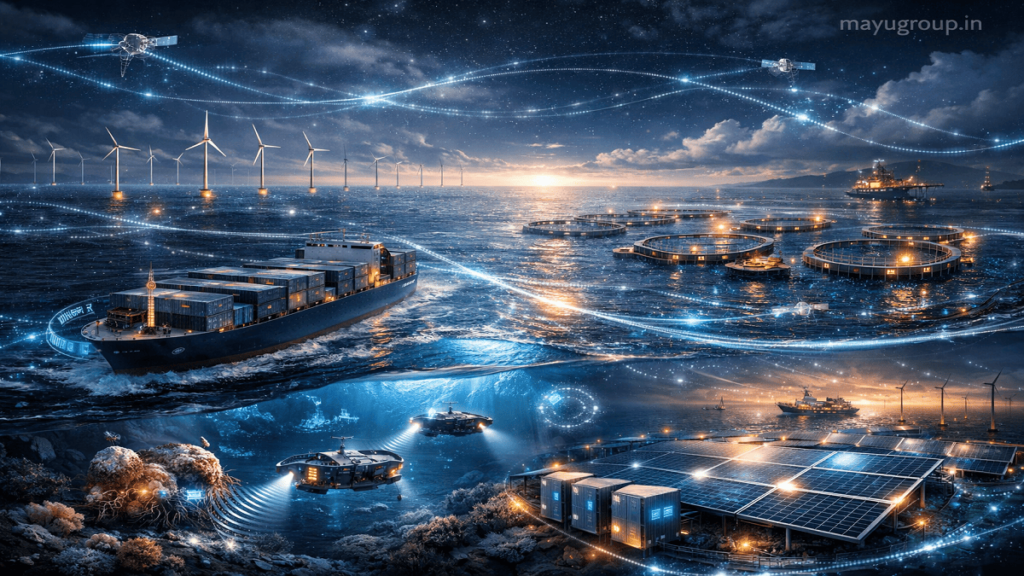
OceanTech, also known as ocean technology or blue economy technology, refers to a wide range of industries that focus on exploring, utilizing, and protecting ocean and marine environments through advanced technological solutions. It is not a single industry but a convergence of multiple sectors that depend on oceans for economic activity, sustainability, and innovation.
1. Marine Transportation and Shipping
One of the largest components of OceanTech is the maritime transportation industry. This includes cargo shipping, port operations, and logistics systems. OceanTech innovations in this sector focus on fuel-efficient vessels, autonomous ships, AI-based route optimization, and smart port infrastructure. These technologies help reduce operational costs, improve safety, and minimize environmental impact.
2. Offshore Energy Industry
The offshore energy sector is a key part of OceanTech, including oil and gas extraction as well as renewable energy systems. Increasingly, investment is shifting toward sustainable offshore solutions such as wind farms, wave energy converters, and tidal power systems. OceanTech supports advanced engineering, underwater infrastructure monitoring, and energy efficiency improvements in these systems.
3. Fisheries and Aquaculture
The fisheries and aquaculture industry benefits significantly from OceanTech innovation. Technologies such as automated feeding systems, water quality sensors, disease detection tools, and AI-driven fish farm management systems improve productivity and sustainability. OceanTech investment also supports sustainable fishing practices and monitoring systems that help prevent overfishing.
4. Marine Robotics and Exploration
This industry includes underwater drones, autonomous underwater vehicles (AUVs), and remotely operated vehicles (ROVs) used for deep-sea exploration, research, and infrastructure inspection. These technologies are essential for studying ocean ecosystems, mapping the seabed, and maintaining offshore installations such as pipelines and cables.
5. Environmental Monitoring and Climate Science
OceanTech plays a crucial role in environmental protection and climate research. This industry uses satellite imaging, ocean sensors, and data analytics platforms to monitor ocean temperature, pollution levels, carbon absorption, and biodiversity. These insights help governments and organizations respond to climate change and marine ecosystem degradation.
6. Marine Biotechnology
Marine biotechnology focuses on using ocean organisms and ecosystems to develop new products and solutions. This includes pharmaceuticals, biofuels, enzymes, and sustainable materials derived from marine life. OceanTech investment supports research in marine genetics and bioengineering.
7. Coastal Infrastructure and Engineering
This industry includes the development of ports, coastal protection systems, offshore platforms, and underwater construction projects. OceanTech enhances structural durability, corrosion resistance, and environmental resilience in harsh marine conditions.
Conclusion
OceanTech spans multiple interconnected industries, including shipping, energy, fisheries, robotics, environmental science, biotechnology, and coastal engineering. Together, these sectors form the foundation of the blue economy, where technological innovation is essential for sustainable use and protection of ocean resources.
Further Reading
- https://oceanpanel.org/blue-economy/
- https://www.worldbank.org/en/topic/oceans-fisheries-and-coastal-economies
- https://www.noaa.gov/education/resource-collections/ocean-coasts/ocean-technology
- https://www.unep.org/explore-topics/oceans-seas
#OceanTech Investment in Hyderabad
Why are investors interested in OceanTech startups?
Investors are increasingly focusing on OceanTech startups because they operate at the intersection of environmental sustainability, global economic infrastructure, and advanced technology innovation. OceanTech—covering marine robotics, offshore energy, aquaculture, shipping technology, and ocean data systems—represents a rapidly expanding segment of the “blue economy,” which is gaining strategic importance worldwide.
1. Large Untapped Market Potential
The ocean covers over 70% of the Earth’s surface, yet many marine industries remain underdeveloped in terms of technology adoption. Investors see OceanTech startups as opportunities to unlock vast, relatively untapped markets. Areas such as deep-sea exploration, smart shipping systems, and offshore renewable energy still have significant room for innovation and commercialization, creating strong long-term growth potential.
2. Growing Demand for Sustainability Solutions
A major driver of investor interest is the global push toward sustainability and climate resilience. OceanTech startups often develop solutions that address critical environmental challenges such as overfishing, marine pollution, and climate change monitoring. Technologies that support carbon tracking in oceans or reduce plastic waste are particularly attractive to impact-focused investors and ESG (Environmental, Social, Governance) funds.
Reference for ocean sustainability trends: https://www.worldbank.org/en/topic/oceans-fisheries-and-coastal-economies
3. Expansion of the Blue Economy
Governments and international organizations are increasingly promoting the “blue economy,” which emphasizes sustainable economic growth from ocean resources. This includes sectors like renewable offshore energy, sustainable fisheries, and marine biotechnology. OceanTech startups benefit from policy support, grants, and public-private partnerships, making them more attractive to investors seeking long-term structural growth opportunities.
4. Technological Innovation and Digitalization
OceanTech startups often leverage cutting-edge technologies such as artificial intelligence, satellite imaging, IoT sensors, robotics, and big data analytics. These innovations improve efficiency in shipping routes, enable autonomous underwater exploration, and enhance ocean monitoring systems. Investors are drawn to this integration of deep tech with real-world industrial applications.
5. Strategic Importance of Oceans
Oceans are critical to global trade, energy production, and food supply. Shipping routes carry the majority of international trade, while offshore energy and fisheries contribute significantly to global economies. OceanTech startups that improve efficiency, safety, and sustainability in these areas have strong strategic value, making them attractive to both private investors and government-backed funds.
6. High Scalability and Global Impact
Successful OceanTech solutions can scale globally due to the universal nature of oceans and maritime industries. For example, improvements in shipping logistics software or autonomous ocean mapping systems can be deployed across international markets, increasing return potential for early investors.
Conclusion
Investors are interested in OceanTech startups because they combine large untapped markets, sustainability-driven demand, advanced technology integration, and strong global scalability. Despite challenges such as high capital requirements and harsh operating environments, OceanTech represents a high-growth sector aligned with long-term environmental and economic priorities.
Further Reading
- https://oceanpanel.org/blue-economy/
- https://www.noaa.gov/education/resource-collections/ocean-coasts/ocean-technology
- https://www.unep.org/explore-topics/oceans-seas
- https://www.weforum.org/agenda/archive/ocean/
#OceanTech Investment in Delhi
What risks are involved in OceanTech investments?
OceanTech investments offer strong long-term potential due to the growing importance of marine industries, the blue economy, and climate-focused innovation. However, they also carry significant risks because ocean environments are complex, expensive to operate in, and heavily regulated. Investors must carefully evaluate these challenges before committing capital.
1. High Capital and Infrastructure Costs
One of the biggest risks in OceanTech is the extremely high upfront cost. Technologies such as offshore wind farms, underwater robotics, autonomous vessels, and ocean monitoring systems require specialized equipment, advanced engineering, and large-scale infrastructure. Building and maintaining these systems in harsh marine environments increases costs significantly. This creates long payback periods and higher financial exposure for investors.
2. Harsh and Unpredictable Operating Conditions
The ocean is one of the most difficult environments for technology deployment. Saltwater corrosion, high pressure, extreme weather, and unpredictable currents can damage equipment and reduce operational reliability. Even advanced marine robotics and sensors face durability challenges. These conditions increase maintenance costs and operational risks, often leading to delays or system failures.
3. Long Development and Commercialization Cycles
OceanTech innovations typically take years to move from prototype to commercial use. Technologies such as autonomous underwater vehicles or offshore renewable systems require extensive testing, certification, and field validation. These long development timelines delay returns on investment and increase exposure to market and technological changes.
4. Regulatory and Environmental Compliance Risks
Ocean-related industries are subject to strict national and international regulations. These include environmental protection laws, maritime safety standards, and fishing and resource extraction rules. Changes in regulations can delay projects or increase compliance costs. Additionally, environmental concerns—such as ecosystem disruption or marine biodiversity impact—can limit project approval or expansion.
Reference: https://www.noaa.gov/education/resource-collections/ocean-coasts/ocean-technology
5. Market Adoption and Commercial Uncertainty
Even when OceanTech solutions are technically successful, adoption may be slow. Industries such as shipping, oil and gas, and fisheries are often conservative and cost-sensitive. Companies may hesitate to adopt new technologies without proven long-term reliability or clear cost advantages. This slows revenue growth for startups and increases financial risk.
6. Technological and Competitive Risk
OceanTech is rapidly evolving, with continuous improvements in AI, robotics, and sensor technologies. A startup’s innovation can quickly become outdated due to newer or more efficient solutions. Larger corporations with more resources may also enter the market and outperform smaller startups, reducing their competitive advantage.
Conclusion
OceanTech investments involve a combination of financial, environmental, operational, and regulatory risks. While the sector offers strong long-term growth potential driven by sustainability and global maritime needs, it requires patience, high capital tolerance, and a long-term investment horizon. Successful participation depends on managing these risks while leveraging the strategic importance of ocean-based industries.
Further Reading
- https://oceanpanel.org/blue-economy/
- https://www.worldbank.org/en/topic/oceans-fisheries-and-coastal-economies
- https://www.unep.org/explore-topics/oceans-seas
- https://www.noaa.gov/education/resource-collections/ocean-coasts/ocean-technology
#OceanTech Investment in Pune
Case Study of OceanTech Investment
Saildrone is a leading example of OceanTech innovation, focusing on autonomous surface vehicles (ASVs) that collect ocean data for applications such as climate science, maritime security, fisheries management, and offshore energy operations. The company demonstrates how OceanTech investment can transform early-stage marine robotics into scalable, real-world solutions with global impact.
Background and Technology
Saildrone, founded in the United States, develops wind- and solar-powered autonomous ocean vehicles equipped with advanced sensors and AI-driven navigation systems. These vessels operate for months at sea without human crews, collecting high-resolution data on ocean temperature, salinity, carbon cycles, and weather patterns. The technology is widely used by government agencies, research institutions, and commercial organizations.
By replacing traditional manned research vessels, Saildrone significantly reduces operational costs while increasing the frequency and accuracy of ocean data collection. This innovation directly supports climate monitoring, hurricane prediction, and sustainable fisheries management.
Role of Investment in Growth
OceanTech investment has been central to Saildrone’s expansion. Early-stage venture capital funding enabled the company to develop prototypes, test durability in extreme ocean conditions, and refine autonomous navigation systems. Continued investment supported scaling manufacturing, deploying fleets of drones, and expanding global operations.
Strategic funding partnerships with government agencies such as NOAA (National Oceanic and Atmospheric Administration) helped validate the technology in real-world scientific missions. These collaborations provided both revenue and credibility, accelerating commercial adoption.
Reference: https://www.noaa.gov/
Commercialization and Market Expansion
As investment increased, Saildrone expanded beyond scientific research into commercial and defense applications. Its systems are now used for maritime border security, offshore energy site monitoring, and fisheries enforcement. This diversification demonstrates how OceanTech startups can scale across multiple industries when supported by sustained capital.
The company’s ability to deliver continuous ocean intelligence without crewed vessels has positioned it as a cost-effective alternative to traditional marine survey methods, strengthening its market competitiveness.
Official site: Saildrone
Challenges and Risks
Despite its success, Saildrone highlights key OceanTech challenges:
- Harsh ocean environments that test equipment durability
- High R&D and manufacturing costs
- Dependence on long-term contracts with government and enterprise clients
- Regulatory and maritime operational constraints
These factors reflect the broader risk profile of OceanTech investments, where scaling requires both technological reliability and sustained funding.
Investment Lessons
The Saildrone case study provides important insights for investors:
- Early-stage funding is critical for deep-tech marine innovation
- Government partnerships can accelerate validation and adoption
- Diversification across scientific, commercial, and defense markets improves resilience
- Long-term investment horizons are essential due to extended development cycles
Conclusion
Saildrone illustrates how OceanTech investment enables transformative innovation in ocean data collection and maritime operations. By combining robotics, AI, and renewable-powered systems, the company has reshaped how oceans are studied and managed. Its growth trajectory highlights both the opportunities and challenges of investing in OceanTech, where high capital requirements and environmental complexity are balanced by strong long-term global demand.
Further Reading
- Saildrone Official Website
- https://www.noaa.gov/
- https://oceanpanel.org/blue-economy/
- https://www.worldbank.org/en/topic/oceans-fisheries-and-coastal-economies
#OceanTech Investment in Banglore
White Paper on OceanTech Investment
1. Executive Summary
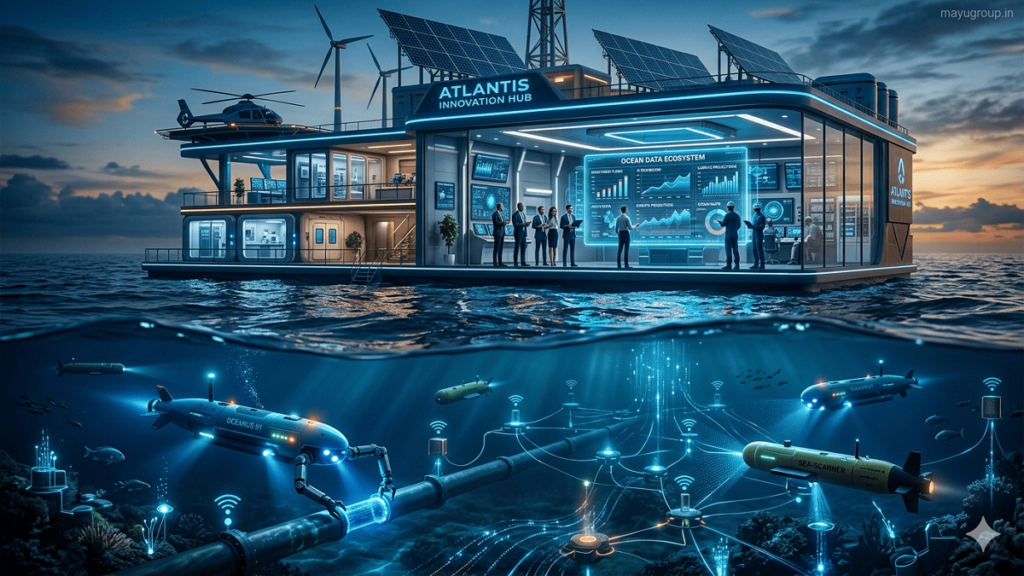
OceanTech investment refers to the allocation of capital into technologies, startups, and infrastructure focused on ocean-based industries, collectively known as the blue economy. These include marine robotics, offshore renewable energy, sustainable fisheries, maritime logistics, and ocean data analytics. OceanTech is emerging as a strategic investment domain due to the increasing economic importance of oceans in global trade, climate regulation, food security, and renewable energy generation.
Global attention on the blue economy is increasing, with rising private and institutional capital flows into ocean-related sectors, driven by sustainability goals and technological innovation .
2. Sector Definition and Scope
OceanTech spans multiple interconnected industries that utilize advanced technologies such as artificial intelligence, satellite systems, sensors, robotics, and biotechnology. Key sectors include:
- Marine transportation and smart shipping systems
- Offshore wind, wave, and tidal energy
- Sustainable aquaculture and fisheries management
- Ocean monitoring and environmental analytics
- Marine biotechnology and materials innovation
- Coastal infrastructure and resilience engineering
According to global blue economy frameworks, these sectors form a structured ecosystem that supports both economic development and environmental sustainability .
3. Investment Rationale
OceanTech attracts investors because it aligns with long-term global megatrends:
- Expansion of international maritime trade
- Transition to renewable offshore energy systems
- Rising demand for sustainable seafood production
- Increasing need for climate monitoring and carbon tracking
- Growth of AI-driven automation in marine operations
The ocean economy represents a multi-trillion-dollar opportunity, with growing interest from venture capital and institutional investors in scaling ocean-based innovation .
4. Funding Ecosystem
OceanTech investment flows through:
- Venture capital and startups (early-stage innovation)
- Government and public research programs
- Corporate strategic investments in maritime and energy sectors
- ESG and impact funds focused on sustainability
- Public-private partnerships supporting infrastructure
However, a major challenge remains: many OceanTech startups struggle to secure late-stage funding required for scaling, creating a structural financing gap .
5. Risks and Constraints
Despite strong potential, OceanTech investment carries notable risks:
- High infrastructure and operational costs
- Harsh and unpredictable marine environments
- Long development and commercialization cycles
- Regulatory complexity and environmental restrictions
- Limited adoption speed in traditional maritime industries
These factors make OceanTech a capital-intensive, long-duration investment category.
6. Strategic Outlook
OceanTech is increasingly recognized as a core pillar of the global blue economy. Investment is shifting from niche impact funding toward mainstream venture capital and institutional participation. However, market maturity is still developing, and scaling challenges remain significant.
7. Conclusion
OceanTech investment represents a convergence of sustainability, climate science, and advanced engineering. It offers long-term opportunities across multiple industries, particularly in energy, logistics, and environmental monitoring. While risks are high due to environmental and technological complexity, sustained capital inflow is essential to unlocking the full potential of ocean-based innovation.
Further Reading
- https://oceanpanel.org/blue-economy/
- https://www.worldbank.org/en/topic/oceans-fisheries-and-coastal-economies
- https://www.noaa.gov/ocean-coasts
- https://www.unep.org/explore-topics/oceans-seas
#OceanTech Investment in Kolkata
Industry Application of OceanTech Investment
OceanTech investment supports a wide range of industries that depend on ocean resources, marine environments, and maritime infrastructure. It focuses on funding technologies that improve efficiency, sustainability, safety, and data-driven decision-making across the blue economy. As oceans play a critical role in global trade, food supply, energy production, and climate regulation, OceanTech has become a key enabler of industrial innovation.
1. Maritime Transportation and Shipping
The shipping industry is one of the largest beneficiaries of OceanTech investment. Capital is directed toward developing smart navigation systems, autonomous ships, fuel-efficient propulsion technologies, and AI-based route optimization tools. These innovations reduce fuel consumption, lower emissions, and improve global supply chain efficiency. Digital port infrastructure and real-time tracking systems also enhance logistics management and operational safety.
2. Offshore Energy Industry
OceanTech plays a major role in offshore energy, including oil and gas operations as well as renewable energy systems. Investment supports offshore wind farms, wave energy converters, tidal power systems, and underwater energy infrastructure monitoring. Advanced sensors and robotics improve maintenance and reduce operational risks in harsh marine environments. This industry is central to global clean energy transition efforts.
Reference: https://www.noaa.gov/
3. Fisheries and Aquaculture
Sustainable fisheries and aquaculture are heavily dependent on OceanTech innovation. Investment supports smart fish farming systems, automated feeding technologies, water quality monitoring sensors, and AI-based disease detection tools. These technologies increase productivity while reducing environmental impact and overfishing risks. OceanTech also supports traceability systems that ensure sustainable seafood supply chains.
4. Marine Robotics and Exploration
Marine robotics is a rapidly growing industry supported by OceanTech investment. Autonomous underwater vehicles (AUVs) and remotely operated vehicles (ROVs) are used for deep-sea exploration, underwater infrastructure inspection, and scientific research. These systems enable safer, more cost-effective exploration of previously inaccessible ocean regions, including deep ocean floors and offshore installations.
5. Environmental Monitoring and Climate Science
OceanTech is essential for climate research and environmental protection industries. Investment funds satellite-based ocean observation systems, smart buoys, and sensor networks that monitor ocean temperature, carbon absorption, pollution levels, and biodiversity. This data is critical for climate modeling, disaster prediction, and ecosystem conservation efforts.
6. Marine Biotechnology and Materials Science
Marine biotechnology uses ocean organisms and ecosystems to develop pharmaceuticals, biofuels, enzymes, and sustainable materials. OceanTech investment supports genetic research, bioengineering, and the development of eco-friendly materials derived from marine life. Similarly, advanced materials science benefits from corrosion-resistant coatings and high-performance composites used in marine environments.
7. Coastal Infrastructure and Engineering
Coastal engineering and infrastructure development rely on OceanTech for building resilient ports, offshore platforms, and coastal protection systems. Investment supports technologies that improve structural durability, erosion control, and climate adaptation strategies for coastal cities.
Conclusion
OceanTech investment has broad industrial applications across shipping, energy, fisheries, robotics, environmental science, biotechnology, and infrastructure. It enables these industries to become more efficient, sustainable, and technologically advanced. As global dependence on ocean resources increases, OceanTech will continue to play a critical role in shaping the future of industrial development and the blue economy.
Further Reading
- https://oceanpanel.org/blue-economy/
- https://www.worldbank.org/en/topic/oceans-fisheries-and-coastal-economies
- https://www.unep.org/explore-topics/oceans-seas
- https://www.noaa.gov/ocean-coasts/ocean-technology
#OceanTech Investment in Mumbai
Ask FAQs
What is OceanTech investment?
OceanTech investment refers to funding companies and technologies that focus on ocean-based industries such as marine robotics, offshore energy, sustainable fisheries, shipping technology, and ocean data analytics. It supports innovations that improve how oceans are explored, utilized, and protected.
Why is OceanTech important for the future economy?
OceanTech is important because oceans play a key role in global trade, food supply, energy production, and climate regulation. Investing in OceanTech helps build the blue economy by enabling sustainable use of ocean resources while addressing environmental challenges like pollution and climate change.
Which industries benefit from OceanTech investment?
Key industries include maritime shipping, offshore renewable energy, fisheries and aquaculture, marine robotics, environmental monitoring, marine biotechnology, and coastal infrastructure. These sectors use OceanTech to improve efficiency, sustainability, and technological performance.
What are the main risks of OceanTech investment?
OceanTech investments involve risks such as high infrastructure costs, harsh ocean environments, long development timelines, strict regulatory requirements, and uncertain market adoption. These challenges can delay profitability and increase financial exposure for investors.
How do investors participate in OceanTech?
Investors can participate through venture capital funding in startups, public companies involved in marine or offshore technologies, government-backed projects, and ESG or impact investment funds focused on sustainability and climate solutions.
Table of Contents
Disclaimer:
The information provided is for educational and informational purposes only and does not constitute financial, investment, or professional advice. OceanTech investments involve risk, and outcomes may vary. Readers should conduct independent research or consult a qualified financial advisor before making any investment decisions.