Secondary Market Funding
Secondary Market Funding refers to the trading of previously issued financial securities such as shares, bonds, and other instruments among investors, rather than directly from the issuing company. Unlike primary market funding—where companies raise fresh capital through Initial Public Offerings (IPOs) or new issuances—the secondary market facilitates the buying and selling of existing securities between investors. It plays a crucial role in maintaining liquidity, price discovery, Secondary Market Funding and investor confidence in financial markets.
How Secondary Market Funding Works
In the secondary market, investors trade securities among themselves without involving the issuing company. For example, when an investor sells shares of a company, another investor buys them at the prevailing market price. The company does not receive any new capital from these transactions; however, the market activity indirectly affects its valuation and investor perception.
Key participants include retail investors, institutional investors, brokers, and market makers who facilitate trading and ensure market liquidity.
Functions of Secondary Market Funding
1. Liquidity Provision
Secondary markets provide liquidity by allowing investors to quickly convert securities into cash. This encourages participation in primary markets, as investors know they can exit their investments easily.
2. Price Discovery
Market prices are determined by supply and demand dynamics in the secondary market. This continuous valuation reflects real-time investor sentiment and company performance expectations.
3. Efficient Capital Allocation
By reflecting accurate asset prices, secondary markets help direct capital toward efficient and high-performing companies and industries.
4. Risk Management
Investors can diversify portfolios and manage risk by buying and selling securities across different sectors and asset classes.
Role in the Financial System
Although secondary markets do not directly provide funds to companies, they are essential for sustaining primary market activity. A strong secondary market increases investor confidence, which encourages participation in IPOs and other public offerings.
Regulatory authorities such as the U.S. Securities and Exchange Commission oversee trading activities to ensure transparency, fairness, and investor protection.
Benefits of Secondary Market Funding
- Enhances market liquidity and investor participation
- Supports accurate valuation of securities
- Enables portfolio diversification
- Strengthens overall financial system stability
- Encourages investment in primary markets
Risks and Limitations
- Price volatility due to market sentiment
- Speculative trading behavior
- Systemic risks during economic downturns
- No direct capital inflow to issuing companies
Conclusion
Secondary market funding is a vital component of the financial ecosystem that facilitates the trading of existing securities and ensures market efficiency. While it does not directly raise capital for companies, it supports the broader capital formation process by improving liquidity, enabling price discovery, Secondary Market Funding and boosting investor confidence in public markets.
References
- U.S. Securities and Exchange Commission (SEC)
- Nasdaq Official Site
- New York Stock Exchange (NYSE)
- World Federation of Exchanges
#Secondary Market Funding in India
What is secondary market funding?
Secondary market funding refers to the trading of previously issued financial securities—such as shares, bonds, and derivatives—between investors after they have been initially issued in the primary market. In this market, companies do not receive new capital; instead, ownership of securities is transferred from one investor to another at prevailing market prices. Although it does not directly fund companies, the secondary market plays a critical role in supporting overall capital formation, liquidity, and investor confidence in financial systems.
Secondary markets operate through organized stock exchanges such as the New York Stock Exchange and the Nasdaq, where millions of securities are bought and sold daily. These platforms provide the infrastructure necessary for transparent pricing, efficient trading, and regulated investment activity.
The primary purpose of secondary market funding is to enable liquidity, meaning investors can easily buy or sell securities without waiting for the issuing company to repurchase them. For example, if an investor owns shares of a listed company, they can sell those shares to another investor in the secondary market at any time during trading hours. This ability to quickly convert investments into cash increases investor confidence and encourages participation in the primary market, where companies raise initial capital.
Another key function of secondary market funding is price discovery. The continuous buying and selling of securities helps determine their fair market value based on supply and demand. Prices reflect investor expectations about a company’s future performance, economic conditions, and industry trends. This real-time valuation system helps investors make informed decisions and ensures efficient allocation of capital across the economy.
Secondary markets also contribute to risk management and diversification. Investors can adjust their portfolios by buying and selling different securities, reducing exposure to risk in a single company or industry. Institutional investors such as mutual funds and pension funds rely heavily on secondary markets to manage large and diversified portfolios.
Additionally, secondary market activity strengthens the entire financial ecosystem by supporting primary market funding. When investors know they can easily sell securities in the secondary market, they are more willing to invest in IPOs and new offerings. This indirectly helps companies raise capital more efficiently in the primary market.
Despite its advantages, secondary market funding also carries risks such as price volatility, speculative trading, and potential market manipulation. These risks are managed through regulatory oversight. In the United States, the U.S. Securities and Exchange Commission regulates trading activities to ensure transparency, fairness, and investor protection.
In conclusion, secondary market funding is the system through which existing securities are traded among investors after their initial issuance. While it does not provide direct capital to companies, it is essential for liquidity, price discovery, risk management, and the smooth functioning of financial markets. It forms a backbone of modern capital markets by ensuring that investments remain flexible, accessible, and efficiently valued.
References
- U.S. Securities and Exchange Commission (SEC)
- Nasdaq Official Website
- New York Stock Exchange (NYSE)
- World Federation of Exchanges
#Secondary Market Funding in Maharashtra

How does the secondary market work?
The secondary market is the segment of the financial market where previously issued securities such as shares, bonds, and exchange-traded instruments are bought and sold among investors. Unlike the primary market, where companies issue new securities to raise capital, the secondary market does not involve the issuing company directly. Instead, it facilitates trading between investors and plays a vital role in ensuring liquidity, price discovery, and market efficiency.
Secondary markets operate primarily through regulated stock exchanges such as the New York Stock Exchange and Nasdaq, where securities are traded electronically in real time. These platforms connect buyers and sellers through a network of brokers, trading systems, and market makers.
1. Order Placement
The process begins when an investor decides to buy or sell a security. Investors place orders through brokerage firms or trading platforms. These orders include details such as the number of shares, price limits, and order type (market order or limit order).
2. Order Matching
Once an order is placed, it is sent to the exchange where it is matched with a corresponding buy or sell order. If a buyer’s price matches a seller’s price, the trade is executed. Modern exchanges use electronic matching systems to ensure speed and accuracy in trade execution.
3. Trade Execution
When a match is found, the transaction is executed, and ownership of the security is transferred from the seller to the buyer. The trade price becomes part of the market data and contributes to determining the security’s current market value.
4. Clearing and Settlement
After execution, the trade goes through a clearing and settlement process. Clearing ensures that both parties fulfill their obligations, while settlement involves the actual exchange of securities and payment. In most markets, this process is handled by clearing corporations and typically takes one or two business days (T+1 or T+2 settlement cycle).
5. Price Discovery and Continuous Trading
The secondary market operates continuously during trading hours. Prices fluctuate based on supply and demand, company performance, economic indicators, and investor sentiment. This ongoing trading helps establish the fair market value of securities.
6. Role of Intermediaries
Brokers, dealers, and market makers play a key role in ensuring liquidity and smooth trading. Market makers continuously quote buy and sell prices, helping reduce price gaps and enabling faster transactions.
7. Regulatory Oversight
Secondary markets are regulated to ensure transparency and investor protection. In the United States, the U.S. Securities and Exchange Commission oversees market operations, enforces trading rules, and prevents fraud or manipulation.
Conclusion
The secondary market works through a structured process of order placement, matching, execution, and settlement, supported by electronic trading systems and regulatory oversight. While it does not provide direct capital to companies, it is essential for liquidity, price discovery, and efficient functioning of the overall financial system.
References
- U.S. Securities and Exchange Commission (SEC)
- Nasdaq Market Structure
- New York Stock Exchange (NYSE) Trading Overview
- World Federation of Exchanges
#Secondary Market Funding in Ahemadabad
Why is secondary market liquidity important?
Secondary market liquidity refers to the ease and speed with which financial securities such as stocks, bonds, and other instruments can be bought or sold in the secondary market without causing significant changes in their price. It is a fundamental feature of well-functioning financial markets and plays a crucial role in maintaining investor confidence, market stability, and efficient capital allocation.
The secondary market operates through exchanges such as the New York Stock Exchange and Nasdaq, where millions of securities are traded daily. High liquidity in these markets ensures smooth and continuous trading activity.
1. Easier Entry and Exit for Investors
Liquidity allows investors to quickly buy or sell securities whenever they choose. Without liquidity, investors may struggle to exit their positions or may be forced to sell at unfavorable prices. High liquidity reduces this risk and makes investments more attractive.
2. Encourages Investment in Financial Markets
When investors know they can easily convert their investments into cash, they are more likely to participate in financial markets. This increased participation supports capital formation in the primary market, where companies raise funds through IPOs and other offerings.
3. Efficient Price Discovery
Liquidity improves the accuracy of market prices by ensuring continuous trading activity. When many buyers and sellers are active, security prices reflect real-time supply and demand conditions, company performance, and economic trends. This helps establish fair market valuation.
4. Reduces Transaction Costs
In liquid markets, the difference between buying and selling prices (bid-ask spread) is typically lower. This reduces trading costs for investors and improves overall market efficiency. Lower transaction costs also encourage higher trading volumes.
5. Enhances Market Stability
Liquid markets are generally more stable because large trades can be absorbed without causing extreme price fluctuations. This reduces volatility and helps maintain investor confidence during periods of economic uncertainty.
6. Supports Portfolio Management and Risk Reduction
Institutional investors such as mutual funds, pension funds, and insurance companies rely heavily on liquidity to manage large portfolios. They frequently adjust their holdings, and liquid markets allow them to rebalance portfolios efficiently to manage risk.
7. Strengthens the Financial System
Liquidity in the secondary market indirectly strengthens the entire financial system. It increases trust in capital markets, encourages long-term investment, and supports the smooth functioning of both equity and debt markets.
Regulatory bodies such as the U.S. Securities and Exchange Commission help ensure fair and transparent trading conditions, which further supports market liquidity.
Conclusion
Secondary market liquidity is essential because it ensures that investors can trade securities easily, supports accurate pricing, reduces transaction costs, and enhances overall market stability. It also plays a key role in encouraging participation in financial markets and strengthening the broader economy by improving capital flow and investor confidence.
References
- U.S. Securities and Exchange Commission (SEC)
- Nasdaq Market Structure
- New York Stock Exchange (NYSE)
- World Federation of Exchanges
#Secondary Market Funding in Hyderabad
Who participates in secondary market trading?
Secondary market trading involves the buying and selling of previously issued financial securities such as stocks, bonds, exchange-traded funds (ETFs), and derivatives among various types of market participants. These participants play different roles in ensuring liquidity, price discovery, and efficient functioning of financial markets. The secondary market operates on organized exchanges such as the New York Stock Exchange and Nasdaq, where trading occurs continuously during market hours.
1. Retail Investors
Retail investors are individual participants who buy and sell securities for personal investment purposes. They typically invest through brokerage accounts and may include salaried individuals, small investors, and households. Retail investors contribute to market liquidity and participate in long-term wealth creation.
2. Institutional Investors
Institutional investors manage large pools of capital on behalf of others. This category includes mutual funds, pension funds, insurance companies, hedge funds, and asset management firms. Institutional investors play a dominant role in secondary markets due to the large volume of trades they execute. Their activities significantly influence market trends and liquidity.
3. Brokers
Brokers act as intermediaries between buyers and sellers. They execute trades on behalf of clients and provide access to trading platforms and financial markets. Brokers earn commissions or fees for facilitating transactions and ensuring efficient order execution.
4. Dealers
Dealers actively buy and sell securities for their own accounts. They provide liquidity by holding inventories of securities and quoting buy (bid) and sell (ask) prices. Dealers help reduce price gaps and ensure smoother trading in the market.
5. Market Makers
Market makers are specialized participants who continuously provide liquidity by quoting both buy and sell prices for securities. They ensure that there is always a counterparty available for trades, which helps maintain market stability and reduces transaction delays.
6. High-Frequency Traders (HFTs)
High-frequency trading firms use advanced algorithms and high-speed technology to execute large volumes of trades within milliseconds. They contribute to liquidity and price efficiency but also increase trading activity and short-term volatility in some cases.
7. Regulatory and Clearing Institutions
Although they do not trade directly, regulatory bodies and clearing corporations are essential participants in the secondary market ecosystem. The U.S. Securities and Exchange Commission ensures fair trading practices, while clearinghouses manage trade settlement and reduce counterparty risk.
Conclusion
Secondary market trading involves a diverse set of participants, including retail and institutional investors, brokers, dealers, market makers, and high-frequency traders, all supported by regulatory and clearing institutions. Each participant plays a distinct role in ensuring liquidity, efficiency, and stability in financial markets.
References
- U.S. Securities and Exchange Commission (SEC)
- Nasdaq Market Structure Overview
- New York Stock Exchange (NYSE) Trading Information
- World Federation of Exchanges
#Secondary Market Funding in Delhi
What are the risks in the secondary market?
The secondary market is where investors trade previously issued securities such as stocks, bonds, and exchange-traded instruments. While it provides liquidity, price discovery, and efficient capital allocation, it also carries several financial and systemic risks. These risks arise due to market dynamics, investor behavior, economic conditions, and regulatory limitations. Secondary market trading takes place on exchanges such as the New York Stock Exchange and Nasdaq, where millions of transactions occur daily.
1. Market Risk (Price Volatility)
Market risk refers to the possibility of losses due to fluctuations in security prices. Stock and bond prices can change rapidly based on economic conditions, interest rates, corporate performance, and global events. Investors may experience losses if prices move unfavorably after purchase.
2. Liquidity Risk
Although secondary markets are generally liquid, some securities may not always have enough buyers or sellers. In such cases, investors may struggle to sell their holdings quickly or may have to sell at significantly lower prices. Illiquid stocks or bonds carry higher risk, especially during financial stress.
3. Systemic Risk
Systemic risk refers to the possibility of a widespread financial disruption affecting the entire market or financial system. Events such as economic recessions, banking crises, or global shocks can trigger widespread declines in asset prices across multiple sectors simultaneously.
4. Credit Risk (for Bonds)
In the bond market, investors face credit risk, which is the possibility that the issuer may default on interest payments or fail to repay the principal. This risk is higher in lower-rated or high-yield bonds.
5. Speculative Risk
Secondary markets often attract speculative trading, where investors buy and sell securities based on short-term price movements rather than long-term value. Speculation can lead to price bubbles and sudden market crashes when sentiment changes.
6. Operational and Technological Risk
Modern secondary markets rely heavily on electronic trading systems. Technical failures, software glitches, cyberattacks, or system outages can disrupt trading and lead to financial losses or settlement delays.
7. Regulatory and Compliance Risk
Changes in financial regulations or enforcement actions by authorities can impact trading behavior and market conditions. Non-compliance by market participants can also result in penalties and reputational damage. Regulatory bodies such as the U.S. Securities and Exchange Commission monitor markets to reduce fraud and maintain transparency.
8. Behavioral Risk
Investor emotions such as fear and greed can lead to irrational decision-making. Herd behavior, panic selling, or overconfidence can increase volatility and distort asset prices.
Conclusion
The secondary market involves multiple risks, including market volatility, liquidity constraints, systemic shocks, credit defaults, and behavioral factors. While these risks cannot be eliminated, they can be managed through diversification, regulation, risk assessment, and informed investment strategies. Despite these challenges, the secondary market remains essential for liquidity, price discovery, and efficient functioning of financial systems.
References
- U.S. Securities and Exchange Commission (SEC)
- Nasdaq Market Overview
- New York Stock Exchange (NYSE)
- World Federation of Exchanges
#Secondary Market Funding in Banglore
Case Study of Secondary Market Funding
A strong example of secondary market funding in action is Apple Inc., one of the world’s most valuable publicly traded companies. Apple’s shares are actively traded on secondary markets, where investors buy and sell existing shares without the company directly receiving new capital. Its primary listings are on major exchanges such as the Nasdaq and other global markets through secondary listings.
Background
Apple became a publicly traded company in 1980 through its Initial Public Offering (IPO). After the IPO, its shares began trading in the secondary market. Since then, Apple has not needed to issue new shares frequently to raise capital because its operational profits and financial strength allow it to self-finance many activities.
However, its shares are continuously traded in the secondary market by millions of investors worldwide, making it one of the most liquid securities in global financial markets.
Secondary Market Activity in Apple Shares
In the secondary market:
- Investors buy Apple shares from other investors rather than from the company itself
- Share prices fluctuate based on supply and demand
- Trading occurs continuously during market hours
- Institutional investors, hedge funds, retail investors, and algorithmic traders actively participate
The price of Apple stock reflects investor expectations about its future earnings, innovation pipeline, product demand, and global economic conditions.
Role of Secondary Market Funding in Apple’s Growth
Although Apple does not directly receive money from secondary market trades, the secondary market plays a crucial indirect role:
1. Liquidity for Investors
Investors can easily buy and sell Apple shares, making the stock highly attractive. This liquidity encourages more participation in the company’s equity.
2. Market Valuation
Continuous trading determines Apple’s market capitalization, often making it one of the highest-valued companies globally. This valuation helps in acquisitions, employee stock compensation, and strategic planning.
3. Investor Confidence
Active secondary trading builds confidence among institutional investors, reinforcing Apple’s reputation as a stable and reliable investment.
4. Wealth Creation
Early investors and employees benefit significantly from secondary market trading as they can convert shares into cash, creating substantial wealth.
Risks Observed in Secondary Market Trading of Apple
Despite its stability, Apple’s stock is still subject to secondary market risks:
- Market volatility due to macroeconomic changes
- Global supply chain disruptions affecting investor sentiment
- Interest rate changes influencing tech stock valuations
- Short-term speculative trading causing price fluctuations
Even highly stable companies are not immune to broader market movements.
Conclusion
Apple Inc. demonstrates how secondary market funding works in practice. While the company does not directly receive funds from secondary trading, the continuous buying and selling of its shares provides liquidity, establishes market valuation, and supports investor participation. The case highlights that secondary markets are essential for maintaining efficient capital markets and enabling long-term investment confidence.
References
- Apple Inc. Official Investor Relations
- Nasdaq Stock Market Information
- New York Stock Exchange Overview
- U.S. Securities and Exchange Commission (SEC)
#Secondary Market Funding in Pune
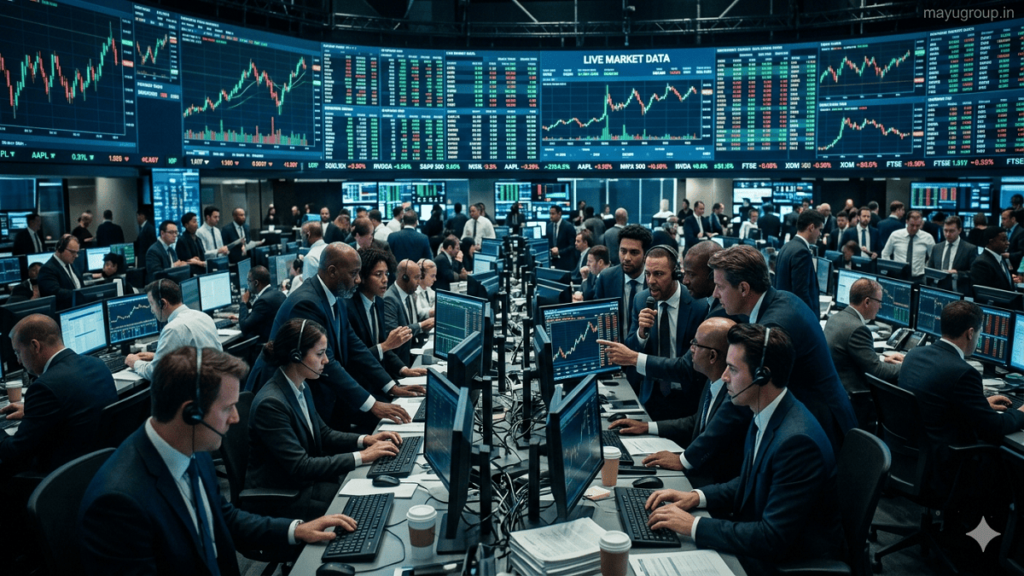
White Paper of Secondary Market Funding
1. Executive Summary
Secondary market funding refers to the trading of previously issued financial securities such as equities, bonds, and derivatives among investors in regulated financial markets. Unlike primary market funding, it does not generate new capital for issuing companies but plays a critical role in liquidity creation, price discovery, risk transfer, and overall financial market efficiency. This white paper examines the structure, functions, benefits, risks, and economic significance of secondary market funding in modern capital markets.
2. Introduction
The secondary market is an essential component of the global financial system where investors trade existing securities after their initial issuance. These transactions occur on organized exchanges such as the New York Stock Exchange and Nasdaq. While companies do not directly receive funds from these trades, secondary markets significantly influence investor confidence and capital formation in primary markets.
3. Structure and Mechanism
Secondary markets operate through a structured trading ecosystem:
- Order Placement: Investors place buy or sell orders via brokers.
- Order Matching: Exchanges match buy and sell orders electronically.
- Trade Execution: Securities are exchanged at agreed prices.
- Clearing and Settlement: Ownership and payment are transferred through clearing systems.
Market participants include retail investors, institutional investors, brokers, dealers, market makers, and high-frequency trading firms.
4. Core Functions
4.1 Liquidity Provision
Secondary markets enable investors to convert securities into cash quickly without significant price disruption.
4.2 Price Discovery
Continuous trading determines the fair market value of securities based on demand and supply.
4.3 Capital Allocation Efficiency
Prices reflect information about company performance and economic conditions, guiding capital toward efficient uses.
4.4 Risk Transfer
Investors can transfer financial risk to others through buying and selling securities.
5. Benefits of Secondary Market Funding
- Enhances investor liquidity and flexibility
- Encourages participation in primary markets
- Improves transparency and valuation accuracy
- Supports portfolio diversification
- Strengthens overall financial system stability
These benefits contribute to a more efficient and resilient capital market system.
6. Risks and Challenges
Secondary markets also present several risks:
- Market volatility driven by economic and geopolitical events
- Liquidity risk in less-traded securities
- Systemic risk during financial crises
- Speculative trading and price bubbles
- Technological failures and cyber risks
- Behavioral risks such as panic selling
Regulatory oversight by institutions such as the U.S. Securities and Exchange Commission helps mitigate these risks.
7. Economic Impact
Secondary market funding indirectly supports economic development by:
- Increasing investor participation in capital markets
- Enhancing confidence in IPOs and equity issuance
- Improving financial intermediation efficiency
- Supporting wealth creation and savings mobilization
A strong secondary market is essential for a healthy primary market and overall economic growth.
8. Conclusion
Secondary market funding is a foundational pillar of modern financial systems. While it does not directly raise capital for companies, it ensures liquidity, price discovery, and efficient risk distribution. Its proper functioning strengthens investor confidence and supports the broader capital formation process, making it indispensable to global financial stability.
References
- U.S. Securities and Exchange Commission (SEC)
- Nasdaq Market Structure Overview
- New York Stock Exchange (NYSE)
- World Federation of Exchanges
#Secondary Market Funding in Kolkata
Industry Application of Secondary Market Funding
Secondary market funding refers to the trading of previously issued financial securities such as shares, bonds, and derivatives among investors in regulated exchanges. While it does not directly provide new capital to companies, it plays a critical role in supporting liquidity, valuation, and investor confidence across industries. It operates through major exchanges such as the New York Stock Exchange and Nasdaq, where continuous trading enables efficient price discovery and capital mobility.
1. Technology Industry
In the technology sector, secondary markets are essential for valuing high-growth companies. Tech firms rely on active trading of their shares to reflect investor expectations about innovation, product development, and future earnings.
Secondary market activity allows venture-backed companies that have gone public to maintain investor interest and liquidity. It also enables early investors and employees to sell shares and realize returns, encouraging continued investment in startups.
2. Banking and Financial Services
Banks, insurance companies, and asset managers depend heavily on secondary markets for liquidity and capital efficiency. Their shares are actively traded, which helps maintain market confidence and regulatory compliance.
Secondary market prices also reflect financial stability, creditworthiness, and economic outlook. Institutional investors use this data to make lending and investment decisions.
3. Energy and Infrastructure Sector
Energy companies, including oil, gas, and renewable energy firms, rely on secondary markets for valuation and investor participation. Although large-scale funding is often raised in primary markets, secondary trading ensures continuous investor engagement.
Price movements in secondary markets help assess project viability, commodity risk, and long-term profitability, influencing future investment decisions.
4. Healthcare and Pharmaceutical Industry
In healthcare, secondary markets help reflect investor sentiment about drug pipelines, clinical trials, and regulatory approvals. Pharmaceutical companies often experience significant stock price movements based on trial results or FDA approvals.
This market feedback helps allocate capital toward promising medical innovations and research-driven companies.
5. Consumer Goods and Retail Industry
Retail and consumer companies benefit from secondary market trading through brand valuation and investor confidence. Active trading reflects consumer demand trends, supply chain efficiency, and market expansion strategies.
Secondary markets also allow companies to use stock performance as a measure of brand strength and business stability.
6. Manufacturing and Industrial Sector
Manufacturing firms use secondary market performance as a signal of operational efficiency and global competitiveness. Investors assess production output, export performance, and cost management through stock price movements.
This industry benefits from liquidity as institutional investors frequently rebalance portfolios based on industrial cycles.
7. Real Estate and Infrastructure Investment Trusts (REITs)
Real Estate Investment Trusts (REITs) rely heavily on secondary markets for liquidity. Investors trade REIT units to gain exposure to real estate assets without directly owning property.
Secondary market pricing helps reflect property values, rental income expectations, and interest rate sensitivity.
Conclusion
Secondary market funding plays a vital role across industries by enabling liquidity, improving valuation accuracy, and supporting investor participation. While it does not directly generate capital for companies, it strengthens financial ecosystems by ensuring efficient trading and transparent pricing. Its impact is especially significant in industries with high investor engagement and capital intensity, making it an essential component of modern financial systems.
References
- U.S. Securities and Exchange Commission (SEC)
- Nasdaq Market Overview
- New York Stock Exchange (NYSE)
- World Federation of Exchanges
#Secondary Market Funding in Mumbai
Ask FAQs
What is secondary market funding?
Secondary market funding refers to the trading of already issued securities such as stocks and bonds between investors on stock exchanges. In this market, companies do not receive new capital; instead, ownership of securities changes hands among investors.
Does the secondary market provide money to companies?
No, the secondary market does not directly provide funds to companies. It only facilitates trading between investors. However, it indirectly supports companies by improving liquidity, valuation, and investor confidence, which helps in future fundraising.
What are examples of secondary markets?
Common examples of secondary markets include major stock exchanges such as the New York Stock Exchange and the Nasdaq, where securities are actively traded after their initial issuance.
Who participates in the secondary market?
Participants include retail investors, institutional investors (such as mutual funds and pension funds), brokers, dealers, and market makers. Regulatory bodies like the U.S. Securities and Exchange Commission oversee market activities to ensure fairness and transparency.
Why is the secondary market important?
The secondary market is important because it provides liquidity, enables price discovery, reduces transaction costs, and allows investors to easily buy or sell securities. It also supports efficient functioning of the overall financial system and encourages investment in primary markets.
Table of Contents
Disclaimer: This content is provided for educational and informational purposes only. It does not constitute financial, investment, or legal advice. Readers should consult qualified professionals before making any financial or investment decisions.