Import Assistance
Import Assistance refers to the range of services, policies, and institutional support systems that help businesses and individuals bring goods into a country in compliance with legal, financial, and logistical requirements. It is a critical component of international trade because importing involves multiple regulatory steps such as customs clearance, tariff classification, documentation, taxation, and adherence to quality and safety standards.
At a government level, import assistance is typically provided through customs authorities and trade facilitation agencies. In India, for example, the Central Board of Indirect Taxes and Customs (CBIC) oversees customs operations, while the Directorate General of Foreign Trade (DGFT) manages import-export policies. These bodies provide guidelines on import licensing, restricted or prohibited goods, duty structures, and compliance procedures. Importers often rely on these frameworks to ensure smooth clearance of goods at ports and avoid penalties or delays.
One of the key elements of import assistance is documentation support. Importers must prepare and submit documents such as the bill of entry, commercial invoice, packing list, bill of lading or airway bill, and certificates of origin. Assistance services—often provided by customs brokers or freight forwarders—help ensure these documents are accurate and compliant with regulatory standards. Errors in documentation can lead to shipment delays or additional inspection costs.
Another major aspect is tariff classification and duty calculation. Goods must be classified under the Harmonized System (HS) codes, which determine applicable import duties and taxes. Import assistance providers help businesses identify correct HS codes and estimate total landed costs, including customs duty, Integrated Goods and Services Tax (IGST), and other charges. This helps companies plan pricing and supply chain decisions more effectively.
Logistics coordination is also an important function of import assistance. Freight forwarders manage transportation, warehousing, insurance, and delivery coordination from the point of origin to the final destination. They also assist with customs clearance procedures at ports and airports, reducing administrative burden on importers.
International frameworks such as the World Trade Organization (WTO) Trade Facilitation Agreement aim to simplify and standardize import procedures globally, reducing delays and increasing transparency in customs processes.
For businesses, especially small and medium enterprises, import assistance is essential to navigate complex regulatory environments and ensure compliance. It reduces operational risk, improves efficiency, and enables access to global markets.
External references:
- https://www.wto.org/english/tratop_e/tradfa_e/tradfa_e.htm
- https://www.cbic.gov.in/
- https://dgft.gov.in/
- https://www.investopedia.com/terms/i/import.asp
#Best Group of Company in Russia
What is import assistance?
Import assistance refers to the set of services, procedures, and institutional support mechanisms that help individuals and businesses successfully bring goods into a country while complying with legal, regulatory, financial, and logistical requirements. Since importing involves cross-border movement of goods, it is governed by complex customs laws, taxation systems, trade agreements, and documentation standards. Import assistance helps simplify these processes and ensures that imports are completed efficiently and in compliance with national and international regulations.
At its core, import assistance covers guidance on customs clearance, documentation, tariff classification, duty payment, and shipment handling. Every country has its own customs authority that regulates imports. For example, in India, the Central Board of Indirect Taxes and Customs (CBIC) is responsible for enforcing customs laws and collecting import duties. Import assistance services help traders understand and comply with these regulations so that goods are not delayed, confiscated, or penalized at ports of entry.
One of the primary functions of import assistance is documentation support. Importing goods typically requires multiple documents, including a commercial invoice, packing list, bill of lading or airway bill, certificate of origin, import licenses (if applicable), and customs declarations such as the bill of entry. Errors or inconsistencies in documentation can lead to delays, penalties, or rejection of shipments. Import assistance providers, such as customs brokers and freight forwarders, ensure that these documents are properly prepared and submitted according to legal requirements.
Another important aspect is tariff classification and duty calculation. Goods are categorized using the Harmonized System (HS) codes, which determine the rate of customs duties and taxes applicable to each product. Import assistance professionals help businesses identify the correct HS codes and estimate the total landed cost of goods, including import duties, Integrated Goods and Services Tax (IGST), shipping charges, and insurance costs. This enables companies to make informed pricing and procurement decisions.
Import assistance also includes logistics and supply chain coordination. Freight forwarders manage transportation from the exporting country to the importing destination, including shipping, warehousing, insurance, and last-mile delivery. They also coordinate with customs authorities to ensure smooth clearance at ports, airports, or land borders.
On a broader level, international frameworks such as the World Trade Organization (WTO) Trade Facilitation Agreement aim to simplify global import and export procedures, reduce bureaucratic delays, and improve transparency in customs processes.
Overall, import assistance plays a vital role in global trade by reducing complexity, ensuring compliance, and improving efficiency. It is especially important for small and medium-sized enterprises that may lack in-house expertise in international trade regulations. By relying on import assistance services, businesses can minimize risks, avoid costly delays, and focus on their core operations while expanding into global markets.
External references:
- https://www.wto.org/english/tratop_e/tradfa_e/tradfa_e.htm
- https://www.cbic.gov.in/
- https://dgft.gov.in/
- https://www.investopedia.com/terms/i/import.asp
#Best Group of Company in England
Why do governments provide import assistance?
Governments provide import assistance to ensure that international trade operates smoothly, transparently, and in compliance with national economic, legal, and security objectives. Importing goods is a complex process involving customs regulations, taxation, product standards, documentation requirements, and international trade rules. Without structured assistance, businesses—especially small and medium enterprises—would face significant barriers in accessing global markets. Import assistance helps reduce these barriers and supports efficient trade facilitation.
One of the primary reasons governments provide import assistance is to simplify compliance with customs laws. Import regulations can be highly technical, involving tariff classification under the Harmonized System (HS), valuation rules, and documentation requirements. Government agencies such as customs authorities publish guidelines, digital platforms, and procedural manuals to help importers understand these rules. For example, India’s Central Board of Indirect Taxes and Customs (CBIC) provides detailed instructions and electronic systems for filing import declarations, reducing manual errors and delays.
Another key reason is economic growth and trade facilitation. Imports play a crucial role in supplying raw materials, machinery, and intermediate goods that domestic industries depend on. By making the import process more efficient, governments support industrial productivity, supply chain stability, and competitiveness. The World Trade Organization (WTO) emphasizes trade facilitation as a way to reduce transaction costs and increase global trade flows, which benefits both importers and national economies.
Revenue collection is also an important factor. Governments rely heavily on import duties, taxes, and tariffs as a source of public revenue. Import assistance systems ensure that goods are correctly classified and valued so that appropriate duties are collected. This helps prevent tax evasion and under-invoicing while maintaining fairness in the taxation system.
Security and regulatory control represent another major reason. Governments must ensure that imported goods comply with safety, environmental, health, and security standards. Import assistance mechanisms help enforce restrictions on prohibited or hazardous goods and ensure that regulated products such as pharmaceuticals, food items, and chemicals meet national standards. This protects consumers and maintains public safety.
Additionally, import assistance promotes transparency and reduces corruption. Digital customs systems, clear procedural guidelines, and standardized documentation reduce human discretion in clearance processes, making trade more predictable and less prone to delays or unfair practices.
Finally, import assistance supports international trade agreements and global integration. By aligning import procedures with global standards, countries can participate more effectively in international supply chains and strengthen economic partnerships.
In summary, governments provide import assistance to balance multiple goals: facilitating trade, ensuring compliance, collecting revenue, protecting national interests, and supporting economic development.
External references:
- https://www.wto.org/english/tratop_e/tradfa_e/tradfa_e.htm
- https://www.cbic.gov.in/
- https://www.oecd.org/trade/topics/trade-facilitation/
- https://www.worldbank.org/en/topic/trade
#Best Group of Company in London

Who can receive import assistance?
Import assistance can be received by a wide range of stakeholders involved in international trade, including individuals, businesses, and organizations that import goods across borders. Its primary purpose is to support anyone who needs to comply with customs regulations, documentation requirements, tariff rules, and logistical procedures when bringing goods into a country.
The most common recipients of import assistance are businesses engaged in international trade. This includes large multinational corporations, medium-sized enterprises, and small businesses that import raw materials, finished goods, machinery, or components. These businesses often rely on import assistance to ensure compliance with customs regulations, reduce delays at ports, and accurately calculate import duties and taxes. Small and medium enterprises (SMEs) benefit significantly because they may not have in-house trade compliance experts.
Individual importers can also receive import assistance. This includes people importing personal goods such as electronics, vehicles, or household items from other countries. In many cases, individuals are required to follow customs procedures similar to businesses, including filing declarations and paying applicable duties. Customs authorities or licensed brokers often help individuals navigate these requirements.
Import assistance is also available to logistics providers and intermediaries such as customs brokers, freight forwarders, and shipping agents. These professionals act on behalf of importers and use their expertise to handle documentation, classification of goods, clearance procedures, and coordination with customs authorities. In many countries, these service providers are licensed and regulated to ensure compliance with trade laws.
Government agencies themselves indirectly receive and provide import assistance systems. Customs departments and trade regulatory bodies design frameworks, digital platforms, and support services to help importers comply with laws. For example, India’s Central Board of Indirect Taxes and Customs (CBIC) provides electronic filing systems and guidance documents to facilitate smooth import operations.
Non-profit organizations, research institutions, and educational bodies involved in trade, humanitarian aid, or international procurement may also use import assistance when bringing in goods such as equipment, medical supplies, or research materials. In such cases, assistance ensures compliance with special exemptions or duty-free provisions where applicable.
Import assistance is also relevant for manufacturers and supply chain companies that rely on global sourcing. These organizations import raw materials and components essential for production, and assistance helps them manage cost estimation, supply chain planning, and regulatory compliance efficiently.
In summary, import assistance is available to virtually anyone involved in importing goods, from individual consumers to large corporations and institutional entities. It ensures that all importers, regardless of size or purpose, can navigate complex customs systems, comply with regulations, and complete cross-border trade efficiently and legally.
External references:
- https://www.wto.org/english/tratop_e/tradfa_e/tradfa_e.htm
- https://www.cbic.gov.in/
- https://www.investopedia.com/terms/i/import.asp
- https://www.trade.gov/customs-and-imports
#Best Group of Company in Africa
How does import assistance help businesses?
Import assistance helps businesses by simplifying the complex process of bringing goods across international borders, reducing operational risks, improving compliance, and making global trade more efficient and cost-effective. Since importing involves customs regulations, documentation requirements, taxes, and logistics coordination, businesses often rely on structured assistance to manage these responsibilities smoothly.
One of the most important ways import assistance helps businesses is by ensuring regulatory compliance. Every country has specific import laws, including product restrictions, safety standards, and customs procedures. Import assistance services help businesses understand and follow these rules, reducing the risk of penalties, shipment delays, or confiscation of goods. Agencies such as customs authorities and trade departments provide guidelines, while private customs brokers help interpret and apply them correctly.
Import assistance also improves documentation accuracy and efficiency. Importing requires multiple documents such as commercial invoices, packing lists, certificates of origin, import licenses, and customs declarations like the bill of entry. Errors in these documents can cause costly delays. Import assistance providers ensure that paperwork is properly prepared, verified, and submitted in compliance with customs requirements, speeding up clearance processes.
Another key benefit is cost management through accurate duty and tax calculation. Goods are classified using Harmonized System (HS) codes, which determine applicable customs duties and taxes. Import assistance professionals help businesses assign correct HS codes and estimate total landed costs, including duties, freight charges, insurance, and taxes such as Integrated Goods and Services Tax (IGST). This allows businesses to plan pricing strategies, manage budgets, and avoid unexpected expenses.
Import assistance also enhances supply chain efficiency. Freight forwarders and logistics providers coordinate shipping, warehousing, insurance, and final delivery. They manage communication between exporters, shipping companies, and customs authorities to ensure timely movement of goods. This reduces delays and improves inventory management, which is critical for industries that depend on just-in-time supply chains.
Risk reduction is another major advantage. International trade involves risks such as shipment delays, regulatory changes, and customs inspections. Import assistance helps mitigate these risks by ensuring proper compliance and providing expert guidance on trade regulations and documentation.
Additionally, import assistance supports business expansion into global markets. By simplifying the import process, it enables companies—especially small and medium enterprises—to source materials and products internationally, access competitive pricing, and diversify supply chains.
Digital trade facilitation systems introduced by governments, such as India’s Central Board of Indirect Taxes and Customs (CBIC) online portals, further streamline import procedures and improve transparency.
In summary, import assistance helps businesses by reducing complexity, ensuring compliance, lowering costs, improving logistics efficiency, and minimizing risks. It enables companies to operate more effectively in global markets and focus on core business growth rather than administrative challenges.
External references:
- https://www.wto.org/english/tratop_e/tradfa_e/tradfa_e.htm
- https://www.cbic.gov.in/
- https://www.oecd.org/trade/topics/trade-facilitation/
- https://www.investopedia.com/terms/i/import.asp
#Best Group of Company in America
What are some forms of import assistance?
Import assistance exists in several forms, each designed to support different stages of the import process—from planning and documentation to transportation, customs clearance, and compliance. These services are typically provided by government agencies, licensed trade intermediaries, and private logistics firms. Together, they help importers navigate complex international trade requirements efficiently.
One of the most important forms is customs clearance assistance. This involves support in preparing and submitting customs declarations, ensuring correct classification of goods under Harmonized System (HS) codes, and calculating applicable duties and taxes. Customs brokers usually provide this service by acting as intermediaries between importers and customs authorities. In India, systems managed by the Central Board of Indirect Taxes and Customs (CBIC) also support electronic filing and clearance processes.
Another key form is documentation assistance. Importing goods requires several documents such as commercial invoices, packing lists, bills of lading or airway bills, certificates of origin, and import licenses where necessary. Import assistance providers ensure that all documentation is accurate, complete, and compliant with regulatory requirements to avoid delays or penalties during inspection and clearance.
Freight forwarding services are another major form of import assistance. Freight forwarders coordinate the entire logistics chain, including shipping, cargo booking, warehousing, insurance, and delivery. They also manage communication between exporters, shipping lines, airlines, and customs authorities. This helps ensure smooth transportation of goods from the origin country to the destination.
Tariff and compliance advisory services help businesses understand trade regulations, import restrictions, and duty structures. These services are especially important for companies dealing with regulated goods such as pharmaceuticals, chemicals, food products, or electronics. They also help businesses identify the correct HS codes and estimate landed costs, improving financial planning and compliance.
Another form is trade financing and insurance assistance. Importers often require financial support to pay suppliers or manage cash flow during international transactions. Banks and financial institutions offer services such as letters of credit, import loans, and trade credit insurance. These tools reduce financial risk and ensure secure international payments.
Government trade facilitation systems also provide import assistance. Many countries operate digital customs platforms, such as India’s ICEGATE system under CBIC, which allows online filing of import documents, tracking shipments, and paying duties electronically. These systems reduce paperwork and improve transparency.
Finally, consultancy and advisory services support businesses in strategic import planning, market entry, and regulatory compliance. These services are often used by companies expanding into new international markets or dealing with complex supply chains.
In summary, import assistance comes in many forms, including customs clearance, documentation support, freight forwarding, compliance advisory, trade finance, digital government systems, and consulting services. Each plays a specific role in making international trade more efficient, compliant, and accessible.
External references:
- https://www.wto.org/english/tratop_e/tradfa_e/tradfa_e.htm
- https://www.cbic.gov.in/
- https://www.trade.gov/customs-and-imports
- https://www.investopedia.com/terms/f/freight-forwarder.asp
#Best Group of Company in Egypt
Case Study of Import Assistance
This case study examines how import assistance enables a mid-sized electronics trading company in India to successfully import consumer electronic components from South Korea while ensuring compliance, cost efficiency, and timely delivery.
Background
A Mumbai-based company, “ABC Electronics Pvt. Ltd.,” specializes in assembling and distributing smartphone accessories such as chargers, circuit boards, and batteries. Due to increasing domestic demand, the company decides to import high-quality lithium-ion battery cells from South Korea. However, the company faces challenges related to customs classification, regulatory compliance, documentation, and logistics coordination.
Challenges Faced
The primary challenges included:
- Correct classification of lithium-ion batteries under Harmonized System (HS) codes, which affects duty rates and safety regulations
- Compliance with India’s import regulations for hazardous and sensitive electronic goods
- Preparation of accurate import documentation, including bill of entry, safety certificates, and commercial invoices
- Managing customs clearance delays due to incomplete documentation in initial shipments
- Estimating total landed cost, including customs duty, IGST, insurance, and freight charges
Without proper import assistance, these challenges could lead to shipment delays, increased costs, or even rejection at customs checkpoints.
Import Assistance Solutions Applied
The company engaged a licensed customs broker and freight forwarder to manage the import process. The assistance included:
- HS Code Classification and Compliance Support
The broker identified the correct HS code for lithium-ion cells and ensured compliance with India’s safety regulations for electronic imports. Guidance from the Central Board of Indirect Taxes and Customs (CBIC) helped align documentation with regulatory requirements. - Documentation Management
Import specialists prepared and verified all necessary documents, including the bill of lading, packing list, certificate of origin, and import declaration forms. Errors in earlier shipments were corrected, reducing customs queries. - Customs Clearance Assistance
The broker used India’s ICEGATE digital platform to file electronic customs declarations, significantly reducing processing time and minimizing manual intervention. - Logistics Coordination
A freight forwarder coordinated shipping from South Korea to Nhava Sheva port in India, including ocean freight booking, cargo insurance, and warehousing arrangements. - Cost Estimation and Planning
The company received a detailed landed cost breakdown, helping it plan pricing strategies and maintain profit margins.
Outcome
With import assistance, ABC Electronics reduced customs clearance time by 40%, eliminated documentation errors, and improved supply chain reliability. The company was able to scale imports to meet growing demand without regulatory setbacks.
Conclusion
This case demonstrates that import assistance is critical for businesses dealing with complex international trade. It ensures compliance, reduces operational risks, improves logistics efficiency, and supports financial planning. For SMEs in particular, such assistance enables smooth participation in global supply chains.
External References
- https://www.cbic.gov.in/
- https://dgft.gov.in/
- https://www.trade.gov/customs-and-imports
- https://www.investopedia.com/terms/f/freight-forwarder.asp
#Best Group of Company in German
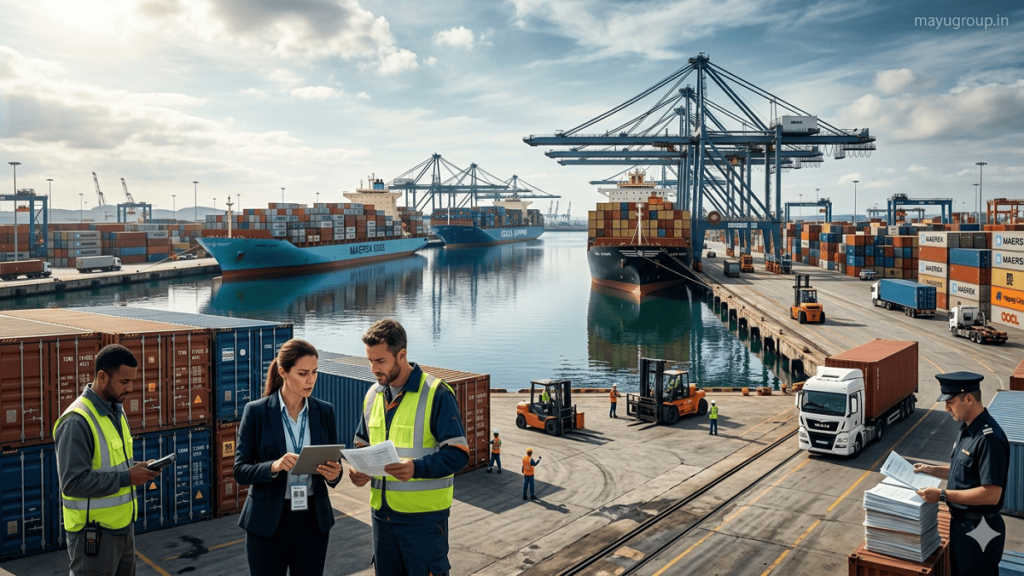
White Paper on Import Assistance
1. Executive Summary
Import assistance refers to the structured set of regulatory, logistical, financial, and advisory services that enable businesses and individuals to bring goods into a country in compliance with customs laws and trade regulations. This white paper examines the role of import assistance in modern trade ecosystems, its operational components, benefits to stakeholders, and its importance in improving global supply chain efficiency. It also highlights how governments and private sector intermediaries jointly contribute to simplifying import processes. In an increasingly globalized economy, import assistance has become essential for reducing trade friction, improving transparency, and enabling small and medium enterprises (SMEs) to participate in international markets.
2. Introduction
International trade involves complex processes such as tariff classification, documentation compliance, customs valuation, and logistics coordination. Without structured assistance, importers face high risks of delays, penalties, and financial losses. Import assistance systems—provided by customs authorities, freight forwarders, and licensed brokers—bridge the gap between regulatory frameworks and business operations. Organizations such as the World Trade Organization (WTO) emphasize trade facilitation as a key driver of global economic growth and efficiency.
3. Key Components of Import Assistance
3.1 Customs Compliance Support
Import assistance ensures adherence to customs regulations, including correct classification under Harmonized System (HS) codes, valuation rules, and import restrictions. Agencies like India’s Central Board of Indirect Taxes and Customs (CBIC) provide digital platforms and regulatory guidelines to support compliance.
3.2 Documentation Management
Accurate documentation is critical for import clearance. Import assistance includes preparation and verification of commercial invoices, packing lists, bills of lading, certificates of origin, and import declarations.
3.3 Logistics and Freight Forwarding
Freight forwarders manage end-to-end transportation, including shipping, warehousing, cargo insurance, and delivery coordination. This ensures efficient movement of goods across borders.
3.4 Financial and Risk Management
Trade finance instruments such as letters of credit and import insurance reduce financial risk and support cash flow management for importers.
3.5 Digital Trade Facilitation
Modern customs systems such as ICEGATE in India enable electronic filing, real-time tracking, and faster clearance processes, reducing manual intervention and corruption risks.
4. Benefits of Import Assistance
Import assistance provides several advantages:
- Reduced customs delays and operational bottlenecks
- Improved regulatory compliance and reduced penalties
- Lower transaction costs through accurate duty estimation
- Enhanced supply chain efficiency and predictability
- Increased accessibility for SMEs entering global markets
5. Challenges in Import Assistance Systems
Despite advancements, challenges remain:
- Complex and frequently changing trade regulations
- Lack of awareness among small businesses
- Variations in customs procedures across countries
- Dependence on intermediaries, increasing service costs
6. Policy Recommendations
To improve import assistance systems, governments should:
- Expand digital customs infrastructure
- Simplify tariff classification systems
- Promote awareness programs for SMEs
- Strengthen international trade harmonization
- Encourage public-private partnerships in logistics and compliance services
7. Conclusion
Import assistance is a critical enabler of global trade efficiency. By reducing procedural complexity and improving compliance mechanisms, it supports economic growth, strengthens supply chains, and enhances market accessibility. As international trade continues to expand, investment in modern, transparent, and technology-driven import assistance systems will remain essential.
External References
- https://www.wto.org/english/tratop_e/tradfa_e/tradfa_e.htm
- https://www.cbic.gov.in/
- https://www.oecd.org/trade/topics/trade-facilitation/
- https://www.trade.gov/customs-and-imports
#Best Group of Company in Monaco
Industry Applications of Import Assistance
Import assistance plays a critical role across multiple industries by enabling the smooth flow of goods, raw materials, and components across international borders. It supports compliance with customs regulations, reduces operational delays, and improves supply chain efficiency. Different industries use import assistance in unique ways depending on their regulatory requirements, product complexity, and global sourcing needs.
1. Manufacturing Industry
The manufacturing sector is one of the largest users of import assistance because it heavily depends on imported raw materials, machinery, and components. Automotive, electronics, and machinery manufacturers import parts such as semiconductors, steel components, engines, and industrial equipment. Import assistance helps these companies with HS code classification, duty optimization, and customs clearance. It also ensures compliance with safety and technical standards, reducing production delays and maintaining continuous manufacturing cycles.
2. Pharmaceutical and Healthcare Industry
The pharmaceutical industry relies on strict regulatory compliance when importing active pharmaceutical ingredients (APIs), medical devices, and laboratory equipment. Import assistance ensures adherence to regulations set by health authorities and customs departments. It also helps manage certifications, import licenses, and quality documentation. Proper assistance reduces the risk of shipment rejection and ensures timely availability of critical medicines and healthcare supplies.
3. Retail and E-Commerce Industry
Global e-commerce platforms and retail businesses import finished goods such as electronics, clothing, accessories, and home products. Import assistance supports them in managing high-volume shipments, customs declarations, and last-mile logistics. It also helps optimize landed costs, enabling competitive pricing strategies in online marketplaces. Efficient import processes are essential for maintaining delivery timelines and customer satisfaction.
4. Automotive Industry
The automotive sector imports components such as engines, transmissions, sensors, and electronic control units. Import assistance ensures compliance with technical standards, customs regulations, and safety certifications. It also helps automotive companies manage complex global supply chains involving multiple suppliers across different countries. Accurate documentation and duty optimization are critical for maintaining production efficiency and cost control.
5. Agriculture and Food Industry
This industry imports fertilizers, seeds, food processing equipment, and packaged food products. Import assistance ensures compliance with food safety standards, phytosanitary regulations, and quality certifications. It also helps manage inspection requirements and clearance procedures for perishable goods, reducing spoilage and delays.
6. Technology and Electronics Industry
Technology companies import semiconductors, hardware components, servers, and consumer electronics. Import assistance supports them in handling sensitive goods with strict regulatory requirements. It ensures proper classification, export-import policy compliance, and efficient customs clearance, which is crucial in industries where time-to-market is highly competitive.
7. Energy and Industrial Sector
Energy companies import equipment such as turbines, drilling machinery, and renewable energy components like solar panels and wind turbines. Import assistance helps manage large-scale logistics, high-value shipments, and compliance with technical standards and safety regulations.
Conclusion
Across industries, import assistance is essential for reducing complexity, ensuring regulatory compliance, and improving supply chain performance. It enables businesses to operate globally, maintain production continuity, and remain competitive in international markets. As industries become more interconnected, the importance of efficient import facilitation continues to grow.
External References
- https://www.wto.org/english/tratop_e/tradfa_e/tradfa_e.htm
- https://www.cbic.gov.in/
- https://www.trade.gov/customs-and-imports
- https://www.oecd.org/trade/topics/trade-facilitation/
#Best Group of Company in India
Ask FAQs
What is import assistance?
Import assistance refers to services and systems that help individuals and businesses bring goods into a country while complying with customs regulations, documentation requirements, and trade laws. It includes support for customs clearance, tariff classification, logistics coordination, and regulatory compliance. These services are provided by government agencies, customs brokers, freight forwarders, and trade consultants to simplify international trade processes.
Who needs import assistance?
Import assistance is useful for a wide range of stakeholders, including businesses, small and medium enterprises (SMEs), multinational companies, and individual importers. Companies importing raw materials, machinery, or finished goods rely on it to ensure smooth customs clearance. Individuals importing personal goods or vehicles may also need assistance to comply with customs rules and pay applicable duties correctly.
What services are included in import assistance?
Import assistance typically includes customs documentation support, tariff classification under HS codes, duty and tax calculation, freight forwarding, cargo insurance, and logistics coordination. It may also involve regulatory compliance guidance, trade financing support, and digital customs filing through government systems such as electronic customs portals.
Why is import assistance important for businesses?
Import assistance is important because it reduces delays, ensures compliance with customs regulations, and helps businesses manage costs effectively. It minimizes the risk of penalties, shipment rejection, and documentation errors. It also improves supply chain efficiency by ensuring timely delivery of goods, which is essential for industries that depend on imported materials and components.
How do governments support import assistance?
Governments support import assistance by establishing customs authorities, trade facilitation systems, and digital platforms that simplify import procedures. Agencies like the World Trade Organization (WTO) promote global trade facilitation standards, while national bodies such as India’s Central Board of Indirect Taxes and Customs (CBIC) provide online systems, guidelines, and automated clearance processes to help importers comply with regulations efficiently.
Table of Contents
Disclaimer
This content is provided for general informational and educational purposes only. It does not constitute legal, financial, or professional trade advice. Import regulations vary by country and may change over time; users should consult relevant customs authorities or licensed trade professionals for accurate and up-to-date guidance.