FoodTech Funding
FoodTech Funding refers to venture capital (VC), private equity, and strategic corporate investments directed toward startups and companies that innovate in food production, distribution, processing, and consumption technologies. This includes segments such as alternative proteins, precision agriculture, food delivery platforms, supply chain logistics, fermentation technologies, and AI-driven food systems. In recent years, FoodTech has become a critical sub-sector within agrifood innovation, although investment patterns have shifted significantly compared to the early 2020s.
As of 2025–2026, global agrifoodtech funding has stabilized at around $16.2 billion annually, remaining relatively flat for multiple consecutive years, with a slight decline of about 3% year-over-year (AgFunder). This plateau reflects a maturing market where investors are becoming more selective, prioritizing profitability and scalable unit economics over rapid expansion. At the same time, deal counts have decreased, indicating fewer but higher-quality investments.
A key trend is the concentration of capital into fewer startups. Rather than spreading investments broadly, venture capital firms are focusing on category leaders and later-stage companies capable of achieving large-scale operations. For example, AgTech and FoodTech combined attracted over $6 billion in AgTech-specific VC activity in 2025 alone, but this was distributed across fewer deals, increasing average deal size significantly (CropLife). This reflects a broader VC shift toward risk reduction and consolidation.
Another major shift is the decline of “growth-at-all-costs” funding models, particularly in consumer-facing food delivery and eGrocery startups. These segments, which saw massive funding surges during 2020–2021, have experienced a sharp correction. In contrast, upstream technologies—such as agricultural biotech, food science, and fermentation—are gaining stronger investor interest due to their long-term structural value and defensible intellectual property (AgFunder).
Geographically, investment is also diversifying. Emerging markets such as India and Southeast Asia are becoming increasingly important due to strong demand for food innovation and lower operational costs. However, macroeconomic pressures, inflation, and higher interest rates have slowed overall fundraising momentum.
A defining factor influencing FoodTech funding today is competition from artificial intelligence. AI-focused startups have absorbed a disproportionately large share of global venture capital, forcing FoodTech companies to demonstrate clearer profitability and technological differentiation to attract funding.
In summary, FoodTech funding is no longer in a hyper-growth phase but is evolving into a selective, efficiency-driven investment landscape. Investors are backing fewer companies, but with larger and more strategic checks, prioritizing sustainable business models, deep technology, and scalable infrastructure over speculative growth.
Relevant external references:
https://www.agfunder.com/research/agfunder-global-agrifoodtech-investment-report-2026/
https://www.croplife.com/smart-tech/2025-agtech-venture-capital-investment-and-exit-round-up/
https://www.fooddive.com/news/food-tech-vc-investment-startups/750371/
#Best Group of Company in Russia
What is FoodTech funding?
FoodTech funding refers to the capital invested in companies that develop and scale innovations across the food system. This includes startups and established firms working on how food is grown, processed, distributed, packaged, delivered, and consumed. The funding typically comes from venture capital firms, private equity investors, corporate venture arms, government grants, and impact investors.
At its core, FoodTech funding supports technological and business model innovation in the food industry. The sector spans a wide range of categories. Upstream areas include agricultural technology (AgTech), such as precision farming, smart irrigation, soil monitoring systems, and biotechnology solutions that improve crop yields. Midstream innovations involve food processing, alternative proteins (such as plant-based and cultivated meat), fermentation technologies, and food safety systems. Downstream innovations include cloud kitchens, online food delivery platforms, grocery e-commerce, and supply chain logistics optimization.
The primary purpose of FoodTech funding is to solve inefficiencies in the global food system. These inefficiencies include food waste, unsustainable farming practices, climate impact from agriculture, supply chain fragmentation, and rising global food demand. Investors see FoodTech as a way to address these challenges while generating long-term financial returns.
FoodTech funding gained significant momentum between 2015 and 2021, driven by digital transformation, changing consumer preferences, and increased awareness of sustainability. During that period, capital flowed heavily into food delivery apps, meal kits, and alternative protein startups. However, in recent years, the funding environment has become more cautious. Investors are now more focused on profitability, scalability, and clear unit economics rather than rapid user growth.
Today, FoodTech investment is increasingly concentrated in fewer, more mature companies. Sectors like alternative proteins, agricultural biotechnology, and AI-driven supply chain optimization are attracting more stable, long-term capital. In contrast, highly competitive consumer delivery markets have seen reduced funding due to high operational costs and low margins.
FoodTech funding is also influenced by broader macroeconomic trends. Higher interest rates, inflation, and global economic uncertainty have led venture capital firms to become more selective. At the same time, competition from artificial intelligence startups has redirected a significant share of global investment away from FoodTech, forcing companies in the sector to demonstrate stronger technological differentiation.
Geographically, funding is expanding beyond traditional hubs like the United States and Europe. Countries such as India, Israel, China, and Singapore are emerging as important centers for FoodTech innovation due to strong agricultural bases and growing demand for efficient food systems.
In summary, FoodTech funding is the financial backing that enables innovation across the entire food ecosystem. It plays a critical role in transforming how food is produced and consumed, with an increasing focus on sustainability, efficiency, and long-term value creation rather than short-term growth.
References:
https://www.agfunder.com/research/agfunder-global-agrifoodtech-investment-report-2026/
https://www.fao.org/food-agriculture-organization/overview/en/
https://www.fooddive.com/news/food-tech-vc-investment-startups/750371/
#Best Group of Company in German
Who provides funding for FoodTech startups?
FoodTech startups are typically funded by a mix of private investors, public institutions, and strategic industry players that support innovation across agriculture, food production, and distribution systems. Because FoodTech sits at the intersection of technology, sustainability, and consumer markets, its funding ecosystem is diverse and multi-layered.
One of the most important sources is venture capital (VC) firms. These are investment funds that provide early-stage to growth-stage capital in exchange for equity. Many VC firms specialize in FoodTech and AgriTech, backing startups working on alternative proteins, precision agriculture, supply chain optimization, and food delivery systems. Examples include global agrifood-focused funds such as SOSV and other specialized climate and food innovation investors. Venture capital is the dominant funding source in the sector, accounting for the majority of startup deals globally (CBG Management Academy).
Another major category is corporate venture capital (CVC). Large food, agriculture, and nutrition companies invest directly in startups to gain access to new technologies and future supply chain advantages. Companies such as food manufacturers, beverage brands, and agricultural input firms often create dedicated investment arms to fund startups that align with their strategic interests. These partnerships are not just financial; they often include pilot projects, distribution support, and co-development of products and technologies (Qubit Capital).
Government agencies and public institutions also play a key role, especially in early-stage funding. Many governments provide grants, subsidies, and innovation programs to support FoodTech development in areas such as food security, climate-smart agriculture, and rural development. These funds are often non-dilutive, meaning startups do not give up equity. Programs in regions like the EU, the United States, and India actively support agrifood innovation through R&D grants and accelerator initiatives (Qubit Capital).
In addition, angel investors contribute significantly at the seed stage. These are high-net-worth individuals who invest their personal capital in early-stage startups, often in exchange for equity and mentorship. In FoodTech, angels may include experienced entrepreneurs, former executives in food industries, or specialists in agriculture and biotechnology.
Impact investors and ESG-focused funds are increasingly important as well. These investors prioritize environmental and social outcomes alongside financial returns. FoodTech startups addressing sustainability, carbon reduction, or food waste reduction often attract this type of capital.
Finally, accelerators and incubators such as food innovation labs, university-linked programs, and corporate accelerator initiatives provide small amounts of funding, mentorship, and access to investor networks. These programs often serve as the first formal funding step for startups moving from idea to prototype.
In summary, FoodTech startups are funded through a layered ecosystem involving venture capital, corporate investors, government grants, angel investors, impact funds, and accelerators. Each plays a different role depending on the startup’s stage, technology maturity, and market readiness, creating a structured pipeline from idea to large-scale commercialization.
References:
https://www.agfunder.com/research/agfunder-global-agrifoodtech-investment-report-2026/
https://www.qubit.capital/blog/strategic-corporate-partnerships-foodtech-funding
https://www.qubit.capital/blog/alternative-non-dilutive-funding-agritech-foodtech
https://www.agfundernews.com/lever-vc-announces-50m-first-close-of-agrifoodtech-fund-ii/
#Best Group of Company in England

Why is FoodTech funding important?
FoodTech funding is important because it enables innovation across the entire food system at a time when global food demand, climate pressures, and supply chain challenges are increasing. Without sustained investment, many of the technologies needed to make food production more efficient, sustainable, and resilient would struggle to move beyond early research or prototype stages.
One of the most critical reasons for its importance is global food security. The world population is projected to approach 10 billion by mid-century, which will significantly increase demand for food. FoodTech funding supports innovations such as precision agriculture, drought-resistant crops, vertical farming, and AI-driven yield optimization. These technologies help farmers produce more food using fewer resources, directly addressing future supply constraints. Organizations like the Food and Agriculture Organization emphasize the need for innovation-driven productivity gains to meet future demand (fao.org).
Another major factor is sustainability and climate impact reduction. The global food system contributes a significant share of greenhouse gas emissions, particularly from livestock, land use change, and supply chain inefficiencies. FoodTech funding accelerates the development of alternative proteins (such as plant-based and cultivated meat), low-emission farming techniques, and food waste reduction technologies. These innovations are essential for aligning the food sector with global climate goals and reducing environmental degradation.
FoodTech funding is also crucial for improving supply chain efficiency and resilience. Recent global disruptions, including the COVID-19 pandemic and geopolitical conflicts, exposed vulnerabilities in food logistics and distribution systems. Investment in digital supply chain platforms, predictive analytics, cold storage innovation, and logistics automation helps reduce waste, lower costs, and improve reliability from farm to consumer.
A further reason is economic development and job creation. FoodTech startups contribute to new industries and high-skill employment opportunities in biotechnology, software engineering, agricultural science, and logistics management. In emerging economies, FoodTech investment can also improve rural livelihoods by increasing farmer productivity and connecting producers directly to markets.
FoodTech funding is also important for driving scientific and technological advancement. Many innovations in this sector require long development cycles, such as cellular agriculture, fermentation-based proteins, or gene-edited crops. These areas are capital-intensive and carry high initial risk, making external funding essential to bridge the gap between research and commercialization.
Finally, FoodTech funding supports consumer health and nutrition improvements. Investments in food science enable the development of healthier products, cleaner ingredient alternatives, and personalized nutrition solutions driven by data and AI. This contributes to better public health outcomes and reduces the burden of diet-related diseases.
In summary, FoodTech funding is important because it underpins solutions to some of the world’s most pressing challenges—food security, climate change, supply chain resilience, economic development, and public health. It acts as the financial engine that transforms scientific and technological ideas into scalable systems capable of reshaping how food is produced and consumed globally.
References:
https://www.fao.org/
https://www.agfunder.com/research/agfunder-global-agrifoodtech-investment-report-2026/
https://www.worldbank.org/en/topic/agriculture/overview
https://www.weforum.org/agenda/2023/food-systems-sustainability-climate-change/
#Best Group of Company in America
What types of FoodTech projects receive funding?
FoodTech funding is directed toward a wide range of projects that aim to improve how food is produced, processed, distributed, and consumed. Investors typically prioritize technologies that address major global challenges such as food security, climate change, supply chain inefficiencies, and rising consumer demand for healthier and more sustainable food options.
One of the most heavily funded categories is alternative protein development. This includes plant-based meat, cultivated (lab-grown) meat, and fermentation-derived proteins. These projects aim to reduce dependence on traditional livestock farming, which is resource-intensive and environmentally impactful. Startups in this space focus on improving taste, texture, scalability, and cost reduction to make alternatives competitive with conventional meat products. Research institutions and industry reports highlight alternative proteins as one of the fastest-growing FoodTech segments globally (weforum.org).
Another major category is AgTech and precision agriculture. These projects use technologies such as IoT sensors, drones, satellite imaging, and AI-based analytics to optimize farming practices. Funding supports solutions that help farmers monitor soil health, manage irrigation, predict crop yields, and reduce fertilizer or pesticide usage. The goal is to increase productivity while minimizing environmental impact.
Food supply chain and logistics innovation is also a key focus area. Projects in this category improve storage, transportation, traceability, and distribution of food. This includes cold-chain technology, blockchain-based traceability systems, inventory management platforms, and AI-driven demand forecasting tools. These innovations help reduce food waste, which is a major global issue, with nearly one-third of all food produced being lost or wasted according to global estimates (fao.org).
Funding also flows into food delivery and cloud kitchen platforms, although this segment has become more selective in recent years. These projects focus on optimizing last-mile delivery, improving operational efficiency, and reducing costs through shared kitchen infrastructure and automation. While growth has slowed compared to earlier years, efficient business models still attract investment.
Another growing area is food processing and fermentation technologies. This includes precision fermentation for producing dairy alternatives, enzymes, flavors, and nutritional compounds. These technologies are seen as highly scalable and capable of replacing traditional resource-heavy production methods.
Food safety and quality assurance technologies also receive funding. These include smart packaging, contamination detection systems, and blockchain-based tracking tools that ensure transparency and compliance across the food supply chain.
Finally, personalized nutrition and digital food platforms are emerging areas of interest. These projects use data analytics, AI, and sometimes genetic or microbiome data to recommend personalized diets or functional foods tailored to individual health needs.
In summary, FoodTech funding is concentrated in projects that improve sustainability, efficiency, and innovation across the entire food system. The most funded areas include alternative proteins, precision agriculture, supply chain optimization, fermentation technologies, and food safety systems, all aimed at building a more resilient and sustainable global food ecosystem.
References:
https://www.weforum.org/agenda/2022/01/alternative-proteins-food-systems-sustainability/
https://www.fao.org/food-loss-and-food-waste/en/
https://www.agfunder.com/research/agfunder-global-agrifoodtech-investment-report-2026/
#Best Group of Company in Nepal
How does funding help innovation in food technology?
Funding plays a central role in driving innovation in food technology because most FoodTech solutions require significant capital, long development cycles, and high technical risk before they can become commercially viable. Without external funding, many promising ideas in areas like alternative proteins, agricultural automation, and food science would remain at the research stage and never reach large-scale real-world use.
One of the most important ways funding helps innovation is by supporting research and development (R&D). FoodTech innovations such as cultivated meat, precision fermentation, or gene-edited crops require advanced laboratory work, specialized equipment, and scientific expertise. Venture capital, government grants, and corporate investment provide the financial resources needed to conduct experiments, build prototypes, and validate new technologies. This early-stage funding is critical because these projects often take years before generating revenue.
Funding also enables scaling from prototype to production. Many FoodTech startups face a major challenge known as the “scale-up gap,” where a technology works in a lab but is too expensive or inefficient to produce at industrial scale. Investment allows companies to build pilot plants, industrial facilities, and supply chain infrastructure needed to bring costs down and make products commercially viable. For example, alternative protein companies require large-scale bioreactors and manufacturing systems, which are extremely capital-intensive.
Another key contribution of funding is accelerating commercialization and market entry. Even when a technology is ready, companies need capital for regulatory approvals, branding, distribution networks, and marketing. Funding helps startups move quickly into competitive markets, secure partnerships with retailers or food service companies, and reach consumers faster. This speeds up the adoption of innovative food solutions across the industry.
Funding also promotes talent acquisition and multidisciplinary collaboration. FoodTech innovation requires expertise in biotechnology, data science, engineering, and food science. Investment allows startups to hire skilled researchers, engineers, and business professionals, creating teams capable of solving complex technical and operational challenges. It also encourages collaboration between universities, research institutions, and private companies.
In addition, funding supports risk-taking and experimentation. Many FoodTech innovations involve uncertain outcomes, such as developing new protein sources or replacing traditional agricultural inputs. Investors are essential in absorbing this early risk, allowing entrepreneurs to explore unconventional ideas that traditional financing systems would not support. This risk capital is what drives breakthrough innovation rather than incremental improvements.
Finally, funding helps build ecosystems and infrastructure. Large-scale FoodTech innovation often requires shared resources such as research labs, incubators, testing facilities, and supply chain networks. Public and private funding supports these ecosystems, creating environments where startups can grow faster and share knowledge.
In summary, funding acts as the foundation of FoodTech innovation by enabling research, scaling production, accelerating commercialization, attracting talent, supporting risk-taking, and building supportive ecosystems. Without it, the transformation of the global food system toward greater sustainability, efficiency, and resilience would be significantly slower.
References:
https://www.agfunder.com/research/agfunder-global-agrifoodtech-investment-report-2026/
https://www.weforum.org/agenda/2023/food-systems-innovation-investment-sustainability/
https://www.fao.org/food-agriculture-organization/overview/en/
#Best Group of Company in Taiwan
Case Study of FoodTech Funding
A strong example of FoodTech funding in action is the growth journey of Impossible Foods, a U.S.-based startup focused on developing plant-based alternatives to animal meat using bioengineering and food science. Founded in 2011, the company aimed to replicate the taste and texture of meat using plant-derived ingredients, with a core innovation around heme (a molecule that helps create a meat-like flavor profile).
Early-Stage Funding and R&D Phase
In its early years, Impossible Foods relied heavily on venture capital and private equity funding to support intensive research and development. FoodTech innovations like plant-based meat require long scientific experimentation cycles, and early investors were betting on a high-risk, high-reward opportunity. During this phase, funding was primarily used for laboratory research, ingredient testing, and building a proof of concept.
One of the most significant early milestones was investment from high-profile venture capital firms such as Khosla Ventures, which provided critical seed and Series A funding. These funds allowed the company to hire top scientists in biochemistry and food engineering and build proprietary production methods.
Growth-Stage Funding and Scaling
As the company validated its technology and product-market fit, it entered a rapid growth phase. In 2015, Impossible Foods raised approximately $108 million in Series D funding led by Horizons Ventures. This marked a shift from experimental research funding to scaling production capacity and preparing for commercialization.
Later, in 2017 and 2018, the company secured even larger funding rounds, including a major $300 million investment led by Temasek Holdings. These investments were used to expand manufacturing capabilities, improve supply chain systems, and enter retail and foodservice markets. Funding also supported regulatory approvals, including clearance from the U.S. Food and Drug Administration (FDA), which was essential for market entry.
Strategic Expansion and Corporate Investment
A key aspect of Impossible Foods’ funding strategy was the inclusion of strategic corporate investors. These investors not only provided capital but also helped with distribution channels and market access. For example, partnerships with restaurant chains and food distributors accelerated product adoption.
This stage highlights an important feature of FoodTech funding: it is not just financial support but also strategic ecosystem building. Investors often bring operational expertise, market access, and industry partnerships that are critical for scaling.
Impact of Funding on Innovation
The funding enabled Impossible Foods to move from a lab-based concept to a globally recognized consumer brand. Without sustained investment, it would have been impossible to build production-scale facilities, refine taste and texture to match meat, or compete in retail and restaurant markets.
The company’s success also helped validate the broader plant-based protein sector, encouraging further investment into competitors and adjacent FoodTech innovations.
Conclusion
The Impossible Foods case demonstrates how FoodTech funding evolves in stages—from early scientific research funding to large-scale commercialization and strategic corporate investment. It shows that sustained capital is essential not only for developing breakthrough food technologies but also for scaling them into real-world solutions that can compete in global markets.
References
https://www.impossiblefoods.com
https://www.khoslaventures.com
https://www.weforum.org/agenda/2020/01/impossible-burger-food-innovation-sustainability/
https://www.fda.gov/food/food-ingredients-packaging/gmo-plant-based-meat-ingredients
#Best Group of Company in China
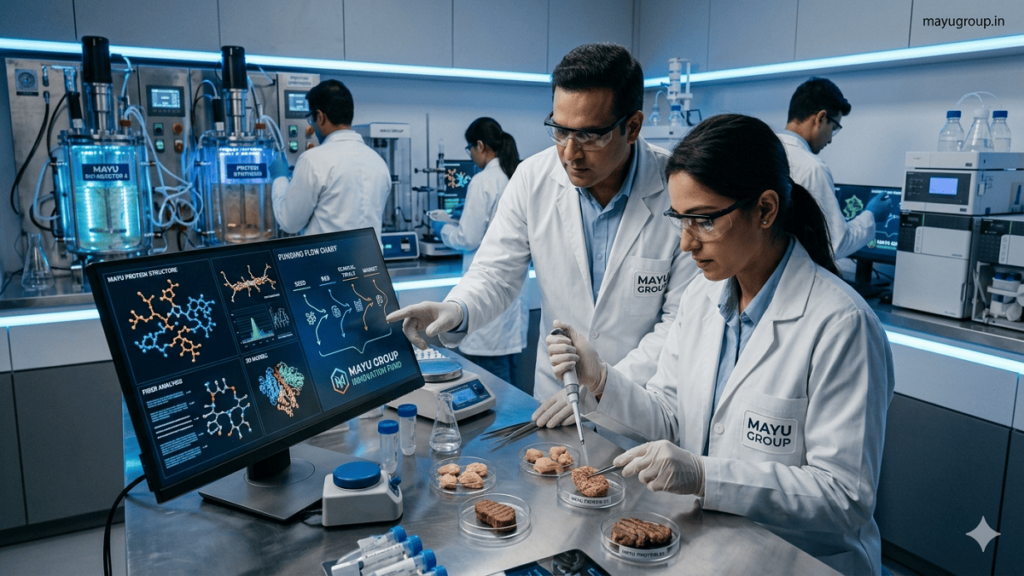
White Paper on FoodTech Funding
1. Executive Summary
FoodTech funding refers to the structured allocation of capital—primarily from venture capital firms, corporate investors, governments, and impact funds—into startups and technologies that transform the global food system. This white paper examines current funding patterns, key investment drivers, and the evolving structure of capital allocation within the FoodTech ecosystem. Recent industry data shows that global agrifoodtech funding has stabilized at approximately $16.2 billion in 2025, following a major post-2021 correction, with investors becoming more selective and focused on scalable, science-driven innovations (AgFunder).
2. Market Overview and Funding Trends
The FoodTech sector has transitioned from rapid expansion (2017–2021) to a phase of consolidation and disciplined investment. Total funding has significantly declined from its peak of over $60 billion in 2021 to around $16 billion in recent years, reflecting a shift away from speculative growth models toward profitability and efficiency (FoodBev Media).
Key trends include:
- Decline in downstream consumer apps (e.g., food delivery and eGrocery) due to low margins
- Rising investment in upstream technologies such as AgTech, biotechnology, and food production systems
- Increased deal selectivity, with fewer but larger and higher-quality investments
- Shift toward deeptech and science-based food solutions
Upstream innovations now capture a growing share of total capital as investors prioritize long-term structural impact over short-term consumer scaling.
3. Key Funding Sources
FoodTech funding comes from a multi-layered ecosystem:
a. Venture Capital (VC)
VC firms remain the dominant source of FoodTech investment, funding early-stage innovation through to scale-ups. They focus on high-growth potential companies in alternative proteins, precision agriculture, and supply chain optimization.
b. Corporate Venture Capital (CVC)
Large food manufacturers and agribusiness corporations invest strategically in startups to access innovation pipelines, new ingredients, and distribution advantages.
c. Government and Public Funding
Public grants and innovation programs support early-stage research, particularly in food security, climate resilience, and agricultural productivity.
d. Impact and ESG Investors
These funds prioritize sustainability outcomes, including reduced emissions, circular food systems, and waste reduction technologies.
4. Allocation of Capital Across Sub-Sectors
Funding is distributed across four major FoodTech categories:
- Alternative proteins (plant-based, cultivated meat, fermentation-based proteins)
- Precision agriculture and AgTech (IoT, AI, drones, soil analytics)
- Food supply chain and logistics tech (cold chain, traceability, automation)
- Food science and biotechnology (fermentation, enzymes, ingredient innovation)
Among these, biotechnology and upstream agricultural systems are attracting increasing investment, while consumer-facing platforms face reduced funding due to scalability challenges.
5. Investment Drivers
FoodTech funding is primarily driven by:
- Global food security pressures from population growth
- Climate change and sustainability mandates
- Demand for healthier and alternative food sources
- Supply chain disruptions and inefficiencies
- Advances in biotechnology, AI, and automation
These factors make FoodTech both a financial opportunity and a strategic necessity for governments and corporations.
6. Challenges in FoodTech Funding
Despite strong interest, the sector faces several challenges:
- High capital requirements for scaling production
- Long development timelines for biotech-based solutions
- Regulatory uncertainty in novel foods
- Investor shift toward AI and other high-growth sectors
- Difficulty in achieving early profitability
7. Conclusion
FoodTech funding is evolving into a more disciplined, impact-oriented investment landscape. Capital is increasingly concentrated in deep technology, sustainability-driven innovations, and scalable food system solutions. While overall funding has stabilized, the strategic importance of FoodTech continues to rise as it addresses global challenges in food security, climate resilience, and sustainable production systems.
References
- https://agfunder.com/research/agfunder-global-agrifoodtech-investment-report-2026/
- https://www.foodbev.com/news/global-agri-food-tech-investment-shrinks-as-sector-enters-new-growth-phase
- https://www.agfundernews.com/agrifoodtech-funding-is-flat-the-interesting-part-is-where-it-isnt
- https://www.fao.org/food-agriculture-organization/overview/en/
#Best Group of Company in Japan
Industry Application of FoodTech Funding
FoodTech funding plays a practical and transformative role across multiple industries by financing technologies that improve how food is produced, processed, distributed, and consumed. Rather than being limited to startups alone, this capital directly influences agriculture, manufacturing, retail, logistics, healthcare, and hospitality sectors. Its applications are increasingly interconnected, creating an integrated “farm-to-fork” innovation ecosystem.
1. Agriculture and Primary Production
One of the most significant applications of FoodTech funding is in modern agriculture (AgTech). Investments support technologies such as precision farming, AI-driven crop monitoring, automated irrigation systems, drones, and satellite-based soil analytics. These tools help farmers increase yield while reducing inputs like water, fertilizer, and pesticides.
Funding also supports climate-resilient agriculture, including drought-resistant seeds and regenerative farming practices. According to the Food and Agriculture Organization, improving agricultural productivity through innovation is essential for global food security and sustainable land use (fao.org).
2. Food Manufacturing and Processing
FoodTech funding is heavily applied in food processing innovation, particularly in biotechnology-driven manufacturing. This includes:
- Precision fermentation for dairy and protein alternatives
- Enzyme engineering for improved food texture and shelf life
- Clean-label ingredient development
Companies in this space use funding to build pilot plants and industrial-scale production facilities, which are critical for transitioning from lab innovation to commercial production. This is especially important in alternative protein manufacturing, where scaling costs are high.
3. Alternative Protein Industry
A major industrial application of FoodTech funding is the development of plant-based, fermentation-derived, and cultivated meat products. Investment enables companies to conduct R&D, improve taste and texture, and scale production infrastructure.
This sector is driven by environmental and ethical concerns related to traditional livestock farming. Organizations like the World Economic Forum highlight alternative proteins as a key pathway toward reducing global greenhouse gas emissions from food systems (weforum.org).
4. Supply Chain and Logistics
FoodTech funding is widely used in supply chain optimization technologies. Applications include:
- Cold chain monitoring systems
- Blockchain-based food traceability
- AI-powered demand forecasting
- Warehouse automation and robotics
These innovations reduce food loss, improve transparency, and enhance efficiency in global distribution networks. The FAO estimates that nearly one-third of global food is lost or wasted, making supply chain innovation a critical investment area (fao.org).
5. Retail, E-commerce, and Food Delivery
In the retail sector, FoodTech funding supports online grocery platforms, cloud kitchens, and food delivery systems. These models use data analytics, route optimization, and automated kitchen systems to improve delivery speed and reduce operational costs.
Although this segment experienced rapid expansion during 2020–2021, current funding is more selective, focusing on efficient and profitable business models rather than aggressive expansion.
6. Food Safety and Quality Assurance
FoodTech investments also enhance food safety systems, including smart packaging, contamination detection, and real-time monitoring technologies. These tools are widely used in food manufacturing and retail industries to ensure compliance with safety standards and reduce public health risks.
7. Healthcare and Nutrition
FoodTech funding increasingly supports personalized nutrition and health-focused food innovation. Applications include AI-based diet recommendations, functional foods, and microbiome-driven nutrition planning. These innovations are used in healthcare systems, wellness platforms, and clinical nutrition programs.
Conclusion
FoodTech funding has broad industrial applications that extend far beyond startups. It is actively transforming agriculture, manufacturing, logistics, retail, and healthcare by enabling technologies that improve efficiency, sustainability, and food system resilience. As investment continues to shift toward deep technology and scalable infrastructure, its industrial impact is expected to grow further in the coming years.
References
https://www.fao.org/food-loss-and-food-waste/en/
https://www.weforum.org/agenda/2022/01/alternative-proteins-food-systems-sustainability/
https://www.fao.org/
https://www.agfunder.com/research/agfunder-global-agrifoodtech-investment-report-2026/
#Best Group of Company in India
Ask FAQs
What is FoodTech funding?
FoodTech funding refers to the capital invested in startups and companies that develop innovations across the food system, including agriculture, food production, processing, distribution, and consumption. It is typically provided by venture capital firms, corporate investors, government grants, and impact funds to support technologies that improve efficiency, sustainability, and food security.
Why do FoodTech startups need funding?
FoodTech startups require funding because most innovations in this sector involve high research costs, long development cycles, and expensive scaling processes. Technologies such as alternative proteins, precision agriculture systems, and food biotechnology need significant investment before they become commercially viable. Funding helps bridge the gap between early research and large-scale production.
Which sectors attract the most FoodTech funding?
The most funded areas in FoodTech include alternative proteins (plant-based and cultivated meat), precision agriculture, food supply chain technologies, fermentation-based food production, and food safety systems. These sectors are attractive because they address global challenges such as climate change, food waste, and rising food demand.
Who are the main investors in FoodTech companies?
FoodTech companies are funded by venture capital firms, corporate venture capital arms of large food and agriculture companies, government agencies, angel investors, and impact investors. Venture capital is the dominant source, while corporate investors often provide strategic support such as partnerships and distribution access.
How does FoodTech funding benefit consumers?
FoodTech funding leads to better and more sustainable food products for consumers. It enables innovations such as healthier food options, improved food safety, reduced environmental impact, and more efficient delivery systems. Over time, this results in more affordable, nutritious, and accessible food choices.
Table of Contents
Disclaimer
This content is for general informational and educational purposes only. It does not constitute financial, investment, or professional advice. While efforts have been made to ensure accuracy, FoodTech funding data and trends may change over time. Readers should verify information from official and updated sources before making any decisions.