Equipment Financing
Equipment financing is a type of business loan that enables companies to purchase, lease, or upgrade essential machinery, tools, and technology required for their operations. Instead of paying the full cost upfront, businesses repay the loan over time in installments, making it easier to manage cash flow while acquiring high-value assets. This financing option is widely used across industries such as manufacturing, construction, healthcare, transportation, and IT.
The primary purpose of equipment financing is to help businesses access necessary assets without putting excessive strain on working capital. The equipment being purchased often serves as collateral for the loan, which reduces risk for lenders and improves approval chances. Once the loan is fully repaid, the business owns the equipment outright.
Equipment financing typically works through two main structures: loans and leases. In an equipment loan, the borrower takes ownership of the asset immediately and repays the lender over a fixed term with interest. In an equipment lease, the business rents the equipment for a specified period and may have the option to purchase it at the end of the lease term. Each option provides flexibility depending on business needs and financial strategy.
Lenders evaluate several factors before approving equipment financing. These include the business’s credit history, cash flow stability, industry type, and the value and lifespan of the equipment being financed. Since the asset itself acts as collateral, approval is often faster compared to unsecured business loans. More detailed financial insights can be found at Investopedia Equipment Financing Guide.
One of the key advantages of equipment financing is improved cash flow management. Businesses can acquire expensive machinery without depleting reserves, allowing them to invest in other operational needs such as staffing, marketing, or expansion. It also enables companies to stay competitive by upgrading outdated equipment regularly.
However, equipment financing also carries certain risks. If the business fails to generate enough revenue, loan repayments can become burdensome. Additionally, equipment may depreciate faster than the repayment term, potentially leading to mismatched asset value and loan balance. Proper financial planning is essential to avoid such challenges.
Industries like construction rely heavily on equipment financing for heavy machinery, while healthcare providers use it for diagnostic machines and medical devices. Similarly, logistics companies finance vehicles and tracking systems, and IT firms use it for servers and advanced technology infrastructure.
Government-backed programs in some regions also support small businesses in acquiring equipment. For example, the U.S. Small Business Administration provides financing assistance to help businesses invest in essential operational assets. More information is available at SBA Loan Programs.
In conclusion, equipment financing is a vital financial tool that enables businesses to access critical assets without large upfront costs. When used strategically, it improves productivity, supports expansion, and enhances long-term operational efficiency while maintaining financial stability.
#Equipment Financing in India
What is equipment financing?
Equipment financing is a type of business funding that helps companies purchase, lease, or upgrade machinery, tools, and equipment needed for their operations. Instead of paying the full cost of equipment upfront, businesses borrow money from a lender and repay it over time through fixed installments. This makes it easier for companies to manage cash flow while still accessing essential assets required for growth and productivity.
In most cases, the equipment itself acts as collateral for the loan. This means that if the borrower is unable to repay, the lender can recover losses by repossessing the financed equipment. Because of this built-in security, equipment financing is often easier to obtain compared to unsecured business loans.
Equipment financing is widely used across industries such as construction, manufacturing, healthcare, transportation, agriculture, and information technology. For example, a construction company may finance excavators or cranes, while a hospital may finance MRI machines or diagnostic tools. This flexibility makes it a practical solution for businesses that rely heavily on specialized equipment.
There are two main types of equipment financing: equipment loans and equipment leases. In an equipment loan, the business takes ownership of the asset and repays the loan over time with interest. In an equipment lease, the business rents the equipment for a fixed period and may have the option to purchase it at the end of the lease term. Each option offers different financial advantages depending on business needs.
Lenders typically evaluate several factors before approving equipment financing, including business credit history, cash flow stability, industry type, and the value of the equipment being purchased. Since the equipment serves as collateral, approval processes are often faster and more straightforward than other types of business financing. For more details on structure and use cases, see Investopedia Equipment Financing Guide.
One of the key benefits of equipment financing is that it allows businesses to preserve working capital while still investing in essential assets. This helps improve productivity, expand operations, and maintain financial flexibility. However, businesses must also consider risks such as depreciation of equipment and long-term repayment obligations.
Government programs in some regions also support equipment financing for small businesses. For example, the U.S. Small Business Administration provides loan programs that help businesses acquire necessary equipment with favorable terms. More information is available at SBA Loan Programs.
In summary, equipment financing is a practical funding solution that enables businesses to acquire essential machinery and tools without large upfront costs, helping them grow and operate efficiently.
#Equipment Financing in Maharashtra
How does equipment financing work?
Equipment financing works as a structured funding method that allows businesses to acquire machinery, tools, or technology without paying the full cost upfront. Instead, a lender provides capital to purchase the equipment, and the business repays the amount over time through fixed installments, usually with interest. This helps companies preserve cash flow while still gaining access to essential operational assets.
The process begins when a business identifies the equipment it needs, such as manufacturing machines, construction tools, medical devices, or IT systems. The business then applies for financing with a lender, submitting financial documents like income statements, cash flow records, credit history, and details of the equipment being purchased. Lenders assess the borrower’s ability to repay and evaluate the value and lifespan of the equipment.
Once approved, the lender either pays the equipment supplier directly or reimburses the business, depending on the agreement. The equipment is then delivered and put into use by the business, while repayment begins based on the agreed schedule.
In most equipment financing arrangements, the equipment itself serves as collateral. This means if the borrower fails to repay the loan, the lender can repossess the equipment to recover losses. This reduces risk for lenders and often results in faster approval compared to unsecured loans.
Repayment typically occurs in monthly installments that include both principal and interest. The term of the financing depends on the expected useful life of the equipment. Shorter-term financing is common for rapidly depreciating assets, while longer terms are used for durable machinery.
There are two primary structures in equipment financing: loans and leases. In an equipment loan, the business owns the asset from the beginning and gradually repays the loan. In an equipment lease, the business rents the equipment for a fixed period and may have the option to purchase it at the end of the lease term. Leasing is often preferred for technology or equipment that becomes outdated quickly.
Lenders evaluate several factors during the approval process, including credit score, business revenue, industry type, and equipment value. Since the equipment is used as security, approval is generally more accessible than other forms of business financing. For a detailed overview of financing structures, see Investopedia Equipment Financing Guide.
Government-backed programs also support equipment acquisition for small businesses in some regions. For example, the U.S. Small Business Administration provides financing options that help businesses invest in essential equipment with reduced risk. More details are available at SBA Loan Programs.
In summary, equipment financing works by providing businesses with upfront capital to purchase assets while allowing repayment over time, making it a flexible and cash-flow-friendly funding solution.
#Equipment Financing in Ahemadabad

What types of equipment can be financed?
Equipment financing can be used to purchase a wide range of business assets that are essential for operations, productivity, and growth. Almost any equipment that has a measurable value and supports business activity can typically be financed, depending on the lender’s policies and the industry type.
One of the most commonly financed categories is construction equipment. This includes excavators, bulldozers, cranes, loaders, concrete mixers, and other heavy machinery used in infrastructure and building projects. Since this equipment is expensive and essential for project execution, financing helps construction companies manage costs efficiently.
Manufacturing equipment is another major category. Businesses in this sector often finance production machines, assembly line systems, industrial robots, packaging machines, and quality control equipment. These assets are critical for increasing production capacity and maintaining operational efficiency.
In the healthcare industry, medical equipment financing is widely used. Hospitals and clinics finance diagnostic machines such as MRI scanners, CT scanners, X-ray machines, ultrasound devices, and laboratory equipment. Given the high cost of medical technology, financing ensures healthcare providers can upgrade and expand services without large upfront investments.
Transportation and logistics companies frequently finance vehicles and related assets. This includes trucks, delivery vans, trailers, forklifts, and fleet management systems. Since transportation is central to supply chain operations, financing helps businesses expand fleet capacity and improve delivery efficiency.
In the information technology sector, companies finance servers, computers, networking equipment, data storage systems, and specialized software infrastructure. As technology evolves rapidly, financing allows businesses to stay updated without straining capital reserves.
Agriculture is another industry that relies heavily on equipment financing. Farmers and agribusinesses finance tractors, harvesters, irrigation systems, plowing machines, and storage facilities. This helps improve agricultural productivity and operational efficiency.
Additionally, office equipment such as printers, copiers, POS systems, and communication tools can also be financed, especially for small and medium-sized businesses looking to set up or expand operations.
Lenders typically assess the value, durability, and resale potential of equipment before approving financing. Equipment that retains value and has a strong secondary market is easier to finance. More details on financing structures can be found at Investopedia Equipment Financing Guide.
Government-backed programs also support equipment acquisition in many regions. For example, the U.S. Small Business Administration offers loan programs that help businesses invest in essential equipment with favorable terms. More information is available at SBA Loan Programs.
In summary, almost all essential business equipment—from heavy machinery to medical devices and IT systems—can be financed, making it a flexible funding solution across industries.
#Equipment Financing in Hyderabad
Why do businesses prefer equipment financing?
Businesses prefer equipment financing because it allows them to acquire essential machinery, tools, and technology without making large upfront investments. This financing method helps companies preserve working capital while still gaining access to the assets they need to operate efficiently and grow. Instead of tying up cash in expensive equipment purchases, businesses can spread the cost over time through manageable installments.
One of the main reasons for its popularity is improved cash flow management. Equipment purchases often require significant capital, which can strain a company’s liquidity. Financing reduces this burden by allowing businesses to pay gradually, ensuring that funds remain available for other operational needs such as payroll, inventory, marketing, and expansion.
Another important advantage is accessibility. Equipment financing is often easier to obtain compared to unsecured loans because the equipment itself serves as collateral. This reduces risk for lenders and increases approval chances for businesses, even those with limited credit history or smaller operating scale.
Tax benefits also make equipment financing attractive in many regions. In some cases, businesses may be able to deduct interest payments or depreciation costs associated with financed equipment, depending on local tax regulations. This can improve overall financial efficiency and reduce the net cost of ownership.
Businesses also prefer equipment financing because it supports continuous modernization. Technology and machinery often become outdated quickly, especially in industries like manufacturing, IT, and healthcare. Financing allows companies to upgrade equipment regularly without large capital losses, helping them stay competitive in fast-changing markets.
Flexibility is another key factor. Businesses can choose between equipment loans and leases based on their needs. Loans provide ownership of the asset, while leases offer lower monthly payments and easier upgrades. This flexibility allows companies to align financing with their long-term strategy.
Additionally, equipment financing helps businesses scale faster. By removing financial barriers to acquiring essential tools, companies can expand operations, increase productivity, and take on larger projects without delay.
For more detailed financial insights on how equipment financing supports business operations, see Investopedia Equipment Financing Overview.
Government programs also support equipment acquisition for businesses, especially small and medium enterprises. For example, the U.S. Small Business Administration provides loan options that help businesses invest in essential equipment with favorable terms. More details are available at SBA Loan Programs.
In summary, businesses prefer equipment financing because it improves cash flow, increases accessibility to capital, offers potential tax advantages, supports modernization, and provides flexibility for long-term growth and operational efficiency.
#Equipment Financing in Pune
What are the risks involved in equipment financing?
Equipment financing is a useful way for businesses to acquire essential machinery and tools without large upfront costs, but it also carries several risks that must be carefully evaluated before committing to a loan or lease agreement. These risks can affect cash flow, profitability, and long-term financial stability if not properly managed.
One of the primary risks is financial strain from repayment obligations. Even if the equipment does not immediately generate expected revenue, the business is still required to make regular payments. If cash flow becomes inconsistent, meeting monthly installments can become challenging and may lead to penalties or default.
Another significant risk is equipment depreciation. Many types of equipment lose value over time, and in some cases, they may depreciate faster than the repayment period. This can result in a situation where the business is still paying for an asset that is worth significantly less than its outstanding loan balance.
Obsolescence risk is also important, especially in industries such as technology, healthcare, and manufacturing. Equipment can become outdated due to rapid technological advancements, reducing efficiency and competitiveness. Businesses may then need to invest again before fully recovering the cost of the previous equipment.
Collateral risk is another factor to consider. Since the financed equipment usually serves as security for the loan, failure to repay can result in repossession by the lender. Losing critical equipment can disrupt business operations and reduce productivity.
Interest rate risk may also impact businesses, particularly if the financing agreement includes variable interest rates. In such cases, rising market rates can increase repayment costs over time, making budgeting more difficult.
In addition, there is opportunity cost risk. Committing a large portion of future cash flow to loan repayments can limit a business’s ability to invest in other growth areas such as marketing, hiring, or expansion.
For leased equipment, there is also the risk of contractual limitations. Businesses may face restrictions on usage, maintenance requirements, or penalties for early termination, which can reduce operational flexibility.
To better understand financing structures and associated risks, refer to Investopedia Equipment Financing Guide.
Government-backed programs, such as those offered by the U.S. Small Business Administration, help reduce some financing risks by supporting lenders and improving access to structured funding for businesses. More information is available at SBA Loan Programs.
In conclusion, equipment financing risks include repayment pressure, depreciation, obsolescence, collateral loss, interest rate fluctuations, and contractual limitations. Careful financial planning and asset evaluation are essential to minimize these risks and ensure sustainable business growth.
#Equipment Financing in Baglore
Case Study of Equipment Financing
Equipment financing plays a crucial role in helping businesses acquire essential machinery without putting pressure on upfront capital. The following case study demonstrates how a mid-sized manufacturing company used equipment financing to modernize operations, improve productivity, and achieve scalable growth while managing financial risk.
Business Overview
A company named “ABC Precision Manufacturing” specializes in producing metal components for automotive and industrial clients. With increasing demand and tighter delivery schedules, the company faced challenges due to outdated machinery, frequent breakdowns, and limited production capacity. To remain competitive, the management decided to upgrade its production line using equipment financing instead of purchasing machinery outright.
Financing Decision
The company identified the need for advanced CNC machines and automated assembly equipment. However, the total cost was significantly high, making direct purchase impractical. ABC Precision Manufacturing approached a financial institution to secure an equipment loan. The lender evaluated business financials, credit history, cash flow stability, and the value of the machinery being financed.
Since the equipment itself served as collateral, the loan was approved with favorable terms, including a structured repayment plan over five years. For additional context on financing structures, see Investopedia Equipment Financing Guide.
Implementation and Utilization
Once approved, the lender directly paid the equipment supplier, and the new machinery was installed in phases to avoid disruption in production. The company trained employees to operate the upgraded systems, which significantly improved efficiency and output quality.
During the initial months, the company focused on optimizing production workflows to fully utilize the new equipment. Although monthly loan repayments added to operating costs, improved productivity helped offset the financial burden.
Challenges Faced
The company initially experienced cash flow pressure due to overlapping costs of old system maintenance and new loan repayments. Additionally, staff training required time and temporarily slowed production output. However, careful financial planning and gradual process optimization helped stabilize operations.
Outcomes and Results
Within 18 months, ABC Precision Manufacturing achieved a 40% increase in production capacity and a 25% reduction in operational downtime. The improved efficiency allowed the company to secure larger contracts and expand its client base. Increased revenue made loan repayments manageable and improved overall profitability.
Eventually, the company fully repaid the equipment loan while continuing to use the upgraded machinery for long-term production gains. The investment also strengthened its market position and competitiveness.
Conclusion
This case study highlights how equipment financing enables businesses to modernize operations without heavy upfront investment. While it involves repayment obligations and short-term financial pressure, strategic planning and efficient utilization of assets can turn financing into a powerful growth tool that enhances productivity and long-term success.
#Equipment Financing in Delhi
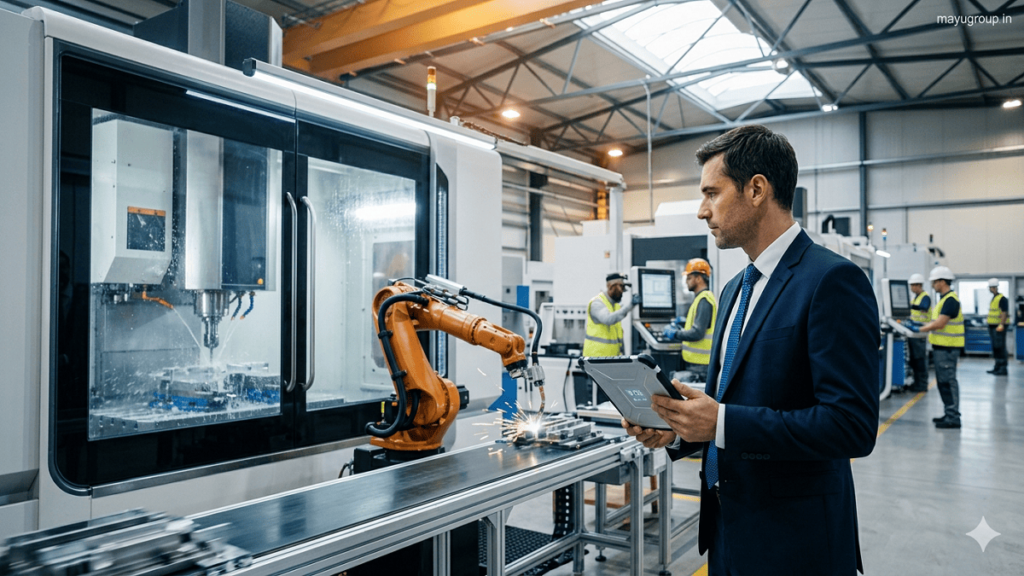
White Paper of Equipment Financing
Abstract
Equipment financing is a structured business funding mechanism that enables organizations to acquire machinery, tools, and technology without large upfront capital expenditure. This white paper examines the structure, approval process, industry applications, risk framework, and economic significance of equipment financing. It also highlights how this financing model supports productivity, modernization, and business scalability across sectors.
1. Introduction
Equipment financing is a specialized form of business credit used to purchase or lease operational assets. It is widely adopted across industries such as manufacturing, healthcare, construction, logistics, agriculture, and information technology. The primary objective is to improve access to essential equipment while preserving working capital for other operational needs.
Unlike traditional business loans, equipment financing is asset-backed, meaning the financed equipment itself often serves as collateral, reducing lender risk and improving approval accessibility.
2. Structure of Equipment Financing
Equipment financing is generally structured in two forms:
- Equipment Loans: The business purchases the equipment and repays the lender in fixed installments with interest. Ownership transfers immediately to the borrower.
- Equipment Leases: The business rents the equipment for a fixed term, with options to renew, return, or purchase at the end of the lease period.
Loan terms typically align with the useful life of the equipment, ensuring repayment consistency with asset utility.
For detailed financial structure reference, see Investopedia Equipment Financing Overview.
3. Approval and Evaluation Process
Lenders evaluate multiple factors before approving equipment financing, including:
- Business credit history and financial stability
- Cash flow consistency and revenue performance
- Industry type and operational risk level
- Equipment value, lifespan, and resale potential
- Collateral strength and repayment capacity
Since the equipment acts as security, approval is often faster compared to unsecured business loans.
4. Industry Applications
Equipment financing is widely used across sectors:
- Manufacturing: CNC machines, production lines, automation systems
- Healthcare: MRI machines, diagnostic equipment, surgical tools
- Construction: Excavators, cranes, loaders, heavy machinery
- Transportation: Trucks, fleet vehicles, logistics systems
- IT Sector: Servers, networking systems, data infrastructure
- Agriculture: Tractors, harvesters, irrigation systems
Each industry uses financing to enhance productivity and operational efficiency.
5. Economic and Business Impact
Equipment financing plays a critical role in economic development by enabling businesses to modernize operations, increase production capacity, and adopt advanced technologies. It supports small and medium enterprises by reducing capital barriers and encouraging investment in productivity-enhancing assets.
Government-backed programs also support equipment acquisition in many regions. For example, the U.S. Small Business Administration offers financing support to help businesses invest in essential equipment. More details are available at SBA Loan Programs.
6. Risks and Challenges
Despite its advantages, equipment financing carries certain risks:
- Asset depreciation and technological obsolescence
- Cash flow pressure due to fixed repayment obligations
- Collateral risk in case of default
- Interest rate fluctuations (for variable-rate financing)
- Reduced flexibility in long-term financial planning
Proper financial planning and asset evaluation are essential to mitigate these risks.
7. Strategic Importance for Businesses
Equipment financing enables businesses to scale operations without large upfront investments. It improves liquidity management, supports modernization, and allows companies to remain competitive in rapidly evolving industries.
8. Conclusion
Equipment financing is a vital financial tool that bridges the gap between capital limitations and operational requirements. When used strategically, it enhances productivity, supports technological advancement, and contributes to sustainable business growth across multiple industries.
#Equipment Financing in Kolkata
Industry Application of Equipment Financing
Equipment financing is a widely used financial solution that enables businesses to acquire essential machinery, tools, and technology without large upfront investment. Its application varies across industries depending on operational needs, capital intensity, and technology requirements. This financing model plays a critical role in improving productivity, expanding capacity, and supporting modernization across sectors.
1. Manufacturing Industry
The manufacturing sector is one of the largest users of equipment financing. Companies rely on funding to purchase CNC machines, robotic systems, assembly line equipment, packaging machinery, and quality control systems. Since manufacturing operations depend heavily on advanced machinery, financing helps businesses upgrade technology, reduce downtime, and increase production efficiency.
For financial structure insights, see Investopedia Equipment Financing Guide.
2. Healthcare Industry
Hospitals, clinics, and diagnostic centers use equipment financing to acquire high-cost medical technology such as MRI machines, CT scanners, X-ray systems, ultrasound devices, and laboratory equipment. Given the rapid advancement in medical technology, financing allows healthcare providers to upgrade equipment regularly without straining operational budgets.
3. Construction Industry
Construction companies depend heavily on equipment financing for excavators, bulldozers, cranes, loaders, concrete mixers, and drilling machines. These assets are essential for project execution but require significant capital investment. Financing enables contractors to take on larger projects and improve operational efficiency.
4. Transportation and Logistics
This sector uses equipment financing to acquire commercial vehicles, trucks, trailers, forklifts, delivery vans, and fleet management systems. Since logistics operations depend on mobility and scalability, financing helps companies expand fleets and improve supply chain performance.
5. Agriculture Sector
Farmers and agribusinesses use equipment financing for tractors, harvesters, irrigation systems, seeders, and storage facilities. Given seasonal income patterns, financing helps stabilize cash flow and improve agricultural productivity without requiring large upfront investments.
6. Information Technology Industry
IT companies use equipment financing for servers, data centers, networking infrastructure, computers, and cybersecurity systems. As technology evolves rapidly, financing helps businesses stay updated with modern systems while managing capital expenditure effectively.
7. Hospitality and Service Industry
Hotels, restaurants, and service businesses use equipment financing for kitchen appliances, laundry systems, HVAC units, POS systems, and facility maintenance equipment. This ensures smooth operations and consistent service quality while controlling upfront costs.
8. Small and Medium Enterprises (SMEs)
SMEs across all industries benefit significantly from equipment financing. It allows smaller businesses to access high-value equipment that would otherwise be unaffordable, enabling them to compete with larger enterprises and scale operations gradually.
Government-backed programs also support equipment acquisition for SMEs. For example, the U.S. Small Business Administration provides financing assistance to help businesses invest in essential assets. More information is available at SBA Loan Programs.
Conclusion
Equipment financing is a cross-industry financial tool that supports operational efficiency, modernization, and business expansion. From manufacturing to healthcare and agriculture to IT, it enables organizations to access critical assets while preserving working capital and maintaining financial flexibility.
#Equipment Financing in Mumbai
Ask FAQs
What is equipment financing?
Equipment financing is a type of business loan or lease used to purchase machinery, tools, or technology needed for operations. The equipment itself usually serves as collateral, allowing businesses to repay the cost in installments instead of paying upfront.
Who can apply for equipment financing?
Small businesses, medium enterprises, and large corporations across industries such as manufacturing, construction, healthcare, logistics, agriculture, and IT can apply. Lenders typically evaluate credit history, cash flow, and business stability before approval.
What is the difference between equipment loan and equipment lease?
An equipment loan allows a business to own the equipment after full repayment, while an equipment lease allows temporary use of the equipment for a fixed period. At the end of a lease, the business may return, renew, or purchase the equipment.
What types of equipment can be financed?
Almost all business-related equipment can be financed, including construction machinery, medical devices, manufacturing systems, vehicles, IT infrastructure, agricultural tools, and office equipment. More details on financing structure can be found at Investopedia Equipment Financing
What are the benefits of equipment financing?
It helps businesses preserve cash flow, acquire expensive equipment without large upfront costs, improve productivity, and stay competitive. It also offers flexible repayment options and faster approval due to the equipment acting as collateral. Government support programs like those from the U.S. Small Business Administration also assist in equipment funding. More info: SBA Loan Programs
Table of Contents
Disclaimer: This content is for general informational purposes only and does not constitute financial, legal, or investment advice. Loan terms, eligibility criteria, interest rates, and conditions may vary by lender, location, and borrower profile. Readers should consult a qualified financial advisor or lending institution before making any financial decisions.