Entertainment Funding
Entertainment Funding refers to the financial investment provided to create, produce, distribute, and market content and services in the entertainment industry. This includes films, television shows, music production, digital streaming platforms, gaming, live events, and social media content creation. The primary purpose of entertainment funding is to support creative projects that require significant capital before generating revenue.
The entertainment industry is highly capital-intensive, especially in areas such as film production, animation, and large-scale digital content. Funding is often required at multiple stages, including pre-production (script development and planning), production (shooting and creation), and post-production (editing, visual effects, and distribution). Without external funding, many entertainment projects would not reach completion due to high upfront costs and financial risks.
There are several major sources of entertainment funding. Venture capital firms, private equity investors, production studios, streaming platforms, and crowdfunding communities all play important roles. Large studios and media companies often co-finance projects to share risk and maximize returns. Streaming platforms also invest heavily in original content to attract and retain subscribers in a competitive digital market.
Crowdfunding has also become an important funding model in entertainment. Platforms like Kickstarter allow creators to raise money directly from audiences who support their ideas. This model is especially useful for independent filmmakers, musicians, and game developers who may not have access to traditional studio funding.
In addition, major entertainment companies such as Netflix invest heavily in original content production. These investments help expand their global content libraries and strengthen subscriber engagement. Similarly, production and media companies like Disney play a significant role in funding large-scale films, franchises, and digital content ecosystems.
The rise of digital platforms has also increased the importance of advertising and sponsorship funding. Brands invest in entertainment content through product placements, influencer collaborations, and event sponsorships, creating additional revenue streams for creators.
Entertainment funding is essential because it enables creativity, supports high-quality content production, and drives innovation in storytelling and digital media. It also contributes significantly to job creation in industries such as filmmaking, music production, animation, gaming, and live entertainment.
In conclusion, entertainment funding is the financial backbone of the entertainment industry, allowing creative ideas to be transformed into global content experiences while supporting economic growth and cultural expression.
#Best Group of Company in Australia
What is Entertainment Funding?
Entertainment funding refers to the financial capital provided to support the creation, production, distribution, and promotion of content in the entertainment industry. This includes films, television shows, music albums, digital streaming content, video games, live performances, and online media projects. Since most entertainment projects require significant upfront investment before generating revenue, funding is essential to bring creative ideas to life.
Entertainment funding is typically used at different stages of production. In the pre-production stage, funds are allocated for script development, casting, planning, and location scouting. During production, funding covers costs such as filming, equipment, crew salaries, and set design. In post-production, it supports editing, visual effects, sound design, and marketing campaigns.
There are several sources of entertainment funding. Traditional film studios and production houses invest in projects they believe will be commercially successful. Streaming platforms also play a major role by financing original content to attract global audiences. For example, companies like Netflix invest heavily in producing exclusive films and series to strengthen their content libraries and subscriber base.
Large entertainment corporations such as Disney fund high-budget movies, franchises, and media projects across film, television, and digital platforms. These companies often combine internal financing with partnerships and co-production agreements to share risks and maximize returns.
Crowdfunding has also become an important modern funding method in entertainment. Platforms like Kickstarter allow independent creators, filmmakers, musicians, and game developers to raise money directly from audiences who support their creative ideas. This model helps reduce reliance on traditional studios and encourages creative freedom.
In addition to these, venture capital and private equity firms increasingly invest in entertainment startups, especially in digital media, gaming, and streaming technologies. Advertising and brand sponsorships also contribute significantly to entertainment funding through product placements and promotional partnerships.
Entertainment funding is important because it enables creative production, reduces financial risk for creators, and supports innovation in storytelling and media formats. Without adequate funding, many entertainment projects would not reach completion or achieve wide distribution.
In summary, entertainment funding is the financial support system that powers the entertainment industry, allowing ideas to be transformed into films, music, games, and digital content consumed by global audiences.
#Best Group of Company in Greenland
Who Provides Funding for Entertainment Projects?
Entertainment projects such as films, web series, music albums, video games, and live events require substantial financial investment, and this funding comes from a diverse ecosystem of sources. These providers help creators manage high production costs and bring creative ideas to global audiences.
One of the primary sources of entertainment funding is production studios and media companies. Large entertainment corporations invest directly in content creation because they control distribution channels and benefit from box office revenue, streaming subscriptions, and licensing deals. Companies like Disney fund large-scale films, franchises, and global entertainment properties, often combining in-house financing with partnerships.
Streaming platforms are another major source of funding in today’s digital era. Platforms invest heavily in original content to attract and retain subscribers in a competitive market. For example, Netflix funds movies, series, documentaries, and stand-up specials to expand its global content library and strengthen user engagement.
Venture capital firms and private equity investors also fund entertainment projects, especially in digital media, gaming, animation, and content technology startups. These investors look for scalable business models and high-growth potential in entertainment-related platforms and tools.
Crowdfunding platforms have become an important alternative funding source for independent creators. Platforms like Kickstarter allow filmmakers, musicians, and game developers to raise money directly from audiences who support their creative ideas. This model helps reduce dependence on traditional studios and enables creative freedom.
Advertising agencies and brand sponsors also contribute significantly to entertainment funding. Companies invest in product placements, sponsorships, influencer collaborations, and event partnerships to promote their products through entertainment content. This form of funding is especially common in music festivals, sports events, and digital content creation.
Additionally, government bodies and film commissions in many countries provide grants, subsidies, and tax incentives to support local film industries and cultural projects. These initiatives help promote national culture and encourage the growth of the creative economy.
In summary, entertainment projects are funded by a wide range of stakeholders including production studios, streaming platforms, investors, crowdfunding communities, advertisers, and governments. Together, they form a strong financial ecosystem that supports creativity, innovation, and global content production.
#Best Group of Company in Switzerland
Why is Entertainment Funding Important?
Entertainment funding is important because it provides the financial resources needed to create, produce, and distribute content across industries such as film, television, music, gaming, and digital media. Most entertainment projects require high upfront costs before generating any revenue, so funding ensures that creative ideas can move from concept to completion.
One of the main reasons entertainment funding is essential is that it enables large-scale production. Films, web series, and video games require investment in scripting, casting, equipment, locations, post-production, and marketing. Without financial support, many high-quality creative projects would never be completed or released to audiences.
Entertainment funding also reduces financial risk for creators and production houses. Since the success of entertainment content is uncertain and depends on audience reception, investors share the risk by providing capital. This allows creators to focus on storytelling and innovation rather than financial constraints.
Another important aspect is industry growth and job creation. Entertainment funding supports millions of jobs in acting, directing, editing, animation, music production, marketing, and event management. It also strengthens related industries such as tourism, advertising, and digital technology. Large companies like Disney invest heavily in global content production, contributing significantly to economic activity and employment.
Funding is also critical for innovation in storytelling and technology. With adequate investment, companies can experiment with advanced visual effects, virtual production, animation tools, and immersive technologies such as augmented reality and virtual reality. Streaming platforms like Netflix continuously invest in original content to meet changing audience preferences and adopt new digital formats.
Entertainment funding also improves content distribution and global reach. Investment enables creators to market their work across multiple platforms, including cinemas, streaming services, and social media channels. Crowdfunding platforms like Kickstarter further support independent creators by allowing them to raise funds directly from audiences, making entertainment more diverse and accessible.
Additionally, funding supports cultural development by enabling the production of stories that reflect different societies, traditions, and perspectives. Governments and private investors often fund local film industries to preserve cultural identity and promote creative expression.
In conclusion, entertainment funding is important because it drives production, reduces risk, supports employment, encourages innovation, and ensures global distribution of creative content. It is the backbone of the entertainment industry, enabling ideas to become impactful experiences for audiences worldwide.
#Best Group of Company in Monaco
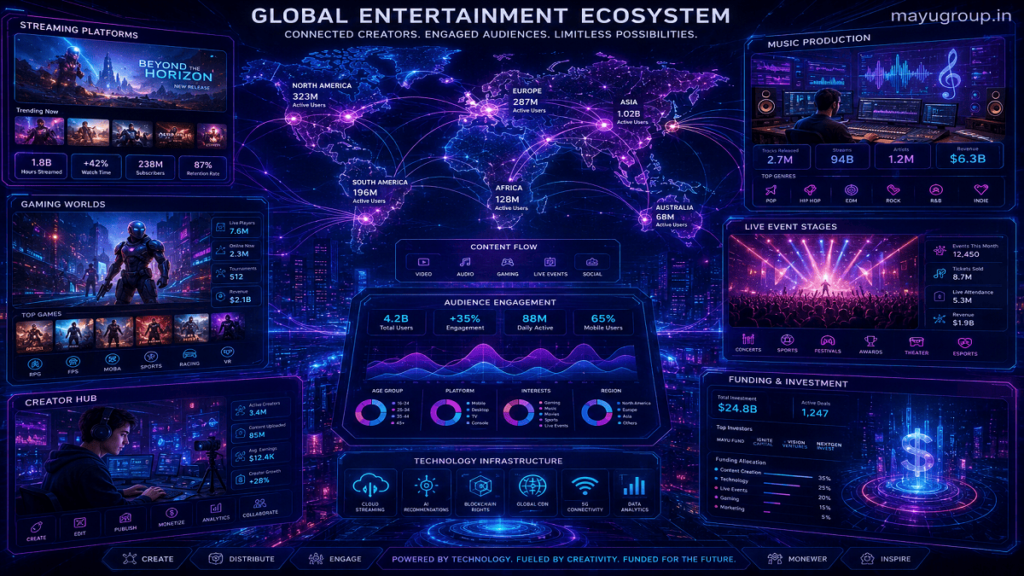
What Types of Projects Get Entertainment Funding?
Entertainment funding is provided to a wide variety of creative projects across film, television, music, gaming, live events, and digital media. Investors and production companies fund these projects based on their commercial potential, audience demand, and creative value. Since entertainment is a high-cost and high-risk industry, funding helps transform ideas into fully produced content that can reach global audiences.
One of the most common categories is film production projects. These include feature films, short films, documentaries, and animated movies. Film projects often require large budgets for casting, filming, visual effects, and post-production. Major studios and production houses frequently finance these projects, while streaming platforms also invest in original films.
Television and web series are another major category. Episodic content for TV networks and streaming platforms requires continuous funding for multiple seasons, script development, and production logistics. Companies like Netflix heavily invest in original series to attract and retain subscribers in competitive markets.
Music production projects also receive significant entertainment funding. This includes recording albums, producing singles, organizing concerts, and promoting artists. Funding helps cover studio costs, marketing campaigns, and global distribution on digital platforms.
Video game development is one of the fastest-growing areas of entertainment investment. Game studios require funding for design, programming, animation, testing, and publishing. High-quality games often need years of development and large teams, making external investment essential for success.
Live entertainment projects such as concerts, theater productions, festivals, and sports entertainment events also attract funding. These projects require investment in venues, logistics, artist performance fees, and marketing. Sponsorships and brand partnerships play a major role in financing these events.
Digital content creation is another growing category. This includes YouTube productions, social media content, influencer collaborations, podcasts, and short-form video series. Crowdfunding platforms like Kickstarter allow independent creators to raise funds directly from audiences who support their creative ideas.
Large entertainment companies like Disney also fund franchise-based projects, including sequels, spin-offs, and cinematic universes. These projects often involve long-term investment due to their global audience reach and merchandising potential.
In addition, emerging technologies such as virtual reality (VR), augmented reality (AR), and AI-generated content are increasingly receiving entertainment funding. These innovative projects focus on immersive storytelling and next-generation media experiences.
In summary, entertainment funding supports a wide range of projects including films, series, music, games, live events, and digital content. These investments enable creativity, innovation, and large-scale production in the global entertainment industry.
#Best Group of Company in Russia
How Does Funding Support the Entertainment Industry?
Funding plays a fundamental role in supporting the entertainment industry by providing the financial resources required to create, develop, produce, distribute, and market content across various media formats. Since entertainment projects are typically high-cost and high-risk, funding ensures that creative ideas can be transformed into finished products that reach audiences worldwide.
One of the primary ways funding supports the industry is by enabling content production. Films, television shows, music albums, video games, and digital content all require substantial investment in pre-production planning, production equipment, talent hiring, set design, and post-production processes such as editing and visual effects. Without funding, many of these projects would remain incomplete or never begin.
Funding also supports innovation and technological advancement. The entertainment industry increasingly relies on advanced technologies such as computer-generated imagery (CGI), virtual production, motion capture, and artificial intelligence. Investment allows companies to experiment with these tools and improve the quality and realism of content. Streaming platforms like Netflix, for example, invest heavily in original content and advanced production techniques to enhance viewer engagement and compete globally.
Another key role of funding is risk-sharing. Entertainment projects do not guarantee success, as audience preferences are unpredictable. Investors, production studios, and sponsors share the financial risk, making it possible for creators to pursue ambitious projects without bearing the full burden of cost. This risk distribution encourages creativity and allows for more diverse content production.
Funding also strengthens distribution and marketing efforts. Even high-quality content needs strong promotion to reach audiences. Investment is used for advertising campaigns, digital marketing, theatrical releases, and global distribution deals. Companies like Disney use large-scale funding to promote films, franchises, and streaming content across multiple platforms and regions.
In addition, funding supports job creation and economic growth within the entertainment ecosystem. It provides employment opportunities for actors, directors, writers, animators, technicians, musicians, and marketing professionals. It also stimulates related industries such as tourism, fashion, and merchandising.
Crowdfunding platforms like Kickstarter further support the industry by allowing independent creators to raise money directly from audiences. This enables smaller projects to enter the market without relying on large studios or traditional investors.
Finally, funding encourages global reach and cultural diversity. It allows production companies to create content for international audiences and invest in stories from different cultures and regions, making entertainment more inclusive and globally connected.
In conclusion, funding supports the entertainment industry by enabling production, reducing risk, driving innovation, improving distribution, creating jobs, and expanding global access to creative content.
#Best Group of Company in America
Case Study of Entertainment Funding
A strong example of entertainment funding success can be seen in the growth of Netflix, which transformed from a DVD rental service into one of the world’s largest entertainment production and streaming platforms. Its journey highlights how strategic funding and reinvestment can reshape the global entertainment industry.
Early Stage and Initial Business Model
Netflix began in 1997 as a DVD-by-mail rental company. In its early years, the company relied on venture capital funding to build logistics systems, expand its subscriber base, and develop a scalable subscription model. Investors recognized the potential of digital distribution even before streaming became mainstream.
Shift to Streaming and Capital Investment
The major turning point came when Netflix shifted from physical DVDs to online streaming. This transition required significant funding for digital infrastructure, content licensing, and platform development. Venture capital firms such as Sequoia Capital and other institutional investors supported the company during its high-growth phase, enabling it to compete in the emerging digital entertainment market.
Original Content Strategy
As competition in streaming increased, Netflix began investing heavily in original content production. This required billions of dollars in funding for films, television series, documentaries, and international productions. The strategy reduced dependence on licensed content and increased global brand value. Popular productions such as original series and films helped Netflix attract millions of subscribers worldwide.
Global Expansion and Financing
To support international growth, Netflix used funding to localize content for different regions, expand language offerings, and improve streaming infrastructure. The company invested in data analytics and recommendation algorithms to enhance user experience and retention. This level of innovation required continuous capital investment and strong revenue reinvestment strategies.
Role of Financial Ecosystem
Digital payment systems and subscription platforms played a key role in Netflix’s scalability. Financial technology providers such as Stripe and PayPal represent the broader fintech ecosystem that enables seamless global subscription payments, recurring billing, and cross-border transactions.
Industry Impact
Netflix’s funding model changed the entertainment industry by shifting focus from traditional cinema releases to on-demand digital streaming. It also influenced other companies to invest heavily in original content production. Crowdfunding platforms like Kickstarter have further expanded entertainment funding by supporting independent creators outside traditional studio systems.
Conclusion
The Netflix case study demonstrates how continuous entertainment funding supports technological transformation, global expansion, and content innovation. It shows that strategic investment is essential not only for production but also for long-term competitiveness in the modern entertainment industry.
#Best Group of Company in Japan

White Paper on Entertainment Funding
1. Executive Summary
Entertainment funding refers to the financial investment used to develop, produce, distribute, and market content across industries such as film, television, music, gaming, live events, and digital media. It is a high-risk, high-reward investment domain where capital enables creative ideas to become commercially viable products. This white paper explores funding structures, key stakeholders, market drivers, challenges, and future trends shaping the global entertainment financing ecosystem.
2. Introduction
The entertainment industry is one of the most capital-intensive creative sectors. Projects often require large upfront investment before generating revenue, making external funding essential. Entertainment funding supports script development, production, post-production, marketing, and global distribution. According to industry insights from the Disney ecosystem and global streaming expansion trends, demand for high-quality content continues to rise across platforms.
3. Types of Entertainment Funding
3.1 Studio and Production House Funding
Traditional studios finance films, series, and media franchises. These companies invest in content development and earn revenue through box office sales, licensing, and merchandising.
3.2 Streaming Platform Investment
Digital platforms invest heavily in original content to attract subscribers. Companies like Netflix allocate significant budgets toward films, documentaries, and global series production.
3.3 Venture Capital and Private Equity
Investors fund entertainment technology startups, gaming companies, and digital media platforms. Firms such as Sequoia Capital support scalable entertainment businesses with strong growth potential.
3.4 Crowdfunding
Crowdfunding platforms like Kickstarter enable independent creators to raise funds directly from audiences, especially for films, music projects, and games.
3.5 Advertising and Sponsorship Funding
Brands finance entertainment projects through product placements, event sponsorships, and influencer collaborations, creating additional revenue streams for creators.
3.6 Fintech-Enabled Revenue Systems
Digital payment providers such as Stripe and PayPal enable subscription-based models, ticketing systems, and global monetization.
4. Key Drivers of Growth
- Expansion of digital streaming platforms
- Increasing global demand for on-demand content
- Growth of gaming and interactive media
- Rise of creator economy and influencer content
- Advancements in production technology (CGI, AI, VR)
5. Applications of Entertainment Funding
Entertainment funding supports:
- Film and television production
- Music recording and distribution
- Video game development
- Live concerts and events
- Streaming and digital content platforms
- Animation and visual effects industries
6. Challenges
- High production costs and financial risk
- Uncertain audience reception
- Piracy and revenue leakage
- Market competition among streaming platforms
- Rising content acquisition costs
7. Emerging Trends
- AI-generated content and scriptwriting
- Global streaming wars and original content expansion
- Blockchain-based rights management
- Direct-to-audience monetization models
- Growth of independent creator funding ecosystems
8. Conclusion
Entertainment funding is a critical driver of global media and content production. It enables innovation, reduces financial risk, and supports large-scale creative industries. With the rise of digital platforms and global streaming services, entertainment funding is becoming more diversified, technology-driven, and audience-focused.
References
- Investopedia – Entertainment Industry Overview
- Statista – Media and Entertainment Market Data
- Kickstarter – Crowdfunding Platform
- Netflix Official Site: Netflix
- Stripe Official Site: Stripe
#Best Group of Company in China
Industry Application of Entertainment Funding
Entertainment funding is widely used across multiple creative and digital industries to support production, innovation, distribution, and monetization of content. It enables businesses and creators to transform ideas into commercially viable entertainment products such as films, music, games, live performances, and digital media platforms. Because the entertainment sector is capital-intensive and high-risk, funding plays a central role in ensuring sustainability and growth across industries.
1. Film and Television Industry
The film and television industry is one of the largest recipients of entertainment funding. Investment is used for script development, casting, production, post-production, visual effects, and global distribution. Streaming platforms such as Netflix also invest heavily in original content to attract subscribers and compete in global markets. Funding enables the production of high-quality movies, web series, documentaries, and franchise-based content.
2. Music and Audio Industry
Entertainment funding supports music production, including recording albums, producing singles, organizing concerts, and promoting artists. Funds are used for studio sessions, music video production, digital distribution, and global marketing campaigns. This investment helps both independent artists and major record labels reach wider audiences through streaming platforms and live performances.
3. Video Game Industry
The gaming industry is one of the fastest-growing segments of entertainment investment. Funding is used for game design, development, animation, programming, testing, and publishing. Modern video games require large teams and advanced technology, making external investment essential. Venture capital firms such as Sequoia Capital often invest in gaming startups with high scalability potential.
4. Live Events and Sports Entertainment
Entertainment funding is also applied in concerts, theater productions, festivals, and sports events. Investment covers venue setup, artist fees, production equipment, logistics, and marketing. Sponsorships and brand partnerships play a major role in financing large-scale live entertainment experiences.
5. Digital Media and Content Creation
Digital content platforms, including YouTube creators, influencers, podcasts, and short-form video production, rely on entertainment funding for equipment, production quality, editing tools, and audience growth strategies. Crowdfunding platforms like Kickstarter allow independent creators to raise funds directly from audiences.
6. Animation and Visual Effects Industry
Animation studios and VFX companies require significant funding for rendering technology, skilled labor, and software tools. These investments are crucial for producing high-quality animated films, advertisements, and special effects used in modern cinema and gaming.
7. Entertainment Technology and Platforms
Funding is also applied to entertainment tech platforms, including streaming services, OTT platforms, and content distribution networks. Financial technology providers such as Stripe and PayPal support these industries by enabling subscription payments and global monetization systems.
Conclusion
Entertainment funding has diverse industrial applications across film, music, gaming, live events, digital media, and technology platforms. It drives creativity, supports large-scale production, and enables global distribution of content, making it a foundational pillar of the modern entertainment economy.
#Best Group of Company in India
Ask FAQs
What is entertainment funding?
Entertainment funding is the financial support provided to create and produce content such as films, TV shows, music, video games, live events, and digital media. It helps cover costs like production, marketing, distribution, and technology development in the entertainment industry.
Who provides funding for entertainment projects?
Entertainment projects are funded by production studios, streaming platforms, investors, advertising brands, and crowdfunding communities. Companies like Netflix invest heavily in original content, while crowdfunding platforms like Kickstarter allow audiences to directly support creative projects.
Why is entertainment funding important?
It is important because entertainment projects require high upfront costs before generating revenue. Funding enables creators to produce high-quality content, reduce financial risk, support innovation, and distribute content globally across different platforms and audiences.
What types of projects receive entertainment funding?
Entertainment funding is used for films, television series, music production, video games, animation, live concerts, sports events, and digital content creation. Large companies like Disney also fund franchise-based and large-scale entertainment projects.
How does crowdfunding support entertainment projects?
Crowdfunding allows creators to raise money directly from the public to finance creative ideas. Platforms like Kickstarter help independent filmmakers, musicians, and game developers validate their ideas and secure funding without relying on traditional studios or investors.
Table of Contents
Disclaimer:
The information provided is for general educational and informational purposes only. It does not constitute financial, investment, or professional advice. Users should consult qualified experts before making any financial or business decisions.