DAO Funding
DAO funding refers to the process of raising, managing, and distributing financial resources through a Decentralized Autonomous Organization (DAO). A DAO is a blockchain-based organization governed by smart contracts and community voting instead of centralized leadership. DAO funding has become an innovative model in the cryptocurrency and blockchain ecosystem, enabling transparent and decentralized financial decision-making.
Traditional organizations typically rely on executives, investors, or centralized authorities to control funding and operational decisions. In contrast, DAOs allow members of a community to collectively manage funds through governance tokens and voting systems. This decentralized structure creates greater transparency, reduces intermediaries, and empowers participants to influence how resources are allocated.
DAO funding usually begins through token sales, treasury allocations, crowdfunding campaigns, or decentralized finance (DeFi) mechanisms. Projects issue governance tokens that grant holders voting rights within the DAO ecosystem. Community members can then vote on proposals related to investments, project development, partnerships, grants, or treasury management. According to Ethereum.org DAO Guide, DAOs operate through blockchain-based smart contracts that automatically execute approved decisions without centralized control.
One of the most significant advantages of DAO funding is transparency. All transactions, treasury balances, and governance activities are recorded on blockchain networks and remain publicly accessible. This transparency reduces the possibility of hidden financial manipulation and improves trust among participants.
DAO funding has gained popularity across several industries, including decentralized finance, gaming, NFTs, venture capital, and social communities. Some DAOs focus on investing in blockchain startups, while others fund open-source software development, digital art projects, or decentralized applications. Investment DAOs, for example, pool resources from community members to collectively invest in emerging blockchain technologies and crypto projects.
Another key benefit of DAO funding is global accessibility. Anyone with internet access and governance tokens can participate in decision-making processes regardless of geographical location. This creates inclusive funding ecosystems where communities collectively shape project development and financial strategies.
Despite its advantages, DAO funding also faces several challenges. Governance inefficiencies can occur when communities struggle to reach consensus on proposals. Large token holders may also influence voting outcomes disproportionately, creating concerns about decentralization. Additionally, smart contract vulnerabilities and cybersecurity risks can expose DAO treasuries to hacking incidents or technical failures.
Regulatory uncertainty is another major issue surrounding DAO funding. Governments and financial authorities worldwide are still developing legal frameworks for decentralized organizations and blockchain-based governance systems. According to Coinbase Learn, DAOs currently operate in a rapidly evolving legal environment that may affect future adoption and compliance requirements.
Several successful DAO-funded projects have demonstrated the potential of decentralized governance. Platforms in decentralized finance (DeFi), blockchain gaming, and Web3 infrastructure continue to rely on DAO models for funding allocation and ecosystem development. These organizations represent a shift toward community-driven innovation and collaborative digital economies.
As blockchain technology advances, DAO funding is expected to play a growing role in decentralized finance and digital governance. By combining transparency, automation, and collective decision-making, DAOs are reshaping how organizations raise capital, manage investments, and build decentralized communities in the evolving Web3 ecosystem.
#DAO Funding in India
What is DAO funding?
DAO funding refers to the process of raising, managing, and distributing financial resources through a Decentralized Autonomous Organization (DAO). A DAO is a blockchain-based organization that operates through smart contracts and community governance instead of centralized management. In simple terms, DAO funding allows people from around the world to collectively contribute funds and make financial decisions transparently using blockchain technology.
Unlike traditional organizations where executives or boards control investments and budgets, DAOs rely on community participation. Members who hold governance tokens can vote on proposals related to funding, investments, partnerships, project development, and treasury management. Decisions are executed automatically through smart contracts once voting conditions are met. According to Ethereum.org, DAOs are internet-native organizations collectively owned and managed by their members.
DAO funding is commonly used in blockchain projects, decentralized finance (DeFi), NFT communities, gaming ecosystems, and Web3 startups. Many blockchain projects create DAOs to allow communities to decide how funds should be allocated for growth and innovation. For example, DAO members may vote to fund new product development, marketing campaigns, developer grants, or investments in emerging crypto projects.
One of the key features of DAO funding is transparency. Since DAO operations are recorded on blockchain networks, all treasury transactions, voting activities, and governance proposals remain publicly visible. This reduces the risk of hidden financial manipulation and improves trust among participants.
DAO funding typically begins through token sales, crowdfunding, or treasury contributions from community members. Governance tokens provide voting rights and represent participation within the organization. Some DAOs also generate income through decentralized applications, investment activities, or protocol fees.
A major advantage of DAO funding is decentralization. People from different countries can participate without depending on traditional banks or centralized institutions. This global accessibility creates opportunities for collaborative investment and community-driven innovation.
However, DAO funding also carries risks and challenges. Governance disagreements, low voter participation, and concentration of voting power among large token holders can affect decision-making. Smart contract vulnerabilities and regulatory uncertainty are additional concerns in the DAO ecosystem. According to Coinbase Learn, DAOs continue to evolve as blockchain technology and legal frameworks develop worldwide.
Despite these challenges, DAO funding is becoming an important part of the Web3 and decentralized finance movement. It represents a new approach to organizational management where communities collectively control resources, investments, and project development through blockchain-based governance systems. As adoption increases, DAO funding may continue transforming how businesses, communities, and digital platforms operate in the future.
#DAO Funding in Maharashtra
How does a DAO raise funds?
A Decentralized Autonomous Organization (DAO) raises funds through blockchain-based mechanisms that allow communities to collectively contribute capital and participate in governance. Unlike traditional organizations that rely on centralized investors, banks, or venture capital firms, DAOs use decentralized systems powered by smart contracts and governance tokens to manage fundraising activities transparently.
One of the most common ways a DAO raises funds is through token sales. In this model, the DAO creates and distributes governance tokens to investors or community members in exchange for cryptocurrencies such as Ethereum or stablecoins. These governance tokens often provide voting rights within the DAO ecosystem, allowing token holders to participate in decisions related to project development, treasury management, and future investments. According to Ethereum.org, governance tokens are a central component of decentralized decision-making within DAOs.
Crowdfunding is another major fundraising method used by DAOs. Community members contribute funds to support specific blockchain projects, decentralized applications, NFT platforms, or Web3 initiatives. Since DAO fundraising operates on blockchain networks, contributions are transparent and publicly recorded, improving accountability and trust among participants.
Many DAOs also generate funding through decentralized finance (DeFi) activities. DAO treasuries may earn income by staking cryptocurrencies, providing liquidity to decentralized exchanges, lending digital assets, or participating in yield farming strategies. These DeFi mechanisms allow DAOs to grow treasury reserves without relying solely on external investors.
Protocol fees are another important revenue source for some DAOs. Blockchain platforms and decentralized applications often charge transaction fees, subscription fees, or service charges. A portion of these revenues is directed into the DAO treasury, which can later be used for ecosystem development, grants, marketing, or operational expenses.
Grant programs and partnerships can also contribute to DAO funding. Some blockchain foundations and crypto organizations provide grants to DAOs developing innovative technologies or supporting decentralized ecosystems. Strategic collaborations with other blockchain projects may additionally provide financial support or shared treasury resources.
Investment DAOs use pooled capital from members to invest collectively in startups, NFTs, cryptocurrencies, or blockchain infrastructure projects. Community members vote on investment proposals, and profits generated from successful investments may be reinvested into the DAO treasury or distributed among participants.
Transparency is one of the defining features of DAO fundraising. Smart contracts automatically manage treasury operations, while blockchain networks publicly display financial transactions and voting outcomes. This decentralized structure reduces reliance on intermediaries and enables global participation.
However, DAO fundraising also faces challenges. Regulatory uncertainty, smart contract vulnerabilities, and governance conflicts can create operational risks. Large token holders may sometimes influence voting outcomes disproportionately, raising concerns about decentralization and fairness. According to Coinbase Learn, DAOs are still evolving as legal and technological frameworks continue to develop.
As blockchain technology and Web3 adoption expand, DAO fundraising is becoming an increasingly important model for decentralized innovation. By combining community governance, transparency, and global participation, DAOs are reshaping how organizations raise and manage capital in the digital economy.
#DAO Funding in Ahemadabad
Why do investors support DAOs?
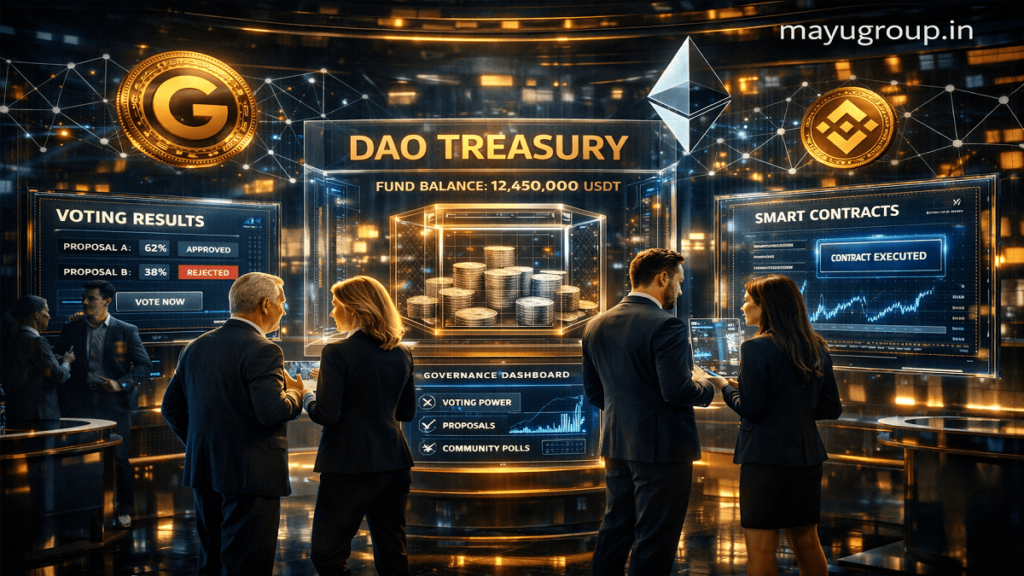
Investors support Decentralized Autonomous Organizations (DAOs) because they offer a transparent, community-driven, and innovative approach to managing projects, investments, and digital ecosystems. DAOs are blockchain-based organizations governed through smart contracts and collective voting rather than centralized leadership. This decentralized structure has attracted investors seeking greater transparency, participation, and opportunities within the growing Web3 economy.
One of the primary reasons investors support DAOs is decentralization. Traditional organizations often rely on executives or centralized authorities to make decisions, while DAOs distribute governance power among token holders. Investors appreciate the ability to participate directly in important decisions such as treasury allocation, project development, partnerships, and ecosystem growth. According to Ethereum.org, DAOs allow communities to collectively govern organizations through blockchain-based voting systems.
Transparency is another major factor driving investor interest in DAOs. All transactions, treasury balances, governance proposals, and voting activities are recorded on public blockchain networks. This level of visibility reduces the risk of hidden financial manipulation and increases accountability. Investors can monitor how funds are used and evaluate organizational activities in real time.
Many investors also support DAOs because of their strong connection to blockchain innovation and Web3 development. DAOs play a major role in decentralized finance (DeFi), NFT ecosystems, gaming platforms, decentralized applications, and digital communities. By investing in DAOs, investors gain exposure to emerging technologies and decentralized business models that may shape the future of the internet and global finance.
Another important reason is global accessibility. DAOs enable individuals from different countries to participate in governance and investment opportunities without depending on traditional financial institutions. Investors can contribute capital, vote on proposals, and engage with decentralized communities using blockchain wallets and governance tokens. This creates more inclusive financial ecosystems compared to conventional investment systems.
Investors are also attracted to the potential for financial returns. Many DAOs manage treasuries that invest in blockchain startups, cryptocurrencies, NFTs, or decentralized infrastructure projects. Successful DAO ecosystems may increase the value of governance tokens, generating profits for investors and community participants. Some DAOs also distribute rewards or incentives through staking and decentralized finance mechanisms.
Community engagement is another key advantage of DAOs. Unlike traditional corporations where investors may have limited influence, DAO participants often collaborate directly with developers, creators, and ecosystem contributors. This active involvement strengthens community loyalty and encourages long-term ecosystem growth.
Despite these advantages, investors also recognize the risks associated with DAOs. Governance inefficiencies, low voter participation, smart contract vulnerabilities, and regulatory uncertainty remain significant concerns. Large token holders may also dominate voting decisions, potentially limiting decentralization. According to Coinbase Learn, DAOs are still evolving and face ongoing legal and technical challenges.
As blockchain technology continues to expand, DAOs are becoming increasingly important within decentralized finance and Web3 ecosystems. Investors support DAOs because they combine transparency, innovation, community governance, and global participation in ways that traditional organizational structures often cannot provide. This decentralized model represents a significant shift toward collaborative digital economies and community-controlled financial systems.
#DAO Funding in Hyderabad
What are the risks of DAO funding?
DAO funding offers a decentralized and transparent approach to raising and managing capital, but it also involves several significant risks that investors, developers, and community members must understand. A Decentralized Autonomous Organization (DAO) operates through blockchain technology and smart contracts, allowing communities to make decisions collectively without centralized control. While this model provides innovation and flexibility, it also introduces technical, financial, governance, and regulatory challenges.
One of the biggest risks of DAO funding is smart contract vulnerability. DAOs rely heavily on smart contracts to automate treasury management, governance voting, and financial transactions. If these smart contracts contain coding errors or security weaknesses, hackers can exploit them and steal funds. Several blockchain projects have suffered major financial losses due to vulnerabilities in smart contract systems. According to Ethereum.org, security audits and continuous testing are essential for protecting DAO infrastructure.
Governance issues are another major challenge in DAO funding. Since DAOs depend on community voting, disagreements among members can delay important decisions or create operational inefficiencies. In some cases, voter participation may remain low, causing a small number of participants to control governance outcomes. Large token holders, often called “whales,” may also dominate voting power, reducing the decentralization that DAOs aim to achieve.
Regulatory uncertainty is a significant risk for DAO ecosystems. Governments and financial regulators worldwide are still developing legal frameworks for decentralized organizations and blockchain-based governance systems. DAOs may face compliance challenges related to taxation, securities laws, anti-money laundering regulations, and investor protection requirements. Sudden regulatory changes could impact DAO operations, funding models, or token values.
Another major concern is treasury management risk. DAO treasuries often hold cryptocurrencies and digital assets that are highly volatile. Sharp market declines can significantly reduce treasury value and limit the organization’s ability to fund projects or operations. Poor financial decision-making by the community may also lead to inefficient use of treasury resources.
Cybersecurity threats and phishing attacks remain ongoing risks in DAO funding. Attackers may target governance systems, wallet credentials, or community members to gain unauthorized access to funds. Since blockchain transactions are generally irreversible, recovering stolen assets can be extremely difficult.
Fraud and malicious proposals can also threaten DAO ecosystems. Some participants may attempt to manipulate governance systems for personal gain or submit misleading proposals that benefit a small group rather than the broader community. Without proper oversight and risk controls, decentralized governance can become vulnerable to exploitation.
Operational scalability is another challenge. As DAOs grow larger, managing governance participation and achieving consensus becomes increasingly complex. Decision-making processes may become slower and less efficient, particularly when communities consist of thousands of global participants.
According to Coinbase Learn, DAOs continue to evolve as blockchain technology matures, but legal, technical, and governance risks remain important considerations for investors and contributors.
Despite these challenges, DAO funding continues to attract interest because of its transparency, decentralization, and innovation potential. However, successful participation in DAO ecosystems requires careful research, strong cybersecurity practices, proper governance structures, and awareness of the evolving regulatory landscape surrounding decentralized finance and Web3 technologies.
#DAO Funding in Delhi
How is DAO funding different from traditional funding?
DAO funding differs from traditional funding because it operates through decentralized blockchain technology and community governance rather than centralized institutions or corporate leadership. A Decentralized Autonomous Organization (DAO) uses smart contracts and governance tokens to manage financial decisions collectively, while traditional funding models rely on banks, venture capital firms, executives, or investors with centralized authority.
One of the biggest differences is decentralization. In traditional funding systems, decisions are usually made by company executives, board members, or financial institutions. Investors often have limited influence over how funds are managed after investment. In contrast, DAO funding allows community members and token holders to participate directly in governance decisions through blockchain-based voting systems. According to Ethereum.org, DAOs are governed collectively by their members rather than centralized management structures.
Transparency is another major distinction between DAO funding and traditional funding. In traditional organizations, financial records and treasury activities may not always be publicly accessible. DAO funding, however, operates on blockchain networks where transactions, treasury balances, governance proposals, and voting outcomes are visible to all participants. This public transparency helps improve accountability and trust within decentralized communities.
Funding mechanisms also differ significantly. Traditional companies typically raise capital through bank loans, venture capital investments, public stock offerings, or private investors. DAOs usually raise funds through token sales, community contributions, decentralized finance (DeFi) activities, or crowdfunding models. Governance tokens not only represent investment participation but also provide voting rights within the DAO ecosystem.
Global accessibility is another advantage of DAO funding. Traditional funding systems often involve geographical restrictions, banking regulations, and complex approval processes. DAO funding allows individuals worldwide to contribute capital and participate in governance using blockchain wallets and cryptocurrencies without relying on intermediaries. This creates more inclusive financial participation opportunities.
Automation through smart contracts further separates DAO funding from traditional systems. Smart contracts automatically execute approved governance decisions and financial transactions based on predefined rules. Traditional funding processes often require legal agreements, manual approvals, and administrative oversight, which can slow operations and increase costs.
Another important difference is ownership and community involvement. Traditional investors generally focus on financial returns, while DAO participants often contribute to project development, governance discussions, and ecosystem growth. DAOs create collaborative communities where contributors actively shape the direction of projects and digital platforms.
However, DAO funding also introduces unique challenges compared to traditional systems. Regulatory uncertainty remains a major concern because many governments are still developing legal frameworks for decentralized organizations. Smart contract vulnerabilities, governance inefficiencies, and token concentration risks can also affect DAO operations. Traditional funding systems, while more centralized, often provide clearer legal protections and established compliance structures.
According to Coinbase Learn, DAOs represent a new model of internet-native organizations that prioritize decentralization, transparency, and collective decision-making.
As blockchain technology and Web3 ecosystems continue to evolve, DAO funding is becoming an increasingly important alternative to traditional financial systems. By enabling community-driven governance, transparent treasury management, and global participation, DAOs are reshaping how organizations raise capital and manage investments in the digital economy.
#DAO Funding in Pune
Case Study of DAO Funding
DAO funding has become one of the most innovative financial models in the blockchain and Web3 ecosystem. A Decentralized Autonomous Organization (DAO) enables communities to collectively raise, manage, and allocate funds using blockchain technology and smart contracts. One of the most influential examples of DAO funding is the rise of ConstitutionDAO, a project that demonstrated both the power and challenges of decentralized community-driven fundraising.
ConstitutionDAO was launched in 2021 with the goal of purchasing a rare copy of the United States Constitution at a Sotheby’s auction. The project rapidly gained global attention because it showcased how decentralized communities could organize and raise significant capital within a short period. Using blockchain technology, contributors from around the world pooled cryptocurrency funds into a shared treasury managed by the DAO.
The fundraising process was powered by Ethereum-based smart contracts and governance systems. Participants contributed Ethereum in exchange for governance tokens called PEOPLE, which represented voting participation within the DAO. According to Ethereum.org, DAOs allow internet communities to coordinate financial activities collectively without centralized leadership.
Within days, ConstitutionDAO successfully raised more than $40 million from thousands of contributors globally. This demonstrated the speed, accessibility, and scalability of DAO funding models compared to traditional fundraising methods. Contributors were able to participate regardless of geographical location, highlighting the global inclusiveness of decentralized finance systems.
Although ConstitutionDAO ultimately lost the auction to another bidder, the project became a landmark example of decentralized crowdfunding and community governance. The DAO later initiated refund processes for contributors through smart contracts, further demonstrating transparency in treasury management.
This case study highlights several major advantages of DAO funding. One of the most important benefits was transparency. All contributions, treasury balances, and transactions were publicly visible on the Ethereum blockchain. Community members could monitor fundraising activities in real time without relying on centralized financial institutions.
Another significant advantage was decentralized participation. ConstitutionDAO showed that online communities could unite rapidly around a shared mission and collectively manage large-scale fundraising efforts. The DAO structure eliminated many traditional barriers associated with global fundraising campaigns.
However, the case also revealed several challenges and risks associated with DAO funding. Regulatory uncertainty became a major issue because DAOs operate within evolving legal frameworks that vary across jurisdictions. Questions related to governance accountability, taxation, and legal ownership emerged during the project.
Operational limitations also became evident. While the DAO successfully raised substantial funds, managing logistics, legal compliance, and auction participation within a decentralized framework proved complex. Governance coordination among thousands of participants created additional challenges for efficient decision-making.
According to Coinbase Learn, DAOs continue to evolve as blockchain technology develops, but they still face technical, legal, and governance-related obstacles.
The ConstitutionDAO case study demonstrated that DAO funding has the potential to transform how communities raise and manage capital in the digital economy. It highlighted the strengths of decentralization, transparency, and global collaboration while also revealing the importance of governance structures, legal clarity, and operational planning.
As Web3 and blockchain ecosystems continue to expand, DAO funding models are expected to play an increasingly important role in decentralized finance, digital governance, and community-driven innovation worldwide.
#DAO Funding in Banglore
White Paper of DAO Funding
Introduction
Decentralized Autonomous Organization (DAO) funding represents a transformative approach to raising, managing, and distributing capital through blockchain technology and decentralized governance systems. Unlike traditional organizations that rely on centralized management and financial institutions, DAOs operate through smart contracts and community-driven decision-making. DAO funding has emerged as a key component of the Web3 ecosystem, enabling transparent, borderless, and collaborative financial management.
This white paper explores the structure, benefits, risks, applications, and future potential of DAO funding within decentralized finance (DeFi) and blockchain-based digital economies.
Understanding DAO Funding
DAO funding refers to the process by which decentralized organizations raise and allocate financial resources using blockchain networks. DAOs are governed collectively by token holders who participate in decision-making through voting mechanisms. Smart contracts automatically execute approved proposals without requiring centralized intermediaries.
Governance tokens play a central role in DAO ecosystems. These tokens grant voting rights to community members and represent participation in organizational governance. According to Ethereum.org, DAOs are internet-native organizations collectively managed by their members through blockchain-based governance systems.
DAO funding models commonly include:
- Token sales
- Crowdfunding campaigns
- Treasury contributions
- Decentralized finance (DeFi) yield generation
- Investment pooling
- Protocol revenue sharing
Key Benefits of DAO Funding
Decentralization
DAO funding removes centralized authority from financial decision-making processes. Community members collectively govern treasury management, project funding, and operational strategies. This decentralized structure reduces dependency on banks, executives, or institutional intermediaries.
Transparency
Blockchain technology provides public visibility into treasury balances, governance proposals, voting records, and financial transactions. This transparency improves accountability and builds trust among community participants.
Global Accessibility
DAO funding allows participants from around the world to contribute capital and engage in governance without geographical restrictions. Anyone with internet access and a blockchain wallet can participate in decentralized funding ecosystems.
Automation Through Smart Contracts
Smart contracts automate treasury operations and proposal execution. Once governance proposals receive community approval, transactions and operational actions occur automatically according to predefined rules.
Community-Driven Innovation
DAOs encourage collaborative participation and community engagement. Contributors actively influence ecosystem development, investment strategies, and project priorities through decentralized governance systems.
Applications of DAO Funding
DAO funding has expanded across multiple sectors within blockchain and Web3 ecosystems, including:
- Decentralized Finance (DeFi)
- NFT communities
- Blockchain gaming
- Venture capital and startup investment
- Open-source software development
- Metaverse projects
- Social and creator communities
Investment DAOs pool capital from members to invest collectively in emerging blockchain startups, cryptocurrencies, and digital assets. Grant DAOs fund developers, researchers, and creators building decentralized applications and infrastructure.
Risks and Challenges
Despite its advantages, DAO funding carries several risks that require careful management.
Smart Contract Vulnerabilities
Coding errors or security flaws within smart contracts can expose DAO treasuries to hacking and financial loss.
Governance Inefficiencies
Low voter participation and disagreements among token holders may delay decision-making and reduce operational efficiency.
Token Concentration
Large token holders may gain disproportionate influence over governance decisions, potentially limiting decentralization.
Regulatory Uncertainty
Governments worldwide continue developing legal frameworks for decentralized organizations and digital assets. Regulatory changes may impact DAO operations and compliance requirements.
Treasury Volatility
DAO treasuries often hold cryptocurrencies that are highly volatile, exposing organizations to market-related financial risks.
According to Coinbase Learn, DAOs remain an evolving organizational model that requires strong governance structures and security practices.
Future Outlook
The future of DAO funding is closely connected to the growth of Web3, decentralized finance, and blockchain adoption. Improvements in smart contract security, governance frameworks, and regulatory clarity are expected to strengthen DAO ecosystems over time.
As organizations increasingly explore decentralized governance models, DAOs may become an important alternative to traditional corporate structures and centralized investment systems. Their ability to combine transparency, automation, and global participation positions them as a powerful innovation in digital finance and community-led collaboration.
Conclusion
DAO funding represents a significant advancement in decentralized financial management and governance. By leveraging blockchain technology, smart contracts, and community participation, DAOs provide transparent and inclusive alternatives to traditional funding systems.
#DAO Funding in Kolkata

Industry Application of DAO Funding
DAO funding is transforming multiple industries by introducing decentralized governance, transparent treasury management, and community-driven financial systems. A Decentralized Autonomous Organization (DAO) operates through blockchain technology and smart contracts, allowing communities to collectively raise, manage, and allocate funds without relying on centralized institutions. As Web3 and blockchain adoption continue to grow, DAO funding is becoming increasingly influential across finance, gaming, healthcare, real estate, media, and technology sectors.
One of the most significant applications of DAO funding is in decentralized finance (DeFi). DeFi platforms use DAOs to govern lending protocols, decentralized exchanges, liquidity pools, and investment strategies. Community members vote on protocol upgrades, treasury allocations, and reward systems through governance tokens. According to Ethereum.org, DAOs allow decentralized communities to coordinate financial activities transparently through blockchain-based governance.
The venture capital industry is also experiencing disruption through investment DAOs. Traditional venture capital firms often operate with centralized decision-making and limited investor participation. DAO funding enables global communities to pool capital collectively and invest in blockchain startups, digital assets, NFTs, and Web3 infrastructure projects. Members vote on investment proposals and share exposure to emerging decentralized technologies.
Blockchain gaming and metaverse ecosystems are major adopters of DAO funding models. Gaming DAOs allow players and token holders to participate in governance decisions related to game development, in-game economies, and digital asset management. Community-funded gaming projects often use DAO treasuries to finance ecosystem growth, tournaments, and platform expansion.
NFT communities also rely heavily on DAO funding structures. NFT DAOs manage community-owned digital art collections, creator grants, and marketplace development. Token holders collectively decide how treasury funds should support artists, collaborations, and ecosystem improvements.
The media and creator economy sector is increasingly adopting DAO funding mechanisms. Content creators, independent journalists, musicians, and digital communities use DAOs to raise funding directly from supporters without traditional intermediaries. Community members may vote on creative projects, revenue distribution, and platform development strategies.
In the technology industry, open-source software projects utilize DAO funding to support developers and infrastructure maintenance. Blockchain communities allocate treasury resources to developers building decentralized applications, cybersecurity tools, and Web3 technologies. This decentralized funding approach encourages collaborative innovation and reduces dependency on centralized corporations.
The healthcare industry is exploring DAO funding for medical research, healthcare innovation, and decentralized data management systems. Blockchain-based governance models can improve transparency in healthcare funding while enabling collaborative decision-making among stakeholders and researchers.
Real estate is another emerging sector utilizing DAO funding through tokenized property investments and decentralized ownership structures. Real estate DAOs allow investors to collectively purchase, manage, and govern property assets using blockchain technology. This increases accessibility and enables fractional ownership opportunities.
Despite its growing applications, DAO funding still faces challenges across industries. Regulatory uncertainty, governance inefficiencies, cybersecurity risks, and smart contract vulnerabilities remain major concerns. Large token holders may also influence governance disproportionately, potentially limiting decentralization.
According to Coinbase Learn, DAOs are still evolving as legal and technological frameworks mature globally.
As blockchain technology continues advancing, DAO funding is expected to play a larger role in reshaping traditional industries. By combining transparency, automation, global participation, and decentralized governance, DAOs are creating innovative financial and operational models for the future digital economy.
#DAO Funding in Mumbai
Ask FAQs
What is DAO funding?
DAO funding is a decentralized method of raising and managing capital through a Decentralized Autonomous Organization (DAO). Community members use blockchain-based governance systems and smart contracts to make collective financial decisions.
How does a DAO generate funds?
A DAO can generate funds through token sales, crowdfunding, decentralized finance (DeFi) activities, staking rewards, protocol fees, and community treasury contributions.
What are governance tokens in a DAO?
Governance tokens are digital assets that give holders voting rights within a DAO. Token holders can vote on proposals related to treasury management, project development, partnerships, and investments.
Is DAO funding secure?
DAO funding can be secure when supported by audited smart contracts and strong cybersecurity practices. However, risks such as hacking, smart contract vulnerabilities, and governance manipulation still exist.
Which industries use DAO funding?
DAO funding is widely used in decentralized finance (DeFi), blockchain gaming, NFTs, Web3 startups, open-source software development, digital communities, and decentralized investment platforms.
Table of Contents
Disclaimer: DAO funding and cryptocurrency-related investments involve market, regulatory, and technological risks. This content is for informational purposes only and should not be considered financial, legal, or investment advice. Always conduct independent research before participating in any DAO or blockchain project.