Asset Finance
Asset finance is a type of business funding that allows companies to purchase or use essential assets such as machinery, vehicles, equipment, or technology without paying the full cost upfront. Instead of making a large one-time investment, businesses spread the cost over a fixed period through structured payments.
This financing method helps businesses acquire productive assets while preserving cash flow and maintaining financial flexibility. It is commonly used by small businesses, manufacturers, logistics companies, and growing enterprises that rely heavily on physical or operational assets.
How Asset Finance Works
In asset , a lender provides funds to purchase an asset, or the asset itself acts as security for the loan. The business then repays the lender in installments over an agreed period, often with interest. In some cases, ownership is transferred to the business after the final payment, while in other models, the lender retains ownership until the agreement ends.
Common structures include:
- Equipment leasing
- Hire purchase agreements
- Asset refinancing
- Operating leases
Types of Asset Finance
- Hire Purchase: The business uses the asset while paying in installments and gains ownership after the final payment.
- Finance Lease: The lender owns the asset, but the business uses it for most of its useful life.
- Operating Lease: Short-term use of assets without ownership responsibility.
- Asset Refinance: Businesses unlock capital tied in existing assets by using them as collateral.
According to Investopedia, asset-based financing allows companies to leverage physical assets to access funding and improve liquidity Investopedia – Asset-Based Lending.
Benefits of Asset Finance
Asset helps businesses:
- Avoid large upfront capital expenditure
- Improve cash flow management
- Access modern equipment and technology
- Scale operations more efficiently
- Maintain financial flexibility
It is especially useful for businesses that need expensive equipment but want to preserve working capital for daily operations.
Risks Involved
Despite its benefits, asset also has risks:
- Total repayment cost may be higher due to interest
- Asset depreciation can reduce value over time
- Default may result in asset repossession
- Long-term contracts may limit flexibility
Conclusion
Asset is a practical funding solution that enables businesses to acquire essential assets without heavy upfront investment. By spreading costs over time, companies can grow efficiently while maintaining liquidity. However, careful planning is required to ensure repayment obligations align with business cash flow and long-term financial goals.
#Asset Finance in India
What is asset finance?
Asset finance is a type of business funding that allows companies to obtain or use important assets—such as machinery, vehicles, equipment, or technology—without paying the full purchase price upfront. Instead of making a large one-time payment, the business spreads the cost over a fixed period through regular installments.
This financing method helps businesses acquire the assets they need to operate and grow while preserving cash flow for day-to-day expenses. It is widely used by small and medium enterprises, manufacturing companies, logistics providers, and industries that depend on expensive physical equipment.
In asset , the asset itself often acts as security for the funding. This means if the borrower fails to make payments, the lender may repossess the asset. Depending on the agreement, ownership of the asset may either transfer to the business at the end of the payment term or remain with the lender.
Common forms of asset include hire purchase agreements, leasing (both finance and operating leases), and asset refinancing. Each structure is designed to meet different business needs based on ownership preference, cash flow situation, and usage requirements.
According to Investopedia, asset-based lending allows businesses to use physical assets as collateral to access funding and improve liquidity, making it an important tool for business financing Investopedia – Asset-Based Lending.
The key advantage of asset finance is that it enables businesses to access essential tools and equipment immediately without large upfront investment. It also helps companies manage cash flow more efficiently and scale operations faster. However, it comes with risks such as long-term repayment obligations, interest costs, and potential loss of assets in case of default.
#Asset Finance in Maharashtra

How does asset financing work?
Asset financing works by allowing a business to acquire essential assets—such as machinery, vehicles, equipment, or technology—without paying the full cost upfront. Instead, the lender provides the funds or purchases the asset on behalf of the business, and the business repays the cost over time through structured installments.
The process begins when a business identifies a required asset and applies for financing through a bank, financial institution, or asset provider. The lender evaluates the company’s financial health, creditworthiness, and the value of the asset being financed. Since the asset itself often serves as security, approval may be easier compared to unsecured loans.
Once approved, the financing structure is chosen based on the agreement. In a hire purchase arrangement, the lender buys the asset and the business pays in installments, eventually becoming the owner after the final payment. In a leasing model, the business uses the asset for a fixed period while paying regular lease rentals, but ownership may remain with the lender. In asset refinance, businesses use existing assets they already own to raise capital by using them as collateral.
During the repayment period, the business uses the asset for operations while making scheduled payments that include both principal and interest. These payments are usually fixed or structured according to cash flow, depending on the agreement type. This allows companies to manage liquidity more efficiently while still benefiting from the asset’s productivity.
According to Investopedia, asset-based lending enables businesses to secure financing using physical assets as collateral, improving access to capital and operational flexibility Investopedia – Asset-Based Lending.
At the end of the agreement, outcomes depend on the financing type. The business may gain full ownership of the asset (hire purchase), return or upgrade the asset (operating lease), or continue using it under new terms. If the borrower fails to meet repayment obligations, the lender has the right to repossess the asset since it acts as security for the financing.
The main benefit of this system is that it allows businesses to use expensive assets immediately without large upfront capital investment. However, it also requires careful financial planning, as missed payments can lead to additional costs or loss of the asset.
#Asset Finance in Ahemadabad
What are common types of asset finance?
Asset includes several funding structures that help businesses acquire equipment, machinery, vehicles, and other essential assets without paying the full cost upfront. Each type is designed to suit different ownership needs, cash flow situations, and business goals.
1. Hire Purchase
Hire purchase allows a business to acquire an asset by paying an initial deposit followed by regular installments. The business uses the asset during the repayment period, and ownership is transferred once the final payment is made. This option is commonly used for vehicles and heavy machinery.
2. Finance Lease
In a finance lease, the lender purchases the asset and leases it to the business for most of its useful life. The business pays regular lease rentals and uses the asset for operations, but ownership remains with the lender. At the end of the lease term, the agreement may be renewed, or the asset may be upgraded or sold.
3. Operating Lease
An operating lease is a short- to medium-term arrangement where the business uses an asset without taking ownership responsibilities. The lender retains ownership and may also handle maintenance. This option is ideal for assets that need frequent upgrading, such as IT equipment or office technology.
4. Asset Refinance
Asset refinance allows businesses to unlock capital tied up in existing assets. The business uses its owned assets as collateral to raise funds, which can then be used for working capital, expansion, or debt restructuring. It is a useful option for improving liquidity without selling assets.
According to Investopedia, asset-based lending enables businesses to use physical assets as security to access funding and improve financial flexibility Investopedia – Asset-Based Lending.
5. Equipment Leasing
Equipment leasing is a broad category that includes both finance and operating leases. It allows businesses to access specialized machinery or tools without large upfront investments, helping them scale operations efficiently while managing cash flow.
Conclusion
The main types of asset —hire purchase, finance lease, operating lease, asset refinance, and equipment leasing—offer flexible ways for businesses to acquire and use essential assets. Each type serves different operational and financial needs, making asset a key tool for business growth and liquidity management.
#Asset Finance in Hyderabad
Who uses asset finance the most?
Asset is widely used across industries where businesses depend on expensive equipment, machinery, or vehicles to operate. It is especially popular among companies that want to preserve cash flow while still accessing essential assets for growth and operations.
1. Small and Medium Enterprises (SMEs)
SMEs are among the biggest users of asset . These businesses often have limited access to large bank loans or prefer not to tie up capital in expensive equipment. Asset allows them to acquire machinery, tools, or vehicles while spreading costs over time, helping them manage cash flow more effectively.
2. Manufacturing Companies
Manufacturers rely heavily on machinery, production equipment, and industrial tools. Since these assets are costly, asset helps them upgrade or expand production capacity without large upfront investments. This is crucial for maintaining competitiveness and operational efficiency.
3. Transport and Logistics Industry
Companies in transportation and logistics frequently use asset to purchase or lease trucks, delivery vans, shipping equipment, and fleet vehicles. Because vehicles are essential assets with high costs, financing helps businesses scale their fleet while managing operational expenses.
4. Construction Industry
Construction firms use asset to acquire heavy machinery such as excavators, cranes, bulldozers, and other specialized equipment. Since construction projects are often long-term and capital-intensive, financing helps maintain liquidity while ensuring access to necessary tools.
5. Agriculture Sector
Farmers and agribusinesses use asset to purchase tractors, irrigation systems, harvesting machines, and other agricultural equipment. This allows them to improve productivity and modernize operations without large upfront costs.
6. IT and Technology Companies
Technology firms often use leasing models to acquire computers, servers, and IT infrastructure. Since technology becomes outdated quickly, asset provides flexibility to upgrade equipment regularly without full ownership commitments.
According to Investopedia, asset-based lending is commonly used by businesses that need to leverage physical assets to access capital and improve operational efficiency Investopedia – Asset-Based Lending.
Conclusion
Asset finance is most widely used by SMEs, manufacturing firms, logistics companies, construction businesses, agriculture, and IT sectors. These industries rely on high-value equipment and benefit from financing structures that reduce upfront costs while supporting growth and operational flexibility.
#Asset Finance in Delhi
What are its advantages and risks?
Asset finance is a popular funding method that helps businesses acquire equipment, machinery, vehicles, and other essential assets without paying the full cost upfront. While it offers significant benefits for growth and cash flow management, it also carries certain financial risks that must be carefully considered.
Advantages of Asset Finance
1. Improves Cash Flow
One of the biggest advantages of asset finance is that it allows businesses to spread the cost of expensive assets over time. Instead of making a large upfront payment, companies can pay in manageable installments, helping maintain healthy cash flow for daily operations.
2. Enables Business Growth
Asset finance allows businesses to access essential equipment immediately, which helps them expand operations faster. This is especially important for industries like manufacturing, logistics, and construction where productivity depends on having the right tools and machinery.
3. Preserves Working Capital
By avoiding large capital expenditure, businesses can keep their working capital free for other needs such as salaries, marketing, or inventory. This financial flexibility supports better operational stability.
4. Flexible Financing Options
Asset finance offers multiple structures such as hire purchase, leasing, and asset refinance. Businesses can choose the option that best fits their ownership preferences and cash flow situation.
Investopedia notes that asset-based lending helps companies improve liquidity by using assets as security for financing Investopedia – Asset-Based Lending.
Risks of Asset Finance
1. Higher Total Cost
Although payments are spread over time, the overall cost of financing may be higher due to interest charges and fees compared to purchasing the asset outright.
2. Risk of Repossession
In many asset finance agreements, the asset acts as collateral. If the business fails to make payments, the lender can repossess the asset, which may disrupt operations.
3. Long-Term Financial Commitment
Asset finance agreements often last several years. This long-term obligation can reduce financial flexibility, especially if business conditions change.
4. Asset Depreciation
Many financed assets, such as vehicles and machinery, lose value over time. Businesses may end up paying more than the asset’s current market value by the end of the agreement.
5. Usage Restrictions (in Leasing Models)
Some leasing agreements include restrictions on how the asset is used or maintained. This can limit operational flexibility for certain businesses.
Conclusion
Asset finance offers major advantages such as improved cash flow, business expansion, and flexible funding options. However, it also involves risks like higher total costs, repossession risk, and long-term commitments. Businesses must carefully evaluate both sides to ensure it aligns with their financial strategy and operational needs.
#Asset Finance in Pune
Case Study Asset Finance
1. Background
A mid-sized logistics company, “FastTrack Logistics,” needed to expand its delivery fleet to meet rising demand from e-commerce clients. The company wanted to purchase 25 new delivery trucks, each costing a significant amount. However, making an upfront payment would have severely impacted its working capital and daily operations.
2. Challenge
The main challenges faced by the company included:
- High upfront cost of vehicles
- Limited cash reserves for expansion
- Need for rapid scaling to meet customer demand
- Desire to avoid long-term financial strain from large capital expenditure
Traditional bank loans were available but required strong collateral and lengthy approval processes, which could delay expansion.
3. Solution: Asset Finance
The company opted for asset finance through a hire purchase arrangement. Under this model:
- A finance provider purchased the trucks on behalf of the company
- FastTrack Logistics paid an initial deposit
- The remaining cost was spread over a 5-year repayment plan
- The trucks were used immediately for operations
- Ownership would transfer to the company after the final payment
According to Investopedia, asset-based lending allows businesses to use financed assets as collateral, improving access to capital and operational flexibility Investopedia – Asset-Based Lending.
4. Outcome
The asset finance solution provided several benefits:
- The company expanded its fleet without large upfront investment
- Cash flow remained stable for salaries, fuel, and operations
- Revenue increased due to improved delivery capacity
- The business was able to meet growing customer demand efficiently
However, the company also had to manage fixed monthly repayments, which required consistent revenue generation to avoid financial pressure.
5. Key Learning
This case study highlights how asset finance enables businesses to grow without heavy upfront costs. It shows that companies can scale operations quickly while preserving liquidity, but they must also ensure stable cash flow to meet long-term repayment obligations.
6. Conclusion
Asset finance proved to be a strategic solution for FastTrack Logistics, allowing it to expand operations, improve service delivery, and maintain financial stability. This example demonstrates why asset finance is widely used across industries such as logistics, manufacturing, and construction where high-value equipment is essential for growth.
#Asset Finance in Banglore
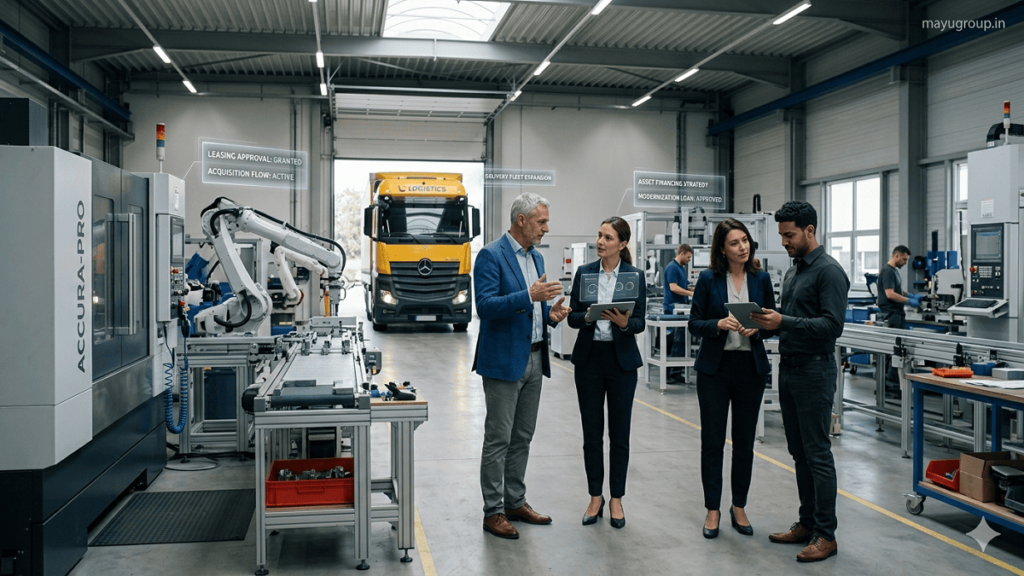
White Paper of Asset Finance
1. Executive Summary
Asset finance is a structured funding mechanism that enables businesses to acquire essential assets such as machinery, vehicles, equipment, and technology without making full upfront payments. Instead, costs are distributed over time through leasing, hire purchase, or refinancing arrangements. This white paper examines the role of asset finance in improving liquidity, supporting business growth, and enabling capital efficiency across industries.
2. Introduction
Businesses across sectors require high-value assets to operate efficiently, but upfront capital investment can restrict growth and strain cash flow. Asset finance addresses this challenge by providing flexible funding solutions that allow companies to access assets while preserving working capital. It is widely used by SMEs, manufacturing firms, logistics providers, construction companies, and technology-driven enterprises.
According to Investopedia, asset-based lending allows businesses to use physical assets as collateral to access financing and improve liquidity Investopedia – Asset-Based Lending.
3. Types of Asset Finance
Asset finance typically includes the following structures:
- Hire Purchase: Ownership transfers after final payment
- Finance Lease: Lender retains ownership while the business uses the asset
- Operating Lease: Short-term use without ownership responsibilities
- Asset Refinance: Unlocks capital from existing owned assets
- Equipment Leasing: Flexible access to machinery and tools
4. Key Benefits
Asset finance provides several strategic advantages:
- Improved cash flow management
- Reduced upfront capital expenditure
- Faster access to essential business assets
- Flexible repayment structures
- Support for business expansion and modernization
- Preservation of working capital for operational needs
These benefits make asset finance a critical tool for capital-intensive industries.
5. Risks and Limitations
Despite its advantages, asset finance involves certain risks:
- Higher overall cost due to interest and fees
- Risk of asset repossession in case of default
- Long-term financial commitments
- Depreciation of financed assets
- Limited flexibility in some lease agreements
Proper financial planning is essential to mitigate these risks.
6. Industry Applications
Asset finance is widely used across multiple industries:
- Transportation and logistics (fleet financing)
- Manufacturing (production machinery)
- Construction (heavy equipment)
- Agriculture (farm machinery)
- Technology (IT infrastructure and hardware)
These sectors rely on asset finance to maintain productivity and scale operations efficiently.
7. Market Trends
The asset finance market is evolving due to digital lending platforms, fintech innovation, and increased demand for flexible financing solutions. Businesses are increasingly adopting leasing models and asset refinancing to improve liquidity and operational agility.
8. Future Outlook
The future of asset finance is expected to be shaped by automation, digital underwriting, and AI-driven credit assessment. Sustainable financing models and green asset funding are also gaining importance, especially in renewable energy and electric mobility sectors.
9. Conclusion
Asset finance plays a crucial role in modern business financing by enabling access to essential assets without heavy upfront investment. While it offers strong benefits in terms of liquidity and growth, businesses must carefully evaluate costs, risks, and long-term obligations. As financial systems evolve, asset finance will continue to be a key driver of business expansion and capital efficiency.
#Asset Finance in Kolkata
Industry Application of Asset Finance
1. Introduction
Asset finance is widely used across industries that depend on high-value equipment, machinery, vehicles, and technology. It enables businesses to acquire essential assets without large upfront investments, improving cash flow and operational efficiency. Because of its flexibility, asset finance has become a key funding tool across both traditional and modern sectors.
2. Manufacturing Industry
The manufacturing sector is one of the largest users of asset finance. Companies require expensive machinery, production lines, and industrial equipment to maintain output. Asset finance helps manufacturers upgrade technology, expand production capacity, and improve efficiency without blocking large amounts of capital.
3. Transport and Logistics
Logistics companies heavily rely on asset finance to acquire trucks, delivery vans, shipping containers, and fleet vehicles. Since transportation assets are essential but costly, financing allows companies to scale their fleet quickly while maintaining stable cash flow and meeting rising delivery demand.
4. Construction Industry
Construction firms use asset finance to obtain heavy machinery such as cranes, bulldozers, excavators, and loaders. These assets are expensive and often project-based, making financing a practical solution to support large infrastructure and building projects without upfront financial burden.
5. Agriculture Sector
Farmers and agribusinesses use asset finance to purchase tractors, irrigation systems, harvesters, and other agricultural equipment. This helps improve productivity, modernize farming methods, and reduce dependency on manual labor while spreading costs over time.
6. Healthcare Industry
Hospitals and healthcare providers use asset finance to acquire medical equipment such as imaging machines, diagnostic tools, and laboratory systems. Since medical technology is costly and frequently updated, financing ensures access to advanced healthcare infrastructure without heavy capital strain.
7. Information Technology (IT) Sector
IT companies and businesses use asset finance to acquire servers, computers, networking equipment, and software infrastructure. Leasing models are especially popular because technology becomes outdated quickly, allowing businesses to upgrade regularly without owning obsolete equipment.
8. Energy and Utilities
The energy sector uses asset finance to fund renewable energy projects, power plants, and utility infrastructure. These are long-term, capital-intensive investments that benefit from structured financing models that support large-scale development.
According to Investopedia, asset-based financing allows businesses to leverage physical assets to access capital and support operational growth Investopedia – Asset-Based Lending.
9. Conclusion
Asset finance plays a critical role across multiple industries by enabling access to essential equipment and infrastructure without large upfront costs. From manufacturing and logistics to healthcare and energy, it supports growth, innovation, and operational efficiency while maintaining financial flexibility.
#Asset Finance in Mumbai
Ask FAQs
What is asset finance in simple terms?
Asset finance is a funding method that allows businesses to acquire equipment, machinery, vehicles, or technology without paying the full cost upfront. Instead, they repay the amount over time through installments or lease payments.
What assets can be financed?
Common assets include commercial vehicles, manufacturing machinery, construction equipment, agricultural tools, IT hardware, medical equipment, and other business-critical infrastructure.
Who is eligible for asset finance?
Asset finance is generally available to small and medium enterprises (SMEs), large corporations, startups with strong business plans, and industries that rely on high-value equipment. Approval depends on creditworthiness and business financial health.
Is asset finance better than buying outright?
It depends on the business situation. Asset finance helps preserve cash flow and reduces upfront costs, but buying outright may be cheaper in the long run since it avoids interest and financing fees.
What happens if payments are not made?
If a business fails to meet repayment obligations, the lender may repossess the financed asset, as it typically serves as collateral for the agreement.
Table of Contents
Disclaimer
This content is provided for general informational and educational purposes only and should not be considered financial or legal advice. Asset finance decisions involve risk, and suitability depends on individual business circumstances. Readers are advised to consult a qualified financial advisor or professional before making any financial decisions.