Agriculture Grants
Agriculture Grants are financial assistance programs provided by governments to support farmers, agribusinesses, cooperatives, and rural development organizations. These grants are designed to improve agricultural productivity, promote sustainable farming practices, enhance food security, and increase rural income without requiring repayment, provided that recipients comply with the specified conditions.
In countries like India, the Government of India offers a wide range of agriculture-focused grants and subsidy programs through ministries such as the Ministry of Agriculture and Farmers Welfare. These initiatives aim to modernize farming techniques, reduce dependency on traditional methods, and improve the overall efficiency of the agricultural sector.
Agriculture grants typically support several key areas. One major area is farm mechanization, where farmers receive funding to purchase equipment such as tractors, harvesters, drip irrigation systems, and other modern tools that reduce labor costs and increase yield. Another important area is irrigation development, where grants are provided for building efficient water management systems, including micro-irrigation and rainwater harvesting infrastructure.
Sustainable and organic farming is another focus of agricultural grants. Governments encourage eco-friendly practices by supporting soil health improvement, organic fertilizer usage, and reduced chemical dependency. These initiatives help maintain long-term soil fertility and environmental balance while ensuring healthier food production.
Agricultural research and innovation also receive significant grant support. Universities, research institutions, and agri-tech startups are funded to develop high-yield crop varieties, pest-resistant seeds, and advanced farming technologies such as precision agriculture, drone monitoring, and AI-based crop analysis.
In addition, agriculture grants support rural development and farmer welfare programs. These include training programs, financial literacy initiatives, crop insurance schemes, and market linkage support to help farmers access better pricing for their produce. In India, schemes such as PM-KISAN and various state-level subsidy programs are examples of direct financial assistance aimed at supporting farmers’ income stability.
Information about such programs can be accessed through official platforms like India Government Portal, which provides updates on eligibility, application procedures, and ongoing schemes.
However, challenges such as awareness gaps, delayed fund distribution, and complex application processes still exist, especially in rural areas. Governments are increasingly adopting digital platforms and direct benefit transfer systems to improve transparency and efficiency in delivering agricultural grants.
In summary, agriculture grants play a vital role in transforming traditional farming into a more productive, sustainable, and technology-driven sector. They help strengthen rural economies, improve food security, and ensure long-term agricultural development by supporting both farmers and agri-innovation ecosystems.
#Agriculture Grants in India
What are Agriculture Grants?
Agriculture grants are non-repayable financial assistance programs provided by governments or public institutions to support farming activities, rural development, and the agricultural economy. Unlike loans, these funds do not need to be repaid, provided the recipient uses them according to the conditions and objectives of the grant scheme. The primary goal of agriculture grants is to improve productivity, ensure food security, promote sustainable farming practices, and enhance the livelihoods of farmers.
These grants are typically offered to individual farmers, farmer cooperatives, agribusinesses, startups in agri-technology, and research institutions working in the agricultural sector. They help reduce financial barriers that often prevent farmers from adopting modern techniques, investing in equipment, or transitioning to more efficient and sustainable farming methods.
In India, the Government of India plays a key role in providing agriculture-related grants and subsidies through programs managed by the Ministry of Agriculture and Farmers Welfare. These initiatives focus on improving irrigation systems, increasing crop yields, supporting soil health management, and promoting organic farming practices.
Agriculture grants can be categorized into several types based on their purpose. Some grants focus on infrastructure development, such as building irrigation systems, cold storage facilities, and rural roads to improve supply chain efficiency. Others support farm mechanization, helping farmers purchase equipment like tractors, seeders, and harvesters to increase productivity and reduce manual labor.
There are also grants aimed at innovation and research in agriculture. These support the development of high-yield crop varieties, pest-resistant seeds, and advanced technologies such as precision farming, drone surveillance, and AI-based crop monitoring systems. Such innovations help farmers make data-driven decisions and improve overall agricultural efficiency.
Additionally, many agriculture grants focus on sustainability and environmental protection. These programs encourage organic farming, water conservation, soil restoration, and reduced use of chemical fertilizers. The objective is to ensure long-term agricultural productivity while minimizing environmental damage.
Farmers may also receive financial assistance through direct benefit schemes and subsidy programs that support income stability, crop insurance, and risk management. These initiatives help protect farmers from unpredictable factors such as weather changes, pest attacks, and market price fluctuations.
In India, information about these programs can be accessed through official government platforms such as India Government Portal, which provides details on eligibility, application processes, and ongoing schemes.
In summary, agriculture grants are a vital policy tool used to strengthen the farming sector by providing financial support, encouraging innovation, and promoting sustainable agricultural development without creating repayment burdens for recipients.
#Agriculture Grants in Maharashtra
How do Agriculture Grants Support Farmers and Agribusinesses?
Agriculture grants provide targeted financial assistance to farmers, agribusinesses, cooperatives, and agri-technology startups to strengthen productivity, reduce risks, and promote sustainable growth in the agricultural sector. Unlike loans, these funds do not require repayment, making them especially valuable for small and medium-scale farmers who often face financial constraints and unpredictable income cycles.
One of the primary ways agriculture grants support farmers is through improving farm productivity. Governments provide funding for modern farming equipment such as tractors, seed drills, harvesters, and irrigation systems. By reducing dependence on manual labor and traditional methods, farmers can increase efficiency, reduce operational costs, and achieve higher crop yields. In India, the Government of India implements several such support programs through agricultural development schemes.
Another major area of support is irrigation and water management. Agriculture grants help farmers install drip irrigation systems, sprinkler systems, and rainwater harvesting infrastructure. These technologies ensure efficient water usage, especially in regions facing water scarcity, thereby improving crop reliability and reducing dependency on rainfall.
Agribusinesses also benefit significantly from grants aimed at value chain development. Funding is provided for establishing cold storage units, food processing facilities, packaging systems, and transportation infrastructure. These improvements reduce post-harvest losses and help farmers access broader markets, leading to better income stability.
Innovation and technology adoption are another key focus area. Grants support agri-tech startups and research institutions working on precision agriculture, drone monitoring, soil testing tools, and AI-based crop prediction systems. These technologies enable farmers to make data-driven decisions, optimize resource use, and increase overall productivity.
Sustainability is also a major objective of agriculture grant programs. Farmers are encouraged to adopt organic farming, reduce chemical usage, and implement soil conservation techniques. Grants often fund training programs and awareness initiatives that promote environmentally responsible farming practices, ensuring long-term agricultural viability.
Risk management and income stability are further supported through grant-linked schemes such as crop insurance subsidies and disaster relief assistance. These programs help farmers recover from losses caused by droughts, floods, pest attacks, or market fluctuations, reducing financial vulnerability.
Additionally, skill development and training programs funded through agriculture grants help farmers learn modern techniques, financial planning, and market access strategies. This improves decision-making and strengthens their ability to compete in evolving agricultural markets.
In India, detailed information on agricultural support programs can be accessed through official platforms such as India Government Portal, which provides updates on eligibility criteria, application procedures, and ongoing schemes.
In summary, agriculture grants support farmers and agribusinesses by enhancing productivity, enabling technology adoption, improving infrastructure, promoting sustainability, and reducing financial risk. These interventions collectively strengthen rural economies and contribute to long-term food security and agricultural development.
#Agriculture Grants in Ahemadabad
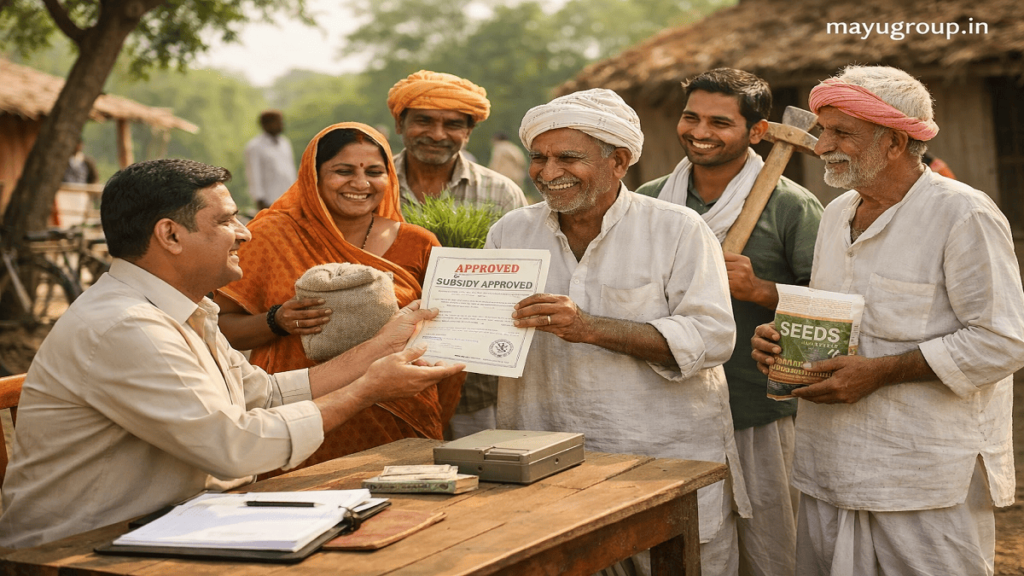
What types of projects are funded by agriculture grants?
Agriculture grants fund a wide range of projects aimed at improving farm productivity, strengthening rural economies, promoting sustainability, and advancing agricultural innovation. These projects are typically supported by government agencies and public institutions to address challenges in food production, resource management, and farmer livelihoods.
One of the most common categories is farm infrastructure development projects. These include building or upgrading irrigation systems, farm ponds, cold storage units, warehouses, and rural road networks. Such infrastructure helps reduce post-harvest losses, improve water management, and ensure better connectivity between farms and markets, ultimately increasing farmer income and efficiency.
Another major category is farm mechanization and equipment projects. Agriculture grants often support the purchase or shared use of modern machinery such as tractors, harvesters, seed drills, and irrigation systems. These projects aim to reduce manual labor, lower production costs, and improve overall crop yield and efficiency, especially for small and marginal farmers.
Sustainable and organic farming projects are also heavily supported. These initiatives focus on reducing chemical usage, improving soil health, and promoting eco-friendly farming practices. Grants may fund organic certification programs, composting units, bio-fertilizer production, and integrated pest management systems. The goal is to ensure long-term agricultural productivity while protecting the environment.
A rapidly growing area is agri-technology and innovation projects. These include the development and deployment of precision farming tools, drone-based crop monitoring, AI-driven weather prediction systems, and soil health analysis technologies. Agri-tech startups and research institutions often receive grants to test and scale new solutions that make farming more efficient and data-driven.
Research and development projects in agriculture are another key focus. Universities and agricultural research institutions receive funding to develop high-yield crop varieties, pest-resistant seeds, and climate-resilient farming techniques. These projects play a critical role in addressing food security challenges and adapting agriculture to changing environmental conditions.
Governments also fund rural development and farmer welfare projects, such as training programs, skill development workshops, financial literacy initiatives, and cooperative farming models. These projects help farmers improve decision-making, access better markets, and strengthen community-based agricultural systems.
In addition, climate resilience and water conservation projects are increasingly prioritized. These include watershed management, rainwater harvesting systems, drought-resistant farming techniques, and soil conservation initiatives. Such projects are essential for maintaining agricultural productivity in regions affected by climate variability.
In India, agriculture-related funding programs are implemented by the Government of India through various ministries and schemes. Information about these initiatives can be accessed via official platforms such as India Government Portal, which provides details on eligibility, guidelines, and ongoing programs.
In summary, agriculture grants support a diverse range of projects including infrastructure development, mechanization, sustainable farming, agri-tech innovation, research, rural development, and climate resilience initiatives. These projects collectively aim to modernize agriculture, increase productivity, and ensure long-term sustainability of the farming sector.
#Agriculture Grants in Hyderabad
Who is eligible to apply for agriculture grants?
Eligibility for agriculture grants depends on the specific scheme, government policy objectives, and the type of agricultural activity being supported. In general, agriculture grants are designed to support individuals and organizations involved in farming, food production, rural development, and agri-based innovation. The goal is to ensure that financial assistance reaches those who contribute directly to agricultural productivity and sustainability.
One of the primary eligible groups is individual farmers. This includes small, marginal, and large-scale farmers who are actively engaged in crop cultivation, livestock rearing, horticulture, or allied agricultural activities. Many government programs prioritize small and marginal farmers because they often lack access to commercial credit and modern farming resources. In India, the Government of India implements several schemes specifically targeting these groups to improve productivity and income stability.
Another important category is farmer producer organizations (FPOs) and cooperatives. These groups consist of farmers who collectively manage production, procurement, storage, or marketing activities. Grants are often provided to strengthen collective infrastructure such as warehouses, processing units, and logistics systems, enabling better market access and price realization.
Agribusinesses and agri-startups are also eligible for many agriculture grant programs. These include companies working in areas such as food processing, precision agriculture, irrigation technology, supply chain solutions, and sustainable farming innovations. Eligibility usually requires formal business registration, a viable project proposal, and compliance with regulatory standards.
Research institutions and universities are another key category of eligible applicants. These organizations receive grants to conduct agricultural research, develop new crop varieties, improve farming techniques, and address challenges such as climate change, soil degradation, and pest management. Their eligibility is based on academic credentials, research capability, and alignment with national agricultural priorities.
In addition, non-governmental organizations (NGOs) and rural development agencies may qualify for agriculture grants if they are involved in farmer training, rural livelihood programs, environmental conservation, or community-based agricultural projects. These organizations must typically demonstrate a strong track record, transparent governance, and measurable social impact.
Some agriculture grants are also region-specific or demographic-specific, targeting particular states, drought-prone areas, tribal communities, or women farmers. These targeted programs aim to reduce regional inequality and ensure inclusive agricultural development.
Basic eligibility requirements across most agriculture grant schemes include legal recognition (for organizations), active involvement in agriculture-related activities, submission of a detailed project proposal, and compliance with environmental and regulatory guidelines. Applicants must also demonstrate the capacity to effectively utilize funds and achieve measurable outcomes.
Information about eligibility criteria and application procedures is available through official government platforms such as India Government Portal, which provides updated details on various agriculture-related schemes.
In summary, eligibility for agriculture grants typically includes farmers, cooperatives, agribusinesses, research institutions, and NGOs engaged in agriculture and rural development. Each program has specific requirements, but all are designed to ensure that funding supports productive, sustainable, and inclusive growth in the agricultural sector.
#Agriculture Grants in Delhi
What challenges exist in obtaining agriculture grants?
Agriculture grants provide important financial support to farmers, agribusinesses, and rural development projects, but accessing them is often difficult due to several structural, administrative, and practical challenges. These challenges can limit the effectiveness of grant programs, especially for small and marginal farmers who need support the most.
One of the biggest challenges is lack of awareness and information gaps. Many farmers, particularly in rural areas, are not fully aware of available grant schemes, eligibility criteria, deadlines, or application procedures. Although official platforms such as those managed by the Government of India provide scheme details, access to digital resources and timely updates remains uneven across regions.
Another major issue is the complex application process. Agriculture grant applications often require detailed documentation such as land ownership records, identity proofs, project proposals, financial statements, and technical plans. Many farmers find it difficult to prepare such documents or understand formal requirements, especially without administrative or technical assistance.
Eligibility restrictions also create barriers. Some grants are limited to specific categories such as small and marginal farmers, women farmers, cooperatives, or particular geographic regions. While this helps target support, it also excludes many applicants who may still need financial assistance but do not meet strict criteria.
Delays in approval and fund disbursement are another significant challenge. The grant process often involves multiple layers of verification, including local authorities, state departments, and central agencies. This can lead to long waiting periods, which reduces the usefulness of funds for time-sensitive agricultural activities such as planting seasons or irrigation projects.
Limited digital and administrative infrastructure in rural areas further complicates access. Many farmers lack reliable internet connectivity or digital literacy to apply online. Even when systems are digitized, support for troubleshooting and application guidance may be insufficient.
Compliance and reporting requirements after receiving grants can also be burdensome. Beneficiaries are often required to submit progress reports, usage documentation, and audit records. For small farmers or small organizations, maintaining such records can be difficult and time-consuming.
Another challenge is uneven implementation and regional disparities. In some regions, agriculture grant programs are efficiently executed, while in others, administrative inefficiencies or local bottlenecks reduce accessibility and effectiveness.
There is also the issue of awareness-to-benefit conversion gap, where farmers know about schemes but are unable to successfully apply or complete the process due to procedural complexity or lack of support.
Information about agriculture grant schemes and application procedures can be accessed through official portals such as India Government Portal, which provides updates on government programs and eligibility requirements.
In summary, the main challenges in obtaining agriculture grants include lack of awareness, complex paperwork, strict eligibility rules, delays in processing, limited digital access, compliance burdens, and regional implementation gaps. Addressing these issues is essential to make agriculture grants more accessible, efficient, and impactful for farmers and rural communities.
#Agriculture Grants in Banglore
Case Study of Agriculture Grants
Background
Agriculture in India is heavily dependent on monsoon rainfall, making water management a critical challenge. Small and marginal farmers often face irregular irrigation access, leading to low productivity and income instability. To address this, the Government of India has implemented multiple agriculture grant and subsidy programs focused on micro-irrigation and water efficiency.
One of the most impactful interventions has been the promotion of drip and sprinkler irrigation systems through government-backed grant support.
Objective of the Grant Program
The primary objectives of these agriculture grants were to:
- Improve water-use efficiency in farming
- Increase crop yield with limited water resources
- Reduce dependency on unpredictable rainfall
- Promote sustainable agricultural practices
- Support small and marginal farmers financially
These goals align with broader national priorities of food security and climate-resilient agriculture.
Implementation Approach
Under various central and state-level schemes, farmers receive financial assistance covering a significant portion of the cost of installing micro-irrigation systems. The grants are typically disbursed through agricultural departments and local implementing agencies.
Farmers apply by submitting land records, crop details, and irrigation plans. Once approved, subsidies are directly transferred or equipment is installed through authorized vendors. Technical guidance is also provided to ensure proper usage and maintenance of systems.
Training programs are conducted to educate farmers on water scheduling, system maintenance, and crop planning for optimal efficiency.
Outcomes and Impact
The implementation of irrigation-related agriculture grants has produced measurable benefits:
- Significant reduction in water consumption per hectare
- Increased crop yield due to controlled irrigation
- Expansion of cultivation to previously water-scarce regions
- Improved income stability for small farmers
- Greater adoption of modern farming practices
These improvements have helped shift farming from rainfall-dependent methods to more technology-driven and sustainable systems.
Challenges Observed
Despite success, several challenges remain:
- Limited awareness among farmers in remote areas
- Delays in subsidy disbursement in some regions
- High initial costs even after subsidy support
- Maintenance issues due to lack of technical knowledge
- Uneven adoption across different states and crops
These challenges highlight the need for better outreach and stronger implementation infrastructure.
Conclusion
This case study demonstrates how agriculture grants can directly improve productivity and sustainability when applied to critical areas like irrigation. By reducing financial barriers and promoting modern farming techniques, government support programs help farmers transition toward more efficient and resilient agricultural practices.
#Agriculture Grants in Pune
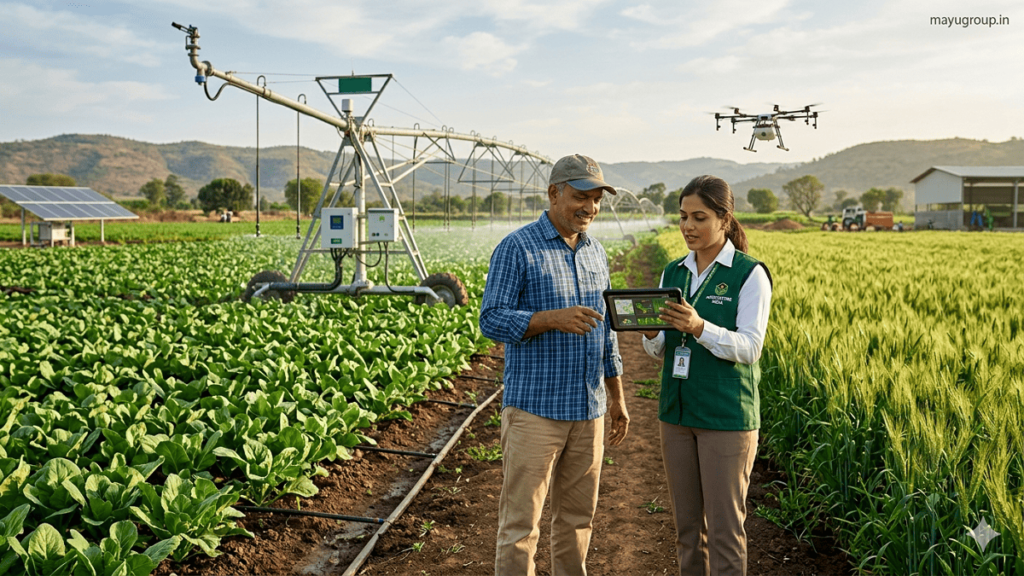
White Paper on Agriculture Grants
Executive Summary
Agriculture grants are a key public policy instrument used to strengthen agricultural productivity, ensure food security, and support rural livelihoods. These grants provide non-repayable financial assistance to farmers, agribusinesses, cooperatives, and research institutions to encourage modernization, sustainability, and innovation in agriculture. This white paper examines their structure, objectives, implementation mechanisms, outcomes, and key challenges, with a focus on improving efficiency and accessibility.
1. Introduction
Agriculture remains a foundational sector for economic stability and rural employment. However, farmers often face constraints such as limited capital, climate uncertainty, and inadequate infrastructure. Agriculture grants address these challenges by providing targeted financial support that does not require repayment, provided conditions are met.
In India, the Government of India implements agriculture grant programs through ministries such as Agriculture and Farmers Welfare, focusing on productivity enhancement, sustainability, and income stabilization.
2. Objectives of Agriculture Grants
Agriculture grants are designed to achieve multiple policy objectives:
- Increase agricultural productivity and crop yields
- Promote sustainable and climate-resilient farming
- Support modernization and mechanization of agriculture
- Improve rural livelihoods and farmer income stability
- Encourage innovation in agri-technology and research
- Strengthen food security and supply chains
These objectives ensure alignment with long-term national development goals.
3. Types of Agriculture Grant Programs
Agriculture grants are typically structured into the following categories:
- Infrastructure Grants: irrigation systems, storage facilities, rural roads
- Mechanization Grants: tractors, harvesters, farm equipment subsidies
- Sustainability Grants: organic farming, soil health, water conservation
- Innovation Grants: agri-tech startups, precision farming, AI solutions
- Research Grants: crop development, pest resistance, climate adaptation
- Rural Development Grants: training, cooperative farming, skill development
Each category addresses specific gaps in the agricultural ecosystem.
4. Implementation Framework
The grant lifecycle generally includes:
- Policy design and scheme announcement
- Application submission and documentation
- Eligibility verification and technical evaluation
- Approval by designated committees
- Fund disbursement or direct benefit transfer
- Monitoring, auditing, and performance reporting
Digital platforms such as India Government Portal have improved transparency and accessibility in grant distribution.
5. Impact Assessment
Agriculture grants have contributed to:
- Increased adoption of modern farming techniques
- Improved irrigation efficiency and water conservation
- Growth of agri-tech innovation ecosystems
- Enhanced rural employment opportunities
- Reduction in post-harvest losses through infrastructure development
- Greater resilience against climate variability
These outcomes demonstrate strong multiplier effects in rural economies.
6. Key Challenges
Despite their benefits, several challenges persist:
- Limited awareness among rural farmers
- Complex documentation and application processes
- Delays in approval and subsidy disbursement
- Unequal access to digital infrastructure
- Regional disparities in implementation efficiency
- Compliance and reporting burdens on beneficiaries
These challenges reduce the overall reach and effectiveness of grant programs.
7. Policy Recommendations
To improve effectiveness, the following measures are recommended:
- Simplification of application and documentation processes
- Expansion of mobile-based and offline application support
- Faster processing and real-time fund tracking systems
- Increased farmer awareness and outreach programs
- Stronger monitoring and impact evaluation systems
- Improved coordination between central and state agencies
8. Conclusion
Agriculture grants are a critical instrument for transforming traditional farming into a modern, efficient, and sustainable sector. While significant progress has been made, especially through digital governance reforms, continued improvements are necessary to ensure equitable access and timely delivery.
#Agriculture Grants in Kolkata
Industry Application of Agriculture Grants
Agriculture grants play a significant role in strengthening multiple industries connected to farming, food production, supply chains, and rural development. These grants are not limited to primary agriculture alone; they extend across allied sectors that depend on agricultural output and innovation. By reducing financial barriers and encouraging modernization, agriculture grants help industries improve productivity, sustainability, and competitiveness.
1. Agri-Tech and Digital Agriculture Industry
One of the fastest-growing applications of agriculture grants is in the agri-tech sector. Startups and technology companies develop solutions such as precision farming tools, drone-based crop monitoring, AI-driven weather forecasting, and soil health analytics systems. Government grants help fund research, prototyping, and deployment of these technologies.
In India, the Government of India supports innovation-driven agriculture through schemes that encourage digital transformation in farming. These grants help bridge the gap between traditional agriculture and modern technology adoption.
2. Food Processing and Agro-Industries
Agriculture grants significantly support food processing industries by funding infrastructure such as cold storage units, packaging facilities, and processing plants. These investments reduce post-harvest losses and increase the value of raw agricultural produce.
Food processing companies benefit from grants that enable them to expand operations, improve quality standards, and access larger markets. This sector also contributes to rural employment and export growth.
3. Irrigation and Agricultural Equipment Industry
Manufacturers of irrigation systems, farm machinery, and agricultural equipment benefit directly from government grants provided to farmers and cooperatives. Subsidies on drip irrigation systems, tractors, harvesters, and sprinklers increase demand in this industry.
As farmers adopt modern equipment, equipment manufacturers experience growth, leading to innovation and increased competition in the agricultural machinery market.
4. Organic and Sustainable Farming Industry
The organic agriculture sector has expanded due to grants promoting chemical-free farming, soil health improvement, and eco-friendly cultivation practices. Businesses involved in organic fertilizers, bio-pesticides, and certification services benefit from government-backed programs.
These grants encourage environmentally responsible farming practices while creating new market opportunities for sustainable agricultural products.
5. Rural Infrastructure and Logistics Industry
Agriculture grants also support industries involved in rural infrastructure development, such as warehouse construction, cold chain logistics, transportation, and rural road building. These improvements help connect farmers to markets more efficiently.
Logistics companies benefit from increased demand for storage and transportation solutions, especially in perishable goods supply chains.
6. Research and Educational Institutions
Universities and agricultural research centers receive grants to develop improved crop varieties, pest-resistant seeds, and climate-resilient farming methods. These institutions play a crucial role in advancing agricultural science and transferring knowledge to the industry.
Their research outputs often lead to commercial applications that benefit agribusinesses and farming communities.
Conclusion
Agriculture grants have a wide-reaching impact across multiple industries, including agri-tech, food processing, farm equipment, organic agriculture, logistics, and research institutions. By providing targeted financial support, these grants drive innovation, improve productivity, and strengthen the entire agricultural value chain.
In India, initiatives led by the Government of India continue to promote sector-wide growth through structured funding programs accessible via platforms such as India Government Portal.
Overall, agriculture grants act as a catalyst for industrial development by linking farming with technology, manufacturing, and services, ultimately contributing to a more integrated and efficient agricultural economy.
#Agriculture Grants in Mumbai
Ask FAQs
What are agriculture grants used for?
Agriculture grants are used to financially support farming-related activities such as improving irrigation systems, purchasing farm equipment, adopting modern technology, developing rural infrastructure, and promoting sustainable farming practices. They help increase productivity and reduce financial burden on farmers and agribusinesses.
Who can apply for agriculture grants?
Agriculture grants are generally available to farmers, farmer producer organizations (FPOs), cooperatives, agribusinesses, agri-startups, NGOs, and research institutions. Eligibility depends on the specific scheme and may include criteria such as land ownership, business registration, or project relevance. In India, the Government of India manages multiple agriculture funding programs.
Do agriculture grants need to be repaid?
No, agriculture grants do not require repayment. However, recipients must use the funds according to the guidelines provided by the scheme. They are also required to maintain proper documentation and submit reports to ensure transparency and accountability.
What types of projects are supported by agriculture grants?
Agriculture grants support projects such as irrigation development, farm mechanization, organic farming, agri-tech innovation, food processing, cold storage facilities, rural development programs, and agricultural research. These projects aim to improve efficiency, sustainability, and income generation in the agricultural sector.
How can farmers apply for agriculture grants?
Farmers can apply through official government portals, agriculture department offices, or authorized agencies depending on the scheme. The application process usually involves submitting a project proposal, identity and land documents, and meeting eligibility requirements. More information is available on India Government Portal
Table of Contents
Disclaimer:
The information provided is for general educational and informational purposes only. It does not constitute legal, financial, or professional advice. Government grant schemes, eligibility criteria, and application processes may change over time. For the most accurate and updated details, please refer to official government sources or consult relevant authorities.