Fusion Energy Investment
Fusion Energy Investment has become one of the fastest-growing areas in the global clean energy sector, driven by the promise of producing abundant, carbon-free electricity through the same nuclear process that powers the Sun. Unlike conventional nuclear fission, fusion combines light atomic nuclei to release enormous amounts of energy while producing minimal long-lived radioactive waste and no greenhouse gas emissions during operation. As governments and private companies seek sustainable energy solutions, investment in fusion technology has increased significantly over the past decade.
Public investment has traditionally been the backbone of fusion research. Governments around the world fund national laboratories, universities, and international collaborations to advance plasma physics, materials science, and reactor engineering. One of the most notable initiatives is the International Thermonuclear Experimental Reactor (ITER), a multinational project involving the European Union, India, China, Japan, South Korea, Russia, and the United States. ITER aims to demonstrate the scientific and technological feasibility of large-scale fusion power and serves as a foundation for future commercial reactors.
Private investment has also accelerated rapidly, with venture capital firms and technology investors supporting innovative fusion startups that pursue alternative reactor designs and faster commercialization strategies. Companies are developing magnetic confinement, inertial confinement, and other advanced fusion concepts to reduce costs and improve efficiency. Increased private funding reflects growing confidence that fusion energy could become commercially viable within the coming decades.
Investment in fusion energy offers several potential economic and environmental benefits. Successful commercialization could provide a virtually limitless source of clean electricity, enhance energy security by reducing dependence on fossil fuels, and support industrial decarbonization. Fusion technology could also create new opportunities in advanced manufacturing, superconducting materials, robotics, and high-performance computing, generating skilled employment and economic growth.
Despite its potential, fusion investment remains high risk. The technology requires extremely high temperatures, sophisticated magnetic confinement systems, and advanced materials capable of withstanding intense neutron radiation. Development costs are substantial, and commercial deployment timelines remain uncertain. Consequently, investors often require long-term funding commitments and strong government support to mitigate technological and financial risks.
International cooperation continues to play a crucial role in advancing fusion research by sharing expertise, infrastructure, and financial resources. Public-private partnerships are increasingly viewed as an effective approach to accelerate innovation and bridge the gap between laboratory experiments and commercial power generation. The growing level of global investment indicates strong confidence that fusion energy could become a transformative component of the future clean energy landscape.
Relevant External Resources:
- ITER – Fusion Energy Overview
- U.S. Department of Energy – Fusion Energy
- International Energy Agency – Fusion Energy Technologies Investment
#Fusion Energy Investment in India
What is fusion energy investment?
Fusion energy investment refers to the allocation of financial resources by governments, private companies, venture capital firms, and research organizations to develop and commercialize nuclear fusion technology. Fusion is the process in which two light atomic nuclei, typically isotopes of hydrogen, combine to form a heavier nucleus while releasing a tremendous amount of energy. This is the same reaction that powers the Sun and other stars. Scientists aim to replicate this process on Earth to create a clean, safe, and virtually limitless source of electricity.
Investment in fusion energy supports a wide range of activities, including fundamental scientific research, reactor design, advanced materials development, plasma physics, superconducting magnets, and large-scale experimental facilities. Governments have funded fusion research for decades through national laboratories and international collaborations, while private investors have increasingly entered the sector in recent years to accelerate commercialization.
Fusion energy investment can be broadly classified into public investment and private investment. Public investment comes from governments and international organizations that finance long-term research projects and scientific infrastructure. Private investment comes from venture capital firms, institutional investors, and energy companies that fund startups developing innovative fusion reactor technologies. This combination of public and private funding has significantly expanded global research and technological innovation in the field.
The primary objective of investing in fusion energy is to create a future energy source that produces abundant electricity without emitting carbon dioxide during operation. Unlike conventional nuclear fission plants, fusion reactors have the potential to generate far less long-lived radioactive waste and use widely available fuels such as hydrogen isotopes. If successfully commercialized, fusion could contribute to global energy security, climate change mitigation, and sustainable economic development.
Despite its enormous potential, fusion energy investment remains a high-risk and long-term undertaking. Scientists still face significant engineering and scientific challenges, including sustaining extremely high-temperature plasmas and developing materials capable of withstanding intense radiation. As a result, investors often require substantial capital commitments and long development timelines before commercial returns can be realized.
Overall, fusion energy investment represents a strategic effort to transform the future of global energy production. Continued financial support from governments and private industry is expected to accelerate technological breakthroughs and move fusion power closer to commercial reality.
Relevant External Resources:
- U.S. Department of Energy – Fusion Energy
- ITER – Fusion Energy Overview
- International Energy Agency – Fusion Energy Technologies Investment
#Fusion Energy Investment in Maharashtra

Why are investors interested in fusion energy technology?
Investors are increasingly interested in fusion energy technology because it has the potential to revolutionize the global energy industry by providing a clean, reliable, and virtually limitless source of power. Fusion energy replicates the same nuclear process that powers the Sun, where light atomic nuclei combine to release enormous amounts of energy. If commercialized successfully, fusion could meet growing global electricity demand while producing zero carbon emissions during operation and significantly less long-lived radioactive waste than conventional nuclear fission. This long-term potential makes fusion one of the most attractive emerging technologies for investment.
One of the primary reasons investors are attracted to fusion technology is its enormous market opportunity. As countries transition toward low-carbon energy systems and electrification expands across transportation, manufacturing, and digital infrastructure, demand for clean electricity is expected to rise substantially. Fusion power could provide continuous baseload electricity without dependence on weather conditions, unlike solar and wind energy, making it an attractive solution for future energy security.
Technological progress has also increased investor confidence. Advances in superconducting magnets, plasma control systems, artificial intelligence, and high-performance computing have accelerated fusion research and improved the prospects for commercial deployment. Recent scientific milestones and government-backed research programs have encouraged private investors to support startups developing innovative reactor designs and commercialization strategies.
Another factor driving investment is the strong support from governments and international organizations. Many countries have launched funding programs and public-private partnerships to accelerate fusion development, reducing some of the financial risks associated with this emerging technology. Such collaboration provides investors with confidence that fusion research will continue receiving institutional support over the long term.
Fusion technology also offers opportunities beyond electricity generation. Future fusion plants could supply industrial heat, hydrogen production, desalination, and carbon capture systems, creating multiple revenue streams and expanding the technology’s commercial applications. This versatility increases its attractiveness as a long-term investment in the clean energy sector.
Despite these opportunities, fusion remains a high-risk investment because significant scientific and engineering challenges must still be overcome before commercial power plants become operational. Development requires substantial capital, long research timelines, and continued technological breakthroughs. Nevertheless, many investors believe that the potential economic returns and environmental benefits justify the risks, making fusion energy a strategic investment for the future.
Relevant External Resources:
- U.S. Department of Energy – Fusion Energy: https://www.energy.gov/topics/fusion-energy
- U.S. Department of Energy – Fusion Energy Strategy 2024: https://www.energy.gov/doe-fusion-energy-strategy-2024-executive-summary
- ITER – Fusion Energy Overview: https://www.iter.org/fusion-energy
#Fusion Energy Investment in Ahemadabad
How does fusion energy differ from nuclear fission?
Fusion energy and nuclear fission are two different nuclear processes used to release energy, but they operate in fundamentally different ways. While both involve atomic nuclei and produce large amounts of energy, they differ in their reactions, fuel sources, waste generation, safety characteristics, and commercial maturity.
Nuclear fusion occurs when two light atomic nuclei, such as isotopes of hydrogen (deuterium and tritium), combine under extremely high temperatures and pressure to form a heavier nucleus. During this process, a small amount of mass is converted into a large amount of energy according to Einstein’s equation, E = mc². Fusion is the natural process that powers the Sun and other stars. Scientists are working to recreate these conditions on Earth to produce clean and sustainable electricity.
In contrast, nuclear fission generates energy by splitting the nucleus of a heavy atom, such as uranium-235 or plutonium-239, into smaller nuclei. This splitting releases energy along with additional neutrons that trigger a chain reaction. Fission is the technology currently used in commercial nuclear power plants around the world.
One of the biggest differences between the two technologies is their fuel source. Fusion relies on hydrogen isotopes that can be obtained from seawater and lithium, making fuel resources abundant and widely available. Fission depends on uranium and other radioactive materials that require mining, processing, and careful management.
Fusion also offers significant environmental advantages. During operation, fusion produces no carbon dioxide emissions and generates much smaller amounts of long-lived radioactive waste than conventional fission reactors. Fission plants, while also low in greenhouse gas emissions, produce high-level radioactive waste that must be safely stored for thousands of years.
Another important distinction is safety. Fusion reactions require extremely precise conditions to continue. If these conditions are disrupted, the reaction naturally stops, greatly reducing the risk of uncontrolled accidents. Fission reactors require carefully managed chain reactions and multiple safety systems to prevent overheating or reactor damage.
However, fusion technology is still largely in the research and demonstration stage because achieving and maintaining the necessary temperatures—over 100 million degrees Celsius—is an enormous engineering challenge. By comparison, nuclear fission has been commercially deployed for decades and currently supplies a significant share of electricity in many countries.
Overall, fusion is considered a promising next-generation energy source because it combines abundant fuel, lower environmental impact, and enhanced safety features. Although commercial fusion power plants are not yet available, continued scientific progress and investment may enable fusion to become a major contributor to global clean energy production in the future.
Relevant External Resources:
- U.S. Department of Energy – Fusion Energy: https://www.energy.gov/topics/fusion-energy
- International Atomic Energy Agency – Nuclear Power: https://www.iaea.org/topics/nuclear-power
- ITER – Fusion Energy Overview: https://www.iter.org/fusion-energy
#Fusion Energy Investment in Hyderabad
What are the potential benefits of investing in fusion energy?
Investing in fusion energy offers significant economic, environmental, and technological advantages that could transform the global energy sector. Fusion energy is produced by combining light atomic nuclei to release vast amounts of energy, replicating the process that powers the Sun. Although commercial fusion power plants are still under development, continued investment has the potential to create a sustainable and reliable source of electricity for future generations.
One of the greatest benefits of investing in fusion energy is its potential to provide clean and carbon-free electricity. Fusion reactions do not produce greenhouse gas emissions during operation, making them an attractive solution for addressing climate change and supporting global efforts to reduce dependence on fossil fuels. As countries pursue net-zero emission targets, fusion could become a valuable component of future low-carbon energy systems.
Another major advantage is energy security. Fusion fuel primarily consists of hydrogen isotopes such as deuterium, which can be extracted from seawater, and tritium, which can be produced from lithium. These resources are abundant and widely distributed around the world, reducing reliance on imported fossil fuels and improving national energy independence. A successful fusion industry could provide a stable and long-term energy supply for both developed and developing economies.
Fusion energy investment also has the potential to drive technological innovation. Research in fusion has led to advances in superconducting magnets, plasma physics, robotics, artificial intelligence, advanced manufacturing, and high-performance computing. These innovations often have applications beyond energy production, benefiting sectors such as healthcare, aerospace, materials science, and industrial engineering.
From an economic perspective, investing in fusion can create new industries and employment opportunities. The development, construction, and operation of future fusion power plants will require highly skilled scientists, engineers, technicians, and manufacturing specialists. This can stimulate economic growth, encourage research and development, and strengthen national technological competitiveness.
Fusion technology also offers important safety and environmental advantages compared with conventional nuclear fission. Fusion reactions are inherently self-limiting and do not rely on a sustained chain reaction, reducing the risk of large-scale accidents. In addition, fusion produces significantly less long-lived radioactive waste, simplifying waste management and reducing long-term environmental concerns.
Although fusion remains a long-term investment with considerable scientific and engineering challenges, continued funding from governments and private investors is accelerating research and commercialization efforts. If these challenges are overcome, fusion energy could provide virtually limitless, reliable, and sustainable electricity while supporting global economic development and environmental protection.
Relevant External Resources:
- U.S. Department of Energy – Fusion Energy
- ITER – Fusion Energy Overview
- International Atomic Energy Agency – Nuclear Power and Clean Energy
#Fusion Energy Investment in Delhi
What risks are associated with fusion energy investments?
Fusion energy investment offers significant long-term potential, but it also involves several risks that investors, governments, and research organizations must carefully consider. Since fusion technology is still under development and has not yet achieved widespread commercial deployment, investments in this sector are generally regarded as high-risk but potentially high-reward.
One of the primary risks is technological uncertainty. Fusion requires extremely high temperatures—over 100 million degrees Celsius—to enable atomic nuclei to fuse and release energy. Maintaining these conditions in a stable and economically viable manner remains one of the greatest scientific and engineering challenges. Although major progress has been made in plasma control and superconducting magnet technology, commercial fusion power plants have not yet been fully realized.
Another significant risk is high capital investment. Building experimental fusion facilities and developing advanced reactor technologies require billions of dollars in funding over many years. Large-scale infrastructure, specialized materials, and sophisticated engineering systems contribute to exceptionally high development costs. As a result, investors may need to wait decades before seeing financial returns, making fusion less attractive for those seeking short-term profits.
Fusion energy projects also face long development timelines. Scientific research, prototype testing, regulatory approvals, and commercial scaling can take many years to complete. Delays caused by technical setbacks or budget constraints may increase project costs and reduce investor confidence. Long timelines also create uncertainty about when commercial fusion electricity will become economically competitive.
Another challenge is market and policy uncertainty. Future energy markets may change due to advances in renewable energy, battery storage, or other low-carbon technologies. Government policies, regulations, and public funding priorities can also influence the pace of fusion development. Changes in political or economic conditions could affect investment returns and research support.
There is also commercialization risk. Even if scientists successfully demonstrate net energy production, scaling laboratory breakthroughs into reliable and affordable power plants presents major engineering and manufacturing challenges. The cost of electricity generated by early fusion reactors may initially be higher than existing energy sources, potentially limiting market adoption.
Competition from established clean energy technologies represents another investment risk. Solar, wind, hydroelectric power, and advanced battery systems are already commercially available and continue to become more affordable. Fusion companies must demonstrate that their technology can compete economically while providing unique advantages such as continuous baseload electricity generation.
Despite these challenges, many governments and private investors continue to support fusion research because of its transformative potential. If technological and commercial barriers are overcome, fusion energy could provide abundant, low-carbon electricity and reshape the future global energy system. However, investors should recognize that fusion remains a long-term investment requiring patience, substantial capital, and tolerance for uncertainty.
Relevant External Resources:
- U.S. Department of Energy – Fusion Energy
- ITER – Fusion Energy Overview
- International Atomic Energy Agency – Nuclear Power
#Fusion Energy Investment in Banglore
Case Study of Fusion Energy Investment
The ITER (International Thermonuclear Experimental Reactor) is one of the most significant examples of global investment in fusion energy technology. Located in southern France, ITER is a multinational scientific collaboration established to demonstrate the feasibility of producing large-scale energy through nuclear fusion. The project represents a long-term investment in clean energy research and is widely regarded as a milestone in the development of next-generation power generation technologies.
ITER brings together seven major partners: the European Union, India, China, Japan, South Korea, Russia, and the United States. These members collectively provide financial resources, scientific expertise, and advanced engineering capabilities to construct one of the world’s largest experimental fusion reactors. Rather than producing electricity for commercial use, ITER is designed to prove that fusion can generate more energy than is required to sustain the reaction, an essential step toward future commercial fusion power plants.
The investment in ITER demonstrates the importance of international cooperation in high-risk scientific research. The project has required substantial funding over several decades because of the complexity of fusion technology. Building the reactor involves advanced superconducting magnets, high-vacuum systems, plasma control technologies, and specialized materials capable of withstanding extreme temperatures and neutron radiation. These technological developments have also stimulated innovation in engineering, robotics, computing, and materials science.
From an investment perspective, ITER illustrates both the opportunities and challenges associated with fusion energy. The potential benefits include abundant clean electricity, improved energy security, reduced greenhouse gas emissions, and lower production of long-lived radioactive waste compared with conventional nuclear fission. Successful demonstration of fusion technology could support global decarbonization efforts and create new industries focused on advanced energy systems.
However, the project also highlights the risks of fusion investment. Development costs are extremely high, construction timelines are lengthy, and scientific uncertainties remain. Delays and technical challenges have increased overall project expenses, emphasizing that fusion research requires sustained government commitment and long-term financial planning. Private investors often view such projects as strategic investments whose returns may only be realized after many years of continued technological progress.
Despite these challenges, ITER continues to play a central role in advancing fusion science and strengthening international collaboration. The knowledge gained from the project is expected to support the design of future demonstration reactors capable of supplying electricity to national power grids. As governments and private companies continue investing in fusion technology, ITER serves as a valuable case study of how large-scale scientific collaboration can accelerate innovation and contribute to the future of sustainable energy.
Relevant External Resources:
- ITER Official Website
- U.S. Department of Energy – Fusion Energy
- International Atomic Energy Agency – Nuclear Power and Fusion Research
#Fusion Energy Investment in Pune
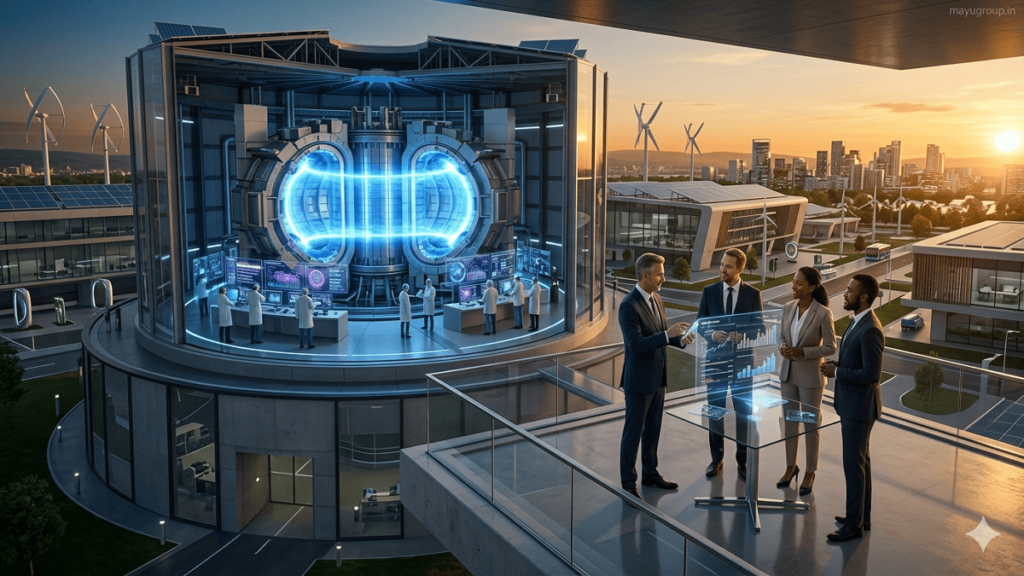
White Paper on Fusion Energy Investment
Executive Summary
Fusion energy has emerged as one of the most promising technologies for achieving a sustainable, carbon-neutral energy future. By replicating the nuclear reactions that power the Sun, fusion offers the potential to generate abundant electricity with minimal environmental impact and virtually unlimited fuel resources. In recent years, governments, research institutions, and private investors have significantly increased their investments in fusion technology, recognizing its long-term economic and strategic value. This white paper examines the importance of fusion energy investment, its opportunities, challenges, current trends, and future prospects.
Introduction
Global energy demand continues to rise due to population growth, industrialization, and technological advancement. Simultaneously, the need to reduce greenhouse gas emissions has accelerated the search for cleaner energy alternatives. Fusion energy presents a revolutionary solution by producing large amounts of electricity without carbon emissions during operation. Unlike nuclear fission, fusion combines light atomic nuclei to release energy, generating significantly less long-lived radioactive waste and reducing the risk of catastrophic reactor accidents.
Current Investment Landscape
Fusion energy has traditionally been funded by governments through national laboratories and international collaborations. Large-scale projects such as the International Thermonuclear Experimental Reactor (ITER) demonstrate the importance of international cooperation in advancing fusion science. Alongside public funding, private investment has expanded rapidly, with venture capital firms and technology companies supporting innovative startups pursuing alternative reactor designs and faster commercialization pathways.
The growing participation of private investors reflects increasing confidence in scientific progress and the potential commercial value of fusion energy. Advances in superconducting magnets, plasma control systems, artificial intelligence, and advanced manufacturing have further strengthened investor interest.
Benefits of Fusion Energy Investment
Investment in fusion energy offers numerous long-term benefits. First, fusion has the potential to provide a nearly limitless supply of clean electricity, helping nations achieve climate goals and reduce dependence on fossil fuels. Second, fusion fuel sources such as deuterium and lithium are abundant, improving long-term energy security.
Fusion research also stimulates technological innovation across multiple industries, including robotics, materials science, computing, and superconducting technologies. Economic benefits include the creation of highly skilled jobs, industrial development, and opportunities for international scientific collaboration. Successful commercialization could establish an entirely new global energy industry with significant economic impact.
Challenges and Risks
Despite its promise, fusion investment carries considerable risks. The technology remains under development and requires extremely high temperatures and sophisticated engineering systems to sustain nuclear fusion reactions. Commercial deployment timelines remain uncertain, and development costs are exceptionally high.
Investors must also consider regulatory uncertainty, evolving energy markets, and competition from renewable energy technologies such as solar and wind power. Long research cycles and capital-intensive infrastructure make fusion a long-term investment requiring sustained public and private financial support.
Policy Recommendations
Governments should continue supporting fusion research through long-term funding commitments and international partnerships. Public-private collaborations can accelerate technological innovation and reduce commercialization risks. Increased investment in workforce development, scientific education, and advanced manufacturing capabilities will strengthen the fusion ecosystem.
Clear regulatory frameworks and incentives for clean energy technologies can encourage additional private sector participation while facilitating technology transfer from research laboratories to commercial applications.
Future Outlook
The future of fusion energy investment appears increasingly promising as scientific breakthroughs continue to improve reactor performance and engineering feasibility. Growing global demand for reliable, carbon-free electricity is expected to sustain investment momentum over the coming decades. Although commercial fusion power plants may still require years of development, continued investment today could enable a transformative energy technology capable of supporting sustainable economic growth and global decarbonization.
Conclusion
Fusion energy investment represents a strategic commitment to the future of clean and sustainable energy. While substantial technical and financial challenges remain, continued collaboration between governments, industry, and research institutions can accelerate the commercialization of fusion technology. If successful, fusion energy has the potential to reshape the global energy landscape by providing safe, abundant, and environmentally responsible electricity for generations to come.
Relevant External Resources:
- ITER Official Website
- U.S. Department of Energy – Fusion Energy
- International Atomic Energy Agency – Nuclear Power and Fusion Research
#Fusion Energy Investment in Kolkata
Industry Application of Fusion Energy Investment
Fusion energy investment has the potential to transform multiple industries by providing a reliable, low-carbon, and high-capacity source of electricity and industrial heat. As governments and private companies continue investing in fusion research and commercialization, industries are preparing for the long-term benefits that fusion technology could bring to global economic development and sustainable manufacturing.
One of the most significant industrial applications of fusion energy is in the electric power sector. Commercial fusion reactors could generate continuous baseload electricity without producing carbon dioxide emissions during operation. Unlike solar and wind energy, fusion power would not depend on weather conditions, making it a stable and reliable energy source for national power grids. This could improve energy security while supporting the transition to cleaner electricity generation.
The manufacturing industry could also benefit substantially from fusion energy investment. Heavy industries such as steel, cement, aluminum, and chemical production require large amounts of continuous energy for high-temperature industrial processes. Fusion-generated electricity and heat could reduce dependence on fossil fuels, helping manufacturers lower carbon emissions while maintaining high production efficiency.
Another important application is hydrogen production. Clean electricity from future fusion reactors could power large-scale electrolysis systems that produce green hydrogen. This hydrogen could be used as a fuel for transportation, fertilizer production, petroleum refining, and industrial processes, supporting the growth of a low-carbon hydrogen economy.
Fusion energy investment can also strengthen the transportation sector by supporting electric vehicle charging infrastructure and the production of sustainable fuels for aviation and shipping. Reliable electricity from fusion reactors could improve grid stability while meeting the increasing energy demand created by transportation electrification.
The water treatment and desalination industry may also benefit from fusion technology. Many regions face freshwater shortages, and desalination plants require large amounts of energy to convert seawater into drinking water. Fusion power could provide a continuous and environmentally friendly energy source for large-scale desalination systems, improving water security in arid and coastal regions.
In addition, investment in fusion research drives innovation across industries such as robotics, superconducting materials, artificial intelligence, advanced manufacturing, and high-performance computing. These technological developments often find applications beyond energy production, improving industrial productivity and creating new business opportunities.
Although commercial fusion energy is still under development, continued investment is accelerating scientific progress and engineering innovation. As the technology matures, fusion energy is expected to play an increasingly important role in supporting industrial decarbonization, economic growth, and global energy sustainability. Its broad range of applications makes fusion energy investment a strategic opportunity for industries seeking long-term competitiveness in a clean energy future.
Relevant External Resources:
- ITER – Fusion Energy Applications
- U.S. Department of Energy – Fusion Energy
- International Atomic Energy Agency – Nuclear Power and Energy Technologies
#Fusion Energy Investment in Mumbai
Ask FAQs
What is fusion energy investment?
Fusion energy investment refers to the funding provided by governments, private companies, venture capital firms, and research institutions to develop nuclear fusion technology. These investments support scientific research, reactor development, advanced engineering, and commercialization efforts aimed at producing clean and sustainable energy.
Why is fusion energy considered a promising investment?
Fusion energy has the potential to generate large amounts of electricity with virtually no carbon emissions during operation and minimal long-lived radioactive waste. Its abundant fuel supply and ability to provide continuous power make it an attractive long-term investment for achieving global energy security and sustainability.
What are the main challenges facing fusion energy investment?
The primary challenges include high research and development costs, complex engineering requirements, long commercialization timelines, and technological uncertainties. Investors must be prepared for long-term commitments before commercial fusion power becomes widely available.
Which industries could benefit from fusion energy investment?
Fusion energy could benefit numerous industries, including electricity generation, manufacturing, hydrogen production, transportation, desalination, and advanced technology sectors such as robotics, artificial intelligence, and superconducting materials. These industries could gain access to reliable, low-carbon energy while reducing environmental impact.
What is the future outlook for fusion energy investment?
The future outlook is highly promising due to increasing government support, growing private-sector investment, and continuous scientific advancements. Although commercial fusion power plants are still under development, many experts believe fusion energy could become a major source of clean electricity and play a significant role in achieving global climate and energy goals.
Table of Contents
Disclaimer:
This content is intended for informational and educational purposes only. The information provided is based on publicly available sources and should not be considered financial, investment, or legal advice. Readers should conduct their own research or consult qualified professionals before making investment decisions related to fusion energy or any other technology.