Water Conservation Funding
Water Conservation Funding refers to the allocation of financial resources by governments, international organizations, and private stakeholders to support the sustainable management, protection, and restoration of freshwater resources. As global water stress intensifies due to population growth, climate change, and industrial demand, financing water conservation has become a critical policy priority.
A major source of funding comes from multilateral institutions such as the World Bank and the United Nations system, including UN-Water and affiliated agencies. These institutions provide loans, grants, and technical assistance to countries for projects such as watershed management, wastewater treatment infrastructure, irrigation efficiency, and urban water recycling systems. For example, the World Bank’s water security initiatives focus on improving resilience in water-scarce regions and supporting long-term infrastructure investment. More information can be found at https://www.worldbank.org/en/topic/waterresourcesmanagement and https://www.unwater.org/.
National governments also play a central role in funding water conservation. In India, the Ministry of Jal Shakti leads major programs such as Jal Jeevan Mission and Atal Bhujal Yojana, which aim to improve rural water supply and groundwater management. These programs combine central government funding with state-level contributions and community participation. Official details are available at https://jalshakti-ddws.gov.in/.
Funding mechanisms for water conservation generally fall into three categories: public funding, private investment, and blended finance models. Public funding includes government budgets allocated for dams, canals, rainwater harvesting systems, and pollution control infrastructure. Private sector participation is increasing through public-private partnerships (PPPs), especially in desalination plants, smart water metering systems, and wastewater reuse projects. Blended finance, which combines concessional funding from development agencies with commercial capital, is becoming increasingly important for scaling water-related climate adaptation projects.
International climate finance mechanisms also contribute significantly. Funds such as the Green Climate Fund and Global Environment Facility support water conservation projects that are linked to climate adaptation and ecosystem restoration. These funds prioritize developing countries facing acute water scarcity and vulnerability.
Despite increasing funding flows, several challenges persist. One major issue is the mismatch between short-term political cycles and the long-term nature of water infrastructure investment. Additionally, many regions face inefficiencies in fund utilization due to weak governance, lack of technical capacity, and fragmented institutional responsibility. Rural and marginalized communities often remain underfunded despite being the most affected by water scarcity.
In conclusion, water conservation funding is a multi-layered global effort involving governments, international organizations, and private investors. Strengthening financial mechanisms, improving governance, and encouraging innovative financing models are essential to ensure sustainable and equitable water resource management in the future.
#Water Conservation Funding in India
What is water conservation funding?
Water conservation funding refers to the financial resources allocated by governments, international organizations, and private institutions to support projects and programs that protect, manage, and efficiently use freshwater resources. Its primary goal is to reduce water wastage, improve water availability, and ensure long-term sustainability of water systems for agriculture, households, industry, and ecosystems.
At its core, water conservation funding supports both infrastructure development and behavioral or policy-based interventions. Infrastructure projects include building rainwater harvesting systems, upgrading irrigation networks, repairing leaking urban water supply systems, constructing wastewater treatment plants, and developing desalination facilities. Non-infrastructure initiatives may include awareness campaigns, water pricing reforms, groundwater monitoring systems, and conservation education programs.
A significant portion of global funding comes from multilateral development institutions such as the World Bank and the United Nations, which provide loans, grants, and technical assistance to countries facing water stress. These organizations prioritize projects that improve water security, especially in drought-prone and developing regions. More details can be found at https://www.worldbank.org/en/topic/waterresourcesmanagement and https://www.unwater.org/.
National governments are also key contributors. For example, in India, the Ministry of Jal Shakti oversees major water conservation initiatives such as Jal Jeevan Mission, which aims to provide safe drinking water to rural households, and Atal Bhujal Yojana, which focuses on sustainable groundwater management. These programs are funded through central and state budgets and often involve community participation. Information is available at https://jalshakti-ddws.gov.in/.
In addition to public funding, private sector investment and public-private partnerships (PPPs) play an increasing role. Companies invest in water-efficient technologies, smart irrigation systems, recycling plants, and industrial water reuse projects. Blended finance models—combining public funds with private capital—help reduce risk and attract investment in large-scale or high-cost water projects.
International climate finance mechanisms such as the Green Climate Fund and Global Environment Facility also support water conservation projects, especially those linked to climate change adaptation and ecosystem restoration.
In summary, water conservation funding is the financial backbone of efforts to manage water sustainably. It brings together governments, global institutions, and private stakeholders to finance solutions that reduce water waste, improve efficiency, and secure water resources for future generations.
#Water Conservation Funding in Maharashtra
How is funding used in water conservation projects?
Funding in water conservation projects is used across multiple stages of planning, implementation, and long-term maintenance to ensure sustainable management of freshwater resources. The allocation of funds is typically structured around infrastructure development, technology deployment, governance systems, ecosystem restoration, and community-based initiatives.
A major portion of funding is directed toward physical infrastructure. This includes building and upgrading dams, reservoirs, canals, and pipelines to improve water storage and distribution efficiency. Urban water supply systems often receive funding to reduce leakage, replace outdated pipelines, and install efficient metering systems. Wastewater treatment plants are also a key investment area, enabling the reuse of treated water for agriculture and industrial purposes, thereby reducing pressure on freshwater sources. Organizations such as the World Bank frequently finance such large-scale infrastructure projects, particularly in water-stressed developing regions. More information is available at https://www.worldbank.org/en/topic/waterresourcesmanagement.
Another important use of funding is the promotion of water-efficient technologies. In agriculture, which accounts for the largest share of global freshwater consumption, funds are used to introduce drip irrigation systems, sprinkler systems, and soil moisture sensors. These technologies significantly reduce water wastage while maintaining crop productivity. In urban settings, smart water management systems using digital sensors and data analytics help detect leaks, monitor consumption, and optimize supply networks.
Governance and institutional strengthening also receive substantial financial support. Governments and agencies invest in building regulatory frameworks, groundwater monitoring systems, and water pricing mechanisms to encourage conservation. In India, the Ministry of Jal Shakti uses program funding under initiatives like Jal Jeevan Mission and Atal Bhujal Yojana to improve rural water governance and community participation. Details can be found at https://jalshakti-ddws.gov.in/.
Ecosystem-based conservation is another key area where funding is applied. This includes restoring wetlands, reforesting watersheds, and protecting river basins to naturally enhance water retention and improve groundwater recharge. Such nature-based solutions are increasingly supported by global climate funds like the Green Climate Fund (https://www.greenclimate.fund/) and the Global Environment Facility (https://www.thegef.org/).
Community engagement and awareness programs also form an essential part of funding allocation. These initiatives educate citizens on water-saving practices, promote rainwater harvesting at household levels, and encourage responsible water use behavior. Local participation ensures long-term sustainability of conservation efforts.
Additionally, a portion of funding is reserved for research, monitoring, and climate adaptation planning. This includes hydrological studies, satellite-based water tracking, and drought prediction systems, which help policymakers make data-driven decisions.
In summary, water conservation funding is not limited to building infrastructure alone. It is strategically distributed across technology, governance, ecosystem restoration, and community action to ensure efficient, equitable, and sustainable use of water resources.
#Water Conservation Funding in Ahemadabad
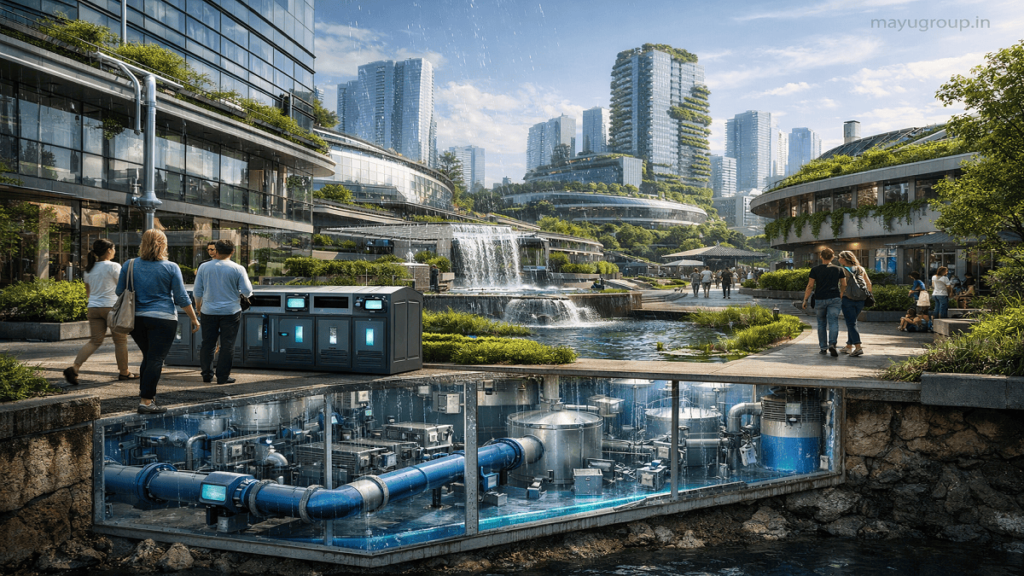
What are the main sources of water conservation financing?
The main sources of water conservation financing come from a combination of public institutions, international development organizations, private sector investment, and climate-focused funding mechanisms. Together, these sources support infrastructure development, efficiency improvements, ecosystem restoration, and long-term water governance systems.
The most significant source is public financing from national and subnational governments. Governments allocate budgetary funds for water supply systems, irrigation networks, watershed management, and groundwater protection programs. These funds are often implemented through specialized ministries or agencies. In India, for example, the Ministry of Jal Shakti manages large-scale initiatives such as the Jal Jeevan Mission and Atal Bhujal Yojana. More information is available at https://jalshakti-ddws.gov.in/. Similar government-led water programs exist worldwide, focusing on both urban and rural water security.
International financial institutions are another major source. Organizations such as the World Bank provide loans, grants, and technical assistance for water infrastructure and conservation projects, especially in developing countries. These funds are often directed toward large-scale investments like wastewater treatment plants, irrigation modernization, and flood management systems. More details can be found at https://www.worldbank.org/en/topic/waterresourcesmanagement.
Multilateral environmental and climate funds also play a growing role. Institutions like the Green Climate Fund (https://www.greenclimate.fund/) and the Global Environment Facility (https://www.thegef.org/) finance projects that link water conservation with climate adaptation and ecosystem restoration. These funds prioritize drought resilience, watershed protection, and sustainable agriculture in vulnerable regions.
The private sector is an increasingly important contributor. Companies invest in water-efficient technologies, desalination plants, industrial recycling systems, and smart water management solutions. Public-private partnerships (PPPs) are widely used to finance and operate large water infrastructure projects, allowing governments to share financial risks with private investors while improving efficiency and innovation.
Development banks and regional financial institutions, such as the Asian Development Bank and African Development Bank, also provide significant funding for water security projects, particularly in regions facing acute water scarcity.
In addition, non-governmental organizations (NGOs), philanthropic foundations, and community-based organizations contribute funding for small-scale and localized water conservation initiatives. These often include rainwater harvesting systems, rural sanitation improvements, and awareness campaigns.
Finally, innovative financing mechanisms are emerging, such as water bonds, green bonds, impact investment funds, and blended finance models that combine public and private capital to scale up conservation efforts.
In conclusion, water conservation financing is drawn from a diverse ecosystem of public budgets, international institutions, climate funds, private investment, and community-driven support, all working together to ensure sustainable and equitable water management globally.
#Water Conservation Funding in Hyderabad
Why is water conservation funding important?
Water conservation funding is important because it enables societies to protect, manage, and sustainably use one of the most essential natural resources—freshwater. Without adequate financing, water systems degrade, scarcity increases, and the social, economic, and environmental consequences can become severe.
One of the primary reasons funding is crucial is that water infrastructure requires large, long-term investments. Systems such as dams, pipelines, irrigation networks, wastewater treatment plants, and groundwater recharge structures are expensive to build and maintain. Many governments, especially in developing regions, lack sufficient budgetary capacity to finance these projects without external support. Institutions such as the World Bank help bridge this gap by providing loans and grants for large-scale water security projects. More information is available at https://www.worldbank.org/en/topic/waterresourcesmanagement.
Another key reason is that water conservation funding helps address growing water scarcity caused by population growth, urbanization, industrial expansion, and climate change. Rising temperatures and changing rainfall patterns are increasing drought frequency and reducing groundwater availability in many regions. Funding supports adaptive measures such as rainwater harvesting systems, efficient irrigation technologies, desalination plants, and watershed restoration projects. These interventions help ensure a stable water supply even under changing climate conditions.
Funding is also essential for improving water quality and public health. Poorly managed water systems can lead to contamination from industrial waste, agricultural runoff, and untreated sewage. Financial investment in wastewater treatment facilities, sanitation systems, and pollution control technologies reduces the spread of waterborne diseases and improves overall community health outcomes.
In addition, water conservation funding promotes equity and access. Many rural and marginalized communities lack reliable access to safe drinking water. Government programs like India’s Jal Jeevan Mission, implemented by the Ministry of Jal Shakti, aim to provide household tap water connections and improve rural water infrastructure. Details are available at https://jalshakti-ddws.gov.in/. Without dedicated funding, these equity-focused initiatives would not be possible at scale.
Environmental sustainability is another critical reason. Funding supports the restoration of ecosystems such as wetlands, rivers, and forests, which naturally regulate water cycles, improve groundwater recharge, and reduce flooding risks. Climate-focused institutions like the Green Climate Fund (https://www.greenclimate.fund/) and the Global Environment Facility (https://www.thegef.org/) also invest in nature-based water solutions.
Finally, water conservation funding encourages innovation and long-term planning. It supports research into new technologies such as smart irrigation systems, leak detection sensors, and water recycling methods, which improve efficiency and reduce waste.
In summary, water conservation funding is vital because it ensures infrastructure development, climate resilience, public health protection, environmental sustainability, and equitable access to water. Without it, water scarcity and related challenges would intensify significantly across the world.
#Water Conservation Funding in Delhi
What challenges exist in financing water conservation projects?
Financing water conservation projects faces several structural, financial, institutional, and political challenges that often limit the scale and effectiveness of investments. These challenges are particularly significant in developing and water-stressed regions where demand for water security is high but fiscal capacity is limited.
One major challenge is the high capital cost and long payback period of water infrastructure. Projects such as dams, desalination plants, wastewater treatment facilities, and large irrigation systems require substantial upfront investment but generate returns slowly over decades. This makes them less attractive to private investors who typically prefer quicker financial returns. As a result, governments and institutions such as the World Bank often step in to provide concessional loans and long-term financing. More details are available at https://www.worldbank.org/en/topic/waterresourcesmanagement.
A second challenge is insufficient public funding and competing budget priorities. Many governments must balance water conservation with other urgent needs such as healthcare, education, and infrastructure development. Water projects, especially preventive conservation measures like watershed restoration or groundwater recharge, are often underfunded because their benefits are indirect or long-term.
Institutional fragmentation is another significant barrier. Responsibility for water management is often spread across multiple agencies at national, regional, and local levels. This leads to coordination issues, duplication of efforts, and inefficient allocation of funds. Weak governance structures can also result in delays, cost overruns, and underutilization of allocated budgets.
Another challenge is the difficulty in attracting private sector investment. While public-private partnerships (PPPs) are growing, investors perceive water conservation projects as risky due to regulatory uncertainty, tariff controls, and political sensitivity around water pricing. In many regions, water is heavily subsidized or treated as a public good, limiting revenue generation potential.
Climate variability and environmental uncertainty also complicate financing decisions. Changing rainfall patterns, droughts, and floods make it difficult to accurately predict project outcomes and financial viability. This increases the perceived risk for both public and private investors.
Additionally, lack of technical capacity and data limitations hinder effective planning and financing. Many regions do not have reliable hydrological data, groundwater monitoring systems, or digital water accounting frameworks. Without accurate data, it becomes difficult to design efficient investment strategies or measure project impact.
Corruption, mismanagement, and inefficiencies in fund utilization further reduce the effectiveness of financing. In some cases, allocated funds are delayed, diverted, or poorly implemented, reducing overall project impact and eroding investor confidence.
International climate finance institutions such as the Green Climate Fund (https://www.greenclimate.fund/) and the Global Environment Facility (https://www.thegef.org/) attempt to address some of these gaps, but demand for funding still far exceeds available resources.
In conclusion, water conservation financing is constrained by high costs, limited public budgets, governance issues, investment risks, data gaps, and climate uncertainty. Overcoming these challenges requires better coordination, innovative financing models, improved governance, and stronger integration between public and private funding sources.
#Water Conservation Funding in Banglore
Case Study of Water Conservation Funding
A strong example of water conservation funding in practice is India’s Jal Jeevan Mission (JJM), a large-scale government program aimed at providing safe and adequate drinking water through household tap connections in rural areas. The program is implemented by the Ministry of Jal Shakti and represents one of the largest publicly funded rural water supply initiatives in the world.
Launched in 2019, the mission focuses on improving rural water infrastructure, strengthening local water sources, and ensuring long-term sustainability through community participation. The total estimated investment is in the hundreds of billions of rupees, financed jointly by the central government and state governments, with additional support from international development partners and institutions such as the World Bank in selected projects.
Funding Structure and Allocation
The funding model of Jal Jeevan Mission is designed as a cost-sharing arrangement. The central government provides a significant share of capital expenditure, while states contribute a portion based on their fiscal capacity. Funds are allocated to several key areas:
- Infrastructure development – Construction of piped water supply systems, water storage tanks, pumping stations, and distribution pipelines.
- Source sustainability – Investments in rainwater harvesting structures, groundwater recharge systems, and protection of local water bodies.
- Water quality monitoring – Establishment of laboratories and sensor-based testing systems to ensure safe drinking water standards.
- Operation and maintenance – Long-term funding support for Gram Panchayats (local village bodies) to manage and maintain water systems.
More information on the program can be found at https://jalshakti-ddws.gov.in/.
Implementation and Financial Use
A significant portion of funding is directed toward last-mile connectivity—ensuring that water reaches individual rural households rather than community standpoints. Funds are also used to train local communities in system maintenance, reducing dependency on external agencies. This decentralized approach ensures better accountability and sustainability.
In addition, digital monitoring systems are financed to track real-time progress of water delivery and infrastructure development. These systems help reduce delays, prevent fund misuse, and improve transparency in project execution.
Impact and Outcomes
The mission has significantly increased access to tap water in rural areas, reducing the time and effort required to fetch water, particularly for women and children. It has also improved public health outcomes by reducing dependence on unsafe water sources. Furthermore, the emphasis on groundwater recharge and local source management has strengthened long-term water security.
Challenges Observed
Despite strong funding support, challenges remain. These include uneven implementation across states, maintenance issues in remote regions, and variability in water availability due to climate conditions. Ensuring consistent quality and long-term sustainability of infrastructure continues to require ongoing financial commitment.
Conclusion
The Jal Jeevan Mission demonstrates how structured water conservation funding can transform rural water access when combined with infrastructure investment, governance reforms, and community participation. It highlights the importance of sustained financing, not only for building systems but also for maintaining and improving them over time.
#Water Conservation Funding in Pune
White Paper on Water Conservation Funding
1. Executive Summary
Water conservation funding is a critical component of sustainable water resource management, enabling governments and institutions to address water scarcity, climate variability, and infrastructure inefficiencies. This white paper outlines the need for structured financing mechanisms, key funding sources, challenges in implementation, and strategic recommendations. Effective funding models combine public investment, private capital, and international financial support to ensure long-term water security and resilience.
2. Introduction
Freshwater scarcity is an increasing global challenge driven by population growth, urbanization, industrial demand, and climate change. Water conservation funding refers to the allocation of financial resources toward projects that improve water efficiency, protect water ecosystems, and enhance supply reliability. These include infrastructure development, watershed management, wastewater treatment, and demand-side efficiency programs.
International frameworks such as those led by the United Nations and financing bodies like the World Bank emphasize integrated water resource management as a key development priority. More information: https://www.worldbank.org/en/topic/waterresourcesmanagement and https://www.unwater.org/.
3. Objectives of Water Conservation Funding
Water conservation funding aims to:
- Ensure sustainable access to clean water
- Improve efficiency in agricultural, industrial, and domestic water use
- Restore degraded ecosystems such as rivers, wetlands, and aquifers
- Strengthen resilience against droughts and floods
- Support equitable access to water resources
4. Key Sources of Funding
4.1 Public Sector Financing
National and local governments provide the largest share of funding through budgets, subsidies, and national programs. In India, the Ministry of Jal Shakti leads major initiatives such as Jal Jeevan Mission and Atal Bhujal Yojana. https://jalshakti-ddws.gov.in/
4.2 International Development Finance
Institutions such as the World Bank, Asian Development Bank, and African Development Bank provide loans, grants, and technical assistance for large-scale infrastructure and policy reform.
4.3 Climate Finance Mechanisms
Funds like the Green Climate Fund (https://www.greenclimate.fund/) and Global Environment Facility (https://www.thegef.org/) support water projects linked to climate adaptation and ecosystem resilience.
4.4 Private Sector and PPPs
Private investment is increasingly directed toward desalination, wastewater reuse, and smart water technologies through public-private partnerships.
5. Allocation of Funds
Water conservation funding is typically distributed across:
- Infrastructure development (pipelines, reservoirs, treatment plants)
- Efficiency technologies (drip irrigation, smart meters)
- Ecosystem restoration (wetlands, watersheds, afforestation)
- Governance systems (monitoring, regulation, data systems)
- Community engagement and awareness programs
6. Key Challenges
- High capital costs and long return periods
- Insufficient government budgets
- Fragmented institutional governance
- Investment risk and regulatory uncertainty
- Data gaps and weak monitoring systems
- Climate variability and unpredictable water availability
7. Strategic Recommendations
- Expand blended finance models combining public and private capital
- Strengthen water governance and institutional coordination
- Improve data systems using digital monitoring and satellite technologies
- Increase investment in nature-based solutions
- Promote water pricing reforms for sustainable usage
- Enhance community-led water management systems
8. Conclusion
Water conservation funding is essential for ensuring long-term water security, environmental sustainability, and economic stability. A diversified financing ecosystem—combining public funding, international support, private investment, and climate finance—is necessary to address growing global water challenges. Strengthening financial mechanisms and governance frameworks will be critical to achieving sustainable water management outcomes.
External References
- World Bank Water Resources Management: https://www.worldbank.org/en/topic/waterresourcesmanagement
- UN-Water: https://www.unwater.org/
- Ministry of Jal Shakti (India): https://jalshakti-ddws.gov.in/
- Green Climate Fund: https://www.greenclimate.fund/
- Global Environment Facility: https://www.thegef.org/
#Water Conservation Funding in Kolkata
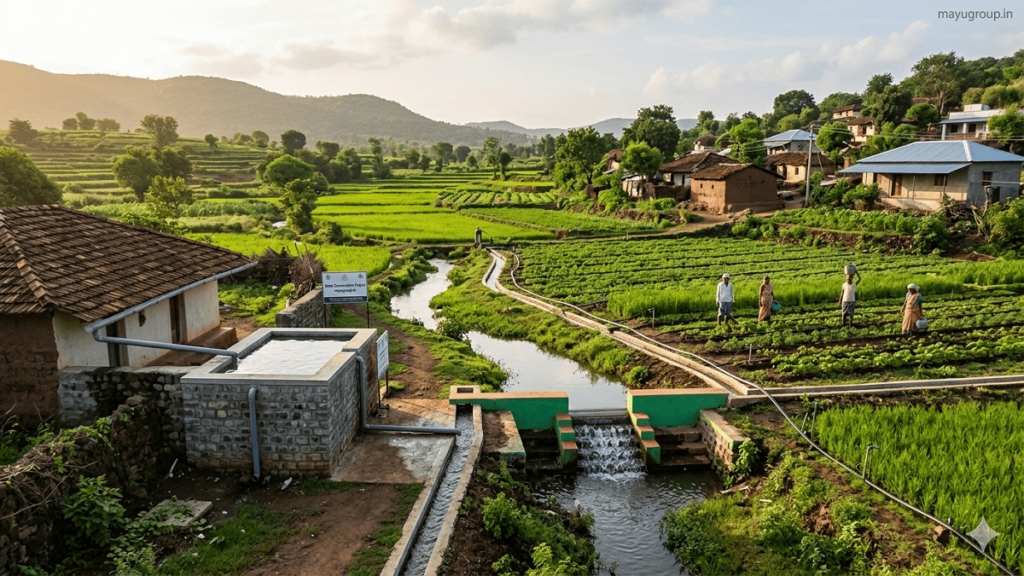
Industry Application of Water Conservation Funding
Water conservation funding plays a critical role in enabling industries to reduce water consumption, comply with environmental regulations, and improve operational efficiency. Industrial sectors are among the largest consumers of freshwater, particularly in manufacturing, energy production, textiles, food processing, and mining. Financial investments in water conservation allow these sectors to adopt advanced technologies, recycle wastewater, and transition toward sustainable production systems.
One of the most significant applications of water conservation funding in industry is the deployment of water-efficient technologies. Industries use funded investments to install closed-loop water systems, which recycle and reuse water within production cycles. For example, in power plants and refineries, cooling systems are upgraded to reduce freshwater intake and increase reuse rates. Similarly, textile and dyeing industries invest in low-water dyeing technologies supported by sustainability financing programs.
Another key application is wastewater treatment and reuse systems. Many industries generate large volumes of wastewater containing chemicals, heavy metals, or organic pollutants. Water conservation funding helps industries build effluent treatment plants (ETPs) and advanced treatment systems such as membrane filtration and reverse osmosis. Treated water is then reused for cleaning, cooling, or even reprocessing. Institutions such as the World Bank support industrial water efficiency projects through loans and sustainability-linked financing. More information is available at https://www.worldbank.org/en/topic/waterresourcesmanagement.
In the energy sector, funding is used to improve water-energy nexus efficiency. Thermal power plants require large volumes of water for cooling. Investments are directed toward dry cooling systems and hybrid cooling technologies that significantly reduce water dependency. Renewable energy industries, such as solar and hydrogen production, also benefit from funded research into low-water or water-free production processes.
The food and beverage industry is another major beneficiary. Funding supports precision water management systems in breweries, dairy processing plants, and agricultural supply chains. Companies invest in rainwater harvesting, smart irrigation for raw material sourcing, and water footprint reduction technologies to meet sustainability certifications.
In the mining sector, water conservation funding is used to reduce contamination and improve water recycling in mineral extraction processes. Tailings management systems and water recovery technologies help minimize environmental impact and comply with strict regulatory standards.
Public-private partnerships (PPPs) and climate finance mechanisms also play a major role in industrial water conservation. Organizations such as the Green Climate Fund (https://www.greenclimate.fund/) and the Global Environment Facility (https://www.thegef.org/) support projects that reduce industrial water footprints and enhance climate resilience.
Additionally, companies use water conservation funding for digital water management systems, including IoT-based monitoring, artificial intelligence for leak detection, and predictive analytics for water demand forecasting. These technologies help industries optimize water usage in real time and reduce operational costs.
In conclusion, water conservation funding enables industries to adopt sustainable practices, improve efficiency, and reduce environmental impact. By supporting technological upgrades, wastewater reuse, and digital monitoring systems, such funding ensures that industrial growth aligns with long-term water sustainability goals.
#Water Conservation Funding in Mumbai
Ask FAQs
What is water conservation funding?
Water conservation funding refers to financial resources provided by governments, international organizations, and private investors to support projects that protect, manage, and efficiently use freshwater. These funds are used for infrastructure development, wastewater treatment, irrigation efficiency, ecosystem restoration, and water management technologies. Key global institutions such as the World Bank and the United Nations actively support such initiatives.
What are the main sources of water conservation funding?
The main sources include government budgets, international financial institutions, climate funds, and private sector investments. National governments fund large-scale water infrastructure projects, while organizations like the World Bank and regional development banks provide loans and grants. Climate-focused funds such as the Green Climate Fund also support sustainable water initiatives.
How is water conservation funding used?
Funding is used for building and upgrading water infrastructure such as dams, pipelines, and treatment plants. It also supports technologies like drip irrigation, smart water meters, and wastewater recycling systems. Additionally, funds are used for ecosystem restoration, groundwater recharge, and awareness programs to promote water-saving behavior.
Why is water conservation funding important?
It is important because it ensures long-term water availability, supports climate resilience, and improves public health. Many regions face water scarcity due to climate change and population growth. Funding helps develop sustainable systems that reduce water wastage and ensure equitable access, especially in rural and vulnerable communities.
What challenges affect water conservation funding?
Key challenges include high infrastructure costs, limited government budgets, poor governance, and low investor interest due to long payback periods. Climate uncertainty and lack of accurate water data also make planning difficult. Additionally, fragmented institutional responsibility can reduce the efficiency of fund utilization.
Table of Contents
Disclaimer: The information provided is for general educational and informational purposes only. While efforts are made to ensure accuracy, it should not be considered professional, legal, financial, or policy advice. Readers should refer to official government or institutional sources for the most up-to-date and authoritative information.