Sustainable Agriculture
Sustainable Agriculture is a farming approach that seeks to produce food, fiber, and other agricultural products while protecting the environment, conserving natural resources, and ensuring economic viability for future generations. It focuses on meeting current agricultural needs without compromising the ability of future generations to meet their own needs. As global populations continue to grow and environmental challenges intensify, sustainable agriculture has become a critical component of long-term food security and rural development.
Traditional farming methods have significantly increased agricultural productivity over the past century, but they have also contributed to soil degradation, water scarcity, biodiversity loss, and greenhouse gas emissions. Sustainable agriculture addresses these concerns by promoting practices that maintain ecological balance while supporting profitable farming operations. The goal is to create agricultural systems that are environmentally sound, economically viable, and socially responsible.
At the core of sustainable agriculture are three fundamental pillars: environmental sustainability, economic sustainability, and social sustainability. Environmental sustainability involves protecting soil health, conserving water resources, reducing pollution, and preserving biodiversity. Economic sustainability ensures that farming remains profitable and resilient in changing market conditions. Social sustainability focuses on improving the quality of life for farmers, agricultural workers, and rural communities while ensuring access to safe and nutritious food.
Sustainable agriculture incorporates a variety of farming practices and technologies designed to improve efficiency and reduce environmental impact. Common approaches include crop rotation, cover cropping, conservation tillage, integrated pest management, organic farming, agroforestry, and precision agriculture. These practices help improve soil fertility, reduce dependence on chemical fertilizers and pesticides, enhance water-use efficiency, and increase resilience to climate change.
Modern technologies are also playing an important role in advancing sustainable agriculture. Precision farming tools, satellite monitoring, sensors, artificial intelligence, and data analytics enable farmers to optimize resource use and make informed decisions. These innovations help reduce waste, increase productivity, and support environmentally responsible farming practices.
Governments, research institutions, and international organizations increasingly promote sustainable agriculture as a key strategy for addressing global challenges such as food insecurity, climate change, and resource depletion. Organizations such as the Food and Agriculture Organization and the United Nations Environment Programme support initiatives that encourage sustainable farming practices worldwide.
Sustainable agriculture represents a long-term vision for food production that balances economic growth with environmental stewardship. By adopting sustainable farming methods, societies can improve agricultural productivity, protect natural ecosystems, strengthen rural economies, and ensure a stable food supply for future generations. As the demand for food continues to rise, sustainable agriculture will remain essential for building a resilient and environmentally responsible agricultural sector.
Further Reading
- Food and Agriculture Organization (FAO) – Sustainable Agriculture
- United Nations Environment Programme (UNEP)
- World Bank – Agriculture and Food
#Sustainable Agriculture in India
What is Sustainable Agriculture?
Sustainable agriculture is a farming system that produces food, fiber, and other agricultural products while protecting the environment, conserving natural resources, and maintaining economic profitability. It is designed to meet the needs of the present generation without compromising the ability of future generations to meet their own needs. The concept combines environmental stewardship, economic viability, and social responsibility to create a balanced and resilient agricultural system.
The primary goal of sustainable agriculture is to ensure long-term productivity while minimizing negative impacts on soil, water, air, and biodiversity. Unlike conventional farming methods that may rely heavily on chemical fertilizers, pesticides, and intensive land use, sustainable agriculture emphasizes efficient resource management and environmentally friendly practices. These practices help maintain soil fertility, reduce pollution, conserve water, and support healthy ecosystems.
Sustainable agriculture is based on three key pillars. The first is environmental sustainability, which focuses on protecting natural resources through methods such as crop rotation, conservation tillage, integrated pest management, and water-efficient irrigation systems. The second is economic sustainability, which ensures that farming operations remain profitable and resilient over time. The third is social sustainability, which promotes fair labor practices, supports rural communities, and contributes to food security and public health.
Several farming techniques are commonly associated with sustainable agriculture. These include organic farming, agroforestry, cover cropping, precision agriculture, and integrated crop-livestock systems. These approaches improve resource efficiency, reduce dependency on synthetic inputs, and enhance the resilience of farms to climate change and market fluctuations.
Technology also plays a significant role in sustainable agriculture. Modern tools such as satellite imaging, drones, sensors, artificial intelligence, and data analytics help farmers monitor crop health, optimize irrigation, reduce waste, and improve decision-making. These innovations enable higher productivity while minimizing environmental impact.
Sustainable agriculture has gained global importance due to growing concerns about climate change, population growth, food security, and resource depletion. International organizations such as the Food and Agriculture Organization and the United Nations Environment Programme actively promote sustainable farming practices as part of broader efforts to achieve environmental and developmental goals.
In summary, sustainable agriculture is a holistic approach to farming that seeks to balance agricultural productivity with environmental protection and social well-being. By adopting sustainable practices, farmers can produce sufficient food, preserve natural resources, support local communities, and contribute to a more resilient and sustainable future.
Further Reading
- Food and Agriculture Organization (FAO)
- United Nations Environment Programme (UNEP)
- World Bank Agriculture and Food Program
#Sustainable Agriculture in Maharahstra
How Does Sustainable Agriculture Benefit the Environment?
Sustainable agriculture provides numerous environmental benefits by promoting farming practices that protect natural resources, reduce pollution, and maintain ecological balance. Unlike conventional agricultural systems that may rely heavily on chemical inputs and intensive land use, sustainable agriculture focuses on long-term environmental stewardship while maintaining agricultural productivity.
One of the most significant environmental benefits is soil conservation. Sustainable farming practices such as crop rotation, cover cropping, conservation tillage, and organic matter management help improve soil structure and fertility. Healthy soils are better able to retain water, store nutrients, and support beneficial microorganisms. These practices also reduce soil erosion, which is a major cause of land degradation and declining agricultural productivity.
Another important benefit is water conservation and protection. Sustainable agriculture promotes efficient irrigation systems, rainwater harvesting, and improved water management techniques. These methods reduce water waste and help preserve freshwater resources. Additionally, minimizing the use of synthetic fertilizers and pesticides reduces the risk of water pollution caused by agricultural runoff, protecting rivers, lakes, and groundwater supplies.
Sustainable agriculture also contributes to biodiversity conservation. Diverse farming systems support a wide range of plants, insects, birds, and other wildlife. Practices such as agroforestry, mixed cropping, and maintaining natural habitats around farms create healthier ecosystems and provide shelter for pollinators and beneficial organisms. Increased biodiversity helps improve ecosystem resilience and natural pest control mechanisms.
A major environmental advantage is the reduction of greenhouse gas emissions. Sustainable farming practices can lower carbon emissions by reducing dependence on synthetic fertilizers, minimizing fuel-intensive operations, and improving energy efficiency. Techniques such as agroforestry and cover cropping also help capture and store carbon in vegetation and soil, contributing to climate change mitigation.
Sustainable agriculture further enhances ecosystem health by reducing the use of harmful chemicals. Integrated Pest Management (IPM) and biological pest control methods decrease reliance on synthetic pesticides, which can negatively affect non-target species and disrupt ecological balance. This approach helps preserve beneficial insects, soil organisms, and surrounding ecosystems.
Climate resilience is another key environmental benefit. Sustainable farming systems are generally better equipped to withstand droughts, floods, extreme temperatures, and other climate-related challenges. Improved soil health, diversified crops, and efficient resource management increase the adaptability of agricultural systems to changing environmental conditions.
International organizations such as the Food and Agriculture Organization and the United Nations Environment Programme recognize sustainable agriculture as a critical strategy for protecting ecosystems while ensuring food security. These organizations support initiatives that encourage environmentally responsible farming practices worldwide.
In conclusion, sustainable agriculture benefits the environment by conserving soil and water resources, protecting biodiversity, reducing pollution, lowering greenhouse gas emissions, and enhancing climate resilience. By integrating ecological principles into farming operations, sustainable agriculture helps create a healthier and more balanced relationship between food production and the natural environment.
Further Reading
- Food and Agriculture Organization (FAO)
- United Nations Environment Programme (UNEP)
- World Bank Agriculture and Food
#Sustainable Agriculture in Ahemadabad
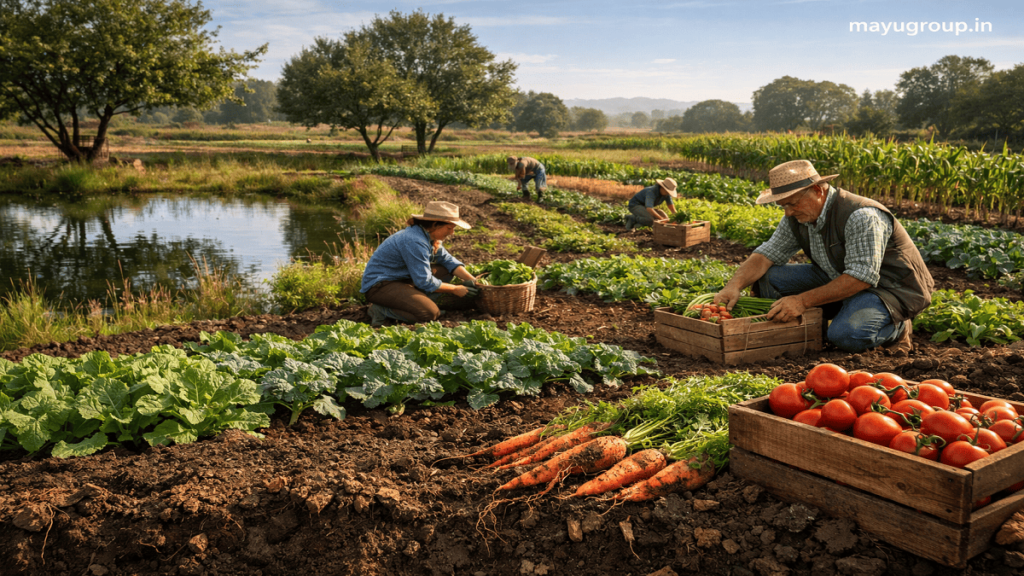
What Farming Practices Are Used in Sustainable Agriculture?
Sustainable agriculture relies on a variety of farming practices designed to maintain productivity while protecting natural resources, reducing environmental impact, and supporting long-term farm profitability. These practices focus on improving soil health, conserving water, promoting biodiversity, and minimizing dependence on synthetic inputs. By integrating ecological principles into agricultural systems, sustainable farming creates a balance between food production and environmental stewardship.
One of the most widely used practices is crop rotation. This involves growing different crops on the same land in a planned sequence over multiple seasons. Crop rotation helps maintain soil fertility, reduce pest and disease buildup, and improve nutrient cycling. For example, planting legumes after cereal crops can naturally replenish nitrogen levels in the soil, reducing the need for synthetic fertilizers.
Another important practice is cover cropping. Farmers plant cover crops such as clover, rye, or legumes during periods when the main crops are not growing. These crops protect the soil from erosion, suppress weeds, improve soil structure, and increase organic matter content. Cover crops also enhance water retention and provide habitat for beneficial organisms.
Conservation tillage is a method that minimizes soil disturbance during planting and cultivation. Reduced tillage or no-till farming helps preserve soil structure, reduce erosion, improve moisture retention, and support soil microorganisms. It also lowers fuel consumption and greenhouse gas emissions associated with intensive tillage operations.
Integrated Pest Management (IPM) is another key sustainable farming practice. IPM combines biological, cultural, mechanical, and chemical methods to manage pests effectively while minimizing environmental harm. Farmers monitor pest populations and use targeted interventions only when necessary, reducing reliance on synthetic pesticides and protecting beneficial insects.
Agroforestry integrates trees and shrubs into agricultural landscapes. This practice improves biodiversity, enhances soil quality, reduces erosion, and provides additional sources of income through timber, fruit, or other tree products. Agroforestry systems can also improve carbon sequestration and increase resilience to climate change.
Organic farming is commonly associated with sustainable agriculture. Organic systems avoid synthetic fertilizers, pesticides, and genetically modified organisms (GMOs), relying instead on natural inputs and ecological processes to maintain soil fertility and control pests. These practices support environmental health and biodiversity while producing food with minimal chemical residues.
Modern sustainable agriculture also utilizes precision agriculture technologies. Tools such as GPS-guided equipment, drones, sensors, satellite imagery, and data analytics help farmers apply water, fertilizers, and pesticides more efficiently. This targeted approach reduces waste, lowers costs, and minimizes environmental impact.
Water conservation practices are equally important. Techniques such as drip irrigation, rainwater harvesting, and efficient irrigation scheduling help optimize water use and protect freshwater resources. These methods are especially valuable in regions facing water scarcity and changing climate conditions.
Organizations such as the Food and Agriculture Organization promote these practices as essential components of sustainable food systems. Together, they help improve agricultural productivity while preserving ecosystems and natural resources for future generations.
Further Reading
- Food and Agriculture Organization (FAO)
- United Nations Environment Programme (UNEP)
- World Bank Agriculture and Food
#Sustainable Agriculture in Hyderabad
Why Is Sustainable Agriculture Important for Food Security?
Sustainable agriculture is essential for food security because it helps ensure a stable, reliable, and sufficient food supply while preserving the natural resources needed for future food production. As the global population continues to grow and environmental challenges such as climate change, soil degradation, and water scarcity become more severe, sustainable agriculture provides a long-term solution for meeting increasing food demands without exhausting critical resources.
One of the primary ways sustainable agriculture supports food security is by maintaining soil health and productivity. Healthy soils are the foundation of agricultural production, providing crops with the nutrients, water, and biological support needed for growth. Practices such as crop rotation, cover cropping, conservation tillage, and organic matter management improve soil fertility and reduce erosion. By protecting soil resources, sustainable agriculture ensures that farmland remains productive for future generations.
Another important contribution is efficient water management. Agriculture is one of the largest consumers of freshwater globally. Sustainable farming practices such as drip irrigation, rainwater harvesting, and precision irrigation help reduce water waste and improve water-use efficiency. Conserving water resources is critical for maintaining food production, particularly in regions vulnerable to drought and water shortages.
Sustainable agriculture also enhances climate resilience, which is increasingly important for global food security. Extreme weather events, rising temperatures, and changing rainfall patterns can significantly affect crop yields. Diversified farming systems, agroforestry, and climate-smart agricultural practices help farms adapt to these challenges by improving ecosystem stability and reducing vulnerability to environmental shocks.
Biodiversity conservation is another key factor. Sustainable agriculture promotes diverse crops, beneficial insects, and healthy ecosystems that support natural pest control and pollination. Greater biodiversity reduces the risk of widespread crop failures caused by pests, diseases, or changing environmental conditions. This diversity strengthens agricultural systems and contributes to more reliable food production.
In addition, sustainable agriculture helps reduce dependence on costly external inputs such as synthetic fertilizers and pesticides. By improving resource efficiency and utilizing natural processes, farmers can lower production costs while maintaining yields. This can make food production more economically sustainable, especially for small-scale farmers who play a vital role in feeding local communities.
Sustainable agriculture also supports the social dimension of food security by strengthening rural livelihoods and promoting equitable access to resources. Productive and resilient farming communities are better positioned to provide consistent food supplies and contribute to local and national food systems.
Global organizations such as the Food and Agriculture Organization and the World Food Programme recognize sustainable agriculture as a key strategy for achieving long-term food security and sustainable development. Their initiatives emphasize the need to balance increased food production with environmental protection and resource conservation.
In conclusion, sustainable agriculture is important for food security because it preserves soil and water resources, strengthens climate resilience, protects biodiversity, supports farmer livelihoods, and ensures the long-term capacity of agricultural systems to produce nutritious food. By adopting sustainable farming practices, societies can build more resilient food systems capable of feeding present and future generations.
Further Reading
#Sustainable Agriculture in Delhi
What Challenges Do Farmers Face in Adopting Sustainable Agriculture?
While sustainable agriculture offers significant environmental, economic, and social benefits, many farmers face challenges when transitioning from conventional farming methods. These obstacles can slow adoption and make implementation difficult, particularly for small-scale and resource-constrained farmers. Understanding these challenges is essential for developing policies and support systems that encourage sustainable farming practices.
One of the most common challenges is high initial investment costs. Many sustainable farming techniques require new equipment, infrastructure, or technology. For example, installing drip irrigation systems, purchasing precision agriculture tools, or transitioning to organic farming can involve substantial upfront expenses. Although these investments often lead to long-term savings and productivity gains, the initial financial burden can be difficult for farmers to manage.
Another significant challenge is the lack of knowledge and technical expertise. Sustainable agriculture often involves new farming methods that differ from traditional practices. Farmers may need training in areas such as integrated pest management, soil conservation, agroforestry, or precision farming technologies. Limited access to agricultural extension services and educational programs can hinder the adoption of these practices.
Reduced yields during the transition period can also discourage farmers. When shifting from conventional to sustainable systems, particularly organic farming, crop yields may temporarily decline as soil ecosystems adjust and farmers learn new management techniques. This transition period can create financial uncertainty and increase the perceived risk of adopting sustainable methods.
Access to markets is another important issue. Sustainable and organic products often require certification and compliance with specific standards before they can be sold at premium prices. Obtaining certification can be costly and time-consuming, especially for small-scale farmers. In some regions, farmers may also lack access to buyers willing to pay higher prices for sustainably produced goods.
Climate-related risks present additional challenges. Although sustainable agriculture improves long-term resilience, farmers still face immediate threats from droughts, floods, extreme temperatures, and unpredictable weather patterns. These environmental pressures can make it difficult to invest in new farming systems when short-term survival is the primary concern.
Limited access to financing is another major barrier. Many farmers struggle to secure loans or credit needed to invest in sustainable technologies and infrastructure. Financial institutions may view agricultural investments as high-risk, especially in regions with unstable weather conditions or fluctuating market prices.
Labor requirements can also increase in some sustainable farming systems. Practices such as manual weed control, diversified cropping, and organic production often require more labor and management compared to conventional methods. In areas facing labor shortages or rising labor costs, this can create additional difficulties.
Policy and institutional barriers may further complicate adoption. In some countries, agricultural subsidies and support programs favor conventional farming practices rather than sustainable alternatives. Farmers may therefore have fewer incentives to adopt environmentally friendly methods.
Organizations such as the Food and Agriculture Organization and the International Fund for Agricultural Development work with governments and farming communities to address these challenges through training, financing programs, technical assistance, and policy development.
In conclusion, farmers adopting sustainable agriculture often face challenges related to cost, knowledge, market access, financing, climate risks, labor demands, and policy limitations. Overcoming these barriers requires coordinated efforts from governments, financial institutions, research organizations, and agricultural stakeholders to ensure that sustainable farming becomes both practical and profitable.
Further Reading
- Food and Agriculture Organization (FAO)
- International Fund for Agricultural Development (IFAD)
- World Bank Agriculture and Food
#Sustainable Agriculture in Banglore
Case Study of Sustainable Agriculture
Sikkim, a state in northeastern India, is widely recognized as one of the world’s most successful examples of sustainable agriculture. In 2016, Sikkim became the first fully organic state in India, demonstrating how government policy, farmer participation, and environmental stewardship can work together to create a sustainable agricultural system. This transformation has become a global model for environmentally responsible farming and sustainable rural development.
Background
Agriculture is a major source of livelihood for a significant portion of Sikkim’s population. Prior to its transition, farmers used conventional agricultural practices that included chemical fertilizers and pesticides. Recognizing the environmental and health concerns associated with intensive chemical use, the state government launched a long-term initiative to convert all agricultural land to organic farming.
The transition began in 2003 when the government announced a policy to gradually eliminate synthetic fertilizers and pesticides. Over the following years, chemical inputs were phased out, and farmers received support to adopt organic farming methods. More than 75,000 hectares of agricultural land were eventually certified as organic.
Sustainable Practices Implemented
The success of Sikkim’s sustainable agriculture program was based on several key practices:
- Use of organic manure and compost instead of synthetic fertilizers.
- Biological pest management techniques to reduce chemical pesticide use.
- Crop diversification to improve soil fertility and reduce pest outbreaks.
- Conservation of local biodiversity and traditional crop varieties.
- Farmer training programs focused on sustainable farming methods.
- Promotion of eco-friendly agricultural production systems.
These practices helped maintain soil health, improve ecosystem balance, and reduce environmental pollution.
Environmental Benefits
The transition to organic agriculture produced significant environmental benefits. Soil fertility improved through increased organic matter and reduced chemical contamination. Water resources experienced less pollution because agricultural runoff no longer contained synthetic fertilizers and pesticides. Biodiversity also increased as beneficial insects, pollinators, and native species returned to agricultural landscapes.
Sustainable land management practices contributed to healthier ecosystems and reduced environmental degradation. These outcomes aligned closely with recommendations promoted by the Food and Agriculture Organization for sustainable food production systems.
Economic and Social Impact
Although some farmers initially experienced lower yields during the transition period, long-term benefits emerged. Organic products gained access to premium markets, allowing farmers to receive higher prices for their produce. The state’s organic status also strengthened agricultural branding and increased opportunities for agro-tourism.
Farmer awareness of sustainable practices improved significantly through government-supported education and extension programs. The initiative also encouraged stronger community participation and local ownership of environmental conservation efforts.
Challenges Faced
The transition was not without difficulties. Farmers required extensive training to adapt to new production methods. Certification processes were time-consuming, and maintaining consistent organic standards demanded ongoing monitoring. Market access and supply chain development were also important challenges during the early stages of implementation.
Key Lessons
The Sikkim case demonstrates that sustainable agriculture can be successfully implemented when supported by strong government commitment, farmer engagement, education programs, and market development. It highlights the importance of long-term planning and policy consistency in achieving agricultural sustainability.
Today, Sikkim serves as an international example of how sustainable agriculture can protect natural resources, improve rural livelihoods, and support food production while maintaining environmental integrity.
Further Reading
- Food and Agriculture Organization (FAO)
- Sikkim Organic Mission
- International Fund for Agricultural Development (IFAD)
#Sustainable Agriculture in Pune
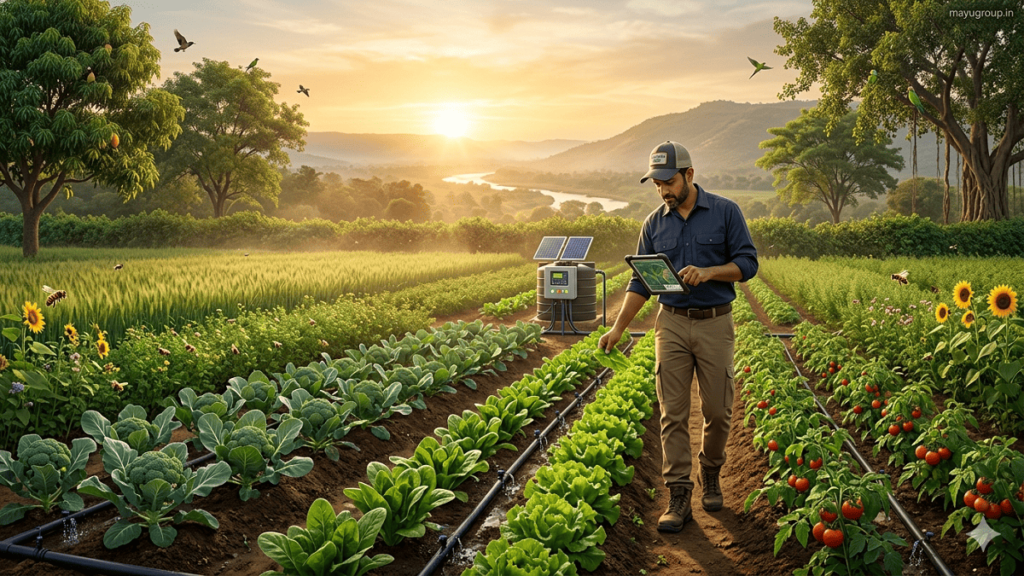
White Paper on Sustainable Agriculture
Executive Summary
Sustainable agriculture is a holistic farming approach that aims to meet current food and agricultural needs while preserving natural resources, protecting ecosystems, and ensuring economic viability for future generations. As global populations increase and environmental pressures intensify, sustainable agriculture has emerged as a critical strategy for enhancing food security, mitigating climate change, and promoting rural development. This white paper examines the principles, benefits, challenges, technologies, and future opportunities associated with sustainable agriculture.
Introduction
Agriculture is fundamental to human survival, providing food, fiber, and raw materials for industries worldwide. However, conventional agricultural practices have often led to soil degradation, water scarcity, biodiversity loss, and increased greenhouse gas emissions. Sustainable agriculture seeks to address these issues by integrating environmentally responsible, economically viable, and socially equitable farming practices.
The concept focuses on producing sufficient food while maintaining the health of ecosystems and conserving resources for future generations. Organizations such as the Food and Agriculture Organization advocate sustainable agriculture as a key component of global food system transformation.
Core Principles of Sustainable Agriculture
Sustainable agriculture is built upon three interconnected pillars:
Environmental Sustainability
- Conservation of soil and water resources.
- Protection of biodiversity and ecosystems.
- Reduction of pollution and greenhouse gas emissions.
- Responsible use of natural resources.
Economic Sustainability
- Long-term farm profitability.
- Improved resource efficiency.
- Reduced dependency on costly external inputs.
- Increased resilience to market fluctuations.
Social Sustainability
- Enhanced farmer livelihoods.
- Safe working conditions.
- Food security and nutrition.
- Support for rural communities.
These principles work together to create resilient agricultural systems capable of meeting future challenges.
Key Sustainable Farming Practices
Several agricultural techniques contribute to sustainability:
Crop Rotation
Alternating crops across seasons improves soil fertility, reduces pests, and minimizes disease outbreaks.
Cover Cropping
Cover crops protect soil from erosion, enhance organic matter, and improve nutrient cycling.
Conservation Tillage
Reduced soil disturbance helps maintain soil structure, conserve moisture, and decrease erosion.
Integrated Pest Management (IPM)
IPM combines biological, cultural, and mechanical pest control methods to minimize pesticide use.
Agroforestry
Integrating trees with crops and livestock improves biodiversity, carbon sequestration, and farm resilience.
Precision Agriculture
Advanced technologies optimize resource use through data-driven decision-making.
Environmental Benefits
Sustainable agriculture generates numerous environmental advantages:
- Improved soil health and fertility.
- Reduced soil erosion.
- Enhanced water conservation.
- Lower agricultural pollution.
- Increased biodiversity.
- Reduced greenhouse gas emissions.
- Greater climate resilience.
These outcomes contribute to healthier ecosystems and more sustainable food production systems.
Economic Benefits
Sustainable agriculture can improve long-term economic performance by:
- Reducing input costs.
- Improving resource efficiency.
- Creating premium market opportunities.
- Enhancing farm productivity over time.
- Strengthening resilience to climate and market risks.
While transition costs may initially be high, sustainable practices often deliver long-term financial benefits.
Role of Technology
Modern technologies are accelerating the adoption of sustainable agriculture:
- Satellite monitoring.
- Geographic Information Systems (GIS).
- Internet of Things (IoT) sensors.
- Artificial Intelligence (AI).
- Drones and remote sensing.
- Automated irrigation systems.
- Data analytics platforms.
These technologies enable farmers to optimize inputs, improve yields, and reduce environmental impacts.
Challenges and Barriers
Despite its benefits, sustainable agriculture faces several obstacles:
Financial Constraints
High initial investment costs can limit adoption.
Knowledge Gaps
Many farmers require training and technical support.
Market Access
Certification requirements and supply chain limitations can restrict opportunities.
Climate Risks
Extreme weather events continue to threaten agricultural productivity.
Policy Limitations
Inconsistent government support may discourage long-term investment.
Addressing these challenges requires coordinated action from governments, research institutions, financial organizations, and private-sector stakeholders.
Industry Applications
Sustainable agriculture is applied across multiple sectors:
- Food and beverage production.
- Organic farming enterprises.
- Agricultural cooperatives.
- Export-oriented farming.
- Livestock production.
- Agroforestry projects.
- Rural development programs.
Many companies are integrating sustainable sourcing practices into their supply chains to meet consumer demand for environmentally responsible products.
Future Outlook
The future of sustainable agriculture will be shaped by innovation, policy support, and global collaboration. Climate-smart agriculture, regenerative farming, carbon farming, and digital agriculture are expected to play increasingly important roles in creating resilient food systems.
Governments and international organizations are investing in research, education, and financing mechanisms to accelerate sustainable agricultural transformation. Organizations such as the International Fund for Agricultural Development and the United Nations Environment Programme continue to support initiatives that promote sustainable food production worldwide.
Conclusion
Sustainable agriculture represents a long-term strategy for balancing food production with environmental protection and economic development. By adopting practices that conserve resources, improve productivity, and strengthen rural communities, sustainable agriculture can help address some of the most pressing global challenges, including food insecurity, climate change, and ecosystem degradation. Its continued advancement will be essential for building resilient agricultural systems capable of supporting future generations.
References
- Food and Agriculture Organization (FAO)
- International Fund for Agricultural Development (IFAD)
- United Nations Environment Programme (UNEP)
- World Bank Agriculture and Food
#Sustainable Agriculture in Kolkata
Industry Application of Sustainable Agriculture
Sustainable agriculture has evolved from a niche farming approach into a critical component of modern agricultural and industrial systems. By integrating environmentally responsible practices, resource-efficient technologies, and long-term economic strategies, sustainable agriculture is being applied across multiple industries to enhance productivity, reduce environmental impact, and improve supply chain resilience. Its applications extend beyond traditional farming to food processing, retail, biotechnology, energy production, and environmental conservation.
Food and Beverage Industry
The food and beverage sector is one of the largest adopters of sustainable agriculture practices. Companies increasingly source raw materials from farms that follow sustainable standards to meet consumer demand for environmentally responsible products. Sustainable farming helps ensure a reliable supply of crops while reducing the environmental footprint of food production.
Major food manufacturers and retailers implement sustainable sourcing programs that encourage responsible land management, water conservation, and biodiversity protection. Organizations such as the Food and Agriculture Organization promote sustainable agricultural supply chains as a key component of global food security.
Organic Farming Industry
Organic agriculture is a major application of sustainable farming principles. Organic farms avoid synthetic fertilizers and pesticides, relying instead on natural processes to maintain soil fertility and manage pests. The growing global demand for organic products has created significant market opportunities for farmers and agribusinesses adopting sustainable production methods.
Organic food markets continue to expand as consumers become more aware of environmental and health considerations associated with food production.
Livestock and Dairy Industry
Sustainable agriculture practices are increasingly used in livestock and dairy operations to improve animal welfare, reduce environmental impacts, and enhance resource efficiency. Sustainable grazing systems, manure management programs, and integrated crop-livestock systems help reduce greenhouse gas emissions while improving soil health and farm productivity.
These approaches also contribute to more efficient feed production and better land utilization.
Agricultural Technology Industry
The agricultural technology sector plays a crucial role in advancing sustainable agriculture. Precision farming tools, sensors, drones, satellite imaging, and artificial intelligence enable farmers to optimize resource use and reduce waste. These technologies support data-driven decision-making, improving yields while minimizing environmental impacts.
Technology companies are developing innovative solutions that help farmers monitor crop health, manage irrigation, and reduce fertilizer and pesticide applications.
Bioenergy and Renewable Energy Sector
Sustainable agriculture contributes to renewable energy production through biomass crops, agricultural residues, and biofuel feedstocks. Farmers can generate additional income by supplying materials for bioenergy production while maintaining environmentally responsible farming practices.
Integrated agricultural and renewable energy systems support both energy security and rural economic development.
Retail and Supply Chain Management
Retailers and global supply chain operators increasingly require sustainable sourcing certifications and traceability systems. Sustainable agriculture helps businesses reduce supply chain risks associated with climate change, resource scarcity, and environmental regulations.
Companies use sustainability standards to ensure that agricultural products meet environmental, social, and ethical requirements before reaching consumers.
Environmental Conservation and Carbon Markets
Sustainable agriculture plays an important role in environmental conservation initiatives. Practices such as agroforestry, conservation tillage, and cover cropping improve carbon sequestration and support ecosystem restoration. These activities are increasingly being integrated into carbon credit markets, providing farmers with additional revenue opportunities.
Organizations such as the United Nations Environment Programme support programs that link sustainable agriculture with climate action and ecosystem protection.
Rural Development Programs
Governments and development organizations use sustainable agriculture as a tool for rural development and poverty reduction. Sustainable farming systems improve food security, create employment opportunities, and strengthen local economies. Programs supported by the International Fund for Agricultural Development focus on helping smallholder farmers adopt sustainable practices that increase productivity and resilience.
Conclusion
Sustainable agriculture has broad industrial applications that extend far beyond crop production. From food manufacturing and livestock management to renewable energy, retail supply chains, and environmental conservation, sustainable agricultural practices support economic growth while protecting natural resources. As industries continue to prioritize sustainability, the adoption of sustainable agriculture will play an increasingly important role in building resilient food systems, reducing environmental impacts, and supporting long-term economic development.
Further Reading
- Food and Agriculture Organization (FAO)
- International Fund for Agricultural Development (IFAD)
- United Nations Environment Programme (UNEP)
- World Bank Agriculture and Food
#Sustainable Agriculture in Mumbai
Ask FAQs
What is sustainable agriculture?
Sustainable agriculture is a farming approach that produces food and other agricultural products while protecting the environment, conserving natural resources, and ensuring long-term economic viability. It balances environmental, social, and economic objectives to support present and future generations.
What are the main practices used in sustainable agriculture?
Common sustainable agriculture practices include crop rotation, cover cropping, conservation tillage, integrated pest management (IPM), agroforestry, organic farming, and precision agriculture. These methods help improve soil health, conserve water, reduce pollution, and enhance biodiversity.
How does sustainable agriculture benefit the environment?
Sustainable agriculture helps reduce soil erosion, conserve water resources, lower greenhouse gas emissions, protect biodiversity, and minimize the use of harmful chemicals. These benefits contribute to healthier ecosystems and greater resilience against climate change.
Why is sustainable agriculture important for food security?
Sustainable agriculture maintains soil fertility, improves water-use efficiency, enhances climate resilience, and supports long-term agricultural productivity. These factors help ensure a stable and reliable food supply for growing populations while preserving resources for future generations.
What challenges do farmers face when adopting sustainable agriculture?
Farmers may encounter challenges such as high initial investment costs, limited technical knowledge, certification requirements, market access issues, labor demands, and climate-related risks. Support through training, financing, and government policies can help overcome these barriers.
Table of Contents
Disclaimer
This content is intended for general informational and educational purposes only. While every effort has been made to ensure accuracy, the information provided should not be considered agricultural, environmental, financial, or legal advice. Readers are encouraged to consult qualified professionals and relevant authorities before implementing sustainable agriculture practices or making related business decisions.