NFT Crowdfunding
NFT Crowdfunding is a fundraising model where creators, including artists, musicians, startups, and content developers, raise capital by issuing non-fungible tokens (NFTs) to supporters in exchange for funding. Instead of traditional donations or equity shares, contributors receive unique digital assets recorded on a blockchain, which represent ownership, access rights, or exclusive benefits tied to a project.
At its core, NFT crowdfunding combines the principles of crowdfunding with blockchain technology. Each NFT acts as a verifiable digital certificate that cannot be replicated or altered, making it suitable for representing limited-edition digital collectibles, artwork, music rights, or membership passes. Creators launch a project by minting NFTs and selling them to early supporters, often before a product, album, or platform is fully developed. The funds raised are then used to finance production, development, or marketing.
One of the key advantages of NFT crowdfunding is digital ownership and transparency. Since transactions are recorded on decentralized blockchain networks, supporters can verify authenticity and ownership without intermediaries. This creates trust between creators and backers while enabling global participation without geographical restrictions.
Another important feature is utility-based rewards. Unlike traditional crowdfunding where rewards may be physical goods or experiences, NFT-based campaigns often provide ongoing digital utility. For example, NFT holders may receive exclusive access to music releases, private communities, event tickets, royalties, or governance rights in decentralized projects. This transforms supporters into active stakeholders rather than passive contributors.
NFT crowdfunding is widely used in creative industries, especially music, gaming, and digital art. Musicians can release limited-edition albums as NFTs, offering fans early access or even fractional ownership of royalties. Gaming projects use NFT crowdfunding to sell in-game assets or early access passes, while digital artists monetize unique artworks directly.
However, NFT crowdfunding also carries risks. Market volatility in cryptocurrencies can affect fundraising outcomes, and regulatory uncertainty in many countries creates legal challenges. Additionally, overvaluation or speculative buying can lead to unsustainable project models. Technical complexity and environmental concerns related to blockchain networks have also been debated in the industry.
Despite these challenges, NFT crowdfunding continues to grow as part of the broader Web3 ecosystem. It represents a shift toward decentralized finance and creator-driven economies, where audiences directly fund and benefit from digital innovation.
References
- https://www.investopedia.com/non-fungible-tokens-nft-5115211
- https://ethereum.org/en/nft/
- https://www.britannica.com/technology/blockchain
- https://www.forbes.com/sites/forbesbusinesscouncil/2022/03/22/how-nfts-are-transforming-creator-economies/
#NFT Crowdfunding in India
What is NFT crowdfunding?
NFT crowdfunding is a fundraising method where creators raise money for projects by selling non-fungible tokens (NFTs) to supporters through blockchain-based platforms. Instead of traditional donations or investment models, contributors receive unique digital assets that represent ownership, access rights, or exclusive benefits connected to a project.
In this system, a creator—such as an artist, musician, game developer, or startup—creates NFTs and offers them to the public in exchange for financial support. These NFTs are stored on a blockchain, which ensures that each token is unique, verifiable, and cannot be duplicated. The funds collected from selling these tokens are then used to finance the development of the project, whether it is an album, digital artwork, game, or platform.
A key feature of NFT crowdfunding is digital ownership. Supporters do not just donate money; they receive a blockchain-verified asset that may hold value or utility. For example, an NFT might grant early access to music, exclusive content, event tickets, or membership in a private community. In some cases, NFTs may also provide revenue-sharing rights or future benefits linked to the success of the project.
NFT crowdfunding is closely tied to the broader concept of Web3, which emphasizes decentralization and user ownership. Unlike traditional crowdfunding platforms where a central company manages transactions, NFT-based systems operate on decentralized networks such as Ethereum, increasing transparency and reducing reliance on intermediaries.
This model is especially popular in creative industries. Musicians can release limited-edition albums as NFTs, digital artists can sell unique artwork, and game developers can fund early-stage development by offering in-game assets as tokens. It allows creators to directly engage with global audiences while retaining more control over their work.
However, NFT crowdfunding also comes with challenges. The value of NFTs can be highly volatile due to cryptocurrency market fluctuations. There are also concerns about regulatory uncertainty, environmental impact of blockchain systems, and speculative buying behavior that may not always support long-term project sustainability.
Despite these limitations, NFT crowdfunding is becoming an important part of the digital economy. It combines fundraising, digital ownership, and community engagement into a single system, reshaping how creative and technological projects are financed in the modern era.
References
- https://www.investopedia.com/non-fungible-tokens-nft-5115211
- https://ethereum.org/en/nft/
- https://www.britannica.com/technology/blockchain
- https://www.forbes.com/sites/forbesbusinesscouncil/2022/03/22/how-nfts-are-transforming-creator-economies/
#NFT Crowdfunding in Maharashtra
How does NFT crowdfunding work?
NFT crowdfunding works by combining traditional crowdfunding principles with blockchain-based digital assets called non-fungible tokens (NFTs). Instead of asking supporters to donate money in exchange for rewards, creators raise funds by selling NFTs that represent unique value, access, or ownership tied to a specific project.
The process begins when a creator—such as a musician, artist, or startup team—defines a project that needs funding. This could include producing a music album, developing a game, launching a digital platform, or creating a collection of artwork. The creator then designs NFTs that are linked to the project. These NFTs may represent digital collectibles, membership passes, early access rights, or even future revenue participation depending on the project structure.
Next, the creator “mints” these NFTs on a blockchain network such as Ethereum or similar platforms. Minting is the process of converting digital files or smart contract rules into blockchain-verified assets. Each NFT is unique and has a recorded ownership history that cannot be altered, ensuring transparency and authenticity.
Once minted, the NFTs are listed for sale on NFT marketplaces or crowdfunding platforms that support blockchain transactions. Supporters purchase these NFTs using cryptocurrency or supported digital payment systems. The funds raised from these sales are transferred directly to the creator, providing the capital needed to execute the project.
In return, buyers receive NFTs that may carry different levels of utility. Some NFTs act as simple collectibles, while others provide functional benefits such as exclusive content access, private community membership, VIP event invitations, or early product releases. In more advanced models, NFTs can also include revenue-sharing rights or governance participation in decentralized projects.
After funding is completed, creators use the raised capital to develop and deliver the project. They may also continue engaging NFT holders through updates, rewards, and additional benefits. This ongoing relationship helps maintain community involvement and long-term value for supporters.
A key feature of NFT crowdfunding is transparency. Because blockchain transactions are publicly recorded, contributors can verify how funds are raised and how ownership is distributed. This reduces reliance on intermediaries and increases trust between creators and supporters.
However, the system also depends heavily on cryptocurrency infrastructure, market stability, and platform adoption. Despite these challenges, NFT crowdfunding continues to grow as a new model for decentralized fundraising and digital ownership.
References
- https://ethereum.org/en/nft/
- https://www.investopedia.com/non-fungible-tokens-nft-5115211
- https://www.britannica.com/technology/blockchain
- https://www.forbes.com/sites/forbesbusinesscouncil/2022/03/22/how-nfts-are-transforming-creator-economies/
#NFT Crowdfunding in Ahemadabad
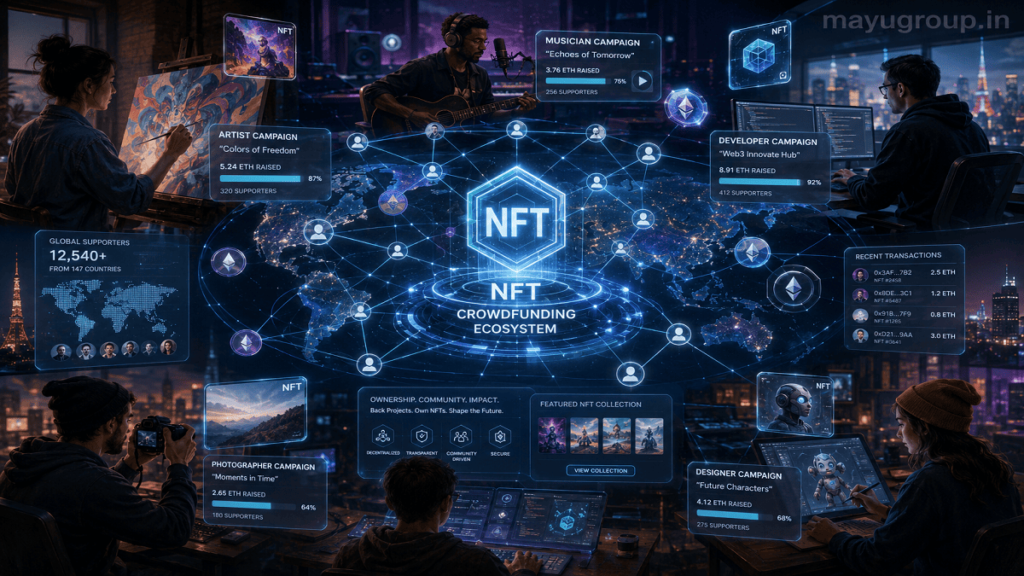
What role do NFTs play in fundraising?
NFTs (non-fungible tokens) play a transformative role in fundraising by acting as digital fundraising instruments that combine capital generation, ownership rights, and community engagement. In NFT-based fundraising models, creators issue unique blockchain-verified tokens to supporters in exchange for financial contributions, effectively replacing or enhancing traditional donation and investment systems.
One of the primary roles NFTs play is as digital proof of contribution. Each NFT is a unique asset recorded on a blockchain, meaning it cannot be duplicated or forged. When supporters purchase NFTs during a fundraising campaign, they receive verifiable proof of their support. This increases transparency and builds trust between creators and backers, as ownership and transaction history are publicly accessible.
NFTs also function as funding gateways for creative and commercial projects. Artists, musicians, game developers, and startups use NFT sales to raise upfront capital for production costs. For example, a musician may sell limited-edition NFTs representing an upcoming album, and the funds collected are used to finance recording, marketing, and distribution. This allows creators to bypass traditional funding institutions such as record labels or venture capital firms.
Another important role of NFTs is providing utility-based incentives. Unlike conventional crowdfunding rewards, NFTs can carry ongoing digital value. These may include access to exclusive content, private communities, early product releases, event tickets, or governance rights in decentralized projects. In some cases, NFTs are designed to provide revenue-sharing opportunities, giving holders a financial stake in the project’s success.
NFTs also enhance community building and engagement. Fundraising is no longer a one-time transaction; instead, NFT holders become active participants in the project’s ecosystem. They may receive updates, vote on creative decisions, or gain access to special events. This strengthens long-term loyalty and transforms supporters into stakeholders.
Additionally, NFTs introduce a secondary market for fundraising assets. Once issued, NFTs can often be resold on marketplaces, potentially increasing in value depending on demand and project success. This creates additional liquidity for supporters and extends the economic lifecycle of the fundraising campaign.
Despite these advantages, NFT-based fundraising is influenced by risks such as market volatility, regulatory uncertainty, and technological complexity. However, it continues to grow as part of the broader Web3 ecosystem, reshaping how digital projects are financed and supported.
In summary, NFTs play multiple roles in fundraising: they act as proof of support, funding tools, reward systems, engagement mechanisms, and tradable digital assets that collectively redefine how creators raise capital in the digital economy.
References
- https://ethereum.org/en/nft/
- https://www.investopedia.com/non-fungible-tokens-nft-5115211
- https://www.britannica.com/technology/blockchain
- https://www.forbes.com/sites/forbesbusinesscouncil/2022/03/22/how-nfts-are-transforming-creator-economies/
#NFT Crowdfunding in Hyderabad
Why do creators use NFT crowdfunding?
Creators use NFT crowdfunding because it provides a decentralized, flexible, and community-driven way to raise funds while maintaining creative and financial control over their projects. Unlike traditional funding models that rely on record labels, venture capitalists, or centralized crowdfunding platforms, NFT crowdfunding allows creators to directly connect with global audiences and secure capital through blockchain-based digital assets.
One of the primary reasons creators choose NFT crowdfunding is access to global funding without intermediaries. By minting NFTs on blockchain networks, creators can sell directly to supporters worldwide. This removes barriers such as geographic limitations, banking restrictions, and institutional approval processes. As a result, independent artists, musicians, game developers, and digital entrepreneurs can access funding more quickly and efficiently.
Another key motivation is ownership retention and creative independence. Traditional funding sources often require creators to give up partial ownership rights or follow strict contractual obligations. NFT crowdfunding allows creators to retain full control over their intellectual property while still raising capital. This independence is especially valuable in creative industries where artistic freedom is a major priority.
NFT crowdfunding also enables strong community engagement and loyalty building. Supporters who purchase NFTs become part of a project’s ecosystem rather than just passive donors. These NFT holders may receive exclusive content, early access to releases, voting rights on creative decisions, or membership in private communities. This transforms fundraising into a long-term relationship between creators and their audience.
Additionally, creators use NFT crowdfunding because of its built-in digital ownership and transparency features. Since NFTs are recorded on blockchain networks, every transaction and ownership record is publicly verifiable. This increases trust between creators and supporters, as contributors can see exactly how funds are raised and distributed.
Another important factor is new revenue opportunities and monetization models. NFTs can be designed with utility features such as royalty sharing, resale commissions, or access-based privileges. In some cases, creators continue to earn income from secondary market sales, allowing them to benefit from long-term demand rather than a single funding event.
Finally, NFT crowdfunding provides marketing and visibility advantages. NFT launches often attract attention within crypto communities and digital marketplaces, helping creators build early hype around their projects. This exposure can significantly increase audience reach and brand recognition.
Despite challenges such as market volatility and regulatory uncertainty, creators continue to adopt NFT crowdfunding because it combines fundraising, community building, and digital ownership into a single integrated system.
References
- https://ethereum.org/en/nft/
- https://www.investopedia.com/non-fungible-tokens-nft-5115211
- https://www.britannica.com/technology/blockchain
- https://www.forbes.com/sites/forbesbusinesscouncil/2022/03/22/how-nfts-are-transforming-creator-economies/
#NFT Crowdfunding in De;hi
What are the risks of NFT crowdfunding?
NFT crowdfunding offers new opportunities for creators and supporters, but it also involves several significant risks related to finance, technology, regulation, and market behavior. Understanding these risks is essential before participating in or launching such campaigns.
One of the most prominent risks is market volatility. NFTs are closely tied to cryptocurrency ecosystems, where asset values can fluctuate sharply within short periods. This means that the funds raised through NFT sales may lose value quickly, and supporters may experience financial loss if the market declines. Similarly, creators may receive unstable funding that does not reliably support long-term project development.
Another major risk is regulatory uncertainty. Many countries are still developing legal frameworks for NFTs and digital assets. Depending on jurisdiction, NFT crowdfunding may fall into unclear or evolving legal categories, especially when NFTs include profit-sharing, royalties, or investment-like features. This uncertainty can create compliance challenges for creators and platforms, potentially affecting project continuity.
Technological risk is also significant. NFT crowdfunding depends on blockchain infrastructure, smart contracts, and digital wallets. Bugs in smart contract code, hacking incidents, or platform failures can result in loss of funds or digital assets. Since blockchain transactions are generally irreversible, recovering lost assets is often impossible.
There is also a risk of fraud and scams. The NFT space has seen cases of fake projects, “rug pulls,” and misleading marketing where creators abandon projects after raising funds. Because barriers to entry are relatively low, it can be difficult for supporters to distinguish legitimate projects from fraudulent ones without careful research.
Another concern is market speculation and unrealistic valuations. Some NFT crowdfunding campaigns attract buyers primarily for speculative profit rather than genuine support for the project. This can distort pricing, create artificial demand, and lead to unsustainable project ecosystems. When speculation fades, NFT values can collapse, affecting both creators and supporters.
Liquidity risk is also important. While NFTs can sometimes be resold on secondary markets, there is no guarantee of buyers or stable pricing. Supporters may find it difficult to exit their positions or recover their investment if the project loses popularity.
Finally, there are environmental and ethical concerns associated with certain blockchain networks, particularly those that use energy-intensive consensus mechanisms. Although many platforms are shifting toward more efficient systems, sustainability remains a concern in some cases.
In summary, NFT crowdfunding carries risks including market instability, regulatory ambiguity, technical vulnerabilities, fraud, speculative behavior, and liquidity limitations. While it offers innovative fundraising opportunities, careful evaluation and risk awareness are essential for both creators and investors.
References
- https://ethereum.org/en/nft/
- https://www.investopedia.com/non-fungible-tokens-nft-5115211
- https://www.britannica.com/technology/blockchain
- https://www.forbes.com/sites/forbesbusinesscouncil/2022/03/22/how-nfts-are-transforming-creator-economies/
#NFT Crowdfunding in Pune
Case Study on NFT Crowdfunding
NFT crowdfunding has been widely demonstrated through real-world creative and digital projects that use blockchain-based tokens to raise capital directly from global communities. A strong case study example is the rise of NFT-based music and digital art funding, where creators sell limited-edition tokens to finance production while offering utility and ownership benefits to supporters.
One notable category of NFT crowdfunding case studies comes from digital artists on platforms like Ethereum-based marketplaces. For example, many independent creators have launched NFT collections where each token represents a unique artwork tied to a larger creative project. In these cases, artists pre-sell NFTs before completing a full collection or exhibition. The funds raised are used for production costs, marketing, and platform development. Supporters receive exclusive digital ownership of artwork and, in some cases, access to private communities or future releases. This model has allowed emerging artists to bypass galleries and traditional art institutions.
In the music industry, NFT crowdfunding has been used to fund album production and fan engagement initiatives. Musicians release NFTs representing albums, unreleased tracks, or membership passes. Supporters who purchase these NFTs gain early access to music, exclusive content, or even revenue-linked benefits in advanced models. This approach has been particularly effective for independent musicians who want to maintain creative control while financing recording and distribution.
A broader case study example is the adoption of NFT crowdfunding by gaming projects. Some blockchain-based game developers sell NFTs representing in-game assets, characters, or early access passes. These NFTs function as both funding instruments and playable digital assets within the game ecosystem. The capital raised is used for development, server infrastructure, and marketing. This model demonstrates how NFT crowdfunding can integrate fundraising directly into product ecosystems.
A key example of the NFT crowdfunding concept in practice is the use of Ethereum-based smart contracts, where creators mint NFTs and sell them in predefined tiers. These tiers often include different levels of utility, such as access to beta versions, voting rights on project development, or exclusive digital content. The transparency of blockchain ensures that all transactions are publicly verifiable, increasing trust between creators and supporters.
However, case studies also highlight challenges. Several NFT crowdfunding projects have faced issues such as price volatility, speculative buying, and project abandonment. In some cases, creators were unable to deliver promised utilities due to technical or financial constraints. These failures emphasize the importance of clear roadmaps, realistic budgeting, and long-term engagement strategies.
Overall, NFT crowdfunding case studies demonstrate a shift toward decentralized fundraising models where communities directly finance creative and technological innovation. While the system offers strong advantages in terms of ownership, transparency, and global reach, its success depends heavily on credibility, execution, and sustainable project design.
References
- https://ethereum.org/en/nft/
- https://www.investopedia.com/non-fungible-tokens-nft-5115211
- https://www.britannica.com/technology/blockchain
- https://www.forbes.com/sites/forbesbusinesscouncil/2022/03/22/how-nfts-are-transforming-creator-economies/
#NFT Crowdfunding in Banglore
White Paper on NFT Crowdfunding
1. Executive Summary
NFT crowdfunding is an emerging decentralized fundraising model that uses non-fungible tokens (NFTs) to raise capital for creative, technological, and entrepreneurial projects. Built on blockchain infrastructure, it enables creators to sell unique digital assets to supporters in exchange for funding. These NFTs may represent ownership, access rights, utility benefits, or participation in a project ecosystem. The model combines crowdfunding, digital ownership, and community engagement into a unified Web3-based financial system.
2. Introduction
Traditional crowdfunding relies on centralized platforms and fiat-based transactions, while NFT crowdfunding leverages blockchain networks to enable peer-to-peer fundraising. This system eliminates intermediaries and introduces verifiable digital ownership. It is widely used in sectors such as digital art, music, gaming, and startup innovation.
The core innovation lies in tokenizing value through NFTs, allowing supporters to directly fund projects while receiving blockchain-verified digital assets in return.
3. System Architecture
NFT crowdfunding typically operates through the following components:
- Blockchain Network: Provides decentralized infrastructure (e.g., Ethereum)
- Smart Contracts: Automate NFT creation, sales, and fund distribution
- NFT Marketplace: Platform for listing and selling tokens
- Digital Wallets: Enable transactions and asset storage
- Creator Dashboard: Used to design campaigns and manage funding
Smart contracts ensure transparency by automatically executing transactions based on predefined rules.
4. Operational Model
The NFT crowdfunding process includes:
- Project conceptualization and roadmap development
- NFT design and metadata creation
- Minting NFTs on a blockchain
- Listing NFTs for sale on marketplaces
- Fund collection from supporters
- Project execution using raised capital
- Delivery of utility and ongoing engagement
NFTs may include tiered benefits such as exclusive content, early access, governance rights, or revenue participation.
5. Key Benefits
NFT crowdfunding offers several advantages:
- Decentralized global fundraising without intermediaries
- Transparent and verifiable transactions
- Direct community engagement and loyalty building
- New monetization models through digital ownership
- Secondary market trading opportunities for NFTs
- Enhanced marketing visibility within Web3 ecosystems
It enables creators to retain greater control over intellectual property and revenue streams.
6. Risks and Limitations
Despite its advantages, NFT crowdfunding faces challenges:
- High market volatility linked to cryptocurrencies
- Regulatory uncertainty across jurisdictions
- Smart contract vulnerabilities and cybersecurity risks
- Speculative trading behavior and price manipulation
- Liquidity constraints in secondary markets
- Project execution risks and potential non-delivery
These factors require careful planning, auditing, and compliance strategies.
7. Industry Impact
NFT crowdfunding is reshaping digital economies by integrating fundraising with ownership and engagement. It is influencing how creative industries finance production, how communities participate in projects, and how value is distributed in decentralized ecosystems. It also contributes to the growth of Web3-based creator economies.
8. Future Outlook
The future of NFT crowdfunding is expected to involve improved regulation, enhanced scalability solutions, and greater integration with mainstream finance. Hybrid models combining traditional crowdfunding with NFT utilities are likely to emerge, increasing adoption across industries.
9. Conclusion
NFT crowdfunding represents a significant evolution in digital fundraising by merging blockchain technology with community-driven finance. While it offers transparency, global reach, and innovation, its long-term success depends on regulatory clarity, technological maturity, and responsible project execution.
References
- https://ethereum.org/en/nft/
- https://www.investopedia.com/non-fungible-tokens-nft-5115211
- https://www.britannica.com/technology/blockchain
- https://www.forbes.com/sites/forbesbusinesscouncil/2022/03/22/how-nfts-are-transforming-creator-economies/
#NFT Crowdfunding in Kolkata
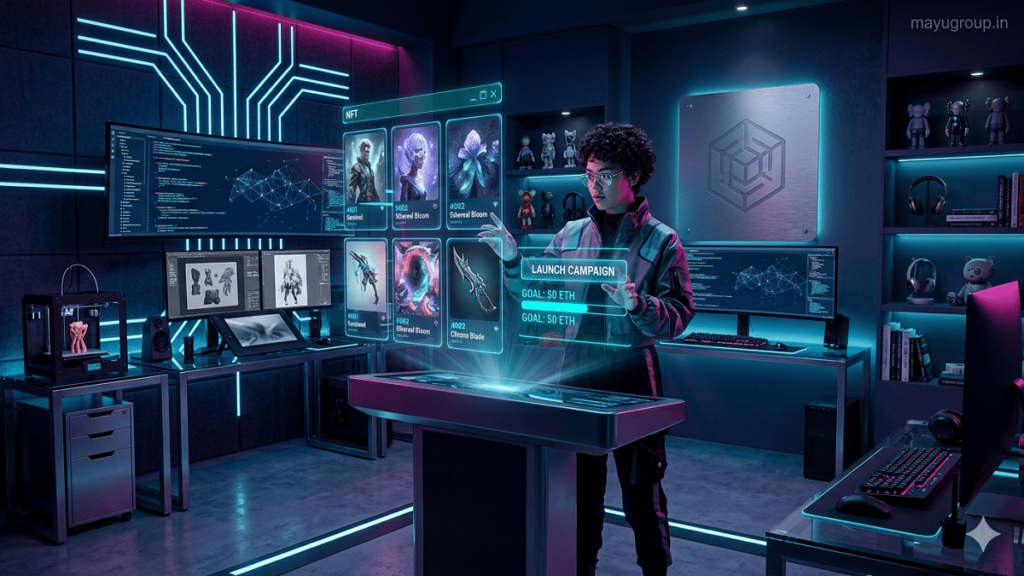
Industry Application of NFT Crowdfunding
NFT crowdfunding has emerged as a practical funding mechanism across multiple industries by combining blockchain-based digital ownership with community-driven financing. It enables creators and organizations to raise capital by issuing non-fungible tokens (NFTs) that represent access, ownership, or utility within a project ecosystem. Its applications now extend beyond art into music, gaming, entertainment, startups, and brand engagement.
1. Digital Art and Creative Industries
The earliest and most prominent application of NFT crowdfunding is in digital art. Artists mint NFTs representing original artworks or collections and sell them to supporters before or during project development. The funds raised are used for production, exhibitions, or platform development. This model allows independent artists to bypass galleries and traditional intermediaries while maintaining ownership of their work. It also introduces a global collector base that directly participates in funding creative output.
2. Music Industry Applications
In the music sector, NFT crowdfunding is used to finance album production, tours, and fan engagement initiatives. Musicians release NFTs representing albums, exclusive tracks, or membership passes. These NFTs often provide additional utility such as early access to songs, VIP concert tickets, or revenue-sharing rights. This enables artists to generate upfront capital while strengthening direct relationships with fans and building long-term communities.
3. Gaming and Metaverse Development
Gaming is one of the fastest-growing areas for NFT crowdfunding. Developers sell NFTs that represent in-game assets, characters, skins, or early access passes. These tokens act as both funding instruments and functional game assets. The capital raised supports game development, server infrastructure, and marketing. In metaverse projects, NFTs are also used to fund virtual land development and digital economies.
4. Startup and Tech Innovation
Early-stage startups increasingly explore NFT crowdfunding as an alternative to venture capital. NFTs can represent membership access, governance rights, or future utility within a platform. Investors receive digital assets that may appreciate in value as the project grows. This model helps startups raise funds while building a decentralized user base from the beginning.
5. Entertainment and Media
Film production, web series, and digital content creation are also adopting NFT crowdfunding models. Producers sell NFTs that may include behind-the-scenes access, credits, or revenue participation. This allows audiences to become stakeholders in media projects, creating deeper engagement and financial support before release.
6. Brand Engagement and Marketing
Brands use NFT crowdfunding to launch limited-edition digital products, loyalty programs, and experiential campaigns. NFTs act as digital membership cards that unlock exclusive perks, early product access, or event invitations. This strengthens brand loyalty while simultaneously funding new product development or marketing campaigns.
Conclusion
NFT crowdfunding is expanding across industries as a hybrid model of fundraising, marketing, and community building. It enables decentralized capital formation while providing supporters with verifiable digital ownership and utility. Although challenges such as regulation and market volatility remain, its adoption continues to grow in creative, technological, and commercial sectors.
References
- https://ethereum.org/en/nft/
- https://www.investopedia.com/non-fungible-tokens-nft-5115211
- https://www.britannica.com/technology/blockchain
- https://www.forbes.com/sites/forbesbusinesscouncil/2022/03/22/how-nfts-are-transforming-creator-economies/
#NFT Crowdfunding in Mumbai
Ask FAQs
What is NFT crowdfunding?
NFT crowdfunding is a fundraising method where creators raise money by selling non-fungible tokens (NFTs) to supporters. These NFTs are unique digital assets stored on a blockchain and may represent ownership, access rights, or exclusive benefits linked to a project such as music, art, games, or startups.
How does NFT crowdfunding work?
Creators design a project, mint NFTs on a blockchain, and sell them through NFT marketplaces or platforms. Supporters buy these NFTs using cryptocurrency or supported payments. The funds raised are used to develop the project, while buyers receive NFTs that may offer utility like exclusive content, early access, or community membership.
What benefits do supporters get from NFT crowdfunding?
Supporters often receive digital ownership of unique NFTs along with additional perks such as exclusive content, VIP access, early releases, event invitations, or potential revenue-sharing rights. These benefits vary depending on how the creator structures the NFT campaign.
Why do creators use NFT crowdfunding instead of traditional funding?
Creators prefer NFT crowdfunding because it allows them to raise global funds without intermediaries, retain creative control, and build direct relationships with their audience. It also enables them to offer digital ownership and utility-based rewards while maintaining independence from traditional investors or record labels.
What are the risks involved in NFT crowdfunding?
Key risks include cryptocurrency market volatility, regulatory uncertainty, technical vulnerabilities in smart contracts, scams or failed projects, and limited liquidity in NFT resale markets. These risks make it important for both creators and supporters to carefully evaluate projects before participating.
Table of Contents
Disclaimer: This content is for informational purposes only and does not constitute financial, legal, or investment advice.