Construction Loans
Construction loans are short-term financing solutions designed specifically to fund the building or renovation of residential, commercial, or industrial properties. These loans provide capital in stages, allowing developers, builders, and property owners to manage construction costs efficiently as the project progresses. Unlike traditional loans that offer a lump sum upfront, construction loans are typically disbursed in phases known as “draws,” aligned with different stages of construction such as foundation, framing, and completion.
The primary purpose of a construction loan is to cover expenses related to materials, labor, permits, contractor fees, and other project-related costs. Borrowers usually include real estate developers, contractors, and individuals building custom homes. Since construction projects carry higher risk due to uncertainties in timelines and costs, lenders carefully evaluate the borrower’s financial strength, project feasibility, and construction plan before approval.
One of the key features of construction loans is their short-term nature. They usually last from 6 to 24 months, covering only the construction period. Once the project is completed, the loan is either converted into a long-term mortgage (in the case of residential properties) or refinanced through a commercial loan for income-generating properties.
Interest rates on construction loans are generally higher than traditional mortgage loans due to increased risk exposure. Borrowers typically pay interest only on the amount disbursed rather than the full loan amount, which helps manage costs during the construction phase. Detailed financial structures and industry insights on construction lending can be found at Investopedia Construction Loan Guide.
Lenders assess several factors before approving construction financing. These include the borrower’s credit history, income stability, project timeline, contractor reputation, construction budget, and the estimated value of the completed property. A well-documented construction plan, often called “blueprints and specifications,” is essential for approval.
There are different types of construction loans, including construction-to-permanent loans, which convert into a mortgage after completion, and stand-alone construction loans, which require separate financing after the project ends. Government-backed programs, such as those offered by the U.S. Small Business Administration, also support construction-related financing for eligible businesses. More details are available at SBA Construction Financing Programs.
Despite their benefits, construction loans carry risks such as cost overruns, delays, market fluctuations, and contractor issues. Proper planning, contingency budgeting, and experienced project management are essential to reduce these risks and ensure successful project completion.
In conclusion, construction loans are essential financial tools that enable property development and infrastructure growth. When used strategically, they provide the necessary capital to transform architectural plans into completed structures while supporting economic and real estate development.
#Construction Loans in India
What is a construction loan?
A construction loan is a short-term financing option provided by banks or financial institutions to fund the building or renovation of residential, commercial, or industrial properties. Unlike a traditional loan that disburses the entire amount at once, a construction loan releases funds in stages based on the progress of the construction project. These staged payments are commonly known as “draws” and are linked to specific milestones such as laying the foundation, completing structural work, and finishing interiors.
The primary purpose of a construction loan is to cover all costs associated with the building process. This includes expenses such as land acquisition (in some cases), materials, labor, contractor fees, permits, and other development-related costs. Because construction projects involve multiple variables and higher uncertainty compared to completed properties, lenders carefully evaluate both the borrower and the project before approving the loan.
Construction loans are typically short-term in nature, usually lasting between 6 to 24 months, depending on the size and complexity of the project. During the construction phase, borrowers often make interest-only payments on the amount that has been disbursed rather than the full loan amount. This helps reduce financial pressure while the property is still under development and not yet generating income.
Once construction is completed, the loan is either converted into a long-term mortgage (in residential projects) or refinanced into a commercial loan for income-generating properties. This transition ensures long-term repayment stability after the construction phase ends.
Lenders assess several key factors before approving a construction loan, including the borrower’s creditworthiness, financial stability, project feasibility, contractor experience, construction timeline, and estimated value of the completed property. A detailed construction plan, including architectural designs and cost estimates, is essential for approval.
There are different types of construction loans, such as construction-to-permanent loans, which automatically convert into a mortgage after completion, and stand-alone construction loans, which require separate financing once the project is finished. More detailed financial explanations can be found at Investopedia Construction Loan Definition.
Government-backed programs also support construction financing in certain regions. For example, the U.S. Small Business Administration offers funding options that assist small businesses in property development. More information is available at SBA Loan Programs.
In summary, a construction loan is a specialized form of short-term financing that helps individuals and businesses fund property development in structured phases, ensuring controlled spending and efficient project execution.
#Construction Loans in Maharashtra

How does a construction loan work?
A construction loan works as a short-term financing solution that provides funds to build or renovate a property in stages rather than as a single lump sum. It is designed to match the dynamic nature of construction projects, where costs are incurred progressively as work advances. This structure helps ensure that funds are used efficiently and are released only when specific construction milestones are completed.
The process begins when a borrower—such as a homeowner, builder, or real estate developer—applies for financing with a detailed construction plan. This plan typically includes architectural drawings, project timelines, cost estimates, contractor details, and the projected value of the completed property. Lenders carefully evaluate this information along with the borrower’s credit profile, income stability, and repayment capacity before approving the loan.
Once approved, the loan amount is not given all at once. Instead, it is disbursed in phases known as “draws.” Each draw corresponds to a stage of construction, such as laying the foundation, completing structural framing, installing roofing, or finishing interiors. Before releasing each installment, lenders or their inspectors usually verify that the work has been completed as planned. This helps reduce risk and ensures that the project stays on track.
During the construction period, borrowers typically make interest-only payments on the amount that has been disbursed so far. This means they are not paying interest on the full loan amount, which helps manage cash flow while the property is still under development and not generating income.
Construction loans are usually short-term, lasting between 6 to 24 months depending on the project size. Once construction is completed, the loan is either converted into a long-term mortgage (in residential projects) or refinanced into a commercial property loan for income-generating assets. This transition is often called a “construction-to-permanent loan” when both phases are combined into a single financing structure.
Lenders closely monitor risk factors throughout the loan lifecycle, including construction delays, cost overruns, contractor performance, and market fluctuations. Because of these risks, construction loans often have higher interest rates compared to traditional mortgages. More details on how these loans function can be found at Investopedia Construction Loan Guide.
Government-backed financing options are also available in some cases. For example, the U.S. Small Business Administration supports property development projects for eligible businesses through specialized loan programs. More information is available at SBA Loan Programs.
In summary, a construction loan works by releasing funds in stages aligned with project progress, charging interest only on disbursed amounts, and eventually converting into long-term financing once construction is complete.
#Construction Loans in Ahemadabad
What are the stages of construction loan disbursement?
Construction loan disbursement follows a structured, milestone-based process designed to ensure that funds are released only as the building project progresses. This system reduces lender risk and helps ensure that the borrowed capital is used appropriately at each stage of construction. Each disbursement phase is commonly referred to as a “draw,” and it is tied to specific construction milestones verified by inspections or documentation.
The first stage is land acquisition or initial funding (if included in the loan). In some cases, the loan may cover the purchase of land before construction begins. If the land is already owned by the borrower, the initial draw typically focuses on pre-construction expenses such as permits, architectural design, site preparation, and contractor mobilization.
The second stage is the foundation phase. Once excavation and groundwork begin, funds are released to cover costs related to laying the foundation, including concrete work, structural base preparation, and initial site development. Lenders usually require inspection or proof of completion before approving this disbursement.
The third stage is the framing phase, which is one of the most significant milestones. This includes construction of the building’s structural framework such as walls, floors, beams, and roofing structure. Since this stage represents the physical shape of the property, a substantial portion of the loan is often released here.
The fourth stage is the exterior and utility installation phase. At this point, funds are used for roofing completion, windows, doors, electrical wiring, plumbing systems, and external finishes. This stage ensures that the building becomes weatherproof and functional from a structural standpoint.
The fifth stage is the interior finishing phase. This includes flooring, painting, cabinetry, fixtures, HVAC installation, and other interior design elements. Although the structure is already built, this stage transforms it into a usable residential or commercial space.
The final stage is project completion and final inspection. Once construction is fully completed, the lender conducts a final evaluation to ensure all contractual obligations and building standards are met. After approval, the remaining funds (if any) are released, and the construction loan is typically converted into a long-term mortgage or refinanced into a commercial loan.
Throughout all stages, lenders closely monitor progress through site inspections, contractor reports, and documentation reviews. This ensures that funds are aligned with actual construction milestones and reduces the risk of delays or misuse.
For additional financial insights into construction financing structures, you can refer to Investopedia Construction Loan Overview.
Government-backed programs, such as those offered by the U.S. Small Business Administration, also support construction-related financing for eligible borrowers. More information is available at SBA Loan Programs.
In summary, construction loan disbursement occurs in clearly defined stages—land or pre-construction, foundation, framing, exterior work, interior finishing, and final completion—ensuring controlled funding aligned with project progress.
#Construction Loans in Hyderabad
What are the eligibility requirements for construction loans?
Eligibility for construction loans is determined by lenders through a detailed assessment of the borrower’s financial strength, project feasibility, and repayment capacity. Since construction projects involve higher risk than completed property financing, lenders apply stricter criteria to ensure that both the borrower and the project are capable of successful completion and repayment.
One of the primary eligibility requirements is a strong credit profile. Lenders typically evaluate both personal and business credit scores (if applicable). A higher credit score indicates responsible financial behavior and increases the likelihood of approval. Borrowers with weak or inconsistent credit histories may face higher interest rates or rejection.
Income stability and financial capacity are also critical factors. Lenders assess the borrower’s income sources, debt-to-income ratio, and overall financial health to ensure they can manage interest payments during the construction phase. For business-related construction loans, financial statements such as balance sheets, profit and loss statements, and cash flow reports are carefully reviewed.
A well-defined construction plan is another essential requirement. This includes architectural designs, project timelines, cost estimates, and contractor details. Lenders need assurance that the project is feasible, realistic, and backed by qualified professionals. An experienced and reputable contractor significantly improves approval chances.
The value and feasibility of the project also play a major role. Lenders evaluate the projected value of the completed property (often called the “after-completion value”) to ensure that the investment is justified. If the project appears overvalued or financially unviable, approval may be denied.
Collateral is typically required for construction loans. In most cases, the property being constructed serves as the primary collateral. Some lenders may also require additional security depending on risk assessment. This reduces lender exposure in case of default.
A down payment is usually mandatory. Borrowers are often required to contribute a percentage of the total project cost upfront, which demonstrates financial commitment and reduces lending risk. The required percentage varies depending on lender policies and borrower profile.
Lenders also consider the borrower’s experience in construction or real estate development. Individuals or businesses with prior successful projects are generally viewed as lower risk compared to first-time builders.
For more detailed financial guidance on eligibility and lending criteria, resources such as Investopedia Construction Loan Guide provide useful insights into how lenders evaluate borrowers.
Government-backed programs can also influence eligibility. For example, the U.S. Small Business Administration offers loan support for eligible construction-related projects, helping reduce lender risk and improve access to financing. More details are available at SBA Loan Programs.
In summary, eligibility for construction loans depends on creditworthiness, financial stability, detailed project planning, collateral, down payment capacity, and construction experience. Meeting these requirements significantly improves the chances of loan approval and successful project financing.
#Construction Loans in Delhi
What risks are involved in construction loans?
Construction loans provide essential funding for building and renovation projects, but they also carry a higher level of risk compared to traditional financing. These risks arise due to the uncertainty of construction timelines, fluctuating costs, and dependence on multiple external factors such as contractors, materials, and regulatory approvals. Understanding these risks is crucial for borrowers and lenders to ensure proper financial planning and project execution.
One of the most significant risks is cost overruns. Construction projects often exceed initial budget estimates due to rising material prices, design changes, labor shortages, or unforeseen site conditions. Since construction loans are based on predefined budgets, any additional costs may need to be covered by the borrower, increasing financial pressure.
Another major risk is project delays. Delays can occur due to weather conditions, supply chain disruptions, contractor inefficiencies, or regulatory approval issues. Since construction loans are typically short-term, delays can lead to increased interest payments and potential penalties if the project extends beyond the loan term.
Interest rate risk is also important, especially in loans with variable rates. If interest rates increase during the construction period, the overall cost of borrowing rises, which can impact the project’s profitability and financial viability.
Contractor risk is another key concern. The success of a construction project heavily depends on the performance of contractors and subcontractors. Poor workmanship, financial instability of contractors, or contract disputes can significantly delay progress or increase costs.
Market risk also plays a role, particularly for speculative real estate developments. If property demand or market prices decline during construction, the expected value of the completed project may drop, affecting profitability and refinancing options.
There is also the risk of funding gaps. Since construction loans are disbursed in stages, any failure to meet inspection requirements or project milestones may delay fund releases, potentially halting construction until issues are resolved.
Collateral risk is another important factor. In case of default, lenders may seize the property under construction. However, unfinished properties often have lower resale value, which increases financial risk for both lenders and borrowers.
Regulatory and approval risks can also impact construction timelines. Delays in obtaining permits, environmental clearances, or compliance approvals can stall progress and increase holding costs.
For more detailed financial insights into construction lending risks, resources such as Investopedia Construction Loan Overview provide a deeper understanding of how these loans operate and their associated risks.
Government-backed lending programs, including those offered by the U.S. Small Business Administration, aim to reduce some of these risks by providing guarantees and structured support for eligible borrowers. More information is available at SBA Loan Programs.
In conclusion, construction loans involve risks such as cost overruns, delays, interest rate fluctuations, contractor issues, market instability, and regulatory challenges. Proper planning, experienced project management, and financial contingency buffers are essential to mitigate these risks and ensure successful project completion.
#Construction Loans in Pune
Case Study of Construction Loans
Construction loans play a vital role in transforming real estate plans into completed structures by providing staged financing aligned with project progress. The following case study illustrates how a construction loan supported the development of a mid-sized residential housing project while highlighting challenges, risk management strategies, and outcomes.
Project Overview
A real estate developer, referred to as “XYZ Developers,” planned to construct a 20-unit residential apartment complex in a growing suburban area. The project was designed to meet increasing housing demand driven by urban expansion and improved infrastructure connectivity. However, the developer required external financing to cover land development, construction materials, labor, and contractor costs. To fund the project, XYZ Developers applied for a construction-to-permanent loan from a commercial bank.
Loan Structure and Approval
The lender evaluated the project based on creditworthiness, financial statements, contractor experience, project feasibility, and projected after-completion value. After detailed risk assessment, the bank approved a construction loan structured with milestone-based disbursements. The loan covered 75% of the total project cost, while the developer contributed the remaining 25% as equity. For reference on how such loans are structured, see Investopedia Construction Loan Guide.
Loan Disbursement Process
Funds were released in stages aligned with construction progress:
- Initial draw for land preparation and permits
- Foundation completion stage funding
- Structural framing and roofing phase
- Interior and utility installation phase
- Final completion and inspection stage
Each stage required lender inspections before the next disbursement was approved, ensuring controlled fund utilization and project accountability.
Challenges Faced
During construction, XYZ Developers encountered several challenges. Rising material costs led to budget pressure, while unexpected rainfall caused minor delays in the foundation stage. Additionally, labor shortages temporarily slowed construction progress. These issues created cash flow strain, requiring careful financial adjustment and contingency planning.
To manage these risks, the developer negotiated bulk material procurement contracts to stabilize costs and rescheduled certain non-critical activities to recover lost time. Strong contractor coordination and proactive project management helped minimize delays.
Project Outcome
Despite early challenges, the project was completed within 18 months. The residential units were fully occupied within three months of completion due to strong market demand. Rental income generated stable cash flow, allowing the developer to refinance the construction loan into a long-term mortgage with lower interest rates. This transition significantly improved financial stability and profitability.
Conclusion
This case study demonstrates how construction loans enable real estate development by providing structured, milestone-based financing. While risks such as cost overruns and delays are common, effective planning, strong contractor management, and lender monitoring help ensure successful project completion and financial viability. When used strategically, construction loans become a powerful tool for asset creation and long-term investment growth.
#Construction Loans in Banglore
White Paper of Construction Loans
Abstract
Construction loans are specialized short-term financing instruments designed to fund the development or renovation of residential, commercial, and industrial properties. Unlike traditional lending products, construction loans are disbursed in structured stages aligned with project milestones. This white paper examines their structure, operational mechanisms, risk framework, approval criteria, and their role in real estate and economic development.
1. Introduction
Construction loans are a critical component of real estate and infrastructure financing. They provide capital required to convert architectural plans into physical assets. These loans are typically offered by banks, non-banking financial companies (NBFCs), and development finance institutions. Because construction projects involve uncertainty in cost, timeline, and execution, lenders apply strict underwriting standards before approval.
2. Structure of Construction Loans
Construction loans are short-term financing solutions, typically ranging from 6 to 24 months. They differ from traditional loans in that funds are not disbursed in a lump sum. Instead, they follow a draw-based system aligned with construction milestones such as foundation completion, structural framing, and interior finishing.
Key structural features include:
- Interest-only payments during construction
- Stage-wise fund disbursement
- Collateral-backed security (usually the property under construction)
- Conversion to long-term mortgage or refinancing after completion
For detailed financial structure reference, see Investopedia Construction Loan Overview.
3. Loan Approval and Underwriting Process
Approval of construction loans involves a comprehensive evaluation of borrower and project risk. Lenders assess:
- Creditworthiness and financial stability
- Detailed construction plans and architectural designs
- Contractor experience and project execution capability
- Estimated project cost and after-completion property value
- Down payment contribution and equity participation
A strong construction plan and experienced contractor significantly improve approval probability.
4. Disbursement Mechanism
Funds are released in phases known as “draws.” Each draw is linked to verified project milestones:
- Pre-construction (permits, land preparation)
- Foundation completion
- Structural framing
- Exterior and utility installation
- Interior finishing and final inspection
Before each disbursement, lenders typically conduct site inspections to ensure compliance and progress alignment.
5. Economic Role of Construction Loans
Construction loans play a vital role in economic development by enabling:
- Residential housing expansion
- Commercial infrastructure growth
- Job creation in construction and allied industries
- Urban development and modernization
Government-backed lending programs also support this sector. For example, the U.S. Small Business Administration provides financing assistance for eligible development projects. More details are available at SBA Loan Programs.
6. Risks and Challenges
Despite their benefits, construction loans involve significant risks:
- Cost overruns due to material or labor price changes
- Project delays caused by weather or supply chain disruptions
- Contractor performance risks
- Interest rate fluctuations (in variable-rate loans)
- Market risk affecting property valuation
- Regulatory and approval delays
Effective project planning and contingency budgeting are essential to mitigate these risks.
7. Strategic Importance for Stakeholders
For developers, construction loans provide access to capital without requiring full upfront investment. For lenders, they offer profitable short-term lending opportunities with secured collateral. For economies, they support infrastructure expansion and real estate growth.
8. Conclusion
Construction loans are essential financial instruments that enable structured property development through milestone-based funding. While they carry higher risk than traditional loans, their controlled disbursement model and collateral backing make them a balanced financing tool. When managed effectively, construction loans contribute significantly to economic growth, urban development, and real estate expansion.
#Construction Loans in Kolkata
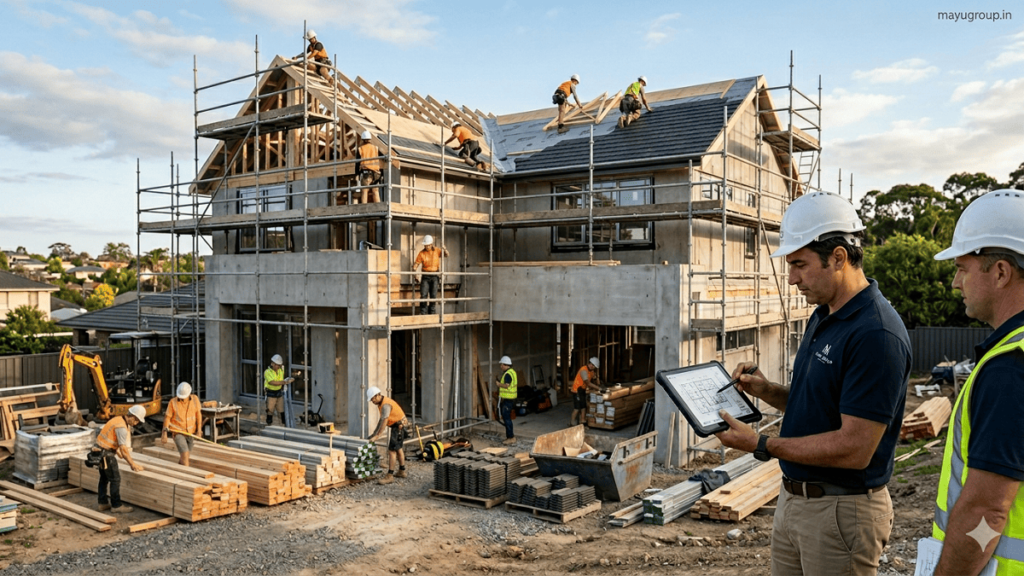
Industry Application of Construction Loans
Construction loans are widely used across multiple industries to fund the development, expansion, and modernization of physical infrastructure. These loans provide structured, milestone-based financing that enables businesses and developers to manage large-scale projects without requiring full upfront capital. The application of construction loans varies significantly depending on industry requirements, project scale, and capital intensity.
1. Residential Real Estate Industry
The residential sector is one of the largest users of construction loans. Developers and individual builders use these loans to construct housing projects, apartment complexes, and villas. Financing typically covers land development, building materials, labor, and interior finishing. Construction-to-permanent loans are commonly used, allowing borrowers to transition into long-term mortgages after project completion. This model supports urban housing demand and population growth.
2. Commercial Real Estate Industry
Commercial developers use construction loans to build office buildings, shopping malls, retail spaces, and business parks. These projects require large capital investments and longer planning cycles. Lenders closely evaluate projected rental income and occupancy rates before approval. Once completed, properties are often refinanced into commercial mortgages for long-term income generation.
For financial reference on construction financing structures, see Investopedia Construction Loan Guide.
3. Industrial and Manufacturing Sector
Manufacturing companies use construction loans to build factories, warehouses, and production facilities. These loans help businesses expand production capacity, upgrade infrastructure, and improve supply chain efficiency. Equipment installation and utility infrastructure are often included in the financing structure. This sector benefits significantly from phased funding aligned with construction milestones.
4. Infrastructure and Public Projects
Construction loans also support large-scale infrastructure projects such as roads, bridges, airports, and energy facilities. While many of these projects are funded through public-private partnerships (PPPs), private contractors often rely on construction financing to manage project execution costs. These loans help bridge funding gaps during long development cycles.
5. Healthcare Industry
Hospitals, clinics, and healthcare providers use construction loans to build medical facilities, expand hospital wings, and upgrade infrastructure. Financing covers construction of patient rooms, operating theaters, diagnostic centers, and specialized medical units. Given the high cost of healthcare infrastructure, long-term planning and structured disbursement are essential.
6. Hospitality and Tourism Industry
Hotels, resorts, and tourism infrastructure projects frequently depend on construction loans for development and renovation. These loans fund property construction, interior design, amenities installation, and facility upgrades. Since revenue generation is seasonal in this sector, lenders carefully evaluate projected occupancy and tourism demand before approval.
7. Education Sector
Educational institutions use construction loans to build schools, colleges, universities, and training centers. Financing supports classrooms, laboratories, hostels, and administrative buildings. These investments are often long-term and tied to institutional expansion and enrollment growth.
8. Government and Development Programs
In many regions, government-backed schemes support construction financing for small businesses and developers. For example, the U.S. Small Business Administration offers programs that assist eligible borrowers in accessing construction-related funding with reduced risk for lenders. More information is available at SBA Loan Programs.
Conclusion
Construction loans are essential across industries that rely on physical infrastructure development. From residential housing to healthcare and industrial expansion, these loans enable structured capital deployment, project execution, and economic growth. Their milestone-based funding model ensures controlled spending and efficient project completion, making them a foundational tool in modern development financing.
#Construction Loans in Mumbai
Ask FAQs
What is a construction loan?
A construction loan is a short-term financing option used to fund the building or renovation of a property. The funds are released in stages based on construction progress, rather than as a single lump sum, and are typically converted into a mortgage or long-term loan after completion.
How are construction loans different from home loans?
A construction loan is used during the building phase and is disbursed in installments as the project progresses, while a home loan is used to purchase an already constructed property and is disbursed as a full amount upfront. Construction loans are usually short-term and have interest-only payments during construction.
How is the loan amount disbursed?
The loan amount is released in stages called “draws,” based on construction milestones such as foundation completion, framing, roofing, and finishing work. Lenders typically conduct inspections before each disbursement to ensure progress aligns with the approved plan.
Do construction loans require collateral?
Yes, most construction loans require collateral, usually the property being constructed. In some cases, lenders may also require additional security depending on the borrower’s financial profile and project risk level.
Can a construction loan be converted into a mortgage?
Yes, many construction loans are designed as construction-to-permanent loans. Once the project is completed, the loan automatically converts into a long-term mortgage or is refinanced into a standard home or commercial loan. This simplifies repayment after construction is finished.
Table of Contents
Disclaimer: This content is for general informational purposes only and should not be considered financial, legal, or lending advice. Loan terms, eligibility, interest rates, and approval criteria may vary by lender, location, and individual circumstances. Readers are advised to consult a qualified financial advisor or lending institution before making any borrowing decisions.