Charity Funding
Charity Funding refers to the collection, management, and distribution of financial resources to support nonprofit organizations and social causes. These funds are typically raised to address public welfare issues such as poverty alleviation, education, healthcare, disaster relief, environmental protection, and community development. Unlike commercial financing, charity funding is primarily driven by social impact rather than profit generation.
Sources of Charity Funding
Charity funding originates from multiple channels. The most common source is individual donations, where private citizens contribute money, goods, or services to charitable organizations. Corporations also play a major role through Corporate Social Responsibility (CSR) programs, sponsorships, and matching donation schemes. Governments provide grants and subsidies to nonprofits working in areas aligned with public policy objectives. In addition, philanthropic foundations such as the Bill & Melinda Gates Foundation contribute large-scale funding for global health, education, and poverty reduction initiatives. Fundraising events, crowdfunding platforms, and legacy giving (bequests in wills) are also increasingly important.
Allocation and Management of Funds
Once collected, charity funds are distributed to nonprofit organizations based on mission alignment, urgency of need, and impact potential. Effective fund management requires strong governance structures, transparent accounting practices, and compliance with legal regulations. Many organizations use third-party audits and impact assessments to ensure accountability and efficient use of resources.
Challenges in Charity Funding
Despite its importance, charity funding faces several challenges. One major issue is donor trust. Mismanagement or lack of transparency can reduce public confidence and limit future donations. Another challenge is dependency on inconsistent funding streams, which can make long-term planning difficult for nonprofits. Administrative overhead costs are also frequently scrutinized, even though they are necessary for operational efficiency. Additionally, competition among charities for limited resources can sometimes lead to inefficiencies in allocation.
Transparency and Accountability
To address these concerns, platforms such as Charity Navigator evaluate charitable organizations based on financial health, accountability, and transparency. Such rating systems help donors make informed decisions and encourage nonprofits to maintain high standards. Digital fundraising platforms have also improved transparency by enabling real-time tracking of donations and project outcomes.
Global Impact
Charity funding plays a critical role in addressing global inequality and humanitarian crises. Large-scale initiatives supported by organizations like the Gates Foundation have contributed to significant progress in areas such as vaccine distribution, malaria prevention, and education access in developing countries. Smaller community-based charities also provide essential localized support that complements global efforts.
Conclusion
Charity funding is a vital mechanism for mobilizing private and institutional resources toward social good. Its effectiveness depends on transparency, accountability, and strategic allocation of resources. As digital platforms and global awareness continue to grow, charity funding is becoming more efficient and impactful, enabling broader participation in solving critical global challenges.
For further reading:
- https://www.charitynavigator.org
- https://www.gatesfoundation.org
- https://www.oecd.org/dac/financing-sustainable-development/
- https://en.wikipedia.org/wiki/Charitable_organization
#Charity Funding in India
What is charity funding?
Charity funding refers to the process of raising, managing, and distributing financial resources to support nonprofit organizations and social causes that aim to benefit society rather than generate profit. It plays a crucial role in addressing issues such as poverty, education gaps, healthcare access, disaster relief, environmental protection, and community development. The primary goal of charity funding is to create positive social impact by channeling resources toward individuals and communities in need.
Meaning and Purpose
At its core, charity funding is based on voluntary contributions from individuals, corporations, governments, and institutions. These funds are then used by charitable organizations to carry out humanitarian and developmental activities. Unlike commercial investments, charity funding does not expect financial returns; instead, it focuses on measurable social outcomes such as improved living standards, reduced inequality, and better access to essential services.
Sources of Charity Funding
Charity funding comes from a variety of sources. Individual donors contribute through one-time donations, recurring monthly support, or crowdfunding campaigns. Corporations often provide financial assistance through Corporate Social Responsibility (CSR) programs, sponsorships, and employee donation matching initiatives. Governments also allocate grants and subsidies to nonprofit organizations working in areas aligned with public welfare policies. Additionally, large philanthropic foundations such as the Bill & Melinda Gates Foundation provide significant funding for global health, education, and poverty reduction programs. Digital platforms and fundraising websites have further expanded access to global donor networks.
How Charity Funding Works
Once funds are collected, they are distributed to nonprofit organizations based on project proposals, urgency, and expected impact. These organizations use the funds to implement programs such as building schools, providing medical aid, supplying food, or responding to natural disasters. Proper financial management is essential to ensure that funds are used effectively and reach intended beneficiaries. Many charities are required to maintain transparency through financial reporting and audits.
Importance of Transparency
Transparency and accountability are essential in charity funding because they build trust between donors and organizations. Platforms like Charity Navigator assess and rate charities based on financial health, accountability, and efficiency. This helps donors make informed decisions about where their money goes and encourages organizations to maintain ethical practices.
Impact of Charity Funding
Charity funding has a significant global impact. It supports humanitarian relief during crises, funds long-term development projects, and strengthens vulnerable communities. For example, charitable initiatives have helped improve vaccination coverage, reduce hunger, and expand access to education in underserved regions. Both large international organizations and small local charities contribute to these outcomes.
Conclusion
In summary, charity funding is a structured system of collecting and distributing resources to support social good. It relies on cooperation between donors, organizations, and governments to address critical societal challenges and improve quality of life across communities worldwide.
For more information:
- https://www.gatesfoundation.org
- https://www.charitynavigator.org
- https://www.csr.gov.in
- https://en.wikipedia.org/wiki/Charitable_organization
#Charity Funding in Maharashtra

How is money raised for charities?
Money for charities is raised through a wide range of fundraising methods that combine individual generosity, corporate support, institutional funding, and digital innovation. The process is designed to collect financial resources ethically and efficiently so that nonprofit organizations can support social, humanitarian, environmental, and developmental causes.
1. Individual Donations
One of the most important sources of charitable income is individual giving. People donate money directly to causes they care about, either as one-time contributions or recurring monthly donations. These donations can be made through charity websites, bank transfers, mobile payment apps, or offline methods such as cash and cheque contributions. Many charities also encourage “micro-donations,” where small amounts from a large number of people collectively create significant funding.
2. Crowdfunding and Online Platforms
Digital crowdfunding has transformed modern fundraising. Platforms allow charities to create campaigns and reach global audiences quickly. Social media plays a major role in spreading awareness and encouraging donations. Verified campaigns can gain rapid traction, especially during emergencies such as natural disasters or medical crises. This method increases accessibility and allows smaller organizations to compete for attention alongside larger institutions.
3. Corporate Donations and CSR
Corporations contribute significantly through Corporate Social Responsibility (CSR) programs. Many companies allocate a portion of their profits to social causes, sponsor nonprofit projects, or organize employee donation matching schemes. Large corporations often partner with established organizations such as the Bill & Melinda Gates Foundation or other NGOs to fund long-term development programs in health, education, and poverty reduction.
4. Government Grants and Public Funding
Governments provide financial support to nonprofits through grants, subsidies, and welfare programs. These funds are usually allocated to organizations working in areas aligned with public policy priorities, such as healthcare access, rural development, education, and disaster relief. Charities must typically meet strict eligibility criteria and reporting standards to receive and retain these funds.
5. Fundraising Events
Charities also raise money through events such as marathons, charity dinners, auctions, concerts, and awareness campaigns. These events not only generate donations but also increase public engagement and visibility for the cause. High-profile events often attract sponsorships from businesses and media coverage, further amplifying fundraising outcomes.
6. Foundations and Institutional Support
Large philanthropic foundations and trusts provide substantial financial support to nonprofits. These institutions often fund multi-year projects and focus on systemic issues such as global health, climate change, and education reform. Evaluation bodies like Charity Navigator help ensure that funds are allocated responsibly by assessing transparency and effectiveness.
Conclusion
Money for charities is raised through a diverse ecosystem of donations, corporate involvement, government support, digital platforms, and events. This multi-channel approach ensures financial stability and enables charities to respond effectively to both immediate needs and long-term societal challenges.
For further reading:
- https://www.gatesfoundation.org
- https://www.charitynavigator.org
- https://www.councilofnonprofits.org
- https://en.wikipedia.org/wiki/Fundraising
#Charity Funding in Ahemadabad
What are common sources of charity funding?
Common sources of charity funding refer to the various channels through which nonprofit organizations receive financial support to carry out their social, humanitarian, and developmental activities. These sources are diverse because charities often rely on a mix of public, private, and institutional funding to ensure stability and long-term impact.
1. Individual Donations
Individual donors are one of the most significant sources of charity funding. People contribute money voluntarily based on personal beliefs, empathy, or interest in specific causes such as education, healthcare, poverty relief, or disaster response. Donations can be one-time gifts, recurring monthly contributions, or legacy donations included in wills. With the rise of digital payment systems, online giving has become increasingly common and convenient.
2. Corporate Contributions (CSR)
Corporations play a major role in funding charities through Corporate Social Responsibility (CSR) initiatives. Businesses allocate a portion of their profits to social causes, sponsor nonprofit projects, or organize employee-driven donation programs. Large-scale corporate philanthropy often supports education, healthcare, environmental sustainability, and rural development. Global philanthropic institutions such as the Bill & Melinda Gates Foundation also partner with companies and governments to fund large-scale social programs.
3. Government Grants and Public Funding
Governments provide financial assistance to nonprofit organizations through grants, subsidies, and welfare schemes. These funds are typically directed toward public service areas such as healthcare access, education programs, disaster relief, and poverty reduction. Organizations receiving government funding must comply with strict reporting, accountability, and performance requirements to ensure proper use of public money.
4. Foundations and Trusts
Private and public foundations are major contributors to charity funding. These organizations manage large endowments and distribute funds strategically to nonprofits working on long-term social issues. Foundations often focus on global challenges such as disease prevention, climate change, and inequality reduction. Their funding is usually structured in multi-year grants to ensure sustained impact.
5. Fundraising Events and Campaigns
Charities frequently organize events such as marathons, charity dinners, auctions, concerts, and awareness drives to raise money. These events not only generate donations but also increase public engagement and visibility for the cause. Campaign-based fundraising, especially during emergencies, can attract large-scale support in a short time.
6. Crowdfunding Platforms
Digital crowdfunding has become an increasingly important source of funding. Online platforms allow individuals and organizations to create campaigns and reach a global audience. This method is especially effective for medical emergencies, disaster relief, and small nonprofit initiatives. Social media amplification significantly boosts visibility and donation volumes.
7. Monitoring and Transparency Bodies
To maintain trust in these funding sources, organizations like Charity Navigator evaluate charities based on financial health, accountability, and transparency. These ratings help donors decide which organizations use funds responsibly.
Conclusion
In summary, charity funding comes from a combination of individuals, corporations, governments, foundations, events, and digital platforms. This diversified funding structure ensures that charities can continue their work effectively while maintaining financial stability and accountability.
For further reading:
- https://www.charitynavigator.org
- https://www.gatesfoundation.org
- https://www.councilofnonprofits.org
- https://en.wikipedia.org/wiki/Charitable_organization
#Charity Funding in Hyderabad
Why is transparency important in charity funding?
Transparency in charity funding refers to how openly and clearly nonprofit organizations disclose information about their finances, operations, decision-making processes, and the impact of the funds they receive. It is a fundamental principle because charities depend heavily on public trust, and without transparency, that trust can quickly break down.
1. Builds Donor Trust
Transparency is essential for maintaining confidence among donors. People are more likely to contribute when they understand how their money will be used and can see evidence of its impact. Clear reporting on expenses, program outcomes, and administrative costs reassures donors that their contributions are being used responsibly rather than wasted or mismanaged.
2. Ensures Accountability
Charities are responsible for managing funds that often come from the public, governments, or private institutions. Transparency ensures that organizations are held accountable for how they use these resources. Regular financial audits, public reports, and impact assessments help prevent misuse of funds and reduce the risk of corruption or inefficiency.
Platforms such as Charity Navigator play an important role in assessing charities based on financial health, governance, and accountability. These evaluations help donors make informed decisions and encourage organizations to maintain high standards.
3. Improves Efficiency and Performance
When charities operate transparently, they are more likely to use resources efficiently. Open reporting encourages better planning, reduced administrative waste, and improved allocation of funds toward programs that deliver measurable outcomes. Transparency also enables internal improvements by helping organizations identify weaknesses and optimize operations.
4. Encourages Ethical Practices
Transparency discourages unethical behavior such as misreporting finances, inflating administrative costs, or diverting funds away from intended purposes. Clear documentation and oversight make it harder for misconduct to go unnoticed. This is especially important in large-scale humanitarian efforts where significant funding is involved.
5. Attracts More Funding
Donors, governments, and corporate sponsors are more likely to support organizations that demonstrate transparency. Charities that openly share financial statements, project updates, and impact reports tend to build stronger reputations and attract sustained funding. This is particularly true for global philanthropic initiatives supported by organizations like the Bill & Melinda Gates Foundation, which emphasize measurable outcomes and accountability.
6. Strengthens Public Confidence in the Sector
Beyond individual organizations, transparency strengthens the credibility of the entire nonprofit sector. When charities collectively demonstrate responsible financial practices, it increases public willingness to donate and participate in social causes. This creates a healthier ecosystem for philanthropy and social development.
Conclusion
Transparency is critical in charity funding because it ensures trust, accountability, efficiency, and ethical behavior. It benefits donors, organizations, and beneficiaries by ensuring that resources are used effectively and for their intended purpose. Without transparency, the effectiveness and credibility of charitable work would be significantly weakened.
Further reading:
- https://www.charitynavigator.org
- https://www.councilofnonprofits.org/tools-resources/transparency-and-accountability
- https://www.gatesfoundation.org/approach
- https://en.wikipedia.org/wiki/Charitable_organization
#Charity Funding in Pune
What challenges do charities face in funding?
Charities play a vital role in addressing social, economic, and humanitarian needs, but they often face significant challenges in securing and managing funding. These challenges affect their ability to plan long-term projects, respond to emergencies, and maintain operational stability.
1. Unstable and Unpredictable Funding
One of the biggest challenges is the inconsistency of donations. Many charities rely heavily on voluntary contributions from individuals, corporations, and institutions, which can fluctuate due to economic conditions, political changes, or donor priorities. During economic downturns, donations often decline, making it difficult for charities to sustain ongoing programs or plan future initiatives with certainty.
2. Donor Fatigue
Donor fatigue occurs when individuals or organizations become overwhelmed by constant fundraising appeals, especially during crises or repeated campaigns. Over time, donors may reduce or stop their contributions, even for important causes. This makes it harder for charities to maintain consistent support, particularly in sectors like disaster relief or healthcare emergencies.
3. High Competition for Limited Resources
There are millions of nonprofit organizations worldwide competing for a limited pool of funding. This competition can make it difficult for smaller or lesser-known charities to attract attention, even if their causes are important. Larger organizations often have better marketing capabilities and established reputations, which can overshadow smaller initiatives.
4. Lack of Donor Trust and Transparency Issues
Trust is essential in charity funding, but concerns about misuse of funds or lack of transparency can discourage donations. Donors increasingly demand detailed financial reporting and proof of impact. Platforms such as Charity Navigator help address this issue by evaluating organizations based on accountability and financial health. However, rebuilding trust after negative publicity can be difficult for affected charities.
5. Administrative and Operational Costs
Running a charity involves administrative expenses such as salaries, office maintenance, logistics, and compliance with legal requirements. Donors sometimes prefer their contributions to go directly to beneficiaries, which can create pressure to minimize overhead costs. However, insufficient administrative funding can weaken organizational efficiency and reduce long-term effectiveness.
6. Dependence on Restricted Funding
Many grants and donations come with restrictions on how the money can be used. While this ensures accountability, it can limit a charity’s flexibility to allocate resources where they are most needed. This can be particularly challenging during emergencies when rapid decision-making is required.
7. External Economic and Political Factors
Charities are also affected by broader external conditions. Inflation, changes in tax policies, international conflicts, or shifts in government priorities can directly influence funding availability. Global philanthropic organizations such as the Bill & Melinda Gates Foundation may continue funding large-scale initiatives, but smaller charities are often more vulnerable to external shocks.
Conclusion
Charities face multiple funding challenges, including unstable income, donor fatigue, competition, trust issues, administrative pressures, and external economic factors. These challenges make financial planning difficult and require strong governance, transparency, and diversified funding strategies to ensure long-term sustainability.
Further reading:
- https://www.councilofnonprofits.org
- https://www.charitynavigator.org
- https://www.gatesfoundation.org
- https://en.wikipedia.org/wiki/Nonprofit_organization
#Charity Funding in Delhi
Case Study of Charity Funding
A strong example of effective charity funding can be seen in global immunization efforts led by the vaccine alliance Gavi, the Vaccine Alliance, supported by major philanthropic and institutional donors. This case study highlights how structured funding, multi-sector collaboration, and transparent governance can significantly improve public health outcomes in developing countries.
Background of the Initiative
Gavi was established to improve access to vaccines in low-income countries where immunization rates were historically low due to financial and logistical constraints. Many diseases such as measles, polio, and pneumonia caused high mortality rates, especially among children. To address this gap, Gavi developed a funding model that combines contributions from governments, private donors, and philanthropic organizations.
A key contributor to this initiative is the Bill & Melinda Gates Foundation, which provides substantial financial support for vaccine development, procurement, and distribution programs worldwide.
Sources of Funding
Gavi’s funding structure is highly diversified. It includes:
- Contributions from high-income countries
- Private philanthropic foundations
- International organizations such as UNICEF
- Innovative financing mechanisms like vaccine bonds
- Corporate partnerships in the pharmaceutical sector
This diversified model reduces dependence on a single funding source and ensures long-term financial stability. It also allows large-scale procurement of vaccines at reduced costs through global negotiation.
Allocation of Funds
Funds raised are allocated to several key areas:
- Vaccine procurement for diseases such as measles, HPV, and malaria
- Healthcare infrastructure, including cold chain systems for vaccine storage
- Training healthcare workers in remote regions
- Monitoring and evaluation systems to track immunization coverage
Organizations such as UNICEF assist in logistics and distribution, ensuring vaccines reach even the most remote communities.
Impact and Outcomes
The impact of this funding model has been significant. Since its inception, Gavi-supported programs have helped immunize hundreds of millions of children and prevented millions of deaths. Many countries have reported dramatic improvements in vaccination coverage and reductions in preventable diseases. The program has also strengthened healthcare systems by improving supply chains and data tracking.
Challenges Faced
Despite its success, the initiative faces challenges such as funding gaps, vaccine hesitancy, geopolitical instability, and logistical barriers in conflict zones. Additionally, maintaining donor commitment over long periods remains a concern, especially during global economic downturns.
To ensure accountability, organizations like Charity Navigator and similar watchdogs evaluate transparency and financial efficiency of philanthropic contributions, helping maintain trust among donors and stakeholders.
Conclusion
This case study demonstrates how effective charity funding can transform global health outcomes when multiple stakeholders collaborate under a transparent and well-structured funding model. Gavi’s approach shows that diversified funding, strong governance, and international cooperation are essential for maximizing the impact of charitable resources.
Further reading:
- https://www.gavi.org
- https://www.gatesfoundation.org
- https://www.unicef.org/immunization
- https://www.charitynavigator.org
- https://www.who.int/initiatives/immunization-programmes
#Charity Funding in Pune
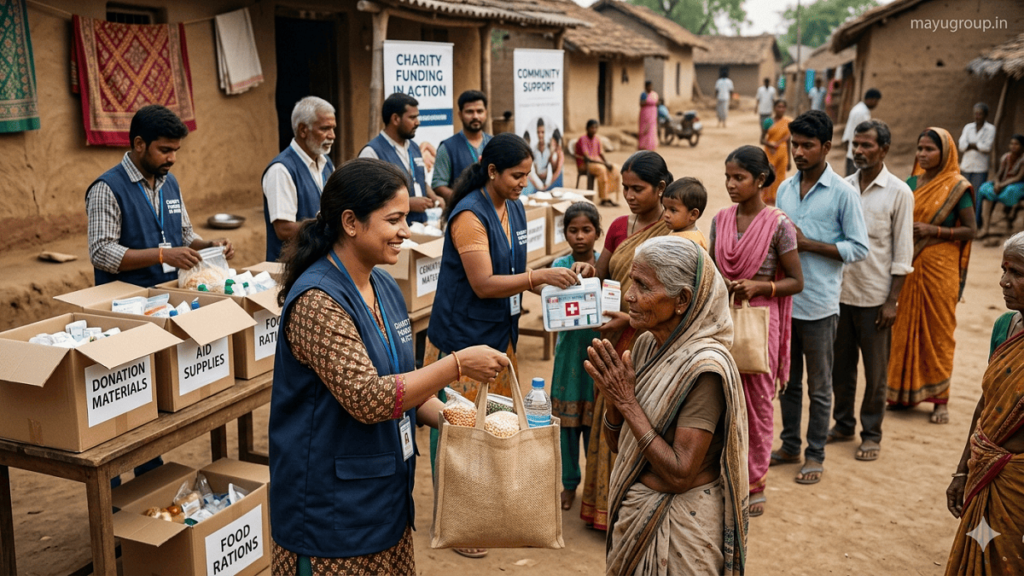
White Paper of Charity Funding
Executive Summary
Charity funding is a critical mechanism for mobilizing financial resources toward social welfare, humanitarian relief, and long-term development goals. It involves contributions from individuals, corporations, governments, and philanthropic foundations that are distributed through nonprofit organizations. This white paper examines the structure of charity funding systems, key challenges affecting efficiency and trust, and emerging innovations shaping the future of philanthropic finance.
1. Introduction
Charity funding operates within the broader nonprofit ecosystem and is essential for addressing market failures where social needs are not adequately met by private enterprise. These include poverty alleviation, healthcare access, education equity, and disaster response. Unlike commercial investment, charity funding prioritizes social impact over financial returns.
2. Funding Ecosystem and Structure
The global charity funding ecosystem consists of multiple interconnected sources:
- Individual donors: Provide small to large-scale voluntary contributions.
- Corporate philanthropy: Delivered through CSR initiatives and sponsorship programs.
- Government grants: Public funding allocated to nonprofits for welfare programs.
- Foundations and trusts: Large institutional donors managing endowments for long-term impact.
- Crowdfunding platforms: Digital tools enabling decentralized fundraising.
Major philanthropic actors such as the Bill & Melinda Gates Foundation play a central role in global health, education, and poverty reduction funding. These institutions often co-fund initiatives with governments and multilateral agencies to scale impact.
3. Allocation and Financial Governance
Effective allocation of charity funds requires structured governance frameworks. Funds are typically distributed based on project proposals, measurable outcomes, and alignment with donor priorities. Nonprofit organizations must maintain financial reporting standards, undergo audits, and demonstrate impact efficiency. External evaluators like Charity Navigator assess financial health, transparency, and accountability to strengthen donor confidence.
4. Key Challenges in Charity Funding
Despite its importance, the sector faces several systemic challenges:
- Funding volatility: Donations fluctuate with economic cycles and crises.
- Donor trust deficits: Misuse or perceived inefficiency reduces contributions.
- Administrative constraints: Overemphasis on minimizing overhead can weaken operations.
- Restricted funding: Donor-imposed conditions limit flexibility in resource allocation.
- Competition among NGOs: High fragmentation leads to inefficiencies in fundraising.
5. Innovations and Emerging Trends
Recent developments are transforming charity funding:
- Digital fundraising and crowdfunding enable global participation in real time.
- Blockchain-based donation tracking enhances transparency and reduces fraud risks.
- Impact investing hybrids combine philanthropic capital with measurable social returns.
- Data-driven philanthropy improves targeting and outcome evaluation.
These innovations are improving efficiency, accountability, and donor engagement across the sector.
6. Case Integration and Global Coordination
Large-scale initiatives often rely on coordinated funding structures involving governments, NGOs, and global agencies such as UNICEF. Such collaborations demonstrate the effectiveness of pooled funding models in addressing global challenges like immunization, nutrition, and emergency relief.
7. Conclusion
Charity funding is evolving from fragmented donation systems into structured, data-driven, and globally coordinated financial ecosystems. While challenges such as trust deficits and funding instability remain, innovations in transparency and digital finance are significantly improving effectiveness. Strengthening governance frameworks and diversifying funding sources will be essential for maximizing long-term social impact.
References
- https://www.gatesfoundation.org
- https://www.charitynavigator.org
- https://www.unicef.org
- https://www.oecd.org/dac/financing-sustainable-development/
- https://en.wikipedia.org/wiki/Charitable_organization
#Charity Funding in Banglore
Industry Application of Charity Funding
Overview
Charity funding is not limited to traditional nonprofit work; it has wide-ranging applications across multiple industries where social impact, public welfare, and sustainability are priorities. By channeling financial resources from donors, corporations, governments, and philanthropic foundations into structured programs, charity funding supports innovation, service delivery, and infrastructure development in several sectors. Its role is especially important in addressing gaps that market-driven systems alone cannot effectively solve.
1. Healthcare Industry
One of the most significant applications of charity funding is in healthcare. Funds are used to support hospital infrastructure, medical research, vaccination drives, and access to essential medicines in low-income regions. Global initiatives often rely on philanthropic contributions from organizations such as the Bill & Melinda Gates Foundation to combat diseases like malaria, tuberculosis, and polio. Charity funding also supports emergency medical response during pandemics and natural disasters, enabling rapid deployment of resources and personnel.
2. Education Sector
In education, charity funding helps build schools, provide scholarships, train teachers, and supply learning materials. It plays a crucial role in improving literacy rates in underdeveloped regions and supporting inclusive education for marginalized groups. Many nonprofit organizations partner with governments to improve digital learning infrastructure and reduce educational inequality. Funding also supports vocational training programs that enhance employability and skill development.
3. Disaster Relief and Humanitarian Aid
Charity funding is critical during natural disasters, conflicts, and humanitarian crises. Funds are used for emergency food distribution, temporary shelter, medical assistance, and rehabilitation programs. Organizations like UNICEF and other relief agencies coordinate large-scale funding efforts to respond quickly to emergencies. Crowdfunding platforms also enable rapid mobilization of global donations during crises.
4. Environmental and Sustainability Projects
Environmental conservation is another key area where charity funding is widely applied. Funds support reforestation, wildlife conservation, clean energy initiatives, and climate change research. Nonprofits use donations to promote sustainable agriculture and reduce carbon emissions. These initiatives often involve collaboration between NGOs, governments, and private sector partners to achieve long-term environmental goals.
5. Technology and Innovation
Charity funding increasingly supports technological innovation aimed at social good. This includes funding for digital health platforms, educational technology, agricultural innovation, and data-driven development programs. Tech-based nonprofits use funding to improve service delivery efficiency, especially in remote and underserved areas.
6. Governance and Accountability Support
A portion of charity funding is also used to strengthen governance systems within nonprofit organizations. This includes financial auditing, impact measurement, compliance systems, and transparency tools. Evaluation organizations such as Charity Navigator help ensure that funds are used effectively and ethically across industries.
Conclusion
Charity funding has become an essential financial mechanism across multiple industries, extending far beyond traditional philanthropy. It supports healthcare, education, disaster relief, environmental sustainability, and technological innovation. By bridging funding gaps and enabling large-scale social impact, charity funding plays a vital role in global development and inclusive growth.
Further Reading
- https://www.gatesfoundation.org
- https://www.unicef.org
- https://www.charitynavigator.org
- https://www.oecd.org/dac/financing-sustainable-development/
- https://en.wikipedia.org/wiki/Charitable_organization
#Charity Funding in Kolkata
Ask FAQs
What is charity funding?
Charity funding is the process of collecting financial resources from individuals, corporations, governments, and philanthropic organizations to support nonprofit activities. These funds are used for social causes such as healthcare, education, disaster relief, poverty reduction, and environmental protection. The primary goal is social impact rather than financial profit.
Who are the main contributors to charity funding?
The main contributors include individual donors, corporate organizations through CSR programs, government grants, and large philanthropic foundations. Digital crowdfunding platforms have also become an important source, allowing people worldwide to contribute small or large amounts to specific causes quickly and efficiently.
How do charities use the funds they receive?
Charities allocate funds to programs and services aligned with their mission. This may include building infrastructure, providing food and medical aid, funding education programs, or supporting emergency relief efforts. A portion of the funds is also used for administration, staffing, logistics, and monitoring impact to ensure effective delivery of services.
Why is transparency important in charity funding?
Transparency ensures that donors know how their money is being used. It builds trust, improves accountability, and reduces the risk of misuse or corruption. Organizations that openly share financial reports and impact data are more likely to receive continued support. Platforms such as Charity Navigator help evaluate charities based on transparency and financial health.
What challenges do charities face in raising funds?
Charities face challenges such as unstable donations, donor fatigue, competition among nonprofits, and lack of long-term funding commitments. Economic downturns and global crises can also reduce donations. Additionally, maintaining donor trust and balancing administrative costs with program spending are ongoing difficulties for many organizations.
Table of Contents
Disclaimer:
This content is provided for general informational and educational purposes only. It is not intended as financial, legal, or professional advice. While efforts have been made to ensure accuracy, readers should verify information from official sources before making decisions related to charity funding or donations.