Purchase Order Financing
Purchase order (PO) financing is a short-term funding solution that allows businesses to fulfill large customer orders when they do not have sufficient cash flow to pay suppliers upfront. Instead of relying on traditional bank loans, a financing company pays the supplier directly on behalf of the business, enabling the order to be completed and delivered on time. Once the customer pays for the goods, the financing provider deducts its fees and transfers the remaining balance to the business.
This financing model is especially useful for small and medium-sized enterprises (SMEs) that receive large purchase orders but lack the working capital to produce or procure the required goods. It bridges the gap between order placement and payment collection, helping businesses scale without immediate financial strain. A general overview of this financing method can be found at Investopedia – Purchase Order Financing.
How Purchase Order Financing Works
The process begins when a business receives a confirmed purchase order from a creditworthy customer. The business then approaches a purchase order financing company for funding. The financier evaluates the order, the creditworthiness of the customer, and the supplier’s reliability before approving the funding.
Once approved, the financing company pays the supplier directly to manufacture or procure the goods. After production, the goods are shipped directly to the customer or through the business, depending on the arrangement. When the customer pays the invoice, the financing company collects the payment, deducts its fees and charges, and remits the remaining profit to the business.
Key Benefits
One of the primary advantages of purchase order financing is improved cash flow management. Businesses can accept large orders without worrying about upfront production costs. This allows them to scale operations and take on bigger clients without financial limitations.
It also enables faster business growth. By removing capital constraints, companies can fulfill more orders, expand market reach, and improve customer relationships. Additionally, approval is often based more on the creditworthiness of the customer than the business itself, making it accessible to newer or smaller companies.
Risks and Limitations
Despite its advantages, purchase order financing can be expensive compared to traditional funding methods due to higher fees and short-term risk exposure. It is also limited to business-to-business transactions involving tangible goods, meaning service-based businesses typically cannot use it.
There is also dependency risk, as financing approval relies heavily on the reliability of the end customer and supplier. If either party fails to meet obligations, delays or losses may occur.
Conclusion
Purchase order financing is a powerful tool for businesses that need immediate capital to fulfill large orders without straining cash flow. While it comes with higher costs and specific eligibility conditions, it plays a crucial role in helping growing companies scale operations and compete in larger markets.
#Purchase Order Financing in India
What is purchase order financing?
Purchase order (PO) financing is a short-term funding solution that helps businesses pay suppliers to fulfill confirmed customer orders when they do not have enough working capital upfront. Instead of waiting for the business to arrange funds, a financing company pays the supplier directly so the goods can be produced and delivered on time. Once the customer pays for the order, the financier deducts its fees and releases the remaining amount to the business.
In simple terms, purchase order financing bridges the cash flow gap between receiving an order and getting paid for it. It is especially useful for small and medium-sized enterprises (SMEs) that receive large orders but lack the immediate funds to fulfill them. A detailed explanation of this financing method is available at Investopedia – Purchase Order Financing.
How it Works
The process starts when a business receives a confirmed purchase order from a customer. The business then applies for financing. The financing company evaluates the order, the creditworthiness of the customer, and the reliability of the supplier.
If approved, the financier pays the supplier directly to manufacture or purchase the goods. The supplier then delivers the goods to the customer. After delivery, the customer pays the invoice as agreed. The financing company collects the payment, deducts its fees and charges, and sends the remaining profit to the business.
Why Businesses Use It
Businesses use purchase order financing mainly to manage cash flow challenges. Many companies cannot afford to fulfill large orders because suppliers require upfront payment. This financing option allows them to accept bigger contracts without needing immediate capital.
It also helps businesses grow faster by enabling them to take on larger clients and expand operations without waiting for internal funds. In many cases, approval depends more on the customer’s credit strength than the business’s financial history, making it accessible to newer companies.
Key Idea
Purchase order financing is not a traditional loan. Instead, it is a funding arrangement that enables businesses to complete confirmed orders by leveraging the creditworthiness of their customers.
#Purchase Order Financing in Maharashtra
How does PO financing work?
Purchase order (PO) financing works as a short-term funding solution that helps businesses fulfill confirmed customer orders when they do not have enough cash to pay suppliers upfront. Instead of the business using its own funds, a financing company steps in to pay the supplier, enabling production and delivery of goods.
The process begins when a business receives a confirmed purchase order from a customer. This order acts as proof of demand and is submitted to a PO financing provider. The financier then evaluates three key factors: the creditworthiness of the customer, the reliability of the supplier, and the feasibility of fulfilling the order. Approval is often based more on the customer’s ability to pay than the financial strength of the business itself.
Once approved, the financing company directly pays the supplier for the cost of manufacturing or procuring the goods. The supplier then produces and ships the goods, usually directly to the customer or sometimes through the business, depending on the arrangement. This ensures that the order is completed without requiring upfront capital from the business.
After the goods are delivered, the customer receives an invoice and pays according to the agreed terms. Once payment is made, the financing company collects the funds directly from the customer. It then deducts the principal amount, fees, and interest charges before transferring the remaining balance (profit margin) to the business.
A detailed breakdown of this process is available at Investopedia – Purchase Order Financing.
Key Flow of PO Financing:
- Business receives a confirmed purchase order
- Business applies for PO financing
- Financier evaluates customer and supplier credibility
- Financier pays supplier directly
- Supplier fulfills and ships the order
- Customer pays invoice
- Financier deducts fees and releases remaining funds to business
Why This Process Matters
PO financing is designed to solve cash flow gaps in trade cycles. Many businesses cannot fulfill large orders because suppliers demand upfront payment, while customers pay later after delivery. This financing model bridges that gap, allowing businesses to scale operations without waiting for internal funds.
It is especially useful in manufacturing, wholesale trade, and export-import businesses where large orders and delayed payments are common. However, it is typically limited to transactions involving physical goods and creditworthy end customers.
Overall, PO financing works by using the strength of a confirmed customer order to unlock working capital, enabling businesses to complete transactions, grow faster, and maintain smooth supply chain operations.
#Purchase Order Financing in Ahemadabad

Who uses purchase order financing?
Purchase order (PO) financing is primarily used by businesses that receive large confirmed orders but lack the upfront capital to pay suppliers and fulfill those orders. It is most common among small and medium-sized enterprises (SMEs) that experience cash flow gaps between receiving an order and getting paid by customers.
One of the biggest user groups is wholesalers and distributors. These businesses often deal with bulk orders from retailers or corporate buyers but must pay manufacturers or suppliers in advance. PO financing helps them secure inventory without straining working capital, allowing them to take on larger contracts and expand operations.
Manufacturing companies also frequently use PO financing. In many cases, manufacturers need to purchase raw materials or components before production can begin. If they receive a large order but do not have sufficient funds for production costs, PO financing bridges that gap by directly funding suppliers so production can proceed without delay.
Importers and exporters are another major category of users. International trade often involves long payment cycles, shipping delays, and high upfront costs. PO financing allows import-export businesses to fulfill cross-border orders by covering supplier payments until the final customer settles the invoice. This is especially useful in global supply chains where timing and liquidity are critical.
Startups and rapidly growing businesses also benefit from PO financing. New companies may not yet have strong credit histories or access to traditional bank loans, but they can still secure financing based on the strength of their customer’s purchase order. This makes it easier for them to scale quickly when large opportunities arise.
Retail supply businesses that sell to large chains or e-commerce platforms also use PO financing. When big retailers place bulk orders, suppliers may struggle with upfront production costs. Financing ensures they can meet demand without missing sales opportunities.
A general overview of how this financing model supports businesses can be found at Investopedia – Purchase Order Financing.
In summary, purchase order financing is used by any business that:
- Receives large confirmed orders
- Lacks sufficient upfront working capital
- Works with delayed customer payments
- Needs to scale operations quickly without traditional bank loans
Overall, it is a key financial tool for businesses in trade, manufacturing, wholesale, and global supply chains, enabling them to fulfill orders they would otherwise be unable to finance on their own.
#Purchase Order Financing in Hyderabad
What are the costs involved in PO financing?
Purchase order (PO) financing involves several costs that businesses must consider before using it as a funding solution. Since it is a short-term and higher-risk financing method, it is generally more expensive than traditional bank loans. The total cost depends on factors such as the size of the order, customer creditworthiness, supplier reliability, and repayment timeline.
The primary cost in PO financing is the financing fee or discount rate. This is the percentage charged by the financier for providing funds to pay suppliers upfront. It is usually calculated on a monthly basis and continues until the customer pays the invoice. The longer the payment cycle, the higher the total cost. These fees compensate the financing company for taking on credit and operational risk.
Another important cost is the service or processing fee. Some financiers charge an upfront fee for evaluating the transaction, conducting due diligence, and setting up the financing arrangement. This may be a flat fee or a percentage of the transaction value.
There may also be administrative and transaction charges, which cover documentation, monitoring, and payment processing. These costs vary depending on the financing provider and the complexity of the deal.
In some cases, there are supplier-related charges if the supplier requires additional verification or compliance procedures before accepting payment from the financing company. While not always direct costs to the borrower, these can indirectly affect overall pricing.
A general explanation of how PO financing costs work can be found at Investopedia – Purchase Order Financing.
Key Cost Components:
- Financing fee (discount rate): Main cost charged on the funded amount over time
- Service fee: Charged for processing and approving the financing
- Administrative fees: Documentation and transaction handling charges
- Additional charges: May include supplier verification or compliance-related costs
Why Costs Are Higher
PO financing is typically more expensive than traditional loans because it is short-term, unsecured from the borrower’s perspective, and depends heavily on third-party factors such as customer payment behavior and supplier performance. The financing company also bears the risk of non-payment if the end customer defaults.
Conclusion
Overall, the cost of PO financing reflects the risk and speed of the service. While it enables businesses to fulfill large orders and grow without upfront capital, companies must carefully evaluate whether the profit margin on the order is sufficient to cover financing fees and still generate profit.
#Purchase Order Financing in Delhi
What are the risks of purchase order financing?
Purchase order (PO) financing can be a powerful tool for businesses that need working capital to fulfill large customer orders, but it also carries several important risks. These risks primarily arise from dependency on third parties, short repayment cycles, and the cost structure of the financing model.
One of the main risks is customer credit risk. Since repayment depends on the end customer paying for the delivered goods, any delay or failure in payment directly impacts the financing arrangement. If the customer defaults or disputes the invoice, the financing company may refuse to release remaining funds or may demand repayment from the business in some cases.
Another significant risk is supplier performance risk. PO financing relies heavily on the supplier’s ability to produce and deliver goods on time and according to specifications. If the supplier fails to meet deadlines or delivers defective products, it can delay shipment, disrupt the transaction, and potentially lead to cancellation of the order.
Margin and profitability risk is also critical. PO financing can be expensive due to fees and charges. If the business has low profit margins on the order, financing costs may significantly reduce or eliminate profitability. In some cases, businesses may end up taking on large orders that generate minimal or no net profit after fees.
There is also dependency risk. Businesses may become reliant on PO financing to fulfill large orders, which can create long-term dependency on external funding. This may limit financial independence and reduce flexibility in managing operations.
Operational and documentation risk is another factor. PO financing requires accurate documentation, including purchase orders, invoices, and supplier agreements. Any errors, delays, or inconsistencies in paperwork can result in funding delays or rejection of financing.
A general overview of these risks can be found at Investopedia – Purchase Order Financing.
Key Risks Summary:
- Customer payment default or delay
- Supplier failure or poor performance
- High financing costs reducing profit margins
- Dependence on external financing for operations
- Documentation and compliance errors causing delays
Conclusion
While purchase order financing enables businesses to take on large orders and grow quickly, it is not without risk. Success depends on strong customer credit quality, reliable suppliers, and careful cost management. Businesses must ensure that profit margins are sufficient and operational processes are well-controlled before using this financing method.
#Purchase Order Financing in Pune
Case Study of Purchase Order Financing
Purchase order (PO) financing is widely used by growing businesses that receive large orders but lack the working capital to fulfill them. A practical case study can be seen in the operations of a mid-sized apparel manufacturing company supplying garments to a large retail chain.
Background of the Business
The company specializes in producing bulk fashion apparel for domestic retailers. One season, it received a significant purchase order worth ₹50 lakh from a well-known retail chain. While the order represented a major growth opportunity, the company had only limited cash reserves and insufficient funds to purchase raw materials and pay its suppliers upfront.
Challenge Faced
The key challenge was a cash flow gap. The supplier required 70% payment in advance before production could begin, but the retailer would only pay 60 days after delivery. Without external funding, the company risked losing the order entirely. Traditional bank financing was not viable due to lengthy approval timelines and collateral requirements.
Use of Purchase Order Financing
The company approached a PO financing provider and submitted the confirmed purchase order along with customer details. The financier evaluated the creditworthiness of the retail chain and verified the supplier’s capability. After approval, the financing company agreed to fund the supplier directly.
The financier paid the raw material supplier, allowing production to begin immediately. The manufacturer completed the garments and delivered them to the retail chain as per contract terms. Once the retailer made the payment, the financing company collected the invoice amount, deducted its fees, and transferred the remaining profit to the manufacturer.
A general explanation of this financing model can be found at Investopedia – Purchase Order Financing.
Outcome of the Case
The business successfully fulfilled the large order without using its own capital. It strengthened its relationship with a major retail client and gained credibility for handling bulk orders. The company was also able to reinvest profits into expanding production capacity.
However, the case also highlighted cost implications. Financing fees reduced overall profit margins, meaning the business had to carefully evaluate whether future orders would remain profitable after financing costs.
Key Learnings
- PO financing enables businesses to accept large orders without upfront capital
- Customer creditworthiness plays a critical role in approval
- Supplier reliability directly impacts delivery success
- High financing costs must be balanced against profit margins
Conclusion
This case study demonstrates how purchase order financing can unlock growth opportunities for businesses facing cash flow constraints. While it provides access to large-scale orders and supports expansion, it requires careful financial planning to ensure profitability after financing costs.
#Purchase Order Financing in Banglore
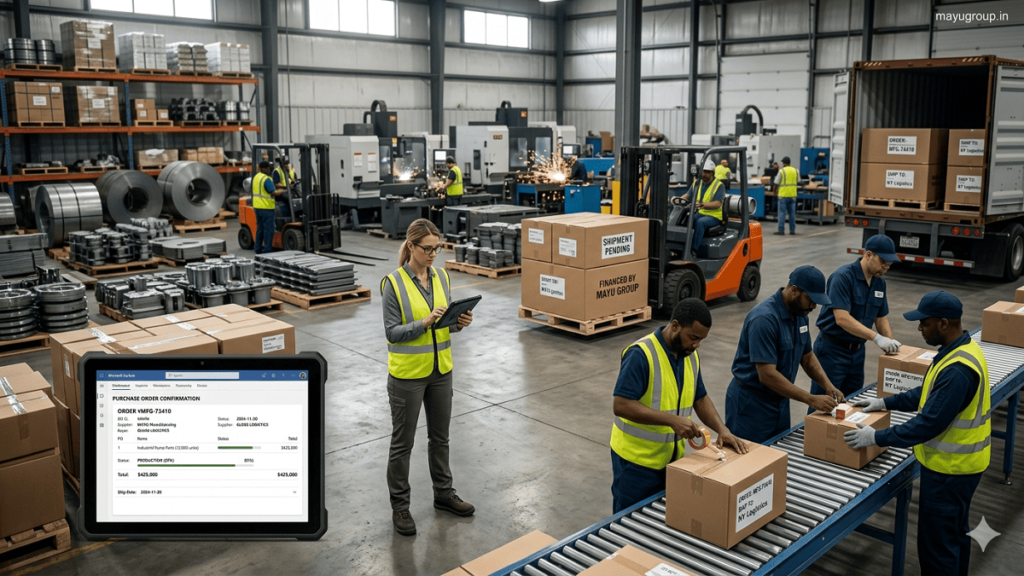
White Paper of Purchase Order Financing
Purchase order (PO) financing is a short-term trade finance solution that enables businesses to fulfill confirmed customer orders without requiring upfront working capital. It is widely used in manufacturing, wholesale, import-export, and distribution sectors where large orders must be fulfilled before payment is received from the end customer. This white paper outlines the structure, operational mechanism, benefits, risks, and future outlook of PO financing in modern business ecosystems.
1. Introduction and Concept
Purchase order financing allows businesses to obtain funding from a third-party financier who pays suppliers directly to produce or procure goods required for a confirmed order. Instead of lending to the business based on its balance sheet, the financier relies on the creditworthiness of the end customer and the validity of the purchase order. A general overview of this financing method is available at Investopedia – Purchase Order Financing.
2. Operational Framework
The PO financing process typically follows a structured workflow:
- A business receives a confirmed purchase order from a customer
- The business submits the order to a financing company
- The financier evaluates customer credit, supplier capability, and order feasibility
- Upon approval, the financier pays the supplier directly
- The supplier manufactures or procures goods and ships them to the customer
- The customer pays the invoice after delivery
- The financier collects payment, deducts fees, and remits remaining funds to the business
This structure ensures that production and fulfillment occur without requiring upfront capital from the business.
3. Economic Rationale
PO financing addresses a critical liquidity gap in trade cycles. Many businesses experience a mismatch between production costs and customer payment timelines. This financing model enables companies to accept larger orders, improve cash flow efficiency, and scale operations without relying on traditional bank loans.
It is especially valuable for SMEs that may not have sufficient credit history or collateral but can demonstrate strong customer demand.
4. Risk Analysis
Key risks associated with PO financing include:
- Customer credit risk (delayed or defaulted payments)
- Supplier performance risk (delays or quality issues)
- Profit margin risk due to high financing costs
- Documentation and compliance risk
- Dependency on external financing providers
These risks require careful evaluation of all parties involved in the transaction.
5. Cost Structure
Costs typically include financing fees, service charges, and administrative expenses. These costs are influenced by transaction size, duration, and customer credit profile. Since PO financing is short-term and unsecured from the borrower’s perspective, it is generally more expensive than traditional financing options.
6. Industry Applications
PO financing is widely used in industries such as apparel manufacturing, electronics distribution, wholesale trade, import-export businesses, and large-scale retail supply chains. It is particularly effective where large purchase orders and delayed payment cycles are common.
7. Future Outlook
With the growth of global trade and fintech-driven lending platforms, PO financing is expected to become more streamlined through automation, digital credit assessment tools, and integrated supply chain financing systems. This will improve speed, transparency, and accessibility for businesses worldwide.
Conclusion
Purchase order financing is a vital trade finance mechanism that enables businesses to fulfill large orders without upfront capital constraints. While it offers significant growth opportunities, it also requires careful management of costs, risks, and operational dependencies to ensure sustainable profitability.
#Purchase Order Financing in Kolkata
Industry Application of Purchase Order Financing
Purchase order (PO) financing is widely used across industries where businesses must fulfill large customer orders before receiving payment. It plays a crucial role in supporting working capital needs, especially for companies that operate with long payment cycles or require significant upfront production costs. This financing method helps businesses accept larger contracts, improve cash flow, and scale operations without immediate capital constraints.
1. Manufacturing Industry
The manufacturing sector is one of the primary users of PO financing. Manufacturers often need to purchase raw materials, components, and labor before production begins. When they receive large orders from clients but lack sufficient working capital, PO financing allows suppliers to be paid directly so production can proceed without delay. This is especially common in industries such as textiles, machinery, electronics, and consumer goods.
A general overview of this financing model can be found at Investopedia – Purchase Order Financing.
2. Wholesale and Distribution
Wholesalers and distributors frequently use PO financing to manage bulk orders from retailers and corporate buyers. These businesses act as intermediaries, purchasing goods from manufacturers and supplying them to large retail chains. Since suppliers often require upfront payment, PO financing helps bridge the gap between procurement and customer payment cycles.
3. Import and Export Trade
International trade heavily relies on PO financing due to long shipping timelines and delayed payment structures. Importers use it to pay overseas suppliers, while exporters use it to fulfill large international orders. This ensures smooth cross-border transactions even when cash flow is limited. It is particularly useful in global supply chains where trust and timing are critical.
4. Retail Supply Chains
Retailers and large e-commerce suppliers often place bulk orders with vendors. Smaller suppliers may not have the capital to fulfill these orders immediately. PO financing enables them to produce and deliver goods on time, ensuring retailers receive inventory without disruption. This is especially important during peak demand seasons.
5. Technology and Electronics
In the electronics and technology sector, companies use PO financing to source components and assemble finished products. Since production cycles can be capital-intensive and involve multiple suppliers, financing helps maintain continuity in manufacturing and delivery schedules.
6. Apparel and Textile Industry
The apparel industry frequently uses PO financing due to seasonal demand and large wholesale orders from global retailers. Manufacturers can quickly scale production for fashion seasons, export contracts, and retail chains without waiting for internal funds.
Conclusion
Purchase order financing is a critical enabler of growth across manufacturing, wholesale, import-export, retail, technology, and apparel industries. It allows businesses to fulfill large orders, manage cash flow efficiently, and expand operations without immediate capital limitations. However, its effectiveness depends on strong customer credit profiles, reliable suppliers, and careful cost management.
#Purchase Order Financing in Mumbai
Ask FAQs
What is purchase order financing?
Purchase order financing is a short-term funding solution where a financier pays a supplier directly to fulfill a confirmed customer order. The business repays the financier after the customer pays for the delivered goods. More details are available at Investopedia – Purchase Order Financing.
Who can use purchase order financing?
It is mainly used by small and medium-sized businesses, wholesalers, manufacturers, import-export companies, and distributors that receive large orders but lack enough working capital to fulfill them upfront.
How is PO financing different from a bank loan?
Unlike a bank loan, PO financing is not based on the business’s credit alone. It is based on the creditworthiness of the end customer and a confirmed purchase order. The financier pays suppliers directly instead of giving cash to the business.
What types of businesses benefit the most from PO financing?
Businesses in manufacturing, wholesale trade, retail supply chains, electronics, apparel, and international trade benefit the most because they often deal with large orders and delayed customer payments.
What are the main risks of PO financing?
The main risks include customer payment delays or defaults, supplier failure to deliver goods, high financing costs reducing profit margins, and dependency on third-party funding for operations.
Table of Contents
Disclaimer
This content is for informational and educational purposes only and should not be considered financial, investment, or legal advice. Purchase order financing involves risks, including costs, repayment obligations, and dependency on customer payments. Businesses should evaluate their financial situation carefully and consult a qualified financial advisor before using such financing solutions.