
Delhi Junction Railway Station
- Delhi Junction Railway Station
- Chapter 1 – Delhi Junction Railway Station: Heritage, Connectivity and the Beginning of a Green Journey
- Chapter 2 – The Green Certification Journey of Delhi Junction Railway Station
- Chapter 3 – The Gold Certification Milestone and Its Significance
- Chapter 4 – Energy Efficiency, Water Conservation and Sustainable Operations
- Chapter 5 – Waste Management, Cleanliness and Passenger Experience
- Chapter 6 – Institutional Growth, Management Practices and the Role of Northern Railway
- Chapter 7 – Passenger Experience, Public Awareness and Sustainable Mobility
- Chapter 8 – Growth Beyond Certification: Modernization, Resilience and Future Development
- Chapter 9 – Delhi Junction as a Model for Sustainable Railway Development
- Chapter 10 – The Road Ahead: Sustainable Growth and the Future of Delhi Junction Railway Station
- Take the Next Step Today

Chapter 1 – Delhi Junction Railway Station: Heritage, Connectivity and the Beginning of a Green Journey
Delhi Junction Railway Station, widely known as Old Delhi Railway Station, is one of the most recognizable railway landmarks in the National Capital. Situated at Shyama Prasad Mukherjee Marg, Mori Gate, near Chandni Chowk Metro Station in Old Delhi, the station occupies a strategic position within one of India’s most historic and densely active urban areas. Its location connects the railway network with the cultural, commercial and social life of Old Delhi, making it far more than a conventional transportation facility.
For generations, Delhi Junction has served as an important gateway for passengers arriving in and departing from the capital. Every day, large numbers of passengers, railway employees, vendors, visitors and service personnel interact with the station. This constant movement creates a complex operational environment. Passenger circulation, train operations, housekeeping, water use, electricity consumption, waste generation, security and maintenance all have to function together. As the expectations of modern railway users have increased, the station has also faced the challenge of improving its infrastructure while maintaining efficient operations.
The historic character of the surrounding area adds another dimension to this responsibility. Old Delhi is known for its dense streets, traditional markets, religious landmarks, historic buildings and long-established commercial activity. Chandni Chowk and the surrounding neighbourhoods attract residents, traders, tourists and visitors throughout the year. Consequently, Delhi Junction forms an important connection between the railway system and one of Delhi’s most active urban districts.
The development of railway stations in India has increasingly moved beyond the traditional idea of providing platforms and train services. Modern stations are expected to provide safe, clean, accessible and comfortable environments while using resources responsibly. Environmental sustainability has therefore become an increasingly important part of railway infrastructure management.
It was in this changing environment that the Green Railway Station Rating System became significant. The Green Global Building Council (GGBC), in association with the Indian Railways Environment Directorate, developed the Green Railway Stations rating system to encourage railway stations to adopt environmentally responsible practices. The framework considers areas such as energy efficiency, water conservation, waste management, indoor and outdoor environmental quality and sustainable operational practices.
For Delhi Junction, participation in such a framework was particularly meaningful because of the scale and complexity of its operations. A small improvement in energy or water efficiency at a major railway station can have a substantial cumulative effect. Similarly, improvements in waste segregation, cleanliness and environmental awareness can influence thousands of people who pass through the station.
The green certification journey represented a change in perspective. Instead of considering sustainability as a separate activity, environmental performance could be incorporated into routine station management. Electricity consumption, water usage, waste handling, housekeeping and maintenance could be viewed as interconnected parts of an overall sustainability strategy.
This approach also had an important human dimension. A railway station ultimately exists to serve people. Environmental improvements are valuable not only because they conserve natural resources but also because they can contribute to a cleaner, healthier and more pleasant passenger environment. Better waste management can reduce litter. Efficient water systems can reduce unnecessary consumption. Improved lighting and electrical systems can support efficient operations. Awareness initiatives can encourage passengers and staff to participate in responsible resource use.
The certification milestone associated with Delhi Junction was the Northern Railway Gold Certificate, issued in 2021 and stated as valid through 2024. The certification became a notable point in the station’s sustainability story. It provided recognition that environmental considerations had been incorporated into the station’s management and operational practices.
However, the real significance of certification goes beyond the physical certificate. A successful environmental certification programme establishes processes that can be measured, reviewed and improved. It encourages an organization to move from occasional environmental initiatives toward a more systematic approach. For a large railway station, this discipline can be particularly valuable because its operations continue throughout the year and involve multiple departments and stakeholders.
Delhi Junction’s green journey can therefore be understood as part of a broader transformation taking place across Indian Railways. Railway infrastructure is increasingly being viewed through the combined lenses of mobility, technology, passenger service, resource efficiency and environmental responsibility. Stations are no longer expected merely to handle passengers; they are becoming important public facilities that must respond to changing social and environmental expectations.
The story of Delhi Junction is especially compelling because it combines heritage with modernization. The station is connected to an old and culturally significant part of Delhi, yet it must serve the requirements of a modern transportation system. Balancing these two realities requires thoughtful planning and continuous improvement.
The Gold certification achieved in 2021 can consequently be seen as an important chapter in that continuing journey. It reflected an effort to introduce and recognize sustainable practices within a major railway environment. More importantly, it created a foundation for future improvements.
As Delhi continues to grow and transportation requirements become more demanding, Delhi Junction will remain an important part of the capital’s railway network. Its future will depend on its ability to combine operational efficiency with passenger comfort, environmental responsibility and modernization. The green certification experience provides an important foundation for that future.
Thus, the story of Delhi Junction is not simply a story about a railway station receiving a certification. It is a story about how a historic transportation facility can adapt to contemporary environmental expectations while continuing to perform its essential role in connecting people and places. The Gold certification represents a milestone—but the larger achievement lies in turning that milestone into a continuing culture of sustainable growth.
#DelhiJunction
Chapter 2 – The Green Certification Journey of Delhi Junction Railway Station
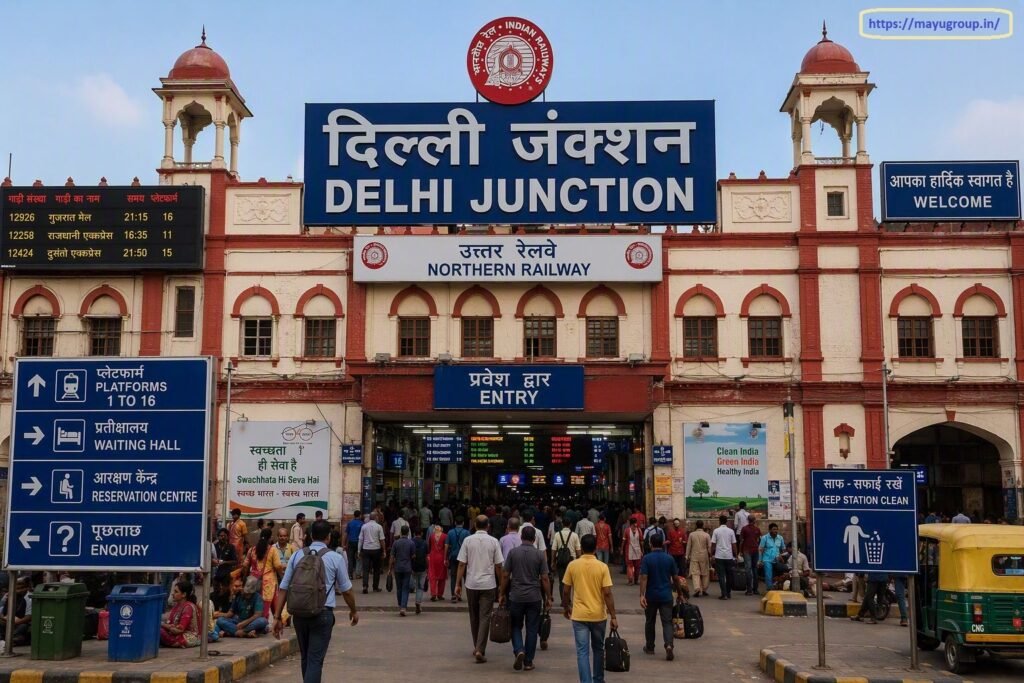
The journey toward environmental certification at Delhi Junction Railway Station represents an important stage in the modernization of railway infrastructure. For a station located in the heart of Old Delhi and serving a continuously changing population of passengers, employees, vendors and visitors, sustainability cannot be treated as an occasional initiative. It must become part of everyday planning, operation and maintenance.
The introduction of the Green Railway Station Rating System provided a structured way to approach this challenge. The Green Global Building Council (GGBC), in association with the Indian Railways Environment Directorate, developed the rating system to encourage railway stations to reduce their environmental impact and improve the experience of commuters. The framework gives railway organizations a means of assessing environmental performance and identifying opportunities for improvement.
For Delhi Junction, this approach was particularly relevant because of the station’s scale and strategic location. The station is situated near major commercial and heritage areas of Old Delhi, where passenger movement and surrounding urban activity are intense. Such a location creates considerable demand for electricity, water, cleaning services, maintenance and waste management. The larger the operation, the greater the opportunity for sustainable practices to create measurable benefits.
The certification process can be understood as a journey rather than a single event. A station seeking green certification needs to consider its existing practices, identify areas where performance can be improved, implement suitable measures and maintain records or evidence of performance. This creates greater awareness among the teams responsible for station management.
One of the important principles behind green certification is efficient use of resources. Railway stations consume energy for lighting, ventilation, equipment, communication systems, passenger facilities and other operational requirements. Water is required for sanitation, cleaning, passenger services and other activities. At a busy station, even small inefficiencies can accumulate into significant consumption over time.
A systematic green approach encourages management teams to identify these areas and consider practical improvements. Energy-efficient lighting, better equipment management, preventive maintenance and operational controls can help reduce unnecessary electricity consumption. Similarly, water-efficient fixtures, leak prevention, responsible cleaning practices and monitoring can contribute to water conservation.
Waste management is another important element. Railway stations are dynamic public spaces where waste can be generated continuously. Food packaging, paper, plastic, bottles and other forms of municipal waste can accumulate quickly. Effective segregation at source, collection and appropriate disposal are therefore essential. A green management system encourages greater attention to these processes rather than treating waste simply as a housekeeping issue.
The certification journey also involves the people who use and operate the station. Sustainability cannot succeed through infrastructure alone. Railway employees need to understand the objectives of environmental practices, while passengers can contribute through responsible waste disposal and efficient use of station facilities. Signage, awareness activities and visible environmental initiatives can help create a culture in which sustainability becomes easier to understand and participate in.
For Delhi Junction, certification also represented an opportunity to connect environmental performance with passenger experience. A well-managed station is not only environmentally responsible; it can also be cleaner, more organized and more comfortable. When energy, water, waste and maintenance systems are properly managed, the benefits can become visible to passengers in everyday ways.
The achievement of the Northern Railway Gold Certificate in 2021 therefore marked an important milestone. The certification record associated with Delhi Junction identifies the certificate as being valid through 2024. The achievement demonstrated recognition of the station’s green initiatives within the relevant rating framework.
However, the importance of a certification programme should not be measured only by the date on which the certificate was issued. Its greater value lies in establishing a framework for continuous improvement. Once an organization begins measuring resource use and reviewing environmental practices, it becomes possible to identify additional opportunities for improvement.
This is particularly important for an institution as large as Indian Railways. A successful environmental practice at one station can provide experience that may be useful elsewhere. Lessons relating to energy efficiency, water conservation, waste management, housekeeping and passenger awareness can potentially be adapted to other railway facilities.
The green certification journey can therefore be seen as part of a larger organizational transformation. Railways are simultaneously required to maintain reliable transportation services, improve passenger amenities, modernize infrastructure and address environmental responsibilities. These objectives are increasingly interconnected.
Delhi Junction demonstrates why such integration is necessary. The station cannot simply focus on increasing capacity without considering resource consumption. Likewise, environmental initiatives cannot be introduced without considering passenger movement, railway operations and maintenance requirements. Successful sustainability depends on finding a practical balance between environmental performance and operational realities.
The Gold certification also created a benchmark against which future improvements could be considered. As infrastructure changes, technologies develop and environmental expectations become more demanding, the station can build upon earlier achievements. Certification can serve as a reference point for setting new objectives rather than becoming the final destination.
In this sense, the 2021 certification was both an achievement and a beginning. It recognized progress already made while creating an opportunity for continued environmental improvement. The period leading to and following certification helped reinforce the idea that sustainability can be incorporated into the everyday management of a major railway station.
The Delhi Junction experience illustrates an important lesson for infrastructure development: modernization is strongest when environmental responsibility is included from the beginning. A railway station can remain a vital transportation hub while simultaneously reducing resource waste, improving cleanliness and encouraging responsible public behaviour.
The Green Railway Station Rating System provided a structured platform for this transformation. For Delhi Junction and Northern Railway, the Gold certification became a symbol of that effort. The next challenge was—and remains—to preserve the gains achieved, measure performance consistently and continue developing the station in a way that combines operational excellence with environmental responsibility.
#DelhiRailwayStation
Chapter 3 – The Gold Certification Milestone and Its Significance
The achievement of a green certification by a major railway station is not simply a matter of receiving recognition. It represents the completion of a structured process through which environmental practices, operational systems and resource-management measures are examined against defined sustainability objectives. For Delhi Junction Railway Station, the Northern Railway Gold Certificate issued in 2021, with validity stated through 2024, became an important milestone in its continuing development.
Delhi Junction occupies a unique position within the capital’s transportation network. Located in Old Delhi, close to Chandni Chowk and surrounded by a dense mixture of commercial, residential, cultural and heritage activity, the station experiences constant movement. Its environmental footprint is therefore influenced not only by railway operations but also by the behaviour and requirements of a very large number of passengers and visitors.
The Gold certification can be understood in this context. It reflected an effort to introduce environmental responsibility into the functioning of a major public transportation facility. Instead of treating sustainability as an isolated project, the green-station approach encouraged consideration of several aspects of station management together.
The Green Railway Station Rating System developed by the Indian Green Building Council, with support from the Indian Railways Environment Directorate, provides a framework for evaluating railway stations on environmental and operational considerations. Its broader objective is to encourage stations to reduce environmental impact while creating a better experience for commuters.
For Delhi Junction, achieving Gold recognition was significant because railway stations have complex operational requirements. Unlike many commercial buildings, a railway station cannot simply close temporarily to undertake extensive changes. Trains must continue to operate, passengers must move efficiently and essential services must remain available. Environmental improvements therefore need to be planned around continuous railway operations.
One of the important areas associated with green-station management is energy efficiency. A busy station requires lighting across platforms, concourses, circulation areas, offices and other facilities. Electrical equipment may operate for long periods, while passenger amenities and railway systems require reliable power. Efficient use of electricity can therefore have both environmental and operational advantages.
Water management is similarly important. Cleaning, sanitation, drinking-water facilities and other station services create continuous demand. Conservation measures can reduce unnecessary consumption while ensuring that passenger and operational requirements are maintained. Regular maintenance and monitoring are essential because water losses from leaks or inefficient fixtures can become significant over time.
Waste management is another visible element of station sustainability. Thousands of people can pass through a major railway station in a day, and passenger activity inevitably generates waste. Effective collection, segregation and disposal help maintain cleanliness while supporting responsible waste management. A clean station also contributes directly to passenger confidence and comfort.
The certification process can encourage greater coordination between different groups working at the station. Railway administration, engineering teams, electrical departments, housekeeping personnel, contractors, vendors and passengers all have roles to play. Environmental performance becomes more effective when these groups understand their responsibilities and work toward common objectives.
The Gold level of recognition therefore has significance beyond a certificate displayed on a wall. It represents an organizational commitment to maintaining specified environmental practices. It can also encourage teams to document activities, monitor resource consumption and consider corrective action where performance does not meet expectations.
Another important outcome is awareness. When passengers see waste segregation facilities, environmental messages, water-saving practices or efficient infrastructure, sustainability becomes a visible part of the public environment. Railway stations have enormous public reach, which means they can serve as platforms for environmental education as well as transportation.
For Northern Railway, achievements at major stations can contribute to a broader institutional culture of sustainability. Indian Railways has progressively introduced green initiatives across its network, including environmental certification and resource-efficiency programmes. The experience gained at individual stations can help support wider environmental objectives.
The Delhi Junction certification should therefore be viewed as part of this larger transformation. Its Gold recognition demonstrated that environmental management could be integrated into the operations of a busy historic railway facility without compromising its fundamental transportation role.
The certification also created an important benchmark for future development. A certificate has a defined period of validity, but the environmental practices behind it should ideally continue beyond that period. As technology improves and sustainability standards become more advanced, earlier achievements can become the foundation for new targets.
The period after certification is therefore just as important as the period before it. Management must continue monitoring performance, maintaining equipment, training staff and evaluating opportunities for improvement. Otherwise, certification risks becoming a historical achievement rather than a continuing operational practice.
For Delhi Junction, the 2021 Gold certification can consequently be regarded as both recognition and responsibility. It recognized the environmental efforts associated with the station while also establishing an expectation of continued performance. The station’s future development can build upon this foundation by combining sustainability with modernization, passenger convenience and operational efficiency.
The significance of the Gold certification ultimately lies in its ability to change the way a railway station is managed. A sustainable station is not defined only by energy-saving equipment or waste-management systems. It is defined by a culture in which resources are valued, environmental impacts are considered, employees understand their responsibilities and passengers are encouraged to participate.
Delhi Junction’s certification journey demonstrates the importance of this broader perspective. The station’s historical identity, transportation importance and environmental responsibilities are not separate subjects. They are parts of one continuing story of modernization.
The Gold Certificate of 2021 thus stands as an important milestone in that story. It reflects a move toward systematic environmental management and provides a foundation upon which future improvements can be developed. For Delhi Junction and Northern Railway, the lasting value of the achievement will ultimately depend on how successfully the principles behind the certification continue to shape the station’s growth and operations.
#OldDelhiRailwayStation
Chapter 4 – Energy Efficiency, Water Conservation and Sustainable Operations
The green transformation of Delhi Junction Railway Station cannot be understood without examining the importance of energy, water and day-to-day operational efficiency. A railway station is a continuously functioning public facility. Unlike an ordinary commercial building, it must remain prepared for passengers, railway staff, trains, security requirements and essential services throughout the day. This makes efficient resource management both an environmental responsibility and an operational necessity.
The Green Railway Station Rating System provided a framework through which these issues could be considered systematically. The purpose was not simply to introduce individual environmental measures but to encourage a broader culture of efficient resource use. For Delhi Junction, this approach was particularly relevant because of the station’s scale, passenger volume and location within the densely developed Old Delhi area.
Energy management is one of the most important elements of sustainable railway-station operations. Lighting is essential across platforms, waiting areas, stairways, circulation zones, offices, entrances and other public spaces. Electrical systems are also required for communication, equipment, ventilation, security and passenger facilities. Consequently, electricity consumption can become a major component of the station’s operational requirements.
The introduction and use of energy-efficient technologies can help reduce unnecessary consumption while maintaining appropriate illumination and passenger safety. Efficient lighting systems, appropriate controls, preventive maintenance and responsible operating practices can all contribute to better energy performance. The objective is not simply to consume less electricity, but to obtain the required service with greater efficiency.
Maintenance also plays a major role. Equipment that is poorly maintained may operate less efficiently and consume more energy. Regular inspection allows faults to be identified before they become larger problems. In a busy railway environment, preventive maintenance can therefore support both environmental performance and operational reliability.
Another important aspect is awareness among employees. Technology alone cannot guarantee efficiency. Lights, equipment and other systems must be operated according to actual requirements. Staff awareness can help prevent unnecessary energy use and encourage responsible operational behaviour.
Water is equally important. Railway stations require water for sanitation, cleaning, drinking facilities and other passenger and operational needs. At a station with significant daily activity, inefficient use can lead to considerable wastage.
Water conservation therefore requires a combination of infrastructure, maintenance and management. Efficient fixtures can reduce consumption without reducing service quality. Regular inspection can help identify leaks. Cleaning practices can be reviewed to ensure that water is used effectively. Monitoring consumption can help management identify unusual increases and investigate possible causes.
The relationship between water management and cleanliness is especially important at Delhi Junction. Passengers expect railway stations to maintain high standards of hygiene, but cleanliness should not require unnecessary resource consumption. Good housekeeping practices can therefore combine sanitation with responsible water use.
Wastewater management is another consideration in a sustainable station environment. Water used for cleaning and sanitation must be handled appropriately. Efficient systems can help reduce environmental impacts while maintaining essential public-health standards.
The importance of these measures becomes clearer when viewed over a long period. A small saving in electricity or water on a single day may appear insignificant. However, when repeated every day throughout the year, the cumulative impact can become substantial. This is one of the fundamental principles of sustainability: repeated operational improvements can create significant long-term results.
The certification framework also encourages the idea of measurement. Without monitoring, it is difficult to determine whether an efficiency measure is actually producing the expected result. Resource consumption can be tracked over time, allowing management to identify trends and evaluate performance.
For Delhi Junction, measurement can also support future planning. If electricity consumption changes significantly, management can investigate whether the change is related to passenger volume, equipment, weather, maintenance or operational conditions. Similarly, changes in water consumption can indicate improvements or possible inefficiencies.
The Gold certification achieved in 2021 provided recognition within this broader environmental-management process. Its importance was not limited to a particular technology or individual activity. Rather, it reflected the integration of sustainability principles into station management.
This integration is particularly valuable because railway stations are complex facilities. Engineering, electrical, civil, housekeeping, commercial and administrative teams may all be involved in daily operations. Sustainable performance requires coordination among these functions.
For example, an efficient lighting system will be most effective when electrical teams maintain it properly, station personnel operate controls appropriately and management monitors performance. Similarly, water-saving infrastructure requires maintenance teams to prevent leaks and housekeeping staff to use resources responsibly.
Passenger participation is another important component. Public awareness can encourage people to use water carefully, dispose of waste appropriately and respect station facilities. Since railway stations bring together people from different regions and backgrounds, environmental messages displayed in such spaces can have a wider educational effect.
The experience of Delhi Junction also demonstrates that environmental efficiency can complement financial efficiency. Reducing unnecessary consumption can potentially lower operating expenses while reducing environmental impact. In this sense, sustainability is not necessarily an additional cost; in many cases, it can support more efficient use of existing resources.
As railway infrastructure continues to modernize, energy and water management will become increasingly important. New technologies can provide better monitoring, automation and control. However, technology should be supported by clear procedures and trained personnel.
The long-term objective should therefore be continuous improvement. The Gold certification of 2021 should be viewed as a benchmark from which further progress can be measured. As the certification period reached 2024, the opportunity emerged to review existing practices, identify new technologies and establish higher environmental-performance targets.
Delhi Junction’s green journey demonstrates that sustainability begins with everyday decisions. Switching to efficient lighting, preventing water losses, maintaining equipment, monitoring consumption and educating users may appear to be small actions individually. Together, however, they form the foundation of sustainable station management.
The future growth of Delhi Junction will depend not only on physical expansion and modernization but also on how intelligently the station uses its resources. Energy efficiency, water conservation and responsible operations provide the essential foundation for that growth. Through continued attention to these areas, the station can build upon its Gold certification legacy and move toward an even more efficient, resilient and environmentally responsible future.
#NorthernRailway
Chapter 5 – Waste Management, Cleanliness and Passenger Experience
Waste management is one of the most visible aspects of sustainability at a major railway station. While energy and water efficiency may often operate behind the scenes, cleanliness and waste handling are immediately experienced by passengers. At Delhi Junction Railway Station, where large numbers of people move through platforms, waiting areas, entrances and circulation spaces, effective waste management is essential for maintaining a safe, hygienic and welcoming environment.
The station’s location in Old Delhi makes this responsibility particularly significant. Delhi Junction is connected with a dense urban environment containing historic markets, commercial establishments, residential neighbourhoods and important public destinations. The movement between the station and the surrounding city means that its environmental performance can influence the wider perception of the area.
A green railway station therefore needs a systematic approach to waste. The objective is not simply to remove garbage after it has accumulated. A sustainable approach begins with reducing unnecessary waste, encouraging segregation, collecting different waste streams appropriately and ensuring that disposal or further processing takes place through suitable channels.
Passenger behaviour is an important part of this process. Railway stations are public spaces, and waste generation is influenced by millions of individual decisions. A passenger carrying a food packet, plastic bottle, paper ticket or other material may dispose of it at a designated point or leave it in an inappropriate location. The availability and visibility of waste bins, clear instructions and regular housekeeping can influence these decisions.
Segregation is particularly important. When different types of waste are mixed together, opportunities for recycling and recovery can be reduced. Separating recyclable materials from general waste can make downstream management more effective. It also encourages passengers and staff to recognize that waste is not necessarily an unwanted material with no further value.
Housekeeping teams have a central role in maintaining these systems. Their work is continuous and demanding because railway stations experience repeated cycles of passenger movement throughout the day. Waste collection must be coordinated with passenger flow so that bins do not overflow and public areas remain clean.
Regular cleaning also contributes to passenger confidence. Clean platforms, waiting spaces and circulation areas create a perception of better organization and management. This is especially important for a station serving visitors who may be unfamiliar with the city. The physical environment becomes part of the passenger’s first impression of Delhi.
The Green Railway Station approach recognizes the connection between environmental performance and commuter experience. A sustainable station should not only reduce its ecological impact; it should also provide a better environment for the people who use it.
Cleanliness can also have health and safety implications. Accumulated waste may create unpleasant odours, attract pests and obstruct public spaces. Effective waste management reduces these risks and supports better hygiene. In a crowded railway environment, maintaining clean and unobstructed circulation routes is also important for safe movement.
Another dimension of waste management is responsible disposal. Once waste has been collected, it must be transferred and handled appropriately. The station’s environmental objectives are strengthened when waste management extends beyond the visible areas of the platform to the entire chain of collection and disposal.
Employee awareness is equally important. Staff members can influence passenger behaviour through their own example. When employees follow waste-segregation procedures and maintain clean workspaces, environmental responsibility becomes part of the station’s culture.
Vendors and commercial operators can also contribute. Food and retail activities may generate significant quantities of packaging and other waste. Encouraging responsible practices among vendors can help reduce waste at its source. Appropriate storage and disposal arrangements can prevent commercial waste from becoming a burden on passenger areas.
The green certification process provides a useful framework for bringing these activities together. Instead of treating cleanliness as a purely housekeeping function, environmental management encourages different departments and stakeholders to recognize their shared responsibility.
Technology can also support future improvements. Digital monitoring, data-based housekeeping schedules and improved waste-collection systems can potentially make operations more responsive. Rather than relying only on fixed routines, management can increasingly use information about passenger flows and waste generation to allocate resources efficiently.
However, technology cannot replace basic discipline. Even the most advanced waste-management system will be ineffective if bins are not maintained, collection is delayed or users do not understand the process. Infrastructure, staff training and public awareness must therefore work together.
The 2021 Gold certification associated with Delhi Junction provided recognition for the station’s environmental management journey. It also created a foundation for further improvement. The period of certification could be used to reinforce good practices and identify areas where future performance could be strengthened.
One of the most important long-term opportunities is to create a culture of responsibility among passengers. A railway station can reach a large and diverse public audience. Messages about waste segregation, recycling, cleanliness and responsible consumption can therefore have an impact beyond the station itself.
For Delhi Junction, this public dimension is particularly valuable. Located in one of the most historically important parts of Delhi, the station is not an isolated facility. It forms part of the city’s public environment. Better waste management can contribute to the broader objective of maintaining a cleaner and more attractive urban area.
The station’s green journey therefore illustrates an important principle: sustainability is closely connected with everyday behaviour. A cleaner railway station does not happen only because of cleaning staff. It results from coordinated efforts involving management, employees, contractors, vendors and passengers.
Looking toward the future, Delhi Junction can continue to strengthen waste-management practices through better segregation, regular monitoring, awareness programmes, efficient housekeeping and responsible disposal. These measures can support both environmental goals and passenger satisfaction.
Ultimately, the success of green certification should be visible not only in documents and assessments but in the everyday experience of people using the station. When passengers enter a clean, organized and responsibly managed railway facility, they experience the practical outcome of environmental management.
The Gold certification was therefore an important milestone, but the larger objective remains continuous improvement. By making waste management an integral part of station operations, Delhi Junction can strengthen its environmental performance while creating a better public space for the millions of people who depend on the railway system.
#GreenRailwayStation
Chapter 6 – Institutional Growth, Management Practices and the Role of Northern Railway
The development of Delhi Junction Railway Station after its green certification cannot be understood separately from the larger institutional growth of Northern Railway. A railway station is not an independent organization. Its infrastructure, operations, maintenance, passenger services and environmental programmes are connected with a wider administrative and technical system. Consequently, the Green Railway Station certification of Delhi Junction became part of a broader effort to strengthen sustainability within railway operations.
Northern Railway is responsible for a large and complex network serving important regions of northern India. Within such an organization, environmental management requires coordination between multiple departments, technical teams and operating units. The experience of one important station can therefore contribute to wider organizational learning.
Delhi Junction provides a useful example of this relationship. The station is historically important, operationally busy and located in a densely populated part of Delhi. Managing such a facility requires continuous coordination. Train operations must function reliably while passenger facilities, electrical systems, sanitation, housekeeping, security and infrastructure maintenance are managed simultaneously.
The introduction of green certification encouraged environmental considerations to become part of this management framework. Instead of viewing energy consumption, water usage and waste as separate housekeeping concerns, sustainability could be considered within the broader planning process.
This change in management perspective is important. An organization becomes more efficient when it understands how individual activities influence one another. For example, better equipment maintenance can reduce energy consumption. Improved water systems can reduce operating costs. Effective waste segregation can improve cleanliness while supporting resource recovery. Passenger-awareness programmes can reduce pressure on housekeeping teams.
Certification can also encourage documentation and accountability. Environmental practices are more effective when responsibilities are clearly defined and performance is monitored. Records provide management with the ability to review progress and identify areas requiring attention.
For a major railway station, such accountability can involve many different teams. Electrical personnel may be responsible for energy-related systems. Engineering teams may manage infrastructure and water-related installations. Housekeeping teams handle cleanliness and waste collection. Administrative teams may coordinate documentation and awareness initiatives. Commercial operators and contractors may also influence environmental performance.
The success of sustainability therefore depends on coordination rather than the work of a single department.
Training is another important element. Employees need to understand why particular procedures are required and how their actions contribute to overall performance. A staff member who understands the purpose of energy conservation is more likely to operate equipment responsibly. A housekeeping worker who understands waste segregation can help maintain the effectiveness of the waste-management system.
This human element is particularly important because railway operations are highly dependent on people. Technology can improve efficiency, but trained employees are needed to operate, maintain and monitor technological systems.
The Green Railway Station framework can also encourage a more systematic approach to continuous improvement. Once a station has achieved a particular level of certification, management can use the experience to identify additional opportunities. The objective then shifts from simply maintaining compliance to improving actual performance.
For Delhi Junction, this could involve reviewing resource consumption, assessing infrastructure condition, identifying inefficient equipment and evaluating passenger feedback. The results can support future investment decisions.
The institutional benefits of green certification can extend beyond the station itself. Northern Railway can use lessons from certified facilities when developing environmental strategies for other stations. Practices that prove effective can potentially be adapted according to the size, location and operational characteristics of other railway facilities.
This creates a multiplier effect. A single station’s environmental improvement becomes part of a larger body of organizational experience. Over time, such learning can help build stronger environmental-management systems across the railway network.
The relationship between certification and organizational reputation is also important. Public institutions are increasingly expected to demonstrate responsible use of resources. Environmental recognition can help communicate that the organization is taking sustainability seriously.
For passengers, however, reputation is ultimately judged by experience. A certificate becomes meaningful when it is reflected in cleaner facilities, efficient services, responsible resource use and improved public amenities. Therefore, institutional growth must remain connected with practical outcomes.
The 2021 Gold certification associated with Delhi Junction was a significant milestone in this respect. It represented recognition within the Green Railway Station framework and provided a benchmark for future development. Its stated validity through 2024 also created a defined period during which the station’s environmental practices could be maintained, reviewed and further developed.
As the certification period progressed, the emphasis on continual improvement became increasingly important. Environmental standards and technologies continue to evolve. A station that achieved a good performance level in one period cannot assume that the same practices will always represent best performance. New technologies, changing passenger patterns and improved environmental expectations require regular reassessment.
Institutional growth therefore means learning from previous achievements. The value of certification is strongest when it creates systems that remain useful after the certificate expires. Environmental management should become part of the station’s normal operating culture.
Delhi Junction’s position within Old Delhi also gives Northern Railway an opportunity to demonstrate how sustainability can coexist with heritage and urban complexity. The station cannot be developed in isolation from its surroundings. Any modernization must consider passenger movement, local accessibility, surrounding commercial activity and the character of the historic district.
This requires an integrated approach. Environmental objectives, operational requirements, passenger needs and urban considerations should be evaluated together.
The broader lesson is that sustainable infrastructure is ultimately an organizational achievement. Buildings and equipment provide the physical foundation, but policies, procedures, training and management determine whether environmental goals are achieved consistently.
For Northern Railway, Delhi Junction represents an important example of this principle. The station’s Gold certification demonstrates that environmental management can be incorporated into a large-scale railway operation. Its continuing development can build upon that foundation through better monitoring, stronger coordination and more ambitious sustainability targets.
The future of the station therefore depends not only on physical modernization but also on institutional maturity. As management systems become more data-driven and environmentally conscious, Delhi Junction can continue to serve as an example of how a historic railway facility can adapt to modern expectations.
The certification journey ultimately strengthened the connection between environmental responsibility and organizational performance. Through continued cooperation among railway departments, employees, contractors and passengers, the principles behind the Gold certification can remain relevant long after the original certification period. In this way, the achievement becomes more than an award: it becomes part of the institutional story of sustainable growth at Delhi Junction and across Northern Railway.
#RailwaySustainability
Chapter 7 – Passenger Experience, Public Awareness and Sustainable Mobility
A railway station is ultimately designed around people. Infrastructure, technology, energy systems, water facilities and waste-management arrangements all have a common purpose: to provide safe, efficient and comfortable transportation. For Delhi Junction Railway Station, the environmental improvements associated with its green certification therefore have an important connection with passenger experience.
Delhi Junction’s location in Old Delhi gives it a particularly strong public role. The station is close to Chandni Chowk and other major destinations, markets and historic areas. Passengers arriving at the station may be commuters, long-distance travellers, tourists, business visitors, students, families or local residents. Each group has different requirements, but all depend upon an environment that is clean, organized and easy to navigate.
The Green Railway Station approach recognizes that environmental responsibility and passenger comfort can support one another. A station that manages its resources efficiently can also provide a better public environment. Efficient lighting can improve visibility, good housekeeping can improve cleanliness, responsible water management can support hygiene, and effective waste systems can reduce litter.
The Gold certification achieved by Delhi Junction in 2021 therefore represented more than an environmental milestone. It also reflected an opportunity to strengthen the relationship between railway management and the people using the station.
One of the most important factors in passenger experience is cleanliness. Passengers naturally judge a railway station by what they see when they enter. Clean floors, platforms, waiting areas and public facilities create confidence. Conversely, overflowing bins, litter and poorly maintained areas can create a negative impression even when other railway services are functioning well.
Sustainable cleanliness requires more than frequent sweeping. It involves proper waste segregation, efficient collection schedules, responsible disposal and the cooperation of passengers. This is where public awareness becomes important.
A railway station can act as a powerful platform for environmental education because of the large number of people passing through it. Simple messages encouraging passengers to use designated bins, avoid unnecessary waste and conserve water can reach a wide audience. When such messages are supported by visible facilities, passengers are more likely to understand that environmental responsibility is part of normal station behaviour.
Awareness can also influence children and young travellers. Families visiting railway stations may encounter environmental messages that encourage responsible habits. These habits can extend beyond the station into homes, schools and workplaces.
Employees are equally important in creating this culture. Railway staff interact with passengers throughout the day and can reinforce responsible behaviour. Their own practices also influence the public. When staff members follow environmental procedures and maintain clean workplaces, sustainability becomes more visible and credible.
Vendors and commercial operators also have an important role. Food and retail activities can generate packaging, food waste and other materials. Encouraging vendors to minimize unnecessary waste and follow appropriate disposal procedures can contribute significantly to the station’s overall environmental performance.
Passenger movement is another area where sustainability and service quality intersect. A well-organized railway station needs to manage large flows of people without unnecessary congestion. Clear circulation routes, appropriate signage and well-maintained facilities can improve both efficiency and passenger comfort.
The station’s connection with the broader transport network is also significant. Delhi Junction is located near the Chandni Chowk Metro area, allowing passengers to connect between railway and urban transit services. Such connections support the broader concept of sustainable mobility, in which different forms of public transportation work together to reduce dependence on individual vehicles.
Public transport is an important component of sustainable urban development. Railways can move large numbers of people efficiently, and convenient connections between railway stations and metro systems can make public transportation more attractive. Delhi Junction’s location gives it a natural role within this multimodal environment.
The environmental value of railway travel extends beyond the station itself. When people choose public transportation instead of individual vehicles, the overall demand for road-based travel can potentially be reduced. A well-managed railway station therefore contributes to sustainable mobility at both the local and regional levels.
For Delhi Junction, passenger experience must consequently be viewed in a broad way. It includes cleanliness, accessibility, information, comfort, safety, convenience and environmental quality. Green certification can contribute to this objective when environmental measures are implemented with passenger needs in mind.
Technology can further strengthen this relationship. Digital information systems can help passengers receive timely information and reduce dependence on printed material. Smart monitoring systems can help management identify maintenance requirements more quickly. Data from passenger movement can potentially support more efficient allocation of cleaning and operational resources.
However, technology should complement—not replace—the human element. Passengers still need visible staff assistance, clean facilities and clear communication. Sustainability is successful when it improves real experiences rather than becoming an abstract administrative exercise.
The Gold certification of 2021 provides a useful benchmark for understanding this transformation. It demonstrated that environmental performance could be integrated into the management of a major public transportation facility. The next stage is to ensure that environmental principles continue to improve passenger services.
The period following certification also offers an opportunity to develop stronger awareness programmes. Campaigns can focus on waste segregation, water conservation, responsible use of facilities and respect for public infrastructure. These messages can be adapted to different passenger groups and languages to improve accessibility.
Because Delhi Junction serves people from across India, communication needs to be inclusive. Environmental awareness is most effective when instructions are simple, visible and easy to understand.
The station can also become a demonstration space for sustainable practices. When passengers see efficient systems operating successfully in a busy railway environment, they gain a practical example of how sustainability can work at scale.
This is particularly valuable in a historic district like Old Delhi. The station represents a meeting point between the city’s past and its future. Its sustainable development can demonstrate that modernization does not necessarily require abandoning historic identity. Instead, modern environmental practices can be integrated into the continued operation of an important historic transportation facility.
Ultimately, the success of Delhi Junction’s green journey should be measured partly by how passengers experience the station. A truly sustainable railway station is one where environmental responsibility supports cleanliness, efficiency, comfort and public awareness.
The Gold certification created an important foundation for this objective. By continuing to engage passengers, employees, vendors and the surrounding community, Delhi Junction can strengthen its role as both a transportation hub and a public example of sustainable mobility.
The future growth of the station will therefore depend on a simple but powerful principle: sustainability should be experienced, not merely certified. When green practices become visible in everyday passenger life, certification becomes the beginning of lasting change rather than the end of a project.
#SustainableRailways
Chapter 8 – Growth Beyond Certification: Modernization, Resilience and Future Development
The achievement of the Northern Railway Gold Certificate in 2021 was an important milestone in the environmental journey of Delhi Junction Railway Station. However, certification should not be considered the final destination. A certificate has a defined period of validity, while the responsibility to operate and improve a major railway station continues every day. The period following certification therefore becomes an opportunity to preserve achievements, review performance and establish stronger goals for the future.
Delhi Junction is located in one of the most dynamic parts of Delhi. Its surroundings combine historic buildings, commercial markets, public transportation, residential areas and continuous pedestrian activity. This environment creates both opportunities and challenges for future development. Any modernization programme must improve railway services while respecting the operational realities and urban character of Old Delhi.
The concept of growth has consequently changed. In the past, growth might have been associated mainly with additional infrastructure, larger facilities or increased passenger-handling capacity. Today, sustainable growth also includes better resource efficiency, improved passenger experience, stronger environmental performance and greater resilience.
Green certification can provide a foundation for this broader concept of development. By identifying areas such as energy, water, waste and environmental management, certification encourages station authorities to think about how infrastructure performs over time. The next step is to integrate these lessons into long-term planning.
One important area for future growth is energy management. As technology develops, railway stations can increasingly use more efficient lighting, monitoring and control systems. Energy consumption can be measured more accurately, allowing management to identify unusual patterns and opportunities for improvement. The long-term objective should be to provide the required level of passenger service with the lowest practical resource consumption.
Water management offers similar opportunities. Future improvements can focus on reducing wastage, improving monitoring, preventing leakage and increasing efficiency in cleaning and sanitation operations. Water conservation is particularly important in large public facilities because demand continues regardless of individual passenger behaviour.
Waste management can also move toward a more integrated model. Instead of concentrating primarily on collection and disposal, future systems can emphasize prevention, segregation, recycling and responsible recovery. Passenger awareness can be combined with improved infrastructure so that sustainable waste practices become part of normal station behaviour.
Modernization also provides an opportunity to strengthen data-based management. Digital systems can help monitor equipment, energy use, water consumption, maintenance requirements and other operational indicators. Reliable data allows management to move from reactive decision-making toward preventive and predictive approaches.
For example, if equipment performance begins to deteriorate, monitoring systems can potentially identify the problem before a major failure occurs. Preventive maintenance can reduce disruption while improving resource efficiency. This approach is particularly valuable at a busy railway station where unexpected infrastructure problems can affect large numbers of passengers.
Resilience is another important part of future growth. Railway stations must remain functional under changing environmental and operational conditions. Extreme weather, high passenger volumes, equipment failures and unexpected disruptions can place significant pressure on infrastructure. Sustainable development should therefore include measures that improve the station’s ability to maintain essential services.
Passenger comfort must remain at the centre of this development. Environmental measures are most successful when they also improve the public experience. Better lighting, cleaner facilities, efficient water systems, improved signage and well-managed public areas can provide direct benefits to passengers.
Accessibility is also an important consideration. Future development should seek to make station facilities easier to use for elderly passengers, children and people with disabilities. Sustainable infrastructure should be inclusive infrastructure.
The relationship between the railway station and surrounding transportation systems is another opportunity. Delhi Junction’s proximity to the Chandni Chowk Metro area provides a connection between railway and urban public transport. Strengthening multimodal connectivity can make public transportation more convenient and potentially reduce dependence on private vehicles.
The station’s heritage setting creates a distinctive development challenge. Modernization should not erase the character of Old Delhi. Instead, the objective should be to introduce contemporary infrastructure and environmental practices in a manner that respects the area’s historic importance.
This balance between heritage and modernization can become one of Delhi Junction’s strengths. The station can demonstrate that historic infrastructure does not have to remain technologically outdated. With careful planning, modern environmental systems can coexist with the architectural and cultural identity of an established urban district.
Institutional growth is also necessary. Certification provides a framework, but sustained performance depends on employees, management systems and operational procedures. Regular training can ensure that staff understand new technologies and environmental objectives. Performance reviews can identify areas requiring improvement.
The role of contractors and service providers should also be considered. Housekeeping, maintenance and other outsourced activities can significantly influence environmental performance. Clear environmental requirements and performance monitoring can help ensure that sustainability standards extend across the operational chain.
The end of the stated 2024 validity period should therefore be viewed as a point for review rather than a conclusion. The station can use the experience gained during the certification period to evaluate what worked well, what requires improvement and what new objectives should be introduced.
Future certification, if pursued, should ideally represent progress rather than simply renewal. New targets could focus on deeper energy efficiency, improved water management, better waste recovery, stronger passenger awareness and more sophisticated monitoring.
The larger objective is to build a culture of continual improvement. Environmental performance should become part of the station’s normal management cycle: assess, improve, monitor, review and improve again.
Delhi Junction’s future growth can therefore be understood as a combination of physical, environmental and institutional development. Infrastructure modernization can provide better facilities, while sustainability can ensure that those facilities are operated responsibly.
The 2021 Gold certification provided an important foundation for this journey. It demonstrated that environmental management could be integrated into a major railway station. The challenge after certification is to build upon that achievement and adapt to changing requirements.
A successful future station will not be defined only by its size or appearance. It will be defined by how efficiently it uses resources, how comfortably it serves passengers, how responsibly it manages waste, how resiliently it operates and how effectively it integrates with the surrounding city.
Delhi Junction has the opportunity to become a strong example of this approach. Its historic importance gives it a unique identity, while its environmental journey provides a platform for modernization.
The real growth after certification therefore lies in moving from recognition to continuous performance. The Gold Certificate can remain an important chapter in the station’s history, but its greatest value will be realized if the principles behind it continue to guide future investment, operations and management.
In this way, Delhi Junction can progress from being simply a certified green railway station toward becoming a model of sustainable, resilient and passenger-focused railway infrastructure—one that respects its historic surroundings while preparing confidently for the future.
#RailwayInfrastructure
Chapter 9 – Delhi Junction as a Model for Sustainable Railway Development
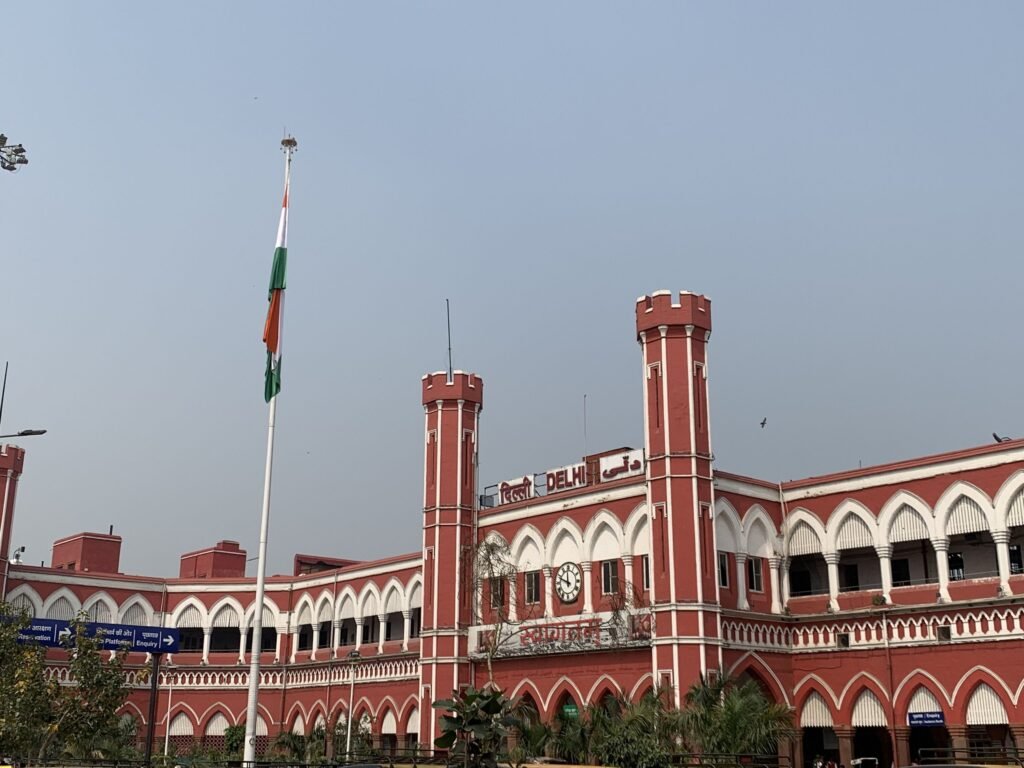
The environmental journey of Delhi Junction Railway Station provides an important example of how a historic and heavily used railway facility can respond to modern expectations of sustainability. The achievement of the Northern Railway Gold Certificate in 2021, with the stated validity through 2024, was an important milestone. Yet its larger significance can be found in the lessons that the station’s experience offers for future railway development.
Delhi Junction operates in a challenging environment. It is surrounded by one of Delhi’s most historic urban districts and serves passengers from different parts of the country. The station must simultaneously support railway operations, passenger movement, cleanliness, maintenance, security and commercial activity. Environmental management therefore needs to be practical, continuous and integrated with the station’s primary transportation role.
The Green Railway Station Rating System provides a framework for achieving this integration. Rather than treating sustainability as a separate project, it encourages railway stations to consider environmental performance as part of their overall management. Energy, water, waste, passenger experience and operational practices can all contribute to the sustainability profile of a station.
The experience of Delhi Junction demonstrates why this integrated approach is important. A railway station cannot become sustainable through one improvement alone. Installing efficient lighting, for example, may reduce electricity consumption, but the wider environmental performance of the station also depends on water conservation, waste management, housekeeping and employee practices.
The strongest model is therefore a system in which different improvements reinforce one another.
Energy efficiency provides one example. Better lighting and electrical management can reduce resource consumption, while preventive maintenance can ensure that equipment continues to perform efficiently. Monitoring systems can provide information that helps management identify further opportunities. Over time, these practices can create a culture in which energy efficiency becomes part of normal operations.
Water conservation follows a similar principle. Efficient fixtures, leak prevention, monitoring and responsible housekeeping can collectively reduce unnecessary consumption. The objective is not simply to use less water but to ensure that every unit of water provides the maximum practical benefit.
Waste management demonstrates the importance of involving the public. Railway stations generate waste through passenger and commercial activity, but the effectiveness of waste management depends heavily on segregation and responsible disposal. Passengers, employees and vendors must therefore participate in the process.
This makes environmental awareness a major component of sustainable railway development. A station can use its visibility to educate passengers about waste segregation, water conservation and responsible use of public facilities. Because railway stations serve large and diverse populations, these messages can have an influence beyond the station itself.
Delhi Junction’s location makes this public role particularly valuable. It is positioned close to important cultural and commercial destinations in Old Delhi. Visitors arriving through the station are introduced to the city through this transportation gateway. A clean and environmentally responsible station can contribute positively to the image of the surrounding area.
The station also demonstrates how sustainability can support passenger experience. Environmental measures should not be viewed solely as technical requirements. Efficient lighting can improve visibility, effective waste management can improve cleanliness, responsible water management can support hygiene and better maintenance can improve reliability.
This relationship is essential for future railway projects. Passengers may not be familiar with the technical details of green certification, but they understand the results through everyday experience.
Another important lesson is that certification should create a culture of continuous improvement. The validity of a certificate is limited, but the need for environmental responsibility is permanent. After achieving Gold certification, the station should continue to review its performance and identify opportunities for improvement.
This approach can be especially valuable for Northern Railway. Experience gained at Delhi Junction can contribute to broader organizational learning. Successful practices can potentially be adapted to other stations, depending on their size, passenger volumes, infrastructure and local conditions.
The institutional value of certification is therefore greater than the individual facility. When railway organizations develop common environmental-management practices, improvements can spread across the network. This can contribute to larger national objectives relating to sustainable transportation and resource efficiency.
The future of sustainable railway development will also depend on technology. Digital monitoring, smart controls, efficient equipment and data-based maintenance can provide new opportunities. However, technology should be introduced according to actual operational requirements. The most successful solutions are those that are reliable, maintainable and understood by the people responsible for operating them.
Human resources remain central. Employees need appropriate training and clear responsibilities. Contractors and service providers must understand environmental expectations. Passengers must receive simple and visible instructions. Management must monitor performance and take corrective action when necessary.
Another lesson from Delhi Junction is the importance of balancing heritage with modernization. Old Delhi is a historically significant urban environment. Modern infrastructure must therefore be introduced thoughtfully. Sustainability can help support this balance by encouraging efficient systems without requiring the historic identity of the surrounding area to be abandoned.
A modern railway station can coexist with its historic context. The objective is to make the infrastructure more efficient and passenger-friendly while respecting the cultural character of the city.
Delhi Junction can also serve as an example of sustainable mobility. Railways are a major component of public transportation, and convenient connections with other forms of mass transit can encourage people to use public transport. The station’s proximity to the metro network reinforces its role as part of a multimodal transportation system.
In this broader context, the environmental value of a railway station extends beyond its own boundaries. Efficient railway transportation can support urban mobility, while sustainable station operations can reduce the environmental impacts associated with maintaining the facility itself.
The Gold certification of 2021 therefore represents more than an isolated achievement. It can be interpreted as a demonstration of what is possible when environmental management becomes part of the operational philosophy of a major railway facility.
The model for the future should be based on five interconnected principles: efficient resource use, responsible waste management, strong passenger engagement, continuous monitoring and institutional learning. These principles can be adapted to different railway stations while maintaining the same fundamental objective.
For Delhi Junction, the next chapter of development should build upon its certification experience. Future improvements can focus on stronger environmental targets, better technology, improved passenger facilities and more effective monitoring.
The ultimate measure of success will not be the number of certificates received. It will be the lasting improvement in the station’s environmental performance and passenger experience.
Delhi Junction has the opportunity to demonstrate that a historic railway station can be simultaneously efficient, sustainable, modern and people-focused. Its Gold certification provides an important foundation, but its continuing journey will determine its lasting significance.
In this sense, Delhi Junction can become more than a certified railway station. It can become a practical example of sustainable railway development—showing how environmental responsibility, operational efficiency, passenger service and heritage can work together to support the long-term growth of Indian railway infrastructure.
#GreenStation
Chapter 10 – The Road Ahead: Sustainable Growth and the Future of Delhi Junction Railway Station
The journey of Delhi Junction Railway Station through environmental certification represents an important chapter in the continuing modernization of India’s railway infrastructure. From its historic role in Old Delhi to its recognition under the Green Railway Station Rating System, the station demonstrates how a traditional transportation facility can respond to changing expectations concerning sustainability, efficiency and passenger experience.
The Northern Railway Gold Certificate issued in 2021, with the stated validity through 2024, should be viewed as a significant milestone rather than the conclusion of the station’s environmental journey. Certification provides recognition for achievement, but sustainable development requires continuous action. The future of Delhi Junction will depend on how successfully the principles associated with green certification are maintained, measured and developed further.
The first priority for the future should be continuity. Environmental practices introduced or strengthened during the certification process should become part of normal station operations. Sustainability should not depend only on a particular certification cycle or special project. Energy efficiency, water conservation, waste management and environmental awareness should remain ongoing responsibilities.
Energy management will continue to be an important area for improvement. Modern railway stations require electricity for lighting, passenger facilities, communication, security, equipment and other services. Future development can focus on more efficient technologies, improved controls and better monitoring. Digital systems can potentially help management understand where energy is being consumed and identify opportunities for reducing unnecessary usage.
The same principle applies to water. A large public facility must provide reliable sanitation and cleaning while using water responsibly. Future efforts can emphasize efficient fixtures, regular maintenance, leak detection and consumption monitoring. Where appropriate, water-saving technologies and improved operational procedures can help reduce wastage without affecting passenger comfort.
Waste management should also move toward a more comprehensive model. Future improvements can strengthen segregation, recycling, recovery and responsible disposal. The station can continue encouraging passengers and vendors to reduce waste and use designated collection facilities. Awareness campaigns can reinforce the message that cleanliness is a shared responsibility.
Passenger experience should remain at the centre of all future development. Environmental improvements are most valuable when they also make the station better for people. Clean public areas, efficient facilities, clear signage, comfortable waiting spaces and reliable services contribute to passenger satisfaction.
Accessibility should form part of this vision. Future infrastructure improvements should consider the needs of elderly passengers, people with disabilities, families with children and travellers carrying luggage. Sustainable development should be inclusive and ensure that improvements benefit the widest possible range of users.
Delhi Junction’s location creates another major opportunity. Its proximity to the Chandni Chowk Metro area and other public transportation facilities allows it to participate in a wider multimodal transportation system. Strong connections between rail and other forms of public transport can make journeys more convenient and encourage greater use of mass transportation.
This is important for the future of Delhi. As the city grows, transportation systems will face increasing demand. Efficient public transportation can help address mobility challenges while supporting more sustainable urban development. Delhi Junction therefore has significance beyond its own boundaries: it forms part of the larger transportation ecosystem of the capital.
Heritage should also remain an important consideration. Old Delhi has a distinctive historical identity, and the station’s development must respect its surroundings. Modernization does not have to mean removing the character of the area. Instead, new technologies, efficient systems and improved passenger facilities can be introduced in ways that complement the historic environment.
This balance can become a defining feature of Delhi Junction’s future. A station that successfully combines history, modern transportation and sustainability can serve as a powerful example for other urban infrastructure projects.
Institutional development will be equally important. Environmental performance depends on people and management systems as much as on physical infrastructure. Employees need continuing training, responsibilities need to be clearly defined and performance needs to be reviewed regularly. Contractors and service providers should also understand environmental requirements.
Data can play an increasingly important role. Monitoring energy, water, waste and maintenance performance can provide management with evidence for decision-making. Instead of relying only on assumptions, future planning can be based on measurable trends and operational information.
The end of the stated certification validity in 2024 provides a natural point for reviewing the station’s environmental journey. Such a review can examine which practices have delivered lasting benefits, where performance can be improved and what new targets should be established.
Future certification, if pursued, should ideally reflect progress. The objective should not merely be to reproduce the achievements of the previous certification period. Instead, the station can aim for stronger resource efficiency, better waste management, improved monitoring, greater public awareness and enhanced passenger facilities.
The most important lesson from the entire journey is that sustainability is a continuous process. Environmental standards evolve, technology develops and passenger expectations change. A successful railway station must therefore be prepared to adapt.
Delhi Junction’s Gold certification provides a strong foundation for this adaptation. It demonstrates that environmental considerations can be integrated into the management of a major railway station while maintaining its core transportation function.
Looking ahead, the station can build upon five major principles: continuous improvement, resource efficiency, passenger-focused development, technological modernization and environmental responsibility. These principles can guide future planning while preserving the station’s historic importance.
The growth of Delhi Junction should therefore not be measured only through additional infrastructure or increasing passenger capacity. True growth will also mean better management, reduced resource wastage, improved environmental performance and a stronger passenger experience.
The station’s story ultimately reflects the changing role of railway infrastructure in India. Railways are no longer viewed only as a means of moving people and goods. Modern railway stations are expected to function as efficient, safe, clean, accessible and environmentally responsible public facilities.
Delhi Junction has already taken an important step in this direction through its Gold certification. The next challenge is to ensure that the principles behind that achievement continue to influence its development.
From the historic streets of Old Delhi to the modern requirements of sustainable transportation, Delhi Junction represents a meeting point between the past and the future. Its environmental journey demonstrates that heritage and modernization can coexist, and that operational efficiency can be combined with environmental responsibility.
The long-term vision should therefore be clear: a Delhi Junction that remains faithful to its historic significance while becoming increasingly efficient, resilient, clean and passenger-focused.
The Gold Certificate of 2021 is an important part of that story. But the greatest achievement will be the continued transformation that follows it. If the station can maintain a culture of measurement, responsibility and improvement, its certification will have created a legacy extending far beyond its validity period.
Delhi Junction’s future is consequently not defined by a certificate alone. It is defined by the people who manage it, the passengers who use it, the systems that support it and the commitment to responsible development that guides its growth.
The road ahead is one of continuous improvement. By combining sustainability with modernization, passenger service and heritage preservation, Delhi Junction can continue to play its historic role while demonstrating what the next generation of Indian railway stations can achieve.
#IndianRailways
#DelhiHeritage #OldDelhiHeritage #SustainableUrbanMobility #GreenInfrastructureIndia #EcoFriendlyRailwayDevelopment
Take the Next Step Today
Don’t wait to enhance your business’s quality and efficiency. Partner with Mayu Group India and experience the transformation that comes with expert consultancy and training. Contact us today to learn more about how we can help you achieve your business goals. Reach out via phone at +91-9322728183, visit our website at www.mayugroup.in, or email us at investor@mayugroup.in Let us be your guide on the journey to excellence and innovation.