
Bikaner Railway Station, North Western Railway
- Bikaner Railway Station, North Western Railway
- Chapter 1 Bikaner Railway Station: The Beginning of a Historic Railway Journey
- Chapter 2 North Western Railway and the Growth of Bikaner Division
- Chapter 3 The Journey Towards Green Railway Station Certification
- Chapter 4 Green Transformation Through Energy, Water and Resource Efficiency
- Chapter 5 Waste Management, Cleanliness and Passenger Experience
- Chapter 6 People, Processes and Organisational Transformation
- Chapter 7 Certification as a Catalyst for Growth and Continuous Improvement
- Chapter 8 Bikaner Railway Station as a Model of Sustainable Public Infrastructure
- Chapter 9 The Future Growth of Bikaner Railway Station After Green Certification
- Chapter 10 A Lasting Legacy of Green Growth and Sustainable Railway Development
- Take the Next Step Today
Chapter 1 Bikaner Railway Station: The Beginning of a Historic Railway Journey
Bikaner Railway Station is more than a transportation facility. It is a gateway to one of Rajasthan’s historic cities, a meeting point for travellers, railway employees, businesses and communities, and an important part of the region’s economic and social development. Located on Station Road in Bikaner, the station functions within the Bikaner Division of North Western Railway and represents a long tradition of railway connectivity in the desert region of Rajasthan.
The story of Bikaner and its railway began more than a century ago. According to North Western Railway’s official historical overview, the first railway link to Bikaner was established on 9 December 1891 as part of the Jodhpur State Railway. Bikaner State Railway came into existence in 1924, while a direct railway connection between Bikaner and Delhi was established in 1941. Bikaner Division was subsequently formed in 1952 during the reorganisation of Indian Railways.
These dates represent much more than administrative milestones. They describe the gradual transformation of Bikaner from a relatively isolated desert-region city into an increasingly connected centre of trade, administration, tourism and public activity.
In the early years, railway connectivity had enormous significance for Rajasthan. Long distances, difficult terrain and the arid climate made transportation challenging. The railway provided a dependable link between Bikaner and other important centres. It enabled passengers to travel farther, allowed agricultural and commercial products to reach wider markets, and strengthened connections between communities.
Over time, the railway became an integral part of everyday life.
For generations of passengers, the station has represented departure and arrival. Students have travelled for education, workers for employment, families for social occasions, traders for business and tourists for discovering the cultural heritage of Rajasthan. Each train brings a different story, and every platform becomes a temporary meeting point for people from different backgrounds.
The importance of Bikaner Railway Station also grew alongside the railway network itself. Bikaner Division historically developed as a major railway jurisdiction serving parts of Rajasthan, Haryana and Punjab. North Western Railway’s official records describe the division as having passenger as well as goods traffic, with commodities such as food grain and gypsum forming part of its outward goods movement.
The railway therefore became an economic artery.
But railway infrastructure does not remain unchanged. It evolves with technology, passenger expectations and national development priorities. Bikaner Division experienced major changes in gauge conversion and network development. The official divisional history records that broad-gauge conversion began in 1978 and that later conversions created important new routes connecting Bikaner with other parts of northern and western India.
This history of continuous improvement provides important context for the later transformation of Bikaner Railway Station into a more environmentally responsible public facility.
The formation of North Western Railway was another important chapter. North Western Railway, headquartered at Jaipur, became operational on 1 October 2002. Its jurisdiction brought together the Jaipur and Ajmer divisions from Western Railway and the Jodhpur and Bikaner divisions from Northern Railway.
This organisational structure placed Bikaner within a larger zonal railway system capable of coordinating infrastructure, operations, engineering, passenger services, safety and development across a broad geographic region.
For Bikaner Railway Station, this meant that its future would be shaped not only by local requirements but also by wider railway policies and changing national priorities.
One of those priorities was sustainability.
As India’s infrastructure expanded, environmental responsibility became increasingly important. Railway stations consume energy and water, generate waste and accommodate large numbers of people every day. Consequently, improving their environmental performance can produce benefits that extend far beyond the station boundary.
The concept of a green railway station emerged from this changing understanding of infrastructure.
Instead of considering a station only as a place for train operations, the green approach considers the complete environment in which passengers and railway employees interact. Energy efficiency, water conservation, waste management, cleanliness, passenger comfort and responsible resource use become part of the overall quality of the facility.
For Bikaner, this concept carries particular importance.
The city lies in the arid landscape of Rajasthan, where natural resources, especially water, have exceptional value. A railway station serving thousands of passengers and operating for long hours therefore has a special responsibility to use resources efficiently.
This is where the later GGBC Green Railway Station Rating System certification becomes part of the station’s larger historical journey.
The certification associated with Bikaner Railway Station in 2021, with validity stated through 2024, represents a transition from the traditional idea of railway development toward a broader model of sustainable infrastructure.
It demonstrates that the story of a railway station does not end with the laying of tracks or construction of platforms.
It continues through maintenance, modernisation, environmental management and improvement of passenger experience.
The railway that arrived in Bikaner in the nineteenth century helped connect the city with the wider world. More than a century later, the green station initiative represents another kind of connection: a connection between railway development and environmental responsibility.
The station’s history therefore becomes a story of continuous adaptation.
From the first railway link in 1891, through the development of Bikaner State Railway, the formation of Bikaner Division, the evolution of the railway network and the establishment of North Western Railway, every generation has added another layer to the institution’s identity.
The 2021 certification can be understood as one of the latest chapters in that long story.
It reflects a railway station that is not standing still, but continuing to evolve with the needs of passengers, the city and the environment.
Bikaner Railway Station began its journey as a symbol of connectivity.
Its next chapter is becoming a symbol of responsible connectivity — demonstrating that mobility, public service, operational efficiency and environmental sustainability can move forward together.
That transformation provides the foundation for the chapters that follow: the development of North Western Railway, the changing role of Bikaner Division, the importance of green certification, the station’s environmental practices and the continuing institutional growth that can follow recognition under a green railway station rating system.
#BikanerRailwayStation
Chapter 2 North Western Railway and the Growth of Bikaner Division
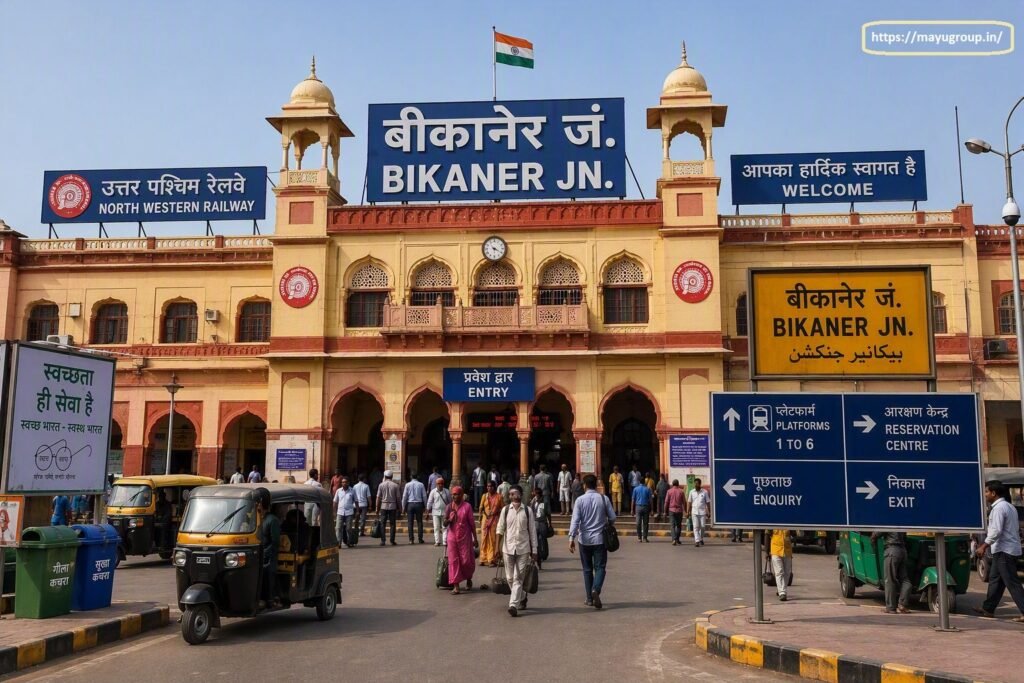
The history of Bikaner Railway Station cannot be understood separately from the development of the wider railway organisation that manages and supports it. Over more than a century, the railway network around Bikaner has developed from a regional transportation system into an important component of North Western Railway. This transformation has influenced not only train operations, but also infrastructure, passenger services, engineering, technology, maintenance and the long-term development of railway stations.
The establishment of railway connectivity brought a new dimension to Bikaner’s development. The first railway link reached Bikaner on 9 December 1891, and subsequent expansion gradually connected the city with important destinations across northern and western India. Bikaner State Railway was established in 1924, while a direct railway connection between Bikaner and Delhi was developed in 1941. Following the reorganisation of Indian Railways, Bikaner Division was formed in 1952. These developments established the institutional foundations on which the modern railway system in the region would grow.
The railway’s importance increased as Bikaner expanded economically and socially. Rail connectivity helped movement of passengers, agricultural products, minerals, commercial goods and other materials. The railway also became important for tourism because Bikaner is known for its forts, palaces, traditional architecture, handicrafts, food and desert culture.
With increasing railway traffic came the need for better management. A railway station is dependent on a large network of supporting activities. Trains require track infrastructure, signalling, electrical systems, maintenance facilities and operating personnel. Passengers require platforms, waiting areas, sanitation, information, accessibility and security. Goods traffic requires loading, unloading and logistics facilities.
Therefore, the growth of Bikaner Railway Station has always been connected with the growth of Bikaner Division.
A major organisational development took place with the creation of North Western Railway. The zone became operational on 1 October 2002, with headquarters at Jaipur. Its formation brought together the Jaipur and Ajmer divisions from Western Railway and the Jodhpur and Bikaner divisions from Northern Railway.
For Bikaner, this was an important change. The station became part of a larger zonal structure capable of coordinating railway operations across a significant geographic region. The new organisational framework created opportunities for better coordination of engineering, operations, commercial services, passenger amenities and infrastructure development.
The Bikaner Division continued to perform an important role within North Western Railway. Its network serves a large area and supports both passenger and freight movement. The division’s historical records describe the importance of commodities such as food grains and gypsum in goods traffic, demonstrating that the railway’s role extends beyond passenger transportation.
This economic function is particularly important in a region such as Rajasthan. Railways provide an efficient means of transporting large quantities of goods over long distances, supporting agriculture, industry, construction and commerce. The movement of goods also contributes indirectly to employment and regional economic activity.
As railway traffic developed, infrastructure had to evolve accordingly.
One important phase was the transition from metre gauge to broad gauge. The Bikaner Division’s historical development records the beginning of broad-gauge conversion in 1978 and subsequent conversion of important routes.
Gauge conversion was more than an engineering project. It increased interoperability and helped connect Bikaner more effectively with the national railway network. Better connectivity meant greater opportunities for passengers and freight.
The station itself consequently became part of a changing transportation environment.
However, development in the modern railway era is no longer measured only by track capacity and connectivity. Passenger expectations have changed considerably. Travellers increasingly expect clean surroundings, reliable information, comfortable waiting spaces, good sanitation, accessibility and responsible environmental management.
These changing expectations created a new challenge for railway management.
The question was no longer simply how to move more trains and passengers.
It was also how to operate railway facilities more efficiently and sustainably.
This became especially significant as environmental concerns gained importance across India. Railway stations consume electricity and water, generate waste and operate continuously. Their environmental performance therefore has a direct relationship with resource conservation.
For Bikaner, the issue has an additional regional dimension.
The city lies in a desert environment where water conservation and efficient resource management are particularly important. A busy railway station must balance the requirements of thousands of passengers with responsible consumption of natural resources.
This created an opportunity to connect railway development with sustainability.
The emergence of the GGBC Green Railway Stations Rating System provided a structured framework for this purpose. The Global Green Building Council describes the rating system as an initiative developed in association with Indian Railways to encourage green concepts at railway stations, reduce environmental impacts associated with operation and maintenance, and improve the overall commuter experience.
For Bikaner Railway Station, participation in such a framework represented an important evolution.
The station had already experienced many forms of development: historical connectivity, organisational restructuring, technological change, gauge conversion and increasing passenger expectations. Green certification added another dimension — environmental performance.
This demonstrates that railway growth is a continuous process.
Each generation inherits infrastructure created by earlier generations and adapts it to new requirements. The railway station of the nineteenth century was designed around the needs of its time. The station of the twenty-first century must respond to digital technology, increased passenger mobility, environmental challenges and higher expectations of public service.
North Western Railway provides the organisational structure through which this evolution can take place.
Within that structure, Bikaner Railway Station represents a local institution with a regional role. Its performance affects passengers travelling to and from Bikaner, railway employees working at the station, businesses operating around the railway ecosystem and visitors arriving in the city.
The green certification journey therefore needs to be viewed against this long history of institutional growth.
The certificate received in 2021, with validity stated through 2024, did not mark the beginning of Bikaner Railway Station’s development. Rather, it represented another stage in a process that had begun more than a century earlier.
The railway first brought connectivity.
Organisational development brought stronger administration.
Technological development brought greater operational capability.
Modern passenger expectations brought a focus on comfort and service.
And sustainability introduced a new responsibility: ensuring that development takes place with greater awareness of environmental resources.
The growth of North Western Railway and Bikaner Division therefore provides the foundation for understanding the station’s green transformation.
Bikaner Railway Station is part of a railway system that has continually adapted to changing circumstances. Its journey from historic railway connectivity to modern green certification demonstrates an important principle: true infrastructure growth is not only about expansion; it is also about improvement, efficiency, responsibility and the ability to serve future generations.
That principle becomes even more important in the next stage of the story, when the focus moves from organisational development to the meaning and purpose of green railway station certification.
#NorthWesternRailway
Chapter 3 The Journey Towards Green Railway Station Certification
The development of Bikaner Railway Station entered a new and significant phase when environmental sustainability became an important part of its institutional journey. For more than a century, the railway had primarily been associated with connectivity, mobility, economic development and public service. As environmental awareness increased, however, the definition of a modern railway station began to change.
A railway station is a living public environment. It operates for long hours, serves large numbers of passengers, consumes electricity and water, generates waste and requires continuous cleaning and maintenance. Every one of these activities has an environmental dimension. Consequently, improving the environmental performance of a railway station can create benefits not only for the railway organisation but also for passengers and the surrounding community.
For Bikaner Railway Station, this issue has particular importance because of its location in Rajasthan. Bikaner is situated in an arid region where water and other natural resources require careful management. Efficient resource utilisation is therefore not simply a matter of environmental policy; it is closely connected with responsible public infrastructure management.
The introduction of the GGBC Green Railway Stations Rating System created a structured opportunity to address these issues. The Global Green Building Council explains that the rating system was developed in association with Indian Railways to facilitate the adoption of green concepts at railway stations, reduce environmental impacts associated with station operation and maintenance, and enhance the overall commuter experience.
This approach is important because it treats sustainability as a comprehensive process rather than as a single improvement.
A railway station cannot become genuinely green simply by installing a few energy-efficient lights or placing waste bins on platforms. Sustainable performance requires a combination of planning, implementation, maintenance, monitoring and awareness.
The certification journey therefore involves a change in mindset.
Instead of asking only whether a facility is functioning, management begins to ask whether it is functioning efficiently.
Instead of asking only whether water is available, the question becomes whether water is being used responsibly.
Instead of asking only whether waste is removed, the focus expands to how waste is collected, segregated, processed and disposed of.
Instead of looking only at passenger movement, attention is also given to passenger comfort and environmental quality.
This broader perspective forms the foundation of a green railway station.
For Bikaner, the journey towards certification can be understood as part of the larger transformation taking place across Indian Railways. Railway stations are increasingly being viewed as public facilities where environmental performance and passenger experience must operate together.
The concept of green infrastructure also introduces the idea of resource efficiency.
Energy efficiency is one of the most visible areas. Railway stations require lighting, electrical equipment, communication systems, ventilation and numerous other services. Because these systems operate for extended periods, even small improvements in efficiency can have cumulative benefits.
Water efficiency is equally important. Passenger toilets, cleaning operations, landscaping and other activities require water. In an arid city, reducing unnecessary consumption becomes particularly valuable.
Waste management is another essential component.
Thousands of passengers may pass through a railway station over the course of a day. Food packaging, bottles, paper and other materials can quickly accumulate. A sustainable system therefore requires regular collection, appropriate segregation and responsible disposal. Cleanliness is not only a visual issue; it is an important component of public health and passenger experience.
The green station philosophy also recognises that sustainability depends on people.
Employees have to understand operational requirements.
Maintenance teams have to keep systems working efficiently.
Housekeeping teams have to maintain cleanliness.
Passengers have to use facilities responsibly.
Vendors and other station stakeholders also have a role.
Therefore, certification can encourage an organisational culture in which environmental responsibility becomes a shared objective.
The importance of such a culture is often greater than the certificate itself.
A certificate is a formal recognition at a particular point in time. A culture of sustainability can continue for years.
This distinction is particularly relevant to the Bikaner Railway Station certification associated with 2021, with the stated validity extending to 2024.
The certification period represents a milestone, but it should not be regarded as the end of the journey. Instead, it provides a reference point against which future improvements can be considered.
Once a station has undertaken the process of green assessment, it gains greater awareness of the relationship between its daily operations and environmental performance.
This awareness can influence future decisions.
When equipment requires replacement, energy efficiency can become a consideration.
When water systems are maintained, wastage can be examined.
When waste management procedures are reviewed, segregation and resource recovery can be considered.
When passenger facilities are upgraded, comfort and environmental quality can be incorporated into planning.
In this way, certification can influence the organisation even after the formal assessment has concluded.
The journey also has a communication value.
A recognised green certification allows the railway organisation to communicate its commitment to sustainability to employees, passengers and the wider community. The certificate becomes a symbol of an institutional direction.
For passengers arriving at Bikaner, this message has particular significance. A railway station is often the first public facility experienced by visitors entering the city. Its condition can influence the first impression of Bikaner.
A clean, efficient and environmentally conscious railway station can therefore contribute to the city’s public image.
The certification journey also reflects a broader shift in infrastructure philosophy.
Earlier generations often measured development through physical expansion: more tracks, larger buildings, greater capacity and increased connectivity.
Modern development adds another measurement: how responsibly the infrastructure operates.
This is the central significance of green railway certification.
It does not replace the traditional functions of the railway. Trains must continue to run safely and efficiently. Passengers must continue to receive reliable services. Railway employees must continue to perform their duties.
Instead, sustainability adds another layer to these responsibilities.
The objective is to create infrastructure that serves today’s passengers without unnecessarily compromising the resources and environmental conditions required by tomorrow’s communities.
For Bikaner Railway Station, the green certification journey therefore represents a natural continuation of its historical development.
The station began as an instrument of connectivity.
It grew into an important regional railway facility.
It became part of North Western Railway’s wider institutional network.
And it subsequently entered the era of green infrastructure.
The journey toward certification demonstrates that railway development is not a static process. It is a continuing cycle of adaptation, improvement and learning.
The 2021 certification stands within this larger story as a milestone of environmental recognition. Its greatest significance, however, lies in the opportunity it creates for continued improvement.
The future of Bikaner Railway Station will depend not simply on maintaining a certificate, but on maintaining the principles behind it: efficient resource use, environmental responsibility, cleanliness, passenger comfort, operational discipline and continual improvement.
In this sense, the journey toward green certification is not a destination.
It is the beginning of a new chapter in the station’s long history.
#GreenRailwayStation
Chapter 4 Green Transformation Through Energy, Water and Resource Efficiency
The green transformation of Bikaner Railway Station represents an important shift in the way railway infrastructure can be understood and managed. A modern railway station must do much more than provide a platform for trains. It must support passengers, employees, commercial activities, sanitation, information systems, lighting, security and numerous operational functions while using natural resources responsibly.
For Bikaner Railway Station, the importance of resource efficiency is particularly strong because of the environmental conditions of Rajasthan. The region’s arid climate makes careful management of water and energy especially relevant. The adoption of green principles therefore provides an opportunity to connect railway operations with the broader objective of sustainable development.
The GGBC Green Railway Stations Rating System provides a framework through which railway stations can consider environmental performance alongside operational requirements. Its stated objective is to facilitate green concepts, reduce adverse environmental impacts from station operation and maintenance, and improve the commuter experience.
One of the most important areas of this transformation is energy efficiency.
A railway station is an energy-intensive public facility. Lighting is required across platforms, entrances, waiting areas, circulation spaces and other operational areas. Electrical systems support communication, information displays, ticketing, security and other passenger services. Some facilities may require ventilation, cooling or other forms of environmental control.
Because station activities continue for long periods, efficient energy management can have a cumulative effect.
The principle is straightforward: energy should be used where it provides a genuine operational or passenger benefit, while unnecessary consumption should be reduced.
Efficient lighting systems, appropriate controls, regular maintenance and responsible operating practices can all contribute to this objective. The wider development of energy-efficient technology also provides railway organisations with opportunities to improve performance as equipment reaches the end of its useful life.
However, energy efficiency is not only a technical matter.
It is also a management issue.
Equipment must be maintained properly. Faults must be identified. Operating schedules must be monitored. Employees need awareness of energy-saving practices. When these elements work together, efficiency becomes part of everyday station management rather than a one-time project.
The same principle applies to water management.
Water is one of the most valuable resources in Bikaner’s environment. A railway station requires water for sanitation, cleaning and other operational purposes. With large passenger volumes, even small amounts of avoidable wastage can become significant over time.
A green approach encourages attention to the complete water cycle.
Water consumption needs to be understood and monitored. Leaks and unnecessary losses need to be addressed. Efficient fixtures and responsible cleaning practices can reduce demand. Where appropriate and technically feasible, sustainable water-management measures can support the station’s long-term environmental performance.
The objective is not simply to use less water.
It is to use water intelligently.
This distinction is important. A successful railway station cannot compromise sanitation or passenger comfort in the name of conservation. Instead, the goal is to achieve both: reliable services and responsible resource use.
Waste management forms another major part of the green transformation.
Railway stations are among the most active public spaces in a city. Passengers may carry food, beverages, newspapers, packaging and other materials onto the premises. Vendors and operational activities also contribute to waste generation.
Without an organised system, waste can quickly affect cleanliness and passenger experience.
A sustainable waste strategy therefore begins with prevention and responsible collection. Segregation is also important because different materials require different handling. Organic waste, recyclable materials and other categories can be managed more effectively when they are separated at the appropriate stage.
But infrastructure alone cannot solve the waste problem.
Passenger behaviour is essential.
Clearly visible bins, appropriate signage and awareness can encourage passengers to dispose of waste correctly. Railway employees and housekeeping personnel then become the second part of the system, ensuring that waste is collected and managed consistently.
This creates a partnership between infrastructure and people.
A green railway station is therefore not simply a building with environmentally efficient equipment. It is a place where environmental responsibility becomes part of everyday behaviour.
The same philosophy applies to cleanliness and passenger comfort.
Clean platforms, waiting areas, toilets and circulation spaces influence the passenger’s perception of the railway. Cleanliness also supports public health and creates a more welcoming environment for visitors.
For Bikaner, this has an additional civic dimension.
Many visitors encounter the city for the first time through its railway station. The station therefore contributes to Bikaner’s public image. A well-maintained environment communicates a sense of organisation and responsibility.
Green infrastructure can strengthen this impression.
Resource efficiency can also support operational reliability. Efficient equipment is often easier to monitor and maintain. Reduced wastage can lower unnecessary operating expenditure. Better systems can make it easier to identify problems and take corrective action.
Consequently, sustainability and efficiency are not opposing objectives.
They can reinforce each other.
This is an important lesson from the green certification journey. Environmental responsibility does not mean sacrificing operational performance. Instead, it encourages the railway to examine whether resources are being used in the most effective manner.
The 2021 certification associated with Bikaner Railway Station, stated as valid through 2024, can be viewed in this context as recognition of a structured commitment to green railway principles.
The real value of such recognition, however, lies in continuity.
Technology will continue to improve. Passenger expectations will change. Railway infrastructure will require upgrades. Environmental conditions and regulations may evolve.
Therefore, the station’s green journey must also remain dynamic.
Future improvements may involve more advanced monitoring systems, improved energy management, renewable-energy integration where suitable, improved water conservation, better waste processing and enhanced passenger awareness.
Each improvement may appear small when viewed separately.
Together, they can create a significant transformation.
The story of Bikaner Railway Station demonstrates that sustainability begins with practical decisions. A light switched off when not required, a leak repaired before water is wasted, waste placed in the correct collection stream, equipment maintained efficiently or a passenger encouraged to protect the station environment can all become part of a larger system.
This is the essence of green transformation.
It is not a single project completed on a particular date.
It is a continuous process of reducing waste, improving efficiency, protecting resources and creating better public spaces.
For Bikaner Railway Station, the movement toward green infrastructure represents another stage in a long history of railway development.
The railway first transformed mobility.
Modernisation transformed operations.
Green certification adds another transformation: responsible resource management.
Together, these developments create a railway station prepared not only to serve the passengers of today but also to contribute to a more sustainable infrastructure system for the future.
#GGBCGreenStation
Chapter 5 Waste Management, Cleanliness and Passenger Experience
A railway station is one of the most visible public spaces in any city. Every day, passengers arrive, depart, wait for trains, purchase food, use sanitation facilities and move through platforms and circulation areas. Because of this continuous activity, cleanliness and waste management are not secondary concerns. They are fundamental components of the quality, reputation and sustainability of a railway station.
For Bikaner Railway Station, these responsibilities have an added importance. The station is an important gateway to Bikaner, a city recognised for its historic architecture, cultural heritage, tourism and desert environment. A visitor’s first impression of the city can begin at the railway station. Consequently, maintaining a clean, organised and environmentally responsible station contributes not only to passenger satisfaction but also to the wider image of Bikaner.
The green transformation associated with the GGBC Green Railway Stations Rating System places environmental responsibility within this larger passenger experience. GGBC describes the rating system as a framework intended to reduce environmental impacts associated with railway station operation and maintenance while enhancing the commuter experience.
This approach changes the way cleanliness can be understood.
Traditionally, cleanliness might be considered a housekeeping responsibility. In a green railway station, however, it becomes part of an integrated environmental management system.
Waste must be reduced where possible.
It must be collected efficiently.
Different types of waste should be managed appropriately.
Public areas must be cleaned regularly.
Passengers must be encouraged to participate.
Railway employees and service providers must work together.
The result is a system rather than an occasional cleaning activity.
The Challenge of Waste at a Busy Railway Station
Railway stations generate many different types of waste. Passengers may bring packaged food, bottled beverages, newspapers, paper products and other materials. Vendors generate additional packaging and food-related waste. Operational activities create their own waste streams.
When large numbers of people use the same public facility, even small individual contributions can become substantial.
This makes waste management a continuous task.
The first requirement is collection. Waste needs to be removed from passenger areas before it accumulates and affects cleanliness. The second requirement is segregation, which can make subsequent handling more effective.
Segregation also introduces an important environmental message.
When passengers see different waste categories and appropriate disposal facilities, they are reminded that waste is not all the same. Some materials can potentially be recovered or recycled, while others require different treatment.
The infrastructure therefore becomes an educational tool.
The Human Side of Cleanliness
No waste management system can succeed without human participation.
Railway employees are responsible for maintaining operational discipline, while housekeeping personnel perform essential daily work. Vendors have a role in maintaining their areas, and passengers determine how effectively public facilities are used.
A passenger who places waste in the appropriate bin contributes to the system.
A passenger who leaves waste on a platform creates additional work and can undermine the cleanliness of the public space.
Therefore, awareness is an important part of sustainability.
Signage, visual communication, strategically located bins and public messaging can encourage better behaviour. Simple instructions can make responsible disposal easier.
This demonstrates an important principle: environmental sustainability depends not only on technology but also on behaviour.
Cleanliness and Passenger Confidence
A clean railway station creates a sense of order.
Passengers entering a clean platform or waiting area generally experience a greater sense of comfort and confidence. Clean toilets and properly maintained public facilities are especially important because sanitation has a direct connection with passenger well-being.
For families, elderly travellers, children and long-distance passengers, the quality of station facilities can significantly influence the overall travel experience.
Cleanliness therefore becomes part of passenger service.
It is also connected with the reputation of the railway organisation.
A railway station is a public representation of the institution responsible for it. When the environment is well maintained, passengers can see evidence of organised management.
The green certification journey strengthens this connection between environmental performance and service quality.
Bikaner as a Gateway
Bikaner Railway Station occupies a special position because of the city’s tourism importance.
Travellers visiting Bikaner may arrive by train from distant parts of India. For many of them, the railway station becomes their first physical experience of the city.
The station therefore has a role beyond transportation.
It is part of the city’s welcome.
A clean and well-organised station can complement Bikaner’s identity as a historic and culturally significant destination. It can communicate a message of hospitality and civic responsibility.
This is particularly meaningful in a city where traditional heritage and modern development exist side by side.
The challenge is to preserve the character of the historic city while providing contemporary public infrastructure.
Green railway principles provide one way of connecting these objectives.
From Cleanliness to Sustainability
The difference between conventional cleanliness and sustainable cleanliness is important.
Conventional cleaning focuses primarily on removing visible dirt and waste.
Sustainable cleaning asks additional questions:
How much waste is being generated?
Can waste generation be reduced?
Can materials be segregated?
Are resources being used efficiently?
Can cleaning practices minimise unnecessary water or chemical consumption?
Can passengers participate in keeping the station clean?
These questions turn housekeeping into a broader environmental responsibility.
The same philosophy can influence procurement and maintenance. Durable materials, efficient equipment and responsible operating practices can reduce environmental impacts over the life of a facility.
Thus, sustainability becomes integrated into routine station management.
The Role of Certification
The green certification associated with Bikaner Railway Station in 2021, with validity stated through 2024, can be viewed as an important recognition of this wider environmental approach.
Certification creates a formal benchmark.
It provides an opportunity for the organisation to examine its practices and identify areas for improvement. It also provides a visible symbol that environmental responsibility is being taken seriously.
However, certification should not be treated as a final achievement.
The real challenge is maintaining the standards and principles associated with it.
A railway station changes continuously. Passenger numbers vary. Facilities require maintenance. Equipment becomes older. New technologies become available.
Therefore, environmental management must also be continuous.
Building a Culture of Responsibility
The long-term success of green station initiatives depends on creating a culture of responsibility.
Employees need to understand why green practices matter.
Passengers need to see the benefits.
Vendors and contractors need to participate.
Management needs to monitor performance.
When all these groups contribute, sustainability becomes part of the station’s identity.
This culture can also influence younger passengers. A child travelling through Bikaner Railway Station who sees proper waste segregation and clean public facilities is exposed to an example of responsible public behaviour.
In this way, the station can become a place of environmental awareness as well as transportation.
Looking Forward
The future of waste management at railway stations will increasingly depend on better segregation, recycling, resource recovery, data-based monitoring and passenger participation.
Digital communication can help educate travellers.
Improved collection systems can increase efficiency.
Better coordination with authorised waste-management systems can support responsible disposal.
New technologies may further reduce the environmental impact of station operations.
For Bikaner Railway Station, these possibilities provide opportunities to build on the foundation represented by green certification.
The journey is ultimately about more than removing waste.
It is about creating a public environment in which passengers feel comfortable, employees can work effectively, resources are respected and environmental responsibility becomes part of everyday life.
Bikaner Railway Station’s green journey therefore demonstrates an important lesson: cleanliness is the visible face of sustainability, while responsible waste management is one of its essential foundations.
The station’s future growth can continue to connect these two ideas — providing better passenger experiences while reducing environmental impact.
In this way, every clean platform, properly managed waste stream and informed passenger becomes part of a much larger story: the transformation of a historic railway station into a more responsible and sustainable gateway to Bikaner.
#SustainableRailways
Chapter 6 People, Processes and Organisational Transformation
The transformation of Bikaner Railway Station into a greener and more environmentally responsible railway facility cannot be explained only through buildings, equipment or certification documents. Behind every successful railway operation are people, processes and a culture of responsibility. The green certification journey therefore represents not only an environmental transformation but also an organisational one.
A railway station is a complex working environment. Passengers may see platforms, trains, waiting areas, ticket counters, signage and public facilities, but behind these visible elements is a large network of employees and service providers. Station management, engineering teams, electrical personnel, maintenance workers, housekeeping staff, operating personnel, security teams and other stakeholders each have different responsibilities. Their combined efforts determine how effectively the station functions.
The introduction of green principles creates an opportunity to bring these different responsibilities together around a common objective: efficient, responsible and sustainable railway operations.
Sustainability Begins With People
Technology can make a railway station more efficient, but technology alone cannot create sustainability.
An efficient lighting system still needs maintenance.
A water-saving fixture still requires responsible use.
Waste-segregation bins still depend on passengers and employees using them correctly.
Energy-monitoring systems are useful only when information is reviewed and acted upon.
This makes people the foundation of environmental performance.
For Bikaner Railway Station, the green certification journey can therefore be understood as an opportunity to strengthen awareness among everyone involved in station operations.
Employees become important environmental stakeholders.
A housekeeping worker may notice unnecessary water consumption.
An electrical employee may identify inefficient equipment.
A maintenance team may discover a leaking pipeline.
A station supervisor may observe recurring waste-management problems.
A passenger may suggest an improvement based on daily experience.
Each observation can contribute to continuous improvement.
From Individual Duties to Shared Responsibility
Traditional organisational structures often divide responsibilities into departments. This is necessary for effective management, but sustainability frequently crosses departmental boundaries.
Energy management may involve electrical and engineering teams.
Water management may involve engineering, sanitation and housekeeping.
Waste management may involve housekeeping, commercial activities, vendors and passenger awareness.
Passenger comfort may involve station management, maintenance, sanitation and public-service teams.
Therefore, green management encourages collaboration.
The objective is to create a situation in which sustainability is not regarded as the responsibility of one person or one department.
Instead, it becomes a shared institutional objective.
This is one of the most valuable outcomes that a structured green certification process can encourage.
The Importance of Processes
A successful railway station operates through established procedures.
Trains have schedules.
Equipment has maintenance cycles.
Cleaning activities have routines.
Passenger services follow operational protocols.
The same principle can be applied to environmental management.
Resource consumption can be monitored.
Maintenance schedules can include checks for leaks and inefficient equipment.
Waste collection can follow defined procedures.
Cleaning can be organised around passenger movement and operational requirements.
Environmental performance can be reviewed periodically.
These processes create consistency.
Without processes, sustainability may depend on individual enthusiasm. With processes, good practices can become part of normal operations.
This is particularly important for railway stations because personnel and circumstances can change. A system that depends entirely on one experienced employee may weaken when that person moves to another assignment.
A documented and institutionalised process is more resilient.
Training and Awareness
Training is another important element of organisational transformation.
Employees need to understand not only what they are expected to do, but why the activity matters.
For example, if a worker understands that preventing a water leak protects a valuable regional resource, the maintenance task acquires greater meaning.
If a housekeeping worker understands the purpose of waste segregation, the process becomes more than simply placing waste into different containers.
If passengers are informed about responsible disposal, they can become participants rather than passive users.
Awareness therefore connects individual actions with institutional objectives.
Training can also help employees recognise opportunities for improvement.
A worker who understands the principles of energy efficiency may identify unnecessary lighting.
A maintenance employee familiar with water conservation may notice unusual consumption.
A station supervisor who understands environmental objectives may incorporate sustainability into routine inspections.
Small observations can produce significant improvements when they are repeated across a large organisation.
Certification as a Management Tool
The green certification associated with Bikaner Railway Station in 2021, with stated validity through 2024, can be viewed as a management milestone.
Certification provides recognition, but the process leading to certification can also encourage better organisation.
When a facility works toward a recognised rating system, management has an opportunity to examine existing practices systematically.
What resources are being consumed?
Where are improvements possible?
Which systems require attention?
What documentation is needed?
How can environmental performance be maintained?
These questions encourage structured thinking.
The result can be greater institutional awareness even beyond the certification period.
Monitoring and Continuous Improvement
One of the most important lessons of sustainability is that improvement should never stop.
A station may achieve good environmental performance at one point and later experience changes that affect that performance. Equipment ages. Passenger volumes change. New facilities are added. Operational requirements evolve.
Continuous monitoring is therefore essential.
Monitoring does not always require complex technology. Even regular inspections and systematic record-keeping can help identify trends.
If water consumption increases unexpectedly, management can investigate.
If electricity use rises, equipment or operating practices can be examined.
If waste volumes increase, passenger behaviour and collection systems can be reviewed.
The objective is to identify problems early and respond to them.
This creates a cycle:
Measure → Understand → Improve → Monitor Again.
Such a cycle is at the heart of long-term sustainability.
The Role of Leadership
Organisational transformation requires leadership.
Senior management establishes priorities.
Station-level managers translate those priorities into action.
Supervisors communicate expectations.
Employees implement them.
When leaders demonstrate commitment to environmental responsibility, employees are more likely to recognise sustainability as a genuine institutional objective.
Leadership also means recognising good work.
Employees who contribute to cleanliness, resource conservation or operational efficiency should understand that their efforts are valued.
This helps create a positive culture.
Growth Beyond the Certificate
The greatest measure of organisational growth is not the certificate hanging on a wall.
It is what changes in everyday behaviour.
If employees become more conscious of resource consumption, that is growth.
If maintenance becomes more preventive, that is growth.
If waste management becomes more systematic, that is growth.
If passengers experience cleaner and more comfortable facilities, that is growth.
If management begins using environmental performance as part of decision-making, that is growth.
These changes can continue after the formal validity period of the 2021–2024 certification.
The certificate marks a point in time.
The organisational culture can continue much longer.
A Sustainable Institutional Identity
Bikaner Railway Station’s green journey therefore represents an opportunity to build a stronger institutional identity.
The station is part of North Western Railway, an organisation with a long history of adapting to changing technology, passenger needs and infrastructure requirements.
Sustainability is another stage in that evolution.
The future railway employee will need to think not only about whether a facility is operational, but whether it is efficient.
The future station manager will need to consider not only passenger movement but passenger experience.
The future maintenance system will need to consider not only repairs but resource performance.
This represents a significant shift in institutional thinking.
Conclusion
The green transformation of Bikaner Railway Station is ultimately a human story.
Buildings and technologies provide the infrastructure, but people give the infrastructure its purpose.
The certification journey can help create greater awareness, stronger processes and a culture of continual improvement. It can encourage employees, passengers and other stakeholders to understand that sustainability is a shared responsibility.
For Bikaner Railway Station, this organisational transformation forms an important part of its long-term growth.
The historic railway brought connectivity to Bikaner.
Modern railway management brought operational development.
Green certification introduced a stronger focus on environmental responsibility.
The next stage is to make that responsibility permanent.
The true legacy of certification will therefore be measured not only by what was achieved in 2021, but by the habits, systems and values that continue to influence the station long after the certificate’s stated validity period.
#EcoFriendlyInfrastructure
Chapter 7 Certification as a Catalyst for Growth and Continuous Improvement
The certification of Bikaner Railway Station under a green railway station framework represents an important stage in the institution’s continuing development. The stated certification period, beginning in 2021 and extending through 2024, can be viewed as more than a formal recognition of environmental performance. It can also be understood as a catalyst for organisational learning, improved practices and a stronger culture of continuous improvement.
Certification is often associated with a final certificate, an assessment and a formal achievement. However, the deeper value of certification lies in the process that leads to it and the practices that continue afterwards. For a railway station, environmental performance is not something that can be achieved once and then forgotten. The station operates every day, passenger requirements change, equipment ages and new technologies become available. Sustainability therefore requires constant attention.
The GGBC Green Railway Stations Rating System was developed to encourage railway stations to adopt green concepts, reduce environmental impacts associated with operation and maintenance, and improve commuter experience. This philosophy makes certification particularly relevant to Bikaner Railway Station because it connects environmental responsibility with the everyday purpose of railway infrastructure.
From Recognition to Responsibility
Receiving a certificate creates recognition, but it also creates responsibility.
Once a railway station has demonstrated its commitment to green principles, maintaining those principles becomes an important institutional objective. The certificate can serve as a reminder that environmental performance is part of the station’s wider quality standards.
For Bikaner Railway Station, this is especially significant because of its role as a major public gateway in an arid region.
Water conservation, energy efficiency, waste management and cleanliness are not abstract environmental topics. They are directly connected to the daily operation of the station.
The certification process therefore creates a framework within which these issues can receive systematic attention.
Encouraging Better Management
One of the strongest benefits of certification is that it can encourage management to look at existing practices from a different perspective.
A traditional maintenance question might be:
“Is the equipment working?”
A sustainability-oriented question adds:
“Is the equipment working efficiently?”
Similarly, a conventional cleaning question might be:
“Has the area been cleaned?”
A green management approach asks:
“How can the area be cleaned effectively while using resources responsibly?”
These differences may appear small, but together they represent a major change in organisational thinking.
Efficiency becomes part of quality.
The Economic Dimension of Green Growth
Sustainability is often discussed in environmental terms, but efficient resource management can also have an economic dimension.
Reducing unnecessary electricity or water consumption can potentially lower avoidable operating costs. Preventive maintenance can help identify faults before they become expensive failures. Better waste segregation can support more effective material recovery.
The financial benefits of individual measures may vary, but the overall principle is clear: reducing waste is also a form of operational efficiency.
For a large public organisation such as Indian Railways, small improvements can become meaningful when repeated across numerous facilities.
Bikaner Railway Station therefore becomes part of a wider institutional movement in which environmental responsibility and operational efficiency can reinforce one another.
Improving Passenger Experience
Growth should also be measured from the passenger’s perspective.
A railway station is successful when people can travel safely, comfortably and efficiently.
Environmental improvements can contribute directly to this experience.
Clean surroundings make the station more welcoming.
Efficient lighting can improve visibility.
Well-managed sanitation facilities support comfort and hygiene.
Organised waste management reduces unpleasant conditions.
Responsible water management supports reliable sanitation.
Together, these elements create a better public environment.
The green certification philosophy is therefore important because it does not treat sustainability as separate from passenger service. Instead, environmental performance becomes part of the overall experience of travelling through the station.
Creating a Culture of Continuous Improvement
The greatest long-term benefit of certification may be cultural.
Once employees become familiar with sustainability principles, they may begin to identify improvement opportunities in their daily work.
A maintenance worker may notice a leaking pipe.
An electrical employee may identify equipment operating unnecessarily.
A housekeeping team may recognise an opportunity to improve waste segregation.
A station supervisor may identify a passenger-awareness requirement.
These observations can create a continuous improvement cycle.
The principle is simple:
Identify → Correct → Monitor → Improve.
Over time, this process can become part of routine management.
Technology and the Next Stage of Growth
Technology provides another pathway for post-certification development.
Modern railway infrastructure increasingly uses digital systems for communication, monitoring and management. Environmental performance can also benefit from technology.
Smart meters can provide better information about resource consumption.
Automated controls can improve energy management.
Digital records can help identify consumption patterns.
Modern equipment can operate more efficiently than older systems.
The important consideration is not simply adopting technology, but using technology intelligently.
A new system should provide measurable operational or environmental value and remain practical to maintain.
For Bikaner Railway Station, technological development can therefore complement the foundation created by green certification.
Learning from the Certification Process
Certification can also generate institutional knowledge.
During the assessment process, teams may learn more about the station’s resource consumption, operational practices, maintenance requirements and environmental opportunities.
This knowledge does not have to disappear when the certificate expires.
It can become part of future planning.
When a facility is renovated, lessons from earlier environmental assessments can inform decisions.
When equipment is replaced, efficiency can be considered.
When passenger facilities are upgraded, environmental performance can be included in the design process.
In this way, certification becomes a learning experience rather than merely an award.
Beyond 2024
The stated validity of the Bikaner Railway Station certification extends to 2024, but sustainability itself is not limited by certification dates.
The end of a formal validity period should not mean the end of green practices.
Instead, it provides an opportunity to review achievements and establish new objectives.
What worked well?
Which practices should be strengthened?
Where can further efficiency be achieved?
What new technologies are available?
How have passenger expectations changed?
These questions can guide the next stage.
A mature sustainability programme does not depend entirely on the presence of a certificate. The certificate provides recognition, while the underlying practices provide lasting value.
Institutional Reputation
Certification can also contribute to institutional reputation.
Passengers increasingly notice the environmental quality of public facilities. A railway station that demonstrates attention to cleanliness, efficiency and environmental responsibility can strengthen public confidence.
For North Western Railway, such achievements can also contribute to the wider image of the organisation as an institution capable of adapting to modern environmental priorities.
Bikaner Railway Station’s certification therefore has significance beyond its physical premises.
It forms part of a larger narrative of railway modernisation.
A Platform for Future Development
The most valuable way to understand certification is as a platform.
It provides a foundation on which future improvements can be built.
The station can continue to strengthen resource efficiency, improve waste management, enhance passenger facilities and increase environmental awareness.
Future development may also integrate sustainability with accessibility, digital services, renewable energy, improved water management and more sophisticated monitoring.
Each generation can build on the work of the previous one.
That is how infrastructure develops sustainably.
Conclusion
The green certification journey of Bikaner Railway Station represents an important transition from recognition to responsibility.
The 2021 certification, with stated validity through 2024, provides a milestone in the station’s environmental development. More importantly, it demonstrates the potential of certification to encourage improved management, stronger employee awareness, better resource efficiency and enhanced passenger experience.
The real achievement is not the certificate itself.
It is the culture that can grow around it.
A certificate can be displayed on a wall, but sustainable practices must be displayed through everyday operations.
For Bikaner Railway Station, the future opportunity is therefore clear: preserve the lessons of the certification period, continue measuring performance, adopt practical improvements and maintain a commitment to responsible railway infrastructure.
The station’s historic journey began with connectivity.
Its modern journey is about sustainable connectivity.
And its future growth will depend on the ability to combine reliable railway service with environmental responsibility, operational efficiency and continual improvement.
#IndianRailways
Chapter 8 Bikaner Railway Station as a Model of Sustainable Public Infrastructure
The journey of Bikaner Railway Station from a historic railway facility to a certified green railway station reflects a larger transformation taking place in public infrastructure across India. Railways have traditionally been associated with transportation, connectivity and economic development. Today, these responsibilities are increasingly accompanied by another important objective: sustainability.
For Bikaner Railway Station, the green certification journey provides an opportunity to understand how environmental responsibility can become part of everyday public infrastructure. The station is not an isolated building. It is a constantly active environment where passengers, employees, vendors, railway systems and the surrounding city interact.
The stated GGBC Green Railway Stations Rating System certification associated with Bikaner Railway Station in 2021, with validity through 2024, therefore represents an important milestone in this broader transformation.
A Railway Station as Public Infrastructure
Public infrastructure exists to serve society.
A railway station connects people to employment, education, healthcare, tourism, family and business opportunities. It supports the movement of goods and contributes to regional economic activity.
Because of this public role, the quality of railway infrastructure affects more than railway passengers.
A well-managed station contributes to the character of the city around it.
Bikaner Railway Station occupies an especially important position because Bikaner is both a historic city and a destination for domestic and international visitors. Travellers arriving by train may experience the station before they encounter the city’s famous forts, palaces, markets and cultural attractions.
The station therefore becomes part of the city’s identity.
A sustainable station can communicate a message of modernity while respecting the environmental conditions of Rajasthan.
Sustainability in an Arid Environment
Bikaner’s desert environment makes resource conservation particularly meaningful.
Water is an essential resource in every railway station, but in an arid region its efficient management has even greater significance. Similarly, energy efficiency can help reduce unnecessary resource consumption while maintaining passenger comfort and operational requirements.
The green railway station philosophy encourages attention to these issues as part of a broader environmental strategy.
Sustainability does not mean reducing essential services.
Passengers still require clean toilets.
Platforms still require lighting.
Waiting areas must remain comfortable.
Information systems must operate reliably.
Cleaning must be maintained.
The objective is to provide these services while using resources intelligently.
This balance is one of the defining characteristics of sustainable infrastructure.
The Passenger at the Centre
A railway station is ultimately designed around people.
Environmental improvements have little value if they make passenger services difficult or uncomfortable. Therefore, the strongest green initiatives are those that improve both environmental performance and user experience.
Clean public areas can improve comfort.
Efficient lighting can support safety and visibility.
Better waste management can create a more pleasant environment.
Responsible water management can support reliable sanitation.
Clear environmental communication can encourage passengers to participate.
This relationship between sustainability and passenger experience is central to the green station concept. The Global Green Building Council states that the Green Railway Stations rating system aims not only to reduce environmental impacts but also to enhance the overall commuter experience.
For Bikaner, this creates an opportunity to make environmental responsibility visible to the public.
Creating Awareness Through Everyday Experience
One of the greatest strengths of a railway station is its ability to reach large numbers of people.
A sustainability message displayed in a public railway facility can potentially reach thousands of passengers.
When travellers encounter waste segregation, water-saving facilities, energy-efficient systems or environmental information, they experience sustainability rather than simply hearing about it.
This can influence behaviour beyond the station.
A passenger who learns to segregate waste at the railway station may be encouraged to practise segregation at home.
A traveller who notices water conservation measures may become more conscious of water use.
A child travelling with family may learn that public spaces require collective responsibility.
In this way, a railway station can function as an informal environmental education centre.
The Role of Employees and Stakeholders
A sustainable public facility requires cooperation among many stakeholders.
Railway employees operate and maintain the station.
Housekeeping teams maintain cleanliness.
Engineering personnel maintain infrastructure.
Commercial operators interact with passengers.
Vendors generate and manage commercial waste.
Passengers use the facilities.
Local communities experience the station’s wider environmental impact.
Each stakeholder has a different responsibility, but the combined objective is the same: maintain a safe, efficient, clean and environmentally responsible railway environment.
This creates an important lesson for sustainable infrastructure.
No single department can achieve sustainability alone.
It requires coordination.
A Model for Continuous Improvement
Calling a railway station a model does not mean claiming that development is complete.
A model is valuable because it demonstrates a direction.
The certification associated with Bikaner Railway Station provides such a direction. It demonstrates that a railway facility can incorporate environmental principles into its management and operations.
The next step is continual improvement.
Technology will continue to develop.
Passenger expectations will change.
Climate-related concerns may become more important.
New energy and water-management solutions may become available.
Waste-management practices will evolve.
A sustainable station must therefore remain adaptable.
The most effective model is not a fixed model.
It is a learning model.
Connecting Heritage with Modernity
Bikaner is known for its historic character. The city represents centuries of architecture, culture and tradition.
The railway station is part of this heritage of connectivity.
The green transformation adds a modern layer to that historical identity.
It demonstrates that heritage and sustainability do not have to compete.
A city can preserve its cultural character while developing modern infrastructure.
The railway station can serve traditional tourism while adopting contemporary environmental principles.
This combination is especially relevant for cities across Rajasthan, where heritage tourism and modern urban development exist together.
Bikaner can therefore be seen as an example of how historic cities can respond to modern sustainability requirements without abandoning their identity.
Economic Benefits of Sustainable Infrastructure
Environmental responsibility can also support economic efficiency.
Efficient resource use can reduce unnecessary consumption.
Better maintenance can extend equipment life.
Improved waste management can reduce disposal requirements.
A comfortable and attractive station can contribute to a positive tourism experience.
These effects can accumulate over time.
Sustainable infrastructure therefore should not be regarded solely as an environmental expense. When carefully planned, it can contribute to operational efficiency and long-term value.
The greatest benefit comes when environmental, social and economic objectives are considered together.
Looking Towards the Future
The future of Bikaner Railway Station can build on the foundation established through its green certification journey.
Future development could involve more sophisticated energy monitoring, improved water conservation, enhanced waste segregation, renewable-energy applications where appropriate, digital passenger information and stronger environmental awareness programmes.
The exact technologies may change, but the underlying objective will remain constant: provide reliable railway services while using resources responsibly.
This is particularly important because railway infrastructure is designed for long-term use.
Decisions made today can influence environmental performance for many years.
Therefore, every improvement should be considered not only for its immediate benefit but also for its long-term value.
Conclusion
Bikaner Railway Station represents an important intersection between history, mobility, public service and environmental responsibility.
Its journey toward green certification shows how a traditional railway facility can adapt to changing expectations.
The 2021 certification, stated as valid through 2024, can be understood as a milestone in that journey.
Its greatest importance lies not simply in recognition, but in the opportunity to create lasting systems of responsible resource use, cleanliness, passenger comfort and organisational awareness.
A sustainable railway station is ultimately more than a green building.
It is a green public institution.
It connects people while respecting resources.
It supports economic activity while considering environmental impact.
It serves today’s passengers while preparing infrastructure for tomorrow.
For Bikaner, this creates a powerful vision of the future: a railway station that honours its long history of connectivity while becoming an example of how public infrastructure can grow responsibly in one of India’s most distinctive environments.
The railway brought Bikaner closer to the nation.
The green transformation can help bring Bikaner’s railway future closer to a more sustainable India.
#RailwayModernization
Chapter 9 The Future Growth of Bikaner Railway Station After Green Certification
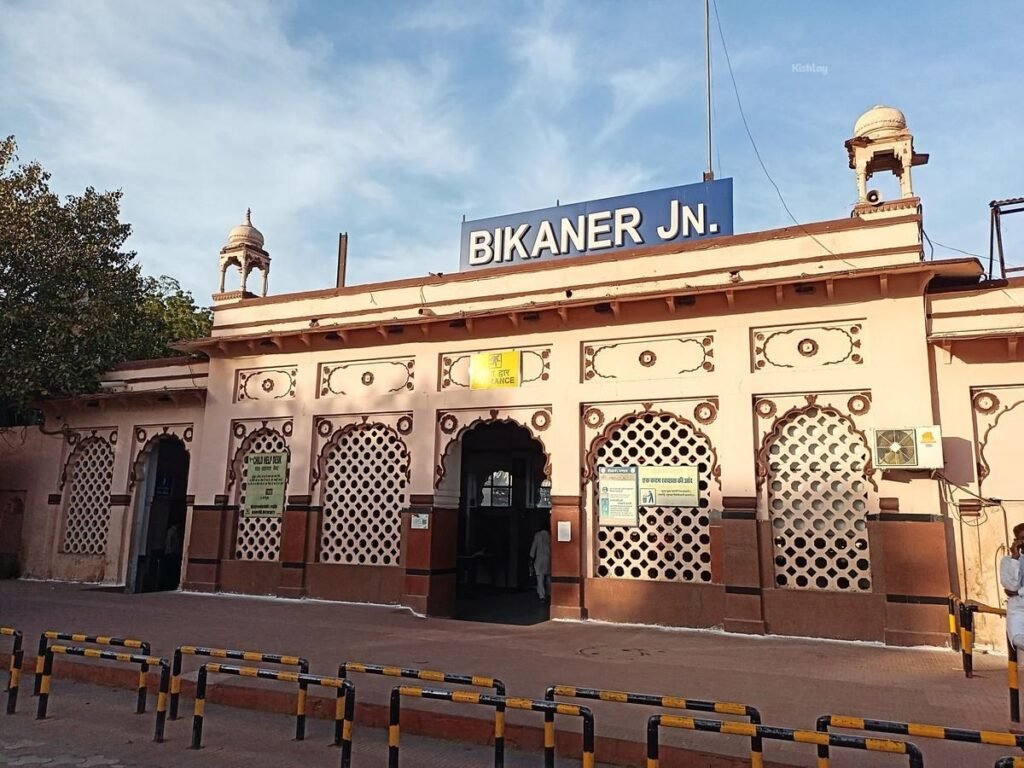
The story of Bikaner Railway Station does not end with the completion of a certification period. The stated green certification associated with the station, issued in 2021 and valid through 2024, represents a milestone in a much longer process of infrastructure development, environmental awareness and institutional improvement.
Certification provides recognition for achievement at a particular stage. Sustainable development, however, is a continuous journey. The future growth of Bikaner Railway Station depends on how effectively the principles established through the green certification process can be maintained, reviewed and developed further.
The railway system itself has always been an institution of continuous change. From the first railway connection to Bikaner in 1891 to the development of Bikaner Division and its later integration into North Western Railway, the station has adapted to changing transportation requirements.
The next stage of development must similarly respond to new environmental, technological and passenger expectations.
From Certification to Continuous Improvement
The first principle of future growth is simple: certification should become a starting point rather than an endpoint.
The green rating process encourages organisations to examine resource consumption, environmental practices and passenger experience. Once these areas have been assessed, the information can become a foundation for future planning.
Management can ask new questions:
Where can energy consumption be reduced further?
How can water management be improved?
Can waste segregation become more effective?
How can passenger awareness be strengthened?
Which new technologies can improve station performance?
How can maintenance become more preventive?
These questions create a cycle of continuous improvement.
The future station should not simply attempt to preserve past achievements. It should seek opportunities to perform better.
Smarter Energy Management
Energy management is likely to remain one of the important areas of future development.
Railway stations require electricity for lighting, communication, passenger information, security and numerous operational functions. As technology advances, opportunities will increase for more precise monitoring and control.
Smart meters and digital monitoring systems can provide information about consumption patterns. This information can help identify unusual usage and support better decision-making.
Energy-efficient equipment can also reduce unnecessary consumption when existing systems reach the end of their useful life.
Renewable energy may provide another opportunity where site conditions, technical feasibility and railway requirements make it appropriate.
The objective should not be technology for its own sake.
The objective should be measurable improvement.
Future Water Conservation
Water management will remain particularly significant for Bikaner because of the region’s arid environment.
Future improvements can focus on preventing losses, improving monitoring, using efficient fixtures and adopting appropriate water-management practices.
Maintenance will remain essential.
A small leak that continues unnoticed can become a significant waste of water over time. Regular inspection and timely repair can therefore be considered part of sustainability.
The future station can also strengthen awareness among passengers and employees.
Water conservation becomes more effective when everyone understands its importance.
Advanced Waste Management
Waste management is another area with substantial potential for future development.
As passenger activity increases, the volume and variety of waste can also change. Future systems can focus more strongly on segregation, recycling, responsible disposal and reduction at source.
Digital monitoring could eventually help management understand waste patterns.
Awareness campaigns could encourage passengers to avoid unnecessary waste.
Commercial operators could be encouraged to adopt more responsible packaging and disposal practices.
The objective is to move from a system based mainly on removal toward a system based on resource recovery and waste prevention.
This would represent an important evolution in green station management.
Passenger Experience and Accessibility
Future growth must also remain centred on passengers.
A railway station is ultimately a public service facility. Environmental improvements must therefore be combined with comfort, safety, accessibility and convenience.
Future development can focus on clearer information, improved circulation, accessible facilities and better public spaces.
The green station philosophy provides a useful reminder that environmental quality and passenger experience are interconnected.
A clean and well-managed station is more comfortable.
Efficient lighting can improve visibility.
Good ventilation and appropriate environmental controls can support comfort.
Well-managed sanitation improves the travel experience.
Therefore, green development can contribute directly to better passenger service.
Digital Transformation
The future railway station will increasingly depend on digital technology.
Digital information systems can help passengers understand train schedules, platform information and station services.
The same digital infrastructure can support environmental management.
Resource consumption can be monitored digitally.
Maintenance records can be managed systematically.
Operational teams can receive alerts about equipment conditions.
Data can help identify patterns and support evidence-based decisions.
This represents an important change from traditional management.
Instead of relying only on periodic observation, management can increasingly use real-time or historical information to identify opportunities for improvement.
Employee Development
Technology alone cannot create future growth.
Employees will remain essential.
As railway systems become more sophisticated, staff will require appropriate training to understand new technologies, environmental requirements and operational procedures.
Training can create a workforce that is not only technically capable but environmentally aware.
This is particularly important because sustainability depends on daily decisions.
Employees must understand how their actions affect energy, water, waste and passenger experience.
The future station therefore requires investment in people as much as infrastructure.
Building Partnerships
Sustainable railway development also depends on cooperation beyond the railway organisation.
Passengers, local authorities, contractors, vendors, service providers and community groups can all influence environmental performance.
Partnerships can support awareness programmes, waste management, resource conservation and community participation.
For a city such as Bikaner, the railway station can become part of a wider urban sustainability network.
The station is connected to roads, markets, hotels, tourism facilities and residential areas.
Improving the station’s environmental performance can therefore complement broader city-level sustainability efforts.
Maintaining the Legacy
The history of Bikaner Railway Station provides another reason to pursue responsible future growth.
The railway has served the city for generations.
Infrastructure developed by one generation becomes the foundation for the next.
This creates an obligation to maintain and improve it responsibly.
Green certification adds a new chapter to this legacy.
The challenge for the future is to ensure that environmental responsibility becomes part of the station’s permanent institutional identity.
The certificate may have a defined validity period.
The responsibility does not.
A Vision for the Next Decade
Looking ahead, Bikaner Railway Station can aspire to become an increasingly efficient, clean, accessible and environmentally responsible railway facility.
Its future vision can be built around several principles:
Efficient resources. Energy and water should be used carefully.
Clean surroundings. Waste management and housekeeping should remain systematic.
Comfortable passengers. Environmental performance should improve the travel experience.
Capable employees. Staff should receive appropriate training and awareness.
Smart technology. Digital tools should support efficient management.
Continuous improvement. Performance should be measured and upgraded over time.
These principles can guide future investment without losing sight of the station’s primary purpose: safe and reliable railway service.
Conclusion
The future growth of Bikaner Railway Station is closely connected with its ability to transform certification into long-term institutional practice.
The 2021 green certification represented an important achievement, but the greater opportunity lies in what follows.
The station can continue improving energy efficiency, water management, waste systems, passenger facilities, employee awareness and digital monitoring.
Its historical journey demonstrates that adaptation is part of railway culture.
The railway arrived in Bikaner more than a century ago and changed the city’s relationship with the wider region. North Western Railway later provided a modern organisational framework for continued development.
Green certification adds another stage to this evolution.
The future challenge is to ensure that sustainability becomes permanent.
Bikaner Railway Station can therefore look forward to a future in which its traditional role as a gateway for passengers and goods is combined with a modern role as an example of responsible public infrastructure.
Its greatest growth may not always be visible in the size of buildings or number of facilities.
It may be visible in something more fundamental:
less waste, better resource efficiency, improved passenger experience, stronger management and a continuing commitment to a cleaner future.
#CleanAndGreenIndia
Chapter 10 A Lasting Legacy of Green Growth and Sustainable Railway Development
The story of Bikaner Railway Station is a story of transformation. From its early role in connecting a historic desert city with the wider railway network to its place within modern North Western Railway, the station has continuously adapted to changing requirements. The journey has included technological development, organisational change, infrastructure improvement and, more recently, a growing emphasis on environmental responsibility.
The green certification associated with Bikaner Railway Station, issued in 2021 and stated as valid through 2024, represents an important milestone in this long history. Yet the greatest significance of certification is not limited to the period printed on the certificate. Its lasting value lies in the principles of sustainability, efficiency and continual improvement that can continue to influence the station’s future.
A certificate records an achievement.
A legacy is created through what continues afterwards.
From Historical Connectivity to Sustainable Connectivity
The railway first came to Bikaner in 1891, creating a new connection between the city and the wider region. Bikaner State Railway followed in 1924, and a direct connection between Bikaner and Delhi was established in 1941. Bikaner Division was subsequently formed in 1952.
These milestones demonstrate that railway development has always been connected with change.
The formation of North Western Railway in 2002 created another important stage in this development. The Bikaner Division became part of a larger zonal railway structure responsible for coordinating railway operations and infrastructure across a substantial geographic region.
Green certification represents another stage in the same process of adaptation.
The railway initially provided physical connectivity.
Modern technology improved operational connectivity.
Environmental sustainability introduces the idea of responsible connectivity — connecting people and communities while using resources more carefully.
The Meaning of the Green Journey
The GGBC Green Railway Stations Rating System was developed to encourage railway stations to adopt green concepts, reduce environmental impacts associated with station operation and maintenance, and enhance the commuter experience.
This is particularly relevant to Bikaner.
A railway station in an arid environment has an important responsibility to manage water and other resources carefully. At the same time, it must continue providing essential services to passengers.
The green approach creates a balance between these objectives.
The station must remain functional.
Passengers must remain comfortable.
Sanitation must remain reliable.
Lighting and electrical systems must operate effectively.
Waste must be managed responsibly.
Resources must be conserved wherever practical.
Sustainability therefore becomes part of good management rather than an activity separate from railway operations.
The Human Legacy
One of the most lasting effects of the green transformation can be the development of awareness among people.
Employees learn that sustainability is connected with their daily responsibilities.
Maintenance teams understand the importance of preventing resource loss.
Housekeeping personnel become important participants in waste management.
Station management considers environmental performance when reviewing operations.
Passengers become more aware of their role in maintaining public spaces.
These changes may not always be visible in photographs or statistics, but they are essential to long-term sustainability.
A green railway station is ultimately created by people.
Infrastructure provides the tools.
People determine how effectively those tools are used.
Environmental Responsibility as Institutional Culture
The greatest achievement of green certification is therefore the possibility of creating an institutional culture.
A culture is stronger than a project because it continues even when individual projects are completed.
When sustainability becomes part of normal decision-making, environmental considerations begin to influence everyday choices.
A maintenance decision can consider efficiency.
An equipment replacement can consider energy performance.
A cleaning procedure can consider water use.
A waste-management decision can consider segregation and recovery.
A passenger facility upgrade can consider comfort and environmental quality.
This creates a continuous chain of responsible decisions.
Economic and Operational Value
Sustainability also has an operational dimension.
Efficient resource use can reduce unnecessary consumption.
Preventive maintenance can help avoid avoidable equipment failures.
Better waste management can improve cleanliness and reduce inefficient handling.
Improved passenger facilities can strengthen public satisfaction.
These benefits demonstrate that environmental responsibility does not necessarily conflict with operational efficiency.
In many cases, the two objectives support each other.
The principle is particularly important for large infrastructure organisations, where small improvements can become significant when implemented consistently.
The Station as a Gateway to Bikaner
Bikaner Railway Station has another important responsibility: representing the city.
Visitors arriving by train may encounter the station before experiencing Bikaner’s historic buildings, markets, cuisine and cultural attractions.
The station therefore forms part of the city’s public image.
A clean, efficient and environmentally responsible railway station can create a positive first impression.
This does not mean that sustainability replaces Bikaner’s heritage.
Instead, it complements it.
A historic city can have modern infrastructure.
Traditional culture can coexist with contemporary environmental practices.
The railway station can therefore become an example of how heritage cities can move toward sustainable development without losing their identity.
Beyond the 2024 Certification Period
The stated certification validity through 2024 provides a clear historical reference point, but sustainable development must extend beyond certification dates.
The important question for the future is not simply whether another certificate is obtained.
The more important question is whether the station continues to improve.
Are resources being used efficiently?
Are waste systems becoming better?
Are passengers more comfortable?
Are employees better trained?
Is environmental information being monitored?
Are new technologies being adopted where appropriate?
These questions define the next generation of railway development.
A Vision for the Future
The future Bikaner Railway Station can be imagined as an increasingly integrated public facility.
Energy systems can become smarter.
Water use can become more efficient.
Waste management can become more systematic.
Passenger services can become more accessible and convenient.
Digital systems can support better management.
Employees can become increasingly skilled in sustainable operations.
Passengers can become active partners in maintaining the station environment.
Such development does not require abandoning the station’s historic purpose.
Instead, it strengthens that purpose.
The railway will continue to connect people.
The difference is that the connection can become more environmentally responsible.
The Broader Significance
The story of Bikaner Railway Station also illustrates a broader lesson for Indian infrastructure.
Sustainability is not limited to new buildings.
Existing public facilities can also evolve.
Railway stations that have served communities for decades can adopt new technologies, improve resource management and enhance environmental performance.
This is particularly important because India has a vast existing infrastructure network.
Transforming existing facilities can complement the construction of new sustainable infrastructure.
Bikaner therefore becomes part of a larger national story — a story in which established institutions adapt to modern environmental expectations.
Conclusion: A Journey Without an End
Bikaner Railway Station began its modern story as a symbol of connectivity.
Over the decades, it became part of an expanding railway network, an important component of Bikaner Division and later North Western Railway.
The 2021 green certification added a new dimension to that history.
It demonstrated a commitment to environmental responsibility and provided a structured framework for thinking about resource efficiency, cleanliness, passenger experience and sustainable operations.
But the true legacy lies beyond the certificate.
The legacy is the idea that railway development can be measured not only by distance travelled, trains operated or infrastructure created, but also by how responsibly resources are used and how effectively public spaces serve people.
The future will bring new challenges.
Climate conditions may change.
Technology will advance.
Passenger expectations will rise.
Railway operations will become increasingly digital.
Through all these changes, the principles of sustainability can remain constant.
Use resources wisely.
Reduce unnecessary waste.
Maintain clean and healthy public spaces.
Improve passenger experience.
Support employees.
Adopt technology responsibly.
Continue learning and improving.
These principles can guide Bikaner Railway Station into its next chapter.
The railway arrived in Bikaner more than a century ago and opened a new chapter in the city’s history.
Green certification opened another chapter — one focused on responsibility.
The next chapters will be written through continued improvement.
That is why the story of Bikaner Railway Station should not be seen as a completed success story.
It should be understood as an ongoing journey.
A journey from connectivity to sustainable connectivity.
From infrastructure to responsible infrastructure.
From certification to continuous improvement.
And from the achievements of one period to the possibilities of generations yet to come.
Bikaner Railway Station stands as a reminder that the most meaningful growth is not simply growth in size.
It is growth in efficiency, awareness, responsibility, service and vision.
And that is the legacy of a railway station moving confidently toward a greener future.
#SmartRailwayStations
#BikanerHeritage #SustainableInfrastructure #GreenRailwayIndia #RailwaySustainability #BikanerDevelopment
Take the Next Step Today
Don’t wait to enhance your business’s quality and efficiency. Partner with Mayu Group India and experience the transformation that comes with expert consultancy and training. Contact us today to learn more about how we can help you achieve your business goals. Reach out via phone at +91-9322728183, visit our website at www.mayugroup.in, or email us at investor@mayugroup.in Let us be your guide on the journey to excellence and innovation.