
Ludhiana Railway Station, Northern Railway
- Ludhiana Railway Station, Northern Railway
- Chapter 1 — The Beginning of Ludhiana Railway Station’s Green Journey
- Chapter 2 — The Green Certification and a New Direction
- Chapter 3 — Building a Culture of Sustainable Operations
- Chapter 4 — Energy, Water and Waste: The Foundations of Green Performance
- Chapter 5 — Passenger Experience, Cleanliness and the Human Side of Green Transformation
- Chapter 6 — Modernisation, Infrastructure Growth and the Future of Ludhiana Railway Station
- Chapter 7 — The Institutional Growth of Ludhiana Railway Station
- Chapter 8 — Certification, Credibility and the Journey Toward Continual Improvement
- Chapter 9 — The Road Ahead: Sustaining Growth Beyond Certification
- Chapter 10 — Legacy, Impact and the Future of Ludhiana Railway Station
- Take the Next Step Today
Chapter 1 — The Beginning of Ludhiana Railway Station’s Green Journey
Ludhiana Railway Station is more than a place where trains arrive and depart. It is part of the history, economy and everyday life of Ludhiana, one of Punjab’s most important industrial and commercial cities. For generations, the station has connected people, businesses, families, students, workers and travellers with destinations across northern India and beyond. Its story is therefore closely connected with the growth of Ludhiana itself.
The history of the station reaches back to the nineteenth century. According to railway redevelopment documentation, Ludhiana appeared as a railway station on the Ludhiana–Ambala main line on 12 October 1869. The railway network around the city subsequently expanded, with Ludhiana being linked with Jakhal through Dhuri in 1901 and with Ferozepore Cantonment through a branch line that was completed in 1905. A further connection with the Jalandhar–Kapurthala–Ferozepore railway system followed in 1913. These developments gradually transformed Ludhiana into an important railway junction.
The railway played an important role in the city’s economic development. As Ludhiana grew into a centre of manufacturing and trade, railway connectivity became increasingly valuable. The railway allowed people to travel for employment, education and business while supporting the movement of goods and materials. Historical railway documentation notes that Ludhiana gained an important position on the then North-Western Railway network and that mail and express trains halted at the station. The station’s connections also linked it with major ports and surrounding regions.
This history helps explain why the modernisation of Ludhiana Railway Station is important. A station that has served generations of travellers must continually adapt to changing expectations. The needs of passengers today are very different from those of passengers in the nineteenth or early twentieth century. Modern travellers expect cleanliness, reliable facilities, comfortable waiting areas, efficient services, accessibility and an environment that reflects contemporary standards.
At the same time, railway infrastructure has another responsibility: environmental sustainability.
A railway station is a large operational facility. It requires electricity for lighting and equipment, water for passenger and staff requirements, cleaning and sanitation systems, and organised methods for handling the waste generated every day. Because stations experience continuous passenger movement, even apparently small improvements in resource management can have an important cumulative effect.
This was the background against which Ludhiana Railway Station entered its green-development journey.
The available certification record identifies Ludhiana Railway Station, Northern Railway as having received certification under the Green Railway Station Rating System on 30 January 2021, with validity through 30 January 2024. The record identifies Deming Certification Services Pvt. Ltd. as the certification organisation and UKJAS Accreditation as the accreditation body.
This milestone should be described accurately. The available record supports a Green Railway Station Rating System certification; it does not establish that Ludhiana Railway Station received ISO 9001 certification. The green certification therefore provides the appropriate starting point for understanding the station’s sustainability story.
The Green Railway Station Rating System was developed by the Green Global Building Council, with support from the Environment Directorate of Indian Railways. GGBC describes it as a voluntary, consensus-based programme designed specifically to address environmental sustainability in Indian railway stations. Its broader objective is to reduce adverse environmental impacts associated with station operation and maintenance while improving the overall commuter experience.
This approach introduced a new dimension to the idea of railway development.
Earlier, railway development was commonly associated with tracks, platforms, signalling, buildings, passenger movement and transportation capacity. The green-station approach expanded that definition. It asked railway authorities and station-management teams to consider how the station uses resources and how its daily operations affect the environment.
Energy became an important consideration.
Water became an important consideration.
Waste management became an important consideration.
Passenger comfort, accessibility and health became important considerations.
The rating system identifies opportunities for reducing non-traction electrical energy consumption, reducing water consumption for station applications, improving waste management and strengthening station facility management. It also highlights the potential for renewable energy and greater environmental awareness among railway staff.
For Ludhiana, this represented a significant change in perspective. The station was no longer viewed only as a transportation facility. It could also be viewed as an environmental asset whose performance could be measured, managed and continually improved.
The certification process itself is designed around this philosophy. GGBC describes a sequence involving training for railway station operations and maintenance personnel, performance-improvement studies, identification of opportunities to reduce energy and water consumption, increased renewable-energy use, improved waste management, enhancement of passenger amenities, implementation guidance and assessment by independent experts.
The importance of this process lies in its practical character.
A certificate cannot make a railway station sustainable by itself. Sustainability comes from everyday actions. A water leak must be identified and repaired. Energy-consuming equipment must be operated responsibly. Waste must be handled systematically. Passenger areas must be maintained. Employees must understand the purpose of green practices. Travellers must be encouraged to participate in maintaining clean and responsible public spaces.
The certification therefore became more than a formal recognition. It created a framework through which Ludhiana Railway Station could look at its operations from a new perspective.
The timing was also significant because railway infrastructure was entering an era in which redevelopment and sustainability increasingly needed to work together. Modern railway stations are expected not only to handle passengers efficiently but also to provide better facilities while reducing unnecessary environmental impacts.
Ludhiana’s long history makes this transition particularly meaningful.
The same railway station that once symbolised the arrival of modern transportation in nineteenth-century Punjab now faces the modern challenge of creating infrastructure that is both efficient and environmentally responsible.
Its journey can therefore be seen as a progression:
Railway connectivity → economic development → modern passenger infrastructure → environmental responsibility → continual improvement.
The green certification of 2021 became an important milestone in that progression.
It did not mark the end of Ludhiana Railway Station’s development. Instead, it created a new chapter.
The certificate had a defined validity period, but the principles behind the certification could continue beyond that date. Indeed, GGBC identifies the Green Railway Stations rating as a tool for helping station management understand its present green-performance position and determine measures for improving performance on a continual basis.
This idea of continual improvement is central to the story.
Ludhiana Railway Station has survived and adapted through more than a century and a half of railway history. Its future success will depend on the same ability to adapt. As passenger expectations evolve and environmental pressures increase, the station must continue to balance mobility, comfort, efficiency and sustainability.
The green journey therefore begins not with a certificate hanging on a wall, but with a change in thinking.
A railway station can be a gateway to a city.
It can also be a reflection of the city’s values.
For Ludhiana, the movement toward greener railway infrastructure represents an opportunity to demonstrate that economic progress and environmental responsibility do not have to stand apart. They can move together on the same track.
And that is where the story of Ludhiana Railway Station’s green transformation truly begins.
#LudhianaRailwayStation
Chapter 2 — The Green Certification and a New Direction
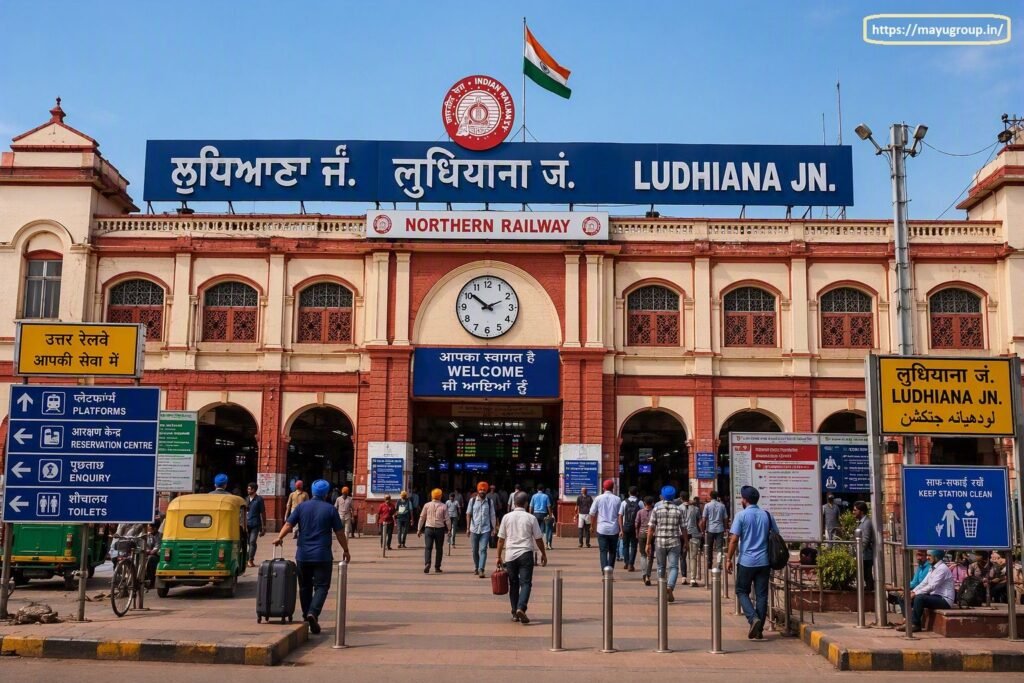
The story of Ludhiana Railway Station entered a new phase in 2021. For more than a century, the station had served as an important gateway to Ludhiana and as a connecting point within the Northern Railway network. Its historic role was firmly established, but the expectations placed upon modern railway infrastructure were changing. A railway station was increasingly expected to provide not only transportation but also efficient resource management, cleanliness, passenger comfort and environmental responsibility.
Against this changing background, Ludhiana Railway Station received certification under the Green Railway Station Rating System on 30 January 2021, with the certification recorded as valid until 30 January 2024. The certification record identifies Deming Certification Services Pvt. Ltd. as the certification organisation and UKJAS Accreditation as the accreditation body.
The certification represented an important recognition of the station’s green-infrastructure approach. However, it is important to understand exactly what this achievement meant. The available certification information identifies the Green Railway Station Rating System; it does not establish an ISO 9001 certification for the station. Therefore, the 2021 green rating should be regarded as the central environmental milestone in Ludhiana Railway Station’s development story.
The Green Railway Station Rating System was developed by the Green Global Building Council (GGBC) with support from the Environment Directorate of Indian Railways. The programme was created to encourage environmental sustainability in railway stations and to reduce the environmental impact associated with their operation and maintenance. It also seeks to improve the experience of railway commuters.
This represented a significant change in the way railway facilities could be evaluated.
Traditionally, the performance of a railway station was largely associated with operational matters. Trains needed to arrive and depart safely. Platforms needed to remain functional. Passenger information needed to be communicated. Waiting areas, ticketing facilities and sanitation services needed to operate effectively.
The green-station philosophy added another question:
How responsibly does the station use the resources required to perform all these functions?
That question opened the door to a broader approach to railway management.
Energy became part of the sustainability discussion. Railway stations require lighting, electrical equipment and other services throughout their daily operations. Reducing unnecessary energy consumption can lower operating impacts while supporting efficient infrastructure management.
Water became another important area. Stations require water for sanitation, cleaning, drinking facilities and other passenger and operational needs. Efficient water use and appropriate maintenance can help prevent avoidable consumption.
Waste management became equally important. A busy station produces different forms of waste every day. Effective systems can help ensure that waste is handled in a more organised and environmentally responsible manner.
The rating system also considers passenger amenities, facility management, renewable energy opportunities and environmental awareness. GGBC explains that the programme includes training for station operations and maintenance personnel, studies of opportunities to reduce energy and water consumption, increased use of renewable energy, improved waste management, enhancement of passenger amenities and independent assessment.
For Ludhiana Railway Station, these principles offered a structured framework for improvement.
The significance of the certification therefore goes beyond the certificate itself. Certification creates a benchmark. Once a facility has been assessed against defined sustainability criteria, its management has a clearer basis for understanding where it stands and where further improvements can be made.
This is particularly important for a railway station because operations cannot simply be paused while improvements are introduced.
Thousands of passengers may pass through a major station. Trains continue to operate according to schedules. Cleaning, maintenance, security and passenger services must continue throughout the day. Green improvements must therefore be integrated into existing operations rather than treated as separate projects.
This makes people a central part of the certification story.
A sustainable railway station depends on the behaviour and awareness of employees as much as on infrastructure. A water-saving fixture is useful only when it is maintained. Efficient lighting produces the greatest benefit when it is operated responsibly. Waste-segregation facilities work best when staff and passengers understand how to use them. Maintenance teams need to identify faults quickly. Supervisors need to monitor performance.
The rating system’s emphasis on training reflects this reality.
Sustainability is not simply a construction activity.
It is an operational culture.
This distinction is important when considering the future growth of Ludhiana Railway Station. The station is not a conventional private company whose growth can be measured only through revenue, profit or market share. It is part of the public railway system. Its growth is better understood through improvements in infrastructure, passenger service, operational efficiency, environmental performance and institutional capability.
The 2021 certification contributed to this broader definition of growth.
It provided recognition that environmental responsibility could form part of railway-station management. It also connected Ludhiana with a wider movement toward greener railway infrastructure across India.
The timing was especially relevant because railway-station redevelopment was also becoming an increasingly important part of infrastructure planning. Northern Railway documentation concerning Ludhiana station redevelopment describes objectives involving upgraded facilities and improved travel comfort. The referenced project-status material records an estimated project cost of approximately ₹460.34 crore for the station-upgradation project.
The combination of redevelopment and sustainability creates an important opportunity.
A modern station should not simply become larger.
It should become smarter.
It should provide better passenger facilities while managing resources more efficiently.
It should integrate environmental thinking into maintenance and operations.
It should use technology where technology can improve performance.
It should create an environment in which passengers feel that cleanliness, comfort and sustainability are interconnected.
This is the deeper meaning of Ludhiana’s 2021 green certification.
The certificate established a moment of recognition, but the real value lay in the direction it represented.
The station’s long history had always been about connecting people and places. The new sustainability agenda added another kind of connection: a connection between railway infrastructure and environmental responsibility.
That connection would become increasingly important as the station moved into the next stage of its development.
The years following certification therefore represented an opportunity to transform a formal achievement into everyday practice.
The question was no longer simply whether Ludhiana Railway Station had achieved a green rating.
The more important question was whether the principles behind that rating could become part of the station’s continuing identity.
If they could, the certification would become more than an award.
It would become a foundation for improvement.
And from that foundation, the next chapter of Ludhiana Railway Station’s growth could begin.
#IndianRailways
Chapter 3 — Building a Culture of Sustainable Operations
A railway station is a complex public facility. Every day, its platforms, waiting areas, ticketing spaces, toilets, electrical systems, water facilities and passenger services must function together. Behind the visible movement of trains and travellers is a large network of people performing routine tasks that keep the station operational.
For Ludhiana Railway Station, the Green Railway Station Rating System introduced a new way of looking at these everyday activities. Sustainability could no longer be considered only an environmental subject. It could become part of station management itself.
The certification received on 30 January 2021, with validity recorded through 30 January 2024, provided a formal milestone in this process. The available certification record identifies the certification under the Green Railway Station Rating System and names Deming Certification Services Pvt. Ltd. as the certification organisation and UKJAS Accreditation as the accreditation body. It does not establish an ISO 9001 certification, so the green rating remains the appropriate focus of this chapter.
The most important element behind any green rating is people.
A building may contain efficient equipment, but equipment alone cannot create sustainable performance. The people responsible for operating and maintaining that equipment determine whether the intended benefits are achieved consistently.
This principle is particularly relevant to railway stations because their operations continue throughout the day. Passenger movement does not stop simply because an environmental programme has been introduced. Trains continue to arrive and depart. Cleaning must continue. Water facilities must remain available. Electrical systems must function. Passenger information must remain visible and accessible.
Sustainability therefore has to become part of normal working practice.
The Green Railway Station Rating System recognises this requirement. GGBC describes training of railway station operations and maintenance personnel as part of the rating process. The programme also focuses on understanding the station’s existing green performance and identifying opportunities for continual improvement.
Training can change the way employees understand their responsibilities.
A housekeeping employee, for example, is not simply responsible for removing waste. That employee can become an important participant in waste-management practices.
A maintenance worker is not simply repairing equipment. The worker can also identify water leaks, electrical inefficiencies or equipment problems that may increase resource consumption.
A supervisor is not merely checking whether work has been completed. The supervisor can monitor whether procedures are being followed efficiently.
This shift in perspective is one of the most valuable outcomes of a sustainability programme.
It turns ordinary jobs into parts of a larger environmental system.
Consider water management. Railway stations require water for sanitation, cleaning and other passenger services. A small leak may appear insignificant when viewed in isolation. But if it continues for weeks or months, the cumulative loss can be substantial. A culture of sustainability encourages staff to identify such problems early and report them through appropriate maintenance channels.
The same principle applies to energy.
Lighting and electrical equipment are essential to passenger safety and station operations. However, energy efficiency does not mean reducing necessary services. It means using energy intelligently and avoiding unnecessary consumption. Proper maintenance, appropriate operating practices and efficient technologies can all contribute to this objective.
Waste management provides another visible example.
A passenger sees the waste bin, but behind that bin is an entire chain of activity. Waste must be placed correctly, collected, segregated where appropriate, transported and handled responsibly. If one part of the chain fails, the effectiveness of the entire system can be reduced.
This is why sustainability is best understood as a culture rather than a collection of installations.
The station’s employees are the people who make that culture practical.
Passengers also have an important role.
A railway station is a shared public environment. No management system can maintain cleanliness and environmental quality without some level of passenger participation. People decide whether to use waste bins, whether to conserve water and whether to respect public facilities.
Visible environmental measures can influence this behaviour.
A clean platform sends one message.
A well-organised waste-management system sends another.
Clear communication about environmental responsibility can reinforce both.
In this way, a railway station can become a place where sustainability is experienced rather than simply discussed.
The benefits extend beyond environmental performance.
Better maintenance can improve reliability.
Improved cleanliness can strengthen passenger confidence.
Efficient resource management can help control operational costs.
Better staff awareness can reduce avoidable problems.
Improved passenger facilities can create a more comfortable travel experience.
Thus, sustainability can contribute directly to the broader development of the station.
This is especially important when discussing the idea of “growth” after certification.
Ludhiana Railway Station is part of Northern Railway and Indian Railways. It is not an independent commercial company with a private promoter. Its development should therefore be measured through public-service outcomes rather than conventional corporate indicators.
Growth can mean better facilities.
Growth can mean stronger operational systems.
Growth can mean improved passenger experience.
Growth can mean greater environmental responsibility.
Growth can mean a workforce that understands and supports continual improvement.
The certification created an opportunity to bring these areas together.
It also reflected a wider movement within Indian Railways toward greener infrastructure. Railway guidance has addressed green-building principles and environmental considerations for railway facilities, indicating that sustainability is becoming part of broader infrastructure planning.
For Ludhiana, this wider institutional environment is significant.
The station’s sustainability programme does not exist independently. It operates within a large railway network that includes engineering, operations, maintenance, passenger services and infrastructure-development systems.
That means lessons learned at one station can potentially contribute to a wider culture of improvement.
The station can serve as a demonstration of how environmental responsibility can coexist with high-volume railway operations.
Its experience can encourage staff to think about resource consumption in practical terms.
It can demonstrate that cleanliness and environmental responsibility are closely connected.
It can show passengers that sustainability is not limited to offices, factories or private buildings. It also belongs in public transportation.
This cultural dimension may ultimately be more important than any individual green technology.
Technology can change quickly.
Equipment can be replaced.
Buildings can be renovated.
But a strong sustainability culture can survive these changes.
When employees understand why conservation matters, they can adapt to new technologies and new environmental requirements.
When passengers understand their role, they can contribute to maintaining the station.
When management treats environmental performance as a continuing responsibility, improvement becomes part of institutional thinking.
The 2021 certification therefore represented more than an assessment of infrastructure.
It created an opportunity to build a new operational culture.
Ludhiana Railway Station had already spent more than a century connecting the city with the wider railway network. The green journey added another responsibility: ensuring that this connectivity could be supported by more responsible use of resources.
The station’s future would depend not only on tracks, platforms and buildings, but also on the people who operate them.
A green railway station begins with infrastructure.
A sustainable railway station begins with people.
And a truly successful green transformation occurs when the two work together every day.
#NorthernRailway
Chapter 4 — Energy, Water and Waste: The Foundations of Green Performance
The transformation of Ludhiana Railway Station into a more environmentally responsible railway facility was not based on one single activity. A station is a living operational system, and its environmental performance depends on many interconnected elements. Among the most important are energy use, water management and waste management.
These three areas form the foundation of everyday sustainability.
Every passenger who enters a railway station interacts with them, even if indirectly. Lights illuminate platforms and passenger areas. Water supports sanitation and cleaning. Waste is generated by travellers, staff, commercial activities and routine station operations. Managing these resources responsibly is therefore essential to the station’s environmental performance.
The Green Railway Station Rating System specifically recognises these areas. The Green Global Building Council states that the rating system is intended to help railway stations reduce environmental impacts, including through reduction of energy and water consumption, increased renewable-energy use, improved waste management and enhancement of passenger amenities.
For Ludhiana Railway Station, this approach created an opportunity to connect environmental responsibility with ordinary station operations.
Managing Energy Responsibly
Energy is essential to railway-station operations.
A station cannot function safely without adequate lighting and electrical systems. Passenger areas need illumination, information systems need power, equipment must operate and various services require electricity throughout the day.
The objective of green infrastructure is not to reduce necessary services. Instead, it is to use energy more efficiently.
This distinction is important.
A sustainable station must remain safe and comfortable. Platforms must be sufficiently illuminated. Passenger information must remain available. Essential systems cannot be switched off simply to save electricity.
The challenge is to reduce avoidable consumption while maintaining service quality.
Efficient equipment can contribute to this goal. So can proper maintenance and responsible operating practices. Staff awareness is also important. An efficient system can lose some of its benefit if equipment is poorly maintained or operated unnecessarily.
The Green Railway Station Rating System’s focus on reducing non-traction energy consumption reflects this principle.
For Ludhiana, energy management can therefore be understood as a continuing process.
It begins with identifying where energy is being used.
It continues with understanding where efficiency can be improved.
It develops through maintenance and operational discipline.
And it becomes sustainable when monitoring and improvement become part of normal station management.
Energy efficiency also has a financial dimension. Reducing unnecessary consumption can potentially lower operating expenses, allowing resources to be used more effectively for other passenger and infrastructure needs.
Thus, environmental responsibility and operational efficiency can support one another.
Protecting Water Resources
Water is equally important.
Railway stations require water for passenger facilities, sanitation, cleaning and other operational purposes. In a busy public facility, maintaining reliable water services is essential.
But reliable water supply does not have to mean unnecessary consumption.
The green-station approach encourages stations to consider ways of reducing water use. This can include efficient fixtures, responsible maintenance, leakage detection and improved operational practices where appropriate.
Again, the people operating the station play an important role.
A leaking tap is not only a maintenance problem.
It is a resource-management problem.
A damaged plumbing connection is not simply an infrastructure defect.
It can become a source of unnecessary water loss.
When staff members understand the environmental significance of these issues, maintenance becomes part of sustainability.
Water management also connects directly with passenger experience. Clean and functional toilets, hand-washing facilities and other sanitation services are among the most important amenities in a railway station.
A passenger may never think of a functioning tap as an environmental achievement.
But behind that tap is a system of water supply, maintenance, cleaning and management.
Good sustainability therefore becomes almost invisible.
Passengers simply experience a facility that works well.
The Challenge of Waste
Waste management is perhaps the most visible environmental issue at a railway station.
Every day, passengers generate packaging, food waste, paper and other materials. Station operations also generate waste through cleaning, maintenance and commercial activity.
Without proper systems, waste can quickly affect the appearance and hygiene of public areas.
The Green Railway Station Rating System includes waste management among its important sustainability areas.
Effective waste management begins with collection, but it cannot end there.
The goal is to establish an organised system in which waste is handled appropriately from the moment it is generated until its final processing or disposal.
Segregation can play an important role where appropriate systems are available.
When different waste streams are kept separate, useful materials can potentially be recovered more effectively, while other forms of waste can be handled through suitable channels.
Passenger awareness is essential.
A perfectly designed waste-management system can be undermined if passengers leave waste on platforms or place materials incorrectly.
This means that sustainability communication has a practical purpose.
Clear signs, accessible bins and regular awareness messages can encourage responsible behaviour.
Clean surroundings can also create a positive cycle. When passengers see that an area is well maintained, they may be more likely to respect it.
Linking the Three Systems
Energy, water and waste should not be treated as separate subjects.
They are connected through station operations.
Cleaning requires water and energy.
Waste handling requires staff time and equipment.
Water systems require energy for pumping and distribution.
Passenger amenities depend on all three.
This is why a green railway station needs an integrated management approach.
The certification received by Ludhiana Railway Station in 2021 provided a framework for considering these relationships. The programme is designed not simply to recognise existing performance but to help station management identify opportunities for continual improvement.
The station’s environmental journey can therefore be understood as a continuous cycle.
Measure.
Identify opportunities.
Implement improvements.
Maintain systems.
Monitor performance.
Improve again.
This cycle is more important than any individual initiative.
Sustainability as a Public Service
The greatest significance of energy, water and waste management is that they connect environmental performance with public service.
Passengers expect a railway station to be clean, safe and comfortable.
Good resource management supports all three.
Efficient energy use can support reliable facilities.
Responsible water management can support sanitation.
Effective waste management can support cleanliness.
Therefore, green infrastructure is not separate from passenger service.
It is one of its foundations.
This understanding also helps explain why sustainability can contribute to the long-term growth of Ludhiana Railway Station.
A station that uses resources responsibly can strengthen its operational discipline.
A station with better-maintained systems can provide a more consistent passenger experience.
A station that manages waste effectively can create a cleaner public environment.
A station whose employees understand sustainability can adapt more easily to future environmental requirements.
The 2021 Green Railway Station certification was therefore not simply about environmental recognition. It represented an opportunity to embed these principles into the station’s daily life.
The challenge after certification was to keep the momentum alive.
A certificate has a fixed date.
Energy is consumed every day.
Water is used every day.
Waste is generated every day.
Sustainability therefore has to be renewed every day.
For Ludhiana Railway Station, the real achievement lies in turning the principles of green certification into everyday practice. When efficient energy use, responsible water management and organised waste handling become routine, sustainability stops being a project and becomes part of the station’s identity.
That is the foundation on which the next stage of its growth can be built.
#GreenRailwayStation
Chapter 5 — Passenger Experience, Cleanliness and the Human Side of Green Transformation
A railway station ultimately exists to serve people. Tracks, platforms, buildings, electrical systems and environmental measures all have one common purpose: to help passengers travel safely, comfortably and efficiently. For Ludhiana Railway Station, the green transformation therefore cannot be understood only through technical measures such as energy efficiency, water conservation or waste management. Its real significance becomes visible in the experience of the people who use the station every day.
The Green Railway Station Rating System recognises this connection between sustainability and passenger service. The Green Global Building Council explains that the rating programme is intended not only to reduce environmental impacts but also to improve the commuter experience through better station facilities and green practices.
This principle creates an important link between environmental responsibility and public service.
A passenger does not normally enter a railway station thinking about environmental certification. The passenger is thinking about a train, a ticket, a platform, luggage, family members, a business journey or reaching a destination on time.
Yet the passenger experiences the effects of sustainability continuously.
A clean platform is part of environmental management.
A properly maintained toilet is part of resource management.
Effective lighting contributes to safety and comfort.
Organised waste facilities support cleanliness.
Reliable water facilities support hygiene.
Comfortable waiting areas contribute to the overall quality of the journey.
In this way, green infrastructure becomes something that passengers can experience without necessarily knowing the technical terminology behind it.
Cleanliness as a Culture
Cleanliness is one of the most visible signs of good station management.
A railway station serves a constantly changing population. Thousands of people can pass through its spaces, and each traveller brings different habits and expectations.
Maintaining cleanliness under such conditions requires more than periodic sweeping.
It requires systems.
Waste needs to be collected regularly. Passenger areas need to be inspected. Sanitation facilities need maintenance. Problems need to be reported and corrected. Staff need to understand their responsibilities.
The green-station philosophy strengthens this approach by connecting cleanliness with broader environmental performance.
Waste that is not managed properly can affect the appearance of the station, create hygiene concerns and increase environmental impacts.
Therefore, housekeeping is not simply a cosmetic activity.
It is part of sustainable station operations.
For Ludhiana Railway Station, the 2021 green certification created a framework in which such everyday activities could be considered within a wider environmental-management approach.
The Passenger as a Participant
A sustainable railway station cannot be created entirely by railway employees.
Passengers are also participants.
Every traveller makes small decisions.
Where to dispose of waste.
Whether to waste water.
Whether to respect public facilities.
Whether to follow instructions.
Whether to help maintain a clean environment.
These individual actions may appear insignificant, but a railway station brings together large numbers of people. Small behaviours can therefore produce large collective effects.
This makes awareness important.
The Green Railway Station Rating System places emphasis on creating awareness among railway personnel and promoting green practices.
The same principle can be extended to passengers.
Simple messages can encourage responsible behaviour.
Clear waste facilities can make the correct choice easier.
Visible cleanliness can encourage people to maintain cleanliness.
Well-maintained facilities can create a sense of respect for public infrastructure.
The objective is not to lecture passengers about sustainability.
It is to make sustainable behaviour convenient and understandable.
When good environmental practices become easy to follow, participation becomes more natural.
Comfort and Environmental Responsibility
Passenger comfort is another important part of the story.
Historically, railway stations were designed primarily around transportation requirements. Modern stations are expected to provide a much broader passenger experience.
Waiting spaces should be comfortable.
Passenger information should be clear.
Sanitation should be reliable.
Facilities should be accessible.
Movement through the station should be convenient.
Environmental improvements can support these objectives when they are planned properly.
Efficient lighting can create better-illuminated spaces while reducing unnecessary energy use.
Water-efficient systems can support sanitation without excessive consumption.
Good waste management can contribute to cleaner public areas.
Landscape and environmental measures, where feasible, can improve the visual quality of the station environment.
This demonstrates an important principle:
Sustainability should improve the passenger experience, not compete with it.
A successful green station does not ask passengers to sacrifice comfort for environmental responsibility.
Instead, it seeks to create systems where the two objectives support one another.
The Importance of Maintenance
One of the least visible but most important parts of passenger experience is maintenance.
A newly installed facility may look impressive when it is first introduced. Its long-term value, however, depends on whether it continues to function correctly.
This is why green-station programmes place importance on operations and maintenance personnel. GGBC’s rating process includes training and assessment related to station operations and maintenance.
Maintenance protects the investment made in infrastructure.
A water-saving fixture that is damaged cannot deliver its intended benefit.
An efficient lighting system that is poorly maintained may lose effectiveness.
A waste-management system requires regular collection and supervision.
Clean toilets require continuous cleaning and repair.
The passenger may see only the final result.
Behind that result is a team of employees and service providers working continuously.
A Better Image of the Railway Station
Environmental responsibility can also influence the public image of a railway station.
A clean, organised and well-maintained station communicates confidence.
It suggests that systems are working.
It creates a positive impression of the railway administration.
For a city such as Ludhiana, the station also acts as a gateway.
Visitors arriving by train form an early impression of the city through what they see at the station. Residents use it as part of their daily transportation experience. Businesses depend on reliable connectivity. Families associate it with journeys and reunions.
The station therefore has symbolic value as well as operational value.
A greener and better-managed station can contribute positively to that image.
Connecting Sustainability With Growth
This is where the idea of growth becomes important.
For a public railway station, growth is not simply a matter of increasing commercial revenue.
Growth can mean improving passenger satisfaction.
It can mean improving the quality and reliability of facilities.
It can mean reducing avoidable resource consumption.
It can mean strengthening maintenance practices.
It can mean creating greater environmental awareness.
It can mean developing a workforce capable of managing increasingly sophisticated infrastructure.
The Green Railway Station certification of 2021 provided an important foundation for this broader understanding of growth.
The station’s historical purpose was to connect Ludhiana with other places.
Its modern purpose includes connecting people while managing public resources responsibly.
That is a significant evolution.
Looking Beyond the Certificate
The certification was recorded as valid until 30 January 2024.
The end of a certification period should not mean the end of environmental responsibility.
Instead, it creates an opportunity to review progress.
Which practices became part of everyday operations?
Which improvements remained effective?
Where can additional savings be achieved?
What do passengers need now?
How can new technologies support station management?
These questions ensure that sustainability remains dynamic.
For Ludhiana Railway Station, the green journey can therefore be seen as a continuing relationship between infrastructure, employees and passengers.
The certificate provided recognition.
The employees provide daily implementation.
The passengers provide daily participation.
Together, they determine the station’s real environmental performance.
The human side of green transformation is ultimately the most important.
A sustainable railway station is not simply a station with efficient equipment.
It is a station where people understand the value of that equipment, where employees maintain it responsibly and where passengers are encouraged to participate.
That is how environmental responsibility becomes part of public service.
And that is how Ludhiana Railway Station can transform its green certification from a historical milestone into a lasting culture of cleaner, more efficient and more passenger-focused railway operations.
#SustainableRailways
Chapter 6 — Modernisation, Infrastructure Growth and the Future of Ludhiana Railway Station
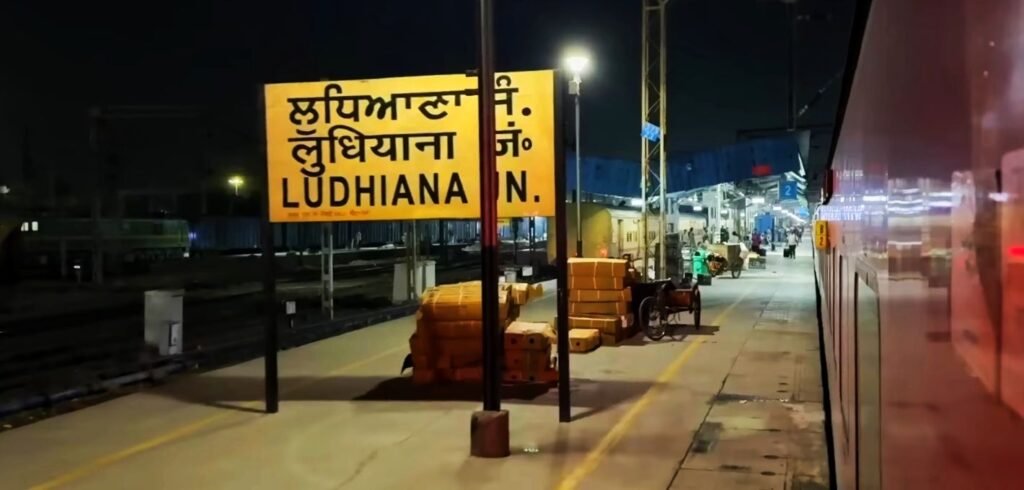
The green transformation of Ludhiana Railway Station cannot be separated from the larger story of railway modernisation. Environmental sustainability is most effective when it becomes part of infrastructure planning, passenger-service improvement and long-term station development. For Ludhiana, the period surrounding its 2021 Green Railway Station certification also represented an important stage in the station’s wider redevelopment journey.
Ludhiana Railway Station has a long history. Railway redevelopment documentation records its connection to the Ludhiana–Ambala main line from 12 October 1869 and describes the subsequent development of railway links that helped establish Ludhiana as an important railway junction.
More than a century later, the needs of the station had changed considerably.
The modern railway passenger expects more than a platform and a train. Passengers increasingly look for comfortable waiting areas, better sanitation, improved circulation, clear information systems, accessibility, safety, cleanliness and facilities capable of handling large volumes of travellers efficiently.
At the same time, modern infrastructure is expected to be environmentally responsible.
This creates an important connection between redevelopment and green certification.
The Green Railway Station Rating System provides a framework for environmental performance, while physical redevelopment provides an opportunity to introduce or improve infrastructure. When these two approaches are considered together, modernisation can become more efficient, more comfortable and more sustainable.
A Larger Vision for the Station
Northern Railway documentation concerning Ludhiana station redevelopment describes the objective of providing upgraded facilities and improved travel comfort. The referenced project-status document records an estimated project cost of approximately ₹460.34 crore and outlines the movement of the redevelopment project through planning and execution stages.
This scale of investment demonstrates the importance of the station within the railway system.
Large infrastructure projects create opportunities to rethink the entire passenger environment.
Instead of simply repairing individual facilities, redevelopment can examine how the station works as a whole.
How do passengers enter?
How do they reach platforms?
How do they move through waiting areas?
Where are facilities located?
How can accessibility be improved?
How can energy and water systems be made more efficient?
How can waste be managed?
How can maintenance be simplified?
These questions are closely related to the principles of green infrastructure.
Sustainability During Redevelopment
A green rating should not be treated as a separate environmental project placed alongside infrastructure development.
Ideally, sustainability becomes part of the design and operational philosophy.
For example, energy efficiency can be considered when selecting lighting and electrical systems.
Water conservation can be considered when planning sanitation and plumbing facilities.
Waste management can be incorporated into the layout of passenger areas.
Maintenance requirements can be considered during equipment selection.
Passenger comfort can be balanced with resource efficiency.
The Green Railway Station Rating System specifically encourages railway stations to identify opportunities for reducing energy and water consumption, increasing renewable-energy use, improving waste management and enhancing passenger amenities.
These principles are particularly valuable during periods of infrastructure development because decisions made during planning can influence performance for many years.
A sustainable design decision made at the beginning of a project may prevent unnecessary operating costs later.
A poorly considered design can create maintenance difficulties for years.
Therefore, modernisation should be approached as a long-term investment rather than a short-term construction activity.
From Old Station to Modern Public Gateway
Ludhiana Railway Station is located in the heart of an important urban environment. The station serves residents of Ludhiana as well as people arriving from other cities and regions.
This gives the station the character of a public gateway.
A railway station is often one of the first places visitors see when they arrive in a city.
The quality of the station can therefore influence perceptions of the city itself.
A modern, clean and well-organised railway station can communicate efficiency and confidence.
For Ludhiana, this is especially meaningful because the city’s identity has long been connected with enterprise, manufacturing, trade and mobility.
A modern railway station complements that identity.
The green dimension adds another message:
economic progress can be supported by environmental responsibility.
Technology and Better Management
Modern railway infrastructure increasingly depends on technology.
Digital passenger information systems can improve communication.
Monitoring systems can support maintenance.
Efficient electrical equipment can reduce energy demand.
Automated or improved control systems can help manage facilities.
Data can support better decision-making.
Technology, however, is only useful when it is connected with effective management.
A sophisticated system that is not maintained properly can fail.
This is why the human element discussed in earlier chapters remains important.
Training, monitoring and responsibility must develop alongside technology.
The Green Railway Station Rating System reflects this principle through its emphasis on station operations and maintenance personnel.
A modern station therefore needs both modern infrastructure and modern management practices.
The Economic Meaning of Green Development
Sustainability is sometimes viewed only as an environmental responsibility.
In reality, it can also have an economic dimension.
Energy efficiency can reduce avoidable operating expenses.
Water conservation can reduce resource costs.
Good maintenance can extend the useful life of equipment.
Effective waste management can improve operational efficiency.
Better passenger facilities can strengthen the overall value of the station.
When these benefits are considered together, green infrastructure becomes part of responsible asset management.
This is particularly important for public infrastructure.
Public resources must be used carefully.
Every improvement should ideally provide value over its useful life.
A sustainable railway station therefore represents not only environmental responsibility but also responsible investment.
Building for the Future
The future of Ludhiana Railway Station will depend on its ability to adapt.
Passenger volumes can change.
Technology can change.
Environmental standards can change.
Urban development can change.
Climate-related challenges can become more important.
The station must therefore be designed and managed as an evolving system.
Its 2021 green certification provides a useful reference point in this process. The certification was valid through January 2024, creating a defined period during which green performance could be formally recognised.
The period after certification should be viewed as an opportunity for continued development rather than a conclusion.
Future station management can continue to examine energy performance, water use, waste management, passenger amenities and maintenance systems.
The most successful infrastructure is not infrastructure that remains unchanged.
It is infrastructure that can improve.
A New Definition of Modernisation
For Ludhiana Railway Station, modernisation should therefore mean more than constructing new facilities.
Modernisation means creating a better relationship between infrastructure and people.
It means designing facilities around passenger needs.
It means using resources responsibly.
It means supporting railway employees with appropriate systems and training.
It means reducing avoidable environmental impacts.
It means planning for long-term maintenance.
It means creating infrastructure capable of adapting to future requirements.
The green rating provided one part of this vision.
Redevelopment provides another.
Together, they create a pathway toward a railway station that can combine heritage with modernity.
The station’s nineteenth-century origins remain part of its identity.
Its twenty-first-century sustainability efforts represent its future.
The Journey Continues
The story of Ludhiana Railway Station demonstrates that infrastructure growth is not a single event.
It is a process.
The railway first connected Ludhiana with the wider region.
Connectivity supported economic development.
Economic development increased the importance of the station.
Changing passenger expectations created demand for modern facilities.
Environmental concerns created demand for sustainable operations.
Certification provided a framework for recognising green performance.
Redevelopment created an opportunity for further improvement.
Each stage builds upon the previous one.
The result is a station moving from historical infrastructure toward a more integrated model of public transportation.
Its future success will ultimately depend on how effectively it combines three priorities:
efficient railway operations, quality passenger service and environmental responsibility.
The Green Railway Station certification of 2021 was an important milestone in that journey. But the greater opportunity lies beyond the certificate — in the continued modernisation of the station, the development of its people, the improvement of its facilities and the responsible management of the resources entrusted to it.
For Ludhiana, the railway station has always been a symbol of movement.
The next stage of its history can make it a symbol of sustainable movement as well.
A modern railway station does not simply carry people into the future.
It should also be built responsibly enough to remain part of that future.
#GreenInfrastructure
Chapter 7 — The Institutional Growth of Ludhiana Railway Station
The growth of Ludhiana Railway Station is best understood as part of the growth of the railway system around it. Unlike a privately owned company, the station does not operate as an independent commercial enterprise with a conventional promoter, shareholders and corporate revenue targets. It is a public railway asset operating within Northern Railway and Indian Railways. Its development is therefore measured through connectivity, infrastructure, passenger services, operational efficiency, environmental performance and public value.
This distinction is important when examining the station’s progress after its Green Railway Station certification.
The certification issued on 30 January 2021, and recorded as valid until 30 January 2024, was one milestone within a much larger institutional journey. The available certification record identifies the Green Railway Station Rating System as the certified scope and does not establish an ISO 9001 certification.
The green rating nevertheless became significant because it connected station operations with a structured environmental framework.
The Role of Northern Railway
Ludhiana Railway Station operates within Northern Railway, one of the major zones of Indian Railways. Its position within this network gives the station significance beyond the boundaries of Ludhiana city.
Railway infrastructure depends on coordination.
A station cannot function independently from the tracks approaching it.
Train operations depend on signalling.
Passenger services depend on station facilities.
Maintenance depends on engineering and operational teams.
Infrastructure improvements depend on planning and investment.
Environmental performance depends on cooperation among all these functions.
This institutional structure means that the development of Ludhiana Railway Station is the result of many interconnected decisions rather than the work of one individual promoter.
The station’s growth is therefore an example of institutional growth.
It demonstrates how a public infrastructure asset can evolve through changes in planning, management, technology, passenger expectations and environmental standards.
From Infrastructure to Integrated Management
One of the most important changes in modern railway management is the movement from isolated infrastructure projects toward integrated management.
In the past, an improvement might have been considered successful if a new facility was constructed.
Today, the questions are broader.
How much energy will the facility consume?
How much water will it require?
How easily can it be maintained?
How will waste be handled?
Will passengers be comfortable?
Will the facility remain accessible?
Can operating costs be controlled?
Can environmental performance be measured?
These questions bring engineering, operations and sustainability together.
The Green Railway Station Rating System supports this integrated approach. GGBC describes the programme as a mechanism for identifying opportunities related to energy, water, renewable energy, waste management, passenger amenities and facility management.
For Ludhiana, this approach offered an opportunity to strengthen the connection between environmental performance and everyday railway operations.
The Meaning of Certification for an Institution
Certification can influence an organisation in several ways.
First, it provides recognition.
Second, it creates a benchmark.
Third, it can encourage documentation and systematic management.
Fourth, it can establish a basis for future improvement.
The fourth aspect is perhaps the most important.
A certificate has a defined validity period. The available record shows that Ludhiana’s certification extended through January 2024.
But the environmental practices associated with the rating can continue.
This means that certification should be understood as a milestone within a cycle rather than a final destination.
A station can assess its performance.
It can identify areas for improvement.
It can implement measures.
It can monitor the results.
It can undertake another review.
This cycle creates institutional learning.
Over time, such learning can become part of the station’s management culture.
The People Behind Institutional Growth
Institutional growth is not created by policies alone.
Employees are essential.
Railway stations involve large teams working across different functions. Station operations, engineering, maintenance, housekeeping, electrical services, passenger services and other activities must coordinate with one another.
The Green Railway Station Rating System recognises the importance of station operations and maintenance personnel by incorporating training into its approach.
Training can help employees understand why green practices matter.
An employee who understands energy management may be more attentive to unnecessary consumption.
A maintenance worker who understands water conservation may identify leakage more quickly.
A housekeeping team trained in waste-management practices can support better segregation and collection.
A supervisor can use monitoring information to identify recurring problems.
These actions may appear small, but together they create institutional capability.
The strongest organisations are those in which good performance does not depend on one person.
It becomes part of the system.
Infrastructure Investment and Institutional Confidence
Ludhiana Railway Station’s redevelopment plans provide another example of institutional development.
Northern Railway’s published project-status material describes station-upgradation objectives focused on improved facilities and travel comfort and records an estimated project cost of approximately ₹460.34 crore for the referenced project.
A project of this scale requires planning, coordination and long-term commitment.
It also creates an opportunity to integrate environmental considerations into infrastructure decisions.
This is where the green certification and redevelopment story intersect.
Certification establishes sustainability principles.
Redevelopment provides opportunities to apply them through infrastructure.
Operations determine whether the benefits continue over time.
Passengers ultimately experience the results.
The institutional growth story therefore has several layers.
Policy creates direction.
Investment creates infrastructure.
Employees create operational performance.
Passengers create public value.
Certification creates recognition and accountability.
Together, these elements support sustainable development.
The Wider Railway Network
Ludhiana’s importance is also connected to the wider railway network.
Northern Railway’s network documentation identifies multiple important routes associated with Ludhiana, including connections toward Jalandhar, Firozpur and Delhi and other major railway corridors.
This connectivity reinforces the station’s strategic importance.
A stronger railway station can contribute to regional mobility.
Better passenger facilities can make railway travel more convenient.
Improved operational systems can support reliability.
Environmental improvements can reduce the resource intensity of station operations.
Thus, the station’s development can have benefits beyond the immediate site.
It becomes part of a broader transport ecosystem.
Growth Without Losing Identity
One challenge of modernisation is preserving the identity of historic infrastructure.
Ludhiana Railway Station has existed for more than 150 years.
Its historical importance should not be lost as facilities become more modern.
The objective is not to erase history.
It is to build upon it.
The station can retain its identity as an important railway gateway while adopting contemporary environmental and passenger-service standards.
This creates a powerful combination:
heritage provides identity; modernisation provides functionality; sustainability provides responsibility.
Together, they create a more complete model of infrastructure development.
Measuring Success
The future success of Ludhiana Railway Station should not be measured by one certificate or one construction project.
It should be measured through continuing performance.
Are facilities maintained?
Are passengers better served?
Are environmental practices continuing?
Are resources used responsibly?
Are employees trained?
Are new improvements being considered?
Are redevelopment projects integrated with sustainability?
These questions provide a more meaningful measure of institutional growth.
The 2021 green certification created a benchmark. The following years provided an opportunity to build upon it.
The end of the certificate’s recorded validity in 2024 does not erase the experience gained during the certification period. Instead, it provides a natural point for review and future planning.
A Model of Public-Sector Growth
Ludhiana Railway Station demonstrates that growth in public infrastructure can take a different form from corporate growth.
There may be no conventional “promoter” whose personal success is measured through profit.
Instead, the promoter of progress is an institutional network — railway authorities, engineers, station managers, employees, environmental professionals, certification organisations and the travelling public.
Their shared objective is to create infrastructure that works better for people and uses resources more responsibly.
This is a broader and more enduring definition of growth.
The railway station began as a nineteenth-century transportation facility.
It developed into a major railway location.
It became part of a modern infrastructure-development programme.
It achieved recognition under a green rating system.
And it now stands at another point in its continuing evolution.
The most important lesson is that institutional growth is never finished.
Every improvement creates a new standard.
Every new standard creates another opportunity.
For Ludhiana Railway Station, the green certification was therefore not simply a recognition of the past.
It was an invitation to improve the future.
And the future of the station will depend on how effectively Northern Railway and its people continue to combine operational excellence, passenger service, infrastructure development and environmental responsibility.
#EnergyEfficiency
Chapter 8 — Certification, Credibility and the Journey Toward Continual Improvement
Certification is often represented by a document, a certificate number, an issue date and a validity period. Yet behind those formal details lies a larger process of evaluation, implementation and accountability. For Ludhiana Railway Station, the Green Railway Station Rating System certification issued on 30 January 2021 and recorded as valid until 30 January 2024 represents an important chapter in the station’s environmental and operational development.
The significance of certification is not limited to recognition.
It provides a structured way to examine performance.
It encourages organisations to document practices.
It creates a benchmark against which future progress can be considered.
Most importantly, it can establish a culture of continual improvement.
Understanding What the Certification Represents
The certification record available for Ludhiana Railway Station identifies the certified scope as the Green Railway Station Rating System. It identifies Deming Certification Services Pvt. Ltd. as the certification organisation and UKJAS Accreditation as the accreditation body. The record does not establish an ISO 9001 certification for Ludhiana Railway Station.
This distinction is important because different certifications address different objectives.
ISO 9001 focuses on quality-management systems.
The Green Railway Station Rating System focuses on environmental sustainability and green performance within railway-station operations.
For Ludhiana, the green certification is therefore particularly relevant to the story of environmental improvement.
The rating system was developed by the Green Global Building Council, with support from the Environment Directorate of Indian Railways. GGBC describes it as a voluntary, consensus-based rating programme intended to address sustainability in existing Indian railway stations and to help reduce the environmental impacts associated with station operation and maintenance.
This gives the certification a broader institutional context.
Ludhiana was not undertaking sustainability as an isolated activity.
It was participating in a wider movement toward greener railway infrastructure.
Why Credibility Matters
Public infrastructure operates on trust.
Passengers trust the railway system to provide safe and reliable transportation.
The public expects facilities to be maintained responsibly.
Government organisations are expected to manage public resources carefully.
Environmental claims also need credibility.
This is where certification can provide value.
An independent assessment process gives greater structure to environmental claims than an unsupported statement that a facility is “green.”
Certification encourages evidence-based assessment.
It also creates a reference point for future performance.
The value of the certificate therefore lies partly in its ability to communicate that environmental performance has been considered through an established framework.
For Ludhiana Railway Station, this could strengthen the station’s image as a facility that takes environmental responsibility seriously.
The Rating System as a Management Tool
The Green Railway Station Rating System is not simply a label.
GGBC describes the process as involving station operations and maintenance personnel, performance studies, identification of opportunities for reducing energy and water consumption, increased use of renewable energy, improved waste management, enhancement of passenger amenities and independent assessment.
Each of these areas has a direct connection with station management.
Energy management affects operating efficiency.
Water management affects resource conservation and sanitation.
Waste management affects cleanliness and environmental performance.
Passenger amenities affect service quality.
Training affects the ability of employees to implement improvements.
Assessment affects accountability.
Together, these elements create a management framework.
The station can therefore move from an informal approach to a more structured approach.
Instead of simply asking whether facilities are functioning, management can also ask whether they are functioning efficiently.
Instead of asking whether waste is being removed, it can consider whether waste is being handled responsibly.
Instead of asking whether water is available, it can consider whether water is being used efficiently.
This is the difference between basic operation and sustainability-oriented operation.
The Importance of Continual Improvement
One of the strongest ideas associated with green certification is continual improvement.
A railway station is never finished.
Its infrastructure ages.
Passenger requirements change.
Technology develops.
Environmental expectations increase.
Operating patterns evolve.
A measure that was considered advanced several years ago may become standard practice later.
Therefore, a station must continue to review its performance.
The Green Railway Station Rating System is designed to help station management understand its green-performance position and identify opportunities for continual enhancement.
This means that the end of a certificate’s validity should not be viewed as the end of sustainability.
For Ludhiana, the validity date of 30 January 2024 provides a natural review point.
A useful post-certification approach would be to examine what practices have become permanent parts of station operations and which areas require further attention.
The questions could include:
Has energy consumption been monitored effectively?
Are water-saving measures continuing to operate?
Is waste segregation and collection functioning consistently?
Are passenger amenities being maintained?
Are staff receiving appropriate environmental awareness and operational training?
Have new technologies created additional opportunities for improvement?
These questions turn certification into a cycle rather than a one-time achievement.
Documentation and Institutional Memory
Another important benefit of certification is documentation.
Large public institutions can change over time.
Employees move into different positions.
Projects are completed.
Equipment is replaced.
Management responsibilities change.
Without documentation, knowledge can disappear when individuals leave their roles.
A structured sustainability programme can help preserve institutional knowledge.
Records of environmental measures, maintenance practices, monitoring systems and improvement opportunities can support future management teams.
This creates what can be called institutional memory.
For a historic station such as Ludhiana, institutional memory is particularly valuable.
The station has evolved over more than a century.
Future generations of railway employees need to understand not only what infrastructure exists but why certain systems and practices were introduced.
Certification can contribute to that continuity.
Connecting Certification With Redevelopment
Ludhiana Railway Station’s green journey also intersects with its larger redevelopment story.
Northern Railway documentation has described plans for station upgrading and improved passenger facilities, with the referenced project-status material recording an estimated project cost of approximately ₹460.34 crore.
Redevelopment provides an opportunity to integrate environmental principles into new or upgraded infrastructure.
A station undergoing physical improvement can consider sustainability at the design stage.
This can be more effective than trying to add environmental measures after construction has already been completed.
The green certification therefore provides useful principles for thinking about future infrastructure.
Energy efficiency can be incorporated into design.
Water conservation can be included in plumbing and sanitation planning.
Waste management can be considered in passenger-area layouts.
Maintenance requirements can be considered when selecting equipment.
Passenger comfort can be designed alongside environmental performance.
This integrated approach creates stronger infrastructure.
Certification and Public Confidence
Passengers may not understand every technical aspect of a green rating system.
But they understand the results.
They recognise clean surroundings.
They notice functioning sanitation.
They appreciate comfortable facilities.
They respond positively to organised public spaces.
The certification therefore has value when its principles become visible through passenger experience.
The best form of environmental communication is often practical.
A passenger who sees a clean platform experiences the benefit.
A passenger who uses a well-maintained water facility experiences the benefit.
A passenger who finds clearly organised waste facilities experiences the benefit.
The certificate creates credibility.
Daily performance creates trust.
A Foundation, Not a Finish Line
The 2021 certification should therefore be understood as a foundation.
It marked a recognised point in Ludhiana Railway Station’s environmental journey.
It provided a framework.
It created awareness.
It supported institutional learning.
But it did not eliminate the need for future improvement.
The railway environment continues to evolve.
New technologies may provide better efficiency.
New environmental standards may emerge.
Passenger expectations may become more demanding.
Climate and resource pressures may increase.
The station must be prepared to respond.
This is why the most important legacy of certification is not the certificate itself.
It is the mindset it encourages.
Measure performance.
Identify weaknesses.
Implement improvements.
Maintain the improvements.
Review again.
This cycle is the foundation of sustainable management.
The Future After Certification
The conclusion of the recorded certification period in 2024 creates an opportunity to tell a larger story.
The story is not simply about what happened between 2021 and 2024.
It is about what the station learned during that period and how those lessons can influence its future.
A green rating can help establish a culture in which environmental performance becomes part of ordinary railway management.
When that happens, sustainability no longer depends entirely on a particular certificate.
It becomes institutional practice.
For Ludhiana Railway Station, this represents an important opportunity.
The station’s future can build upon its history, its role within Northern Railway, its infrastructure-development plans and its experience with green certification.
The objective should be continuous improvement rather than a single moment of recognition.
A certificate can demonstrate achievement.
A culture of continual improvement demonstrates maturity.
That is the deeper meaning of certification for Ludhiana Railway Station.
Its green journey is not defined by one issue date or one validity date.
It is defined by the willingness of the institution to keep improving after the certificate has been issued.
And that willingness can become one of the most valuable assets in the station’s journey toward a cleaner, more efficient and more sustainable future.
#WaterConservation
Chapter 9 — The Road Ahead: Sustaining Growth Beyond Certification
The story of Ludhiana Railway Station’s Green Railway Station Rating System certification does not end with the expiry of the certificate in January 2024. In many ways, that date represents the beginning of a more important question: how can the station preserve the progress achieved during the certification period and continue improving in the years ahead?
A certification provides recognition for a defined period. Sustainability, however, is a continuing responsibility.
For a historic railway station such as Ludhiana, this principle is particularly important. The station has served the city for more than a century and a half, and its role has continued to evolve with changes in transportation, urban development, technology and passenger expectations. Its future must therefore combine the lessons of its past with the requirements of a rapidly changing environment.
The certification record identifies Ludhiana Railway Station under the Green Railway Station Rating System, with an issue date of 30 January 2021 and validity through 30 January 2024. The available record does not establish an ISO 9001 certification, so future development should be discussed in relation to the documented green-station certification.
Continuing the Green Philosophy
The most important objective after certification is continuity.
A station should not become environmentally conscious only when an assessment is approaching. Green practices are most effective when they become part of everyday operations.
Energy should continue to be monitored.
Water systems should continue to be maintained.
Waste should continue to be handled responsibly.
Passenger facilities should continue to be improved.
Employees should continue to receive appropriate awareness and training.
These actions create a cycle of improvement.
The Green Global Building Council describes the Green Railway Station Rating System as a framework that can help station management understand its green-performance position and identify measures for continual enhancement.
This idea provides a useful roadmap for Ludhiana.
Measuring Performance
Future sustainability efforts should increasingly be based on measurable performance.
Measurement makes improvement visible.
If energy consumption is recorded over time, management can identify trends.
If water use is monitored, unusual consumption can be investigated.
If waste quantities are tracked, opportunities for reduction can be identified.
If passenger feedback is collected, facility improvements can be prioritised.
Measurement also helps distinguish between perception and actual performance.
A station may appear efficient while still having hidden areas of resource wastage.
Conversely, a facility may already perform well in certain areas while requiring improvement in others.
Data allows management to make better decisions.
This is particularly valuable as railway stations become more technologically advanced.
The Role of Renewable Energy
Renewable energy is another area that can support the future development of railway infrastructure.
The Green Railway Station Rating System specifically identifies increased renewable-energy use as one of its sustainability objectives.
For railway stations, renewable energy can potentially reduce dependence on conventional electricity sources where technically and economically suitable.
Solar energy is particularly relevant to large public facilities because station buildings and associated structures may provide suitable areas for solar installations, subject to engineering, safety and operational considerations.
The objective should not be to install renewable-energy systems simply because they are visible.
They should be selected based on practical feasibility.
The system should be properly maintained.
Its performance should be monitored.
And the energy generated should contribute meaningfully to station requirements.
This reflects the broader philosophy of sustainability: technology should solve a real operational problem rather than become an isolated demonstration.
Water Security for the Future
Water management will become increasingly important for public infrastructure.
Railway stations require dependable water services, but responsible use is equally important.
Future station management can continue to examine leakage control, efficient fixtures, maintenance practices and other suitable conservation measures.
The objective is to create a system where passengers receive reliable sanitation and hygiene services without unnecessary resource consumption.
Water conservation also demonstrates the connection between sustainability and public service.
A passenger needs a clean and functional facility.
The railway needs to manage its resources responsibly.
Both objectives can be achieved together through appropriate design and management.
A More Circular Approach to Waste
Waste management can also evolve beyond collection and disposal.
Where appropriate systems exist, the station can strengthen segregation, recovery and responsible handling of recyclable materials.
Passenger participation will remain important.
The most sophisticated waste-management system cannot succeed if people do not use it correctly.
This makes communication essential.
Clear signage.
Accessible collection points.
Regular awareness campaigns.
Staff participation.
Consistent housekeeping.
Together, these elements can create a stronger waste-management culture.
The goal should gradually shift from simply asking, “How do we remove waste?” to asking, “How do we prevent, segregate, recover and responsibly manage waste?”
That is a more advanced sustainability mindset.
Sustainability and Passenger Experience
The future of green infrastructure must remain passenger-centred.
Environmental improvements should contribute to the quality of the journey.
Passengers should experience cleaner surroundings.
Facilities should be reliable.
Waiting areas should remain comfortable.
Sanitation should be maintained.
Information should be accessible.
The station should be easy to navigate.
The connection between green performance and passenger service is one of the important features of the Green Railway Station Rating System. GGBC identifies enhancement of passenger amenities as part of the rating framework.
This principle should remain central to future development.
Sustainability should not be treated as a technical activity happening behind the scenes.
Its benefits should be visible in the quality of the passenger environment.
Modernisation and Long-Term Planning
Ludhiana Railway Station’s future also needs to be considered alongside its broader redevelopment.
Northern Railway documentation concerning station upgrading identifies improved facilities and travel comfort as important objectives and records an estimated project cost of approximately ₹460.34 crore in the referenced project-status document.
Large-scale redevelopment can provide an opportunity to integrate sustainability into the station’s physical and operational future.
Environmental considerations can be included during design.
Energy performance can be considered before equipment is selected.
Water requirements can be considered during planning.
Waste-management routes can be considered in passenger-area layouts.
Maintenance requirements can be considered throughout the lifecycle of infrastructure.
This approach can reduce the need for costly environmental retrofits later.
Preparing for Changing Expectations
The railway station of the future will operate in a world where environmental expectations are likely to become stronger.
Passengers may increasingly value sustainable transportation.
Government policies may place greater emphasis on resource efficiency.
Technology may create new opportunities for monitoring and automation.
Climate-related pressures may make energy and water management more important.
Public institutions may face greater expectations for transparent environmental performance.
Ludhiana Railway Station therefore has an opportunity to remain ahead of these changes.
The experience of green certification provides a starting point.
The next step is to continue learning.
Growth as Continuous Improvement
The idea of growth should therefore be expanded.
Growth is not necessarily a larger building.
It is not only more passengers.
It is not simply increased infrastructure investment.
For Ludhiana Railway Station, sustainable growth can mean:
better facilities, better operations, better resource management, better passenger experience and stronger environmental performance.
This definition is especially appropriate for public infrastructure.
The station belongs to a larger railway system whose purpose is to provide public mobility.
Its success should therefore be measured through the value it creates for passengers and society.
The Legacy of the 2021 Certification
The green certification of 2021 can become an important part of the station’s institutional history.
It demonstrates that a historic railway facility can adopt modern environmental principles.
It shows that sustainability can be incorporated into railway operations.
It provides a benchmark for future improvement.
Most importantly, it creates a story that can continue.
The certificate itself had a defined validity period.
The principles do not.
The station can continue to use the experience gained during the certification period as a foundation for future environmental initiatives.
Looking Toward the Next Generation
Future generations may judge railway infrastructure differently from previous generations.
They may ask not only whether a train is fast or a station is large.
They may also ask:
How much energy does it use?
How efficiently does it manage water?
How much waste does it generate?
How comfortable is it?
How accessible is it?
How responsibly is it maintained?
How well does it serve the community?
These questions will define the next stage of railway development.
Ludhiana Railway Station has already begun that journey.
Its history gives it identity.
Its connectivity gives it importance.
Its redevelopment gives it opportunity.
Its green certification gives it experience.
Its people give it the ability to improve.
The road ahead is therefore not about reaching a final destination.
It is about continuing to move.
Just as every railway journey consists of one station after another, sustainable development consists of one improvement after another.
For Ludhiana Railway Station, the next chapter should be written through continued innovation, disciplined operations, responsible resource management and an unwavering focus on passengers.
The 2021 certification was a milestone.
The future will determine its legacy.
#WasteManagement
Chapter 10 — Legacy, Impact and the Future of Ludhiana Railway Station
The story of Ludhiana Railway Station is a story of transformation across generations. From its nineteenth-century origins to its role as an important railway facility in modern Punjab, the station has continuously adapted to the changing needs of the city and the travelling public. Its Green Railway Station Rating System certification in 2021 added a new dimension to that long history: the responsibility to combine transportation and development with environmental sustainability.
The certification record identifies Ludhiana Railway Station, Northern Railway under the Green Railway Station Rating System, with an issue date of 30 January 2021 and a validity date of 30 January 2024. The record identifies Deming Certification Services Pvt. Ltd. as the certification organisation and UKJAS Accreditation as the accreditation body.
This certification should not be confused with ISO 9001. The available documentation supports the Green Railway Station Rating System certification, while there is no evidence in the supplied record establishing an ISO 9001 certification for Ludhiana Railway Station.
The distinction matters because the green certification tells a specific story.
It tells the story of a railway station looking beyond basic operation and considering its environmental impact.
It tells the story of infrastructure being evaluated through energy, water, waste, passenger amenities and management practices.
And it tells the story of a historic public facility adapting to modern expectations.
A Historic Foundation
Ludhiana’s railway history goes back to the nineteenth century. Railway redevelopment documentation records the station’s connection with the Ludhiana–Ambala main line on 12 October 1869. Subsequent railway connections helped establish Ludhiana as an important junction and strengthened its relationship with surrounding cities and commercial centres.
The railway became closely associated with the city’s economic development.
Ludhiana grew as an industrial and commercial centre.
People travelled to the city in search of work and opportunity.
Businesses relied on transportation connections.
Goods moved through railway-linked markets.
Families used trains to maintain connections across regions.
The station became part of everyday life.
That historical role remains important today.
But a modern railway station cannot simply repeat the practices of the past.
It must respond to new environmental challenges and new passenger expectations.
The Green Transformation
The Green Railway Station Rating System provided a framework for this transformation.
The Green Global Building Council developed the programme with support from the Environment Directorate of Indian Railways. GGBC describes the rating system as a voluntary programme intended to address environmental sustainability in railway stations and reduce the environmental impacts associated with their operation and maintenance.
The programme focuses on areas such as energy and water conservation, renewable-energy opportunities, waste management, passenger amenities and station facility management.
These areas may appear technical, but their impact is human.
Energy efficiency can support responsible infrastructure.
Water conservation can support long-term resource security.
Waste management can support cleanliness.
Good maintenance can support reliability.
Better passenger amenities can support comfort.
Environmental awareness can encourage responsible public behaviour.
Together, these elements create a better railway environment.
The Real Meaning of Growth
The phrase “company growth” requires careful interpretation in the case of Ludhiana Railway Station.
The station is not a private company.
It does not operate under a conventional corporate model with private shareholders or a commercial promoter.
It is part of Northern Railway and Indian Railways.
Its growth is therefore institutional and public.
It can be measured through improved infrastructure.
It can be measured through better passenger services.
It can be measured through operational efficiency.
It can be measured through environmental performance.
It can be measured through the ability of employees and management teams to adapt to new requirements.
This broader definition of growth is important.
A public railway station can grow without becoming a commercial enterprise.
It grows when it provides greater value to the people it serves.
Modernisation and Development
The green certification is also connected with a larger modernisation story.
Northern Railway documentation concerning Ludhiana station upgrading describes objectives related to improved facilities and travel comfort. The referenced project-status documentation records an estimated project cost of approximately ₹460.34 crore for the station-upgradation project.
Infrastructure development of this scale provides an opportunity to integrate sustainability into the station’s future.
New facilities can be designed with resource efficiency in mind.
Energy systems can be planned for better performance.
Water systems can incorporate conservation principles.
Waste-management infrastructure can be integrated into passenger areas.
Maintenance requirements can be considered from the beginning.
Passenger comfort can be combined with environmental responsibility.
This is the future of modern infrastructure.
The objective is no longer simply to build more.
It is to build better.
The Role of People
No environmental programme can succeed without people.
Railway employees operate the station.
Maintenance teams keep facilities functional.
Housekeeping personnel maintain cleanliness.
Management teams coordinate operations.
Passengers use the facilities.
Each group contributes to the final outcome.
The Green Railway Station Rating System recognises the importance of station operations and maintenance personnel, including training and awareness as part of the rating process.
This is important because sustainability must become part of everyday behaviour.
A water-saving system must be maintained.
An efficient electrical system must be operated responsibly.
A waste-management system must be used correctly.
A passenger facility must remain clean.
A green station therefore depends on thousands of small actions.
The certificate recognises a system.
People keep that system alive.
The Legacy of Certification
The most valuable legacy of the 2021 certification may not be the certificate itself.
It may be the experience gained through the process.
Certification can encourage organisations to document performance, examine weaknesses and identify opportunities for improvement.
It creates a point from which future progress can be measured.
For Ludhiana, the end of the recorded certification validity in January 2024 should therefore be treated as a point of reflection rather than an endpoint.
The station can ask what was learned.
Which practices became permanent?
Which systems need further improvement?
Which new technologies are available?
What do passengers expect now?
How can environmental performance be strengthened?
These questions can guide the next stage of development.
A Sustainable Railway Gateway
The station’s future identity can be built around three important ideas:
Connectivity.
Service.
Sustainability.
Connectivity remains the foundation.
The station exists to connect Ludhiana with other cities and regions.
Service represents the human purpose of the railway.
Passengers need reliable, comfortable and accessible facilities.
Sustainability represents the responsibility of the modern station.
Resources must be managed carefully, environmental impacts must be considered and infrastructure must be designed for long-term value.
Together, these three ideas create a balanced model for the future.
Beyond the Station
The impact of a green railway station can extend beyond its physical boundaries.
A station serves as a public demonstration of responsible infrastructure.
Thousands of passengers can encounter environmental practices there.
Staff can develop skills that can be applied across other railway facilities.
Visitors can carry awareness of sustainable behaviour into their homes and workplaces.
The station can contribute to the broader environmental culture of the city.
In this sense, Ludhiana Railway Station can become more than a transportation facility.
It can become a symbol of how historic infrastructure can evolve.
The Next Chapter
The future of Ludhiana Railway Station should be defined by continual improvement.
The Green Railway Station Rating System provides principles that remain relevant beyond a single certification period.
Energy efficiency should continue.
Water conservation should continue.
Waste management should continue.
Passenger amenities should continue to improve.
Employee awareness should continue.
Infrastructure should continue to evolve.
Technology should be adopted where it provides genuine operational and environmental value.
Most importantly, sustainability should remain connected with passenger service.
A green station should be a good station.
A sustainable railway facility should also be a comfortable and efficient public facility.
Conclusion — A Journey That Continues
Ludhiana Railway Station has travelled a remarkable distance since its nineteenth-century beginnings.
It emerged alongside the development of modern railway connectivity.
It became part of Ludhiana’s industrial and commercial growth.
It developed into an important railway facility.
It entered a new phase of environmental awareness.
In 2021, it received recognition under the Green Railway Station Rating System.
That certification became a milestone, but not a final destination.
The real journey continues through everyday operations.
It continues through the people who maintain the station.
It continues through passengers who use it responsibly.
It continues through infrastructure investments.
It continues through environmental improvements.
It continues through the search for better ways to use energy and water, manage waste and improve passenger facilities.
The story of Ludhiana Railway Station ultimately demonstrates that progress is not measured only by the age of a building or the scale of an investment.
Progress is measured by the ability to adapt.
A station that has served generations must prepare for generations still to come.
Its history provides the foundation.
Its green certification provides a milestone.
Its modernisation provides opportunity.
Its people provide commitment.
And its passengers provide purpose.
The ultimate legacy of Ludhiana Railway Station will therefore not be limited to the trains that passed through it or the buildings constructed around it.
Its legacy can also be the example it sets: that a historic railway station can embrace environmental responsibility while continuing to serve as a gateway for economic activity, human connection and regional mobility.
The journey that began with railway tracks in the nineteenth century has entered a new era.
The destination is not simply a bigger station.
It is a better station — cleaner, more efficient, more responsible, more passenger-focused and prepared for the future.
And as long as the trains continue to arrive and depart from Ludhiana, the story of improvement can continue with them.
#ContinualImprovement
#LudhianaRailwayDevelopment #NorthernRailwayInfrastructure #RailwayStationModernisation #GreenStationInitiative #SustainableInfrastructure
Take the Next Step Today
Don’t wait to enhance your business’s quality and efficiency. Partner with Mayu Group India and experience the transformation that comes with expert consultancy and training. Contact us today to learn more about how we can help you achieve your business goals. Reach out via phone at +91-9322728183, visit our website at www.mayugroup.in, or email us at investor@mayugroup.in Let us be your guide on the journey to excellence and innovation.