
CWM Office, Electric Locomotive
- CWM Office, Electric Locomotive
- Chapter 1: The Beginning of Excellence
- Chapter 2: The Foundation of Quality and Growth
- Chapter 3: The Journey Towards Green Transformation
- Chapter 4: The Green Building Assessment
- Chapter 5: People Behind the Transformation
- Chapter 6: Efficiency, Innovation and Operational Growth
- Chapter 7: Sustaining the Green Legacy
- Chapter 8: Growth Beyond Certification
- Chapter 9: The Future of the Electric Locomotive Workshop
- Chapter 10: A Legacy of Excellence and a Vision for Tomorrow
- Take the Next Step Today

Chapter 1: The Beginning of Excellence
The city of Bhusawal, located in the heart of Maharashtra, has long been recognized as one of the most significant railway centers of Central Railway. Every day, hundreds of trains pass through its busy junction, connecting people, industries, and communities across India. Behind this remarkable railway network stands an institution that has quietly contributed to the nation’s progress for decades—the CWM Office, Electric Locomotive Workshop, Bhusawal.
The Chief Workshop Manager’s Office is much more than an administrative building. It is the command center where engineering decisions, maintenance strategies, safety planning, quality management, and workforce coordination come together to ensure that electric locomotives perform reliably on thousands of kilometers of railway tracks. Every file processed, every inspection approved, and every maintenance schedule prepared inside the office ultimately supports the uninterrupted movement of the Indian Railways.
For many years, the workshop earned an excellent reputation for repairing, overhauling, and maintaining electric locomotives. Skilled engineers and technicians worked with extraordinary dedication, combining traditional craftsmanship with modern railway technology. Their commitment ensured that locomotives returned to service with maximum reliability, helping transport millions of passengers and enormous quantities of freight throughout the country.
However, by the beginning of the new decade, the leadership of the Electric Locomotive Workshop recognized that technical excellence alone was not sufficient. The future demanded organizations that were not only productive but also environmentally responsible, resource efficient, and committed to sustainable development. Around the world, industries were adopting green practices to reduce energy consumption, conserve natural resources, and create healthier workplaces. The CWM Office decided it was time to become a leader in this transformation.
The journey truly accelerated after the organization strengthened its management systems through internationally recognized quality standards, including the principles associated with ISO 9001 Quality Management. The certification encouraged a culture of continual improvement, documentation, process control, customer focus, and employee participation. Rather than viewing quality as the responsibility of one department, every employee began understanding that excellence was everyone’s responsibility.
Chief Workshop Manager Mr. Arvind Sharma, a respected railway officer known for his visionary leadership, believed that quality and sustainability should grow together. During one of the monthly review meetings, he addressed officers from civil, electrical, mechanical, personnel, and finance departments.
“A locomotive represents power and efficiency. Our office should represent responsibility. If we improve the way we operate this building, we improve the future of our workshop.”
His words inspired the beginning of a comprehensive improvement program.
A multidisciplinary Green Building Committee was established within the CWM Office. Its objective was ambitious: transform the existing office building into a model of sustainable operation and maintenance under the GGBC Green Existing Building O&M Rating System. Since the building was already functioning, the challenge was not reconstruction but intelligent improvement.
The committee began by studying the building in detail. Engineers collected electricity bills from previous years to understand consumption patterns. Water usage was carefully measured. Maintenance records were organized, and every lighting fixture, air-conditioning unit, plumbing system, and ventilation arrangement was inspected. The assessment revealed opportunities that had remained unnoticed for years.
Young Assistant Engineer Ananya Kulkarni became one of the most enthusiastic members of the committee. Fresh from environmental engineering studies, she believed that small operational changes could produce remarkable long-term results. She walked through every corridor with a notebook, documenting observations.
In one office room, sunlight entered beautifully through large windows, yet all fluorescent lights remained switched on throughout the day.
She smiled and asked the section supervisor, “May I switch these lights off for a minute?”
The room remained comfortably bright.
Everyone looked around with surprise.
“Sometimes,” she said gently, “nature is already providing the best lighting.”
That simple demonstration became the first lesson in energy conservation.
Gradually, improvement projects began appearing across the building. Conventional fluorescent lamps were replaced with energy-efficient LED lighting. Motion awareness campaigns encouraged employees to switch off lights and fans before leaving rooms. Electrical maintenance teams optimized equipment operation to reduce unnecessary energy consumption without affecting employee comfort.
The civil department focused on water conservation. Old leaking taps were repaired, efficient plumbing fixtures were installed, and regular inspection schedules ensured that water losses were minimized. Garden maintenance staff introduced better irrigation practices, while biodegradable waste from landscaping activities was directed toward composting instead of disposal.
Housekeeping also underwent significant transformation. Environmentally friendly cleaning materials replaced harsh chemical products wherever practical. Waste segregation bins were introduced across departments, making it easier to separate recyclable, biodegradable, and general waste. Employees participated in awareness workshops explaining how individual habits could collectively create substantial environmental benefits.
The most remarkable change, however, was cultural rather than technical.
Employees who once considered sustainability an additional responsibility now began treating it as part of their daily routine. Office competitions rewarded departments with the best energy-saving practices. Posters displayed motivational messages such as “Every Unit Saved Powers India’s Future” and “Quality Begins with Responsibility.”
Visitors noticed the difference immediately. The office appeared brighter, cleaner, and better organized. Indoor spaces felt more comfortable due to improved ventilation and maintenance. Documentation became systematic, reflecting the disciplined approach introduced through quality management principles.
As preparations continued, the GGBC assessment team requested detailed evidence of operational performance. Every improvement required measurable data: electricity savings, maintenance procedures, water conservation records, waste management practices, employee awareness initiatives, and building operation policies. Months of careful teamwork were finally coming together.
In 2020, the CWM Office Building at the Electric Locomotive Workshop, Bhusawal, successfully achieved recognition under the GGBC Green Existing Building Operation & Maintenance Rating System. The certification, valid until 2023, represented far more than an environmental achievement. It became a symbol of organizational growth built upon the strong foundation of quality management, continuous improvement, and collective dedication.
Standing outside the office at sunset, Mr. Sharma watched an overhauled electric locomotive leave the workshop for the main line. Its silent electric power reflected the same philosophy that now guided the CWM Office—efficient, reliable, and respectful of the environment.
The first chapter of transformation had been completed. A new era of sustainable excellence had begun, promising an even brighter future for the Electric Locomotive Workshop and the generations of railway professionals who would continue its proud legacy.
#CWMOffice
Chapter 2: The Foundation of Quality and Growth
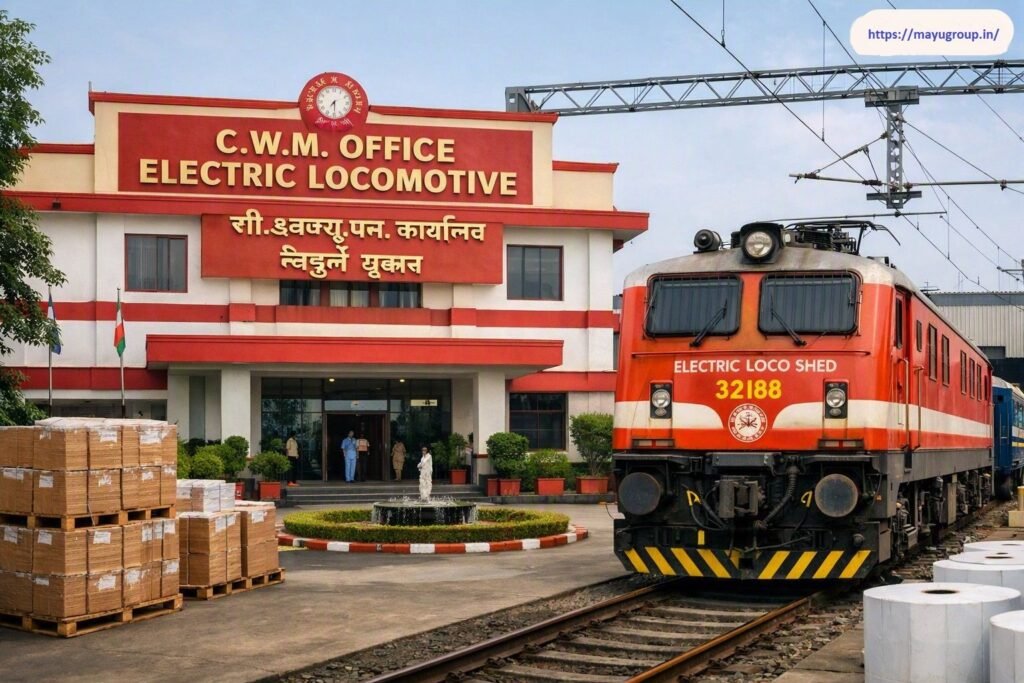
The successful implementation of quality management principles marked a turning point in the history of the CWM Office, Electric Locomotive Workshop, Bhusawal. While the workshop had always been known for its technical expertise, the adoption of structured systems inspired by ISO 9001 transformed the way people worked, communicated, and solved problems. It was no longer enough to complete a task; every process had to be documented, measured, reviewed, and continually improved.
Every morning at exactly 9:00 a.m., the conference room of the CWM Office came alive with activity. Department heads gathered around a large table carrying reports, inspection records, maintenance schedules, and performance charts. The meeting was led by Chief Workshop Manager Arvind Sharma, whose leadership style encouraged participation rather than hierarchy.
“Quality is not created during inspection,” he often reminded his team. “It is created during planning.”
These meetings became the heartbeat of the organization. Instead of reacting to problems after they occurred, officers began identifying risks before they affected operations. Delays in locomotive maintenance, equipment failures, material shortages, and energy wastage were discussed openly, and every department contributed solutions.
The workshop handled numerous electric locomotives every month, each requiring careful inspection and overhaul. Mechanical engineers examined traction motors, electrical specialists tested control circuits, and quality inspectors verified that every component met railway standards. Behind these technical activities, the CWM Office coordinated manpower, procurement, documentation, finance, and safety compliance with remarkable precision.
One of the biggest improvements introduced after the quality initiative was process mapping. Earlier, many procedures depended on individual experience. Senior employees possessed valuable knowledge, but much of it remained undocumented. As experienced staff retired, there was always a risk of losing decades of expertise.
To overcome this challenge, the Quality Management Committee launched a documentation project. Every department prepared Standard Operating Procedures (SOPs) describing each activity step by step. From receiving a locomotive for overhaul to issuing completion certificates, every process was carefully written, reviewed, and approved.
Young engineer Ananya Kulkarni worked closely with senior supervisor Prakash Patil, who had spent nearly thirty-five years in the workshop.
Prakash smiled while opening an old register.
“This notebook has guided me since 1988,” he said proudly.
Ananya replied, “Sir, imagine if your experience becomes a guidebook for every future engineer.”
Together, they converted handwritten practices into digital operating procedures. The project not only preserved institutional knowledge but also made training easier for newly recruited employees.
Technology soon became another driver of growth. The administrative office gradually shifted from paper-heavy systems toward digital record management. Maintenance schedules, inspection reports, inventory records, and quality checklists became electronically organized, reducing paperwork and improving traceability. Finding historical records that once required hours now took only a few minutes.
The Finance Department also embraced process improvement. Budget planning became closely linked with operational priorities. Instead of replacing equipment only after failure, preventive maintenance received greater investment. This approach reduced unexpected breakdowns and improved the overall reliability of workshop operations.
Safety remained the highest priority throughout every improvement initiative. Electric locomotive workshops involve high-voltage systems, heavy machinery, overhead cranes, and precision equipment. The CWM Office strengthened safety audits by integrating them into routine management reviews. Emergency response plans were updated, fire safety equipment was regularly inspected, and employee training sessions became mandatory.
One memorable incident demonstrated the value of these changes.
During a routine inspection, a junior technician noticed abnormal vibration in a testing machine. In earlier years, such observations might have been ignored until the next scheduled maintenance. But under the new quality culture, every employee was encouraged to report potential issues immediately.
The technician informed his supervisor, who halted the equipment for inspection. Engineers discovered that a bearing was beginning to fail. Replacing the component required only a few hours, but ignoring it could have resulted in costly equipment damage and operational delays.
At the next monthly meeting, Mr. Sharma praised the technician.
“This is exactly what quality means,” he said. “Preventing problems is more valuable than repairing them.”
The appreciation motivated employees across the workshop to participate actively in continual improvement. Suggestion boxes were installed throughout the office, allowing staff members to recommend ideas for efficiency, safety, and environmental conservation. Many of the best innovations came not from senior managers but from technicians and clerical staff who understood daily operations in great detail.
Meanwhile, preparations for the GGBC Green Existing Building O&M certification continued alongside quality improvements. Interestingly, the ISO-inspired management system made the green building journey much easier. Since documentation, monitoring, corrective action, and internal audits were already part of organizational culture, collecting environmental performance data became systematic and reliable.
Electricity consumption trends were analyzed monthly. Water meters provided measurable conservation results. Waste segregation records demonstrated operational discipline. Employee awareness programs were documented with attendance registers and photographs. The connection between quality management and sustainability became increasingly clear.
Visitors from other railway divisions began touring the Bhusawal workshop to understand its management practices. They were impressed not only by locomotive engineering but also by the professionalism of the administrative systems supporting the workshop.
One visiting officer remarked, “Your office functions like the control room of a modern industry.”
Prakash Patil smiled proudly.
“We repair locomotives,” he replied, “but our real strength is repairing processes before they fail.”
By the end of the year, the CWM Office had evolved into more than an administrative headquarters. It had become a learning organization where experience and innovation worked together. Senior employees shared wisdom, young engineers introduced fresh ideas, and structured quality systems ensured that every improvement became a permanent part of organizational knowledge.
The foundation had now been firmly established. With quality guiding every decision and teamwork strengthening every department, the Electric Locomotive Workshop was ready to pursue an even greater vision—becoming one of Central Railway’s leading examples of sustainable operational excellence.
#ElectricLocomotiveWorkshop
Chapter 3: The Journey Towards Green Transformation
With the foundation of quality management firmly established, the CWM Office, Electric Locomotive Workshop, Bhusawal, entered a new phase of development. The organization had learned that quality was not simply about producing good results; it was about continuously improving the systems that created those results. The next natural step was to connect operational excellence with environmental responsibility.
The idea of obtaining a green building certification initially appeared ambitious. The CWM Office was an existing working facility, not a newly designed green building. Its daily activities could not simply be stopped while improvements were carried out. Officers had to find practical solutions that could be introduced without disturbing the workshop’s critical railway operations.
The leadership therefore decided that sustainability would be introduced gradually, through planning, measurement, employee participation, and continuous monitoring.
A special team was formed to study the requirements of the GGBC Green Existing Building O&M Rating System. The team included representatives from engineering, electrical, civil, administration, housekeeping, and maintenance departments. Their responsibility was to understand the existing condition of the building and identify areas where environmental performance could be improved.
The first major area examined was energy consumption.
The CWM Office operated throughout the working day, requiring electricity for lighting, computers, air-conditioning, ventilation, communication equipment, and other essential services. Engineers studied historical electricity bills and compared consumption patterns from different periods. They discovered that some areas consumed more electricity than necessary because lights and equipment remained switched on even when rooms were temporarily unoccupied.
An energy-saving campaign was launched.
Employees were encouraged to switch off lights, fans, computers, and air-conditioning equipment whenever they were not required. Notices were placed near electrical switches as reminders. Department supervisors began including energy conservation in their routine meetings.
The next stage involved upgrading lighting systems. Older lighting fixtures were gradually replaced with energy-efficient LED lamps. The new lighting provided better illumination while reducing electricity consumption and maintenance requirements.
Natural daylight was also treated as an important resource. Large windows and openings were kept unobstructed wherever possible so that sunlight could illuminate office spaces during working hours. Employees began to appreciate that environmental conservation did not always require expensive technology. Sometimes it simply required better use of resources already available.
Water conservation became another important focus.
The building’s plumbing network was inspected for leakage and inefficient fixtures. Minor leaks that had previously received little attention were repaired promptly. Water-saving fixtures were considered wherever replacement was necessary. Cleaning and gardening practices were reviewed to prevent unnecessary water consumption.
The gardening team introduced more disciplined irrigation practices. Plants were watered according to their actual requirements rather than following a fixed routine regardless of weather conditions. This reduced wastage and encouraged healthier landscaping.
Waste management also received renewed attention.
Previously, different types of waste were often collected together. The Green Building Committee introduced a systematic segregation approach. Separate containers were provided for biodegradable, recyclable, and other waste categories. Housekeeping personnel were trained in appropriate handling procedures.
The initiative required patience because changing established habits was difficult. Some employees initially forgot to use the correct bins. Rather than treating mistakes as failures, the committee used them as opportunities for education. Awareness sessions were organized, and supervisors regularly explained the importance of segregation.
Within months, the system became part of everyday office life.
The committee also examined indoor environmental quality. Employees spend a significant portion of their working day inside the CWM Office, making ventilation, cleanliness, lighting, and thermal comfort important factors. Maintenance teams ensured that ventilation systems were serviced regularly. Cleaning schedules were strengthened, and indoor spaces were kept free from unnecessary dust and clutter.
The office began to feel different.
Visitors noticed that workspaces were brighter and cleaner. Employees found it easier to work in organized rooms with improved lighting and ventilation. The green initiative was proving that environmental measures could also contribute to employee comfort and productivity.
One of the most important aspects of the project was employee involvement.
During an awareness meeting, Ananya addressed a group of technicians and administrative staff.
“Green building is not something that belongs to the engineering department,” she explained. “It belongs to everyone who enters this building.”
Her statement changed the way many employees viewed the certification. They realized that a certificate could only be achieved through genuine daily practices. A green building could not remain green merely because of a plaque on the wall; its occupants had to continuously support its principles.
The management also recognized that documentation was essential. Every improvement was recorded. Maintenance schedules, energy-saving measures, water conservation activities, waste management records, awareness programs, and operational procedures were systematically organized.
The quality management culture developed through ISO 9001 principles became extremely valuable at this stage. The same discipline of planning, implementation, monitoring, corrective action, and continual improvement could now be applied to environmental performance.
As 2020 approached, the CWM Office was increasingly prepared for assessment. The team conducted internal reviews to identify gaps and corrective actions. Departments cooperated closely, understanding that the certification was a collective achievement.
The journey toward green transformation had also changed the organization itself. Employees began thinking beyond their immediate responsibilities. An electrical technician became conscious of water conservation. A clerk became attentive to waste segregation. A housekeeping worker became an important participant in environmental management.
The CWM Office was no longer simply maintaining a building.
It was creating a culture.
And that culture would become one of the strongest foundations for the organization’s future growth.
The transformation demonstrated an important lesson: sustainability does not begin with a certificate. It begins with awareness, responsibility, measurement, and the willingness to improve every day.
By the time the assessment process reached its final stage, the CWM Office had already achieved something more valuable than recognition. It had developed a workforce that understood the connection between quality, efficiency, environmental protection, and organizational growth.
#BhusawalRailway
Chapter 4: The Green Building Assessment
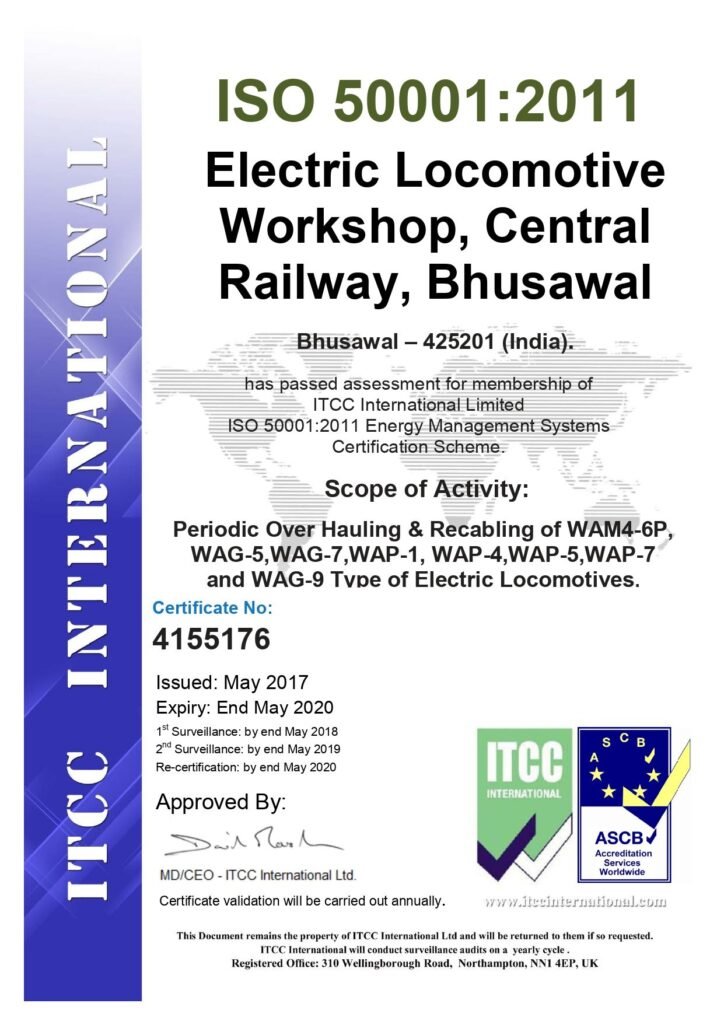
The year 2020 became an important milestone in the journey of the CWM Office, Electric Locomotive Workshop, Bhusawal. After months of preparation, improvement, documentation, and employee participation, the organization was ready for the formal assessment under the GGBC Green Existing Building Operation & Maintenance Rating System.
For the employees, the assessment was more than a technical inspection. It was an opportunity to demonstrate how an existing railway office could combine operational efficiency with environmental responsibility. Every department had contributed to the preparation, and everyone understood that the final result would reflect the collective effort of the entire organization.
The assessment team began by reviewing the building’s operational practices. Documents relating to electricity consumption, water management, waste handling, maintenance schedules, housekeeping, employee awareness, and building management were carefully examined. The team wanted to understand not only what improvements had been introduced but also whether those improvements were being maintained consistently.
Inside the CWM Office, employees continued their normal duties while the assessment proceeded. Files moved between departments, telephones rang, engineers discussed locomotive maintenance schedules, and railway correspondence was processed. Yet there was a sense of excitement throughout the building.
The first major area of attention was energy management.
The assessors examined lighting systems and operational practices. The introduction of LED lighting had reduced unnecessary electricity consumption, while employee awareness campaigns encouraged responsible use of electrical equipment. Staff members had become accustomed to switching off lights, fans, computers, and air-conditioning equipment when not required.
An electrical engineer explained the changes to the assessment team.
“We discovered that technology alone cannot solve the energy problem,” he said. “The biggest improvement came when employees began treating energy as a resource that must be managed carefully.”
This philosophy represented one of the most important lessons of the project.
The assessment then moved toward water efficiency. Inspectors reviewed plumbing fixtures, maintenance records, and water conservation practices. Leaking taps and inefficient fixtures had been addressed, while maintenance personnel conducted regular inspections to identify potential wastage.
The gardening area was also reviewed. The landscaping team explained how irrigation was being managed more carefully. Instead of using excessive quantities of water, the team considered plant requirements and prevailing conditions.
The assessors appreciated the fact that conservation had been integrated into routine maintenance rather than treated as a temporary campaign.
Next came waste management.
The office had introduced segregation practices to separate different categories of waste. Housekeeping employees demonstrated the collection procedure and explained how recyclable materials were handled. Awareness notices placed around the building reminded staff members to dispose of waste responsibly.
For the housekeeping team, the assessment was a proud moment.
Supervisor Meena Patil had worked in the building for many years. She had seen the gradual transformation firsthand.
“Earlier, people thought cleanliness meant simply sweeping the floor,” she explained. “Now we understand that responsible housekeeping also means proper waste management, safe cleaning practices, resource conservation, and maintaining a healthy workplace.”
Her statement captured the wider transformation taking place inside the organization.
The assessment team also considered indoor environmental quality. Lighting, ventilation, cleanliness, and general workplace conditions were reviewed. Regular maintenance of ventilation and air-conditioning systems helped provide a more comfortable working environment.
Employees were asked about their experience. Several staff members commented that the workplace had become brighter and more organized after the improvements. Better lighting, cleaner surroundings, and increased awareness had contributed to a more pleasant office environment.
The assessors also examined the organization’s operation and maintenance procedures. This was an area where the earlier quality management journey proved extremely valuable.
The CWM Office maintained records of inspections, preventive maintenance, corrective actions, and operational activities. Procedures were documented, responsibilities were assigned, and departments maintained evidence of completed activities.
The ISO 9001-oriented culture of continual improvement had therefore created a strong foundation for green building management.
Ananya carefully followed the assessment process, carrying folders containing records and supporting documents. At the end of one review session, an assessor asked her why the organization had invested so much effort in documentation.
She answered, “Because improvement should not depend on memory. If a good practice is documented, measured, and reviewed, it can continue even when people change.”
The assessor nodded approvingly.
Another important aspect of the assessment was employee awareness. Training programs, notices, meetings, and communication activities demonstrated that sustainability had been introduced across the organization rather than being limited to a small management group.
The CWM Office had learned that a building becomes sustainable only when its occupants understand their responsibilities.
The final stage involved reviewing areas where further improvement could be achieved. The management welcomed these observations rather than seeing them as criticism. Corrective actions were identified, responsibilities were assigned, and future monitoring plans were prepared.
This approach reflected the fundamental philosophy of quality management: every assessment should create an opportunity for improvement.
After the assessment activities were completed, the employees waited for the final outcome. There was anticipation throughout the workshop. For months, people had worked together toward the same objective, and now they were waiting to see whether their efforts would receive formal recognition.
When the certification outcome was communicated in 2020, the CWM Office celebrated an important achievement under the GGBC Green Existing Building O&M Rating System.
The certificate represented the successful integration of sustainable practices into the daily operation and maintenance of the existing building. It recognized the organization’s efforts toward energy efficiency, water conservation, responsible waste management, improved workplace conditions, systematic maintenance, and employee awareness.
For Chief Workshop Manager Arvind Sharma, the achievement was not the end of the journey.
During a small gathering with employees, he said:
“Today we have received recognition for what we have achieved. Tomorrow we must prove that we deserve it.”
The words reminded everyone that certification was not a destination. The real challenge was maintaining the standards year after year.
As the evening settled over Bhusawal, the workshop continued its work. Electric locomotives moved through inspection bays, engineers prepared maintenance reports, and office staff completed their daily responsibilities.
The certificate was now part of the organization’s history.
But more importantly, the principles behind that certificate had become part of its culture.
The CWM Office had demonstrated that an existing railway building could evolve through disciplined management, environmental awareness, employee participation, and continual improvement. The achievement of 2020 opened the door to a new chapter—one in which sustainability would become closely connected with productivity, reputation, innovation, and long-term organizational growth.
#IndianRailways
Chapter 5: People Behind the Transformation
The achievement of green building certification in 2020 brought recognition to the CWM Office, Electric Locomotive Workshop, Bhusawal, but the certificate itself was only a visible symbol of a much larger achievement. Behind every improvement were people—officers, engineers, technicians, clerks, housekeeping workers, electricians, supervisors, and support staff—whose daily efforts made the transformation possible.
The management soon realized that technology and infrastructure could provide only part of the solution. A building became genuinely efficient when the people working inside it understood why efficiency mattered.
Chief Workshop Manager Arvind Sharma therefore decided that employee participation should become a permanent feature of the organization’s development program. He believed that every employee, regardless of position, could contribute to improvement.
During a staff meeting, he explained:
“Our building will remain sustainable only when sustainable habits become part of our working culture.”
The message was simple, but its impact was significant.
The first major step was awareness. Training sessions were organized to explain energy conservation, water management, waste segregation, housekeeping practices, workplace safety, and responsible use of office resources. Employees were encouraged to ask questions and suggest improvements.
At first, participation varied. Some employees were enthusiastic, while others considered the new practices unnecessary. They had spent years following familiar routines and were naturally hesitant about changing them.
The Green Building Committee understood that change could not be forced overnight.
Instead, the committee used practical examples.
During one awareness session, Ananya demonstrated how leaving lights and computers switched on unnecessarily could increase electricity consumption. She explained that individual consumption might appear small, but when multiplied by hundreds of employees and working days, the impact became substantial.
The employees began calculating the potential savings themselves.
A senior clerk raised his hand.
“So, if every department saves a little every day, the total saving could be significant?”
“Exactly,” Ananya replied.
That conversation changed the atmosphere. Sustainability became something employees could understand through their own daily activities.
The electrical department played an especially important role. Technicians inspected lighting systems, electrical panels, fans, and other equipment regularly. Preventive maintenance helped reduce failures and unnecessary energy use. LED lighting improvements also reduced the need for frequent replacement.
The electricians took pride in seeing the difference their work created.
One technician, Mahesh, often joked that he could now identify an unnecessary light from halfway across the building.
“Earlier I repaired lights,” he said. “Now I also make sure people don’t waste them.”
The housekeeping team also became an essential part of the green initiative. Their responsibilities extended beyond cleaning floors and offices. They became responsible for supporting waste segregation and maintaining hygienic indoor conditions.
They learned to identify different categories of waste and ensure that recyclable material was handled separately. They also encouraged employees to avoid mixing waste.
Housekeeping supervisor Sunita became particularly respected for her dedication.
At first, she worried that segregation would increase the team’s workload. But after training, she understood that organized waste management could actually make collection more efficient.
She began conducting informal demonstrations for new employees.
“Put it in the correct bin today,” she would say, “and tomorrow the whole process becomes easier.”
Water conservation brought another group of employees together.
Plumbers and maintenance workers inspected taps, pipelines, toilets, and other water-use points. Small leaks were repaired promptly. The gardening team adopted more careful irrigation practices, reducing unnecessary water consumption.
The employees discovered that sustainability was not restricted to office rooms. It extended into every part of the property.
The culture of continuous improvement also encouraged employees to report problems before they became serious. A leaking tap, damaged switch, malfunctioning air-conditioner, or broken waste bin could now be reported quickly.
This approach was strongly connected with the quality management philosophy established through ISO 9001 principles. Employees were encouraged to identify problems, determine causes, implement corrective actions, and monitor results.
The process created a sense of ownership.
People no longer said, “This is the maintenance department’s problem.”
Instead, they began saying, “We should report this.”
That small change in language represented a major cultural transformation.
The management also introduced recognition for useful employee suggestions. The objective was not to create competition but to demonstrate that ideas from every level of the organization were valuable.
One suggestion came from a junior office assistant who noticed that many printed documents were circulated unnecessarily. He proposed greater use of electronic communication for internal notices and routine information.
The idea was adopted wherever practical.
Another employee suggested placing reminder labels near electrical switches. A technician proposed a more regular inspection schedule for water fixtures. A supervisor recommended combining certain maintenance activities to reduce repeated movement and save time.
Each suggestion seemed small.
Together, they created a powerful system of improvement.
The transformation also strengthened relationships between different departments. Civil, electrical, mechanical, administrative, and housekeeping teams had to cooperate. A green building could not be managed successfully if each department worked independently.
Regular coordination meetings therefore became an important part of the organization’s routine.
During these meetings, employees discussed achievements as well as difficulties. If a particular measure was not producing the expected result, the team investigated why and modified the approach.
This created a healthy attitude toward mistakes.
A failed idea was not treated as a failure of an individual. It was treated as information that could help the organization find a better solution.
Over time, the CWM Office developed an identity based on three connected principles: quality, responsibility, and teamwork.
The certification had provided recognition, but the employees provided continuity.
By 2023, when the original certification validity period approached its conclusion, the organization had learned an important lesson. Sustainable performance could not depend solely on certificates, equipment, or management instructions. It required people who cared enough to maintain good practices every day.
The true success of the CWM Office was therefore not simply the certificate displayed on the wall. It was the transformation in employee thinking.
The people of the Electric Locomotive Workshop had discovered that their work contributed to something larger than individual responsibilities. They were maintaining locomotives, supporting railway operations, conserving resources, protecting the environment, and creating a better workplace at the same time.
The green transformation had become a human story.
And the people behind it were its greatest strength.
#GreenBuilding
Chapter 6: Efficiency, Innovation and Operational Growth
The green certification achieved by the CWM Office, Electric Locomotive Workshop, Bhusawal, in 2020 created a new sense of confidence within the organization. The certificate recognized improvements that had already been made, but the leadership understood that certification could not be treated as the destination. The real challenge was to maintain the improvements and use them as a foundation for greater operational efficiency.
The management therefore began looking at the relationship between quality, sustainability, technology, and productivity. The objective was simple: every improvement should contribute to a stronger organization.
At the beginning of the next review cycle, Chief Workshop Manager Arvind Sharma called a meeting with senior officers.
“We have demonstrated that we can improve our building,” he said. “Now we must demonstrate that improvement can become a permanent part of our operations.”
The statement became the guiding principle for the next stage.
The electrical department began monitoring energy consumption more closely. Instead of simply recording monthly electricity bills, officers started comparing consumption with working conditions and operational requirements. Unexpected increases were investigated rather than ignored.
This approach helped identify inefficient practices.
Equipment that remained unnecessarily operational during periods of low activity was reviewed. Lighting schedules were adjusted where appropriate. Preventive maintenance became increasingly important because poorly maintained equipment could consume more energy and fail unexpectedly.
The result was a gradual shift from reactive maintenance to preventive and planned maintenance.
The same philosophy was applied to water management. Regular inspections helped identify leakage before significant quantities of water were lost. Maintenance teams developed more systematic schedules for checking taps, pipelines, tanks, and sanitary fixtures.
The gardening team also experimented with more efficient irrigation practices. Rather than treating all plants equally, watering requirements were considered according to plant type, weather conditions, and soil conditions.
These improvements demonstrated that sustainability and cost efficiency could support one another.
One afternoon, Ananya reviewed several months of utility data with the maintenance team. She noticed that consumption had become more stable.
“This is important,” she said. “We are not only reducing waste. We are understanding our building better.”
That understanding became one of the organization’s most valuable assets.
Technology also began playing a larger role.
The CWM Office expanded the use of digital records and electronic communication wherever practical. Documents that previously required printing and physical circulation could increasingly be shared electronically. Digital records improved accessibility while reducing paper consumption.
The administrative staff initially worried that digital systems might create additional complexity. Training sessions were therefore organized to help employees adapt.
Older employees worked alongside younger staff members, creating an unexpected exchange of knowledge. Senior workers contributed their understanding of railway procedures, while younger employees helped with digital tools.
The result was a stronger workplace culture.
The workshop also recognized that operational growth depended on the skills of its people. Training programs became more systematic. Employees received technical training as well as awareness about quality, safety, environmental responsibility, and efficient resource use.
New recruits were introduced to the organization’s working principles from the beginning.
Instead of learning only how to perform their specific tasks, they were encouraged to understand how their work affected the entire workshop.
An electrician, for example, was reminded that proper equipment maintenance could influence energy consumption, safety, locomotive reliability, and operating costs simultaneously.
This broader understanding improved decision-making.
Another area of innovation was the use of employee suggestions. The management encouraged workers to identify unnecessary steps in daily processes.
One technician proposed reorganizing the storage of frequently used maintenance materials so that employees would spend less time walking between work areas. Another suggested better labeling of equipment and tools.
These ideas improved efficiency without requiring major investment.
The workshop discovered that innovation did not always mean advanced machinery or expensive software.
Sometimes innovation meant asking a simple question:
“Is there a better way to do this?”
That question became increasingly common across the organization.
The quality management system provided a structured method for evaluating these ideas. Suggestions were reviewed, implemented where appropriate, and monitored for effectiveness. Successful practices were incorporated into standard procedures so that improvements would continue even when employees changed positions.
This was particularly important in a large railway organization where transfers and retirements were part of normal service.
Documentation therefore became a bridge between generations.
The knowledge of experienced technicians could be preserved, while new employees could build upon it rather than starting from the beginning.
The green certification also strengthened the reputation of the CWM Office within the wider railway community. Visitors from other departments became interested in its practices. Officers shared experiences about energy conservation, waste management, preventive maintenance, and employee awareness.
The Bhusawal workshop gradually became an example of how an existing operational facility could adopt sustainable practices without compromising its primary railway responsibilities.
Importantly, the organization did not view sustainability as separate from productivity.
A properly maintained air-conditioning system improved employee comfort and reduced unnecessary energy consumption.
Efficient lighting improved visibility while reducing electricity use.
Good housekeeping supported health and safety.
Preventive maintenance reduced breakdowns.
Digital documentation improved efficiency while reducing paper.
Waste segregation improved cleanliness and resource recovery.
Every improvement demonstrated the same lesson: good management creates multiple benefits at the same time.
By the later stages of the certification period, the CWM Office had developed a mature approach to operational improvement. Employees were no longer waiting for instructions before identifying opportunities. Departments had begun taking greater ownership of performance.
The organization was becoming more resilient.
Its growth was no longer measured only by the number of locomotives maintained or the amount of work completed. Growth also meant improved processes, stronger employee skills, lower resource wastage, better documentation, safer operations, and greater environmental responsibility.
As another year came to an end, Arvind Sharma stood in the office corridor and looked at the green certification displayed on the wall.
The certificate represented the past.
The systems and people working behind it represented the present.
And the culture of continual improvement represented the future.
The journey had moved far beyond certification. The CWM Office had learned to use quality and sustainability as tools for operational growth.
The next challenge would be even greater: preserving this culture through changing circumstances and ensuring that the lessons learned between 2020 and 2023 became a permanent part of the organization’s legacy.
#SustainableRailways
Chapter 7: Sustaining the Green Legacy
By the beginning of 2022, the CWM Office, Electric Locomotive Workshop, Bhusawal, had changed significantly from the organization that had first begun its green transformation. The certification received in 2020 had created momentum, but the real test was whether the improvements could be sustained over time.
The leadership understood that a green building could not depend on a single assessment or a certificate displayed on a wall. Environmental performance had to become part of everyday management.
Chief Workshop Manager Arvind Sharma therefore introduced a simple principle during an annual review meeting:
“Certification recognizes our achievement, but maintenance of that achievement demonstrates our character.”
The statement became central to the organization’s approach.
The Green Building Committee continued monitoring energy, water, waste, maintenance, and employee awareness. Instead of conducting environmental reviews only before assessments, departments began including them in their regular operational meetings.
Energy consumption was reviewed month after month.
If electricity use increased unexpectedly, officers investigated possible causes. Sometimes the reason was additional equipment usage. At other times, maintenance issues or changes in working patterns explained the increase. The important change was that consumption was now treated as performance information rather than simply a number on a utility bill.
The electrical department maintained equipment more systematically. Lighting fixtures were inspected, electrical panels were checked, and inefficient equipment was identified for attention.
Employees also continued following simple energy-saving practices.
Lights were switched off when rooms were unoccupied. Computers and other equipment were shut down when no longer required. Air-conditioning systems were used responsibly, with attention to both employee comfort and energy consumption.
These habits became so familiar that employees rarely thought of them as special environmental measures.
They were simply part of working at the CWM Office.
Water conservation followed the same pattern.
Maintenance staff conducted regular inspections of plumbing systems. Small leaks were repaired quickly. Water fixtures were monitored, and employees were encouraged to avoid unnecessary consumption.
The gardening team continued improving irrigation practices. Landscaping was maintained not merely for appearance but as part of the building’s environmental performance.
Waste management also became more organized.
The initial enthusiasm surrounding the certification gradually became a routine system. Waste segregation continued across office areas, and housekeeping personnel ensured that collection procedures were followed consistently.
The organization recognized that maintaining waste segregation required constant awareness because employees and visitors changed over time.
New employees therefore received environmental orientation as part of their introduction to the workplace.
This ensured that knowledge did not disappear when experienced employees transferred or retired.
The same philosophy applied to quality management.
The procedures established through the organization’s quality-focused approach were regularly reviewed. If a process no longer reflected actual working conditions, it could be revised. If a recurring problem appeared, the department investigated its root cause rather than simply correcting the immediate symptom.
This created a cycle:
Identify. Analyze. Improve. Monitor. Standardize.
The cycle became one of the most important characteristics of the organization’s management culture.
Technology continued to support this process. Digital records made it easier to compare data, retrieve documents, and monitor maintenance activities. Electronic communication reduced unnecessary paper use and improved the speed of information sharing.
However, the organization remained conscious that technology alone could not solve every problem.
Human awareness remained essential.
Ananya, now more experienced, began mentoring younger employees. She often told them about the early days of the green certification project.
“When we started,” she explained, “we thought the biggest challenge would be meeting the certification requirements. Later we realized the bigger challenge was changing habits.”
The younger employees were surprised.
“But now everyone follows the system,” one of them observed.
Ananya smiled.
“That is because the system became part of the culture.”
The transformation was also visible in the relationship between departments.
Civil, electrical, mechanical, administration, and housekeeping teams increasingly understood that their activities were connected. A maintenance decision could affect energy consumption. A procurement decision could affect waste. A housekeeping practice could influence indoor environmental quality.
This broader perspective improved cooperation.
The CWM Office also began sharing its experiences informally with visiting railway officers and technical teams. Visitors were shown examples of operational improvements and documentation practices.
The message was not that the building had become perfect.
Rather, the message was that an existing government facility could continually improve through disciplined management.
The Electric Locomotive Workshop itself continued to perform its primary mission—supporting the reliable operation of electric locomotives. The workshop’s technical activities remained demanding, and the green building initiative never replaced those responsibilities.
Instead, sustainability became an additional dimension of operational excellence.
This balance was particularly important.
The organization understood that environmental responsibility could not come at the expense of railway safety, reliability, or productivity. Every improvement therefore had to be practical and compatible with operational requirements.
As 2022 progressed, the team began preparing for the future beyond the original certification validity period.
The 2020–2023 certification period had provided a valuable framework, but management wanted the underlying practices to continue regardless of future certification decisions.
A review was conducted to identify which practices had become permanent and which required additional attention.
The findings were encouraging.
Energy awareness had become routine.
Water conservation was integrated into maintenance.
Waste segregation was established.
Employee awareness had improved.
Documentation was more systematic.
Preventive maintenance had strengthened.
Digital communication had reduced unnecessary paperwork.
Most importantly, employees understood their role in maintaining the improvements.
During one final review meeting, Arvind Sharma looked around the conference table.
“Three years ago, we were preparing for a certificate,” he said. “Today, we are preparing for the next generation.”
The statement captured the evolution of the organization.
The certification had begun as a project.
It had become a management system.
Then it had become a workplace culture.
As the sun set over Bhusawal, electric locomotives continued moving through the workshop, carrying with them the energy and effort of thousands of railway employees.
Inside the CWM Office, another journey was taking place—a journey of continual improvement, responsible resource use, and organizational learning.
The green certificate might eventually reach the end of its validity.
But the knowledge created during those years would remain.
The legacy was no longer printed on paper.
It lived in the habits of the people, the systems of the organization, and the vision of a workplace that believed growth and sustainability could move forward together.
#EnergyEfficiency
Chapter 8: Growth Beyond Certification
The year 2023 arrived quietly at the CWM Office, Electric Locomotive Workshop, Bhusawal, but for the employees who had participated in the green transformation, it carried special significance. The certification issued in 2020 had reached the end of its stated validity period. For the organization, however, the end of a certification period did not mean the end of its journey.
Instead, it represented a new beginning.
Over the previous three years, the CWM Office had learned an important lesson: certification can provide direction, but lasting growth depends on continuous action.
The framed recognition displayed inside the office reminded employees of what they had achieved. But the real evidence of success could be found in everyday practices—efficient lighting, careful water use, organized waste management, preventive maintenance, digital documentation, employee awareness, and systematic quality reviews.
Chief Workshop Manager Arvind Sharma called a special meeting with departmental representatives.
“We should not ask what happens after the certificate expires,” he said. “We should ask what kind of organization we want to become after the certificate.”
The question encouraged a new round of discussion.
The management began reviewing the lessons learned during the certification period. Some practices had become permanent and required little supervision. Others needed renewed attention because employee transfers, equipment changes, and operational requirements could gradually weaken them.
The first priority was institutional memory.
The organization had accumulated valuable knowledge about energy management, building maintenance, environmental practices, and quality improvement. To preserve this knowledge, procedures were documented carefully. New employees were introduced to existing practices, while experienced employees were encouraged to share lessons learned from previous years.
This ensured that organizational knowledge would not disappear when people moved to other assignments.
Digital systems became increasingly useful.
Documents that had once occupied shelves and cabinets were progressively organized electronically. Maintenance records, reports, communication, and operational information could be retrieved more efficiently. Digitalization also supported the environmental objective of reducing unnecessary paper consumption.
The administrative team recognized that digital transformation was not only about saving paper. It also improved speed, transparency, and traceability.
A request that previously required several physical signatures could often be processed more efficiently through electronic communication and approved digital procedures.
The quality management culture played an important role in ensuring that this transition remained controlled and reliable.
At the same time, the workshop continued to focus on its primary responsibility—maintaining electric locomotives.
The relationship between the office and the workshop became increasingly important. Administrative decisions affected technical operations, while technical requirements influenced planning and resource management.
Better coordination reduced delays and helped departments respond more quickly to operational needs.
The concept of continuous improvement therefore expanded beyond the building itself.
Employees began asking questions about every process.
Could a maintenance activity be performed more safely?
Could a document be processed faster?
Could an unnecessary movement of materials be eliminated?
Could energy be saved without affecting productivity?
Could waste be reduced?
Could employee comfort be improved?
These questions encouraged practical innovation.
One improvement involved better planning of routine maintenance activities. By coordinating maintenance schedules, teams could reduce unnecessary repetition and make more efficient use of manpower and equipment.
Another improvement focused on workplace organization. Frequently used materials were positioned more systematically, reducing time spent searching for tools and documents.
Although these changes were individually modest, together they contributed to operational efficiency.
Ananya, who had begun the green certification journey as a young engineer, now had several years of experience. She had learned that sustainable development was not a one-time project.
During a discussion with a group of young employees, she explained:
“When we started, we were trying to make the building green. Eventually, we realized that we had to make our thinking green.”
The employees listened carefully.
She continued, “A green building is not defined only by its equipment. It is defined by how people use and maintain it.”
This philosophy became especially important as new generations of employees joined the organization.
The management encouraged younger staff to participate in improvement projects. Their familiarity with digital technology helped identify new opportunities for data management and communication, while senior employees provided practical knowledge developed through years of railway service.
The combination of experience and innovation created a strong foundation for future growth.
The organization also became more conscious of the relationship between environmental performance and financial efficiency.
Reducing electricity consumption could lower operating costs.
Preventive maintenance could reduce repair expenses.
Water conservation could reduce wastage.
Digital communication could reduce paper and administrative costs.
Efficient processes could save both time and manpower.
Thus, sustainability was increasingly understood not as an additional expense but as a method of responsible resource management.
The leadership also emphasized that growth should never compromise safety.
The Electric Locomotive Workshop operates in an environment involving high-voltage electrical systems, heavy machinery, cranes, tools, and complex maintenance activities. Any new process therefore had to be examined carefully from a safety perspective.
Employees were encouraged to report unsafe conditions immediately. Safety training remained a regular part of workplace development.
The organization’s growth therefore followed several interconnected principles:
Quality for reliability.
Safety for people.
Sustainability for the environment.
Innovation for efficiency.
Teamwork for long-term success.
By the end of the certification period, these principles had become deeply connected to the identity of the CWM Office.
The organization no longer viewed the 2020 certification as a final achievement. It was regarded as an important chapter in a longer story.
The real growth after certification could be seen in the confidence of employees, the discipline of processes, the improved understanding of resources, and the willingness to adopt new ideas.
The CWM Office had demonstrated that an existing railway facility could evolve without losing its traditional strengths.
It could respect experience while embracing technology.
It could prioritize productivity while protecting the environment.
It could maintain strict railway standards while continuously improving workplace practices.
As another electric locomotive moved slowly out of the workshop, the sound of its traction equipment filled the morning air.
The locomotive represented movement.
The CWM Office represented coordination.
Together, they represented progress.
And the journey of progress was far from complete.
The end of the 2020–2023 certification period did not close the story of sustainability at Bhusawal. Instead, it opened a larger question:
How could the lessons of the past become the foundation for the future?
The answer would emerge through continued innovation, stronger management systems, employee development, and a commitment to responsible growth.
The certificate had marked an achievement.
The culture created around it would shape the future.
#QualityManagement
Chapter 9: The Future of the Electric Locomotive Workshop
The journey of the CWM Office, Electric Locomotive Workshop, Bhusawal, had reached an important stage. The period from 2020 to 2023 had demonstrated that quality management, environmental responsibility, and operational efficiency could work together. But as the organization looked toward the future, its leadership understood that the railway industry itself was changing rapidly.
Electric locomotives were becoming increasingly sophisticated. Maintenance systems were evolving, technology was becoming more important, and railway operations were moving toward greater digital integration. For the CWM Office, this meant that the lessons learned through quality and green-building initiatives had to be carried forward into a new era.
The workshop had always depended on skilled people. Engineers and technicians possessed years of practical experience, often developed through direct interaction with locomotives and complex equipment. However, modern railway technology required a combination of traditional knowledge and new technical skills.
Chief Workshop Manager Arvind Sharma therefore placed employee development at the center of the organization’s future strategy.
Training was no longer considered something required only when new machinery arrived. It became a continuous process.
Employees were encouraged to learn about digital systems, energy-efficient equipment, modern maintenance techniques, data analysis, safety procedures, and environmental management. Senior technicians were encouraged to share their practical knowledge with younger employees.
This created a valuable partnership between generations.
An experienced technician could explain how a locomotive behaved under unusual operating conditions, while a young engineer could demonstrate how digital monitoring could help identify patterns in equipment performance.
Neither form of knowledge was considered superior.
Both were necessary.
The same philosophy was applied to building management.
The CWM Office had already demonstrated the benefits of energy-efficient lighting, preventive maintenance, water conservation, waste management, and employee awareness. The next step was to improve monitoring and decision-making through better data.
Instead of asking only whether a system was working, officers increasingly asked how efficiently it was working.
Energy consumption could be compared across months.
Maintenance activities could be tracked.
Water use could be monitored.
Recurring problems could be identified.
The data could then support decisions about future investments.
This represented a major shift in management thinking.
Earlier, many decisions depended heavily on experience and immediate requirements. Now experience could be combined with measurable evidence.
The quality management philosophy remained important throughout this transformation. Data was useful only when it led to action.
If a problem was identified, the department investigated its cause.
If a solution was introduced, its effectiveness was monitored.
If the solution worked, it became part of the standard process.
This cycle ensured that improvement did not remain theoretical.
Environmental responsibility also became increasingly connected with procurement decisions.
When equipment or materials needed replacement, officers began considering not only purchase price but also durability, maintenance requirements, energy efficiency, and environmental impact wherever practical.
The thinking was changing from “What is the cheapest option today?” to “What is the most responsible option over its useful life?”
This approach could produce long-term savings while supporting sustainability.
The workshop’s relationship with the wider railway network also strengthened.
The experience gained at Bhusawal could be shared with other railway facilities. Officers could explain how an existing building had approached green operation and maintenance without disrupting essential services.
The most valuable lesson was that transformation did not require everything to be replaced.
Existing infrastructure could often be improved through better maintenance, efficient operation, employee awareness, and systematic management.
This was particularly relevant to large public organizations, where buildings and facilities might remain operational for decades.
The story of the CWM Office therefore had significance beyond one location.
It demonstrated that sustainability could be integrated into established institutions.
The management also recognized that employee well-being was part of organizational growth.
A productive workplace required adequate lighting, ventilation, cleanliness, safety, and comfortable working conditions. The green-building journey had already improved awareness of these issues.
Future planning therefore included continued attention to workplace conditions.
Employees who felt respected and comfortable were more likely to participate actively in improvement initiatives.
One morning, Ananya walked through the office and noticed a group of newly recruited employees discussing an energy-saving notice near the entrance.
She stopped and listened.
One of them said, “We should make sure the equipment is switched off before we leave.”
Ananya smiled.
Years earlier, she had delivered the same message to employees.
Now the message was being passed from one generation to another.
That was when she realized the greatest achievement was not the certification.
It was continuity.
The organization had created a culture that could survive changes in leadership, technology, and personnel.
The future also required stronger integration between the office and the workshop floor. The CWM Office would continue coordinating administrative and technical activities, but future success would depend on faster communication, better planning, and more efficient resource utilization.
Digital tools could support this process by improving access to information and helping departments coordinate activities more effectively.
However, the organization remained careful not to become dependent on technology alone.
Systems could provide information.
People still had to make decisions.
Machines could identify patterns.
Engineers still had to understand causes.
Software could store knowledge.
Experienced employees still had to teach judgment.
The future of the Electric Locomotive Workshop would therefore depend on combining human expertise with modern technology.
As the years moved forward, the CWM Office continued to carry the lessons of its green certification period.
The 2020 recognition had shown what was possible.
The years that followed demonstrated how those improvements could become part of everyday operations.
The organization had grown not only in efficiency but also in confidence. Employees had learned that their ideas mattered. Managers had learned that sustainability could support productivity. Engineers had learned that maintenance could be both technically sound and environmentally responsible.
The workshop’s future was therefore not based on one certificate, one project, or one generation of employees.
It was based on a continuing commitment to improvement.
Outside the CWM Office, an electric locomotive prepared to begin another journey across the railway network.
Inside the building, another journey was underway—a journey toward smarter management, stronger sustainability, improved quality, and greater organizational excellence.
The tracks ahead were long.
#QualityManagement
Chapter 10: A Legacy of Excellence and a Vision for Tomorrow
The story of the CWM Office, Electric Locomotive Workshop, Bhusawal, was never simply the story of a building. It was the story of people, processes, technology, responsibility, and continuous improvement. From its foundation as an important administrative center of Central Railway to its transformation through quality and green-building initiatives, the organization demonstrated how a traditional institution could prepare itself for the future.
The year 2020 had brought an important achievement. The CWM Office received recognition under the GGBC Green Existing Building Operation & Maintenance Rating System, with the certification remaining valid through 2023. This recognition reflected the organization’s efforts toward responsible building operation, energy efficiency, water conservation, waste management, indoor environmental quality, and employee awareness.
But the most important result could not be measured by a certificate.
It was the change in organizational culture.
Before the transformation, environmental practices could sometimes be viewed as separate activities. After the transformation, employees began to understand that sustainability was connected with quality, safety, productivity, and financial responsibility.
A well-maintained electrical system reduced unnecessary consumption.
A properly maintained water system reduced wastage.
Organized housekeeping improved workplace conditions.
Preventive maintenance reduced unexpected failures.
Digital documentation improved efficiency.
Employee awareness strengthened every one of these systems.
The organization had learned that successful growth depended on connecting these individual improvements into one integrated management philosophy.
Chief Workshop Manager Arvind Sharma looked back at the journey during one of his final review meetings.
“When we began,” he said, “we wanted to improve a building. Along the way, we improved the way we think.”
The statement summarized the entire transformation.
The CWM Office had become a place where employees were encouraged to ask questions rather than simply follow routines. Could a process be improved? Could energy be saved? Could water use be reduced? Could safety be strengthened? Could technology make communication faster? Could an old procedure be redesigned?
These questions ensured that improvement remained continuous.
The influence of quality management was equally important. The principles associated with ISO 9001 helped establish discipline in documentation, process control, corrective action, internal review, and continual improvement. These principles gave the organization a reliable structure within which environmental and operational initiatives could grow.
The lesson was powerful.
Quality and sustainability were not competing objectives.
They supported each other.
An organization that controls its processes is better prepared to control resource consumption. An organization that measures performance is better able to identify waste. An organization that values employee participation is more capable of sustaining improvement.
This understanding became one of the greatest legacies of the CWM Office’s certification journey.
The people themselves were another important part of that legacy.
Senior employees had contributed decades of practical experience. Younger employees brought new ideas and technological awareness. Housekeeping personnel supported environmental practices. Technicians maintained essential systems. Engineers analyzed performance. Administrative employees coordinated records and communication.
Every role mattered.
The organization discovered that large transformations rarely come from one dramatic decision. They are created through thousands of small actions repeated consistently.
A technician reporting a minor fault.
A clerk choosing digital communication instead of unnecessary printing.
An employee switching off unused lights.
A maintenance worker repairing a leaking tap.
A supervisor checking a preventive maintenance schedule.
A manager reviewing performance data.
Each action appeared small.
Together, they created organizational excellence.
The CWM Office also demonstrated the importance of leadership.
Without management support, sustainability initiatives might have remained temporary campaigns. Instead, the leadership integrated them into regular operational thinking. Employees were given responsibility, departments were encouraged to cooperate, and improvements were documented.
This created ownership rather than dependence.
The certification period from 2020 to 2023 therefore became a chapter of learning and development. When the formal validity period ended, the organization did not consider its responsibility finished. The practices developed during those years remained valuable and continued to guide future operations.
The future, of course, would bring new challenges.
Railway technology would continue to evolve. Electric locomotives would become more advanced. Digital systems would become increasingly important. Environmental expectations would grow. Energy efficiency would become even more significant. Employees would need new skills.
But the CWM Office had already learned how to respond to change.
Its greatest strength was not any single machine or building system.
It was the ability to learn.
As the sun rose over Bhusawal on another working day, the Electric Locomotive Workshop once again became active. Engineers entered their departments. Technicians prepared equipment. Administrative staff organized schedules. Locomotives stood ready for inspection and maintenance.
The CWM Office continued to coordinate the complex activities required to keep railway operations moving.
Outside, railway tracks extended toward distant cities and communities.
Inside, the organization continued its own journey.
The green transformation had shown that responsibility and growth could exist together. Quality management had shown that processes could continually improve. Employee participation had shown that every person could contribute. Technology had shown that innovation could strengthen traditional expertise.
Together, these lessons created a vision for tomorrow.
The CWM Office would continue striving for quality without compromise, sustainability without interruption, innovation without losing experience, and growth without unnecessary environmental impact.
The story of the Electric Locomotive Workshop was therefore not ending with 2023.
It was entering a new chapter.
The certificate issued in 2020 would remain an important record of achievement, but the true certificate of excellence was visible every day—in the discipline of the workforce, the reliability of the workshop, the responsible operation of the building, and the willingness of employees to improve.
A locomotive moved forward because power was continuously supplied to it.
An organization moved forward because purpose was continuously renewed.
For the CWM Office, that purpose was clear: serve the railway, support the nation, protect resources, develop people, and pursue excellence every day.
The tracks ahead were open.
The future was waiting.
And the people of the Electric Locomotive Workshop, Bhusawal, were ready to move forward together.
The journey of excellence continues.
#OperationalExcellence
#ElectricLocomotiveMaintenance #RailwayWorkshopExcellence #BhusawalRailwayWorkshop #RailwaySustainability #GreenRailwayInitiative
Take the Next Step Today
Don’t wait to enhance your business’s quality and efficiency. Partner with Mayu Group India and experience the transformation that comes with expert consultancy and training. Contact us today to learn more about how we can help you achieve your business goals. Reach out via phone at +91-9322728183, visit our website at www.mayugroup.in, or email us at investor@mayugroup.in Let us be your guide on the journey to excellence and innovation.